Dec 25, 2025
How to Secure Funding for Decentralized Water Projects
Capacity Building
In This Article
Step-by-step guidance to find and secure grants, loans, and partnerships for decentralized water projects—eligibility, applications, and funding strategies.
How to Secure Funding for Decentralized Water Projects
Decentralized water systems offer a practical solution to aging infrastructure, extreme weather, and population growth, but securing funding can be challenging. Here's how you can navigate the process effectively:
Understand Funding Sources: Federal programs like the Clean Water State Revolving Fund (CWSRF) and Drinking Water State Revolving Fund (DWSRF) provide low-cost loans and grants. New initiatives under the Bipartisan Infrastructure Law have allocated billions to underserved communities.
Assess Eligibility: Different programs cater to specific projects and applicant types. For example, CWSRF supports wastewater systems, while DWSRF focuses on drinking water infrastructure.
Prepare Thoroughly: Gather essential documents such as financial records, technical plans, and environmental compliance reports. Register on SAM.gov and obtain a Unique Entity ID (UEI) early.
Explore Multiple Options: Combine federal, state, and local funding sources, and consider Public-Private Partnerships to fill financial gaps.
Build Partnerships: Collaborate with local governments, community organizations, and consultants to strengthen your application and project execution.
Securing funding requires careful preparation, strong partnerships, and leveraging diverse resources. By following these steps, you can help bring resilient and localized water solutions to your community.
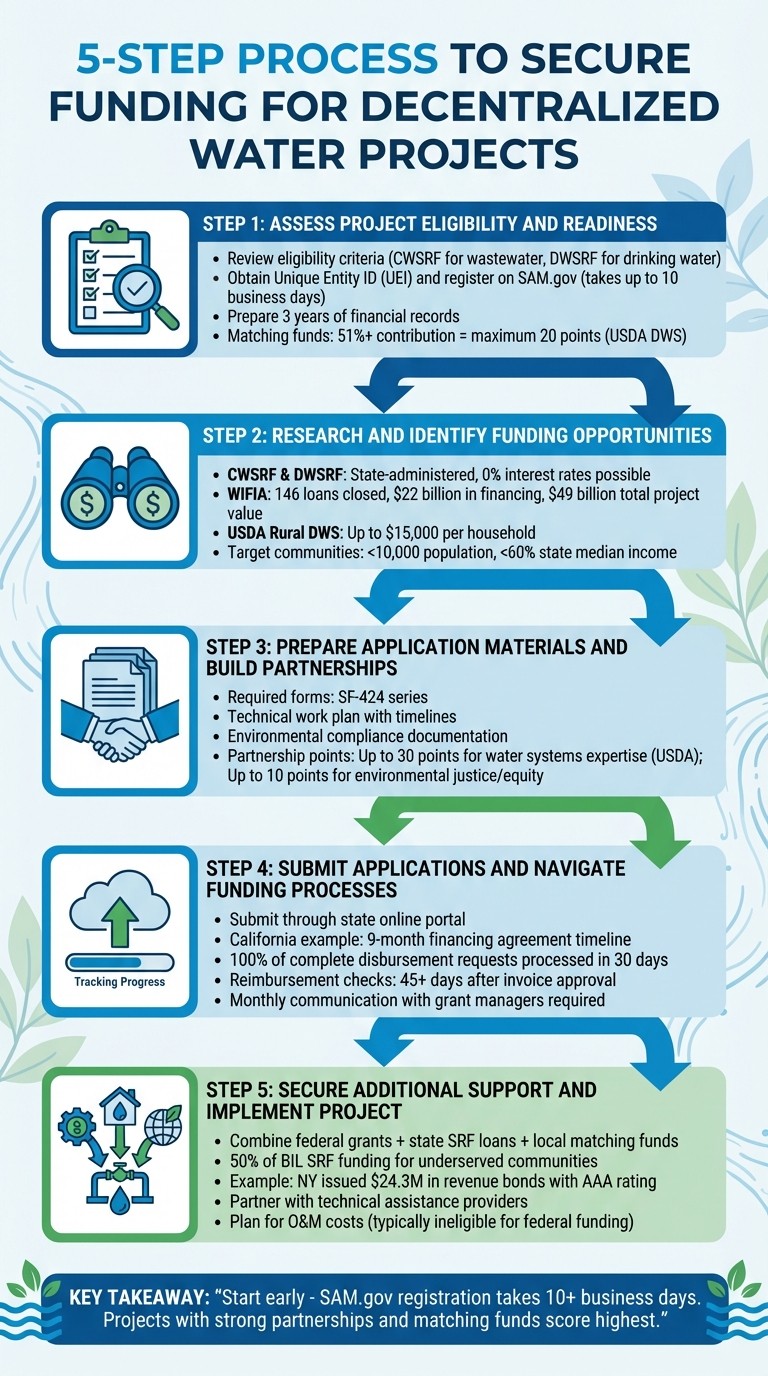
5-Step Process to Secure Funding for Decentralized Water Projects
Webinar | Finding a Unicorn! Wastewater Funding Series: Building Compelling Award Applications (Pt1)
Step 1: Assess Project Eligibility and Readiness
Before diving into the application process, it’s essential to confirm your project meets eligibility requirements and to gather all necessary documentation. Overlooking even one critical detail could result in disqualification or delays in securing funding.
Review Eligibility Criteria
Federal and state programs cater to different types of projects and communities. For example, the Clean Water State Revolving Fund (CWSRF) supports initiatives like decentralized wastewater treatment systems, nonpoint source pollution control, and water reuse projects [2][1]. On the other hand, the Drinking Water State Revolving Fund (DWSRF) focuses on infrastructure that safeguards public health, such as creating new systems for homes with contaminated wells or consolidating existing systems [4].
Eligibility requirements vary by program. The CWSRF accepts applications from municipalities, individuals, and nonprofits, while the DWSRF welcomes both publicly and privately owned community water systems [2]. Programs like the USDA Rural DWS Grant are more specific, targeting private nonprofits and offering loans or subgrants - up to $15,000 per household - to build or repair household wells and wastewater systems [5].
Income and community demographics often influence funding priorities. Many programs aim to assist "disadvantaged" or "underserved" communities. For example, USDA DWS applicants must have a household income below 60% of the state’s median nonmetropolitan household income [5]. Similarly, the Drinking Water System Infrastructure Resilience and Sustainability Program prioritizes communities with populations under 10,000 people [2]. Since eligibility criteria can differ significantly by state, it’s wise to contact your state’s DWSRF or CWSRF program during your planning phase to clarify specific requirements [2].
Confirm Project Readiness
Eligibility is only part of the equation - your project must also demonstrate readiness to execute. Administrative readiness begins with obtaining a Unique Entity ID (UEI) and registering on SAM.gov. This process can take up to 10 business days and requires annual renewal [5]. Starting this registration well in advance of deadlines is crucial to avoid last-minute issues.
Financial preparedness is equally important. Be ready to submit three years of financial records, including balance sheets, income statements, cash flow statements, and your most recent independent audit [5]. Organizations with unresolved federal debt or outstanding judgments are generally disqualified [5]. Additionally, a solid technical plan is required, which should include a detailed work plan, project schedule, personnel qualifications, and a needs assessment for the intended beneficiaries [5]. Applicants must also address environmental compliance, outlining how they will meet requirements such as those specified in 7 CFR 1970 [5].
Matching funds can greatly enhance your application’s chances. For instance, the USDA DWS program awards the maximum points - up to 20 - if you contribute 51% or more of the grant amount. Contributions below 9% render the application ineligible [5]. If your community lacks the resources for initial planning, consider applying for USDA Water & Waste Disposal Predevelopment Planning Grants to help cover early-stage costs [6].
Once you’ve confirmed both eligibility and readiness, you’ll be well-positioned to explore and compare funding opportunities.
Step 2: Research and Identify Funding Opportunities
Review Federal and State Programs
After confirming your project is ready to move forward, the next step is to explore available funding options. The Clean Water State Revolving Fund (CWSRF) is a major resource for projects involving decentralized wastewater treatment, green infrastructure, and water reuse. Similarly, the Drinking Water State Revolving Fund (DWSRF) supports efforts like replacing potable water sources with non-potable alternatives or building infrastructure to enhance resiliency, such as backup generators, flood barriers, and saltwater-resistant equipment [2]. Both of these programs received substantial funding increases through the 2021 Bipartisan Infrastructure Law, with a focus on underserved communities via grants or principal forgiveness.
For large, regionally impactful projects, the Water Infrastructure Finance and Innovation Act (WIFIA) program is worth considering. As of late 2025, WIFIA has closed 146 loans, providing $22 billion in financing and supporting projects with a combined cost of $49 billion [7].
Urban projects aimed at managing stormwater can benefit from Sewer Overflow and Stormwater Reuse Grants, which focus on combined sewer overflow infrastructure [6]. The HUD Community Development Block Grants (CDBG) program is another option, funding urban water and wastewater projects that serve low-to-moderate-income populations [6]. For areas prone to natural disasters, programs like FEMA's Building Resilient Infrastructure & Communities (BRIC) and the Hazard Mitigation Grant Program (HMGP) offer support for stormwater capture and reuse projects designed to reduce long-term disaster risks [6].
With these options in mind, the next step is to compare programs to pinpoint the best match for your project.
Compare Funding Programs
Evaluating funding programs side by side helps determine which aligns best with your project's specific needs, including its scale, timeline, and financial capacity. Key factors to consider include funding type (loan versus grant), project scale, cost-share requirements, and application deadlines. Since CWSRF and DWSRF programs are administered at the state level, their eligibility criteria, interest rates (sometimes as low as 0%), and timelines can vary widely [9]. Reaching out to your state’s program office early in the process is essential to understand these details.
To streamline the comparison process, leverage tools like the Catalog of Federal Funding Sources for Watershed Protection and the Financing Alternatives Comparison Tool (FACT) offered by the EPA. These resources can help you analyze program benefits, cost-sharing requirements, and deadlines [8][10]. For larger projects, reviewing previously submitted WIFIA Letters of Interest on the EPA website can provide valuable insights into successful applications [7]. Additionally, organizations like Council Fire can offer strategic advice, helping you navigate the complexities of funding and align your project with the most suitable opportunities.
Step 3: Prepare Application Materials and Build Partnerships
Gather Required Application Materials
After confirming your project's readiness, it's time to compile the essential documents for your funding application. Most federal programs require the SF-424 series forms, including SF-424, SF-424A, and SF-LLL [5]. Your application package should also feature a detailed project proposal. This proposal must include a needs assessment outlining the challenges you aim to address and measurable goals, a technical work plan with specific tasks, timelines, and personnel qualifications, and a marketing strategy [5].
In addition, you'll need to provide financial documents such as your organization's latest independent audit, balance sheets, income statements, and cash flow statements from the past three years [5]. Include organizational proof like articles of incorporation, bylaws, a certified list of board members and officers, and IRS tax-exempt status documentation [5]. Environmental and regulatory compliance documentation is equally critical. This includes environmental reviews (such as Categorical Exclusions or Environmental Assessments) and adherence to the Davis-Bacon Act and "Build America, Buy America" (BABA) standards [11]. Your budget justification should clearly outline cost calculations and differentiate between grant-funded expenses and matching contributions [5].
"Recipients must be registered in SAM.gov AND obtain a UEI in order to submit an application." – U.S. Environmental Protection Agency [11]
It's vital to have your SAM.gov registration and Unique Entity Identifier (UEI) in place, as outlined in Step 1. Completing EPA grant training courses is also required to ensure compliance [11]. For any specific eligibility questions or application requirements, reach out to Rural Utilities Service (RUS) or EPA regional staff early in the process [5][11].
Once your application materials are finalized, you can shift your attention to forming strategic partnerships that will enhance your proposal.
Work with Stakeholders and Consultants
Strong partnerships can significantly reinforce your application and boost its competitive edge. Collaborating with local governments, state agencies, and community organizations not only adds credibility to your project but also demonstrates commitment through non-federal contributions. For example, the USDA Rural Decentralized Water Systems grant awards up to 20 points for matching funds - projects providing 51% or more receive maximum points, while contributions between 10% and 25% earn 5 points [5].
Consultants and specialized organizations can also play a pivotal role. They bring the technical expertise needed to handle complex aspects of your project, such as managing revolving loan funds or ensuring environmental compliance [5]. For instance, the USDA DWS Grant program allocates up to 30 points for documented water systems expertise and up to 20 points for effective loan servicing [5]. Letters of support and resolutions from community organizations and local governments further validate the community need and highlight the feasibility of your project.
Organizations like Council Fire can provide valuable guidance throughout the application process. Their expertise in water infrastructure and sustainability planning can help you navigate funding complexities, engage stakeholders effectively, and align your project with program priorities. This is particularly useful when addressing environmental justice, climate resilience, or equity requirements, which can earn up to 10 discretionary points in USDA programs [5]. Additionally, State Revolving Fund programs often partner with technical experts to help utilities prepare for extreme weather, enhance resiliency, and streamline the application process [2].
Formalize all partnerships as early as possible. If you’re contracting with consultants or affiliated organizations, include all relevant legal documents and contracts in your application to avoid disqualification. In your budget justification, clearly separate grant-funded costs from partner contributions, keeping in mind that some programs may not count in-kind contributions toward scoring [5].
Step 4: Submit Applications and Navigate Funding Processes
Follow Submission Guidelines
To apply for funding, submit your complete application through your state's designated online portal. Since these programs are managed at the state level, it's crucial to adhere to the specific forms, deadlines, and submission processes outlined by your state.
The requirements for applications can differ significantly depending on location. For instance, California allows continuous submissions for water projects and utilizes the Financial Assistance Application Submittal Tool (FAAST) for digital submissions and tracking [13][14]. To streamline your application process, consider organizing your materials into these four key categories:
General Information: Include applicant details and a clear project description.
Technical: Provide engineering reports and capacity assessments.
Environmental: Submit review documents and climate response plans.
Financial: Include credit and repayment documentation [14].
Completeness is essential. For example, California's Clean Water State Revolving Fund (CWSRF) program aims to finalize financing agreements within nine months of receiving a "complete" application and processes 100% of complete disbursement requests within 30 days [13]. Before submitting your application, carefully review any agency-provided checklists and consider consulting technical assistance to reduce errors.
Your project's placement on your state's Project Priority List also plays a critical role in its success. States generally prioritize projects that address significant health risks, ensure compliance with the Safe Drinking Water Act, or benefit underserved communities. Tailor your application to align with your state's specific priority criteria [15].
Once submitted, shift your focus to tracking the application status and maintaining active communication with the relevant funding agencies.
Track Applications and Communicate with Agencies
After submitting your application, staying organized and proactive is key. Establish clear communication with grant staff early on, confirm your eligibility during the scoping phase, and participate in kickoff meetings after receiving an award [12].
"Communication with grant managers is the key to successful grant implementation." – California Department of Water Resources [12]
Schedule regular monthly calls with your grant manager to stay aligned and notify them of any milestones or potential changes at least six months in advance. Use digital tools to monitor the status of your application and sign up for agency email updates to receive the latest information [16]. Keep thorough records of all communications and billing for at least three years after the final payment.
If there are any changes in personnel, ensure all application and project management materials are well-organized to allow for a smooth transition.
Lastly, remember that reimbursement checks often take at least 45 days to process after an invoice package is approved. Plan your cash flow accordingly, and submit quarterly progress reports to keep the funding agency updated on your project's developments.
Step 5: Secure Additional Support and Implement the Project
Combine Multiple Funding Sources
Once your applications are in motion, securing diverse funding streams becomes essential to ensure your project's success. Decentralized water projects often rely on multiple funding sources to cover costs like construction, equipment, and ongoing operations. Programs such as the Water Infrastructure Finance and Innovation Act (WIFIA) are designed to complement other financial tools like State Revolving Fund (SRF) assistance, municipal bonds, and grants. Historically, SRF programs have been a reliable source of low-cost financial aid [3].
The Bipartisan Infrastructure Law (BIL) has also directed nearly half of SRF funding toward underserved or disadvantaged communities, offering grants or principal forgiveness loans [2]. Combining federal grants, state SRF loans, and local matching funds can significantly reduce overall costs. For instance, in 2014, the New York State Energy Research and Development Authority issued $24.3 million in revenue bonds to fund energy efficiency loans. These bonds earned a triple-A rating thanks to a guarantee from the New York State Environmental Facilities Corporation, which utilized SRF resources [3].
To maximize funding opportunities, reach out to your state SRF programs or technical assistance providers. They can guide you on how to combine BIL grants with traditional low-interest loans. Decentralized projects can tap into resources like the Clean Water State Revolving Fund, Section 319 Grants, and Community Development Block Grants. Public-Private Partnerships (PPPs) also offer valuable support; for example, DC Water’s Environmental Impact Bond showcases how private investment can be leveraged while sharing performance risks [3]. By strategically layering these funding sources, you can address financial gaps and ensure your project remains on solid footing.
Once financing is secured, the focus shifts to project execution.
Execute the Project with Professional Support
Start by establishing formal agreements and implementing strong management systems to guide the project through its full lifecycle [5][17]. For revolving loan funds, ensure environmental reviews are completed before approving sub-recipient applications. Keep in mind that while federal funds often cover construction and repair costs, operation and maintenance expenses are typically ineligible under Clean Water SRF support and will require separate funding [18].
Partnering with specialized organizations can help mitigate risks and ensure the infrastructure's long-term success. Groups like Council Fire bring expertise in navigating complex funding landscapes, offering support in areas like impact analysis, stakeholder collaboration, and strategic planning. Their guidance can be invaluable in managing the intricacies of multi-source funding. Similarly, the EPA Water Finance Center provides technical assistance and shares research on alternative project delivery models, helping utilities handle the challenges of funding and implementation [3].
Conclusion
Securing funding for decentralized water projects hinges on careful planning, detailed preparation, and strong partnerships. With recent federal initiatives expanding opportunities, the funding landscape offers more options than ever before [2]. Programs such as WIFIA, USDA Rural Decentralized Water Systems grants, and various EPA initiatives provide valuable avenues to finance infrastructure projects.
A well-rounded funding strategy is key. Combining federal grants, state SRF loans, local matching funds, and Public-Private Partnerships can address costs for construction, equipment, and long-term operations. By leveraging the long-term benefits outlined in GASB Statement 62, these assets can also qualify for debt financing [19]. Keep in mind that administrative steps like registering for a UEI and SAM.gov account can take over 10 business days, so starting early is essential [5]. Additionally, documenting your organization's expertise is crucial - USDA grant applications, for instance, award up to 30 points for demonstrated experience in managing revolving loan funds [5].
Engaging experienced consultants, such as Council Fire, can help you navigate the complexities of funding, stakeholder collaboration, and regulatory requirements. This ensures your project not only meets immediate funding goals but also supports long-term success. Use tools like the EPA's Financing Alternatives Comparison Tool, assess your readiness, and establish partnerships early. These strategies will help create community-focused water solutions that deliver lasting environmental, social, and economic value.
FAQs
What are the best funding options for decentralized water projects?
Decentralized water projects can tap into various funding programs to bring their plans to fruition. Among the most prominent are the EPA’s Clean Water State Revolving Fund (CWSRF) and Drinking Water State Revolving Fund (DWSRF), both of which offer low-interest loans designed specifically for water infrastructure improvements. For larger-scale initiatives, the Water Infrastructure Finance and Innovation Act (WIFIA) loan program provides long-term, affordable financing options.
Federal grants are another valuable resource, with agencies like the USDA, HUD, DOI, and FEMA offering financial support for water infrastructure projects. These grants are particularly beneficial for urban areas and underserved communities, helping to bridge funding gaps and move projects forward. Exploring these avenues can provide the financial backing needed to turn your water project into a reality.
What steps can I take to ensure my decentralized water project qualifies for funding?
To secure funding for your decentralized water project, begin by identifying a program that aligns with your goals and verify it is currently open for applications. Carefully review the eligibility criteria, as many programs cater exclusively to certain groups like nonprofits, local governments, or tribal organizations. Ensure your project activities - such as building or upgrading decentralized water systems - fit within the program’s approved purposes.
Gather all required documentation, including evidence of your financial and technical capabilities, and complete any necessary registrations or certifications. Submit a detailed application before the deadline, making sure every question is addressed and all supporting documents are included. If applying for state-specific programs, pay close attention to additional requirements, such as options for loan forgiveness or qualifications for disadvantaged communities. By following these steps, you can position your project to meet the essential funding criteria.
How can partnerships improve my chances of securing funding for decentralized water projects?
Building partnerships is a key strategy to strengthen your funding application, as it highlights collaboration, community involvement, and technical know-how. Start by aligning your project with programs like the Clean Water State Revolving Fund (CWSRF) or the Drinking Water State Revolving Fund (DWSRF). These programs offer benefits such as low-interest loans, loan forgiveness for disadvantaged communities, and matching funds, making them a solid foundation for your application.
Collaborating with local governments, community organizations, nonprofits, and utility companies can add weight to your proposal by demonstrating widespread support and ensuring eligibility requirements are met. Partnering with academic institutions or research organizations can also be valuable, as they can help validate your project's technical plans and provide credible impact assessments. Public-private partnerships with engineering firms, contractors, or technology providers can further enhance your proposal by offering cost-sharing opportunities or in-kind contributions.
For rural projects, working with the USDA Rural Development's Decentralized Water Systems Grant program is particularly important, as it often requires collaboration with local organizations. Additionally, engaging a consultancy like Council Fire can bring expertise to your application by helping you craft a persuasive narrative, coordinate stakeholders, and align your financial goals with environmental and community benefits.
By building connections across federal, state, local, academic, nonprofit, and private sectors, you can create a comprehensive and competitive funding proposal that stands out to decision-makers.
Related Blog Posts
Latest Articles
©2025

FAQ
01
What does it really mean to “redefine profit”?
02
What makes Council Fire different?
03
Who does Council Fire you work with?
04
What does working with Council Fire actually look like?
05
How does Council Fire help organizations turn big goals into action?
06
How does Council Fire define and measure success?
Dec 25, 2025
How to Secure Funding for Decentralized Water Projects
Capacity Building
In This Article
Step-by-step guidance to find and secure grants, loans, and partnerships for decentralized water projects—eligibility, applications, and funding strategies.
How to Secure Funding for Decentralized Water Projects
Decentralized water systems offer a practical solution to aging infrastructure, extreme weather, and population growth, but securing funding can be challenging. Here's how you can navigate the process effectively:
Understand Funding Sources: Federal programs like the Clean Water State Revolving Fund (CWSRF) and Drinking Water State Revolving Fund (DWSRF) provide low-cost loans and grants. New initiatives under the Bipartisan Infrastructure Law have allocated billions to underserved communities.
Assess Eligibility: Different programs cater to specific projects and applicant types. For example, CWSRF supports wastewater systems, while DWSRF focuses on drinking water infrastructure.
Prepare Thoroughly: Gather essential documents such as financial records, technical plans, and environmental compliance reports. Register on SAM.gov and obtain a Unique Entity ID (UEI) early.
Explore Multiple Options: Combine federal, state, and local funding sources, and consider Public-Private Partnerships to fill financial gaps.
Build Partnerships: Collaborate with local governments, community organizations, and consultants to strengthen your application and project execution.
Securing funding requires careful preparation, strong partnerships, and leveraging diverse resources. By following these steps, you can help bring resilient and localized water solutions to your community.
5-Step Process to Secure Funding for Decentralized Water Projects
Webinar | Finding a Unicorn! Wastewater Funding Series: Building Compelling Award Applications (Pt1)
Step 1: Assess Project Eligibility and Readiness
Before diving into the application process, it’s essential to confirm your project meets eligibility requirements and to gather all necessary documentation. Overlooking even one critical detail could result in disqualification or delays in securing funding.
Review Eligibility Criteria
Federal and state programs cater to different types of projects and communities. For example, the Clean Water State Revolving Fund (CWSRF) supports initiatives like decentralized wastewater treatment systems, nonpoint source pollution control, and water reuse projects [2][1]. On the other hand, the Drinking Water State Revolving Fund (DWSRF) focuses on infrastructure that safeguards public health, such as creating new systems for homes with contaminated wells or consolidating existing systems [4].
Eligibility requirements vary by program. The CWSRF accepts applications from municipalities, individuals, and nonprofits, while the DWSRF welcomes both publicly and privately owned community water systems [2]. Programs like the USDA Rural DWS Grant are more specific, targeting private nonprofits and offering loans or subgrants - up to $15,000 per household - to build or repair household wells and wastewater systems [5].
Income and community demographics often influence funding priorities. Many programs aim to assist "disadvantaged" or "underserved" communities. For example, USDA DWS applicants must have a household income below 60% of the state’s median nonmetropolitan household income [5]. Similarly, the Drinking Water System Infrastructure Resilience and Sustainability Program prioritizes communities with populations under 10,000 people [2]. Since eligibility criteria can differ significantly by state, it’s wise to contact your state’s DWSRF or CWSRF program during your planning phase to clarify specific requirements [2].
Confirm Project Readiness
Eligibility is only part of the equation - your project must also demonstrate readiness to execute. Administrative readiness begins with obtaining a Unique Entity ID (UEI) and registering on SAM.gov. This process can take up to 10 business days and requires annual renewal [5]. Starting this registration well in advance of deadlines is crucial to avoid last-minute issues.
Financial preparedness is equally important. Be ready to submit three years of financial records, including balance sheets, income statements, cash flow statements, and your most recent independent audit [5]. Organizations with unresolved federal debt or outstanding judgments are generally disqualified [5]. Additionally, a solid technical plan is required, which should include a detailed work plan, project schedule, personnel qualifications, and a needs assessment for the intended beneficiaries [5]. Applicants must also address environmental compliance, outlining how they will meet requirements such as those specified in 7 CFR 1970 [5].
Matching funds can greatly enhance your application’s chances. For instance, the USDA DWS program awards the maximum points - up to 20 - if you contribute 51% or more of the grant amount. Contributions below 9% render the application ineligible [5]. If your community lacks the resources for initial planning, consider applying for USDA Water & Waste Disposal Predevelopment Planning Grants to help cover early-stage costs [6].
Once you’ve confirmed both eligibility and readiness, you’ll be well-positioned to explore and compare funding opportunities.
Step 2: Research and Identify Funding Opportunities
Review Federal and State Programs
After confirming your project is ready to move forward, the next step is to explore available funding options. The Clean Water State Revolving Fund (CWSRF) is a major resource for projects involving decentralized wastewater treatment, green infrastructure, and water reuse. Similarly, the Drinking Water State Revolving Fund (DWSRF) supports efforts like replacing potable water sources with non-potable alternatives or building infrastructure to enhance resiliency, such as backup generators, flood barriers, and saltwater-resistant equipment [2]. Both of these programs received substantial funding increases through the 2021 Bipartisan Infrastructure Law, with a focus on underserved communities via grants or principal forgiveness.
For large, regionally impactful projects, the Water Infrastructure Finance and Innovation Act (WIFIA) program is worth considering. As of late 2025, WIFIA has closed 146 loans, providing $22 billion in financing and supporting projects with a combined cost of $49 billion [7].
Urban projects aimed at managing stormwater can benefit from Sewer Overflow and Stormwater Reuse Grants, which focus on combined sewer overflow infrastructure [6]. The HUD Community Development Block Grants (CDBG) program is another option, funding urban water and wastewater projects that serve low-to-moderate-income populations [6]. For areas prone to natural disasters, programs like FEMA's Building Resilient Infrastructure & Communities (BRIC) and the Hazard Mitigation Grant Program (HMGP) offer support for stormwater capture and reuse projects designed to reduce long-term disaster risks [6].
With these options in mind, the next step is to compare programs to pinpoint the best match for your project.
Compare Funding Programs
Evaluating funding programs side by side helps determine which aligns best with your project's specific needs, including its scale, timeline, and financial capacity. Key factors to consider include funding type (loan versus grant), project scale, cost-share requirements, and application deadlines. Since CWSRF and DWSRF programs are administered at the state level, their eligibility criteria, interest rates (sometimes as low as 0%), and timelines can vary widely [9]. Reaching out to your state’s program office early in the process is essential to understand these details.
To streamline the comparison process, leverage tools like the Catalog of Federal Funding Sources for Watershed Protection and the Financing Alternatives Comparison Tool (FACT) offered by the EPA. These resources can help you analyze program benefits, cost-sharing requirements, and deadlines [8][10]. For larger projects, reviewing previously submitted WIFIA Letters of Interest on the EPA website can provide valuable insights into successful applications [7]. Additionally, organizations like Council Fire can offer strategic advice, helping you navigate the complexities of funding and align your project with the most suitable opportunities.
Step 3: Prepare Application Materials and Build Partnerships
Gather Required Application Materials
After confirming your project's readiness, it's time to compile the essential documents for your funding application. Most federal programs require the SF-424 series forms, including SF-424, SF-424A, and SF-LLL [5]. Your application package should also feature a detailed project proposal. This proposal must include a needs assessment outlining the challenges you aim to address and measurable goals, a technical work plan with specific tasks, timelines, and personnel qualifications, and a marketing strategy [5].
In addition, you'll need to provide financial documents such as your organization's latest independent audit, balance sheets, income statements, and cash flow statements from the past three years [5]. Include organizational proof like articles of incorporation, bylaws, a certified list of board members and officers, and IRS tax-exempt status documentation [5]. Environmental and regulatory compliance documentation is equally critical. This includes environmental reviews (such as Categorical Exclusions or Environmental Assessments) and adherence to the Davis-Bacon Act and "Build America, Buy America" (BABA) standards [11]. Your budget justification should clearly outline cost calculations and differentiate between grant-funded expenses and matching contributions [5].
"Recipients must be registered in SAM.gov AND obtain a UEI in order to submit an application." – U.S. Environmental Protection Agency [11]
It's vital to have your SAM.gov registration and Unique Entity Identifier (UEI) in place, as outlined in Step 1. Completing EPA grant training courses is also required to ensure compliance [11]. For any specific eligibility questions or application requirements, reach out to Rural Utilities Service (RUS) or EPA regional staff early in the process [5][11].
Once your application materials are finalized, you can shift your attention to forming strategic partnerships that will enhance your proposal.
Work with Stakeholders and Consultants
Strong partnerships can significantly reinforce your application and boost its competitive edge. Collaborating with local governments, state agencies, and community organizations not only adds credibility to your project but also demonstrates commitment through non-federal contributions. For example, the USDA Rural Decentralized Water Systems grant awards up to 20 points for matching funds - projects providing 51% or more receive maximum points, while contributions between 10% and 25% earn 5 points [5].
Consultants and specialized organizations can also play a pivotal role. They bring the technical expertise needed to handle complex aspects of your project, such as managing revolving loan funds or ensuring environmental compliance [5]. For instance, the USDA DWS Grant program allocates up to 30 points for documented water systems expertise and up to 20 points for effective loan servicing [5]. Letters of support and resolutions from community organizations and local governments further validate the community need and highlight the feasibility of your project.
Organizations like Council Fire can provide valuable guidance throughout the application process. Their expertise in water infrastructure and sustainability planning can help you navigate funding complexities, engage stakeholders effectively, and align your project with program priorities. This is particularly useful when addressing environmental justice, climate resilience, or equity requirements, which can earn up to 10 discretionary points in USDA programs [5]. Additionally, State Revolving Fund programs often partner with technical experts to help utilities prepare for extreme weather, enhance resiliency, and streamline the application process [2].
Formalize all partnerships as early as possible. If you’re contracting with consultants or affiliated organizations, include all relevant legal documents and contracts in your application to avoid disqualification. In your budget justification, clearly separate grant-funded costs from partner contributions, keeping in mind that some programs may not count in-kind contributions toward scoring [5].
Step 4: Submit Applications and Navigate Funding Processes
Follow Submission Guidelines
To apply for funding, submit your complete application through your state's designated online portal. Since these programs are managed at the state level, it's crucial to adhere to the specific forms, deadlines, and submission processes outlined by your state.
The requirements for applications can differ significantly depending on location. For instance, California allows continuous submissions for water projects and utilizes the Financial Assistance Application Submittal Tool (FAAST) for digital submissions and tracking [13][14]. To streamline your application process, consider organizing your materials into these four key categories:
General Information: Include applicant details and a clear project description.
Technical: Provide engineering reports and capacity assessments.
Environmental: Submit review documents and climate response plans.
Financial: Include credit and repayment documentation [14].
Completeness is essential. For example, California's Clean Water State Revolving Fund (CWSRF) program aims to finalize financing agreements within nine months of receiving a "complete" application and processes 100% of complete disbursement requests within 30 days [13]. Before submitting your application, carefully review any agency-provided checklists and consider consulting technical assistance to reduce errors.
Your project's placement on your state's Project Priority List also plays a critical role in its success. States generally prioritize projects that address significant health risks, ensure compliance with the Safe Drinking Water Act, or benefit underserved communities. Tailor your application to align with your state's specific priority criteria [15].
Once submitted, shift your focus to tracking the application status and maintaining active communication with the relevant funding agencies.
Track Applications and Communicate with Agencies
After submitting your application, staying organized and proactive is key. Establish clear communication with grant staff early on, confirm your eligibility during the scoping phase, and participate in kickoff meetings after receiving an award [12].
"Communication with grant managers is the key to successful grant implementation." – California Department of Water Resources [12]
Schedule regular monthly calls with your grant manager to stay aligned and notify them of any milestones or potential changes at least six months in advance. Use digital tools to monitor the status of your application and sign up for agency email updates to receive the latest information [16]. Keep thorough records of all communications and billing for at least three years after the final payment.
If there are any changes in personnel, ensure all application and project management materials are well-organized to allow for a smooth transition.
Lastly, remember that reimbursement checks often take at least 45 days to process after an invoice package is approved. Plan your cash flow accordingly, and submit quarterly progress reports to keep the funding agency updated on your project's developments.
Step 5: Secure Additional Support and Implement the Project
Combine Multiple Funding Sources
Once your applications are in motion, securing diverse funding streams becomes essential to ensure your project's success. Decentralized water projects often rely on multiple funding sources to cover costs like construction, equipment, and ongoing operations. Programs such as the Water Infrastructure Finance and Innovation Act (WIFIA) are designed to complement other financial tools like State Revolving Fund (SRF) assistance, municipal bonds, and grants. Historically, SRF programs have been a reliable source of low-cost financial aid [3].
The Bipartisan Infrastructure Law (BIL) has also directed nearly half of SRF funding toward underserved or disadvantaged communities, offering grants or principal forgiveness loans [2]. Combining federal grants, state SRF loans, and local matching funds can significantly reduce overall costs. For instance, in 2014, the New York State Energy Research and Development Authority issued $24.3 million in revenue bonds to fund energy efficiency loans. These bonds earned a triple-A rating thanks to a guarantee from the New York State Environmental Facilities Corporation, which utilized SRF resources [3].
To maximize funding opportunities, reach out to your state SRF programs or technical assistance providers. They can guide you on how to combine BIL grants with traditional low-interest loans. Decentralized projects can tap into resources like the Clean Water State Revolving Fund, Section 319 Grants, and Community Development Block Grants. Public-Private Partnerships (PPPs) also offer valuable support; for example, DC Water’s Environmental Impact Bond showcases how private investment can be leveraged while sharing performance risks [3]. By strategically layering these funding sources, you can address financial gaps and ensure your project remains on solid footing.
Once financing is secured, the focus shifts to project execution.
Execute the Project with Professional Support
Start by establishing formal agreements and implementing strong management systems to guide the project through its full lifecycle [5][17]. For revolving loan funds, ensure environmental reviews are completed before approving sub-recipient applications. Keep in mind that while federal funds often cover construction and repair costs, operation and maintenance expenses are typically ineligible under Clean Water SRF support and will require separate funding [18].
Partnering with specialized organizations can help mitigate risks and ensure the infrastructure's long-term success. Groups like Council Fire bring expertise in navigating complex funding landscapes, offering support in areas like impact analysis, stakeholder collaboration, and strategic planning. Their guidance can be invaluable in managing the intricacies of multi-source funding. Similarly, the EPA Water Finance Center provides technical assistance and shares research on alternative project delivery models, helping utilities handle the challenges of funding and implementation [3].
Conclusion
Securing funding for decentralized water projects hinges on careful planning, detailed preparation, and strong partnerships. With recent federal initiatives expanding opportunities, the funding landscape offers more options than ever before [2]. Programs such as WIFIA, USDA Rural Decentralized Water Systems grants, and various EPA initiatives provide valuable avenues to finance infrastructure projects.
A well-rounded funding strategy is key. Combining federal grants, state SRF loans, local matching funds, and Public-Private Partnerships can address costs for construction, equipment, and long-term operations. By leveraging the long-term benefits outlined in GASB Statement 62, these assets can also qualify for debt financing [19]. Keep in mind that administrative steps like registering for a UEI and SAM.gov account can take over 10 business days, so starting early is essential [5]. Additionally, documenting your organization's expertise is crucial - USDA grant applications, for instance, award up to 30 points for demonstrated experience in managing revolving loan funds [5].
Engaging experienced consultants, such as Council Fire, can help you navigate the complexities of funding, stakeholder collaboration, and regulatory requirements. This ensures your project not only meets immediate funding goals but also supports long-term success. Use tools like the EPA's Financing Alternatives Comparison Tool, assess your readiness, and establish partnerships early. These strategies will help create community-focused water solutions that deliver lasting environmental, social, and economic value.
FAQs
What are the best funding options for decentralized water projects?
Decentralized water projects can tap into various funding programs to bring their plans to fruition. Among the most prominent are the EPA’s Clean Water State Revolving Fund (CWSRF) and Drinking Water State Revolving Fund (DWSRF), both of which offer low-interest loans designed specifically for water infrastructure improvements. For larger-scale initiatives, the Water Infrastructure Finance and Innovation Act (WIFIA) loan program provides long-term, affordable financing options.
Federal grants are another valuable resource, with agencies like the USDA, HUD, DOI, and FEMA offering financial support for water infrastructure projects. These grants are particularly beneficial for urban areas and underserved communities, helping to bridge funding gaps and move projects forward. Exploring these avenues can provide the financial backing needed to turn your water project into a reality.
What steps can I take to ensure my decentralized water project qualifies for funding?
To secure funding for your decentralized water project, begin by identifying a program that aligns with your goals and verify it is currently open for applications. Carefully review the eligibility criteria, as many programs cater exclusively to certain groups like nonprofits, local governments, or tribal organizations. Ensure your project activities - such as building or upgrading decentralized water systems - fit within the program’s approved purposes.
Gather all required documentation, including evidence of your financial and technical capabilities, and complete any necessary registrations or certifications. Submit a detailed application before the deadline, making sure every question is addressed and all supporting documents are included. If applying for state-specific programs, pay close attention to additional requirements, such as options for loan forgiveness or qualifications for disadvantaged communities. By following these steps, you can position your project to meet the essential funding criteria.
How can partnerships improve my chances of securing funding for decentralized water projects?
Building partnerships is a key strategy to strengthen your funding application, as it highlights collaboration, community involvement, and technical know-how. Start by aligning your project with programs like the Clean Water State Revolving Fund (CWSRF) or the Drinking Water State Revolving Fund (DWSRF). These programs offer benefits such as low-interest loans, loan forgiveness for disadvantaged communities, and matching funds, making them a solid foundation for your application.
Collaborating with local governments, community organizations, nonprofits, and utility companies can add weight to your proposal by demonstrating widespread support and ensuring eligibility requirements are met. Partnering with academic institutions or research organizations can also be valuable, as they can help validate your project's technical plans and provide credible impact assessments. Public-private partnerships with engineering firms, contractors, or technology providers can further enhance your proposal by offering cost-sharing opportunities or in-kind contributions.
For rural projects, working with the USDA Rural Development's Decentralized Water Systems Grant program is particularly important, as it often requires collaboration with local organizations. Additionally, engaging a consultancy like Council Fire can bring expertise to your application by helping you craft a persuasive narrative, coordinate stakeholders, and align your financial goals with environmental and community benefits.
By building connections across federal, state, local, academic, nonprofit, and private sectors, you can create a comprehensive and competitive funding proposal that stands out to decision-makers.
Related Blog Posts
FAQ
01
What does it really mean to “redefine profit”?
02
What makes Council Fire different?
03
Who does Council Fire you work with?
04
What does working with Council Fire actually look like?
05
How does Council Fire help organizations turn big goals into action?
06
How does Council Fire define and measure success?
Dec 25, 2025
How to Secure Funding for Decentralized Water Projects
Capacity Building
In This Article
Step-by-step guidance to find and secure grants, loans, and partnerships for decentralized water projects—eligibility, applications, and funding strategies.
How to Secure Funding for Decentralized Water Projects
Decentralized water systems offer a practical solution to aging infrastructure, extreme weather, and population growth, but securing funding can be challenging. Here's how you can navigate the process effectively:
Understand Funding Sources: Federal programs like the Clean Water State Revolving Fund (CWSRF) and Drinking Water State Revolving Fund (DWSRF) provide low-cost loans and grants. New initiatives under the Bipartisan Infrastructure Law have allocated billions to underserved communities.
Assess Eligibility: Different programs cater to specific projects and applicant types. For example, CWSRF supports wastewater systems, while DWSRF focuses on drinking water infrastructure.
Prepare Thoroughly: Gather essential documents such as financial records, technical plans, and environmental compliance reports. Register on SAM.gov and obtain a Unique Entity ID (UEI) early.
Explore Multiple Options: Combine federal, state, and local funding sources, and consider Public-Private Partnerships to fill financial gaps.
Build Partnerships: Collaborate with local governments, community organizations, and consultants to strengthen your application and project execution.
Securing funding requires careful preparation, strong partnerships, and leveraging diverse resources. By following these steps, you can help bring resilient and localized water solutions to your community.
5-Step Process to Secure Funding for Decentralized Water Projects
Webinar | Finding a Unicorn! Wastewater Funding Series: Building Compelling Award Applications (Pt1)
Step 1: Assess Project Eligibility and Readiness
Before diving into the application process, it’s essential to confirm your project meets eligibility requirements and to gather all necessary documentation. Overlooking even one critical detail could result in disqualification or delays in securing funding.
Review Eligibility Criteria
Federal and state programs cater to different types of projects and communities. For example, the Clean Water State Revolving Fund (CWSRF) supports initiatives like decentralized wastewater treatment systems, nonpoint source pollution control, and water reuse projects [2][1]. On the other hand, the Drinking Water State Revolving Fund (DWSRF) focuses on infrastructure that safeguards public health, such as creating new systems for homes with contaminated wells or consolidating existing systems [4].
Eligibility requirements vary by program. The CWSRF accepts applications from municipalities, individuals, and nonprofits, while the DWSRF welcomes both publicly and privately owned community water systems [2]. Programs like the USDA Rural DWS Grant are more specific, targeting private nonprofits and offering loans or subgrants - up to $15,000 per household - to build or repair household wells and wastewater systems [5].
Income and community demographics often influence funding priorities. Many programs aim to assist "disadvantaged" or "underserved" communities. For example, USDA DWS applicants must have a household income below 60% of the state’s median nonmetropolitan household income [5]. Similarly, the Drinking Water System Infrastructure Resilience and Sustainability Program prioritizes communities with populations under 10,000 people [2]. Since eligibility criteria can differ significantly by state, it’s wise to contact your state’s DWSRF or CWSRF program during your planning phase to clarify specific requirements [2].
Confirm Project Readiness
Eligibility is only part of the equation - your project must also demonstrate readiness to execute. Administrative readiness begins with obtaining a Unique Entity ID (UEI) and registering on SAM.gov. This process can take up to 10 business days and requires annual renewal [5]. Starting this registration well in advance of deadlines is crucial to avoid last-minute issues.
Financial preparedness is equally important. Be ready to submit three years of financial records, including balance sheets, income statements, cash flow statements, and your most recent independent audit [5]. Organizations with unresolved federal debt or outstanding judgments are generally disqualified [5]. Additionally, a solid technical plan is required, which should include a detailed work plan, project schedule, personnel qualifications, and a needs assessment for the intended beneficiaries [5]. Applicants must also address environmental compliance, outlining how they will meet requirements such as those specified in 7 CFR 1970 [5].
Matching funds can greatly enhance your application’s chances. For instance, the USDA DWS program awards the maximum points - up to 20 - if you contribute 51% or more of the grant amount. Contributions below 9% render the application ineligible [5]. If your community lacks the resources for initial planning, consider applying for USDA Water & Waste Disposal Predevelopment Planning Grants to help cover early-stage costs [6].
Once you’ve confirmed both eligibility and readiness, you’ll be well-positioned to explore and compare funding opportunities.
Step 2: Research and Identify Funding Opportunities
Review Federal and State Programs
After confirming your project is ready to move forward, the next step is to explore available funding options. The Clean Water State Revolving Fund (CWSRF) is a major resource for projects involving decentralized wastewater treatment, green infrastructure, and water reuse. Similarly, the Drinking Water State Revolving Fund (DWSRF) supports efforts like replacing potable water sources with non-potable alternatives or building infrastructure to enhance resiliency, such as backup generators, flood barriers, and saltwater-resistant equipment [2]. Both of these programs received substantial funding increases through the 2021 Bipartisan Infrastructure Law, with a focus on underserved communities via grants or principal forgiveness.
For large, regionally impactful projects, the Water Infrastructure Finance and Innovation Act (WIFIA) program is worth considering. As of late 2025, WIFIA has closed 146 loans, providing $22 billion in financing and supporting projects with a combined cost of $49 billion [7].
Urban projects aimed at managing stormwater can benefit from Sewer Overflow and Stormwater Reuse Grants, which focus on combined sewer overflow infrastructure [6]. The HUD Community Development Block Grants (CDBG) program is another option, funding urban water and wastewater projects that serve low-to-moderate-income populations [6]. For areas prone to natural disasters, programs like FEMA's Building Resilient Infrastructure & Communities (BRIC) and the Hazard Mitigation Grant Program (HMGP) offer support for stormwater capture and reuse projects designed to reduce long-term disaster risks [6].
With these options in mind, the next step is to compare programs to pinpoint the best match for your project.
Compare Funding Programs
Evaluating funding programs side by side helps determine which aligns best with your project's specific needs, including its scale, timeline, and financial capacity. Key factors to consider include funding type (loan versus grant), project scale, cost-share requirements, and application deadlines. Since CWSRF and DWSRF programs are administered at the state level, their eligibility criteria, interest rates (sometimes as low as 0%), and timelines can vary widely [9]. Reaching out to your state’s program office early in the process is essential to understand these details.
To streamline the comparison process, leverage tools like the Catalog of Federal Funding Sources for Watershed Protection and the Financing Alternatives Comparison Tool (FACT) offered by the EPA. These resources can help you analyze program benefits, cost-sharing requirements, and deadlines [8][10]. For larger projects, reviewing previously submitted WIFIA Letters of Interest on the EPA website can provide valuable insights into successful applications [7]. Additionally, organizations like Council Fire can offer strategic advice, helping you navigate the complexities of funding and align your project with the most suitable opportunities.
Step 3: Prepare Application Materials and Build Partnerships
Gather Required Application Materials
After confirming your project's readiness, it's time to compile the essential documents for your funding application. Most federal programs require the SF-424 series forms, including SF-424, SF-424A, and SF-LLL [5]. Your application package should also feature a detailed project proposal. This proposal must include a needs assessment outlining the challenges you aim to address and measurable goals, a technical work plan with specific tasks, timelines, and personnel qualifications, and a marketing strategy [5].
In addition, you'll need to provide financial documents such as your organization's latest independent audit, balance sheets, income statements, and cash flow statements from the past three years [5]. Include organizational proof like articles of incorporation, bylaws, a certified list of board members and officers, and IRS tax-exempt status documentation [5]. Environmental and regulatory compliance documentation is equally critical. This includes environmental reviews (such as Categorical Exclusions or Environmental Assessments) and adherence to the Davis-Bacon Act and "Build America, Buy America" (BABA) standards [11]. Your budget justification should clearly outline cost calculations and differentiate between grant-funded expenses and matching contributions [5].
"Recipients must be registered in SAM.gov AND obtain a UEI in order to submit an application." – U.S. Environmental Protection Agency [11]
It's vital to have your SAM.gov registration and Unique Entity Identifier (UEI) in place, as outlined in Step 1. Completing EPA grant training courses is also required to ensure compliance [11]. For any specific eligibility questions or application requirements, reach out to Rural Utilities Service (RUS) or EPA regional staff early in the process [5][11].
Once your application materials are finalized, you can shift your attention to forming strategic partnerships that will enhance your proposal.
Work with Stakeholders and Consultants
Strong partnerships can significantly reinforce your application and boost its competitive edge. Collaborating with local governments, state agencies, and community organizations not only adds credibility to your project but also demonstrates commitment through non-federal contributions. For example, the USDA Rural Decentralized Water Systems grant awards up to 20 points for matching funds - projects providing 51% or more receive maximum points, while contributions between 10% and 25% earn 5 points [5].
Consultants and specialized organizations can also play a pivotal role. They bring the technical expertise needed to handle complex aspects of your project, such as managing revolving loan funds or ensuring environmental compliance [5]. For instance, the USDA DWS Grant program allocates up to 30 points for documented water systems expertise and up to 20 points for effective loan servicing [5]. Letters of support and resolutions from community organizations and local governments further validate the community need and highlight the feasibility of your project.
Organizations like Council Fire can provide valuable guidance throughout the application process. Their expertise in water infrastructure and sustainability planning can help you navigate funding complexities, engage stakeholders effectively, and align your project with program priorities. This is particularly useful when addressing environmental justice, climate resilience, or equity requirements, which can earn up to 10 discretionary points in USDA programs [5]. Additionally, State Revolving Fund programs often partner with technical experts to help utilities prepare for extreme weather, enhance resiliency, and streamline the application process [2].
Formalize all partnerships as early as possible. If you’re contracting with consultants or affiliated organizations, include all relevant legal documents and contracts in your application to avoid disqualification. In your budget justification, clearly separate grant-funded costs from partner contributions, keeping in mind that some programs may not count in-kind contributions toward scoring [5].
Step 4: Submit Applications and Navigate Funding Processes
Follow Submission Guidelines
To apply for funding, submit your complete application through your state's designated online portal. Since these programs are managed at the state level, it's crucial to adhere to the specific forms, deadlines, and submission processes outlined by your state.
The requirements for applications can differ significantly depending on location. For instance, California allows continuous submissions for water projects and utilizes the Financial Assistance Application Submittal Tool (FAAST) for digital submissions and tracking [13][14]. To streamline your application process, consider organizing your materials into these four key categories:
General Information: Include applicant details and a clear project description.
Technical: Provide engineering reports and capacity assessments.
Environmental: Submit review documents and climate response plans.
Financial: Include credit and repayment documentation [14].
Completeness is essential. For example, California's Clean Water State Revolving Fund (CWSRF) program aims to finalize financing agreements within nine months of receiving a "complete" application and processes 100% of complete disbursement requests within 30 days [13]. Before submitting your application, carefully review any agency-provided checklists and consider consulting technical assistance to reduce errors.
Your project's placement on your state's Project Priority List also plays a critical role in its success. States generally prioritize projects that address significant health risks, ensure compliance with the Safe Drinking Water Act, or benefit underserved communities. Tailor your application to align with your state's specific priority criteria [15].
Once submitted, shift your focus to tracking the application status and maintaining active communication with the relevant funding agencies.
Track Applications and Communicate with Agencies
After submitting your application, staying organized and proactive is key. Establish clear communication with grant staff early on, confirm your eligibility during the scoping phase, and participate in kickoff meetings after receiving an award [12].
"Communication with grant managers is the key to successful grant implementation." – California Department of Water Resources [12]
Schedule regular monthly calls with your grant manager to stay aligned and notify them of any milestones or potential changes at least six months in advance. Use digital tools to monitor the status of your application and sign up for agency email updates to receive the latest information [16]. Keep thorough records of all communications and billing for at least three years after the final payment.
If there are any changes in personnel, ensure all application and project management materials are well-organized to allow for a smooth transition.
Lastly, remember that reimbursement checks often take at least 45 days to process after an invoice package is approved. Plan your cash flow accordingly, and submit quarterly progress reports to keep the funding agency updated on your project's developments.
Step 5: Secure Additional Support and Implement the Project
Combine Multiple Funding Sources
Once your applications are in motion, securing diverse funding streams becomes essential to ensure your project's success. Decentralized water projects often rely on multiple funding sources to cover costs like construction, equipment, and ongoing operations. Programs such as the Water Infrastructure Finance and Innovation Act (WIFIA) are designed to complement other financial tools like State Revolving Fund (SRF) assistance, municipal bonds, and grants. Historically, SRF programs have been a reliable source of low-cost financial aid [3].
The Bipartisan Infrastructure Law (BIL) has also directed nearly half of SRF funding toward underserved or disadvantaged communities, offering grants or principal forgiveness loans [2]. Combining federal grants, state SRF loans, and local matching funds can significantly reduce overall costs. For instance, in 2014, the New York State Energy Research and Development Authority issued $24.3 million in revenue bonds to fund energy efficiency loans. These bonds earned a triple-A rating thanks to a guarantee from the New York State Environmental Facilities Corporation, which utilized SRF resources [3].
To maximize funding opportunities, reach out to your state SRF programs or technical assistance providers. They can guide you on how to combine BIL grants with traditional low-interest loans. Decentralized projects can tap into resources like the Clean Water State Revolving Fund, Section 319 Grants, and Community Development Block Grants. Public-Private Partnerships (PPPs) also offer valuable support; for example, DC Water’s Environmental Impact Bond showcases how private investment can be leveraged while sharing performance risks [3]. By strategically layering these funding sources, you can address financial gaps and ensure your project remains on solid footing.
Once financing is secured, the focus shifts to project execution.
Execute the Project with Professional Support
Start by establishing formal agreements and implementing strong management systems to guide the project through its full lifecycle [5][17]. For revolving loan funds, ensure environmental reviews are completed before approving sub-recipient applications. Keep in mind that while federal funds often cover construction and repair costs, operation and maintenance expenses are typically ineligible under Clean Water SRF support and will require separate funding [18].
Partnering with specialized organizations can help mitigate risks and ensure the infrastructure's long-term success. Groups like Council Fire bring expertise in navigating complex funding landscapes, offering support in areas like impact analysis, stakeholder collaboration, and strategic planning. Their guidance can be invaluable in managing the intricacies of multi-source funding. Similarly, the EPA Water Finance Center provides technical assistance and shares research on alternative project delivery models, helping utilities handle the challenges of funding and implementation [3].
Conclusion
Securing funding for decentralized water projects hinges on careful planning, detailed preparation, and strong partnerships. With recent federal initiatives expanding opportunities, the funding landscape offers more options than ever before [2]. Programs such as WIFIA, USDA Rural Decentralized Water Systems grants, and various EPA initiatives provide valuable avenues to finance infrastructure projects.
A well-rounded funding strategy is key. Combining federal grants, state SRF loans, local matching funds, and Public-Private Partnerships can address costs for construction, equipment, and long-term operations. By leveraging the long-term benefits outlined in GASB Statement 62, these assets can also qualify for debt financing [19]. Keep in mind that administrative steps like registering for a UEI and SAM.gov account can take over 10 business days, so starting early is essential [5]. Additionally, documenting your organization's expertise is crucial - USDA grant applications, for instance, award up to 30 points for demonstrated experience in managing revolving loan funds [5].
Engaging experienced consultants, such as Council Fire, can help you navigate the complexities of funding, stakeholder collaboration, and regulatory requirements. This ensures your project not only meets immediate funding goals but also supports long-term success. Use tools like the EPA's Financing Alternatives Comparison Tool, assess your readiness, and establish partnerships early. These strategies will help create community-focused water solutions that deliver lasting environmental, social, and economic value.
FAQs
What are the best funding options for decentralized water projects?
Decentralized water projects can tap into various funding programs to bring their plans to fruition. Among the most prominent are the EPA’s Clean Water State Revolving Fund (CWSRF) and Drinking Water State Revolving Fund (DWSRF), both of which offer low-interest loans designed specifically for water infrastructure improvements. For larger-scale initiatives, the Water Infrastructure Finance and Innovation Act (WIFIA) loan program provides long-term, affordable financing options.
Federal grants are another valuable resource, with agencies like the USDA, HUD, DOI, and FEMA offering financial support for water infrastructure projects. These grants are particularly beneficial for urban areas and underserved communities, helping to bridge funding gaps and move projects forward. Exploring these avenues can provide the financial backing needed to turn your water project into a reality.
What steps can I take to ensure my decentralized water project qualifies for funding?
To secure funding for your decentralized water project, begin by identifying a program that aligns with your goals and verify it is currently open for applications. Carefully review the eligibility criteria, as many programs cater exclusively to certain groups like nonprofits, local governments, or tribal organizations. Ensure your project activities - such as building or upgrading decentralized water systems - fit within the program’s approved purposes.
Gather all required documentation, including evidence of your financial and technical capabilities, and complete any necessary registrations or certifications. Submit a detailed application before the deadline, making sure every question is addressed and all supporting documents are included. If applying for state-specific programs, pay close attention to additional requirements, such as options for loan forgiveness or qualifications for disadvantaged communities. By following these steps, you can position your project to meet the essential funding criteria.
How can partnerships improve my chances of securing funding for decentralized water projects?
Building partnerships is a key strategy to strengthen your funding application, as it highlights collaboration, community involvement, and technical know-how. Start by aligning your project with programs like the Clean Water State Revolving Fund (CWSRF) or the Drinking Water State Revolving Fund (DWSRF). These programs offer benefits such as low-interest loans, loan forgiveness for disadvantaged communities, and matching funds, making them a solid foundation for your application.
Collaborating with local governments, community organizations, nonprofits, and utility companies can add weight to your proposal by demonstrating widespread support and ensuring eligibility requirements are met. Partnering with academic institutions or research organizations can also be valuable, as they can help validate your project's technical plans and provide credible impact assessments. Public-private partnerships with engineering firms, contractors, or technology providers can further enhance your proposal by offering cost-sharing opportunities or in-kind contributions.
For rural projects, working with the USDA Rural Development's Decentralized Water Systems Grant program is particularly important, as it often requires collaboration with local organizations. Additionally, engaging a consultancy like Council Fire can bring expertise to your application by helping you craft a persuasive narrative, coordinate stakeholders, and align your financial goals with environmental and community benefits.
By building connections across federal, state, local, academic, nonprofit, and private sectors, you can create a comprehensive and competitive funding proposal that stands out to decision-makers.
Related Blog Posts
FAQ
What does it really mean to “redefine profit”?
What makes Council Fire different?
Who does Council Fire you work with?
What does working with Council Fire actually look like?
How does Council Fire help organizations turn big goals into action?
How does Council Fire define and measure success?