Feb 2, 2026
How to Build Heat Resilience & Urban Greening for Maritime & Logistics Companies
Sustainability Strategy
In This Article
How maritime and logistics firms map heat risks, retrofit heat‑resistant assets, add green roofs and trees, and use IoT to protect workers and operations.
How to Build Heat Resilience & Urban Greening for Maritime & Logistics Companies
Understand Heat Risks:
Heat damages roads, rail tracks, and equipment, while reducing worker productivity by up to 25%.
Urban heat islands increase temperatures by up to 10.6°F in port areas.
Upgrade Infrastructure:
Use heat-resistant materials like nickel-based alloys or reflective coatings.
Retrofit facilities with cool roofs, permeable pavements, and passive cooling designs.
Incorporate Urban Greening:
Add green roofs to lower temperatures by up to 56°F and reduce energy use by 70%.
Plant trees and vegetation to provide shade and improve air quality.
Leverage Technology:
Install IoT sensors for real-time monitoring of heat risks.
Use predictive analytics to plan operations during heat waves.
Work with Experts:
Conduct climate risk assessments to identify vulnerabilities.
Collaborate with consultants to integrate heat resilience into long-term plans.
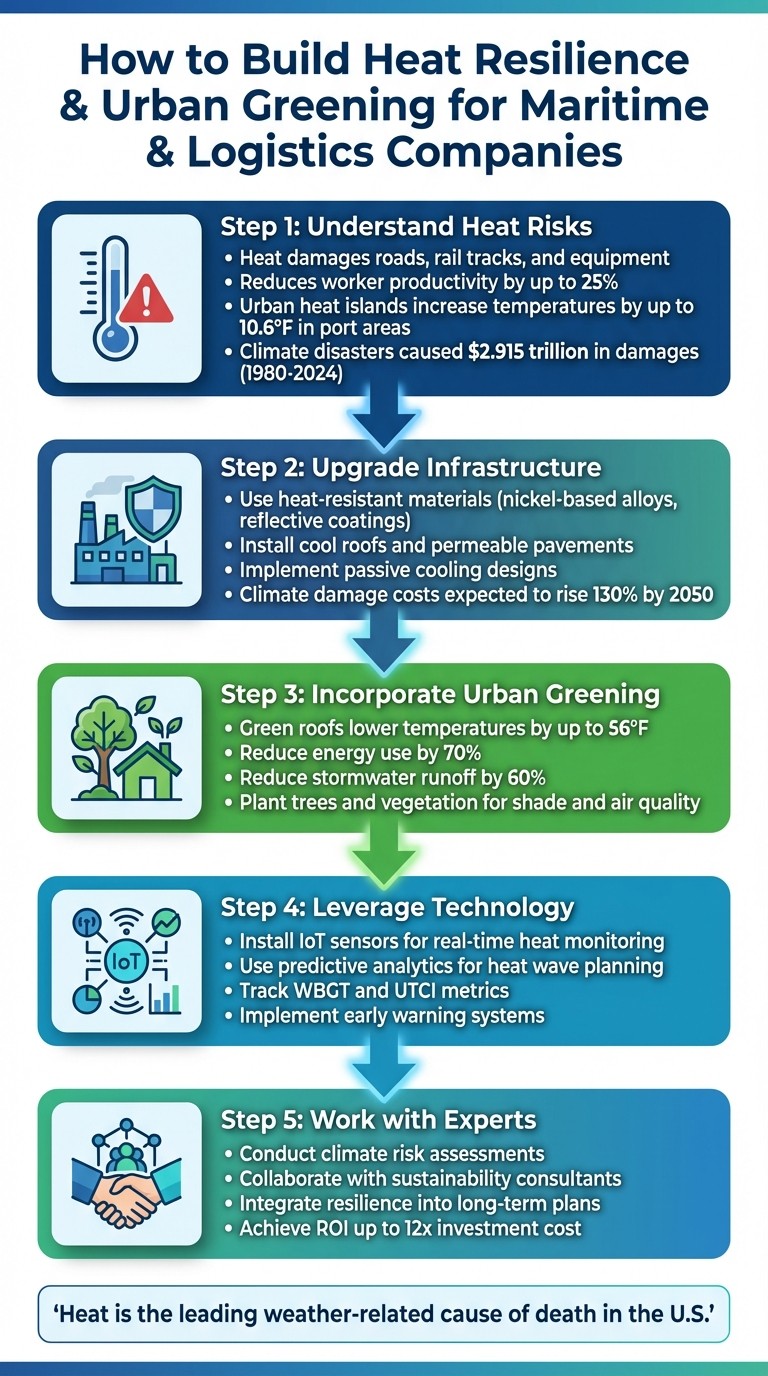
5-Step Heat Resilience Framework for Maritime and Logistics Companies
Heat resilience in urban environments: Making cities cooler
Identifying Heat Risks in Maritime and Logistics Operations
Maritime and logistics industries face growing challenges from extreme heat, making it crucial to pinpoint where risks are most severe. This begins with detailed risk assessments that map heat exposure across assets and supply chains. Between 1980 and 2024, climate-related disasters in the U.S. have caused over $2.915 trillion in damages from 403 billion-dollar events. The annual average of such events has surged from 9.0 (1980–2024) to 23.0 in the past five years alone [10]. By mapping these risks, companies can focus their efforts on targeted assessments and informed infrastructure upgrades.
Running Climate Risk Assessments
Structured frameworks are essential for turning climate data into actionable strategies. The Steps to Resilience Framework provides a clear roadmap: use heat mapping to identify exposure, evaluate vulnerabilities at specific locations, and set priorities for mitigation [6][7]. Tools like Climate Mapping for Resilience and Adaptation (CMRA) and Climate Explorer offer localized projections of temperature changes, helping port managers identify areas most at risk [5][6].
For port-specific insights, the Ports Resilience Index serves as a self-assessment tool, enabling operators to gauge their current resilience levels and identify operational weaknesses before disasters occur [7]. These assessments are critical for prioritizing resilience investments where they will have the greatest impact.
Once overall risks are quantified, the focus shifts to evaluating specific assets for vulnerabilities.
Finding Vulnerable Infrastructure and Equipment
Building on initial assessments, it’s important to determine which assets are most susceptible to extreme heat. Transportation infrastructure, for example, may warp or deform under high temperatures, leading to load restrictions [9]. Energy systems can also face significant strain during heat waves, with increased cooling demands risking power outages that could disrupt port operations [9]. Multi-hazard assessments at maritime facilities further examine how heat, flooding, and seismic risks might simultaneously affect critical structures like wharves, piers, and bulkhead walls [2].
Outdoor operations demand special attention as well. Early heat events pose serious risks to manual laborers and maintenance crews who may not yet be acclimated to extreme conditions [9]. Additionally, heat-sensitive cargo requires strategic planning to avoid financial losses during prolonged heat waves [7][8]. By prioritizing vulnerabilities based on their likelihood and potential impact, maritime and logistics companies can create a focused plan for resilience investments that protect both infrastructure and operations.
Upgrading Infrastructure to Withstand Extreme Heat
Once vulnerabilities are identified, the next step is to upgrade assets to handle extreme heat conditions. For maritime and logistics companies, this is particularly urgent. Urban surfaces like roads and rooftops can reach temperatures between 48°F and 90°F higher than the surrounding air [16]. This intense heat can warp pavement, overburden equipment, and disrupt operations. By using heat-resistant materials and implementing thoughtful design changes, companies can protect their assets and workforce while cutting long-term maintenance costs. The first priority is selecting materials designed for high-temperature environments.
Choosing Heat-Resistant Materials and Technologies
The right materials are critical for balancing performance, cost, and maintenance demands. Traditional materials like steel and aluminum lose their structural integrity under prolonged heat exposure. In contrast, nickel-based superalloys such as Inconel resist deformation and oxidation, making them ideal for high-temperature environments [12]. For even more extreme applications, refractory metals like tungsten (melting point: 6,192°F) and tantalum (5,463°F) provide unmatched heat resistance [12].
"In many high temperature applications, corrosion resistance is as important as heat resistance itself." - Jan Marchewicz, AMAZEMET [12]
Surface treatments also play a pivotal role. High-temperature coatings like PPG HI-TEMP 1027 can protect carbon and stainless steel from corrosion across a temperature range of -300°F to 1,200°F, which is particularly useful in hot, humid maritime settings [11]. Reflective coatings such as Super Therm help reduce solar heat absorption on shipping containers and warehouse roofs, lowering internal temperatures and cutting cooling costs [12]. For insulation, spray foam effectively seals gaps in areas with fluctuating temperatures, while mineral wool offers high thermal resistance for fixed structures [12].
| Material Category | Traditional Option | Heat-Resistant Alternative | Key Benefit |
| --- | --- | --- | --- |
| <strong>Metals</strong> | Standard Steel/Aluminum | Nickel-based Superalloys | Maintain strength and resist deformation under heat |
| <strong>Coatings</strong> | Standard Industrial Paint | Reflective/High-Temp Coatings | Protect against corrosion and reduce solar heat absorption |
| <strong>Insulation</strong> | Basic Air Gaps | Spray Foam/Mineral Wool | Ensure stable internal temperatures despite external heat |
| <strong>Pavement</strong> | Standard Asphalt | Cool Pavements/Permeable Pavers | Resist softening and absorb less solar energy
| Material Category | Traditional Option | Heat-Resistant Alternative | Key Benefit |
| --- | --- | --- | --- |
| <strong>Metals</strong> | Standard Steel/Aluminum | Nickel-based Superalloys | Maintain strength and resist deformation under heat |
| <strong>Coatings</strong> | Standard Industrial Paint | Reflective/High-Temp Coatings | Protect against corrosion and reduce solar heat absorption |
| <strong>Insulation</strong> | Basic Air Gaps | Spray Foam/Mineral Wool | Ensure stable internal temperatures despite external heat |
| <strong>Pavement</strong> | Standard Asphalt | Cool Pavements/Permeable Pavers | Resist softening and absorb less solar energy
Building and Retrofitting Facilities Built for Extreme Heat
Once advanced materials are selected, the focus shifts to integrating them into both new and existing facilities. New construction offers the opportunity to incorporate heat resilience from the beginning. Features like passive cooling systems, including wind towers and strategic shading, can reduce internal temperatures without increasing energy use [4]. Reflective "cool roof" technologies and permeable pavements help to combat the urban heat island effect, which is particularly problematic in port areas [4][16]. For example, applying cool roof solutions can lower workers' exposure to extreme heat by up to 91% annually [4].
For existing structures, retrofitting is essential. In September 2024, A.P. Moller-Maersk collaborated with Zurich Resilience Solutions to conduct climate assessments at five critical terminals, including Rotterdam and Los Angeles. This initiative focused on safeguarding assets like cranes and electrical substations. Research indicates that the cost of climate-related damage is expected to rise by 130% by 2050 compared to 2020 [15]. For warehouses managing perishable goods, retrofitting must include better ventilation and expanded climate-controlled areas to protect goods during extended heat waves [13]. Additionally, equipment such as cranes, conveyors, and forklifts often have strict temperature limits. Beyond these thresholds, they risk technical failures or even fire hazards, making it vital to upgrade components [13].
"The study concluded that the average cost of physical damage and business interruption due to climate change hazards is expected to increase by 130% by 2050, compared to a 2020 baseline." - Lars Henneberg, Vice President and Head of Risk Management, Maersk [15]
Worker safety is another key aspect of retrofitting. Adding hydration stations, cooling zones, and updated equipment designed to reduce heat exposure can help prevent heat-related illnesses and maintain operational efficiency [13].
Adding Urban Greening to Maritime and Logistics Sites
Urban greening enhances infrastructure upgrades by addressing extreme heat, reducing temperatures, and improving resilience in operations. Features like green roofs, living walls, and well-placed trees help lower energy use and improve air quality in ports and logistics hubs. These strategies are particularly effective in industrial areas where expansive paved surfaces and metal structures amplify heat. The challenge lies in choosing greening solutions that align with the space limitations and operational needs of these sites. When combined with prior material upgrades, these natural solutions create a well-rounded approach to managing heat risks.
Installing Green Roofs and Walls
Green roofs transform flat spaces into vegetative layers that provide insulation, significantly lowering surface temperatures - by as much as 56°F - and reducing surrounding air temperatures by up to 20°F. These systems can also cut cooling demands by as much as 70%, while reducing indoor temperatures by approximately 27°F. Extensive green roofs, which are lightweight and require minimal maintenance, are particularly suitable for logistics facilities. They use a thin growing medium, typically 2 to 4 inches, and offer strong energy efficiency and stormwater management benefits [17].
The financial case for green roofs is equally strong. Extensive systems can generate annual cooling energy savings between $0.15 and $0.57 per square yard. Over a 50-year lifespan, these roofs can deliver an additional $14 in benefits per square foot compared to conventional roofing. They also reduce stormwater runoff by about 60% [17][18]. Extensive green roofs are more affordable than intensive ones, costing only a fraction of the price, as they don’t require significant structural reinforcement or high ongoing maintenance. To offset upfront costs, many regions provide incentives like the RiverSmart Rooftops Green Roof Rebate Program or local tax credits for green roofs [1].
Planting Trees and Creating Green Zones
Trees and vegetation help cool industrial sites by providing shade and facilitating evapotranspiration. For space-constrained logistics areas, vegetation can be incorporated into roadside planters, vacant lots, or parking areas. Features like bioswales and permeable pavements can also manage stormwater while mitigating heat [1][19].
Choosing the right plants is essential. Native, drought-tolerant trees, shrubs, and grasses are well-suited for industrial settings, as they require minimal water and maintenance. Collaboration with infrastructure planners ensures that vegetation doesn’t interfere with drainage systems or pavements [1].
Companies can maximize cost efficiency by aligning greening projects with scheduled facility upgrades or road repairs, minimizing standalone expenses. Tools like iTree can quantify environmental benefits - such as energy savings and carbon reduction - helping to demonstrate the financial and ecological return on investment to stakeholders [1].
Using Technology to Monitor and Respond to Heat
Technology has become a cornerstone in managing heat risks, complementing resilient infrastructure and urban greening efforts. For maritime and logistics companies, it offers tools to track heat conditions, safeguard operations, and protect workers. IoT sensors and predictive analytics empower businesses with real-time insights, helping to prevent equipment failures, optimize schedules, and respond proactively to heat-related challenges.
Implementing IoT and Real-Time Monitoring
IoT sensors provide continuous data on temperature, moisture, and structural stress across facilities and equipment. These sensor networks go beyond basic air temperature, offering a comprehensive view of conditions that influence both worker safety and asset performance. Metrics like the Wet Bulb Globe Temperature (WBGT) and the Universal Thermal Comfort Index (UTCI) are particularly effective, as they consider factors like direct sunlight and wind speed, offering a more accurate assessment of heat’s impact on the human body [20].
This real-time data feeds into AI systems that can detect early signs of equipment issues, while digital twins simulate heat scenarios to test system resilience without interrupting operations. Early warning systems provide critical lead time to protect assets, reroute shipments, and implement emergency measures to safeguard workers.
Using Predictive Analytics for Planning
While real-time monitoring addresses immediate risks, predictive analytics turns this data into strategic insights for future planning. Tools such as the CDC's Heat & Health Tracker and the National Weather Service's 5-day outlook allow companies to plan ahead by adjusting routes, altering schedules, or imposing load restrictions during anticipated heat waves [9]. A notable example of effective heat response planning comes from Chicago, where a notification and response program implemented in 1999 dramatically reduced heat-related deaths - from approximately 700 in 1995 to about 100 [9].
Predictive analytics combines historical data, weather trends, and operational metrics to forecast heat-related disruptions. This enables better decision-making for cargo transportation and vessel selection, especially for temperature-sensitive goods. Key performance metrics, such as downtime hours, equipment failure rates, and recovery time to 90% capacity, can help measure the effectiveness of these systems and justify their investment. By integrating climate insights into daily operations rather than relying solely on long-term projections, companies can achieve measurable improvements in resilience and cost efficiency. These technological advancements, when combined with physical upgrades and greening initiatives, create a comprehensive approach to managing heat risks.
Working with Experts for Custom Solutions
Tailored solutions are essential for maritime and logistics companies aiming to address heat resilience and promote urban greening. Sustainability consulting firms like Council Fire provide specialized, data-focused strategies through expert analysis and collaboration across industries - expertise that is often unavailable internally. These experts evaluate heat-related impacts and vulnerabilities to create strategies that align seamlessly with broader operational goals.
Recent industry partnerships highlight the value of consulting expertise. Specialists, such as risk engineers and climate data analysts, are brought in to tackle the rising costs of climate-related damages. Lars Henneberg, Maersk's Vice President and Head of Risk Management, emphasized this point:
"ZRS has the necessary scientific and technical risk engineering capabilities, combined with risk assessment and impact analysis expertise. This will ensure we have recommendations that are both practical and operational." [15]
Engaging experts not only strengthens immediate mitigation efforts but also complements broader upgrades and greening initiatives. Their guidance ensures collaboration across various sectors - such as energy providers, public health agencies, emergency management, and infrastructure teams - resulting in a cohesive response to heat-related risks [21]. Consultants often lead workshops with local terminal staff, embedding mitigation strategies into existing maintenance schedules and investment plans, rather than creating separate initiatives that might compete for resources [15]. They also help organizations avoid ineffective solutions, like over-reliance on air conditioning, which can inadvertently increase greenhouse gas emissions [21].
The most effective consulting partnerships focus on strategies that deliver multiple benefits. For instance, green roofs not only reduce energy costs but also manage stormwater, while heat-tolerant materials for roads and railways ensure uninterrupted service during extreme heat events [21]. Experts also establish measurable success metrics and provide frameworks for ongoing monitoring and evaluation, ensuring resilience efforts yield tangible results over time [21]. This comprehensive approach transforms heat resilience from a regulatory obligation into a competitive edge, safeguarding both assets and financial performance.
Tracking and Improving Resilience Results
Metrics for Measuring Success
To evaluate the effectiveness of heat resilience and urban greening initiatives, it's essential to track measurable outcomes across four key areas:
Operational: Metrics like reduced downtime and fewer infrastructure failures, such as buckling incidents, highlight improvements in system reliability.
Financial: Cost savings from reduced peak-hour energy use - cool roofs, for instance, can lower building energy consumption by 20% [20] - along with increases in property values and benefits from carbon offsets.
Environmental: Indicators like temperature reductions (measured in degrees Fahrenheit) and the amount of stormwater intercepted (in gallons) provide tangible proof of environmental impact.
Health & Safety: Tracking heat-related medical incidents and the percentage of staff trained in heat-stress protocols underscores the human benefits of these measures.
These metrics tie directly to the overarching goal of improving heat resilience and operational efficiency, offering clear evidence of the value created by infrastructure upgrades and greening initiatives.
Tools like iTree make it possible to translate environmental data into financial terms, helping justify investments in urban greening. For example, recent studies show that avoided damage costs provide a compelling return on investment (ROI). Nature-based solutions, when paired with thoughtful urban design, can deliver net benefits up to 12 times their cost [3]. By relying on these metrics, organizations can refine their resilience strategies over time, ensuring ongoing improvement.
Refining Strategies Through Data Analysis
Once meaningful metrics are in place, regular monitoring transforms these efforts into dynamic systems that evolve with changing needs. Real-time tools, such as the CDC's Heat & Health Tracker and the National Weather Service's 5-day outlooks, empower organizations to implement response plans before heat events disrupt operations [9]. A clear example of this approach is Chicago's heat notification and response program. Introduced in 1999, the initiative reduced heat-related deaths to around 100, compared to 700 during a similar heat wave in 1995 [9].
Routine temperature assessments also play a pivotal role, helping operators identify hot spots and prioritize greening efforts where they will have the greatest cooling effect. By integrating green infrastructure data into capital improvement plans and maintenance schedules, companies can adapt strategies over time. For instance, if energy savings fall below expectations, further analysis might reveal the need for additional tree canopy or expanded cool roof installations.
This cycle of measuring, analyzing, and adjusting ensures that resilience efforts remain effective and continue to deliver long-term benefits. By treating resilience as an ongoing process rather than a one-time project, organizations can protect both their physical assets and financial performance in the face of evolving climate challenges.
Conclusion
Addressing heat resilience in maritime and logistics operations is not a one-and-done task - it’s an ongoing effort that demands both mitigating heat impacts and managing operational risks effectively [21]. This approach combines technical upgrades with urban greening solutions to safeguard infrastructure, protect workers, and support operational efficiency while reducing environmental impacts.
Start by incorporating heat-resistant measures and urban greening into your regular capital improvement plans. For example, replace dark pavements with reflective cool surfaces, install green roofs to lower surrounding temperatures, and strategically plant trees to provide shade and cooling through evapotranspiration [1][22]. These urban greening efforts not only help moderate temperatures but also deliver energy savings, making them a smart long-term investment.
Beyond physical upgrades, collaboration across sectors is critical. A strong resilience strategy requires input from facility planners, public health officials, emergency managers, and energy providers to ensure a unified response [21]. Partner with green infrastructure experts to ensure vegetation enhances rather than hinders infrastructure performance, and consider tools like iTree to measure the economic value of your greening initiatives [1]. Avoid counterproductive solutions, such as inefficient air conditioning systems, which may offer temporary relief but contribute to higher greenhouse gas emissions and increased energy demands over time [21].
The urgency is clear. Heat remains the leading weather-related cause of death in the United States [21], and heat-induced productivity losses in cities like Los Angeles are estimated to cost $5 billion annually [4]. By integrating these measures into a broader resilience strategy, organizations can achieve compounded benefits.
As discussed earlier, implement early warning systems to safeguard outdoor workers, evaluate site surfaces for heat risks, and set measurable goals to track progress.
"The more resilience we can build now, the better we can protect them for the future." – Ingrid Lambert, Maritime Project Engineer, Royal HaskoningDHV [14]
Take action today by conducting a climate risk assessment, prioritizing upgrades in vulnerable areas, and monitoring the operational, financial, and health benefits of your initiatives. Companies that take proactive steps to address heat risks will be better prepared to navigate the challenges of a changing climate.
FAQs
What steps can maritime and logistics companies take to identify assets most at risk from extreme heat?
Maritime and logistics companies can identify which assets are most at risk from extreme heat by examining key factors such as their location, the materials used in their construction, and the surrounding conditions. For example, assets located in urban heat islands - areas with dense buildings, limited airflow, and little vegetation - are especially vulnerable. Infrastructure made with materials that absorb heat, like dark-colored roofs or asphalt, faces a higher likelihood of damage under such conditions.
Tools like heat risk maps and climate vulnerability assessments are invaluable for pinpointing these high-risk areas. By analyzing local heat trends, vegetation coverage, and available shading, companies can implement targeted measures to protect critical infrastructure and improve its ability to withstand rising temperatures.
What are the advantages of combining urban greening with heat-resistant infrastructure?
Combining urban greenery with heat-resistant infrastructure delivers a range of advantages, particularly in reducing temperatures and enhancing resilience. Green elements such as trees, vegetation, and green roofs provide natural shade, lower both surface and air temperatures, and cool the surroundings through moisture release. These features play a crucial role in counteracting the heat retained by materials like concrete and asphalt, which significantly contribute to urban heat.
When integrated with heat-resistant solutions like reflective roofs and cool pavements, these measures go even further. They cut down energy consumption for cooling, improve air quality, and reduce the strain that extreme heat places on infrastructure. This combined strategy not only helps cities manage rising temperatures but also fosters healthier, more efficient, and cost-effective urban environments.
How can logistics companies use predictive analytics to prepare for extreme heat?
Predictive analytics offers logistics companies a way to stay ahead of extreme heat by forecasting heatwaves, their intensity, and duration. With this information, businesses can make informed decisions, such as scheduling deliveries during cooler hours, refining delivery routes, or reinforcing infrastructure to withstand high temperatures.
By leveraging historical weather data and climate patterns, these models can pinpoint potential risks. This helps mitigate problems like vehicle overheating, infrastructure breakdowns, or health risks for employees. The result is fewer disruptions and improved efficiency and safety. As heatwaves grow in frequency and intensity, predictive analytics becomes a key tool in preparing logistics operations to handle these challenges effectively.
Related Blog Posts
How to Build a Climate Resilience Plan for Maritime & Logistics Companies
How to Integrate Climate Risk into Infrastructure Planning for Maritime & Logistics Companies
How to Design Coastal Resilience & Flood Mitigation for Maritime & Logistics Companies
How to Build Heat Resilience & Urban Greening for Corporations
Latest Articles
©2025


FAQ
01
What does it really mean to “redefine profit”?
02
What makes Council Fire different?
03
Who does Council Fire you work with?
04
What does working with Council Fire actually look like?
05
How does Council Fire help organizations turn big goals into action?
06
How does Council Fire define and measure success?
Feb 2, 2026
How to Build Heat Resilience & Urban Greening for Maritime & Logistics Companies
Sustainability Strategy
In This Article
How maritime and logistics firms map heat risks, retrofit heat‑resistant assets, add green roofs and trees, and use IoT to protect workers and operations.
How to Build Heat Resilience & Urban Greening for Maritime & Logistics Companies
Understand Heat Risks:
Heat damages roads, rail tracks, and equipment, while reducing worker productivity by up to 25%.
Urban heat islands increase temperatures by up to 10.6°F in port areas.
Upgrade Infrastructure:
Use heat-resistant materials like nickel-based alloys or reflective coatings.
Retrofit facilities with cool roofs, permeable pavements, and passive cooling designs.
Incorporate Urban Greening:
Add green roofs to lower temperatures by up to 56°F and reduce energy use by 70%.
Plant trees and vegetation to provide shade and improve air quality.
Leverage Technology:
Install IoT sensors for real-time monitoring of heat risks.
Use predictive analytics to plan operations during heat waves.
Work with Experts:
Conduct climate risk assessments to identify vulnerabilities.
Collaborate with consultants to integrate heat resilience into long-term plans.
5-Step Heat Resilience Framework for Maritime and Logistics Companies
Heat resilience in urban environments: Making cities cooler
Identifying Heat Risks in Maritime and Logistics Operations
Maritime and logistics industries face growing challenges from extreme heat, making it crucial to pinpoint where risks are most severe. This begins with detailed risk assessments that map heat exposure across assets and supply chains. Between 1980 and 2024, climate-related disasters in the U.S. have caused over $2.915 trillion in damages from 403 billion-dollar events. The annual average of such events has surged from 9.0 (1980–2024) to 23.0 in the past five years alone [10]. By mapping these risks, companies can focus their efforts on targeted assessments and informed infrastructure upgrades.
Running Climate Risk Assessments
Structured frameworks are essential for turning climate data into actionable strategies. The Steps to Resilience Framework provides a clear roadmap: use heat mapping to identify exposure, evaluate vulnerabilities at specific locations, and set priorities for mitigation [6][7]. Tools like Climate Mapping for Resilience and Adaptation (CMRA) and Climate Explorer offer localized projections of temperature changes, helping port managers identify areas most at risk [5][6].
For port-specific insights, the Ports Resilience Index serves as a self-assessment tool, enabling operators to gauge their current resilience levels and identify operational weaknesses before disasters occur [7]. These assessments are critical for prioritizing resilience investments where they will have the greatest impact.
Once overall risks are quantified, the focus shifts to evaluating specific assets for vulnerabilities.
Finding Vulnerable Infrastructure and Equipment
Building on initial assessments, it’s important to determine which assets are most susceptible to extreme heat. Transportation infrastructure, for example, may warp or deform under high temperatures, leading to load restrictions [9]. Energy systems can also face significant strain during heat waves, with increased cooling demands risking power outages that could disrupt port operations [9]. Multi-hazard assessments at maritime facilities further examine how heat, flooding, and seismic risks might simultaneously affect critical structures like wharves, piers, and bulkhead walls [2].
Outdoor operations demand special attention as well. Early heat events pose serious risks to manual laborers and maintenance crews who may not yet be acclimated to extreme conditions [9]. Additionally, heat-sensitive cargo requires strategic planning to avoid financial losses during prolonged heat waves [7][8]. By prioritizing vulnerabilities based on their likelihood and potential impact, maritime and logistics companies can create a focused plan for resilience investments that protect both infrastructure and operations.
Upgrading Infrastructure to Withstand Extreme Heat
Once vulnerabilities are identified, the next step is to upgrade assets to handle extreme heat conditions. For maritime and logistics companies, this is particularly urgent. Urban surfaces like roads and rooftops can reach temperatures between 48°F and 90°F higher than the surrounding air [16]. This intense heat can warp pavement, overburden equipment, and disrupt operations. By using heat-resistant materials and implementing thoughtful design changes, companies can protect their assets and workforce while cutting long-term maintenance costs. The first priority is selecting materials designed for high-temperature environments.
Choosing Heat-Resistant Materials and Technologies
The right materials are critical for balancing performance, cost, and maintenance demands. Traditional materials like steel and aluminum lose their structural integrity under prolonged heat exposure. In contrast, nickel-based superalloys such as Inconel resist deformation and oxidation, making them ideal for high-temperature environments [12]. For even more extreme applications, refractory metals like tungsten (melting point: 6,192°F) and tantalum (5,463°F) provide unmatched heat resistance [12].
"In many high temperature applications, corrosion resistance is as important as heat resistance itself." - Jan Marchewicz, AMAZEMET [12]
Surface treatments also play a pivotal role. High-temperature coatings like PPG HI-TEMP 1027 can protect carbon and stainless steel from corrosion across a temperature range of -300°F to 1,200°F, which is particularly useful in hot, humid maritime settings [11]. Reflective coatings such as Super Therm help reduce solar heat absorption on shipping containers and warehouse roofs, lowering internal temperatures and cutting cooling costs [12]. For insulation, spray foam effectively seals gaps in areas with fluctuating temperatures, while mineral wool offers high thermal resistance for fixed structures [12].
| Material Category | Traditional Option | Heat-Resistant Alternative | Key Benefit |
| --- | --- | --- | --- |
| <strong>Metals</strong> | Standard Steel/Aluminum | Nickel-based Superalloys | Maintain strength and resist deformation under heat |
| <strong>Coatings</strong> | Standard Industrial Paint | Reflective/High-Temp Coatings | Protect against corrosion and reduce solar heat absorption |
| <strong>Insulation</strong> | Basic Air Gaps | Spray Foam/Mineral Wool | Ensure stable internal temperatures despite external heat |
| <strong>Pavement</strong> | Standard Asphalt | Cool Pavements/Permeable Pavers | Resist softening and absorb less solar energy
Building and Retrofitting Facilities Built for Extreme Heat
Once advanced materials are selected, the focus shifts to integrating them into both new and existing facilities. New construction offers the opportunity to incorporate heat resilience from the beginning. Features like passive cooling systems, including wind towers and strategic shading, can reduce internal temperatures without increasing energy use [4]. Reflective "cool roof" technologies and permeable pavements help to combat the urban heat island effect, which is particularly problematic in port areas [4][16]. For example, applying cool roof solutions can lower workers' exposure to extreme heat by up to 91% annually [4].
For existing structures, retrofitting is essential. In September 2024, A.P. Moller-Maersk collaborated with Zurich Resilience Solutions to conduct climate assessments at five critical terminals, including Rotterdam and Los Angeles. This initiative focused on safeguarding assets like cranes and electrical substations. Research indicates that the cost of climate-related damage is expected to rise by 130% by 2050 compared to 2020 [15]. For warehouses managing perishable goods, retrofitting must include better ventilation and expanded climate-controlled areas to protect goods during extended heat waves [13]. Additionally, equipment such as cranes, conveyors, and forklifts often have strict temperature limits. Beyond these thresholds, they risk technical failures or even fire hazards, making it vital to upgrade components [13].
"The study concluded that the average cost of physical damage and business interruption due to climate change hazards is expected to increase by 130% by 2050, compared to a 2020 baseline." - Lars Henneberg, Vice President and Head of Risk Management, Maersk [15]
Worker safety is another key aspect of retrofitting. Adding hydration stations, cooling zones, and updated equipment designed to reduce heat exposure can help prevent heat-related illnesses and maintain operational efficiency [13].
Adding Urban Greening to Maritime and Logistics Sites
Urban greening enhances infrastructure upgrades by addressing extreme heat, reducing temperatures, and improving resilience in operations. Features like green roofs, living walls, and well-placed trees help lower energy use and improve air quality in ports and logistics hubs. These strategies are particularly effective in industrial areas where expansive paved surfaces and metal structures amplify heat. The challenge lies in choosing greening solutions that align with the space limitations and operational needs of these sites. When combined with prior material upgrades, these natural solutions create a well-rounded approach to managing heat risks.
Installing Green Roofs and Walls
Green roofs transform flat spaces into vegetative layers that provide insulation, significantly lowering surface temperatures - by as much as 56°F - and reducing surrounding air temperatures by up to 20°F. These systems can also cut cooling demands by as much as 70%, while reducing indoor temperatures by approximately 27°F. Extensive green roofs, which are lightweight and require minimal maintenance, are particularly suitable for logistics facilities. They use a thin growing medium, typically 2 to 4 inches, and offer strong energy efficiency and stormwater management benefits [17].
The financial case for green roofs is equally strong. Extensive systems can generate annual cooling energy savings between $0.15 and $0.57 per square yard. Over a 50-year lifespan, these roofs can deliver an additional $14 in benefits per square foot compared to conventional roofing. They also reduce stormwater runoff by about 60% [17][18]. Extensive green roofs are more affordable than intensive ones, costing only a fraction of the price, as they don’t require significant structural reinforcement or high ongoing maintenance. To offset upfront costs, many regions provide incentives like the RiverSmart Rooftops Green Roof Rebate Program or local tax credits for green roofs [1].
Planting Trees and Creating Green Zones
Trees and vegetation help cool industrial sites by providing shade and facilitating evapotranspiration. For space-constrained logistics areas, vegetation can be incorporated into roadside planters, vacant lots, or parking areas. Features like bioswales and permeable pavements can also manage stormwater while mitigating heat [1][19].
Choosing the right plants is essential. Native, drought-tolerant trees, shrubs, and grasses are well-suited for industrial settings, as they require minimal water and maintenance. Collaboration with infrastructure planners ensures that vegetation doesn’t interfere with drainage systems or pavements [1].
Companies can maximize cost efficiency by aligning greening projects with scheduled facility upgrades or road repairs, minimizing standalone expenses. Tools like iTree can quantify environmental benefits - such as energy savings and carbon reduction - helping to demonstrate the financial and ecological return on investment to stakeholders [1].
Using Technology to Monitor and Respond to Heat
Technology has become a cornerstone in managing heat risks, complementing resilient infrastructure and urban greening efforts. For maritime and logistics companies, it offers tools to track heat conditions, safeguard operations, and protect workers. IoT sensors and predictive analytics empower businesses with real-time insights, helping to prevent equipment failures, optimize schedules, and respond proactively to heat-related challenges.
Implementing IoT and Real-Time Monitoring
IoT sensors provide continuous data on temperature, moisture, and structural stress across facilities and equipment. These sensor networks go beyond basic air temperature, offering a comprehensive view of conditions that influence both worker safety and asset performance. Metrics like the Wet Bulb Globe Temperature (WBGT) and the Universal Thermal Comfort Index (UTCI) are particularly effective, as they consider factors like direct sunlight and wind speed, offering a more accurate assessment of heat’s impact on the human body [20].
This real-time data feeds into AI systems that can detect early signs of equipment issues, while digital twins simulate heat scenarios to test system resilience without interrupting operations. Early warning systems provide critical lead time to protect assets, reroute shipments, and implement emergency measures to safeguard workers.
Using Predictive Analytics for Planning
While real-time monitoring addresses immediate risks, predictive analytics turns this data into strategic insights for future planning. Tools such as the CDC's Heat & Health Tracker and the National Weather Service's 5-day outlook allow companies to plan ahead by adjusting routes, altering schedules, or imposing load restrictions during anticipated heat waves [9]. A notable example of effective heat response planning comes from Chicago, where a notification and response program implemented in 1999 dramatically reduced heat-related deaths - from approximately 700 in 1995 to about 100 [9].
Predictive analytics combines historical data, weather trends, and operational metrics to forecast heat-related disruptions. This enables better decision-making for cargo transportation and vessel selection, especially for temperature-sensitive goods. Key performance metrics, such as downtime hours, equipment failure rates, and recovery time to 90% capacity, can help measure the effectiveness of these systems and justify their investment. By integrating climate insights into daily operations rather than relying solely on long-term projections, companies can achieve measurable improvements in resilience and cost efficiency. These technological advancements, when combined with physical upgrades and greening initiatives, create a comprehensive approach to managing heat risks.
Working with Experts for Custom Solutions
Tailored solutions are essential for maritime and logistics companies aiming to address heat resilience and promote urban greening. Sustainability consulting firms like Council Fire provide specialized, data-focused strategies through expert analysis and collaboration across industries - expertise that is often unavailable internally. These experts evaluate heat-related impacts and vulnerabilities to create strategies that align seamlessly with broader operational goals.
Recent industry partnerships highlight the value of consulting expertise. Specialists, such as risk engineers and climate data analysts, are brought in to tackle the rising costs of climate-related damages. Lars Henneberg, Maersk's Vice President and Head of Risk Management, emphasized this point:
"ZRS has the necessary scientific and technical risk engineering capabilities, combined with risk assessment and impact analysis expertise. This will ensure we have recommendations that are both practical and operational." [15]
Engaging experts not only strengthens immediate mitigation efforts but also complements broader upgrades and greening initiatives. Their guidance ensures collaboration across various sectors - such as energy providers, public health agencies, emergency management, and infrastructure teams - resulting in a cohesive response to heat-related risks [21]. Consultants often lead workshops with local terminal staff, embedding mitigation strategies into existing maintenance schedules and investment plans, rather than creating separate initiatives that might compete for resources [15]. They also help organizations avoid ineffective solutions, like over-reliance on air conditioning, which can inadvertently increase greenhouse gas emissions [21].
The most effective consulting partnerships focus on strategies that deliver multiple benefits. For instance, green roofs not only reduce energy costs but also manage stormwater, while heat-tolerant materials for roads and railways ensure uninterrupted service during extreme heat events [21]. Experts also establish measurable success metrics and provide frameworks for ongoing monitoring and evaluation, ensuring resilience efforts yield tangible results over time [21]. This comprehensive approach transforms heat resilience from a regulatory obligation into a competitive edge, safeguarding both assets and financial performance.
Tracking and Improving Resilience Results
Metrics for Measuring Success
To evaluate the effectiveness of heat resilience and urban greening initiatives, it's essential to track measurable outcomes across four key areas:
Operational: Metrics like reduced downtime and fewer infrastructure failures, such as buckling incidents, highlight improvements in system reliability.
Financial: Cost savings from reduced peak-hour energy use - cool roofs, for instance, can lower building energy consumption by 20% [20] - along with increases in property values and benefits from carbon offsets.
Environmental: Indicators like temperature reductions (measured in degrees Fahrenheit) and the amount of stormwater intercepted (in gallons) provide tangible proof of environmental impact.
Health & Safety: Tracking heat-related medical incidents and the percentage of staff trained in heat-stress protocols underscores the human benefits of these measures.
These metrics tie directly to the overarching goal of improving heat resilience and operational efficiency, offering clear evidence of the value created by infrastructure upgrades and greening initiatives.
Tools like iTree make it possible to translate environmental data into financial terms, helping justify investments in urban greening. For example, recent studies show that avoided damage costs provide a compelling return on investment (ROI). Nature-based solutions, when paired with thoughtful urban design, can deliver net benefits up to 12 times their cost [3]. By relying on these metrics, organizations can refine their resilience strategies over time, ensuring ongoing improvement.
Refining Strategies Through Data Analysis
Once meaningful metrics are in place, regular monitoring transforms these efforts into dynamic systems that evolve with changing needs. Real-time tools, such as the CDC's Heat & Health Tracker and the National Weather Service's 5-day outlooks, empower organizations to implement response plans before heat events disrupt operations [9]. A clear example of this approach is Chicago's heat notification and response program. Introduced in 1999, the initiative reduced heat-related deaths to around 100, compared to 700 during a similar heat wave in 1995 [9].
Routine temperature assessments also play a pivotal role, helping operators identify hot spots and prioritize greening efforts where they will have the greatest cooling effect. By integrating green infrastructure data into capital improvement plans and maintenance schedules, companies can adapt strategies over time. For instance, if energy savings fall below expectations, further analysis might reveal the need for additional tree canopy or expanded cool roof installations.
This cycle of measuring, analyzing, and adjusting ensures that resilience efforts remain effective and continue to deliver long-term benefits. By treating resilience as an ongoing process rather than a one-time project, organizations can protect both their physical assets and financial performance in the face of evolving climate challenges.
Conclusion
Addressing heat resilience in maritime and logistics operations is not a one-and-done task - it’s an ongoing effort that demands both mitigating heat impacts and managing operational risks effectively [21]. This approach combines technical upgrades with urban greening solutions to safeguard infrastructure, protect workers, and support operational efficiency while reducing environmental impacts.
Start by incorporating heat-resistant measures and urban greening into your regular capital improvement plans. For example, replace dark pavements with reflective cool surfaces, install green roofs to lower surrounding temperatures, and strategically plant trees to provide shade and cooling through evapotranspiration [1][22]. These urban greening efforts not only help moderate temperatures but also deliver energy savings, making them a smart long-term investment.
Beyond physical upgrades, collaboration across sectors is critical. A strong resilience strategy requires input from facility planners, public health officials, emergency managers, and energy providers to ensure a unified response [21]. Partner with green infrastructure experts to ensure vegetation enhances rather than hinders infrastructure performance, and consider tools like iTree to measure the economic value of your greening initiatives [1]. Avoid counterproductive solutions, such as inefficient air conditioning systems, which may offer temporary relief but contribute to higher greenhouse gas emissions and increased energy demands over time [21].
The urgency is clear. Heat remains the leading weather-related cause of death in the United States [21], and heat-induced productivity losses in cities like Los Angeles are estimated to cost $5 billion annually [4]. By integrating these measures into a broader resilience strategy, organizations can achieve compounded benefits.
As discussed earlier, implement early warning systems to safeguard outdoor workers, evaluate site surfaces for heat risks, and set measurable goals to track progress.
"The more resilience we can build now, the better we can protect them for the future." – Ingrid Lambert, Maritime Project Engineer, Royal HaskoningDHV [14]
Take action today by conducting a climate risk assessment, prioritizing upgrades in vulnerable areas, and monitoring the operational, financial, and health benefits of your initiatives. Companies that take proactive steps to address heat risks will be better prepared to navigate the challenges of a changing climate.
FAQs
What steps can maritime and logistics companies take to identify assets most at risk from extreme heat?
Maritime and logistics companies can identify which assets are most at risk from extreme heat by examining key factors such as their location, the materials used in their construction, and the surrounding conditions. For example, assets located in urban heat islands - areas with dense buildings, limited airflow, and little vegetation - are especially vulnerable. Infrastructure made with materials that absorb heat, like dark-colored roofs or asphalt, faces a higher likelihood of damage under such conditions.
Tools like heat risk maps and climate vulnerability assessments are invaluable for pinpointing these high-risk areas. By analyzing local heat trends, vegetation coverage, and available shading, companies can implement targeted measures to protect critical infrastructure and improve its ability to withstand rising temperatures.
What are the advantages of combining urban greening with heat-resistant infrastructure?
Combining urban greenery with heat-resistant infrastructure delivers a range of advantages, particularly in reducing temperatures and enhancing resilience. Green elements such as trees, vegetation, and green roofs provide natural shade, lower both surface and air temperatures, and cool the surroundings through moisture release. These features play a crucial role in counteracting the heat retained by materials like concrete and asphalt, which significantly contribute to urban heat.
When integrated with heat-resistant solutions like reflective roofs and cool pavements, these measures go even further. They cut down energy consumption for cooling, improve air quality, and reduce the strain that extreme heat places on infrastructure. This combined strategy not only helps cities manage rising temperatures but also fosters healthier, more efficient, and cost-effective urban environments.
How can logistics companies use predictive analytics to prepare for extreme heat?
Predictive analytics offers logistics companies a way to stay ahead of extreme heat by forecasting heatwaves, their intensity, and duration. With this information, businesses can make informed decisions, such as scheduling deliveries during cooler hours, refining delivery routes, or reinforcing infrastructure to withstand high temperatures.
By leveraging historical weather data and climate patterns, these models can pinpoint potential risks. This helps mitigate problems like vehicle overheating, infrastructure breakdowns, or health risks for employees. The result is fewer disruptions and improved efficiency and safety. As heatwaves grow in frequency and intensity, predictive analytics becomes a key tool in preparing logistics operations to handle these challenges effectively.
Related Blog Posts
How to Build a Climate Resilience Plan for Maritime & Logistics Companies
How to Integrate Climate Risk into Infrastructure Planning for Maritime & Logistics Companies
How to Design Coastal Resilience & Flood Mitigation for Maritime & Logistics Companies
How to Build Heat Resilience & Urban Greening for Corporations
FAQ
01
What does it really mean to “redefine profit”?
02
What makes Council Fire different?
03
Who does Council Fire you work with?
04
What does working with Council Fire actually look like?
05
How does Council Fire help organizations turn big goals into action?
06
How does Council Fire define and measure success?
Feb 2, 2026
How to Build Heat Resilience & Urban Greening for Maritime & Logistics Companies
Sustainability Strategy
In This Article
How maritime and logistics firms map heat risks, retrofit heat‑resistant assets, add green roofs and trees, and use IoT to protect workers and operations.
How to Build Heat Resilience & Urban Greening for Maritime & Logistics Companies
Understand Heat Risks:
Heat damages roads, rail tracks, and equipment, while reducing worker productivity by up to 25%.
Urban heat islands increase temperatures by up to 10.6°F in port areas.
Upgrade Infrastructure:
Use heat-resistant materials like nickel-based alloys or reflective coatings.
Retrofit facilities with cool roofs, permeable pavements, and passive cooling designs.
Incorporate Urban Greening:
Add green roofs to lower temperatures by up to 56°F and reduce energy use by 70%.
Plant trees and vegetation to provide shade and improve air quality.
Leverage Technology:
Install IoT sensors for real-time monitoring of heat risks.
Use predictive analytics to plan operations during heat waves.
Work with Experts:
Conduct climate risk assessments to identify vulnerabilities.
Collaborate with consultants to integrate heat resilience into long-term plans.
5-Step Heat Resilience Framework for Maritime and Logistics Companies
Heat resilience in urban environments: Making cities cooler
Identifying Heat Risks in Maritime and Logistics Operations
Maritime and logistics industries face growing challenges from extreme heat, making it crucial to pinpoint where risks are most severe. This begins with detailed risk assessments that map heat exposure across assets and supply chains. Between 1980 and 2024, climate-related disasters in the U.S. have caused over $2.915 trillion in damages from 403 billion-dollar events. The annual average of such events has surged from 9.0 (1980–2024) to 23.0 in the past five years alone [10]. By mapping these risks, companies can focus their efforts on targeted assessments and informed infrastructure upgrades.
Running Climate Risk Assessments
Structured frameworks are essential for turning climate data into actionable strategies. The Steps to Resilience Framework provides a clear roadmap: use heat mapping to identify exposure, evaluate vulnerabilities at specific locations, and set priorities for mitigation [6][7]. Tools like Climate Mapping for Resilience and Adaptation (CMRA) and Climate Explorer offer localized projections of temperature changes, helping port managers identify areas most at risk [5][6].
For port-specific insights, the Ports Resilience Index serves as a self-assessment tool, enabling operators to gauge their current resilience levels and identify operational weaknesses before disasters occur [7]. These assessments are critical for prioritizing resilience investments where they will have the greatest impact.
Once overall risks are quantified, the focus shifts to evaluating specific assets for vulnerabilities.
Finding Vulnerable Infrastructure and Equipment
Building on initial assessments, it’s important to determine which assets are most susceptible to extreme heat. Transportation infrastructure, for example, may warp or deform under high temperatures, leading to load restrictions [9]. Energy systems can also face significant strain during heat waves, with increased cooling demands risking power outages that could disrupt port operations [9]. Multi-hazard assessments at maritime facilities further examine how heat, flooding, and seismic risks might simultaneously affect critical structures like wharves, piers, and bulkhead walls [2].
Outdoor operations demand special attention as well. Early heat events pose serious risks to manual laborers and maintenance crews who may not yet be acclimated to extreme conditions [9]. Additionally, heat-sensitive cargo requires strategic planning to avoid financial losses during prolonged heat waves [7][8]. By prioritizing vulnerabilities based on their likelihood and potential impact, maritime and logistics companies can create a focused plan for resilience investments that protect both infrastructure and operations.
Upgrading Infrastructure to Withstand Extreme Heat
Once vulnerabilities are identified, the next step is to upgrade assets to handle extreme heat conditions. For maritime and logistics companies, this is particularly urgent. Urban surfaces like roads and rooftops can reach temperatures between 48°F and 90°F higher than the surrounding air [16]. This intense heat can warp pavement, overburden equipment, and disrupt operations. By using heat-resistant materials and implementing thoughtful design changes, companies can protect their assets and workforce while cutting long-term maintenance costs. The first priority is selecting materials designed for high-temperature environments.
Choosing Heat-Resistant Materials and Technologies
The right materials are critical for balancing performance, cost, and maintenance demands. Traditional materials like steel and aluminum lose their structural integrity under prolonged heat exposure. In contrast, nickel-based superalloys such as Inconel resist deformation and oxidation, making them ideal for high-temperature environments [12]. For even more extreme applications, refractory metals like tungsten (melting point: 6,192°F) and tantalum (5,463°F) provide unmatched heat resistance [12].
"In many high temperature applications, corrosion resistance is as important as heat resistance itself." - Jan Marchewicz, AMAZEMET [12]
Surface treatments also play a pivotal role. High-temperature coatings like PPG HI-TEMP 1027 can protect carbon and stainless steel from corrosion across a temperature range of -300°F to 1,200°F, which is particularly useful in hot, humid maritime settings [11]. Reflective coatings such as Super Therm help reduce solar heat absorption on shipping containers and warehouse roofs, lowering internal temperatures and cutting cooling costs [12]. For insulation, spray foam effectively seals gaps in areas with fluctuating temperatures, while mineral wool offers high thermal resistance for fixed structures [12].
| Material Category | Traditional Option | Heat-Resistant Alternative | Key Benefit |
| --- | --- | --- | --- |
| <strong>Metals</strong> | Standard Steel/Aluminum | Nickel-based Superalloys | Maintain strength and resist deformation under heat |
| <strong>Coatings</strong> | Standard Industrial Paint | Reflective/High-Temp Coatings | Protect against corrosion and reduce solar heat absorption |
| <strong>Insulation</strong> | Basic Air Gaps | Spray Foam/Mineral Wool | Ensure stable internal temperatures despite external heat |
| <strong>Pavement</strong> | Standard Asphalt | Cool Pavements/Permeable Pavers | Resist softening and absorb less solar energy
Building and Retrofitting Facilities Built for Extreme Heat
Once advanced materials are selected, the focus shifts to integrating them into both new and existing facilities. New construction offers the opportunity to incorporate heat resilience from the beginning. Features like passive cooling systems, including wind towers and strategic shading, can reduce internal temperatures without increasing energy use [4]. Reflective "cool roof" technologies and permeable pavements help to combat the urban heat island effect, which is particularly problematic in port areas [4][16]. For example, applying cool roof solutions can lower workers' exposure to extreme heat by up to 91% annually [4].
For existing structures, retrofitting is essential. In September 2024, A.P. Moller-Maersk collaborated with Zurich Resilience Solutions to conduct climate assessments at five critical terminals, including Rotterdam and Los Angeles. This initiative focused on safeguarding assets like cranes and electrical substations. Research indicates that the cost of climate-related damage is expected to rise by 130% by 2050 compared to 2020 [15]. For warehouses managing perishable goods, retrofitting must include better ventilation and expanded climate-controlled areas to protect goods during extended heat waves [13]. Additionally, equipment such as cranes, conveyors, and forklifts often have strict temperature limits. Beyond these thresholds, they risk technical failures or even fire hazards, making it vital to upgrade components [13].
"The study concluded that the average cost of physical damage and business interruption due to climate change hazards is expected to increase by 130% by 2050, compared to a 2020 baseline." - Lars Henneberg, Vice President and Head of Risk Management, Maersk [15]
Worker safety is another key aspect of retrofitting. Adding hydration stations, cooling zones, and updated equipment designed to reduce heat exposure can help prevent heat-related illnesses and maintain operational efficiency [13].
Adding Urban Greening to Maritime and Logistics Sites
Urban greening enhances infrastructure upgrades by addressing extreme heat, reducing temperatures, and improving resilience in operations. Features like green roofs, living walls, and well-placed trees help lower energy use and improve air quality in ports and logistics hubs. These strategies are particularly effective in industrial areas where expansive paved surfaces and metal structures amplify heat. The challenge lies in choosing greening solutions that align with the space limitations and operational needs of these sites. When combined with prior material upgrades, these natural solutions create a well-rounded approach to managing heat risks.
Installing Green Roofs and Walls
Green roofs transform flat spaces into vegetative layers that provide insulation, significantly lowering surface temperatures - by as much as 56°F - and reducing surrounding air temperatures by up to 20°F. These systems can also cut cooling demands by as much as 70%, while reducing indoor temperatures by approximately 27°F. Extensive green roofs, which are lightweight and require minimal maintenance, are particularly suitable for logistics facilities. They use a thin growing medium, typically 2 to 4 inches, and offer strong energy efficiency and stormwater management benefits [17].
The financial case for green roofs is equally strong. Extensive systems can generate annual cooling energy savings between $0.15 and $0.57 per square yard. Over a 50-year lifespan, these roofs can deliver an additional $14 in benefits per square foot compared to conventional roofing. They also reduce stormwater runoff by about 60% [17][18]. Extensive green roofs are more affordable than intensive ones, costing only a fraction of the price, as they don’t require significant structural reinforcement or high ongoing maintenance. To offset upfront costs, many regions provide incentives like the RiverSmart Rooftops Green Roof Rebate Program or local tax credits for green roofs [1].
Planting Trees and Creating Green Zones
Trees and vegetation help cool industrial sites by providing shade and facilitating evapotranspiration. For space-constrained logistics areas, vegetation can be incorporated into roadside planters, vacant lots, or parking areas. Features like bioswales and permeable pavements can also manage stormwater while mitigating heat [1][19].
Choosing the right plants is essential. Native, drought-tolerant trees, shrubs, and grasses are well-suited for industrial settings, as they require minimal water and maintenance. Collaboration with infrastructure planners ensures that vegetation doesn’t interfere with drainage systems or pavements [1].
Companies can maximize cost efficiency by aligning greening projects with scheduled facility upgrades or road repairs, minimizing standalone expenses. Tools like iTree can quantify environmental benefits - such as energy savings and carbon reduction - helping to demonstrate the financial and ecological return on investment to stakeholders [1].
Using Technology to Monitor and Respond to Heat
Technology has become a cornerstone in managing heat risks, complementing resilient infrastructure and urban greening efforts. For maritime and logistics companies, it offers tools to track heat conditions, safeguard operations, and protect workers. IoT sensors and predictive analytics empower businesses with real-time insights, helping to prevent equipment failures, optimize schedules, and respond proactively to heat-related challenges.
Implementing IoT and Real-Time Monitoring
IoT sensors provide continuous data on temperature, moisture, and structural stress across facilities and equipment. These sensor networks go beyond basic air temperature, offering a comprehensive view of conditions that influence both worker safety and asset performance. Metrics like the Wet Bulb Globe Temperature (WBGT) and the Universal Thermal Comfort Index (UTCI) are particularly effective, as they consider factors like direct sunlight and wind speed, offering a more accurate assessment of heat’s impact on the human body [20].
This real-time data feeds into AI systems that can detect early signs of equipment issues, while digital twins simulate heat scenarios to test system resilience without interrupting operations. Early warning systems provide critical lead time to protect assets, reroute shipments, and implement emergency measures to safeguard workers.
Using Predictive Analytics for Planning
While real-time monitoring addresses immediate risks, predictive analytics turns this data into strategic insights for future planning. Tools such as the CDC's Heat & Health Tracker and the National Weather Service's 5-day outlook allow companies to plan ahead by adjusting routes, altering schedules, or imposing load restrictions during anticipated heat waves [9]. A notable example of effective heat response planning comes from Chicago, where a notification and response program implemented in 1999 dramatically reduced heat-related deaths - from approximately 700 in 1995 to about 100 [9].
Predictive analytics combines historical data, weather trends, and operational metrics to forecast heat-related disruptions. This enables better decision-making for cargo transportation and vessel selection, especially for temperature-sensitive goods. Key performance metrics, such as downtime hours, equipment failure rates, and recovery time to 90% capacity, can help measure the effectiveness of these systems and justify their investment. By integrating climate insights into daily operations rather than relying solely on long-term projections, companies can achieve measurable improvements in resilience and cost efficiency. These technological advancements, when combined with physical upgrades and greening initiatives, create a comprehensive approach to managing heat risks.
Working with Experts for Custom Solutions
Tailored solutions are essential for maritime and logistics companies aiming to address heat resilience and promote urban greening. Sustainability consulting firms like Council Fire provide specialized, data-focused strategies through expert analysis and collaboration across industries - expertise that is often unavailable internally. These experts evaluate heat-related impacts and vulnerabilities to create strategies that align seamlessly with broader operational goals.
Recent industry partnerships highlight the value of consulting expertise. Specialists, such as risk engineers and climate data analysts, are brought in to tackle the rising costs of climate-related damages. Lars Henneberg, Maersk's Vice President and Head of Risk Management, emphasized this point:
"ZRS has the necessary scientific and technical risk engineering capabilities, combined with risk assessment and impact analysis expertise. This will ensure we have recommendations that are both practical and operational." [15]
Engaging experts not only strengthens immediate mitigation efforts but also complements broader upgrades and greening initiatives. Their guidance ensures collaboration across various sectors - such as energy providers, public health agencies, emergency management, and infrastructure teams - resulting in a cohesive response to heat-related risks [21]. Consultants often lead workshops with local terminal staff, embedding mitigation strategies into existing maintenance schedules and investment plans, rather than creating separate initiatives that might compete for resources [15]. They also help organizations avoid ineffective solutions, like over-reliance on air conditioning, which can inadvertently increase greenhouse gas emissions [21].
The most effective consulting partnerships focus on strategies that deliver multiple benefits. For instance, green roofs not only reduce energy costs but also manage stormwater, while heat-tolerant materials for roads and railways ensure uninterrupted service during extreme heat events [21]. Experts also establish measurable success metrics and provide frameworks for ongoing monitoring and evaluation, ensuring resilience efforts yield tangible results over time [21]. This comprehensive approach transforms heat resilience from a regulatory obligation into a competitive edge, safeguarding both assets and financial performance.
Tracking and Improving Resilience Results
Metrics for Measuring Success
To evaluate the effectiveness of heat resilience and urban greening initiatives, it's essential to track measurable outcomes across four key areas:
Operational: Metrics like reduced downtime and fewer infrastructure failures, such as buckling incidents, highlight improvements in system reliability.
Financial: Cost savings from reduced peak-hour energy use - cool roofs, for instance, can lower building energy consumption by 20% [20] - along with increases in property values and benefits from carbon offsets.
Environmental: Indicators like temperature reductions (measured in degrees Fahrenheit) and the amount of stormwater intercepted (in gallons) provide tangible proof of environmental impact.
Health & Safety: Tracking heat-related medical incidents and the percentage of staff trained in heat-stress protocols underscores the human benefits of these measures.
These metrics tie directly to the overarching goal of improving heat resilience and operational efficiency, offering clear evidence of the value created by infrastructure upgrades and greening initiatives.
Tools like iTree make it possible to translate environmental data into financial terms, helping justify investments in urban greening. For example, recent studies show that avoided damage costs provide a compelling return on investment (ROI). Nature-based solutions, when paired with thoughtful urban design, can deliver net benefits up to 12 times their cost [3]. By relying on these metrics, organizations can refine their resilience strategies over time, ensuring ongoing improvement.
Refining Strategies Through Data Analysis
Once meaningful metrics are in place, regular monitoring transforms these efforts into dynamic systems that evolve with changing needs. Real-time tools, such as the CDC's Heat & Health Tracker and the National Weather Service's 5-day outlooks, empower organizations to implement response plans before heat events disrupt operations [9]. A clear example of this approach is Chicago's heat notification and response program. Introduced in 1999, the initiative reduced heat-related deaths to around 100, compared to 700 during a similar heat wave in 1995 [9].
Routine temperature assessments also play a pivotal role, helping operators identify hot spots and prioritize greening efforts where they will have the greatest cooling effect. By integrating green infrastructure data into capital improvement plans and maintenance schedules, companies can adapt strategies over time. For instance, if energy savings fall below expectations, further analysis might reveal the need for additional tree canopy or expanded cool roof installations.
This cycle of measuring, analyzing, and adjusting ensures that resilience efforts remain effective and continue to deliver long-term benefits. By treating resilience as an ongoing process rather than a one-time project, organizations can protect both their physical assets and financial performance in the face of evolving climate challenges.
Conclusion
Addressing heat resilience in maritime and logistics operations is not a one-and-done task - it’s an ongoing effort that demands both mitigating heat impacts and managing operational risks effectively [21]. This approach combines technical upgrades with urban greening solutions to safeguard infrastructure, protect workers, and support operational efficiency while reducing environmental impacts.
Start by incorporating heat-resistant measures and urban greening into your regular capital improvement plans. For example, replace dark pavements with reflective cool surfaces, install green roofs to lower surrounding temperatures, and strategically plant trees to provide shade and cooling through evapotranspiration [1][22]. These urban greening efforts not only help moderate temperatures but also deliver energy savings, making them a smart long-term investment.
Beyond physical upgrades, collaboration across sectors is critical. A strong resilience strategy requires input from facility planners, public health officials, emergency managers, and energy providers to ensure a unified response [21]. Partner with green infrastructure experts to ensure vegetation enhances rather than hinders infrastructure performance, and consider tools like iTree to measure the economic value of your greening initiatives [1]. Avoid counterproductive solutions, such as inefficient air conditioning systems, which may offer temporary relief but contribute to higher greenhouse gas emissions and increased energy demands over time [21].
The urgency is clear. Heat remains the leading weather-related cause of death in the United States [21], and heat-induced productivity losses in cities like Los Angeles are estimated to cost $5 billion annually [4]. By integrating these measures into a broader resilience strategy, organizations can achieve compounded benefits.
As discussed earlier, implement early warning systems to safeguard outdoor workers, evaluate site surfaces for heat risks, and set measurable goals to track progress.
"The more resilience we can build now, the better we can protect them for the future." – Ingrid Lambert, Maritime Project Engineer, Royal HaskoningDHV [14]
Take action today by conducting a climate risk assessment, prioritizing upgrades in vulnerable areas, and monitoring the operational, financial, and health benefits of your initiatives. Companies that take proactive steps to address heat risks will be better prepared to navigate the challenges of a changing climate.
FAQs
What steps can maritime and logistics companies take to identify assets most at risk from extreme heat?
Maritime and logistics companies can identify which assets are most at risk from extreme heat by examining key factors such as their location, the materials used in their construction, and the surrounding conditions. For example, assets located in urban heat islands - areas with dense buildings, limited airflow, and little vegetation - are especially vulnerable. Infrastructure made with materials that absorb heat, like dark-colored roofs or asphalt, faces a higher likelihood of damage under such conditions.
Tools like heat risk maps and climate vulnerability assessments are invaluable for pinpointing these high-risk areas. By analyzing local heat trends, vegetation coverage, and available shading, companies can implement targeted measures to protect critical infrastructure and improve its ability to withstand rising temperatures.
What are the advantages of combining urban greening with heat-resistant infrastructure?
Combining urban greenery with heat-resistant infrastructure delivers a range of advantages, particularly in reducing temperatures and enhancing resilience. Green elements such as trees, vegetation, and green roofs provide natural shade, lower both surface and air temperatures, and cool the surroundings through moisture release. These features play a crucial role in counteracting the heat retained by materials like concrete and asphalt, which significantly contribute to urban heat.
When integrated with heat-resistant solutions like reflective roofs and cool pavements, these measures go even further. They cut down energy consumption for cooling, improve air quality, and reduce the strain that extreme heat places on infrastructure. This combined strategy not only helps cities manage rising temperatures but also fosters healthier, more efficient, and cost-effective urban environments.
How can logistics companies use predictive analytics to prepare for extreme heat?
Predictive analytics offers logistics companies a way to stay ahead of extreme heat by forecasting heatwaves, their intensity, and duration. With this information, businesses can make informed decisions, such as scheduling deliveries during cooler hours, refining delivery routes, or reinforcing infrastructure to withstand high temperatures.
By leveraging historical weather data and climate patterns, these models can pinpoint potential risks. This helps mitigate problems like vehicle overheating, infrastructure breakdowns, or health risks for employees. The result is fewer disruptions and improved efficiency and safety. As heatwaves grow in frequency and intensity, predictive analytics becomes a key tool in preparing logistics operations to handle these challenges effectively.
Related Blog Posts
How to Build a Climate Resilience Plan for Maritime & Logistics Companies
How to Integrate Climate Risk into Infrastructure Planning for Maritime & Logistics Companies
How to Design Coastal Resilience & Flood Mitigation for Maritime & Logistics Companies
How to Build Heat Resilience & Urban Greening for Corporations
FAQ
What does it really mean to “redefine profit”?
What makes Council Fire different?
Who does Council Fire you work with?
What does working with Council Fire actually look like?
How does Council Fire help organizations turn big goals into action?
How does Council Fire define and measure success?