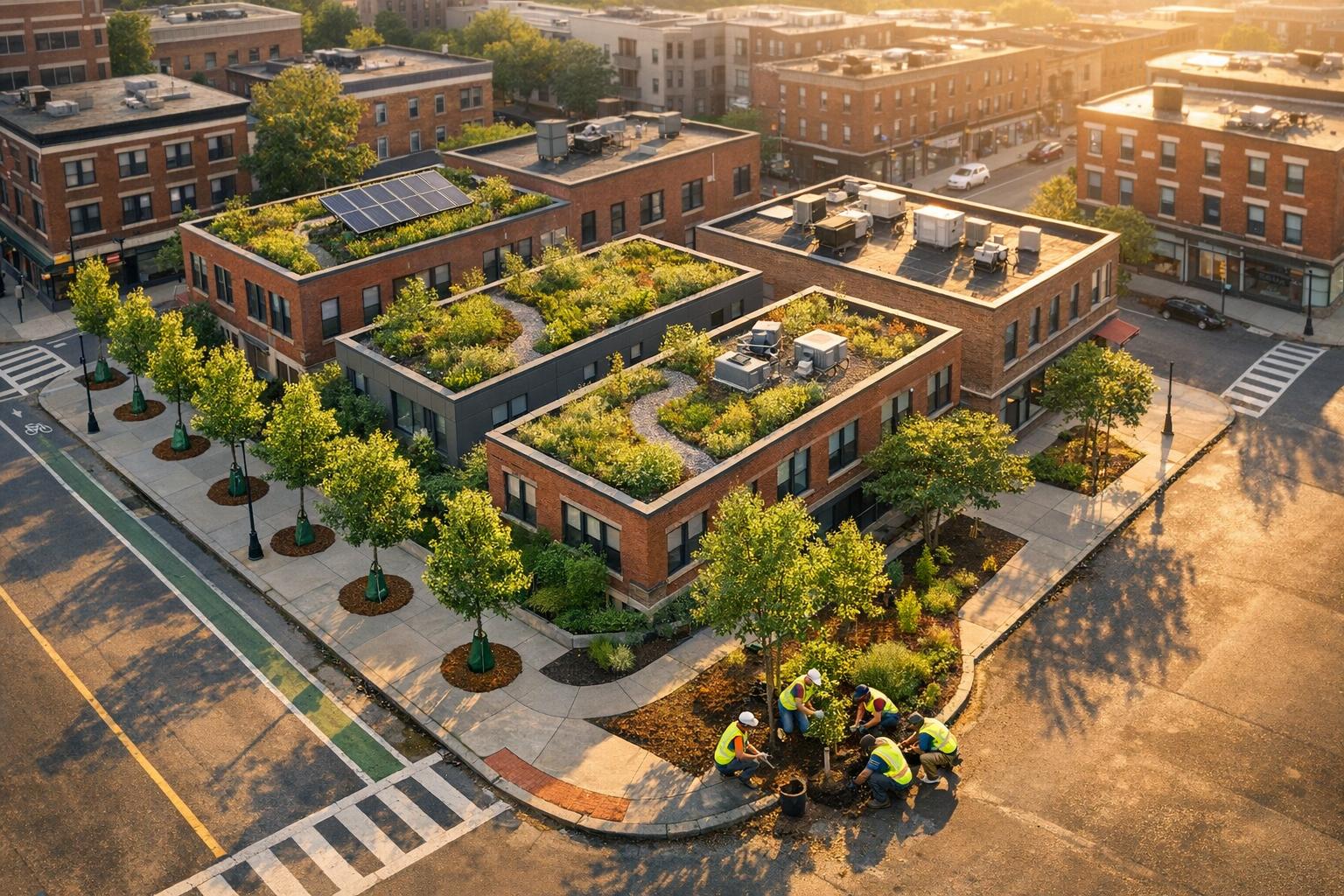
Feb 1, 2026
How to Build Heat Resilience & Urban Greening for Foundations & Philanthropic Organizations
Sustainability Strategy
In This Article
A guide for foundations to fund urban heat resilience: map vulnerable neighborhoods, plant trees and green roofs, use pooled funds, and track health outcomes.
How to Build Heat Resilience & Urban Greening for Foundations & Philanthropic Organizations
Extreme heat is the leading weather-related cause of death in the U.S., yet it receives minimal funding and attention. Urban areas, especially those with fewer trees and more heat-absorbing surfaces, suffer disproportionately, with vulnerable populations like low-income families and older adults bearing the brunt. Foundations can address these challenges by funding heat resilience and urban greening initiatives, targeting areas most affected by heat through data-driven assessments, and collaborating with local stakeholders.
Key Takeaways:
Urban Heat Islands (UHIs): Cities can be up to 7°F hotter than surrounding areas due to heat-trapping infrastructure.
Vulnerable Communities: Low-income neighborhoods and historically redlined areas face higher risks from extreme heat.
Data-Driven Tools: Use satellite data, tools like Tree Equity Score, and local insights to identify high-risk areas.
Proven Solutions: Green roofs, cool pavements, and urban tree planting can reduce temperatures by up to 25°F.
Funding Models: Multi-phase grants, community training, and pooled philanthropic funds can ensure long-term impact.
Collaboration: Partnerships with local governments, healthcare providers, and grassroots organizations are vital.
By investing in urban greening and heat resilience, foundations can save lives, reduce energy costs, and create healthier, cooler cities.
Nature-based Solutions to Tackle Heat in Cities
Assessing Heat Vulnerability in Communities
Before allocating resources, foundations must determine where extreme heat causes the most harm and who bears the brunt of its effects. Effective heat resilience begins with thorough, data-driven vulnerability assessments that combine climate data with socioeconomic insights. This process is essential for identifying neighborhoods where extreme temperatures intersect with populations least able to cope - such as older adults, low-income households, outdoor workers, and individuals with chronic health conditions. These assessments provide the foundation for selecting the appropriate mapping tools and collaborative strategies outlined below.
A key distinction to understand is the difference between air temperature, which highlights public health risks, and satellite-measured surface temperature, which reflects heat emitted from urban infrastructure. Foundations should rely on satellite data, like MODIS or Landsat, for citywide surface temperature mapping. To refine this information, they can incorporate air temperature readings from local weather stations or mobile sensors for more precise analysis [5].
Heat Mapping Tools and Local Data
Once vulnerability areas are identified, tools such as the Tree Equity Score (TES), developed by American Forests, can help pinpoint neighborhoods where tree canopy coverage is insufficient for vulnerable populations. TES assigns neighborhoods a score from 0 to 100, with 100 representing the target canopy goal. Lower scores highlight areas needing investment. The Priority Index within TES uses seven equally weighted variables: age, employment, health burden, income, linguistic isolation, race, and heat severity [4].
"Tree Equity Score measures how well the benefits of trees are reaching communities living on low-incomes, communities of color and others disproportionately impacted by extreme heat and other environmental hazards." - American Forests [4]
For region-specific work, foundations should explore local "Tree Equity Score Analyzers", which utilize detailed, high-resolution canopy data rather than broader national estimates. Pairing these tools with datasets such as the CDC PLACES database can help identify areas with high rates of asthma, heart disease, and mental health challenges - populations particularly at risk from heat-related illnesses. For example, researchers at the University of Wisconsin used 150 temperature and humidity sensors mounted on streetlight and utility poles in Madison between 2012 and 2013. These sensors, placed 3.5 meters above ground, recorded data every 15 minutes, providing valuable insights into urban climate effects on extreme temperatures [5].
Collaborating with Local Stakeholders for Fair Assessments
While technical data is critical, it must be combined with grassroots input to capture the full picture. Local organizations and residents bring essential knowledge, such as identifying streets lacking shade or areas where elderly individuals live alone - details that satellite data may overlook. Community-led data collection ensures assessments reflect real-world experiences, not just thermal readings [8].
The Robert Wood Johnson Foundation supports these efforts by offering $50,000 grants for nine-month periods to fund local data collection and analysis aimed at equitable community development. Smaller grassroots organizations can also access funding through fiscal sponsors, enabling them to conduct localized vulnerability assessments [8]. Establishing real-time feedback systems, like community hotlines for reporting high-risk areas, can further enhance these efforts. In Chicago, such a program introduced before the 1999 heat wave successfully reduced deaths to approximately 100, compared to 700 fatalities during a similar event in 1995 [6].
"Local data can be valuable tools to make progress on building places that offer everyone the chance to be as healthy as possible." - Robert Wood Johnson Foundation [8]
Outreach should prioritize older adults, outdoor workers, low-income families, and socially isolated individuals. Hosting pre-season media events before summer begins can educate the public and gather input from stakeholders on heat response plans. Focusing assessments on specific areas - whether neighborhoods, tribal lands, or metropolitan regions - helps ensure data accuracy and actionable results [6][8].
Funding Models for Heat Resilience and Urban Greening
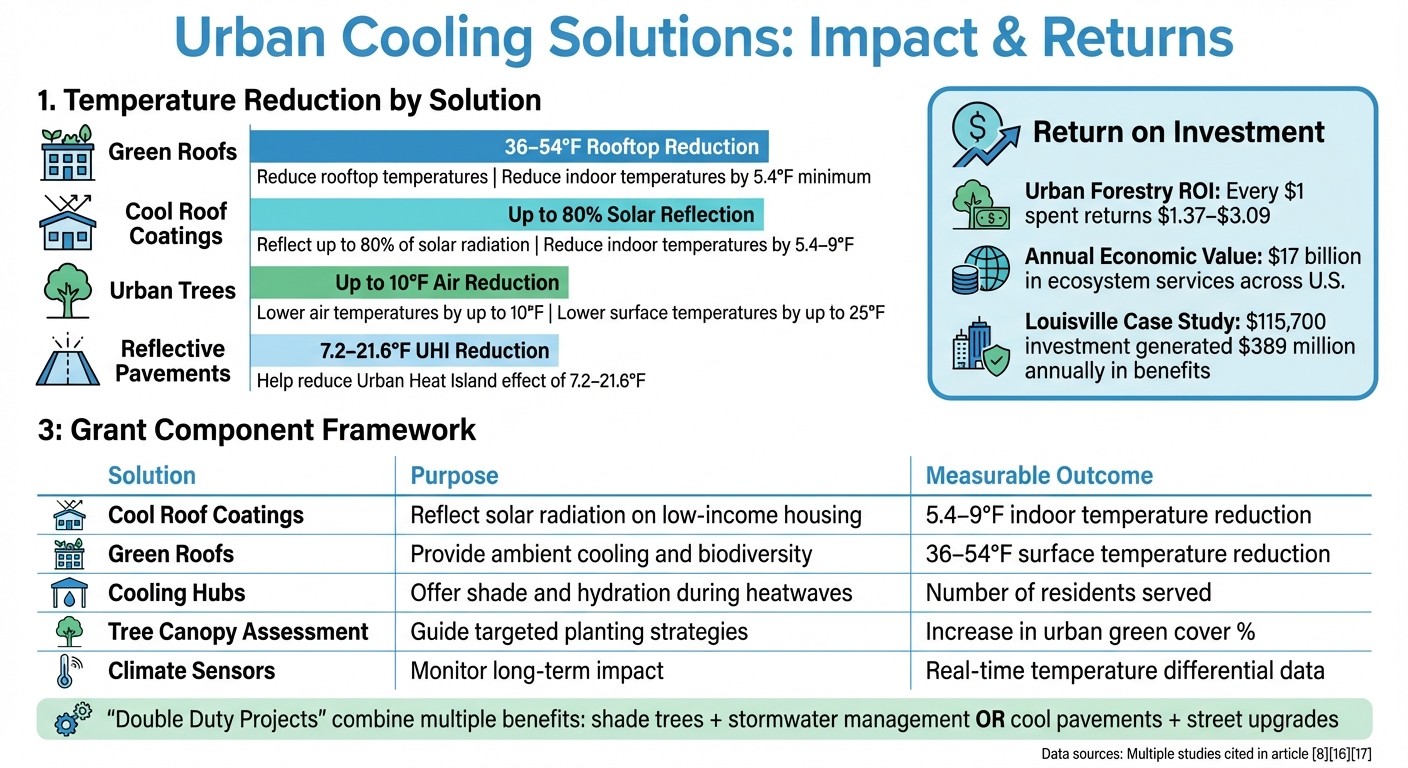
Urban Heat Resilience Solutions: Cooling Impact and ROI Comparison
To turn data-driven insights into actionable solutions, foundations must establish financing models that provide lasting urban cooling. Grants should be designed to support multi-phase implementation, foster community involvement, and encourage collaboration across sectors, ensuring projects remain impactful beyond their initial funding period.
Structuring Grants for Long-Term Impact
Effective grant structures typically span 24 months, covering phases like baseline mapping, GIS analysis, infrastructure setup, capacity building, and ongoing monitoring [10]. This phased approach allows grantees to fully understand local heat dynamics before moving to implementation and equips residents with the skills needed to maintain cooling infrastructure.
Funding should focus on proven cooling solutions with measurable temperature reduction goals. For instance:
Green roofs can reduce rooftop temperatures by 36–54°F and lower indoor temperatures by at least 5.4°F [10].
Cool roof coatings reflect up to 80% of solar radiation, reducing indoor temperatures by 5.4–9°F in low-income housing [10].
Reflective pavements and vertical gardens offer additional cooling benefits, especially in urban areas where temperatures can be 7.2–21.6°F higher than surrounding rural regions due to the Urban Heat Island effect [10].
"Knowing where we lack canopy, down to the street and address level, will help our efforts exponentially." - Greg Fischer, Mayor of Louisville [11]
Louisville provides a compelling example. In 2014, the city invested $115,700 in a tree canopy assessment, which revealed that its trees generated $389 million annually in benefits like temperature moderation, energy savings, and stormwater management. This data allowed the city to strategically target investments down to specific streets [11].
Real-time validation through IoT sensors is critical, particularly in low-income areas where indoor temperatures can exceed 104°F during peak summer months [10]. The table below aligns grant components with their measurable outcomes:
| Grant Component | Purpose | Measurable Outcome (KPI) |
| --- | --- | --- |
| <strong>Cool Roof Coatings</strong> | Reflect solar radiation on low-income housing | 5.4–9°F reduction in indoor temperature <a href="https://www.fundsforngos.org/all-proposals/a-sample-grant-proposal-on-urban-heat-island-reduction-through-green-roofs-cool-infrastructure" target="_blank" style="text-decoration: none;" rel="nofollow noopener noreferrer" data-framer-link="Link:{"url":"https://www.fundsforngos.org/all-proposals/a-sample-grant-proposal-on-urban-heat-island-reduction-through-green-roofs-cool-infrastructure","type":"url"}" data-framer-open-in-new-tab=""><sup>[10]</sup></a> |
| <strong>Green Roofs</strong> | Provide ambient cooling and biodiversity | 36–54°F reduction in surface temperature <a href="https://www.fundsforngos.org/all-proposals/a-sample-grant-proposal-on-urban-heat-island-reduction-through-green-roofs-cool-infrastructure" target="_blank" style="text-decoration: none;" rel="nofollow noopener noreferrer" data-framer-link="Link:{"url":"https://www.fundsforngos.org/all-proposals/a-sample-grant-proposal-on-urban-heat-island-reduction-through-green-roofs-cool-infrastructure","type":"url"}" data-framer-open-in-new-tab=""><sup>[10]</sup></a> |
| <strong>Cooling Hubs</strong> | Offer shade and hydration during heatwaves | Number of residents served during extreme heat <a href="https://www.fundsforngos.org/all-proposals/a-sample-grant-proposal-on-urban-heat-island-reduction-through-green-roofs-cool-infrastructure" target="_blank" style="text-decoration: none;" rel="nofollow noopener noreferrer" data-framer-link="Link:{"url":"https://www.fundsforngos.org/all-proposals/a-sample-grant-proposal-on-urban-heat-island-reduction-through-green-roofs-cool-infrastructure","type":"url"}" data-framer-open-in-new-tab=""><sup>[10]</sup></a> |
| <strong>Tree Canopy Assessment</strong> | Guide targeted planting strategies | Increase in urban green cover percentage <a href="https://epa.gov/green-infrastructure/reduce-heat-islands" target="_blank" style="text-decoration: none;" rel="nofollow noopener noreferrer" data-framer-link="Link:{"url":"https://epa.gov/green-infrastructure/reduce-heat-islands","type":"url"}" data-framer-open-in-new-tab=""><sup>[11]</sup></a> |
| <strong>Climate Sensors</strong> | Monitor long-term impact | Real-time temperature differential data <a href="https://www.fundsforngos.org/all-proposals/a-sample-grant-proposal-on-urban-heat-island-reduction-through-green-roofs-cool-infrastructure" target="_blank" style="text-decoration: none;" rel="nofollow noopener noreferrer" data-framer-link="Link:{"url":"https://www.fundsforngos.org/all-proposals/a-sample-grant-proposal-on-urban-heat-island-reduction-through-green-roofs-cool-infrastructure","type":"url"}" data-framer-open-in-new-tab=""><sup>[10]</sup></a> |
| Grant Component | Purpose | Measurable Outcome (KPI) |
| --- | --- | --- |
| <strong>Cool Roof Coatings</strong> | Reflect solar radiation on low-income housing | 5.4–9°F reduction in indoor temperature <a href="https://www.fundsforngos.org/all-proposals/a-sample-grant-proposal-on-urban-heat-island-reduction-through-green-roofs-cool-infrastructure" target="_blank" style="text-decoration: none;" rel="nofollow noopener noreferrer" data-framer-link="Link:{"url":"https://www.fundsforngos.org/all-proposals/a-sample-grant-proposal-on-urban-heat-island-reduction-through-green-roofs-cool-infrastructure","type":"url"}" data-framer-open-in-new-tab=""><sup>[10]</sup></a> |
| <strong>Green Roofs</strong> | Provide ambient cooling and biodiversity | 36–54°F reduction in surface temperature <a href="https://www.fundsforngos.org/all-proposals/a-sample-grant-proposal-on-urban-heat-island-reduction-through-green-roofs-cool-infrastructure" target="_blank" style="text-decoration: none;" rel="nofollow noopener noreferrer" data-framer-link="Link:{"url":"https://www.fundsforngos.org/all-proposals/a-sample-grant-proposal-on-urban-heat-island-reduction-through-green-roofs-cool-infrastructure","type":"url"}" data-framer-open-in-new-tab=""><sup>[10]</sup></a> |
| <strong>Cooling Hubs</strong> | Offer shade and hydration during heatwaves | Number of residents served during extreme heat <a href="https://www.fundsforngos.org/all-proposals/a-sample-grant-proposal-on-urban-heat-island-reduction-through-green-roofs-cool-infrastructure" target="_blank" style="text-decoration: none;" rel="nofollow noopener noreferrer" data-framer-link="Link:{"url":"https://www.fundsforngos.org/all-proposals/a-sample-grant-proposal-on-urban-heat-island-reduction-through-green-roofs-cool-infrastructure","type":"url"}" data-framer-open-in-new-tab=""><sup>[10]</sup></a> |
| <strong>Tree Canopy Assessment</strong> | Guide targeted planting strategies | Increase in urban green cover percentage <a href="https://epa.gov/green-infrastructure/reduce-heat-islands" target="_blank" style="text-decoration: none;" rel="nofollow noopener noreferrer" data-framer-link="Link:{"url":"https://epa.gov/green-infrastructure/reduce-heat-islands","type":"url"}" data-framer-open-in-new-tab=""><sup>[11]</sup></a> |
| <strong>Climate Sensors</strong> | Monitor long-term impact | Real-time temperature differential data <a href="https://www.fundsforngos.org/all-proposals/a-sample-grant-proposal-on-urban-heat-island-reduction-through-green-roofs-cool-infrastructure" target="_blank" style="text-decoration: none;" rel="nofollow noopener noreferrer" data-framer-link="Link:{"url":"https://www.fundsforngos.org/all-proposals/a-sample-grant-proposal-on-urban-heat-island-reduction-through-green-roofs-cool-infrastructure","type":"url"}" data-framer-open-in-new-tab=""><sup>[10]</sup></a> |Beyond infrastructure, grants should emphasize community-driven adaptation. Training programs can empower residents to maintain green roofs, manage community gardens, or operate "Community Cooling Hubs" during heat emergencies [10]. This fosters local ownership and ensures projects remain effective after the grant ends. Foundations can also take inspiration from municipal programs like District of Columbia's RiverSmart Rooftops rebate initiative or Philadelphia's Green Roof Tax Credit, which incentivize private property owners to adopt cooling measures [11].
To maximize impact, grant structures should support "double duty" projects that address multiple needs simultaneously. For example, integrating shade trees into stormwater management systems or including cool pavements in planned street upgrades can stretch funding further while addressing interconnected challenges [11][12]. Collaborative funding across multiple foundations can amplify these efforts.
Leveraging Pooled Funds for Broader Reach
Pooled funds offer a way for multiple foundations to combine resources, overcoming individual limitations to support large-scale urban greening initiatives. By working together, philanthropic organizations can fund transformative projects that cool entire neighborhoods.
Digital platforms like Climate Solutions Hubs enable funders to collectively invest in high-impact urban greening projects, such as green roofs or urban forests, while aligning these efforts with broader goals like advocacy or public awareness [13]. Joining networks like the International Philanthropy Commitment on Climate Change further signals dedication to global climate objectives [13].
Federal programs such as the Inflation Reduction Act (IRA) and Bipartisan Infrastructure Law (BIL) have allocated over $1 billion for urban forestry over five years [3]. However, these grants often overlook long-term maintenance. Pooled philanthropic funds can fill this gap by ensuring that trees planted with federal dollars are properly cared for over time. By coordinating with federal agencies through public-private partnerships (PPP), foundations can ensure their contributions complement, rather than duplicate, federal investments [3].
Pooled funds are most effective when they adopt a systems approach, focusing on governance, economic frameworks, and community engagement rather than isolated projects [13]. For instance, instead of solely funding tree planting, pooled funds could support natural capital cost assessments, providing the economic data needed to attract further investment in urban greening [3].
Equity should guide the allocation of pooled resources. Heat-related hospitalizations in the U.S. rose by 51% between 2018 and 2023, with historically disadvantaged neighborhoods - often lacking canopy cover - bearing the brunt of this crisis [3]. Data mapping can help direct resources to areas with the greatest need and potential health benefits.
Participation in peer-learning networks allows foundations to share challenges and successful models for funding urban heat resilience [13]. These exchanges help smaller organizations adopt proven strategies locally. By aligning funding streams, collaborating with federal programs, and prioritizing equity, pooled funds can achieve the scale needed to create cooler, more livable cities.
Implementing Urban Greening Initiatives
After securing funding, the next step is to identify and execute projects that offer measurable cooling benefits. The focus should be on strategies that not only reduce temperatures immediately but also provide lasting benefits, particularly in areas most affected by heat. This phase transforms funding and assessments into tangible cooling solutions, setting the groundwork for pilot projects that highlight measurable outcomes.
Piloting Scalable Green Infrastructure Solutions
Urban forestry is a standout solution for reducing heat. Trees can lower air temperatures by as much as 10°F and surface temperatures by up to 25°F through shade and evapotranspiration. The financial benefits are equally compelling: for every $1 spent on urban tree management, returns range between $1.37 and $3.09, with urban forestry contributing approximately $17 billion annually in ecosystem services across the U.S. [3].
To maximize impact, project sites should be selected based on precise canopy gap assessments. These assessments, which can pinpoint areas needing tree cover down to specific streets, allow for targeted planting efforts that deliver the greatest cooling effects.
Green roofs are another effective tool, offering cooling benefits by lowering building temperatures, reducing energy use, and capturing pollutants. Programs like Washington, D.C.'s RiverSmart Rooftops Green Roof Rebate Program and Philadelphia's Green Roof Tax Credit Program demonstrate how financial incentives can increase adoption and amplify results [11].
"Double duty" projects tackle multiple challenges at once. For example, vegetated stormwater systems - such as bioswales or planter boxes with drought-resistant shade trees - not only manage water quality but also provide cooling benefits. When integrating trees into these systems, careful planning with designers is essential to avoid issues like root damage to pavement or drainage systems. Similarly, permeable pavements can reduce heat retention while improving stormwater absorption, making them a smart choice for street upgrades [11].
Long-term success hinges on dedicated maintenance funding and workforce training. Including training programs in grant budgets - for skills like tree care, green roof upkeep, and irrigation management - ensures project longevity while creating job opportunities for local residents [3]. With well-executed pilot projects in place, partnerships can then scale these efforts across broader communities.
Building Multi-Stakeholder Collaborations
Scaling urban greening efforts requires partnerships across multiple sectors. Effective collaboration involves forestry, health, transportation, and development agencies working together. Foundations can jumpstart these partnerships by funding interagency task forces that align objectives and combine resources [3].
Key collaborators include park agencies, stormwater departments, and healthcare organizations. Park and stormwater agencies often manage shared public lands, making them ideal partners for green infrastructure projects [11]. Healthcare organizations bring critical data, such as the 51% rise in heat-related hospitalizations from 2018 to 2023, which can help prioritize neighborhoods most in need of cooling solutions [3].
Bridge financing can address financial gaps for ecological service providers waiting on government grants. By offering bridge debt facilities, foundations enable contractors to take on larger projects without risking financial strain [14].
Private property owners also play a vital role in expanding these initiatives. Tax credits and rebate programs, like those in Washington, D.C., and Philadelphia, encourage private investment in cooling infrastructure. Foundations can initially fund the development and administrative costs of these programs, with municipal governments eventually taking over operations [11].
Equity must remain central to collaboration efforts. Historically redlined neighborhoods often suffer from lower tree canopy coverage and higher heat risks [3]. Directing resources to these areas, in partnership with local organizations that understand community needs, ensures that the most vulnerable populations benefit. Multi-stakeholder coalitions - including healthcare experts, climatologists, and community groups - can help achieve health-related objectives.
Federal funding opportunities, such as the Inflation Reduction Act (IRA) and the Bipartisan Infrastructure Law (BIL), have allocated over $1 billion for urban forestry over five years. These funds present a chance for public–private partnerships. Foundations can complement federal investments by covering maintenance and stewardship costs, ensuring that federally funded trees thrive well into the future [3].
Measuring Impact and Scaling Successful Initiatives
After launching pilot projects, tracking precise metrics becomes crucial for validating their success and expanding their reach. A well-structured measurement framework transforms anecdotal achievements into solid evidence, guiding strategic growth and ensuring long-term impact.
Defining Key Performance Indicators (KPIs)
To assess outcomes effectively, focus on both ground-level air temperature and satellite-derived surface temperature as primary metrics. Air temperature is particularly relevant for public health, as it directly reflects how heat affects residents [5]. Key health and safety indicators should include reductions in heat-related illnesses and mortality rates, alongside tracking public education efforts on heat risks. Economic benefits can be measured through decreases in peak summer energy demand and associated cost savings [6][1].
For example, a tree canopy assessment in Louisville, Kentucky, highlighted that urban trees contributed over $389 million annually by moderating temperatures, intercepting stormwater, and reducing energy consumption [11]. Such detailed evaluations allow organizations to quantify returns on investment, prioritize funding, and refine future initiatives. These strategies not only validate project outcomes but also guide decisions on scaling efforts to new areas.
Using Data Dashboards for Reporting
Data dashboards simplify complex environmental data into visual formats that stakeholders can easily interpret. Heatmaps can pinpoint "hot spots" that need immediate action, while wind roses provide insights into wind patterns that support natural ventilation strategies [5][15].
Dashboards should also capture day–night temperature variations, as elevated nighttime temperatures pose heightened health risks [5][15]. Tools like the Universal Thermal Climate Index (UTCI), which identifies optimal comfort levels between 64.4°F and 78.8°F, offer a more accurate gauge of physiological stress on the human body compared to ambient air temperature alone [15]. By combining satellite-derived surface temperatures with ground-level air temperature data, organizations can gain a comprehensive understanding of urban microclimates [5][9].
Influencing Policy Integration
Quantitative insights from dashboards can drive meaningful policy changes. For instance, Cambridge, Massachusetts developed an "Urban Heat Island Protocol for Mapping Temperature Projections", using satellite data to assess current surface temperatures and predict future heat risks. This approach has informed long-term urban planning decisions [9].
"Identifying hot spots within a city can help focus interventions where they are most needed during heat waves." - EPA [9]
To expand successful initiatives into new communities, integrate green infrastructure into routine street upgrades and municipal capital improvement projects [11]. Tools like iTree can quantify environmental benefits in monetary terms, creating a compelling business case for policymakers. Additionally, tax incentives and rebate programs - such as those implemented in Philadelphia and Washington, D.C. - can encourage private property owners to adopt heat-reducing infrastructure [11]. When scaling to new locations, ensure consistent monitoring protocols, including sensor placement, orientation, and shielding, to maintain data comparability across different regions [9].
Conclusion: Advancing Urban Heat Resilience Through Philanthropic Action
Urban heat remains the deadliest weather-related threat in the United States, yet less than 2% of global philanthropic funding is directed toward climate-related challenges[2][16]. This mismatch highlights an urgent problem but also presents a pivotal opportunity for foundations to make a meaningful difference in the communities most at risk.
To address this issue, foundations can take several impactful steps: develop comprehensive heat mapping and vulnerability assessments, explore diverse funding models beyond traditional grants, build partnerships across different sectors, and implement thorough measurement frameworks. The financial case is clear - every $1 invested in disaster mitigation yields $6 in future savings[7].
"The solutions necessary to combat climate change are systemic and require collaboration across the public, private, nonprofit, and philanthropic sectors." - Dan Porterfield, President and CEO, Aspen Institute[16]
FAQs
How can foundations identify communities most at risk from extreme heat?
Foundations can determine which communities face the greatest risks from extreme heat by leveraging tools that evaluate key factors like urban heat islands, insufficient tree cover, and socio-economic challenges. These assessments make it possible to pinpoint neighborhoods where the effects of heat are most severe.
By studying local data and working closely with experts, organizations can focus their efforts on areas that would gain the most from urban greening initiatives, such as planting trees or designing shaded spaces. These approaches not only mitigate heat risks but also enhance community resilience and improve residents' quality of life.
What are the best urban greening strategies to help cool cities?
The most effective ways to cool cities often involve incorporating nature and innovative design into urban spaces. Planting trees and vegetation is a standout strategy, as they provide shade and naturally lower temperatures through a process called evapotranspiration, making neighborhoods noticeably cooler. Another impactful solution is green roofs, where vegetation is grown on rooftops. These roofs not only insulate buildings but also reflect sunlight, helping to mitigate the urban heat island effect. Lastly, cool pavements - designed to reflect sunlight or allow water to seep through - can significantly lower surface temperatures, reducing heat buildup in paved areas.
Beyond temperature control, these strategies also contribute to stronger, healthier communities. As cities grapple with more frequent and intense heat waves, these approaches offer a chance to create greener, more livable environments while tackling the broader challenges posed by climate change.
What can philanthropic organizations do to ensure the long-term success of urban heat resilience projects?
Philanthropic organizations can play a crucial role in ensuring the long-term success of urban heat resilience initiatives by prioritizing thoughtful planning, active community participation, and stable funding strategies. Success begins with building collaborative partnerships, conducting detailed assessments of local needs, and designing heat response plans tailored to address specific challenges unique to the area. Incorporating solutions like expanding tree canopies or implementing green infrastructure can deliver lasting cooling effects, especially when paired with consistent upkeep and community involvement.
To maintain momentum, organizations should advocate for policies that support resilience efforts and explore diverse funding avenues, including federal or state grants and private sector investments. Early and meaningful community engagement fosters a sense of local ownership, ensuring projects are aligned with residents' priorities. Furthermore, regularly tracking outcomes and refining approaches allows these initiatives to adapt to evolving climate conditions, helping them stay effective and relevant over time.
Related Blog Posts
Latest Articles
©2025


FAQ
01
What does it really mean to “redefine profit”?
02
What makes Council Fire different?
03
Who does Council Fire you work with?
04
What does working with Council Fire actually look like?
05
How does Council Fire help organizations turn big goals into action?
06
How does Council Fire define and measure success?
Feb 1, 2026
How to Build Heat Resilience & Urban Greening for Foundations & Philanthropic Organizations
Sustainability Strategy
In This Article
A guide for foundations to fund urban heat resilience: map vulnerable neighborhoods, plant trees and green roofs, use pooled funds, and track health outcomes.
How to Build Heat Resilience & Urban Greening for Foundations & Philanthropic Organizations
Extreme heat is the leading weather-related cause of death in the U.S., yet it receives minimal funding and attention. Urban areas, especially those with fewer trees and more heat-absorbing surfaces, suffer disproportionately, with vulnerable populations like low-income families and older adults bearing the brunt. Foundations can address these challenges by funding heat resilience and urban greening initiatives, targeting areas most affected by heat through data-driven assessments, and collaborating with local stakeholders.
Key Takeaways:
Urban Heat Islands (UHIs): Cities can be up to 7°F hotter than surrounding areas due to heat-trapping infrastructure.
Vulnerable Communities: Low-income neighborhoods and historically redlined areas face higher risks from extreme heat.
Data-Driven Tools: Use satellite data, tools like Tree Equity Score, and local insights to identify high-risk areas.
Proven Solutions: Green roofs, cool pavements, and urban tree planting can reduce temperatures by up to 25°F.
Funding Models: Multi-phase grants, community training, and pooled philanthropic funds can ensure long-term impact.
Collaboration: Partnerships with local governments, healthcare providers, and grassroots organizations are vital.
By investing in urban greening and heat resilience, foundations can save lives, reduce energy costs, and create healthier, cooler cities.
Nature-based Solutions to Tackle Heat in Cities
Assessing Heat Vulnerability in Communities
Before allocating resources, foundations must determine where extreme heat causes the most harm and who bears the brunt of its effects. Effective heat resilience begins with thorough, data-driven vulnerability assessments that combine climate data with socioeconomic insights. This process is essential for identifying neighborhoods where extreme temperatures intersect with populations least able to cope - such as older adults, low-income households, outdoor workers, and individuals with chronic health conditions. These assessments provide the foundation for selecting the appropriate mapping tools and collaborative strategies outlined below.
A key distinction to understand is the difference between air temperature, which highlights public health risks, and satellite-measured surface temperature, which reflects heat emitted from urban infrastructure. Foundations should rely on satellite data, like MODIS or Landsat, for citywide surface temperature mapping. To refine this information, they can incorporate air temperature readings from local weather stations or mobile sensors for more precise analysis [5].
Heat Mapping Tools and Local Data
Once vulnerability areas are identified, tools such as the Tree Equity Score (TES), developed by American Forests, can help pinpoint neighborhoods where tree canopy coverage is insufficient for vulnerable populations. TES assigns neighborhoods a score from 0 to 100, with 100 representing the target canopy goal. Lower scores highlight areas needing investment. The Priority Index within TES uses seven equally weighted variables: age, employment, health burden, income, linguistic isolation, race, and heat severity [4].
"Tree Equity Score measures how well the benefits of trees are reaching communities living on low-incomes, communities of color and others disproportionately impacted by extreme heat and other environmental hazards." - American Forests [4]
For region-specific work, foundations should explore local "Tree Equity Score Analyzers", which utilize detailed, high-resolution canopy data rather than broader national estimates. Pairing these tools with datasets such as the CDC PLACES database can help identify areas with high rates of asthma, heart disease, and mental health challenges - populations particularly at risk from heat-related illnesses. For example, researchers at the University of Wisconsin used 150 temperature and humidity sensors mounted on streetlight and utility poles in Madison between 2012 and 2013. These sensors, placed 3.5 meters above ground, recorded data every 15 minutes, providing valuable insights into urban climate effects on extreme temperatures [5].
Collaborating with Local Stakeholders for Fair Assessments
While technical data is critical, it must be combined with grassroots input to capture the full picture. Local organizations and residents bring essential knowledge, such as identifying streets lacking shade or areas where elderly individuals live alone - details that satellite data may overlook. Community-led data collection ensures assessments reflect real-world experiences, not just thermal readings [8].
The Robert Wood Johnson Foundation supports these efforts by offering $50,000 grants for nine-month periods to fund local data collection and analysis aimed at equitable community development. Smaller grassroots organizations can also access funding through fiscal sponsors, enabling them to conduct localized vulnerability assessments [8]. Establishing real-time feedback systems, like community hotlines for reporting high-risk areas, can further enhance these efforts. In Chicago, such a program introduced before the 1999 heat wave successfully reduced deaths to approximately 100, compared to 700 fatalities during a similar event in 1995 [6].
"Local data can be valuable tools to make progress on building places that offer everyone the chance to be as healthy as possible." - Robert Wood Johnson Foundation [8]
Outreach should prioritize older adults, outdoor workers, low-income families, and socially isolated individuals. Hosting pre-season media events before summer begins can educate the public and gather input from stakeholders on heat response plans. Focusing assessments on specific areas - whether neighborhoods, tribal lands, or metropolitan regions - helps ensure data accuracy and actionable results [6][8].
Funding Models for Heat Resilience and Urban Greening
Urban Heat Resilience Solutions: Cooling Impact and ROI Comparison
To turn data-driven insights into actionable solutions, foundations must establish financing models that provide lasting urban cooling. Grants should be designed to support multi-phase implementation, foster community involvement, and encourage collaboration across sectors, ensuring projects remain impactful beyond their initial funding period.
Structuring Grants for Long-Term Impact
Effective grant structures typically span 24 months, covering phases like baseline mapping, GIS analysis, infrastructure setup, capacity building, and ongoing monitoring [10]. This phased approach allows grantees to fully understand local heat dynamics before moving to implementation and equips residents with the skills needed to maintain cooling infrastructure.
Funding should focus on proven cooling solutions with measurable temperature reduction goals. For instance:
Green roofs can reduce rooftop temperatures by 36–54°F and lower indoor temperatures by at least 5.4°F [10].
Cool roof coatings reflect up to 80% of solar radiation, reducing indoor temperatures by 5.4–9°F in low-income housing [10].
Reflective pavements and vertical gardens offer additional cooling benefits, especially in urban areas where temperatures can be 7.2–21.6°F higher than surrounding rural regions due to the Urban Heat Island effect [10].
"Knowing where we lack canopy, down to the street and address level, will help our efforts exponentially." - Greg Fischer, Mayor of Louisville [11]
Louisville provides a compelling example. In 2014, the city invested $115,700 in a tree canopy assessment, which revealed that its trees generated $389 million annually in benefits like temperature moderation, energy savings, and stormwater management. This data allowed the city to strategically target investments down to specific streets [11].
Real-time validation through IoT sensors is critical, particularly in low-income areas where indoor temperatures can exceed 104°F during peak summer months [10]. The table below aligns grant components with their measurable outcomes:
| Grant Component | Purpose | Measurable Outcome (KPI) |
| --- | --- | --- |
| <strong>Cool Roof Coatings</strong> | Reflect solar radiation on low-income housing | 5.4–9°F reduction in indoor temperature <a href="https://www.fundsforngos.org/all-proposals/a-sample-grant-proposal-on-urban-heat-island-reduction-through-green-roofs-cool-infrastructure" target="_blank" style="text-decoration: none;" rel="nofollow noopener noreferrer" data-framer-link="Link:{"url":"https://www.fundsforngos.org/all-proposals/a-sample-grant-proposal-on-urban-heat-island-reduction-through-green-roofs-cool-infrastructure","type":"url"}" data-framer-open-in-new-tab=""><sup>[10]</sup></a> |
| <strong>Green Roofs</strong> | Provide ambient cooling and biodiversity | 36–54°F reduction in surface temperature <a href="https://www.fundsforngos.org/all-proposals/a-sample-grant-proposal-on-urban-heat-island-reduction-through-green-roofs-cool-infrastructure" target="_blank" style="text-decoration: none;" rel="nofollow noopener noreferrer" data-framer-link="Link:{"url":"https://www.fundsforngos.org/all-proposals/a-sample-grant-proposal-on-urban-heat-island-reduction-through-green-roofs-cool-infrastructure","type":"url"}" data-framer-open-in-new-tab=""><sup>[10]</sup></a> |
| <strong>Cooling Hubs</strong> | Offer shade and hydration during heatwaves | Number of residents served during extreme heat <a href="https://www.fundsforngos.org/all-proposals/a-sample-grant-proposal-on-urban-heat-island-reduction-through-green-roofs-cool-infrastructure" target="_blank" style="text-decoration: none;" rel="nofollow noopener noreferrer" data-framer-link="Link:{"url":"https://www.fundsforngos.org/all-proposals/a-sample-grant-proposal-on-urban-heat-island-reduction-through-green-roofs-cool-infrastructure","type":"url"}" data-framer-open-in-new-tab=""><sup>[10]</sup></a> |
| <strong>Tree Canopy Assessment</strong> | Guide targeted planting strategies | Increase in urban green cover percentage <a href="https://epa.gov/green-infrastructure/reduce-heat-islands" target="_blank" style="text-decoration: none;" rel="nofollow noopener noreferrer" data-framer-link="Link:{"url":"https://epa.gov/green-infrastructure/reduce-heat-islands","type":"url"}" data-framer-open-in-new-tab=""><sup>[11]</sup></a> |
| <strong>Climate Sensors</strong> | Monitor long-term impact | Real-time temperature differential data <a href="https://www.fundsforngos.org/all-proposals/a-sample-grant-proposal-on-urban-heat-island-reduction-through-green-roofs-cool-infrastructure" target="_blank" style="text-decoration: none;" rel="nofollow noopener noreferrer" data-framer-link="Link:{"url":"https://www.fundsforngos.org/all-proposals/a-sample-grant-proposal-on-urban-heat-island-reduction-through-green-roofs-cool-infrastructure","type":"url"}" data-framer-open-in-new-tab=""><sup>[10]</sup></a> |
Beyond infrastructure, grants should emphasize community-driven adaptation. Training programs can empower residents to maintain green roofs, manage community gardens, or operate "Community Cooling Hubs" during heat emergencies [10]. This fosters local ownership and ensures projects remain effective after the grant ends. Foundations can also take inspiration from municipal programs like District of Columbia's RiverSmart Rooftops rebate initiative or Philadelphia's Green Roof Tax Credit, which incentivize private property owners to adopt cooling measures [11].
To maximize impact, grant structures should support "double duty" projects that address multiple needs simultaneously. For example, integrating shade trees into stormwater management systems or including cool pavements in planned street upgrades can stretch funding further while addressing interconnected challenges [11][12]. Collaborative funding across multiple foundations can amplify these efforts.
Leveraging Pooled Funds for Broader Reach
Pooled funds offer a way for multiple foundations to combine resources, overcoming individual limitations to support large-scale urban greening initiatives. By working together, philanthropic organizations can fund transformative projects that cool entire neighborhoods.
Digital platforms like Climate Solutions Hubs enable funders to collectively invest in high-impact urban greening projects, such as green roofs or urban forests, while aligning these efforts with broader goals like advocacy or public awareness [13]. Joining networks like the International Philanthropy Commitment on Climate Change further signals dedication to global climate objectives [13].
Federal programs such as the Inflation Reduction Act (IRA) and Bipartisan Infrastructure Law (BIL) have allocated over $1 billion for urban forestry over five years [3]. However, these grants often overlook long-term maintenance. Pooled philanthropic funds can fill this gap by ensuring that trees planted with federal dollars are properly cared for over time. By coordinating with federal agencies through public-private partnerships (PPP), foundations can ensure their contributions complement, rather than duplicate, federal investments [3].
Pooled funds are most effective when they adopt a systems approach, focusing on governance, economic frameworks, and community engagement rather than isolated projects [13]. For instance, instead of solely funding tree planting, pooled funds could support natural capital cost assessments, providing the economic data needed to attract further investment in urban greening [3].
Equity should guide the allocation of pooled resources. Heat-related hospitalizations in the U.S. rose by 51% between 2018 and 2023, with historically disadvantaged neighborhoods - often lacking canopy cover - bearing the brunt of this crisis [3]. Data mapping can help direct resources to areas with the greatest need and potential health benefits.
Participation in peer-learning networks allows foundations to share challenges and successful models for funding urban heat resilience [13]. These exchanges help smaller organizations adopt proven strategies locally. By aligning funding streams, collaborating with federal programs, and prioritizing equity, pooled funds can achieve the scale needed to create cooler, more livable cities.
Implementing Urban Greening Initiatives
After securing funding, the next step is to identify and execute projects that offer measurable cooling benefits. The focus should be on strategies that not only reduce temperatures immediately but also provide lasting benefits, particularly in areas most affected by heat. This phase transforms funding and assessments into tangible cooling solutions, setting the groundwork for pilot projects that highlight measurable outcomes.
Piloting Scalable Green Infrastructure Solutions
Urban forestry is a standout solution for reducing heat. Trees can lower air temperatures by as much as 10°F and surface temperatures by up to 25°F through shade and evapotranspiration. The financial benefits are equally compelling: for every $1 spent on urban tree management, returns range between $1.37 and $3.09, with urban forestry contributing approximately $17 billion annually in ecosystem services across the U.S. [3].
To maximize impact, project sites should be selected based on precise canopy gap assessments. These assessments, which can pinpoint areas needing tree cover down to specific streets, allow for targeted planting efforts that deliver the greatest cooling effects.
Green roofs are another effective tool, offering cooling benefits by lowering building temperatures, reducing energy use, and capturing pollutants. Programs like Washington, D.C.'s RiverSmart Rooftops Green Roof Rebate Program and Philadelphia's Green Roof Tax Credit Program demonstrate how financial incentives can increase adoption and amplify results [11].
"Double duty" projects tackle multiple challenges at once. For example, vegetated stormwater systems - such as bioswales or planter boxes with drought-resistant shade trees - not only manage water quality but also provide cooling benefits. When integrating trees into these systems, careful planning with designers is essential to avoid issues like root damage to pavement or drainage systems. Similarly, permeable pavements can reduce heat retention while improving stormwater absorption, making them a smart choice for street upgrades [11].
Long-term success hinges on dedicated maintenance funding and workforce training. Including training programs in grant budgets - for skills like tree care, green roof upkeep, and irrigation management - ensures project longevity while creating job opportunities for local residents [3]. With well-executed pilot projects in place, partnerships can then scale these efforts across broader communities.
Building Multi-Stakeholder Collaborations
Scaling urban greening efforts requires partnerships across multiple sectors. Effective collaboration involves forestry, health, transportation, and development agencies working together. Foundations can jumpstart these partnerships by funding interagency task forces that align objectives and combine resources [3].
Key collaborators include park agencies, stormwater departments, and healthcare organizations. Park and stormwater agencies often manage shared public lands, making them ideal partners for green infrastructure projects [11]. Healthcare organizations bring critical data, such as the 51% rise in heat-related hospitalizations from 2018 to 2023, which can help prioritize neighborhoods most in need of cooling solutions [3].
Bridge financing can address financial gaps for ecological service providers waiting on government grants. By offering bridge debt facilities, foundations enable contractors to take on larger projects without risking financial strain [14].
Private property owners also play a vital role in expanding these initiatives. Tax credits and rebate programs, like those in Washington, D.C., and Philadelphia, encourage private investment in cooling infrastructure. Foundations can initially fund the development and administrative costs of these programs, with municipal governments eventually taking over operations [11].
Equity must remain central to collaboration efforts. Historically redlined neighborhoods often suffer from lower tree canopy coverage and higher heat risks [3]. Directing resources to these areas, in partnership with local organizations that understand community needs, ensures that the most vulnerable populations benefit. Multi-stakeholder coalitions - including healthcare experts, climatologists, and community groups - can help achieve health-related objectives.
Federal funding opportunities, such as the Inflation Reduction Act (IRA) and the Bipartisan Infrastructure Law (BIL), have allocated over $1 billion for urban forestry over five years. These funds present a chance for public–private partnerships. Foundations can complement federal investments by covering maintenance and stewardship costs, ensuring that federally funded trees thrive well into the future [3].
Measuring Impact and Scaling Successful Initiatives
After launching pilot projects, tracking precise metrics becomes crucial for validating their success and expanding their reach. A well-structured measurement framework transforms anecdotal achievements into solid evidence, guiding strategic growth and ensuring long-term impact.
Defining Key Performance Indicators (KPIs)
To assess outcomes effectively, focus on both ground-level air temperature and satellite-derived surface temperature as primary metrics. Air temperature is particularly relevant for public health, as it directly reflects how heat affects residents [5]. Key health and safety indicators should include reductions in heat-related illnesses and mortality rates, alongside tracking public education efforts on heat risks. Economic benefits can be measured through decreases in peak summer energy demand and associated cost savings [6][1].
For example, a tree canopy assessment in Louisville, Kentucky, highlighted that urban trees contributed over $389 million annually by moderating temperatures, intercepting stormwater, and reducing energy consumption [11]. Such detailed evaluations allow organizations to quantify returns on investment, prioritize funding, and refine future initiatives. These strategies not only validate project outcomes but also guide decisions on scaling efforts to new areas.
Using Data Dashboards for Reporting
Data dashboards simplify complex environmental data into visual formats that stakeholders can easily interpret. Heatmaps can pinpoint "hot spots" that need immediate action, while wind roses provide insights into wind patterns that support natural ventilation strategies [5][15].
Dashboards should also capture day–night temperature variations, as elevated nighttime temperatures pose heightened health risks [5][15]. Tools like the Universal Thermal Climate Index (UTCI), which identifies optimal comfort levels between 64.4°F and 78.8°F, offer a more accurate gauge of physiological stress on the human body compared to ambient air temperature alone [15]. By combining satellite-derived surface temperatures with ground-level air temperature data, organizations can gain a comprehensive understanding of urban microclimates [5][9].
Influencing Policy Integration
Quantitative insights from dashboards can drive meaningful policy changes. For instance, Cambridge, Massachusetts developed an "Urban Heat Island Protocol for Mapping Temperature Projections", using satellite data to assess current surface temperatures and predict future heat risks. This approach has informed long-term urban planning decisions [9].
"Identifying hot spots within a city can help focus interventions where they are most needed during heat waves." - EPA [9]
To expand successful initiatives into new communities, integrate green infrastructure into routine street upgrades and municipal capital improvement projects [11]. Tools like iTree can quantify environmental benefits in monetary terms, creating a compelling business case for policymakers. Additionally, tax incentives and rebate programs - such as those implemented in Philadelphia and Washington, D.C. - can encourage private property owners to adopt heat-reducing infrastructure [11]. When scaling to new locations, ensure consistent monitoring protocols, including sensor placement, orientation, and shielding, to maintain data comparability across different regions [9].
Conclusion: Advancing Urban Heat Resilience Through Philanthropic Action
Urban heat remains the deadliest weather-related threat in the United States, yet less than 2% of global philanthropic funding is directed toward climate-related challenges[2][16]. This mismatch highlights an urgent problem but also presents a pivotal opportunity for foundations to make a meaningful difference in the communities most at risk.
To address this issue, foundations can take several impactful steps: develop comprehensive heat mapping and vulnerability assessments, explore diverse funding models beyond traditional grants, build partnerships across different sectors, and implement thorough measurement frameworks. The financial case is clear - every $1 invested in disaster mitigation yields $6 in future savings[7].
"The solutions necessary to combat climate change are systemic and require collaboration across the public, private, nonprofit, and philanthropic sectors." - Dan Porterfield, President and CEO, Aspen Institute[16]
FAQs
How can foundations identify communities most at risk from extreme heat?
Foundations can determine which communities face the greatest risks from extreme heat by leveraging tools that evaluate key factors like urban heat islands, insufficient tree cover, and socio-economic challenges. These assessments make it possible to pinpoint neighborhoods where the effects of heat are most severe.
By studying local data and working closely with experts, organizations can focus their efforts on areas that would gain the most from urban greening initiatives, such as planting trees or designing shaded spaces. These approaches not only mitigate heat risks but also enhance community resilience and improve residents' quality of life.
What are the best urban greening strategies to help cool cities?
The most effective ways to cool cities often involve incorporating nature and innovative design into urban spaces. Planting trees and vegetation is a standout strategy, as they provide shade and naturally lower temperatures through a process called evapotranspiration, making neighborhoods noticeably cooler. Another impactful solution is green roofs, where vegetation is grown on rooftops. These roofs not only insulate buildings but also reflect sunlight, helping to mitigate the urban heat island effect. Lastly, cool pavements - designed to reflect sunlight or allow water to seep through - can significantly lower surface temperatures, reducing heat buildup in paved areas.
Beyond temperature control, these strategies also contribute to stronger, healthier communities. As cities grapple with more frequent and intense heat waves, these approaches offer a chance to create greener, more livable environments while tackling the broader challenges posed by climate change.
What can philanthropic organizations do to ensure the long-term success of urban heat resilience projects?
Philanthropic organizations can play a crucial role in ensuring the long-term success of urban heat resilience initiatives by prioritizing thoughtful planning, active community participation, and stable funding strategies. Success begins with building collaborative partnerships, conducting detailed assessments of local needs, and designing heat response plans tailored to address specific challenges unique to the area. Incorporating solutions like expanding tree canopies or implementing green infrastructure can deliver lasting cooling effects, especially when paired with consistent upkeep and community involvement.
To maintain momentum, organizations should advocate for policies that support resilience efforts and explore diverse funding avenues, including federal or state grants and private sector investments. Early and meaningful community engagement fosters a sense of local ownership, ensuring projects are aligned with residents' priorities. Furthermore, regularly tracking outcomes and refining approaches allows these initiatives to adapt to evolving climate conditions, helping them stay effective and relevant over time.
Related Blog Posts
FAQ
01
What does it really mean to “redefine profit”?
02
What makes Council Fire different?
03
Who does Council Fire you work with?
04
What does working with Council Fire actually look like?
05
How does Council Fire help organizations turn big goals into action?
06
How does Council Fire define and measure success?
Feb 1, 2026
How to Build Heat Resilience & Urban Greening for Foundations & Philanthropic Organizations
Sustainability Strategy
In This Article
A guide for foundations to fund urban heat resilience: map vulnerable neighborhoods, plant trees and green roofs, use pooled funds, and track health outcomes.
How to Build Heat Resilience & Urban Greening for Foundations & Philanthropic Organizations
Extreme heat is the leading weather-related cause of death in the U.S., yet it receives minimal funding and attention. Urban areas, especially those with fewer trees and more heat-absorbing surfaces, suffer disproportionately, with vulnerable populations like low-income families and older adults bearing the brunt. Foundations can address these challenges by funding heat resilience and urban greening initiatives, targeting areas most affected by heat through data-driven assessments, and collaborating with local stakeholders.
Key Takeaways:
Urban Heat Islands (UHIs): Cities can be up to 7°F hotter than surrounding areas due to heat-trapping infrastructure.
Vulnerable Communities: Low-income neighborhoods and historically redlined areas face higher risks from extreme heat.
Data-Driven Tools: Use satellite data, tools like Tree Equity Score, and local insights to identify high-risk areas.
Proven Solutions: Green roofs, cool pavements, and urban tree planting can reduce temperatures by up to 25°F.
Funding Models: Multi-phase grants, community training, and pooled philanthropic funds can ensure long-term impact.
Collaboration: Partnerships with local governments, healthcare providers, and grassroots organizations are vital.
By investing in urban greening and heat resilience, foundations can save lives, reduce energy costs, and create healthier, cooler cities.
Nature-based Solutions to Tackle Heat in Cities
Assessing Heat Vulnerability in Communities
Before allocating resources, foundations must determine where extreme heat causes the most harm and who bears the brunt of its effects. Effective heat resilience begins with thorough, data-driven vulnerability assessments that combine climate data with socioeconomic insights. This process is essential for identifying neighborhoods where extreme temperatures intersect with populations least able to cope - such as older adults, low-income households, outdoor workers, and individuals with chronic health conditions. These assessments provide the foundation for selecting the appropriate mapping tools and collaborative strategies outlined below.
A key distinction to understand is the difference between air temperature, which highlights public health risks, and satellite-measured surface temperature, which reflects heat emitted from urban infrastructure. Foundations should rely on satellite data, like MODIS or Landsat, for citywide surface temperature mapping. To refine this information, they can incorporate air temperature readings from local weather stations or mobile sensors for more precise analysis [5].
Heat Mapping Tools and Local Data
Once vulnerability areas are identified, tools such as the Tree Equity Score (TES), developed by American Forests, can help pinpoint neighborhoods where tree canopy coverage is insufficient for vulnerable populations. TES assigns neighborhoods a score from 0 to 100, with 100 representing the target canopy goal. Lower scores highlight areas needing investment. The Priority Index within TES uses seven equally weighted variables: age, employment, health burden, income, linguistic isolation, race, and heat severity [4].
"Tree Equity Score measures how well the benefits of trees are reaching communities living on low-incomes, communities of color and others disproportionately impacted by extreme heat and other environmental hazards." - American Forests [4]
For region-specific work, foundations should explore local "Tree Equity Score Analyzers", which utilize detailed, high-resolution canopy data rather than broader national estimates. Pairing these tools with datasets such as the CDC PLACES database can help identify areas with high rates of asthma, heart disease, and mental health challenges - populations particularly at risk from heat-related illnesses. For example, researchers at the University of Wisconsin used 150 temperature and humidity sensors mounted on streetlight and utility poles in Madison between 2012 and 2013. These sensors, placed 3.5 meters above ground, recorded data every 15 minutes, providing valuable insights into urban climate effects on extreme temperatures [5].
Collaborating with Local Stakeholders for Fair Assessments
While technical data is critical, it must be combined with grassroots input to capture the full picture. Local organizations and residents bring essential knowledge, such as identifying streets lacking shade or areas where elderly individuals live alone - details that satellite data may overlook. Community-led data collection ensures assessments reflect real-world experiences, not just thermal readings [8].
The Robert Wood Johnson Foundation supports these efforts by offering $50,000 grants for nine-month periods to fund local data collection and analysis aimed at equitable community development. Smaller grassroots organizations can also access funding through fiscal sponsors, enabling them to conduct localized vulnerability assessments [8]. Establishing real-time feedback systems, like community hotlines for reporting high-risk areas, can further enhance these efforts. In Chicago, such a program introduced before the 1999 heat wave successfully reduced deaths to approximately 100, compared to 700 fatalities during a similar event in 1995 [6].
"Local data can be valuable tools to make progress on building places that offer everyone the chance to be as healthy as possible." - Robert Wood Johnson Foundation [8]
Outreach should prioritize older adults, outdoor workers, low-income families, and socially isolated individuals. Hosting pre-season media events before summer begins can educate the public and gather input from stakeholders on heat response plans. Focusing assessments on specific areas - whether neighborhoods, tribal lands, or metropolitan regions - helps ensure data accuracy and actionable results [6][8].
Funding Models for Heat Resilience and Urban Greening
Urban Heat Resilience Solutions: Cooling Impact and ROI Comparison
To turn data-driven insights into actionable solutions, foundations must establish financing models that provide lasting urban cooling. Grants should be designed to support multi-phase implementation, foster community involvement, and encourage collaboration across sectors, ensuring projects remain impactful beyond their initial funding period.
Structuring Grants for Long-Term Impact
Effective grant structures typically span 24 months, covering phases like baseline mapping, GIS analysis, infrastructure setup, capacity building, and ongoing monitoring [10]. This phased approach allows grantees to fully understand local heat dynamics before moving to implementation and equips residents with the skills needed to maintain cooling infrastructure.
Funding should focus on proven cooling solutions with measurable temperature reduction goals. For instance:
Green roofs can reduce rooftop temperatures by 36–54°F and lower indoor temperatures by at least 5.4°F [10].
Cool roof coatings reflect up to 80% of solar radiation, reducing indoor temperatures by 5.4–9°F in low-income housing [10].
Reflective pavements and vertical gardens offer additional cooling benefits, especially in urban areas where temperatures can be 7.2–21.6°F higher than surrounding rural regions due to the Urban Heat Island effect [10].
"Knowing where we lack canopy, down to the street and address level, will help our efforts exponentially." - Greg Fischer, Mayor of Louisville [11]
Louisville provides a compelling example. In 2014, the city invested $115,700 in a tree canopy assessment, which revealed that its trees generated $389 million annually in benefits like temperature moderation, energy savings, and stormwater management. This data allowed the city to strategically target investments down to specific streets [11].
Real-time validation through IoT sensors is critical, particularly in low-income areas where indoor temperatures can exceed 104°F during peak summer months [10]. The table below aligns grant components with their measurable outcomes:
| Grant Component | Purpose | Measurable Outcome (KPI) |
| --- | --- | --- |
| <strong>Cool Roof Coatings</strong> | Reflect solar radiation on low-income housing | 5.4–9°F reduction in indoor temperature <a href="https://www.fundsforngos.org/all-proposals/a-sample-grant-proposal-on-urban-heat-island-reduction-through-green-roofs-cool-infrastructure" target="_blank" style="text-decoration: none;" rel="nofollow noopener noreferrer" data-framer-link="Link:{"url":"https://www.fundsforngos.org/all-proposals/a-sample-grant-proposal-on-urban-heat-island-reduction-through-green-roofs-cool-infrastructure","type":"url"}" data-framer-open-in-new-tab=""><sup>[10]</sup></a> |
| <strong>Green Roofs</strong> | Provide ambient cooling and biodiversity | 36–54°F reduction in surface temperature <a href="https://www.fundsforngos.org/all-proposals/a-sample-grant-proposal-on-urban-heat-island-reduction-through-green-roofs-cool-infrastructure" target="_blank" style="text-decoration: none;" rel="nofollow noopener noreferrer" data-framer-link="Link:{"url":"https://www.fundsforngos.org/all-proposals/a-sample-grant-proposal-on-urban-heat-island-reduction-through-green-roofs-cool-infrastructure","type":"url"}" data-framer-open-in-new-tab=""><sup>[10]</sup></a> |
| <strong>Cooling Hubs</strong> | Offer shade and hydration during heatwaves | Number of residents served during extreme heat <a href="https://www.fundsforngos.org/all-proposals/a-sample-grant-proposal-on-urban-heat-island-reduction-through-green-roofs-cool-infrastructure" target="_blank" style="text-decoration: none;" rel="nofollow noopener noreferrer" data-framer-link="Link:{"url":"https://www.fundsforngos.org/all-proposals/a-sample-grant-proposal-on-urban-heat-island-reduction-through-green-roofs-cool-infrastructure","type":"url"}" data-framer-open-in-new-tab=""><sup>[10]</sup></a> |
| <strong>Tree Canopy Assessment</strong> | Guide targeted planting strategies | Increase in urban green cover percentage <a href="https://epa.gov/green-infrastructure/reduce-heat-islands" target="_blank" style="text-decoration: none;" rel="nofollow noopener noreferrer" data-framer-link="Link:{"url":"https://epa.gov/green-infrastructure/reduce-heat-islands","type":"url"}" data-framer-open-in-new-tab=""><sup>[11]</sup></a> |
| <strong>Climate Sensors</strong> | Monitor long-term impact | Real-time temperature differential data <a href="https://www.fundsforngos.org/all-proposals/a-sample-grant-proposal-on-urban-heat-island-reduction-through-green-roofs-cool-infrastructure" target="_blank" style="text-decoration: none;" rel="nofollow noopener noreferrer" data-framer-link="Link:{"url":"https://www.fundsforngos.org/all-proposals/a-sample-grant-proposal-on-urban-heat-island-reduction-through-green-roofs-cool-infrastructure","type":"url"}" data-framer-open-in-new-tab=""><sup>[10]</sup></a> |
Beyond infrastructure, grants should emphasize community-driven adaptation. Training programs can empower residents to maintain green roofs, manage community gardens, or operate "Community Cooling Hubs" during heat emergencies [10]. This fosters local ownership and ensures projects remain effective after the grant ends. Foundations can also take inspiration from municipal programs like District of Columbia's RiverSmart Rooftops rebate initiative or Philadelphia's Green Roof Tax Credit, which incentivize private property owners to adopt cooling measures [11].
To maximize impact, grant structures should support "double duty" projects that address multiple needs simultaneously. For example, integrating shade trees into stormwater management systems or including cool pavements in planned street upgrades can stretch funding further while addressing interconnected challenges [11][12]. Collaborative funding across multiple foundations can amplify these efforts.
Leveraging Pooled Funds for Broader Reach
Pooled funds offer a way for multiple foundations to combine resources, overcoming individual limitations to support large-scale urban greening initiatives. By working together, philanthropic organizations can fund transformative projects that cool entire neighborhoods.
Digital platforms like Climate Solutions Hubs enable funders to collectively invest in high-impact urban greening projects, such as green roofs or urban forests, while aligning these efforts with broader goals like advocacy or public awareness [13]. Joining networks like the International Philanthropy Commitment on Climate Change further signals dedication to global climate objectives [13].
Federal programs such as the Inflation Reduction Act (IRA) and Bipartisan Infrastructure Law (BIL) have allocated over $1 billion for urban forestry over five years [3]. However, these grants often overlook long-term maintenance. Pooled philanthropic funds can fill this gap by ensuring that trees planted with federal dollars are properly cared for over time. By coordinating with federal agencies through public-private partnerships (PPP), foundations can ensure their contributions complement, rather than duplicate, federal investments [3].
Pooled funds are most effective when they adopt a systems approach, focusing on governance, economic frameworks, and community engagement rather than isolated projects [13]. For instance, instead of solely funding tree planting, pooled funds could support natural capital cost assessments, providing the economic data needed to attract further investment in urban greening [3].
Equity should guide the allocation of pooled resources. Heat-related hospitalizations in the U.S. rose by 51% between 2018 and 2023, with historically disadvantaged neighborhoods - often lacking canopy cover - bearing the brunt of this crisis [3]. Data mapping can help direct resources to areas with the greatest need and potential health benefits.
Participation in peer-learning networks allows foundations to share challenges and successful models for funding urban heat resilience [13]. These exchanges help smaller organizations adopt proven strategies locally. By aligning funding streams, collaborating with federal programs, and prioritizing equity, pooled funds can achieve the scale needed to create cooler, more livable cities.
Implementing Urban Greening Initiatives
After securing funding, the next step is to identify and execute projects that offer measurable cooling benefits. The focus should be on strategies that not only reduce temperatures immediately but also provide lasting benefits, particularly in areas most affected by heat. This phase transforms funding and assessments into tangible cooling solutions, setting the groundwork for pilot projects that highlight measurable outcomes.
Piloting Scalable Green Infrastructure Solutions
Urban forestry is a standout solution for reducing heat. Trees can lower air temperatures by as much as 10°F and surface temperatures by up to 25°F through shade and evapotranspiration. The financial benefits are equally compelling: for every $1 spent on urban tree management, returns range between $1.37 and $3.09, with urban forestry contributing approximately $17 billion annually in ecosystem services across the U.S. [3].
To maximize impact, project sites should be selected based on precise canopy gap assessments. These assessments, which can pinpoint areas needing tree cover down to specific streets, allow for targeted planting efforts that deliver the greatest cooling effects.
Green roofs are another effective tool, offering cooling benefits by lowering building temperatures, reducing energy use, and capturing pollutants. Programs like Washington, D.C.'s RiverSmart Rooftops Green Roof Rebate Program and Philadelphia's Green Roof Tax Credit Program demonstrate how financial incentives can increase adoption and amplify results [11].
"Double duty" projects tackle multiple challenges at once. For example, vegetated stormwater systems - such as bioswales or planter boxes with drought-resistant shade trees - not only manage water quality but also provide cooling benefits. When integrating trees into these systems, careful planning with designers is essential to avoid issues like root damage to pavement or drainage systems. Similarly, permeable pavements can reduce heat retention while improving stormwater absorption, making them a smart choice for street upgrades [11].
Long-term success hinges on dedicated maintenance funding and workforce training. Including training programs in grant budgets - for skills like tree care, green roof upkeep, and irrigation management - ensures project longevity while creating job opportunities for local residents [3]. With well-executed pilot projects in place, partnerships can then scale these efforts across broader communities.
Building Multi-Stakeholder Collaborations
Scaling urban greening efforts requires partnerships across multiple sectors. Effective collaboration involves forestry, health, transportation, and development agencies working together. Foundations can jumpstart these partnerships by funding interagency task forces that align objectives and combine resources [3].
Key collaborators include park agencies, stormwater departments, and healthcare organizations. Park and stormwater agencies often manage shared public lands, making them ideal partners for green infrastructure projects [11]. Healthcare organizations bring critical data, such as the 51% rise in heat-related hospitalizations from 2018 to 2023, which can help prioritize neighborhoods most in need of cooling solutions [3].
Bridge financing can address financial gaps for ecological service providers waiting on government grants. By offering bridge debt facilities, foundations enable contractors to take on larger projects without risking financial strain [14].
Private property owners also play a vital role in expanding these initiatives. Tax credits and rebate programs, like those in Washington, D.C., and Philadelphia, encourage private investment in cooling infrastructure. Foundations can initially fund the development and administrative costs of these programs, with municipal governments eventually taking over operations [11].
Equity must remain central to collaboration efforts. Historically redlined neighborhoods often suffer from lower tree canopy coverage and higher heat risks [3]. Directing resources to these areas, in partnership with local organizations that understand community needs, ensures that the most vulnerable populations benefit. Multi-stakeholder coalitions - including healthcare experts, climatologists, and community groups - can help achieve health-related objectives.
Federal funding opportunities, such as the Inflation Reduction Act (IRA) and the Bipartisan Infrastructure Law (BIL), have allocated over $1 billion for urban forestry over five years. These funds present a chance for public–private partnerships. Foundations can complement federal investments by covering maintenance and stewardship costs, ensuring that federally funded trees thrive well into the future [3].
Measuring Impact and Scaling Successful Initiatives
After launching pilot projects, tracking precise metrics becomes crucial for validating their success and expanding their reach. A well-structured measurement framework transforms anecdotal achievements into solid evidence, guiding strategic growth and ensuring long-term impact.
Defining Key Performance Indicators (KPIs)
To assess outcomes effectively, focus on both ground-level air temperature and satellite-derived surface temperature as primary metrics. Air temperature is particularly relevant for public health, as it directly reflects how heat affects residents [5]. Key health and safety indicators should include reductions in heat-related illnesses and mortality rates, alongside tracking public education efforts on heat risks. Economic benefits can be measured through decreases in peak summer energy demand and associated cost savings [6][1].
For example, a tree canopy assessment in Louisville, Kentucky, highlighted that urban trees contributed over $389 million annually by moderating temperatures, intercepting stormwater, and reducing energy consumption [11]. Such detailed evaluations allow organizations to quantify returns on investment, prioritize funding, and refine future initiatives. These strategies not only validate project outcomes but also guide decisions on scaling efforts to new areas.
Using Data Dashboards for Reporting
Data dashboards simplify complex environmental data into visual formats that stakeholders can easily interpret. Heatmaps can pinpoint "hot spots" that need immediate action, while wind roses provide insights into wind patterns that support natural ventilation strategies [5][15].
Dashboards should also capture day–night temperature variations, as elevated nighttime temperatures pose heightened health risks [5][15]. Tools like the Universal Thermal Climate Index (UTCI), which identifies optimal comfort levels between 64.4°F and 78.8°F, offer a more accurate gauge of physiological stress on the human body compared to ambient air temperature alone [15]. By combining satellite-derived surface temperatures with ground-level air temperature data, organizations can gain a comprehensive understanding of urban microclimates [5][9].
Influencing Policy Integration
Quantitative insights from dashboards can drive meaningful policy changes. For instance, Cambridge, Massachusetts developed an "Urban Heat Island Protocol for Mapping Temperature Projections", using satellite data to assess current surface temperatures and predict future heat risks. This approach has informed long-term urban planning decisions [9].
"Identifying hot spots within a city can help focus interventions where they are most needed during heat waves." - EPA [9]
To expand successful initiatives into new communities, integrate green infrastructure into routine street upgrades and municipal capital improvement projects [11]. Tools like iTree can quantify environmental benefits in monetary terms, creating a compelling business case for policymakers. Additionally, tax incentives and rebate programs - such as those implemented in Philadelphia and Washington, D.C. - can encourage private property owners to adopt heat-reducing infrastructure [11]. When scaling to new locations, ensure consistent monitoring protocols, including sensor placement, orientation, and shielding, to maintain data comparability across different regions [9].
Conclusion: Advancing Urban Heat Resilience Through Philanthropic Action
Urban heat remains the deadliest weather-related threat in the United States, yet less than 2% of global philanthropic funding is directed toward climate-related challenges[2][16]. This mismatch highlights an urgent problem but also presents a pivotal opportunity for foundations to make a meaningful difference in the communities most at risk.
To address this issue, foundations can take several impactful steps: develop comprehensive heat mapping and vulnerability assessments, explore diverse funding models beyond traditional grants, build partnerships across different sectors, and implement thorough measurement frameworks. The financial case is clear - every $1 invested in disaster mitigation yields $6 in future savings[7].
"The solutions necessary to combat climate change are systemic and require collaboration across the public, private, nonprofit, and philanthropic sectors." - Dan Porterfield, President and CEO, Aspen Institute[16]
FAQs
How can foundations identify communities most at risk from extreme heat?
Foundations can determine which communities face the greatest risks from extreme heat by leveraging tools that evaluate key factors like urban heat islands, insufficient tree cover, and socio-economic challenges. These assessments make it possible to pinpoint neighborhoods where the effects of heat are most severe.
By studying local data and working closely with experts, organizations can focus their efforts on areas that would gain the most from urban greening initiatives, such as planting trees or designing shaded spaces. These approaches not only mitigate heat risks but also enhance community resilience and improve residents' quality of life.
What are the best urban greening strategies to help cool cities?
The most effective ways to cool cities often involve incorporating nature and innovative design into urban spaces. Planting trees and vegetation is a standout strategy, as they provide shade and naturally lower temperatures through a process called evapotranspiration, making neighborhoods noticeably cooler. Another impactful solution is green roofs, where vegetation is grown on rooftops. These roofs not only insulate buildings but also reflect sunlight, helping to mitigate the urban heat island effect. Lastly, cool pavements - designed to reflect sunlight or allow water to seep through - can significantly lower surface temperatures, reducing heat buildup in paved areas.
Beyond temperature control, these strategies also contribute to stronger, healthier communities. As cities grapple with more frequent and intense heat waves, these approaches offer a chance to create greener, more livable environments while tackling the broader challenges posed by climate change.
What can philanthropic organizations do to ensure the long-term success of urban heat resilience projects?
Philanthropic organizations can play a crucial role in ensuring the long-term success of urban heat resilience initiatives by prioritizing thoughtful planning, active community participation, and stable funding strategies. Success begins with building collaborative partnerships, conducting detailed assessments of local needs, and designing heat response plans tailored to address specific challenges unique to the area. Incorporating solutions like expanding tree canopies or implementing green infrastructure can deliver lasting cooling effects, especially when paired with consistent upkeep and community involvement.
To maintain momentum, organizations should advocate for policies that support resilience efforts and explore diverse funding avenues, including federal or state grants and private sector investments. Early and meaningful community engagement fosters a sense of local ownership, ensuring projects are aligned with residents' priorities. Furthermore, regularly tracking outcomes and refining approaches allows these initiatives to adapt to evolving climate conditions, helping them stay effective and relevant over time.
Related Blog Posts
FAQ
What does it really mean to “redefine profit”?
What makes Council Fire different?
Who does Council Fire you work with?
What does working with Council Fire actually look like?
How does Council Fire help organizations turn big goals into action?
How does Council Fire define and measure success?