
Jan 31, 2026
How to Build Heat Resilience & Urban Greening for Corporations
Sustainability Strategy
In This Article
Practical steps for corporations to reduce urban heat: audits, green roofs, trees, cool materials, partnerships and monitoring to cut costs and protect people.
How to Build Heat Resilience & Urban Greening for Corporations
Urban heat is increasingly impacting businesses, from rising energy costs to reduced workforce productivity. Cities are hotter than rural areas, with urban heat islands causing daytime temperatures to be 1–7°F higher and nighttime temperatures 2–5°F higher. This drives up air conditioning use, strains power grids, and increases emissions. For example, Los Angeles spends $100 million annually on cooling costs.
Businesses can mitigate these risks by implementing green infrastructure, such as trees, green roofs, and reflective materials, which can lower temperatures by up to 9°F. Louisville’s tree canopy study highlighted the potential savings, showing $389 million in annual benefits from a $115,700 investment. Conducting heat audits, mapping vulnerabilities, and using tools like satellite imagery or temperature sensors can help target the hottest areas. Solutions like green roofs, urban trees, and cool building materials not only reduce heat but also cut energy costs and improve employee comfort. Collaborating with local governments and leveraging tax incentives can expand these efforts, supporting both corporate goals and community needs.
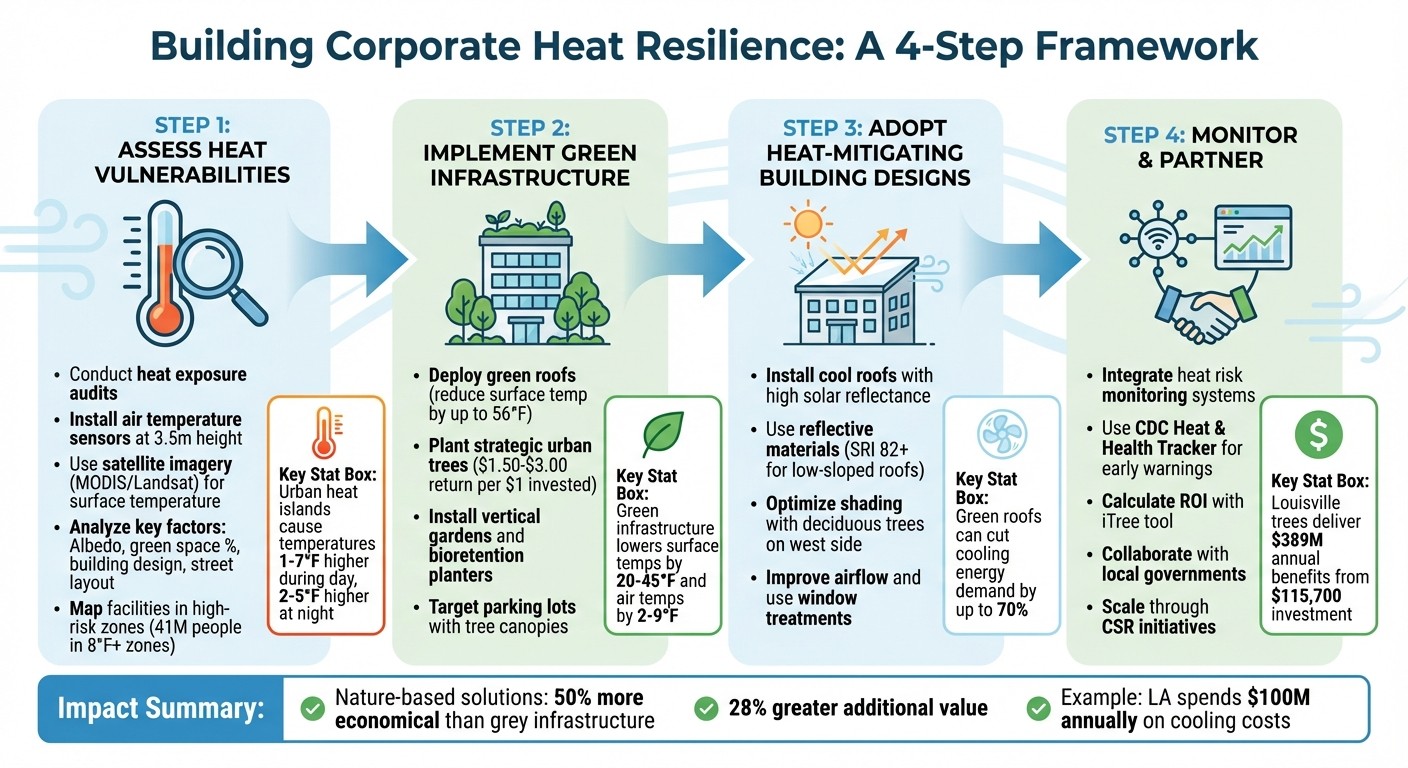
Corporate Heat Resilience Implementation Framework: 4-Step Process
Cool Roofs and Walls for Urban Heat Island Mitigation
Assessing Heat Vulnerabilities in Corporate Operations
Understanding where corporate facilities are most at risk from heat is a crucial first step before rolling out resilience measures. This involves analyzing both air temperature and surface temperature data from corporate sites [7]. Air temperature insights are essential for protecting employee health and managing energy demands, while surface temperature analysis pinpoints specific structures requiring intervention.
Instead of broadly comparing urban and rural areas, assessments should focus on temperature variations within the corporate campus itself. Localized hot spots often arise due to differences in surface materials and features [7]. Key factors to consider include:
Albedo: The ability of surfaces to reflect sunlight, which has the greatest influence on heat intensity [4].
Green space: The percentage of vegetation cover.
Building design: Height and orientation of structures.
Street layout: Width and arrangement of streets.
The timing of these evaluations is also critical. Limited cooling at night can increase round-the-clock cooling needs and exacerbate health risks [7]. During summer heat waves, urban air conditioning systems can contribute up to 20% more heat to the surrounding environment [4].
Conducting Heat Exposure Audits
A well-defined heat exposure audit is essential for understanding vulnerabilities. Start by setting clear goals - whether focusing on energy concerns, such as increased AC usage, or health risks, like identifying dangerous hotspots [7]. This clarity will guide your data collection strategy.
For air temperature monitoring, sensors should be installed on poles or building exteriors at a height of approximately 3.5 meters (11.5 feet). These sensors must be shielded from direct sunlight and placed away from HVAC systems to ensure accurate readings [7]. A notable example comes from researchers at the University of Wisconsin, who deployed 150 temperature and humidity sensors on streetlights and utility poles across Madison between 2012 and 2013. These sensors collected data every 15 minutes, offering valuable insights into the effects of urban density [7].
Surface temperature analysis, on the other hand, benefits from satellite imagery. Tools like MODIS or Landsat provide extensive geographic coverage, allowing for detailed mapping of temperature differences across large campuses or multiple sites. Combining satellite imagery with ground-based air temperature data gives the most comprehensive view of heat vulnerabilities [7].
Heat Vulnerability Mapping
Mapping heat vulnerabilities transforms raw temperature data into actionable insights by identifying which facilities face the greatest risks. This process considers both the physical characteristics of your buildings and their placement within the larger urban heat landscape.
Begin by analyzing surface temperatures across your corporate properties to locate facilities in high-heat zones. Research shows that in 44 major U.S. cities, around 41 million people - 55% of the population studied - live in areas where the built environment increases local temperatures by 8°F or more [4]. Tools like the NIHHIS Heat Equity Mapper or the CDC Heat and Health Tracker can help determine if your facilities are situated in these high-risk zones [4][6].
For a more detailed analysis, the U.S. Forest Service’s iTree tool offers a way to calculate the financial benefits of tree cover, allowing companies to evaluate the return on investment for greening projects [1]. By using this data-driven approach, businesses can prioritize resilience measures based on the severity of risks and potential economic benefits.
With vulnerabilities clearly mapped out, companies can move forward with confidence, implementing targeted solutions like green infrastructure to mitigate heat risks effectively.
Implementing Green Infrastructure Solutions
To address urban heat challenges, identify areas prone to high temperatures and deploy green infrastructure to cool them. These solutions work through two main processes: shading surfaces, which blocks direct sunlight, and evapotranspiration, where plants release moisture to naturally cool the air. Together, these mechanisms can lower surface temperatures by 20–45°F and reduce ambient air temperatures by 2–9°F during peak summer heat [12].
Matching solutions to specific site conditions is key. For corporate campuses with rooftop access, vegetative roof systems are ideal. In dense city centers with limited ground space, vertical gardens or bioretention planter boxes provide effective alternatives [11]. Parking lots, often the hottest areas on corporate properties, are perfect candidates for tree canopies and permeable pavements [12]. By integrating these measures with earlier heat mapping efforts, organizations can target interventions where they are most needed, laying the groundwork for broader cooling strategies.
Green Roofs, Walls, and Gardens
Green roofs offer measurable cooling benefits. Vegetative roofs can reduce surface temperatures by up to 56°F compared to traditional roofs and cut a building’s cooling energy demand by as much as 70% [5]. Indoor air temperatures in buildings with green roofs can be up to 27°F cooler than those with standard roofing [5]. A notable example comes from Kansas City, Missouri, where over 700,000 square feet of green roofs were installed between 1999 and 2020. According to an EPA case study, these roofs helped avoid 384 pounds of nitrogen oxide and 269 tons of carbon dioxide emissions in 2020, with health benefits valued between $35,500 and $80,500 [5].
When considering green roofs, you’ll need to choose between extensive and intensive systems. Extensive roofs, with 2–4 inches of growing medium, require minimal structural support and maintenance. In contrast, intensive roofs, which feature deeper soil capable of supporting trees and creating accessible park spaces, demand more structural reinforcement and ongoing care. Extensive systems are also more cost-effective, often priced at just one-tenth to one-third the cost of intensive designs [5]. Before installation, consult a structural engineer to ensure the building can handle the additional load [5].
For buildings with limited rooftop access, alternative solutions like vining plants or bioretention planter boxes can still provide substantial benefits. Vines can lower wall surface temperatures by 40°F during peak heat, while planter boxes manage stormwater and cool nearby areas [9][11]. To offset installation costs, check for financial incentives such as Philadelphia's Green Roof Tax Credit or Washington D.C.'s RiverSmart Rooftops Rebate Program [5].
Beyond building structures, outdoor tree plantings can extend cooling benefits over larger areas.
Urban Trees and Shade Solutions
Strategically planted trees deliver both immediate shade and long-term cooling. Position deciduous trees on the west side of buildings to block afternoon heat from windows and roofs [12]. Trees are also a smart financial investment, typically providing $1.50 to $3.00 in benefits for every $1.00 spent, with annual net returns ranging from $30 to $90 per tree [12].
Maintenance costs for urban trees range from $15 to $65 per year, with pruning making up 25–40% of the total [12]. When planting trees near roadsides or alongside other green infrastructure, it’s important to coordinate with designers to avoid root damage to underground utilities or building foundations [13]. Parking lots, with their heat-absorbing asphalt, are particularly valuable planting sites. Shade from trees not only cools these areas but also enhances walkability for employees and visitors [12]. For precise calculations of energy savings and carbon reductions, use tools like the U.S. Forest Service’s iTree software, which can also support corporate sustainability reporting [13].
Adopting Heat-Mitigating Building Designs
When it comes to managing heat, building design and material choices play a crucial role alongside green infrastructure. Two effective strategies - cool roofs with reflective materials and optimized shading and airflow - help lower cooling costs and enhance comfort. These approaches either block heat from entering buildings or improve air circulation around them, complementing green infrastructure efforts to limit heat absorption.
Cool Roofs and Reflective Materials
Cool roofs are designed to reflect more sunlight and release absorbed heat more efficiently than traditional roofing materials. When selecting roofing materials, it’s essential to consider three key properties: solar reflectance (how well the material reflects sunlight), thermal emissivity (how effectively it releases absorbed heat), and the combined Solar Reflectance Index (SRI) [14][2].
Building codes in various cities are increasingly setting performance benchmarks for cool roofs. For example:
In Phoenix, commercial buildings must meet a minimum 3-year aged solar reflectance of 0.55 and thermal emittance of 0.75 [14].
Los Angeles requires nonresidential low-sloped roofs to achieve a solar reflectance of 0.68, thermal emittance of 0.85, or a minimum SRI of 82 [14].
Atlanta has introduced a Cool Roof Ordinance that will take effect in June 2026, establishing similar performance standards [14].
To ensure compliance, roofing products should be rated by the Cool Roof Rating Council (CRRC). For existing buildings, reflective coatings or single-ply membranes can be applied to conventional roofs, enhancing their performance without the need for full replacement [14][5]. It’s worth noting that low-sloped roofs (≤2:12 pitch) require higher reflectance values compared to steep-sloped roofs. Additionally, focus on aged ratings rather than initial ones, as weathering and soiling can reduce a material’s effectiveness over time [14].
Shading and Airflow Optimization
Shading is another effective way to reduce the amount of solar radiation that reaches building surfaces. For example, planting deciduous trees in strategic locations can block intense afternoon sunlight from windows and rooftops, providing twofold benefits: cooling the building directly and lowering surrounding temperatures through evapotranspiration [13].
When incorporating trees into your design, it’s important to collaborate with infrastructure planners to avoid potential issues like tree roots interfering with building foundations or underground utilities [13]. Opt for native, drought-tolerant tree species that provide ample shade without requiring excessive water. Indoors, simple measures such as closing curtains or blinds during the hottest parts of the day can significantly reduce heat gain [15]. Combining outdoor shading techniques with indoor barriers creates a comprehensive approach to managing heat across your facilities [15].
Building Partnerships for Urban Greening Initiatives
Urban greening thrives on collaboration with local governments and community organizations. By working closely with public agencies and community groups, companies can tap into existing infrastructure plans, gain access to technical expertise, and align their greening projects with municipal climate adaptation strategies. This approach not only enhances urban resilience but also ensures that corporate efforts complement broader community goals. For instance, mapping heat risks can guide internal actions while highlighting opportunities for joint initiatives with municipal partners. Such partnerships pave the way for more cohesive and scalable urban greening projects across corporate operations.
Collaborating with Local Stakeholders
Start by examining your city's Comprehensive Heat Response Plans and long-term climate adaptation strategies to identify how corporate greening projects can support public priorities. Many municipalities share capital improvement schedules and street upgrade plans, which often present opportunities to incorporate green infrastructure into existing projects. Additionally, agencies managing parks, stormwater systems, and public lands frequently oversee spaces well-suited for urban forestry projects.
Public–private collaborations have repeatedly shown the tangible benefits of urban greening. These partnerships highlight how coordinated efforts between corporations and local authorities can deliver measurable environmental and economic gains. Tools like the CDC's Heat & Health Tracker can help pinpoint neighborhoods most at risk from heat exposure, ensuring that projects address environmental justice concerns. Programs such as Washington, DC's RiverSmart Rooftops Green Roof Rebate Program and Philadelphia's Green Roof Tax Credit Program provide excellent models for corporate–government collaboration.
Scaling Efforts Through Corporate Social Responsibility (CSR)
To maximize impact, corporations can weave urban greening into their CSR strategies. By integrating these initiatives into regular capital budgets and ongoing infrastructure maintenance, companies can ensure sustained investment rather than limiting efforts to one-off projects. Collaborating with local stakeholders strengthens the impact of green infrastructure and building design strategies.
Participating in local heat awareness events can deepen community connections while helping track health improvements in areas benefiting from greening projects. Transforming underutilized industrial sites into urban forests is another way to turn liabilities into valuable community assets. Additionally, coordinating roadside vegetation projects with infrastructure planners can help prevent conflicts with water systems or underground utilities, ensuring smoother implementation and long-term success.
Integrating Monitoring and Adaptation Tools
Keeping track of heat resilience and the impact of urban greening efforts is crucial for ensuring these initiatives deliver the expected benefits. By combining surface and air temperature data, you can gain a detailed heat profile, enabling more precise and timely interventions.
Heat Risk Monitoring Systems
The first step in monitoring is defining your objectives. Are you aiming to cut air conditioning costs by comparing urban and rural temperatures? Or is your focus on identifying facility hot spots to protect employee health? Clear goals guide the choice of tools and strategies.
Ground-based sensors remain a reliable option, offering high-resolution data on urban heat. For broader coverage, satellite technology is invaluable. For instance:
NASA’s MODIS satellite provides surface temperature data with a resolution of about 1 kilometer (0.6 miles).
Landsat sensors offer thermal infrared imagery at a finer resolution of 90 to 120 meters (approximately 295 to 394 feet), which can be refined to 30 meters (around 98 feet) for localized analysis [7].
Integrating early warning systems into safety protocols is another game-changer. Tools like the CDC's Heat & Health Tracker, combined with National Weather Service 5-day forecasts, can prompt proactive measures before extreme heat events. Chicago's early warning system, for example, played a significant role in reducing heat-related deaths from approximately 700 in 1995 to about 100 in 1999 - an impressive 85% reduction [6].
Evaluating ROI and Environmental Impact
Monitoring alone isn’t enough; quantifying the benefits is key to demonstrating the value of these projects. Tools like the U.S. Forest Service's iTree can calculate the financial impact of environmental benefits, such as energy savings, carbon reduction, and increased property values. A notable case comes from Louisville, Kentucky, where a $115,700 tree canopy assessment revealed that urban trees deliver $389 million in annual benefits through temperature control, energy conservation, and cleaner air [1][3].
Former Mayor Greg Fischer highlighted the importance of detailed data:
"Knowing where we lack canopy, down to the street and address level, will help our efforts exponentially." [1]
Tracking energy use before and after implementing green infrastructure offers concrete evidence of cost savings, especially since higher urban temperatures often lead to increased air conditioning demand. Moreover, upgrading facilities from "brown" to "green" assets through resilience projects can enhance GRESB scores and ESG ratings - metrics that are increasingly critical to investors and financial performance [16].
For a comprehensive monitoring strategy, consider combining satellite data for large-scale surface temperature insights with ground-based sensors for precise air temperature readings. Mapping your sensor network can help identify coverage gaps, ensuring all critical areas, including key assets and employee zones, are monitored effectively. This hybrid approach provides a full picture of the heat emitted by your facilities and the conditions experienced by your workforce.
Conclusion
Rising urban temperatures are reshaping how businesses operate. Over the past 30 years, extreme heat has caused more fatalities than floods, tornadoes, cold snaps, and hurricanes combined [8]. The strategies discussed here provide a balanced approach, combining immediate actions with forward-looking plans.
Green infrastructure offers tangible benefits. Incorporating trees, green roofs, and vegetation not only reduces temperatures but also cuts energy costs and increases property values. Studies show that these solutions can yield impressive annual returns [13]. Compared to traditional grey infrastructure, nature-based approaches are 50% more economical and deliver 28% greater additional value [17].
Beyond these infrastructure improvements, thoughtful design changes and ongoing monitoring play a critical role in protecting investments. Features like cool roofs, reflective materials, and enhanced airflow systems lower operational costs, while consistent monitoring and partnerships with local organizations amplify the impact. These collaborations also address heat equity, ensuring underserved communities share in the benefits of cooling efforts. As research scientist Valentina Marchionni aptly stated:
"By embracing urban greening and integrated water management strategies, cities are not just planting trees – they're sowing the seeds of resilient, liveable urban environments" [10].
The journey toward heat resilience begins with identifying vulnerabilities and taking action. From installing green roofs to fostering citywide partnerships, every step contributes to a cooler, more sustainable future. By integrating green infrastructure, adaptive building designs, and strategic collaborations, your organization can take meaningful strides in combating rising heat and securing long-term resilience.
FAQs
What steps can corporations take to identify their heat-related risks?
Corporations can address heat-related risks by blending data-driven analysis with strategies that focus on community well-being. The first step involves conducting a thorough needs assessment to identify vulnerable populations, high-risk zones, and infrastructure issues linked to heat exposure. This approach ensures that efforts are directed toward the areas requiring the most attention.
By leveraging tools such as temperature data and remote sensing technologies, companies can create detailed maps of urban heat islands. These maps highlight specific "hot spots" and their effects on at-risk groups, including seniors and low-income communities. Additionally, regional climate assessments provide localized insights into heat-related vulnerabilities, helping to shape more precise and effective responses.
Incorporating these findings into their planning allows corporations to implement practical solutions. These might include green infrastructure, reflective materials for buildings, or establishing cooling centers - all of which can help mitigate heat risks while fostering long-term resilience.
What are the most affordable and effective green infrastructure strategies for reducing urban heat?
The most budget-friendly and impactful ways to reduce urban heat include planting trees and vegetation, adding green roofs, and using cool pavements. Trees and plants not only provide shade but also cool the air through a process called evapotranspiration, which can noticeably lower temperatures in cities. Green roofs, which involve growing vegetation on building rooftops, help insulate structures, cut down on energy consumption, and tackle the urban heat island effect. Meanwhile, cool pavements are designed to either reflect more sunlight or let water seep through, reducing the heat absorbed by streets and sidewalks.
These approaches are not only economical and adaptable but also come with extra perks like cleaner air, improved stormwater control, and more inviting community spaces. They represent actionable ways for businesses to address rising urban temperatures while supporting broader environmental goals.
How can businesses work with local governments to support urban greening efforts?
Businesses have a unique opportunity to work alongside local governments to promote urban greening by getting involved in planning efforts and backing community-driven programs. Local governments often rely on tools like tree canopy assessments, urban forestry strategies, and specific policies to prioritize and expand green spaces. Companies can play a meaningful role by contributing resources, funding, or expertise to complement these initiatives.
Such partnerships could take various forms, including sponsoring tree planting campaigns, investing in green roof projects, or supporting cooling centers to combat urban heat. By joining forces, businesses and governments can tackle heat-related challenges, boost environmental resilience, and foster healthier, greener neighborhoods that reflect the community's specific needs. This shared approach not only distributes responsibility but also amplifies the overall impact of urban greening efforts.
Related Blog Posts
Latest Articles
©2025


FAQ
01
What does it really mean to “redefine profit”?
02
What makes Council Fire different?
03
Who does Council Fire you work with?
04
What does working with Council Fire actually look like?
05
How does Council Fire help organizations turn big goals into action?
06
How does Council Fire define and measure success?
Jan 31, 2026
How to Build Heat Resilience & Urban Greening for Corporations
Sustainability Strategy
In This Article
Practical steps for corporations to reduce urban heat: audits, green roofs, trees, cool materials, partnerships and monitoring to cut costs and protect people.
How to Build Heat Resilience & Urban Greening for Corporations
Urban heat is increasingly impacting businesses, from rising energy costs to reduced workforce productivity. Cities are hotter than rural areas, with urban heat islands causing daytime temperatures to be 1–7°F higher and nighttime temperatures 2–5°F higher. This drives up air conditioning use, strains power grids, and increases emissions. For example, Los Angeles spends $100 million annually on cooling costs.
Businesses can mitigate these risks by implementing green infrastructure, such as trees, green roofs, and reflective materials, which can lower temperatures by up to 9°F. Louisville’s tree canopy study highlighted the potential savings, showing $389 million in annual benefits from a $115,700 investment. Conducting heat audits, mapping vulnerabilities, and using tools like satellite imagery or temperature sensors can help target the hottest areas. Solutions like green roofs, urban trees, and cool building materials not only reduce heat but also cut energy costs and improve employee comfort. Collaborating with local governments and leveraging tax incentives can expand these efforts, supporting both corporate goals and community needs.
Corporate Heat Resilience Implementation Framework: 4-Step Process
Cool Roofs and Walls for Urban Heat Island Mitigation
Assessing Heat Vulnerabilities in Corporate Operations
Understanding where corporate facilities are most at risk from heat is a crucial first step before rolling out resilience measures. This involves analyzing both air temperature and surface temperature data from corporate sites [7]. Air temperature insights are essential for protecting employee health and managing energy demands, while surface temperature analysis pinpoints specific structures requiring intervention.
Instead of broadly comparing urban and rural areas, assessments should focus on temperature variations within the corporate campus itself. Localized hot spots often arise due to differences in surface materials and features [7]. Key factors to consider include:
Albedo: The ability of surfaces to reflect sunlight, which has the greatest influence on heat intensity [4].
Green space: The percentage of vegetation cover.
Building design: Height and orientation of structures.
Street layout: Width and arrangement of streets.
The timing of these evaluations is also critical. Limited cooling at night can increase round-the-clock cooling needs and exacerbate health risks [7]. During summer heat waves, urban air conditioning systems can contribute up to 20% more heat to the surrounding environment [4].
Conducting Heat Exposure Audits
A well-defined heat exposure audit is essential for understanding vulnerabilities. Start by setting clear goals - whether focusing on energy concerns, such as increased AC usage, or health risks, like identifying dangerous hotspots [7]. This clarity will guide your data collection strategy.
For air temperature monitoring, sensors should be installed on poles or building exteriors at a height of approximately 3.5 meters (11.5 feet). These sensors must be shielded from direct sunlight and placed away from HVAC systems to ensure accurate readings [7]. A notable example comes from researchers at the University of Wisconsin, who deployed 150 temperature and humidity sensors on streetlights and utility poles across Madison between 2012 and 2013. These sensors collected data every 15 minutes, offering valuable insights into the effects of urban density [7].
Surface temperature analysis, on the other hand, benefits from satellite imagery. Tools like MODIS or Landsat provide extensive geographic coverage, allowing for detailed mapping of temperature differences across large campuses or multiple sites. Combining satellite imagery with ground-based air temperature data gives the most comprehensive view of heat vulnerabilities [7].
Heat Vulnerability Mapping
Mapping heat vulnerabilities transforms raw temperature data into actionable insights by identifying which facilities face the greatest risks. This process considers both the physical characteristics of your buildings and their placement within the larger urban heat landscape.
Begin by analyzing surface temperatures across your corporate properties to locate facilities in high-heat zones. Research shows that in 44 major U.S. cities, around 41 million people - 55% of the population studied - live in areas where the built environment increases local temperatures by 8°F or more [4]. Tools like the NIHHIS Heat Equity Mapper or the CDC Heat and Health Tracker can help determine if your facilities are situated in these high-risk zones [4][6].
For a more detailed analysis, the U.S. Forest Service’s iTree tool offers a way to calculate the financial benefits of tree cover, allowing companies to evaluate the return on investment for greening projects [1]. By using this data-driven approach, businesses can prioritize resilience measures based on the severity of risks and potential economic benefits.
With vulnerabilities clearly mapped out, companies can move forward with confidence, implementing targeted solutions like green infrastructure to mitigate heat risks effectively.
Implementing Green Infrastructure Solutions
To address urban heat challenges, identify areas prone to high temperatures and deploy green infrastructure to cool them. These solutions work through two main processes: shading surfaces, which blocks direct sunlight, and evapotranspiration, where plants release moisture to naturally cool the air. Together, these mechanisms can lower surface temperatures by 20–45°F and reduce ambient air temperatures by 2–9°F during peak summer heat [12].
Matching solutions to specific site conditions is key. For corporate campuses with rooftop access, vegetative roof systems are ideal. In dense city centers with limited ground space, vertical gardens or bioretention planter boxes provide effective alternatives [11]. Parking lots, often the hottest areas on corporate properties, are perfect candidates for tree canopies and permeable pavements [12]. By integrating these measures with earlier heat mapping efforts, organizations can target interventions where they are most needed, laying the groundwork for broader cooling strategies.
Green Roofs, Walls, and Gardens
Green roofs offer measurable cooling benefits. Vegetative roofs can reduce surface temperatures by up to 56°F compared to traditional roofs and cut a building’s cooling energy demand by as much as 70% [5]. Indoor air temperatures in buildings with green roofs can be up to 27°F cooler than those with standard roofing [5]. A notable example comes from Kansas City, Missouri, where over 700,000 square feet of green roofs were installed between 1999 and 2020. According to an EPA case study, these roofs helped avoid 384 pounds of nitrogen oxide and 269 tons of carbon dioxide emissions in 2020, with health benefits valued between $35,500 and $80,500 [5].
When considering green roofs, you’ll need to choose between extensive and intensive systems. Extensive roofs, with 2–4 inches of growing medium, require minimal structural support and maintenance. In contrast, intensive roofs, which feature deeper soil capable of supporting trees and creating accessible park spaces, demand more structural reinforcement and ongoing care. Extensive systems are also more cost-effective, often priced at just one-tenth to one-third the cost of intensive designs [5]. Before installation, consult a structural engineer to ensure the building can handle the additional load [5].
For buildings with limited rooftop access, alternative solutions like vining plants or bioretention planter boxes can still provide substantial benefits. Vines can lower wall surface temperatures by 40°F during peak heat, while planter boxes manage stormwater and cool nearby areas [9][11]. To offset installation costs, check for financial incentives such as Philadelphia's Green Roof Tax Credit or Washington D.C.'s RiverSmart Rooftops Rebate Program [5].
Beyond building structures, outdoor tree plantings can extend cooling benefits over larger areas.
Urban Trees and Shade Solutions
Strategically planted trees deliver both immediate shade and long-term cooling. Position deciduous trees on the west side of buildings to block afternoon heat from windows and roofs [12]. Trees are also a smart financial investment, typically providing $1.50 to $3.00 in benefits for every $1.00 spent, with annual net returns ranging from $30 to $90 per tree [12].
Maintenance costs for urban trees range from $15 to $65 per year, with pruning making up 25–40% of the total [12]. When planting trees near roadsides or alongside other green infrastructure, it’s important to coordinate with designers to avoid root damage to underground utilities or building foundations [13]. Parking lots, with their heat-absorbing asphalt, are particularly valuable planting sites. Shade from trees not only cools these areas but also enhances walkability for employees and visitors [12]. For precise calculations of energy savings and carbon reductions, use tools like the U.S. Forest Service’s iTree software, which can also support corporate sustainability reporting [13].
Adopting Heat-Mitigating Building Designs
When it comes to managing heat, building design and material choices play a crucial role alongside green infrastructure. Two effective strategies - cool roofs with reflective materials and optimized shading and airflow - help lower cooling costs and enhance comfort. These approaches either block heat from entering buildings or improve air circulation around them, complementing green infrastructure efforts to limit heat absorption.
Cool Roofs and Reflective Materials
Cool roofs are designed to reflect more sunlight and release absorbed heat more efficiently than traditional roofing materials. When selecting roofing materials, it’s essential to consider three key properties: solar reflectance (how well the material reflects sunlight), thermal emissivity (how effectively it releases absorbed heat), and the combined Solar Reflectance Index (SRI) [14][2].
Building codes in various cities are increasingly setting performance benchmarks for cool roofs. For example:
In Phoenix, commercial buildings must meet a minimum 3-year aged solar reflectance of 0.55 and thermal emittance of 0.75 [14].
Los Angeles requires nonresidential low-sloped roofs to achieve a solar reflectance of 0.68, thermal emittance of 0.85, or a minimum SRI of 82 [14].
Atlanta has introduced a Cool Roof Ordinance that will take effect in June 2026, establishing similar performance standards [14].
To ensure compliance, roofing products should be rated by the Cool Roof Rating Council (CRRC). For existing buildings, reflective coatings or single-ply membranes can be applied to conventional roofs, enhancing their performance without the need for full replacement [14][5]. It’s worth noting that low-sloped roofs (≤2:12 pitch) require higher reflectance values compared to steep-sloped roofs. Additionally, focus on aged ratings rather than initial ones, as weathering and soiling can reduce a material’s effectiveness over time [14].
Shading and Airflow Optimization
Shading is another effective way to reduce the amount of solar radiation that reaches building surfaces. For example, planting deciduous trees in strategic locations can block intense afternoon sunlight from windows and rooftops, providing twofold benefits: cooling the building directly and lowering surrounding temperatures through evapotranspiration [13].
When incorporating trees into your design, it’s important to collaborate with infrastructure planners to avoid potential issues like tree roots interfering with building foundations or underground utilities [13]. Opt for native, drought-tolerant tree species that provide ample shade without requiring excessive water. Indoors, simple measures such as closing curtains or blinds during the hottest parts of the day can significantly reduce heat gain [15]. Combining outdoor shading techniques with indoor barriers creates a comprehensive approach to managing heat across your facilities [15].
Building Partnerships for Urban Greening Initiatives
Urban greening thrives on collaboration with local governments and community organizations. By working closely with public agencies and community groups, companies can tap into existing infrastructure plans, gain access to technical expertise, and align their greening projects with municipal climate adaptation strategies. This approach not only enhances urban resilience but also ensures that corporate efforts complement broader community goals. For instance, mapping heat risks can guide internal actions while highlighting opportunities for joint initiatives with municipal partners. Such partnerships pave the way for more cohesive and scalable urban greening projects across corporate operations.
Collaborating with Local Stakeholders
Start by examining your city's Comprehensive Heat Response Plans and long-term climate adaptation strategies to identify how corporate greening projects can support public priorities. Many municipalities share capital improvement schedules and street upgrade plans, which often present opportunities to incorporate green infrastructure into existing projects. Additionally, agencies managing parks, stormwater systems, and public lands frequently oversee spaces well-suited for urban forestry projects.
Public–private collaborations have repeatedly shown the tangible benefits of urban greening. These partnerships highlight how coordinated efforts between corporations and local authorities can deliver measurable environmental and economic gains. Tools like the CDC's Heat & Health Tracker can help pinpoint neighborhoods most at risk from heat exposure, ensuring that projects address environmental justice concerns. Programs such as Washington, DC's RiverSmart Rooftops Green Roof Rebate Program and Philadelphia's Green Roof Tax Credit Program provide excellent models for corporate–government collaboration.
Scaling Efforts Through Corporate Social Responsibility (CSR)
To maximize impact, corporations can weave urban greening into their CSR strategies. By integrating these initiatives into regular capital budgets and ongoing infrastructure maintenance, companies can ensure sustained investment rather than limiting efforts to one-off projects. Collaborating with local stakeholders strengthens the impact of green infrastructure and building design strategies.
Participating in local heat awareness events can deepen community connections while helping track health improvements in areas benefiting from greening projects. Transforming underutilized industrial sites into urban forests is another way to turn liabilities into valuable community assets. Additionally, coordinating roadside vegetation projects with infrastructure planners can help prevent conflicts with water systems or underground utilities, ensuring smoother implementation and long-term success.
Integrating Monitoring and Adaptation Tools
Keeping track of heat resilience and the impact of urban greening efforts is crucial for ensuring these initiatives deliver the expected benefits. By combining surface and air temperature data, you can gain a detailed heat profile, enabling more precise and timely interventions.
Heat Risk Monitoring Systems
The first step in monitoring is defining your objectives. Are you aiming to cut air conditioning costs by comparing urban and rural temperatures? Or is your focus on identifying facility hot spots to protect employee health? Clear goals guide the choice of tools and strategies.
Ground-based sensors remain a reliable option, offering high-resolution data on urban heat. For broader coverage, satellite technology is invaluable. For instance:
NASA’s MODIS satellite provides surface temperature data with a resolution of about 1 kilometer (0.6 miles).
Landsat sensors offer thermal infrared imagery at a finer resolution of 90 to 120 meters (approximately 295 to 394 feet), which can be refined to 30 meters (around 98 feet) for localized analysis [7].
Integrating early warning systems into safety protocols is another game-changer. Tools like the CDC's Heat & Health Tracker, combined with National Weather Service 5-day forecasts, can prompt proactive measures before extreme heat events. Chicago's early warning system, for example, played a significant role in reducing heat-related deaths from approximately 700 in 1995 to about 100 in 1999 - an impressive 85% reduction [6].
Evaluating ROI and Environmental Impact
Monitoring alone isn’t enough; quantifying the benefits is key to demonstrating the value of these projects. Tools like the U.S. Forest Service's iTree can calculate the financial impact of environmental benefits, such as energy savings, carbon reduction, and increased property values. A notable case comes from Louisville, Kentucky, where a $115,700 tree canopy assessment revealed that urban trees deliver $389 million in annual benefits through temperature control, energy conservation, and cleaner air [1][3].
Former Mayor Greg Fischer highlighted the importance of detailed data:
"Knowing where we lack canopy, down to the street and address level, will help our efforts exponentially." [1]
Tracking energy use before and after implementing green infrastructure offers concrete evidence of cost savings, especially since higher urban temperatures often lead to increased air conditioning demand. Moreover, upgrading facilities from "brown" to "green" assets through resilience projects can enhance GRESB scores and ESG ratings - metrics that are increasingly critical to investors and financial performance [16].
For a comprehensive monitoring strategy, consider combining satellite data for large-scale surface temperature insights with ground-based sensors for precise air temperature readings. Mapping your sensor network can help identify coverage gaps, ensuring all critical areas, including key assets and employee zones, are monitored effectively. This hybrid approach provides a full picture of the heat emitted by your facilities and the conditions experienced by your workforce.
Conclusion
Rising urban temperatures are reshaping how businesses operate. Over the past 30 years, extreme heat has caused more fatalities than floods, tornadoes, cold snaps, and hurricanes combined [8]. The strategies discussed here provide a balanced approach, combining immediate actions with forward-looking plans.
Green infrastructure offers tangible benefits. Incorporating trees, green roofs, and vegetation not only reduces temperatures but also cuts energy costs and increases property values. Studies show that these solutions can yield impressive annual returns [13]. Compared to traditional grey infrastructure, nature-based approaches are 50% more economical and deliver 28% greater additional value [17].
Beyond these infrastructure improvements, thoughtful design changes and ongoing monitoring play a critical role in protecting investments. Features like cool roofs, reflective materials, and enhanced airflow systems lower operational costs, while consistent monitoring and partnerships with local organizations amplify the impact. These collaborations also address heat equity, ensuring underserved communities share in the benefits of cooling efforts. As research scientist Valentina Marchionni aptly stated:
"By embracing urban greening and integrated water management strategies, cities are not just planting trees – they're sowing the seeds of resilient, liveable urban environments" [10].
The journey toward heat resilience begins with identifying vulnerabilities and taking action. From installing green roofs to fostering citywide partnerships, every step contributes to a cooler, more sustainable future. By integrating green infrastructure, adaptive building designs, and strategic collaborations, your organization can take meaningful strides in combating rising heat and securing long-term resilience.
FAQs
What steps can corporations take to identify their heat-related risks?
Corporations can address heat-related risks by blending data-driven analysis with strategies that focus on community well-being. The first step involves conducting a thorough needs assessment to identify vulnerable populations, high-risk zones, and infrastructure issues linked to heat exposure. This approach ensures that efforts are directed toward the areas requiring the most attention.
By leveraging tools such as temperature data and remote sensing technologies, companies can create detailed maps of urban heat islands. These maps highlight specific "hot spots" and their effects on at-risk groups, including seniors and low-income communities. Additionally, regional climate assessments provide localized insights into heat-related vulnerabilities, helping to shape more precise and effective responses.
Incorporating these findings into their planning allows corporations to implement practical solutions. These might include green infrastructure, reflective materials for buildings, or establishing cooling centers - all of which can help mitigate heat risks while fostering long-term resilience.
What are the most affordable and effective green infrastructure strategies for reducing urban heat?
The most budget-friendly and impactful ways to reduce urban heat include planting trees and vegetation, adding green roofs, and using cool pavements. Trees and plants not only provide shade but also cool the air through a process called evapotranspiration, which can noticeably lower temperatures in cities. Green roofs, which involve growing vegetation on building rooftops, help insulate structures, cut down on energy consumption, and tackle the urban heat island effect. Meanwhile, cool pavements are designed to either reflect more sunlight or let water seep through, reducing the heat absorbed by streets and sidewalks.
These approaches are not only economical and adaptable but also come with extra perks like cleaner air, improved stormwater control, and more inviting community spaces. They represent actionable ways for businesses to address rising urban temperatures while supporting broader environmental goals.
How can businesses work with local governments to support urban greening efforts?
Businesses have a unique opportunity to work alongside local governments to promote urban greening by getting involved in planning efforts and backing community-driven programs. Local governments often rely on tools like tree canopy assessments, urban forestry strategies, and specific policies to prioritize and expand green spaces. Companies can play a meaningful role by contributing resources, funding, or expertise to complement these initiatives.
Such partnerships could take various forms, including sponsoring tree planting campaigns, investing in green roof projects, or supporting cooling centers to combat urban heat. By joining forces, businesses and governments can tackle heat-related challenges, boost environmental resilience, and foster healthier, greener neighborhoods that reflect the community's specific needs. This shared approach not only distributes responsibility but also amplifies the overall impact of urban greening efforts.
Related Blog Posts
FAQ
01
What does it really mean to “redefine profit”?
02
What makes Council Fire different?
03
Who does Council Fire you work with?
04
What does working with Council Fire actually look like?
05
How does Council Fire help organizations turn big goals into action?
06
How does Council Fire define and measure success?
Jan 31, 2026
How to Build Heat Resilience & Urban Greening for Corporations
Sustainability Strategy
In This Article
Practical steps for corporations to reduce urban heat: audits, green roofs, trees, cool materials, partnerships and monitoring to cut costs and protect people.
How to Build Heat Resilience & Urban Greening for Corporations
Urban heat is increasingly impacting businesses, from rising energy costs to reduced workforce productivity. Cities are hotter than rural areas, with urban heat islands causing daytime temperatures to be 1–7°F higher and nighttime temperatures 2–5°F higher. This drives up air conditioning use, strains power grids, and increases emissions. For example, Los Angeles spends $100 million annually on cooling costs.
Businesses can mitigate these risks by implementing green infrastructure, such as trees, green roofs, and reflective materials, which can lower temperatures by up to 9°F. Louisville’s tree canopy study highlighted the potential savings, showing $389 million in annual benefits from a $115,700 investment. Conducting heat audits, mapping vulnerabilities, and using tools like satellite imagery or temperature sensors can help target the hottest areas. Solutions like green roofs, urban trees, and cool building materials not only reduce heat but also cut energy costs and improve employee comfort. Collaborating with local governments and leveraging tax incentives can expand these efforts, supporting both corporate goals and community needs.
Corporate Heat Resilience Implementation Framework: 4-Step Process
Cool Roofs and Walls for Urban Heat Island Mitigation
Assessing Heat Vulnerabilities in Corporate Operations
Understanding where corporate facilities are most at risk from heat is a crucial first step before rolling out resilience measures. This involves analyzing both air temperature and surface temperature data from corporate sites [7]. Air temperature insights are essential for protecting employee health and managing energy demands, while surface temperature analysis pinpoints specific structures requiring intervention.
Instead of broadly comparing urban and rural areas, assessments should focus on temperature variations within the corporate campus itself. Localized hot spots often arise due to differences in surface materials and features [7]. Key factors to consider include:
Albedo: The ability of surfaces to reflect sunlight, which has the greatest influence on heat intensity [4].
Green space: The percentage of vegetation cover.
Building design: Height and orientation of structures.
Street layout: Width and arrangement of streets.
The timing of these evaluations is also critical. Limited cooling at night can increase round-the-clock cooling needs and exacerbate health risks [7]. During summer heat waves, urban air conditioning systems can contribute up to 20% more heat to the surrounding environment [4].
Conducting Heat Exposure Audits
A well-defined heat exposure audit is essential for understanding vulnerabilities. Start by setting clear goals - whether focusing on energy concerns, such as increased AC usage, or health risks, like identifying dangerous hotspots [7]. This clarity will guide your data collection strategy.
For air temperature monitoring, sensors should be installed on poles or building exteriors at a height of approximately 3.5 meters (11.5 feet). These sensors must be shielded from direct sunlight and placed away from HVAC systems to ensure accurate readings [7]. A notable example comes from researchers at the University of Wisconsin, who deployed 150 temperature and humidity sensors on streetlights and utility poles across Madison between 2012 and 2013. These sensors collected data every 15 minutes, offering valuable insights into the effects of urban density [7].
Surface temperature analysis, on the other hand, benefits from satellite imagery. Tools like MODIS or Landsat provide extensive geographic coverage, allowing for detailed mapping of temperature differences across large campuses or multiple sites. Combining satellite imagery with ground-based air temperature data gives the most comprehensive view of heat vulnerabilities [7].
Heat Vulnerability Mapping
Mapping heat vulnerabilities transforms raw temperature data into actionable insights by identifying which facilities face the greatest risks. This process considers both the physical characteristics of your buildings and their placement within the larger urban heat landscape.
Begin by analyzing surface temperatures across your corporate properties to locate facilities in high-heat zones. Research shows that in 44 major U.S. cities, around 41 million people - 55% of the population studied - live in areas where the built environment increases local temperatures by 8°F or more [4]. Tools like the NIHHIS Heat Equity Mapper or the CDC Heat and Health Tracker can help determine if your facilities are situated in these high-risk zones [4][6].
For a more detailed analysis, the U.S. Forest Service’s iTree tool offers a way to calculate the financial benefits of tree cover, allowing companies to evaluate the return on investment for greening projects [1]. By using this data-driven approach, businesses can prioritize resilience measures based on the severity of risks and potential economic benefits.
With vulnerabilities clearly mapped out, companies can move forward with confidence, implementing targeted solutions like green infrastructure to mitigate heat risks effectively.
Implementing Green Infrastructure Solutions
To address urban heat challenges, identify areas prone to high temperatures and deploy green infrastructure to cool them. These solutions work through two main processes: shading surfaces, which blocks direct sunlight, and evapotranspiration, where plants release moisture to naturally cool the air. Together, these mechanisms can lower surface temperatures by 20–45°F and reduce ambient air temperatures by 2–9°F during peak summer heat [12].
Matching solutions to specific site conditions is key. For corporate campuses with rooftop access, vegetative roof systems are ideal. In dense city centers with limited ground space, vertical gardens or bioretention planter boxes provide effective alternatives [11]. Parking lots, often the hottest areas on corporate properties, are perfect candidates for tree canopies and permeable pavements [12]. By integrating these measures with earlier heat mapping efforts, organizations can target interventions where they are most needed, laying the groundwork for broader cooling strategies.
Green Roofs, Walls, and Gardens
Green roofs offer measurable cooling benefits. Vegetative roofs can reduce surface temperatures by up to 56°F compared to traditional roofs and cut a building’s cooling energy demand by as much as 70% [5]. Indoor air temperatures in buildings with green roofs can be up to 27°F cooler than those with standard roofing [5]. A notable example comes from Kansas City, Missouri, where over 700,000 square feet of green roofs were installed between 1999 and 2020. According to an EPA case study, these roofs helped avoid 384 pounds of nitrogen oxide and 269 tons of carbon dioxide emissions in 2020, with health benefits valued between $35,500 and $80,500 [5].
When considering green roofs, you’ll need to choose between extensive and intensive systems. Extensive roofs, with 2–4 inches of growing medium, require minimal structural support and maintenance. In contrast, intensive roofs, which feature deeper soil capable of supporting trees and creating accessible park spaces, demand more structural reinforcement and ongoing care. Extensive systems are also more cost-effective, often priced at just one-tenth to one-third the cost of intensive designs [5]. Before installation, consult a structural engineer to ensure the building can handle the additional load [5].
For buildings with limited rooftop access, alternative solutions like vining plants or bioretention planter boxes can still provide substantial benefits. Vines can lower wall surface temperatures by 40°F during peak heat, while planter boxes manage stormwater and cool nearby areas [9][11]. To offset installation costs, check for financial incentives such as Philadelphia's Green Roof Tax Credit or Washington D.C.'s RiverSmart Rooftops Rebate Program [5].
Beyond building structures, outdoor tree plantings can extend cooling benefits over larger areas.
Urban Trees and Shade Solutions
Strategically planted trees deliver both immediate shade and long-term cooling. Position deciduous trees on the west side of buildings to block afternoon heat from windows and roofs [12]. Trees are also a smart financial investment, typically providing $1.50 to $3.00 in benefits for every $1.00 spent, with annual net returns ranging from $30 to $90 per tree [12].
Maintenance costs for urban trees range from $15 to $65 per year, with pruning making up 25–40% of the total [12]. When planting trees near roadsides or alongside other green infrastructure, it’s important to coordinate with designers to avoid root damage to underground utilities or building foundations [13]. Parking lots, with their heat-absorbing asphalt, are particularly valuable planting sites. Shade from trees not only cools these areas but also enhances walkability for employees and visitors [12]. For precise calculations of energy savings and carbon reductions, use tools like the U.S. Forest Service’s iTree software, which can also support corporate sustainability reporting [13].
Adopting Heat-Mitigating Building Designs
When it comes to managing heat, building design and material choices play a crucial role alongside green infrastructure. Two effective strategies - cool roofs with reflective materials and optimized shading and airflow - help lower cooling costs and enhance comfort. These approaches either block heat from entering buildings or improve air circulation around them, complementing green infrastructure efforts to limit heat absorption.
Cool Roofs and Reflective Materials
Cool roofs are designed to reflect more sunlight and release absorbed heat more efficiently than traditional roofing materials. When selecting roofing materials, it’s essential to consider three key properties: solar reflectance (how well the material reflects sunlight), thermal emissivity (how effectively it releases absorbed heat), and the combined Solar Reflectance Index (SRI) [14][2].
Building codes in various cities are increasingly setting performance benchmarks for cool roofs. For example:
In Phoenix, commercial buildings must meet a minimum 3-year aged solar reflectance of 0.55 and thermal emittance of 0.75 [14].
Los Angeles requires nonresidential low-sloped roofs to achieve a solar reflectance of 0.68, thermal emittance of 0.85, or a minimum SRI of 82 [14].
Atlanta has introduced a Cool Roof Ordinance that will take effect in June 2026, establishing similar performance standards [14].
To ensure compliance, roofing products should be rated by the Cool Roof Rating Council (CRRC). For existing buildings, reflective coatings or single-ply membranes can be applied to conventional roofs, enhancing their performance without the need for full replacement [14][5]. It’s worth noting that low-sloped roofs (≤2:12 pitch) require higher reflectance values compared to steep-sloped roofs. Additionally, focus on aged ratings rather than initial ones, as weathering and soiling can reduce a material’s effectiveness over time [14].
Shading and Airflow Optimization
Shading is another effective way to reduce the amount of solar radiation that reaches building surfaces. For example, planting deciduous trees in strategic locations can block intense afternoon sunlight from windows and rooftops, providing twofold benefits: cooling the building directly and lowering surrounding temperatures through evapotranspiration [13].
When incorporating trees into your design, it’s important to collaborate with infrastructure planners to avoid potential issues like tree roots interfering with building foundations or underground utilities [13]. Opt for native, drought-tolerant tree species that provide ample shade without requiring excessive water. Indoors, simple measures such as closing curtains or blinds during the hottest parts of the day can significantly reduce heat gain [15]. Combining outdoor shading techniques with indoor barriers creates a comprehensive approach to managing heat across your facilities [15].
Building Partnerships for Urban Greening Initiatives
Urban greening thrives on collaboration with local governments and community organizations. By working closely with public agencies and community groups, companies can tap into existing infrastructure plans, gain access to technical expertise, and align their greening projects with municipal climate adaptation strategies. This approach not only enhances urban resilience but also ensures that corporate efforts complement broader community goals. For instance, mapping heat risks can guide internal actions while highlighting opportunities for joint initiatives with municipal partners. Such partnerships pave the way for more cohesive and scalable urban greening projects across corporate operations.
Collaborating with Local Stakeholders
Start by examining your city's Comprehensive Heat Response Plans and long-term climate adaptation strategies to identify how corporate greening projects can support public priorities. Many municipalities share capital improvement schedules and street upgrade plans, which often present opportunities to incorporate green infrastructure into existing projects. Additionally, agencies managing parks, stormwater systems, and public lands frequently oversee spaces well-suited for urban forestry projects.
Public–private collaborations have repeatedly shown the tangible benefits of urban greening. These partnerships highlight how coordinated efforts between corporations and local authorities can deliver measurable environmental and economic gains. Tools like the CDC's Heat & Health Tracker can help pinpoint neighborhoods most at risk from heat exposure, ensuring that projects address environmental justice concerns. Programs such as Washington, DC's RiverSmart Rooftops Green Roof Rebate Program and Philadelphia's Green Roof Tax Credit Program provide excellent models for corporate–government collaboration.
Scaling Efforts Through Corporate Social Responsibility (CSR)
To maximize impact, corporations can weave urban greening into their CSR strategies. By integrating these initiatives into regular capital budgets and ongoing infrastructure maintenance, companies can ensure sustained investment rather than limiting efforts to one-off projects. Collaborating with local stakeholders strengthens the impact of green infrastructure and building design strategies.
Participating in local heat awareness events can deepen community connections while helping track health improvements in areas benefiting from greening projects. Transforming underutilized industrial sites into urban forests is another way to turn liabilities into valuable community assets. Additionally, coordinating roadside vegetation projects with infrastructure planners can help prevent conflicts with water systems or underground utilities, ensuring smoother implementation and long-term success.
Integrating Monitoring and Adaptation Tools
Keeping track of heat resilience and the impact of urban greening efforts is crucial for ensuring these initiatives deliver the expected benefits. By combining surface and air temperature data, you can gain a detailed heat profile, enabling more precise and timely interventions.
Heat Risk Monitoring Systems
The first step in monitoring is defining your objectives. Are you aiming to cut air conditioning costs by comparing urban and rural temperatures? Or is your focus on identifying facility hot spots to protect employee health? Clear goals guide the choice of tools and strategies.
Ground-based sensors remain a reliable option, offering high-resolution data on urban heat. For broader coverage, satellite technology is invaluable. For instance:
NASA’s MODIS satellite provides surface temperature data with a resolution of about 1 kilometer (0.6 miles).
Landsat sensors offer thermal infrared imagery at a finer resolution of 90 to 120 meters (approximately 295 to 394 feet), which can be refined to 30 meters (around 98 feet) for localized analysis [7].
Integrating early warning systems into safety protocols is another game-changer. Tools like the CDC's Heat & Health Tracker, combined with National Weather Service 5-day forecasts, can prompt proactive measures before extreme heat events. Chicago's early warning system, for example, played a significant role in reducing heat-related deaths from approximately 700 in 1995 to about 100 in 1999 - an impressive 85% reduction [6].
Evaluating ROI and Environmental Impact
Monitoring alone isn’t enough; quantifying the benefits is key to demonstrating the value of these projects. Tools like the U.S. Forest Service's iTree can calculate the financial impact of environmental benefits, such as energy savings, carbon reduction, and increased property values. A notable case comes from Louisville, Kentucky, where a $115,700 tree canopy assessment revealed that urban trees deliver $389 million in annual benefits through temperature control, energy conservation, and cleaner air [1][3].
Former Mayor Greg Fischer highlighted the importance of detailed data:
"Knowing where we lack canopy, down to the street and address level, will help our efforts exponentially." [1]
Tracking energy use before and after implementing green infrastructure offers concrete evidence of cost savings, especially since higher urban temperatures often lead to increased air conditioning demand. Moreover, upgrading facilities from "brown" to "green" assets through resilience projects can enhance GRESB scores and ESG ratings - metrics that are increasingly critical to investors and financial performance [16].
For a comprehensive monitoring strategy, consider combining satellite data for large-scale surface temperature insights with ground-based sensors for precise air temperature readings. Mapping your sensor network can help identify coverage gaps, ensuring all critical areas, including key assets and employee zones, are monitored effectively. This hybrid approach provides a full picture of the heat emitted by your facilities and the conditions experienced by your workforce.
Conclusion
Rising urban temperatures are reshaping how businesses operate. Over the past 30 years, extreme heat has caused more fatalities than floods, tornadoes, cold snaps, and hurricanes combined [8]. The strategies discussed here provide a balanced approach, combining immediate actions with forward-looking plans.
Green infrastructure offers tangible benefits. Incorporating trees, green roofs, and vegetation not only reduces temperatures but also cuts energy costs and increases property values. Studies show that these solutions can yield impressive annual returns [13]. Compared to traditional grey infrastructure, nature-based approaches are 50% more economical and deliver 28% greater additional value [17].
Beyond these infrastructure improvements, thoughtful design changes and ongoing monitoring play a critical role in protecting investments. Features like cool roofs, reflective materials, and enhanced airflow systems lower operational costs, while consistent monitoring and partnerships with local organizations amplify the impact. These collaborations also address heat equity, ensuring underserved communities share in the benefits of cooling efforts. As research scientist Valentina Marchionni aptly stated:
"By embracing urban greening and integrated water management strategies, cities are not just planting trees – they're sowing the seeds of resilient, liveable urban environments" [10].
The journey toward heat resilience begins with identifying vulnerabilities and taking action. From installing green roofs to fostering citywide partnerships, every step contributes to a cooler, more sustainable future. By integrating green infrastructure, adaptive building designs, and strategic collaborations, your organization can take meaningful strides in combating rising heat and securing long-term resilience.
FAQs
What steps can corporations take to identify their heat-related risks?
Corporations can address heat-related risks by blending data-driven analysis with strategies that focus on community well-being. The first step involves conducting a thorough needs assessment to identify vulnerable populations, high-risk zones, and infrastructure issues linked to heat exposure. This approach ensures that efforts are directed toward the areas requiring the most attention.
By leveraging tools such as temperature data and remote sensing technologies, companies can create detailed maps of urban heat islands. These maps highlight specific "hot spots" and their effects on at-risk groups, including seniors and low-income communities. Additionally, regional climate assessments provide localized insights into heat-related vulnerabilities, helping to shape more precise and effective responses.
Incorporating these findings into their planning allows corporations to implement practical solutions. These might include green infrastructure, reflective materials for buildings, or establishing cooling centers - all of which can help mitigate heat risks while fostering long-term resilience.
What are the most affordable and effective green infrastructure strategies for reducing urban heat?
The most budget-friendly and impactful ways to reduce urban heat include planting trees and vegetation, adding green roofs, and using cool pavements. Trees and plants not only provide shade but also cool the air through a process called evapotranspiration, which can noticeably lower temperatures in cities. Green roofs, which involve growing vegetation on building rooftops, help insulate structures, cut down on energy consumption, and tackle the urban heat island effect. Meanwhile, cool pavements are designed to either reflect more sunlight or let water seep through, reducing the heat absorbed by streets and sidewalks.
These approaches are not only economical and adaptable but also come with extra perks like cleaner air, improved stormwater control, and more inviting community spaces. They represent actionable ways for businesses to address rising urban temperatures while supporting broader environmental goals.
How can businesses work with local governments to support urban greening efforts?
Businesses have a unique opportunity to work alongside local governments to promote urban greening by getting involved in planning efforts and backing community-driven programs. Local governments often rely on tools like tree canopy assessments, urban forestry strategies, and specific policies to prioritize and expand green spaces. Companies can play a meaningful role by contributing resources, funding, or expertise to complement these initiatives.
Such partnerships could take various forms, including sponsoring tree planting campaigns, investing in green roof projects, or supporting cooling centers to combat urban heat. By joining forces, businesses and governments can tackle heat-related challenges, boost environmental resilience, and foster healthier, greener neighborhoods that reflect the community's specific needs. This shared approach not only distributes responsibility but also amplifies the overall impact of urban greening efforts.
Related Blog Posts
FAQ
What does it really mean to “redefine profit”?
What makes Council Fire different?
Who does Council Fire you work with?
What does working with Council Fire actually look like?
How does Council Fire help organizations turn big goals into action?
How does Council Fire define and measure success?