Feb 4, 2026
How to Fund Climate Adaptation Projects via Public-Private Partnerships for Universities & Research Institutions
Sustainability Strategy
In This Article
A practical guide for universities to fund climate adaptation via public‑private partnerships, covering partnership models, financing tools, governance, and implementation.
How to Fund Climate Adaptation Projects via Public-Private Partnerships for Universities & Research Institutions
Universities and research institutions face growing challenges from climate change, including the need to protect infrastructure and reduce emissions. Public-private partnerships (PPPs) offer a practical way to fund and manage these projects by sharing resources, risks, and expertise with private entities. Here's how PPPs can help:
Key Benefits: Funding large-scale projects, reducing emissions by up to 90%, and achieving transformations in 2–5 years.
Examples: Partnerships like Wits University’s $230M forestry resilience project and the New York Climate Exchange showcase the potential of combining academic research with private sector investments.
Funding Options: Public sources like the Adaptation Fund and Green Climate Fund, combined with private investments, can reduce risks and attract additional resources.
Implementation Tools: Green Revolving Funds, Power Purchase Agreements, and tax-exempt leases minimize upfront costs while ensuring long-term project success.
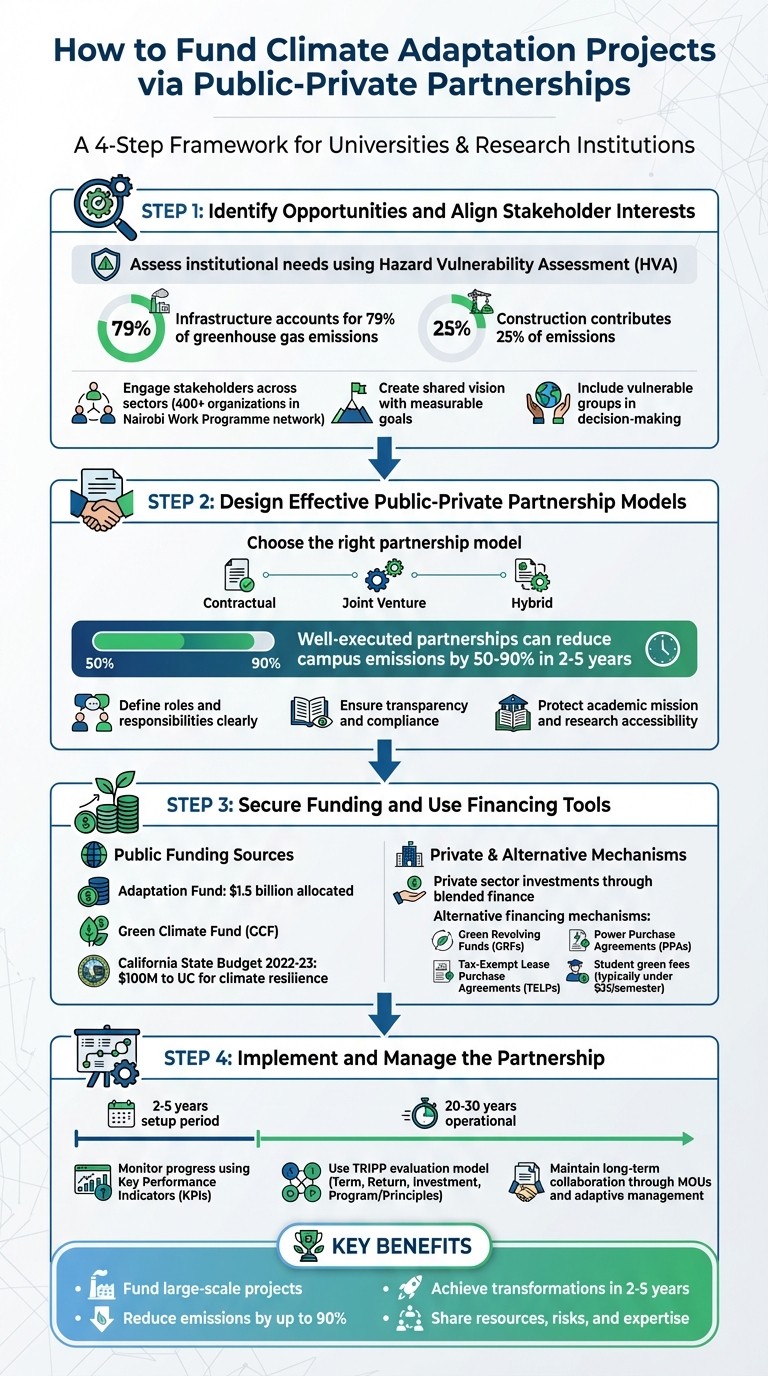
4-Step Process for Funding Climate Adaptation Projects Through Public-Private Partnerships
Step 1: Identify Opportunities and Align Stakeholder Interests
Assess Your Institution's Needs and Priorities
To begin, evaluate where your institution is most at risk from climate impacts. Infrastructure alone accounts for 79% of greenhouse gas emissions, with construction contributing 25% [7]. This makes it a key focus area for climate adaptation efforts. Employ a Hazard Vulnerability Assessment (HVA) that includes a "climate change coefficient" to estimate future risks and an "equity coefficient" to assess the effects on specific campus populations [9].
Organize your assets by their importance, prioritizing critical infrastructure over those that can handle minor disruptions [9]. This method ensures resources are allocated wisely. For instance, the University of Oregon conducted a study in December 2023 to explore transitioning its thermal heating system to reduce carbon emissions. The study examined options like switching to an "electric and hot water" system, balancing decarbonization goals with tuition reliance and operational needs [9].
Similarly, Cal Poly Humboldt initiated the Climate Resilient Landscaping Demonstration Project in April 2022, supported by the Acceleration Fund. This project transformed campus areas using native, climate-adapted plants, creating a "living lab" for research on pollinator support and traditional biocultural relationships [8]. These examples illustrate how institutions can integrate climate adaptation with their academic and research missions. Identifying vulnerabilities is a vital first step toward engaging stakeholders effectively.
Engage Stakeholders Across Sectors
Link climate adaptation efforts to shared priorities such as public health, clean air, community safety, and asset protection [10]. Universities are well-positioned to serve as neutral facilitators, providing credibility and technical expertise while making complex science accessible to decision-makers [11]. The Nairobi Work Programme network, which includes over 400 organizations, highlights the extensive collaboration opportunities available for scaling climate adaptation [5].
Identify internal policy gaps and external partnership opportunities with private companies, NGOs, and government agencies [10][12]. For example, the University of Arizona partnered with the Watershed Management Group in April 2022 to launch the Desert Waters Climate Justice Internship. This program offers paid internships where students work on rainwater harvesting and resilience planning in low-income neighborhoods, combining academic learning with community-focused climate justice initiatives [8]. Such collaborations deepen relationships and build a cohesive vision for adaptation.
Incorporate climate adaptation into existing environment, health, or safety committees [10]. Establish formal feedback mechanisms to allow stakeholders to provide input on adaptation progress, ensuring the partnership remains responsive to evolving climate challenges [10].
Create a Shared Vision for Climate Impact
Set measurable goals that address the needs of the community [13]. The UNFCCC emphasizes the value of public-private partnerships (PPPs), stating, "PPPs are powerful tools as they can provide well-informed and well-balanced risk allocation between public and private stakeholders... compensating for climate change uncertainty through contractual predictability" [7]. Such clarity helps align diverse interests around common objectives.
Incorporate input from vulnerable groups, such as women, youth, and displaced persons, by giving them an active role in decision-making [13][1]. The Global Center on Adaptation advocates for locally led adaptation, describing it as "giving communities on the frontlines of climate change a voice and empowering them to lead in making decisions that directly affect their lives and livelihoods" [1].
Blend scientific research with local and indigenous knowledge to prepare for a range of future scenarios [1][5]. Universities can play a critical role by translating complex climate data into actionable, localized insights for both decision-makers and community members [11]. Establish a formal committee or collaborative structure to oversee project progress, maintain stakeholder relationships, and ensure that research findings are effectively applied [13].
These approaches establish a strong foundation for building partnerships. With aligned goals and active stakeholder involvement, institutions are better prepared to develop strategic public-private partnerships, which will be explored in the next step.
Step 2: Design Effective Public-Private Partnership Models
Choose the Right Partnership Model
Once opportunities and shared interests are identified, the next step is to structure a partnership model that aligns with your institution’s climate goals. Public-private partnerships (P3s) allow universities and private entities to share resources, risks, and rewards in developing, operating, and maintaining campus infrastructure. According to the National Council of Public-Private Partnerships, these models offer flexible legal and financial structures tailored to specific projects, enabling universities to transfer long-term risks to private partners [3]. This approach can even transform utility systems into financial assets, helping fund large-scale climate initiatives. In fact, well-executed partnerships have the potential to reduce campus emissions by 50% to 90% within just 2 to 5 years [4].
"P3s are complex, long-term commitments that are often compared to marriages." - Brailsford & Dunlavey [4]
Choosing the right model depends on your institution’s specific needs. Whether it’s a contractual agreement for targeted services, a joint venture for shared R&D efforts, or a hybrid approach combining multiple strategies, the structure should support your climate goals while accommodating your institution's ability to sustain long-term collaboration. Once the model is chosen, clearly defining roles will ensure accountability and smooth execution.
Define Roles and Responsibilities
Clearly outlining roles and responsibilities is essential to avoid conflicts and maintain accountability. While private partners generally handle operations, universities must retain oversight through a team of experts in finance, legal, technical, and operational fields.
A detailed statement of work should specify obligations, including research protocols, timelines, budgets, cost accounting, and intellectual property agreements. To streamline collaboration, consider negotiating interagency master agreements that establish shared terms for multiple projects, with individual initiatives added through Memorandums of Understanding.
Protecting the academic mission is equally important. Research findings must remain publishable and accessible to uphold the institution’s commitment to open knowledge sharing. The University of California emphasizes:
"A fundamental principle of the University is that the teaching and research environment should be open so that ideas can be exchanged freely among faculty and students." [14]
Additionally, establish clear payment protocols early in the process. Securing payments in advance helps reduce financial uncertainties and ensures smoother project management. These steps create a solid foundation for transparent governance and compliance.
Ensure Transparency and Compliance
Before finalizing any agreement, strong governance processes must be in place. This includes conducting feasibility studies, securing leadership support, and defining measurable performance metrics. A well-designed governance model should also include ongoing protocols for partner interactions, ensuring continuous campus oversight.
Thorough due diligence is critical to confirm the feasibility of the partnership and its alignment with institutional objectives. Assess whether the private partner’s expertise can expedite the deployment of climate technologies that might otherwise require significant internal resources. While private capital may come with slightly higher costs compared to public bonds, the increased efficiency and reduced risks often lead to overall savings.
Gaining leadership buy-in during the planning phase is another crucial step for ensuring transparency and alignment. Take the time to carefully evaluate all aspects of the partnership and establish a framework for continuous oversight and engagement with the private partner. Avoid rushing - thoughtful planning is key to long-term success.
Step 3: Secure Funding and Use Financing Tools
Explore Public Funding Sources
There are several public funding avenues available for universities aiming to enhance climate resilience. International funds like the Adaptation Fund, which has allocated $1.5 billion, provide rolling opportunities for project proposals [17][18]. The Green Climate Fund (GCF), a key financial mechanism under the Paris Agreement, and the Global Environment Facility (GEF) also focus on supporting climate initiatives in developing nations [20].
At the state level, programs like California Climate Investments target areas such as forest health, clean transportation, and sustainable communities. For example, the California State Budget Act of 2022–23 allocated $100 million to the University of California specifically for climate resilience research and actionable solutions [23]. Universities can also pursue grants tailored to specific sectors, such as agriculture, coastal resilience, or zero-emission workforce development [16].
To build internal capacity, universities can apply for Readiness Grants [17]. The Adaptation Fund Climate Innovation Accelerator, for instance, supports locally driven climate solutions [17]. Additionally, universities might consider gaining accreditation or collaborating with National Implementing Entities (NIEs) to directly access international climate finance, bypassing intermediaries [18]. Platforms like Community Connections can help identify co-investment opportunities with agencies and organizations interested in resilient community projects [16]. Leveraging these public funds can create a strong foundation to attract private investments.
Leverage Private Sector Investments
Public funding often serves as a catalyst for private sector investments, helping to reduce risks and draw interest from impact investors and corporate sponsors [19]. Recent climate summits have increasingly emphasized integrating adaptation into financial strategies [19].
"Blended finance can help rebalance risks, enable investment, and ensure focus on developmental priorities. It uses the relatively low volume development finance to mobilize the high volumes of available commercial finance." – World Bank Infrastructure Finance [22]
Universities can also explore land value capture (LVC) mechanisms to fund resilient infrastructure. For instance, Boston plans to use $40 million in developer contributions to its Climate Resiliency Fund to protect the Seaport district from rising sea levels [15]. Similarly, if a university builds infrastructure like a park that mitigates flooding and increases nearby property values, it could capture and reinvest that added value [15].
Many public grants require matching contributions from private or external sources. For example, the UC Climate Action Matching Grants program requires at least 10% of the requested award to come from project partners, along with signed letters from authorized officials confirming their support [23]. Combining public and private investments with innovative financing tools can amplify the overall impact.
Use Alternative Financing Mechanisms
Alternative financing models offer creative ways to fund sustainability projects while minimizing upfront costs. Green Revolving Funds (GRFs) create a self-sustaining cycle by using cost savings from completed projects to finance future initiatives [21]. Efficiency Services Agreements (ESAs) allow third-party providers to cover 100% of project costs, with repayments based on actual energy savings [21].
Power Purchase Agreements (PPAs) are another option, enabling universities to partner with private providers who install and maintain renewable energy systems on campus. The university then purchases the generated electricity at a fixed rate, avoiding upfront expenses. Joint PPAs can also increase leverage and scale [21]. Managed Utility Service Contracts (MUSCs) provide an off-balance sheet solution where developers implement efficiency measures and assume utility bill payments, while universities pay a fixed amount, often at or below historical costs [21].
Tax-Exempt Lease Purchase Agreements (TELPs) allow universities to spread project costs over time at lower interest rates than commercial loans [21]. Student-driven initiatives, such as green fees - typically under $25 per semester - can also generate meaningful funds for campus projects [21]. However, it’s worth noting that ESAs and MUSCs usually require a minimum project size of $1 million [21].
Universities can further strengthen their financial strategies by employing tools like Life-Cycle Cost Analysis (LCCA) to show how higher upfront investments in resilient equipment lead to long-term savings in maintenance and energy. Calculating the Internal Rate of Return (IRR) helps prioritize projects based on profitability, while a "Cost of Delay" analysis quantifies the financial impact of postponing initiatives [21]. These approaches not only secure funding but also enhance the sustainability and resilience of campus infrastructure.
Step 4: Implement and Manage the Partnership
Develop a Detailed Implementation Plan
After securing funding, the next step is to craft a detailed implementation plan. This plan should outline the project scope, objectives, and deliverables to ensure all stakeholders are aligned. Clearly allocate risks - typically, private partners handle design, construction, financing, and operations, while your institution focuses on regulatory and political risks [2].
Set up a capital schedule to track funding sources, amounts, and repayment timelines. This is especially important when coordinating various grants, loans, and bonds across the engagement, planning, and implementation phases. Partnerships often require a setup period of 2–5 years, followed by a 20–30-year operational timeline [2].
Incorporate Key Performance Indicators (KPIs) into your contracts to monitor the private partner's performance. For example, when Duquesne University entered into a 40-year agreement with Clearway Energy in May 2019 to manage its central utility system, the contract included clear technical specifications and monitoring frameworks to meet energy management and resilience goals [25]. Your team should be prepared to handle the complexities of contract management and reporting. A well-defined implementation plan ensures consistent performance tracking and accountability.
Monitor and Evaluate Progress
Establish monitoring intervals for both short-term (1–2 years) and long-term (5–10 years) goals, using a mix of quantitative and qualitative indicators. Dashboards tailored to your project can streamline this process [24]. Include mechanisms for tracking specific risks and involve stakeholders and local communities in co-monitoring efforts to enhance transparency [24].
The University of Kentucky offers a useful example with its "TRIPP" evaluation model (Term, Return, Investment, Program/Principles), which it uses to assess partnership opportunities and monitor ongoing performance. This model helps the university stay aligned with timelines and objectives when working with partners like Signet Real Estate Group [25]. At the 2026 Higher Education Summit, one expert emphasized the importance of KPIs:
"Key performance indicators are probably the single most important measure when making decisions" [25].
Use the insights from evaluations to adapt as conditions evolve. Adaptive management allows you to refine your approach based on data, ensuring your project remains effective and delivers additional benefits throughout its lifecycle [24]. Monitoring is not just about tracking progress; it also informs strategies to sustain and deepen collaboration over time.
Maintain Long-Term Collaboration
To ensure lasting partnerships, formalize relationships through collaboration agreements and memorandums of understanding (MOUs) that clearly define roles, responsibilities, and commitments [26].
For example, the partnership between the National Autonomous University of Mexico (UNAM) and the Mexico City Resilience Agency (2017–2019) faced challenges when a political shift altered the agency’s structure and staffing. By actively monitoring these changes and maintaining relationships with new personnel, the partnership adapted and resulted in two formal agreements to implement the city's Resilience Strategy [26]. Similarly, Arizona State University strengthened its collaboration with the City of Tempe by conducting 41 interviews with city staff and establishing a permanent Sustainability Department to broaden engagement beyond single points of contact [26].
"Ongoing monitoring and adaptive management of both partnership and project functioning is key to success." – Urban Transformations [26]
When challenges arise, focus on achieving "small wins" - concrete, manageable goals that build trust and lay the groundwork for larger projects [26]. Engage multiple departments to avoid over-reliance on a single individual, ensuring the partnership remains strong even amid leadership or funding changes.
Climate-Smart Public-Private Partnerships (PPPs) - Building Low-Carbon & Resilient Infrastructure
Case Studies: Successful Climate Adaptation PPPs in Academia
These examples showcase how partnerships between academic institutions, government entities, and private organizations have effectively implemented climate adaptation strategies.
Case Study 1: University-Led Coastal Resilience Project
The Resilient305 Collaborative, launched in October 2021, highlights the power of university-government partnerships in addressing coastal flooding. Spearheaded by Tiffany Troxler, Amy Clement, and James Murley, the initiative employs a co-design approach to develop localized solutions across a range of projects [30]. This method prioritizes collaboration with stakeholders and leverages local expertise, ensuring that flood resilience efforts provide benefits that extend beyond traditional infrastructure upgrades. By focusing on co-production, the project fosters cross-sectoral advantages, aligning with strategies that emphasize stakeholder engagement and local adaptation.
Case Study 2: Renewable Energy Collaboration on Campus
In 2021, the University of Illinois Urbana-Champaign unveiled its Campus Instructional Facility, a project executed in partnership with the developer Vermilion Campbell. Funded through bonds issued by the Illinois Finance Authority and supplemented by internal sustainability funds, the facility incorporates a geothermal energy system with 40 wells and radiant ceiling panels. Under the leadership of Doug Reddington and Chris Dillion, this building achieved LEED Platinum certification, reducing energy consumption by 65% compared to traditional systems. Designed with scalability in mind, the geothermal system can support additional campus buildings as they undergo renovations, aligning with the university's broader objective of achieving net-zero emissions by 2050 [28]. This project serves as a model for integrating renewable energy solutions into campus infrastructure.
Case Study 3: New York Climate Exchange

Unveiled in April 2023, the New York Climate Exchange represents a bold climate adaptation initiative. Led by Stony Brook University in collaboration with institutions such as the University of Washington, Georgia Tech, NYU, IBM, and Boston Consulting Group, the project focuses on creating a climate solutions hub on Governors Island. The exchange combines academic research with investments from private and public sectors, supported by $150 million in philanthropic funding - $100 million from the Simons Foundation and $50 million from Bloomberg Philanthropies. The facility incorporates flood-resilient designs, onsite solar energy, and battery storage, while also committing to zero waste. It plans to train 6,000 individuals annually for green jobs, further advancing workforce development [27].
Maurie McInnis, President of Stony Brook University, highlighted the collaborative nature of the initiative:
"Up until now, the development of climate solutions has been siloed, with world leaders separate from expert scientists separate from the on‐the‐ground green workforce. As an international leader on climate... Stony Brook University will bring stakeholders together from the academic, government and business communities." [29]
Conclusion: Drive Impact Through Collaborative Action
Key Lessons for Universities and Research Institutions
Reflecting on the strategies outlined, several important lessons emerge for universities and research institutions seeking sustainable funding for climate adaptation. Public-private partnerships (P3s) are about more than just securing financial resources. They require a long-term vision, thorough feasibility studies, and strong campus leadership to accelerate project timelines, tap into private-sector expertise, and ensure ongoing maintenance throughout the project lifecycle [3].
Private-sector expertise can be invaluable for managing risks and operational challenges. Universities can delegate responsibilities like long-term ownership, operations, and maintenance to private entities, allowing them to focus on their primary missions of research and education [3]. Strengthening internal capacity is equally critical. For instance, the University of Michigan's External Collaboration team developed targeted strategies between 2019 and 2020 to identify regional partners capable of driving impactful climate initiatives [12].
Inclusive engagement with stakeholders is another cornerstone of successful partnerships. The UNFCCC underscores the importance of adaptation efforts being country-driven, gender-responsive, participatory, and transparent, while addressing the needs of vulnerable groups, communities, and ecosystems [5]. This translates into ensuring that affected communities have a meaningful voice in implementation and that initiatives work to dismantle structural inequalities impacting youth, women, and marginalized populations [1].
The Path Forward: Build Resilience Through Partnerships
With these lessons in hand, universities are well-positioned to turn strategic goals into campus-wide climate resilience initiatives. Partnerships supported by organizations with the resources and leadership to provide both start-up funding and sustained collaboration can drive transformative outcomes. A compelling example is Power Africa, a U.S. government-led initiative launched in 2013. Over a decade, this partnership facilitated 37.5 million new energy connections and advanced 14,000 megawatts of clean energy projects [31].
Universities have the potential to reshape their entire campus environments. With nearly 20 million students enrolled in U.S. higher education, these institutions can inspire the next generation of climate problem-solvers while using their campuses as experimental grounds for innovative adaptation strategies [6]. Achieving this vision requires patience, openness, and a commitment to sharing decision-making authority with local stakeholders. As the Global Center on Adaptation aptly states:
"Shifting power to local stakeholders, without expecting them to shoulder the burden of adaptation, can catalyze adaptation that is effective, equitable, and transparent" [1].
FAQs
What are the key advantages of using public-private partnerships for university climate adaptation projects?
Public-private partnerships (PPPs) offer universities a practical way to leverage private sector resources, expertise, and funding. This collaboration not only accelerates the rollout of climate adaptation projects but also enhances operational efficiency. By sharing both responsibilities and risks, universities can maintain financial stability while prioritizing long-term infrastructure resilience.
These agreements also open doors to fresh ideas and funding opportunities, helping institutions navigate budget limitations and expand their efforts more effectively. Moreover, PPPs simplify project execution and bring specialized skills to the table, particularly in managing facilities and infrastructure. This makes them a smart approach for tackling climate challenges with greater precision and efficiency.
How can universities build strong partnerships for climate adaptation projects?
Universities have a unique opportunity to create impactful partnerships for climate adaptation projects by connecting with key stakeholders such as local government agencies, private companies, NGOs, and community groups. The first step is to understand the priorities, resources, and goals of these groups to align them with the university’s mission. Early discussions can pave the way for shared objectives and meaningful collaboration.
Building trust is essential. Universities can achieve this by breaking down complex scientific research into clear, actionable insights, offering technical expertise, and involving stakeholders in the planning process from the very beginning. Prioritizing input from a range of voices, particularly those from underserved communities, can help ensure the projects are inclusive and equitable. Partnerships thrive on open communication, shared benefits, and a commitment to nurturing relationships over time.
What are the best ways for universities to fund climate adaptation projects?
Universities have several tools at their disposal to fund climate adaptation projects, each tailored to their specific needs. One prominent approach is through public-private partnerships (P3s). These collaborations between universities and private sector partners allow for shared resources, risks, and incentives. By tapping into private funding and expertise, P3s not only help accelerate project timelines but also improve the likelihood of long-term success.
Additional financing options include energy savings performance contracts (ESPCs), which enable universities to fund projects through the cost savings they generate. Other avenues like green revolving funds and loans provide access to external funding sources. Emerging methods, such as blended finance and green banks, further support these efforts by reducing costs and mitigating risks, making climate initiatives more achievable.
By combining these strategies, universities can secure necessary funding, navigate potential risks, and make tangible strides in building climate resilience.
Related Blog Posts
Latest Articles
©2025


FAQ
01
What does it really mean to “redefine profit”?
02
What makes Council Fire different?
03
Who does Council Fire you work with?
04
What does working with Council Fire actually look like?
05
How does Council Fire help organizations turn big goals into action?
06
How does Council Fire define and measure success?
Feb 4, 2026
How to Fund Climate Adaptation Projects via Public-Private Partnerships for Universities & Research Institutions
Sustainability Strategy
In This Article
A practical guide for universities to fund climate adaptation via public‑private partnerships, covering partnership models, financing tools, governance, and implementation.
How to Fund Climate Adaptation Projects via Public-Private Partnerships for Universities & Research Institutions
Universities and research institutions face growing challenges from climate change, including the need to protect infrastructure and reduce emissions. Public-private partnerships (PPPs) offer a practical way to fund and manage these projects by sharing resources, risks, and expertise with private entities. Here's how PPPs can help:
Key Benefits: Funding large-scale projects, reducing emissions by up to 90%, and achieving transformations in 2–5 years.
Examples: Partnerships like Wits University’s $230M forestry resilience project and the New York Climate Exchange showcase the potential of combining academic research with private sector investments.
Funding Options: Public sources like the Adaptation Fund and Green Climate Fund, combined with private investments, can reduce risks and attract additional resources.
Implementation Tools: Green Revolving Funds, Power Purchase Agreements, and tax-exempt leases minimize upfront costs while ensuring long-term project success.
4-Step Process for Funding Climate Adaptation Projects Through Public-Private Partnerships
Step 1: Identify Opportunities and Align Stakeholder Interests
Assess Your Institution's Needs and Priorities
To begin, evaluate where your institution is most at risk from climate impacts. Infrastructure alone accounts for 79% of greenhouse gas emissions, with construction contributing 25% [7]. This makes it a key focus area for climate adaptation efforts. Employ a Hazard Vulnerability Assessment (HVA) that includes a "climate change coefficient" to estimate future risks and an "equity coefficient" to assess the effects on specific campus populations [9].
Organize your assets by their importance, prioritizing critical infrastructure over those that can handle minor disruptions [9]. This method ensures resources are allocated wisely. For instance, the University of Oregon conducted a study in December 2023 to explore transitioning its thermal heating system to reduce carbon emissions. The study examined options like switching to an "electric and hot water" system, balancing decarbonization goals with tuition reliance and operational needs [9].
Similarly, Cal Poly Humboldt initiated the Climate Resilient Landscaping Demonstration Project in April 2022, supported by the Acceleration Fund. This project transformed campus areas using native, climate-adapted plants, creating a "living lab" for research on pollinator support and traditional biocultural relationships [8]. These examples illustrate how institutions can integrate climate adaptation with their academic and research missions. Identifying vulnerabilities is a vital first step toward engaging stakeholders effectively.
Engage Stakeholders Across Sectors
Link climate adaptation efforts to shared priorities such as public health, clean air, community safety, and asset protection [10]. Universities are well-positioned to serve as neutral facilitators, providing credibility and technical expertise while making complex science accessible to decision-makers [11]. The Nairobi Work Programme network, which includes over 400 organizations, highlights the extensive collaboration opportunities available for scaling climate adaptation [5].
Identify internal policy gaps and external partnership opportunities with private companies, NGOs, and government agencies [10][12]. For example, the University of Arizona partnered with the Watershed Management Group in April 2022 to launch the Desert Waters Climate Justice Internship. This program offers paid internships where students work on rainwater harvesting and resilience planning in low-income neighborhoods, combining academic learning with community-focused climate justice initiatives [8]. Such collaborations deepen relationships and build a cohesive vision for adaptation.
Incorporate climate adaptation into existing environment, health, or safety committees [10]. Establish formal feedback mechanisms to allow stakeholders to provide input on adaptation progress, ensuring the partnership remains responsive to evolving climate challenges [10].
Create a Shared Vision for Climate Impact
Set measurable goals that address the needs of the community [13]. The UNFCCC emphasizes the value of public-private partnerships (PPPs), stating, "PPPs are powerful tools as they can provide well-informed and well-balanced risk allocation between public and private stakeholders... compensating for climate change uncertainty through contractual predictability" [7]. Such clarity helps align diverse interests around common objectives.
Incorporate input from vulnerable groups, such as women, youth, and displaced persons, by giving them an active role in decision-making [13][1]. The Global Center on Adaptation advocates for locally led adaptation, describing it as "giving communities on the frontlines of climate change a voice and empowering them to lead in making decisions that directly affect their lives and livelihoods" [1].
Blend scientific research with local and indigenous knowledge to prepare for a range of future scenarios [1][5]. Universities can play a critical role by translating complex climate data into actionable, localized insights for both decision-makers and community members [11]. Establish a formal committee or collaborative structure to oversee project progress, maintain stakeholder relationships, and ensure that research findings are effectively applied [13].
These approaches establish a strong foundation for building partnerships. With aligned goals and active stakeholder involvement, institutions are better prepared to develop strategic public-private partnerships, which will be explored in the next step.
Step 2: Design Effective Public-Private Partnership Models
Choose the Right Partnership Model
Once opportunities and shared interests are identified, the next step is to structure a partnership model that aligns with your institution’s climate goals. Public-private partnerships (P3s) allow universities and private entities to share resources, risks, and rewards in developing, operating, and maintaining campus infrastructure. According to the National Council of Public-Private Partnerships, these models offer flexible legal and financial structures tailored to specific projects, enabling universities to transfer long-term risks to private partners [3]. This approach can even transform utility systems into financial assets, helping fund large-scale climate initiatives. In fact, well-executed partnerships have the potential to reduce campus emissions by 50% to 90% within just 2 to 5 years [4].
"P3s are complex, long-term commitments that are often compared to marriages." - Brailsford & Dunlavey [4]
Choosing the right model depends on your institution’s specific needs. Whether it’s a contractual agreement for targeted services, a joint venture for shared R&D efforts, or a hybrid approach combining multiple strategies, the structure should support your climate goals while accommodating your institution's ability to sustain long-term collaboration. Once the model is chosen, clearly defining roles will ensure accountability and smooth execution.
Define Roles and Responsibilities
Clearly outlining roles and responsibilities is essential to avoid conflicts and maintain accountability. While private partners generally handle operations, universities must retain oversight through a team of experts in finance, legal, technical, and operational fields.
A detailed statement of work should specify obligations, including research protocols, timelines, budgets, cost accounting, and intellectual property agreements. To streamline collaboration, consider negotiating interagency master agreements that establish shared terms for multiple projects, with individual initiatives added through Memorandums of Understanding.
Protecting the academic mission is equally important. Research findings must remain publishable and accessible to uphold the institution’s commitment to open knowledge sharing. The University of California emphasizes:
"A fundamental principle of the University is that the teaching and research environment should be open so that ideas can be exchanged freely among faculty and students." [14]
Additionally, establish clear payment protocols early in the process. Securing payments in advance helps reduce financial uncertainties and ensures smoother project management. These steps create a solid foundation for transparent governance and compliance.
Ensure Transparency and Compliance
Before finalizing any agreement, strong governance processes must be in place. This includes conducting feasibility studies, securing leadership support, and defining measurable performance metrics. A well-designed governance model should also include ongoing protocols for partner interactions, ensuring continuous campus oversight.
Thorough due diligence is critical to confirm the feasibility of the partnership and its alignment with institutional objectives. Assess whether the private partner’s expertise can expedite the deployment of climate technologies that might otherwise require significant internal resources. While private capital may come with slightly higher costs compared to public bonds, the increased efficiency and reduced risks often lead to overall savings.
Gaining leadership buy-in during the planning phase is another crucial step for ensuring transparency and alignment. Take the time to carefully evaluate all aspects of the partnership and establish a framework for continuous oversight and engagement with the private partner. Avoid rushing - thoughtful planning is key to long-term success.
Step 3: Secure Funding and Use Financing Tools
Explore Public Funding Sources
There are several public funding avenues available for universities aiming to enhance climate resilience. International funds like the Adaptation Fund, which has allocated $1.5 billion, provide rolling opportunities for project proposals [17][18]. The Green Climate Fund (GCF), a key financial mechanism under the Paris Agreement, and the Global Environment Facility (GEF) also focus on supporting climate initiatives in developing nations [20].
At the state level, programs like California Climate Investments target areas such as forest health, clean transportation, and sustainable communities. For example, the California State Budget Act of 2022–23 allocated $100 million to the University of California specifically for climate resilience research and actionable solutions [23]. Universities can also pursue grants tailored to specific sectors, such as agriculture, coastal resilience, or zero-emission workforce development [16].
To build internal capacity, universities can apply for Readiness Grants [17]. The Adaptation Fund Climate Innovation Accelerator, for instance, supports locally driven climate solutions [17]. Additionally, universities might consider gaining accreditation or collaborating with National Implementing Entities (NIEs) to directly access international climate finance, bypassing intermediaries [18]. Platforms like Community Connections can help identify co-investment opportunities with agencies and organizations interested in resilient community projects [16]. Leveraging these public funds can create a strong foundation to attract private investments.
Leverage Private Sector Investments
Public funding often serves as a catalyst for private sector investments, helping to reduce risks and draw interest from impact investors and corporate sponsors [19]. Recent climate summits have increasingly emphasized integrating adaptation into financial strategies [19].
"Blended finance can help rebalance risks, enable investment, and ensure focus on developmental priorities. It uses the relatively low volume development finance to mobilize the high volumes of available commercial finance." – World Bank Infrastructure Finance [22]
Universities can also explore land value capture (LVC) mechanisms to fund resilient infrastructure. For instance, Boston plans to use $40 million in developer contributions to its Climate Resiliency Fund to protect the Seaport district from rising sea levels [15]. Similarly, if a university builds infrastructure like a park that mitigates flooding and increases nearby property values, it could capture and reinvest that added value [15].
Many public grants require matching contributions from private or external sources. For example, the UC Climate Action Matching Grants program requires at least 10% of the requested award to come from project partners, along with signed letters from authorized officials confirming their support [23]. Combining public and private investments with innovative financing tools can amplify the overall impact.
Use Alternative Financing Mechanisms
Alternative financing models offer creative ways to fund sustainability projects while minimizing upfront costs. Green Revolving Funds (GRFs) create a self-sustaining cycle by using cost savings from completed projects to finance future initiatives [21]. Efficiency Services Agreements (ESAs) allow third-party providers to cover 100% of project costs, with repayments based on actual energy savings [21].
Power Purchase Agreements (PPAs) are another option, enabling universities to partner with private providers who install and maintain renewable energy systems on campus. The university then purchases the generated electricity at a fixed rate, avoiding upfront expenses. Joint PPAs can also increase leverage and scale [21]. Managed Utility Service Contracts (MUSCs) provide an off-balance sheet solution where developers implement efficiency measures and assume utility bill payments, while universities pay a fixed amount, often at or below historical costs [21].
Tax-Exempt Lease Purchase Agreements (TELPs) allow universities to spread project costs over time at lower interest rates than commercial loans [21]. Student-driven initiatives, such as green fees - typically under $25 per semester - can also generate meaningful funds for campus projects [21]. However, it’s worth noting that ESAs and MUSCs usually require a minimum project size of $1 million [21].
Universities can further strengthen their financial strategies by employing tools like Life-Cycle Cost Analysis (LCCA) to show how higher upfront investments in resilient equipment lead to long-term savings in maintenance and energy. Calculating the Internal Rate of Return (IRR) helps prioritize projects based on profitability, while a "Cost of Delay" analysis quantifies the financial impact of postponing initiatives [21]. These approaches not only secure funding but also enhance the sustainability and resilience of campus infrastructure.
Step 4: Implement and Manage the Partnership
Develop a Detailed Implementation Plan
After securing funding, the next step is to craft a detailed implementation plan. This plan should outline the project scope, objectives, and deliverables to ensure all stakeholders are aligned. Clearly allocate risks - typically, private partners handle design, construction, financing, and operations, while your institution focuses on regulatory and political risks [2].
Set up a capital schedule to track funding sources, amounts, and repayment timelines. This is especially important when coordinating various grants, loans, and bonds across the engagement, planning, and implementation phases. Partnerships often require a setup period of 2–5 years, followed by a 20–30-year operational timeline [2].
Incorporate Key Performance Indicators (KPIs) into your contracts to monitor the private partner's performance. For example, when Duquesne University entered into a 40-year agreement with Clearway Energy in May 2019 to manage its central utility system, the contract included clear technical specifications and monitoring frameworks to meet energy management and resilience goals [25]. Your team should be prepared to handle the complexities of contract management and reporting. A well-defined implementation plan ensures consistent performance tracking and accountability.
Monitor and Evaluate Progress
Establish monitoring intervals for both short-term (1–2 years) and long-term (5–10 years) goals, using a mix of quantitative and qualitative indicators. Dashboards tailored to your project can streamline this process [24]. Include mechanisms for tracking specific risks and involve stakeholders and local communities in co-monitoring efforts to enhance transparency [24].
The University of Kentucky offers a useful example with its "TRIPP" evaluation model (Term, Return, Investment, Program/Principles), which it uses to assess partnership opportunities and monitor ongoing performance. This model helps the university stay aligned with timelines and objectives when working with partners like Signet Real Estate Group [25]. At the 2026 Higher Education Summit, one expert emphasized the importance of KPIs:
"Key performance indicators are probably the single most important measure when making decisions" [25].
Use the insights from evaluations to adapt as conditions evolve. Adaptive management allows you to refine your approach based on data, ensuring your project remains effective and delivers additional benefits throughout its lifecycle [24]. Monitoring is not just about tracking progress; it also informs strategies to sustain and deepen collaboration over time.
Maintain Long-Term Collaboration
To ensure lasting partnerships, formalize relationships through collaboration agreements and memorandums of understanding (MOUs) that clearly define roles, responsibilities, and commitments [26].
For example, the partnership between the National Autonomous University of Mexico (UNAM) and the Mexico City Resilience Agency (2017–2019) faced challenges when a political shift altered the agency’s structure and staffing. By actively monitoring these changes and maintaining relationships with new personnel, the partnership adapted and resulted in two formal agreements to implement the city's Resilience Strategy [26]. Similarly, Arizona State University strengthened its collaboration with the City of Tempe by conducting 41 interviews with city staff and establishing a permanent Sustainability Department to broaden engagement beyond single points of contact [26].
"Ongoing monitoring and adaptive management of both partnership and project functioning is key to success." – Urban Transformations [26]
When challenges arise, focus on achieving "small wins" - concrete, manageable goals that build trust and lay the groundwork for larger projects [26]. Engage multiple departments to avoid over-reliance on a single individual, ensuring the partnership remains strong even amid leadership or funding changes.
Climate-Smart Public-Private Partnerships (PPPs) - Building Low-Carbon & Resilient Infrastructure
Case Studies: Successful Climate Adaptation PPPs in Academia
These examples showcase how partnerships between academic institutions, government entities, and private organizations have effectively implemented climate adaptation strategies.
Case Study 1: University-Led Coastal Resilience Project
The Resilient305 Collaborative, launched in October 2021, highlights the power of university-government partnerships in addressing coastal flooding. Spearheaded by Tiffany Troxler, Amy Clement, and James Murley, the initiative employs a co-design approach to develop localized solutions across a range of projects [30]. This method prioritizes collaboration with stakeholders and leverages local expertise, ensuring that flood resilience efforts provide benefits that extend beyond traditional infrastructure upgrades. By focusing on co-production, the project fosters cross-sectoral advantages, aligning with strategies that emphasize stakeholder engagement and local adaptation.
Case Study 2: Renewable Energy Collaboration on Campus
In 2021, the University of Illinois Urbana-Champaign unveiled its Campus Instructional Facility, a project executed in partnership with the developer Vermilion Campbell. Funded through bonds issued by the Illinois Finance Authority and supplemented by internal sustainability funds, the facility incorporates a geothermal energy system with 40 wells and radiant ceiling panels. Under the leadership of Doug Reddington and Chris Dillion, this building achieved LEED Platinum certification, reducing energy consumption by 65% compared to traditional systems. Designed with scalability in mind, the geothermal system can support additional campus buildings as they undergo renovations, aligning with the university's broader objective of achieving net-zero emissions by 2050 [28]. This project serves as a model for integrating renewable energy solutions into campus infrastructure.
Case Study 3: New York Climate Exchange
Unveiled in April 2023, the New York Climate Exchange represents a bold climate adaptation initiative. Led by Stony Brook University in collaboration with institutions such as the University of Washington, Georgia Tech, NYU, IBM, and Boston Consulting Group, the project focuses on creating a climate solutions hub on Governors Island. The exchange combines academic research with investments from private and public sectors, supported by $150 million in philanthropic funding - $100 million from the Simons Foundation and $50 million from Bloomberg Philanthropies. The facility incorporates flood-resilient designs, onsite solar energy, and battery storage, while also committing to zero waste. It plans to train 6,000 individuals annually for green jobs, further advancing workforce development [27].
Maurie McInnis, President of Stony Brook University, highlighted the collaborative nature of the initiative:
"Up until now, the development of climate solutions has been siloed, with world leaders separate from expert scientists separate from the on‐the‐ground green workforce. As an international leader on climate... Stony Brook University will bring stakeholders together from the academic, government and business communities." [29]
Conclusion: Drive Impact Through Collaborative Action
Key Lessons for Universities and Research Institutions
Reflecting on the strategies outlined, several important lessons emerge for universities and research institutions seeking sustainable funding for climate adaptation. Public-private partnerships (P3s) are about more than just securing financial resources. They require a long-term vision, thorough feasibility studies, and strong campus leadership to accelerate project timelines, tap into private-sector expertise, and ensure ongoing maintenance throughout the project lifecycle [3].
Private-sector expertise can be invaluable for managing risks and operational challenges. Universities can delegate responsibilities like long-term ownership, operations, and maintenance to private entities, allowing them to focus on their primary missions of research and education [3]. Strengthening internal capacity is equally critical. For instance, the University of Michigan's External Collaboration team developed targeted strategies between 2019 and 2020 to identify regional partners capable of driving impactful climate initiatives [12].
Inclusive engagement with stakeholders is another cornerstone of successful partnerships. The UNFCCC underscores the importance of adaptation efforts being country-driven, gender-responsive, participatory, and transparent, while addressing the needs of vulnerable groups, communities, and ecosystems [5]. This translates into ensuring that affected communities have a meaningful voice in implementation and that initiatives work to dismantle structural inequalities impacting youth, women, and marginalized populations [1].
The Path Forward: Build Resilience Through Partnerships
With these lessons in hand, universities are well-positioned to turn strategic goals into campus-wide climate resilience initiatives. Partnerships supported by organizations with the resources and leadership to provide both start-up funding and sustained collaboration can drive transformative outcomes. A compelling example is Power Africa, a U.S. government-led initiative launched in 2013. Over a decade, this partnership facilitated 37.5 million new energy connections and advanced 14,000 megawatts of clean energy projects [31].
Universities have the potential to reshape their entire campus environments. With nearly 20 million students enrolled in U.S. higher education, these institutions can inspire the next generation of climate problem-solvers while using their campuses as experimental grounds for innovative adaptation strategies [6]. Achieving this vision requires patience, openness, and a commitment to sharing decision-making authority with local stakeholders. As the Global Center on Adaptation aptly states:
"Shifting power to local stakeholders, without expecting them to shoulder the burden of adaptation, can catalyze adaptation that is effective, equitable, and transparent" [1].
FAQs
What are the key advantages of using public-private partnerships for university climate adaptation projects?
Public-private partnerships (PPPs) offer universities a practical way to leverage private sector resources, expertise, and funding. This collaboration not only accelerates the rollout of climate adaptation projects but also enhances operational efficiency. By sharing both responsibilities and risks, universities can maintain financial stability while prioritizing long-term infrastructure resilience.
These agreements also open doors to fresh ideas and funding opportunities, helping institutions navigate budget limitations and expand their efforts more effectively. Moreover, PPPs simplify project execution and bring specialized skills to the table, particularly in managing facilities and infrastructure. This makes them a smart approach for tackling climate challenges with greater precision and efficiency.
How can universities build strong partnerships for climate adaptation projects?
Universities have a unique opportunity to create impactful partnerships for climate adaptation projects by connecting with key stakeholders such as local government agencies, private companies, NGOs, and community groups. The first step is to understand the priorities, resources, and goals of these groups to align them with the university’s mission. Early discussions can pave the way for shared objectives and meaningful collaboration.
Building trust is essential. Universities can achieve this by breaking down complex scientific research into clear, actionable insights, offering technical expertise, and involving stakeholders in the planning process from the very beginning. Prioritizing input from a range of voices, particularly those from underserved communities, can help ensure the projects are inclusive and equitable. Partnerships thrive on open communication, shared benefits, and a commitment to nurturing relationships over time.
What are the best ways for universities to fund climate adaptation projects?
Universities have several tools at their disposal to fund climate adaptation projects, each tailored to their specific needs. One prominent approach is through public-private partnerships (P3s). These collaborations between universities and private sector partners allow for shared resources, risks, and incentives. By tapping into private funding and expertise, P3s not only help accelerate project timelines but also improve the likelihood of long-term success.
Additional financing options include energy savings performance contracts (ESPCs), which enable universities to fund projects through the cost savings they generate. Other avenues like green revolving funds and loans provide access to external funding sources. Emerging methods, such as blended finance and green banks, further support these efforts by reducing costs and mitigating risks, making climate initiatives more achievable.
By combining these strategies, universities can secure necessary funding, navigate potential risks, and make tangible strides in building climate resilience.
Related Blog Posts
FAQ
01
What does it really mean to “redefine profit”?
02
What makes Council Fire different?
03
Who does Council Fire you work with?
04
What does working with Council Fire actually look like?
05
How does Council Fire help organizations turn big goals into action?
06
How does Council Fire define and measure success?
Feb 4, 2026
How to Fund Climate Adaptation Projects via Public-Private Partnerships for Universities & Research Institutions
Sustainability Strategy
In This Article
A practical guide for universities to fund climate adaptation via public‑private partnerships, covering partnership models, financing tools, governance, and implementation.
How to Fund Climate Adaptation Projects via Public-Private Partnerships for Universities & Research Institutions
Universities and research institutions face growing challenges from climate change, including the need to protect infrastructure and reduce emissions. Public-private partnerships (PPPs) offer a practical way to fund and manage these projects by sharing resources, risks, and expertise with private entities. Here's how PPPs can help:
Key Benefits: Funding large-scale projects, reducing emissions by up to 90%, and achieving transformations in 2–5 years.
Examples: Partnerships like Wits University’s $230M forestry resilience project and the New York Climate Exchange showcase the potential of combining academic research with private sector investments.
Funding Options: Public sources like the Adaptation Fund and Green Climate Fund, combined with private investments, can reduce risks and attract additional resources.
Implementation Tools: Green Revolving Funds, Power Purchase Agreements, and tax-exempt leases minimize upfront costs while ensuring long-term project success.
4-Step Process for Funding Climate Adaptation Projects Through Public-Private Partnerships
Step 1: Identify Opportunities and Align Stakeholder Interests
Assess Your Institution's Needs and Priorities
To begin, evaluate where your institution is most at risk from climate impacts. Infrastructure alone accounts for 79% of greenhouse gas emissions, with construction contributing 25% [7]. This makes it a key focus area for climate adaptation efforts. Employ a Hazard Vulnerability Assessment (HVA) that includes a "climate change coefficient" to estimate future risks and an "equity coefficient" to assess the effects on specific campus populations [9].
Organize your assets by their importance, prioritizing critical infrastructure over those that can handle minor disruptions [9]. This method ensures resources are allocated wisely. For instance, the University of Oregon conducted a study in December 2023 to explore transitioning its thermal heating system to reduce carbon emissions. The study examined options like switching to an "electric and hot water" system, balancing decarbonization goals with tuition reliance and operational needs [9].
Similarly, Cal Poly Humboldt initiated the Climate Resilient Landscaping Demonstration Project in April 2022, supported by the Acceleration Fund. This project transformed campus areas using native, climate-adapted plants, creating a "living lab" for research on pollinator support and traditional biocultural relationships [8]. These examples illustrate how institutions can integrate climate adaptation with their academic and research missions. Identifying vulnerabilities is a vital first step toward engaging stakeholders effectively.
Engage Stakeholders Across Sectors
Link climate adaptation efforts to shared priorities such as public health, clean air, community safety, and asset protection [10]. Universities are well-positioned to serve as neutral facilitators, providing credibility and technical expertise while making complex science accessible to decision-makers [11]. The Nairobi Work Programme network, which includes over 400 organizations, highlights the extensive collaboration opportunities available for scaling climate adaptation [5].
Identify internal policy gaps and external partnership opportunities with private companies, NGOs, and government agencies [10][12]. For example, the University of Arizona partnered with the Watershed Management Group in April 2022 to launch the Desert Waters Climate Justice Internship. This program offers paid internships where students work on rainwater harvesting and resilience planning in low-income neighborhoods, combining academic learning with community-focused climate justice initiatives [8]. Such collaborations deepen relationships and build a cohesive vision for adaptation.
Incorporate climate adaptation into existing environment, health, or safety committees [10]. Establish formal feedback mechanisms to allow stakeholders to provide input on adaptation progress, ensuring the partnership remains responsive to evolving climate challenges [10].
Create a Shared Vision for Climate Impact
Set measurable goals that address the needs of the community [13]. The UNFCCC emphasizes the value of public-private partnerships (PPPs), stating, "PPPs are powerful tools as they can provide well-informed and well-balanced risk allocation between public and private stakeholders... compensating for climate change uncertainty through contractual predictability" [7]. Such clarity helps align diverse interests around common objectives.
Incorporate input from vulnerable groups, such as women, youth, and displaced persons, by giving them an active role in decision-making [13][1]. The Global Center on Adaptation advocates for locally led adaptation, describing it as "giving communities on the frontlines of climate change a voice and empowering them to lead in making decisions that directly affect their lives and livelihoods" [1].
Blend scientific research with local and indigenous knowledge to prepare for a range of future scenarios [1][5]. Universities can play a critical role by translating complex climate data into actionable, localized insights for both decision-makers and community members [11]. Establish a formal committee or collaborative structure to oversee project progress, maintain stakeholder relationships, and ensure that research findings are effectively applied [13].
These approaches establish a strong foundation for building partnerships. With aligned goals and active stakeholder involvement, institutions are better prepared to develop strategic public-private partnerships, which will be explored in the next step.
Step 2: Design Effective Public-Private Partnership Models
Choose the Right Partnership Model
Once opportunities and shared interests are identified, the next step is to structure a partnership model that aligns with your institution’s climate goals. Public-private partnerships (P3s) allow universities and private entities to share resources, risks, and rewards in developing, operating, and maintaining campus infrastructure. According to the National Council of Public-Private Partnerships, these models offer flexible legal and financial structures tailored to specific projects, enabling universities to transfer long-term risks to private partners [3]. This approach can even transform utility systems into financial assets, helping fund large-scale climate initiatives. In fact, well-executed partnerships have the potential to reduce campus emissions by 50% to 90% within just 2 to 5 years [4].
"P3s are complex, long-term commitments that are often compared to marriages." - Brailsford & Dunlavey [4]
Choosing the right model depends on your institution’s specific needs. Whether it’s a contractual agreement for targeted services, a joint venture for shared R&D efforts, or a hybrid approach combining multiple strategies, the structure should support your climate goals while accommodating your institution's ability to sustain long-term collaboration. Once the model is chosen, clearly defining roles will ensure accountability and smooth execution.
Define Roles and Responsibilities
Clearly outlining roles and responsibilities is essential to avoid conflicts and maintain accountability. While private partners generally handle operations, universities must retain oversight through a team of experts in finance, legal, technical, and operational fields.
A detailed statement of work should specify obligations, including research protocols, timelines, budgets, cost accounting, and intellectual property agreements. To streamline collaboration, consider negotiating interagency master agreements that establish shared terms for multiple projects, with individual initiatives added through Memorandums of Understanding.
Protecting the academic mission is equally important. Research findings must remain publishable and accessible to uphold the institution’s commitment to open knowledge sharing. The University of California emphasizes:
"A fundamental principle of the University is that the teaching and research environment should be open so that ideas can be exchanged freely among faculty and students." [14]
Additionally, establish clear payment protocols early in the process. Securing payments in advance helps reduce financial uncertainties and ensures smoother project management. These steps create a solid foundation for transparent governance and compliance.
Ensure Transparency and Compliance
Before finalizing any agreement, strong governance processes must be in place. This includes conducting feasibility studies, securing leadership support, and defining measurable performance metrics. A well-designed governance model should also include ongoing protocols for partner interactions, ensuring continuous campus oversight.
Thorough due diligence is critical to confirm the feasibility of the partnership and its alignment with institutional objectives. Assess whether the private partner’s expertise can expedite the deployment of climate technologies that might otherwise require significant internal resources. While private capital may come with slightly higher costs compared to public bonds, the increased efficiency and reduced risks often lead to overall savings.
Gaining leadership buy-in during the planning phase is another crucial step for ensuring transparency and alignment. Take the time to carefully evaluate all aspects of the partnership and establish a framework for continuous oversight and engagement with the private partner. Avoid rushing - thoughtful planning is key to long-term success.
Step 3: Secure Funding and Use Financing Tools
Explore Public Funding Sources
There are several public funding avenues available for universities aiming to enhance climate resilience. International funds like the Adaptation Fund, which has allocated $1.5 billion, provide rolling opportunities for project proposals [17][18]. The Green Climate Fund (GCF), a key financial mechanism under the Paris Agreement, and the Global Environment Facility (GEF) also focus on supporting climate initiatives in developing nations [20].
At the state level, programs like California Climate Investments target areas such as forest health, clean transportation, and sustainable communities. For example, the California State Budget Act of 2022–23 allocated $100 million to the University of California specifically for climate resilience research and actionable solutions [23]. Universities can also pursue grants tailored to specific sectors, such as agriculture, coastal resilience, or zero-emission workforce development [16].
To build internal capacity, universities can apply for Readiness Grants [17]. The Adaptation Fund Climate Innovation Accelerator, for instance, supports locally driven climate solutions [17]. Additionally, universities might consider gaining accreditation or collaborating with National Implementing Entities (NIEs) to directly access international climate finance, bypassing intermediaries [18]. Platforms like Community Connections can help identify co-investment opportunities with agencies and organizations interested in resilient community projects [16]. Leveraging these public funds can create a strong foundation to attract private investments.
Leverage Private Sector Investments
Public funding often serves as a catalyst for private sector investments, helping to reduce risks and draw interest from impact investors and corporate sponsors [19]. Recent climate summits have increasingly emphasized integrating adaptation into financial strategies [19].
"Blended finance can help rebalance risks, enable investment, and ensure focus on developmental priorities. It uses the relatively low volume development finance to mobilize the high volumes of available commercial finance." – World Bank Infrastructure Finance [22]
Universities can also explore land value capture (LVC) mechanisms to fund resilient infrastructure. For instance, Boston plans to use $40 million in developer contributions to its Climate Resiliency Fund to protect the Seaport district from rising sea levels [15]. Similarly, if a university builds infrastructure like a park that mitigates flooding and increases nearby property values, it could capture and reinvest that added value [15].
Many public grants require matching contributions from private or external sources. For example, the UC Climate Action Matching Grants program requires at least 10% of the requested award to come from project partners, along with signed letters from authorized officials confirming their support [23]. Combining public and private investments with innovative financing tools can amplify the overall impact.
Use Alternative Financing Mechanisms
Alternative financing models offer creative ways to fund sustainability projects while minimizing upfront costs. Green Revolving Funds (GRFs) create a self-sustaining cycle by using cost savings from completed projects to finance future initiatives [21]. Efficiency Services Agreements (ESAs) allow third-party providers to cover 100% of project costs, with repayments based on actual energy savings [21].
Power Purchase Agreements (PPAs) are another option, enabling universities to partner with private providers who install and maintain renewable energy systems on campus. The university then purchases the generated electricity at a fixed rate, avoiding upfront expenses. Joint PPAs can also increase leverage and scale [21]. Managed Utility Service Contracts (MUSCs) provide an off-balance sheet solution where developers implement efficiency measures and assume utility bill payments, while universities pay a fixed amount, often at or below historical costs [21].
Tax-Exempt Lease Purchase Agreements (TELPs) allow universities to spread project costs over time at lower interest rates than commercial loans [21]. Student-driven initiatives, such as green fees - typically under $25 per semester - can also generate meaningful funds for campus projects [21]. However, it’s worth noting that ESAs and MUSCs usually require a minimum project size of $1 million [21].
Universities can further strengthen their financial strategies by employing tools like Life-Cycle Cost Analysis (LCCA) to show how higher upfront investments in resilient equipment lead to long-term savings in maintenance and energy. Calculating the Internal Rate of Return (IRR) helps prioritize projects based on profitability, while a "Cost of Delay" analysis quantifies the financial impact of postponing initiatives [21]. These approaches not only secure funding but also enhance the sustainability and resilience of campus infrastructure.
Step 4: Implement and Manage the Partnership
Develop a Detailed Implementation Plan
After securing funding, the next step is to craft a detailed implementation plan. This plan should outline the project scope, objectives, and deliverables to ensure all stakeholders are aligned. Clearly allocate risks - typically, private partners handle design, construction, financing, and operations, while your institution focuses on regulatory and political risks [2].
Set up a capital schedule to track funding sources, amounts, and repayment timelines. This is especially important when coordinating various grants, loans, and bonds across the engagement, planning, and implementation phases. Partnerships often require a setup period of 2–5 years, followed by a 20–30-year operational timeline [2].
Incorporate Key Performance Indicators (KPIs) into your contracts to monitor the private partner's performance. For example, when Duquesne University entered into a 40-year agreement with Clearway Energy in May 2019 to manage its central utility system, the contract included clear technical specifications and monitoring frameworks to meet energy management and resilience goals [25]. Your team should be prepared to handle the complexities of contract management and reporting. A well-defined implementation plan ensures consistent performance tracking and accountability.
Monitor and Evaluate Progress
Establish monitoring intervals for both short-term (1–2 years) and long-term (5–10 years) goals, using a mix of quantitative and qualitative indicators. Dashboards tailored to your project can streamline this process [24]. Include mechanisms for tracking specific risks and involve stakeholders and local communities in co-monitoring efforts to enhance transparency [24].
The University of Kentucky offers a useful example with its "TRIPP" evaluation model (Term, Return, Investment, Program/Principles), which it uses to assess partnership opportunities and monitor ongoing performance. This model helps the university stay aligned with timelines and objectives when working with partners like Signet Real Estate Group [25]. At the 2026 Higher Education Summit, one expert emphasized the importance of KPIs:
"Key performance indicators are probably the single most important measure when making decisions" [25].
Use the insights from evaluations to adapt as conditions evolve. Adaptive management allows you to refine your approach based on data, ensuring your project remains effective and delivers additional benefits throughout its lifecycle [24]. Monitoring is not just about tracking progress; it also informs strategies to sustain and deepen collaboration over time.
Maintain Long-Term Collaboration
To ensure lasting partnerships, formalize relationships through collaboration agreements and memorandums of understanding (MOUs) that clearly define roles, responsibilities, and commitments [26].
For example, the partnership between the National Autonomous University of Mexico (UNAM) and the Mexico City Resilience Agency (2017–2019) faced challenges when a political shift altered the agency’s structure and staffing. By actively monitoring these changes and maintaining relationships with new personnel, the partnership adapted and resulted in two formal agreements to implement the city's Resilience Strategy [26]. Similarly, Arizona State University strengthened its collaboration with the City of Tempe by conducting 41 interviews with city staff and establishing a permanent Sustainability Department to broaden engagement beyond single points of contact [26].
"Ongoing monitoring and adaptive management of both partnership and project functioning is key to success." – Urban Transformations [26]
When challenges arise, focus on achieving "small wins" - concrete, manageable goals that build trust and lay the groundwork for larger projects [26]. Engage multiple departments to avoid over-reliance on a single individual, ensuring the partnership remains strong even amid leadership or funding changes.
Climate-Smart Public-Private Partnerships (PPPs) - Building Low-Carbon & Resilient Infrastructure
Case Studies: Successful Climate Adaptation PPPs in Academia
These examples showcase how partnerships between academic institutions, government entities, and private organizations have effectively implemented climate adaptation strategies.
Case Study 1: University-Led Coastal Resilience Project
The Resilient305 Collaborative, launched in October 2021, highlights the power of university-government partnerships in addressing coastal flooding. Spearheaded by Tiffany Troxler, Amy Clement, and James Murley, the initiative employs a co-design approach to develop localized solutions across a range of projects [30]. This method prioritizes collaboration with stakeholders and leverages local expertise, ensuring that flood resilience efforts provide benefits that extend beyond traditional infrastructure upgrades. By focusing on co-production, the project fosters cross-sectoral advantages, aligning with strategies that emphasize stakeholder engagement and local adaptation.
Case Study 2: Renewable Energy Collaboration on Campus
In 2021, the University of Illinois Urbana-Champaign unveiled its Campus Instructional Facility, a project executed in partnership with the developer Vermilion Campbell. Funded through bonds issued by the Illinois Finance Authority and supplemented by internal sustainability funds, the facility incorporates a geothermal energy system with 40 wells and radiant ceiling panels. Under the leadership of Doug Reddington and Chris Dillion, this building achieved LEED Platinum certification, reducing energy consumption by 65% compared to traditional systems. Designed with scalability in mind, the geothermal system can support additional campus buildings as they undergo renovations, aligning with the university's broader objective of achieving net-zero emissions by 2050 [28]. This project serves as a model for integrating renewable energy solutions into campus infrastructure.
Case Study 3: New York Climate Exchange
Unveiled in April 2023, the New York Climate Exchange represents a bold climate adaptation initiative. Led by Stony Brook University in collaboration with institutions such as the University of Washington, Georgia Tech, NYU, IBM, and Boston Consulting Group, the project focuses on creating a climate solutions hub on Governors Island. The exchange combines academic research with investments from private and public sectors, supported by $150 million in philanthropic funding - $100 million from the Simons Foundation and $50 million from Bloomberg Philanthropies. The facility incorporates flood-resilient designs, onsite solar energy, and battery storage, while also committing to zero waste. It plans to train 6,000 individuals annually for green jobs, further advancing workforce development [27].
Maurie McInnis, President of Stony Brook University, highlighted the collaborative nature of the initiative:
"Up until now, the development of climate solutions has been siloed, with world leaders separate from expert scientists separate from the on‐the‐ground green workforce. As an international leader on climate... Stony Brook University will bring stakeholders together from the academic, government and business communities." [29]
Conclusion: Drive Impact Through Collaborative Action
Key Lessons for Universities and Research Institutions
Reflecting on the strategies outlined, several important lessons emerge for universities and research institutions seeking sustainable funding for climate adaptation. Public-private partnerships (P3s) are about more than just securing financial resources. They require a long-term vision, thorough feasibility studies, and strong campus leadership to accelerate project timelines, tap into private-sector expertise, and ensure ongoing maintenance throughout the project lifecycle [3].
Private-sector expertise can be invaluable for managing risks and operational challenges. Universities can delegate responsibilities like long-term ownership, operations, and maintenance to private entities, allowing them to focus on their primary missions of research and education [3]. Strengthening internal capacity is equally critical. For instance, the University of Michigan's External Collaboration team developed targeted strategies between 2019 and 2020 to identify regional partners capable of driving impactful climate initiatives [12].
Inclusive engagement with stakeholders is another cornerstone of successful partnerships. The UNFCCC underscores the importance of adaptation efforts being country-driven, gender-responsive, participatory, and transparent, while addressing the needs of vulnerable groups, communities, and ecosystems [5]. This translates into ensuring that affected communities have a meaningful voice in implementation and that initiatives work to dismantle structural inequalities impacting youth, women, and marginalized populations [1].
The Path Forward: Build Resilience Through Partnerships
With these lessons in hand, universities are well-positioned to turn strategic goals into campus-wide climate resilience initiatives. Partnerships supported by organizations with the resources and leadership to provide both start-up funding and sustained collaboration can drive transformative outcomes. A compelling example is Power Africa, a U.S. government-led initiative launched in 2013. Over a decade, this partnership facilitated 37.5 million new energy connections and advanced 14,000 megawatts of clean energy projects [31].
Universities have the potential to reshape their entire campus environments. With nearly 20 million students enrolled in U.S. higher education, these institutions can inspire the next generation of climate problem-solvers while using their campuses as experimental grounds for innovative adaptation strategies [6]. Achieving this vision requires patience, openness, and a commitment to sharing decision-making authority with local stakeholders. As the Global Center on Adaptation aptly states:
"Shifting power to local stakeholders, without expecting them to shoulder the burden of adaptation, can catalyze adaptation that is effective, equitable, and transparent" [1].
FAQs
What are the key advantages of using public-private partnerships for university climate adaptation projects?
Public-private partnerships (PPPs) offer universities a practical way to leverage private sector resources, expertise, and funding. This collaboration not only accelerates the rollout of climate adaptation projects but also enhances operational efficiency. By sharing both responsibilities and risks, universities can maintain financial stability while prioritizing long-term infrastructure resilience.
These agreements also open doors to fresh ideas and funding opportunities, helping institutions navigate budget limitations and expand their efforts more effectively. Moreover, PPPs simplify project execution and bring specialized skills to the table, particularly in managing facilities and infrastructure. This makes them a smart approach for tackling climate challenges with greater precision and efficiency.
How can universities build strong partnerships for climate adaptation projects?
Universities have a unique opportunity to create impactful partnerships for climate adaptation projects by connecting with key stakeholders such as local government agencies, private companies, NGOs, and community groups. The first step is to understand the priorities, resources, and goals of these groups to align them with the university’s mission. Early discussions can pave the way for shared objectives and meaningful collaboration.
Building trust is essential. Universities can achieve this by breaking down complex scientific research into clear, actionable insights, offering technical expertise, and involving stakeholders in the planning process from the very beginning. Prioritizing input from a range of voices, particularly those from underserved communities, can help ensure the projects are inclusive and equitable. Partnerships thrive on open communication, shared benefits, and a commitment to nurturing relationships over time.
What are the best ways for universities to fund climate adaptation projects?
Universities have several tools at their disposal to fund climate adaptation projects, each tailored to their specific needs. One prominent approach is through public-private partnerships (P3s). These collaborations between universities and private sector partners allow for shared resources, risks, and incentives. By tapping into private funding and expertise, P3s not only help accelerate project timelines but also improve the likelihood of long-term success.
Additional financing options include energy savings performance contracts (ESPCs), which enable universities to fund projects through the cost savings they generate. Other avenues like green revolving funds and loans provide access to external funding sources. Emerging methods, such as blended finance and green banks, further support these efforts by reducing costs and mitigating risks, making climate initiatives more achievable.
By combining these strategies, universities can secure necessary funding, navigate potential risks, and make tangible strides in building climate resilience.
Related Blog Posts
FAQ
What does it really mean to “redefine profit”?
What makes Council Fire different?
Who does Council Fire you work with?
What does working with Council Fire actually look like?
How does Council Fire help organizations turn big goals into action?
How does Council Fire define and measure success?