Feb 5, 2026
How to Fund Climate Adaptation Projects via Public-Private Partnerships for Maritime & Logistics Companies
Sustainability Strategy
In This Article
Guide to funding maritime climate adaptation via PPPs: assess risks, structure contracts, secure blended finance, engage stakeholders, monitor results.
How to Fund Climate Adaptation Projects via Public-Private Partnerships for Maritime & Logistics Companies
Public-Private Partnerships (PPPs) are essential for funding climate adaptation in maritime and logistics sectors. Rising sea levels, extreme weather, and gradual climate changes threaten critical infrastructure like ports and transportation networks. PPPs provide a solution by combining private investment with public resources to address these challenges effectively. Here's a quick breakdown of the key steps:
Assess Risks: Identify vulnerable assets and prioritize them using risk matrices.
Structure Agreements: Allocate risks to the right parties, define specific performance metrics, and include climate-specific provisions.
Secure Funding: Use blended finance, green bonds, and public-private mechanisms to close funding gaps.
Engage Stakeholders: Collaborate with local communities, businesses, and experts to align goals and build trust.
Monitor Progress: Track performance using clear metrics and adapt plans based on real-time data.
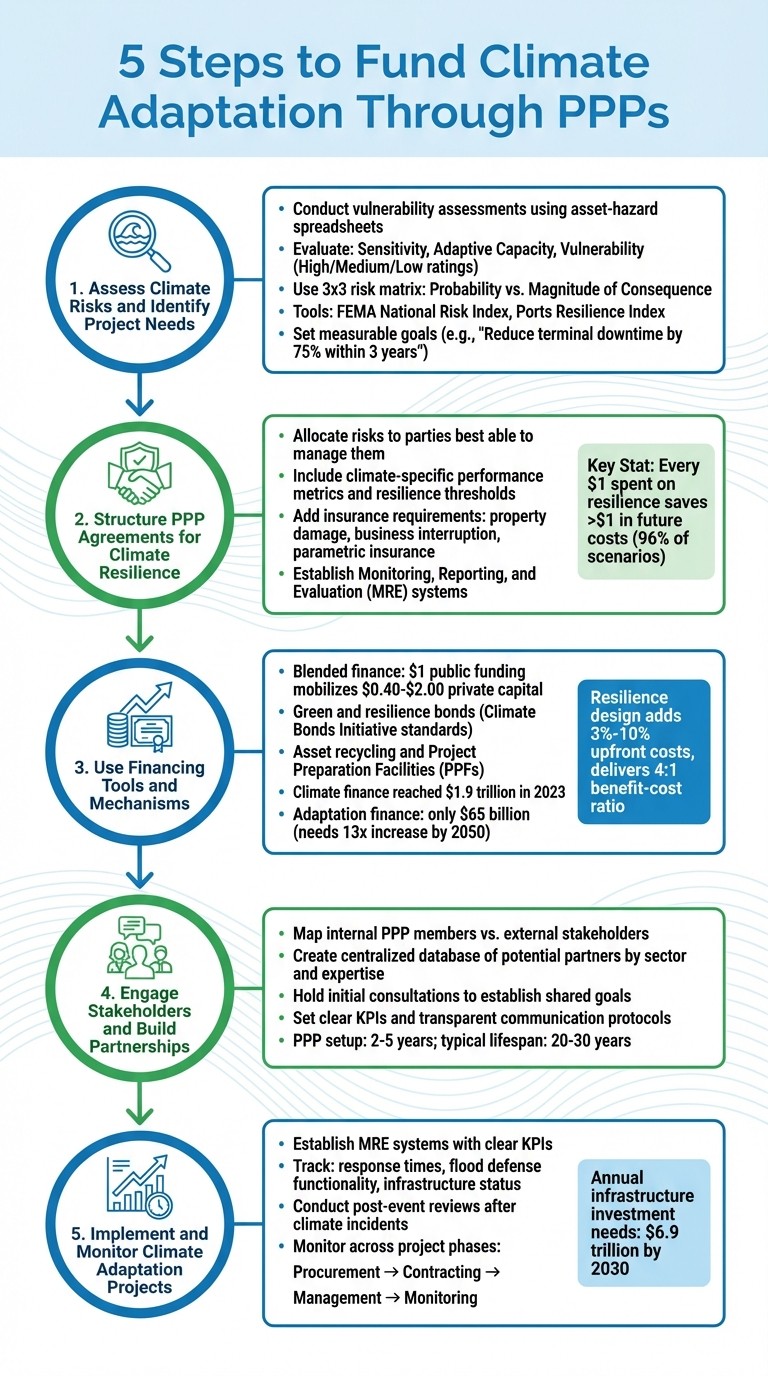
5-Step Framework for Funding Climate Adaptation Projects Through Public-Private Partnerships
Climate-Smart Public-Private Partnerships (PPPs) - Building Low-Carbon & Resilient Infrastructure
Step 1: Assess Climate Risks and Identify Project Needs
After introducing the benefits of PPPs and the challenges posed by climate risks, the first step is understanding your specific vulnerabilities.
Conducting Vulnerability Assessments
Start by identifying key assets before structuring PPPs. Create a detailed asset-hazard spreadsheet that links critical maritime assets - such as berths, warehouses, shipping lanes, and cranes - with specific climate hazards like sea-level rise, extreme heat, flooding, or erosion.
For each asset-hazard pair, assess three key factors: Sensitivity (how significantly the hazard impacts the asset), Adaptive Capacity (the asset's ability to recover or adjust), and overall Vulnerability. Assign ratings of High, Medium, or Low to each factor. Assets with high sensitivity and low adaptive capacity should be prioritized for immediate attention.
Once high-risk assets are identified, use a 3x3 risk matrix to evaluate each asset-hazard pair. Plot "Probability" on one axis and "Magnitude of Consequence" on the other. For example, a "High" probability might mean the hazard is likely to occur within five years, while "Medium" could indicate a 5–20-year timeframe. Focus resources on pairs that fall into the "High-High" or "High-Medium" zones. Tools like the FEMA National Risk Index can help you benchmark your findings against data for 18 natural hazards, offering a regional context.
Pay special attention to assets that, if damaged, could cause cascading failures. NOAA Research warns of the widespread impacts such failures can trigger [4]. These assessments will serve as the foundation for setting clear adaptation goals.
Defining Adaptation Goals and Project Scope
Using the results from your risk assessment, establish specific adaptation measures. Translate your findings into actionable targets. For instance, if a shipping terminal is highly vulnerable to flooding, your goal might involve installing elevated infrastructure or implementing nature-based flood defenses. If extreme heat poses risks to crane operations, consider cooling systems or heat-resistant materials.
Set measurable, performance-based goals, such as "Reduce terminal downtime from flooding by 75% within three years" or "Ensure all critical access roads remain functional during a 100-year flood event." These well-defined targets not only help attract private partners but also make it easier to track progress.
Collaborate with climate adaptation experts to interpret climate data and align technical recommendations with business needs. Leverage tools like geospatial mapping and the Ports Resilience Index to validate your investment decisions and assess disaster preparedness before pursuing partnership funding.
The risks and goals defined in this step will provide a strong foundation for creating effective PPP agreements in the next phase.
Step 2: Structure PPP Agreements for Climate Resilience
After identifying vulnerabilities and project needs in Step 1, the next step is to draft a contract that clearly outlines risk allocations and responsibilities. A well-designed PPP agreement should address climate risks proactively, rather than relying on outdated approaches that categorize all weather-related disruptions as unpredictable "acts of God." Modern contracts recognize that many climate risks are no longer unforeseen and can often be anticipated and planned for.
Risk Allocation and Climate Uncertainty Provisions
A successful PPP hinges on assigning each risk to the party best positioned to manage it. For physical risks like storm damage, flooding, or rising sea levels, a balanced approach is essential. Private partners should be tasked with designing infrastructure that withstands specific climate stresses, while the public sector would only take responsibility for truly catastrophic events.
Instead of relying on generic force majeure clauses, agreements should include specific thresholds for triggering such provisions. For example, Japanese PPP contracts often require operators to continue functioning during moderate flooding, limiting force majeure to extreme scenarios exceeding pre-defined levels [6][7].
Transitional risks, such as changes in policies like carbon taxes or stricter emissions standards, also need careful consideration. Change-in-law clauses can allow for adjustments in tariffs or cost-sharing arrangements. For instance, in the University of Iowa’s 50-year utility PPP signed in April 2019, the private partner committed to achieving zero-carbon objectives by 2025. The contract also included provisions for managing evolving greenhouse gas regulations [3].
"The underlying principle is that the risks associated with carrying out a PPP project are allocated to the party best able to control or to manage the consequences of the risk." – World Bank [5]
Contracts should also include mechanisms for adapting to new technologies and shifting demands without requiring full renegotiation. Benefit-sharing clauses can further incentivize the adoption of emerging green technologies, ensuring mutual gains for both public and private partners [5][6].
Key Contract Elements for Adaptation Projects
Once risks are allocated, the next focus should be on accountability and performance. Contracts must include climate-specific performance metrics within their output specifications. Rather than vague goals, agreements should define clear technical benchmarks, such as resilience thresholds that ensure a port remains operational during severe storm surges or other extreme events [6].
These standards should be tied to resilience-focused KPIs with enforceable consequences. For instance, if a facility fails to meet resilience benchmarks during foreseeable climate events, penalties or reduced availability payments should apply [6].
Insurance is another critical element. Contracts should mandate coverage for property damage, business interruptions, and parametric insurance, which activates automatically when specific climate-related triggers occur. A good example comes from the Armenia Airport PPP feasibility study in Colombia, where comprehensive insurance requirements were included to address risks like heavy rainfall and extreme heat [6].
Provisions should also address scenarios where insurance becomes unavailable or prohibitively expensive. These clauses clarify how residual risks will be shared between public and private partners if traditional insurance markets fail [6].
Finally, establish robust Monitoring, Reporting, and Evaluation (MRE) systems to track how well the project adapts to climate challenges. Real-time climate data can inform operational adjustments, as shown in the Sendai School Meal Supply Center PPP, where flexible supplier arrangements allowed the project to recover 2.5 months faster than government-run facilities after a disaster [3].
Investing in these detailed provisions upfront can save substantial costs down the road. Studies show that every $1 spent on early climate resilience measures can save more than $1 in future repair and loss costs in 96% of scenarios analyzed [6]. Properly structuring these agreements ensures long-term benefits for all stakeholders.
Step 3: Use Financing Tools and Mechanisms
Blended Finance and Alternative Funding Models
After structuring your PPP agreement, the next hurdle is ensuring adequate funding. Traditional financing models often fall short for climate adaptation projects, as these typically have uncertain returns and long payback periods. This is where blended finance steps in - it merges public or concessional funding with private capital, improving the risk-return balance for projects that might otherwise struggle to attract investment [13]. By making these projects financially feasible, such mechanisms play a key role in bolstering climate resilience across maritime and logistics infrastructure.
Public funds often take on the riskiest portions of investments, offering first-loss protection to reduce default risks and enhance the appeal for private investors [13]. Between 2021 and 2023, every $1 from public or philanthropic sources mobilized $0.40 in private capital on average, with some deals leveraging over $2 for each public dollar [13].
In addition to blended finance, alternative funding models bring more opportunities to unlock capital. Asset recycling is one such model, where governments lease or grant concessions on older maritime assets and reinvest the proceeds into climate-resilient projects [8][11]. In this setup, private partners handle the financial risks, while the public sector provides support through data, feasibility studies, and regulatory streamlining [11].
Green and resilience bonds have also emerged as popular funding tools for maritime adaptation. These bonds adhere to the Climate Bonds Initiative (CBI) standards and attract institutional investors focused on climate-aligned projects [8][11]. The associated fees range from $2,000 in developed markets to $1,000 in developing regions, with an additional fee of 1/10th of a basis point on the bond issuance amount (e.g., roughly $5,000 for a $500 million bond) [11]. Certification from third-party verifiers like Deloitte, KPMG, or Carbon Trust can expand the investor pool and potentially lower financing costs [11].
Project Preparation Facilities (PPFs) are another valuable resource, funding early-stage technical studies and feasibility assessments to make projects more bankable [11][12]. Bundling smaller adaptation projects into cohesive portfolios and aligning them with National Adaptation Plans can also increase their appeal to institutional investors, while making them eligible for sovereign guarantees and concessional funding [10].
Climate Risk Disclosures and Insurance
While diverse financing options help secure capital, clear risk disclosures and strong insurance mechanisms are equally important in building investor confidence. Standardized climate disclosures reduce perceived risks and provide transparency. Adopting frameworks like the Task Force on Climate-related Financial Disclosures (TCFD) allows maritime companies to address investor concerns about climate risks, translating physical threats like storm surges and rising sea levels into measurable business impacts [9][15].
Insurance also plays a critical role in securing long-term PPP contracts, which often span 20–30 years [1]. Coverage should include property damage, business interruption, and parametric insurance, which activates payouts automatically when specific climate events occur. In some cases, blended finance structures can subsidize insurance premiums or use catastrophe risk modeling to lower costs, further encouraging private investment [9].
The financial landscape underscores the urgency of these efforts. Global climate finance reached $1.9 trillion in 2023, with private investment surpassing $1 trillion for the first time [14]. However, adaptation finance accounted for just $65 billion - a small fraction of the funds required [14]. By 2050, annual adaptation finance needs will be 13 times higher than current levels [10]. Incorporating resilience into infrastructure design increases upfront costs by just 3%–10%, yet it delivers benefit-cost ratios as high as 4:1 through avoided losses [10]. Highlighting both mitigation and adaptation benefits in project proposals can help tap into a broader pool of climate funds [9]. Securing Climate Bonds Certified status through third-party verification further enhances a project's appeal to investors [11].
Step 4: Engage Stakeholders and Build Partnerships
With financing in place and project risks addressed, the next step focuses on engaging stakeholders to align interests and ensure long-term success.
Stakeholder Mapping and Collaborative Planning
Once your financing is secured and the PPP agreement is structured, it’s crucial to identify and map out the right stakeholders. Start by distinguishing between internal PPP members and external stakeholders such as local businesses, end-users, and community representatives [1]. This clarity helps avoid confusion about decision-making authority over the typical 20–30 year lifespan of a PPP [1].
Expand your focus to include potential collaborators across various sectors. These might include regional agencies, neighboring municipalities, non-profits, private companies, academic institutions, and scientific organizations. Tailor your search to the expertise required for your maritime adaptation project, such as water management, transportation, energy, legal frameworks, or climate science [16]. Reviewing past climate-sensitive projects can reveal organizations with relevant experience. To streamline this process, create a centralized database that categorizes potential partners by their sector, scale, and climate risk expertise. Assign liaisons to serve as primary contacts for each organization, ensuring smoother collaboration. Instead of forming new committees, consider integrating climate adaptation efforts into existing groups focused on environmental, safety, or public health issues [16].
"Integrating voices from citizens, businesses, faith groups, and industry groups into the planning process can enhance community ownership of adaptation activities [and] contribute to political support for action." – Adapt-CA Roadmap [16]
These steps set the stage for building effective partnerships as you transition into the implementation phase.
Building Trust in Partnerships
Trust serves as the cornerstone of any successful long-term partnership. Begin by holding initial consultations to establish shared goals before finalizing contracts. Clearly outline each partner’s responsibilities - private entities typically manage construction and financing risks, while public partners address regulatory uncertainties. This clarity fosters accountability and builds trust [1].
Transparent communication is equally vital. Inconsistent messaging can undermine public confidence, so ensure unified and open communication with all stakeholders. Establish key performance indicators (KPIs) alongside strong monitoring, reporting, and evaluation systems to track progress effectively [1]. Public partners can further support private counterparts by sharing essential data, feasibility studies, and planning documents [17].
When forming partnerships, consider the entire life cycle of your maritime assets. While setting up a PPP often takes two to five years, adopting a long-term perspective can ensure the partnership remains resilient over decades of operation and maintenance, even as climate conditions evolve [1][2]. With annual infrastructure investment needs projected to hit $6.9 trillion by 2030 to meet climate goals [1], the partnerships you form today will play a critical role in shaping maritime resilience for years to come. Such collaborations are essential for funding and implementing adaptation initiatives that safeguard maritime operations against the challenges of a changing climate.
Step 5: Implement and Monitor Climate Adaptation Projects
Once partnerships and financing are in place, the next step is to execute your climate adaptation project and closely monitor its performance. This stage is critical for determining whether your public-private partnership (PPP) achieves its intended resilience goals.
Case Studies of Maritime PPPs
Several successful projects demonstrate how PPPs can integrate climate adaptation effectively:
Port of Miami Tunnel: Completed in August 2014, this $920 million, 35-year Design-Build-Finance-Operate-Maintain project significantly reduced port-related truck traffic by 80%. The project also incorporated climate-resilient floodgates at each entrance to guard against storm surges. Despite encountering unexpected geological challenges, it finished ahead of schedule and under budget [20].
Terminal Marítimo Muelles el Bosque (MEB), Colombia: The International Finance Corporation conducted a detailed climate risk study for this port in Cartagena. The study identified infrastructure vulnerabilities and proposed adaptation strategies to ensure long-term resilience [3].
Sendai School Meal Supply Center, Japan: This PPP showcased its ability to adapt during disasters. It resumed operations roughly 2.5 months earlier than government-run facilities by leveraging the private operator’s flexibility to quickly procure emergency equipment, avoiding bureaucratic delays [3].
These examples emphasize the importance of systematic monitoring to maintain and improve resilience measures over time.
Monitoring Progress and Measuring Impact
Effective monitoring is essential for ensuring that climate adaptation measures remain impactful. Establishing Monitoring, Reporting, and Evaluation (MRE) systems with clear KPIs is key. Metrics might include response times to extreme weather, the functionality of flood defenses, and the operational status of critical infrastructure during adverse events [1][20]. Independent Construction Engineering Inspection (CEI) consultants can also play a role in verifying compliance and quality during the implementation phase [20].
Both public and private partners should allocate adequate resources for long-term monitoring. This includes maintaining the financial and technical capacity to track asset performance throughout the typical 20- to 30-year lifespan of a PPP. Additionally, conducting post-event reviews after disruptive climate incidents helps refine response strategies and adapt to evolving conditions [18].
| Implementation Phase | Key Action for Climate Adaptation |
| --- | --- |
| <strong>Procurement</strong> | Integrate low-carbon performance and disaster response capacity into bid evaluations. |
| <strong>Contracting</strong> | Set specific KPIs for climate resilience and infrastructure availability. |
| <strong>Management</strong> | Apply MRE procedures to monitor effectiveness and adapt to slow-onset climate changes. |
| <strong>Monitoring</strong> | Dedicate resources for long-term tracking of asset performance against climate risks
| Implementation Phase | Key Action for Climate Adaptation |
| --- | --- |
| <strong>Procurement</strong> | Integrate low-carbon performance and disaster response capacity into bid evaluations. |
| <strong>Contracting</strong> | Set specific KPIs for climate resilience and infrastructure availability. |
| <strong>Management</strong> | Apply MRE procedures to monitor effectiveness and adapt to slow-onset climate changes. |
| <strong>Monitoring</strong> | Dedicate resources for long-term tracking of asset performance against climate risks
One major hurdle is the lack of standardized definitions for "resilient investment", which can make it harder to secure favorable financing terms [18]. Collaborate with partners to create measurable indicators that clearly demonstrate resilience. It’s also crucial to carry forward the climate risks identified during project preparation into the management phase. This ensures that infrastructure remains functional and productive as environmental conditions shift [2].
Ultimately, successful monitoring involves a continuous cycle: assessing risks, planning and implementing measures, evaluating performance, and applying lessons learned. This structured approach not only ensures accountability but also builds a foundation of knowledge for future projects [19].
Partner with Council Fire for PPP Consulting
Tackling climate adaptation through public-private partnerships (PPPs) requires more than just technical expertise. It calls for a systems-based approach that bridges sustainability strategies with practical implementation. Council Fire specializes in guiding maritime and logistics companies as they turn ambitious resilience goals into actionable plans with tangible outcomes. By leveraging the established PPP framework, Council Fire helps transform strategic ideas into concrete solutions for building climate resilience.
Turning Sustainability Goals into Action
Council Fire collaborates with port authorities, terminal operators, government agencies like FEMA and NOAA, and local communities to create partnerships rooted in trust and shared objectives. Their expertise lies in identifying and prioritizing climate risks that threaten critical assets, such as electrical grids, fuel storage facilities, and cargo-handling equipment. The firm develops resilience plans across three key timeframes: short-term (1–2 years), mid-term (3–5 years), and long-term (10+ years). This ensures immediate needs are addressed while supporting future growth.
Their approach focuses on achieving multiple benefits, ensuring that adaptation efforts deliver environmental, social, and economic value. For instance, rather than relying solely on traditional flood barriers, Council Fire might propose "green" infrastructure solutions like constructed wetlands. These not only protect critical assets but also improve conditions for nearby communities. Successfully navigating PPPs is crucial for addressing funding gaps and ensuring project viability.
Tailored Solutions for Maritime and Logistics
Council Fire provides specialized consulting services to address the unique challenges of maritime climate adaptation. Early in the planning process, they organize stakeholder advisory groups, bringing together diverse perspectives to review risk assessments and align on implementation strategies. The firm helps clients establish goal-setting frameworks with measurable targets focused on business continuity, financial security, and operational efficiency.
Technology plays a key role in their approach. Council Fire integrates tools like IoT sensors, digital twins, and predictive analytics into the partnership framework. These technologies monitor structural stress and simulate the impacts of extreme weather, offering valuable insights for decision-making. Additionally, Council Fire guides companies through the complexities of PPP contracts, ensuring risk is allocated effectively and partnerships are structured for success.
Conclusion and Key Takeaways
Summary of the 5 Steps for Structuring PPPs
Funding climate adaptation through Public-Private Partnerships (PPPs) requires a carefully planned approach that balances technical accuracy with meaningful collaboration. Start by conducting detailed vulnerability assessments using established tools like PIEVC. Follow this with crafting PPP agreements that clearly define risk-sharing and include measurable performance metrics. Incorporate life-cycle costing to account for greenhouse gas emissions and other climate-related expenses.
Make stakeholder engagement a priority from the outset. Early and focused consultations can clarify roles and responsibilities, reducing the risk of disputes during the project lifecycle. Finally, establish robust monitoring systems with well-defined Key Performance Indicators (KPIs) to track the project’s progress and effectiveness.
Next Steps for Climate Adaptation
The time to act is now. With the maritime and logistics sectors requiring an estimated $6.9 trillion annually by 2030 to meet climate resilience goals[1], the urgency of the challenge is clear. PPPs provide a viable solution, combining private sector innovation with the resources needed to fund and execute adaptation projects. Whether managing ports at risk from rising sea levels or logistics networks vulnerable to extreme weather, proactive steps are essential.
Council Fire offers expertise in turning adaptation challenges into actionable strategies, aligning perfectly with the five-step framework outlined above. Their systems-based approach simplifies the administrative hurdles often associated with PPPs, ensuring projects deliver tangible environmental, social, and economic outcomes. By focusing on everything from stakeholder engagement to contract structuring, Council Fire equips partners with the tools to achieve sustainability goals across short-term (1–2 years), mid-term (3–5 years), and long-term (10+ years) timelines. Their tailored solutions transform climate adaptation into a source of operational resilience and strength.
FAQs
What are the key advantages of using public-private partnerships for climate adaptation in the maritime sector?
Public-private partnerships (PPPs) play a crucial role in tackling climate adaptation challenges within the maritime sector. By pooling the resources and expertise of both public and private entities, these collaborations create a more effective approach to building climate resilience. They open doors to varied funding opportunities, help distribute financial risks among stakeholders, and encourage the development of innovative, long-term solutions.
Another key benefit of PPPs is their ability to support the upkeep and modernization of vital infrastructure. This is particularly important as the sector faces challenges such as rising sea levels and more frequent extreme weather events. With public funding often stretched thin, these partnerships offer a practical way to share costs, align the goals of different stakeholders, and implement meaningful climate adaptation strategies in the maritime industry.
How can maritime companies manage climate risks effectively in public-private partnerships (PPPs)?
Maritime companies can tackle climate risks in public-private partnerships (PPPs) by embedding comprehensive climate risk assessments into the early stages of project planning and contract development. This means pinpointing risks such as extreme weather events, rising sea levels, or shifting regulations right from the start. Doing so allows stakeholders to craft targeted contract clauses and mitigation strategies tailored to these challenges.
To manage risks more effectively, contracts can feature provisions focused on resilience, like force majeure clauses or adaptive performance standards. These elements outline how unforeseen climate-related impacts will be addressed, reducing uncertainty for both public and private entities. Furthermore, financial tools like climate risk insurance or resilience bonds can act as a safety net while also promoting proactive approaches to risk management.
By integrating detailed assessments, adaptable contract terms, and supportive financial mechanisms, maritime companies and their partners can better position their PPPs to handle the shifting realities of climate risk.
What are the best financing options for maritime and logistics companies to fund climate adaptation projects?
Maritime and logistics companies have several financing options available to support climate adaptation initiatives, with public-private partnerships (PPPs) offering a particularly effective framework. These partnerships can take various forms, including asset recycling, concession and lease models, or more specialized methods like project-financed transactions and Islamic finance.
Beyond PPPs, companies can tap into diverse funding sources such as grants, green bonds, resilience bonds, and environmental impact bonds. Another promising approach is leveraging land value capture, which generates funding by capitalizing on the increased property values that result from infrastructure upgrades. Success in these efforts often hinges on collaboration with government agencies and private investors, ensuring that all parties' interests align to support the project's long-term viability.
Related Blog Posts
Latest Articles
©2025


FAQ
01
What does it really mean to “redefine profit”?
02
What makes Council Fire different?
03
Who does Council Fire you work with?
04
What does working with Council Fire actually look like?
05
How does Council Fire help organizations turn big goals into action?
06
How does Council Fire define and measure success?
Feb 5, 2026
How to Fund Climate Adaptation Projects via Public-Private Partnerships for Maritime & Logistics Companies
Sustainability Strategy
In This Article
Guide to funding maritime climate adaptation via PPPs: assess risks, structure contracts, secure blended finance, engage stakeholders, monitor results.
How to Fund Climate Adaptation Projects via Public-Private Partnerships for Maritime & Logistics Companies
Public-Private Partnerships (PPPs) are essential for funding climate adaptation in maritime and logistics sectors. Rising sea levels, extreme weather, and gradual climate changes threaten critical infrastructure like ports and transportation networks. PPPs provide a solution by combining private investment with public resources to address these challenges effectively. Here's a quick breakdown of the key steps:
Assess Risks: Identify vulnerable assets and prioritize them using risk matrices.
Structure Agreements: Allocate risks to the right parties, define specific performance metrics, and include climate-specific provisions.
Secure Funding: Use blended finance, green bonds, and public-private mechanisms to close funding gaps.
Engage Stakeholders: Collaborate with local communities, businesses, and experts to align goals and build trust.
Monitor Progress: Track performance using clear metrics and adapt plans based on real-time data.
5-Step Framework for Funding Climate Adaptation Projects Through Public-Private Partnerships
Climate-Smart Public-Private Partnerships (PPPs) - Building Low-Carbon & Resilient Infrastructure
Step 1: Assess Climate Risks and Identify Project Needs
After introducing the benefits of PPPs and the challenges posed by climate risks, the first step is understanding your specific vulnerabilities.
Conducting Vulnerability Assessments
Start by identifying key assets before structuring PPPs. Create a detailed asset-hazard spreadsheet that links critical maritime assets - such as berths, warehouses, shipping lanes, and cranes - with specific climate hazards like sea-level rise, extreme heat, flooding, or erosion.
For each asset-hazard pair, assess three key factors: Sensitivity (how significantly the hazard impacts the asset), Adaptive Capacity (the asset's ability to recover or adjust), and overall Vulnerability. Assign ratings of High, Medium, or Low to each factor. Assets with high sensitivity and low adaptive capacity should be prioritized for immediate attention.
Once high-risk assets are identified, use a 3x3 risk matrix to evaluate each asset-hazard pair. Plot "Probability" on one axis and "Magnitude of Consequence" on the other. For example, a "High" probability might mean the hazard is likely to occur within five years, while "Medium" could indicate a 5–20-year timeframe. Focus resources on pairs that fall into the "High-High" or "High-Medium" zones. Tools like the FEMA National Risk Index can help you benchmark your findings against data for 18 natural hazards, offering a regional context.
Pay special attention to assets that, if damaged, could cause cascading failures. NOAA Research warns of the widespread impacts such failures can trigger [4]. These assessments will serve as the foundation for setting clear adaptation goals.
Defining Adaptation Goals and Project Scope
Using the results from your risk assessment, establish specific adaptation measures. Translate your findings into actionable targets. For instance, if a shipping terminal is highly vulnerable to flooding, your goal might involve installing elevated infrastructure or implementing nature-based flood defenses. If extreme heat poses risks to crane operations, consider cooling systems or heat-resistant materials.
Set measurable, performance-based goals, such as "Reduce terminal downtime from flooding by 75% within three years" or "Ensure all critical access roads remain functional during a 100-year flood event." These well-defined targets not only help attract private partners but also make it easier to track progress.
Collaborate with climate adaptation experts to interpret climate data and align technical recommendations with business needs. Leverage tools like geospatial mapping and the Ports Resilience Index to validate your investment decisions and assess disaster preparedness before pursuing partnership funding.
The risks and goals defined in this step will provide a strong foundation for creating effective PPP agreements in the next phase.
Step 2: Structure PPP Agreements for Climate Resilience
After identifying vulnerabilities and project needs in Step 1, the next step is to draft a contract that clearly outlines risk allocations and responsibilities. A well-designed PPP agreement should address climate risks proactively, rather than relying on outdated approaches that categorize all weather-related disruptions as unpredictable "acts of God." Modern contracts recognize that many climate risks are no longer unforeseen and can often be anticipated and planned for.
Risk Allocation and Climate Uncertainty Provisions
A successful PPP hinges on assigning each risk to the party best positioned to manage it. For physical risks like storm damage, flooding, or rising sea levels, a balanced approach is essential. Private partners should be tasked with designing infrastructure that withstands specific climate stresses, while the public sector would only take responsibility for truly catastrophic events.
Instead of relying on generic force majeure clauses, agreements should include specific thresholds for triggering such provisions. For example, Japanese PPP contracts often require operators to continue functioning during moderate flooding, limiting force majeure to extreme scenarios exceeding pre-defined levels [6][7].
Transitional risks, such as changes in policies like carbon taxes or stricter emissions standards, also need careful consideration. Change-in-law clauses can allow for adjustments in tariffs or cost-sharing arrangements. For instance, in the University of Iowa’s 50-year utility PPP signed in April 2019, the private partner committed to achieving zero-carbon objectives by 2025. The contract also included provisions for managing evolving greenhouse gas regulations [3].
"The underlying principle is that the risks associated with carrying out a PPP project are allocated to the party best able to control or to manage the consequences of the risk." – World Bank [5]
Contracts should also include mechanisms for adapting to new technologies and shifting demands without requiring full renegotiation. Benefit-sharing clauses can further incentivize the adoption of emerging green technologies, ensuring mutual gains for both public and private partners [5][6].
Key Contract Elements for Adaptation Projects
Once risks are allocated, the next focus should be on accountability and performance. Contracts must include climate-specific performance metrics within their output specifications. Rather than vague goals, agreements should define clear technical benchmarks, such as resilience thresholds that ensure a port remains operational during severe storm surges or other extreme events [6].
These standards should be tied to resilience-focused KPIs with enforceable consequences. For instance, if a facility fails to meet resilience benchmarks during foreseeable climate events, penalties or reduced availability payments should apply [6].
Insurance is another critical element. Contracts should mandate coverage for property damage, business interruptions, and parametric insurance, which activates automatically when specific climate-related triggers occur. A good example comes from the Armenia Airport PPP feasibility study in Colombia, where comprehensive insurance requirements were included to address risks like heavy rainfall and extreme heat [6].
Provisions should also address scenarios where insurance becomes unavailable or prohibitively expensive. These clauses clarify how residual risks will be shared between public and private partners if traditional insurance markets fail [6].
Finally, establish robust Monitoring, Reporting, and Evaluation (MRE) systems to track how well the project adapts to climate challenges. Real-time climate data can inform operational adjustments, as shown in the Sendai School Meal Supply Center PPP, where flexible supplier arrangements allowed the project to recover 2.5 months faster than government-run facilities after a disaster [3].
Investing in these detailed provisions upfront can save substantial costs down the road. Studies show that every $1 spent on early climate resilience measures can save more than $1 in future repair and loss costs in 96% of scenarios analyzed [6]. Properly structuring these agreements ensures long-term benefits for all stakeholders.
Step 3: Use Financing Tools and Mechanisms
Blended Finance and Alternative Funding Models
After structuring your PPP agreement, the next hurdle is ensuring adequate funding. Traditional financing models often fall short for climate adaptation projects, as these typically have uncertain returns and long payback periods. This is where blended finance steps in - it merges public or concessional funding with private capital, improving the risk-return balance for projects that might otherwise struggle to attract investment [13]. By making these projects financially feasible, such mechanisms play a key role in bolstering climate resilience across maritime and logistics infrastructure.
Public funds often take on the riskiest portions of investments, offering first-loss protection to reduce default risks and enhance the appeal for private investors [13]. Between 2021 and 2023, every $1 from public or philanthropic sources mobilized $0.40 in private capital on average, with some deals leveraging over $2 for each public dollar [13].
In addition to blended finance, alternative funding models bring more opportunities to unlock capital. Asset recycling is one such model, where governments lease or grant concessions on older maritime assets and reinvest the proceeds into climate-resilient projects [8][11]. In this setup, private partners handle the financial risks, while the public sector provides support through data, feasibility studies, and regulatory streamlining [11].
Green and resilience bonds have also emerged as popular funding tools for maritime adaptation. These bonds adhere to the Climate Bonds Initiative (CBI) standards and attract institutional investors focused on climate-aligned projects [8][11]. The associated fees range from $2,000 in developed markets to $1,000 in developing regions, with an additional fee of 1/10th of a basis point on the bond issuance amount (e.g., roughly $5,000 for a $500 million bond) [11]. Certification from third-party verifiers like Deloitte, KPMG, or Carbon Trust can expand the investor pool and potentially lower financing costs [11].
Project Preparation Facilities (PPFs) are another valuable resource, funding early-stage technical studies and feasibility assessments to make projects more bankable [11][12]. Bundling smaller adaptation projects into cohesive portfolios and aligning them with National Adaptation Plans can also increase their appeal to institutional investors, while making them eligible for sovereign guarantees and concessional funding [10].
Climate Risk Disclosures and Insurance
While diverse financing options help secure capital, clear risk disclosures and strong insurance mechanisms are equally important in building investor confidence. Standardized climate disclosures reduce perceived risks and provide transparency. Adopting frameworks like the Task Force on Climate-related Financial Disclosures (TCFD) allows maritime companies to address investor concerns about climate risks, translating physical threats like storm surges and rising sea levels into measurable business impacts [9][15].
Insurance also plays a critical role in securing long-term PPP contracts, which often span 20–30 years [1]. Coverage should include property damage, business interruption, and parametric insurance, which activates payouts automatically when specific climate events occur. In some cases, blended finance structures can subsidize insurance premiums or use catastrophe risk modeling to lower costs, further encouraging private investment [9].
The financial landscape underscores the urgency of these efforts. Global climate finance reached $1.9 trillion in 2023, with private investment surpassing $1 trillion for the first time [14]. However, adaptation finance accounted for just $65 billion - a small fraction of the funds required [14]. By 2050, annual adaptation finance needs will be 13 times higher than current levels [10]. Incorporating resilience into infrastructure design increases upfront costs by just 3%–10%, yet it delivers benefit-cost ratios as high as 4:1 through avoided losses [10]. Highlighting both mitigation and adaptation benefits in project proposals can help tap into a broader pool of climate funds [9]. Securing Climate Bonds Certified status through third-party verification further enhances a project's appeal to investors [11].
Step 4: Engage Stakeholders and Build Partnerships
With financing in place and project risks addressed, the next step focuses on engaging stakeholders to align interests and ensure long-term success.
Stakeholder Mapping and Collaborative Planning
Once your financing is secured and the PPP agreement is structured, it’s crucial to identify and map out the right stakeholders. Start by distinguishing between internal PPP members and external stakeholders such as local businesses, end-users, and community representatives [1]. This clarity helps avoid confusion about decision-making authority over the typical 20–30 year lifespan of a PPP [1].
Expand your focus to include potential collaborators across various sectors. These might include regional agencies, neighboring municipalities, non-profits, private companies, academic institutions, and scientific organizations. Tailor your search to the expertise required for your maritime adaptation project, such as water management, transportation, energy, legal frameworks, or climate science [16]. Reviewing past climate-sensitive projects can reveal organizations with relevant experience. To streamline this process, create a centralized database that categorizes potential partners by their sector, scale, and climate risk expertise. Assign liaisons to serve as primary contacts for each organization, ensuring smoother collaboration. Instead of forming new committees, consider integrating climate adaptation efforts into existing groups focused on environmental, safety, or public health issues [16].
"Integrating voices from citizens, businesses, faith groups, and industry groups into the planning process can enhance community ownership of adaptation activities [and] contribute to political support for action." – Adapt-CA Roadmap [16]
These steps set the stage for building effective partnerships as you transition into the implementation phase.
Building Trust in Partnerships
Trust serves as the cornerstone of any successful long-term partnership. Begin by holding initial consultations to establish shared goals before finalizing contracts. Clearly outline each partner’s responsibilities - private entities typically manage construction and financing risks, while public partners address regulatory uncertainties. This clarity fosters accountability and builds trust [1].
Transparent communication is equally vital. Inconsistent messaging can undermine public confidence, so ensure unified and open communication with all stakeholders. Establish key performance indicators (KPIs) alongside strong monitoring, reporting, and evaluation systems to track progress effectively [1]. Public partners can further support private counterparts by sharing essential data, feasibility studies, and planning documents [17].
When forming partnerships, consider the entire life cycle of your maritime assets. While setting up a PPP often takes two to five years, adopting a long-term perspective can ensure the partnership remains resilient over decades of operation and maintenance, even as climate conditions evolve [1][2]. With annual infrastructure investment needs projected to hit $6.9 trillion by 2030 to meet climate goals [1], the partnerships you form today will play a critical role in shaping maritime resilience for years to come. Such collaborations are essential for funding and implementing adaptation initiatives that safeguard maritime operations against the challenges of a changing climate.
Step 5: Implement and Monitor Climate Adaptation Projects
Once partnerships and financing are in place, the next step is to execute your climate adaptation project and closely monitor its performance. This stage is critical for determining whether your public-private partnership (PPP) achieves its intended resilience goals.
Case Studies of Maritime PPPs
Several successful projects demonstrate how PPPs can integrate climate adaptation effectively:
Port of Miami Tunnel: Completed in August 2014, this $920 million, 35-year Design-Build-Finance-Operate-Maintain project significantly reduced port-related truck traffic by 80%. The project also incorporated climate-resilient floodgates at each entrance to guard against storm surges. Despite encountering unexpected geological challenges, it finished ahead of schedule and under budget [20].
Terminal Marítimo Muelles el Bosque (MEB), Colombia: The International Finance Corporation conducted a detailed climate risk study for this port in Cartagena. The study identified infrastructure vulnerabilities and proposed adaptation strategies to ensure long-term resilience [3].
Sendai School Meal Supply Center, Japan: This PPP showcased its ability to adapt during disasters. It resumed operations roughly 2.5 months earlier than government-run facilities by leveraging the private operator’s flexibility to quickly procure emergency equipment, avoiding bureaucratic delays [3].
These examples emphasize the importance of systematic monitoring to maintain and improve resilience measures over time.
Monitoring Progress and Measuring Impact
Effective monitoring is essential for ensuring that climate adaptation measures remain impactful. Establishing Monitoring, Reporting, and Evaluation (MRE) systems with clear KPIs is key. Metrics might include response times to extreme weather, the functionality of flood defenses, and the operational status of critical infrastructure during adverse events [1][20]. Independent Construction Engineering Inspection (CEI) consultants can also play a role in verifying compliance and quality during the implementation phase [20].
Both public and private partners should allocate adequate resources for long-term monitoring. This includes maintaining the financial and technical capacity to track asset performance throughout the typical 20- to 30-year lifespan of a PPP. Additionally, conducting post-event reviews after disruptive climate incidents helps refine response strategies and adapt to evolving conditions [18].
| Implementation Phase | Key Action for Climate Adaptation |
| --- | --- |
| <strong>Procurement</strong> | Integrate low-carbon performance and disaster response capacity into bid evaluations. |
| <strong>Contracting</strong> | Set specific KPIs for climate resilience and infrastructure availability. |
| <strong>Management</strong> | Apply MRE procedures to monitor effectiveness and adapt to slow-onset climate changes. |
| <strong>Monitoring</strong> | Dedicate resources for long-term tracking of asset performance against climate risks
One major hurdle is the lack of standardized definitions for "resilient investment", which can make it harder to secure favorable financing terms [18]. Collaborate with partners to create measurable indicators that clearly demonstrate resilience. It’s also crucial to carry forward the climate risks identified during project preparation into the management phase. This ensures that infrastructure remains functional and productive as environmental conditions shift [2].
Ultimately, successful monitoring involves a continuous cycle: assessing risks, planning and implementing measures, evaluating performance, and applying lessons learned. This structured approach not only ensures accountability but also builds a foundation of knowledge for future projects [19].
Partner with Council Fire for PPP Consulting
Tackling climate adaptation through public-private partnerships (PPPs) requires more than just technical expertise. It calls for a systems-based approach that bridges sustainability strategies with practical implementation. Council Fire specializes in guiding maritime and logistics companies as they turn ambitious resilience goals into actionable plans with tangible outcomes. By leveraging the established PPP framework, Council Fire helps transform strategic ideas into concrete solutions for building climate resilience.
Turning Sustainability Goals into Action
Council Fire collaborates with port authorities, terminal operators, government agencies like FEMA and NOAA, and local communities to create partnerships rooted in trust and shared objectives. Their expertise lies in identifying and prioritizing climate risks that threaten critical assets, such as electrical grids, fuel storage facilities, and cargo-handling equipment. The firm develops resilience plans across three key timeframes: short-term (1–2 years), mid-term (3–5 years), and long-term (10+ years). This ensures immediate needs are addressed while supporting future growth.
Their approach focuses on achieving multiple benefits, ensuring that adaptation efforts deliver environmental, social, and economic value. For instance, rather than relying solely on traditional flood barriers, Council Fire might propose "green" infrastructure solutions like constructed wetlands. These not only protect critical assets but also improve conditions for nearby communities. Successfully navigating PPPs is crucial for addressing funding gaps and ensuring project viability.
Tailored Solutions for Maritime and Logistics
Council Fire provides specialized consulting services to address the unique challenges of maritime climate adaptation. Early in the planning process, they organize stakeholder advisory groups, bringing together diverse perspectives to review risk assessments and align on implementation strategies. The firm helps clients establish goal-setting frameworks with measurable targets focused on business continuity, financial security, and operational efficiency.
Technology plays a key role in their approach. Council Fire integrates tools like IoT sensors, digital twins, and predictive analytics into the partnership framework. These technologies monitor structural stress and simulate the impacts of extreme weather, offering valuable insights for decision-making. Additionally, Council Fire guides companies through the complexities of PPP contracts, ensuring risk is allocated effectively and partnerships are structured for success.
Conclusion and Key Takeaways
Summary of the 5 Steps for Structuring PPPs
Funding climate adaptation through Public-Private Partnerships (PPPs) requires a carefully planned approach that balances technical accuracy with meaningful collaboration. Start by conducting detailed vulnerability assessments using established tools like PIEVC. Follow this with crafting PPP agreements that clearly define risk-sharing and include measurable performance metrics. Incorporate life-cycle costing to account for greenhouse gas emissions and other climate-related expenses.
Make stakeholder engagement a priority from the outset. Early and focused consultations can clarify roles and responsibilities, reducing the risk of disputes during the project lifecycle. Finally, establish robust monitoring systems with well-defined Key Performance Indicators (KPIs) to track the project’s progress and effectiveness.
Next Steps for Climate Adaptation
The time to act is now. With the maritime and logistics sectors requiring an estimated $6.9 trillion annually by 2030 to meet climate resilience goals[1], the urgency of the challenge is clear. PPPs provide a viable solution, combining private sector innovation with the resources needed to fund and execute adaptation projects. Whether managing ports at risk from rising sea levels or logistics networks vulnerable to extreme weather, proactive steps are essential.
Council Fire offers expertise in turning adaptation challenges into actionable strategies, aligning perfectly with the five-step framework outlined above. Their systems-based approach simplifies the administrative hurdles often associated with PPPs, ensuring projects deliver tangible environmental, social, and economic outcomes. By focusing on everything from stakeholder engagement to contract structuring, Council Fire equips partners with the tools to achieve sustainability goals across short-term (1–2 years), mid-term (3–5 years), and long-term (10+ years) timelines. Their tailored solutions transform climate adaptation into a source of operational resilience and strength.
FAQs
What are the key advantages of using public-private partnerships for climate adaptation in the maritime sector?
Public-private partnerships (PPPs) play a crucial role in tackling climate adaptation challenges within the maritime sector. By pooling the resources and expertise of both public and private entities, these collaborations create a more effective approach to building climate resilience. They open doors to varied funding opportunities, help distribute financial risks among stakeholders, and encourage the development of innovative, long-term solutions.
Another key benefit of PPPs is their ability to support the upkeep and modernization of vital infrastructure. This is particularly important as the sector faces challenges such as rising sea levels and more frequent extreme weather events. With public funding often stretched thin, these partnerships offer a practical way to share costs, align the goals of different stakeholders, and implement meaningful climate adaptation strategies in the maritime industry.
How can maritime companies manage climate risks effectively in public-private partnerships (PPPs)?
Maritime companies can tackle climate risks in public-private partnerships (PPPs) by embedding comprehensive climate risk assessments into the early stages of project planning and contract development. This means pinpointing risks such as extreme weather events, rising sea levels, or shifting regulations right from the start. Doing so allows stakeholders to craft targeted contract clauses and mitigation strategies tailored to these challenges.
To manage risks more effectively, contracts can feature provisions focused on resilience, like force majeure clauses or adaptive performance standards. These elements outline how unforeseen climate-related impacts will be addressed, reducing uncertainty for both public and private entities. Furthermore, financial tools like climate risk insurance or resilience bonds can act as a safety net while also promoting proactive approaches to risk management.
By integrating detailed assessments, adaptable contract terms, and supportive financial mechanisms, maritime companies and their partners can better position their PPPs to handle the shifting realities of climate risk.
What are the best financing options for maritime and logistics companies to fund climate adaptation projects?
Maritime and logistics companies have several financing options available to support climate adaptation initiatives, with public-private partnerships (PPPs) offering a particularly effective framework. These partnerships can take various forms, including asset recycling, concession and lease models, or more specialized methods like project-financed transactions and Islamic finance.
Beyond PPPs, companies can tap into diverse funding sources such as grants, green bonds, resilience bonds, and environmental impact bonds. Another promising approach is leveraging land value capture, which generates funding by capitalizing on the increased property values that result from infrastructure upgrades. Success in these efforts often hinges on collaboration with government agencies and private investors, ensuring that all parties' interests align to support the project's long-term viability.
Related Blog Posts
FAQ
01
What does it really mean to “redefine profit”?
02
What makes Council Fire different?
03
Who does Council Fire you work with?
04
What does working with Council Fire actually look like?
05
How does Council Fire help organizations turn big goals into action?
06
How does Council Fire define and measure success?
Feb 5, 2026
How to Fund Climate Adaptation Projects via Public-Private Partnerships for Maritime & Logistics Companies
Sustainability Strategy
In This Article
Guide to funding maritime climate adaptation via PPPs: assess risks, structure contracts, secure blended finance, engage stakeholders, monitor results.
How to Fund Climate Adaptation Projects via Public-Private Partnerships for Maritime & Logistics Companies
Public-Private Partnerships (PPPs) are essential for funding climate adaptation in maritime and logistics sectors. Rising sea levels, extreme weather, and gradual climate changes threaten critical infrastructure like ports and transportation networks. PPPs provide a solution by combining private investment with public resources to address these challenges effectively. Here's a quick breakdown of the key steps:
Assess Risks: Identify vulnerable assets and prioritize them using risk matrices.
Structure Agreements: Allocate risks to the right parties, define specific performance metrics, and include climate-specific provisions.
Secure Funding: Use blended finance, green bonds, and public-private mechanisms to close funding gaps.
Engage Stakeholders: Collaborate with local communities, businesses, and experts to align goals and build trust.
Monitor Progress: Track performance using clear metrics and adapt plans based on real-time data.
5-Step Framework for Funding Climate Adaptation Projects Through Public-Private Partnerships
Climate-Smart Public-Private Partnerships (PPPs) - Building Low-Carbon & Resilient Infrastructure
Step 1: Assess Climate Risks and Identify Project Needs
After introducing the benefits of PPPs and the challenges posed by climate risks, the first step is understanding your specific vulnerabilities.
Conducting Vulnerability Assessments
Start by identifying key assets before structuring PPPs. Create a detailed asset-hazard spreadsheet that links critical maritime assets - such as berths, warehouses, shipping lanes, and cranes - with specific climate hazards like sea-level rise, extreme heat, flooding, or erosion.
For each asset-hazard pair, assess three key factors: Sensitivity (how significantly the hazard impacts the asset), Adaptive Capacity (the asset's ability to recover or adjust), and overall Vulnerability. Assign ratings of High, Medium, or Low to each factor. Assets with high sensitivity and low adaptive capacity should be prioritized for immediate attention.
Once high-risk assets are identified, use a 3x3 risk matrix to evaluate each asset-hazard pair. Plot "Probability" on one axis and "Magnitude of Consequence" on the other. For example, a "High" probability might mean the hazard is likely to occur within five years, while "Medium" could indicate a 5–20-year timeframe. Focus resources on pairs that fall into the "High-High" or "High-Medium" zones. Tools like the FEMA National Risk Index can help you benchmark your findings against data for 18 natural hazards, offering a regional context.
Pay special attention to assets that, if damaged, could cause cascading failures. NOAA Research warns of the widespread impacts such failures can trigger [4]. These assessments will serve as the foundation for setting clear adaptation goals.
Defining Adaptation Goals and Project Scope
Using the results from your risk assessment, establish specific adaptation measures. Translate your findings into actionable targets. For instance, if a shipping terminal is highly vulnerable to flooding, your goal might involve installing elevated infrastructure or implementing nature-based flood defenses. If extreme heat poses risks to crane operations, consider cooling systems or heat-resistant materials.
Set measurable, performance-based goals, such as "Reduce terminal downtime from flooding by 75% within three years" or "Ensure all critical access roads remain functional during a 100-year flood event." These well-defined targets not only help attract private partners but also make it easier to track progress.
Collaborate with climate adaptation experts to interpret climate data and align technical recommendations with business needs. Leverage tools like geospatial mapping and the Ports Resilience Index to validate your investment decisions and assess disaster preparedness before pursuing partnership funding.
The risks and goals defined in this step will provide a strong foundation for creating effective PPP agreements in the next phase.
Step 2: Structure PPP Agreements for Climate Resilience
After identifying vulnerabilities and project needs in Step 1, the next step is to draft a contract that clearly outlines risk allocations and responsibilities. A well-designed PPP agreement should address climate risks proactively, rather than relying on outdated approaches that categorize all weather-related disruptions as unpredictable "acts of God." Modern contracts recognize that many climate risks are no longer unforeseen and can often be anticipated and planned for.
Risk Allocation and Climate Uncertainty Provisions
A successful PPP hinges on assigning each risk to the party best positioned to manage it. For physical risks like storm damage, flooding, or rising sea levels, a balanced approach is essential. Private partners should be tasked with designing infrastructure that withstands specific climate stresses, while the public sector would only take responsibility for truly catastrophic events.
Instead of relying on generic force majeure clauses, agreements should include specific thresholds for triggering such provisions. For example, Japanese PPP contracts often require operators to continue functioning during moderate flooding, limiting force majeure to extreme scenarios exceeding pre-defined levels [6][7].
Transitional risks, such as changes in policies like carbon taxes or stricter emissions standards, also need careful consideration. Change-in-law clauses can allow for adjustments in tariffs or cost-sharing arrangements. For instance, in the University of Iowa’s 50-year utility PPP signed in April 2019, the private partner committed to achieving zero-carbon objectives by 2025. The contract also included provisions for managing evolving greenhouse gas regulations [3].
"The underlying principle is that the risks associated with carrying out a PPP project are allocated to the party best able to control or to manage the consequences of the risk." – World Bank [5]
Contracts should also include mechanisms for adapting to new technologies and shifting demands without requiring full renegotiation. Benefit-sharing clauses can further incentivize the adoption of emerging green technologies, ensuring mutual gains for both public and private partners [5][6].
Key Contract Elements for Adaptation Projects
Once risks are allocated, the next focus should be on accountability and performance. Contracts must include climate-specific performance metrics within their output specifications. Rather than vague goals, agreements should define clear technical benchmarks, such as resilience thresholds that ensure a port remains operational during severe storm surges or other extreme events [6].
These standards should be tied to resilience-focused KPIs with enforceable consequences. For instance, if a facility fails to meet resilience benchmarks during foreseeable climate events, penalties or reduced availability payments should apply [6].
Insurance is another critical element. Contracts should mandate coverage for property damage, business interruptions, and parametric insurance, which activates automatically when specific climate-related triggers occur. A good example comes from the Armenia Airport PPP feasibility study in Colombia, where comprehensive insurance requirements were included to address risks like heavy rainfall and extreme heat [6].
Provisions should also address scenarios where insurance becomes unavailable or prohibitively expensive. These clauses clarify how residual risks will be shared between public and private partners if traditional insurance markets fail [6].
Finally, establish robust Monitoring, Reporting, and Evaluation (MRE) systems to track how well the project adapts to climate challenges. Real-time climate data can inform operational adjustments, as shown in the Sendai School Meal Supply Center PPP, where flexible supplier arrangements allowed the project to recover 2.5 months faster than government-run facilities after a disaster [3].
Investing in these detailed provisions upfront can save substantial costs down the road. Studies show that every $1 spent on early climate resilience measures can save more than $1 in future repair and loss costs in 96% of scenarios analyzed [6]. Properly structuring these agreements ensures long-term benefits for all stakeholders.
Step 3: Use Financing Tools and Mechanisms
Blended Finance and Alternative Funding Models
After structuring your PPP agreement, the next hurdle is ensuring adequate funding. Traditional financing models often fall short for climate adaptation projects, as these typically have uncertain returns and long payback periods. This is where blended finance steps in - it merges public or concessional funding with private capital, improving the risk-return balance for projects that might otherwise struggle to attract investment [13]. By making these projects financially feasible, such mechanisms play a key role in bolstering climate resilience across maritime and logistics infrastructure.
Public funds often take on the riskiest portions of investments, offering first-loss protection to reduce default risks and enhance the appeal for private investors [13]. Between 2021 and 2023, every $1 from public or philanthropic sources mobilized $0.40 in private capital on average, with some deals leveraging over $2 for each public dollar [13].
In addition to blended finance, alternative funding models bring more opportunities to unlock capital. Asset recycling is one such model, where governments lease or grant concessions on older maritime assets and reinvest the proceeds into climate-resilient projects [8][11]. In this setup, private partners handle the financial risks, while the public sector provides support through data, feasibility studies, and regulatory streamlining [11].
Green and resilience bonds have also emerged as popular funding tools for maritime adaptation. These bonds adhere to the Climate Bonds Initiative (CBI) standards and attract institutional investors focused on climate-aligned projects [8][11]. The associated fees range from $2,000 in developed markets to $1,000 in developing regions, with an additional fee of 1/10th of a basis point on the bond issuance amount (e.g., roughly $5,000 for a $500 million bond) [11]. Certification from third-party verifiers like Deloitte, KPMG, or Carbon Trust can expand the investor pool and potentially lower financing costs [11].
Project Preparation Facilities (PPFs) are another valuable resource, funding early-stage technical studies and feasibility assessments to make projects more bankable [11][12]. Bundling smaller adaptation projects into cohesive portfolios and aligning them with National Adaptation Plans can also increase their appeal to institutional investors, while making them eligible for sovereign guarantees and concessional funding [10].
Climate Risk Disclosures and Insurance
While diverse financing options help secure capital, clear risk disclosures and strong insurance mechanisms are equally important in building investor confidence. Standardized climate disclosures reduce perceived risks and provide transparency. Adopting frameworks like the Task Force on Climate-related Financial Disclosures (TCFD) allows maritime companies to address investor concerns about climate risks, translating physical threats like storm surges and rising sea levels into measurable business impacts [9][15].
Insurance also plays a critical role in securing long-term PPP contracts, which often span 20–30 years [1]. Coverage should include property damage, business interruption, and parametric insurance, which activates payouts automatically when specific climate events occur. In some cases, blended finance structures can subsidize insurance premiums or use catastrophe risk modeling to lower costs, further encouraging private investment [9].
The financial landscape underscores the urgency of these efforts. Global climate finance reached $1.9 trillion in 2023, with private investment surpassing $1 trillion for the first time [14]. However, adaptation finance accounted for just $65 billion - a small fraction of the funds required [14]. By 2050, annual adaptation finance needs will be 13 times higher than current levels [10]. Incorporating resilience into infrastructure design increases upfront costs by just 3%–10%, yet it delivers benefit-cost ratios as high as 4:1 through avoided losses [10]. Highlighting both mitigation and adaptation benefits in project proposals can help tap into a broader pool of climate funds [9]. Securing Climate Bonds Certified status through third-party verification further enhances a project's appeal to investors [11].
Step 4: Engage Stakeholders and Build Partnerships
With financing in place and project risks addressed, the next step focuses on engaging stakeholders to align interests and ensure long-term success.
Stakeholder Mapping and Collaborative Planning
Once your financing is secured and the PPP agreement is structured, it’s crucial to identify and map out the right stakeholders. Start by distinguishing between internal PPP members and external stakeholders such as local businesses, end-users, and community representatives [1]. This clarity helps avoid confusion about decision-making authority over the typical 20–30 year lifespan of a PPP [1].
Expand your focus to include potential collaborators across various sectors. These might include regional agencies, neighboring municipalities, non-profits, private companies, academic institutions, and scientific organizations. Tailor your search to the expertise required for your maritime adaptation project, such as water management, transportation, energy, legal frameworks, or climate science [16]. Reviewing past climate-sensitive projects can reveal organizations with relevant experience. To streamline this process, create a centralized database that categorizes potential partners by their sector, scale, and climate risk expertise. Assign liaisons to serve as primary contacts for each organization, ensuring smoother collaboration. Instead of forming new committees, consider integrating climate adaptation efforts into existing groups focused on environmental, safety, or public health issues [16].
"Integrating voices from citizens, businesses, faith groups, and industry groups into the planning process can enhance community ownership of adaptation activities [and] contribute to political support for action." – Adapt-CA Roadmap [16]
These steps set the stage for building effective partnerships as you transition into the implementation phase.
Building Trust in Partnerships
Trust serves as the cornerstone of any successful long-term partnership. Begin by holding initial consultations to establish shared goals before finalizing contracts. Clearly outline each partner’s responsibilities - private entities typically manage construction and financing risks, while public partners address regulatory uncertainties. This clarity fosters accountability and builds trust [1].
Transparent communication is equally vital. Inconsistent messaging can undermine public confidence, so ensure unified and open communication with all stakeholders. Establish key performance indicators (KPIs) alongside strong monitoring, reporting, and evaluation systems to track progress effectively [1]. Public partners can further support private counterparts by sharing essential data, feasibility studies, and planning documents [17].
When forming partnerships, consider the entire life cycle of your maritime assets. While setting up a PPP often takes two to five years, adopting a long-term perspective can ensure the partnership remains resilient over decades of operation and maintenance, even as climate conditions evolve [1][2]. With annual infrastructure investment needs projected to hit $6.9 trillion by 2030 to meet climate goals [1], the partnerships you form today will play a critical role in shaping maritime resilience for years to come. Such collaborations are essential for funding and implementing adaptation initiatives that safeguard maritime operations against the challenges of a changing climate.
Step 5: Implement and Monitor Climate Adaptation Projects
Once partnerships and financing are in place, the next step is to execute your climate adaptation project and closely monitor its performance. This stage is critical for determining whether your public-private partnership (PPP) achieves its intended resilience goals.
Case Studies of Maritime PPPs
Several successful projects demonstrate how PPPs can integrate climate adaptation effectively:
Port of Miami Tunnel: Completed in August 2014, this $920 million, 35-year Design-Build-Finance-Operate-Maintain project significantly reduced port-related truck traffic by 80%. The project also incorporated climate-resilient floodgates at each entrance to guard against storm surges. Despite encountering unexpected geological challenges, it finished ahead of schedule and under budget [20].
Terminal Marítimo Muelles el Bosque (MEB), Colombia: The International Finance Corporation conducted a detailed climate risk study for this port in Cartagena. The study identified infrastructure vulnerabilities and proposed adaptation strategies to ensure long-term resilience [3].
Sendai School Meal Supply Center, Japan: This PPP showcased its ability to adapt during disasters. It resumed operations roughly 2.5 months earlier than government-run facilities by leveraging the private operator’s flexibility to quickly procure emergency equipment, avoiding bureaucratic delays [3].
These examples emphasize the importance of systematic monitoring to maintain and improve resilience measures over time.
Monitoring Progress and Measuring Impact
Effective monitoring is essential for ensuring that climate adaptation measures remain impactful. Establishing Monitoring, Reporting, and Evaluation (MRE) systems with clear KPIs is key. Metrics might include response times to extreme weather, the functionality of flood defenses, and the operational status of critical infrastructure during adverse events [1][20]. Independent Construction Engineering Inspection (CEI) consultants can also play a role in verifying compliance and quality during the implementation phase [20].
Both public and private partners should allocate adequate resources for long-term monitoring. This includes maintaining the financial and technical capacity to track asset performance throughout the typical 20- to 30-year lifespan of a PPP. Additionally, conducting post-event reviews after disruptive climate incidents helps refine response strategies and adapt to evolving conditions [18].
| Implementation Phase | Key Action for Climate Adaptation |
| --- | --- |
| <strong>Procurement</strong> | Integrate low-carbon performance and disaster response capacity into bid evaluations. |
| <strong>Contracting</strong> | Set specific KPIs for climate resilience and infrastructure availability. |
| <strong>Management</strong> | Apply MRE procedures to monitor effectiveness and adapt to slow-onset climate changes. |
| <strong>Monitoring</strong> | Dedicate resources for long-term tracking of asset performance against climate risks
One major hurdle is the lack of standardized definitions for "resilient investment", which can make it harder to secure favorable financing terms [18]. Collaborate with partners to create measurable indicators that clearly demonstrate resilience. It’s also crucial to carry forward the climate risks identified during project preparation into the management phase. This ensures that infrastructure remains functional and productive as environmental conditions shift [2].
Ultimately, successful monitoring involves a continuous cycle: assessing risks, planning and implementing measures, evaluating performance, and applying lessons learned. This structured approach not only ensures accountability but also builds a foundation of knowledge for future projects [19].
Partner with Council Fire for PPP Consulting
Tackling climate adaptation through public-private partnerships (PPPs) requires more than just technical expertise. It calls for a systems-based approach that bridges sustainability strategies with practical implementation. Council Fire specializes in guiding maritime and logistics companies as they turn ambitious resilience goals into actionable plans with tangible outcomes. By leveraging the established PPP framework, Council Fire helps transform strategic ideas into concrete solutions for building climate resilience.
Turning Sustainability Goals into Action
Council Fire collaborates with port authorities, terminal operators, government agencies like FEMA and NOAA, and local communities to create partnerships rooted in trust and shared objectives. Their expertise lies in identifying and prioritizing climate risks that threaten critical assets, such as electrical grids, fuel storage facilities, and cargo-handling equipment. The firm develops resilience plans across three key timeframes: short-term (1–2 years), mid-term (3–5 years), and long-term (10+ years). This ensures immediate needs are addressed while supporting future growth.
Their approach focuses on achieving multiple benefits, ensuring that adaptation efforts deliver environmental, social, and economic value. For instance, rather than relying solely on traditional flood barriers, Council Fire might propose "green" infrastructure solutions like constructed wetlands. These not only protect critical assets but also improve conditions for nearby communities. Successfully navigating PPPs is crucial for addressing funding gaps and ensuring project viability.
Tailored Solutions for Maritime and Logistics
Council Fire provides specialized consulting services to address the unique challenges of maritime climate adaptation. Early in the planning process, they organize stakeholder advisory groups, bringing together diverse perspectives to review risk assessments and align on implementation strategies. The firm helps clients establish goal-setting frameworks with measurable targets focused on business continuity, financial security, and operational efficiency.
Technology plays a key role in their approach. Council Fire integrates tools like IoT sensors, digital twins, and predictive analytics into the partnership framework. These technologies monitor structural stress and simulate the impacts of extreme weather, offering valuable insights for decision-making. Additionally, Council Fire guides companies through the complexities of PPP contracts, ensuring risk is allocated effectively and partnerships are structured for success.
Conclusion and Key Takeaways
Summary of the 5 Steps for Structuring PPPs
Funding climate adaptation through Public-Private Partnerships (PPPs) requires a carefully planned approach that balances technical accuracy with meaningful collaboration. Start by conducting detailed vulnerability assessments using established tools like PIEVC. Follow this with crafting PPP agreements that clearly define risk-sharing and include measurable performance metrics. Incorporate life-cycle costing to account for greenhouse gas emissions and other climate-related expenses.
Make stakeholder engagement a priority from the outset. Early and focused consultations can clarify roles and responsibilities, reducing the risk of disputes during the project lifecycle. Finally, establish robust monitoring systems with well-defined Key Performance Indicators (KPIs) to track the project’s progress and effectiveness.
Next Steps for Climate Adaptation
The time to act is now. With the maritime and logistics sectors requiring an estimated $6.9 trillion annually by 2030 to meet climate resilience goals[1], the urgency of the challenge is clear. PPPs provide a viable solution, combining private sector innovation with the resources needed to fund and execute adaptation projects. Whether managing ports at risk from rising sea levels or logistics networks vulnerable to extreme weather, proactive steps are essential.
Council Fire offers expertise in turning adaptation challenges into actionable strategies, aligning perfectly with the five-step framework outlined above. Their systems-based approach simplifies the administrative hurdles often associated with PPPs, ensuring projects deliver tangible environmental, social, and economic outcomes. By focusing on everything from stakeholder engagement to contract structuring, Council Fire equips partners with the tools to achieve sustainability goals across short-term (1–2 years), mid-term (3–5 years), and long-term (10+ years) timelines. Their tailored solutions transform climate adaptation into a source of operational resilience and strength.
FAQs
What are the key advantages of using public-private partnerships for climate adaptation in the maritime sector?
Public-private partnerships (PPPs) play a crucial role in tackling climate adaptation challenges within the maritime sector. By pooling the resources and expertise of both public and private entities, these collaborations create a more effective approach to building climate resilience. They open doors to varied funding opportunities, help distribute financial risks among stakeholders, and encourage the development of innovative, long-term solutions.
Another key benefit of PPPs is their ability to support the upkeep and modernization of vital infrastructure. This is particularly important as the sector faces challenges such as rising sea levels and more frequent extreme weather events. With public funding often stretched thin, these partnerships offer a practical way to share costs, align the goals of different stakeholders, and implement meaningful climate adaptation strategies in the maritime industry.
How can maritime companies manage climate risks effectively in public-private partnerships (PPPs)?
Maritime companies can tackle climate risks in public-private partnerships (PPPs) by embedding comprehensive climate risk assessments into the early stages of project planning and contract development. This means pinpointing risks such as extreme weather events, rising sea levels, or shifting regulations right from the start. Doing so allows stakeholders to craft targeted contract clauses and mitigation strategies tailored to these challenges.
To manage risks more effectively, contracts can feature provisions focused on resilience, like force majeure clauses or adaptive performance standards. These elements outline how unforeseen climate-related impacts will be addressed, reducing uncertainty for both public and private entities. Furthermore, financial tools like climate risk insurance or resilience bonds can act as a safety net while also promoting proactive approaches to risk management.
By integrating detailed assessments, adaptable contract terms, and supportive financial mechanisms, maritime companies and their partners can better position their PPPs to handle the shifting realities of climate risk.
What are the best financing options for maritime and logistics companies to fund climate adaptation projects?
Maritime and logistics companies have several financing options available to support climate adaptation initiatives, with public-private partnerships (PPPs) offering a particularly effective framework. These partnerships can take various forms, including asset recycling, concession and lease models, or more specialized methods like project-financed transactions and Islamic finance.
Beyond PPPs, companies can tap into diverse funding sources such as grants, green bonds, resilience bonds, and environmental impact bonds. Another promising approach is leveraging land value capture, which generates funding by capitalizing on the increased property values that result from infrastructure upgrades. Success in these efforts often hinges on collaboration with government agencies and private investors, ensuring that all parties' interests align to support the project's long-term viability.
Related Blog Posts
FAQ
What does it really mean to “redefine profit”?
What makes Council Fire different?
Who does Council Fire you work with?
What does working with Council Fire actually look like?
How does Council Fire help organizations turn big goals into action?
How does Council Fire define and measure success?