
Feb 4, 2026
How to Fund Climate Adaptation Projects via Public-Private Partnerships for Foundations & Philanthropic Organizations
Sustainability Strategy
In This Article
Guide for foundations on using public-private partnerships and blended finance to fund scalable climate adaptation, reduce risk, and measure impact.
How to Fund Climate Adaptation Projects via Public-Private Partnerships for Foundations & Philanthropic Organizations
The global need for climate adaptation funding is staggering. Developing nations alone require over $380 billion annually by 2030, but current funding covers less than 20% of this amount. Public-Private Partnerships (PPPs) offer a solution by pooling resources from governments, private companies, and philanthropic organizations to address critical challenges like water management and agriculture.
Key Takeaways:
Why PPPs Work: They combine government policy stability, private sector scalability, and philanthropy’s ability to fund high-risk, early-stage projects.
Philanthropy’s Role: Foundations provide patient capital, absorb early risks, and prioritize vulnerable communities.
Examples of Success:
Power Africa: Delivered 37.5 million power connections and 14,000 MW of clean energy.
Initiative 20x20: Mobilized $2.5 billion to restore 50 million hectares of degraded land.
Belize Blue Bonds: Restructured $553 million in debt to secure $4 million annually for marine conservation.
Steps to Build Effective PPPs:
Assess Your Organization: Identify strengths, align climate goals with your mission, and target high-need regions.
Engage Partners: Collaborate with public agencies, private companies, and NGOs to leverage complementary expertise.
Structure Financing: Use blended finance models to reduce risks and attract private investment.
Measure Impact: Define metrics to track social, financial, and climate outcomes.
Scale Successful Models: Focus on proven solutions and expand partnerships for broader impact.
With the right approach, philanthropic organizations can lead PPPs, leveraging their resources to create scalable, long-term solutions for climate resilience.
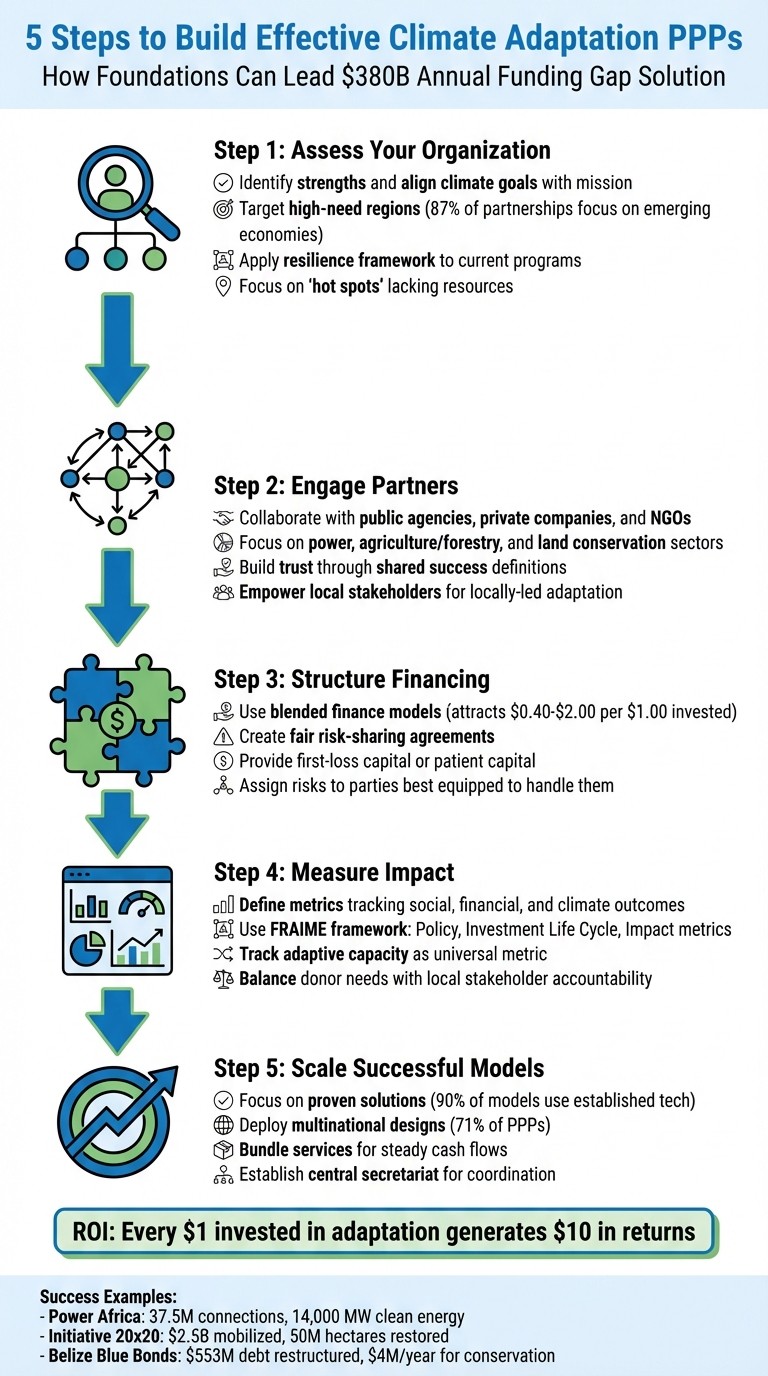
5 Steps to Build Effective Climate Adaptation Public-Private Partnerships
WAPPP Roundtable on Blended Finance for Climate Adaptation
Step 1: Assess Your Organization and Identify Priorities
Before diving into a public-private partnership (PPP), it's crucial to evaluate your organization’s capabilities and weave climate resilience into your existing programs.
Review Your Resources and Mission Alignment
Start by assessing whether your foundation has the capacity to act as an anchor partner in a PPP. Key strengths like patient capital, a willingness to take risks, and long-term dedication position philanthropic organizations as essential players in adaptation efforts that may take years to gain commercial traction [2][3].
Instead of launching new, standalone climate initiatives, consider applying a resilience framework to your current mission areas. For instance, if your focus is on health, examine how increasing heat waves impact vulnerable populations. If food security is your priority, explore how drought-resistant crops could complement your goals. This integrated approach is not only more efficient but also creates natural opportunities for partnerships [5]. Aligning resilience efforts with broader economic objectives has been shown to attract significant private investment [2].
Direct your efforts toward "hot spots" - regions facing the greatest climate challenges but lacking the resources to address them. Approximately 87% of philanthropic-led partnerships currently focus on emerging economies for this very reason [2]. Ask yourself: Can your investment help a proven solution reach the tipping point where it becomes self-sustaining? A great example is the Climate Resilience and Adaptation Finance and Technology Transfer Facility (CRAFT). By offering technical assistance to over 500 companies specializing in adaptation services like precision agriculture and weather analytics, CRAFT made these businesses more appealing to commercial investors [3].
Once you’ve identified your strengths, shift your focus to understanding local climate risks to pinpoint high-impact opportunities.
Conduct Climate Risk Assessments
To ensure your resources address actual needs, start by identifying specific local climate threats. A simple risk matrix can help: classify risks as "High" if they are likely to occur within the next five years and "Medium" if their likelihood falls within the 5–20 year range [6].
Identify critical community assets and evaluate their sensitivity and ability to adapt. Tools like the FEMA National Risk Index allow you to compare data on 18 natural hazards across different U.S. regions [6][7]. A notable example of localized planning is the Mukuru Approach in Nairobi. Residents of Mukuru, one of the city's largest informal settlements, partnered with local authorities to lead their own climate resilience planning. This resulted in targeted investments in water, sanitation, storm drainage, and health services specifically designed to address the settlement’s flood and disease risks [4].
Focus on initiatives that offer multiple benefits, such as improving health, creating jobs, or enhancing food security. Studies show that every $1 invested in adaptation can generate a $10 return [5]. For example, Rotterdam’s rainwater storage system not only reduces flooding and heat but also provides green spaces that enhance community well-being [4].
Step 2: Find and Engage Partners
Once you've assessed your strengths and identified the climate risks you aim to tackle, the next step is to form meaningful partnerships. These collaborations should complement your capabilities and align with your vision for addressing climate challenges.
Identify Potential Partners
Successful partnerships often start with an anchor partner, such as a foundation or a major private company, to provide initial funding and coordinate activities [2]. Your organization could play this pivotal role.
Focus on sectors where climate adaptation can make the biggest difference: power, agriculture and forestry, and land conservation [2]. Seek out organizations that work with proven, scalable technologies that are not yet commercially widespread - many impactful partnerships thrive by deploying solutions that have already demonstrated success [2].
Consider the unique contributions that different types of partners bring. Public agencies can offer regulatory stability, while private companies provide resources and expertise for scaling. NGOs and social organizations ensure that adaptation efforts reach marginalized communities, including indigenous groups [2]. A great example of this multi-sector collaboration is the May 2022 partnership between The Nature Conservancy, the Government of Belize, and Credit Suisse. Together, they executed a debt-for-nature swap, where Belize repurchased a $553 million commercial bond at a discount using a $364 million "blue bond" loan. This agreement committed Belize to investing approximately $4 million annually in marine conservation until 2041 [2].
Target regions where the need for climate adaptation is high, but local capacity is limited. These areas often attract significant private capital when approached strategically [2].
"Businesses respond to city leadership. Businesses respond to data." - C2ES (Center for Climate and Energy Solutions) [9]
This insight can guide your efforts to bring private sector partners on board. Municipal governments often have the climate risk data and policy frameworks that make investments more appealing. Your organization can serve as a bridge between city planners and businesses, facilitating collaboration [9].
Once you've identified potential partners, focus on building trust and defining clear roles to ensure the partnership moves forward effectively.
Build Trust and Collaboration
Trust is the foundation of any successful partnership. Start by establishing a shared definition of success, which includes clear acceptance of risks, expected financial returns, and measurable impacts [2]. Align the partnership with your mission to avoid conflicts later when priorities might diverge.
Design flexible collaboration models to accommodate different levels of involvement. For instance, a tiered structure can include "core" partners who provide substantial resources and "affiliate" partners who contribute in less intensive ways [2]. The Breathe London pilot is a great example of this approach. Funded by the Clean Air Fund and supported by Bloomberg Philanthropies, the Mayor of London, and the Social Innovation Partnership, the initiative improved urban air quality. It has since expanded globally as the "Breathe Cities" initiative [2].
Empowering local stakeholders is another critical step. Locally led adaptation ensures that communities most affected by climate change have a voice in shaping and prioritizing solutions [4]. This approach not only builds trust but also ensures that the solutions address real needs rather than assumptions.
"Locally led adaptation (LLA) to climate change means giving communities on the frontlines of climate change a voice and empowering them to lead in making decisions that directly affect their lives and livelihoods." - Global Center on Adaptation [4]
Highlight the co-benefits of your climate initiatives - such as improved health, job creation, and greater equity - to attract a broader range of partners. Around 40% of climate-focused partnerships emphasize these socioeconomic benefits in their mission statements because they help unite diverse stakeholders [2]. To maintain progress and accountability, consider setting up a central secretariat or a dedicated operational body with clear procedures, ensuring the partnership remains aligned and responsive to all parties, especially local communities [2].
Step 3: Structure PPPs with Risk Allocation and Financing
To advance climate resilience through Public-Private-Philanthropic Partnerships (PPPs), it's essential to craft agreements that balance risks, choose financing models that align with your goals, and secure the necessary investments.
Create Fair Risk-Sharing Agreements
A well-structured PPP assigns risks to the party best equipped to handle them. Philanthropic organizations play a pivotal role here, often using their capital to reduce risk by taking on a "first-loss" position or providing patient capital [11][3].
Contracts should include mechanisms to adapt to unforeseen challenges without sparking disputes. Climate adaptation projects, which often span decades, require flexibility to address factors like rising sea levels or intensified storms. For high-cost technologies that may strain financial forecasts, consider shared-risk arrangements with benefit-sharing provisions instead of placing the entire burden on one partner [12].
As an anchor partner, you can provide initial funding and a multi-year runway. This approach helps establish governance structures and operational systems that are critical for the partnership's long-term success [2].
Compare Financing Models for PPPs
Choosing the right financing model is crucial for aligning with project goals. Here's a comparison of common approaches:
| Financing Model | Description | Pros | Cons | Fit for Philanthropy |
| --- | --- | --- | --- | --- |
| <strong>Blended Finance</strong> | Combines concessional capital with private investment | Reduces risk; attracts institutional capital <a href="https://ndcpartnership.org/knowledge-portal/climate-toolbox/structuring-approaches-make-blended-finance-ppp-projects-investable" target="_blank" style="text-decoration: none;" rel="nofollow noopener noreferrer" data-framer-link="Link:{"url":"https://ndcpartnership.org/knowledge-portal/climate-toolbox/structuring-approaches-make-blended-finance-ppp-projects-investable","type":"url"}" data-framer-open-in-new-tab=""><sup>[11]</sup></a> | Complex to structure; requires high coordination <a href="https://ndcpartnership.org/knowledge-portal/climate-toolbox/structuring-approaches-make-blended-finance-ppp-projects-investable" target="_blank" style="text-decoration: none;" rel="nofollow noopener noreferrer" data-framer-link="Link:{"url":"https://ndcpartnership.org/knowledge-portal/climate-toolbox/structuring-approaches-make-blended-finance-ppp-projects-investable","type":"url"}" data-framer-open-in-new-tab=""><sup>[11]</sup></a> | <strong>High:</strong> Ideal for leveraging capital to scale impact <a href="https://www.mckinsey.com/capabilities/sustainability/our-insights/the-role-of-public-private-philanthropic-partnerships-in-driving-climate-and-nature-transitions" target="_blank" style="text-decoration: none;" rel="nofollow noopener noreferrer" data-framer-link="Link:{"url":"https://www.mckinsey.com/capabilities/sustainability/our-insights/the-role-of-public-private-philanthropic-partnerships-in-driving-climate-and-nature-transitions","type":"url"}" data-framer-open-in-new-tab=""><sup>[2]</sup></a> |
| <strong>Concessions (User-Pays)</strong> | Revenue generated through end-user fees (e.g., tolls) | Transfers demand risk; incentivizes efficiency <a href="https://ppp.worldbank.org/structuring-ppp-contract" target="_blank" style="text-decoration: none;" rel="nofollow noopener noreferrer" data-framer-link="Link:{"url":"https://ppp.worldbank.org/structuring-ppp-contract","type":"url"}" data-framer-open-in-new-tab=""><sup>[12]</sup></a> | High risk premiums; vulnerable to demand fluctuations <a href="https://ppp.worldbank.org/structuring-ppp-contract" target="_blank" style="text-decoration: none;" rel="nofollow noopener noreferrer" data-framer-link="Link:{"url":"https://ppp.worldbank.org/structuring-ppp-contract","type":"url"}" data-framer-open-in-new-tab=""><sup>[12]</sup></a> | Low; needs commercially viable revenue streams |
| <strong>Availability-Based (Gov-Pays)</strong> | Fixed payments for meeting quality standards | Stable revenue; government retains demand risk <a href="https://ppp.worldbank.org/structuring-ppp-contract" target="_blank" style="text-decoration: none;" rel="nofollow noopener noreferrer" data-framer-link="Link:{"url":"https://ppp.worldbank.org/structuring-ppp-contract","type":"url"}" data-framer-open-in-new-tab=""><sup>[12]</sup></a> | Long-term fiscal impact on public budgets <a href="https://ppp.worldbank.org/structuring-ppp-contract" target="_blank" style="text-decoration: none;" rel="nofollow noopener noreferrer" data-framer-link="Link:{"url":"https://ppp.worldbank.org/structuring-ppp-contract","type":"url"}" data-framer-open-in-new-tab=""><sup>[12]</sup></a> | Moderate; suited for social sector projects |
| <strong>Joint Ventures</strong> | Shared ownership and risk between public and private entities | Aligns interests; facilitates knowledge sharing <a href="https://ppp.worldbank.org/financing-mechanisms" target="_blank" style="text-decoration: none;" rel="nofollow noopener noreferrer" data-framer-link="Link:{"url":"https://ppp.worldbank.org/financing-mechanisms","type":"url"}" data-framer-open-in-new-tab=""><sup>[13]</sup></a> | High governance complexity; potential for disputes | Moderate; effective for large infrastructure |
| Financing Model | Description | Pros | Cons | Fit for Philanthropy |
| --- | --- | --- | --- | --- |
| <strong>Blended Finance</strong> | Combines concessional capital with private investment | Reduces risk; attracts institutional capital <a href="https://ndcpartnership.org/knowledge-portal/climate-toolbox/structuring-approaches-make-blended-finance-ppp-projects-investable" target="_blank" style="text-decoration: none;" rel="nofollow noopener noreferrer" data-framer-link="Link:{"url":"https://ndcpartnership.org/knowledge-portal/climate-toolbox/structuring-approaches-make-blended-finance-ppp-projects-investable","type":"url"}" data-framer-open-in-new-tab=""><sup>[11]</sup></a> | Complex to structure; requires high coordination <a href="https://ndcpartnership.org/knowledge-portal/climate-toolbox/structuring-approaches-make-blended-finance-ppp-projects-investable" target="_blank" style="text-decoration: none;" rel="nofollow noopener noreferrer" data-framer-link="Link:{"url":"https://ndcpartnership.org/knowledge-portal/climate-toolbox/structuring-approaches-make-blended-finance-ppp-projects-investable","type":"url"}" data-framer-open-in-new-tab=""><sup>[11]</sup></a> | <strong>High:</strong> Ideal for leveraging capital to scale impact <a href="https://www.mckinsey.com/capabilities/sustainability/our-insights/the-role-of-public-private-philanthropic-partnerships-in-driving-climate-and-nature-transitions" target="_blank" style="text-decoration: none;" rel="nofollow noopener noreferrer" data-framer-link="Link:{"url":"https://www.mckinsey.com/capabilities/sustainability/our-insights/the-role-of-public-private-philanthropic-partnerships-in-driving-climate-and-nature-transitions","type":"url"}" data-framer-open-in-new-tab=""><sup>[2]</sup></a> |
| <strong>Concessions (User-Pays)</strong> | Revenue generated through end-user fees (e.g., tolls) | Transfers demand risk; incentivizes efficiency <a href="https://ppp.worldbank.org/structuring-ppp-contract" target="_blank" style="text-decoration: none;" rel="nofollow noopener noreferrer" data-framer-link="Link:{"url":"https://ppp.worldbank.org/structuring-ppp-contract","type":"url"}" data-framer-open-in-new-tab=""><sup>[12]</sup></a> | High risk premiums; vulnerable to demand fluctuations <a href="https://ppp.worldbank.org/structuring-ppp-contract" target="_blank" style="text-decoration: none;" rel="nofollow noopener noreferrer" data-framer-link="Link:{"url":"https://ppp.worldbank.org/structuring-ppp-contract","type":"url"}" data-framer-open-in-new-tab=""><sup>[12]</sup></a> | Low; needs commercially viable revenue streams |
| <strong>Availability-Based (Gov-Pays)</strong> | Fixed payments for meeting quality standards | Stable revenue; government retains demand risk <a href="https://ppp.worldbank.org/structuring-ppp-contract" target="_blank" style="text-decoration: none;" rel="nofollow noopener noreferrer" data-framer-link="Link:{"url":"https://ppp.worldbank.org/structuring-ppp-contract","type":"url"}" data-framer-open-in-new-tab=""><sup>[12]</sup></a> | Long-term fiscal impact on public budgets <a href="https://ppp.worldbank.org/structuring-ppp-contract" target="_blank" style="text-decoration: none;" rel="nofollow noopener noreferrer" data-framer-link="Link:{"url":"https://ppp.worldbank.org/structuring-ppp-contract","type":"url"}" data-framer-open-in-new-tab=""><sup>[12]</sup></a> | Moderate; suited for social sector projects |
| <strong>Joint Ventures</strong> | Shared ownership and risk between public and private entities | Aligns interests; facilitates knowledge sharing <a href="https://ppp.worldbank.org/financing-mechanisms" target="_blank" style="text-decoration: none;" rel="nofollow noopener noreferrer" data-framer-link="Link:{"url":"https://ppp.worldbank.org/financing-mechanisms","type":"url"}" data-framer-open-in-new-tab=""><sup>[13]</sup></a> | High governance complexity; potential for disputes | Moderate; effective for large infrastructure |Blended finance has proven particularly effective, attracting $0.40 of private capital for every $1.00 of public or philanthropic funds between 2021 and 2023. In some cases, it mobilized over $2.00 per $1.00 invested [14]. By offering concessional capital - such as below-market interest rates or first-loss protection - this model improves the risk-return profile for private investors [14][3].
The Global Innovation Lab for Climate Finance has supported over 20 adaptation-focused instruments, mobilizing more than $1.2 billion [3]. When pitching to potential investors, tailor your approach: emphasize social and climate benefits for development finance institutions and philanthropies, and highlight financial returns and market potential for commercial investors [3]. Since 81% of partnerships focus on unlocking investment or creating markets, demonstrating commercial viability is key [2].
Use Tools and Resources for PPP Structuring
Specialized tools can streamline the process of building robust PPPs once financing models are in place.
World Bank Climate Toolkits for Infrastructure PPPs: These toolkits offer sector-specific guidance for incorporating climate resilience into projects like roads, renewable energy, and water production [16].
ThinkHazard!: This open-source tool, developed by the Global Facility for Disaster Reduction and Recovery, provides hazard data for 196 countries, covering eight natural hazards [16].
PIEVC Protocol: A structured framework for assessing how extreme weather might impact infrastructure assets [15].
"As very long-dated contractual relationships, the success of PPPs is highly dependent on an accurate, sustainable and efficient distribution of risks and benefits between the public and private counterparts... risk distribution that can be perturbed significantly by climate change." - Inter-American Development Bank Toolkit [10]
The Global Innovation Lab for Climate Finance also maintains a database of successful financial instruments and lessons from adaptation finance [3]. Reviewing these can provide a foundation for your efforts, as most partnerships focus on scaling established technologies rather than creating new ones [2].
Project Development Funds (PDFs) are another vital resource, helping governments and partners prepare PPP projects systematically. By addressing early-stage technical challenges, these funds ensure projects are ready to attract investment [11][3]. Your organization can contribute to or establish such funds to overcome resource constraints during project evaluation [1].
Finally, the World Association of PPP Units & PPP Professionals (WAPPP) promotes Private Investment Mobilization Models (PIMMs), which create replicable strategies for structuring investment-ready PPPs. These standardized templates can save time and reduce costs while ensuring high-quality partnerships [11].
Step 4: Use Philanthropic Tools for Financing
Philanthropic financing tools play a crucial role in scaling climate adaptation projects, especially when combined with structured risk-sharing models. These tools can help mobilize private capital, making large-scale adaptation efforts possible.
Grant-Making and Impact Investing
Grants are a powerful way to turn high-risk adaptation projects into viable opportunities. By offering concessional capital and first-loss protections, grants reduce financial risk for commercial investors, making these projects more attractive [3][2].
One effective approach is to focus grant funding on technical assistance that helps create financially viable projects. For example, the Climate Resilience and Adaptation Finance and Technology Transfer Facility (CRAFT) uses its technical assistance facility to support over 500 companies offering services like weather analytics and precision agriculture [3]. This kind of early-stage support addresses a key challenge: the shortage of qualified projects that private investors are willing to back [3].
Impact investing builds on this foundation, extending support beyond what grants alone can achieve. A standout example is The Nature Conservancy's facilitation of Belize's blue bonds transaction in November 2021. This initiative enabled Belize to repurchase $553 million in external commercial debt at a discount. Credit Suisse underwrote $364 million in blue bonds with insurance provided by the Development Finance Corporation. In return, Belize committed to allocating $4 million annually to marine conservation until 2041, creating a sustainable funding stream that goes far beyond the capacity of a single grant [2].
The economic case for such investments is compelling: every $1.00 invested in climate adaptation can generate an estimated $10.00 in returns [5]. However, adaptation efforts currently receive less than 10% of total climate finance, leaving a $359 billion annual funding gap in developing countries alone [5]. Philanthropic capital can play a pivotal role in bridging this gap by funding pilot projects that demonstrate financial viability and build investor confidence [5][3].
To amplify their impact, philanthropic efforts can be paired with Corporate Social Responsibility (CSR) partnerships, which bring additional expertise and resources to the table.
Corporate Social Responsibility (CSR) Partnerships
CSR partnerships offer a way to scale adaptation projects beyond what philanthropy alone can achieve. While philanthropic organizations provide the long-term vision and risk tolerance, corporations contribute their resources and business expertise to implement solutions on a larger scale [2].
To maximize the impact of CSR initiatives, it's essential to align them with climate adaptation goals, emphasizing the socioeconomic benefits. Around 40% of climate-focused partnerships highlight co-benefits like improved health, economic development, and poverty reduction in their mission statements. These benefits not only attract broader coalitions but also justify corporate involvement [2]. When engaging corporate partners, it's effective to present adaptation investments as opportunities with market potential and financial returns, while also underscoring the social benefits and equity considerations that matter to philanthropic stakeholders [3].
Blending CSR funds with concessional capital further enhances scalability. Combining philanthropic capital, which provides patience and risk tolerance, with corporate resources and expertise creates a robust model. Governments can also contribute by establishing policies that support these efforts, creating a collaborative framework where each sector's strengths are fully utilized.
Step 5: Implement, Monitor, and Scale PPP Models
After laying the groundwork, the next step is to bring your public-private-philanthropic (PPP) model to life. This phase involves implementing structured plans, setting up monitoring systems, and scaling successful initiatives to maximize impact.
Define Performance Metrics and Monitor Climate Risks
Monitoring begins with establishing clear and focused metrics. The Framework for Resilience and Adaptation Investment Measurement and Evaluation (FRAIME) organizes these into three key categories: Policy Metrics (such as vulnerability assessments and the cost of inaction), Investment Life Cycle Metrics (tracking inputs, activities, and outputs), and Impact Metrics (evaluating long-term contributions to resilience goals) [18].
One of the challenges in adaptation is the lack of universal benchmarks, as climate impacts vary greatly depending on location and conditions [18]. In this context, adaptive capacity - the ability of a system to adjust and respond to climate hazards - serves as a widely applicable metric [17].
For example, Nigeria's government utilized BCG's Climate Impact AI platform to assess climate vulnerability nationwide. Their findings highlighted over $100 billion in potential damages to human settlements without intervention, with 17 northern states identified as highly vulnerable to drought affecting croplands. This data now supports private investments in adaptation and resilience [18]. When direct measurement proves too expensive, proxy metrics can fill the gap. One Acre Ventures in East Africa, for instance, tracks agricultural yields and farmer incomes as indicators of resilience [3].
Metrics should balance the needs of donors and local stakeholders. Emphasizing downward accountability ensures the focus remains on local communities, not just upward reporting to funders [17]. Additionally, assumptions should be regularly updated to reflect changes in GDP, climate projections, and intervention outcomes [18].
These measurements play a crucial role in identifying successful strategies for scaling.
Scale Successful Models
Scaling requires replicable and adaptable models, supported by robust metrics and risk assessments. Approximately 71% of analyzed PPP models adopt multinational designs, enabling frameworks and insights to be applied across diverse regions [2].
Initiative 20x20 and Power Africa offer strong examples of this approach, showcasing how multinational models can achieve wide-reaching success [2]. Another example is the Climate Resilience and Adaptation Finance and Technology Transfer Facility (CRAFT), which focuses on scaling through innovation. Instead of geographic expansion, CRAFT has built a network of over 500 companies delivering solutions like weather analytics and precision agriculture. By providing direct investment and technical assistance, CRAFT helps proven technologies enter new markets and sectors globally [3].
To make adaptation projects more appealing for scaling, consider strategies like bundling services or diversifying project pipelines to ensure steady cash flows, particularly in high-risk areas like water and agriculture [3]. Establishing a central secretariat with clear operational processes can streamline the multiyear implementation process [2]. Additionally, focusing on rolling out proven technologies - rather than untested innovations - reduces risks and accelerates adoption. In fact, around 90% of successful models prioritize established technologies [2]. Securing long-term anchor partners can further stabilize and support scaling efforts [2].
Working with Expert Consultants for PPP Success
Philanthropic organizations often lack the in-house expertise needed to manage Public-Private Partnerships (PPPs). Expert consultants, typically costing between 1%–5% of project expenses [8], play a crucial role in forming partnerships and ensuring the success of climate adaptation initiatives.
How Consulting Services Support Climate Resilience
Expert consultants bridge gaps in knowledge and skills, building on the foundational steps required to structure and scale PPP models. Their specialized guidance is key to mitigating risks and fostering effective collaboration among stakeholders.
Consultants provide value at every stage of a PPP. They assess localized climate risks, quantify the interconnected social, environmental, and economic benefits [8], and design financing models that reduce investment risks. By bundling smaller projects into larger programs with predictable cash flows, they create "bankable" project pipelines that attract institutional investors. This approach is particularly significant given that a $1.8 trillion investment in adaptation measures could yield $7.1 trillion in avoided costs and other benefits [8].
This expertise is especially impactful in emerging economies, where 87% of existing PPP models are implemented. In these regions, local capacity to independently structure complex deals is often limited [2]. Consultants help overcome these challenges by designing projects that align with both investor expectations and local priorities.
Partner for Long-Term Impact
Achieving lasting success in high-need areas requires an anchor partner to provide start-up capital and strategic direction [2].
Consultants ensure that climate adaptation projects deliver long-term value across social, environmental, and economic dimensions. By helping philanthropic organizations take on the role of anchor partner, consultants supply the strategic vision and operational support needed to navigate challenges and maintain momentum. They align diverse stakeholders - government agencies, private companies, and local communities - so that project goals reflect both national priorities and local needs [3][8].
Council Fire exemplifies this approach by turning sustainability strategies into actionable plans. They transform ideas into implemented PPPs, delivering measurable outcomes in climate resilience. This ensures that every partnership justifies the investment in expert guidance by creating enduring value across all fronts.
Conclusion: How PPPs Can Fund Climate Adaptation
Philanthropic organizations play a pivotal role in addressing climate adaptation challenges through public-private partnerships (PPPs). By acting as anchor partners, they provide the essential early-stage capital and long-term vision necessary to transform high-risk concepts into viable, investable projects. To achieve this, six key steps are essential: establishing a clear adaptation thesis, using concessional capital to reduce project risks, structuring blended finance to accommodate varying risk appetites, fostering local partnerships, defining measurable impact metrics, and leveraging expert consultants. These actions help bridge the gap between lofty ideas and actionable strategies.
Despite these efforts, current funding levels remain far short of what’s needed to address the growing climate crisis. Philanthropic organizations can step in by funding early-stage solutions that demonstrate viability, inspiring private investors to follow suit.
"Philanthropies can leverage their higher risk tolerance, longer time horizons, and knowledge of intergenerational and equity issues to invest in solutions that are not yet widely adopted." - Hamid Samandari, McKinsey & Company [2]
Real-world examples highlight the transformative potential of such partnerships. For instance, Initiative 20x20 has successfully mobilized $2.5 billion in private capital to restore over 50 million hectares across Latin America and the Caribbean by bringing together 150 partners [2]. Similarly, the Belize Blue Bonds initiative restructured $553 million in debt while ensuring $4 million annually for marine conservation through 2041 [2]. Additionally, CRAFT's technical assistance facility has developed a pipeline of over 500 companies offering adaptation technologies, including weather analytics and precision agriculture solutions [3].
When philanthropic organizations take the lead in structuring PPPs, they do more than fund individual projects - they drive systemic change. Through collaboration, innovative financing, and expert guidance, these partnerships can turn ambitious climate goals into tangible, measurable results.
FAQs
How can philanthropic organizations find the right partners for climate adaptation projects?
Philanthropic organizations aiming to support climate adaptation projects should prioritize partnerships with groups that have a proven history in climate resilience and infrastructure. Seek out collaborators who can offer complementary skills, resources, and connections that align with your objectives, whether that involves strengthening community resilience, rehabilitating natural ecosystems, or advancing sustainable infrastructure solutions.
Additionally, tapping into existing collaboration frameworks and initiatives can be highly effective in driving systemic change. Engaging with networks or organizations already active in climate adaptation efforts can help identify partners with established methods for expanding their reach and impact. Using professional networks and ensuring alignment with your strategic goals will further guarantee that these partnerships are both meaningful and enduring.
What are the best financing models for funding climate adaptation projects through public-private partnerships?
The most effective financing models for climate adaptation public-private partnerships (PPPs) are built around risk-sharing, innovative funding tools, and blended finance approaches. These strategies create a balance between public and private sector roles, ensuring long-term stability - often spanning 25 to 30 years. This stability is key to attracting private investors, even when climate-related uncertainties loom.
Blended finance stands out as a particularly useful tool, combining grants, concessional loans, and private capital to close funding gaps for climate adaptation initiatives. Another critical component is the use of project development funds (PDFs), which help lower upfront costs, enhance project readiness, and make investments more appealing to private sector partners.
By integrating climate resilience into project design and utilizing these specialized financing methods, foundations and philanthropic organizations can build meaningful partnerships that support adaptive and lasting solutions to climate challenges.
How can foundations evaluate the success of their climate adaptation projects?
Foundations can gauge the effectiveness of their climate adaptation initiatives by adopting monitoring, evaluation, and learning (MEL) frameworks. These systems are designed to measure both environmental and social outcomes, ensuring that projects remain aligned with goals like resilience and equity.
To make this approach effective, it’s essential to establish specific and measurable objectives, select indicators that reflect progress (such as reduced vulnerability or increased community resilience), and collect data consistently to assess outcomes. Engaging local stakeholders throughout the process is equally critical. This not only ensures inclusivity but also helps tailor the results to meet the unique needs of the community. By continuously refining their strategies based on these evaluations, foundations can enhance the impact of their projects and create meaningful, long-lasting change.
Related Blog Posts
Latest Articles
©2025


FAQ
01
What does it really mean to “redefine profit”?
02
What makes Council Fire different?
03
Who does Council Fire you work with?
04
What does working with Council Fire actually look like?
05
How does Council Fire help organizations turn big goals into action?
06
How does Council Fire define and measure success?
Feb 4, 2026
How to Fund Climate Adaptation Projects via Public-Private Partnerships for Foundations & Philanthropic Organizations
Sustainability Strategy
In This Article
Guide for foundations on using public-private partnerships and blended finance to fund scalable climate adaptation, reduce risk, and measure impact.
How to Fund Climate Adaptation Projects via Public-Private Partnerships for Foundations & Philanthropic Organizations
The global need for climate adaptation funding is staggering. Developing nations alone require over $380 billion annually by 2030, but current funding covers less than 20% of this amount. Public-Private Partnerships (PPPs) offer a solution by pooling resources from governments, private companies, and philanthropic organizations to address critical challenges like water management and agriculture.
Key Takeaways:
Why PPPs Work: They combine government policy stability, private sector scalability, and philanthropy’s ability to fund high-risk, early-stage projects.
Philanthropy’s Role: Foundations provide patient capital, absorb early risks, and prioritize vulnerable communities.
Examples of Success:
Power Africa: Delivered 37.5 million power connections and 14,000 MW of clean energy.
Initiative 20x20: Mobilized $2.5 billion to restore 50 million hectares of degraded land.
Belize Blue Bonds: Restructured $553 million in debt to secure $4 million annually for marine conservation.
Steps to Build Effective PPPs:
Assess Your Organization: Identify strengths, align climate goals with your mission, and target high-need regions.
Engage Partners: Collaborate with public agencies, private companies, and NGOs to leverage complementary expertise.
Structure Financing: Use blended finance models to reduce risks and attract private investment.
Measure Impact: Define metrics to track social, financial, and climate outcomes.
Scale Successful Models: Focus on proven solutions and expand partnerships for broader impact.
With the right approach, philanthropic organizations can lead PPPs, leveraging their resources to create scalable, long-term solutions for climate resilience.
5 Steps to Build Effective Climate Adaptation Public-Private Partnerships
WAPPP Roundtable on Blended Finance for Climate Adaptation
Step 1: Assess Your Organization and Identify Priorities
Before diving into a public-private partnership (PPP), it's crucial to evaluate your organization’s capabilities and weave climate resilience into your existing programs.
Review Your Resources and Mission Alignment
Start by assessing whether your foundation has the capacity to act as an anchor partner in a PPP. Key strengths like patient capital, a willingness to take risks, and long-term dedication position philanthropic organizations as essential players in adaptation efforts that may take years to gain commercial traction [2][3].
Instead of launching new, standalone climate initiatives, consider applying a resilience framework to your current mission areas. For instance, if your focus is on health, examine how increasing heat waves impact vulnerable populations. If food security is your priority, explore how drought-resistant crops could complement your goals. This integrated approach is not only more efficient but also creates natural opportunities for partnerships [5]. Aligning resilience efforts with broader economic objectives has been shown to attract significant private investment [2].
Direct your efforts toward "hot spots" - regions facing the greatest climate challenges but lacking the resources to address them. Approximately 87% of philanthropic-led partnerships currently focus on emerging economies for this very reason [2]. Ask yourself: Can your investment help a proven solution reach the tipping point where it becomes self-sustaining? A great example is the Climate Resilience and Adaptation Finance and Technology Transfer Facility (CRAFT). By offering technical assistance to over 500 companies specializing in adaptation services like precision agriculture and weather analytics, CRAFT made these businesses more appealing to commercial investors [3].
Once you’ve identified your strengths, shift your focus to understanding local climate risks to pinpoint high-impact opportunities.
Conduct Climate Risk Assessments
To ensure your resources address actual needs, start by identifying specific local climate threats. A simple risk matrix can help: classify risks as "High" if they are likely to occur within the next five years and "Medium" if their likelihood falls within the 5–20 year range [6].
Identify critical community assets and evaluate their sensitivity and ability to adapt. Tools like the FEMA National Risk Index allow you to compare data on 18 natural hazards across different U.S. regions [6][7]. A notable example of localized planning is the Mukuru Approach in Nairobi. Residents of Mukuru, one of the city's largest informal settlements, partnered with local authorities to lead their own climate resilience planning. This resulted in targeted investments in water, sanitation, storm drainage, and health services specifically designed to address the settlement’s flood and disease risks [4].
Focus on initiatives that offer multiple benefits, such as improving health, creating jobs, or enhancing food security. Studies show that every $1 invested in adaptation can generate a $10 return [5]. For example, Rotterdam’s rainwater storage system not only reduces flooding and heat but also provides green spaces that enhance community well-being [4].
Step 2: Find and Engage Partners
Once you've assessed your strengths and identified the climate risks you aim to tackle, the next step is to form meaningful partnerships. These collaborations should complement your capabilities and align with your vision for addressing climate challenges.
Identify Potential Partners
Successful partnerships often start with an anchor partner, such as a foundation or a major private company, to provide initial funding and coordinate activities [2]. Your organization could play this pivotal role.
Focus on sectors where climate adaptation can make the biggest difference: power, agriculture and forestry, and land conservation [2]. Seek out organizations that work with proven, scalable technologies that are not yet commercially widespread - many impactful partnerships thrive by deploying solutions that have already demonstrated success [2].
Consider the unique contributions that different types of partners bring. Public agencies can offer regulatory stability, while private companies provide resources and expertise for scaling. NGOs and social organizations ensure that adaptation efforts reach marginalized communities, including indigenous groups [2]. A great example of this multi-sector collaboration is the May 2022 partnership between The Nature Conservancy, the Government of Belize, and Credit Suisse. Together, they executed a debt-for-nature swap, where Belize repurchased a $553 million commercial bond at a discount using a $364 million "blue bond" loan. This agreement committed Belize to investing approximately $4 million annually in marine conservation until 2041 [2].
Target regions where the need for climate adaptation is high, but local capacity is limited. These areas often attract significant private capital when approached strategically [2].
"Businesses respond to city leadership. Businesses respond to data." - C2ES (Center for Climate and Energy Solutions) [9]
This insight can guide your efforts to bring private sector partners on board. Municipal governments often have the climate risk data and policy frameworks that make investments more appealing. Your organization can serve as a bridge between city planners and businesses, facilitating collaboration [9].
Once you've identified potential partners, focus on building trust and defining clear roles to ensure the partnership moves forward effectively.
Build Trust and Collaboration
Trust is the foundation of any successful partnership. Start by establishing a shared definition of success, which includes clear acceptance of risks, expected financial returns, and measurable impacts [2]. Align the partnership with your mission to avoid conflicts later when priorities might diverge.
Design flexible collaboration models to accommodate different levels of involvement. For instance, a tiered structure can include "core" partners who provide substantial resources and "affiliate" partners who contribute in less intensive ways [2]. The Breathe London pilot is a great example of this approach. Funded by the Clean Air Fund and supported by Bloomberg Philanthropies, the Mayor of London, and the Social Innovation Partnership, the initiative improved urban air quality. It has since expanded globally as the "Breathe Cities" initiative [2].
Empowering local stakeholders is another critical step. Locally led adaptation ensures that communities most affected by climate change have a voice in shaping and prioritizing solutions [4]. This approach not only builds trust but also ensures that the solutions address real needs rather than assumptions.
"Locally led adaptation (LLA) to climate change means giving communities on the frontlines of climate change a voice and empowering them to lead in making decisions that directly affect their lives and livelihoods." - Global Center on Adaptation [4]
Highlight the co-benefits of your climate initiatives - such as improved health, job creation, and greater equity - to attract a broader range of partners. Around 40% of climate-focused partnerships emphasize these socioeconomic benefits in their mission statements because they help unite diverse stakeholders [2]. To maintain progress and accountability, consider setting up a central secretariat or a dedicated operational body with clear procedures, ensuring the partnership remains aligned and responsive to all parties, especially local communities [2].
Step 3: Structure PPPs with Risk Allocation and Financing
To advance climate resilience through Public-Private-Philanthropic Partnerships (PPPs), it's essential to craft agreements that balance risks, choose financing models that align with your goals, and secure the necessary investments.
Create Fair Risk-Sharing Agreements
A well-structured PPP assigns risks to the party best equipped to handle them. Philanthropic organizations play a pivotal role here, often using their capital to reduce risk by taking on a "first-loss" position or providing patient capital [11][3].
Contracts should include mechanisms to adapt to unforeseen challenges without sparking disputes. Climate adaptation projects, which often span decades, require flexibility to address factors like rising sea levels or intensified storms. For high-cost technologies that may strain financial forecasts, consider shared-risk arrangements with benefit-sharing provisions instead of placing the entire burden on one partner [12].
As an anchor partner, you can provide initial funding and a multi-year runway. This approach helps establish governance structures and operational systems that are critical for the partnership's long-term success [2].
Compare Financing Models for PPPs
Choosing the right financing model is crucial for aligning with project goals. Here's a comparison of common approaches:
| Financing Model | Description | Pros | Cons | Fit for Philanthropy |
| --- | --- | --- | --- | --- |
| <strong>Blended Finance</strong> | Combines concessional capital with private investment | Reduces risk; attracts institutional capital <a href="https://ndcpartnership.org/knowledge-portal/climate-toolbox/structuring-approaches-make-blended-finance-ppp-projects-investable" target="_blank" style="text-decoration: none;" rel="nofollow noopener noreferrer" data-framer-link="Link:{"url":"https://ndcpartnership.org/knowledge-portal/climate-toolbox/structuring-approaches-make-blended-finance-ppp-projects-investable","type":"url"}" data-framer-open-in-new-tab=""><sup>[11]</sup></a> | Complex to structure; requires high coordination <a href="https://ndcpartnership.org/knowledge-portal/climate-toolbox/structuring-approaches-make-blended-finance-ppp-projects-investable" target="_blank" style="text-decoration: none;" rel="nofollow noopener noreferrer" data-framer-link="Link:{"url":"https://ndcpartnership.org/knowledge-portal/climate-toolbox/structuring-approaches-make-blended-finance-ppp-projects-investable","type":"url"}" data-framer-open-in-new-tab=""><sup>[11]</sup></a> | <strong>High:</strong> Ideal for leveraging capital to scale impact <a href="https://www.mckinsey.com/capabilities/sustainability/our-insights/the-role-of-public-private-philanthropic-partnerships-in-driving-climate-and-nature-transitions" target="_blank" style="text-decoration: none;" rel="nofollow noopener noreferrer" data-framer-link="Link:{"url":"https://www.mckinsey.com/capabilities/sustainability/our-insights/the-role-of-public-private-philanthropic-partnerships-in-driving-climate-and-nature-transitions","type":"url"}" data-framer-open-in-new-tab=""><sup>[2]</sup></a> |
| <strong>Concessions (User-Pays)</strong> | Revenue generated through end-user fees (e.g., tolls) | Transfers demand risk; incentivizes efficiency <a href="https://ppp.worldbank.org/structuring-ppp-contract" target="_blank" style="text-decoration: none;" rel="nofollow noopener noreferrer" data-framer-link="Link:{"url":"https://ppp.worldbank.org/structuring-ppp-contract","type":"url"}" data-framer-open-in-new-tab=""><sup>[12]</sup></a> | High risk premiums; vulnerable to demand fluctuations <a href="https://ppp.worldbank.org/structuring-ppp-contract" target="_blank" style="text-decoration: none;" rel="nofollow noopener noreferrer" data-framer-link="Link:{"url":"https://ppp.worldbank.org/structuring-ppp-contract","type":"url"}" data-framer-open-in-new-tab=""><sup>[12]</sup></a> | Low; needs commercially viable revenue streams |
| <strong>Availability-Based (Gov-Pays)</strong> | Fixed payments for meeting quality standards | Stable revenue; government retains demand risk <a href="https://ppp.worldbank.org/structuring-ppp-contract" target="_blank" style="text-decoration: none;" rel="nofollow noopener noreferrer" data-framer-link="Link:{"url":"https://ppp.worldbank.org/structuring-ppp-contract","type":"url"}" data-framer-open-in-new-tab=""><sup>[12]</sup></a> | Long-term fiscal impact on public budgets <a href="https://ppp.worldbank.org/structuring-ppp-contract" target="_blank" style="text-decoration: none;" rel="nofollow noopener noreferrer" data-framer-link="Link:{"url":"https://ppp.worldbank.org/structuring-ppp-contract","type":"url"}" data-framer-open-in-new-tab=""><sup>[12]</sup></a> | Moderate; suited for social sector projects |
| <strong>Joint Ventures</strong> | Shared ownership and risk between public and private entities | Aligns interests; facilitates knowledge sharing <a href="https://ppp.worldbank.org/financing-mechanisms" target="_blank" style="text-decoration: none;" rel="nofollow noopener noreferrer" data-framer-link="Link:{"url":"https://ppp.worldbank.org/financing-mechanisms","type":"url"}" data-framer-open-in-new-tab=""><sup>[13]</sup></a> | High governance complexity; potential for disputes | Moderate; effective for large infrastructure |
Blended finance has proven particularly effective, attracting $0.40 of private capital for every $1.00 of public or philanthropic funds between 2021 and 2023. In some cases, it mobilized over $2.00 per $1.00 invested [14]. By offering concessional capital - such as below-market interest rates or first-loss protection - this model improves the risk-return profile for private investors [14][3].
The Global Innovation Lab for Climate Finance has supported over 20 adaptation-focused instruments, mobilizing more than $1.2 billion [3]. When pitching to potential investors, tailor your approach: emphasize social and climate benefits for development finance institutions and philanthropies, and highlight financial returns and market potential for commercial investors [3]. Since 81% of partnerships focus on unlocking investment or creating markets, demonstrating commercial viability is key [2].
Use Tools and Resources for PPP Structuring
Specialized tools can streamline the process of building robust PPPs once financing models are in place.
World Bank Climate Toolkits for Infrastructure PPPs: These toolkits offer sector-specific guidance for incorporating climate resilience into projects like roads, renewable energy, and water production [16].
ThinkHazard!: This open-source tool, developed by the Global Facility for Disaster Reduction and Recovery, provides hazard data for 196 countries, covering eight natural hazards [16].
PIEVC Protocol: A structured framework for assessing how extreme weather might impact infrastructure assets [15].
"As very long-dated contractual relationships, the success of PPPs is highly dependent on an accurate, sustainable and efficient distribution of risks and benefits between the public and private counterparts... risk distribution that can be perturbed significantly by climate change." - Inter-American Development Bank Toolkit [10]
The Global Innovation Lab for Climate Finance also maintains a database of successful financial instruments and lessons from adaptation finance [3]. Reviewing these can provide a foundation for your efforts, as most partnerships focus on scaling established technologies rather than creating new ones [2].
Project Development Funds (PDFs) are another vital resource, helping governments and partners prepare PPP projects systematically. By addressing early-stage technical challenges, these funds ensure projects are ready to attract investment [11][3]. Your organization can contribute to or establish such funds to overcome resource constraints during project evaluation [1].
Finally, the World Association of PPP Units & PPP Professionals (WAPPP) promotes Private Investment Mobilization Models (PIMMs), which create replicable strategies for structuring investment-ready PPPs. These standardized templates can save time and reduce costs while ensuring high-quality partnerships [11].
Step 4: Use Philanthropic Tools for Financing
Philanthropic financing tools play a crucial role in scaling climate adaptation projects, especially when combined with structured risk-sharing models. These tools can help mobilize private capital, making large-scale adaptation efforts possible.
Grant-Making and Impact Investing
Grants are a powerful way to turn high-risk adaptation projects into viable opportunities. By offering concessional capital and first-loss protections, grants reduce financial risk for commercial investors, making these projects more attractive [3][2].
One effective approach is to focus grant funding on technical assistance that helps create financially viable projects. For example, the Climate Resilience and Adaptation Finance and Technology Transfer Facility (CRAFT) uses its technical assistance facility to support over 500 companies offering services like weather analytics and precision agriculture [3]. This kind of early-stage support addresses a key challenge: the shortage of qualified projects that private investors are willing to back [3].
Impact investing builds on this foundation, extending support beyond what grants alone can achieve. A standout example is The Nature Conservancy's facilitation of Belize's blue bonds transaction in November 2021. This initiative enabled Belize to repurchase $553 million in external commercial debt at a discount. Credit Suisse underwrote $364 million in blue bonds with insurance provided by the Development Finance Corporation. In return, Belize committed to allocating $4 million annually to marine conservation until 2041, creating a sustainable funding stream that goes far beyond the capacity of a single grant [2].
The economic case for such investments is compelling: every $1.00 invested in climate adaptation can generate an estimated $10.00 in returns [5]. However, adaptation efforts currently receive less than 10% of total climate finance, leaving a $359 billion annual funding gap in developing countries alone [5]. Philanthropic capital can play a pivotal role in bridging this gap by funding pilot projects that demonstrate financial viability and build investor confidence [5][3].
To amplify their impact, philanthropic efforts can be paired with Corporate Social Responsibility (CSR) partnerships, which bring additional expertise and resources to the table.
Corporate Social Responsibility (CSR) Partnerships
CSR partnerships offer a way to scale adaptation projects beyond what philanthropy alone can achieve. While philanthropic organizations provide the long-term vision and risk tolerance, corporations contribute their resources and business expertise to implement solutions on a larger scale [2].
To maximize the impact of CSR initiatives, it's essential to align them with climate adaptation goals, emphasizing the socioeconomic benefits. Around 40% of climate-focused partnerships highlight co-benefits like improved health, economic development, and poverty reduction in their mission statements. These benefits not only attract broader coalitions but also justify corporate involvement [2]. When engaging corporate partners, it's effective to present adaptation investments as opportunities with market potential and financial returns, while also underscoring the social benefits and equity considerations that matter to philanthropic stakeholders [3].
Blending CSR funds with concessional capital further enhances scalability. Combining philanthropic capital, which provides patience and risk tolerance, with corporate resources and expertise creates a robust model. Governments can also contribute by establishing policies that support these efforts, creating a collaborative framework where each sector's strengths are fully utilized.
Step 5: Implement, Monitor, and Scale PPP Models
After laying the groundwork, the next step is to bring your public-private-philanthropic (PPP) model to life. This phase involves implementing structured plans, setting up monitoring systems, and scaling successful initiatives to maximize impact.
Define Performance Metrics and Monitor Climate Risks
Monitoring begins with establishing clear and focused metrics. The Framework for Resilience and Adaptation Investment Measurement and Evaluation (FRAIME) organizes these into three key categories: Policy Metrics (such as vulnerability assessments and the cost of inaction), Investment Life Cycle Metrics (tracking inputs, activities, and outputs), and Impact Metrics (evaluating long-term contributions to resilience goals) [18].
One of the challenges in adaptation is the lack of universal benchmarks, as climate impacts vary greatly depending on location and conditions [18]. In this context, adaptive capacity - the ability of a system to adjust and respond to climate hazards - serves as a widely applicable metric [17].
For example, Nigeria's government utilized BCG's Climate Impact AI platform to assess climate vulnerability nationwide. Their findings highlighted over $100 billion in potential damages to human settlements without intervention, with 17 northern states identified as highly vulnerable to drought affecting croplands. This data now supports private investments in adaptation and resilience [18]. When direct measurement proves too expensive, proxy metrics can fill the gap. One Acre Ventures in East Africa, for instance, tracks agricultural yields and farmer incomes as indicators of resilience [3].
Metrics should balance the needs of donors and local stakeholders. Emphasizing downward accountability ensures the focus remains on local communities, not just upward reporting to funders [17]. Additionally, assumptions should be regularly updated to reflect changes in GDP, climate projections, and intervention outcomes [18].
These measurements play a crucial role in identifying successful strategies for scaling.
Scale Successful Models
Scaling requires replicable and adaptable models, supported by robust metrics and risk assessments. Approximately 71% of analyzed PPP models adopt multinational designs, enabling frameworks and insights to be applied across diverse regions [2].
Initiative 20x20 and Power Africa offer strong examples of this approach, showcasing how multinational models can achieve wide-reaching success [2]. Another example is the Climate Resilience and Adaptation Finance and Technology Transfer Facility (CRAFT), which focuses on scaling through innovation. Instead of geographic expansion, CRAFT has built a network of over 500 companies delivering solutions like weather analytics and precision agriculture. By providing direct investment and technical assistance, CRAFT helps proven technologies enter new markets and sectors globally [3].
To make adaptation projects more appealing for scaling, consider strategies like bundling services or diversifying project pipelines to ensure steady cash flows, particularly in high-risk areas like water and agriculture [3]. Establishing a central secretariat with clear operational processes can streamline the multiyear implementation process [2]. Additionally, focusing on rolling out proven technologies - rather than untested innovations - reduces risks and accelerates adoption. In fact, around 90% of successful models prioritize established technologies [2]. Securing long-term anchor partners can further stabilize and support scaling efforts [2].
Working with Expert Consultants for PPP Success
Philanthropic organizations often lack the in-house expertise needed to manage Public-Private Partnerships (PPPs). Expert consultants, typically costing between 1%–5% of project expenses [8], play a crucial role in forming partnerships and ensuring the success of climate adaptation initiatives.
How Consulting Services Support Climate Resilience
Expert consultants bridge gaps in knowledge and skills, building on the foundational steps required to structure and scale PPP models. Their specialized guidance is key to mitigating risks and fostering effective collaboration among stakeholders.
Consultants provide value at every stage of a PPP. They assess localized climate risks, quantify the interconnected social, environmental, and economic benefits [8], and design financing models that reduce investment risks. By bundling smaller projects into larger programs with predictable cash flows, they create "bankable" project pipelines that attract institutional investors. This approach is particularly significant given that a $1.8 trillion investment in adaptation measures could yield $7.1 trillion in avoided costs and other benefits [8].
This expertise is especially impactful in emerging economies, where 87% of existing PPP models are implemented. In these regions, local capacity to independently structure complex deals is often limited [2]. Consultants help overcome these challenges by designing projects that align with both investor expectations and local priorities.
Partner for Long-Term Impact
Achieving lasting success in high-need areas requires an anchor partner to provide start-up capital and strategic direction [2].
Consultants ensure that climate adaptation projects deliver long-term value across social, environmental, and economic dimensions. By helping philanthropic organizations take on the role of anchor partner, consultants supply the strategic vision and operational support needed to navigate challenges and maintain momentum. They align diverse stakeholders - government agencies, private companies, and local communities - so that project goals reflect both national priorities and local needs [3][8].
Council Fire exemplifies this approach by turning sustainability strategies into actionable plans. They transform ideas into implemented PPPs, delivering measurable outcomes in climate resilience. This ensures that every partnership justifies the investment in expert guidance by creating enduring value across all fronts.
Conclusion: How PPPs Can Fund Climate Adaptation
Philanthropic organizations play a pivotal role in addressing climate adaptation challenges through public-private partnerships (PPPs). By acting as anchor partners, they provide the essential early-stage capital and long-term vision necessary to transform high-risk concepts into viable, investable projects. To achieve this, six key steps are essential: establishing a clear adaptation thesis, using concessional capital to reduce project risks, structuring blended finance to accommodate varying risk appetites, fostering local partnerships, defining measurable impact metrics, and leveraging expert consultants. These actions help bridge the gap between lofty ideas and actionable strategies.
Despite these efforts, current funding levels remain far short of what’s needed to address the growing climate crisis. Philanthropic organizations can step in by funding early-stage solutions that demonstrate viability, inspiring private investors to follow suit.
"Philanthropies can leverage their higher risk tolerance, longer time horizons, and knowledge of intergenerational and equity issues to invest in solutions that are not yet widely adopted." - Hamid Samandari, McKinsey & Company [2]
Real-world examples highlight the transformative potential of such partnerships. For instance, Initiative 20x20 has successfully mobilized $2.5 billion in private capital to restore over 50 million hectares across Latin America and the Caribbean by bringing together 150 partners [2]. Similarly, the Belize Blue Bonds initiative restructured $553 million in debt while ensuring $4 million annually for marine conservation through 2041 [2]. Additionally, CRAFT's technical assistance facility has developed a pipeline of over 500 companies offering adaptation technologies, including weather analytics and precision agriculture solutions [3].
When philanthropic organizations take the lead in structuring PPPs, they do more than fund individual projects - they drive systemic change. Through collaboration, innovative financing, and expert guidance, these partnerships can turn ambitious climate goals into tangible, measurable results.
FAQs
How can philanthropic organizations find the right partners for climate adaptation projects?
Philanthropic organizations aiming to support climate adaptation projects should prioritize partnerships with groups that have a proven history in climate resilience and infrastructure. Seek out collaborators who can offer complementary skills, resources, and connections that align with your objectives, whether that involves strengthening community resilience, rehabilitating natural ecosystems, or advancing sustainable infrastructure solutions.
Additionally, tapping into existing collaboration frameworks and initiatives can be highly effective in driving systemic change. Engaging with networks or organizations already active in climate adaptation efforts can help identify partners with established methods for expanding their reach and impact. Using professional networks and ensuring alignment with your strategic goals will further guarantee that these partnerships are both meaningful and enduring.
What are the best financing models for funding climate adaptation projects through public-private partnerships?
The most effective financing models for climate adaptation public-private partnerships (PPPs) are built around risk-sharing, innovative funding tools, and blended finance approaches. These strategies create a balance between public and private sector roles, ensuring long-term stability - often spanning 25 to 30 years. This stability is key to attracting private investors, even when climate-related uncertainties loom.
Blended finance stands out as a particularly useful tool, combining grants, concessional loans, and private capital to close funding gaps for climate adaptation initiatives. Another critical component is the use of project development funds (PDFs), which help lower upfront costs, enhance project readiness, and make investments more appealing to private sector partners.
By integrating climate resilience into project design and utilizing these specialized financing methods, foundations and philanthropic organizations can build meaningful partnerships that support adaptive and lasting solutions to climate challenges.
How can foundations evaluate the success of their climate adaptation projects?
Foundations can gauge the effectiveness of their climate adaptation initiatives by adopting monitoring, evaluation, and learning (MEL) frameworks. These systems are designed to measure both environmental and social outcomes, ensuring that projects remain aligned with goals like resilience and equity.
To make this approach effective, it’s essential to establish specific and measurable objectives, select indicators that reflect progress (such as reduced vulnerability or increased community resilience), and collect data consistently to assess outcomes. Engaging local stakeholders throughout the process is equally critical. This not only ensures inclusivity but also helps tailor the results to meet the unique needs of the community. By continuously refining their strategies based on these evaluations, foundations can enhance the impact of their projects and create meaningful, long-lasting change.
Related Blog Posts
FAQ
01
What does it really mean to “redefine profit”?
02
What makes Council Fire different?
03
Who does Council Fire you work with?
04
What does working with Council Fire actually look like?
05
How does Council Fire help organizations turn big goals into action?
06
How does Council Fire define and measure success?
Feb 4, 2026
How to Fund Climate Adaptation Projects via Public-Private Partnerships for Foundations & Philanthropic Organizations
Sustainability Strategy
In This Article
Guide for foundations on using public-private partnerships and blended finance to fund scalable climate adaptation, reduce risk, and measure impact.
How to Fund Climate Adaptation Projects via Public-Private Partnerships for Foundations & Philanthropic Organizations
The global need for climate adaptation funding is staggering. Developing nations alone require over $380 billion annually by 2030, but current funding covers less than 20% of this amount. Public-Private Partnerships (PPPs) offer a solution by pooling resources from governments, private companies, and philanthropic organizations to address critical challenges like water management and agriculture.
Key Takeaways:
Why PPPs Work: They combine government policy stability, private sector scalability, and philanthropy’s ability to fund high-risk, early-stage projects.
Philanthropy’s Role: Foundations provide patient capital, absorb early risks, and prioritize vulnerable communities.
Examples of Success:
Power Africa: Delivered 37.5 million power connections and 14,000 MW of clean energy.
Initiative 20x20: Mobilized $2.5 billion to restore 50 million hectares of degraded land.
Belize Blue Bonds: Restructured $553 million in debt to secure $4 million annually for marine conservation.
Steps to Build Effective PPPs:
Assess Your Organization: Identify strengths, align climate goals with your mission, and target high-need regions.
Engage Partners: Collaborate with public agencies, private companies, and NGOs to leverage complementary expertise.
Structure Financing: Use blended finance models to reduce risks and attract private investment.
Measure Impact: Define metrics to track social, financial, and climate outcomes.
Scale Successful Models: Focus on proven solutions and expand partnerships for broader impact.
With the right approach, philanthropic organizations can lead PPPs, leveraging their resources to create scalable, long-term solutions for climate resilience.
5 Steps to Build Effective Climate Adaptation Public-Private Partnerships
WAPPP Roundtable on Blended Finance for Climate Adaptation
Step 1: Assess Your Organization and Identify Priorities
Before diving into a public-private partnership (PPP), it's crucial to evaluate your organization’s capabilities and weave climate resilience into your existing programs.
Review Your Resources and Mission Alignment
Start by assessing whether your foundation has the capacity to act as an anchor partner in a PPP. Key strengths like patient capital, a willingness to take risks, and long-term dedication position philanthropic organizations as essential players in adaptation efforts that may take years to gain commercial traction [2][3].
Instead of launching new, standalone climate initiatives, consider applying a resilience framework to your current mission areas. For instance, if your focus is on health, examine how increasing heat waves impact vulnerable populations. If food security is your priority, explore how drought-resistant crops could complement your goals. This integrated approach is not only more efficient but also creates natural opportunities for partnerships [5]. Aligning resilience efforts with broader economic objectives has been shown to attract significant private investment [2].
Direct your efforts toward "hot spots" - regions facing the greatest climate challenges but lacking the resources to address them. Approximately 87% of philanthropic-led partnerships currently focus on emerging economies for this very reason [2]. Ask yourself: Can your investment help a proven solution reach the tipping point where it becomes self-sustaining? A great example is the Climate Resilience and Adaptation Finance and Technology Transfer Facility (CRAFT). By offering technical assistance to over 500 companies specializing in adaptation services like precision agriculture and weather analytics, CRAFT made these businesses more appealing to commercial investors [3].
Once you’ve identified your strengths, shift your focus to understanding local climate risks to pinpoint high-impact opportunities.
Conduct Climate Risk Assessments
To ensure your resources address actual needs, start by identifying specific local climate threats. A simple risk matrix can help: classify risks as "High" if they are likely to occur within the next five years and "Medium" if their likelihood falls within the 5–20 year range [6].
Identify critical community assets and evaluate their sensitivity and ability to adapt. Tools like the FEMA National Risk Index allow you to compare data on 18 natural hazards across different U.S. regions [6][7]. A notable example of localized planning is the Mukuru Approach in Nairobi. Residents of Mukuru, one of the city's largest informal settlements, partnered with local authorities to lead their own climate resilience planning. This resulted in targeted investments in water, sanitation, storm drainage, and health services specifically designed to address the settlement’s flood and disease risks [4].
Focus on initiatives that offer multiple benefits, such as improving health, creating jobs, or enhancing food security. Studies show that every $1 invested in adaptation can generate a $10 return [5]. For example, Rotterdam’s rainwater storage system not only reduces flooding and heat but also provides green spaces that enhance community well-being [4].
Step 2: Find and Engage Partners
Once you've assessed your strengths and identified the climate risks you aim to tackle, the next step is to form meaningful partnerships. These collaborations should complement your capabilities and align with your vision for addressing climate challenges.
Identify Potential Partners
Successful partnerships often start with an anchor partner, such as a foundation or a major private company, to provide initial funding and coordinate activities [2]. Your organization could play this pivotal role.
Focus on sectors where climate adaptation can make the biggest difference: power, agriculture and forestry, and land conservation [2]. Seek out organizations that work with proven, scalable technologies that are not yet commercially widespread - many impactful partnerships thrive by deploying solutions that have already demonstrated success [2].
Consider the unique contributions that different types of partners bring. Public agencies can offer regulatory stability, while private companies provide resources and expertise for scaling. NGOs and social organizations ensure that adaptation efforts reach marginalized communities, including indigenous groups [2]. A great example of this multi-sector collaboration is the May 2022 partnership between The Nature Conservancy, the Government of Belize, and Credit Suisse. Together, they executed a debt-for-nature swap, where Belize repurchased a $553 million commercial bond at a discount using a $364 million "blue bond" loan. This agreement committed Belize to investing approximately $4 million annually in marine conservation until 2041 [2].
Target regions where the need for climate adaptation is high, but local capacity is limited. These areas often attract significant private capital when approached strategically [2].
"Businesses respond to city leadership. Businesses respond to data." - C2ES (Center for Climate and Energy Solutions) [9]
This insight can guide your efforts to bring private sector partners on board. Municipal governments often have the climate risk data and policy frameworks that make investments more appealing. Your organization can serve as a bridge between city planners and businesses, facilitating collaboration [9].
Once you've identified potential partners, focus on building trust and defining clear roles to ensure the partnership moves forward effectively.
Build Trust and Collaboration
Trust is the foundation of any successful partnership. Start by establishing a shared definition of success, which includes clear acceptance of risks, expected financial returns, and measurable impacts [2]. Align the partnership with your mission to avoid conflicts later when priorities might diverge.
Design flexible collaboration models to accommodate different levels of involvement. For instance, a tiered structure can include "core" partners who provide substantial resources and "affiliate" partners who contribute in less intensive ways [2]. The Breathe London pilot is a great example of this approach. Funded by the Clean Air Fund and supported by Bloomberg Philanthropies, the Mayor of London, and the Social Innovation Partnership, the initiative improved urban air quality. It has since expanded globally as the "Breathe Cities" initiative [2].
Empowering local stakeholders is another critical step. Locally led adaptation ensures that communities most affected by climate change have a voice in shaping and prioritizing solutions [4]. This approach not only builds trust but also ensures that the solutions address real needs rather than assumptions.
"Locally led adaptation (LLA) to climate change means giving communities on the frontlines of climate change a voice and empowering them to lead in making decisions that directly affect their lives and livelihoods." - Global Center on Adaptation [4]
Highlight the co-benefits of your climate initiatives - such as improved health, job creation, and greater equity - to attract a broader range of partners. Around 40% of climate-focused partnerships emphasize these socioeconomic benefits in their mission statements because they help unite diverse stakeholders [2]. To maintain progress and accountability, consider setting up a central secretariat or a dedicated operational body with clear procedures, ensuring the partnership remains aligned and responsive to all parties, especially local communities [2].
Step 3: Structure PPPs with Risk Allocation and Financing
To advance climate resilience through Public-Private-Philanthropic Partnerships (PPPs), it's essential to craft agreements that balance risks, choose financing models that align with your goals, and secure the necessary investments.
Create Fair Risk-Sharing Agreements
A well-structured PPP assigns risks to the party best equipped to handle them. Philanthropic organizations play a pivotal role here, often using their capital to reduce risk by taking on a "first-loss" position or providing patient capital [11][3].
Contracts should include mechanisms to adapt to unforeseen challenges without sparking disputes. Climate adaptation projects, which often span decades, require flexibility to address factors like rising sea levels or intensified storms. For high-cost technologies that may strain financial forecasts, consider shared-risk arrangements with benefit-sharing provisions instead of placing the entire burden on one partner [12].
As an anchor partner, you can provide initial funding and a multi-year runway. This approach helps establish governance structures and operational systems that are critical for the partnership's long-term success [2].
Compare Financing Models for PPPs
Choosing the right financing model is crucial for aligning with project goals. Here's a comparison of common approaches:
| Financing Model | Description | Pros | Cons | Fit for Philanthropy |
| --- | --- | --- | --- | --- |
| <strong>Blended Finance</strong> | Combines concessional capital with private investment | Reduces risk; attracts institutional capital <a href="https://ndcpartnership.org/knowledge-portal/climate-toolbox/structuring-approaches-make-blended-finance-ppp-projects-investable" target="_blank" style="text-decoration: none;" rel="nofollow noopener noreferrer" data-framer-link="Link:{"url":"https://ndcpartnership.org/knowledge-portal/climate-toolbox/structuring-approaches-make-blended-finance-ppp-projects-investable","type":"url"}" data-framer-open-in-new-tab=""><sup>[11]</sup></a> | Complex to structure; requires high coordination <a href="https://ndcpartnership.org/knowledge-portal/climate-toolbox/structuring-approaches-make-blended-finance-ppp-projects-investable" target="_blank" style="text-decoration: none;" rel="nofollow noopener noreferrer" data-framer-link="Link:{"url":"https://ndcpartnership.org/knowledge-portal/climate-toolbox/structuring-approaches-make-blended-finance-ppp-projects-investable","type":"url"}" data-framer-open-in-new-tab=""><sup>[11]</sup></a> | <strong>High:</strong> Ideal for leveraging capital to scale impact <a href="https://www.mckinsey.com/capabilities/sustainability/our-insights/the-role-of-public-private-philanthropic-partnerships-in-driving-climate-and-nature-transitions" target="_blank" style="text-decoration: none;" rel="nofollow noopener noreferrer" data-framer-link="Link:{"url":"https://www.mckinsey.com/capabilities/sustainability/our-insights/the-role-of-public-private-philanthropic-partnerships-in-driving-climate-and-nature-transitions","type":"url"}" data-framer-open-in-new-tab=""><sup>[2]</sup></a> |
| <strong>Concessions (User-Pays)</strong> | Revenue generated through end-user fees (e.g., tolls) | Transfers demand risk; incentivizes efficiency <a href="https://ppp.worldbank.org/structuring-ppp-contract" target="_blank" style="text-decoration: none;" rel="nofollow noopener noreferrer" data-framer-link="Link:{"url":"https://ppp.worldbank.org/structuring-ppp-contract","type":"url"}" data-framer-open-in-new-tab=""><sup>[12]</sup></a> | High risk premiums; vulnerable to demand fluctuations <a href="https://ppp.worldbank.org/structuring-ppp-contract" target="_blank" style="text-decoration: none;" rel="nofollow noopener noreferrer" data-framer-link="Link:{"url":"https://ppp.worldbank.org/structuring-ppp-contract","type":"url"}" data-framer-open-in-new-tab=""><sup>[12]</sup></a> | Low; needs commercially viable revenue streams |
| <strong>Availability-Based (Gov-Pays)</strong> | Fixed payments for meeting quality standards | Stable revenue; government retains demand risk <a href="https://ppp.worldbank.org/structuring-ppp-contract" target="_blank" style="text-decoration: none;" rel="nofollow noopener noreferrer" data-framer-link="Link:{"url":"https://ppp.worldbank.org/structuring-ppp-contract","type":"url"}" data-framer-open-in-new-tab=""><sup>[12]</sup></a> | Long-term fiscal impact on public budgets <a href="https://ppp.worldbank.org/structuring-ppp-contract" target="_blank" style="text-decoration: none;" rel="nofollow noopener noreferrer" data-framer-link="Link:{"url":"https://ppp.worldbank.org/structuring-ppp-contract","type":"url"}" data-framer-open-in-new-tab=""><sup>[12]</sup></a> | Moderate; suited for social sector projects |
| <strong>Joint Ventures</strong> | Shared ownership and risk between public and private entities | Aligns interests; facilitates knowledge sharing <a href="https://ppp.worldbank.org/financing-mechanisms" target="_blank" style="text-decoration: none;" rel="nofollow noopener noreferrer" data-framer-link="Link:{"url":"https://ppp.worldbank.org/financing-mechanisms","type":"url"}" data-framer-open-in-new-tab=""><sup>[13]</sup></a> | High governance complexity; potential for disputes | Moderate; effective for large infrastructure |
Blended finance has proven particularly effective, attracting $0.40 of private capital for every $1.00 of public or philanthropic funds between 2021 and 2023. In some cases, it mobilized over $2.00 per $1.00 invested [14]. By offering concessional capital - such as below-market interest rates or first-loss protection - this model improves the risk-return profile for private investors [14][3].
The Global Innovation Lab for Climate Finance has supported over 20 adaptation-focused instruments, mobilizing more than $1.2 billion [3]. When pitching to potential investors, tailor your approach: emphasize social and climate benefits for development finance institutions and philanthropies, and highlight financial returns and market potential for commercial investors [3]. Since 81% of partnerships focus on unlocking investment or creating markets, demonstrating commercial viability is key [2].
Use Tools and Resources for PPP Structuring
Specialized tools can streamline the process of building robust PPPs once financing models are in place.
World Bank Climate Toolkits for Infrastructure PPPs: These toolkits offer sector-specific guidance for incorporating climate resilience into projects like roads, renewable energy, and water production [16].
ThinkHazard!: This open-source tool, developed by the Global Facility for Disaster Reduction and Recovery, provides hazard data for 196 countries, covering eight natural hazards [16].
PIEVC Protocol: A structured framework for assessing how extreme weather might impact infrastructure assets [15].
"As very long-dated contractual relationships, the success of PPPs is highly dependent on an accurate, sustainable and efficient distribution of risks and benefits between the public and private counterparts... risk distribution that can be perturbed significantly by climate change." - Inter-American Development Bank Toolkit [10]
The Global Innovation Lab for Climate Finance also maintains a database of successful financial instruments and lessons from adaptation finance [3]. Reviewing these can provide a foundation for your efforts, as most partnerships focus on scaling established technologies rather than creating new ones [2].
Project Development Funds (PDFs) are another vital resource, helping governments and partners prepare PPP projects systematically. By addressing early-stage technical challenges, these funds ensure projects are ready to attract investment [11][3]. Your organization can contribute to or establish such funds to overcome resource constraints during project evaluation [1].
Finally, the World Association of PPP Units & PPP Professionals (WAPPP) promotes Private Investment Mobilization Models (PIMMs), which create replicable strategies for structuring investment-ready PPPs. These standardized templates can save time and reduce costs while ensuring high-quality partnerships [11].
Step 4: Use Philanthropic Tools for Financing
Philanthropic financing tools play a crucial role in scaling climate adaptation projects, especially when combined with structured risk-sharing models. These tools can help mobilize private capital, making large-scale adaptation efforts possible.
Grant-Making and Impact Investing
Grants are a powerful way to turn high-risk adaptation projects into viable opportunities. By offering concessional capital and first-loss protections, grants reduce financial risk for commercial investors, making these projects more attractive [3][2].
One effective approach is to focus grant funding on technical assistance that helps create financially viable projects. For example, the Climate Resilience and Adaptation Finance and Technology Transfer Facility (CRAFT) uses its technical assistance facility to support over 500 companies offering services like weather analytics and precision agriculture [3]. This kind of early-stage support addresses a key challenge: the shortage of qualified projects that private investors are willing to back [3].
Impact investing builds on this foundation, extending support beyond what grants alone can achieve. A standout example is The Nature Conservancy's facilitation of Belize's blue bonds transaction in November 2021. This initiative enabled Belize to repurchase $553 million in external commercial debt at a discount. Credit Suisse underwrote $364 million in blue bonds with insurance provided by the Development Finance Corporation. In return, Belize committed to allocating $4 million annually to marine conservation until 2041, creating a sustainable funding stream that goes far beyond the capacity of a single grant [2].
The economic case for such investments is compelling: every $1.00 invested in climate adaptation can generate an estimated $10.00 in returns [5]. However, adaptation efforts currently receive less than 10% of total climate finance, leaving a $359 billion annual funding gap in developing countries alone [5]. Philanthropic capital can play a pivotal role in bridging this gap by funding pilot projects that demonstrate financial viability and build investor confidence [5][3].
To amplify their impact, philanthropic efforts can be paired with Corporate Social Responsibility (CSR) partnerships, which bring additional expertise and resources to the table.
Corporate Social Responsibility (CSR) Partnerships
CSR partnerships offer a way to scale adaptation projects beyond what philanthropy alone can achieve. While philanthropic organizations provide the long-term vision and risk tolerance, corporations contribute their resources and business expertise to implement solutions on a larger scale [2].
To maximize the impact of CSR initiatives, it's essential to align them with climate adaptation goals, emphasizing the socioeconomic benefits. Around 40% of climate-focused partnerships highlight co-benefits like improved health, economic development, and poverty reduction in their mission statements. These benefits not only attract broader coalitions but also justify corporate involvement [2]. When engaging corporate partners, it's effective to present adaptation investments as opportunities with market potential and financial returns, while also underscoring the social benefits and equity considerations that matter to philanthropic stakeholders [3].
Blending CSR funds with concessional capital further enhances scalability. Combining philanthropic capital, which provides patience and risk tolerance, with corporate resources and expertise creates a robust model. Governments can also contribute by establishing policies that support these efforts, creating a collaborative framework where each sector's strengths are fully utilized.
Step 5: Implement, Monitor, and Scale PPP Models
After laying the groundwork, the next step is to bring your public-private-philanthropic (PPP) model to life. This phase involves implementing structured plans, setting up monitoring systems, and scaling successful initiatives to maximize impact.
Define Performance Metrics and Monitor Climate Risks
Monitoring begins with establishing clear and focused metrics. The Framework for Resilience and Adaptation Investment Measurement and Evaluation (FRAIME) organizes these into three key categories: Policy Metrics (such as vulnerability assessments and the cost of inaction), Investment Life Cycle Metrics (tracking inputs, activities, and outputs), and Impact Metrics (evaluating long-term contributions to resilience goals) [18].
One of the challenges in adaptation is the lack of universal benchmarks, as climate impacts vary greatly depending on location and conditions [18]. In this context, adaptive capacity - the ability of a system to adjust and respond to climate hazards - serves as a widely applicable metric [17].
For example, Nigeria's government utilized BCG's Climate Impact AI platform to assess climate vulnerability nationwide. Their findings highlighted over $100 billion in potential damages to human settlements without intervention, with 17 northern states identified as highly vulnerable to drought affecting croplands. This data now supports private investments in adaptation and resilience [18]. When direct measurement proves too expensive, proxy metrics can fill the gap. One Acre Ventures in East Africa, for instance, tracks agricultural yields and farmer incomes as indicators of resilience [3].
Metrics should balance the needs of donors and local stakeholders. Emphasizing downward accountability ensures the focus remains on local communities, not just upward reporting to funders [17]. Additionally, assumptions should be regularly updated to reflect changes in GDP, climate projections, and intervention outcomes [18].
These measurements play a crucial role in identifying successful strategies for scaling.
Scale Successful Models
Scaling requires replicable and adaptable models, supported by robust metrics and risk assessments. Approximately 71% of analyzed PPP models adopt multinational designs, enabling frameworks and insights to be applied across diverse regions [2].
Initiative 20x20 and Power Africa offer strong examples of this approach, showcasing how multinational models can achieve wide-reaching success [2]. Another example is the Climate Resilience and Adaptation Finance and Technology Transfer Facility (CRAFT), which focuses on scaling through innovation. Instead of geographic expansion, CRAFT has built a network of over 500 companies delivering solutions like weather analytics and precision agriculture. By providing direct investment and technical assistance, CRAFT helps proven technologies enter new markets and sectors globally [3].
To make adaptation projects more appealing for scaling, consider strategies like bundling services or diversifying project pipelines to ensure steady cash flows, particularly in high-risk areas like water and agriculture [3]. Establishing a central secretariat with clear operational processes can streamline the multiyear implementation process [2]. Additionally, focusing on rolling out proven technologies - rather than untested innovations - reduces risks and accelerates adoption. In fact, around 90% of successful models prioritize established technologies [2]. Securing long-term anchor partners can further stabilize and support scaling efforts [2].
Working with Expert Consultants for PPP Success
Philanthropic organizations often lack the in-house expertise needed to manage Public-Private Partnerships (PPPs). Expert consultants, typically costing between 1%–5% of project expenses [8], play a crucial role in forming partnerships and ensuring the success of climate adaptation initiatives.
How Consulting Services Support Climate Resilience
Expert consultants bridge gaps in knowledge and skills, building on the foundational steps required to structure and scale PPP models. Their specialized guidance is key to mitigating risks and fostering effective collaboration among stakeholders.
Consultants provide value at every stage of a PPP. They assess localized climate risks, quantify the interconnected social, environmental, and economic benefits [8], and design financing models that reduce investment risks. By bundling smaller projects into larger programs with predictable cash flows, they create "bankable" project pipelines that attract institutional investors. This approach is particularly significant given that a $1.8 trillion investment in adaptation measures could yield $7.1 trillion in avoided costs and other benefits [8].
This expertise is especially impactful in emerging economies, where 87% of existing PPP models are implemented. In these regions, local capacity to independently structure complex deals is often limited [2]. Consultants help overcome these challenges by designing projects that align with both investor expectations and local priorities.
Partner for Long-Term Impact
Achieving lasting success in high-need areas requires an anchor partner to provide start-up capital and strategic direction [2].
Consultants ensure that climate adaptation projects deliver long-term value across social, environmental, and economic dimensions. By helping philanthropic organizations take on the role of anchor partner, consultants supply the strategic vision and operational support needed to navigate challenges and maintain momentum. They align diverse stakeholders - government agencies, private companies, and local communities - so that project goals reflect both national priorities and local needs [3][8].
Council Fire exemplifies this approach by turning sustainability strategies into actionable plans. They transform ideas into implemented PPPs, delivering measurable outcomes in climate resilience. This ensures that every partnership justifies the investment in expert guidance by creating enduring value across all fronts.
Conclusion: How PPPs Can Fund Climate Adaptation
Philanthropic organizations play a pivotal role in addressing climate adaptation challenges through public-private partnerships (PPPs). By acting as anchor partners, they provide the essential early-stage capital and long-term vision necessary to transform high-risk concepts into viable, investable projects. To achieve this, six key steps are essential: establishing a clear adaptation thesis, using concessional capital to reduce project risks, structuring blended finance to accommodate varying risk appetites, fostering local partnerships, defining measurable impact metrics, and leveraging expert consultants. These actions help bridge the gap between lofty ideas and actionable strategies.
Despite these efforts, current funding levels remain far short of what’s needed to address the growing climate crisis. Philanthropic organizations can step in by funding early-stage solutions that demonstrate viability, inspiring private investors to follow suit.
"Philanthropies can leverage their higher risk tolerance, longer time horizons, and knowledge of intergenerational and equity issues to invest in solutions that are not yet widely adopted." - Hamid Samandari, McKinsey & Company [2]
Real-world examples highlight the transformative potential of such partnerships. For instance, Initiative 20x20 has successfully mobilized $2.5 billion in private capital to restore over 50 million hectares across Latin America and the Caribbean by bringing together 150 partners [2]. Similarly, the Belize Blue Bonds initiative restructured $553 million in debt while ensuring $4 million annually for marine conservation through 2041 [2]. Additionally, CRAFT's technical assistance facility has developed a pipeline of over 500 companies offering adaptation technologies, including weather analytics and precision agriculture solutions [3].
When philanthropic organizations take the lead in structuring PPPs, they do more than fund individual projects - they drive systemic change. Through collaboration, innovative financing, and expert guidance, these partnerships can turn ambitious climate goals into tangible, measurable results.
FAQs
How can philanthropic organizations find the right partners for climate adaptation projects?
Philanthropic organizations aiming to support climate adaptation projects should prioritize partnerships with groups that have a proven history in climate resilience and infrastructure. Seek out collaborators who can offer complementary skills, resources, and connections that align with your objectives, whether that involves strengthening community resilience, rehabilitating natural ecosystems, or advancing sustainable infrastructure solutions.
Additionally, tapping into existing collaboration frameworks and initiatives can be highly effective in driving systemic change. Engaging with networks or organizations already active in climate adaptation efforts can help identify partners with established methods for expanding their reach and impact. Using professional networks and ensuring alignment with your strategic goals will further guarantee that these partnerships are both meaningful and enduring.
What are the best financing models for funding climate adaptation projects through public-private partnerships?
The most effective financing models for climate adaptation public-private partnerships (PPPs) are built around risk-sharing, innovative funding tools, and blended finance approaches. These strategies create a balance between public and private sector roles, ensuring long-term stability - often spanning 25 to 30 years. This stability is key to attracting private investors, even when climate-related uncertainties loom.
Blended finance stands out as a particularly useful tool, combining grants, concessional loans, and private capital to close funding gaps for climate adaptation initiatives. Another critical component is the use of project development funds (PDFs), which help lower upfront costs, enhance project readiness, and make investments more appealing to private sector partners.
By integrating climate resilience into project design and utilizing these specialized financing methods, foundations and philanthropic organizations can build meaningful partnerships that support adaptive and lasting solutions to climate challenges.
How can foundations evaluate the success of their climate adaptation projects?
Foundations can gauge the effectiveness of their climate adaptation initiatives by adopting monitoring, evaluation, and learning (MEL) frameworks. These systems are designed to measure both environmental and social outcomes, ensuring that projects remain aligned with goals like resilience and equity.
To make this approach effective, it’s essential to establish specific and measurable objectives, select indicators that reflect progress (such as reduced vulnerability or increased community resilience), and collect data consistently to assess outcomes. Engaging local stakeholders throughout the process is equally critical. This not only ensures inclusivity but also helps tailor the results to meet the unique needs of the community. By continuously refining their strategies based on these evaluations, foundations can enhance the impact of their projects and create meaningful, long-lasting change.
Related Blog Posts
FAQ
What does it really mean to “redefine profit”?
What makes Council Fire different?
Who does Council Fire you work with?
What does working with Council Fire actually look like?
How does Council Fire help organizations turn big goals into action?
How does Council Fire define and measure success?