Mar 24, 2026
How to Implement Fisheries Co-Management for Universities & Research Institutions
Capacity Building
In This Article
University guide to fisheries co-management: assess capacity, build partnerships, design participatory research, and monitor ecological and social outcomes.
How to Implement Fisheries Co-Management for Universities & Research Institutions
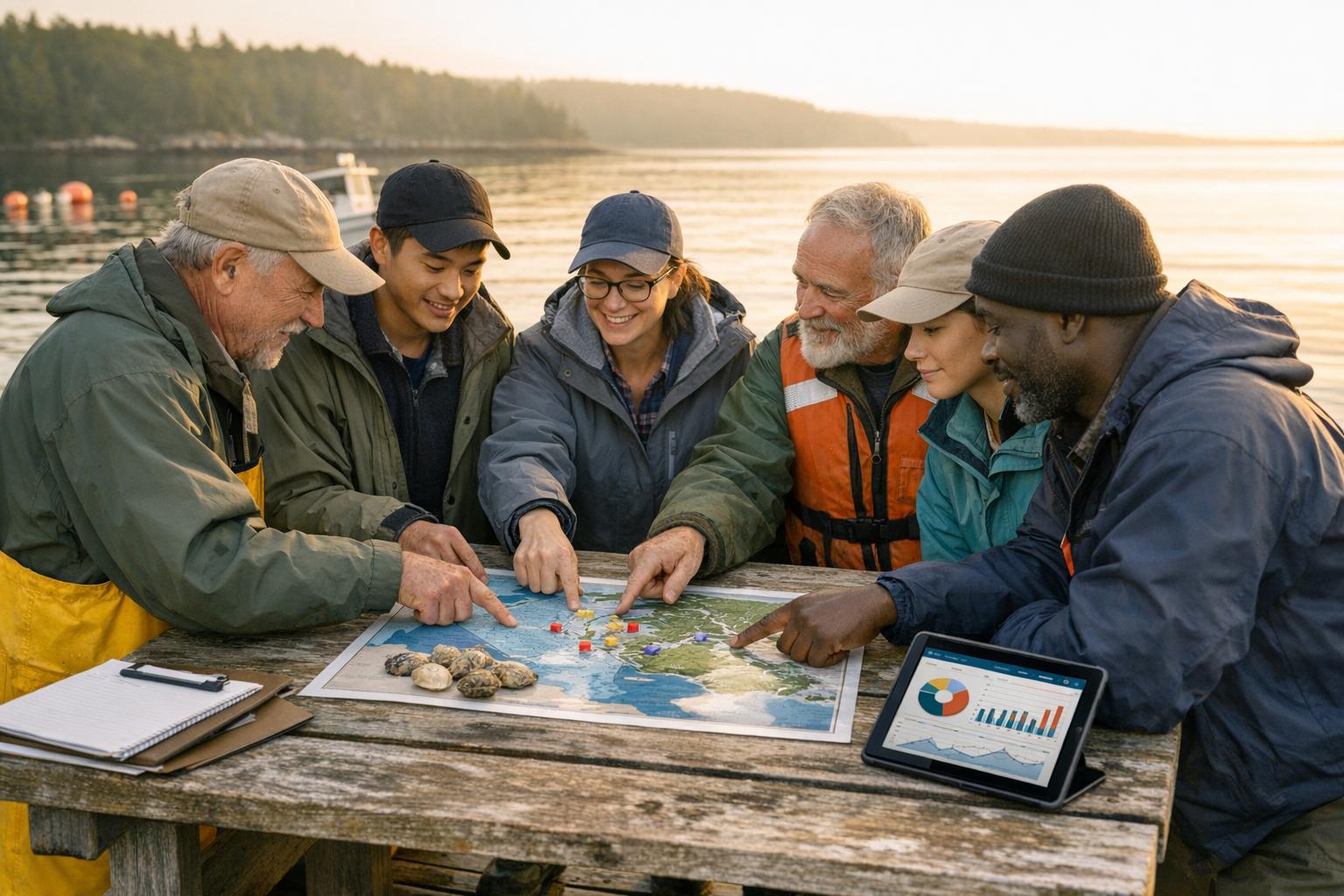
Fisheries co-management is a shared governance model where governments, fishing communities, and research institutions collaborate to manage fisheries effectively. This approach integrates scientific research with local knowledge, addressing overfishing and improving compliance with regulations. Universities play a central role by providing data, facilitating communication, and bridging gaps between policy and practice.
Key Takeaways:
What it is: Co-management involves shared decision-making between governments, fishers, and research groups, balancing scientific and local expertise.
Why it matters: Over 30% of global fish stocks are overfished, and small-scale fisheries contribute 40% of the global catch while employing 90% of fishers.
Benefits for universities:
Access to detailed local data for research.
Opportunities to apply academic findings to real-world challenges.
Strengthened relationships with local communities.
Core principles: Shared authority, continuous stakeholder communication, and formalized community-driven regulations.
Steps for Universities:
Assess Capacity: Evaluate scientific resources, social science expertise, and existing partnerships.
Build Partnerships: Establish trust and formal agreements with stakeholders.
Develop Programs: Design participatory research projects focusing on small-scale fisheries.
Use Tools: Leverage GIS, data integration, and socio-economic assessments for informed decision-making.
Track Results: Monitor ecological and social outcomes using frameworks like the Adaptive Fisheries Management cycle.
Universities can use these strategies to align research with fisheries management, ensuring long-term success through collaboration and resource planning.
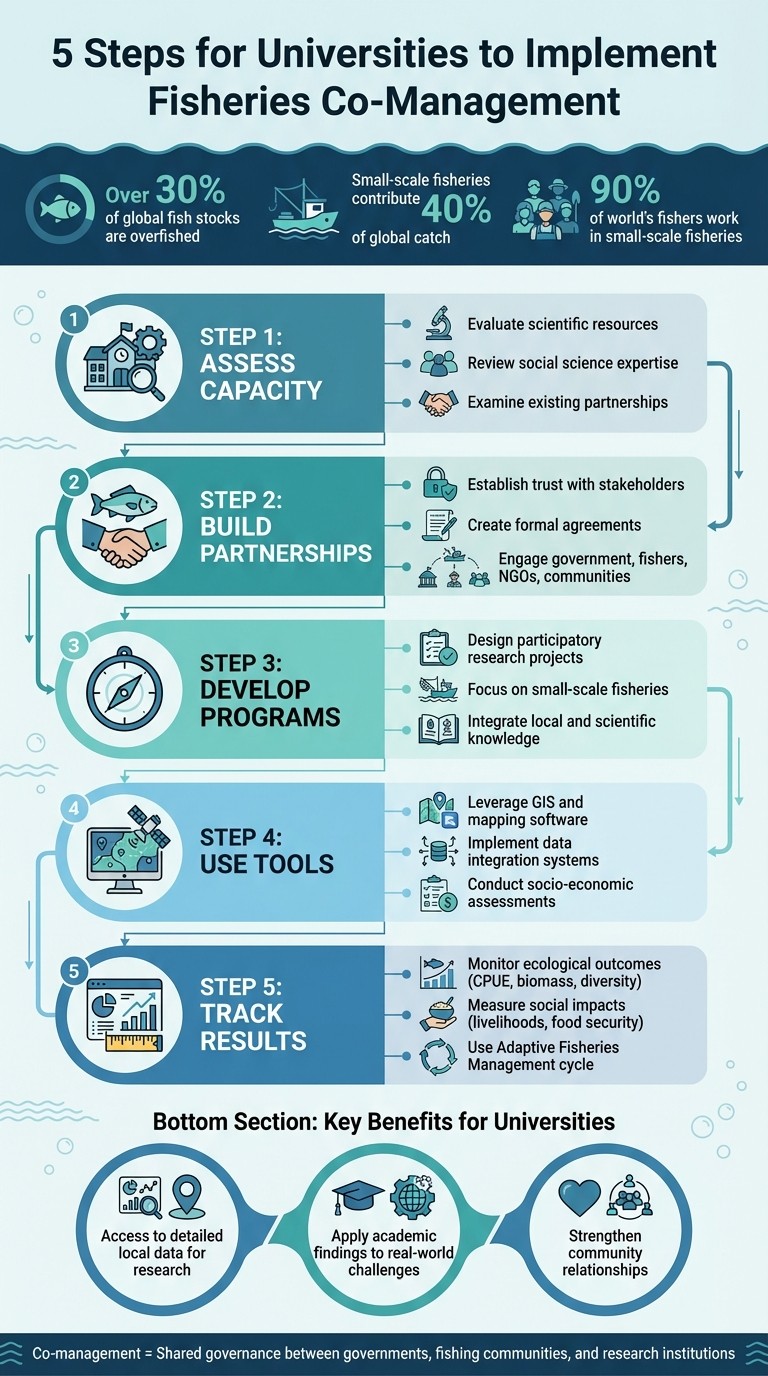
5-Step Process for Universities to Implement Fisheries Co-Management
Evelyn Pinkerton - Co-management in fisheries Pt 3
What Is Fisheries Co-Management?
Fisheries co-management is a collaborative system where government agencies and local stakeholders share the responsibility for managing fisheries [5][6]. Unlike the traditional top-down model, where government agencies control all decision-making, this approach includes fishers, boat owners, traders, NGOs, and research institutions in the development, implementation, and enforcement of regulations [5][6].
By blending scientific research with local and traditional ecological knowledge, co-management addresses the shortcomings of centralized systems, such as low compliance with measures like Total Allowable Catch [5]. One of the primary challenges in fisheries management is that regulations often face resistance or misunderstanding when they are created without input from the communities they affect [5].
Academic institutions play a key role in this approach, acting as external partners. They provide critical data, facilitate communication among stakeholders, and offer technical expertise [5][6]. This enables universities to bridge the gap between government policies and community practices while producing research that directly informs practical management decisions. This collaborative framework lays the foundation for the cooperative decision-making principles outlined below.
Core Principles of Co-Management
Co-management exists on a spectrum of participation. At one end, instructive co-management keeps decision-making firmly in government hands but seeks community input. At the other, informative co-management allows user groups to make decisions, with the government being informed afterward [5]. Most successful systems fall between these extremes, involving true partnerships where both sides share authority and decision-making power.
Shared decision-making is at the heart of co-management. Communities and managing institutions work together to create, implement, and enforce rules [5]. This differs from community management, where local rules often remain informal. In co-management, community-driven regulations are formalized within national legislation or frameworks, giving them legal authority [5].
Another critical element is ongoing, two-way communication [5]. Instead of waiting until the planning process is complete to share information, stakeholders remain engaged throughout. This continuous dialogue allows for quicker responses to changing conditions and ensures that regulations are informed by both scientific evidence and local realities [5].
Benefits for Academic Institutions
The co-management model not only enhances fisheries management but also creates valuable opportunities for academic research and community collaboration. Its integrated structure helps universities tap into local knowledge and apply it to meaningful research.
Universities involved in co-management gain access to detailed local data, enriching their research [5][6]. Fishing communities offer insights into species behavior, seasonal patterns, and ecosystem changes that complement formal scientific methods. This combination leads to more practical findings and increases the likelihood that research will directly influence management and conservation efforts [4].
Co-management also enables institutions to make a direct impact on sustainability efforts by contributing to the health of fisheries resources [5][6]. Instead of producing research that remains in academic journals, universities see their work applied to real-world conservation challenges. This is particularly impactful given that small-scale fisheries account for 40% of the global fish catch and provide employment for over 90% of the world’s fishers [1].
Additionally, the approach strengthens relationships with local communities and enhances institutional credibility. When universities treat local stakeholders as partners rather than research subjects, they build trust that extends beyond individual projects. This trust fosters long-term collaborations, creates opportunities for student fieldwork, and supports community-based education programs, benefiting both sides.
Feature | Traditional Management | Fisheries Co-Management |
|---|---|---|
Authority | Shared between government and user groups [5] | |
Knowledge Base | Relies on formal scientific data [5] | Combines scientific and local/traditional knowledge [5] |
Compliance | Often low; regulations face resistance [5] | Higher; community participation improves adherence [5] |
Communication | One-sided; occurs late in the process [5] | Continuous, two-way dialogue among stakeholders [5] |
Evaluating Your Institution's Capacity
Before entering a fisheries co-management partnership, it's essential to take a close look at your institution's human resources, scientific capabilities, and existing relationships. This self-assessment will help identify what you can contribute effectively and what areas need improvement to build a strong foundation for co-management strategies tailored to your specific context.
How to Assess Readiness
Start by examining your institution's scientific and analytical strengths. Ensure that your research aligns directly with management objectives and that your data collection methods and stock assessment models are suitable for data-limited environments. For instance, the FAO capacity development program (running from January 2025 to December 2028 with a budget of $20 million) is designed to help institutions transition to adaptive, evidence-based management approaches for fisheries with limited data availability [7].
Next, assess your human resources and expertise in social sciences. Your team should not only have technical skills but also a deep understanding of human rights, gender equality, and equity. These skills are vital for aligning academic work with stakeholder priorities. Your staff should be equipped to lead participatory processes that empower fishers while integrating local and Indigenous knowledge into scientific frameworks. Additionally, they must be able to present complex research findings in user-friendly formats - think infographics or practical manuals - so that practitioners and community members can easily understand and apply the information.
Finally, take stock of your partnerships and collaborative networks. Consider your relationships with government agencies, conservation groups, and local communities. For example, the New England Research Set-Aside programs demonstrate how partnerships can work effectively. These programs allocate 1–2% of total fish quotas to fund competitive research grants for projects like habitat analysis and studies on fishing impacts, involving NOAA, regional councils, and the fishing industry [8]. Identify existing agreements or informal connections that could support co-management initiatives, and note any gaps in relationships that may require attention.
Finding Gaps and Opportunities
Once you've identified your institution's strengths and weaknesses, focus on specific gaps and potential opportunities. Address funding shortfalls by exploring industry-financed models. For example, the Pollock Conservation Cooperative Research Center at the University of Alaska Fairbanks operates as an industry-funded initiative, awarding competitive research grants overseen by an advisory board of industry, university, and government representatives [8]. Similarly, the Bristol Bay Fisheries Collaborative uses industry funding to provide managers with the resources needed to monitor salmon populations effectively [8].
Beyond funding, assess critical data and skill gaps. Determine whether your institution has the technological tools needed to improve data accuracy and accessibility. This might involve creating specialized apps for data collection or setting up systems for real-time information sharing [7]. Additionally, evaluate your ability to track social impacts, such as those related to food security, livelihoods, and nutrition, as these are integral to the success of co-management efforts. By identifying these gaps, you can create a clear roadmap for building stronger co-management programs.
Creating Partnerships with Stakeholders
Once your institution has completed a capacity assessment, the next step is to establish effective partnerships. The success of fisheries co-management relies on uniting government agencies, fishers, NGOs, and local communities around common goals. Your institution can play a pivotal role by fostering these connections and offering scientific expertise that complements the local and traditional knowledge of other stakeholders [8].
Setting Up Collaborative Structures
Trust is the cornerstone of any partnership, and it begins with clear and transparent communication. From the onset, establish protocols that outline how information will be shared, who will access research findings, and how stakeholders can engage with scientific data. This clarity reduces misunderstandings and strengthens collaboration.
Formalizing partnerships through structured agreements can also provide stability and accountability. These agreements should outline shared funding responsibilities and research objectives, drawing inspiration from proven frameworks that align resources and goals across all parties.
When industry funding is involved, maintaining credibility is paramount. This can be achieved by implementing external peer reviews and rigorous quality-control measures. As Matthew R. Baker of the North Pacific Research Board explains:
"There are always external influences and internal biases. If the optics look bad, extra time should be devoted to ensure the process is rigorous, the science is sound, that we're following first principles."
Workshops and advisory forums also serve as valuable tools to refine scientific findings. These platforms allow stakeholders to "sense test" research outcomes, ensuring they align with practical management needs [8]. Incorporating diverse local perspectives further strengthens these structured partnerships.
Working with Local and Indigenous Knowledge
Bringing together local and traditional knowledge with scientific methods enhances the relevance and effectiveness of fisheries management. Engaging fishers in research design, data collection, and analysis creates a co-production of knowledge that improves both regulatory compliance and management outcomes [2].
A compelling example comes from the Commercial Fisheries Research Foundation in Rhode Island. By leveraging local initiatives and specialized apps, they’ve successfully reduced bycatch and improved stock assessments [8]. As Baker points out:
"The best group to solve problems will have experience from different perspectives" [8].
Your institution can support similar efforts by providing the necessary technology and analytical tools while valuing the experiential wisdom of fishers, tribal communities, and local residents.
Strong partnerships also depend on building personal connections. Investing time in relationships with community leaders, tribal representatives, and industry stakeholders is essential. Attending local meetings, participating in on-the-water research, and fostering informal knowledge exchanges can create a foundation of trust. These relationships ensure partnerships remain resilient, capable of adapting to challenges, and enduring through funding shifts and personnel changes. Such efforts are key to establishing robust co-management programs.
Developing Co-Management Programs
Once partnerships are established, the next step for your institution is to design programs that tackle pressing fisheries management challenges. The goal is to shift from traditional research models to participatory approaches where fishers and local communities actively contribute to data collection, analysis, and crafting management strategies. This participatory method not only fosters higher compliance but also ensures that the resulting science has direct, practical applications for management needs [2]. By combining academic rigor with real-world fisheries management, these programs create a solid foundation for impactful research initiatives.
Building Collaborative Research Projects
The success of co-management research hinges on one critical principle: quality outweighs quantity. As Patrick Smallhorn-West and colleagues highlight in The Fisheries Co-Management Guidebook:
"Fewer management programs implemented well might achieve far more than many implemented poorly, and poorly implemented co-management can be worse than no management" [1].
Collaborative research projects thrive on strong stakeholder relationships, ensuring that findings translate into actionable management practices. A 2023 study examining case studies from Cuba, Mexico, the Philippines, and Belize found that involving fishers in data collection and analysis significantly boosts the success of science-based management [2]. By blending local knowledge with scientific rigor, these projects align research efforts with management goals.
Focusing on small-scale fisheries is especially impactful. These fisheries account for 40% of the global fish catch and employ over 90% of the world’s fishers. Addressing their needs allows programs to tackle food security, nutrition, livelihoods, and biodiversity in tandem [1]. Collaborative research, when paired with advanced tools, further enhances data reliability and supports adaptive management processes.
Using Tools and Technology
Academic institutions bring a wealth of technical expertise to co-management initiatives. Tools like GIS and mapping software help define management boundaries and visualize resource use, reducing spatial conflicts. For example, in Danao Bay, Philippines, researchers used data analytics to reconstruct historical catch per unit effort (CPUE) based on fishers' recollections. This approach provided the community with a clear picture of long-term resource decline, sparking a sense of urgency for management action.
Data integration tools are equally valuable, merging fishers' experiential knowledge with scientific monitoring. In Barbados, collaborative surveys for the Sea Egg fishery ensured that scientific findings directly informed new co-management rules. Similar projects in other regions have demonstrated the effectiveness of this approach. Socio-economic assessment tools track household income and livelihoods, ensuring that management measures align with local economic needs. Additionally, trend analysis and institutional mapping help stakeholders monitor changes over time and identify governance gaps. Participatory workshops, using frameworks like "Problem Trees" and "Solution Trees", guide communities toward consensus on management priorities [9].
Managing Resources and Tracking Results
Effective co-management depends on careful financial planning and consistent evaluation. Universities and organizations involved must account for two types of costs: transaction costs (such as gathering information and organizing meetings) and transformation costs (like monitoring and enforcement). These expenses are split between the initial planning stage and the ongoing governance efforts [10]. A frequent misstep is establishing co-management areas without securing funding for enforcement - commonly referred to as "unfunded mandates" - which can jeopardize long-term success [10]. This highlights the need for detailed budgeting and systematic tracking of outcomes.
Planning Your Budget
A well-thought-out budget is essential. Allocate funds for facilitators who can bridge the gap between academic research and local stakeholders. If hiring a dedicated facilitator isn’t feasible, consider training community members to handle facilitation and meeting coordination instead [9]. Investing in participatory research can also help build local capacity, which may reduce long-term monitoring costs [9][10]. For example, in Hawaii, where the resource management agency operates on just 0.5% of the state budget, external funding plays a vital role in sustaining co-management initiatives [10]. This demonstrates the importance of aligning financial planning with the broader goals of co-management.
Beyond initial grants, it’s crucial to secure ongoing funding through mechanisms like user fees or private partnerships. As F. Brian Davy, Senior Program Specialist at IDRC, explains:
"Co-management is not an end point but rather a process – a process of adaptive learning" [9].
This means budgeting should be revisited annually, integrating lessons from the previous year’s activities to ensure resources align with evolving priorities [9]. This approach lays the groundwork for thorough outcome tracking.
Measuring Outcomes
Tracking outcomes is key to understanding both ecological and social impacts. The Adaptive Fisheries Management (AFAM) framework offers an 8-step cycle for institutions to analyze data, evaluate performance indicators, and adjust management strategies annually [12]. To simplify results for non-academic stakeholders, use a "stoplight" system - Green, Yellow, or Red indicators - to represent performance clearly [11][12].
For ecological outcomes, monitor metrics such as catch per unit effort (CPUE), species diversity, and fish biomass. On the social side, conduct household surveys to assess changes in knowledge, attitudes, and practices related to fisheries management [12].
Compliance monitoring is another critical component. Keep track of violations in No-Take Zones and Territorial Use Rights for Fishing areas to gauge the effectiveness of management and community support [12]. Annual assessments help capture changes in both biological conditions and socioeconomic factors. Tools like the AFAM Toolkit streamline this process by providing dashboards to track progress and generate reports on fishery health [11].
Maintaining and Expanding Co-Management Efforts
To sustain co-management programs, it's essential to move from an expert-led approach to building genuine, long-term partnerships. A notable example comes from the University of Cape Town, where Associate Professor Merle Sowman initiated a collaboration with local net-fishers in the early 1990s. Over 15 years, this partnership evolved into a model of mutual learning and shared knowledge creation. Sowman explains:
"The relationship shifted to one characterised by mutual learning, collaborative research and the co-production of knowledge in the face of policy changes" [13].
This sustained collaboration allowed researchers to tackle complex human-ecological challenges while fostering trust with the community. It highlights the importance of moving beyond occasional consultations to establish enduring, cooperative relationships with fishing communities [13]. Such efforts pave the way for embedding co-management principles into academic practices.
Adding Co-Management to Academic Programs
Incorporating co-management into academic curriculums ensures continuity and equips future fisheries professionals with the tools they need. Educational resources like "The Fisheries Co-Management Guidebook" can simplify complex research, making it more accessible for students and practitioners [1]. Courses addressing human rights, gender equality, and justice are particularly important, as they tackle the intertwined issues of poverty, hunger, and biodiversity loss [1].
Training early-career researchers to produce actionable research outcomes is equally critical [4]. Structuring projects that involve direct collaboration with fishing communities, government bodies, and conservation organizations provides students with hands-on experience. This approach helps them navigate diverse priorities, such as balancing fishermen's goals of maximizing catches with conservationists' focus on protecting ecosystems [3]. Considering that small-scale fisheries employ over 90% of the world’s fishers and contribute 40% of the global fish catch, these skills are highly relevant [1]. The success of these educational efforts depends on maintaining strong, ongoing relationships with stakeholders.
Sustaining Stakeholder Relationships
Long-term partnerships thrive through transparent communication and regular data sharing. Continuous training that integrates ecological and economic insights builds on earlier engagement efforts [3]. Kerstin Forsberg from Rhodes University's Department of Ichthyology and Fisheries Science highlights the importance of collaboration:
"Stakeholder engagement and collaboration can help to build trust and transparency between different stakeholders, ensuring that decisions are made in an open and transparent manner" [3].
The Environmental Defense Fund also notes that participatory processes enhance compliance with management measures while fostering the integration of local and scientific knowledge [2]. Establishing formal collaborative structures among government agencies, local communities, and academic institutions ensures stability, even as personnel change [2][3]. Regularly revisiting and updating management plans based on new data, environmental shifts, and evolving stakeholder priorities shows a commitment to adaptability. This flexibility ensures co-management remains responsive to both academic advancements and community needs [3].
Conclusion
Universities and research institutions hold a powerful position to influence sustainable fisheries management while advancing their research and educational goals. Moving away from traditional, top-down methods toward collaborative knowledge-sharing can help ensure that their efforts align with the pressing, real-world issues facing the fishery sector.
Interdisciplinary research lies at the heart of this transformation. Combining natural sciences, social sciences, economics, and Indigenous knowledge systems creates a more holistic understanding of fisheries. This approach turns fisheries studies into comprehensive social-ecological evaluations. By incorporating stakeholder perspectives alongside rigorous research - as illustrated in the collaborative examples - the academic community can simultaneously bolster its impact and support sustainable practices. As Patrick Smallhorn-West and colleagues explain:
"Fisheries co-management is envisioned as a process by which to reverse the interconnected crises of hunger, poverty, and biodiversity loss, transforming small-scale fisheries into engines of prosperity, inclusion, and sustainability" [1].
For this vision to succeed, institutions must prioritize collaboration, secure sustained funding, and prepare the next generation of researchers to deliver actionable science. They must also rethink how they disseminate knowledge. Beyond academic journals, it’s essential to engage fishing communities and policymakers directly through workshops, policy briefs, and accessible digital platforms. These strategies bridge the gap between research and real-world application, paving the way for meaningful management outcomes.
The urgency is undeniable. As Smallhorn-West and colleagues caution:
"Fewer management programs implemented well might achieve far more than many implemented poorly, and poorly implemented co-management can be worse than no management" [1].
FAQs
How do we choose the right co-management role for our university?
To determine the most suitable co-management role for your university, start by assessing its strengths, expertise, and resources. Consider areas like research capabilities, community outreach programs, or involvement in policy development. Once you have a clear understanding of these assets, align them with the specific needs of the fisheries project at hand. Early engagement with local stakeholders is essential to pinpoint where your institution can make the greatest difference. Aim for roles that not only match your university's abilities but also support the project’s objectives, ensuring your contributions are impactful and advance both sustainability and research efforts.
What data-sharing rules should we set with fishers and agencies?
To make fisheries co-management work effectively, data-sharing rules need to focus on transparency, collaboration, and trust. Clear guidelines should outline how confidentiality is maintained, who has access to the data, and how the information will be used. This ensures all stakeholders - fishers, agencies, and other parties - are on the same page about the process.
Open communication is key. Engaging fishers and agencies in decision-making fosters a sense of ownership and mutual respect. Additionally, establishing well-defined protocols for collecting, storing, and sharing data helps build trust among stakeholders. When everyone feels confident their interests are respected, it paves the way for effective management of resources and long-term sustainability.
How can we fund monitoring and enforcement long-term?
To ensure lasting financial support for monitoring and enforcement in fisheries co-management, it’s crucial to put in place reliable funding mechanisms. These can include setting aside dedicated budgets, encouraging contributions from stakeholders, and exploring creative solutions like stewardship incentives. By fostering collaboration among local communities, research institutions, and government bodies, resources can be allocated more effectively, while engagement from all parties remains strong. Additionally, incorporating science-driven partnerships and participatory approaches bolsters these efforts, helping to secure consistent funding for these vital activities.
Related Blog Posts
Latest Articles
©2025



FAQ
01
What does it really mean to “redefine profit”?
02
What makes Council Fire different?
03
Who does Council Fire you work with?
04
What does working with Council Fire actually look like?
05
How does Council Fire help organizations turn big goals into action?
06
How does Council Fire define and measure success?
Mar 24, 2026
How to Implement Fisheries Co-Management for Universities & Research Institutions
Capacity Building
In This Article
University guide to fisheries co-management: assess capacity, build partnerships, design participatory research, and monitor ecological and social outcomes.
How to Implement Fisheries Co-Management for Universities & Research Institutions
Fisheries co-management is a shared governance model where governments, fishing communities, and research institutions collaborate to manage fisheries effectively. This approach integrates scientific research with local knowledge, addressing overfishing and improving compliance with regulations. Universities play a central role by providing data, facilitating communication, and bridging gaps between policy and practice.
Key Takeaways:
What it is: Co-management involves shared decision-making between governments, fishers, and research groups, balancing scientific and local expertise.
Why it matters: Over 30% of global fish stocks are overfished, and small-scale fisheries contribute 40% of the global catch while employing 90% of fishers.
Benefits for universities:
Access to detailed local data for research.
Opportunities to apply academic findings to real-world challenges.
Strengthened relationships with local communities.
Core principles: Shared authority, continuous stakeholder communication, and formalized community-driven regulations.
Steps for Universities:
Assess Capacity: Evaluate scientific resources, social science expertise, and existing partnerships.
Build Partnerships: Establish trust and formal agreements with stakeholders.
Develop Programs: Design participatory research projects focusing on small-scale fisheries.
Use Tools: Leverage GIS, data integration, and socio-economic assessments for informed decision-making.
Track Results: Monitor ecological and social outcomes using frameworks like the Adaptive Fisheries Management cycle.
Universities can use these strategies to align research with fisheries management, ensuring long-term success through collaboration and resource planning.
5-Step Process for Universities to Implement Fisheries Co-Management
Evelyn Pinkerton - Co-management in fisheries Pt 3
What Is Fisheries Co-Management?
Fisheries co-management is a collaborative system where government agencies and local stakeholders share the responsibility for managing fisheries [5][6]. Unlike the traditional top-down model, where government agencies control all decision-making, this approach includes fishers, boat owners, traders, NGOs, and research institutions in the development, implementation, and enforcement of regulations [5][6].
By blending scientific research with local and traditional ecological knowledge, co-management addresses the shortcomings of centralized systems, such as low compliance with measures like Total Allowable Catch [5]. One of the primary challenges in fisheries management is that regulations often face resistance or misunderstanding when they are created without input from the communities they affect [5].
Academic institutions play a key role in this approach, acting as external partners. They provide critical data, facilitate communication among stakeholders, and offer technical expertise [5][6]. This enables universities to bridge the gap between government policies and community practices while producing research that directly informs practical management decisions. This collaborative framework lays the foundation for the cooperative decision-making principles outlined below.
Core Principles of Co-Management
Co-management exists on a spectrum of participation. At one end, instructive co-management keeps decision-making firmly in government hands but seeks community input. At the other, informative co-management allows user groups to make decisions, with the government being informed afterward [5]. Most successful systems fall between these extremes, involving true partnerships where both sides share authority and decision-making power.
Shared decision-making is at the heart of co-management. Communities and managing institutions work together to create, implement, and enforce rules [5]. This differs from community management, where local rules often remain informal. In co-management, community-driven regulations are formalized within national legislation or frameworks, giving them legal authority [5].
Another critical element is ongoing, two-way communication [5]. Instead of waiting until the planning process is complete to share information, stakeholders remain engaged throughout. This continuous dialogue allows for quicker responses to changing conditions and ensures that regulations are informed by both scientific evidence and local realities [5].
Benefits for Academic Institutions
The co-management model not only enhances fisheries management but also creates valuable opportunities for academic research and community collaboration. Its integrated structure helps universities tap into local knowledge and apply it to meaningful research.
Universities involved in co-management gain access to detailed local data, enriching their research [5][6]. Fishing communities offer insights into species behavior, seasonal patterns, and ecosystem changes that complement formal scientific methods. This combination leads to more practical findings and increases the likelihood that research will directly influence management and conservation efforts [4].
Co-management also enables institutions to make a direct impact on sustainability efforts by contributing to the health of fisheries resources [5][6]. Instead of producing research that remains in academic journals, universities see their work applied to real-world conservation challenges. This is particularly impactful given that small-scale fisheries account for 40% of the global fish catch and provide employment for over 90% of the world’s fishers [1].
Additionally, the approach strengthens relationships with local communities and enhances institutional credibility. When universities treat local stakeholders as partners rather than research subjects, they build trust that extends beyond individual projects. This trust fosters long-term collaborations, creates opportunities for student fieldwork, and supports community-based education programs, benefiting both sides.
Feature | Traditional Management | Fisheries Co-Management |
|---|---|---|
Authority | Shared between government and user groups [5] | |
Knowledge Base | Relies on formal scientific data [5] | Combines scientific and local/traditional knowledge [5] |
Compliance | Often low; regulations face resistance [5] | Higher; community participation improves adherence [5] |
Communication | One-sided; occurs late in the process [5] | Continuous, two-way dialogue among stakeholders [5] |
Evaluating Your Institution's Capacity
Before entering a fisheries co-management partnership, it's essential to take a close look at your institution's human resources, scientific capabilities, and existing relationships. This self-assessment will help identify what you can contribute effectively and what areas need improvement to build a strong foundation for co-management strategies tailored to your specific context.
How to Assess Readiness
Start by examining your institution's scientific and analytical strengths. Ensure that your research aligns directly with management objectives and that your data collection methods and stock assessment models are suitable for data-limited environments. For instance, the FAO capacity development program (running from January 2025 to December 2028 with a budget of $20 million) is designed to help institutions transition to adaptive, evidence-based management approaches for fisheries with limited data availability [7].
Next, assess your human resources and expertise in social sciences. Your team should not only have technical skills but also a deep understanding of human rights, gender equality, and equity. These skills are vital for aligning academic work with stakeholder priorities. Your staff should be equipped to lead participatory processes that empower fishers while integrating local and Indigenous knowledge into scientific frameworks. Additionally, they must be able to present complex research findings in user-friendly formats - think infographics or practical manuals - so that practitioners and community members can easily understand and apply the information.
Finally, take stock of your partnerships and collaborative networks. Consider your relationships with government agencies, conservation groups, and local communities. For example, the New England Research Set-Aside programs demonstrate how partnerships can work effectively. These programs allocate 1–2% of total fish quotas to fund competitive research grants for projects like habitat analysis and studies on fishing impacts, involving NOAA, regional councils, and the fishing industry [8]. Identify existing agreements or informal connections that could support co-management initiatives, and note any gaps in relationships that may require attention.
Finding Gaps and Opportunities
Once you've identified your institution's strengths and weaknesses, focus on specific gaps and potential opportunities. Address funding shortfalls by exploring industry-financed models. For example, the Pollock Conservation Cooperative Research Center at the University of Alaska Fairbanks operates as an industry-funded initiative, awarding competitive research grants overseen by an advisory board of industry, university, and government representatives [8]. Similarly, the Bristol Bay Fisheries Collaborative uses industry funding to provide managers with the resources needed to monitor salmon populations effectively [8].
Beyond funding, assess critical data and skill gaps. Determine whether your institution has the technological tools needed to improve data accuracy and accessibility. This might involve creating specialized apps for data collection or setting up systems for real-time information sharing [7]. Additionally, evaluate your ability to track social impacts, such as those related to food security, livelihoods, and nutrition, as these are integral to the success of co-management efforts. By identifying these gaps, you can create a clear roadmap for building stronger co-management programs.
Creating Partnerships with Stakeholders
Once your institution has completed a capacity assessment, the next step is to establish effective partnerships. The success of fisheries co-management relies on uniting government agencies, fishers, NGOs, and local communities around common goals. Your institution can play a pivotal role by fostering these connections and offering scientific expertise that complements the local and traditional knowledge of other stakeholders [8].
Setting Up Collaborative Structures
Trust is the cornerstone of any partnership, and it begins with clear and transparent communication. From the onset, establish protocols that outline how information will be shared, who will access research findings, and how stakeholders can engage with scientific data. This clarity reduces misunderstandings and strengthens collaboration.
Formalizing partnerships through structured agreements can also provide stability and accountability. These agreements should outline shared funding responsibilities and research objectives, drawing inspiration from proven frameworks that align resources and goals across all parties.
When industry funding is involved, maintaining credibility is paramount. This can be achieved by implementing external peer reviews and rigorous quality-control measures. As Matthew R. Baker of the North Pacific Research Board explains:
"There are always external influences and internal biases. If the optics look bad, extra time should be devoted to ensure the process is rigorous, the science is sound, that we're following first principles."
Workshops and advisory forums also serve as valuable tools to refine scientific findings. These platforms allow stakeholders to "sense test" research outcomes, ensuring they align with practical management needs [8]. Incorporating diverse local perspectives further strengthens these structured partnerships.
Working with Local and Indigenous Knowledge
Bringing together local and traditional knowledge with scientific methods enhances the relevance and effectiveness of fisheries management. Engaging fishers in research design, data collection, and analysis creates a co-production of knowledge that improves both regulatory compliance and management outcomes [2].
A compelling example comes from the Commercial Fisheries Research Foundation in Rhode Island. By leveraging local initiatives and specialized apps, they’ve successfully reduced bycatch and improved stock assessments [8]. As Baker points out:
"The best group to solve problems will have experience from different perspectives" [8].
Your institution can support similar efforts by providing the necessary technology and analytical tools while valuing the experiential wisdom of fishers, tribal communities, and local residents.
Strong partnerships also depend on building personal connections. Investing time in relationships with community leaders, tribal representatives, and industry stakeholders is essential. Attending local meetings, participating in on-the-water research, and fostering informal knowledge exchanges can create a foundation of trust. These relationships ensure partnerships remain resilient, capable of adapting to challenges, and enduring through funding shifts and personnel changes. Such efforts are key to establishing robust co-management programs.
Developing Co-Management Programs
Once partnerships are established, the next step for your institution is to design programs that tackle pressing fisheries management challenges. The goal is to shift from traditional research models to participatory approaches where fishers and local communities actively contribute to data collection, analysis, and crafting management strategies. This participatory method not only fosters higher compliance but also ensures that the resulting science has direct, practical applications for management needs [2]. By combining academic rigor with real-world fisheries management, these programs create a solid foundation for impactful research initiatives.
Building Collaborative Research Projects
The success of co-management research hinges on one critical principle: quality outweighs quantity. As Patrick Smallhorn-West and colleagues highlight in The Fisheries Co-Management Guidebook:
"Fewer management programs implemented well might achieve far more than many implemented poorly, and poorly implemented co-management can be worse than no management" [1].
Collaborative research projects thrive on strong stakeholder relationships, ensuring that findings translate into actionable management practices. A 2023 study examining case studies from Cuba, Mexico, the Philippines, and Belize found that involving fishers in data collection and analysis significantly boosts the success of science-based management [2]. By blending local knowledge with scientific rigor, these projects align research efforts with management goals.
Focusing on small-scale fisheries is especially impactful. These fisheries account for 40% of the global fish catch and employ over 90% of the world’s fishers. Addressing their needs allows programs to tackle food security, nutrition, livelihoods, and biodiversity in tandem [1]. Collaborative research, when paired with advanced tools, further enhances data reliability and supports adaptive management processes.
Using Tools and Technology
Academic institutions bring a wealth of technical expertise to co-management initiatives. Tools like GIS and mapping software help define management boundaries and visualize resource use, reducing spatial conflicts. For example, in Danao Bay, Philippines, researchers used data analytics to reconstruct historical catch per unit effort (CPUE) based on fishers' recollections. This approach provided the community with a clear picture of long-term resource decline, sparking a sense of urgency for management action.
Data integration tools are equally valuable, merging fishers' experiential knowledge with scientific monitoring. In Barbados, collaborative surveys for the Sea Egg fishery ensured that scientific findings directly informed new co-management rules. Similar projects in other regions have demonstrated the effectiveness of this approach. Socio-economic assessment tools track household income and livelihoods, ensuring that management measures align with local economic needs. Additionally, trend analysis and institutional mapping help stakeholders monitor changes over time and identify governance gaps. Participatory workshops, using frameworks like "Problem Trees" and "Solution Trees", guide communities toward consensus on management priorities [9].
Managing Resources and Tracking Results
Effective co-management depends on careful financial planning and consistent evaluation. Universities and organizations involved must account for two types of costs: transaction costs (such as gathering information and organizing meetings) and transformation costs (like monitoring and enforcement). These expenses are split between the initial planning stage and the ongoing governance efforts [10]. A frequent misstep is establishing co-management areas without securing funding for enforcement - commonly referred to as "unfunded mandates" - which can jeopardize long-term success [10]. This highlights the need for detailed budgeting and systematic tracking of outcomes.
Planning Your Budget
A well-thought-out budget is essential. Allocate funds for facilitators who can bridge the gap between academic research and local stakeholders. If hiring a dedicated facilitator isn’t feasible, consider training community members to handle facilitation and meeting coordination instead [9]. Investing in participatory research can also help build local capacity, which may reduce long-term monitoring costs [9][10]. For example, in Hawaii, where the resource management agency operates on just 0.5% of the state budget, external funding plays a vital role in sustaining co-management initiatives [10]. This demonstrates the importance of aligning financial planning with the broader goals of co-management.
Beyond initial grants, it’s crucial to secure ongoing funding through mechanisms like user fees or private partnerships. As F. Brian Davy, Senior Program Specialist at IDRC, explains:
"Co-management is not an end point but rather a process – a process of adaptive learning" [9].
This means budgeting should be revisited annually, integrating lessons from the previous year’s activities to ensure resources align with evolving priorities [9]. This approach lays the groundwork for thorough outcome tracking.
Measuring Outcomes
Tracking outcomes is key to understanding both ecological and social impacts. The Adaptive Fisheries Management (AFAM) framework offers an 8-step cycle for institutions to analyze data, evaluate performance indicators, and adjust management strategies annually [12]. To simplify results for non-academic stakeholders, use a "stoplight" system - Green, Yellow, or Red indicators - to represent performance clearly [11][12].
For ecological outcomes, monitor metrics such as catch per unit effort (CPUE), species diversity, and fish biomass. On the social side, conduct household surveys to assess changes in knowledge, attitudes, and practices related to fisheries management [12].
Compliance monitoring is another critical component. Keep track of violations in No-Take Zones and Territorial Use Rights for Fishing areas to gauge the effectiveness of management and community support [12]. Annual assessments help capture changes in both biological conditions and socioeconomic factors. Tools like the AFAM Toolkit streamline this process by providing dashboards to track progress and generate reports on fishery health [11].
Maintaining and Expanding Co-Management Efforts
To sustain co-management programs, it's essential to move from an expert-led approach to building genuine, long-term partnerships. A notable example comes from the University of Cape Town, where Associate Professor Merle Sowman initiated a collaboration with local net-fishers in the early 1990s. Over 15 years, this partnership evolved into a model of mutual learning and shared knowledge creation. Sowman explains:
"The relationship shifted to one characterised by mutual learning, collaborative research and the co-production of knowledge in the face of policy changes" [13].
This sustained collaboration allowed researchers to tackle complex human-ecological challenges while fostering trust with the community. It highlights the importance of moving beyond occasional consultations to establish enduring, cooperative relationships with fishing communities [13]. Such efforts pave the way for embedding co-management principles into academic practices.
Adding Co-Management to Academic Programs
Incorporating co-management into academic curriculums ensures continuity and equips future fisheries professionals with the tools they need. Educational resources like "The Fisheries Co-Management Guidebook" can simplify complex research, making it more accessible for students and practitioners [1]. Courses addressing human rights, gender equality, and justice are particularly important, as they tackle the intertwined issues of poverty, hunger, and biodiversity loss [1].
Training early-career researchers to produce actionable research outcomes is equally critical [4]. Structuring projects that involve direct collaboration with fishing communities, government bodies, and conservation organizations provides students with hands-on experience. This approach helps them navigate diverse priorities, such as balancing fishermen's goals of maximizing catches with conservationists' focus on protecting ecosystems [3]. Considering that small-scale fisheries employ over 90% of the world’s fishers and contribute 40% of the global fish catch, these skills are highly relevant [1]. The success of these educational efforts depends on maintaining strong, ongoing relationships with stakeholders.
Sustaining Stakeholder Relationships
Long-term partnerships thrive through transparent communication and regular data sharing. Continuous training that integrates ecological and economic insights builds on earlier engagement efforts [3]. Kerstin Forsberg from Rhodes University's Department of Ichthyology and Fisheries Science highlights the importance of collaboration:
"Stakeholder engagement and collaboration can help to build trust and transparency between different stakeholders, ensuring that decisions are made in an open and transparent manner" [3].
The Environmental Defense Fund also notes that participatory processes enhance compliance with management measures while fostering the integration of local and scientific knowledge [2]. Establishing formal collaborative structures among government agencies, local communities, and academic institutions ensures stability, even as personnel change [2][3]. Regularly revisiting and updating management plans based on new data, environmental shifts, and evolving stakeholder priorities shows a commitment to adaptability. This flexibility ensures co-management remains responsive to both academic advancements and community needs [3].
Conclusion
Universities and research institutions hold a powerful position to influence sustainable fisheries management while advancing their research and educational goals. Moving away from traditional, top-down methods toward collaborative knowledge-sharing can help ensure that their efforts align with the pressing, real-world issues facing the fishery sector.
Interdisciplinary research lies at the heart of this transformation. Combining natural sciences, social sciences, economics, and Indigenous knowledge systems creates a more holistic understanding of fisheries. This approach turns fisheries studies into comprehensive social-ecological evaluations. By incorporating stakeholder perspectives alongside rigorous research - as illustrated in the collaborative examples - the academic community can simultaneously bolster its impact and support sustainable practices. As Patrick Smallhorn-West and colleagues explain:
"Fisheries co-management is envisioned as a process by which to reverse the interconnected crises of hunger, poverty, and biodiversity loss, transforming small-scale fisheries into engines of prosperity, inclusion, and sustainability" [1].
For this vision to succeed, institutions must prioritize collaboration, secure sustained funding, and prepare the next generation of researchers to deliver actionable science. They must also rethink how they disseminate knowledge. Beyond academic journals, it’s essential to engage fishing communities and policymakers directly through workshops, policy briefs, and accessible digital platforms. These strategies bridge the gap between research and real-world application, paving the way for meaningful management outcomes.
The urgency is undeniable. As Smallhorn-West and colleagues caution:
"Fewer management programs implemented well might achieve far more than many implemented poorly, and poorly implemented co-management can be worse than no management" [1].
FAQs
How do we choose the right co-management role for our university?
To determine the most suitable co-management role for your university, start by assessing its strengths, expertise, and resources. Consider areas like research capabilities, community outreach programs, or involvement in policy development. Once you have a clear understanding of these assets, align them with the specific needs of the fisheries project at hand. Early engagement with local stakeholders is essential to pinpoint where your institution can make the greatest difference. Aim for roles that not only match your university's abilities but also support the project’s objectives, ensuring your contributions are impactful and advance both sustainability and research efforts.
What data-sharing rules should we set with fishers and agencies?
To make fisheries co-management work effectively, data-sharing rules need to focus on transparency, collaboration, and trust. Clear guidelines should outline how confidentiality is maintained, who has access to the data, and how the information will be used. This ensures all stakeholders - fishers, agencies, and other parties - are on the same page about the process.
Open communication is key. Engaging fishers and agencies in decision-making fosters a sense of ownership and mutual respect. Additionally, establishing well-defined protocols for collecting, storing, and sharing data helps build trust among stakeholders. When everyone feels confident their interests are respected, it paves the way for effective management of resources and long-term sustainability.
How can we fund monitoring and enforcement long-term?
To ensure lasting financial support for monitoring and enforcement in fisheries co-management, it’s crucial to put in place reliable funding mechanisms. These can include setting aside dedicated budgets, encouraging contributions from stakeholders, and exploring creative solutions like stewardship incentives. By fostering collaboration among local communities, research institutions, and government bodies, resources can be allocated more effectively, while engagement from all parties remains strong. Additionally, incorporating science-driven partnerships and participatory approaches bolsters these efforts, helping to secure consistent funding for these vital activities.
Related Blog Posts
FAQ
01
What does it really mean to “redefine profit”?
02
What makes Council Fire different?
03
Who does Council Fire you work with?
04
What does working with Council Fire actually look like?
05
How does Council Fire help organizations turn big goals into action?
06
How does Council Fire define and measure success?
Mar 24, 2026
How to Implement Fisheries Co-Management for Universities & Research Institutions
Capacity Building
In This Article
University guide to fisheries co-management: assess capacity, build partnerships, design participatory research, and monitor ecological and social outcomes.
How to Implement Fisheries Co-Management for Universities & Research Institutions
Fisheries co-management is a shared governance model where governments, fishing communities, and research institutions collaborate to manage fisheries effectively. This approach integrates scientific research with local knowledge, addressing overfishing and improving compliance with regulations. Universities play a central role by providing data, facilitating communication, and bridging gaps between policy and practice.
Key Takeaways:
What it is: Co-management involves shared decision-making between governments, fishers, and research groups, balancing scientific and local expertise.
Why it matters: Over 30% of global fish stocks are overfished, and small-scale fisheries contribute 40% of the global catch while employing 90% of fishers.
Benefits for universities:
Access to detailed local data for research.
Opportunities to apply academic findings to real-world challenges.
Strengthened relationships with local communities.
Core principles: Shared authority, continuous stakeholder communication, and formalized community-driven regulations.
Steps for Universities:
Assess Capacity: Evaluate scientific resources, social science expertise, and existing partnerships.
Build Partnerships: Establish trust and formal agreements with stakeholders.
Develop Programs: Design participatory research projects focusing on small-scale fisheries.
Use Tools: Leverage GIS, data integration, and socio-economic assessments for informed decision-making.
Track Results: Monitor ecological and social outcomes using frameworks like the Adaptive Fisheries Management cycle.
Universities can use these strategies to align research with fisheries management, ensuring long-term success through collaboration and resource planning.
5-Step Process for Universities to Implement Fisheries Co-Management
Evelyn Pinkerton - Co-management in fisheries Pt 3
What Is Fisheries Co-Management?
Fisheries co-management is a collaborative system where government agencies and local stakeholders share the responsibility for managing fisheries [5][6]. Unlike the traditional top-down model, where government agencies control all decision-making, this approach includes fishers, boat owners, traders, NGOs, and research institutions in the development, implementation, and enforcement of regulations [5][6].
By blending scientific research with local and traditional ecological knowledge, co-management addresses the shortcomings of centralized systems, such as low compliance with measures like Total Allowable Catch [5]. One of the primary challenges in fisheries management is that regulations often face resistance or misunderstanding when they are created without input from the communities they affect [5].
Academic institutions play a key role in this approach, acting as external partners. They provide critical data, facilitate communication among stakeholders, and offer technical expertise [5][6]. This enables universities to bridge the gap between government policies and community practices while producing research that directly informs practical management decisions. This collaborative framework lays the foundation for the cooperative decision-making principles outlined below.
Core Principles of Co-Management
Co-management exists on a spectrum of participation. At one end, instructive co-management keeps decision-making firmly in government hands but seeks community input. At the other, informative co-management allows user groups to make decisions, with the government being informed afterward [5]. Most successful systems fall between these extremes, involving true partnerships where both sides share authority and decision-making power.
Shared decision-making is at the heart of co-management. Communities and managing institutions work together to create, implement, and enforce rules [5]. This differs from community management, where local rules often remain informal. In co-management, community-driven regulations are formalized within national legislation or frameworks, giving them legal authority [5].
Another critical element is ongoing, two-way communication [5]. Instead of waiting until the planning process is complete to share information, stakeholders remain engaged throughout. This continuous dialogue allows for quicker responses to changing conditions and ensures that regulations are informed by both scientific evidence and local realities [5].
Benefits for Academic Institutions
The co-management model not only enhances fisheries management but also creates valuable opportunities for academic research and community collaboration. Its integrated structure helps universities tap into local knowledge and apply it to meaningful research.
Universities involved in co-management gain access to detailed local data, enriching their research [5][6]. Fishing communities offer insights into species behavior, seasonal patterns, and ecosystem changes that complement formal scientific methods. This combination leads to more practical findings and increases the likelihood that research will directly influence management and conservation efforts [4].
Co-management also enables institutions to make a direct impact on sustainability efforts by contributing to the health of fisheries resources [5][6]. Instead of producing research that remains in academic journals, universities see their work applied to real-world conservation challenges. This is particularly impactful given that small-scale fisheries account for 40% of the global fish catch and provide employment for over 90% of the world’s fishers [1].
Additionally, the approach strengthens relationships with local communities and enhances institutional credibility. When universities treat local stakeholders as partners rather than research subjects, they build trust that extends beyond individual projects. This trust fosters long-term collaborations, creates opportunities for student fieldwork, and supports community-based education programs, benefiting both sides.
Feature | Traditional Management | Fisheries Co-Management |
|---|---|---|
Authority | Shared between government and user groups [5] | |
Knowledge Base | Relies on formal scientific data [5] | Combines scientific and local/traditional knowledge [5] |
Compliance | Often low; regulations face resistance [5] | Higher; community participation improves adherence [5] |
Communication | One-sided; occurs late in the process [5] | Continuous, two-way dialogue among stakeholders [5] |
Evaluating Your Institution's Capacity
Before entering a fisheries co-management partnership, it's essential to take a close look at your institution's human resources, scientific capabilities, and existing relationships. This self-assessment will help identify what you can contribute effectively and what areas need improvement to build a strong foundation for co-management strategies tailored to your specific context.
How to Assess Readiness
Start by examining your institution's scientific and analytical strengths. Ensure that your research aligns directly with management objectives and that your data collection methods and stock assessment models are suitable for data-limited environments. For instance, the FAO capacity development program (running from January 2025 to December 2028 with a budget of $20 million) is designed to help institutions transition to adaptive, evidence-based management approaches for fisheries with limited data availability [7].
Next, assess your human resources and expertise in social sciences. Your team should not only have technical skills but also a deep understanding of human rights, gender equality, and equity. These skills are vital for aligning academic work with stakeholder priorities. Your staff should be equipped to lead participatory processes that empower fishers while integrating local and Indigenous knowledge into scientific frameworks. Additionally, they must be able to present complex research findings in user-friendly formats - think infographics or practical manuals - so that practitioners and community members can easily understand and apply the information.
Finally, take stock of your partnerships and collaborative networks. Consider your relationships with government agencies, conservation groups, and local communities. For example, the New England Research Set-Aside programs demonstrate how partnerships can work effectively. These programs allocate 1–2% of total fish quotas to fund competitive research grants for projects like habitat analysis and studies on fishing impacts, involving NOAA, regional councils, and the fishing industry [8]. Identify existing agreements or informal connections that could support co-management initiatives, and note any gaps in relationships that may require attention.
Finding Gaps and Opportunities
Once you've identified your institution's strengths and weaknesses, focus on specific gaps and potential opportunities. Address funding shortfalls by exploring industry-financed models. For example, the Pollock Conservation Cooperative Research Center at the University of Alaska Fairbanks operates as an industry-funded initiative, awarding competitive research grants overseen by an advisory board of industry, university, and government representatives [8]. Similarly, the Bristol Bay Fisheries Collaborative uses industry funding to provide managers with the resources needed to monitor salmon populations effectively [8].
Beyond funding, assess critical data and skill gaps. Determine whether your institution has the technological tools needed to improve data accuracy and accessibility. This might involve creating specialized apps for data collection or setting up systems for real-time information sharing [7]. Additionally, evaluate your ability to track social impacts, such as those related to food security, livelihoods, and nutrition, as these are integral to the success of co-management efforts. By identifying these gaps, you can create a clear roadmap for building stronger co-management programs.
Creating Partnerships with Stakeholders
Once your institution has completed a capacity assessment, the next step is to establish effective partnerships. The success of fisheries co-management relies on uniting government agencies, fishers, NGOs, and local communities around common goals. Your institution can play a pivotal role by fostering these connections and offering scientific expertise that complements the local and traditional knowledge of other stakeholders [8].
Setting Up Collaborative Structures
Trust is the cornerstone of any partnership, and it begins with clear and transparent communication. From the onset, establish protocols that outline how information will be shared, who will access research findings, and how stakeholders can engage with scientific data. This clarity reduces misunderstandings and strengthens collaboration.
Formalizing partnerships through structured agreements can also provide stability and accountability. These agreements should outline shared funding responsibilities and research objectives, drawing inspiration from proven frameworks that align resources and goals across all parties.
When industry funding is involved, maintaining credibility is paramount. This can be achieved by implementing external peer reviews and rigorous quality-control measures. As Matthew R. Baker of the North Pacific Research Board explains:
"There are always external influences and internal biases. If the optics look bad, extra time should be devoted to ensure the process is rigorous, the science is sound, that we're following first principles."
Workshops and advisory forums also serve as valuable tools to refine scientific findings. These platforms allow stakeholders to "sense test" research outcomes, ensuring they align with practical management needs [8]. Incorporating diverse local perspectives further strengthens these structured partnerships.
Working with Local and Indigenous Knowledge
Bringing together local and traditional knowledge with scientific methods enhances the relevance and effectiveness of fisheries management. Engaging fishers in research design, data collection, and analysis creates a co-production of knowledge that improves both regulatory compliance and management outcomes [2].
A compelling example comes from the Commercial Fisheries Research Foundation in Rhode Island. By leveraging local initiatives and specialized apps, they’ve successfully reduced bycatch and improved stock assessments [8]. As Baker points out:
"The best group to solve problems will have experience from different perspectives" [8].
Your institution can support similar efforts by providing the necessary technology and analytical tools while valuing the experiential wisdom of fishers, tribal communities, and local residents.
Strong partnerships also depend on building personal connections. Investing time in relationships with community leaders, tribal representatives, and industry stakeholders is essential. Attending local meetings, participating in on-the-water research, and fostering informal knowledge exchanges can create a foundation of trust. These relationships ensure partnerships remain resilient, capable of adapting to challenges, and enduring through funding shifts and personnel changes. Such efforts are key to establishing robust co-management programs.
Developing Co-Management Programs
Once partnerships are established, the next step for your institution is to design programs that tackle pressing fisheries management challenges. The goal is to shift from traditional research models to participatory approaches where fishers and local communities actively contribute to data collection, analysis, and crafting management strategies. This participatory method not only fosters higher compliance but also ensures that the resulting science has direct, practical applications for management needs [2]. By combining academic rigor with real-world fisheries management, these programs create a solid foundation for impactful research initiatives.
Building Collaborative Research Projects
The success of co-management research hinges on one critical principle: quality outweighs quantity. As Patrick Smallhorn-West and colleagues highlight in The Fisheries Co-Management Guidebook:
"Fewer management programs implemented well might achieve far more than many implemented poorly, and poorly implemented co-management can be worse than no management" [1].
Collaborative research projects thrive on strong stakeholder relationships, ensuring that findings translate into actionable management practices. A 2023 study examining case studies from Cuba, Mexico, the Philippines, and Belize found that involving fishers in data collection and analysis significantly boosts the success of science-based management [2]. By blending local knowledge with scientific rigor, these projects align research efforts with management goals.
Focusing on small-scale fisheries is especially impactful. These fisheries account for 40% of the global fish catch and employ over 90% of the world’s fishers. Addressing their needs allows programs to tackle food security, nutrition, livelihoods, and biodiversity in tandem [1]. Collaborative research, when paired with advanced tools, further enhances data reliability and supports adaptive management processes.
Using Tools and Technology
Academic institutions bring a wealth of technical expertise to co-management initiatives. Tools like GIS and mapping software help define management boundaries and visualize resource use, reducing spatial conflicts. For example, in Danao Bay, Philippines, researchers used data analytics to reconstruct historical catch per unit effort (CPUE) based on fishers' recollections. This approach provided the community with a clear picture of long-term resource decline, sparking a sense of urgency for management action.
Data integration tools are equally valuable, merging fishers' experiential knowledge with scientific monitoring. In Barbados, collaborative surveys for the Sea Egg fishery ensured that scientific findings directly informed new co-management rules. Similar projects in other regions have demonstrated the effectiveness of this approach. Socio-economic assessment tools track household income and livelihoods, ensuring that management measures align with local economic needs. Additionally, trend analysis and institutional mapping help stakeholders monitor changes over time and identify governance gaps. Participatory workshops, using frameworks like "Problem Trees" and "Solution Trees", guide communities toward consensus on management priorities [9].
Managing Resources and Tracking Results
Effective co-management depends on careful financial planning and consistent evaluation. Universities and organizations involved must account for two types of costs: transaction costs (such as gathering information and organizing meetings) and transformation costs (like monitoring and enforcement). These expenses are split between the initial planning stage and the ongoing governance efforts [10]. A frequent misstep is establishing co-management areas without securing funding for enforcement - commonly referred to as "unfunded mandates" - which can jeopardize long-term success [10]. This highlights the need for detailed budgeting and systematic tracking of outcomes.
Planning Your Budget
A well-thought-out budget is essential. Allocate funds for facilitators who can bridge the gap between academic research and local stakeholders. If hiring a dedicated facilitator isn’t feasible, consider training community members to handle facilitation and meeting coordination instead [9]. Investing in participatory research can also help build local capacity, which may reduce long-term monitoring costs [9][10]. For example, in Hawaii, where the resource management agency operates on just 0.5% of the state budget, external funding plays a vital role in sustaining co-management initiatives [10]. This demonstrates the importance of aligning financial planning with the broader goals of co-management.
Beyond initial grants, it’s crucial to secure ongoing funding through mechanisms like user fees or private partnerships. As F. Brian Davy, Senior Program Specialist at IDRC, explains:
"Co-management is not an end point but rather a process – a process of adaptive learning" [9].
This means budgeting should be revisited annually, integrating lessons from the previous year’s activities to ensure resources align with evolving priorities [9]. This approach lays the groundwork for thorough outcome tracking.
Measuring Outcomes
Tracking outcomes is key to understanding both ecological and social impacts. The Adaptive Fisheries Management (AFAM) framework offers an 8-step cycle for institutions to analyze data, evaluate performance indicators, and adjust management strategies annually [12]. To simplify results for non-academic stakeholders, use a "stoplight" system - Green, Yellow, or Red indicators - to represent performance clearly [11][12].
For ecological outcomes, monitor metrics such as catch per unit effort (CPUE), species diversity, and fish biomass. On the social side, conduct household surveys to assess changes in knowledge, attitudes, and practices related to fisheries management [12].
Compliance monitoring is another critical component. Keep track of violations in No-Take Zones and Territorial Use Rights for Fishing areas to gauge the effectiveness of management and community support [12]. Annual assessments help capture changes in both biological conditions and socioeconomic factors. Tools like the AFAM Toolkit streamline this process by providing dashboards to track progress and generate reports on fishery health [11].
Maintaining and Expanding Co-Management Efforts
To sustain co-management programs, it's essential to move from an expert-led approach to building genuine, long-term partnerships. A notable example comes from the University of Cape Town, where Associate Professor Merle Sowman initiated a collaboration with local net-fishers in the early 1990s. Over 15 years, this partnership evolved into a model of mutual learning and shared knowledge creation. Sowman explains:
"The relationship shifted to one characterised by mutual learning, collaborative research and the co-production of knowledge in the face of policy changes" [13].
This sustained collaboration allowed researchers to tackle complex human-ecological challenges while fostering trust with the community. It highlights the importance of moving beyond occasional consultations to establish enduring, cooperative relationships with fishing communities [13]. Such efforts pave the way for embedding co-management principles into academic practices.
Adding Co-Management to Academic Programs
Incorporating co-management into academic curriculums ensures continuity and equips future fisheries professionals with the tools they need. Educational resources like "The Fisheries Co-Management Guidebook" can simplify complex research, making it more accessible for students and practitioners [1]. Courses addressing human rights, gender equality, and justice are particularly important, as they tackle the intertwined issues of poverty, hunger, and biodiversity loss [1].
Training early-career researchers to produce actionable research outcomes is equally critical [4]. Structuring projects that involve direct collaboration with fishing communities, government bodies, and conservation organizations provides students with hands-on experience. This approach helps them navigate diverse priorities, such as balancing fishermen's goals of maximizing catches with conservationists' focus on protecting ecosystems [3]. Considering that small-scale fisheries employ over 90% of the world’s fishers and contribute 40% of the global fish catch, these skills are highly relevant [1]. The success of these educational efforts depends on maintaining strong, ongoing relationships with stakeholders.
Sustaining Stakeholder Relationships
Long-term partnerships thrive through transparent communication and regular data sharing. Continuous training that integrates ecological and economic insights builds on earlier engagement efforts [3]. Kerstin Forsberg from Rhodes University's Department of Ichthyology and Fisheries Science highlights the importance of collaboration:
"Stakeholder engagement and collaboration can help to build trust and transparency between different stakeholders, ensuring that decisions are made in an open and transparent manner" [3].
The Environmental Defense Fund also notes that participatory processes enhance compliance with management measures while fostering the integration of local and scientific knowledge [2]. Establishing formal collaborative structures among government agencies, local communities, and academic institutions ensures stability, even as personnel change [2][3]. Regularly revisiting and updating management plans based on new data, environmental shifts, and evolving stakeholder priorities shows a commitment to adaptability. This flexibility ensures co-management remains responsive to both academic advancements and community needs [3].
Conclusion
Universities and research institutions hold a powerful position to influence sustainable fisheries management while advancing their research and educational goals. Moving away from traditional, top-down methods toward collaborative knowledge-sharing can help ensure that their efforts align with the pressing, real-world issues facing the fishery sector.
Interdisciplinary research lies at the heart of this transformation. Combining natural sciences, social sciences, economics, and Indigenous knowledge systems creates a more holistic understanding of fisheries. This approach turns fisheries studies into comprehensive social-ecological evaluations. By incorporating stakeholder perspectives alongside rigorous research - as illustrated in the collaborative examples - the academic community can simultaneously bolster its impact and support sustainable practices. As Patrick Smallhorn-West and colleagues explain:
"Fisheries co-management is envisioned as a process by which to reverse the interconnected crises of hunger, poverty, and biodiversity loss, transforming small-scale fisheries into engines of prosperity, inclusion, and sustainability" [1].
For this vision to succeed, institutions must prioritize collaboration, secure sustained funding, and prepare the next generation of researchers to deliver actionable science. They must also rethink how they disseminate knowledge. Beyond academic journals, it’s essential to engage fishing communities and policymakers directly through workshops, policy briefs, and accessible digital platforms. These strategies bridge the gap between research and real-world application, paving the way for meaningful management outcomes.
The urgency is undeniable. As Smallhorn-West and colleagues caution:
"Fewer management programs implemented well might achieve far more than many implemented poorly, and poorly implemented co-management can be worse than no management" [1].
FAQs
How do we choose the right co-management role for our university?
To determine the most suitable co-management role for your university, start by assessing its strengths, expertise, and resources. Consider areas like research capabilities, community outreach programs, or involvement in policy development. Once you have a clear understanding of these assets, align them with the specific needs of the fisheries project at hand. Early engagement with local stakeholders is essential to pinpoint where your institution can make the greatest difference. Aim for roles that not only match your university's abilities but also support the project’s objectives, ensuring your contributions are impactful and advance both sustainability and research efforts.
What data-sharing rules should we set with fishers and agencies?
To make fisheries co-management work effectively, data-sharing rules need to focus on transparency, collaboration, and trust. Clear guidelines should outline how confidentiality is maintained, who has access to the data, and how the information will be used. This ensures all stakeholders - fishers, agencies, and other parties - are on the same page about the process.
Open communication is key. Engaging fishers and agencies in decision-making fosters a sense of ownership and mutual respect. Additionally, establishing well-defined protocols for collecting, storing, and sharing data helps build trust among stakeholders. When everyone feels confident their interests are respected, it paves the way for effective management of resources and long-term sustainability.
How can we fund monitoring and enforcement long-term?
To ensure lasting financial support for monitoring and enforcement in fisheries co-management, it’s crucial to put in place reliable funding mechanisms. These can include setting aside dedicated budgets, encouraging contributions from stakeholders, and exploring creative solutions like stewardship incentives. By fostering collaboration among local communities, research institutions, and government bodies, resources can be allocated more effectively, while engagement from all parties remains strong. Additionally, incorporating science-driven partnerships and participatory approaches bolsters these efforts, helping to secure consistent funding for these vital activities.
Related Blog Posts
FAQ
What does it really mean to “redefine profit”?
What makes Council Fire different?
Who does Council Fire you work with?
What does working with Council Fire actually look like?
How does Council Fire help organizations turn big goals into action?
How does Council Fire define and measure success?