Mar 24, 2026
How to Implement Fisheries Co-Management for NGOs & Nonprofits
Capacity Building
In This Article
Practical guide for NGOs to design and run fisheries co-management: stakeholder mapping, governance, community monitoring, legal reforms, and funding.
How to Implement Fisheries Co-Management for NGOs & Nonprofits
Fisheries co-management is a collaborative approach that shifts decision-making from centralized government control to shared responsibility among authorities, local communities, and NGOs. This method combines scientific research with local fishers' knowledge to create effective strategies for managing small-scale fisheries, which account for 40% of global fish catch and employ over 90% of the world’s fishers.
Key steps for NGOs and nonprofits include:
Conducting Situational Analysis: Assess ecological, social, and legal conditions using participatory methods like resource mapping and stakeholder interviews.
Identifying Stakeholders: Include fishers, community leaders, government agencies, and other key groups to ensure diverse input and fair representation.
Establishing Governance Frameworks: Define roles, responsibilities, and decision-making processes through formal agreements and community-based committees.
Community-Based Monitoring: Train local fishers to collect and analyze data using tools like FishKit, enabling informed management decisions.
Overcoming Challenges: Address legal barriers, resource constraints, and stakeholder engagement to ensure long-term success.
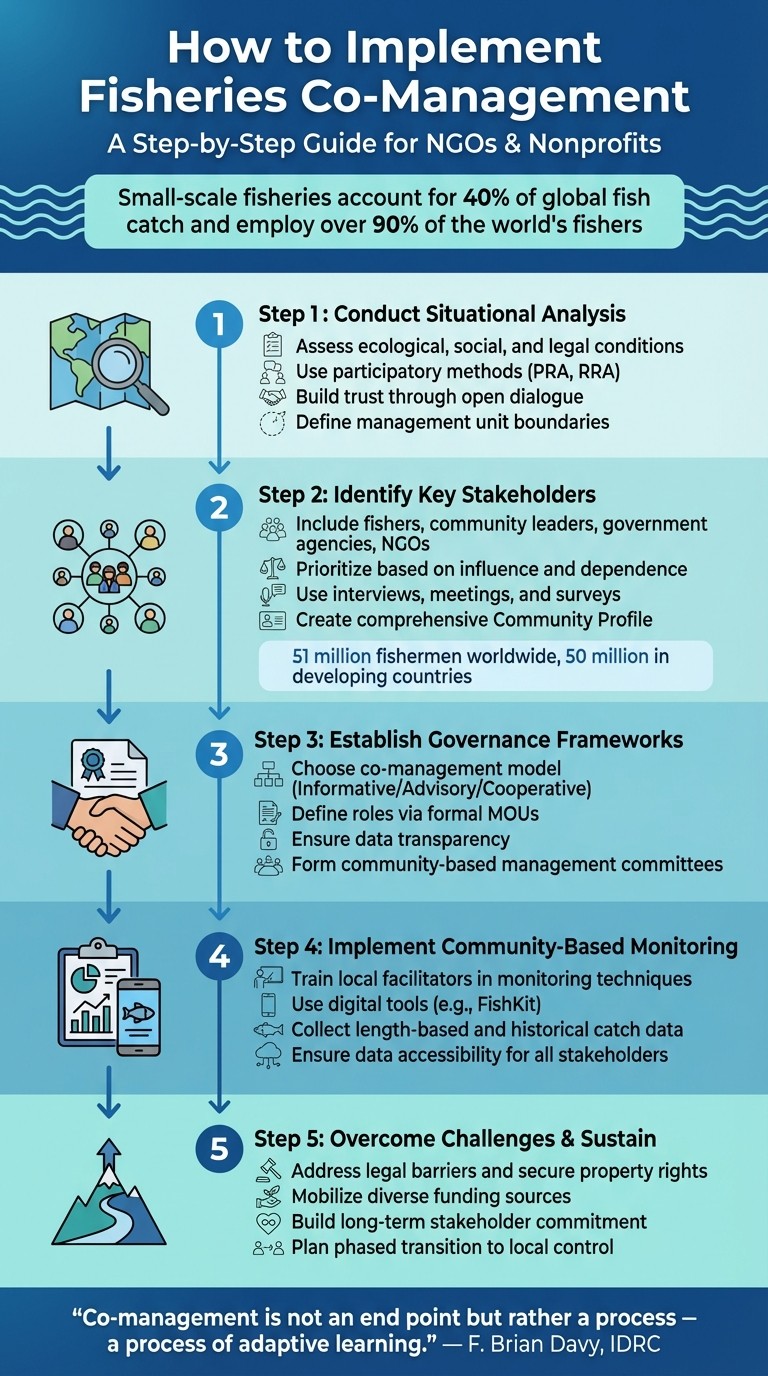
5-Step Fisheries Co-Management Implementation Process for NGOs
Co-management: a powerful tool to save Mediterranean fisheries
Assessing Fisheries Context and Stakeholder Needs
Launching a co-management initiative requires a deep understanding of the fishery's ecological, social, and economic landscape. This ensures strategies are tailored to local realities and avoids potential missteps. As F. Brian Davy, Senior Program Specialist at IDRC, aptly states:
Co-management is not an end point but rather a process – a process of adaptive learning. [5]
Conducting a Situational Analysis
Building trust is the first step, achieved through open dialogue with local leaders and fishers. Participatory methods like Participatory Rural Appraisal (PRA) and Rapid Rural Appraisal (RRA) are invaluable for collecting data directly from the community, reducing reliance on external experts.
Key areas to assess include:
Ecological conditions: Use tools such as transects and resource mapping to evaluate habitats and species diversity.
Socio-economic factors: Understand local livelihoods, economic power structures, and access to resources.
Legal frameworks: Review existing laws, policies, and the effectiveness of community organizations.
For example, in Danao Bay, Philippines, fishers and researchers worked together to reconstruct catch-per-unit-effort (CPUE) history using collective memory, producing more accurate biomass estimates than traditional surveys. Similarly, in the Barbados Sea Egg Fishery, collaborative surveys between government officials and fishers helped analyze sea urchin populations, leading to a consensus on implementing a closed season for stock recovery.
Defining management unit boundaries early in the process is essential to prevent jurisdictional disputes later. Tools like SWOT analysis, Problem Trees, and Solution Trees can help visualize challenges and opportunities. Additionally, ensure that women’s roles and contributions are included in data collection, as they are often overlooked. Present findings back to the community to validate the data and build consensus. This thorough baseline assessment creates a foundation for actionable co-management plans aligned with sustainable fisheries practices.
Once the situational analysis is complete, focus on identifying those directly or indirectly impacted by the fishery's management.
Identifying Key Stakeholders
The next step involves identifying all individuals and groups with a stake in the fishery. This includes fishers, community leaders, government agencies, NGOs, fish processors, traders, and tourism operators. Small-scale, subsistence, and artisanal fishers - who make up the vast majority of the world's 51 million fishermen, with 50 million based in developing countries [5] - are particularly critical to this process, as their insights and experiences are invaluable.
Stakeholders should be prioritized based on their influence over resource access and their dependence on the fishery for their livelihoods. An example of effective collaboration can be seen in the Sokhulu Subsistence Mussel-Harvesting Project in South Africa, where scientists and local harvesters worked together to conduct biological monitoring, fostering a shared understanding of sustainable harvesting practices [5].
Understanding Stakeholder Needs and Expectations
To capture a complete picture of stakeholder needs, use diverse methods for gathering input:
Individual interviews: Provide insight into personal concerns and perspectives.
Community meetings: Highlight collective priorities.
Surveys: Offer quantitative data on local practices and preferences.
Reconstructing historical catch data and analyzing changes in fishing practices over time are also important steps. This comprehensive stakeholder assessment forms the basis for creating a Community Profile, which serves as a reference point for developing a formal co-management plan and refining strategies to address local priorities effectively.
Establishing Shared Governance Frameworks
Creating shared governance structures is a critical step in effective co-management. After thoroughly assessing stakeholder needs and mapping the fishery context, it’s essential to establish a governance framework that clearly outlines decision-makers, roles, and processes. This clarity helps avoid confusion and ensures smooth collaboration.
Types of Co-Management Systems
Co-management approaches differ in how authority is distributed, and selecting the right model depends on your capacity and local circumstances. Here are three common models:
Informative: The government makes decisions and informs stakeholders afterward. This model offers limited opportunities for NGOs to contribute meaningfully.
Advisory: Stakeholders provide input, but the government retains final authority. This approach allows NGOs to act as advisors, offering expertise and guidance.
Cooperative (Partnership): Decision-making power is shared equally among all partners. This model is ideal for nonprofits aiming to encourage genuine collaboration.
A notable example of cooperative co-management is from Catalonia, Spain. In 2018, the government enacted Decree 118/2018, forming seven co-management committees for species like sand-eel and octopus. These committees brought together representatives from fisheries administration, the fishing sector, scientists, and NGOs, giving them equal decision-making authority. By early 2023, this initiative had mobilized $1,000,000 in funding and received recognition from the FAO-GFCM. Each committee was tasked with developing a management plan and a socioeconomic program within 18 months of its creation.
Governance Model | Authority Sharing | Decision-Making Roles | Suitability for Nonprofits |
|---|---|---|---|
Informative | Low | Government decides and informs stakeholders. | Limited; minimal role for NGO advocacy. |
Advisory | Medium | Stakeholders provide input; government decides. | Moderate; NGOs act as expert advisors. |
Cooperative (Partnership) | High | Equal decision-making among all partners. | High; NGOs are facilitators and partners. |
Once you’ve chosen a model, the next step is to define roles and responsibilities clearly to ensure effective collaboration.
Defining Roles and Responsibilities
Formal agreements, such as MOUs, are essential to outline responsibilities and establish rules for conflict resolution. Transparency is equally important - ensuring all partners have access to the same data can prevent power imbalances.
For instance, in February 2001, the West Coast Vancouver Island partnership in British Columbia approved formal Terms of Reference for its governance board. This board included representatives from aboriginal First Nations, non-aboriginal communities, municipal and regional governments, and environmental groups. By November 2001, the board had developed a long-term vision for the watershed, supported by shared databases that ensured all partners worked with the same information.
In Alaska’s Kuskokwim River, a partnership between the Alaska Department of Fish and Game and local communities used volunteer fishers to monitor salmon stocks. By combining real-time data from multiple sources, this group created stock assessments that were seen as more accurate and credible than previous government-only reports.
With roles clearly defined, the next step is to empower local communities through dedicated management committees.
Creating Community-Based Fisheries Management Committees
Community-based committees are the operational backbone of a governance framework, transitioning stakeholders from passive participants to active decision-makers. Start by identifying local leaders and forming core groups to build trust and momentum. Visioning workshops can help these groups create a shared mission and long-term goals for the fishery.
Representation is key. Committees should include diverse groups, such as different gear types, ethnic communities (like indigenous First Nations), and other local representatives. Women and marginalized groups must also be included to ensure fair and balanced governance. As Evelyn Pinkerton from Simon Fraser University explains:
When communities or organizations of fishers are included as partners in the planning, design, and implementation of the regulations... they grant full legitimacy to the regulations, and are the strongest advocates, monitors, enforcers, and implementers of management decisions. [4]
To ensure sustainability, committees need a legal foundation, such as a government decree or local ordinance, to establish their authority. They also require long-term financing plans, which can be supported by landing fees, licenses, or external grants. Structuring the committee’s development in phases - planning, implementation, and eventual turnover to local control - can help maintain momentum and ensure success over time. [3][5][7]
Implementing Community-Based Monitoring and Data Collection
After establishing shared governance frameworks, the next step is enabling communities to independently monitor and analyze fisheries data. Shifting this responsibility from a centralized, government-led approach to a collaborative, community-driven effort fosters trust and builds local expertise.
Training Communities in Monitoring Techniques
A practical approach to training focuses on equipping local facilitators with the skills to gather and interpret data. Instead of training every fisher individually, NGOs can identify key individuals who act as leaders within their communities. For instance, in 2023, The Nature Conservancy introduced the FishKit digital toolkit to coastal regions, including Hawai'i and French Polynesia. Through this initiative, 34 facilitators were trained, benefiting 22 fishing communities worldwide [9].
Training programs should emphasize collecting length-based data (used to calculate spawning potential ratios) and historical catch data (take-per-trip records) to assess stock health and determine bag limits [8][9]. Additionally, providing foundational knowledge of fisheries ecology - such as species life cycles and per-recruit analysis - helps communities understand the science behind the data. Visual tools that illustrate trade-offs between fishing yields and population health make complex concepts more accessible to non-specialists [9].
With proper training, communities can confidently integrate technology into their data collection processes.
Using Technology for Data Collection
Digital platforms like the FishKit Data Repository simplify data collection and analysis for local communities [9]. This system includes modules tailored to specific needs, such as:
Stock Health Tracker: For uploading fish length data to monitor stock conditions.
Size Limit Builder: To project trade-offs between size limits and population health.
Bag Limit Builder: For visualizing historical catch trends and setting sustainable limits [9].
"FishKit makes it easier, faster, and more intuitive for coastal communities to collect and analyze data and transform it into specific management interventions that are proven to work." [9]
These tools also allow users to simulate management scenarios before implementing new regulations. For example, the Temporary Closures Tool enables communities to explore seasonal or lunar-based closures, aligning management strategies with local ecological insights [9]. To ensure inclusivity, digital platforms should be paired with printable guides and ecological reference tables for areas with limited internet access [9].
Ensuring Data Transparency and Accessibility
Transparency in data sharing is essential for fostering trust among stakeholders. Web-based repositories with interactive dashboards consolidate data into one accessible source, ensuring clarity for all involved [8][9].
Encouraging fishers to participate in data collection and upload their findings builds a sense of ownership and trust in the management decisions that follow. Clear, step-by-step instructions for preparing and uploading data - such as fish lengths and catch records - help maintain consistency across different community groups [8]. Open-access tools further democratize the process, allowing NGOs, government agencies, and local communities to use the same resources without financial barriers [8].
Overcoming Challenges in Fisheries Co-Management
Even with well-structured frameworks and reliable monitoring systems, NGOs and nonprofits face a variety of obstacles when implementing fisheries co-management. These challenges include legal and policy issues, resource constraints, and the ongoing task of maintaining stakeholder engagement. Addressing these hurdles is crucial for ensuring the long-term success of co-management initiatives.
Legal and Policy Barriers
One of the most pressing issues is the lack of formal legal recognition for community-based management structures. For instance, in the Tanzanian section of Lake Victoria, Beach Management Units (BMUs) struggled to enforce regulations effectively due to the absence of a clear legal mandate. This gap contributed to a fisheries violation rate of 29% [10]. Without formal authority, local committees are unable to impose penalties or combat illegal fishing practices effectively.
Another significant challenge stems from insecure property rights. When communities lack Territorial Use Rights for Fisheries (TURF), disputes over fishing zones become common, and fishers have little motivation to adopt sustainable practices [11]. Advocating for legal frameworks that provide communities with formal management areas and territorial rights is essential. Such reforms empower local groups to rebuild fish stocks and achieve economic stability [11].
Corruption also undermines co-management systems by eroding trust. In East Africa, countries such as Kenya, Tanzania, and Uganda rank poorly on the Corruption Perceptions Index, with positions of 139th, 117th, and 139th out of 168 countries, respectively [10]. Bribery and political interference in enforcement discourage compliance, with research showing that one in three fishers in the region use illegal gear like undersized gillnets or beach seines [10]. Tackling corruption as a collective issue and formally acknowledging its role in illegal fishing is critical for progress.
"A management system is expected to sustain fish stocks and at the same time respect the norms of equity, fairness, and trust that reside within user-communities." - Jentoft [10]
Integrating traditional ecological knowledge with scientific data can also improve the credibility of regulations, fostering greater compliance among local stakeholders [11]. Beyond legal and policy challenges, resource constraints pose another significant barrier to effective co-management.
Resource Constraints
Limited funding and personnel often hinder co-management efforts. The solution lies in mobilizing local resources that government agencies alone cannot provide, such as community boats, equipment, and volunteer labor [4].
NGOs play a vital role in bridging these gaps by offering staff time, technical expertise, and initial funding for essential activities like stock monitoring [4]. For broader initiatives, diverse funding sources - including private foundations, government agencies, and international research organizations - are often necessary [4]. Over time, transitioning to a self-sustaining model, such as a membership-based nonprofit, can ensure financial stability [4].
Encouraging fishers to contribute their time and equipment during their regular workdays is another cost-effective approach. Known as "donations in kind," this method works best when communities trust that their contributions will lead to tangible benefits, such as preferential access to replenished fish stocks [4]. Collaborations with universities can also transform management areas into research hubs, attracting external grants for ongoing monitoring and analysis [4].
Partnership Scale | Primary Resource Strategies |
|---|---|
Small-Scope | Volunteer labor, in-kind donations (boats/gear), part-time NGO staff support |
Regional-Scale | Multi-agency collaboration, private foundation grants, university research partnerships |
Large-Scope | Government-to-government funding, membership fees, institutionalized state/federal support |
Source: [4]
With resource strategies in place, the next challenge is sustaining stakeholder commitment over the long term.
Building Long-Term Stakeholder Commitment
Long-term commitment from stakeholders is essential for the success of fisheries co-management. Keeping fishers and other participants engaged requires ongoing effort, as they shift from being passive subjects of regulations to active partners in management. These efforts build on earlier governance and monitoring strategies, reinforcing the overall effectiveness of the system [5].
Identifying and empowering local champions - community leaders who advocate from within - is a proven way to maintain momentum. Visioning workshops can also help stakeholders align their goals and create a shared vision for the future [5].
Ensuring equity and fairness is key to sustaining engagement. When the benefits of improved fish stocks and biodiversity are distributed fairly, and the system upholds human rights and gender equality, stakeholders are more likely to stay involved [11]. Establishing clear conflict resolution frameworks with agreed-upon rules for negotiation can prevent disputes from undermining trust [5].
From the outset, NGOs should plan for a phased transition that gradually transfers full management responsibility to the community. This approach reduces dependency on external support and reinforces local ownership [5]. Providing training in leadership, financial management, and mentorship equips communities to manage the system independently over time [5].
Conclusion and Key Takeaways
Recap of Implementation Steps
The journey of fisheries co-management thrives on continuous learning and active participation from all stakeholders. It starts with a detailed situational analysis to grasp the unique dynamics of the fishery and to identify key players, from local fishers to governmental bodies. Following this, shared governance frameworks are established, often with NGOs acting as neutral facilitators between governments and local communities [1]. This stage also includes defining roles, forming community-based management committees, and integrating traditional knowledge with scientific insights to craft effective regulations [1].
A cornerstone of success is community-based monitoring, which equips fishers with the tools to collect data and take responsibility for their resources. A phased approach is critical, gradually shifting management responsibilities to local communities. This reduces reliance on external entities while fostering local expertise [3]. These steps create a solid foundation for sustained collaboration and effective fisheries management.
Final Insights for Success
To ensure long-term success, several key factors come into play. The impact of small-scale fisheries cannot be overstated - they contribute 40% of the global fish catch and employ over 90% of the world’s fishers. However, poorly executed co-management efforts can sometimes do more harm than good [2][6]. Focusing on fewer, well-managed programs often yields better outcomes than spreading resources thinly across multiple poorly implemented initiatives [2].
"Co-management is not an end point but rather a process – a process of adaptive learning." - F. Brian Davy, Senior Program Specialist, International Development Research Centre [5]
Achieving success requires legal frameworks that formally recognize community-based management, addressing funding gaps through diverse financial sources, and ensuring fairness throughout the process [1]. NGOs must commit to long-term involvement, as trust and open communication are vital for promoting compliance [1]. Ultimately, the goal is to empower communities to become active stewards of their resources. This approach fosters sustainable practices that support both the health of ecosystems and the livelihoods of those who depend on them.
FAQs
How do we choose the right co-management model?
Choosing an effective co-management model involves considering various elements such as the level of stakeholder engagement, the state of resources, governance capabilities, and the specific local environment. These models can range from instructive, where governments take the lead with minimal community input, to informative, which emphasizes collaboration and shared knowledge. To determine the best fit, assess the community's preparedness, the strength of existing institutions, and the specific needs of the resources in question. The ultimate goal is to encourage shared decision-making while ensuring the long-term health and sustainability of fisheries.
What should a situational analysis include?
To conduct a situational analysis, it’s important to examine how the community interacts with fisheries, the governance systems in place, and the broader socio-economic and environmental factors affecting the fishery. This involves looking at the roles of key players such as fishers, traders, and other local users, alongside the level of government participation and existing management practices. Additionally, assessing the condition of resources is crucial.
The analysis should also delve into legal frameworks, the community’s capacity to manage resources, and the interests of various stakeholders. These insights help identify and address challenges related to enforcement, resource sustainability, and the complex social dynamics within the fishery.
How can we fund co-management long term?
To ensure the long-term success of fisheries co-management, it's essential to develop financial systems that sustain community involvement, enforcement efforts, and monitoring activities. This can be achieved through several approaches:
Securing government funding: Advocating for dedicated financial support from public budgets can provide a stable foundation for co-management efforts.
Community-based revenue initiatives: Encouraging local economic activities, such as eco-tourism or sustainable fishing practices, can generate funds while involving the community directly.
Partnerships with NGOs: Collaborating with non-governmental organizations can help share costs and provide additional resources or expertise.
Grants and policy integration: Applying for grants and embedding financial support into larger policy frameworks can further bolster funding efforts.
Equally important is fostering trust and ensuring that benefits are distributed fairly among stakeholders. This approach not only strengthens community engagement but also lays the groundwork for long-lasting financial stability.
Related Blog Posts
Latest Articles
©2025



FAQ
01
What does it really mean to “redefine profit”?
02
What makes Council Fire different?
03
Who does Council Fire you work with?
04
What does working with Council Fire actually look like?
05
How does Council Fire help organizations turn big goals into action?
06
How does Council Fire define and measure success?
Mar 24, 2026
How to Implement Fisheries Co-Management for NGOs & Nonprofits
Capacity Building
In This Article
Practical guide for NGOs to design and run fisheries co-management: stakeholder mapping, governance, community monitoring, legal reforms, and funding.
How to Implement Fisheries Co-Management for NGOs & Nonprofits
Fisheries co-management is a collaborative approach that shifts decision-making from centralized government control to shared responsibility among authorities, local communities, and NGOs. This method combines scientific research with local fishers' knowledge to create effective strategies for managing small-scale fisheries, which account for 40% of global fish catch and employ over 90% of the world’s fishers.
Key steps for NGOs and nonprofits include:
Conducting Situational Analysis: Assess ecological, social, and legal conditions using participatory methods like resource mapping and stakeholder interviews.
Identifying Stakeholders: Include fishers, community leaders, government agencies, and other key groups to ensure diverse input and fair representation.
Establishing Governance Frameworks: Define roles, responsibilities, and decision-making processes through formal agreements and community-based committees.
Community-Based Monitoring: Train local fishers to collect and analyze data using tools like FishKit, enabling informed management decisions.
Overcoming Challenges: Address legal barriers, resource constraints, and stakeholder engagement to ensure long-term success.
5-Step Fisheries Co-Management Implementation Process for NGOs
Co-management: a powerful tool to save Mediterranean fisheries
Assessing Fisheries Context and Stakeholder Needs
Launching a co-management initiative requires a deep understanding of the fishery's ecological, social, and economic landscape. This ensures strategies are tailored to local realities and avoids potential missteps. As F. Brian Davy, Senior Program Specialist at IDRC, aptly states:
Co-management is not an end point but rather a process – a process of adaptive learning. [5]
Conducting a Situational Analysis
Building trust is the first step, achieved through open dialogue with local leaders and fishers. Participatory methods like Participatory Rural Appraisal (PRA) and Rapid Rural Appraisal (RRA) are invaluable for collecting data directly from the community, reducing reliance on external experts.
Key areas to assess include:
Ecological conditions: Use tools such as transects and resource mapping to evaluate habitats and species diversity.
Socio-economic factors: Understand local livelihoods, economic power structures, and access to resources.
Legal frameworks: Review existing laws, policies, and the effectiveness of community organizations.
For example, in Danao Bay, Philippines, fishers and researchers worked together to reconstruct catch-per-unit-effort (CPUE) history using collective memory, producing more accurate biomass estimates than traditional surveys. Similarly, in the Barbados Sea Egg Fishery, collaborative surveys between government officials and fishers helped analyze sea urchin populations, leading to a consensus on implementing a closed season for stock recovery.
Defining management unit boundaries early in the process is essential to prevent jurisdictional disputes later. Tools like SWOT analysis, Problem Trees, and Solution Trees can help visualize challenges and opportunities. Additionally, ensure that women’s roles and contributions are included in data collection, as they are often overlooked. Present findings back to the community to validate the data and build consensus. This thorough baseline assessment creates a foundation for actionable co-management plans aligned with sustainable fisheries practices.
Once the situational analysis is complete, focus on identifying those directly or indirectly impacted by the fishery's management.
Identifying Key Stakeholders
The next step involves identifying all individuals and groups with a stake in the fishery. This includes fishers, community leaders, government agencies, NGOs, fish processors, traders, and tourism operators. Small-scale, subsistence, and artisanal fishers - who make up the vast majority of the world's 51 million fishermen, with 50 million based in developing countries [5] - are particularly critical to this process, as their insights and experiences are invaluable.
Stakeholders should be prioritized based on their influence over resource access and their dependence on the fishery for their livelihoods. An example of effective collaboration can be seen in the Sokhulu Subsistence Mussel-Harvesting Project in South Africa, where scientists and local harvesters worked together to conduct biological monitoring, fostering a shared understanding of sustainable harvesting practices [5].
Understanding Stakeholder Needs and Expectations
To capture a complete picture of stakeholder needs, use diverse methods for gathering input:
Individual interviews: Provide insight into personal concerns and perspectives.
Community meetings: Highlight collective priorities.
Surveys: Offer quantitative data on local practices and preferences.
Reconstructing historical catch data and analyzing changes in fishing practices over time are also important steps. This comprehensive stakeholder assessment forms the basis for creating a Community Profile, which serves as a reference point for developing a formal co-management plan and refining strategies to address local priorities effectively.
Establishing Shared Governance Frameworks
Creating shared governance structures is a critical step in effective co-management. After thoroughly assessing stakeholder needs and mapping the fishery context, it’s essential to establish a governance framework that clearly outlines decision-makers, roles, and processes. This clarity helps avoid confusion and ensures smooth collaboration.
Types of Co-Management Systems
Co-management approaches differ in how authority is distributed, and selecting the right model depends on your capacity and local circumstances. Here are three common models:
Informative: The government makes decisions and informs stakeholders afterward. This model offers limited opportunities for NGOs to contribute meaningfully.
Advisory: Stakeholders provide input, but the government retains final authority. This approach allows NGOs to act as advisors, offering expertise and guidance.
Cooperative (Partnership): Decision-making power is shared equally among all partners. This model is ideal for nonprofits aiming to encourage genuine collaboration.
A notable example of cooperative co-management is from Catalonia, Spain. In 2018, the government enacted Decree 118/2018, forming seven co-management committees for species like sand-eel and octopus. These committees brought together representatives from fisheries administration, the fishing sector, scientists, and NGOs, giving them equal decision-making authority. By early 2023, this initiative had mobilized $1,000,000 in funding and received recognition from the FAO-GFCM. Each committee was tasked with developing a management plan and a socioeconomic program within 18 months of its creation.
Governance Model | Authority Sharing | Decision-Making Roles | Suitability for Nonprofits |
|---|---|---|---|
Informative | Low | Government decides and informs stakeholders. | Limited; minimal role for NGO advocacy. |
Advisory | Medium | Stakeholders provide input; government decides. | Moderate; NGOs act as expert advisors. |
Cooperative (Partnership) | High | Equal decision-making among all partners. | High; NGOs are facilitators and partners. |
Once you’ve chosen a model, the next step is to define roles and responsibilities clearly to ensure effective collaboration.
Defining Roles and Responsibilities
Formal agreements, such as MOUs, are essential to outline responsibilities and establish rules for conflict resolution. Transparency is equally important - ensuring all partners have access to the same data can prevent power imbalances.
For instance, in February 2001, the West Coast Vancouver Island partnership in British Columbia approved formal Terms of Reference for its governance board. This board included representatives from aboriginal First Nations, non-aboriginal communities, municipal and regional governments, and environmental groups. By November 2001, the board had developed a long-term vision for the watershed, supported by shared databases that ensured all partners worked with the same information.
In Alaska’s Kuskokwim River, a partnership between the Alaska Department of Fish and Game and local communities used volunteer fishers to monitor salmon stocks. By combining real-time data from multiple sources, this group created stock assessments that were seen as more accurate and credible than previous government-only reports.
With roles clearly defined, the next step is to empower local communities through dedicated management committees.
Creating Community-Based Fisheries Management Committees
Community-based committees are the operational backbone of a governance framework, transitioning stakeholders from passive participants to active decision-makers. Start by identifying local leaders and forming core groups to build trust and momentum. Visioning workshops can help these groups create a shared mission and long-term goals for the fishery.
Representation is key. Committees should include diverse groups, such as different gear types, ethnic communities (like indigenous First Nations), and other local representatives. Women and marginalized groups must also be included to ensure fair and balanced governance. As Evelyn Pinkerton from Simon Fraser University explains:
When communities or organizations of fishers are included as partners in the planning, design, and implementation of the regulations... they grant full legitimacy to the regulations, and are the strongest advocates, monitors, enforcers, and implementers of management decisions. [4]
To ensure sustainability, committees need a legal foundation, such as a government decree or local ordinance, to establish their authority. They also require long-term financing plans, which can be supported by landing fees, licenses, or external grants. Structuring the committee’s development in phases - planning, implementation, and eventual turnover to local control - can help maintain momentum and ensure success over time. [3][5][7]
Implementing Community-Based Monitoring and Data Collection
After establishing shared governance frameworks, the next step is enabling communities to independently monitor and analyze fisheries data. Shifting this responsibility from a centralized, government-led approach to a collaborative, community-driven effort fosters trust and builds local expertise.
Training Communities in Monitoring Techniques
A practical approach to training focuses on equipping local facilitators with the skills to gather and interpret data. Instead of training every fisher individually, NGOs can identify key individuals who act as leaders within their communities. For instance, in 2023, The Nature Conservancy introduced the FishKit digital toolkit to coastal regions, including Hawai'i and French Polynesia. Through this initiative, 34 facilitators were trained, benefiting 22 fishing communities worldwide [9].
Training programs should emphasize collecting length-based data (used to calculate spawning potential ratios) and historical catch data (take-per-trip records) to assess stock health and determine bag limits [8][9]. Additionally, providing foundational knowledge of fisheries ecology - such as species life cycles and per-recruit analysis - helps communities understand the science behind the data. Visual tools that illustrate trade-offs between fishing yields and population health make complex concepts more accessible to non-specialists [9].
With proper training, communities can confidently integrate technology into their data collection processes.
Using Technology for Data Collection
Digital platforms like the FishKit Data Repository simplify data collection and analysis for local communities [9]. This system includes modules tailored to specific needs, such as:
Stock Health Tracker: For uploading fish length data to monitor stock conditions.
Size Limit Builder: To project trade-offs between size limits and population health.
Bag Limit Builder: For visualizing historical catch trends and setting sustainable limits [9].
"FishKit makes it easier, faster, and more intuitive for coastal communities to collect and analyze data and transform it into specific management interventions that are proven to work." [9]
These tools also allow users to simulate management scenarios before implementing new regulations. For example, the Temporary Closures Tool enables communities to explore seasonal or lunar-based closures, aligning management strategies with local ecological insights [9]. To ensure inclusivity, digital platforms should be paired with printable guides and ecological reference tables for areas with limited internet access [9].
Ensuring Data Transparency and Accessibility
Transparency in data sharing is essential for fostering trust among stakeholders. Web-based repositories with interactive dashboards consolidate data into one accessible source, ensuring clarity for all involved [8][9].
Encouraging fishers to participate in data collection and upload their findings builds a sense of ownership and trust in the management decisions that follow. Clear, step-by-step instructions for preparing and uploading data - such as fish lengths and catch records - help maintain consistency across different community groups [8]. Open-access tools further democratize the process, allowing NGOs, government agencies, and local communities to use the same resources without financial barriers [8].
Overcoming Challenges in Fisheries Co-Management
Even with well-structured frameworks and reliable monitoring systems, NGOs and nonprofits face a variety of obstacles when implementing fisheries co-management. These challenges include legal and policy issues, resource constraints, and the ongoing task of maintaining stakeholder engagement. Addressing these hurdles is crucial for ensuring the long-term success of co-management initiatives.
Legal and Policy Barriers
One of the most pressing issues is the lack of formal legal recognition for community-based management structures. For instance, in the Tanzanian section of Lake Victoria, Beach Management Units (BMUs) struggled to enforce regulations effectively due to the absence of a clear legal mandate. This gap contributed to a fisheries violation rate of 29% [10]. Without formal authority, local committees are unable to impose penalties or combat illegal fishing practices effectively.
Another significant challenge stems from insecure property rights. When communities lack Territorial Use Rights for Fisheries (TURF), disputes over fishing zones become common, and fishers have little motivation to adopt sustainable practices [11]. Advocating for legal frameworks that provide communities with formal management areas and territorial rights is essential. Such reforms empower local groups to rebuild fish stocks and achieve economic stability [11].
Corruption also undermines co-management systems by eroding trust. In East Africa, countries such as Kenya, Tanzania, and Uganda rank poorly on the Corruption Perceptions Index, with positions of 139th, 117th, and 139th out of 168 countries, respectively [10]. Bribery and political interference in enforcement discourage compliance, with research showing that one in three fishers in the region use illegal gear like undersized gillnets or beach seines [10]. Tackling corruption as a collective issue and formally acknowledging its role in illegal fishing is critical for progress.
"A management system is expected to sustain fish stocks and at the same time respect the norms of equity, fairness, and trust that reside within user-communities." - Jentoft [10]
Integrating traditional ecological knowledge with scientific data can also improve the credibility of regulations, fostering greater compliance among local stakeholders [11]. Beyond legal and policy challenges, resource constraints pose another significant barrier to effective co-management.
Resource Constraints
Limited funding and personnel often hinder co-management efforts. The solution lies in mobilizing local resources that government agencies alone cannot provide, such as community boats, equipment, and volunteer labor [4].
NGOs play a vital role in bridging these gaps by offering staff time, technical expertise, and initial funding for essential activities like stock monitoring [4]. For broader initiatives, diverse funding sources - including private foundations, government agencies, and international research organizations - are often necessary [4]. Over time, transitioning to a self-sustaining model, such as a membership-based nonprofit, can ensure financial stability [4].
Encouraging fishers to contribute their time and equipment during their regular workdays is another cost-effective approach. Known as "donations in kind," this method works best when communities trust that their contributions will lead to tangible benefits, such as preferential access to replenished fish stocks [4]. Collaborations with universities can also transform management areas into research hubs, attracting external grants for ongoing monitoring and analysis [4].
Partnership Scale | Primary Resource Strategies |
|---|---|
Small-Scope | Volunteer labor, in-kind donations (boats/gear), part-time NGO staff support |
Regional-Scale | Multi-agency collaboration, private foundation grants, university research partnerships |
Large-Scope | Government-to-government funding, membership fees, institutionalized state/federal support |
Source: [4]
With resource strategies in place, the next challenge is sustaining stakeholder commitment over the long term.
Building Long-Term Stakeholder Commitment
Long-term commitment from stakeholders is essential for the success of fisheries co-management. Keeping fishers and other participants engaged requires ongoing effort, as they shift from being passive subjects of regulations to active partners in management. These efforts build on earlier governance and monitoring strategies, reinforcing the overall effectiveness of the system [5].
Identifying and empowering local champions - community leaders who advocate from within - is a proven way to maintain momentum. Visioning workshops can also help stakeholders align their goals and create a shared vision for the future [5].
Ensuring equity and fairness is key to sustaining engagement. When the benefits of improved fish stocks and biodiversity are distributed fairly, and the system upholds human rights and gender equality, stakeholders are more likely to stay involved [11]. Establishing clear conflict resolution frameworks with agreed-upon rules for negotiation can prevent disputes from undermining trust [5].
From the outset, NGOs should plan for a phased transition that gradually transfers full management responsibility to the community. This approach reduces dependency on external support and reinforces local ownership [5]. Providing training in leadership, financial management, and mentorship equips communities to manage the system independently over time [5].
Conclusion and Key Takeaways
Recap of Implementation Steps
The journey of fisheries co-management thrives on continuous learning and active participation from all stakeholders. It starts with a detailed situational analysis to grasp the unique dynamics of the fishery and to identify key players, from local fishers to governmental bodies. Following this, shared governance frameworks are established, often with NGOs acting as neutral facilitators between governments and local communities [1]. This stage also includes defining roles, forming community-based management committees, and integrating traditional knowledge with scientific insights to craft effective regulations [1].
A cornerstone of success is community-based monitoring, which equips fishers with the tools to collect data and take responsibility for their resources. A phased approach is critical, gradually shifting management responsibilities to local communities. This reduces reliance on external entities while fostering local expertise [3]. These steps create a solid foundation for sustained collaboration and effective fisheries management.
Final Insights for Success
To ensure long-term success, several key factors come into play. The impact of small-scale fisheries cannot be overstated - they contribute 40% of the global fish catch and employ over 90% of the world’s fishers. However, poorly executed co-management efforts can sometimes do more harm than good [2][6]. Focusing on fewer, well-managed programs often yields better outcomes than spreading resources thinly across multiple poorly implemented initiatives [2].
"Co-management is not an end point but rather a process – a process of adaptive learning." - F. Brian Davy, Senior Program Specialist, International Development Research Centre [5]
Achieving success requires legal frameworks that formally recognize community-based management, addressing funding gaps through diverse financial sources, and ensuring fairness throughout the process [1]. NGOs must commit to long-term involvement, as trust and open communication are vital for promoting compliance [1]. Ultimately, the goal is to empower communities to become active stewards of their resources. This approach fosters sustainable practices that support both the health of ecosystems and the livelihoods of those who depend on them.
FAQs
How do we choose the right co-management model?
Choosing an effective co-management model involves considering various elements such as the level of stakeholder engagement, the state of resources, governance capabilities, and the specific local environment. These models can range from instructive, where governments take the lead with minimal community input, to informative, which emphasizes collaboration and shared knowledge. To determine the best fit, assess the community's preparedness, the strength of existing institutions, and the specific needs of the resources in question. The ultimate goal is to encourage shared decision-making while ensuring the long-term health and sustainability of fisheries.
What should a situational analysis include?
To conduct a situational analysis, it’s important to examine how the community interacts with fisheries, the governance systems in place, and the broader socio-economic and environmental factors affecting the fishery. This involves looking at the roles of key players such as fishers, traders, and other local users, alongside the level of government participation and existing management practices. Additionally, assessing the condition of resources is crucial.
The analysis should also delve into legal frameworks, the community’s capacity to manage resources, and the interests of various stakeholders. These insights help identify and address challenges related to enforcement, resource sustainability, and the complex social dynamics within the fishery.
How can we fund co-management long term?
To ensure the long-term success of fisheries co-management, it's essential to develop financial systems that sustain community involvement, enforcement efforts, and monitoring activities. This can be achieved through several approaches:
Securing government funding: Advocating for dedicated financial support from public budgets can provide a stable foundation for co-management efforts.
Community-based revenue initiatives: Encouraging local economic activities, such as eco-tourism or sustainable fishing practices, can generate funds while involving the community directly.
Partnerships with NGOs: Collaborating with non-governmental organizations can help share costs and provide additional resources or expertise.
Grants and policy integration: Applying for grants and embedding financial support into larger policy frameworks can further bolster funding efforts.
Equally important is fostering trust and ensuring that benefits are distributed fairly among stakeholders. This approach not only strengthens community engagement but also lays the groundwork for long-lasting financial stability.
Related Blog Posts
FAQ
01
What does it really mean to “redefine profit”?
02
What makes Council Fire different?
03
Who does Council Fire you work with?
04
What does working with Council Fire actually look like?
05
How does Council Fire help organizations turn big goals into action?
06
How does Council Fire define and measure success?
Mar 24, 2026
How to Implement Fisheries Co-Management for NGOs & Nonprofits
Capacity Building
In This Article
Practical guide for NGOs to design and run fisheries co-management: stakeholder mapping, governance, community monitoring, legal reforms, and funding.
How to Implement Fisheries Co-Management for NGOs & Nonprofits
Fisheries co-management is a collaborative approach that shifts decision-making from centralized government control to shared responsibility among authorities, local communities, and NGOs. This method combines scientific research with local fishers' knowledge to create effective strategies for managing small-scale fisheries, which account for 40% of global fish catch and employ over 90% of the world’s fishers.
Key steps for NGOs and nonprofits include:
Conducting Situational Analysis: Assess ecological, social, and legal conditions using participatory methods like resource mapping and stakeholder interviews.
Identifying Stakeholders: Include fishers, community leaders, government agencies, and other key groups to ensure diverse input and fair representation.
Establishing Governance Frameworks: Define roles, responsibilities, and decision-making processes through formal agreements and community-based committees.
Community-Based Monitoring: Train local fishers to collect and analyze data using tools like FishKit, enabling informed management decisions.
Overcoming Challenges: Address legal barriers, resource constraints, and stakeholder engagement to ensure long-term success.
5-Step Fisheries Co-Management Implementation Process for NGOs
Co-management: a powerful tool to save Mediterranean fisheries
Assessing Fisheries Context and Stakeholder Needs
Launching a co-management initiative requires a deep understanding of the fishery's ecological, social, and economic landscape. This ensures strategies are tailored to local realities and avoids potential missteps. As F. Brian Davy, Senior Program Specialist at IDRC, aptly states:
Co-management is not an end point but rather a process – a process of adaptive learning. [5]
Conducting a Situational Analysis
Building trust is the first step, achieved through open dialogue with local leaders and fishers. Participatory methods like Participatory Rural Appraisal (PRA) and Rapid Rural Appraisal (RRA) are invaluable for collecting data directly from the community, reducing reliance on external experts.
Key areas to assess include:
Ecological conditions: Use tools such as transects and resource mapping to evaluate habitats and species diversity.
Socio-economic factors: Understand local livelihoods, economic power structures, and access to resources.
Legal frameworks: Review existing laws, policies, and the effectiveness of community organizations.
For example, in Danao Bay, Philippines, fishers and researchers worked together to reconstruct catch-per-unit-effort (CPUE) history using collective memory, producing more accurate biomass estimates than traditional surveys. Similarly, in the Barbados Sea Egg Fishery, collaborative surveys between government officials and fishers helped analyze sea urchin populations, leading to a consensus on implementing a closed season for stock recovery.
Defining management unit boundaries early in the process is essential to prevent jurisdictional disputes later. Tools like SWOT analysis, Problem Trees, and Solution Trees can help visualize challenges and opportunities. Additionally, ensure that women’s roles and contributions are included in data collection, as they are often overlooked. Present findings back to the community to validate the data and build consensus. This thorough baseline assessment creates a foundation for actionable co-management plans aligned with sustainable fisheries practices.
Once the situational analysis is complete, focus on identifying those directly or indirectly impacted by the fishery's management.
Identifying Key Stakeholders
The next step involves identifying all individuals and groups with a stake in the fishery. This includes fishers, community leaders, government agencies, NGOs, fish processors, traders, and tourism operators. Small-scale, subsistence, and artisanal fishers - who make up the vast majority of the world's 51 million fishermen, with 50 million based in developing countries [5] - are particularly critical to this process, as their insights and experiences are invaluable.
Stakeholders should be prioritized based on their influence over resource access and their dependence on the fishery for their livelihoods. An example of effective collaboration can be seen in the Sokhulu Subsistence Mussel-Harvesting Project in South Africa, where scientists and local harvesters worked together to conduct biological monitoring, fostering a shared understanding of sustainable harvesting practices [5].
Understanding Stakeholder Needs and Expectations
To capture a complete picture of stakeholder needs, use diverse methods for gathering input:
Individual interviews: Provide insight into personal concerns and perspectives.
Community meetings: Highlight collective priorities.
Surveys: Offer quantitative data on local practices and preferences.
Reconstructing historical catch data and analyzing changes in fishing practices over time are also important steps. This comprehensive stakeholder assessment forms the basis for creating a Community Profile, which serves as a reference point for developing a formal co-management plan and refining strategies to address local priorities effectively.
Establishing Shared Governance Frameworks
Creating shared governance structures is a critical step in effective co-management. After thoroughly assessing stakeholder needs and mapping the fishery context, it’s essential to establish a governance framework that clearly outlines decision-makers, roles, and processes. This clarity helps avoid confusion and ensures smooth collaboration.
Types of Co-Management Systems
Co-management approaches differ in how authority is distributed, and selecting the right model depends on your capacity and local circumstances. Here are three common models:
Informative: The government makes decisions and informs stakeholders afterward. This model offers limited opportunities for NGOs to contribute meaningfully.
Advisory: Stakeholders provide input, but the government retains final authority. This approach allows NGOs to act as advisors, offering expertise and guidance.
Cooperative (Partnership): Decision-making power is shared equally among all partners. This model is ideal for nonprofits aiming to encourage genuine collaboration.
A notable example of cooperative co-management is from Catalonia, Spain. In 2018, the government enacted Decree 118/2018, forming seven co-management committees for species like sand-eel and octopus. These committees brought together representatives from fisheries administration, the fishing sector, scientists, and NGOs, giving them equal decision-making authority. By early 2023, this initiative had mobilized $1,000,000 in funding and received recognition from the FAO-GFCM. Each committee was tasked with developing a management plan and a socioeconomic program within 18 months of its creation.
Governance Model | Authority Sharing | Decision-Making Roles | Suitability for Nonprofits |
|---|---|---|---|
Informative | Low | Government decides and informs stakeholders. | Limited; minimal role for NGO advocacy. |
Advisory | Medium | Stakeholders provide input; government decides. | Moderate; NGOs act as expert advisors. |
Cooperative (Partnership) | High | Equal decision-making among all partners. | High; NGOs are facilitators and partners. |
Once you’ve chosen a model, the next step is to define roles and responsibilities clearly to ensure effective collaboration.
Defining Roles and Responsibilities
Formal agreements, such as MOUs, are essential to outline responsibilities and establish rules for conflict resolution. Transparency is equally important - ensuring all partners have access to the same data can prevent power imbalances.
For instance, in February 2001, the West Coast Vancouver Island partnership in British Columbia approved formal Terms of Reference for its governance board. This board included representatives from aboriginal First Nations, non-aboriginal communities, municipal and regional governments, and environmental groups. By November 2001, the board had developed a long-term vision for the watershed, supported by shared databases that ensured all partners worked with the same information.
In Alaska’s Kuskokwim River, a partnership between the Alaska Department of Fish and Game and local communities used volunteer fishers to monitor salmon stocks. By combining real-time data from multiple sources, this group created stock assessments that were seen as more accurate and credible than previous government-only reports.
With roles clearly defined, the next step is to empower local communities through dedicated management committees.
Creating Community-Based Fisheries Management Committees
Community-based committees are the operational backbone of a governance framework, transitioning stakeholders from passive participants to active decision-makers. Start by identifying local leaders and forming core groups to build trust and momentum. Visioning workshops can help these groups create a shared mission and long-term goals for the fishery.
Representation is key. Committees should include diverse groups, such as different gear types, ethnic communities (like indigenous First Nations), and other local representatives. Women and marginalized groups must also be included to ensure fair and balanced governance. As Evelyn Pinkerton from Simon Fraser University explains:
When communities or organizations of fishers are included as partners in the planning, design, and implementation of the regulations... they grant full legitimacy to the regulations, and are the strongest advocates, monitors, enforcers, and implementers of management decisions. [4]
To ensure sustainability, committees need a legal foundation, such as a government decree or local ordinance, to establish their authority. They also require long-term financing plans, which can be supported by landing fees, licenses, or external grants. Structuring the committee’s development in phases - planning, implementation, and eventual turnover to local control - can help maintain momentum and ensure success over time. [3][5][7]
Implementing Community-Based Monitoring and Data Collection
After establishing shared governance frameworks, the next step is enabling communities to independently monitor and analyze fisheries data. Shifting this responsibility from a centralized, government-led approach to a collaborative, community-driven effort fosters trust and builds local expertise.
Training Communities in Monitoring Techniques
A practical approach to training focuses on equipping local facilitators with the skills to gather and interpret data. Instead of training every fisher individually, NGOs can identify key individuals who act as leaders within their communities. For instance, in 2023, The Nature Conservancy introduced the FishKit digital toolkit to coastal regions, including Hawai'i and French Polynesia. Through this initiative, 34 facilitators were trained, benefiting 22 fishing communities worldwide [9].
Training programs should emphasize collecting length-based data (used to calculate spawning potential ratios) and historical catch data (take-per-trip records) to assess stock health and determine bag limits [8][9]. Additionally, providing foundational knowledge of fisheries ecology - such as species life cycles and per-recruit analysis - helps communities understand the science behind the data. Visual tools that illustrate trade-offs between fishing yields and population health make complex concepts more accessible to non-specialists [9].
With proper training, communities can confidently integrate technology into their data collection processes.
Using Technology for Data Collection
Digital platforms like the FishKit Data Repository simplify data collection and analysis for local communities [9]. This system includes modules tailored to specific needs, such as:
Stock Health Tracker: For uploading fish length data to monitor stock conditions.
Size Limit Builder: To project trade-offs between size limits and population health.
Bag Limit Builder: For visualizing historical catch trends and setting sustainable limits [9].
"FishKit makes it easier, faster, and more intuitive for coastal communities to collect and analyze data and transform it into specific management interventions that are proven to work." [9]
These tools also allow users to simulate management scenarios before implementing new regulations. For example, the Temporary Closures Tool enables communities to explore seasonal or lunar-based closures, aligning management strategies with local ecological insights [9]. To ensure inclusivity, digital platforms should be paired with printable guides and ecological reference tables for areas with limited internet access [9].
Ensuring Data Transparency and Accessibility
Transparency in data sharing is essential for fostering trust among stakeholders. Web-based repositories with interactive dashboards consolidate data into one accessible source, ensuring clarity for all involved [8][9].
Encouraging fishers to participate in data collection and upload their findings builds a sense of ownership and trust in the management decisions that follow. Clear, step-by-step instructions for preparing and uploading data - such as fish lengths and catch records - help maintain consistency across different community groups [8]. Open-access tools further democratize the process, allowing NGOs, government agencies, and local communities to use the same resources without financial barriers [8].
Overcoming Challenges in Fisheries Co-Management
Even with well-structured frameworks and reliable monitoring systems, NGOs and nonprofits face a variety of obstacles when implementing fisheries co-management. These challenges include legal and policy issues, resource constraints, and the ongoing task of maintaining stakeholder engagement. Addressing these hurdles is crucial for ensuring the long-term success of co-management initiatives.
Legal and Policy Barriers
One of the most pressing issues is the lack of formal legal recognition for community-based management structures. For instance, in the Tanzanian section of Lake Victoria, Beach Management Units (BMUs) struggled to enforce regulations effectively due to the absence of a clear legal mandate. This gap contributed to a fisheries violation rate of 29% [10]. Without formal authority, local committees are unable to impose penalties or combat illegal fishing practices effectively.
Another significant challenge stems from insecure property rights. When communities lack Territorial Use Rights for Fisheries (TURF), disputes over fishing zones become common, and fishers have little motivation to adopt sustainable practices [11]. Advocating for legal frameworks that provide communities with formal management areas and territorial rights is essential. Such reforms empower local groups to rebuild fish stocks and achieve economic stability [11].
Corruption also undermines co-management systems by eroding trust. In East Africa, countries such as Kenya, Tanzania, and Uganda rank poorly on the Corruption Perceptions Index, with positions of 139th, 117th, and 139th out of 168 countries, respectively [10]. Bribery and political interference in enforcement discourage compliance, with research showing that one in three fishers in the region use illegal gear like undersized gillnets or beach seines [10]. Tackling corruption as a collective issue and formally acknowledging its role in illegal fishing is critical for progress.
"A management system is expected to sustain fish stocks and at the same time respect the norms of equity, fairness, and trust that reside within user-communities." - Jentoft [10]
Integrating traditional ecological knowledge with scientific data can also improve the credibility of regulations, fostering greater compliance among local stakeholders [11]. Beyond legal and policy challenges, resource constraints pose another significant barrier to effective co-management.
Resource Constraints
Limited funding and personnel often hinder co-management efforts. The solution lies in mobilizing local resources that government agencies alone cannot provide, such as community boats, equipment, and volunteer labor [4].
NGOs play a vital role in bridging these gaps by offering staff time, technical expertise, and initial funding for essential activities like stock monitoring [4]. For broader initiatives, diverse funding sources - including private foundations, government agencies, and international research organizations - are often necessary [4]. Over time, transitioning to a self-sustaining model, such as a membership-based nonprofit, can ensure financial stability [4].
Encouraging fishers to contribute their time and equipment during their regular workdays is another cost-effective approach. Known as "donations in kind," this method works best when communities trust that their contributions will lead to tangible benefits, such as preferential access to replenished fish stocks [4]. Collaborations with universities can also transform management areas into research hubs, attracting external grants for ongoing monitoring and analysis [4].
Partnership Scale | Primary Resource Strategies |
|---|---|
Small-Scope | Volunteer labor, in-kind donations (boats/gear), part-time NGO staff support |
Regional-Scale | Multi-agency collaboration, private foundation grants, university research partnerships |
Large-Scope | Government-to-government funding, membership fees, institutionalized state/federal support |
Source: [4]
With resource strategies in place, the next challenge is sustaining stakeholder commitment over the long term.
Building Long-Term Stakeholder Commitment
Long-term commitment from stakeholders is essential for the success of fisheries co-management. Keeping fishers and other participants engaged requires ongoing effort, as they shift from being passive subjects of regulations to active partners in management. These efforts build on earlier governance and monitoring strategies, reinforcing the overall effectiveness of the system [5].
Identifying and empowering local champions - community leaders who advocate from within - is a proven way to maintain momentum. Visioning workshops can also help stakeholders align their goals and create a shared vision for the future [5].
Ensuring equity and fairness is key to sustaining engagement. When the benefits of improved fish stocks and biodiversity are distributed fairly, and the system upholds human rights and gender equality, stakeholders are more likely to stay involved [11]. Establishing clear conflict resolution frameworks with agreed-upon rules for negotiation can prevent disputes from undermining trust [5].
From the outset, NGOs should plan for a phased transition that gradually transfers full management responsibility to the community. This approach reduces dependency on external support and reinforces local ownership [5]. Providing training in leadership, financial management, and mentorship equips communities to manage the system independently over time [5].
Conclusion and Key Takeaways
Recap of Implementation Steps
The journey of fisheries co-management thrives on continuous learning and active participation from all stakeholders. It starts with a detailed situational analysis to grasp the unique dynamics of the fishery and to identify key players, from local fishers to governmental bodies. Following this, shared governance frameworks are established, often with NGOs acting as neutral facilitators between governments and local communities [1]. This stage also includes defining roles, forming community-based management committees, and integrating traditional knowledge with scientific insights to craft effective regulations [1].
A cornerstone of success is community-based monitoring, which equips fishers with the tools to collect data and take responsibility for their resources. A phased approach is critical, gradually shifting management responsibilities to local communities. This reduces reliance on external entities while fostering local expertise [3]. These steps create a solid foundation for sustained collaboration and effective fisheries management.
Final Insights for Success
To ensure long-term success, several key factors come into play. The impact of small-scale fisheries cannot be overstated - they contribute 40% of the global fish catch and employ over 90% of the world’s fishers. However, poorly executed co-management efforts can sometimes do more harm than good [2][6]. Focusing on fewer, well-managed programs often yields better outcomes than spreading resources thinly across multiple poorly implemented initiatives [2].
"Co-management is not an end point but rather a process – a process of adaptive learning." - F. Brian Davy, Senior Program Specialist, International Development Research Centre [5]
Achieving success requires legal frameworks that formally recognize community-based management, addressing funding gaps through diverse financial sources, and ensuring fairness throughout the process [1]. NGOs must commit to long-term involvement, as trust and open communication are vital for promoting compliance [1]. Ultimately, the goal is to empower communities to become active stewards of their resources. This approach fosters sustainable practices that support both the health of ecosystems and the livelihoods of those who depend on them.
FAQs
How do we choose the right co-management model?
Choosing an effective co-management model involves considering various elements such as the level of stakeholder engagement, the state of resources, governance capabilities, and the specific local environment. These models can range from instructive, where governments take the lead with minimal community input, to informative, which emphasizes collaboration and shared knowledge. To determine the best fit, assess the community's preparedness, the strength of existing institutions, and the specific needs of the resources in question. The ultimate goal is to encourage shared decision-making while ensuring the long-term health and sustainability of fisheries.
What should a situational analysis include?
To conduct a situational analysis, it’s important to examine how the community interacts with fisheries, the governance systems in place, and the broader socio-economic and environmental factors affecting the fishery. This involves looking at the roles of key players such as fishers, traders, and other local users, alongside the level of government participation and existing management practices. Additionally, assessing the condition of resources is crucial.
The analysis should also delve into legal frameworks, the community’s capacity to manage resources, and the interests of various stakeholders. These insights help identify and address challenges related to enforcement, resource sustainability, and the complex social dynamics within the fishery.
How can we fund co-management long term?
To ensure the long-term success of fisheries co-management, it's essential to develop financial systems that sustain community involvement, enforcement efforts, and monitoring activities. This can be achieved through several approaches:
Securing government funding: Advocating for dedicated financial support from public budgets can provide a stable foundation for co-management efforts.
Community-based revenue initiatives: Encouraging local economic activities, such as eco-tourism or sustainable fishing practices, can generate funds while involving the community directly.
Partnerships with NGOs: Collaborating with non-governmental organizations can help share costs and provide additional resources or expertise.
Grants and policy integration: Applying for grants and embedding financial support into larger policy frameworks can further bolster funding efforts.
Equally important is fostering trust and ensuring that benefits are distributed fairly among stakeholders. This approach not only strengthens community engagement but also lays the groundwork for long-lasting financial stability.
Related Blog Posts
FAQ
What does it really mean to “redefine profit”?
What makes Council Fire different?
Who does Council Fire you work with?
What does working with Council Fire actually look like?
How does Council Fire help organizations turn big goals into action?
How does Council Fire define and measure success?