
Mar 25, 2026
How to Implement Fisheries Co-Management for Maritime & Logistics Companies
Sustainability Strategy
In This Article
Guide for maritime and logistics firms to implement fisheries co-management: select fisheries, set FMPs, build leadership, monitor metrics.
How to Implement Fisheries Co-Management for Maritime & Logistics Companies
Fisheries co-management is a collaborative approach where governments, local fishers, and businesses share responsibility for managing aquatic resources. This method addresses overfishing, habitat destruction, and supply chain disruptions by combining scientific research with local expertise. For maritime and logistics companies, co-management ensures resource stability, reduces risks, and strengthens community relationships. Key steps include:
Identify target fisheries: Focus on vulnerable stocks and supply chain challenges.
Set measurable goals: Create clear Fishery Management Plans with performance indicators.
Build leadership: Empower local leaders and establish management committees.
Execute programs: Engage stakeholders in data collection and decision-making.
Monitor progress: Track outcomes using defined metrics like stock health and fishing efficiency.
This approach not only protects marine ecosystems but also secures long-term supply chain reliability, aligning business goals with resource management.
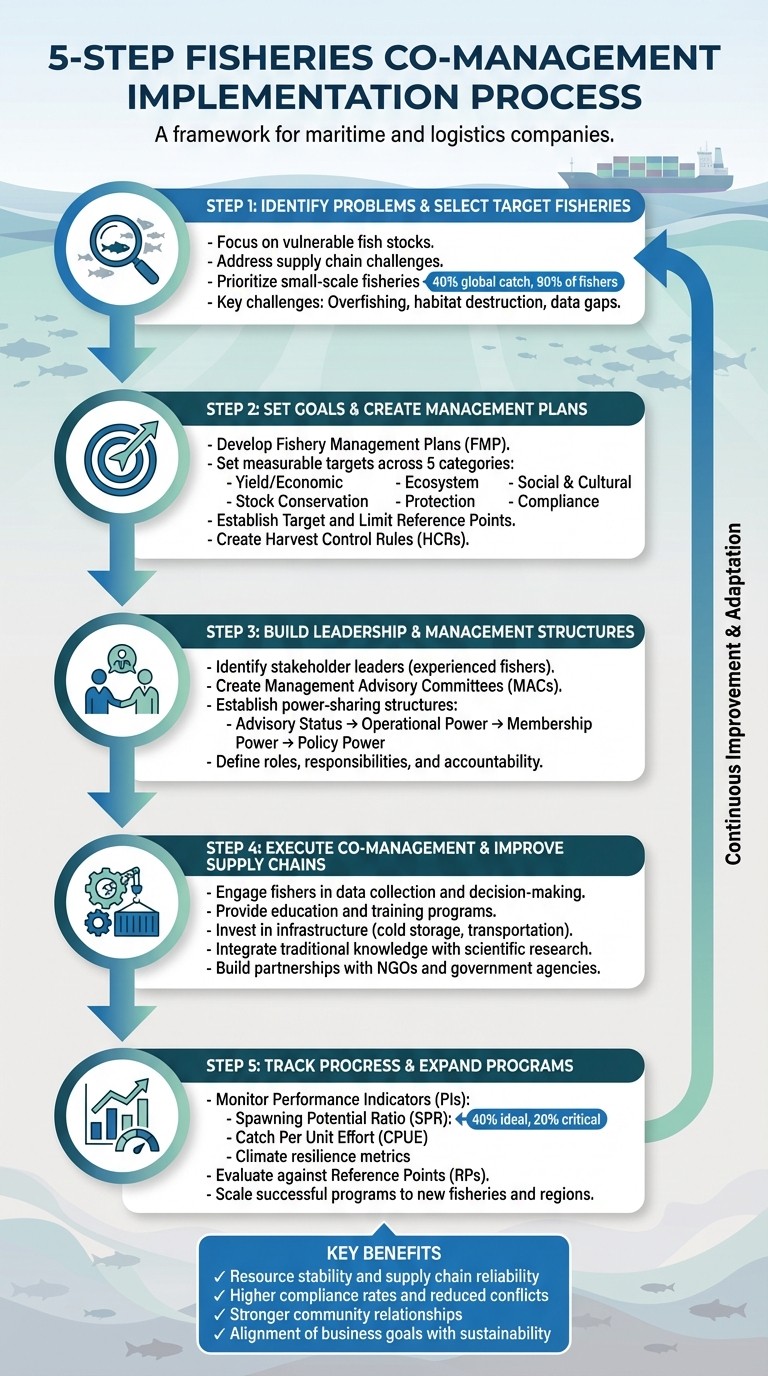
5-Step Process for Implementing Fisheries Co-Management in Maritime Companies
What is Fisheries Co-Management?
Definition and Core Principles
Fisheries co-management is a collaborative arrangement where government agencies, local resource users, and other stakeholders share the responsibility for managing aquatic resources effectively [1][4]. This partnership ensures that all involved parties participate equally in decision-making, implementation, and enforcement.
At its heart, this approach is guided by four key principles:
Shared responsibility: Both communities and government entities work together to create and enforce regulations [1].
Knowledge integration: Traditional ecological knowledge from local communities is combined with scientific research to inform management strategies [1][5].
Information flow: A steady and open exchange of data and insights occurs among all stakeholders [4].
Accountability: Transparent processes, clear decision-making criteria, and timely feedback mechanisms are critical to ensure trust and effectiveness [5].
For co-management to succeed, it must go beyond superficial consultation and embrace true collaboration.
"In focusing on fish, we often forget that we manage fish mainly through managing people... managing people means understanding how human organizations and human values can work towards, rather than against, the goals of fisheries management."
– Evelyn Pinkerton, School of Resource and Environmental Management, Simon Fraser University [5]
These principles not only create a solid foundation for managing fisheries but also deliver operational advantages for industries involved in maritime activities.
Benefits for Maritime & Logistics Companies
The collaborative nature of fisheries co-management brings practical advantages to maritime and logistics businesses. By aligning economic goals with environmental stewardship, companies can achieve greater resource stability, ensuring consistent supply chains and reducing the unpredictability of resource availability [4]. Local involvement in setting catch limits also supports fish stock recovery, preventing the cycle of overexploitation followed by scarcity.
Additionally, inclusive rule-making enhances the legitimacy of regulations. This results in higher compliance rates and fewer conflicts, lowering operational risks such as disruptions caused by illegal fishing or enforcement challenges [5].
Beyond operational benefits, co-management strengthens relationships with local communities and regulatory bodies. Building trust and mutual respect enhances a company’s reputation and secures its social license to operate. Companies that invest in sustainable practices and actively collaborate with communities are often rewarded with preferential access to resources, as they are viewed as partners rather than exploiters [5].
Step 1: Identify Problems and Select Target Fisheries
Common Fisheries Management Challenges
Before starting a co-management program, it's essential for maritime and logistics companies to address the key challenges threatening their supply chains. Overfishing and habitat destruction are two major issues that destabilize supply chains. When fish stocks collapse, the result is often unpredictable shortages and price swings that disrupt operations [5].
Another significant hurdle is the lack of reliable data. Many fisheries operate without accurate information on stock levels, species interactions, or overall ecosystem health, making it nearly impossible to make informed decisions [5]. Bridging these data gaps with local expertise is a critical step toward effective co-management [5]. On top of that, regulatory enforcement often faces roadblocks. Many top-down regulations fail because local fishers either distrust the rules or don’t fully understand them. This lack of compliance leads to costly enforcement efforts and operational challenges [5].
Resource limitations further complicate monitoring efforts [5]. These gaps can be addressed by involving local communities and using their knowledge to enhance monitoring and enforcement. Additionally, conflicts between stakeholders - especially between large-scale, offshore fleets and smaller, coastal fishing communities - can create legal and operational risks. These conflicts are often amplified by differences in language, education, and values [5][1].
"Our failure to manage people effectively has turned out to be the main limiting factor in fisheries management today." – Evelyn Pinkerton, School of Resource and Environmental Management, Simon Fraser University [5]
These challenges highlight areas where co-management can make a meaningful difference.
Choosing the Right Fisheries for Co-Management
Once the challenges are clear, the next step is to identify fisheries where co-management has the best chance of succeeding. A combination of scientific data and stakeholder input is essential for this selection process. Focus on fisheries with vulnerable stocks that are in poor health or at high risk of depletion, as these directly threaten supply chains [6]. Small-scale fisheries, which make up 40% of the global catch and employ 90% of fishers [2], are particularly important to consider, especially where governance structures show promise for collaboration.
Assess the willingness of local governments to share decision-making authority and determine whether organized user groups are ready to participate in co-management [1]. Community surveys can help identify internal structures and potential conflicts between economic and conservation priorities [1]. Fisheries where traditional top-down management has failed are often strong candidates for co-management [1].
Geographic factors also play a role. Fisheries with a strong local identity often benefit more from co-management, as local groups are well-positioned to monitor smaller-scale ecosystem dynamics [5]. For example, in the Arctic, co-management models have proven more adaptable than government-only approaches [1]. Climate change is another consideration, as shifting fish stocks may require collaboration across jurisdictions [6]. Lastly, look for supply chain inefficiencies, such as high discard rates or limited flexibility in targeting different species, where co-management could improve accountability and efficiency [6].
Step 2: Set Goals and Create Management Plans
Setting Measurable Sustainability Targets
Once you’ve identified the appropriate fisheries, the next step is to turn sustainability objectives into specific, measurable goals. These should be outlined in a Fishery Management Plan (FMP) with clear performance indicators for tracking and evaluation. As the FAO Code of Conduct for Responsible Fisheries explains, "Long-term management objectives should be translated into management actions, formulated as a fishery management plan or other management framework" [7].
Effective sustainability goals generally fall into five main categories:
Yield/Economic: Focused on financial viability and catch efficiency.
Stock Conservation: Ensuring sustainable spawning biomass and recruitment rates.
Ecosystem: Addressing by-catch rates and protecting habitats.
Social and Cultural: Supporting fisher income and respecting traditional fishing rights.
Compliance: Monitoring infractions and maintaining observer coverage percentages [8].
For each category, set Target and Limit Reference Points. For example, a target might aim to maintain spawning biomass at a sustainable level compared to unfished conditions, while a limit would establish a lower threshold that triggers corrective action if crossed.
Balancing economic and conservation priorities is key. Some performance indicators can act as strict constraints, while others serve as aspirational targets. To make these goals actionable, develop Harvest Control Rules (HCRs) - pre-determined management responses that activate when certain thresholds are reached [8]. This approach eliminates uncertainty and ensures consistent decision-making.
Before finalizing these goals, it’s crucial to engage stakeholders. Publish a plain-language discussion paper and allow a three-month period for public feedback [7]. As David Die from the Rosenstiel School of Marine and Atmospheric Science notes, "The earlier the interested parties are involved in this development the greater the sense of ownership of the final FMP they will have" [7]. This process not only builds trust and compliance but also helps identify any gaps in data. If critical scientific information is missing, include a timeline to gather it, rather than delaying necessary conservation measures. Flexibility is also vital - allow for short-term adjustments, such as modifying seasonal dates or annual catch limits, without requiring a full overhaul of the FMP [7].
This structured and transparent approach lays the groundwork for effective collaboration.
Developing Collaborative Management Plans
Creating a management plan requires structured cooperation among fishers, regulators, logistics providers, and coastal communities. The FAO describes an FMP as "a formal or informal arrangement between a fishery management authority and interested parties which identifies the partners in the fishery and their respective roles, details the agreed objectives for the fishery and specifies the management rules and regulations which apply to it" [7].
Leverage existing frameworks, such as AFAM or FLAGS, to clearly define objectives and integrate both scientific data and traditional knowledge [8]. For fisheries with limited data, tools like FishPath can provide tailored decision support to navigate technical challenges [6]. These resources ensure the FMP addresses ecological, social, and economic aspects in a balanced manner.
Transparency is critical - document stakeholder roles and gather feedback through meetings held in key fishing ports or logistics hubs. Incorporate their comments into the plan, weighing their input against national fishery policies and management goals [7]. If some stakeholders face challenges in participating, include capacity-building initiatives to ensure equitable involvement [7].
Work closely with relevant agencies and establish a review cycle, ideally every five years, to adapt the plan to changing socio-economic and biological conditions [7]. Monitoring is also essential. Use tools like electronic vessel monitoring systems (VMS), logbooks, observer programs, and dockside monitoring to measure progress against the defined performance indicators [8]. By aligning measurable targets with collaborative management efforts, you’ll create a more resilient and sustainable fishery supply chain.
Coastal & Marine Fisheries Co Management Practices in BD Documentary
Step 3: Build Leadership and Management Structures
Once management plans are in place, the next step is establishing strong leadership and effective management structures.
Identifying and Supporting Stakeholder Leaders
The success of co-management hinges on identifying leaders who bring both expertise and a deep commitment to the resource's long-term sustainability. Experienced fishers with practical knowledge of fishing operations and a strong grasp of ecological systems are often ideal candidates for these roles [5]. Their insights bridge the gap between traditional practices and modern resource management.
To truly empower these leaders, they must be treated as professional partners rather than mere subjects of regulation. Evelyn Pinkerton from Simon Fraser University underscores this point: "A valuable relationship of mutual respect and trust is likely to occur if the most knowledgeable and reflective fishers are treated as colleagues whose opinions are valued" [5]. This approach moves beyond token advisory roles, fostering genuine partnerships where stakeholders have meaningful influence over decisions.
Provide leaders with open access to data and involve them in analyzing information and crafting regulations [5]. Shared platforms, such as centralized computer systems, can ensure all parties have real-time access to stock and catch data, creating the transparency needed for trust and collaboration. Maritime and logistics companies can contribute by offering technical expertise, funding for monitoring programs, or even providing vessels for research [5]. These efforts not only strengthen resource management but also support reliable supply chains.
To further develop stakeholder involvement, consider creating a Commercial Fisheries Extension Service (CFES). This initiative could help build the skills necessary for effective co-management. Small-scale fisheries, which account for 40% of the global catch and employ over 90% of the world’s fishers, represent a tremendous source of energy and potential. That potential is only realized when stakeholders feel valued and aligned with the management goals [9][5]. With leaders in place, the next step is establishing management committees to formalize shared decision-making.
Creating Fisheries Management Committees
Management Advisory Committees (MACs) are essential for collaborative decision-making in commercial fisheries [10]. These committees should include representatives from various groups - gear types, commercial sectors, indigenous communities, and local environmental organizations. This diverse representation helps resolve allocation conflicts and supports a shared vision for sustainable fisheries [5].
Clearly defining the committee’s power-sharing structure from the outset is critical. Effective co-management requires more than consultation; it demands true collaboration where stakeholders share responsibility and authority with government agencies [1].
Power Level | Description | Impact on Co-Management |
|---|---|---|
Advisory Status | Fishers are consulted but lack decision-making authority | Can lead to divisive politics and reduced legitimacy |
Operational Power | Stakeholders share roles in daily activities like data collection | Builds local capacity and improves the accuracy of information |
Membership Power | Stakeholders decide who can access the fishery | Encourages stewardship and long-term resource investment |
Policy Power | Stakeholders co-develop high-level rules and the management vision | Fosters strong partnerships and high compliance |
Accountability mechanisms should be established early. These include data transparency, protocols for discussing differing perspectives, agreements on core challenges, and clear standards for evaluating outcomes [5]. Terms of reference should outline roles, responsibilities, and decision-making authority to ensure the committee is functional rather than symbolic [5].
Committees should operate on a regional scale, such as watersheds or sub-basins, to reflect the ecological processes at multiple levels. Local planning bodies can be nested within broader regional organizations to protect small-scale ecosystems while maintaining an overarching regional perspective [5]. By focusing on accountability and equitable power-sharing, co-management can align with both environmental goals and supply chain reliability.
Step 4: Execute Co-Management Activities and Improve Supply Chains
With leadership and committees in place, the next step shifts from planning to action - executing co-management programs while also refining supply chain operations.
Implementing Co-Management Programs
The success of co-management begins with involving fishers directly in the process. By engaging them in data collection, analysis, and crafting management measures, the approach feels collaborative rather than top-down, which can lead to better compliance [3].
Education and training play a crucial role. Fishers often view catch limits or seasonal closures as arbitrary, but when these measures are backed by clear, science-based explanations, they are more likely to be accepted [1].
Investments in infrastructure, like cold storage facilities and better transportation, can significantly reduce post-harvest losses. These improvements enhance product quality, extend shelf life, and strengthen the connection between maritime and fishing communities [2].
Building trust is another cornerstone of effective co-management. Partnering with NGOs, government agencies, and local leaders can improve communication and foster collaboration. Third-party organizations can help facilitate surveys, organize meetings, and bridge communication gaps [1][3]. The Fisheries Co-Management Guidebook by WCS and WorldFish offers practical strategies tailored for small-scale fisheries [2].
These steps create a strong foundation for improving supply chain operations.
Improving Supply Chain Efficiency
Once co-management practices are in place, the focus can shift to enhancing supply chain efficiency. Effective resource management naturally leads to better transparency and streamlined operations.
Using scientific data to track ecological and social outcomes enables a transparent, evidence-based approach. This data can inform logistics planning and inventory management, improving overall supply chain performance [2].
Combining traditional knowledge with scientific research is also vital. Fishers often provide valuable insights into seasonal trends, migration routes, and environmental changes that might not surface in formal studies. This integration not only strengthens management outcomes but also fosters greater community support.
Regular stakeholder meetings or advisory boards can help address concerns quickly, preventing small issues from growing into larger conflicts [1]. Additionally, having flexible management structures allows for rapid adjustments in response to environmental changes, protecting both resources and supply chain stability.
As WorldFish emphasizes:
"Fewer management programs implemented well might achieve far more than many implemented poorly, and poorly implemented co-management can be worse than no management" [2].
Step 5: Track Progress and Expand Successful Programs
Once co-management strategies are in place, it’s essential to measure their impact using clear, well-defined metrics.
Tracking and Evaluating Performance
Effective fisheries co-management hinges on monitoring Performance Indicators (PIs) against established Reference Points (RPs). For instance, key sustainability metrics include the percentage of juveniles in the catch and the Spawning Potential Ratio (SPR). For finfish, maintaining an SPR of 40% is ideal, with 20% marking a critical threshold. Similarly, fishing mortality should ideally be kept at 75% of the natural mortality rate, as levels exceeding 125% are considered dangerously high [11].
Economic performance can be assessed through metrics like Catch Per Unit Effort (CPUE), fishing costs, revenues, and profit margins. A stable CPUE is typically defined as staying within 10% of the five-year average [11].
To measure climate resilience, track the percentage of catch from climate-vulnerable species and monitor shifts in high-catch areas using GPS data and fishers' observations [11]. Combining multiple data sources - such as visual censuses, GPS-based catch records, and insights from fishers - helps reduce uncertainty. In multi-species fisheries, grouping species into management "baskets" and monitoring representative species can reveal broader trends and make management practices more scalable [11][12].
These metrics not only validate the success of co-management programs but also provide a roadmap for strategic growth.
Expanding to Other Fisheries and Regions
Once success is demonstrated, use performance data to guide expansion into new fisheries and regions. Scaling should only occur after confirming positive impacts on biodiversity, food security, and livelihoods [2].
Given the importance of small-scale fisheries in global catches, expansion efforts must be deliberate and targeted. Building strong partnerships that benefit both ecosystems and local communities is key. Programs must also uphold social safeguards, including respect for human rights, gender equality, and principles of justice, to maintain trust as operations grow [2]. Tools like guidebooks and standardized frameworks can help new sites define and measure success effectively. In multi-species fisheries, focusing on representative species ensures that key metrics remain meaningful across diverse locations [11].
Expanding successful co-management programs strengthens supply chain stability and aligns with broader corporate sustainability goals.
Conclusion
This guide has provided practical steps for integrating co-management into sustainable supply chain practices. Maritime and logistics companies can adopt fisheries co-management by pinpointing target fisheries and challenges, setting clear objectives, fostering collaborative leadership, implementing management strategies, and using data-driven metrics to monitor progress [1].
The advantages of co-management are clear. Involving stakeholders in the regulatory process enhances compliance, while blending scientific data with traditional knowledge leads to more informed decisions [1]. For supply chains, applying harvest control measures helps protect vulnerable fish stocks, reducing the risk of complete fishery closures that could disrupt operations [6].
Small-scale fisheries, which account for 40% of the global catch and employ over 90% of fishers worldwide, represent a significant opportunity for these partnerships [2]. However, success hinges on dedication. Building trust and establishing strong communication channels require time and effort [1].
To avoid setbacks, rigorous monitoring and well-defined performance metrics are critical [2]. Companies should balance input controls, like gear restrictions, with output controls such as catch limits. Tools like catch accounting can further ensure accountability and transparency [6].
FAQs
What’s the fastest way to start co-management in one fishery?
The quickest path to initiating co-management involves bringing together key stakeholders - such as fishers, regulators, and community members - to agree on shared goals and develop a management plan. Starting with small, well-defined areas or specific issues can help build trust and show tangible benefits early on. Hosting stakeholder meetings, organizing capacity-building efforts, and encouraging knowledge sharing are crucial steps to promote collaboration and ensure a smooth, fast rollout.
How do we share data with fishers and regulators without exposing sensitive business info?
Sharing data securely requires the use of electronic, interoperable traceability systems designed with privacy in mind. These systems ensure that only the necessary information is accessible, safeguarding confidential business details while enabling effective collaboration. By incorporating advanced traceability methods, businesses can navigate the complexities of modern supply chains, providing stakeholders with relevant data in tailored formats - all without compromising sensitive information.
Which 3 metrics should we track first to prove co-management is working?
To effectively assess and manage fishery health and sustainability, it’s crucial to track these three key metrics:
Catch trends and juvenile fish percentage: Monitoring these figures helps identify overharvesting risks and ensures fish stocks are maintained at sustainable levels.
Stock status relative to reference points: Metrics such as fishing mortality rates or biomass levels indicate whether fishing activities are staying within sustainable limits.
Bycatch levels and species composition: Evaluating these factors provides insight into the broader ecosystem impacts of fishing and helps measure progress toward reducing bycatch.
Together, these metrics offer critical information about stock health, sustainable practices, and the overall ecological balance.
Related Blog Posts
Latest Articles
©2025



FAQ
01
What does it really mean to “redefine profit”?
02
What makes Council Fire different?
03
Who does Council Fire you work with?
04
What does working with Council Fire actually look like?
05
How does Council Fire help organizations turn big goals into action?
06
How does Council Fire define and measure success?
Mar 25, 2026
How to Implement Fisheries Co-Management for Maritime & Logistics Companies
Sustainability Strategy
In This Article
Guide for maritime and logistics firms to implement fisheries co-management: select fisheries, set FMPs, build leadership, monitor metrics.
How to Implement Fisheries Co-Management for Maritime & Logistics Companies
Fisheries co-management is a collaborative approach where governments, local fishers, and businesses share responsibility for managing aquatic resources. This method addresses overfishing, habitat destruction, and supply chain disruptions by combining scientific research with local expertise. For maritime and logistics companies, co-management ensures resource stability, reduces risks, and strengthens community relationships. Key steps include:
Identify target fisheries: Focus on vulnerable stocks and supply chain challenges.
Set measurable goals: Create clear Fishery Management Plans with performance indicators.
Build leadership: Empower local leaders and establish management committees.
Execute programs: Engage stakeholders in data collection and decision-making.
Monitor progress: Track outcomes using defined metrics like stock health and fishing efficiency.
This approach not only protects marine ecosystems but also secures long-term supply chain reliability, aligning business goals with resource management.
5-Step Process for Implementing Fisheries Co-Management in Maritime Companies
What is Fisheries Co-Management?
Definition and Core Principles
Fisheries co-management is a collaborative arrangement where government agencies, local resource users, and other stakeholders share the responsibility for managing aquatic resources effectively [1][4]. This partnership ensures that all involved parties participate equally in decision-making, implementation, and enforcement.
At its heart, this approach is guided by four key principles:
Shared responsibility: Both communities and government entities work together to create and enforce regulations [1].
Knowledge integration: Traditional ecological knowledge from local communities is combined with scientific research to inform management strategies [1][5].
Information flow: A steady and open exchange of data and insights occurs among all stakeholders [4].
Accountability: Transparent processes, clear decision-making criteria, and timely feedback mechanisms are critical to ensure trust and effectiveness [5].
For co-management to succeed, it must go beyond superficial consultation and embrace true collaboration.
"In focusing on fish, we often forget that we manage fish mainly through managing people... managing people means understanding how human organizations and human values can work towards, rather than against, the goals of fisheries management."
– Evelyn Pinkerton, School of Resource and Environmental Management, Simon Fraser University [5]
These principles not only create a solid foundation for managing fisheries but also deliver operational advantages for industries involved in maritime activities.
Benefits for Maritime & Logistics Companies
The collaborative nature of fisheries co-management brings practical advantages to maritime and logistics businesses. By aligning economic goals with environmental stewardship, companies can achieve greater resource stability, ensuring consistent supply chains and reducing the unpredictability of resource availability [4]. Local involvement in setting catch limits also supports fish stock recovery, preventing the cycle of overexploitation followed by scarcity.
Additionally, inclusive rule-making enhances the legitimacy of regulations. This results in higher compliance rates and fewer conflicts, lowering operational risks such as disruptions caused by illegal fishing or enforcement challenges [5].
Beyond operational benefits, co-management strengthens relationships with local communities and regulatory bodies. Building trust and mutual respect enhances a company’s reputation and secures its social license to operate. Companies that invest in sustainable practices and actively collaborate with communities are often rewarded with preferential access to resources, as they are viewed as partners rather than exploiters [5].
Step 1: Identify Problems and Select Target Fisheries
Common Fisheries Management Challenges
Before starting a co-management program, it's essential for maritime and logistics companies to address the key challenges threatening their supply chains. Overfishing and habitat destruction are two major issues that destabilize supply chains. When fish stocks collapse, the result is often unpredictable shortages and price swings that disrupt operations [5].
Another significant hurdle is the lack of reliable data. Many fisheries operate without accurate information on stock levels, species interactions, or overall ecosystem health, making it nearly impossible to make informed decisions [5]. Bridging these data gaps with local expertise is a critical step toward effective co-management [5]. On top of that, regulatory enforcement often faces roadblocks. Many top-down regulations fail because local fishers either distrust the rules or don’t fully understand them. This lack of compliance leads to costly enforcement efforts and operational challenges [5].
Resource limitations further complicate monitoring efforts [5]. These gaps can be addressed by involving local communities and using their knowledge to enhance monitoring and enforcement. Additionally, conflicts between stakeholders - especially between large-scale, offshore fleets and smaller, coastal fishing communities - can create legal and operational risks. These conflicts are often amplified by differences in language, education, and values [5][1].
"Our failure to manage people effectively has turned out to be the main limiting factor in fisheries management today." – Evelyn Pinkerton, School of Resource and Environmental Management, Simon Fraser University [5]
These challenges highlight areas where co-management can make a meaningful difference.
Choosing the Right Fisheries for Co-Management
Once the challenges are clear, the next step is to identify fisheries where co-management has the best chance of succeeding. A combination of scientific data and stakeholder input is essential for this selection process. Focus on fisheries with vulnerable stocks that are in poor health or at high risk of depletion, as these directly threaten supply chains [6]. Small-scale fisheries, which make up 40% of the global catch and employ 90% of fishers [2], are particularly important to consider, especially where governance structures show promise for collaboration.
Assess the willingness of local governments to share decision-making authority and determine whether organized user groups are ready to participate in co-management [1]. Community surveys can help identify internal structures and potential conflicts between economic and conservation priorities [1]. Fisheries where traditional top-down management has failed are often strong candidates for co-management [1].
Geographic factors also play a role. Fisheries with a strong local identity often benefit more from co-management, as local groups are well-positioned to monitor smaller-scale ecosystem dynamics [5]. For example, in the Arctic, co-management models have proven more adaptable than government-only approaches [1]. Climate change is another consideration, as shifting fish stocks may require collaboration across jurisdictions [6]. Lastly, look for supply chain inefficiencies, such as high discard rates or limited flexibility in targeting different species, where co-management could improve accountability and efficiency [6].
Step 2: Set Goals and Create Management Plans
Setting Measurable Sustainability Targets
Once you’ve identified the appropriate fisheries, the next step is to turn sustainability objectives into specific, measurable goals. These should be outlined in a Fishery Management Plan (FMP) with clear performance indicators for tracking and evaluation. As the FAO Code of Conduct for Responsible Fisheries explains, "Long-term management objectives should be translated into management actions, formulated as a fishery management plan or other management framework" [7].
Effective sustainability goals generally fall into five main categories:
Yield/Economic: Focused on financial viability and catch efficiency.
Stock Conservation: Ensuring sustainable spawning biomass and recruitment rates.
Ecosystem: Addressing by-catch rates and protecting habitats.
Social and Cultural: Supporting fisher income and respecting traditional fishing rights.
Compliance: Monitoring infractions and maintaining observer coverage percentages [8].
For each category, set Target and Limit Reference Points. For example, a target might aim to maintain spawning biomass at a sustainable level compared to unfished conditions, while a limit would establish a lower threshold that triggers corrective action if crossed.
Balancing economic and conservation priorities is key. Some performance indicators can act as strict constraints, while others serve as aspirational targets. To make these goals actionable, develop Harvest Control Rules (HCRs) - pre-determined management responses that activate when certain thresholds are reached [8]. This approach eliminates uncertainty and ensures consistent decision-making.
Before finalizing these goals, it’s crucial to engage stakeholders. Publish a plain-language discussion paper and allow a three-month period for public feedback [7]. As David Die from the Rosenstiel School of Marine and Atmospheric Science notes, "The earlier the interested parties are involved in this development the greater the sense of ownership of the final FMP they will have" [7]. This process not only builds trust and compliance but also helps identify any gaps in data. If critical scientific information is missing, include a timeline to gather it, rather than delaying necessary conservation measures. Flexibility is also vital - allow for short-term adjustments, such as modifying seasonal dates or annual catch limits, without requiring a full overhaul of the FMP [7].
This structured and transparent approach lays the groundwork for effective collaboration.
Developing Collaborative Management Plans
Creating a management plan requires structured cooperation among fishers, regulators, logistics providers, and coastal communities. The FAO describes an FMP as "a formal or informal arrangement between a fishery management authority and interested parties which identifies the partners in the fishery and their respective roles, details the agreed objectives for the fishery and specifies the management rules and regulations which apply to it" [7].
Leverage existing frameworks, such as AFAM or FLAGS, to clearly define objectives and integrate both scientific data and traditional knowledge [8]. For fisheries with limited data, tools like FishPath can provide tailored decision support to navigate technical challenges [6]. These resources ensure the FMP addresses ecological, social, and economic aspects in a balanced manner.
Transparency is critical - document stakeholder roles and gather feedback through meetings held in key fishing ports or logistics hubs. Incorporate their comments into the plan, weighing their input against national fishery policies and management goals [7]. If some stakeholders face challenges in participating, include capacity-building initiatives to ensure equitable involvement [7].
Work closely with relevant agencies and establish a review cycle, ideally every five years, to adapt the plan to changing socio-economic and biological conditions [7]. Monitoring is also essential. Use tools like electronic vessel monitoring systems (VMS), logbooks, observer programs, and dockside monitoring to measure progress against the defined performance indicators [8]. By aligning measurable targets with collaborative management efforts, you’ll create a more resilient and sustainable fishery supply chain.
Coastal & Marine Fisheries Co Management Practices in BD Documentary
Step 3: Build Leadership and Management Structures
Once management plans are in place, the next step is establishing strong leadership and effective management structures.
Identifying and Supporting Stakeholder Leaders
The success of co-management hinges on identifying leaders who bring both expertise and a deep commitment to the resource's long-term sustainability. Experienced fishers with practical knowledge of fishing operations and a strong grasp of ecological systems are often ideal candidates for these roles [5]. Their insights bridge the gap between traditional practices and modern resource management.
To truly empower these leaders, they must be treated as professional partners rather than mere subjects of regulation. Evelyn Pinkerton from Simon Fraser University underscores this point: "A valuable relationship of mutual respect and trust is likely to occur if the most knowledgeable and reflective fishers are treated as colleagues whose opinions are valued" [5]. This approach moves beyond token advisory roles, fostering genuine partnerships where stakeholders have meaningful influence over decisions.
Provide leaders with open access to data and involve them in analyzing information and crafting regulations [5]. Shared platforms, such as centralized computer systems, can ensure all parties have real-time access to stock and catch data, creating the transparency needed for trust and collaboration. Maritime and logistics companies can contribute by offering technical expertise, funding for monitoring programs, or even providing vessels for research [5]. These efforts not only strengthen resource management but also support reliable supply chains.
To further develop stakeholder involvement, consider creating a Commercial Fisheries Extension Service (CFES). This initiative could help build the skills necessary for effective co-management. Small-scale fisheries, which account for 40% of the global catch and employ over 90% of the world’s fishers, represent a tremendous source of energy and potential. That potential is only realized when stakeholders feel valued and aligned with the management goals [9][5]. With leaders in place, the next step is establishing management committees to formalize shared decision-making.
Creating Fisheries Management Committees
Management Advisory Committees (MACs) are essential for collaborative decision-making in commercial fisheries [10]. These committees should include representatives from various groups - gear types, commercial sectors, indigenous communities, and local environmental organizations. This diverse representation helps resolve allocation conflicts and supports a shared vision for sustainable fisheries [5].
Clearly defining the committee’s power-sharing structure from the outset is critical. Effective co-management requires more than consultation; it demands true collaboration where stakeholders share responsibility and authority with government agencies [1].
Power Level | Description | Impact on Co-Management |
|---|---|---|
Advisory Status | Fishers are consulted but lack decision-making authority | Can lead to divisive politics and reduced legitimacy |
Operational Power | Stakeholders share roles in daily activities like data collection | Builds local capacity and improves the accuracy of information |
Membership Power | Stakeholders decide who can access the fishery | Encourages stewardship and long-term resource investment |
Policy Power | Stakeholders co-develop high-level rules and the management vision | Fosters strong partnerships and high compliance |
Accountability mechanisms should be established early. These include data transparency, protocols for discussing differing perspectives, agreements on core challenges, and clear standards for evaluating outcomes [5]. Terms of reference should outline roles, responsibilities, and decision-making authority to ensure the committee is functional rather than symbolic [5].
Committees should operate on a regional scale, such as watersheds or sub-basins, to reflect the ecological processes at multiple levels. Local planning bodies can be nested within broader regional organizations to protect small-scale ecosystems while maintaining an overarching regional perspective [5]. By focusing on accountability and equitable power-sharing, co-management can align with both environmental goals and supply chain reliability.
Step 4: Execute Co-Management Activities and Improve Supply Chains
With leadership and committees in place, the next step shifts from planning to action - executing co-management programs while also refining supply chain operations.
Implementing Co-Management Programs
The success of co-management begins with involving fishers directly in the process. By engaging them in data collection, analysis, and crafting management measures, the approach feels collaborative rather than top-down, which can lead to better compliance [3].
Education and training play a crucial role. Fishers often view catch limits or seasonal closures as arbitrary, but when these measures are backed by clear, science-based explanations, they are more likely to be accepted [1].
Investments in infrastructure, like cold storage facilities and better transportation, can significantly reduce post-harvest losses. These improvements enhance product quality, extend shelf life, and strengthen the connection between maritime and fishing communities [2].
Building trust is another cornerstone of effective co-management. Partnering with NGOs, government agencies, and local leaders can improve communication and foster collaboration. Third-party organizations can help facilitate surveys, organize meetings, and bridge communication gaps [1][3]. The Fisheries Co-Management Guidebook by WCS and WorldFish offers practical strategies tailored for small-scale fisheries [2].
These steps create a strong foundation for improving supply chain operations.
Improving Supply Chain Efficiency
Once co-management practices are in place, the focus can shift to enhancing supply chain efficiency. Effective resource management naturally leads to better transparency and streamlined operations.
Using scientific data to track ecological and social outcomes enables a transparent, evidence-based approach. This data can inform logistics planning and inventory management, improving overall supply chain performance [2].
Combining traditional knowledge with scientific research is also vital. Fishers often provide valuable insights into seasonal trends, migration routes, and environmental changes that might not surface in formal studies. This integration not only strengthens management outcomes but also fosters greater community support.
Regular stakeholder meetings or advisory boards can help address concerns quickly, preventing small issues from growing into larger conflicts [1]. Additionally, having flexible management structures allows for rapid adjustments in response to environmental changes, protecting both resources and supply chain stability.
As WorldFish emphasizes:
"Fewer management programs implemented well might achieve far more than many implemented poorly, and poorly implemented co-management can be worse than no management" [2].
Step 5: Track Progress and Expand Successful Programs
Once co-management strategies are in place, it’s essential to measure their impact using clear, well-defined metrics.
Tracking and Evaluating Performance
Effective fisheries co-management hinges on monitoring Performance Indicators (PIs) against established Reference Points (RPs). For instance, key sustainability metrics include the percentage of juveniles in the catch and the Spawning Potential Ratio (SPR). For finfish, maintaining an SPR of 40% is ideal, with 20% marking a critical threshold. Similarly, fishing mortality should ideally be kept at 75% of the natural mortality rate, as levels exceeding 125% are considered dangerously high [11].
Economic performance can be assessed through metrics like Catch Per Unit Effort (CPUE), fishing costs, revenues, and profit margins. A stable CPUE is typically defined as staying within 10% of the five-year average [11].
To measure climate resilience, track the percentage of catch from climate-vulnerable species and monitor shifts in high-catch areas using GPS data and fishers' observations [11]. Combining multiple data sources - such as visual censuses, GPS-based catch records, and insights from fishers - helps reduce uncertainty. In multi-species fisheries, grouping species into management "baskets" and monitoring representative species can reveal broader trends and make management practices more scalable [11][12].
These metrics not only validate the success of co-management programs but also provide a roadmap for strategic growth.
Expanding to Other Fisheries and Regions
Once success is demonstrated, use performance data to guide expansion into new fisheries and regions. Scaling should only occur after confirming positive impacts on biodiversity, food security, and livelihoods [2].
Given the importance of small-scale fisheries in global catches, expansion efforts must be deliberate and targeted. Building strong partnerships that benefit both ecosystems and local communities is key. Programs must also uphold social safeguards, including respect for human rights, gender equality, and principles of justice, to maintain trust as operations grow [2]. Tools like guidebooks and standardized frameworks can help new sites define and measure success effectively. In multi-species fisheries, focusing on representative species ensures that key metrics remain meaningful across diverse locations [11].
Expanding successful co-management programs strengthens supply chain stability and aligns with broader corporate sustainability goals.
Conclusion
This guide has provided practical steps for integrating co-management into sustainable supply chain practices. Maritime and logistics companies can adopt fisheries co-management by pinpointing target fisheries and challenges, setting clear objectives, fostering collaborative leadership, implementing management strategies, and using data-driven metrics to monitor progress [1].
The advantages of co-management are clear. Involving stakeholders in the regulatory process enhances compliance, while blending scientific data with traditional knowledge leads to more informed decisions [1]. For supply chains, applying harvest control measures helps protect vulnerable fish stocks, reducing the risk of complete fishery closures that could disrupt operations [6].
Small-scale fisheries, which account for 40% of the global catch and employ over 90% of fishers worldwide, represent a significant opportunity for these partnerships [2]. However, success hinges on dedication. Building trust and establishing strong communication channels require time and effort [1].
To avoid setbacks, rigorous monitoring and well-defined performance metrics are critical [2]. Companies should balance input controls, like gear restrictions, with output controls such as catch limits. Tools like catch accounting can further ensure accountability and transparency [6].
FAQs
What’s the fastest way to start co-management in one fishery?
The quickest path to initiating co-management involves bringing together key stakeholders - such as fishers, regulators, and community members - to agree on shared goals and develop a management plan. Starting with small, well-defined areas or specific issues can help build trust and show tangible benefits early on. Hosting stakeholder meetings, organizing capacity-building efforts, and encouraging knowledge sharing are crucial steps to promote collaboration and ensure a smooth, fast rollout.
How do we share data with fishers and regulators without exposing sensitive business info?
Sharing data securely requires the use of electronic, interoperable traceability systems designed with privacy in mind. These systems ensure that only the necessary information is accessible, safeguarding confidential business details while enabling effective collaboration. By incorporating advanced traceability methods, businesses can navigate the complexities of modern supply chains, providing stakeholders with relevant data in tailored formats - all without compromising sensitive information.
Which 3 metrics should we track first to prove co-management is working?
To effectively assess and manage fishery health and sustainability, it’s crucial to track these three key metrics:
Catch trends and juvenile fish percentage: Monitoring these figures helps identify overharvesting risks and ensures fish stocks are maintained at sustainable levels.
Stock status relative to reference points: Metrics such as fishing mortality rates or biomass levels indicate whether fishing activities are staying within sustainable limits.
Bycatch levels and species composition: Evaluating these factors provides insight into the broader ecosystem impacts of fishing and helps measure progress toward reducing bycatch.
Together, these metrics offer critical information about stock health, sustainable practices, and the overall ecological balance.
Related Blog Posts
FAQ
01
What does it really mean to “redefine profit”?
02
What makes Council Fire different?
03
Who does Council Fire you work with?
04
What does working with Council Fire actually look like?
05
How does Council Fire help organizations turn big goals into action?
06
How does Council Fire define and measure success?
Mar 25, 2026
How to Implement Fisheries Co-Management for Maritime & Logistics Companies
Sustainability Strategy
In This Article
Guide for maritime and logistics firms to implement fisheries co-management: select fisheries, set FMPs, build leadership, monitor metrics.
How to Implement Fisheries Co-Management for Maritime & Logistics Companies
Fisheries co-management is a collaborative approach where governments, local fishers, and businesses share responsibility for managing aquatic resources. This method addresses overfishing, habitat destruction, and supply chain disruptions by combining scientific research with local expertise. For maritime and logistics companies, co-management ensures resource stability, reduces risks, and strengthens community relationships. Key steps include:
Identify target fisheries: Focus on vulnerable stocks and supply chain challenges.
Set measurable goals: Create clear Fishery Management Plans with performance indicators.
Build leadership: Empower local leaders and establish management committees.
Execute programs: Engage stakeholders in data collection and decision-making.
Monitor progress: Track outcomes using defined metrics like stock health and fishing efficiency.
This approach not only protects marine ecosystems but also secures long-term supply chain reliability, aligning business goals with resource management.
5-Step Process for Implementing Fisheries Co-Management in Maritime Companies
What is Fisheries Co-Management?
Definition and Core Principles
Fisheries co-management is a collaborative arrangement where government agencies, local resource users, and other stakeholders share the responsibility for managing aquatic resources effectively [1][4]. This partnership ensures that all involved parties participate equally in decision-making, implementation, and enforcement.
At its heart, this approach is guided by four key principles:
Shared responsibility: Both communities and government entities work together to create and enforce regulations [1].
Knowledge integration: Traditional ecological knowledge from local communities is combined with scientific research to inform management strategies [1][5].
Information flow: A steady and open exchange of data and insights occurs among all stakeholders [4].
Accountability: Transparent processes, clear decision-making criteria, and timely feedback mechanisms are critical to ensure trust and effectiveness [5].
For co-management to succeed, it must go beyond superficial consultation and embrace true collaboration.
"In focusing on fish, we often forget that we manage fish mainly through managing people... managing people means understanding how human organizations and human values can work towards, rather than against, the goals of fisheries management."
– Evelyn Pinkerton, School of Resource and Environmental Management, Simon Fraser University [5]
These principles not only create a solid foundation for managing fisheries but also deliver operational advantages for industries involved in maritime activities.
Benefits for Maritime & Logistics Companies
The collaborative nature of fisheries co-management brings practical advantages to maritime and logistics businesses. By aligning economic goals with environmental stewardship, companies can achieve greater resource stability, ensuring consistent supply chains and reducing the unpredictability of resource availability [4]. Local involvement in setting catch limits also supports fish stock recovery, preventing the cycle of overexploitation followed by scarcity.
Additionally, inclusive rule-making enhances the legitimacy of regulations. This results in higher compliance rates and fewer conflicts, lowering operational risks such as disruptions caused by illegal fishing or enforcement challenges [5].
Beyond operational benefits, co-management strengthens relationships with local communities and regulatory bodies. Building trust and mutual respect enhances a company’s reputation and secures its social license to operate. Companies that invest in sustainable practices and actively collaborate with communities are often rewarded with preferential access to resources, as they are viewed as partners rather than exploiters [5].
Step 1: Identify Problems and Select Target Fisheries
Common Fisheries Management Challenges
Before starting a co-management program, it's essential for maritime and logistics companies to address the key challenges threatening their supply chains. Overfishing and habitat destruction are two major issues that destabilize supply chains. When fish stocks collapse, the result is often unpredictable shortages and price swings that disrupt operations [5].
Another significant hurdle is the lack of reliable data. Many fisheries operate without accurate information on stock levels, species interactions, or overall ecosystem health, making it nearly impossible to make informed decisions [5]. Bridging these data gaps with local expertise is a critical step toward effective co-management [5]. On top of that, regulatory enforcement often faces roadblocks. Many top-down regulations fail because local fishers either distrust the rules or don’t fully understand them. This lack of compliance leads to costly enforcement efforts and operational challenges [5].
Resource limitations further complicate monitoring efforts [5]. These gaps can be addressed by involving local communities and using their knowledge to enhance monitoring and enforcement. Additionally, conflicts between stakeholders - especially between large-scale, offshore fleets and smaller, coastal fishing communities - can create legal and operational risks. These conflicts are often amplified by differences in language, education, and values [5][1].
"Our failure to manage people effectively has turned out to be the main limiting factor in fisheries management today." – Evelyn Pinkerton, School of Resource and Environmental Management, Simon Fraser University [5]
These challenges highlight areas where co-management can make a meaningful difference.
Choosing the Right Fisheries for Co-Management
Once the challenges are clear, the next step is to identify fisheries where co-management has the best chance of succeeding. A combination of scientific data and stakeholder input is essential for this selection process. Focus on fisheries with vulnerable stocks that are in poor health or at high risk of depletion, as these directly threaten supply chains [6]. Small-scale fisheries, which make up 40% of the global catch and employ 90% of fishers [2], are particularly important to consider, especially where governance structures show promise for collaboration.
Assess the willingness of local governments to share decision-making authority and determine whether organized user groups are ready to participate in co-management [1]. Community surveys can help identify internal structures and potential conflicts between economic and conservation priorities [1]. Fisheries where traditional top-down management has failed are often strong candidates for co-management [1].
Geographic factors also play a role. Fisheries with a strong local identity often benefit more from co-management, as local groups are well-positioned to monitor smaller-scale ecosystem dynamics [5]. For example, in the Arctic, co-management models have proven more adaptable than government-only approaches [1]. Climate change is another consideration, as shifting fish stocks may require collaboration across jurisdictions [6]. Lastly, look for supply chain inefficiencies, such as high discard rates or limited flexibility in targeting different species, where co-management could improve accountability and efficiency [6].
Step 2: Set Goals and Create Management Plans
Setting Measurable Sustainability Targets
Once you’ve identified the appropriate fisheries, the next step is to turn sustainability objectives into specific, measurable goals. These should be outlined in a Fishery Management Plan (FMP) with clear performance indicators for tracking and evaluation. As the FAO Code of Conduct for Responsible Fisheries explains, "Long-term management objectives should be translated into management actions, formulated as a fishery management plan or other management framework" [7].
Effective sustainability goals generally fall into five main categories:
Yield/Economic: Focused on financial viability and catch efficiency.
Stock Conservation: Ensuring sustainable spawning biomass and recruitment rates.
Ecosystem: Addressing by-catch rates and protecting habitats.
Social and Cultural: Supporting fisher income and respecting traditional fishing rights.
Compliance: Monitoring infractions and maintaining observer coverage percentages [8].
For each category, set Target and Limit Reference Points. For example, a target might aim to maintain spawning biomass at a sustainable level compared to unfished conditions, while a limit would establish a lower threshold that triggers corrective action if crossed.
Balancing economic and conservation priorities is key. Some performance indicators can act as strict constraints, while others serve as aspirational targets. To make these goals actionable, develop Harvest Control Rules (HCRs) - pre-determined management responses that activate when certain thresholds are reached [8]. This approach eliminates uncertainty and ensures consistent decision-making.
Before finalizing these goals, it’s crucial to engage stakeholders. Publish a plain-language discussion paper and allow a three-month period for public feedback [7]. As David Die from the Rosenstiel School of Marine and Atmospheric Science notes, "The earlier the interested parties are involved in this development the greater the sense of ownership of the final FMP they will have" [7]. This process not only builds trust and compliance but also helps identify any gaps in data. If critical scientific information is missing, include a timeline to gather it, rather than delaying necessary conservation measures. Flexibility is also vital - allow for short-term adjustments, such as modifying seasonal dates or annual catch limits, without requiring a full overhaul of the FMP [7].
This structured and transparent approach lays the groundwork for effective collaboration.
Developing Collaborative Management Plans
Creating a management plan requires structured cooperation among fishers, regulators, logistics providers, and coastal communities. The FAO describes an FMP as "a formal or informal arrangement between a fishery management authority and interested parties which identifies the partners in the fishery and their respective roles, details the agreed objectives for the fishery and specifies the management rules and regulations which apply to it" [7].
Leverage existing frameworks, such as AFAM or FLAGS, to clearly define objectives and integrate both scientific data and traditional knowledge [8]. For fisheries with limited data, tools like FishPath can provide tailored decision support to navigate technical challenges [6]. These resources ensure the FMP addresses ecological, social, and economic aspects in a balanced manner.
Transparency is critical - document stakeholder roles and gather feedback through meetings held in key fishing ports or logistics hubs. Incorporate their comments into the plan, weighing their input against national fishery policies and management goals [7]. If some stakeholders face challenges in participating, include capacity-building initiatives to ensure equitable involvement [7].
Work closely with relevant agencies and establish a review cycle, ideally every five years, to adapt the plan to changing socio-economic and biological conditions [7]. Monitoring is also essential. Use tools like electronic vessel monitoring systems (VMS), logbooks, observer programs, and dockside monitoring to measure progress against the defined performance indicators [8]. By aligning measurable targets with collaborative management efforts, you’ll create a more resilient and sustainable fishery supply chain.
Coastal & Marine Fisheries Co Management Practices in BD Documentary
Step 3: Build Leadership and Management Structures
Once management plans are in place, the next step is establishing strong leadership and effective management structures.
Identifying and Supporting Stakeholder Leaders
The success of co-management hinges on identifying leaders who bring both expertise and a deep commitment to the resource's long-term sustainability. Experienced fishers with practical knowledge of fishing operations and a strong grasp of ecological systems are often ideal candidates for these roles [5]. Their insights bridge the gap between traditional practices and modern resource management.
To truly empower these leaders, they must be treated as professional partners rather than mere subjects of regulation. Evelyn Pinkerton from Simon Fraser University underscores this point: "A valuable relationship of mutual respect and trust is likely to occur if the most knowledgeable and reflective fishers are treated as colleagues whose opinions are valued" [5]. This approach moves beyond token advisory roles, fostering genuine partnerships where stakeholders have meaningful influence over decisions.
Provide leaders with open access to data and involve them in analyzing information and crafting regulations [5]. Shared platforms, such as centralized computer systems, can ensure all parties have real-time access to stock and catch data, creating the transparency needed for trust and collaboration. Maritime and logistics companies can contribute by offering technical expertise, funding for monitoring programs, or even providing vessels for research [5]. These efforts not only strengthen resource management but also support reliable supply chains.
To further develop stakeholder involvement, consider creating a Commercial Fisheries Extension Service (CFES). This initiative could help build the skills necessary for effective co-management. Small-scale fisheries, which account for 40% of the global catch and employ over 90% of the world’s fishers, represent a tremendous source of energy and potential. That potential is only realized when stakeholders feel valued and aligned with the management goals [9][5]. With leaders in place, the next step is establishing management committees to formalize shared decision-making.
Creating Fisheries Management Committees
Management Advisory Committees (MACs) are essential for collaborative decision-making in commercial fisheries [10]. These committees should include representatives from various groups - gear types, commercial sectors, indigenous communities, and local environmental organizations. This diverse representation helps resolve allocation conflicts and supports a shared vision for sustainable fisheries [5].
Clearly defining the committee’s power-sharing structure from the outset is critical. Effective co-management requires more than consultation; it demands true collaboration where stakeholders share responsibility and authority with government agencies [1].
Power Level | Description | Impact on Co-Management |
|---|---|---|
Advisory Status | Fishers are consulted but lack decision-making authority | Can lead to divisive politics and reduced legitimacy |
Operational Power | Stakeholders share roles in daily activities like data collection | Builds local capacity and improves the accuracy of information |
Membership Power | Stakeholders decide who can access the fishery | Encourages stewardship and long-term resource investment |
Policy Power | Stakeholders co-develop high-level rules and the management vision | Fosters strong partnerships and high compliance |
Accountability mechanisms should be established early. These include data transparency, protocols for discussing differing perspectives, agreements on core challenges, and clear standards for evaluating outcomes [5]. Terms of reference should outline roles, responsibilities, and decision-making authority to ensure the committee is functional rather than symbolic [5].
Committees should operate on a regional scale, such as watersheds or sub-basins, to reflect the ecological processes at multiple levels. Local planning bodies can be nested within broader regional organizations to protect small-scale ecosystems while maintaining an overarching regional perspective [5]. By focusing on accountability and equitable power-sharing, co-management can align with both environmental goals and supply chain reliability.
Step 4: Execute Co-Management Activities and Improve Supply Chains
With leadership and committees in place, the next step shifts from planning to action - executing co-management programs while also refining supply chain operations.
Implementing Co-Management Programs
The success of co-management begins with involving fishers directly in the process. By engaging them in data collection, analysis, and crafting management measures, the approach feels collaborative rather than top-down, which can lead to better compliance [3].
Education and training play a crucial role. Fishers often view catch limits or seasonal closures as arbitrary, but when these measures are backed by clear, science-based explanations, they are more likely to be accepted [1].
Investments in infrastructure, like cold storage facilities and better transportation, can significantly reduce post-harvest losses. These improvements enhance product quality, extend shelf life, and strengthen the connection between maritime and fishing communities [2].
Building trust is another cornerstone of effective co-management. Partnering with NGOs, government agencies, and local leaders can improve communication and foster collaboration. Third-party organizations can help facilitate surveys, organize meetings, and bridge communication gaps [1][3]. The Fisheries Co-Management Guidebook by WCS and WorldFish offers practical strategies tailored for small-scale fisheries [2].
These steps create a strong foundation for improving supply chain operations.
Improving Supply Chain Efficiency
Once co-management practices are in place, the focus can shift to enhancing supply chain efficiency. Effective resource management naturally leads to better transparency and streamlined operations.
Using scientific data to track ecological and social outcomes enables a transparent, evidence-based approach. This data can inform logistics planning and inventory management, improving overall supply chain performance [2].
Combining traditional knowledge with scientific research is also vital. Fishers often provide valuable insights into seasonal trends, migration routes, and environmental changes that might not surface in formal studies. This integration not only strengthens management outcomes but also fosters greater community support.
Regular stakeholder meetings or advisory boards can help address concerns quickly, preventing small issues from growing into larger conflicts [1]. Additionally, having flexible management structures allows for rapid adjustments in response to environmental changes, protecting both resources and supply chain stability.
As WorldFish emphasizes:
"Fewer management programs implemented well might achieve far more than many implemented poorly, and poorly implemented co-management can be worse than no management" [2].
Step 5: Track Progress and Expand Successful Programs
Once co-management strategies are in place, it’s essential to measure their impact using clear, well-defined metrics.
Tracking and Evaluating Performance
Effective fisheries co-management hinges on monitoring Performance Indicators (PIs) against established Reference Points (RPs). For instance, key sustainability metrics include the percentage of juveniles in the catch and the Spawning Potential Ratio (SPR). For finfish, maintaining an SPR of 40% is ideal, with 20% marking a critical threshold. Similarly, fishing mortality should ideally be kept at 75% of the natural mortality rate, as levels exceeding 125% are considered dangerously high [11].
Economic performance can be assessed through metrics like Catch Per Unit Effort (CPUE), fishing costs, revenues, and profit margins. A stable CPUE is typically defined as staying within 10% of the five-year average [11].
To measure climate resilience, track the percentage of catch from climate-vulnerable species and monitor shifts in high-catch areas using GPS data and fishers' observations [11]. Combining multiple data sources - such as visual censuses, GPS-based catch records, and insights from fishers - helps reduce uncertainty. In multi-species fisheries, grouping species into management "baskets" and monitoring representative species can reveal broader trends and make management practices more scalable [11][12].
These metrics not only validate the success of co-management programs but also provide a roadmap for strategic growth.
Expanding to Other Fisheries and Regions
Once success is demonstrated, use performance data to guide expansion into new fisheries and regions. Scaling should only occur after confirming positive impacts on biodiversity, food security, and livelihoods [2].
Given the importance of small-scale fisheries in global catches, expansion efforts must be deliberate and targeted. Building strong partnerships that benefit both ecosystems and local communities is key. Programs must also uphold social safeguards, including respect for human rights, gender equality, and principles of justice, to maintain trust as operations grow [2]. Tools like guidebooks and standardized frameworks can help new sites define and measure success effectively. In multi-species fisheries, focusing on representative species ensures that key metrics remain meaningful across diverse locations [11].
Expanding successful co-management programs strengthens supply chain stability and aligns with broader corporate sustainability goals.
Conclusion
This guide has provided practical steps for integrating co-management into sustainable supply chain practices. Maritime and logistics companies can adopt fisheries co-management by pinpointing target fisheries and challenges, setting clear objectives, fostering collaborative leadership, implementing management strategies, and using data-driven metrics to monitor progress [1].
The advantages of co-management are clear. Involving stakeholders in the regulatory process enhances compliance, while blending scientific data with traditional knowledge leads to more informed decisions [1]. For supply chains, applying harvest control measures helps protect vulnerable fish stocks, reducing the risk of complete fishery closures that could disrupt operations [6].
Small-scale fisheries, which account for 40% of the global catch and employ over 90% of fishers worldwide, represent a significant opportunity for these partnerships [2]. However, success hinges on dedication. Building trust and establishing strong communication channels require time and effort [1].
To avoid setbacks, rigorous monitoring and well-defined performance metrics are critical [2]. Companies should balance input controls, like gear restrictions, with output controls such as catch limits. Tools like catch accounting can further ensure accountability and transparency [6].
FAQs
What’s the fastest way to start co-management in one fishery?
The quickest path to initiating co-management involves bringing together key stakeholders - such as fishers, regulators, and community members - to agree on shared goals and develop a management plan. Starting with small, well-defined areas or specific issues can help build trust and show tangible benefits early on. Hosting stakeholder meetings, organizing capacity-building efforts, and encouraging knowledge sharing are crucial steps to promote collaboration and ensure a smooth, fast rollout.
How do we share data with fishers and regulators without exposing sensitive business info?
Sharing data securely requires the use of electronic, interoperable traceability systems designed with privacy in mind. These systems ensure that only the necessary information is accessible, safeguarding confidential business details while enabling effective collaboration. By incorporating advanced traceability methods, businesses can navigate the complexities of modern supply chains, providing stakeholders with relevant data in tailored formats - all without compromising sensitive information.
Which 3 metrics should we track first to prove co-management is working?
To effectively assess and manage fishery health and sustainability, it’s crucial to track these three key metrics:
Catch trends and juvenile fish percentage: Monitoring these figures helps identify overharvesting risks and ensures fish stocks are maintained at sustainable levels.
Stock status relative to reference points: Metrics such as fishing mortality rates or biomass levels indicate whether fishing activities are staying within sustainable limits.
Bycatch levels and species composition: Evaluating these factors provides insight into the broader ecosystem impacts of fishing and helps measure progress toward reducing bycatch.
Together, these metrics offer critical information about stock health, sustainable practices, and the overall ecological balance.
Related Blog Posts
FAQ
What does it really mean to “redefine profit”?
What makes Council Fire different?
Who does Council Fire you work with?
What does working with Council Fire actually look like?
How does Council Fire help organizations turn big goals into action?
How does Council Fire define and measure success?