
Mar 23, 2026
How to Implement Fisheries Co-Management for Corporations
ESG Strategy
In This Article
Practical steps for corporations to adopt fisheries co-management: stakeholder engagement, governance, MSE, technology, monitoring, and supply-chain resilience.
How to Implement Fisheries Co-Management for Corporations
Fisheries co-management is a shared governance approach between governments, corporations, and user groups, aimed at preserving aquatic resources while ensuring business stability. This model blends scientific and local knowledge, improving compliance and resource health. For corporations, adopting co-management safeguards supply chains, reduces risks, and opens access to premium markets. Key steps include:
Engaging Stakeholders: Identify and involve all affected groups, such as fishers, communities, and regulators.
Establishing Governance: Create clear roles and collaborative structures for decision-making.
Defining Goals: Align ecological sustainability with business objectives using tools like Management Strategy Evaluation (MSE).
Leveraging Technology: Use data systems, electronic monitoring, and predictive tools to streamline management.
Monitoring Progress: Implement adaptive frameworks to track and adjust strategies.
Examples like Belize's "Managed Access" program and the Gulf of Mexico shrimp fishery highlight successful applications, showcasing how co-management can balance profitability with resource stewardship.
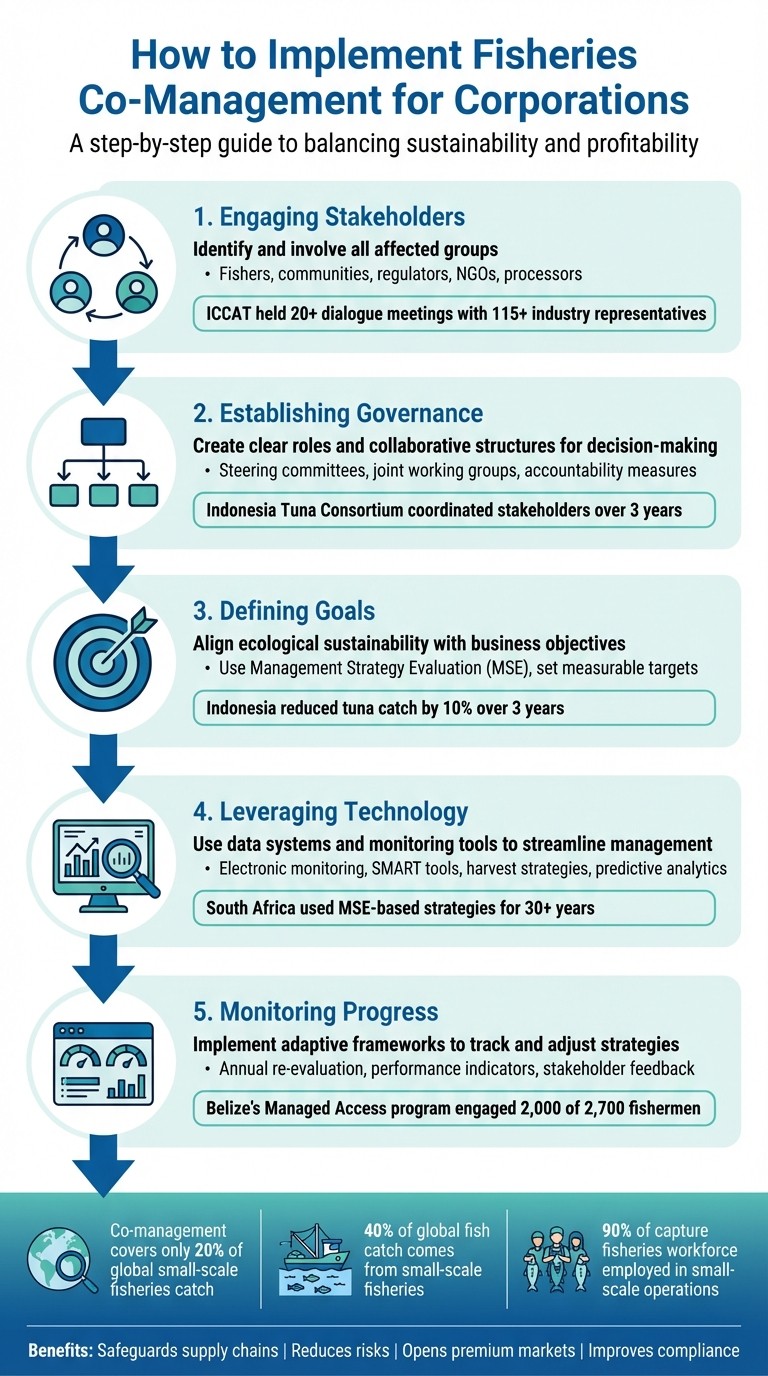
5 Key Steps to Implement Fisheries Co-Management for Corporations
Building the Foundation for Co-Management
Identifying Key Stakeholders
The first step in co-management is understanding who is involved and impacted. Start by mapping out all groups connected to your fishery operations. According to the AA1000 Stakeholder Engagement Standard, stakeholders can include commercial and subsistence fishers, indigenous communities, processors, retailers, NGOs, government agencies, and academic institutions [4]. Use this framework to create a detailed list, categorizing groups by their level of influence and how directly they are affected by fishery-related decisions.
A great example of this process comes from the International Commission for the Conservation of Atlantic Tunas (ICCAT). Between 2014 and November 2022, ICCAT worked on a management procedure for Atlantic bluefin tuna, holding over 20 dialogue meetings. They appointed three MSE Ambassadors - one for each official language - to host open meetings and address stakeholder concerns. In 2019, the European Union delegation to ICCAT saw participation from more than 115 representatives from the fishing industry, illustrating the scale of engagement required to ensure effective co-management [4].
Creating Governance Structures
Once stakeholders are identified, the next step is setting up a governance framework to manage decision-making. This could involve creating a steering committee, dialogue group, or joint working group with clearly defined roles and accountability measures. For example, ICCAT established a Standing Working Group to Enhance Dialogue Between Fisheries Scientists and Managers, fostering collaboration across different sectors. Similarly, in 2010, the Northwest Atlantic Fisheries Organization (NAFO) formed a Working Group on Greenland Halibut Management Strategy Evaluation. This group met three times and successfully developed a 15-year rebuilding strategy.
Another noteworthy initiative is the Indonesia Tuna Consortium, launched in 2021 with Resonance Global acting as the Secretariat. The consortium coordinated key members, including Indonesia's Ministry of Marine Affairs and Fisheries, and maintained communication and accountability throughout a three-year implementation period. As Resonance Global emphasized:
Stakeholder engagement is not just a procedural step - it is the foundation of success [3].
To ensure balance, governance structures should represent all stakeholder groups while remaining efficient. Consider appointing technical ambassadors to simplify complex scientific data for non-technical participants [4]. With this framework in place, the next step is to focus on defining shared goals that align sustainability with operational priorities.
Setting Shared Goals and Objectives
A strong co-management strategy builds on stakeholder mapping and governance by establishing clear, collaborative goals. These goals should connect ecological sustainability with corporate priorities, aligning with broader frameworks like the triple bottom line [2][6]. For instance, the Indonesia Tuna Consortium aimed to reduce tuna catch by 10% over three years by limiting Fish Aggregating Devices and implementing spatial closures. Achieving this goal required nearly a decade of cooperation, blending traditional local knowledge with scientific stock assessments to create a realistic plan [3].
One effective tool for this process is Management Strategy Evaluation (MSE), which allows stakeholders to compare different approaches and assess how objectives impact long-term outcomes [4]. Start by setting broad management objectives, then refine technical details and candidate procedures over time. Iterative milestones can help keep progress on track without overwhelming participants. Additionally, ensure that all fishers have legal recognition before moving forward, as the absence of formal status can lead to exclusion and inequity [6]. It’s worth noting that poorly executed co-management can harm a fishery more than having no management at all [2].
Integrating Co-Management into Corporate Strategy
Aligning Sustainability Goals with Business Objectives
To effectively align sustainability initiatives with corporate objectives, companies can adopt co-management strategies that address ecological challenges while safeguarding supply chains. By participating in fisheries improvement efforts, businesses can tackle economic, legal, and reputational risks head-on [7]. The key lies in connecting sustainability goals with corporate priorities through frameworks like the triple bottom line, which balances profit, people, and planet.
Incorporating co-management into your existing ESG strategy is a logical first step. Tools like FishSource sustainability ratings provide actionable insights into fisheries within your supply chain, helping identify areas needing immediate attention without relying on third-party certifications [7]. It's also critical to establish secure tenure rights for fishing communities, ensuring long-term resource sustainability and community well-being [7].
Adopting Ecosystem-Based Fisheries Management (EBFM) is another effective approach. This method considers species interactions, habitat health, and climate change, going beyond the single-species focus [5]. It aligns with international biodiversity goals while supporting resilient fish populations. To prevent regulatory loopholes, combine measures such as input controls (e.g., gear restrictions) with output controls (e.g., catch limits) and rights-based management systems [8]. This strategic mix lays the groundwork for advanced management solutions and technological integration.
Using Technology for Fisheries Management
Technology plays a transformative role in turning co-management from theory into practice. For instance, harvest strategies establish pre-agreed rules for setting fishing limits based on fish population data, offering predictability for corporate supply chains [9]. As the Pew Charitable Trusts puts it:
"Creating a harvest strategy is akin to agreeing to the rules before playing a game: Fisheries managers establish a pre-agreed, formulaic approach to setting fishing limits based on the status of a given fish population" [9].
Management Strategy Evaluation (MSE) is a powerful tool to test these strategies under different scenarios, including uncertainties like climate change. Additionally, electronic monitoring systems ensure transparent and verifiable data collection [9][10]. A notable example is South Africa's anchovy and sardine fisheries, which have successfully used MSE-based harvest strategies for over three decades to manage species with fluctuating populations [9].
For data collection, tools like the Spatial Monitoring and Reporting Tool (SMART) standardize information across landing sites, fostering collaboration among scientists, government agencies, and fishers [1]. In Belize, the Fisheries Department expanded Managed Access Areas nationwide using SMART and an Adaptive Management Framework, leading to improved population health for conch and lobster [1]. For corporations managing multi-species fisheries, Productivity and Susceptibility Analysis (PSA) helps identify vulnerable stocks, prioritizing management efforts and safeguarding both resources and profitability [1].
Creating Fisheries Management Plans
An effective fisheries management plan begins with clear, measurable objectives that align ecological health with business goals [11]. Selecting appropriate measures is crucial - input controls like gear restrictions and output controls such as quotas work together to manage fishing mortality effectively [8].
Incorporating adaptive management ensures flexibility to respond to environmental changes and new data. For example, following a 2011 stock assessment in Mexico's Gulf Curvina fishery, the National Fisheries Commission implemented a TAC (Total Allowable Catch) system. Cooperatives received TAC shares, and agreements with major buyers set minimum prices in exchange for a stable supply. This participatory governance model resulted in high compliance and reduced waste [1].
To address climate resilience, plans should account for shifts in species distribution. Risk pools, where quotas for weaker stocks are shared among members, can help prevent premature closures in multi-species fisheries [8]. It's worth noting that small-scale fisheries contribute at least 40% of the global fish catch and employ approximately 90% of the global workforce in capture fisheries, yet co-management only covers about 20% of the global small-scale fisheries catch [7]. This presents a significant opportunity for businesses to lead in expanding sustainable practices.
Co-management: a powerful tool to save Mediterranean fisheries
Implementing and Monitoring Co-Management Practices
To move forward with co-management initiatives, corporations must focus on putting resource management strategies into action and ensuring these measures are monitored effectively.
Implementing Resource Management Measures
The first step in co-management is to establish a clear legal framework. This includes recognizing fishers, issuing permits, and registering vessels, which helps create accountability within the system [6].
Science-based stock assessments are essential for understanding overfishing levels and determining Maximum Sustainable Yield (MSY). These assessments have been instrumental in rebuilding 50 fish stocks in the United States since 2000 [12].
A combination of input controls, such as gear restrictions and closed seasons, alongside output controls like catch and size limits, works effectively to reduce undocumented fish mortality. In multispecies fisheries, risk pools can help protect vulnerable stocks [8]. This mixed approach addresses loopholes that fishers might exploit under single-measure regulations.
Enforcing compliance is critical to protect resources from illegal, unreported, and unregulated (IUU) fishing [12]. A notable example comes from the Fisheries and Aquatic Resource Management Councils (FARMC) project in Bani, Pangasinan, Philippines. By implementing co-management practices like fish sanctuaries and mangrove restoration, daily catches for small-scale fishers increased dramatically - from 2–4 lbs (1–2 kg) to 22–33 lbs (10–15 kg). High compliance was achieved through community ownership of the rules, as championed by leaders like Jovy Francisco of the Looc Municipal FARMC [13]. These measures set a strong foundation for ongoing monitoring and adaptive management.
Monitoring and Evaluating Performance
Once resource management measures are in place, continuous monitoring ensures their effectiveness. An Adaptive Management Framework (AMF) allows for annual re-evaluation of goals and strategies based on fresh data and environmental conditions [8][1]. As FISHE emphasizes:
"Fisheries management is always a dynamic process that must respond to fluctuations in environmental conditions, fishing behaviors, variable productivity of the resource, and changing market and economic conditions" [8].
Involving stakeholders in data collection builds trust and improves compliance. For example, in Belize, the "Managed Access" system was scaled nationally in 2016 following successful pilots at Glover's Reef and Port Honduras Marine Reserves. Roughly 2,000 of Belize’s 2,700 fishermen participated in this program, which used standardized tools and AMF to adjust harvest controls annually based on catch data and underwater censuses [1].
Tracking performance indicators like Biomass at Maximum Sustainable Yield (BMSY), Fishing Mortality (FMSY), and Spawning Stock Biomass (SSB) is essential [8]. External rating systems, such as FishSource, provide additional evaluation by scoring management quality, stock health, and environmental impacts on a 0–10 scale [7].
The distinction between input and output controls plays a key role in monitoring. Input controls, which limit fishing effort or gear, are easier to implement and require less intensive oversight but can sometimes be bypassed. On the other hand, output controls, which set direct catch limits, are more effective in regulating fishing mortality but demand rigorous monitoring at landing sites to ensure compliance and maintain supply chain stability [8].
Building Stakeholder Engagement and Trust
Trust grows when stakeholders are engaged in meaningful dialogue throughout the process, moving from passive information sharing to active collaboration [4]. Between 2014 and November 2022, the International Commission for the Conservation of Atlantic Tunas (ICCAT) developed a Management Procedure for Atlantic bluefin tuna through over 20 dialogue meetings. This inclusive approach, which incorporated stakeholder feedback on biological scenarios, led to the swift adoption of the Management Procedure in 2022 without opposition [4]. A notable example of this collaboration was the European Union delegation at ICCAT’s 2019 annual meeting, which included over 115 representatives from the fishing industry [4].
Empowering stakeholders through capacity building is another critical step. Corporations can invest in training programs that teach habitat assessment, monitoring, and enforcement techniques [13]. Reward systems, such as national recognition or cash prizes for exceptional performance in local management councils, can further encourage participation [13]. Gloria C. Diaz, a Solution Provider at PANORAMA, highlights the importance of this approach:
"Resource users, when given the right opportunities in a proper context can be partners of the government for the management of fisheries and aquatic resources" [13].
Regular workshops and dialogue sessions allow stakeholders to co-develop management objectives and test procedures, ensuring that profitability and sustainability go hand in hand [4].
Case Studies: Corporate Fisheries Co-Management in Practice
Partnership Examples in Fisheries Co-Management
Real-world examples highlight how corporate co-management can balance sustainability and profitability in fisheries. In 2020, Clearwater Seafoods underwent a US$1 billion acquisition, creating the largest Indigenous-owned seafood company. This initiative was made possible by a partnership between seven Mi'kmaq First Nations and Premium Brands, resulting in shared 50/50 ownership. The company, guided by Mi'kmaq principles of seven-generation sustainability, is led by Christine Penney, VP of Sustainability, and Cheryl Copage-Gehue, Director of Indigenous Relations. Penney described the significance of this collaboration:
"Clearwater is a story of economic reconciliation and has created a model for Canadian seafood" [14].
The U.S. Gulf of Mexico shrimp fishery offers another compelling example of co-management. Beginning in 2008, the Sustainable Fisheries Partnership collaborated with the American Shrimp Processors Association, which included companies like Cox's Wholesale Seafood and Wood's Fisheries. These efforts culminated in July 2024 when the fishery became the first globally to earn Responsible Fisheries Management (RFM) Certification. Nancy Mathews of Cox's Wholesale Seafood reflected on the collective effort:
"We recognize that none could have achieved this independently" [15].
In the Pacific Island Tuna (PIT) case, sustainability and profitability go hand in hand. The Republic of the Marshall Islands teamed up with The Nature Conservancy and Bain & Company to launch a canned tuna company that reinvests 100% of its profits into community development, marine conservation, and climate resilience. This initiative secured a major deal to supply Walmart's "Great Value" tuna line with sustainably sourced products [17].
The California Groundfish Collective showcases how technology can enhance cooperative management. Since 2011, fishermen using the "eCatch" system have reduced catches of overfished species by 50%. This achievement earned the collective a "Green/Best Choice" rating and resulted in US$2 million in community-managed quota returns [18].
Lessons Learned from Successful Implementations
These examples provide valuable takeaways for corporate fisheries co-management, emphasizing the importance of long-term planning, shared responsibility, and market-driven incentives.
Commitment to long-term efforts: Achieving meaningful outcomes often requires years of collaboration. For instance, the Gulf of Mexico shrimp fishery took over 15 years to secure certification, while the Indonesia Tuna Harvest Strategy required nearly a decade of multi-stakeholder coordination [3].
Transitioning to industry leadership: Sustainability efforts are more durable when industries take the lead. The Gulf shrimp fishery evolved from being NGO-led to a fully industry-funded initiative managed by the American Shrimp Processors Association [15].
Collective risk management: Sharing risks fosters collaboration while safeguarding conservation goals. The California Groundfish Collective's quota pooling system helps members mitigate financial risks from accidental catches of restricted species, ensuring both economic and environmental stability [18].
Market-driven incentives: Offering clear business benefits encourages participation in sustainable practices. For example, McDonald's achieved 99% sustainable sourcing for its Filet-o-Fish in 2020, showing suppliers the value of co-management [16]. Similarly, the Pacific Island Tuna model provides sustainability premiums to fishers while securing long-term supply contracts with major retailers [17].
These lessons highlight how integrating sustainability into business strategies can maintain resource health while ensuring supply chain stability for the future.
Conclusion: Balancing Profitability and Sustainability
Key Takeaways for Corporations
Fisheries co-management offers a smart approach to protecting both supply chains and ocean ecosystems. By combining science-based management with strong governance, businesses can enhance resource stewardship while cutting costs. When fishers and other stakeholders are involved in decision-making, compliance improves, and management costs often decrease - benefiting the bottom line.
Engaging fishing communities through co-management systems like catch shares, Territorial Use Rights for Fishing (TURFs), and Managed Access programs helps stabilize supplies, avoid price crashes, and minimize waste from overfishing. Tools such as Management Strategy Evaluation (MSE) serve as a "flight simulator", allowing businesses to test harvest strategies under uncertain conditions, ensuring that investments remain resilient over time [19].
Market incentives further support the case for co-management. Certification programs for sustainable seafood offer higher prices and better market access for companies meeting specific standards [1]. Participation in Fishery Improvement Projects (FIPs) also highlights a company’s commitment to measurable goals while rewarding strong performance throughout the supply chain [1].
These approaches provide a roadmap for companies looking to combine sustainability with profitability.
Next Steps for Sustainable Fisheries
To move forward, businesses can take practical steps to incorporate co-management into their operations.
Start by identifying key stakeholders in your supply chain, such as fishers, local communities, government agencies, and NGOs. Engage these groups in participatory processes to build trust, connect local expertise with corporate goals, and form partnerships that ensure shared responsibility and knowledge [1]. Introduce adaptive management systems that allow for annual updates based on real-time data and fishery performance metrics.
Prioritize capacity building by offering training programs for fishers and local managers in areas like data collection and scientific monitoring. Standardized tools, such as SMART, can improve transparency and accountability in operations [1]. Set clear ecological targets, such as maintaining biomass levels that support the broader food web [5].
FAQs
How do we start co-management if trust is low?
Building co-management in an environment with low trust demands a thoughtful approach to gain legitimacy and bring stakeholders on board. Prioritize open communication, ensuring everyone feels heard and informed. Make decision-making processes inclusive, allowing all voices to contribute, and aim for outcomes that are fair and balanced.
Starting with small, low-risk projects can be a smart way to deliver quick, visible results. These early wins can encourage collaboration and show that co-management can work. Additionally, fostering shared learning opportunities - such as workshops or joint training sessions - can help bridge gaps and build understanding among stakeholders.
Forming partnerships and securing funding are also critical steps. Demonstrating real, measurable benefits through these efforts can help solidify support. Over time, consistent and fair actions will gradually rebuild trust, laying the groundwork for a stronger, more cooperative co-management framework.
What data do we need to set catch limits credibly?
To establish reliable catch limits, it's crucial to have thorough stock assessment data. This includes information such as biomass estimates, fishing mortality rates, and clearly defined reference points. Equally important are performance indicators and harvest control rules, which help guide sustainable harvest levels and support effective fisheries management.
How do we prove ROI from co-management?
Proving return on investment (ROI) from co-management requires demonstrating its impact on both financial and environmental fronts. A few key approaches make this possible:
Sustainability Ratings: These provide a clear way to measure improvements in resource management, helping to quantify progress.
Risk Reduction and Compliance: Showing how co-management minimizes risks and ensures adherence to regulations strengthens its case.
Stakeholder Engagement: Documenting active participation and collaboration among stakeholders highlights the broader value of these efforts.
Fishery Health Improvements: Tracking and showcasing enhancements in fishery health underline the long-term ecological and economic benefits.
In addition, consistent monitoring, thorough evaluations, and transparent reporting are essential. These practices not only validate the link between sustainability initiatives and financial performance but also align with corporate objectives that prioritize both profitability and environmental stewardship.
Related Blog Posts
Latest Articles
©2025



FAQ
01
What does it really mean to “redefine profit”?
02
What makes Council Fire different?
03
Who does Council Fire you work with?
04
What does working with Council Fire actually look like?
05
How does Council Fire help organizations turn big goals into action?
06
How does Council Fire define and measure success?
Mar 23, 2026
How to Implement Fisheries Co-Management for Corporations
ESG Strategy
In This Article
Practical steps for corporations to adopt fisheries co-management: stakeholder engagement, governance, MSE, technology, monitoring, and supply-chain resilience.
How to Implement Fisheries Co-Management for Corporations
Fisheries co-management is a shared governance approach between governments, corporations, and user groups, aimed at preserving aquatic resources while ensuring business stability. This model blends scientific and local knowledge, improving compliance and resource health. For corporations, adopting co-management safeguards supply chains, reduces risks, and opens access to premium markets. Key steps include:
Engaging Stakeholders: Identify and involve all affected groups, such as fishers, communities, and regulators.
Establishing Governance: Create clear roles and collaborative structures for decision-making.
Defining Goals: Align ecological sustainability with business objectives using tools like Management Strategy Evaluation (MSE).
Leveraging Technology: Use data systems, electronic monitoring, and predictive tools to streamline management.
Monitoring Progress: Implement adaptive frameworks to track and adjust strategies.
Examples like Belize's "Managed Access" program and the Gulf of Mexico shrimp fishery highlight successful applications, showcasing how co-management can balance profitability with resource stewardship.
5 Key Steps to Implement Fisheries Co-Management for Corporations
Building the Foundation for Co-Management
Identifying Key Stakeholders
The first step in co-management is understanding who is involved and impacted. Start by mapping out all groups connected to your fishery operations. According to the AA1000 Stakeholder Engagement Standard, stakeholders can include commercial and subsistence fishers, indigenous communities, processors, retailers, NGOs, government agencies, and academic institutions [4]. Use this framework to create a detailed list, categorizing groups by their level of influence and how directly they are affected by fishery-related decisions.
A great example of this process comes from the International Commission for the Conservation of Atlantic Tunas (ICCAT). Between 2014 and November 2022, ICCAT worked on a management procedure for Atlantic bluefin tuna, holding over 20 dialogue meetings. They appointed three MSE Ambassadors - one for each official language - to host open meetings and address stakeholder concerns. In 2019, the European Union delegation to ICCAT saw participation from more than 115 representatives from the fishing industry, illustrating the scale of engagement required to ensure effective co-management [4].
Creating Governance Structures
Once stakeholders are identified, the next step is setting up a governance framework to manage decision-making. This could involve creating a steering committee, dialogue group, or joint working group with clearly defined roles and accountability measures. For example, ICCAT established a Standing Working Group to Enhance Dialogue Between Fisheries Scientists and Managers, fostering collaboration across different sectors. Similarly, in 2010, the Northwest Atlantic Fisheries Organization (NAFO) formed a Working Group on Greenland Halibut Management Strategy Evaluation. This group met three times and successfully developed a 15-year rebuilding strategy.
Another noteworthy initiative is the Indonesia Tuna Consortium, launched in 2021 with Resonance Global acting as the Secretariat. The consortium coordinated key members, including Indonesia's Ministry of Marine Affairs and Fisheries, and maintained communication and accountability throughout a three-year implementation period. As Resonance Global emphasized:
Stakeholder engagement is not just a procedural step - it is the foundation of success [3].
To ensure balance, governance structures should represent all stakeholder groups while remaining efficient. Consider appointing technical ambassadors to simplify complex scientific data for non-technical participants [4]. With this framework in place, the next step is to focus on defining shared goals that align sustainability with operational priorities.
Setting Shared Goals and Objectives
A strong co-management strategy builds on stakeholder mapping and governance by establishing clear, collaborative goals. These goals should connect ecological sustainability with corporate priorities, aligning with broader frameworks like the triple bottom line [2][6]. For instance, the Indonesia Tuna Consortium aimed to reduce tuna catch by 10% over three years by limiting Fish Aggregating Devices and implementing spatial closures. Achieving this goal required nearly a decade of cooperation, blending traditional local knowledge with scientific stock assessments to create a realistic plan [3].
One effective tool for this process is Management Strategy Evaluation (MSE), which allows stakeholders to compare different approaches and assess how objectives impact long-term outcomes [4]. Start by setting broad management objectives, then refine technical details and candidate procedures over time. Iterative milestones can help keep progress on track without overwhelming participants. Additionally, ensure that all fishers have legal recognition before moving forward, as the absence of formal status can lead to exclusion and inequity [6]. It’s worth noting that poorly executed co-management can harm a fishery more than having no management at all [2].
Integrating Co-Management into Corporate Strategy
Aligning Sustainability Goals with Business Objectives
To effectively align sustainability initiatives with corporate objectives, companies can adopt co-management strategies that address ecological challenges while safeguarding supply chains. By participating in fisheries improvement efforts, businesses can tackle economic, legal, and reputational risks head-on [7]. The key lies in connecting sustainability goals with corporate priorities through frameworks like the triple bottom line, which balances profit, people, and planet.
Incorporating co-management into your existing ESG strategy is a logical first step. Tools like FishSource sustainability ratings provide actionable insights into fisheries within your supply chain, helping identify areas needing immediate attention without relying on third-party certifications [7]. It's also critical to establish secure tenure rights for fishing communities, ensuring long-term resource sustainability and community well-being [7].
Adopting Ecosystem-Based Fisheries Management (EBFM) is another effective approach. This method considers species interactions, habitat health, and climate change, going beyond the single-species focus [5]. It aligns with international biodiversity goals while supporting resilient fish populations. To prevent regulatory loopholes, combine measures such as input controls (e.g., gear restrictions) with output controls (e.g., catch limits) and rights-based management systems [8]. This strategic mix lays the groundwork for advanced management solutions and technological integration.
Using Technology for Fisheries Management
Technology plays a transformative role in turning co-management from theory into practice. For instance, harvest strategies establish pre-agreed rules for setting fishing limits based on fish population data, offering predictability for corporate supply chains [9]. As the Pew Charitable Trusts puts it:
"Creating a harvest strategy is akin to agreeing to the rules before playing a game: Fisheries managers establish a pre-agreed, formulaic approach to setting fishing limits based on the status of a given fish population" [9].
Management Strategy Evaluation (MSE) is a powerful tool to test these strategies under different scenarios, including uncertainties like climate change. Additionally, electronic monitoring systems ensure transparent and verifiable data collection [9][10]. A notable example is South Africa's anchovy and sardine fisheries, which have successfully used MSE-based harvest strategies for over three decades to manage species with fluctuating populations [9].
For data collection, tools like the Spatial Monitoring and Reporting Tool (SMART) standardize information across landing sites, fostering collaboration among scientists, government agencies, and fishers [1]. In Belize, the Fisheries Department expanded Managed Access Areas nationwide using SMART and an Adaptive Management Framework, leading to improved population health for conch and lobster [1]. For corporations managing multi-species fisheries, Productivity and Susceptibility Analysis (PSA) helps identify vulnerable stocks, prioritizing management efforts and safeguarding both resources and profitability [1].
Creating Fisheries Management Plans
An effective fisheries management plan begins with clear, measurable objectives that align ecological health with business goals [11]. Selecting appropriate measures is crucial - input controls like gear restrictions and output controls such as quotas work together to manage fishing mortality effectively [8].
Incorporating adaptive management ensures flexibility to respond to environmental changes and new data. For example, following a 2011 stock assessment in Mexico's Gulf Curvina fishery, the National Fisheries Commission implemented a TAC (Total Allowable Catch) system. Cooperatives received TAC shares, and agreements with major buyers set minimum prices in exchange for a stable supply. This participatory governance model resulted in high compliance and reduced waste [1].
To address climate resilience, plans should account for shifts in species distribution. Risk pools, where quotas for weaker stocks are shared among members, can help prevent premature closures in multi-species fisheries [8]. It's worth noting that small-scale fisheries contribute at least 40% of the global fish catch and employ approximately 90% of the global workforce in capture fisheries, yet co-management only covers about 20% of the global small-scale fisheries catch [7]. This presents a significant opportunity for businesses to lead in expanding sustainable practices.
Co-management: a powerful tool to save Mediterranean fisheries
Implementing and Monitoring Co-Management Practices
To move forward with co-management initiatives, corporations must focus on putting resource management strategies into action and ensuring these measures are monitored effectively.
Implementing Resource Management Measures
The first step in co-management is to establish a clear legal framework. This includes recognizing fishers, issuing permits, and registering vessels, which helps create accountability within the system [6].
Science-based stock assessments are essential for understanding overfishing levels and determining Maximum Sustainable Yield (MSY). These assessments have been instrumental in rebuilding 50 fish stocks in the United States since 2000 [12].
A combination of input controls, such as gear restrictions and closed seasons, alongside output controls like catch and size limits, works effectively to reduce undocumented fish mortality. In multispecies fisheries, risk pools can help protect vulnerable stocks [8]. This mixed approach addresses loopholes that fishers might exploit under single-measure regulations.
Enforcing compliance is critical to protect resources from illegal, unreported, and unregulated (IUU) fishing [12]. A notable example comes from the Fisheries and Aquatic Resource Management Councils (FARMC) project in Bani, Pangasinan, Philippines. By implementing co-management practices like fish sanctuaries and mangrove restoration, daily catches for small-scale fishers increased dramatically - from 2–4 lbs (1–2 kg) to 22–33 lbs (10–15 kg). High compliance was achieved through community ownership of the rules, as championed by leaders like Jovy Francisco of the Looc Municipal FARMC [13]. These measures set a strong foundation for ongoing monitoring and adaptive management.
Monitoring and Evaluating Performance
Once resource management measures are in place, continuous monitoring ensures their effectiveness. An Adaptive Management Framework (AMF) allows for annual re-evaluation of goals and strategies based on fresh data and environmental conditions [8][1]. As FISHE emphasizes:
"Fisheries management is always a dynamic process that must respond to fluctuations in environmental conditions, fishing behaviors, variable productivity of the resource, and changing market and economic conditions" [8].
Involving stakeholders in data collection builds trust and improves compliance. For example, in Belize, the "Managed Access" system was scaled nationally in 2016 following successful pilots at Glover's Reef and Port Honduras Marine Reserves. Roughly 2,000 of Belize’s 2,700 fishermen participated in this program, which used standardized tools and AMF to adjust harvest controls annually based on catch data and underwater censuses [1].
Tracking performance indicators like Biomass at Maximum Sustainable Yield (BMSY), Fishing Mortality (FMSY), and Spawning Stock Biomass (SSB) is essential [8]. External rating systems, such as FishSource, provide additional evaluation by scoring management quality, stock health, and environmental impacts on a 0–10 scale [7].
The distinction between input and output controls plays a key role in monitoring. Input controls, which limit fishing effort or gear, are easier to implement and require less intensive oversight but can sometimes be bypassed. On the other hand, output controls, which set direct catch limits, are more effective in regulating fishing mortality but demand rigorous monitoring at landing sites to ensure compliance and maintain supply chain stability [8].
Building Stakeholder Engagement and Trust
Trust grows when stakeholders are engaged in meaningful dialogue throughout the process, moving from passive information sharing to active collaboration [4]. Between 2014 and November 2022, the International Commission for the Conservation of Atlantic Tunas (ICCAT) developed a Management Procedure for Atlantic bluefin tuna through over 20 dialogue meetings. This inclusive approach, which incorporated stakeholder feedback on biological scenarios, led to the swift adoption of the Management Procedure in 2022 without opposition [4]. A notable example of this collaboration was the European Union delegation at ICCAT’s 2019 annual meeting, which included over 115 representatives from the fishing industry [4].
Empowering stakeholders through capacity building is another critical step. Corporations can invest in training programs that teach habitat assessment, monitoring, and enforcement techniques [13]. Reward systems, such as national recognition or cash prizes for exceptional performance in local management councils, can further encourage participation [13]. Gloria C. Diaz, a Solution Provider at PANORAMA, highlights the importance of this approach:
"Resource users, when given the right opportunities in a proper context can be partners of the government for the management of fisheries and aquatic resources" [13].
Regular workshops and dialogue sessions allow stakeholders to co-develop management objectives and test procedures, ensuring that profitability and sustainability go hand in hand [4].
Case Studies: Corporate Fisheries Co-Management in Practice
Partnership Examples in Fisheries Co-Management
Real-world examples highlight how corporate co-management can balance sustainability and profitability in fisheries. In 2020, Clearwater Seafoods underwent a US$1 billion acquisition, creating the largest Indigenous-owned seafood company. This initiative was made possible by a partnership between seven Mi'kmaq First Nations and Premium Brands, resulting in shared 50/50 ownership. The company, guided by Mi'kmaq principles of seven-generation sustainability, is led by Christine Penney, VP of Sustainability, and Cheryl Copage-Gehue, Director of Indigenous Relations. Penney described the significance of this collaboration:
"Clearwater is a story of economic reconciliation and has created a model for Canadian seafood" [14].
The U.S. Gulf of Mexico shrimp fishery offers another compelling example of co-management. Beginning in 2008, the Sustainable Fisheries Partnership collaborated with the American Shrimp Processors Association, which included companies like Cox's Wholesale Seafood and Wood's Fisheries. These efforts culminated in July 2024 when the fishery became the first globally to earn Responsible Fisheries Management (RFM) Certification. Nancy Mathews of Cox's Wholesale Seafood reflected on the collective effort:
"We recognize that none could have achieved this independently" [15].
In the Pacific Island Tuna (PIT) case, sustainability and profitability go hand in hand. The Republic of the Marshall Islands teamed up with The Nature Conservancy and Bain & Company to launch a canned tuna company that reinvests 100% of its profits into community development, marine conservation, and climate resilience. This initiative secured a major deal to supply Walmart's "Great Value" tuna line with sustainably sourced products [17].
The California Groundfish Collective showcases how technology can enhance cooperative management. Since 2011, fishermen using the "eCatch" system have reduced catches of overfished species by 50%. This achievement earned the collective a "Green/Best Choice" rating and resulted in US$2 million in community-managed quota returns [18].
Lessons Learned from Successful Implementations
These examples provide valuable takeaways for corporate fisheries co-management, emphasizing the importance of long-term planning, shared responsibility, and market-driven incentives.
Commitment to long-term efforts: Achieving meaningful outcomes often requires years of collaboration. For instance, the Gulf of Mexico shrimp fishery took over 15 years to secure certification, while the Indonesia Tuna Harvest Strategy required nearly a decade of multi-stakeholder coordination [3].
Transitioning to industry leadership: Sustainability efforts are more durable when industries take the lead. The Gulf shrimp fishery evolved from being NGO-led to a fully industry-funded initiative managed by the American Shrimp Processors Association [15].
Collective risk management: Sharing risks fosters collaboration while safeguarding conservation goals. The California Groundfish Collective's quota pooling system helps members mitigate financial risks from accidental catches of restricted species, ensuring both economic and environmental stability [18].
Market-driven incentives: Offering clear business benefits encourages participation in sustainable practices. For example, McDonald's achieved 99% sustainable sourcing for its Filet-o-Fish in 2020, showing suppliers the value of co-management [16]. Similarly, the Pacific Island Tuna model provides sustainability premiums to fishers while securing long-term supply contracts with major retailers [17].
These lessons highlight how integrating sustainability into business strategies can maintain resource health while ensuring supply chain stability for the future.
Conclusion: Balancing Profitability and Sustainability
Key Takeaways for Corporations
Fisheries co-management offers a smart approach to protecting both supply chains and ocean ecosystems. By combining science-based management with strong governance, businesses can enhance resource stewardship while cutting costs. When fishers and other stakeholders are involved in decision-making, compliance improves, and management costs often decrease - benefiting the bottom line.
Engaging fishing communities through co-management systems like catch shares, Territorial Use Rights for Fishing (TURFs), and Managed Access programs helps stabilize supplies, avoid price crashes, and minimize waste from overfishing. Tools such as Management Strategy Evaluation (MSE) serve as a "flight simulator", allowing businesses to test harvest strategies under uncertain conditions, ensuring that investments remain resilient over time [19].
Market incentives further support the case for co-management. Certification programs for sustainable seafood offer higher prices and better market access for companies meeting specific standards [1]. Participation in Fishery Improvement Projects (FIPs) also highlights a company’s commitment to measurable goals while rewarding strong performance throughout the supply chain [1].
These approaches provide a roadmap for companies looking to combine sustainability with profitability.
Next Steps for Sustainable Fisheries
To move forward, businesses can take practical steps to incorporate co-management into their operations.
Start by identifying key stakeholders in your supply chain, such as fishers, local communities, government agencies, and NGOs. Engage these groups in participatory processes to build trust, connect local expertise with corporate goals, and form partnerships that ensure shared responsibility and knowledge [1]. Introduce adaptive management systems that allow for annual updates based on real-time data and fishery performance metrics.
Prioritize capacity building by offering training programs for fishers and local managers in areas like data collection and scientific monitoring. Standardized tools, such as SMART, can improve transparency and accountability in operations [1]. Set clear ecological targets, such as maintaining biomass levels that support the broader food web [5].
FAQs
How do we start co-management if trust is low?
Building co-management in an environment with low trust demands a thoughtful approach to gain legitimacy and bring stakeholders on board. Prioritize open communication, ensuring everyone feels heard and informed. Make decision-making processes inclusive, allowing all voices to contribute, and aim for outcomes that are fair and balanced.
Starting with small, low-risk projects can be a smart way to deliver quick, visible results. These early wins can encourage collaboration and show that co-management can work. Additionally, fostering shared learning opportunities - such as workshops or joint training sessions - can help bridge gaps and build understanding among stakeholders.
Forming partnerships and securing funding are also critical steps. Demonstrating real, measurable benefits through these efforts can help solidify support. Over time, consistent and fair actions will gradually rebuild trust, laying the groundwork for a stronger, more cooperative co-management framework.
What data do we need to set catch limits credibly?
To establish reliable catch limits, it's crucial to have thorough stock assessment data. This includes information such as biomass estimates, fishing mortality rates, and clearly defined reference points. Equally important are performance indicators and harvest control rules, which help guide sustainable harvest levels and support effective fisheries management.
How do we prove ROI from co-management?
Proving return on investment (ROI) from co-management requires demonstrating its impact on both financial and environmental fronts. A few key approaches make this possible:
Sustainability Ratings: These provide a clear way to measure improvements in resource management, helping to quantify progress.
Risk Reduction and Compliance: Showing how co-management minimizes risks and ensures adherence to regulations strengthens its case.
Stakeholder Engagement: Documenting active participation and collaboration among stakeholders highlights the broader value of these efforts.
Fishery Health Improvements: Tracking and showcasing enhancements in fishery health underline the long-term ecological and economic benefits.
In addition, consistent monitoring, thorough evaluations, and transparent reporting are essential. These practices not only validate the link between sustainability initiatives and financial performance but also align with corporate objectives that prioritize both profitability and environmental stewardship.
Related Blog Posts
FAQ
01
What does it really mean to “redefine profit”?
02
What makes Council Fire different?
03
Who does Council Fire you work with?
04
What does working with Council Fire actually look like?
05
How does Council Fire help organizations turn big goals into action?
06
How does Council Fire define and measure success?
Mar 23, 2026
How to Implement Fisheries Co-Management for Corporations
ESG Strategy
In This Article
Practical steps for corporations to adopt fisheries co-management: stakeholder engagement, governance, MSE, technology, monitoring, and supply-chain resilience.
How to Implement Fisheries Co-Management for Corporations
Fisheries co-management is a shared governance approach between governments, corporations, and user groups, aimed at preserving aquatic resources while ensuring business stability. This model blends scientific and local knowledge, improving compliance and resource health. For corporations, adopting co-management safeguards supply chains, reduces risks, and opens access to premium markets. Key steps include:
Engaging Stakeholders: Identify and involve all affected groups, such as fishers, communities, and regulators.
Establishing Governance: Create clear roles and collaborative structures for decision-making.
Defining Goals: Align ecological sustainability with business objectives using tools like Management Strategy Evaluation (MSE).
Leveraging Technology: Use data systems, electronic monitoring, and predictive tools to streamline management.
Monitoring Progress: Implement adaptive frameworks to track and adjust strategies.
Examples like Belize's "Managed Access" program and the Gulf of Mexico shrimp fishery highlight successful applications, showcasing how co-management can balance profitability with resource stewardship.
5 Key Steps to Implement Fisheries Co-Management for Corporations
Building the Foundation for Co-Management
Identifying Key Stakeholders
The first step in co-management is understanding who is involved and impacted. Start by mapping out all groups connected to your fishery operations. According to the AA1000 Stakeholder Engagement Standard, stakeholders can include commercial and subsistence fishers, indigenous communities, processors, retailers, NGOs, government agencies, and academic institutions [4]. Use this framework to create a detailed list, categorizing groups by their level of influence and how directly they are affected by fishery-related decisions.
A great example of this process comes from the International Commission for the Conservation of Atlantic Tunas (ICCAT). Between 2014 and November 2022, ICCAT worked on a management procedure for Atlantic bluefin tuna, holding over 20 dialogue meetings. They appointed three MSE Ambassadors - one for each official language - to host open meetings and address stakeholder concerns. In 2019, the European Union delegation to ICCAT saw participation from more than 115 representatives from the fishing industry, illustrating the scale of engagement required to ensure effective co-management [4].
Creating Governance Structures
Once stakeholders are identified, the next step is setting up a governance framework to manage decision-making. This could involve creating a steering committee, dialogue group, or joint working group with clearly defined roles and accountability measures. For example, ICCAT established a Standing Working Group to Enhance Dialogue Between Fisheries Scientists and Managers, fostering collaboration across different sectors. Similarly, in 2010, the Northwest Atlantic Fisheries Organization (NAFO) formed a Working Group on Greenland Halibut Management Strategy Evaluation. This group met three times and successfully developed a 15-year rebuilding strategy.
Another noteworthy initiative is the Indonesia Tuna Consortium, launched in 2021 with Resonance Global acting as the Secretariat. The consortium coordinated key members, including Indonesia's Ministry of Marine Affairs and Fisheries, and maintained communication and accountability throughout a three-year implementation period. As Resonance Global emphasized:
Stakeholder engagement is not just a procedural step - it is the foundation of success [3].
To ensure balance, governance structures should represent all stakeholder groups while remaining efficient. Consider appointing technical ambassadors to simplify complex scientific data for non-technical participants [4]. With this framework in place, the next step is to focus on defining shared goals that align sustainability with operational priorities.
Setting Shared Goals and Objectives
A strong co-management strategy builds on stakeholder mapping and governance by establishing clear, collaborative goals. These goals should connect ecological sustainability with corporate priorities, aligning with broader frameworks like the triple bottom line [2][6]. For instance, the Indonesia Tuna Consortium aimed to reduce tuna catch by 10% over three years by limiting Fish Aggregating Devices and implementing spatial closures. Achieving this goal required nearly a decade of cooperation, blending traditional local knowledge with scientific stock assessments to create a realistic plan [3].
One effective tool for this process is Management Strategy Evaluation (MSE), which allows stakeholders to compare different approaches and assess how objectives impact long-term outcomes [4]. Start by setting broad management objectives, then refine technical details and candidate procedures over time. Iterative milestones can help keep progress on track without overwhelming participants. Additionally, ensure that all fishers have legal recognition before moving forward, as the absence of formal status can lead to exclusion and inequity [6]. It’s worth noting that poorly executed co-management can harm a fishery more than having no management at all [2].
Integrating Co-Management into Corporate Strategy
Aligning Sustainability Goals with Business Objectives
To effectively align sustainability initiatives with corporate objectives, companies can adopt co-management strategies that address ecological challenges while safeguarding supply chains. By participating in fisheries improvement efforts, businesses can tackle economic, legal, and reputational risks head-on [7]. The key lies in connecting sustainability goals with corporate priorities through frameworks like the triple bottom line, which balances profit, people, and planet.
Incorporating co-management into your existing ESG strategy is a logical first step. Tools like FishSource sustainability ratings provide actionable insights into fisheries within your supply chain, helping identify areas needing immediate attention without relying on third-party certifications [7]. It's also critical to establish secure tenure rights for fishing communities, ensuring long-term resource sustainability and community well-being [7].
Adopting Ecosystem-Based Fisheries Management (EBFM) is another effective approach. This method considers species interactions, habitat health, and climate change, going beyond the single-species focus [5]. It aligns with international biodiversity goals while supporting resilient fish populations. To prevent regulatory loopholes, combine measures such as input controls (e.g., gear restrictions) with output controls (e.g., catch limits) and rights-based management systems [8]. This strategic mix lays the groundwork for advanced management solutions and technological integration.
Using Technology for Fisheries Management
Technology plays a transformative role in turning co-management from theory into practice. For instance, harvest strategies establish pre-agreed rules for setting fishing limits based on fish population data, offering predictability for corporate supply chains [9]. As the Pew Charitable Trusts puts it:
"Creating a harvest strategy is akin to agreeing to the rules before playing a game: Fisheries managers establish a pre-agreed, formulaic approach to setting fishing limits based on the status of a given fish population" [9].
Management Strategy Evaluation (MSE) is a powerful tool to test these strategies under different scenarios, including uncertainties like climate change. Additionally, electronic monitoring systems ensure transparent and verifiable data collection [9][10]. A notable example is South Africa's anchovy and sardine fisheries, which have successfully used MSE-based harvest strategies for over three decades to manage species with fluctuating populations [9].
For data collection, tools like the Spatial Monitoring and Reporting Tool (SMART) standardize information across landing sites, fostering collaboration among scientists, government agencies, and fishers [1]. In Belize, the Fisheries Department expanded Managed Access Areas nationwide using SMART and an Adaptive Management Framework, leading to improved population health for conch and lobster [1]. For corporations managing multi-species fisheries, Productivity and Susceptibility Analysis (PSA) helps identify vulnerable stocks, prioritizing management efforts and safeguarding both resources and profitability [1].
Creating Fisheries Management Plans
An effective fisheries management plan begins with clear, measurable objectives that align ecological health with business goals [11]. Selecting appropriate measures is crucial - input controls like gear restrictions and output controls such as quotas work together to manage fishing mortality effectively [8].
Incorporating adaptive management ensures flexibility to respond to environmental changes and new data. For example, following a 2011 stock assessment in Mexico's Gulf Curvina fishery, the National Fisheries Commission implemented a TAC (Total Allowable Catch) system. Cooperatives received TAC shares, and agreements with major buyers set minimum prices in exchange for a stable supply. This participatory governance model resulted in high compliance and reduced waste [1].
To address climate resilience, plans should account for shifts in species distribution. Risk pools, where quotas for weaker stocks are shared among members, can help prevent premature closures in multi-species fisheries [8]. It's worth noting that small-scale fisheries contribute at least 40% of the global fish catch and employ approximately 90% of the global workforce in capture fisheries, yet co-management only covers about 20% of the global small-scale fisheries catch [7]. This presents a significant opportunity for businesses to lead in expanding sustainable practices.
Co-management: a powerful tool to save Mediterranean fisheries
Implementing and Monitoring Co-Management Practices
To move forward with co-management initiatives, corporations must focus on putting resource management strategies into action and ensuring these measures are monitored effectively.
Implementing Resource Management Measures
The first step in co-management is to establish a clear legal framework. This includes recognizing fishers, issuing permits, and registering vessels, which helps create accountability within the system [6].
Science-based stock assessments are essential for understanding overfishing levels and determining Maximum Sustainable Yield (MSY). These assessments have been instrumental in rebuilding 50 fish stocks in the United States since 2000 [12].
A combination of input controls, such as gear restrictions and closed seasons, alongside output controls like catch and size limits, works effectively to reduce undocumented fish mortality. In multispecies fisheries, risk pools can help protect vulnerable stocks [8]. This mixed approach addresses loopholes that fishers might exploit under single-measure regulations.
Enforcing compliance is critical to protect resources from illegal, unreported, and unregulated (IUU) fishing [12]. A notable example comes from the Fisheries and Aquatic Resource Management Councils (FARMC) project in Bani, Pangasinan, Philippines. By implementing co-management practices like fish sanctuaries and mangrove restoration, daily catches for small-scale fishers increased dramatically - from 2–4 lbs (1–2 kg) to 22–33 lbs (10–15 kg). High compliance was achieved through community ownership of the rules, as championed by leaders like Jovy Francisco of the Looc Municipal FARMC [13]. These measures set a strong foundation for ongoing monitoring and adaptive management.
Monitoring and Evaluating Performance
Once resource management measures are in place, continuous monitoring ensures their effectiveness. An Adaptive Management Framework (AMF) allows for annual re-evaluation of goals and strategies based on fresh data and environmental conditions [8][1]. As FISHE emphasizes:
"Fisheries management is always a dynamic process that must respond to fluctuations in environmental conditions, fishing behaviors, variable productivity of the resource, and changing market and economic conditions" [8].
Involving stakeholders in data collection builds trust and improves compliance. For example, in Belize, the "Managed Access" system was scaled nationally in 2016 following successful pilots at Glover's Reef and Port Honduras Marine Reserves. Roughly 2,000 of Belize’s 2,700 fishermen participated in this program, which used standardized tools and AMF to adjust harvest controls annually based on catch data and underwater censuses [1].
Tracking performance indicators like Biomass at Maximum Sustainable Yield (BMSY), Fishing Mortality (FMSY), and Spawning Stock Biomass (SSB) is essential [8]. External rating systems, such as FishSource, provide additional evaluation by scoring management quality, stock health, and environmental impacts on a 0–10 scale [7].
The distinction between input and output controls plays a key role in monitoring. Input controls, which limit fishing effort or gear, are easier to implement and require less intensive oversight but can sometimes be bypassed. On the other hand, output controls, which set direct catch limits, are more effective in regulating fishing mortality but demand rigorous monitoring at landing sites to ensure compliance and maintain supply chain stability [8].
Building Stakeholder Engagement and Trust
Trust grows when stakeholders are engaged in meaningful dialogue throughout the process, moving from passive information sharing to active collaboration [4]. Between 2014 and November 2022, the International Commission for the Conservation of Atlantic Tunas (ICCAT) developed a Management Procedure for Atlantic bluefin tuna through over 20 dialogue meetings. This inclusive approach, which incorporated stakeholder feedback on biological scenarios, led to the swift adoption of the Management Procedure in 2022 without opposition [4]. A notable example of this collaboration was the European Union delegation at ICCAT’s 2019 annual meeting, which included over 115 representatives from the fishing industry [4].
Empowering stakeholders through capacity building is another critical step. Corporations can invest in training programs that teach habitat assessment, monitoring, and enforcement techniques [13]. Reward systems, such as national recognition or cash prizes for exceptional performance in local management councils, can further encourage participation [13]. Gloria C. Diaz, a Solution Provider at PANORAMA, highlights the importance of this approach:
"Resource users, when given the right opportunities in a proper context can be partners of the government for the management of fisheries and aquatic resources" [13].
Regular workshops and dialogue sessions allow stakeholders to co-develop management objectives and test procedures, ensuring that profitability and sustainability go hand in hand [4].
Case Studies: Corporate Fisheries Co-Management in Practice
Partnership Examples in Fisheries Co-Management
Real-world examples highlight how corporate co-management can balance sustainability and profitability in fisheries. In 2020, Clearwater Seafoods underwent a US$1 billion acquisition, creating the largest Indigenous-owned seafood company. This initiative was made possible by a partnership between seven Mi'kmaq First Nations and Premium Brands, resulting in shared 50/50 ownership. The company, guided by Mi'kmaq principles of seven-generation sustainability, is led by Christine Penney, VP of Sustainability, and Cheryl Copage-Gehue, Director of Indigenous Relations. Penney described the significance of this collaboration:
"Clearwater is a story of economic reconciliation and has created a model for Canadian seafood" [14].
The U.S. Gulf of Mexico shrimp fishery offers another compelling example of co-management. Beginning in 2008, the Sustainable Fisheries Partnership collaborated with the American Shrimp Processors Association, which included companies like Cox's Wholesale Seafood and Wood's Fisheries. These efforts culminated in July 2024 when the fishery became the first globally to earn Responsible Fisheries Management (RFM) Certification. Nancy Mathews of Cox's Wholesale Seafood reflected on the collective effort:
"We recognize that none could have achieved this independently" [15].
In the Pacific Island Tuna (PIT) case, sustainability and profitability go hand in hand. The Republic of the Marshall Islands teamed up with The Nature Conservancy and Bain & Company to launch a canned tuna company that reinvests 100% of its profits into community development, marine conservation, and climate resilience. This initiative secured a major deal to supply Walmart's "Great Value" tuna line with sustainably sourced products [17].
The California Groundfish Collective showcases how technology can enhance cooperative management. Since 2011, fishermen using the "eCatch" system have reduced catches of overfished species by 50%. This achievement earned the collective a "Green/Best Choice" rating and resulted in US$2 million in community-managed quota returns [18].
Lessons Learned from Successful Implementations
These examples provide valuable takeaways for corporate fisheries co-management, emphasizing the importance of long-term planning, shared responsibility, and market-driven incentives.
Commitment to long-term efforts: Achieving meaningful outcomes often requires years of collaboration. For instance, the Gulf of Mexico shrimp fishery took over 15 years to secure certification, while the Indonesia Tuna Harvest Strategy required nearly a decade of multi-stakeholder coordination [3].
Transitioning to industry leadership: Sustainability efforts are more durable when industries take the lead. The Gulf shrimp fishery evolved from being NGO-led to a fully industry-funded initiative managed by the American Shrimp Processors Association [15].
Collective risk management: Sharing risks fosters collaboration while safeguarding conservation goals. The California Groundfish Collective's quota pooling system helps members mitigate financial risks from accidental catches of restricted species, ensuring both economic and environmental stability [18].
Market-driven incentives: Offering clear business benefits encourages participation in sustainable practices. For example, McDonald's achieved 99% sustainable sourcing for its Filet-o-Fish in 2020, showing suppliers the value of co-management [16]. Similarly, the Pacific Island Tuna model provides sustainability premiums to fishers while securing long-term supply contracts with major retailers [17].
These lessons highlight how integrating sustainability into business strategies can maintain resource health while ensuring supply chain stability for the future.
Conclusion: Balancing Profitability and Sustainability
Key Takeaways for Corporations
Fisheries co-management offers a smart approach to protecting both supply chains and ocean ecosystems. By combining science-based management with strong governance, businesses can enhance resource stewardship while cutting costs. When fishers and other stakeholders are involved in decision-making, compliance improves, and management costs often decrease - benefiting the bottom line.
Engaging fishing communities through co-management systems like catch shares, Territorial Use Rights for Fishing (TURFs), and Managed Access programs helps stabilize supplies, avoid price crashes, and minimize waste from overfishing. Tools such as Management Strategy Evaluation (MSE) serve as a "flight simulator", allowing businesses to test harvest strategies under uncertain conditions, ensuring that investments remain resilient over time [19].
Market incentives further support the case for co-management. Certification programs for sustainable seafood offer higher prices and better market access for companies meeting specific standards [1]. Participation in Fishery Improvement Projects (FIPs) also highlights a company’s commitment to measurable goals while rewarding strong performance throughout the supply chain [1].
These approaches provide a roadmap for companies looking to combine sustainability with profitability.
Next Steps for Sustainable Fisheries
To move forward, businesses can take practical steps to incorporate co-management into their operations.
Start by identifying key stakeholders in your supply chain, such as fishers, local communities, government agencies, and NGOs. Engage these groups in participatory processes to build trust, connect local expertise with corporate goals, and form partnerships that ensure shared responsibility and knowledge [1]. Introduce adaptive management systems that allow for annual updates based on real-time data and fishery performance metrics.
Prioritize capacity building by offering training programs for fishers and local managers in areas like data collection and scientific monitoring. Standardized tools, such as SMART, can improve transparency and accountability in operations [1]. Set clear ecological targets, such as maintaining biomass levels that support the broader food web [5].
FAQs
How do we start co-management if trust is low?
Building co-management in an environment with low trust demands a thoughtful approach to gain legitimacy and bring stakeholders on board. Prioritize open communication, ensuring everyone feels heard and informed. Make decision-making processes inclusive, allowing all voices to contribute, and aim for outcomes that are fair and balanced.
Starting with small, low-risk projects can be a smart way to deliver quick, visible results. These early wins can encourage collaboration and show that co-management can work. Additionally, fostering shared learning opportunities - such as workshops or joint training sessions - can help bridge gaps and build understanding among stakeholders.
Forming partnerships and securing funding are also critical steps. Demonstrating real, measurable benefits through these efforts can help solidify support. Over time, consistent and fair actions will gradually rebuild trust, laying the groundwork for a stronger, more cooperative co-management framework.
What data do we need to set catch limits credibly?
To establish reliable catch limits, it's crucial to have thorough stock assessment data. This includes information such as biomass estimates, fishing mortality rates, and clearly defined reference points. Equally important are performance indicators and harvest control rules, which help guide sustainable harvest levels and support effective fisheries management.
How do we prove ROI from co-management?
Proving return on investment (ROI) from co-management requires demonstrating its impact on both financial and environmental fronts. A few key approaches make this possible:
Sustainability Ratings: These provide a clear way to measure improvements in resource management, helping to quantify progress.
Risk Reduction and Compliance: Showing how co-management minimizes risks and ensures adherence to regulations strengthens its case.
Stakeholder Engagement: Documenting active participation and collaboration among stakeholders highlights the broader value of these efforts.
Fishery Health Improvements: Tracking and showcasing enhancements in fishery health underline the long-term ecological and economic benefits.
In addition, consistent monitoring, thorough evaluations, and transparent reporting are essential. These practices not only validate the link between sustainability initiatives and financial performance but also align with corporate objectives that prioritize both profitability and environmental stewardship.
Related Blog Posts
FAQ
What does it really mean to “redefine profit”?
What makes Council Fire different?
Who does Council Fire you work with?
What does working with Council Fire actually look like?
How does Council Fire help organizations turn big goals into action?
How does Council Fire define and measure success?