Dec 29, 2025
Dubai Solar Park Expands Capacity Through Latest Installation
In This Article
Dubai's Mohammed bin Rashid Al Maktoum Solar Park grew to 3,860 MW in 2025; target raised to >7,260 MW by 2030.
Dubai Solar Park Expands Capacity Through Latest Installation
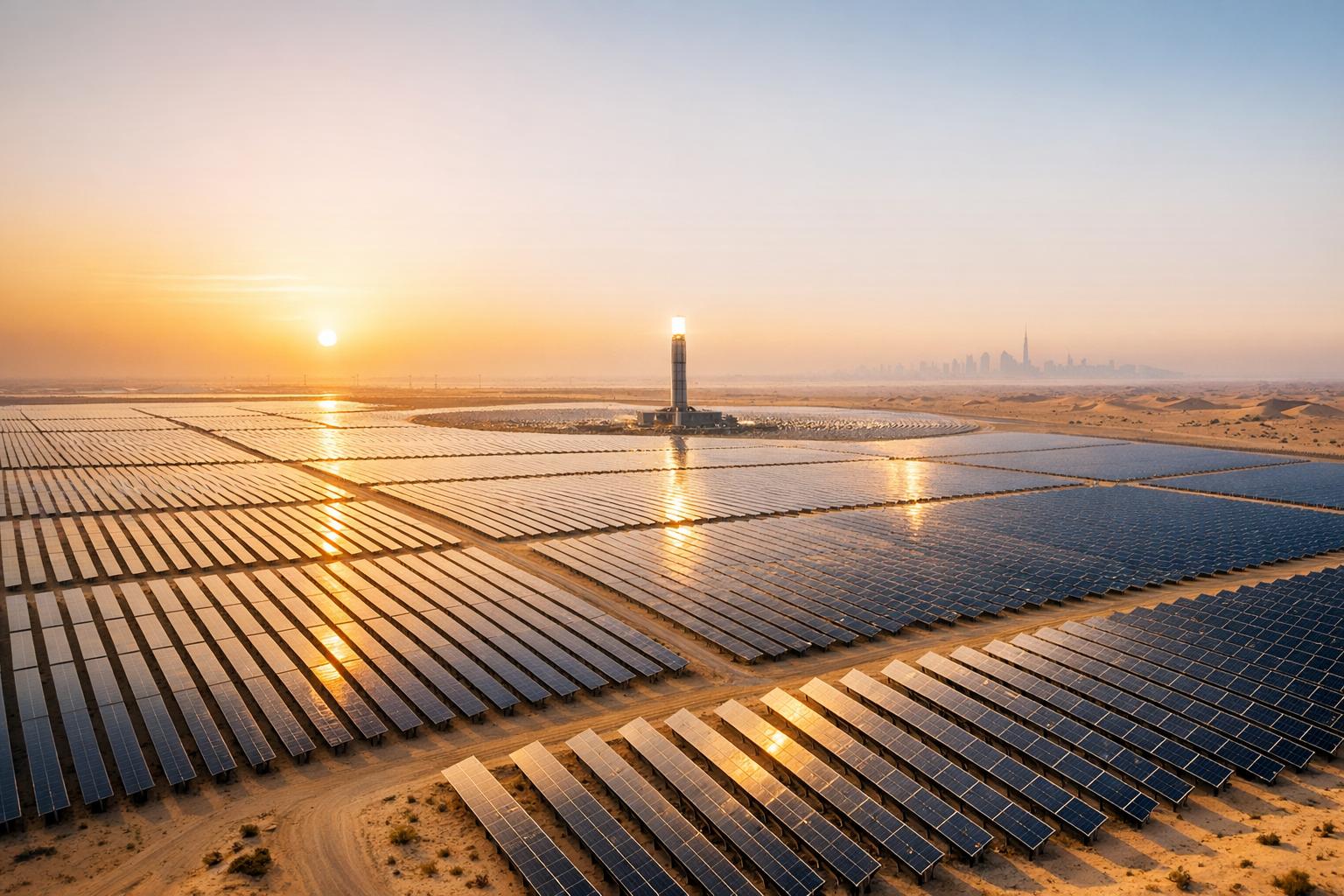
The Mohammed bin Rashid Al Maktoum Solar Park, a cornerstone of Dubai's renewable energy initiatives, achieved a significant increase in capacity in 2025, marking a major milestone in the emirate's clean energy strategy. The park's total installed capacity rose to 3,860 MW, following the addition of 800 MW using a combination of photovoltaic (PV) and concentrated solar power (CSP) technologies.
Key Developments in 2025
The latest capacity increase comes as part of the project's sixth phase, which contributes to Dubai's long-term goals of scaling up renewable energy generation. This expansion makes the solar park responsible for approximately 21.5 percent of Dubai Electricity and Water Authority's (DEWA) total power generation capacity.
The Mohammed bin Rashid Solar Park is now on track to exceed a total capacity of 7,260 MW by 2030, significantly surpassing its original target of 5,000 MW. Clean energy sources are projected to account for around 34 percent of Dubai’s power generation capacity within the next five years, according to DEWA’s approved plans.
In addition to the capacity additions, DEWA launched a tender for the seventh phase of the project in 2025. This phase is expected to add approximately 2,000 MW of solar capacity and incorporate energy storage systems totaling 1,400 MWh, with the ability to store up to 8,400 MWh of clean energy.
Record-Breaking Achievements
The solar park also made headlines in 2025 by setting a Guinness World Record for the highest capacity produced by a concentrated solar power plant operated by a single entity. The park’s fourth phase contributed 700 MW of CSP to this achievement.
Environmental Benefits and Future Goals
Once the revised targets for 2030 are met, the solar park is expected to play a crucial role in reducing Dubai’s carbon emissions. DEWA estimates that the project could help lower emissions by more than 8.5 million tonnes annually, reinforcing Dubai’s commitment to sustainability.
The project’s progress continues to attract attention from both domestic and international developers. Several companies have expressed preliminary interest in participating in future phases of the solar park under the Independent Power Producer (IPP) model.
Conclusion
The Mohammed bin Rashid Al Maktoum Solar Park remains a flagship initiative in Dubai’s renewable energy infrastructure. With its growing capacity and record-breaking achievements, the solar park is well-positioned to contribute significantly to Dubai’s clean energy and carbon neutrality strategies in the years ahead.
Latest Articles
©2025
FAQ
01
What does it really mean to “redefine profit”?
02
What makes Council Fire different?
03
Who does Council Fire you work with?
04
What does working with Council Fire actually look like?
05
How does Council Fire help organizations turn big goals into action?
06
How does Council Fire define and measure success?
Dec 29, 2025
Dubai Solar Park Expands Capacity Through Latest Installation
In This Article
Dubai's Mohammed bin Rashid Al Maktoum Solar Park grew to 3,860 MW in 2025; target raised to >7,260 MW by 2030.
Dubai Solar Park Expands Capacity Through Latest Installation
The Mohammed bin Rashid Al Maktoum Solar Park, a cornerstone of Dubai's renewable energy initiatives, achieved a significant increase in capacity in 2025, marking a major milestone in the emirate's clean energy strategy. The park's total installed capacity rose to 3,860 MW, following the addition of 800 MW using a combination of photovoltaic (PV) and concentrated solar power (CSP) technologies.
Key Developments in 2025
The latest capacity increase comes as part of the project's sixth phase, which contributes to Dubai's long-term goals of scaling up renewable energy generation. This expansion makes the solar park responsible for approximately 21.5 percent of Dubai Electricity and Water Authority's (DEWA) total power generation capacity.
The Mohammed bin Rashid Solar Park is now on track to exceed a total capacity of 7,260 MW by 2030, significantly surpassing its original target of 5,000 MW. Clean energy sources are projected to account for around 34 percent of Dubai’s power generation capacity within the next five years, according to DEWA’s approved plans.
In addition to the capacity additions, DEWA launched a tender for the seventh phase of the project in 2025. This phase is expected to add approximately 2,000 MW of solar capacity and incorporate energy storage systems totaling 1,400 MWh, with the ability to store up to 8,400 MWh of clean energy.
Record-Breaking Achievements
The solar park also made headlines in 2025 by setting a Guinness World Record for the highest capacity produced by a concentrated solar power plant operated by a single entity. The park’s fourth phase contributed 700 MW of CSP to this achievement.
Environmental Benefits and Future Goals
Once the revised targets for 2030 are met, the solar park is expected to play a crucial role in reducing Dubai’s carbon emissions. DEWA estimates that the project could help lower emissions by more than 8.5 million tonnes annually, reinforcing Dubai’s commitment to sustainability.
The project’s progress continues to attract attention from both domestic and international developers. Several companies have expressed preliminary interest in participating in future phases of the solar park under the Independent Power Producer (IPP) model.
Conclusion
The Mohammed bin Rashid Al Maktoum Solar Park remains a flagship initiative in Dubai’s renewable energy infrastructure. With its growing capacity and record-breaking achievements, the solar park is well-positioned to contribute significantly to Dubai’s clean energy and carbon neutrality strategies in the years ahead.
FAQ
01
What does it really mean to “redefine profit”?
02
What makes Council Fire different?
03
Who does Council Fire you work with?
04
What does working with Council Fire actually look like?
05
How does Council Fire help organizations turn big goals into action?
06
How does Council Fire define and measure success?
Dec 29, 2025
Dubai Solar Park Expands Capacity Through Latest Installation
In This Article
Dubai's Mohammed bin Rashid Al Maktoum Solar Park grew to 3,860 MW in 2025; target raised to >7,260 MW by 2030.
Dubai Solar Park Expands Capacity Through Latest Installation
The Mohammed bin Rashid Al Maktoum Solar Park, a cornerstone of Dubai's renewable energy initiatives, achieved a significant increase in capacity in 2025, marking a major milestone in the emirate's clean energy strategy. The park's total installed capacity rose to 3,860 MW, following the addition of 800 MW using a combination of photovoltaic (PV) and concentrated solar power (CSP) technologies.
Key Developments in 2025
The latest capacity increase comes as part of the project's sixth phase, which contributes to Dubai's long-term goals of scaling up renewable energy generation. This expansion makes the solar park responsible for approximately 21.5 percent of Dubai Electricity and Water Authority's (DEWA) total power generation capacity.
The Mohammed bin Rashid Solar Park is now on track to exceed a total capacity of 7,260 MW by 2030, significantly surpassing its original target of 5,000 MW. Clean energy sources are projected to account for around 34 percent of Dubai’s power generation capacity within the next five years, according to DEWA’s approved plans.
In addition to the capacity additions, DEWA launched a tender for the seventh phase of the project in 2025. This phase is expected to add approximately 2,000 MW of solar capacity and incorporate energy storage systems totaling 1,400 MWh, with the ability to store up to 8,400 MWh of clean energy.
Record-Breaking Achievements
The solar park also made headlines in 2025 by setting a Guinness World Record for the highest capacity produced by a concentrated solar power plant operated by a single entity. The park’s fourth phase contributed 700 MW of CSP to this achievement.
Environmental Benefits and Future Goals
Once the revised targets for 2030 are met, the solar park is expected to play a crucial role in reducing Dubai’s carbon emissions. DEWA estimates that the project could help lower emissions by more than 8.5 million tonnes annually, reinforcing Dubai’s commitment to sustainability.
The project’s progress continues to attract attention from both domestic and international developers. Several companies have expressed preliminary interest in participating in future phases of the solar park under the Independent Power Producer (IPP) model.
Conclusion
The Mohammed bin Rashid Al Maktoum Solar Park remains a flagship initiative in Dubai’s renewable energy infrastructure. With its growing capacity and record-breaking achievements, the solar park is well-positioned to contribute significantly to Dubai’s clean energy and carbon neutrality strategies in the years ahead.
FAQ
What does it really mean to “redefine profit”?
What makes Council Fire different?
Who does Council Fire you work with?
What does working with Council Fire actually look like?
How does Council Fire help organizations turn big goals into action?
How does Council Fire define and measure success?