
Mar 18, 2026
How to Communicate ESG Progress Credibly for Universities & Research Institutions
ESG Strategy
In This Article
Practical guide for universities to report ESG progress using GRI, SASB or STARS, centralized data, audience-tailored stories, and independent verification.
How to Communicate ESG Progress Credibly for Universities & Research Institutions
Universities face growing pressure to report their ESG (Environmental, Social, and Governance) progress transparently, with stakeholders like students, faculty, donors, and regulators demanding clear updates. However, decentralized operations often lead to inconsistent messaging and risks of greenwashing. To address this, institutions can:
Use established frameworks like GRI, SASB, or STARS for structured reporting.
Centralize data collection for accuracy and consistency.
Tailor communication to different audiences using data-driven insights and relatable stories.
Validate claims through third-party verification to build trust and accountability.
Making sustainability reporting a strategic asset for universities
Using Established ESG Reporting Frameworks
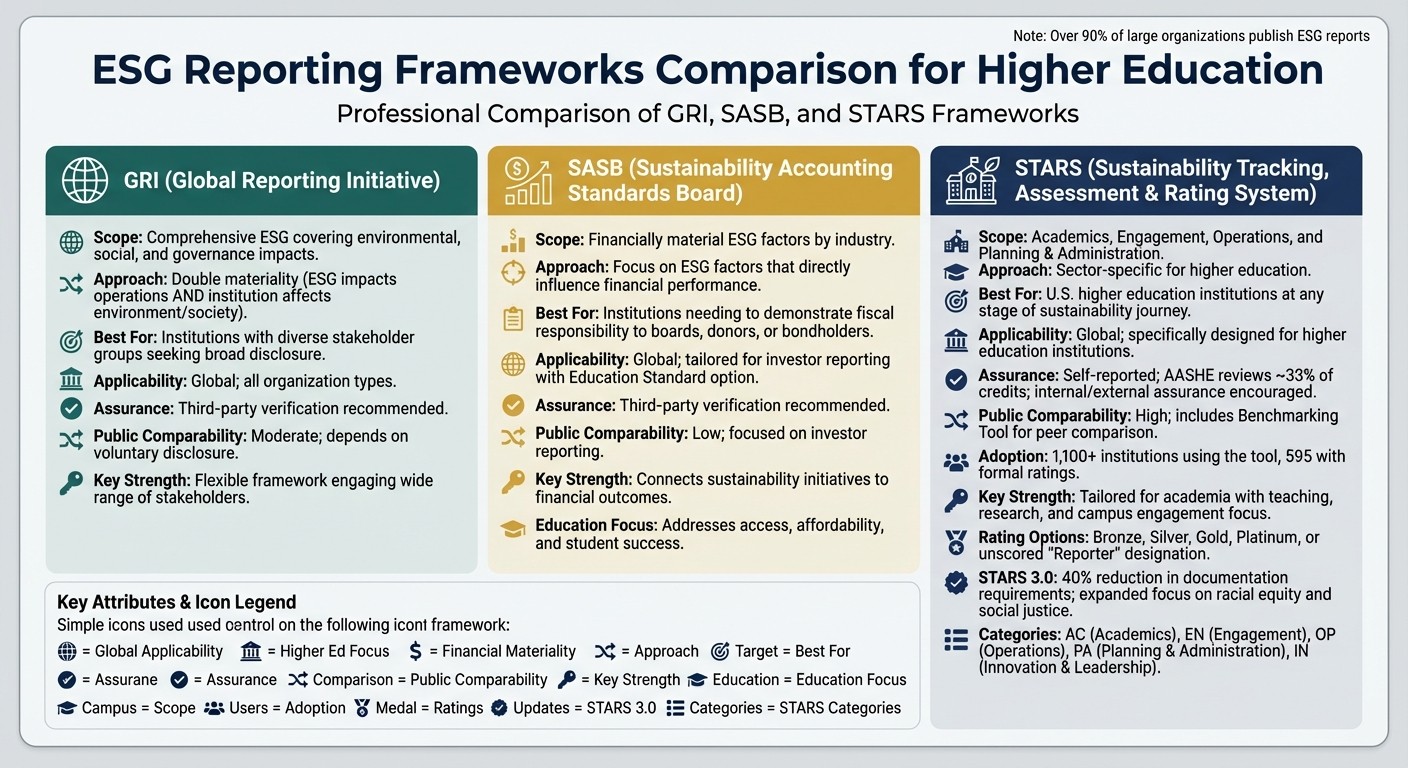
ESG Reporting Frameworks Comparison: GRI vs SASB vs STARS for Universities
Transparent ESG communication is no longer optional - it's an expectation. Leveraging established frameworks can streamline this process and build stakeholder confidence. Instead of starting from scratch, organizations can rely on trusted standards to communicate their sustainability efforts effectively. Today, over 90% of large organizations publish ESG reports, highlighting the growing importance of standardized reporting [4].
Choosing the right framework depends on your goals and the priorities of your stakeholders. For institutions aiming for broad, stakeholder-focused disclosure, the Global Reporting Initiative (GRI) is a solid choice. Those prioritizing financial materiality and investor interests might find the Sustainability Accounting Standards Board (SASB) more suitable. Meanwhile, U.S. higher education institutions often turn to STARS (Sustainability Tracking, Assessment & Rating System) as it addresses the sector's specific needs [5][7].
To implement a framework, start by defining your purpose, selecting relevant standards, and planning the rollout. A materiality assessment can help identify which ESG issues are most critical to your institution. For example, reducing carbon emissions might be a top priority for operational teams, while diversity and inclusion metrics could resonate more with students and faculty [4][7]. Bringing in your Internal Audit department early ensures data accuracy and fosters cross-departmental support for the chosen framework [7].
Here’s a closer look at how GRI, SASB, and STARS can be tailored to meet institutional needs.
GRI Standards for Comprehensive ESG Reporting
The Global Reporting Initiative (GRI) offers a flexible framework designed to engage a wide range of stakeholders. Its "double materiality" approach examines both how ESG issues impact operations and how the institution's activities affect the environment and society [4][8]. This dual perspective makes GRI particularly valuable for universities that serve diverse groups.
GRI’s comprehensive nature allows institutions to present a full picture of their sustainability efforts. It goes beyond financial risks to include environmental and social impacts that align with the educational mission of many universities. This makes GRI an excellent choice for institutions that see sustainability as integral to their identity, not just a compliance task.
SASB Standards for Financial Relevance
The Sustainability Accounting Standards Board (SASB) focuses on ESG factors that directly influence financial performance. While primarily aimed at investors, SASB includes an Education Standard that addresses issues like access, affordability, and student success - key concerns for universities with significant endowments or for-profit models [5].
SASB helps institutions pinpoint ESG issues that are financially material, making it ideal for those needing to demonstrate fiscal responsibility to boards, donors, or bondholders. The framework connects sustainability initiatives to financial outcomes, answering questions about how ESG factors could impact long-term financial health.
STARS for Higher Education Institutions
Unlike SASB, which emphasizes financial materiality, STARS is tailored specifically for the higher education sector. With over 1,100 institutions using the tool and 595 earning formal ratings, it’s the most widely adopted ESG framework in U.S. higher education [5]. STARS addresses areas unique to academia, such as teaching, research, and campus engagement, which general frameworks often overlook.
The latest version, STARS 3.0, organizes credits into five categories: Academics (AC), Engagement (EN), Operations (OP), Planning & Administration (PA), and Innovation & Leadership (IN) [6]. It also reduces documentation requirements by 40%, while expanding its focus to include racial equity and social justice [10].
STARS is adaptable for institutions at various stages of their sustainability journey. Those not ready for a scored rating can opt for the unscored "Reporter" designation, allowing them to begin the process without the pressure of achieving a formal rating like Bronze, Silver, Gold, or Platinum [11]. Metrics are normalized to account for differences in size and context, enabling fair comparisons between institutions ranging from small colleges to large research universities.
Building Transparent Data Collection and Management
To establish trustworthy ESG (Environmental, Social, and Governance) reporting, accurate and consistent data collection is a must. However, for many universities, this process can be daunting. Sustainability-related information is often scattered across various departments, from facilities management to academic affairs, making it difficult to consolidate and maintain quality. The solution lies in creating a centralized system that organizes and monitors data effectively.
Securing executive support is a critical first step. A memo or public statement from a university leader, such as the president or chancellor, can emphasize the importance of ESG reporting and encourage collaboration across departments. As AASHE highlights:
"Executive support can often streamline the data collection process. A memo or public statement from the president, chancellor, or other administrator... can serve as important encouragement for data providers to participate" [13].
This endorsement helps gain buy-in from staff who might otherwise be too busy to engage.
The next step involves choosing a data entry model. There are three main approaches:
The "Single Team" model assigns one or two individuals to handle all data entry, ensuring high quality and a comprehensive institutional overview.
The "Distributed" model allows department heads to input their own data, which speeds up the process but requires close oversight to maintain accuracy.
A hybrid model combines centralized supervision with decentralized input, balancing efficiency with precision.
After selecting a model, identify the departments responsible for specific ESG indicators, such as energy, waste, diversity, and more. Simplify the process by customizing data collection forms so that each department only sees the fields relevant to their responsibilities. Internal deadlines, set at least a month before submission, help maintain steady progress. With the foundation of centralized data collection in place, attention can shift to defining metrics and assigning clear responsibilities.
Defining Key Metrics and Assigning Responsibilities
Mapping data sources is just the beginning - refining metrics to focus on what truly matters is the next step. Use a credit checklist to mark metrics as "Not Applicable" or "Not Pursuing" to avoid wasting time on irrelevant indicators. Assign specific metrics to the appropriate departments. For example:
Facilities might handle energy and water data.
Human resources could track workforce diversity.
The registrar might oversee student demographics.
Document these assignments and establish reporting timelines. Most STARS credits require either current data or information from within the past three years [13].
Involving students can also be a valuable strategy. Courses, internships, and thesis projects related to sustainability can provide both additional support for data collection and opportunities for students to gain hands-on experience. Standardized tools, such as the STARS Reporting Tool or shared spreadsheets, ensure consistency across departments. Implementing tiered access levels (e.g., Admin, Data Entry, Observer) can further streamline the process while maintaining oversight. Always back up data in a central shared system to safeguard against loss.
Quality assurance is equally important. In Fall 2025, 30 individuals earned the STARS Data Quality Certification to enhance reporting accuracy [12]. Additionally, AASHE reviews about 33% of submitted credits to ensure compliance with criteria [9]. Before submission, conduct an internal quality check using standardized review templates to catch any errors.
By following this structured approach, institutions can build a solid foundation for ESG reporting while aligning their efforts with their unique priorities.
Comparing ESG Reporting Frameworks
Feature | GRI | SASB | STARS |
|---|---|---|---|
Scope | Comprehensive ESG covering environmental, social, and governance impacts | Financially material ESG factors by industry | Academics, Engagement, Operations, and Planning & Administration [6] |
Applicability | Global; all organization types | Global; tailored for investor reporting with an Education Standard option | Global; specifically designed for higher education institutions [12] |
Assurance Options | Third-party verification recommended | Third-party verification recommended | Self-reported; AASHE reviews ~33% of credits; internal/external assurance encouraged [9] |
Public Comparability | Moderate; depends on voluntary disclosure | Low; focused on investor reporting | High; includes Benchmarking Tool for peer comparison [12] |
For institutions beginning their ESG reporting journey, STARS provides tailored guidance and built-in peer comparison tools, making it a practical choice for higher education. SASB is ideal for organizations that need to prioritize financial accountability, while GRI's broad framework suits institutions with diverse stakeholder groups. The best choice ultimately depends on the institution's goals, resources, and audience.
Developing Stakeholder-Focused ESG Communication
Once you've gathered robust ESG data, the next step is figuring out how to share it effectively. Different stakeholder groups - whether students, donors, or faculty - have their own priorities and ways of processing information. A one-size-fits-all approach just won’t cut it. Instead, tailor your messaging to address what matters most to each audience.
Connecting ESG Reporting to Institutional Goals
To make your ESG narrative resonate, align it with your institution’s overarching goals. Show how sustainability efforts directly support your core mission, whether that’s advancing research, fostering community engagement, or improving student outcomes. When ESG initiatives reflect an institution’s values, they feel more genuine and impactful.
Take the University of California as an example. In 2024, they saved $100 million through energy efficiency and green building practices [3]. Not only did this benefit the environment, but it also freed up funds for academic programs and student services, reinforcing their educational mission. Similarly, 85% of UC San Diego Health patients expressed a preference for healthcare providers committed to sustainability and environmental health [3].
Leadership can play a key role here. Statements from executives, such as a university president or board chair, can explain why sustainability is central to the institution’s identity. This kind of endorsement signals that ESG is more than a compliance task - it’s integral to the institution’s purpose.
Balancing Stories with Data
Data provides structure, but stories make it personal. As APLANET notes, "stories bring them to life" [14]. The most effective ESG communication combines hard numbers with real-life examples to create a connection that sticks.
For instance, instead of simply stating that energy use dropped by 20%, describe the solar installation project that made it happen. Highlight the students who conducted research, the faculty who led the charge, or the staff who brought the plans to life. This blend of facts and personal narratives helps turn abstract statistics into something tangible and relatable [16].
A great example of this approach is Marshall University’s Chief Data Officer, Brian M. Morgan, who, in November 2023, launched interactive PowerBI dashboards. These tools allowed stakeholders to explore institutional research findings with customizable filters, offering transparency and enabling data-driven decisions in real time.
Transparency also means being honest about challenges. If emissions rose in a given year, explain why and outline the steps being taken to address the issue. Authenticity builds trust more effectively than cherry-picking only the positive outcomes. CU Boulder demonstrated this approach in September 2024 by updating its Sustainability Communication Guidelines. These guidelines supported its Climate Action Plan, which aims to cut GHG emissions by 50% by 2030, and required that all environmental claims be backed by reliable third-party data or internal research [2].
Using Third-Party Verification to Build Trust
To ensure your ESG communication is credible, back your data with independent verification. Third-party audits act as a seal of authenticity, protecting against greenwashing - whether intentional or not - by confirming that your data is accurate and unbiased [17]. CU Boulder’s guidelines emphasize this point:
"The best defense against greenwashing lies in good governance, disclosure and due diligence, in conjunction with a comprehensive understanding of the sustainability profile of the product, activity or transaction at hand" [2].
Third-party verification does more than just enhance credibility. It can highlight gaps in your data collection processes, improve ESG risk management, and build confidence among stakeholders who demand accountability [17][18]. For instance, the University of California has committed to having its systemwide GHG emissions verified by an independent auditor by 2026 [3], showcasing its dedication to transparent reporting.
To further bolster trust, rely on established certifications like STARS, LEED, or ISO standards. These frameworks provide clear benchmarks that stakeholders recognize and respect. Avoid vague terms like "green" or "eco-friendly" unless you have concrete evidence to back them up. Instead, use precise, verified data and make that information accessible and easy to understand.
Verification Aspect | Benefit to Institution | Stakeholder Impact |
|---|---|---|
Data Accuracy | Identifies internal errors and process gaps [17] | Builds trust in reported information [18] |
Standard Adherence | Ensures compliance with certifications like ISO or STARS [19][1] | Creates a fair comparison framework [19] |
Risk Mitigation | Minimizes legal and reputational risks [2] | Protects brand reputation and donor trust |
Transparency | Promotes disclosure of both successes and challenges [2] | Avoids accusations of selective reporting [2] |
Working with Experts for Effective Implementation
When it comes to turning ESG data collection and stakeholder communication into actionable results, working with experts can make all the difference. Universities often need specialized guidance to ensure their ESG communication is both effective and credible. The terrain is challenging - reporting frameworks are constantly evolving, stakeholder expectations shift, and the risk of greenwashing looms large. Consultants bring the expertise required to navigate these complexities, ensuring that your data is accurate, your messaging is clear, and your approach aligns with established standards like GRI, SASB, or STARS.
Council Fire’s experts excel at connecting sustainability efforts with communication strategies. By combining precise data collection with effective storytelling, they help institutions meet reporting standards while engaging stakeholders meaningfully. They ensure that your ESG messaging is grounded in verifiable data, not just lofty aspirations. As Sean Cleary, BMO Professor of Finance at Queen's University, aptly notes:
"It turns out that words are not enough to impact capital providers if they are not supported by actions" [20].
With expert input, vague claims are replaced by concrete metrics, such as specific carbon reduction percentages or recycled material ratios [2].
Beyond ensuring data accuracy, consultants also provide structured approaches for engaging stakeholders. Tools like the IAP2 Spectrum help tailor your communication strategy to fit different contexts - whether you’re sharing updates, gathering feedback, or working collaboratively on decisions. For institutions pursuing STARS 3.0 certification, consultants can design outreach strategies that meet "reach" requirements, using measurable indicators like email open rates or survey participation [1].
The risks of greenwashing - whether intentional or inadvertent - can’t be overstated. Misleading claims can lead to lawsuits and irreparable damage to an institution’s reputation. Consultants help mitigate these risks by ensuring governance, transparency, and due diligence are in place. They make it possible to present your Climate Action Plan in straightforward, accessible language, steering clear of confusing jargon [2].
The benefits of working with experts extend well beyond implementation. Consultants also help you evaluate the ongoing impact of your ESG communication efforts, using stakeholder feedback and engagement metrics to refine your approach over time. This process ensures your reporting doesn’t just meet compliance standards - it fosters real progress and builds lasting trust with the audiences that matter most. Up next, learn how to measure and refine your ESG communication strategy to achieve continuous improvement.
Measuring and Improving ESG Communication
Collecting Stakeholder Feedback and Measuring Engagement
Effectively measuring ESG communication requires focusing on outcomes, such as enhanced stakeholder awareness or behavioral shifts, rather than just tracking outputs. As the University of Reading explains:
"Measurement is a tool to enhance communication and maximize research impact through regular evaluation" [21].
Start by setting SMART objectives - Specific, Measurable, Achievable, Relevant, and Timely - that align with your institution's goals. Arizona State University exemplifies this approach through its biannual Comprehensive Sustainability Survey. Since 2017, the survey has been conducted with faculty, staff, and a representative sample of students, tracking sustainability literacy and cultural engagement. The most recent survey, completed in 2025, provides a clear model for systematic evaluation [22].
This approach combines quantitative tools - like email open rates, newsletter subscriptions, and website analytics - with qualitative insights from stakeholder interviews and focus groups [21]. For institutions working toward STARS 3.0 certification, Indicator 1.2 requires an estimate or measurement of how much of the campus community is reached through sustainability communications [1]. If you report reaching 80% or more, you’ll need to provide documentation of this engagement [1].
To achieve this, leverage tools such as Google Analytics for tracking website traffic, Hootsuite for monitoring social media engagement, and SurveyMonkey or Google Forms for gathering stakeholder feedback [21]. By combining these data points, you can assess whether your communication efforts are driving awareness or influencing behavior.
Once these metrics are gathered, the next step is to use the insights to improve your reporting and strategy over time.
Updating Reports and Improving Over Time
After evaluating stakeholder engagement, use the findings to refine your ESG communication strategy in a transparent and systematic way. Annual reporting cycles are ideal opportunities to reassess and improve your approach. Even when data reveals challenges - like an increase in energy use or carbon emissions - address these issues openly and explain the contributing factors, rather than omitting them [2].
Consider implementing a Sustainability Operations Annual Review (SOAR) to consolidate and compare annual metrics [22]. Maintain a lessons log to document what strategies succeeded or fell short, and share these insights with your institutional communications team to encourage collective learning [21]. Design engagement programs with built-in assessments to streamline future data collection [1]. This ongoing process not only ensures compliance but also strengthens trust with stakeholders over the long term.
Conclusion
Effectively communicating ESG progress requires universities and research institutions to move away from vague statements and adopt structured, transparent practices. Established frameworks like AASHE STARS offer a solid foundation for credible reporting, reducing the risks of greenwashing. As Jill Bogie, Adjunct Faculty Member at the Gordon Institute of Business Science, aptly states:
"A meaningful report will accurately reflect what the organization does, rather than cherry-pick a few good stories" [15].
To achieve this, institutions must back every claim with measurable data, ensuring clear accountability through well-maintained dashboards and open reporting of both achievements and challenges. Incorporating third-party verification further strengthens credibility and underscores a commitment to transparency and accountability.
While robust data is essential, it should be paired with engaging narratives that resonate with diverse audiences. These stories, however, must be grounded in quantitative evidence to earn stakeholder trust and demonstrate how transparency shapes decision-making.
Leveraging frameworks such as GRI, SASB, and STARS, institutions should collaborate with sustainability and communications experts to tackle ESG complexities. This ensures data accuracy and aligns messaging with their core mission. By treating ESG communication as an ongoing process - supported by regular measurement, stakeholder input, and systematic updates - institutions can turn reporting into a strategic tool. This approach builds trust, fosters meaningful connections, and drives long-term impact.
FAQs
Which ESG framework should our campus start with?
The STARS (Sustainability Tracking, Assessment & Rating System) framework offers a structured approach for campuses aiming to evaluate and share their sustainability performance. Commonly adopted across higher education institutions, it provides tools to measure various aspects of sustainability, including environmental, social, and governance (ESG) factors. By aligning with established reporting standards like GRI (Global Reporting Initiative) and SASB (Sustainability Accounting Standards Board), STARS ensures a reliable basis for transparent ESG reporting. This framework serves as an efficient method to assess and highlight a campus's sustainability initiatives.
How do we avoid greenwashing in ESG updates?
To ensure ESG updates steer clear of greenwashing, focus on clarity, accuracy, and trustworthy reporting. Use verified, fact-based data and set clearly defined goals to avoid any overstatements. Leveraging established frameworks such as the Global Reporting Initiative (GRI) or the Sustainability Accounting Standards Board (SASB) helps maintain consistent and reliable disclosures. Provide measurable results backed by evidence and routinely revisit your communication strategies to align with genuine progress. Prioritizing openness and adhering to recognized standards fosters trust and strengthens credibility.
What data should we track first for ESG reporting?
To begin, focus on tracking your institution's sustainability commitments and planning activities. This includes documenting external goals related to sustainability and outlining detailed plans and objectives. Alongside these efforts, keep an eye on outreach initiatives, such as the percentage of campus stakeholders actively involved in sustainability programs. These initial metrics offer a strong foundation for assessing your ESG progress and creating reliable reports.
Related Blog Posts
Latest Articles
©2025



FAQ
01
What does it really mean to “redefine profit”?
02
What makes Council Fire different?
03
Who does Council Fire you work with?
04
What does working with Council Fire actually look like?
05
How does Council Fire help organizations turn big goals into action?
06
How does Council Fire define and measure success?
Mar 18, 2026
How to Communicate ESG Progress Credibly for Universities & Research Institutions
ESG Strategy
In This Article
Practical guide for universities to report ESG progress using GRI, SASB or STARS, centralized data, audience-tailored stories, and independent verification.
How to Communicate ESG Progress Credibly for Universities & Research Institutions
Universities face growing pressure to report their ESG (Environmental, Social, and Governance) progress transparently, with stakeholders like students, faculty, donors, and regulators demanding clear updates. However, decentralized operations often lead to inconsistent messaging and risks of greenwashing. To address this, institutions can:
Use established frameworks like GRI, SASB, or STARS for structured reporting.
Centralize data collection for accuracy and consistency.
Tailor communication to different audiences using data-driven insights and relatable stories.
Validate claims through third-party verification to build trust and accountability.
Making sustainability reporting a strategic asset for universities
Using Established ESG Reporting Frameworks
ESG Reporting Frameworks Comparison: GRI vs SASB vs STARS for Universities
Transparent ESG communication is no longer optional - it's an expectation. Leveraging established frameworks can streamline this process and build stakeholder confidence. Instead of starting from scratch, organizations can rely on trusted standards to communicate their sustainability efforts effectively. Today, over 90% of large organizations publish ESG reports, highlighting the growing importance of standardized reporting [4].
Choosing the right framework depends on your goals and the priorities of your stakeholders. For institutions aiming for broad, stakeholder-focused disclosure, the Global Reporting Initiative (GRI) is a solid choice. Those prioritizing financial materiality and investor interests might find the Sustainability Accounting Standards Board (SASB) more suitable. Meanwhile, U.S. higher education institutions often turn to STARS (Sustainability Tracking, Assessment & Rating System) as it addresses the sector's specific needs [5][7].
To implement a framework, start by defining your purpose, selecting relevant standards, and planning the rollout. A materiality assessment can help identify which ESG issues are most critical to your institution. For example, reducing carbon emissions might be a top priority for operational teams, while diversity and inclusion metrics could resonate more with students and faculty [4][7]. Bringing in your Internal Audit department early ensures data accuracy and fosters cross-departmental support for the chosen framework [7].
Here’s a closer look at how GRI, SASB, and STARS can be tailored to meet institutional needs.
GRI Standards for Comprehensive ESG Reporting
The Global Reporting Initiative (GRI) offers a flexible framework designed to engage a wide range of stakeholders. Its "double materiality" approach examines both how ESG issues impact operations and how the institution's activities affect the environment and society [4][8]. This dual perspective makes GRI particularly valuable for universities that serve diverse groups.
GRI’s comprehensive nature allows institutions to present a full picture of their sustainability efforts. It goes beyond financial risks to include environmental and social impacts that align with the educational mission of many universities. This makes GRI an excellent choice for institutions that see sustainability as integral to their identity, not just a compliance task.
SASB Standards for Financial Relevance
The Sustainability Accounting Standards Board (SASB) focuses on ESG factors that directly influence financial performance. While primarily aimed at investors, SASB includes an Education Standard that addresses issues like access, affordability, and student success - key concerns for universities with significant endowments or for-profit models [5].
SASB helps institutions pinpoint ESG issues that are financially material, making it ideal for those needing to demonstrate fiscal responsibility to boards, donors, or bondholders. The framework connects sustainability initiatives to financial outcomes, answering questions about how ESG factors could impact long-term financial health.
STARS for Higher Education Institutions
Unlike SASB, which emphasizes financial materiality, STARS is tailored specifically for the higher education sector. With over 1,100 institutions using the tool and 595 earning formal ratings, it’s the most widely adopted ESG framework in U.S. higher education [5]. STARS addresses areas unique to academia, such as teaching, research, and campus engagement, which general frameworks often overlook.
The latest version, STARS 3.0, organizes credits into five categories: Academics (AC), Engagement (EN), Operations (OP), Planning & Administration (PA), and Innovation & Leadership (IN) [6]. It also reduces documentation requirements by 40%, while expanding its focus to include racial equity and social justice [10].
STARS is adaptable for institutions at various stages of their sustainability journey. Those not ready for a scored rating can opt for the unscored "Reporter" designation, allowing them to begin the process without the pressure of achieving a formal rating like Bronze, Silver, Gold, or Platinum [11]. Metrics are normalized to account for differences in size and context, enabling fair comparisons between institutions ranging from small colleges to large research universities.
Building Transparent Data Collection and Management
To establish trustworthy ESG (Environmental, Social, and Governance) reporting, accurate and consistent data collection is a must. However, for many universities, this process can be daunting. Sustainability-related information is often scattered across various departments, from facilities management to academic affairs, making it difficult to consolidate and maintain quality. The solution lies in creating a centralized system that organizes and monitors data effectively.
Securing executive support is a critical first step. A memo or public statement from a university leader, such as the president or chancellor, can emphasize the importance of ESG reporting and encourage collaboration across departments. As AASHE highlights:
"Executive support can often streamline the data collection process. A memo or public statement from the president, chancellor, or other administrator... can serve as important encouragement for data providers to participate" [13].
This endorsement helps gain buy-in from staff who might otherwise be too busy to engage.
The next step involves choosing a data entry model. There are three main approaches:
The "Single Team" model assigns one or two individuals to handle all data entry, ensuring high quality and a comprehensive institutional overview.
The "Distributed" model allows department heads to input their own data, which speeds up the process but requires close oversight to maintain accuracy.
A hybrid model combines centralized supervision with decentralized input, balancing efficiency with precision.
After selecting a model, identify the departments responsible for specific ESG indicators, such as energy, waste, diversity, and more. Simplify the process by customizing data collection forms so that each department only sees the fields relevant to their responsibilities. Internal deadlines, set at least a month before submission, help maintain steady progress. With the foundation of centralized data collection in place, attention can shift to defining metrics and assigning clear responsibilities.
Defining Key Metrics and Assigning Responsibilities
Mapping data sources is just the beginning - refining metrics to focus on what truly matters is the next step. Use a credit checklist to mark metrics as "Not Applicable" or "Not Pursuing" to avoid wasting time on irrelevant indicators. Assign specific metrics to the appropriate departments. For example:
Facilities might handle energy and water data.
Human resources could track workforce diversity.
The registrar might oversee student demographics.
Document these assignments and establish reporting timelines. Most STARS credits require either current data or information from within the past three years [13].
Involving students can also be a valuable strategy. Courses, internships, and thesis projects related to sustainability can provide both additional support for data collection and opportunities for students to gain hands-on experience. Standardized tools, such as the STARS Reporting Tool or shared spreadsheets, ensure consistency across departments. Implementing tiered access levels (e.g., Admin, Data Entry, Observer) can further streamline the process while maintaining oversight. Always back up data in a central shared system to safeguard against loss.
Quality assurance is equally important. In Fall 2025, 30 individuals earned the STARS Data Quality Certification to enhance reporting accuracy [12]. Additionally, AASHE reviews about 33% of submitted credits to ensure compliance with criteria [9]. Before submission, conduct an internal quality check using standardized review templates to catch any errors.
By following this structured approach, institutions can build a solid foundation for ESG reporting while aligning their efforts with their unique priorities.
Comparing ESG Reporting Frameworks
Feature | GRI | SASB | STARS |
|---|---|---|---|
Scope | Comprehensive ESG covering environmental, social, and governance impacts | Financially material ESG factors by industry | Academics, Engagement, Operations, and Planning & Administration [6] |
Applicability | Global; all organization types | Global; tailored for investor reporting with an Education Standard option | Global; specifically designed for higher education institutions [12] |
Assurance Options | Third-party verification recommended | Third-party verification recommended | Self-reported; AASHE reviews ~33% of credits; internal/external assurance encouraged [9] |
Public Comparability | Moderate; depends on voluntary disclosure | Low; focused on investor reporting | High; includes Benchmarking Tool for peer comparison [12] |
For institutions beginning their ESG reporting journey, STARS provides tailored guidance and built-in peer comparison tools, making it a practical choice for higher education. SASB is ideal for organizations that need to prioritize financial accountability, while GRI's broad framework suits institutions with diverse stakeholder groups. The best choice ultimately depends on the institution's goals, resources, and audience.
Developing Stakeholder-Focused ESG Communication
Once you've gathered robust ESG data, the next step is figuring out how to share it effectively. Different stakeholder groups - whether students, donors, or faculty - have their own priorities and ways of processing information. A one-size-fits-all approach just won’t cut it. Instead, tailor your messaging to address what matters most to each audience.
Connecting ESG Reporting to Institutional Goals
To make your ESG narrative resonate, align it with your institution’s overarching goals. Show how sustainability efforts directly support your core mission, whether that’s advancing research, fostering community engagement, or improving student outcomes. When ESG initiatives reflect an institution’s values, they feel more genuine and impactful.
Take the University of California as an example. In 2024, they saved $100 million through energy efficiency and green building practices [3]. Not only did this benefit the environment, but it also freed up funds for academic programs and student services, reinforcing their educational mission. Similarly, 85% of UC San Diego Health patients expressed a preference for healthcare providers committed to sustainability and environmental health [3].
Leadership can play a key role here. Statements from executives, such as a university president or board chair, can explain why sustainability is central to the institution’s identity. This kind of endorsement signals that ESG is more than a compliance task - it’s integral to the institution’s purpose.
Balancing Stories with Data
Data provides structure, but stories make it personal. As APLANET notes, "stories bring them to life" [14]. The most effective ESG communication combines hard numbers with real-life examples to create a connection that sticks.
For instance, instead of simply stating that energy use dropped by 20%, describe the solar installation project that made it happen. Highlight the students who conducted research, the faculty who led the charge, or the staff who brought the plans to life. This blend of facts and personal narratives helps turn abstract statistics into something tangible and relatable [16].
A great example of this approach is Marshall University’s Chief Data Officer, Brian M. Morgan, who, in November 2023, launched interactive PowerBI dashboards. These tools allowed stakeholders to explore institutional research findings with customizable filters, offering transparency and enabling data-driven decisions in real time.
Transparency also means being honest about challenges. If emissions rose in a given year, explain why and outline the steps being taken to address the issue. Authenticity builds trust more effectively than cherry-picking only the positive outcomes. CU Boulder demonstrated this approach in September 2024 by updating its Sustainability Communication Guidelines. These guidelines supported its Climate Action Plan, which aims to cut GHG emissions by 50% by 2030, and required that all environmental claims be backed by reliable third-party data or internal research [2].
Using Third-Party Verification to Build Trust
To ensure your ESG communication is credible, back your data with independent verification. Third-party audits act as a seal of authenticity, protecting against greenwashing - whether intentional or not - by confirming that your data is accurate and unbiased [17]. CU Boulder’s guidelines emphasize this point:
"The best defense against greenwashing lies in good governance, disclosure and due diligence, in conjunction with a comprehensive understanding of the sustainability profile of the product, activity or transaction at hand" [2].
Third-party verification does more than just enhance credibility. It can highlight gaps in your data collection processes, improve ESG risk management, and build confidence among stakeholders who demand accountability [17][18]. For instance, the University of California has committed to having its systemwide GHG emissions verified by an independent auditor by 2026 [3], showcasing its dedication to transparent reporting.
To further bolster trust, rely on established certifications like STARS, LEED, or ISO standards. These frameworks provide clear benchmarks that stakeholders recognize and respect. Avoid vague terms like "green" or "eco-friendly" unless you have concrete evidence to back them up. Instead, use precise, verified data and make that information accessible and easy to understand.
Verification Aspect | Benefit to Institution | Stakeholder Impact |
|---|---|---|
Data Accuracy | Identifies internal errors and process gaps [17] | Builds trust in reported information [18] |
Standard Adherence | Ensures compliance with certifications like ISO or STARS [19][1] | Creates a fair comparison framework [19] |
Risk Mitigation | Minimizes legal and reputational risks [2] | Protects brand reputation and donor trust |
Transparency | Promotes disclosure of both successes and challenges [2] | Avoids accusations of selective reporting [2] |
Working with Experts for Effective Implementation
When it comes to turning ESG data collection and stakeholder communication into actionable results, working with experts can make all the difference. Universities often need specialized guidance to ensure their ESG communication is both effective and credible. The terrain is challenging - reporting frameworks are constantly evolving, stakeholder expectations shift, and the risk of greenwashing looms large. Consultants bring the expertise required to navigate these complexities, ensuring that your data is accurate, your messaging is clear, and your approach aligns with established standards like GRI, SASB, or STARS.
Council Fire’s experts excel at connecting sustainability efforts with communication strategies. By combining precise data collection with effective storytelling, they help institutions meet reporting standards while engaging stakeholders meaningfully. They ensure that your ESG messaging is grounded in verifiable data, not just lofty aspirations. As Sean Cleary, BMO Professor of Finance at Queen's University, aptly notes:
"It turns out that words are not enough to impact capital providers if they are not supported by actions" [20].
With expert input, vague claims are replaced by concrete metrics, such as specific carbon reduction percentages or recycled material ratios [2].
Beyond ensuring data accuracy, consultants also provide structured approaches for engaging stakeholders. Tools like the IAP2 Spectrum help tailor your communication strategy to fit different contexts - whether you’re sharing updates, gathering feedback, or working collaboratively on decisions. For institutions pursuing STARS 3.0 certification, consultants can design outreach strategies that meet "reach" requirements, using measurable indicators like email open rates or survey participation [1].
The risks of greenwashing - whether intentional or inadvertent - can’t be overstated. Misleading claims can lead to lawsuits and irreparable damage to an institution’s reputation. Consultants help mitigate these risks by ensuring governance, transparency, and due diligence are in place. They make it possible to present your Climate Action Plan in straightforward, accessible language, steering clear of confusing jargon [2].
The benefits of working with experts extend well beyond implementation. Consultants also help you evaluate the ongoing impact of your ESG communication efforts, using stakeholder feedback and engagement metrics to refine your approach over time. This process ensures your reporting doesn’t just meet compliance standards - it fosters real progress and builds lasting trust with the audiences that matter most. Up next, learn how to measure and refine your ESG communication strategy to achieve continuous improvement.
Measuring and Improving ESG Communication
Collecting Stakeholder Feedback and Measuring Engagement
Effectively measuring ESG communication requires focusing on outcomes, such as enhanced stakeholder awareness or behavioral shifts, rather than just tracking outputs. As the University of Reading explains:
"Measurement is a tool to enhance communication and maximize research impact through regular evaluation" [21].
Start by setting SMART objectives - Specific, Measurable, Achievable, Relevant, and Timely - that align with your institution's goals. Arizona State University exemplifies this approach through its biannual Comprehensive Sustainability Survey. Since 2017, the survey has been conducted with faculty, staff, and a representative sample of students, tracking sustainability literacy and cultural engagement. The most recent survey, completed in 2025, provides a clear model for systematic evaluation [22].
This approach combines quantitative tools - like email open rates, newsletter subscriptions, and website analytics - with qualitative insights from stakeholder interviews and focus groups [21]. For institutions working toward STARS 3.0 certification, Indicator 1.2 requires an estimate or measurement of how much of the campus community is reached through sustainability communications [1]. If you report reaching 80% or more, you’ll need to provide documentation of this engagement [1].
To achieve this, leverage tools such as Google Analytics for tracking website traffic, Hootsuite for monitoring social media engagement, and SurveyMonkey or Google Forms for gathering stakeholder feedback [21]. By combining these data points, you can assess whether your communication efforts are driving awareness or influencing behavior.
Once these metrics are gathered, the next step is to use the insights to improve your reporting and strategy over time.
Updating Reports and Improving Over Time
After evaluating stakeholder engagement, use the findings to refine your ESG communication strategy in a transparent and systematic way. Annual reporting cycles are ideal opportunities to reassess and improve your approach. Even when data reveals challenges - like an increase in energy use or carbon emissions - address these issues openly and explain the contributing factors, rather than omitting them [2].
Consider implementing a Sustainability Operations Annual Review (SOAR) to consolidate and compare annual metrics [22]. Maintain a lessons log to document what strategies succeeded or fell short, and share these insights with your institutional communications team to encourage collective learning [21]. Design engagement programs with built-in assessments to streamline future data collection [1]. This ongoing process not only ensures compliance but also strengthens trust with stakeholders over the long term.
Conclusion
Effectively communicating ESG progress requires universities and research institutions to move away from vague statements and adopt structured, transparent practices. Established frameworks like AASHE STARS offer a solid foundation for credible reporting, reducing the risks of greenwashing. As Jill Bogie, Adjunct Faculty Member at the Gordon Institute of Business Science, aptly states:
"A meaningful report will accurately reflect what the organization does, rather than cherry-pick a few good stories" [15].
To achieve this, institutions must back every claim with measurable data, ensuring clear accountability through well-maintained dashboards and open reporting of both achievements and challenges. Incorporating third-party verification further strengthens credibility and underscores a commitment to transparency and accountability.
While robust data is essential, it should be paired with engaging narratives that resonate with diverse audiences. These stories, however, must be grounded in quantitative evidence to earn stakeholder trust and demonstrate how transparency shapes decision-making.
Leveraging frameworks such as GRI, SASB, and STARS, institutions should collaborate with sustainability and communications experts to tackle ESG complexities. This ensures data accuracy and aligns messaging with their core mission. By treating ESG communication as an ongoing process - supported by regular measurement, stakeholder input, and systematic updates - institutions can turn reporting into a strategic tool. This approach builds trust, fosters meaningful connections, and drives long-term impact.
FAQs
Which ESG framework should our campus start with?
The STARS (Sustainability Tracking, Assessment & Rating System) framework offers a structured approach for campuses aiming to evaluate and share their sustainability performance. Commonly adopted across higher education institutions, it provides tools to measure various aspects of sustainability, including environmental, social, and governance (ESG) factors. By aligning with established reporting standards like GRI (Global Reporting Initiative) and SASB (Sustainability Accounting Standards Board), STARS ensures a reliable basis for transparent ESG reporting. This framework serves as an efficient method to assess and highlight a campus's sustainability initiatives.
How do we avoid greenwashing in ESG updates?
To ensure ESG updates steer clear of greenwashing, focus on clarity, accuracy, and trustworthy reporting. Use verified, fact-based data and set clearly defined goals to avoid any overstatements. Leveraging established frameworks such as the Global Reporting Initiative (GRI) or the Sustainability Accounting Standards Board (SASB) helps maintain consistent and reliable disclosures. Provide measurable results backed by evidence and routinely revisit your communication strategies to align with genuine progress. Prioritizing openness and adhering to recognized standards fosters trust and strengthens credibility.
What data should we track first for ESG reporting?
To begin, focus on tracking your institution's sustainability commitments and planning activities. This includes documenting external goals related to sustainability and outlining detailed plans and objectives. Alongside these efforts, keep an eye on outreach initiatives, such as the percentage of campus stakeholders actively involved in sustainability programs. These initial metrics offer a strong foundation for assessing your ESG progress and creating reliable reports.
Related Blog Posts
FAQ
01
What does it really mean to “redefine profit”?
02
What makes Council Fire different?
03
Who does Council Fire you work with?
04
What does working with Council Fire actually look like?
05
How does Council Fire help organizations turn big goals into action?
06
How does Council Fire define and measure success?
Mar 18, 2026
How to Communicate ESG Progress Credibly for Universities & Research Institutions
ESG Strategy
In This Article
Practical guide for universities to report ESG progress using GRI, SASB or STARS, centralized data, audience-tailored stories, and independent verification.
How to Communicate ESG Progress Credibly for Universities & Research Institutions
Universities face growing pressure to report their ESG (Environmental, Social, and Governance) progress transparently, with stakeholders like students, faculty, donors, and regulators demanding clear updates. However, decentralized operations often lead to inconsistent messaging and risks of greenwashing. To address this, institutions can:
Use established frameworks like GRI, SASB, or STARS for structured reporting.
Centralize data collection for accuracy and consistency.
Tailor communication to different audiences using data-driven insights and relatable stories.
Validate claims through third-party verification to build trust and accountability.
Making sustainability reporting a strategic asset for universities
Using Established ESG Reporting Frameworks
ESG Reporting Frameworks Comparison: GRI vs SASB vs STARS for Universities
Transparent ESG communication is no longer optional - it's an expectation. Leveraging established frameworks can streamline this process and build stakeholder confidence. Instead of starting from scratch, organizations can rely on trusted standards to communicate their sustainability efforts effectively. Today, over 90% of large organizations publish ESG reports, highlighting the growing importance of standardized reporting [4].
Choosing the right framework depends on your goals and the priorities of your stakeholders. For institutions aiming for broad, stakeholder-focused disclosure, the Global Reporting Initiative (GRI) is a solid choice. Those prioritizing financial materiality and investor interests might find the Sustainability Accounting Standards Board (SASB) more suitable. Meanwhile, U.S. higher education institutions often turn to STARS (Sustainability Tracking, Assessment & Rating System) as it addresses the sector's specific needs [5][7].
To implement a framework, start by defining your purpose, selecting relevant standards, and planning the rollout. A materiality assessment can help identify which ESG issues are most critical to your institution. For example, reducing carbon emissions might be a top priority for operational teams, while diversity and inclusion metrics could resonate more with students and faculty [4][7]. Bringing in your Internal Audit department early ensures data accuracy and fosters cross-departmental support for the chosen framework [7].
Here’s a closer look at how GRI, SASB, and STARS can be tailored to meet institutional needs.
GRI Standards for Comprehensive ESG Reporting
The Global Reporting Initiative (GRI) offers a flexible framework designed to engage a wide range of stakeholders. Its "double materiality" approach examines both how ESG issues impact operations and how the institution's activities affect the environment and society [4][8]. This dual perspective makes GRI particularly valuable for universities that serve diverse groups.
GRI’s comprehensive nature allows institutions to present a full picture of their sustainability efforts. It goes beyond financial risks to include environmental and social impacts that align with the educational mission of many universities. This makes GRI an excellent choice for institutions that see sustainability as integral to their identity, not just a compliance task.
SASB Standards for Financial Relevance
The Sustainability Accounting Standards Board (SASB) focuses on ESG factors that directly influence financial performance. While primarily aimed at investors, SASB includes an Education Standard that addresses issues like access, affordability, and student success - key concerns for universities with significant endowments or for-profit models [5].
SASB helps institutions pinpoint ESG issues that are financially material, making it ideal for those needing to demonstrate fiscal responsibility to boards, donors, or bondholders. The framework connects sustainability initiatives to financial outcomes, answering questions about how ESG factors could impact long-term financial health.
STARS for Higher Education Institutions
Unlike SASB, which emphasizes financial materiality, STARS is tailored specifically for the higher education sector. With over 1,100 institutions using the tool and 595 earning formal ratings, it’s the most widely adopted ESG framework in U.S. higher education [5]. STARS addresses areas unique to academia, such as teaching, research, and campus engagement, which general frameworks often overlook.
The latest version, STARS 3.0, organizes credits into five categories: Academics (AC), Engagement (EN), Operations (OP), Planning & Administration (PA), and Innovation & Leadership (IN) [6]. It also reduces documentation requirements by 40%, while expanding its focus to include racial equity and social justice [10].
STARS is adaptable for institutions at various stages of their sustainability journey. Those not ready for a scored rating can opt for the unscored "Reporter" designation, allowing them to begin the process without the pressure of achieving a formal rating like Bronze, Silver, Gold, or Platinum [11]. Metrics are normalized to account for differences in size and context, enabling fair comparisons between institutions ranging from small colleges to large research universities.
Building Transparent Data Collection and Management
To establish trustworthy ESG (Environmental, Social, and Governance) reporting, accurate and consistent data collection is a must. However, for many universities, this process can be daunting. Sustainability-related information is often scattered across various departments, from facilities management to academic affairs, making it difficult to consolidate and maintain quality. The solution lies in creating a centralized system that organizes and monitors data effectively.
Securing executive support is a critical first step. A memo or public statement from a university leader, such as the president or chancellor, can emphasize the importance of ESG reporting and encourage collaboration across departments. As AASHE highlights:
"Executive support can often streamline the data collection process. A memo or public statement from the president, chancellor, or other administrator... can serve as important encouragement for data providers to participate" [13].
This endorsement helps gain buy-in from staff who might otherwise be too busy to engage.
The next step involves choosing a data entry model. There are three main approaches:
The "Single Team" model assigns one or two individuals to handle all data entry, ensuring high quality and a comprehensive institutional overview.
The "Distributed" model allows department heads to input their own data, which speeds up the process but requires close oversight to maintain accuracy.
A hybrid model combines centralized supervision with decentralized input, balancing efficiency with precision.
After selecting a model, identify the departments responsible for specific ESG indicators, such as energy, waste, diversity, and more. Simplify the process by customizing data collection forms so that each department only sees the fields relevant to their responsibilities. Internal deadlines, set at least a month before submission, help maintain steady progress. With the foundation of centralized data collection in place, attention can shift to defining metrics and assigning clear responsibilities.
Defining Key Metrics and Assigning Responsibilities
Mapping data sources is just the beginning - refining metrics to focus on what truly matters is the next step. Use a credit checklist to mark metrics as "Not Applicable" or "Not Pursuing" to avoid wasting time on irrelevant indicators. Assign specific metrics to the appropriate departments. For example:
Facilities might handle energy and water data.
Human resources could track workforce diversity.
The registrar might oversee student demographics.
Document these assignments and establish reporting timelines. Most STARS credits require either current data or information from within the past three years [13].
Involving students can also be a valuable strategy. Courses, internships, and thesis projects related to sustainability can provide both additional support for data collection and opportunities for students to gain hands-on experience. Standardized tools, such as the STARS Reporting Tool or shared spreadsheets, ensure consistency across departments. Implementing tiered access levels (e.g., Admin, Data Entry, Observer) can further streamline the process while maintaining oversight. Always back up data in a central shared system to safeguard against loss.
Quality assurance is equally important. In Fall 2025, 30 individuals earned the STARS Data Quality Certification to enhance reporting accuracy [12]. Additionally, AASHE reviews about 33% of submitted credits to ensure compliance with criteria [9]. Before submission, conduct an internal quality check using standardized review templates to catch any errors.
By following this structured approach, institutions can build a solid foundation for ESG reporting while aligning their efforts with their unique priorities.
Comparing ESG Reporting Frameworks
Feature | GRI | SASB | STARS |
|---|---|---|---|
Scope | Comprehensive ESG covering environmental, social, and governance impacts | Financially material ESG factors by industry | Academics, Engagement, Operations, and Planning & Administration [6] |
Applicability | Global; all organization types | Global; tailored for investor reporting with an Education Standard option | Global; specifically designed for higher education institutions [12] |
Assurance Options | Third-party verification recommended | Third-party verification recommended | Self-reported; AASHE reviews ~33% of credits; internal/external assurance encouraged [9] |
Public Comparability | Moderate; depends on voluntary disclosure | Low; focused on investor reporting | High; includes Benchmarking Tool for peer comparison [12] |
For institutions beginning their ESG reporting journey, STARS provides tailored guidance and built-in peer comparison tools, making it a practical choice for higher education. SASB is ideal for organizations that need to prioritize financial accountability, while GRI's broad framework suits institutions with diverse stakeholder groups. The best choice ultimately depends on the institution's goals, resources, and audience.
Developing Stakeholder-Focused ESG Communication
Once you've gathered robust ESG data, the next step is figuring out how to share it effectively. Different stakeholder groups - whether students, donors, or faculty - have their own priorities and ways of processing information. A one-size-fits-all approach just won’t cut it. Instead, tailor your messaging to address what matters most to each audience.
Connecting ESG Reporting to Institutional Goals
To make your ESG narrative resonate, align it with your institution’s overarching goals. Show how sustainability efforts directly support your core mission, whether that’s advancing research, fostering community engagement, or improving student outcomes. When ESG initiatives reflect an institution’s values, they feel more genuine and impactful.
Take the University of California as an example. In 2024, they saved $100 million through energy efficiency and green building practices [3]. Not only did this benefit the environment, but it also freed up funds for academic programs and student services, reinforcing their educational mission. Similarly, 85% of UC San Diego Health patients expressed a preference for healthcare providers committed to sustainability and environmental health [3].
Leadership can play a key role here. Statements from executives, such as a university president or board chair, can explain why sustainability is central to the institution’s identity. This kind of endorsement signals that ESG is more than a compliance task - it’s integral to the institution’s purpose.
Balancing Stories with Data
Data provides structure, but stories make it personal. As APLANET notes, "stories bring them to life" [14]. The most effective ESG communication combines hard numbers with real-life examples to create a connection that sticks.
For instance, instead of simply stating that energy use dropped by 20%, describe the solar installation project that made it happen. Highlight the students who conducted research, the faculty who led the charge, or the staff who brought the plans to life. This blend of facts and personal narratives helps turn abstract statistics into something tangible and relatable [16].
A great example of this approach is Marshall University’s Chief Data Officer, Brian M. Morgan, who, in November 2023, launched interactive PowerBI dashboards. These tools allowed stakeholders to explore institutional research findings with customizable filters, offering transparency and enabling data-driven decisions in real time.
Transparency also means being honest about challenges. If emissions rose in a given year, explain why and outline the steps being taken to address the issue. Authenticity builds trust more effectively than cherry-picking only the positive outcomes. CU Boulder demonstrated this approach in September 2024 by updating its Sustainability Communication Guidelines. These guidelines supported its Climate Action Plan, which aims to cut GHG emissions by 50% by 2030, and required that all environmental claims be backed by reliable third-party data or internal research [2].
Using Third-Party Verification to Build Trust
To ensure your ESG communication is credible, back your data with independent verification. Third-party audits act as a seal of authenticity, protecting against greenwashing - whether intentional or not - by confirming that your data is accurate and unbiased [17]. CU Boulder’s guidelines emphasize this point:
"The best defense against greenwashing lies in good governance, disclosure and due diligence, in conjunction with a comprehensive understanding of the sustainability profile of the product, activity or transaction at hand" [2].
Third-party verification does more than just enhance credibility. It can highlight gaps in your data collection processes, improve ESG risk management, and build confidence among stakeholders who demand accountability [17][18]. For instance, the University of California has committed to having its systemwide GHG emissions verified by an independent auditor by 2026 [3], showcasing its dedication to transparent reporting.
To further bolster trust, rely on established certifications like STARS, LEED, or ISO standards. These frameworks provide clear benchmarks that stakeholders recognize and respect. Avoid vague terms like "green" or "eco-friendly" unless you have concrete evidence to back them up. Instead, use precise, verified data and make that information accessible and easy to understand.
Verification Aspect | Benefit to Institution | Stakeholder Impact |
|---|---|---|
Data Accuracy | Identifies internal errors and process gaps [17] | Builds trust in reported information [18] |
Standard Adherence | Ensures compliance with certifications like ISO or STARS [19][1] | Creates a fair comparison framework [19] |
Risk Mitigation | Minimizes legal and reputational risks [2] | Protects brand reputation and donor trust |
Transparency | Promotes disclosure of both successes and challenges [2] | Avoids accusations of selective reporting [2] |
Working with Experts for Effective Implementation
When it comes to turning ESG data collection and stakeholder communication into actionable results, working with experts can make all the difference. Universities often need specialized guidance to ensure their ESG communication is both effective and credible. The terrain is challenging - reporting frameworks are constantly evolving, stakeholder expectations shift, and the risk of greenwashing looms large. Consultants bring the expertise required to navigate these complexities, ensuring that your data is accurate, your messaging is clear, and your approach aligns with established standards like GRI, SASB, or STARS.
Council Fire’s experts excel at connecting sustainability efforts with communication strategies. By combining precise data collection with effective storytelling, they help institutions meet reporting standards while engaging stakeholders meaningfully. They ensure that your ESG messaging is grounded in verifiable data, not just lofty aspirations. As Sean Cleary, BMO Professor of Finance at Queen's University, aptly notes:
"It turns out that words are not enough to impact capital providers if they are not supported by actions" [20].
With expert input, vague claims are replaced by concrete metrics, such as specific carbon reduction percentages or recycled material ratios [2].
Beyond ensuring data accuracy, consultants also provide structured approaches for engaging stakeholders. Tools like the IAP2 Spectrum help tailor your communication strategy to fit different contexts - whether you’re sharing updates, gathering feedback, or working collaboratively on decisions. For institutions pursuing STARS 3.0 certification, consultants can design outreach strategies that meet "reach" requirements, using measurable indicators like email open rates or survey participation [1].
The risks of greenwashing - whether intentional or inadvertent - can’t be overstated. Misleading claims can lead to lawsuits and irreparable damage to an institution’s reputation. Consultants help mitigate these risks by ensuring governance, transparency, and due diligence are in place. They make it possible to present your Climate Action Plan in straightforward, accessible language, steering clear of confusing jargon [2].
The benefits of working with experts extend well beyond implementation. Consultants also help you evaluate the ongoing impact of your ESG communication efforts, using stakeholder feedback and engagement metrics to refine your approach over time. This process ensures your reporting doesn’t just meet compliance standards - it fosters real progress and builds lasting trust with the audiences that matter most. Up next, learn how to measure and refine your ESG communication strategy to achieve continuous improvement.
Measuring and Improving ESG Communication
Collecting Stakeholder Feedback and Measuring Engagement
Effectively measuring ESG communication requires focusing on outcomes, such as enhanced stakeholder awareness or behavioral shifts, rather than just tracking outputs. As the University of Reading explains:
"Measurement is a tool to enhance communication and maximize research impact through regular evaluation" [21].
Start by setting SMART objectives - Specific, Measurable, Achievable, Relevant, and Timely - that align with your institution's goals. Arizona State University exemplifies this approach through its biannual Comprehensive Sustainability Survey. Since 2017, the survey has been conducted with faculty, staff, and a representative sample of students, tracking sustainability literacy and cultural engagement. The most recent survey, completed in 2025, provides a clear model for systematic evaluation [22].
This approach combines quantitative tools - like email open rates, newsletter subscriptions, and website analytics - with qualitative insights from stakeholder interviews and focus groups [21]. For institutions working toward STARS 3.0 certification, Indicator 1.2 requires an estimate or measurement of how much of the campus community is reached through sustainability communications [1]. If you report reaching 80% or more, you’ll need to provide documentation of this engagement [1].
To achieve this, leverage tools such as Google Analytics for tracking website traffic, Hootsuite for monitoring social media engagement, and SurveyMonkey or Google Forms for gathering stakeholder feedback [21]. By combining these data points, you can assess whether your communication efforts are driving awareness or influencing behavior.
Once these metrics are gathered, the next step is to use the insights to improve your reporting and strategy over time.
Updating Reports and Improving Over Time
After evaluating stakeholder engagement, use the findings to refine your ESG communication strategy in a transparent and systematic way. Annual reporting cycles are ideal opportunities to reassess and improve your approach. Even when data reveals challenges - like an increase in energy use or carbon emissions - address these issues openly and explain the contributing factors, rather than omitting them [2].
Consider implementing a Sustainability Operations Annual Review (SOAR) to consolidate and compare annual metrics [22]. Maintain a lessons log to document what strategies succeeded or fell short, and share these insights with your institutional communications team to encourage collective learning [21]. Design engagement programs with built-in assessments to streamline future data collection [1]. This ongoing process not only ensures compliance but also strengthens trust with stakeholders over the long term.
Conclusion
Effectively communicating ESG progress requires universities and research institutions to move away from vague statements and adopt structured, transparent practices. Established frameworks like AASHE STARS offer a solid foundation for credible reporting, reducing the risks of greenwashing. As Jill Bogie, Adjunct Faculty Member at the Gordon Institute of Business Science, aptly states:
"A meaningful report will accurately reflect what the organization does, rather than cherry-pick a few good stories" [15].
To achieve this, institutions must back every claim with measurable data, ensuring clear accountability through well-maintained dashboards and open reporting of both achievements and challenges. Incorporating third-party verification further strengthens credibility and underscores a commitment to transparency and accountability.
While robust data is essential, it should be paired with engaging narratives that resonate with diverse audiences. These stories, however, must be grounded in quantitative evidence to earn stakeholder trust and demonstrate how transparency shapes decision-making.
Leveraging frameworks such as GRI, SASB, and STARS, institutions should collaborate with sustainability and communications experts to tackle ESG complexities. This ensures data accuracy and aligns messaging with their core mission. By treating ESG communication as an ongoing process - supported by regular measurement, stakeholder input, and systematic updates - institutions can turn reporting into a strategic tool. This approach builds trust, fosters meaningful connections, and drives long-term impact.
FAQs
Which ESG framework should our campus start with?
The STARS (Sustainability Tracking, Assessment & Rating System) framework offers a structured approach for campuses aiming to evaluate and share their sustainability performance. Commonly adopted across higher education institutions, it provides tools to measure various aspects of sustainability, including environmental, social, and governance (ESG) factors. By aligning with established reporting standards like GRI (Global Reporting Initiative) and SASB (Sustainability Accounting Standards Board), STARS ensures a reliable basis for transparent ESG reporting. This framework serves as an efficient method to assess and highlight a campus's sustainability initiatives.
How do we avoid greenwashing in ESG updates?
To ensure ESG updates steer clear of greenwashing, focus on clarity, accuracy, and trustworthy reporting. Use verified, fact-based data and set clearly defined goals to avoid any overstatements. Leveraging established frameworks such as the Global Reporting Initiative (GRI) or the Sustainability Accounting Standards Board (SASB) helps maintain consistent and reliable disclosures. Provide measurable results backed by evidence and routinely revisit your communication strategies to align with genuine progress. Prioritizing openness and adhering to recognized standards fosters trust and strengthens credibility.
What data should we track first for ESG reporting?
To begin, focus on tracking your institution's sustainability commitments and planning activities. This includes documenting external goals related to sustainability and outlining detailed plans and objectives. Alongside these efforts, keep an eye on outreach initiatives, such as the percentage of campus stakeholders actively involved in sustainability programs. These initial metrics offer a strong foundation for assessing your ESG progress and creating reliable reports.
Related Blog Posts
FAQ
What does it really mean to “redefine profit”?
What makes Council Fire different?
Who does Council Fire you work with?
What does working with Council Fire actually look like?
How does Council Fire help organizations turn big goals into action?
How does Council Fire define and measure success?