
Mar 6, 2026
How to Communicate ESG Progress Credibly for Municipalities & Government Agencies
ESG Strategy
In This Article
Guide for municipalities and government agencies to report ESG progress credibly using verified data, clear frameworks, stakeholder engagement, and measurable outcomes.
How to Communicate ESG Progress Credibly for Municipalities & Government Agencies
Public trust in government agencies is at a low point, with 65% of Americans doubting their honesty or transparency. For municipalities advancing ESG (Environmental, Social, and Governance) initiatives, this skepticism poses challenges that affect trust, financial stability, and operational success. Here's how to tackle these issues:
Transparency is key: Clear, accurate ESG reporting helps maintain trust and protect credit ratings. Vague or incomplete disclosures can lead to skepticism and financial risks.
Leverage ESG frameworks: Focus on environmental risks first, as they often have the biggest financial impact. Align with established guidelines like those from the Government Finance Officers Association (GFOA) and global standards such as GRI and ISSB.
Use verified data: Independent audits and standardized metrics ensure accuracy and build credibility in ESG reporting.
Engage stakeholders effectively: Tailor communication to different audiences, use plain language, and employ multi-channel approaches like social media, in-person events, and community partnerships.
Present measurable outcomes: Pair data with relatable stories to show progress. Highlight successes and areas needing improvement with clear before-and-after comparisons.
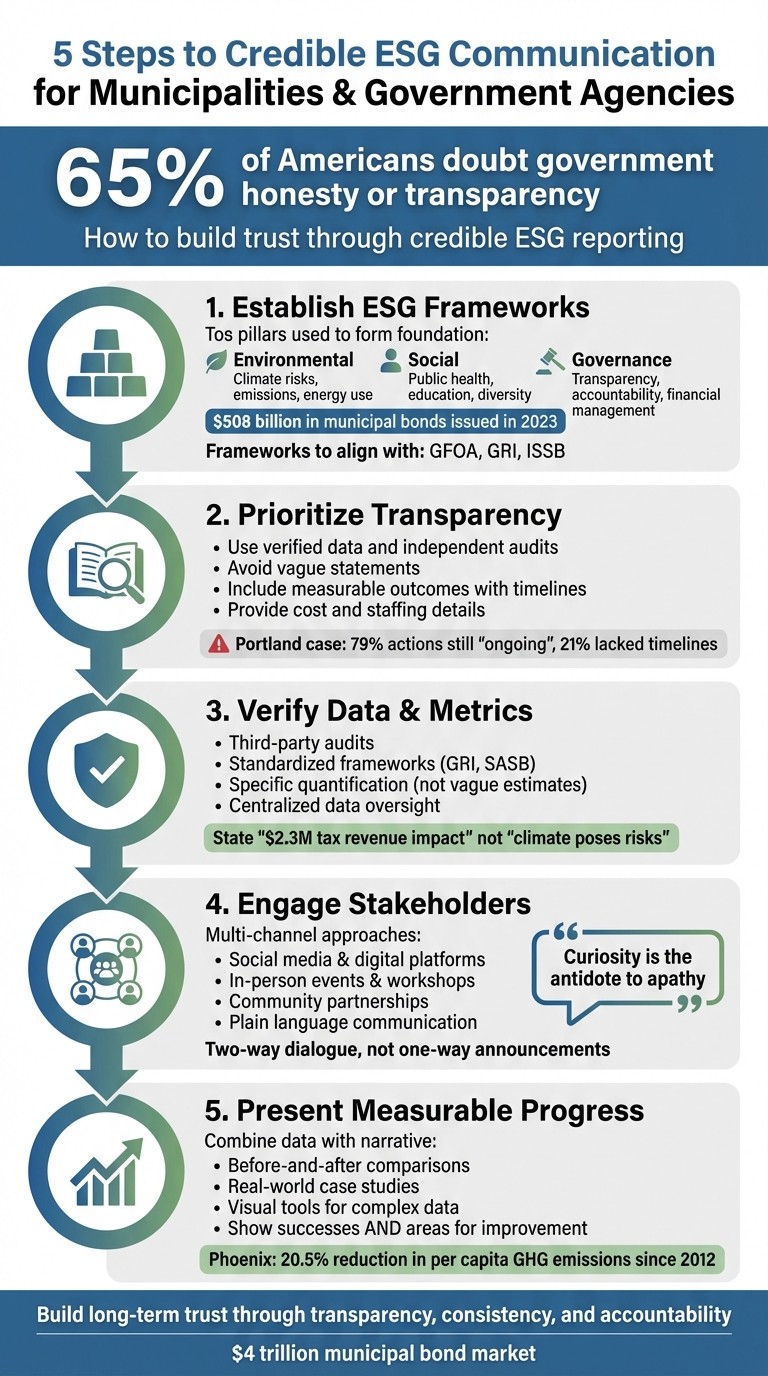
5 Steps to Credible ESG Communication for Municipalities
Monitoring and reporting ESG data in the public sector
ESG Frameworks for Municipalities and Government Agencies
Establishing a clear and effective ESG framework is a critical starting point for municipalities and government agencies aiming to improve transparency and accountability. The three ESG pillars - Environmental, Social, and Governance - apply uniquely to public sector operations.
Environmental factors focus on managing climate risks, such as flooding, wildfires, and rising sea levels, as well as addressing greenhouse gas emissions, energy and water use, waste management, and biodiversity concerns [1][6].
Social considerations include public health, education, human rights, labor relations, and diversity and inclusion - elements that are increasingly tied to a community’s ability to repay bonds [1][5].
Governance emphasizes transparency, accountability, financial management, and oversight, ensuring responsible decision-making and effective budget management [1][5].
Building on these pillars, municipalities can take actionable steps to integrate ESG considerations into their operations.
Core ESG Elements in Public Sector Operations
The Government Finance Officers Association (GFOA) advises U.S. municipal issuers to prioritize environmental factors first [6]. Climate-related risks often have the most immediate financial impact, influencing credit profiles and bond repayment capacity. For example, severe climate events can lead to significant financial strain [2].
Municipalities can utilize federal resources like the National Climate Assessment and the National Risk Index to identify region-specific risks and incorporate them into environmental disclosures [6]. Smaller jurisdictions may benefit from reviewing bond offering documents from larger, neighboring governments to find shared regional climate risks [6]. Internally, agencies should appoint leaders from public works, emergency management, or sustainability departments to oversee data collection efforts [6].
"GFOA recommends that governments evaluate the development and disclosure of information regarding the primary environmental, social, and governmental risks applicable to municipal issuers and their bonds in their preliminary and final official statements." - Government Finance Officers Association [5]
By aligning internal practices with established guidelines, municipalities can enhance the credibility of their disclosures.
Federal and International Framework Alignment
Consistency with established frameworks is key to building trust and reducing investor skepticism. The GFOA’s best practices provide a baseline for U.S. municipalities, emphasizing the importance of including ESG risks in both official bond statements and voluntary disclosures [5][6]. Without clear and thorough disclosures, bond buyers may resort to conducting their own ESG analyses, which often lack the context only governments can provide [6]. Considering that $508 billion in municipal bonds were issued in 2023 alone [2], incomplete disclosures could have significant financial repercussions.
Municipalities can bolster their efforts by aligning with international standards such as the International Sustainability Standards Board (ISSB) frameworks and the Global Reporting Initiative (GRI). These frameworks offer structured reporting approaches that are widely recognized by analysts and investors, minimizing the risk of misinterpretation. As Sonal Sharma from Lythouse explains, "ESG reporting can help to build trust and accountability between governments and government agencies and their stakeholders" [1].
Transparency and Greenwashing Prevention
Establishing robust ESG frameworks is only the beginning; ensuring transparency and avoiding greenwashing through verified reporting is equally critical. For municipalities, this is especially vital, as their ESG claims influence bond ratings, taxpayer confidence, and overall community trust. The focus must shift from stating intentions to delivering and reporting measurable outcomes.
An audit conducted in February 2026 of Portland's Climate Emergency Workplan highlighted the risks of insufficient transparency. The audit revealed that while the city had committed to climate justice, 79% of its 47 planned actions were still classified as "ongoing", with another 9% marked as "delayed." Alarmingly, 21% of these actions lacked defined timelines, and 26% were missing cost or staffing details [7]. This example underscores how vague or incomplete reporting can erode credibility, even when intentions are genuine. Stakeholders may begin to doubt the feasibility of commitments if outcomes are unclear.
Rather than merely announcing the launch of programs, municipalities must prioritize detailing the results achieved. As the Government Finance Officers Association explains:
"Without clear ESG information... potential buyers of municipal bonds are likely to conduct their own ESG analysis, which may not include all relevant information or context that a government can provide" [5].
To ensure these outcomes are credible, municipalities should adopt verified data practices.
Using Verified Data and Metrics
Verified data transforms ESG reports into trustworthy documents. Independent third-party audits play a crucial role by reviewing data collection methods, confirming calculations, and validating claims before publication. Sonal Sharma from Lythouse highlights the importance of this practice:
"Obtain independent assurance on your ESG reporting from an independent third party. This will help to build trust in your ESG reporting and to demonstrate your commitment to transparency" [1].
Standardized frameworks like the Global Reporting Initiative (GRI) and the Sustainability Accounting Standards Board (SASB) provide consistency across reporting periods, ensuring that data is both reliable and comparable. For instance, accurate fleet emissions calculations require verified methodologies rather than rough estimates [1].
Quantifying data with specificity further bolsters credibility. Instead of vaguely stating, "Climate change poses risks to our tax base", municipalities should detail the potential impacts. For example, "Flooding events similar to those in 2024 could reduce property tax revenue by approximately $2.3 million annually based on affected properties in floodplain zones" [6].
Centralizing data oversight also enhances reliability. Assigning responsibility to a Chief Sustainability Officer within the City Administrator’s Office can streamline data collection across departments and ensure accountability for meeting reporting goals [7]. Without clear leadership, ESG initiatives risk stagnation and a decline in data quality.
Once these verification practices are established, real-world examples provide valuable insights into effective ESG reporting.
Examples of Accurate ESG Reporting
New Zealand's 2019 Wellbeing Budget is a strong example of transparent social reporting. The government prioritized metrics such as mental health, child well-being, and domestic violence rates over traditional economic growth indicators. By providing measurable and verifiable data, New Zealand demonstrated a genuine commitment to social responsibility, effectively countering potential greenwashing concerns [1].
For municipalities using forward-looking statements, it’s essential to include disclaimers that acknowledge the unpredictability of environmental events. For example, climate risk estimates should be accompanied by cautionary language to manage expectations [6]. Additionally, rather than overwhelming stakeholders with lengthy technical reports, municipalities should provide concise summaries of key findings, making ESG information accessible to both investors and residents [6].
Another effective strategy is cross-referencing disclosures from neighboring municipalities. Reviewing bond offering documents from similar jurisdictions can help identify shared environmental risks and ensure consistency in addressing regional challenges [6]. This collaborative approach strengthens the credibility of ESG reporting across communities, fostering trust and alignment in shared goals.
Stakeholder Engagement Methods
Effective ESG communication involves connecting with various audiences in ways that address their unique concerns. As data shows, overcoming skepticism requires more than just one-way announcements - it calls for meaningful dialogue with residents, businesses, and community groups. This two-way interaction is key to maintaining the integrity of ESG reporting.
Tailoring messages to specific stakeholder groups is essential. Take the Denver Energy Challenge in Colorado as an example: businesses were primarily interested in cost savings and return on investment, whereas homeowners prioritized comfort and safety benefits [9]. Instead of using a generic approach, the program customized its outreach to emphasize what mattered most to each audience.
Clear communication should always address three fundamental questions: Who? What? Why? [4]. When municipalities skip this structured approach, they risk creating reports that meet compliance standards but fail to connect with the people most affected by ESG efforts. Using plain, relatable language is equally important. For instance, a term like "land use ordinance modification" might alienate residents, but rephrasing it as "changes to what you can build on your property" makes it more accessible [4]. This clarity lays the groundwork for the multi-channel communication strategies discussed below.
Multi-Channel Communication Approaches
Different communication methods serve different purposes. One-way tools like newsletters and fact sheets are great for raising awareness and sharing updates, while two-way approaches such as workshops and focus groups allow for feedback and foster behavior change [9]. The key is to combine these methods across various platforms, including social media, utility bill inserts, and even local radio [9].
The City of Seattle's "Ask the Mayor" video series is a great example of this shift. By moving away from polished announcements and opting for a direct Q&A format featuring resident-submitted questions, the series boosted engagement. This approach demonstrated transparency and encouraged curiosity, as communications strategist Claire Deal explains:
"Curiosity is the antidote to apathy. When government communications invite residents to explore, question, and contribute, they foster a sense of shared ownership over local initiatives." [4]
While digital platforms provide real-time feedback opportunities, they should be balanced with in-person events for those who prefer face-to-face discussions. For instance, the Municipality of Amstelveen in the Netherlands involved residents in shaping a long-term tree policy through "tree walks" and consultation sessions. They tracked participant demographics - such as age, gender, and location - and presented this data through simple graphics to highlight community representation.
Closing the feedback loop is equally important for building trust. The City of Toronto implemented a participatory budgeting program in Ward 13 and created impact reports using visual timelines and plain language. These reports showed residents how their input directly influenced budget decisions [8]. This "You Said, We Did" format reinforces the idea that feedback shapes ESG initiatives. While multi-channel methods expand reach, working with trusted local partners further strengthens trust and engagement.
Partnership-Based Trust Building
Local partners often deliver ESG messages more effectively than government agencies. Trust in these community figures can outweigh technical expertise [9]. Faith leaders, neighborhood groups, and local influencers act as gatekeepers, sharing messages with credibility that governments may take years to establish.
Identifying these influencers is especially important for engaging underrepresented communities, which may have historical reasons to distrust government messaging. Collaborating with local organizations fosters two-way dialogue that respects established relationships and cultural contexts, bolstering the transparency and verified data practices outlined earlier.
For example, the City of Allen, Texas maintained consistent engagement through weekly updates on its digital platform. This steady communication helped create a community where residents actively participated because they saw real outcomes from their feedback [8]. As Sören Fillet, Go-to-Market Lead at Go Vocal, puts it:
"Public disengagement and opposition often stems from feeling ignored, not from disagreeing with outcomes." [8]
When partnerships are genuine and not just for show, ESG communication evolves into a collaborative effort. By comparing participant demographics with census data to identify gaps and working with partners to reach underrepresented voices, municipalities can not only enhance the credibility of their ESG reporting but also improve the overall impact of their initiatives.
Presenting Progress with Case Studies and Data
Turning raw data into relatable stories is a powerful way to illustrate progress. By combining verified data with compelling narratives, organizations can make the impact of ESG initiatives clear and meaningful.
Numbers alone often fail to resonate with residents, but pairing them with real-world examples bridges that gap. For instance, back in 2010, the City of Minneapolis invested $78,000 to retrofit an office building with updated lighting and carbon dioxide monitors. The energy manager didn’t just present kilowatt-hour reductions; they also calculated cost avoidance, showing a $20,000 net savings the following year. This approach answered the critical question: What did we get for our money? [11].
The City of Sunnyvale, California, took this idea further with a creative approach. Communication Officer Jennifer Garnett reimagined the city’s $730 million budget as a relatable story about a local family and their dog, Concha. By connecting budget items - like street repairs and library hours - to the family’s daily life, the publication made fiscal data accessible. This effort not only engaged residents but also encouraged them to participate in city council meetings and praise the document’s clarity [13].
Combining Data with Narrative
The most effective ESG reporting doesn’t just present raw numbers - it contextualizes them. For example, when comparing energy usage year-over-year, adjusting for weather conditions ensures accurate comparisons. These adjusted figures should then be tied to tangible outcomes, such as jobs created, costs avoided, or improved public services [11].
In the October 2024 Climate Action Plan Progress Report, Phoenix Mayor Kate Gallego demonstrated this approach. She highlighted a 20.5% reduction in per capita greenhouse gas emissions since 2012, linking it to specific actions like electrifying bus fleets and installing solar arrays. These metrics were translated into visible benefits for the community, making the progress more relatable [14].
Using visual tools can also simplify complex data. For example, the City of Arlington, Texas, created a Lego-themed video to explain its $54 million road construction budget. As Communications Director Jay Warren explained, “We’re trying to tell the budget story in a way that folks can understand and relate to.” The video reached hundreds of thousands of viewers and even gained national attention, proving that creative formats can effectively cut through the noise [10].
This mix of data, narrative, and creativity lays the groundwork for selecting case studies that clearly showcase measurable change.
Selecting and Presenting Case Studies
The key to impactful case studies is focusing on measurable outcomes with clear before-and-after comparisons. For example, South Bend, Indiana, under Mayor James Mueller, reported financing 22 businesses with $5.2 million, emphasizing that 55% of those businesses were minority-owned and 36% were women-owned. This directly addressed equity goals and highlighted tangible progress [12].
Similarly, Salinas, California, under Mayor Kimbley Craig, used benchmarking to contextualize public safety achievements. The Salinas Police Department solved 11 out of 13 homicides in 2022, achieving an 85% success rate - far above the national average of 55%. This comparison helped residents appreciate the significance of their city’s performance [12].
When crafting case studies, it’s important to show both successes and areas for improvement. For example, Minneapolis used color-coded reports to flag facilities that exceeded previous energy usage by more than 5%, with red highlighting areas needing attention. This visual accountability made it easier for residents to grasp where progress was falling short [11].
Conclusion
Credible ESG communication in the public sector hinges on three essential principles: transparency, consistency, and accountability. With 65% of Americans expressing skepticism about the honesty or transparency of government communication [4], municipalities and agencies must focus on building long-term trust through clear and reliable practices rather than chasing fleeting metrics like social media engagement.
Frameworks such as GRI, SASB, and GFOA provide the structure for standardized, reliable disclosures. These frameworks not only address stakeholder expectations but also align with global standards, supporting credit ratings and maintaining access to a municipal bond market valued at $4 trillion [1][2].
Engaging stakeholders effectively is just as critical as transparent reporting. Tools like community forums, digital surveys, and feedback loops enable agencies to align their communication with residents' real-time concerns [3]. Clear, jargon-free language is equally important - it ensures that all residents, regardless of background, can understand and engage with the information being shared.
Data accuracy remains a cornerstone of trust. AI-powered tools and third-party verification help reduce errors while showcasing a commitment to precision [1]. However, trust isn’t built on numbers alone. Combining verified data with relatable narratives that highlight tangible results and meaningful impact is key. As communications strategist Claire Deal points out:
"Curiosity is the antidote to apathy. When government communications invite residents to explore, question, and contribute, they foster a sense of shared ownership over local initiatives." [4]
To maintain credibility, ESG communication must be an ongoing effort. Regular updates that demonstrate progress on environmental, social, and governance challenges are essential. By unifying communication channels and equipping staff with consistent, clear messaging, municipalities can strengthen trust and accountability across all stakeholders.
FAQs
Which ESG metrics matter most to credit ratings?
The ESG metrics that carry the most weight in credit ratings are those directly influencing a municipality's financial health and ability to sustain itself over the long term. Among these, environmental risks - including climate change and natural disasters - stand out for their potential to disrupt infrastructure and budgets. Social factors like shifts in population demographics and public health challenges also play a significant role, as they can affect labor markets, healthcare costs, and community stability. Lastly, governance practices, particularly those tied to transparency and effective risk management, are essential for fostering trust and ensuring sound decision-making. Metrics that highlight a municipality's resilience and skillful financial management are pivotal for preserving strong credit ratings and securing investor confidence.
How can we prove ESG claims aren’t greenwashing?
To steer clear of greenwashing, organizations need to back up their ESG claims with thorough audits using recognized frameworks such as GRI, SASB, or TCFD. These audits play a key role in evaluating performance, pinpointing risks, and ensuring the reliability of reported data. Transparent reporting practices, third-party verifications, and compliance with regulations like the Anti-Greenwashing Rule further bolster credibility. By maintaining consistent disclosures and grounding their claims in verifiable evidence, organizations can build trust and avoid the pitfalls of misrepresentation.
How often should we publish ESG progress updates?
Municipalities and government agencies benefit from publishing ESG progress updates on a regular basis. Although there’s no strict rule about how often these updates should occur, consistent reporting - whether monthly or quarterly - shows accountability and meets public expectations. This transparency helps strengthen trust with stakeholders and minimizes concerns about greenwashing or misrepresentation. By keeping stakeholders informed, these updates maintain engagement and reinforce confidence in your ESG initiatives.
Related Blog Posts
How to Integrate ESG into Core Business Operations for Municipalities & Government Agencies
How to Measure and Report ESG Impact Effectively for Municipalities & Government Agencies
How to Align Stakeholders Around a Shared ESG Vision for Municipalities & Government Agencies
How to Align Stakeholders Around a Shared ESG Vision for Corporations
Latest Articles
©2025



FAQ
01
What does it really mean to “redefine profit”?
02
What makes Council Fire different?
03
Who does Council Fire you work with?
04
What does working with Council Fire actually look like?
05
How does Council Fire help organizations turn big goals into action?
06
How does Council Fire define and measure success?
Mar 6, 2026
How to Communicate ESG Progress Credibly for Municipalities & Government Agencies
ESG Strategy
In This Article
Guide for municipalities and government agencies to report ESG progress credibly using verified data, clear frameworks, stakeholder engagement, and measurable outcomes.
How to Communicate ESG Progress Credibly for Municipalities & Government Agencies
Public trust in government agencies is at a low point, with 65% of Americans doubting their honesty or transparency. For municipalities advancing ESG (Environmental, Social, and Governance) initiatives, this skepticism poses challenges that affect trust, financial stability, and operational success. Here's how to tackle these issues:
Transparency is key: Clear, accurate ESG reporting helps maintain trust and protect credit ratings. Vague or incomplete disclosures can lead to skepticism and financial risks.
Leverage ESG frameworks: Focus on environmental risks first, as they often have the biggest financial impact. Align with established guidelines like those from the Government Finance Officers Association (GFOA) and global standards such as GRI and ISSB.
Use verified data: Independent audits and standardized metrics ensure accuracy and build credibility in ESG reporting.
Engage stakeholders effectively: Tailor communication to different audiences, use plain language, and employ multi-channel approaches like social media, in-person events, and community partnerships.
Present measurable outcomes: Pair data with relatable stories to show progress. Highlight successes and areas needing improvement with clear before-and-after comparisons.
5 Steps to Credible ESG Communication for Municipalities
Monitoring and reporting ESG data in the public sector
ESG Frameworks for Municipalities and Government Agencies
Establishing a clear and effective ESG framework is a critical starting point for municipalities and government agencies aiming to improve transparency and accountability. The three ESG pillars - Environmental, Social, and Governance - apply uniquely to public sector operations.
Environmental factors focus on managing climate risks, such as flooding, wildfires, and rising sea levels, as well as addressing greenhouse gas emissions, energy and water use, waste management, and biodiversity concerns [1][6].
Social considerations include public health, education, human rights, labor relations, and diversity and inclusion - elements that are increasingly tied to a community’s ability to repay bonds [1][5].
Governance emphasizes transparency, accountability, financial management, and oversight, ensuring responsible decision-making and effective budget management [1][5].
Building on these pillars, municipalities can take actionable steps to integrate ESG considerations into their operations.
Core ESG Elements in Public Sector Operations
The Government Finance Officers Association (GFOA) advises U.S. municipal issuers to prioritize environmental factors first [6]. Climate-related risks often have the most immediate financial impact, influencing credit profiles and bond repayment capacity. For example, severe climate events can lead to significant financial strain [2].
Municipalities can utilize federal resources like the National Climate Assessment and the National Risk Index to identify region-specific risks and incorporate them into environmental disclosures [6]. Smaller jurisdictions may benefit from reviewing bond offering documents from larger, neighboring governments to find shared regional climate risks [6]. Internally, agencies should appoint leaders from public works, emergency management, or sustainability departments to oversee data collection efforts [6].
"GFOA recommends that governments evaluate the development and disclosure of information regarding the primary environmental, social, and governmental risks applicable to municipal issuers and their bonds in their preliminary and final official statements." - Government Finance Officers Association [5]
By aligning internal practices with established guidelines, municipalities can enhance the credibility of their disclosures.
Federal and International Framework Alignment
Consistency with established frameworks is key to building trust and reducing investor skepticism. The GFOA’s best practices provide a baseline for U.S. municipalities, emphasizing the importance of including ESG risks in both official bond statements and voluntary disclosures [5][6]. Without clear and thorough disclosures, bond buyers may resort to conducting their own ESG analyses, which often lack the context only governments can provide [6]. Considering that $508 billion in municipal bonds were issued in 2023 alone [2], incomplete disclosures could have significant financial repercussions.
Municipalities can bolster their efforts by aligning with international standards such as the International Sustainability Standards Board (ISSB) frameworks and the Global Reporting Initiative (GRI). These frameworks offer structured reporting approaches that are widely recognized by analysts and investors, minimizing the risk of misinterpretation. As Sonal Sharma from Lythouse explains, "ESG reporting can help to build trust and accountability between governments and government agencies and their stakeholders" [1].
Transparency and Greenwashing Prevention
Establishing robust ESG frameworks is only the beginning; ensuring transparency and avoiding greenwashing through verified reporting is equally critical. For municipalities, this is especially vital, as their ESG claims influence bond ratings, taxpayer confidence, and overall community trust. The focus must shift from stating intentions to delivering and reporting measurable outcomes.
An audit conducted in February 2026 of Portland's Climate Emergency Workplan highlighted the risks of insufficient transparency. The audit revealed that while the city had committed to climate justice, 79% of its 47 planned actions were still classified as "ongoing", with another 9% marked as "delayed." Alarmingly, 21% of these actions lacked defined timelines, and 26% were missing cost or staffing details [7]. This example underscores how vague or incomplete reporting can erode credibility, even when intentions are genuine. Stakeholders may begin to doubt the feasibility of commitments if outcomes are unclear.
Rather than merely announcing the launch of programs, municipalities must prioritize detailing the results achieved. As the Government Finance Officers Association explains:
"Without clear ESG information... potential buyers of municipal bonds are likely to conduct their own ESG analysis, which may not include all relevant information or context that a government can provide" [5].
To ensure these outcomes are credible, municipalities should adopt verified data practices.
Using Verified Data and Metrics
Verified data transforms ESG reports into trustworthy documents. Independent third-party audits play a crucial role by reviewing data collection methods, confirming calculations, and validating claims before publication. Sonal Sharma from Lythouse highlights the importance of this practice:
"Obtain independent assurance on your ESG reporting from an independent third party. This will help to build trust in your ESG reporting and to demonstrate your commitment to transparency" [1].
Standardized frameworks like the Global Reporting Initiative (GRI) and the Sustainability Accounting Standards Board (SASB) provide consistency across reporting periods, ensuring that data is both reliable and comparable. For instance, accurate fleet emissions calculations require verified methodologies rather than rough estimates [1].
Quantifying data with specificity further bolsters credibility. Instead of vaguely stating, "Climate change poses risks to our tax base", municipalities should detail the potential impacts. For example, "Flooding events similar to those in 2024 could reduce property tax revenue by approximately $2.3 million annually based on affected properties in floodplain zones" [6].
Centralizing data oversight also enhances reliability. Assigning responsibility to a Chief Sustainability Officer within the City Administrator’s Office can streamline data collection across departments and ensure accountability for meeting reporting goals [7]. Without clear leadership, ESG initiatives risk stagnation and a decline in data quality.
Once these verification practices are established, real-world examples provide valuable insights into effective ESG reporting.
Examples of Accurate ESG Reporting
New Zealand's 2019 Wellbeing Budget is a strong example of transparent social reporting. The government prioritized metrics such as mental health, child well-being, and domestic violence rates over traditional economic growth indicators. By providing measurable and verifiable data, New Zealand demonstrated a genuine commitment to social responsibility, effectively countering potential greenwashing concerns [1].
For municipalities using forward-looking statements, it’s essential to include disclaimers that acknowledge the unpredictability of environmental events. For example, climate risk estimates should be accompanied by cautionary language to manage expectations [6]. Additionally, rather than overwhelming stakeholders with lengthy technical reports, municipalities should provide concise summaries of key findings, making ESG information accessible to both investors and residents [6].
Another effective strategy is cross-referencing disclosures from neighboring municipalities. Reviewing bond offering documents from similar jurisdictions can help identify shared environmental risks and ensure consistency in addressing regional challenges [6]. This collaborative approach strengthens the credibility of ESG reporting across communities, fostering trust and alignment in shared goals.
Stakeholder Engagement Methods
Effective ESG communication involves connecting with various audiences in ways that address their unique concerns. As data shows, overcoming skepticism requires more than just one-way announcements - it calls for meaningful dialogue with residents, businesses, and community groups. This two-way interaction is key to maintaining the integrity of ESG reporting.
Tailoring messages to specific stakeholder groups is essential. Take the Denver Energy Challenge in Colorado as an example: businesses were primarily interested in cost savings and return on investment, whereas homeowners prioritized comfort and safety benefits [9]. Instead of using a generic approach, the program customized its outreach to emphasize what mattered most to each audience.
Clear communication should always address three fundamental questions: Who? What? Why? [4]. When municipalities skip this structured approach, they risk creating reports that meet compliance standards but fail to connect with the people most affected by ESG efforts. Using plain, relatable language is equally important. For instance, a term like "land use ordinance modification" might alienate residents, but rephrasing it as "changes to what you can build on your property" makes it more accessible [4]. This clarity lays the groundwork for the multi-channel communication strategies discussed below.
Multi-Channel Communication Approaches
Different communication methods serve different purposes. One-way tools like newsletters and fact sheets are great for raising awareness and sharing updates, while two-way approaches such as workshops and focus groups allow for feedback and foster behavior change [9]. The key is to combine these methods across various platforms, including social media, utility bill inserts, and even local radio [9].
The City of Seattle's "Ask the Mayor" video series is a great example of this shift. By moving away from polished announcements and opting for a direct Q&A format featuring resident-submitted questions, the series boosted engagement. This approach demonstrated transparency and encouraged curiosity, as communications strategist Claire Deal explains:
"Curiosity is the antidote to apathy. When government communications invite residents to explore, question, and contribute, they foster a sense of shared ownership over local initiatives." [4]
While digital platforms provide real-time feedback opportunities, they should be balanced with in-person events for those who prefer face-to-face discussions. For instance, the Municipality of Amstelveen in the Netherlands involved residents in shaping a long-term tree policy through "tree walks" and consultation sessions. They tracked participant demographics - such as age, gender, and location - and presented this data through simple graphics to highlight community representation.
Closing the feedback loop is equally important for building trust. The City of Toronto implemented a participatory budgeting program in Ward 13 and created impact reports using visual timelines and plain language. These reports showed residents how their input directly influenced budget decisions [8]. This "You Said, We Did" format reinforces the idea that feedback shapes ESG initiatives. While multi-channel methods expand reach, working with trusted local partners further strengthens trust and engagement.
Partnership-Based Trust Building
Local partners often deliver ESG messages more effectively than government agencies. Trust in these community figures can outweigh technical expertise [9]. Faith leaders, neighborhood groups, and local influencers act as gatekeepers, sharing messages with credibility that governments may take years to establish.
Identifying these influencers is especially important for engaging underrepresented communities, which may have historical reasons to distrust government messaging. Collaborating with local organizations fosters two-way dialogue that respects established relationships and cultural contexts, bolstering the transparency and verified data practices outlined earlier.
For example, the City of Allen, Texas maintained consistent engagement through weekly updates on its digital platform. This steady communication helped create a community where residents actively participated because they saw real outcomes from their feedback [8]. As Sören Fillet, Go-to-Market Lead at Go Vocal, puts it:
"Public disengagement and opposition often stems from feeling ignored, not from disagreeing with outcomes." [8]
When partnerships are genuine and not just for show, ESG communication evolves into a collaborative effort. By comparing participant demographics with census data to identify gaps and working with partners to reach underrepresented voices, municipalities can not only enhance the credibility of their ESG reporting but also improve the overall impact of their initiatives.
Presenting Progress with Case Studies and Data
Turning raw data into relatable stories is a powerful way to illustrate progress. By combining verified data with compelling narratives, organizations can make the impact of ESG initiatives clear and meaningful.
Numbers alone often fail to resonate with residents, but pairing them with real-world examples bridges that gap. For instance, back in 2010, the City of Minneapolis invested $78,000 to retrofit an office building with updated lighting and carbon dioxide monitors. The energy manager didn’t just present kilowatt-hour reductions; they also calculated cost avoidance, showing a $20,000 net savings the following year. This approach answered the critical question: What did we get for our money? [11].
The City of Sunnyvale, California, took this idea further with a creative approach. Communication Officer Jennifer Garnett reimagined the city’s $730 million budget as a relatable story about a local family and their dog, Concha. By connecting budget items - like street repairs and library hours - to the family’s daily life, the publication made fiscal data accessible. This effort not only engaged residents but also encouraged them to participate in city council meetings and praise the document’s clarity [13].
Combining Data with Narrative
The most effective ESG reporting doesn’t just present raw numbers - it contextualizes them. For example, when comparing energy usage year-over-year, adjusting for weather conditions ensures accurate comparisons. These adjusted figures should then be tied to tangible outcomes, such as jobs created, costs avoided, or improved public services [11].
In the October 2024 Climate Action Plan Progress Report, Phoenix Mayor Kate Gallego demonstrated this approach. She highlighted a 20.5% reduction in per capita greenhouse gas emissions since 2012, linking it to specific actions like electrifying bus fleets and installing solar arrays. These metrics were translated into visible benefits for the community, making the progress more relatable [14].
Using visual tools can also simplify complex data. For example, the City of Arlington, Texas, created a Lego-themed video to explain its $54 million road construction budget. As Communications Director Jay Warren explained, “We’re trying to tell the budget story in a way that folks can understand and relate to.” The video reached hundreds of thousands of viewers and even gained national attention, proving that creative formats can effectively cut through the noise [10].
This mix of data, narrative, and creativity lays the groundwork for selecting case studies that clearly showcase measurable change.
Selecting and Presenting Case Studies
The key to impactful case studies is focusing on measurable outcomes with clear before-and-after comparisons. For example, South Bend, Indiana, under Mayor James Mueller, reported financing 22 businesses with $5.2 million, emphasizing that 55% of those businesses were minority-owned and 36% were women-owned. This directly addressed equity goals and highlighted tangible progress [12].
Similarly, Salinas, California, under Mayor Kimbley Craig, used benchmarking to contextualize public safety achievements. The Salinas Police Department solved 11 out of 13 homicides in 2022, achieving an 85% success rate - far above the national average of 55%. This comparison helped residents appreciate the significance of their city’s performance [12].
When crafting case studies, it’s important to show both successes and areas for improvement. For example, Minneapolis used color-coded reports to flag facilities that exceeded previous energy usage by more than 5%, with red highlighting areas needing attention. This visual accountability made it easier for residents to grasp where progress was falling short [11].
Conclusion
Credible ESG communication in the public sector hinges on three essential principles: transparency, consistency, and accountability. With 65% of Americans expressing skepticism about the honesty or transparency of government communication [4], municipalities and agencies must focus on building long-term trust through clear and reliable practices rather than chasing fleeting metrics like social media engagement.
Frameworks such as GRI, SASB, and GFOA provide the structure for standardized, reliable disclosures. These frameworks not only address stakeholder expectations but also align with global standards, supporting credit ratings and maintaining access to a municipal bond market valued at $4 trillion [1][2].
Engaging stakeholders effectively is just as critical as transparent reporting. Tools like community forums, digital surveys, and feedback loops enable agencies to align their communication with residents' real-time concerns [3]. Clear, jargon-free language is equally important - it ensures that all residents, regardless of background, can understand and engage with the information being shared.
Data accuracy remains a cornerstone of trust. AI-powered tools and third-party verification help reduce errors while showcasing a commitment to precision [1]. However, trust isn’t built on numbers alone. Combining verified data with relatable narratives that highlight tangible results and meaningful impact is key. As communications strategist Claire Deal points out:
"Curiosity is the antidote to apathy. When government communications invite residents to explore, question, and contribute, they foster a sense of shared ownership over local initiatives." [4]
To maintain credibility, ESG communication must be an ongoing effort. Regular updates that demonstrate progress on environmental, social, and governance challenges are essential. By unifying communication channels and equipping staff with consistent, clear messaging, municipalities can strengthen trust and accountability across all stakeholders.
FAQs
Which ESG metrics matter most to credit ratings?
The ESG metrics that carry the most weight in credit ratings are those directly influencing a municipality's financial health and ability to sustain itself over the long term. Among these, environmental risks - including climate change and natural disasters - stand out for their potential to disrupt infrastructure and budgets. Social factors like shifts in population demographics and public health challenges also play a significant role, as they can affect labor markets, healthcare costs, and community stability. Lastly, governance practices, particularly those tied to transparency and effective risk management, are essential for fostering trust and ensuring sound decision-making. Metrics that highlight a municipality's resilience and skillful financial management are pivotal for preserving strong credit ratings and securing investor confidence.
How can we prove ESG claims aren’t greenwashing?
To steer clear of greenwashing, organizations need to back up their ESG claims with thorough audits using recognized frameworks such as GRI, SASB, or TCFD. These audits play a key role in evaluating performance, pinpointing risks, and ensuring the reliability of reported data. Transparent reporting practices, third-party verifications, and compliance with regulations like the Anti-Greenwashing Rule further bolster credibility. By maintaining consistent disclosures and grounding their claims in verifiable evidence, organizations can build trust and avoid the pitfalls of misrepresentation.
How often should we publish ESG progress updates?
Municipalities and government agencies benefit from publishing ESG progress updates on a regular basis. Although there’s no strict rule about how often these updates should occur, consistent reporting - whether monthly or quarterly - shows accountability and meets public expectations. This transparency helps strengthen trust with stakeholders and minimizes concerns about greenwashing or misrepresentation. By keeping stakeholders informed, these updates maintain engagement and reinforce confidence in your ESG initiatives.
Related Blog Posts
How to Integrate ESG into Core Business Operations for Municipalities & Government Agencies
How to Measure and Report ESG Impact Effectively for Municipalities & Government Agencies
How to Align Stakeholders Around a Shared ESG Vision for Municipalities & Government Agencies
How to Align Stakeholders Around a Shared ESG Vision for Corporations
FAQ
01
What does it really mean to “redefine profit”?
02
What makes Council Fire different?
03
Who does Council Fire you work with?
04
What does working with Council Fire actually look like?
05
How does Council Fire help organizations turn big goals into action?
06
How does Council Fire define and measure success?
Mar 6, 2026
How to Communicate ESG Progress Credibly for Municipalities & Government Agencies
ESG Strategy
In This Article
Guide for municipalities and government agencies to report ESG progress credibly using verified data, clear frameworks, stakeholder engagement, and measurable outcomes.
How to Communicate ESG Progress Credibly for Municipalities & Government Agencies
Public trust in government agencies is at a low point, with 65% of Americans doubting their honesty or transparency. For municipalities advancing ESG (Environmental, Social, and Governance) initiatives, this skepticism poses challenges that affect trust, financial stability, and operational success. Here's how to tackle these issues:
Transparency is key: Clear, accurate ESG reporting helps maintain trust and protect credit ratings. Vague or incomplete disclosures can lead to skepticism and financial risks.
Leverage ESG frameworks: Focus on environmental risks first, as they often have the biggest financial impact. Align with established guidelines like those from the Government Finance Officers Association (GFOA) and global standards such as GRI and ISSB.
Use verified data: Independent audits and standardized metrics ensure accuracy and build credibility in ESG reporting.
Engage stakeholders effectively: Tailor communication to different audiences, use plain language, and employ multi-channel approaches like social media, in-person events, and community partnerships.
Present measurable outcomes: Pair data with relatable stories to show progress. Highlight successes and areas needing improvement with clear before-and-after comparisons.
5 Steps to Credible ESG Communication for Municipalities
Monitoring and reporting ESG data in the public sector
ESG Frameworks for Municipalities and Government Agencies
Establishing a clear and effective ESG framework is a critical starting point for municipalities and government agencies aiming to improve transparency and accountability. The three ESG pillars - Environmental, Social, and Governance - apply uniquely to public sector operations.
Environmental factors focus on managing climate risks, such as flooding, wildfires, and rising sea levels, as well as addressing greenhouse gas emissions, energy and water use, waste management, and biodiversity concerns [1][6].
Social considerations include public health, education, human rights, labor relations, and diversity and inclusion - elements that are increasingly tied to a community’s ability to repay bonds [1][5].
Governance emphasizes transparency, accountability, financial management, and oversight, ensuring responsible decision-making and effective budget management [1][5].
Building on these pillars, municipalities can take actionable steps to integrate ESG considerations into their operations.
Core ESG Elements in Public Sector Operations
The Government Finance Officers Association (GFOA) advises U.S. municipal issuers to prioritize environmental factors first [6]. Climate-related risks often have the most immediate financial impact, influencing credit profiles and bond repayment capacity. For example, severe climate events can lead to significant financial strain [2].
Municipalities can utilize federal resources like the National Climate Assessment and the National Risk Index to identify region-specific risks and incorporate them into environmental disclosures [6]. Smaller jurisdictions may benefit from reviewing bond offering documents from larger, neighboring governments to find shared regional climate risks [6]. Internally, agencies should appoint leaders from public works, emergency management, or sustainability departments to oversee data collection efforts [6].
"GFOA recommends that governments evaluate the development and disclosure of information regarding the primary environmental, social, and governmental risks applicable to municipal issuers and their bonds in their preliminary and final official statements." - Government Finance Officers Association [5]
By aligning internal practices with established guidelines, municipalities can enhance the credibility of their disclosures.
Federal and International Framework Alignment
Consistency with established frameworks is key to building trust and reducing investor skepticism. The GFOA’s best practices provide a baseline for U.S. municipalities, emphasizing the importance of including ESG risks in both official bond statements and voluntary disclosures [5][6]. Without clear and thorough disclosures, bond buyers may resort to conducting their own ESG analyses, which often lack the context only governments can provide [6]. Considering that $508 billion in municipal bonds were issued in 2023 alone [2], incomplete disclosures could have significant financial repercussions.
Municipalities can bolster their efforts by aligning with international standards such as the International Sustainability Standards Board (ISSB) frameworks and the Global Reporting Initiative (GRI). These frameworks offer structured reporting approaches that are widely recognized by analysts and investors, minimizing the risk of misinterpretation. As Sonal Sharma from Lythouse explains, "ESG reporting can help to build trust and accountability between governments and government agencies and their stakeholders" [1].
Transparency and Greenwashing Prevention
Establishing robust ESG frameworks is only the beginning; ensuring transparency and avoiding greenwashing through verified reporting is equally critical. For municipalities, this is especially vital, as their ESG claims influence bond ratings, taxpayer confidence, and overall community trust. The focus must shift from stating intentions to delivering and reporting measurable outcomes.
An audit conducted in February 2026 of Portland's Climate Emergency Workplan highlighted the risks of insufficient transparency. The audit revealed that while the city had committed to climate justice, 79% of its 47 planned actions were still classified as "ongoing", with another 9% marked as "delayed." Alarmingly, 21% of these actions lacked defined timelines, and 26% were missing cost or staffing details [7]. This example underscores how vague or incomplete reporting can erode credibility, even when intentions are genuine. Stakeholders may begin to doubt the feasibility of commitments if outcomes are unclear.
Rather than merely announcing the launch of programs, municipalities must prioritize detailing the results achieved. As the Government Finance Officers Association explains:
"Without clear ESG information... potential buyers of municipal bonds are likely to conduct their own ESG analysis, which may not include all relevant information or context that a government can provide" [5].
To ensure these outcomes are credible, municipalities should adopt verified data practices.
Using Verified Data and Metrics
Verified data transforms ESG reports into trustworthy documents. Independent third-party audits play a crucial role by reviewing data collection methods, confirming calculations, and validating claims before publication. Sonal Sharma from Lythouse highlights the importance of this practice:
"Obtain independent assurance on your ESG reporting from an independent third party. This will help to build trust in your ESG reporting and to demonstrate your commitment to transparency" [1].
Standardized frameworks like the Global Reporting Initiative (GRI) and the Sustainability Accounting Standards Board (SASB) provide consistency across reporting periods, ensuring that data is both reliable and comparable. For instance, accurate fleet emissions calculations require verified methodologies rather than rough estimates [1].
Quantifying data with specificity further bolsters credibility. Instead of vaguely stating, "Climate change poses risks to our tax base", municipalities should detail the potential impacts. For example, "Flooding events similar to those in 2024 could reduce property tax revenue by approximately $2.3 million annually based on affected properties in floodplain zones" [6].
Centralizing data oversight also enhances reliability. Assigning responsibility to a Chief Sustainability Officer within the City Administrator’s Office can streamline data collection across departments and ensure accountability for meeting reporting goals [7]. Without clear leadership, ESG initiatives risk stagnation and a decline in data quality.
Once these verification practices are established, real-world examples provide valuable insights into effective ESG reporting.
Examples of Accurate ESG Reporting
New Zealand's 2019 Wellbeing Budget is a strong example of transparent social reporting. The government prioritized metrics such as mental health, child well-being, and domestic violence rates over traditional economic growth indicators. By providing measurable and verifiable data, New Zealand demonstrated a genuine commitment to social responsibility, effectively countering potential greenwashing concerns [1].
For municipalities using forward-looking statements, it’s essential to include disclaimers that acknowledge the unpredictability of environmental events. For example, climate risk estimates should be accompanied by cautionary language to manage expectations [6]. Additionally, rather than overwhelming stakeholders with lengthy technical reports, municipalities should provide concise summaries of key findings, making ESG information accessible to both investors and residents [6].
Another effective strategy is cross-referencing disclosures from neighboring municipalities. Reviewing bond offering documents from similar jurisdictions can help identify shared environmental risks and ensure consistency in addressing regional challenges [6]. This collaborative approach strengthens the credibility of ESG reporting across communities, fostering trust and alignment in shared goals.
Stakeholder Engagement Methods
Effective ESG communication involves connecting with various audiences in ways that address their unique concerns. As data shows, overcoming skepticism requires more than just one-way announcements - it calls for meaningful dialogue with residents, businesses, and community groups. This two-way interaction is key to maintaining the integrity of ESG reporting.
Tailoring messages to specific stakeholder groups is essential. Take the Denver Energy Challenge in Colorado as an example: businesses were primarily interested in cost savings and return on investment, whereas homeowners prioritized comfort and safety benefits [9]. Instead of using a generic approach, the program customized its outreach to emphasize what mattered most to each audience.
Clear communication should always address three fundamental questions: Who? What? Why? [4]. When municipalities skip this structured approach, they risk creating reports that meet compliance standards but fail to connect with the people most affected by ESG efforts. Using plain, relatable language is equally important. For instance, a term like "land use ordinance modification" might alienate residents, but rephrasing it as "changes to what you can build on your property" makes it more accessible [4]. This clarity lays the groundwork for the multi-channel communication strategies discussed below.
Multi-Channel Communication Approaches
Different communication methods serve different purposes. One-way tools like newsletters and fact sheets are great for raising awareness and sharing updates, while two-way approaches such as workshops and focus groups allow for feedback and foster behavior change [9]. The key is to combine these methods across various platforms, including social media, utility bill inserts, and even local radio [9].
The City of Seattle's "Ask the Mayor" video series is a great example of this shift. By moving away from polished announcements and opting for a direct Q&A format featuring resident-submitted questions, the series boosted engagement. This approach demonstrated transparency and encouraged curiosity, as communications strategist Claire Deal explains:
"Curiosity is the antidote to apathy. When government communications invite residents to explore, question, and contribute, they foster a sense of shared ownership over local initiatives." [4]
While digital platforms provide real-time feedback opportunities, they should be balanced with in-person events for those who prefer face-to-face discussions. For instance, the Municipality of Amstelveen in the Netherlands involved residents in shaping a long-term tree policy through "tree walks" and consultation sessions. They tracked participant demographics - such as age, gender, and location - and presented this data through simple graphics to highlight community representation.
Closing the feedback loop is equally important for building trust. The City of Toronto implemented a participatory budgeting program in Ward 13 and created impact reports using visual timelines and plain language. These reports showed residents how their input directly influenced budget decisions [8]. This "You Said, We Did" format reinforces the idea that feedback shapes ESG initiatives. While multi-channel methods expand reach, working with trusted local partners further strengthens trust and engagement.
Partnership-Based Trust Building
Local partners often deliver ESG messages more effectively than government agencies. Trust in these community figures can outweigh technical expertise [9]. Faith leaders, neighborhood groups, and local influencers act as gatekeepers, sharing messages with credibility that governments may take years to establish.
Identifying these influencers is especially important for engaging underrepresented communities, which may have historical reasons to distrust government messaging. Collaborating with local organizations fosters two-way dialogue that respects established relationships and cultural contexts, bolstering the transparency and verified data practices outlined earlier.
For example, the City of Allen, Texas maintained consistent engagement through weekly updates on its digital platform. This steady communication helped create a community where residents actively participated because they saw real outcomes from their feedback [8]. As Sören Fillet, Go-to-Market Lead at Go Vocal, puts it:
"Public disengagement and opposition often stems from feeling ignored, not from disagreeing with outcomes." [8]
When partnerships are genuine and not just for show, ESG communication evolves into a collaborative effort. By comparing participant demographics with census data to identify gaps and working with partners to reach underrepresented voices, municipalities can not only enhance the credibility of their ESG reporting but also improve the overall impact of their initiatives.
Presenting Progress with Case Studies and Data
Turning raw data into relatable stories is a powerful way to illustrate progress. By combining verified data with compelling narratives, organizations can make the impact of ESG initiatives clear and meaningful.
Numbers alone often fail to resonate with residents, but pairing them with real-world examples bridges that gap. For instance, back in 2010, the City of Minneapolis invested $78,000 to retrofit an office building with updated lighting and carbon dioxide monitors. The energy manager didn’t just present kilowatt-hour reductions; they also calculated cost avoidance, showing a $20,000 net savings the following year. This approach answered the critical question: What did we get for our money? [11].
The City of Sunnyvale, California, took this idea further with a creative approach. Communication Officer Jennifer Garnett reimagined the city’s $730 million budget as a relatable story about a local family and their dog, Concha. By connecting budget items - like street repairs and library hours - to the family’s daily life, the publication made fiscal data accessible. This effort not only engaged residents but also encouraged them to participate in city council meetings and praise the document’s clarity [13].
Combining Data with Narrative
The most effective ESG reporting doesn’t just present raw numbers - it contextualizes them. For example, when comparing energy usage year-over-year, adjusting for weather conditions ensures accurate comparisons. These adjusted figures should then be tied to tangible outcomes, such as jobs created, costs avoided, or improved public services [11].
In the October 2024 Climate Action Plan Progress Report, Phoenix Mayor Kate Gallego demonstrated this approach. She highlighted a 20.5% reduction in per capita greenhouse gas emissions since 2012, linking it to specific actions like electrifying bus fleets and installing solar arrays. These metrics were translated into visible benefits for the community, making the progress more relatable [14].
Using visual tools can also simplify complex data. For example, the City of Arlington, Texas, created a Lego-themed video to explain its $54 million road construction budget. As Communications Director Jay Warren explained, “We’re trying to tell the budget story in a way that folks can understand and relate to.” The video reached hundreds of thousands of viewers and even gained national attention, proving that creative formats can effectively cut through the noise [10].
This mix of data, narrative, and creativity lays the groundwork for selecting case studies that clearly showcase measurable change.
Selecting and Presenting Case Studies
The key to impactful case studies is focusing on measurable outcomes with clear before-and-after comparisons. For example, South Bend, Indiana, under Mayor James Mueller, reported financing 22 businesses with $5.2 million, emphasizing that 55% of those businesses were minority-owned and 36% were women-owned. This directly addressed equity goals and highlighted tangible progress [12].
Similarly, Salinas, California, under Mayor Kimbley Craig, used benchmarking to contextualize public safety achievements. The Salinas Police Department solved 11 out of 13 homicides in 2022, achieving an 85% success rate - far above the national average of 55%. This comparison helped residents appreciate the significance of their city’s performance [12].
When crafting case studies, it’s important to show both successes and areas for improvement. For example, Minneapolis used color-coded reports to flag facilities that exceeded previous energy usage by more than 5%, with red highlighting areas needing attention. This visual accountability made it easier for residents to grasp where progress was falling short [11].
Conclusion
Credible ESG communication in the public sector hinges on three essential principles: transparency, consistency, and accountability. With 65% of Americans expressing skepticism about the honesty or transparency of government communication [4], municipalities and agencies must focus on building long-term trust through clear and reliable practices rather than chasing fleeting metrics like social media engagement.
Frameworks such as GRI, SASB, and GFOA provide the structure for standardized, reliable disclosures. These frameworks not only address stakeholder expectations but also align with global standards, supporting credit ratings and maintaining access to a municipal bond market valued at $4 trillion [1][2].
Engaging stakeholders effectively is just as critical as transparent reporting. Tools like community forums, digital surveys, and feedback loops enable agencies to align their communication with residents' real-time concerns [3]. Clear, jargon-free language is equally important - it ensures that all residents, regardless of background, can understand and engage with the information being shared.
Data accuracy remains a cornerstone of trust. AI-powered tools and third-party verification help reduce errors while showcasing a commitment to precision [1]. However, trust isn’t built on numbers alone. Combining verified data with relatable narratives that highlight tangible results and meaningful impact is key. As communications strategist Claire Deal points out:
"Curiosity is the antidote to apathy. When government communications invite residents to explore, question, and contribute, they foster a sense of shared ownership over local initiatives." [4]
To maintain credibility, ESG communication must be an ongoing effort. Regular updates that demonstrate progress on environmental, social, and governance challenges are essential. By unifying communication channels and equipping staff with consistent, clear messaging, municipalities can strengthen trust and accountability across all stakeholders.
FAQs
Which ESG metrics matter most to credit ratings?
The ESG metrics that carry the most weight in credit ratings are those directly influencing a municipality's financial health and ability to sustain itself over the long term. Among these, environmental risks - including climate change and natural disasters - stand out for their potential to disrupt infrastructure and budgets. Social factors like shifts in population demographics and public health challenges also play a significant role, as they can affect labor markets, healthcare costs, and community stability. Lastly, governance practices, particularly those tied to transparency and effective risk management, are essential for fostering trust and ensuring sound decision-making. Metrics that highlight a municipality's resilience and skillful financial management are pivotal for preserving strong credit ratings and securing investor confidence.
How can we prove ESG claims aren’t greenwashing?
To steer clear of greenwashing, organizations need to back up their ESG claims with thorough audits using recognized frameworks such as GRI, SASB, or TCFD. These audits play a key role in evaluating performance, pinpointing risks, and ensuring the reliability of reported data. Transparent reporting practices, third-party verifications, and compliance with regulations like the Anti-Greenwashing Rule further bolster credibility. By maintaining consistent disclosures and grounding their claims in verifiable evidence, organizations can build trust and avoid the pitfalls of misrepresentation.
How often should we publish ESG progress updates?
Municipalities and government agencies benefit from publishing ESG progress updates on a regular basis. Although there’s no strict rule about how often these updates should occur, consistent reporting - whether monthly or quarterly - shows accountability and meets public expectations. This transparency helps strengthen trust with stakeholders and minimizes concerns about greenwashing or misrepresentation. By keeping stakeholders informed, these updates maintain engagement and reinforce confidence in your ESG initiatives.
Related Blog Posts
How to Integrate ESG into Core Business Operations for Municipalities & Government Agencies
How to Measure and Report ESG Impact Effectively for Municipalities & Government Agencies
How to Align Stakeholders Around a Shared ESG Vision for Municipalities & Government Agencies
How to Align Stakeholders Around a Shared ESG Vision for Corporations
FAQ
What does it really mean to “redefine profit”?
What makes Council Fire different?
Who does Council Fire you work with?
What does working with Council Fire actually look like?
How does Council Fire help organizations turn big goals into action?
How does Council Fire define and measure success?