Jan 28, 2026
How to Design Coastal Resilience & Flood Mitigation for NGOs & Nonprofits
Capacity Building
In This Article
Step-by-step guidance for nonprofits to assess coastal flood risks, implement nature-based and hybrid solutions, secure funding, and monitor outcomes.
How to Design Coastal Resilience & Flood Mitigation for NGOs & Nonprofits
Coastal flooding is a growing threat, impacting communities, economies, and ecosystems along U.S. coastlines. With over 164 million Americans living in coastal areas contributing 58% of the nation’s GDP, the stakes are high. Nonprofits play a vital role in protecting vulnerable populations and addressing risks. This guide outlines practical steps for planning and implementing flood mitigation strategies tailored to nonprofit missions.
Key Takeaways:
Flood Risks: Rising sea levels and storm surges threaten over $1 trillion in property by 2050.
Mitigation Strategies: Combine nature-based solutions (wetlands, dunes, oyster reefs) with engineered systems to reduce risks.
Community Focus: Engage local leaders, prioritize vulnerable populations, and ensure equitable planning.
Funding: Access grants like the National Coastal Resilience Fund, offering up to $10M for projects.
Phased Planning: Break projects into steps - risk assessment, solution design, action, and monitoring.
By integrating these approaches, nonprofits can protect communities while supporting long-term economic and social stability.
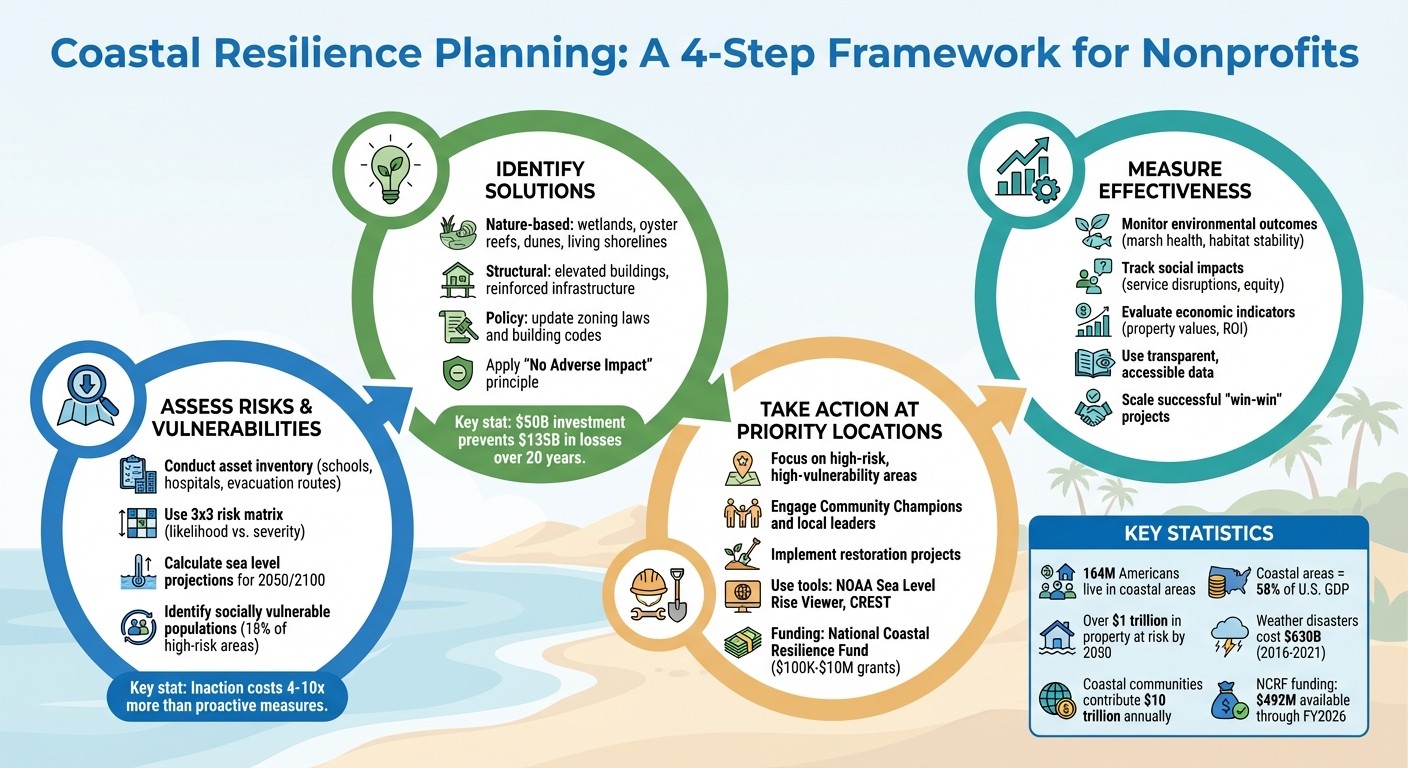
4-Step Coastal Resilience Planning Framework for Nonprofits
Assessing Coastal Risks and Community Needs
How to Conduct Risk Assessments
Before starting any resilience project, it’s essential to determine who and what you’re aiming to protect. Begin by compiling an asset inventory - a detailed list of critical people, places, and services [6]. This should include schools, hospitals, evacuation routes, and water treatment facilities.
The risk assessment process typically combines two approaches. Qualitative methods provide a straightforward way to quickly evaluate risks by categorizing them as low, medium, or high, making them ideal for initial planning stages [4]. For more complex decisions, quantitative methods - such as GIS mapping and climate models - offer the precision needed for a deeper analysis [4]. A useful tool is the 3x3 risk matrix, which plots assets based on the likelihood of a hazard occurring and the severity of its potential consequences [4]. Assets that fall into the "High-High" or "High-Medium" categories signify the most pressing vulnerabilities.
For coastal-specific risks, it’s crucial to calculate projected sea level changes for specific timeframes, like 2050 or 2100, while also accounting for local land subsidence that can worsen flooding [5]. Using multiple time horizons ensures that assessments align with the expected lifespans of infrastructure [5]. If your organization lacks the expertise for such detailed modeling, hiring specialized adaptation practitioners or engineering firms can help manage these technical challenges [4].
These insights lay the groundwork for meaningful collaboration with local communities.
Working with Local Communities
Community involvement should begin from the outset. Start by identifying Community Champions - trusted local leaders who can guide the process and foster trust [6]. These individuals act as a bridge between technical data and the lived experiences of residents.
Engage residents through Community Self-Assessments and Community Reflections, which encourage open discussions about current challenges and long-term concerns [7]. These conversations can reveal critical vulnerabilities that data might overlook, such as neighborhoods without reliable transportation during evacuations or areas with a high concentration of elderly residents in flood-prone zones. To avoid overwhelming communities with meetings, incorporate these discussions into existing forums, such as those required for Hazard Mitigation Plans [6].
Transparency is key to building trust. As the U.S. Climate Resilience Toolkit advises:
"Use data sources and protocols that are easy for citizens to access and review: this transparency will build confidence in your planning" [5].
During planning meetings, provide tools like NOAA’s Sea Level Rise Viewer or the Coastal Flood Exposure Mapper so community members can see how potential impacts might affect their neighborhoods [5].
Including Social and Environmental Factors
A thorough risk assessment goes beyond physical assets to include social and environmental dimensions. By the end of the century, approximately 18% of those at high flood risk will belong to populations with "high social vulnerability" - groups facing socioeconomic challenges that limit their ability to adapt [5]. Identifying and prioritizing these communities is essential.
Overlay maps of vulnerable populations with high-risk flood zones to ensure that inland residents, who often face systemic disadvantages, are not overlooked in favor of waterfront property owners [5]. Also, evaluate critical lifelines such as access to water, energy, and evacuation routes.
Equitable solutions often involve nature-based strategies. Healthy wetlands, dunes, and oyster reefs provide essential "ecosystem services" like buffering storm surges and reducing wave impacts [5]. Identify areas where marshes can naturally migrate inland as sea levels rise to maintain these protective buffers [5]. Adopting the "No Adverse Impact" (NAI) approach ensures your resilience projects don’t unintentionally harm neighboring properties or ecosystems [5]. The stakes are high - failing to invest in hazard mitigation can cost 4 to 10 times more than proactive measures [5].
Designing and Implementing Nature-Based Solutions
Understanding Nature-Based Solutions
Nature-based solutions use natural habitats - like salt marshes, oyster reefs, dunes, mangroves, and living shorelines - to reduce coastal risks while offering economic, social, and environmental advantages [10]. These solutions work in harmony with natural systems, providing an alternative to traditional engineered structures.
The National Oceanic and Atmospheric Administration (NOAA) defines them as:
"Nature-based solutions are infrastructure projects that use natural features or processes that might otherwise be provided by engineered structures" [8].
These solutions go beyond flood protection. Restored wetlands, for instance, filter out nutrients, oyster reefs enhance fisheries, and dunes provide recreational opportunities [8]. Such projects offer cost-effective protection while addressing a variety of community needs, making them especially appealing for nonprofits.
Between 2016 and 2021, weather-related disasters cost the United States over $630 billion [8]. With about 40% of the U.S. population living in coastal counties, the need for effective protective measures is growing [8]. Nature-based infrastructure often proves less expensive to maintain than traditional hardened structures while supporting additional revenue opportunities, such as tourism and fisheries [10].
With these benefits in mind, implementing such solutions requires a thoughtful, community-focused approach.
How to Implement Nature-Based Infrastructure
To effectively implement nature-based strategies, it’s essential to match solutions to local conditions. These strategies form a critical part of broader coastal resilience efforts, helping vulnerable communities adapt to changing conditions.
A four-step approach can guide the process:
Assess risks and vulnerabilities to current and future storms and sea-level rise.
Identify solutions that address social, economic, and ecological needs.
Take action at priority locations.
Measure effectiveness to ensure long-term success [3].
Choosing the right solution depends on your region’s hazard profile, geography, and resources [9]. Tools like the "Naturally Resilient Communities" guide can help nonprofits find cost-effective, scalable projects [9]. Similarly, the Coastal Resilience Mapping Portal offers visualization tools to pinpoint where interventions will have the greatest impact on reducing risk [9].
One innovative approach involves "beneficial use" projects, which repurpose clean sediment dredged from shipping channels to restore eroded islands or marshes [8].
Adhering to technical standards is also critical. Guidelines like the International Guidelines on the Use of Natural and Nature-Based Features for Flood Risk Management ensure projects are built to last [8]. Designing solutions that align with natural processes, such as river flows and native vegetation, helps create sustainable systems that require minimal ongoing intervention [10].
Case Study: Nature-Based Project Success
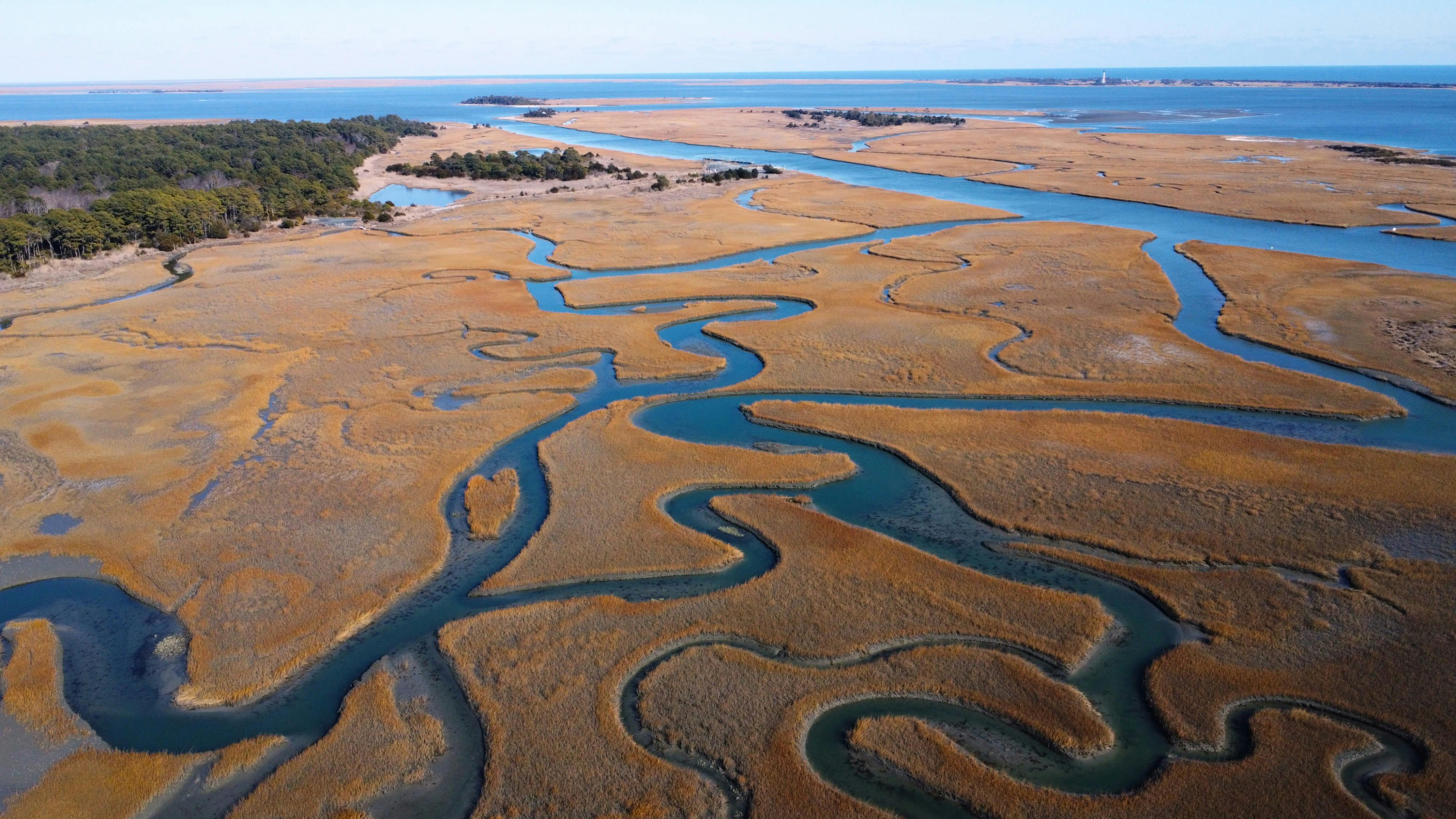
A compelling example of a successful nature-based solution comes from the U.S. Army Corps of Engineers (USACE) Baltimore District, which tackled severe erosion near the town of Ewell, Maryland, in 2019. The project focused on restoring Swan Island in the Chesapeake Bay. To achieve this, the team placed 60,000 cubic yards of dredged sediment onto the island and planted native salt marsh and dune vegetation [8].
This restoration effort reversed habitat loss on the island and reestablished its role as a natural barrier, protecting the nearby community from wave energy [8]. By using dredged material - an otherwise costly waste product - the project kept expenses manageable while creating a buffer that adapts to evolving environmental conditions.
The success of this project highlights the importance of strategic partnerships and technical expertise. Native plants played a key role, stabilizing the newly added sediment and providing habitat for local wildlife [8]. It’s a prime example of how nonprofits, working alongside federal agencies, can achieve lasting resilience for coastal communities.
Funding and Partnerships for Coastal Resilience
Finding and Securing Grant Funding
The National Coastal Resilience Fund (NCRF) stands as a key resource for nonprofits focused on coastal protection. Created through a collaboration between the National Fish and Wildlife Foundation (NFWF) and NOAA, this fund has received $492 million from the Bipartisan Infrastructure Law, allocated through FY2026 [12]. The NCRF emphasizes nature-based solutions that simultaneously protect communities from coastal hazards and enhance habitats for fish and wildlife [11][13].
Grants from the NCRF are tailored to match the stage of your project. Funding categories include Community Capacity Building and Planning, Site Assessment and Preliminary Design, and Final Design and Permitting, with awards typically ranging from $100,000 to $1,000,000. For Restoration Implementation projects, awards can reach between $1,000,000 and $10,000,000 [11][13]. The annual application cycle includes pre-proposals due in May, followed by full proposals (by invitation) in July, with decisions announced in late November or early December [11][13].
To improve your chances of success, leverage tools like the Coastal Resilience Evaluation and Siting Tool (CREST) to demonstrate how your project will maximize both community protection and wildlife benefits [2]. Funders often favor projects that can serve as templates for other communities. While non-federal matching funds aren’t mandatory, including them can reflect strong community backing and enhance your application’s competitiveness [11][12].
These funding opportunities underscore the importance of collaboration in advancing coastal resilience initiatives.
Building Partnerships with Government and Business
Strategic partnerships can amplify the impact of resilience projects. Partnering with government entities can open doors to technical expertise and funding that nonprofits may not access independently. Engaging with local, county, state, or Tribal governments whose plans align with your goals is a good starting point [15]. Additionally, connecting with military base leadership may provide access to the Department of Defense’s REPI Program for supplemental funding [13].
The private sector also plays a vital role in advancing resilience projects. NOAA’s Office for Coastal Management highlights the value of presenting your project’s economic benefits, stating, "Explaining your project's impact in dollars and cents can help build support and provide justification for funding and financing options" [14]. With coastal communities contributing $10 trillion in goods and services annually to the U.S. economy [2], showcasing the economic value of your project can help attract local business partnerships.
Public-private maintenance models, where organizations share costs for implementing and maintaining green infrastructure, offer another avenue for collaboration [14]. Additionally, mechanisms like Environmental Impact Bonds (EIBs) or nutrient credit trading programs - such as using oyster reefs to meet water quality requirements - can help secure private funding for public resilience initiatives [14].
Community-Led Financing Models
Empowering communities to fund resilience efforts can create sustainable solutions. By integrating resilience actions into broader initiatives like transportation, housing, or economic development plans, nonprofits can tap into larger funding pools [15]. This approach addresses multiple priorities at once, avoiding the isolation of coastal resilience as a standalone issue.
Local taxes or fees dedicated to resilience projects provide a sustainable funding source. Building community capacity is crucial for implementing these models, which may involve hiring climate adaptation experts or consultants to navigate complex funding processes and coordinate stakeholders [15].
Resources like the EPA’s Water Finance Clearinghouse offer searchable databases of funding options for water infrastructure and stormwater management projects [14][16]. Major funders, including the NCRF, often prioritize community-led projects that incorporate outreach and engagement from the planning stages [2]. Involving residents early not only strengthens funding applications but also ensures the long-term success of resilience efforts.
Creating Phased and Scalable Resilience Plans
Planning in Phases
Breaking your project into manageable phases makes tackling long-term challenges more practical. Start with four key steps: assess risks, identify solutions, act on priority areas, and measure results [3]. Even if your plan spans decades, shorter timeframes are essential to align with funding cycles and decision-making processes [5].
Each phase should have clear goals. In the assessment phase, map out risks and conduct a social equity audit. During the investigation phase, compare nature-based and structural solutions. The action phase should focus on implementing measures like restoration, elevation, and zoning updates. Finally, evaluate the outcomes to guide future efforts [3][5].
One immediate step is reviewing and updating land use plans, zoning laws, and building standards to prevent new developments from worsening future risks. This proactive approach ensures that even before physical projects begin, you're laying the groundwork for a comprehensive resilience strategy [5].
Combining Different Solution Types
Resilience plans are most effective when they incorporate a mix of strategies rather than relying on a single approach. A hybrid approach might include nature-based infrastructure like wetlands and oyster reefs, structural reinforcements such as elevated buildings, and policy updates to zoning and building standards [5]. This combination addresses various vulnerabilities while offering additional benefits.
When selecting solutions, consider the "No Adverse Impact" (NAI) principle, which ensures that mitigation actions won’t harm neighboring properties or compromise future resilience efforts. NOAA and the Association of State Floodplain Managers emphasize:
"The idea is to 'do no harm' while mitigating coastal flood hazards" [5].
Nature-based solutions, such as restoring ecosystems, offer benefits like water filtration and carbon storage that traditional infrastructure cannot. However, some critical assets - like wastewater treatment plants - may require structural reinforcements since relocation isn’t feasible [5].
Social equity should also be a priority. Vulnerable populations, which make up about 18% of those exposed to high flood risk by century’s end, often face limited options for adaptation [5]. Projects that restore ecosystems while creating local jobs can address social inequities, strengthen infrastructure, and support community resilience [5]. By blending these approaches, you can build a flexible strategy that adapts over time.
Monitoring and Expanding Successful Projects
Ongoing evaluation is crucial for identifying what works. Track environmental outcomes like marsh health and habitat stability, social impacts such as reduced disruptions to critical services, and economic indicators like property value protection and financial returns [3][5].
The numbers make a strong case for monitoring. Investing around $50 billion in adaptation strategies over 20 years could prevent approximately $135 billion in losses during their lifespan [5]. In contrast, failing to act could cost 4 to 10 times more than proactive measures [5]. Using transparent, accessible data builds community trust and supports long-term scalability [5].
Set up sentinel monitoring systems to observe changes over time, such as high-tide flooding or marsh migration rates [3][5]. When projects show clear benefits, document the results to secure funding for expansion. Focus on scaling "win-win" projects that generate financial returns, create jobs, and provide environmental benefits. These successes are not only easier to replicate but also more likely to gain community and stakeholder support [5].
How Council Fire Supports Coastal Resilience Planning
Council Fire's Climate Resilience Expertise
Council Fire brings a specialized approach to nonprofit-led coastal resilience efforts, using systems thinking and data-driven strategies to address complex challenges. Instead of viewing coastal flooding in isolation, they consider a broader scope by integrating stormwater, riverine, and coastal flooding to evaluate overall water level risks that could threaten infrastructure [19]. Their work involves a comprehensive framework that includes assessing hazard risks, evaluating community vulnerabilities, identifying nature-based solutions, taking conservation and restoration actions, and tracking the effectiveness of these measures. A key priority is advancing projects to a stage where they are ready for funding and construction. This means completing the necessary engineering and design phases to secure financial backing and begin implementation. This integrated method not only builds a solid foundation for resilience planning but also ensures meaningful stakeholder engagement throughout the process.
Facilitating Stakeholder Collaboration
Effective collaboration with stakeholders hinges on trust, transparency, and structured tools. Council Fire uses stakeholder analysis worksheets to identify key individuals and understand their interests within the decision-making process [18]. They employ the Steps to Resilience Framework, a six-step iterative method, to bring local working groups together to explore climate challenges, inventory community assets, and identify actionable solutions [6]. To further strengthen public confidence, even in politically sensitive contexts, Council Fire utilizes accessible data visualization tools like the Climate Explorer and Sea Level Rise Viewer [1] [17]. These tools help translate complex climate data into clear, understandable visuals, fostering informed discussions and decisions.
Measuring Impact with Council Fire
Council Fire emphasizes the importance of measuring the long-term outcomes of resilience initiatives across environmental, social, and economic dimensions. They analyze the "multiplier effects" of resilience investments, identifying how initial funding can lead to further conservation efforts and enhanced community protection [2]. By implementing standardized monitoring protocols, they track specific metrics over time, ensuring that practices remain effective and adjustments can be made when necessary. This rigorous evaluation process helps demonstrate the tangible benefits of resilience planning while guiding future initiatives.
Conclusion: Building Coastal Resilience That Lasts
Key Takeaways for Nonprofits
Effective coastal resilience planning revolves around a four-step process: assessing risks, identifying solutions with multiple benefits, taking prioritized actions, and evaluating their effectiveness [3]. Proactive efforts are crucial, as the costs of inaction often far outweigh the investments needed. Even slight rises in sea level pose a threat to over $1 trillion worth of property [1].
Incorporating nature-based solutions like wetland restoration, oyster reefs, and beach dunes can provide dual benefits - offering storm protection while nurturing local ecosystems. Embracing a "No Adverse Impact" mindset ensures that efforts to reduce coastal flood risks do not unintentionally harm vulnerable communities [1].
"The idea is to 'do no harm' while mitigating coastal flood hazards." – National Oceanic and Atmospheric Administration (NOAA) and the Association of State Floodplain Managers [1]
These principles provide a clear foundation for your next steps.
Next Steps for Your Organization
To put these strategies into action, begin by calculating local sea level projections using tools such as Climate Explorer. This will help you understand risks across short- and long-term scenarios [1]. Collaborate with local officials to revise land use plans, update building codes, and identify critical infrastructure at risk. Focus on restoration projects that deliver economic advantages - studies show that an investment of roughly $50 billion in adaptation over 20 years could prevent an estimated $135 billion in losses [1].
Council Fire offers tailored support to guide your organization through this journey. From conducting thorough risk assessments to fostering collaboration among stakeholders, their expertise ensures that your coastal resilience projects move seamlessly from planning to implementation. By applying systems thinking, they help make these initiatives ready for funding and long-term success.
From Policy to Action: Partnerships in Planning for Coastal Resilience
FAQs
What are the best ways for nonprofits to assess and prioritize coastal flood risks?
Nonprofits can take meaningful steps to evaluate and address coastal flood risks by employing structured frameworks that assess both current conditions and future challenges. Start by examining critical factors such as sea level rise, storm surges, and local land use trends. Gathering detailed data on climate risks, vulnerable populations, and essential infrastructure can help pinpoint the areas facing the highest threats.
When setting priorities, target regions with the most significant risks and focus on solutions that deliver the greatest benefits. Engaging with the community plays a vital role in this process. Hosting events, such as discussions around flood maps, can uncover valuable local insights and encourage collaboration. By blending community-driven planning with nature-based solutions and input from key stakeholders, nonprofits can develop strategies that are tailored to local needs and resources. This thoughtful approach enables informed decision-making, ultimately enhancing coastal resilience and safeguarding communities.
Why are nature-based solutions better than traditional structures for coastal resilience?
Nature-based solutions offer a practical and environmentally friendly approach to strengthening coastal resilience. By incorporating natural elements like wetlands, dunes, and coastal vegetation, these methods help mitigate the effects of flooding, erosion, and storm surges. Beyond their protective role, they also contribute to restoring habitats, improving water quality, and supporting diverse ecosystems.
In contrast to traditional structures like seawalls and levees, nature-based solutions tend to be more flexible in adapting to climate change. They also bring added value to communities by creating spaces for recreation and promoting public health. From an economic perspective, they often come with lower maintenance costs and can boost local economies by creating green jobs and increasing property values. These approaches successfully combine environmental stewardship with community safety, making them a forward-thinking choice for long-term resilience efforts.
What are the best ways for nonprofits to secure funding for coastal resilience projects?
Nonprofits aiming to fund coastal resilience projects can tap into grant opportunities tailored for resilience and flood mitigation. Programs like those offered by NOAA and other federal agencies often prioritize nature-based solutions and encourage collaboration with local organizations or agencies, which can significantly enhance the strength of an application.
Leveraging tools like the U.S. Climate Resilience Toolkit can also streamline grant writing and project planning, making the process more efficient and effective. Additionally, forming strong partnerships with government entities, private sector companies, and other nonprofits can unlock various funding sources, including private donations and local contributions. Projects that emphasize multiple benefits - such as restoring ecosystems or reducing flood risks - tend to capture the interest of potential funders more effectively.
By combining focused grant applications, strategic collaborations, and thorough planning, nonprofits can secure the necessary resources to implement meaningful coastal resilience projects.
Related Blog Posts
How to Build a Climate Resilience Plan for NGOs & Nonprofits
How to Integrate Climate Risk into Infrastructure Planning for NGOs & Nonprofits
How to Design Coastal Resilience & Flood Mitigation for Municipalities & Government Agencies
How to Design Coastal Resilience & Flood Mitigation for Corporations
Latest Articles
©2025

FAQ
01
What does it really mean to “redefine profit”?
02
What makes Council Fire different?
03
Who does Council Fire you work with?
04
What does working with Council Fire actually look like?
05
How does Council Fire help organizations turn big goals into action?
06
How does Council Fire define and measure success?
Jan 28, 2026
How to Design Coastal Resilience & Flood Mitigation for NGOs & Nonprofits
Capacity Building
In This Article
Step-by-step guidance for nonprofits to assess coastal flood risks, implement nature-based and hybrid solutions, secure funding, and monitor outcomes.
How to Design Coastal Resilience & Flood Mitigation for NGOs & Nonprofits
Coastal flooding is a growing threat, impacting communities, economies, and ecosystems along U.S. coastlines. With over 164 million Americans living in coastal areas contributing 58% of the nation’s GDP, the stakes are high. Nonprofits play a vital role in protecting vulnerable populations and addressing risks. This guide outlines practical steps for planning and implementing flood mitigation strategies tailored to nonprofit missions.
Key Takeaways:
Flood Risks: Rising sea levels and storm surges threaten over $1 trillion in property by 2050.
Mitigation Strategies: Combine nature-based solutions (wetlands, dunes, oyster reefs) with engineered systems to reduce risks.
Community Focus: Engage local leaders, prioritize vulnerable populations, and ensure equitable planning.
Funding: Access grants like the National Coastal Resilience Fund, offering up to $10M for projects.
Phased Planning: Break projects into steps - risk assessment, solution design, action, and monitoring.
By integrating these approaches, nonprofits can protect communities while supporting long-term economic and social stability.
4-Step Coastal Resilience Planning Framework for Nonprofits
Assessing Coastal Risks and Community Needs
How to Conduct Risk Assessments
Before starting any resilience project, it’s essential to determine who and what you’re aiming to protect. Begin by compiling an asset inventory - a detailed list of critical people, places, and services [6]. This should include schools, hospitals, evacuation routes, and water treatment facilities.
The risk assessment process typically combines two approaches. Qualitative methods provide a straightforward way to quickly evaluate risks by categorizing them as low, medium, or high, making them ideal for initial planning stages [4]. For more complex decisions, quantitative methods - such as GIS mapping and climate models - offer the precision needed for a deeper analysis [4]. A useful tool is the 3x3 risk matrix, which plots assets based on the likelihood of a hazard occurring and the severity of its potential consequences [4]. Assets that fall into the "High-High" or "High-Medium" categories signify the most pressing vulnerabilities.
For coastal-specific risks, it’s crucial to calculate projected sea level changes for specific timeframes, like 2050 or 2100, while also accounting for local land subsidence that can worsen flooding [5]. Using multiple time horizons ensures that assessments align with the expected lifespans of infrastructure [5]. If your organization lacks the expertise for such detailed modeling, hiring specialized adaptation practitioners or engineering firms can help manage these technical challenges [4].
These insights lay the groundwork for meaningful collaboration with local communities.
Working with Local Communities
Community involvement should begin from the outset. Start by identifying Community Champions - trusted local leaders who can guide the process and foster trust [6]. These individuals act as a bridge between technical data and the lived experiences of residents.
Engage residents through Community Self-Assessments and Community Reflections, which encourage open discussions about current challenges and long-term concerns [7]. These conversations can reveal critical vulnerabilities that data might overlook, such as neighborhoods without reliable transportation during evacuations or areas with a high concentration of elderly residents in flood-prone zones. To avoid overwhelming communities with meetings, incorporate these discussions into existing forums, such as those required for Hazard Mitigation Plans [6].
Transparency is key to building trust. As the U.S. Climate Resilience Toolkit advises:
"Use data sources and protocols that are easy for citizens to access and review: this transparency will build confidence in your planning" [5].
During planning meetings, provide tools like NOAA’s Sea Level Rise Viewer or the Coastal Flood Exposure Mapper so community members can see how potential impacts might affect their neighborhoods [5].
Including Social and Environmental Factors
A thorough risk assessment goes beyond physical assets to include social and environmental dimensions. By the end of the century, approximately 18% of those at high flood risk will belong to populations with "high social vulnerability" - groups facing socioeconomic challenges that limit their ability to adapt [5]. Identifying and prioritizing these communities is essential.
Overlay maps of vulnerable populations with high-risk flood zones to ensure that inland residents, who often face systemic disadvantages, are not overlooked in favor of waterfront property owners [5]. Also, evaluate critical lifelines such as access to water, energy, and evacuation routes.
Equitable solutions often involve nature-based strategies. Healthy wetlands, dunes, and oyster reefs provide essential "ecosystem services" like buffering storm surges and reducing wave impacts [5]. Identify areas where marshes can naturally migrate inland as sea levels rise to maintain these protective buffers [5]. Adopting the "No Adverse Impact" (NAI) approach ensures your resilience projects don’t unintentionally harm neighboring properties or ecosystems [5]. The stakes are high - failing to invest in hazard mitigation can cost 4 to 10 times more than proactive measures [5].
Designing and Implementing Nature-Based Solutions
Understanding Nature-Based Solutions
Nature-based solutions use natural habitats - like salt marshes, oyster reefs, dunes, mangroves, and living shorelines - to reduce coastal risks while offering economic, social, and environmental advantages [10]. These solutions work in harmony with natural systems, providing an alternative to traditional engineered structures.
The National Oceanic and Atmospheric Administration (NOAA) defines them as:
"Nature-based solutions are infrastructure projects that use natural features or processes that might otherwise be provided by engineered structures" [8].
These solutions go beyond flood protection. Restored wetlands, for instance, filter out nutrients, oyster reefs enhance fisheries, and dunes provide recreational opportunities [8]. Such projects offer cost-effective protection while addressing a variety of community needs, making them especially appealing for nonprofits.
Between 2016 and 2021, weather-related disasters cost the United States over $630 billion [8]. With about 40% of the U.S. population living in coastal counties, the need for effective protective measures is growing [8]. Nature-based infrastructure often proves less expensive to maintain than traditional hardened structures while supporting additional revenue opportunities, such as tourism and fisheries [10].
With these benefits in mind, implementing such solutions requires a thoughtful, community-focused approach.
How to Implement Nature-Based Infrastructure
To effectively implement nature-based strategies, it’s essential to match solutions to local conditions. These strategies form a critical part of broader coastal resilience efforts, helping vulnerable communities adapt to changing conditions.
A four-step approach can guide the process:
Assess risks and vulnerabilities to current and future storms and sea-level rise.
Identify solutions that address social, economic, and ecological needs.
Take action at priority locations.
Measure effectiveness to ensure long-term success [3].
Choosing the right solution depends on your region’s hazard profile, geography, and resources [9]. Tools like the "Naturally Resilient Communities" guide can help nonprofits find cost-effective, scalable projects [9]. Similarly, the Coastal Resilience Mapping Portal offers visualization tools to pinpoint where interventions will have the greatest impact on reducing risk [9].
One innovative approach involves "beneficial use" projects, which repurpose clean sediment dredged from shipping channels to restore eroded islands or marshes [8].
Adhering to technical standards is also critical. Guidelines like the International Guidelines on the Use of Natural and Nature-Based Features for Flood Risk Management ensure projects are built to last [8]. Designing solutions that align with natural processes, such as river flows and native vegetation, helps create sustainable systems that require minimal ongoing intervention [10].
Case Study: Nature-Based Project Success
A compelling example of a successful nature-based solution comes from the U.S. Army Corps of Engineers (USACE) Baltimore District, which tackled severe erosion near the town of Ewell, Maryland, in 2019. The project focused on restoring Swan Island in the Chesapeake Bay. To achieve this, the team placed 60,000 cubic yards of dredged sediment onto the island and planted native salt marsh and dune vegetation [8].
This restoration effort reversed habitat loss on the island and reestablished its role as a natural barrier, protecting the nearby community from wave energy [8]. By using dredged material - an otherwise costly waste product - the project kept expenses manageable while creating a buffer that adapts to evolving environmental conditions.
The success of this project highlights the importance of strategic partnerships and technical expertise. Native plants played a key role, stabilizing the newly added sediment and providing habitat for local wildlife [8]. It’s a prime example of how nonprofits, working alongside federal agencies, can achieve lasting resilience for coastal communities.
Funding and Partnerships for Coastal Resilience
Finding and Securing Grant Funding
The National Coastal Resilience Fund (NCRF) stands as a key resource for nonprofits focused on coastal protection. Created through a collaboration between the National Fish and Wildlife Foundation (NFWF) and NOAA, this fund has received $492 million from the Bipartisan Infrastructure Law, allocated through FY2026 [12]. The NCRF emphasizes nature-based solutions that simultaneously protect communities from coastal hazards and enhance habitats for fish and wildlife [11][13].
Grants from the NCRF are tailored to match the stage of your project. Funding categories include Community Capacity Building and Planning, Site Assessment and Preliminary Design, and Final Design and Permitting, with awards typically ranging from $100,000 to $1,000,000. For Restoration Implementation projects, awards can reach between $1,000,000 and $10,000,000 [11][13]. The annual application cycle includes pre-proposals due in May, followed by full proposals (by invitation) in July, with decisions announced in late November or early December [11][13].
To improve your chances of success, leverage tools like the Coastal Resilience Evaluation and Siting Tool (CREST) to demonstrate how your project will maximize both community protection and wildlife benefits [2]. Funders often favor projects that can serve as templates for other communities. While non-federal matching funds aren’t mandatory, including them can reflect strong community backing and enhance your application’s competitiveness [11][12].
These funding opportunities underscore the importance of collaboration in advancing coastal resilience initiatives.
Building Partnerships with Government and Business
Strategic partnerships can amplify the impact of resilience projects. Partnering with government entities can open doors to technical expertise and funding that nonprofits may not access independently. Engaging with local, county, state, or Tribal governments whose plans align with your goals is a good starting point [15]. Additionally, connecting with military base leadership may provide access to the Department of Defense’s REPI Program for supplemental funding [13].
The private sector also plays a vital role in advancing resilience projects. NOAA’s Office for Coastal Management highlights the value of presenting your project’s economic benefits, stating, "Explaining your project's impact in dollars and cents can help build support and provide justification for funding and financing options" [14]. With coastal communities contributing $10 trillion in goods and services annually to the U.S. economy [2], showcasing the economic value of your project can help attract local business partnerships.
Public-private maintenance models, where organizations share costs for implementing and maintaining green infrastructure, offer another avenue for collaboration [14]. Additionally, mechanisms like Environmental Impact Bonds (EIBs) or nutrient credit trading programs - such as using oyster reefs to meet water quality requirements - can help secure private funding for public resilience initiatives [14].
Community-Led Financing Models
Empowering communities to fund resilience efforts can create sustainable solutions. By integrating resilience actions into broader initiatives like transportation, housing, or economic development plans, nonprofits can tap into larger funding pools [15]. This approach addresses multiple priorities at once, avoiding the isolation of coastal resilience as a standalone issue.
Local taxes or fees dedicated to resilience projects provide a sustainable funding source. Building community capacity is crucial for implementing these models, which may involve hiring climate adaptation experts or consultants to navigate complex funding processes and coordinate stakeholders [15].
Resources like the EPA’s Water Finance Clearinghouse offer searchable databases of funding options for water infrastructure and stormwater management projects [14][16]. Major funders, including the NCRF, often prioritize community-led projects that incorporate outreach and engagement from the planning stages [2]. Involving residents early not only strengthens funding applications but also ensures the long-term success of resilience efforts.
Creating Phased and Scalable Resilience Plans
Planning in Phases
Breaking your project into manageable phases makes tackling long-term challenges more practical. Start with four key steps: assess risks, identify solutions, act on priority areas, and measure results [3]. Even if your plan spans decades, shorter timeframes are essential to align with funding cycles and decision-making processes [5].
Each phase should have clear goals. In the assessment phase, map out risks and conduct a social equity audit. During the investigation phase, compare nature-based and structural solutions. The action phase should focus on implementing measures like restoration, elevation, and zoning updates. Finally, evaluate the outcomes to guide future efforts [3][5].
One immediate step is reviewing and updating land use plans, zoning laws, and building standards to prevent new developments from worsening future risks. This proactive approach ensures that even before physical projects begin, you're laying the groundwork for a comprehensive resilience strategy [5].
Combining Different Solution Types
Resilience plans are most effective when they incorporate a mix of strategies rather than relying on a single approach. A hybrid approach might include nature-based infrastructure like wetlands and oyster reefs, structural reinforcements such as elevated buildings, and policy updates to zoning and building standards [5]. This combination addresses various vulnerabilities while offering additional benefits.
When selecting solutions, consider the "No Adverse Impact" (NAI) principle, which ensures that mitigation actions won’t harm neighboring properties or compromise future resilience efforts. NOAA and the Association of State Floodplain Managers emphasize:
"The idea is to 'do no harm' while mitigating coastal flood hazards" [5].
Nature-based solutions, such as restoring ecosystems, offer benefits like water filtration and carbon storage that traditional infrastructure cannot. However, some critical assets - like wastewater treatment plants - may require structural reinforcements since relocation isn’t feasible [5].
Social equity should also be a priority. Vulnerable populations, which make up about 18% of those exposed to high flood risk by century’s end, often face limited options for adaptation [5]. Projects that restore ecosystems while creating local jobs can address social inequities, strengthen infrastructure, and support community resilience [5]. By blending these approaches, you can build a flexible strategy that adapts over time.
Monitoring and Expanding Successful Projects
Ongoing evaluation is crucial for identifying what works. Track environmental outcomes like marsh health and habitat stability, social impacts such as reduced disruptions to critical services, and economic indicators like property value protection and financial returns [3][5].
The numbers make a strong case for monitoring. Investing around $50 billion in adaptation strategies over 20 years could prevent approximately $135 billion in losses during their lifespan [5]. In contrast, failing to act could cost 4 to 10 times more than proactive measures [5]. Using transparent, accessible data builds community trust and supports long-term scalability [5].
Set up sentinel monitoring systems to observe changes over time, such as high-tide flooding or marsh migration rates [3][5]. When projects show clear benefits, document the results to secure funding for expansion. Focus on scaling "win-win" projects that generate financial returns, create jobs, and provide environmental benefits. These successes are not only easier to replicate but also more likely to gain community and stakeholder support [5].
How Council Fire Supports Coastal Resilience Planning
Council Fire's Climate Resilience Expertise
Council Fire brings a specialized approach to nonprofit-led coastal resilience efforts, using systems thinking and data-driven strategies to address complex challenges. Instead of viewing coastal flooding in isolation, they consider a broader scope by integrating stormwater, riverine, and coastal flooding to evaluate overall water level risks that could threaten infrastructure [19]. Their work involves a comprehensive framework that includes assessing hazard risks, evaluating community vulnerabilities, identifying nature-based solutions, taking conservation and restoration actions, and tracking the effectiveness of these measures. A key priority is advancing projects to a stage where they are ready for funding and construction. This means completing the necessary engineering and design phases to secure financial backing and begin implementation. This integrated method not only builds a solid foundation for resilience planning but also ensures meaningful stakeholder engagement throughout the process.
Facilitating Stakeholder Collaboration
Effective collaboration with stakeholders hinges on trust, transparency, and structured tools. Council Fire uses stakeholder analysis worksheets to identify key individuals and understand their interests within the decision-making process [18]. They employ the Steps to Resilience Framework, a six-step iterative method, to bring local working groups together to explore climate challenges, inventory community assets, and identify actionable solutions [6]. To further strengthen public confidence, even in politically sensitive contexts, Council Fire utilizes accessible data visualization tools like the Climate Explorer and Sea Level Rise Viewer [1] [17]. These tools help translate complex climate data into clear, understandable visuals, fostering informed discussions and decisions.
Measuring Impact with Council Fire
Council Fire emphasizes the importance of measuring the long-term outcomes of resilience initiatives across environmental, social, and economic dimensions. They analyze the "multiplier effects" of resilience investments, identifying how initial funding can lead to further conservation efforts and enhanced community protection [2]. By implementing standardized monitoring protocols, they track specific metrics over time, ensuring that practices remain effective and adjustments can be made when necessary. This rigorous evaluation process helps demonstrate the tangible benefits of resilience planning while guiding future initiatives.
Conclusion: Building Coastal Resilience That Lasts
Key Takeaways for Nonprofits
Effective coastal resilience planning revolves around a four-step process: assessing risks, identifying solutions with multiple benefits, taking prioritized actions, and evaluating their effectiveness [3]. Proactive efforts are crucial, as the costs of inaction often far outweigh the investments needed. Even slight rises in sea level pose a threat to over $1 trillion worth of property [1].
Incorporating nature-based solutions like wetland restoration, oyster reefs, and beach dunes can provide dual benefits - offering storm protection while nurturing local ecosystems. Embracing a "No Adverse Impact" mindset ensures that efforts to reduce coastal flood risks do not unintentionally harm vulnerable communities [1].
"The idea is to 'do no harm' while mitigating coastal flood hazards." – National Oceanic and Atmospheric Administration (NOAA) and the Association of State Floodplain Managers [1]
These principles provide a clear foundation for your next steps.
Next Steps for Your Organization
To put these strategies into action, begin by calculating local sea level projections using tools such as Climate Explorer. This will help you understand risks across short- and long-term scenarios [1]. Collaborate with local officials to revise land use plans, update building codes, and identify critical infrastructure at risk. Focus on restoration projects that deliver economic advantages - studies show that an investment of roughly $50 billion in adaptation over 20 years could prevent an estimated $135 billion in losses [1].
Council Fire offers tailored support to guide your organization through this journey. From conducting thorough risk assessments to fostering collaboration among stakeholders, their expertise ensures that your coastal resilience projects move seamlessly from planning to implementation. By applying systems thinking, they help make these initiatives ready for funding and long-term success.
From Policy to Action: Partnerships in Planning for Coastal Resilience
FAQs
What are the best ways for nonprofits to assess and prioritize coastal flood risks?
Nonprofits can take meaningful steps to evaluate and address coastal flood risks by employing structured frameworks that assess both current conditions and future challenges. Start by examining critical factors such as sea level rise, storm surges, and local land use trends. Gathering detailed data on climate risks, vulnerable populations, and essential infrastructure can help pinpoint the areas facing the highest threats.
When setting priorities, target regions with the most significant risks and focus on solutions that deliver the greatest benefits. Engaging with the community plays a vital role in this process. Hosting events, such as discussions around flood maps, can uncover valuable local insights and encourage collaboration. By blending community-driven planning with nature-based solutions and input from key stakeholders, nonprofits can develop strategies that are tailored to local needs and resources. This thoughtful approach enables informed decision-making, ultimately enhancing coastal resilience and safeguarding communities.
Why are nature-based solutions better than traditional structures for coastal resilience?
Nature-based solutions offer a practical and environmentally friendly approach to strengthening coastal resilience. By incorporating natural elements like wetlands, dunes, and coastal vegetation, these methods help mitigate the effects of flooding, erosion, and storm surges. Beyond their protective role, they also contribute to restoring habitats, improving water quality, and supporting diverse ecosystems.
In contrast to traditional structures like seawalls and levees, nature-based solutions tend to be more flexible in adapting to climate change. They also bring added value to communities by creating spaces for recreation and promoting public health. From an economic perspective, they often come with lower maintenance costs and can boost local economies by creating green jobs and increasing property values. These approaches successfully combine environmental stewardship with community safety, making them a forward-thinking choice for long-term resilience efforts.
What are the best ways for nonprofits to secure funding for coastal resilience projects?
Nonprofits aiming to fund coastal resilience projects can tap into grant opportunities tailored for resilience and flood mitigation. Programs like those offered by NOAA and other federal agencies often prioritize nature-based solutions and encourage collaboration with local organizations or agencies, which can significantly enhance the strength of an application.
Leveraging tools like the U.S. Climate Resilience Toolkit can also streamline grant writing and project planning, making the process more efficient and effective. Additionally, forming strong partnerships with government entities, private sector companies, and other nonprofits can unlock various funding sources, including private donations and local contributions. Projects that emphasize multiple benefits - such as restoring ecosystems or reducing flood risks - tend to capture the interest of potential funders more effectively.
By combining focused grant applications, strategic collaborations, and thorough planning, nonprofits can secure the necessary resources to implement meaningful coastal resilience projects.
Related Blog Posts
How to Build a Climate Resilience Plan for NGOs & Nonprofits
How to Integrate Climate Risk into Infrastructure Planning for NGOs & Nonprofits
How to Design Coastal Resilience & Flood Mitigation for Municipalities & Government Agencies
How to Design Coastal Resilience & Flood Mitigation for Corporations
FAQ
01
What does it really mean to “redefine profit”?
02
What makes Council Fire different?
03
Who does Council Fire you work with?
04
What does working with Council Fire actually look like?
05
How does Council Fire help organizations turn big goals into action?
06
How does Council Fire define and measure success?
Jan 28, 2026
How to Design Coastal Resilience & Flood Mitigation for NGOs & Nonprofits
Capacity Building
In This Article
Step-by-step guidance for nonprofits to assess coastal flood risks, implement nature-based and hybrid solutions, secure funding, and monitor outcomes.
How to Design Coastal Resilience & Flood Mitigation for NGOs & Nonprofits
Coastal flooding is a growing threat, impacting communities, economies, and ecosystems along U.S. coastlines. With over 164 million Americans living in coastal areas contributing 58% of the nation’s GDP, the stakes are high. Nonprofits play a vital role in protecting vulnerable populations and addressing risks. This guide outlines practical steps for planning and implementing flood mitigation strategies tailored to nonprofit missions.
Key Takeaways:
Flood Risks: Rising sea levels and storm surges threaten over $1 trillion in property by 2050.
Mitigation Strategies: Combine nature-based solutions (wetlands, dunes, oyster reefs) with engineered systems to reduce risks.
Community Focus: Engage local leaders, prioritize vulnerable populations, and ensure equitable planning.
Funding: Access grants like the National Coastal Resilience Fund, offering up to $10M for projects.
Phased Planning: Break projects into steps - risk assessment, solution design, action, and monitoring.
By integrating these approaches, nonprofits can protect communities while supporting long-term economic and social stability.
4-Step Coastal Resilience Planning Framework for Nonprofits
Assessing Coastal Risks and Community Needs
How to Conduct Risk Assessments
Before starting any resilience project, it’s essential to determine who and what you’re aiming to protect. Begin by compiling an asset inventory - a detailed list of critical people, places, and services [6]. This should include schools, hospitals, evacuation routes, and water treatment facilities.
The risk assessment process typically combines two approaches. Qualitative methods provide a straightforward way to quickly evaluate risks by categorizing them as low, medium, or high, making them ideal for initial planning stages [4]. For more complex decisions, quantitative methods - such as GIS mapping and climate models - offer the precision needed for a deeper analysis [4]. A useful tool is the 3x3 risk matrix, which plots assets based on the likelihood of a hazard occurring and the severity of its potential consequences [4]. Assets that fall into the "High-High" or "High-Medium" categories signify the most pressing vulnerabilities.
For coastal-specific risks, it’s crucial to calculate projected sea level changes for specific timeframes, like 2050 or 2100, while also accounting for local land subsidence that can worsen flooding [5]. Using multiple time horizons ensures that assessments align with the expected lifespans of infrastructure [5]. If your organization lacks the expertise for such detailed modeling, hiring specialized adaptation practitioners or engineering firms can help manage these technical challenges [4].
These insights lay the groundwork for meaningful collaboration with local communities.
Working with Local Communities
Community involvement should begin from the outset. Start by identifying Community Champions - trusted local leaders who can guide the process and foster trust [6]. These individuals act as a bridge between technical data and the lived experiences of residents.
Engage residents through Community Self-Assessments and Community Reflections, which encourage open discussions about current challenges and long-term concerns [7]. These conversations can reveal critical vulnerabilities that data might overlook, such as neighborhoods without reliable transportation during evacuations or areas with a high concentration of elderly residents in flood-prone zones. To avoid overwhelming communities with meetings, incorporate these discussions into existing forums, such as those required for Hazard Mitigation Plans [6].
Transparency is key to building trust. As the U.S. Climate Resilience Toolkit advises:
"Use data sources and protocols that are easy for citizens to access and review: this transparency will build confidence in your planning" [5].
During planning meetings, provide tools like NOAA’s Sea Level Rise Viewer or the Coastal Flood Exposure Mapper so community members can see how potential impacts might affect their neighborhoods [5].
Including Social and Environmental Factors
A thorough risk assessment goes beyond physical assets to include social and environmental dimensions. By the end of the century, approximately 18% of those at high flood risk will belong to populations with "high social vulnerability" - groups facing socioeconomic challenges that limit their ability to adapt [5]. Identifying and prioritizing these communities is essential.
Overlay maps of vulnerable populations with high-risk flood zones to ensure that inland residents, who often face systemic disadvantages, are not overlooked in favor of waterfront property owners [5]. Also, evaluate critical lifelines such as access to water, energy, and evacuation routes.
Equitable solutions often involve nature-based strategies. Healthy wetlands, dunes, and oyster reefs provide essential "ecosystem services" like buffering storm surges and reducing wave impacts [5]. Identify areas where marshes can naturally migrate inland as sea levels rise to maintain these protective buffers [5]. Adopting the "No Adverse Impact" (NAI) approach ensures your resilience projects don’t unintentionally harm neighboring properties or ecosystems [5]. The stakes are high - failing to invest in hazard mitigation can cost 4 to 10 times more than proactive measures [5].
Designing and Implementing Nature-Based Solutions
Understanding Nature-Based Solutions
Nature-based solutions use natural habitats - like salt marshes, oyster reefs, dunes, mangroves, and living shorelines - to reduce coastal risks while offering economic, social, and environmental advantages [10]. These solutions work in harmony with natural systems, providing an alternative to traditional engineered structures.
The National Oceanic and Atmospheric Administration (NOAA) defines them as:
"Nature-based solutions are infrastructure projects that use natural features or processes that might otherwise be provided by engineered structures" [8].
These solutions go beyond flood protection. Restored wetlands, for instance, filter out nutrients, oyster reefs enhance fisheries, and dunes provide recreational opportunities [8]. Such projects offer cost-effective protection while addressing a variety of community needs, making them especially appealing for nonprofits.
Between 2016 and 2021, weather-related disasters cost the United States over $630 billion [8]. With about 40% of the U.S. population living in coastal counties, the need for effective protective measures is growing [8]. Nature-based infrastructure often proves less expensive to maintain than traditional hardened structures while supporting additional revenue opportunities, such as tourism and fisheries [10].
With these benefits in mind, implementing such solutions requires a thoughtful, community-focused approach.
How to Implement Nature-Based Infrastructure
To effectively implement nature-based strategies, it’s essential to match solutions to local conditions. These strategies form a critical part of broader coastal resilience efforts, helping vulnerable communities adapt to changing conditions.
A four-step approach can guide the process:
Assess risks and vulnerabilities to current and future storms and sea-level rise.
Identify solutions that address social, economic, and ecological needs.
Take action at priority locations.
Measure effectiveness to ensure long-term success [3].
Choosing the right solution depends on your region’s hazard profile, geography, and resources [9]. Tools like the "Naturally Resilient Communities" guide can help nonprofits find cost-effective, scalable projects [9]. Similarly, the Coastal Resilience Mapping Portal offers visualization tools to pinpoint where interventions will have the greatest impact on reducing risk [9].
One innovative approach involves "beneficial use" projects, which repurpose clean sediment dredged from shipping channels to restore eroded islands or marshes [8].
Adhering to technical standards is also critical. Guidelines like the International Guidelines on the Use of Natural and Nature-Based Features for Flood Risk Management ensure projects are built to last [8]. Designing solutions that align with natural processes, such as river flows and native vegetation, helps create sustainable systems that require minimal ongoing intervention [10].
Case Study: Nature-Based Project Success
A compelling example of a successful nature-based solution comes from the U.S. Army Corps of Engineers (USACE) Baltimore District, which tackled severe erosion near the town of Ewell, Maryland, in 2019. The project focused on restoring Swan Island in the Chesapeake Bay. To achieve this, the team placed 60,000 cubic yards of dredged sediment onto the island and planted native salt marsh and dune vegetation [8].
This restoration effort reversed habitat loss on the island and reestablished its role as a natural barrier, protecting the nearby community from wave energy [8]. By using dredged material - an otherwise costly waste product - the project kept expenses manageable while creating a buffer that adapts to evolving environmental conditions.
The success of this project highlights the importance of strategic partnerships and technical expertise. Native plants played a key role, stabilizing the newly added sediment and providing habitat for local wildlife [8]. It’s a prime example of how nonprofits, working alongside federal agencies, can achieve lasting resilience for coastal communities.
Funding and Partnerships for Coastal Resilience
Finding and Securing Grant Funding
The National Coastal Resilience Fund (NCRF) stands as a key resource for nonprofits focused on coastal protection. Created through a collaboration between the National Fish and Wildlife Foundation (NFWF) and NOAA, this fund has received $492 million from the Bipartisan Infrastructure Law, allocated through FY2026 [12]. The NCRF emphasizes nature-based solutions that simultaneously protect communities from coastal hazards and enhance habitats for fish and wildlife [11][13].
Grants from the NCRF are tailored to match the stage of your project. Funding categories include Community Capacity Building and Planning, Site Assessment and Preliminary Design, and Final Design and Permitting, with awards typically ranging from $100,000 to $1,000,000. For Restoration Implementation projects, awards can reach between $1,000,000 and $10,000,000 [11][13]. The annual application cycle includes pre-proposals due in May, followed by full proposals (by invitation) in July, with decisions announced in late November or early December [11][13].
To improve your chances of success, leverage tools like the Coastal Resilience Evaluation and Siting Tool (CREST) to demonstrate how your project will maximize both community protection and wildlife benefits [2]. Funders often favor projects that can serve as templates for other communities. While non-federal matching funds aren’t mandatory, including them can reflect strong community backing and enhance your application’s competitiveness [11][12].
These funding opportunities underscore the importance of collaboration in advancing coastal resilience initiatives.
Building Partnerships with Government and Business
Strategic partnerships can amplify the impact of resilience projects. Partnering with government entities can open doors to technical expertise and funding that nonprofits may not access independently. Engaging with local, county, state, or Tribal governments whose plans align with your goals is a good starting point [15]. Additionally, connecting with military base leadership may provide access to the Department of Defense’s REPI Program for supplemental funding [13].
The private sector also plays a vital role in advancing resilience projects. NOAA’s Office for Coastal Management highlights the value of presenting your project’s economic benefits, stating, "Explaining your project's impact in dollars and cents can help build support and provide justification for funding and financing options" [14]. With coastal communities contributing $10 trillion in goods and services annually to the U.S. economy [2], showcasing the economic value of your project can help attract local business partnerships.
Public-private maintenance models, where organizations share costs for implementing and maintaining green infrastructure, offer another avenue for collaboration [14]. Additionally, mechanisms like Environmental Impact Bonds (EIBs) or nutrient credit trading programs - such as using oyster reefs to meet water quality requirements - can help secure private funding for public resilience initiatives [14].
Community-Led Financing Models
Empowering communities to fund resilience efforts can create sustainable solutions. By integrating resilience actions into broader initiatives like transportation, housing, or economic development plans, nonprofits can tap into larger funding pools [15]. This approach addresses multiple priorities at once, avoiding the isolation of coastal resilience as a standalone issue.
Local taxes or fees dedicated to resilience projects provide a sustainable funding source. Building community capacity is crucial for implementing these models, which may involve hiring climate adaptation experts or consultants to navigate complex funding processes and coordinate stakeholders [15].
Resources like the EPA’s Water Finance Clearinghouse offer searchable databases of funding options for water infrastructure and stormwater management projects [14][16]. Major funders, including the NCRF, often prioritize community-led projects that incorporate outreach and engagement from the planning stages [2]. Involving residents early not only strengthens funding applications but also ensures the long-term success of resilience efforts.
Creating Phased and Scalable Resilience Plans
Planning in Phases
Breaking your project into manageable phases makes tackling long-term challenges more practical. Start with four key steps: assess risks, identify solutions, act on priority areas, and measure results [3]. Even if your plan spans decades, shorter timeframes are essential to align with funding cycles and decision-making processes [5].
Each phase should have clear goals. In the assessment phase, map out risks and conduct a social equity audit. During the investigation phase, compare nature-based and structural solutions. The action phase should focus on implementing measures like restoration, elevation, and zoning updates. Finally, evaluate the outcomes to guide future efforts [3][5].
One immediate step is reviewing and updating land use plans, zoning laws, and building standards to prevent new developments from worsening future risks. This proactive approach ensures that even before physical projects begin, you're laying the groundwork for a comprehensive resilience strategy [5].
Combining Different Solution Types
Resilience plans are most effective when they incorporate a mix of strategies rather than relying on a single approach. A hybrid approach might include nature-based infrastructure like wetlands and oyster reefs, structural reinforcements such as elevated buildings, and policy updates to zoning and building standards [5]. This combination addresses various vulnerabilities while offering additional benefits.
When selecting solutions, consider the "No Adverse Impact" (NAI) principle, which ensures that mitigation actions won’t harm neighboring properties or compromise future resilience efforts. NOAA and the Association of State Floodplain Managers emphasize:
"The idea is to 'do no harm' while mitigating coastal flood hazards" [5].
Nature-based solutions, such as restoring ecosystems, offer benefits like water filtration and carbon storage that traditional infrastructure cannot. However, some critical assets - like wastewater treatment plants - may require structural reinforcements since relocation isn’t feasible [5].
Social equity should also be a priority. Vulnerable populations, which make up about 18% of those exposed to high flood risk by century’s end, often face limited options for adaptation [5]. Projects that restore ecosystems while creating local jobs can address social inequities, strengthen infrastructure, and support community resilience [5]. By blending these approaches, you can build a flexible strategy that adapts over time.
Monitoring and Expanding Successful Projects
Ongoing evaluation is crucial for identifying what works. Track environmental outcomes like marsh health and habitat stability, social impacts such as reduced disruptions to critical services, and economic indicators like property value protection and financial returns [3][5].
The numbers make a strong case for monitoring. Investing around $50 billion in adaptation strategies over 20 years could prevent approximately $135 billion in losses during their lifespan [5]. In contrast, failing to act could cost 4 to 10 times more than proactive measures [5]. Using transparent, accessible data builds community trust and supports long-term scalability [5].
Set up sentinel monitoring systems to observe changes over time, such as high-tide flooding or marsh migration rates [3][5]. When projects show clear benefits, document the results to secure funding for expansion. Focus on scaling "win-win" projects that generate financial returns, create jobs, and provide environmental benefits. These successes are not only easier to replicate but also more likely to gain community and stakeholder support [5].
How Council Fire Supports Coastal Resilience Planning
Council Fire's Climate Resilience Expertise
Council Fire brings a specialized approach to nonprofit-led coastal resilience efforts, using systems thinking and data-driven strategies to address complex challenges. Instead of viewing coastal flooding in isolation, they consider a broader scope by integrating stormwater, riverine, and coastal flooding to evaluate overall water level risks that could threaten infrastructure [19]. Their work involves a comprehensive framework that includes assessing hazard risks, evaluating community vulnerabilities, identifying nature-based solutions, taking conservation and restoration actions, and tracking the effectiveness of these measures. A key priority is advancing projects to a stage where they are ready for funding and construction. This means completing the necessary engineering and design phases to secure financial backing and begin implementation. This integrated method not only builds a solid foundation for resilience planning but also ensures meaningful stakeholder engagement throughout the process.
Facilitating Stakeholder Collaboration
Effective collaboration with stakeholders hinges on trust, transparency, and structured tools. Council Fire uses stakeholder analysis worksheets to identify key individuals and understand their interests within the decision-making process [18]. They employ the Steps to Resilience Framework, a six-step iterative method, to bring local working groups together to explore climate challenges, inventory community assets, and identify actionable solutions [6]. To further strengthen public confidence, even in politically sensitive contexts, Council Fire utilizes accessible data visualization tools like the Climate Explorer and Sea Level Rise Viewer [1] [17]. These tools help translate complex climate data into clear, understandable visuals, fostering informed discussions and decisions.
Measuring Impact with Council Fire
Council Fire emphasizes the importance of measuring the long-term outcomes of resilience initiatives across environmental, social, and economic dimensions. They analyze the "multiplier effects" of resilience investments, identifying how initial funding can lead to further conservation efforts and enhanced community protection [2]. By implementing standardized monitoring protocols, they track specific metrics over time, ensuring that practices remain effective and adjustments can be made when necessary. This rigorous evaluation process helps demonstrate the tangible benefits of resilience planning while guiding future initiatives.
Conclusion: Building Coastal Resilience That Lasts
Key Takeaways for Nonprofits
Effective coastal resilience planning revolves around a four-step process: assessing risks, identifying solutions with multiple benefits, taking prioritized actions, and evaluating their effectiveness [3]. Proactive efforts are crucial, as the costs of inaction often far outweigh the investments needed. Even slight rises in sea level pose a threat to over $1 trillion worth of property [1].
Incorporating nature-based solutions like wetland restoration, oyster reefs, and beach dunes can provide dual benefits - offering storm protection while nurturing local ecosystems. Embracing a "No Adverse Impact" mindset ensures that efforts to reduce coastal flood risks do not unintentionally harm vulnerable communities [1].
"The idea is to 'do no harm' while mitigating coastal flood hazards." – National Oceanic and Atmospheric Administration (NOAA) and the Association of State Floodplain Managers [1]
These principles provide a clear foundation for your next steps.
Next Steps for Your Organization
To put these strategies into action, begin by calculating local sea level projections using tools such as Climate Explorer. This will help you understand risks across short- and long-term scenarios [1]. Collaborate with local officials to revise land use plans, update building codes, and identify critical infrastructure at risk. Focus on restoration projects that deliver economic advantages - studies show that an investment of roughly $50 billion in adaptation over 20 years could prevent an estimated $135 billion in losses [1].
Council Fire offers tailored support to guide your organization through this journey. From conducting thorough risk assessments to fostering collaboration among stakeholders, their expertise ensures that your coastal resilience projects move seamlessly from planning to implementation. By applying systems thinking, they help make these initiatives ready for funding and long-term success.
From Policy to Action: Partnerships in Planning for Coastal Resilience
FAQs
What are the best ways for nonprofits to assess and prioritize coastal flood risks?
Nonprofits can take meaningful steps to evaluate and address coastal flood risks by employing structured frameworks that assess both current conditions and future challenges. Start by examining critical factors such as sea level rise, storm surges, and local land use trends. Gathering detailed data on climate risks, vulnerable populations, and essential infrastructure can help pinpoint the areas facing the highest threats.
When setting priorities, target regions with the most significant risks and focus on solutions that deliver the greatest benefits. Engaging with the community plays a vital role in this process. Hosting events, such as discussions around flood maps, can uncover valuable local insights and encourage collaboration. By blending community-driven planning with nature-based solutions and input from key stakeholders, nonprofits can develop strategies that are tailored to local needs and resources. This thoughtful approach enables informed decision-making, ultimately enhancing coastal resilience and safeguarding communities.
Why are nature-based solutions better than traditional structures for coastal resilience?
Nature-based solutions offer a practical and environmentally friendly approach to strengthening coastal resilience. By incorporating natural elements like wetlands, dunes, and coastal vegetation, these methods help mitigate the effects of flooding, erosion, and storm surges. Beyond their protective role, they also contribute to restoring habitats, improving water quality, and supporting diverse ecosystems.
In contrast to traditional structures like seawalls and levees, nature-based solutions tend to be more flexible in adapting to climate change. They also bring added value to communities by creating spaces for recreation and promoting public health. From an economic perspective, they often come with lower maintenance costs and can boost local economies by creating green jobs and increasing property values. These approaches successfully combine environmental stewardship with community safety, making them a forward-thinking choice for long-term resilience efforts.
What are the best ways for nonprofits to secure funding for coastal resilience projects?
Nonprofits aiming to fund coastal resilience projects can tap into grant opportunities tailored for resilience and flood mitigation. Programs like those offered by NOAA and other federal agencies often prioritize nature-based solutions and encourage collaboration with local organizations or agencies, which can significantly enhance the strength of an application.
Leveraging tools like the U.S. Climate Resilience Toolkit can also streamline grant writing and project planning, making the process more efficient and effective. Additionally, forming strong partnerships with government entities, private sector companies, and other nonprofits can unlock various funding sources, including private donations and local contributions. Projects that emphasize multiple benefits - such as restoring ecosystems or reducing flood risks - tend to capture the interest of potential funders more effectively.
By combining focused grant applications, strategic collaborations, and thorough planning, nonprofits can secure the necessary resources to implement meaningful coastal resilience projects.
Related Blog Posts
How to Build a Climate Resilience Plan for NGOs & Nonprofits
How to Integrate Climate Risk into Infrastructure Planning for NGOs & Nonprofits
How to Design Coastal Resilience & Flood Mitigation for Municipalities & Government Agencies
How to Design Coastal Resilience & Flood Mitigation for Corporations
FAQ
What does it really mean to “redefine profit”?
What makes Council Fire different?
Who does Council Fire you work with?
What does working with Council Fire actually look like?
How does Council Fire help organizations turn big goals into action?
How does Council Fire define and measure success?