Jan 30, 2026
How to Design Coastal Resilience & Flood Mitigation for Maritime & Logistics Companies
Sustainability Strategy
In This Article
Guide for maritime and logistics firms to assess coastal risks, prioritize assets, and deploy hybrid engineered and nature-based flood defenses with predictive tools.
How to Design Coastal Resilience & Flood Mitigation for Maritime & Logistics Companies
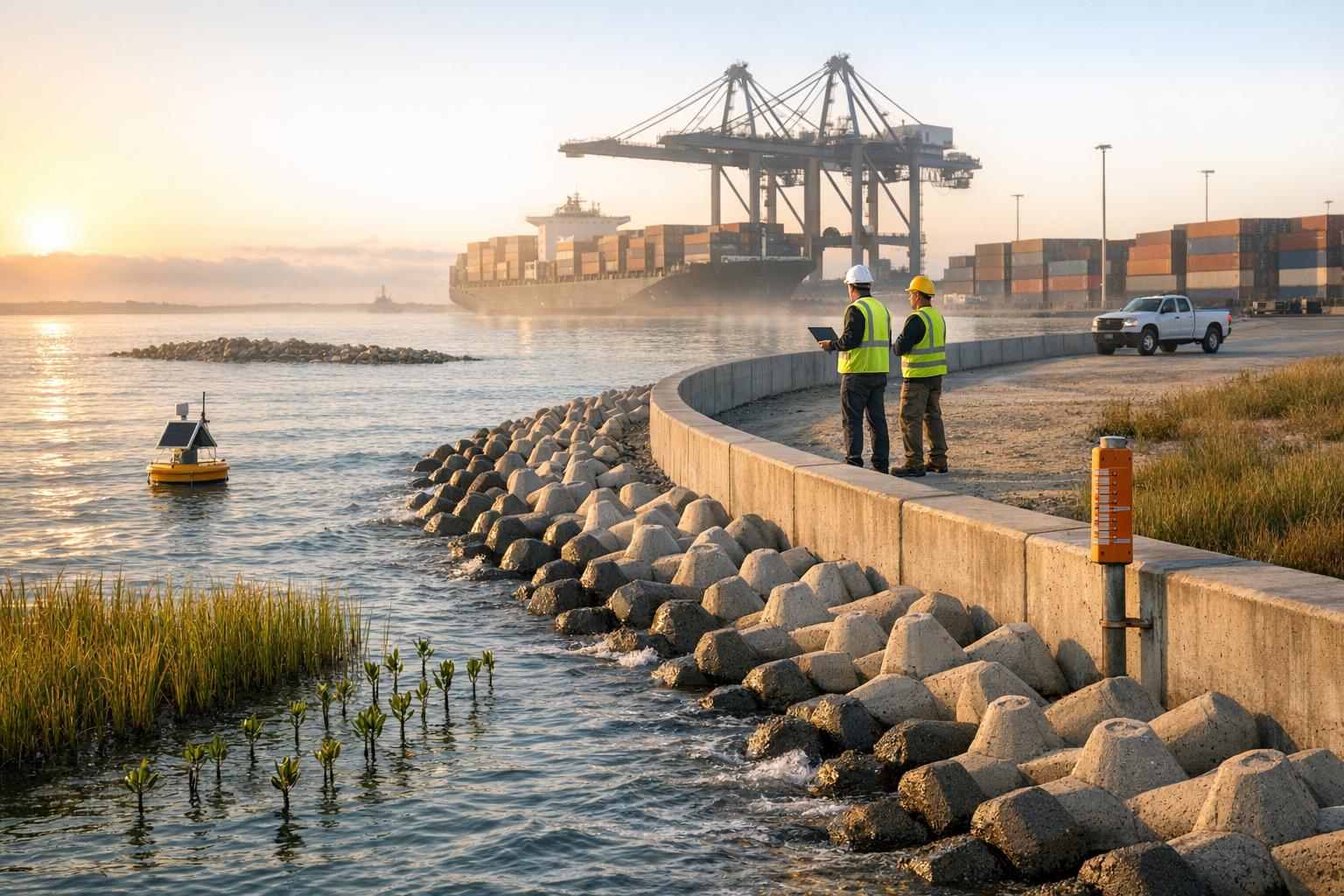
Maritime and logistics companies face increasing risks from rising sea levels, stronger storms, and coastal erosion. Protecting critical infrastructure like ports, warehouses, and transportation networks is essential to avoid costly disruptions and damage. Here's how companies can prepare:
Assess Vulnerabilities: Use tools like the Coastal Vulnerability Index (CVI) to identify high-risk areas based on tidal patterns, wave exposure, and historical shoreline changes.
Prioritize Critical Assets: Focus on protecting infrastructure that is most exposed and vital to operations, such as energy systems and transportation networks.
Build Resilient Systems: Combine engineered defenses (e.g., floodwalls, deployable barriers) with natural solutions (e.g., marshes, dunes) to mitigate flooding and erosion.
Leverage Predictive Tools: Use hydrodynamic models and real-time dashboards to anticipate risks and guide long-term planning.
Collaborate with Stakeholders: Work with local governments, regulators, and communities to align efforts and secure funding for resilience projects.
Investing in these measures now can prevent future losses, protect supply chains, and ensure operational continuity. For example, projects like New York City's East Side Coastal Resiliency system and the Port of Baltimore's stormwater management upgrades highlight effective strategies for managing climate risks. By acting early, companies can reduce costs and safeguard their operations against increasingly unpredictable coastal hazards.
Resilience in Action: NYC’s East Side Coastal Transformation
Evaluating Coastal Vulnerabilities and Climate Risks
Maritime and logistics companies face a growing need to evaluate site-specific conditions - like tidal patterns, wave exposure, and shoreline characteristics - to pinpoint high-risk assets. This step goes beyond broad climate forecasts, requiring localized assessments to identify areas for targeted mitigation. These evaluations serve as the foundation for creating infrastructure built to withstand future challenges.
Conducting Site-Specific Hazard Assessments
To create a clear picture of coastal risks, it's essential to draw from varied data sources. The Coastal Vulnerability Index (CVI) is one such tool, offering a numerical measure of relative risk by analyzing physical factors like tidal range, wave height, shoreline changes, geomorphology, and historical sea level rise rates. Together, these variables help assess a coastline's susceptibility to change and its capacity to adapt [1].
"The Coastal Vulnerability Index (CVI)... seeks to objectively determine the relative risks due to future sea level rise for the United States' ocean coasts." - U.S. Climate Resilience Toolkit [1]
Data should be categorized under three main themes: current storm scenarios (including dune erosion, overwash, and flooding), historical shoreline change rates, and sea level rise projections. Tools like the Coastal Change Hazards Portal provide access to these datasets, while platforms such as the Sea Level Rise Viewer and Coastal Inundation Dashboard offer visualizations of potential flooding levels [3]. High-resolution storm surge and flooding simulations can also be conducted using hydrodynamic models like ADCIRC [5].
For operational insights, the Ports Resilience Index allows port managers to conduct self-assessments of their disaster preparedness, helping them identify both strengths and areas needing improvement [6].
Prioritizing High-Risk Infrastructure and Areas
After mapping vulnerabilities, it’s crucial to rank infrastructure by both its exposure to risks and its operational importance. Energy utilities, transportation networks, and commercial facilities often top the list because their failure can cause widespread disruptions [6]. These assessments should weigh both physical susceptibility and the role these assets play in maintaining continuity during emergencies.
Effective prioritization must address multiple hazard scenarios, not just flooding. For instance, it should include risks like coastal erosion, heat stress on energy systems, and regulatory challenges tied to activities like dredging [5][2]. To mitigate risks, companies can update building codes to ensure critical infrastructure is elevated at least four feet above the base flood elevation [5]. Additionally, developing 72-hour self-sufficiency plans - complete with backup power, emergency supplies, and relocation sites - can bolster operational resilience [5]. This prioritization process is key to planning and designing infrastructure capable of adapting to future challenges.
Designing and Building Resilient Infrastructure
Once a vulnerability assessment is completed, the next step is turning those insights into durable defenses. Resilient infrastructure design builds on these assessments by combining engineered systems with natural processes. For maritime and logistics companies, this means creating solutions that merge traditional defenses with nature-based approaches, ensuring both immediate protection and adaptability to changing conditions.
Hybrid Protective Infrastructure
Coastal protection often requires a mix of hard defenses like floodwalls and deployable barriers with natural elements. For facilities needing constant waterfront access, deployable barriers - such as flip-up or roller gates - offer flexibility. These barriers stay open during regular operations and activate during storms, maintaining critical logistical flow [7][8].
A notable example is New York City's East Side Coastal Resiliency (ESCR) project. Completed in October 2025 at a cost of $1.45 billion, this 2.4-mile system includes 18 adaptable floodgates. The design even allows for the addition of two extra feet of elevation if sea levels rise faster than expected [7][8].
"ESCR utilizes an adaptive design that can accommodate the addition of two more feet of elevation should sea levels in the coming decades rise significantly faster than present day projections anticipate." - NYC Mayor's Office of Climate & Environmental Justice [7]
Subsurface infrastructure also plays a critical role. Enhanced drainage systems, including parallel lines, interceptor gates, and underground storage, are designed to manage both coastal flooding and sudden inland downpours [7][8].
Nature-Based Flood Mitigation Methods
Natural features like marshes, dunes, and reefs provide a first line of defense by slowing water and stabilizing soil. These elements reduce wave energy before it reaches critical infrastructure. For instance, vegetation slows water flow and stabilizes soil with its root systems, while reefs break up wave energy. Selecting the right nature-based solution depends on factors such as wave dynamics, soil conditions, and ecological considerations like salinity and sunlight [9].
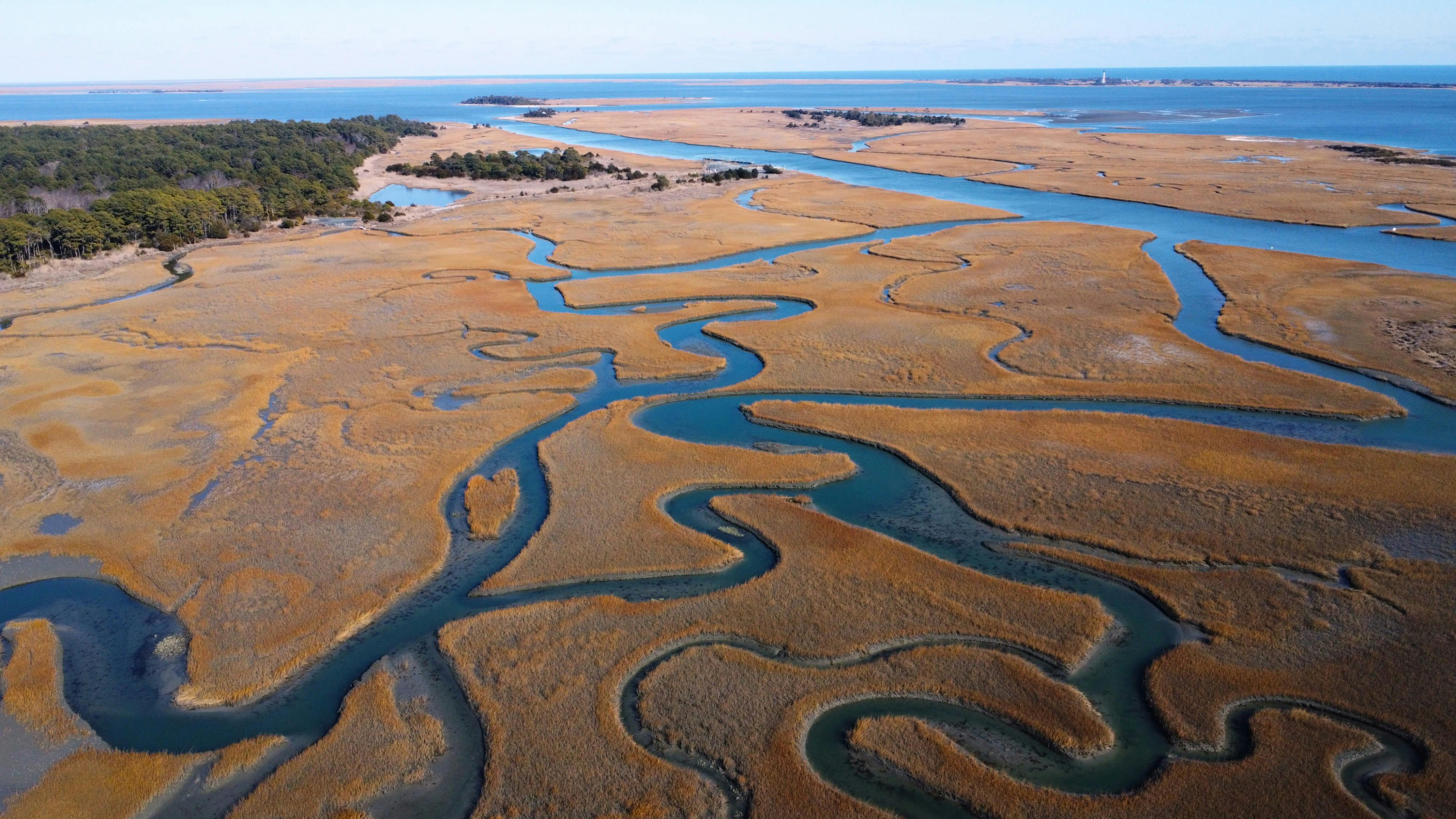
Nature-based solutions work alongside hard infrastructure to strengthen resilience. In sheltered areas like bays and estuaries, living shorelines - featuring stone sills or offshore breakwaters - protect landward vegetation while maintaining ecological balance. A prime example is the Swan Island project in Maryland, where the U.S. Army Corps of Engineers used 60,000 cubic yards of dredged sediment and planted native salt marsh and dune species to combat erosion and enhance wave protection in the Chesapeake Bay [10].
These solutions can be cost-competitive with traditional methods like rock revetments and often have lower replacement costs after extreme weather events. However, they do require ongoing maintenance, such as managing vegetation growth [9].
Case Studies of Infrastructure Projects
Several high-profile projects highlight the range of approaches to resilient infrastructure:
Red Hook Coastal Resiliency Project: Launched in late 2024 with $157 million in funding (including $80 million from FEMA), this project protects a mixed residential and industrial maritime area. It includes raised areas and deployable barriers to address vulnerabilities exposed by Superstorm Sandy [8].
Brooklyn Bridge-Montgomery Coastal Resilience: With a $350 million budget, this 1-mile project features flip-up and roller gates to ensure continuous protection [8].
The Battery Coastal Resilience: This $200 million initiative rebuilt and elevated a wharf and promenade to guard against future storm surges [8].
| Project | Cost | Length/Scope | Key Features |
| --- | --- | --- | --- |
| <strong>East Side Coastal Resiliency</strong> | $1.45 billion | 2.4 miles | 18 floodgates, adaptive design, 100-year lifespan |
| <strong>Brooklyn Bridge-Montgomery</strong> | $350 million | 1 mile | Flip-up and roller gates |
| <strong>The Battery Coastal Resilience</strong> | $200 million | Wharf rebuild | Elevated promenade |
| <strong>Red Hook Coastal Resiliency</strong> | $157 million | Mixed residential/maritime | Deployable barriers, raised areas
| Project | Cost | Length/Scope | Key Features |
| --- | --- | --- | --- |
| <strong>East Side Coastal Resiliency</strong> | $1.45 billion | 2.4 miles | 18 floodgates, adaptive design, 100-year lifespan |
| <strong>Brooklyn Bridge-Montgomery</strong> | $350 million | 1 mile | Flip-up and roller gates |
| <strong>The Battery Coastal Resilience</strong> | $200 million | Wharf rebuild | Elevated promenade |
| <strong>Red Hook Coastal Resiliency</strong> | $157 million | Mixed residential/maritime | Deployable barriers, raised areas
These diverse projects, ranging from $157 million to $1.45 billion, demonstrate how infrastructure needs and budgets shape the choice of strategies. Together, they provide a roadmap for integrating predictive tools into future risk management efforts.
Using Predictive Risk Management Tools
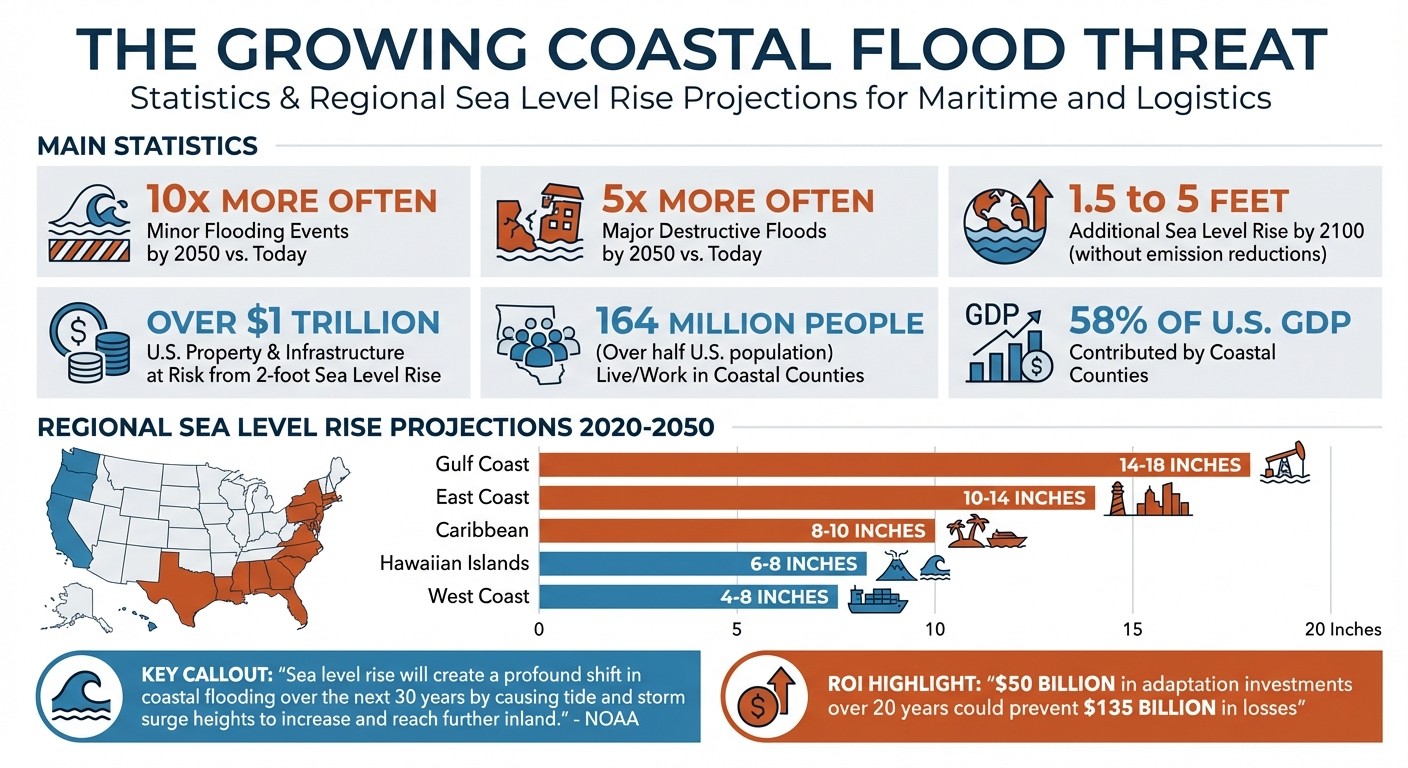
U.S. Coastal Flood Risk Statistics and Regional Sea Level Rise Projections by 2050
Creating resilient infrastructure means looking ahead to anticipate and mitigate risks. Predictive risk management tools turn climate data into practical insights, helping maritime and logistics companies address potential threats before they occur. These tools support both immediate safety measures and long-term strategic planning, ensuring decisions are informed by data and tailored to evolving risks.
Hydrodynamic and Climate Projection Tools
Predictive tools play a critical role in crafting region-specific, data-informed preventive strategies. Hydrodynamic modeling, for instance, simulates water behavior during storms and flooding, offering insights into potential impacts. The Coastal Change Hazards Portal provides scenario-based predictions of storm-induced effects like dune erosion, overwash, and inundation - key considerations for managing waterfront infrastructure [1]. Similarly, the Coastal Vulnerability Index (CVI) evaluates coastal risk by analyzing essential physical variables [1].
Some advanced tools use Bayesian networks to assess shoreline changes probabilistically, shifting from static to dynamic risk models [1]. This is particularly important because sea level rise varies significantly by region. For example, between 2020 and 2050, the Gulf Coast is projected to experience a rise of 14–18 inches, while the West Coast is expected to see only 4–8 inches [11]. Businesses operating across multiple regions require tools with this level of geographic precision.
"Sea level rise will create a profound shift in coastal flooding over the next 30 years by causing tide and storm surge heights to increase and reach further inland." - NOAA Office of Coastal Management [11]
The implications are substantial. By 2050, minor flooding events are anticipated to occur more than 10 times as often as they do today, while major destructive floods could happen five times as often [11]. Without reducing emissions, sea levels could rise an additional 1.5 to 5 feet by the end of the century [11].
Using Data to Guide Decisions
Beyond predictive modeling, data tools enhance both immediate responses and long-term planning. Real-time dashboards, such as the Coastal Inundation Dashboard, and future-focused resources like the Sea Level Rise Viewer, offer valuable insights through short-term forecasts and long-term scenarios [3][11].
Maritime companies should incorporate compound flooding factors into their models, as elements like rainfall, river discharge, and wave impacts can significantly amplify sea level rise estimates [11]. The Inundation Analysis Tool further refines decision-making by quantifying flooding frequency for specific infrastructure, enabling companies to prioritize upgrades effectively [3][11]. Ongoing monitoring also ensures early detection of shifts in sea level rise trends, allowing for timely updates to adaptation strategies [11].
| Region | Projected Sea Level Rise (2020–2050) |
| --- | --- |
| <strong>Gulf Coast</strong> | 14–18 inches |
| <strong>East Coast</strong> | 10–14 inches |
| <strong>Caribbean</strong> | 8–10 inches |
| <strong>West Coast</strong> | 4–8 inches |
| <strong>Hawaiian Islands</strong> | 6–8 inches
| Region | Projected Sea Level Rise (2020–2050) |
| --- | --- |
| <strong>Gulf Coast</strong> | 14–18 inches |
| <strong>East Coast</strong> | 10–14 inches |
| <strong>Caribbean</strong> | 8–10 inches |
| <strong>West Coast</strong> | 4–8 inches |
| <strong>Hawaiian Islands</strong> | 6–8 inches
This data-driven methodology transforms climate risks from vague threats into actionable insights, enabling businesses to focus resources where they are most needed. By leveraging these tools, companies can better prepare for the challenges posed by rising sea levels and shifting coastal dynamics.
Building Stakeholder Collaboration Frameworks
Once data-driven insights are established, the next step is fostering strong stakeholder collaboration to turn analysis into actionable strategies. Coastal resilience depends heavily on partnerships between local governments, regulators, and community organizations. Proactive investments in resilience measures can prevent losses that would far outweigh the costs of preparation.
Currently, over half of the U.S. population - around 164 million people - live or work in coastal counties, which collectively contribute 58% of the nation's GDP [16]. Any disruption at a major port can send shockwaves through supply chains and freight networks, making coordinated efforts across stakeholders an urgent priority.
Engaging Stakeholders for Regulatory and Operational Support
Early engagement with clear, impartial strategies is key to avoiding unintended risks to neighboring properties or ecosystems [12][16]. This approach fosters trust with local officials and can ease regulatory hurdles during permitting processes.
A prime example of regulatory collaboration can be seen at the Port of Baltimore. With funding from a federal Transportation Investment Generating Economic Recovery (TIGER) grant, the port implemented a concrete stormwater management system to handle extreme rain events while elevating critical infrastructure to address sea level rise [14]. Similarly, the Port of San Diego, in partnership with ECOncrete, initiated a three-year pilot project in 2021 to create shoreline stabilization structures that enhance habitat value while mitigating coastal flooding [14].
Businesses should also actively engage with local governments by participating in meetings and contributing to discussions on zoning, building codes, and climate-conscious urban planning [15]. Framing resilience projects as opportunities for local economic growth can help garner community buy-in. For instance, the Port of Miami worked with state agencies to restore 40 acres of mangroves at Oleta River State Park. This initiative not only bolstered natural storm defenses and supported wildlife but also created jobs in nearby underserved areas [14].
These examples highlight how collaboration with stakeholders strengthens the technical and predictive measures discussed earlier, paving the way for comprehensive continuity planning.
Developing Continuity Plans Through Collaboration
Partnerships with stakeholders are essential for translating resilience plans into practical, actionable strategies. Effective collaboration ensures the protection of critical resources like water, energy, and evacuation routes, which are vital for public safety and business operations [16].
Planning efforts should address immediate logistical needs while also accounting for longer-term infrastructure developments [16]. By conducting joint hazard assessments with local agencies, stakeholders can create a unified understanding of challenges like sea level rise and land subsidence. This shared perspective prevents misaligned assumptions that could hinder progress [16].
A study conducted in Shanghai in 2025 offers a compelling example of public-private collaboration. The study proposed integrating private warehouse clubs into government emergency logistics during coastal floods. This model reduced the strain on government resources and improved equitable distribution of aid during a simulated 1,000-year flood event [13]. Such partnerships demonstrate how maritime companies can incorporate private assets into regional emergency response systems, improving recovery efforts while maintaining operational continuity.
The stakes are high - approximately $1 trillion worth of property and infrastructure in the U.S. is at risk of flooding from just a two-foot rise in sea level, a scenario that could unfold by 2050 [16]. Building collaborative frameworks is not just a strategic move but a necessity for safeguarding coastal operations in the long run.
How Council Fire Can Help with Coastal Resilience and Flood Mitigation
Maritime and logistics companies are under growing pressure to protect coastal operations while meeting environmental commitments. Council Fire steps in with a methodical, data-driven approach to address the unique vulnerabilities of port facilities, warehouses, and transportation networks. Their targeted solutions turn these challenges into measurable results.
Council Fire's Climate Resilience Planning Approach
Council Fire employs a six-step resilience framework to transform risk assessments into actionable strategies. This framework stands out by integrating both nature-based and engineered solutions, specifically designed for coastal assets. The process begins with defining the project scope and identifying critical maritime assets. From there, tools like the Coastal Vulnerability Index (CVI) assess exposure by analyzing factors such as tidal range, wave height, coastal slope, shoreline change, and geomorphology [1][4]. This detailed analysis helps companies identify which facilities are most at risk from sea level rise and storm surges.
The framework then progresses through vulnerability assessments, evaluation of adaptation options, prioritization of measures, and implementation. By combining traditional protective infrastructure with nature-based solutions, Council Fire ensures that every resilience investment delivers measurable risk reduction. Their evaluations consider factors like regulatory feasibility, cost, and long-term effectiveness [1][3].
Stakeholder Engagement and Implementation Support
Effective resilience planning requires collaboration. Council Fire works to build trust with local governments, regulators, and community groups. Their stakeholder engagement process includes identifying potential funding sources, navigating permit requirements, and providing agency contact lists to simplify the permitting process [2].
This collaborative approach helps maritime companies highlight the broader benefits of resilience investments. These benefits include stronger regulatory support and fewer conflicts related to property impacts and ecosystem concerns.
Turning Sustainability Goals into Action for Maritime Companies
Council Fire goes beyond compliance reports by translating sustainability goals into concrete, actionable strategies. Their work transforms high-level commitments into operational resilience measures with measurable results. This might involve elevating critical equipment above projected flood levels, using predictive models to make immediate operational adjustments, or designing hybrid infrastructure that combines seawalls with coastal wetlands [1][3]. Their integrated approach ensures that resilience measures align with broader goals like cutting carbon emissions and promoting circular supply chains.
With technical expertise and a clear strategy, Council Fire helps protect assets while delivering long-term environmental and economic benefits. Their solutions lead to reduced downtime, faster recovery, and lower insurance costs - turning sustainability ambitions into practical, impactful actions.
Conclusion: Protecting Maritime and Logistics Operations for the Long Term
Maritime and logistics companies are at a critical juncture where investing in coastal resilience is no longer optional - it’s a matter of economic survival. Coastal communities contribute a staggering 58% of the nation's gross domestic product, yet U.S. coastal assets face over $1 trillion in potential risk from a two-foot sea level rise by 2050. This puts major port cities like Miami, Greater New York, New Orleans, Tampa–St. Petersburg, and the Port of Virginia in jeopardy [16].
To address these mounting risks, resilience must be built through proactive measures, including structured planning, advanced predictive tools, and collaboration across stakeholders. Companies need to evaluate vulnerabilities, focus on protecting high-risk assets, integrate hybrid solutions combining engineered and natural defenses, and leverage predictive modeling to anticipate future challenges. Failing to act could lead to costs that are 4 to 10 times higher than the price of preventive investments [16].
The numbers make a strong case: dedicating $50 billion to adaptation strategies over the next two decades could prevent roughly $135 billion in losses [16]. Achieving this, however, requires not just financial commitment but also effective collaboration among stakeholders, alignment with regulatory frameworks, and adherence to the "no adverse impact" principle to ensure long-term success [16].
FAQs
What steps can maritime companies take to assess their coastal vulnerabilities?
Maritime companies have access to specialized tools and frameworks that help them evaluate their coastal vulnerabilities, focusing on climate resilience and risk analysis. These resources are crucial for understanding threats like flooding, shoreline erosion, rising sea levels, and severe storms, allowing businesses to pinpoint potential weak spots in their operations.
By integrating scientific data, historical trends, and predictive modeling, companies can gain a clearer picture of how coastal infrastructure - such as piers and docks - might respond to challenges like storm surges or gradual sea level rise. Risk assessment methodologies, including those recommended by FEMA, provide actionable steps for evaluating the exposure of critical assets and planning for future risks. When paired with infrastructure-specific evaluations, these insights enable companies to prioritize protective measures, safeguarding their operations and supporting long-term stability.
What are the advantages of combining engineered structures with natural solutions for flood protection?
Blending engineered structures like seawalls and levees with natural solutions such as wetlands, dunes, or living shorelines offers a balanced and effective approach to flood protection. While engineered defenses provide immediate and dependable protection against storm surges and flooding, natural solutions play a crucial role in increasing resilience by absorbing wave energy, trapping sediments, and revitalizing ecosystems.
Natural solutions also come with additional perks: they improve water quality, create habitats for wildlife, and offer recreational spaces - benefits that engineered structures alone cannot provide. By combining these methods, communities gain a more sustainable and cost-efficient strategy that not only safeguards infrastructure but also supports ecosystems and helps adapt to rising sea levels and the challenges of climate change.
How can predictive tools help maritime and logistics companies plan for coastal resilience?
Predictive tools play a critical role in helping maritime and logistics companies navigate the challenges of coastal resilience. By analyzing climate data - such as rising sea levels, storm surge trends, and shifting shorelines - these tools offer forecasts that reveal how coastal areas might change over time. This information is invaluable for identifying vulnerabilities and making strategic decisions to safeguard assets and operations.
With these insights, companies can assess the potential success of measures like upgrading infrastructure, strengthening shorelines, or relocating essential facilities. Predictive tools also support scenario planning, allowing stakeholders to prioritize actions based on anticipated risks. This data-driven strategy equips businesses to face the impacts of climate change head-on, ensuring their operations remain stable and sustainable in at-risk coastal regions.
Related Blog Posts
How to Build a Climate Resilience Plan for Maritime & Logistics Companies
How to Integrate Climate Risk into Infrastructure Planning for Maritime & Logistics Companies
How to Design Coastal Resilience & Flood Mitigation for Municipalities & Government Agencies
How to Design Coastal Resilience & Flood Mitigation for Corporations
Latest Articles
©2025

FAQ
01
What does it really mean to “redefine profit”?
02
What makes Council Fire different?
03
Who does Council Fire you work with?
04
What does working with Council Fire actually look like?
05
How does Council Fire help organizations turn big goals into action?
06
How does Council Fire define and measure success?
Jan 30, 2026
How to Design Coastal Resilience & Flood Mitigation for Maritime & Logistics Companies
Sustainability Strategy
In This Article
Guide for maritime and logistics firms to assess coastal risks, prioritize assets, and deploy hybrid engineered and nature-based flood defenses with predictive tools.
How to Design Coastal Resilience & Flood Mitigation for Maritime & Logistics Companies
Maritime and logistics companies face increasing risks from rising sea levels, stronger storms, and coastal erosion. Protecting critical infrastructure like ports, warehouses, and transportation networks is essential to avoid costly disruptions and damage. Here's how companies can prepare:
Assess Vulnerabilities: Use tools like the Coastal Vulnerability Index (CVI) to identify high-risk areas based on tidal patterns, wave exposure, and historical shoreline changes.
Prioritize Critical Assets: Focus on protecting infrastructure that is most exposed and vital to operations, such as energy systems and transportation networks.
Build Resilient Systems: Combine engineered defenses (e.g., floodwalls, deployable barriers) with natural solutions (e.g., marshes, dunes) to mitigate flooding and erosion.
Leverage Predictive Tools: Use hydrodynamic models and real-time dashboards to anticipate risks and guide long-term planning.
Collaborate with Stakeholders: Work with local governments, regulators, and communities to align efforts and secure funding for resilience projects.
Investing in these measures now can prevent future losses, protect supply chains, and ensure operational continuity. For example, projects like New York City's East Side Coastal Resiliency system and the Port of Baltimore's stormwater management upgrades highlight effective strategies for managing climate risks. By acting early, companies can reduce costs and safeguard their operations against increasingly unpredictable coastal hazards.
Resilience in Action: NYC’s East Side Coastal Transformation
Evaluating Coastal Vulnerabilities and Climate Risks
Maritime and logistics companies face a growing need to evaluate site-specific conditions - like tidal patterns, wave exposure, and shoreline characteristics - to pinpoint high-risk assets. This step goes beyond broad climate forecasts, requiring localized assessments to identify areas for targeted mitigation. These evaluations serve as the foundation for creating infrastructure built to withstand future challenges.
Conducting Site-Specific Hazard Assessments
To create a clear picture of coastal risks, it's essential to draw from varied data sources. The Coastal Vulnerability Index (CVI) is one such tool, offering a numerical measure of relative risk by analyzing physical factors like tidal range, wave height, shoreline changes, geomorphology, and historical sea level rise rates. Together, these variables help assess a coastline's susceptibility to change and its capacity to adapt [1].
"The Coastal Vulnerability Index (CVI)... seeks to objectively determine the relative risks due to future sea level rise for the United States' ocean coasts." - U.S. Climate Resilience Toolkit [1]
Data should be categorized under three main themes: current storm scenarios (including dune erosion, overwash, and flooding), historical shoreline change rates, and sea level rise projections. Tools like the Coastal Change Hazards Portal provide access to these datasets, while platforms such as the Sea Level Rise Viewer and Coastal Inundation Dashboard offer visualizations of potential flooding levels [3]. High-resolution storm surge and flooding simulations can also be conducted using hydrodynamic models like ADCIRC [5].
For operational insights, the Ports Resilience Index allows port managers to conduct self-assessments of their disaster preparedness, helping them identify both strengths and areas needing improvement [6].
Prioritizing High-Risk Infrastructure and Areas
After mapping vulnerabilities, it’s crucial to rank infrastructure by both its exposure to risks and its operational importance. Energy utilities, transportation networks, and commercial facilities often top the list because their failure can cause widespread disruptions [6]. These assessments should weigh both physical susceptibility and the role these assets play in maintaining continuity during emergencies.
Effective prioritization must address multiple hazard scenarios, not just flooding. For instance, it should include risks like coastal erosion, heat stress on energy systems, and regulatory challenges tied to activities like dredging [5][2]. To mitigate risks, companies can update building codes to ensure critical infrastructure is elevated at least four feet above the base flood elevation [5]. Additionally, developing 72-hour self-sufficiency plans - complete with backup power, emergency supplies, and relocation sites - can bolster operational resilience [5]. This prioritization process is key to planning and designing infrastructure capable of adapting to future challenges.
Designing and Building Resilient Infrastructure
Once a vulnerability assessment is completed, the next step is turning those insights into durable defenses. Resilient infrastructure design builds on these assessments by combining engineered systems with natural processes. For maritime and logistics companies, this means creating solutions that merge traditional defenses with nature-based approaches, ensuring both immediate protection and adaptability to changing conditions.
Hybrid Protective Infrastructure
Coastal protection often requires a mix of hard defenses like floodwalls and deployable barriers with natural elements. For facilities needing constant waterfront access, deployable barriers - such as flip-up or roller gates - offer flexibility. These barriers stay open during regular operations and activate during storms, maintaining critical logistical flow [7][8].
A notable example is New York City's East Side Coastal Resiliency (ESCR) project. Completed in October 2025 at a cost of $1.45 billion, this 2.4-mile system includes 18 adaptable floodgates. The design even allows for the addition of two extra feet of elevation if sea levels rise faster than expected [7][8].
"ESCR utilizes an adaptive design that can accommodate the addition of two more feet of elevation should sea levels in the coming decades rise significantly faster than present day projections anticipate." - NYC Mayor's Office of Climate & Environmental Justice [7]
Subsurface infrastructure also plays a critical role. Enhanced drainage systems, including parallel lines, interceptor gates, and underground storage, are designed to manage both coastal flooding and sudden inland downpours [7][8].
Nature-Based Flood Mitigation Methods
Natural features like marshes, dunes, and reefs provide a first line of defense by slowing water and stabilizing soil. These elements reduce wave energy before it reaches critical infrastructure. For instance, vegetation slows water flow and stabilizes soil with its root systems, while reefs break up wave energy. Selecting the right nature-based solution depends on factors such as wave dynamics, soil conditions, and ecological considerations like salinity and sunlight [9].
Nature-based solutions work alongside hard infrastructure to strengthen resilience. In sheltered areas like bays and estuaries, living shorelines - featuring stone sills or offshore breakwaters - protect landward vegetation while maintaining ecological balance. A prime example is the Swan Island project in Maryland, where the U.S. Army Corps of Engineers used 60,000 cubic yards of dredged sediment and planted native salt marsh and dune species to combat erosion and enhance wave protection in the Chesapeake Bay [10].
These solutions can be cost-competitive with traditional methods like rock revetments and often have lower replacement costs after extreme weather events. However, they do require ongoing maintenance, such as managing vegetation growth [9].
Case Studies of Infrastructure Projects
Several high-profile projects highlight the range of approaches to resilient infrastructure:
Red Hook Coastal Resiliency Project: Launched in late 2024 with $157 million in funding (including $80 million from FEMA), this project protects a mixed residential and industrial maritime area. It includes raised areas and deployable barriers to address vulnerabilities exposed by Superstorm Sandy [8].
Brooklyn Bridge-Montgomery Coastal Resilience: With a $350 million budget, this 1-mile project features flip-up and roller gates to ensure continuous protection [8].
The Battery Coastal Resilience: This $200 million initiative rebuilt and elevated a wharf and promenade to guard against future storm surges [8].
| Project | Cost | Length/Scope | Key Features |
| --- | --- | --- | --- |
| <strong>East Side Coastal Resiliency</strong> | $1.45 billion | 2.4 miles | 18 floodgates, adaptive design, 100-year lifespan |
| <strong>Brooklyn Bridge-Montgomery</strong> | $350 million | 1 mile | Flip-up and roller gates |
| <strong>The Battery Coastal Resilience</strong> | $200 million | Wharf rebuild | Elevated promenade |
| <strong>Red Hook Coastal Resiliency</strong> | $157 million | Mixed residential/maritime | Deployable barriers, raised areas
These diverse projects, ranging from $157 million to $1.45 billion, demonstrate how infrastructure needs and budgets shape the choice of strategies. Together, they provide a roadmap for integrating predictive tools into future risk management efforts.
Using Predictive Risk Management Tools
U.S. Coastal Flood Risk Statistics and Regional Sea Level Rise Projections by 2050
Creating resilient infrastructure means looking ahead to anticipate and mitigate risks. Predictive risk management tools turn climate data into practical insights, helping maritime and logistics companies address potential threats before they occur. These tools support both immediate safety measures and long-term strategic planning, ensuring decisions are informed by data and tailored to evolving risks.
Hydrodynamic and Climate Projection Tools
Predictive tools play a critical role in crafting region-specific, data-informed preventive strategies. Hydrodynamic modeling, for instance, simulates water behavior during storms and flooding, offering insights into potential impacts. The Coastal Change Hazards Portal provides scenario-based predictions of storm-induced effects like dune erosion, overwash, and inundation - key considerations for managing waterfront infrastructure [1]. Similarly, the Coastal Vulnerability Index (CVI) evaluates coastal risk by analyzing essential physical variables [1].
Some advanced tools use Bayesian networks to assess shoreline changes probabilistically, shifting from static to dynamic risk models [1]. This is particularly important because sea level rise varies significantly by region. For example, between 2020 and 2050, the Gulf Coast is projected to experience a rise of 14–18 inches, while the West Coast is expected to see only 4–8 inches [11]. Businesses operating across multiple regions require tools with this level of geographic precision.
"Sea level rise will create a profound shift in coastal flooding over the next 30 years by causing tide and storm surge heights to increase and reach further inland." - NOAA Office of Coastal Management [11]
The implications are substantial. By 2050, minor flooding events are anticipated to occur more than 10 times as often as they do today, while major destructive floods could happen five times as often [11]. Without reducing emissions, sea levels could rise an additional 1.5 to 5 feet by the end of the century [11].
Using Data to Guide Decisions
Beyond predictive modeling, data tools enhance both immediate responses and long-term planning. Real-time dashboards, such as the Coastal Inundation Dashboard, and future-focused resources like the Sea Level Rise Viewer, offer valuable insights through short-term forecasts and long-term scenarios [3][11].
Maritime companies should incorporate compound flooding factors into their models, as elements like rainfall, river discharge, and wave impacts can significantly amplify sea level rise estimates [11]. The Inundation Analysis Tool further refines decision-making by quantifying flooding frequency for specific infrastructure, enabling companies to prioritize upgrades effectively [3][11]. Ongoing monitoring also ensures early detection of shifts in sea level rise trends, allowing for timely updates to adaptation strategies [11].
| Region | Projected Sea Level Rise (2020–2050) |
| --- | --- |
| <strong>Gulf Coast</strong> | 14–18 inches |
| <strong>East Coast</strong> | 10–14 inches |
| <strong>Caribbean</strong> | 8–10 inches |
| <strong>West Coast</strong> | 4–8 inches |
| <strong>Hawaiian Islands</strong> | 6–8 inches
This data-driven methodology transforms climate risks from vague threats into actionable insights, enabling businesses to focus resources where they are most needed. By leveraging these tools, companies can better prepare for the challenges posed by rising sea levels and shifting coastal dynamics.
Building Stakeholder Collaboration Frameworks
Once data-driven insights are established, the next step is fostering strong stakeholder collaboration to turn analysis into actionable strategies. Coastal resilience depends heavily on partnerships between local governments, regulators, and community organizations. Proactive investments in resilience measures can prevent losses that would far outweigh the costs of preparation.
Currently, over half of the U.S. population - around 164 million people - live or work in coastal counties, which collectively contribute 58% of the nation's GDP [16]. Any disruption at a major port can send shockwaves through supply chains and freight networks, making coordinated efforts across stakeholders an urgent priority.
Engaging Stakeholders for Regulatory and Operational Support
Early engagement with clear, impartial strategies is key to avoiding unintended risks to neighboring properties or ecosystems [12][16]. This approach fosters trust with local officials and can ease regulatory hurdles during permitting processes.
A prime example of regulatory collaboration can be seen at the Port of Baltimore. With funding from a federal Transportation Investment Generating Economic Recovery (TIGER) grant, the port implemented a concrete stormwater management system to handle extreme rain events while elevating critical infrastructure to address sea level rise [14]. Similarly, the Port of San Diego, in partnership with ECOncrete, initiated a three-year pilot project in 2021 to create shoreline stabilization structures that enhance habitat value while mitigating coastal flooding [14].
Businesses should also actively engage with local governments by participating in meetings and contributing to discussions on zoning, building codes, and climate-conscious urban planning [15]. Framing resilience projects as opportunities for local economic growth can help garner community buy-in. For instance, the Port of Miami worked with state agencies to restore 40 acres of mangroves at Oleta River State Park. This initiative not only bolstered natural storm defenses and supported wildlife but also created jobs in nearby underserved areas [14].
These examples highlight how collaboration with stakeholders strengthens the technical and predictive measures discussed earlier, paving the way for comprehensive continuity planning.
Developing Continuity Plans Through Collaboration
Partnerships with stakeholders are essential for translating resilience plans into practical, actionable strategies. Effective collaboration ensures the protection of critical resources like water, energy, and evacuation routes, which are vital for public safety and business operations [16].
Planning efforts should address immediate logistical needs while also accounting for longer-term infrastructure developments [16]. By conducting joint hazard assessments with local agencies, stakeholders can create a unified understanding of challenges like sea level rise and land subsidence. This shared perspective prevents misaligned assumptions that could hinder progress [16].
A study conducted in Shanghai in 2025 offers a compelling example of public-private collaboration. The study proposed integrating private warehouse clubs into government emergency logistics during coastal floods. This model reduced the strain on government resources and improved equitable distribution of aid during a simulated 1,000-year flood event [13]. Such partnerships demonstrate how maritime companies can incorporate private assets into regional emergency response systems, improving recovery efforts while maintaining operational continuity.
The stakes are high - approximately $1 trillion worth of property and infrastructure in the U.S. is at risk of flooding from just a two-foot rise in sea level, a scenario that could unfold by 2050 [16]. Building collaborative frameworks is not just a strategic move but a necessity for safeguarding coastal operations in the long run.
How Council Fire Can Help with Coastal Resilience and Flood Mitigation
Maritime and logistics companies are under growing pressure to protect coastal operations while meeting environmental commitments. Council Fire steps in with a methodical, data-driven approach to address the unique vulnerabilities of port facilities, warehouses, and transportation networks. Their targeted solutions turn these challenges into measurable results.
Council Fire's Climate Resilience Planning Approach
Council Fire employs a six-step resilience framework to transform risk assessments into actionable strategies. This framework stands out by integrating both nature-based and engineered solutions, specifically designed for coastal assets. The process begins with defining the project scope and identifying critical maritime assets. From there, tools like the Coastal Vulnerability Index (CVI) assess exposure by analyzing factors such as tidal range, wave height, coastal slope, shoreline change, and geomorphology [1][4]. This detailed analysis helps companies identify which facilities are most at risk from sea level rise and storm surges.
The framework then progresses through vulnerability assessments, evaluation of adaptation options, prioritization of measures, and implementation. By combining traditional protective infrastructure with nature-based solutions, Council Fire ensures that every resilience investment delivers measurable risk reduction. Their evaluations consider factors like regulatory feasibility, cost, and long-term effectiveness [1][3].
Stakeholder Engagement and Implementation Support
Effective resilience planning requires collaboration. Council Fire works to build trust with local governments, regulators, and community groups. Their stakeholder engagement process includes identifying potential funding sources, navigating permit requirements, and providing agency contact lists to simplify the permitting process [2].
This collaborative approach helps maritime companies highlight the broader benefits of resilience investments. These benefits include stronger regulatory support and fewer conflicts related to property impacts and ecosystem concerns.
Turning Sustainability Goals into Action for Maritime Companies
Council Fire goes beyond compliance reports by translating sustainability goals into concrete, actionable strategies. Their work transforms high-level commitments into operational resilience measures with measurable results. This might involve elevating critical equipment above projected flood levels, using predictive models to make immediate operational adjustments, or designing hybrid infrastructure that combines seawalls with coastal wetlands [1][3]. Their integrated approach ensures that resilience measures align with broader goals like cutting carbon emissions and promoting circular supply chains.
With technical expertise and a clear strategy, Council Fire helps protect assets while delivering long-term environmental and economic benefits. Their solutions lead to reduced downtime, faster recovery, and lower insurance costs - turning sustainability ambitions into practical, impactful actions.
Conclusion: Protecting Maritime and Logistics Operations for the Long Term
Maritime and logistics companies are at a critical juncture where investing in coastal resilience is no longer optional - it’s a matter of economic survival. Coastal communities contribute a staggering 58% of the nation's gross domestic product, yet U.S. coastal assets face over $1 trillion in potential risk from a two-foot sea level rise by 2050. This puts major port cities like Miami, Greater New York, New Orleans, Tampa–St. Petersburg, and the Port of Virginia in jeopardy [16].
To address these mounting risks, resilience must be built through proactive measures, including structured planning, advanced predictive tools, and collaboration across stakeholders. Companies need to evaluate vulnerabilities, focus on protecting high-risk assets, integrate hybrid solutions combining engineered and natural defenses, and leverage predictive modeling to anticipate future challenges. Failing to act could lead to costs that are 4 to 10 times higher than the price of preventive investments [16].
The numbers make a strong case: dedicating $50 billion to adaptation strategies over the next two decades could prevent roughly $135 billion in losses [16]. Achieving this, however, requires not just financial commitment but also effective collaboration among stakeholders, alignment with regulatory frameworks, and adherence to the "no adverse impact" principle to ensure long-term success [16].
FAQs
What steps can maritime companies take to assess their coastal vulnerabilities?
Maritime companies have access to specialized tools and frameworks that help them evaluate their coastal vulnerabilities, focusing on climate resilience and risk analysis. These resources are crucial for understanding threats like flooding, shoreline erosion, rising sea levels, and severe storms, allowing businesses to pinpoint potential weak spots in their operations.
By integrating scientific data, historical trends, and predictive modeling, companies can gain a clearer picture of how coastal infrastructure - such as piers and docks - might respond to challenges like storm surges or gradual sea level rise. Risk assessment methodologies, including those recommended by FEMA, provide actionable steps for evaluating the exposure of critical assets and planning for future risks. When paired with infrastructure-specific evaluations, these insights enable companies to prioritize protective measures, safeguarding their operations and supporting long-term stability.
What are the advantages of combining engineered structures with natural solutions for flood protection?
Blending engineered structures like seawalls and levees with natural solutions such as wetlands, dunes, or living shorelines offers a balanced and effective approach to flood protection. While engineered defenses provide immediate and dependable protection against storm surges and flooding, natural solutions play a crucial role in increasing resilience by absorbing wave energy, trapping sediments, and revitalizing ecosystems.
Natural solutions also come with additional perks: they improve water quality, create habitats for wildlife, and offer recreational spaces - benefits that engineered structures alone cannot provide. By combining these methods, communities gain a more sustainable and cost-efficient strategy that not only safeguards infrastructure but also supports ecosystems and helps adapt to rising sea levels and the challenges of climate change.
How can predictive tools help maritime and logistics companies plan for coastal resilience?
Predictive tools play a critical role in helping maritime and logistics companies navigate the challenges of coastal resilience. By analyzing climate data - such as rising sea levels, storm surge trends, and shifting shorelines - these tools offer forecasts that reveal how coastal areas might change over time. This information is invaluable for identifying vulnerabilities and making strategic decisions to safeguard assets and operations.
With these insights, companies can assess the potential success of measures like upgrading infrastructure, strengthening shorelines, or relocating essential facilities. Predictive tools also support scenario planning, allowing stakeholders to prioritize actions based on anticipated risks. This data-driven strategy equips businesses to face the impacts of climate change head-on, ensuring their operations remain stable and sustainable in at-risk coastal regions.
Related Blog Posts
How to Build a Climate Resilience Plan for Maritime & Logistics Companies
How to Integrate Climate Risk into Infrastructure Planning for Maritime & Logistics Companies
How to Design Coastal Resilience & Flood Mitigation for Municipalities & Government Agencies
How to Design Coastal Resilience & Flood Mitigation for Corporations
FAQ
01
What does it really mean to “redefine profit”?
02
What makes Council Fire different?
03
Who does Council Fire you work with?
04
What does working with Council Fire actually look like?
05
How does Council Fire help organizations turn big goals into action?
06
How does Council Fire define and measure success?
Jan 30, 2026
How to Design Coastal Resilience & Flood Mitigation for Maritime & Logistics Companies
Sustainability Strategy
In This Article
Guide for maritime and logistics firms to assess coastal risks, prioritize assets, and deploy hybrid engineered and nature-based flood defenses with predictive tools.
How to Design Coastal Resilience & Flood Mitigation for Maritime & Logistics Companies
Maritime and logistics companies face increasing risks from rising sea levels, stronger storms, and coastal erosion. Protecting critical infrastructure like ports, warehouses, and transportation networks is essential to avoid costly disruptions and damage. Here's how companies can prepare:
Assess Vulnerabilities: Use tools like the Coastal Vulnerability Index (CVI) to identify high-risk areas based on tidal patterns, wave exposure, and historical shoreline changes.
Prioritize Critical Assets: Focus on protecting infrastructure that is most exposed and vital to operations, such as energy systems and transportation networks.
Build Resilient Systems: Combine engineered defenses (e.g., floodwalls, deployable barriers) with natural solutions (e.g., marshes, dunes) to mitigate flooding and erosion.
Leverage Predictive Tools: Use hydrodynamic models and real-time dashboards to anticipate risks and guide long-term planning.
Collaborate with Stakeholders: Work with local governments, regulators, and communities to align efforts and secure funding for resilience projects.
Investing in these measures now can prevent future losses, protect supply chains, and ensure operational continuity. For example, projects like New York City's East Side Coastal Resiliency system and the Port of Baltimore's stormwater management upgrades highlight effective strategies for managing climate risks. By acting early, companies can reduce costs and safeguard their operations against increasingly unpredictable coastal hazards.
Resilience in Action: NYC’s East Side Coastal Transformation
Evaluating Coastal Vulnerabilities and Climate Risks
Maritime and logistics companies face a growing need to evaluate site-specific conditions - like tidal patterns, wave exposure, and shoreline characteristics - to pinpoint high-risk assets. This step goes beyond broad climate forecasts, requiring localized assessments to identify areas for targeted mitigation. These evaluations serve as the foundation for creating infrastructure built to withstand future challenges.
Conducting Site-Specific Hazard Assessments
To create a clear picture of coastal risks, it's essential to draw from varied data sources. The Coastal Vulnerability Index (CVI) is one such tool, offering a numerical measure of relative risk by analyzing physical factors like tidal range, wave height, shoreline changes, geomorphology, and historical sea level rise rates. Together, these variables help assess a coastline's susceptibility to change and its capacity to adapt [1].
"The Coastal Vulnerability Index (CVI)... seeks to objectively determine the relative risks due to future sea level rise for the United States' ocean coasts." - U.S. Climate Resilience Toolkit [1]
Data should be categorized under three main themes: current storm scenarios (including dune erosion, overwash, and flooding), historical shoreline change rates, and sea level rise projections. Tools like the Coastal Change Hazards Portal provide access to these datasets, while platforms such as the Sea Level Rise Viewer and Coastal Inundation Dashboard offer visualizations of potential flooding levels [3]. High-resolution storm surge and flooding simulations can also be conducted using hydrodynamic models like ADCIRC [5].
For operational insights, the Ports Resilience Index allows port managers to conduct self-assessments of their disaster preparedness, helping them identify both strengths and areas needing improvement [6].
Prioritizing High-Risk Infrastructure and Areas
After mapping vulnerabilities, it’s crucial to rank infrastructure by both its exposure to risks and its operational importance. Energy utilities, transportation networks, and commercial facilities often top the list because their failure can cause widespread disruptions [6]. These assessments should weigh both physical susceptibility and the role these assets play in maintaining continuity during emergencies.
Effective prioritization must address multiple hazard scenarios, not just flooding. For instance, it should include risks like coastal erosion, heat stress on energy systems, and regulatory challenges tied to activities like dredging [5][2]. To mitigate risks, companies can update building codes to ensure critical infrastructure is elevated at least four feet above the base flood elevation [5]. Additionally, developing 72-hour self-sufficiency plans - complete with backup power, emergency supplies, and relocation sites - can bolster operational resilience [5]. This prioritization process is key to planning and designing infrastructure capable of adapting to future challenges.
Designing and Building Resilient Infrastructure
Once a vulnerability assessment is completed, the next step is turning those insights into durable defenses. Resilient infrastructure design builds on these assessments by combining engineered systems with natural processes. For maritime and logistics companies, this means creating solutions that merge traditional defenses with nature-based approaches, ensuring both immediate protection and adaptability to changing conditions.
Hybrid Protective Infrastructure
Coastal protection often requires a mix of hard defenses like floodwalls and deployable barriers with natural elements. For facilities needing constant waterfront access, deployable barriers - such as flip-up or roller gates - offer flexibility. These barriers stay open during regular operations and activate during storms, maintaining critical logistical flow [7][8].
A notable example is New York City's East Side Coastal Resiliency (ESCR) project. Completed in October 2025 at a cost of $1.45 billion, this 2.4-mile system includes 18 adaptable floodgates. The design even allows for the addition of two extra feet of elevation if sea levels rise faster than expected [7][8].
"ESCR utilizes an adaptive design that can accommodate the addition of two more feet of elevation should sea levels in the coming decades rise significantly faster than present day projections anticipate." - NYC Mayor's Office of Climate & Environmental Justice [7]
Subsurface infrastructure also plays a critical role. Enhanced drainage systems, including parallel lines, interceptor gates, and underground storage, are designed to manage both coastal flooding and sudden inland downpours [7][8].
Nature-Based Flood Mitigation Methods
Natural features like marshes, dunes, and reefs provide a first line of defense by slowing water and stabilizing soil. These elements reduce wave energy before it reaches critical infrastructure. For instance, vegetation slows water flow and stabilizes soil with its root systems, while reefs break up wave energy. Selecting the right nature-based solution depends on factors such as wave dynamics, soil conditions, and ecological considerations like salinity and sunlight [9].
Nature-based solutions work alongside hard infrastructure to strengthen resilience. In sheltered areas like bays and estuaries, living shorelines - featuring stone sills or offshore breakwaters - protect landward vegetation while maintaining ecological balance. A prime example is the Swan Island project in Maryland, where the U.S. Army Corps of Engineers used 60,000 cubic yards of dredged sediment and planted native salt marsh and dune species to combat erosion and enhance wave protection in the Chesapeake Bay [10].
These solutions can be cost-competitive with traditional methods like rock revetments and often have lower replacement costs after extreme weather events. However, they do require ongoing maintenance, such as managing vegetation growth [9].
Case Studies of Infrastructure Projects
Several high-profile projects highlight the range of approaches to resilient infrastructure:
Red Hook Coastal Resiliency Project: Launched in late 2024 with $157 million in funding (including $80 million from FEMA), this project protects a mixed residential and industrial maritime area. It includes raised areas and deployable barriers to address vulnerabilities exposed by Superstorm Sandy [8].
Brooklyn Bridge-Montgomery Coastal Resilience: With a $350 million budget, this 1-mile project features flip-up and roller gates to ensure continuous protection [8].
The Battery Coastal Resilience: This $200 million initiative rebuilt and elevated a wharf and promenade to guard against future storm surges [8].
| Project | Cost | Length/Scope | Key Features |
| --- | --- | --- | --- |
| <strong>East Side Coastal Resiliency</strong> | $1.45 billion | 2.4 miles | 18 floodgates, adaptive design, 100-year lifespan |
| <strong>Brooklyn Bridge-Montgomery</strong> | $350 million | 1 mile | Flip-up and roller gates |
| <strong>The Battery Coastal Resilience</strong> | $200 million | Wharf rebuild | Elevated promenade |
| <strong>Red Hook Coastal Resiliency</strong> | $157 million | Mixed residential/maritime | Deployable barriers, raised areas
These diverse projects, ranging from $157 million to $1.45 billion, demonstrate how infrastructure needs and budgets shape the choice of strategies. Together, they provide a roadmap for integrating predictive tools into future risk management efforts.
Using Predictive Risk Management Tools
U.S. Coastal Flood Risk Statistics and Regional Sea Level Rise Projections by 2050
Creating resilient infrastructure means looking ahead to anticipate and mitigate risks. Predictive risk management tools turn climate data into practical insights, helping maritime and logistics companies address potential threats before they occur. These tools support both immediate safety measures and long-term strategic planning, ensuring decisions are informed by data and tailored to evolving risks.
Hydrodynamic and Climate Projection Tools
Predictive tools play a critical role in crafting region-specific, data-informed preventive strategies. Hydrodynamic modeling, for instance, simulates water behavior during storms and flooding, offering insights into potential impacts. The Coastal Change Hazards Portal provides scenario-based predictions of storm-induced effects like dune erosion, overwash, and inundation - key considerations for managing waterfront infrastructure [1]. Similarly, the Coastal Vulnerability Index (CVI) evaluates coastal risk by analyzing essential physical variables [1].
Some advanced tools use Bayesian networks to assess shoreline changes probabilistically, shifting from static to dynamic risk models [1]. This is particularly important because sea level rise varies significantly by region. For example, between 2020 and 2050, the Gulf Coast is projected to experience a rise of 14–18 inches, while the West Coast is expected to see only 4–8 inches [11]. Businesses operating across multiple regions require tools with this level of geographic precision.
"Sea level rise will create a profound shift in coastal flooding over the next 30 years by causing tide and storm surge heights to increase and reach further inland." - NOAA Office of Coastal Management [11]
The implications are substantial. By 2050, minor flooding events are anticipated to occur more than 10 times as often as they do today, while major destructive floods could happen five times as often [11]. Without reducing emissions, sea levels could rise an additional 1.5 to 5 feet by the end of the century [11].
Using Data to Guide Decisions
Beyond predictive modeling, data tools enhance both immediate responses and long-term planning. Real-time dashboards, such as the Coastal Inundation Dashboard, and future-focused resources like the Sea Level Rise Viewer, offer valuable insights through short-term forecasts and long-term scenarios [3][11].
Maritime companies should incorporate compound flooding factors into their models, as elements like rainfall, river discharge, and wave impacts can significantly amplify sea level rise estimates [11]. The Inundation Analysis Tool further refines decision-making by quantifying flooding frequency for specific infrastructure, enabling companies to prioritize upgrades effectively [3][11]. Ongoing monitoring also ensures early detection of shifts in sea level rise trends, allowing for timely updates to adaptation strategies [11].
| Region | Projected Sea Level Rise (2020–2050) |
| --- | --- |
| <strong>Gulf Coast</strong> | 14–18 inches |
| <strong>East Coast</strong> | 10–14 inches |
| <strong>Caribbean</strong> | 8–10 inches |
| <strong>West Coast</strong> | 4–8 inches |
| <strong>Hawaiian Islands</strong> | 6–8 inches
This data-driven methodology transforms climate risks from vague threats into actionable insights, enabling businesses to focus resources where they are most needed. By leveraging these tools, companies can better prepare for the challenges posed by rising sea levels and shifting coastal dynamics.
Building Stakeholder Collaboration Frameworks
Once data-driven insights are established, the next step is fostering strong stakeholder collaboration to turn analysis into actionable strategies. Coastal resilience depends heavily on partnerships between local governments, regulators, and community organizations. Proactive investments in resilience measures can prevent losses that would far outweigh the costs of preparation.
Currently, over half of the U.S. population - around 164 million people - live or work in coastal counties, which collectively contribute 58% of the nation's GDP [16]. Any disruption at a major port can send shockwaves through supply chains and freight networks, making coordinated efforts across stakeholders an urgent priority.
Engaging Stakeholders for Regulatory and Operational Support
Early engagement with clear, impartial strategies is key to avoiding unintended risks to neighboring properties or ecosystems [12][16]. This approach fosters trust with local officials and can ease regulatory hurdles during permitting processes.
A prime example of regulatory collaboration can be seen at the Port of Baltimore. With funding from a federal Transportation Investment Generating Economic Recovery (TIGER) grant, the port implemented a concrete stormwater management system to handle extreme rain events while elevating critical infrastructure to address sea level rise [14]. Similarly, the Port of San Diego, in partnership with ECOncrete, initiated a three-year pilot project in 2021 to create shoreline stabilization structures that enhance habitat value while mitigating coastal flooding [14].
Businesses should also actively engage with local governments by participating in meetings and contributing to discussions on zoning, building codes, and climate-conscious urban planning [15]. Framing resilience projects as opportunities for local economic growth can help garner community buy-in. For instance, the Port of Miami worked with state agencies to restore 40 acres of mangroves at Oleta River State Park. This initiative not only bolstered natural storm defenses and supported wildlife but also created jobs in nearby underserved areas [14].
These examples highlight how collaboration with stakeholders strengthens the technical and predictive measures discussed earlier, paving the way for comprehensive continuity planning.
Developing Continuity Plans Through Collaboration
Partnerships with stakeholders are essential for translating resilience plans into practical, actionable strategies. Effective collaboration ensures the protection of critical resources like water, energy, and evacuation routes, which are vital for public safety and business operations [16].
Planning efforts should address immediate logistical needs while also accounting for longer-term infrastructure developments [16]. By conducting joint hazard assessments with local agencies, stakeholders can create a unified understanding of challenges like sea level rise and land subsidence. This shared perspective prevents misaligned assumptions that could hinder progress [16].
A study conducted in Shanghai in 2025 offers a compelling example of public-private collaboration. The study proposed integrating private warehouse clubs into government emergency logistics during coastal floods. This model reduced the strain on government resources and improved equitable distribution of aid during a simulated 1,000-year flood event [13]. Such partnerships demonstrate how maritime companies can incorporate private assets into regional emergency response systems, improving recovery efforts while maintaining operational continuity.
The stakes are high - approximately $1 trillion worth of property and infrastructure in the U.S. is at risk of flooding from just a two-foot rise in sea level, a scenario that could unfold by 2050 [16]. Building collaborative frameworks is not just a strategic move but a necessity for safeguarding coastal operations in the long run.
How Council Fire Can Help with Coastal Resilience and Flood Mitigation
Maritime and logistics companies are under growing pressure to protect coastal operations while meeting environmental commitments. Council Fire steps in with a methodical, data-driven approach to address the unique vulnerabilities of port facilities, warehouses, and transportation networks. Their targeted solutions turn these challenges into measurable results.
Council Fire's Climate Resilience Planning Approach
Council Fire employs a six-step resilience framework to transform risk assessments into actionable strategies. This framework stands out by integrating both nature-based and engineered solutions, specifically designed for coastal assets. The process begins with defining the project scope and identifying critical maritime assets. From there, tools like the Coastal Vulnerability Index (CVI) assess exposure by analyzing factors such as tidal range, wave height, coastal slope, shoreline change, and geomorphology [1][4]. This detailed analysis helps companies identify which facilities are most at risk from sea level rise and storm surges.
The framework then progresses through vulnerability assessments, evaluation of adaptation options, prioritization of measures, and implementation. By combining traditional protective infrastructure with nature-based solutions, Council Fire ensures that every resilience investment delivers measurable risk reduction. Their evaluations consider factors like regulatory feasibility, cost, and long-term effectiveness [1][3].
Stakeholder Engagement and Implementation Support
Effective resilience planning requires collaboration. Council Fire works to build trust with local governments, regulators, and community groups. Their stakeholder engagement process includes identifying potential funding sources, navigating permit requirements, and providing agency contact lists to simplify the permitting process [2].
This collaborative approach helps maritime companies highlight the broader benefits of resilience investments. These benefits include stronger regulatory support and fewer conflicts related to property impacts and ecosystem concerns.
Turning Sustainability Goals into Action for Maritime Companies
Council Fire goes beyond compliance reports by translating sustainability goals into concrete, actionable strategies. Their work transforms high-level commitments into operational resilience measures with measurable results. This might involve elevating critical equipment above projected flood levels, using predictive models to make immediate operational adjustments, or designing hybrid infrastructure that combines seawalls with coastal wetlands [1][3]. Their integrated approach ensures that resilience measures align with broader goals like cutting carbon emissions and promoting circular supply chains.
With technical expertise and a clear strategy, Council Fire helps protect assets while delivering long-term environmental and economic benefits. Their solutions lead to reduced downtime, faster recovery, and lower insurance costs - turning sustainability ambitions into practical, impactful actions.
Conclusion: Protecting Maritime and Logistics Operations for the Long Term
Maritime and logistics companies are at a critical juncture where investing in coastal resilience is no longer optional - it’s a matter of economic survival. Coastal communities contribute a staggering 58% of the nation's gross domestic product, yet U.S. coastal assets face over $1 trillion in potential risk from a two-foot sea level rise by 2050. This puts major port cities like Miami, Greater New York, New Orleans, Tampa–St. Petersburg, and the Port of Virginia in jeopardy [16].
To address these mounting risks, resilience must be built through proactive measures, including structured planning, advanced predictive tools, and collaboration across stakeholders. Companies need to evaluate vulnerabilities, focus on protecting high-risk assets, integrate hybrid solutions combining engineered and natural defenses, and leverage predictive modeling to anticipate future challenges. Failing to act could lead to costs that are 4 to 10 times higher than the price of preventive investments [16].
The numbers make a strong case: dedicating $50 billion to adaptation strategies over the next two decades could prevent roughly $135 billion in losses [16]. Achieving this, however, requires not just financial commitment but also effective collaboration among stakeholders, alignment with regulatory frameworks, and adherence to the "no adverse impact" principle to ensure long-term success [16].
FAQs
What steps can maritime companies take to assess their coastal vulnerabilities?
Maritime companies have access to specialized tools and frameworks that help them evaluate their coastal vulnerabilities, focusing on climate resilience and risk analysis. These resources are crucial for understanding threats like flooding, shoreline erosion, rising sea levels, and severe storms, allowing businesses to pinpoint potential weak spots in their operations.
By integrating scientific data, historical trends, and predictive modeling, companies can gain a clearer picture of how coastal infrastructure - such as piers and docks - might respond to challenges like storm surges or gradual sea level rise. Risk assessment methodologies, including those recommended by FEMA, provide actionable steps for evaluating the exposure of critical assets and planning for future risks. When paired with infrastructure-specific evaluations, these insights enable companies to prioritize protective measures, safeguarding their operations and supporting long-term stability.
What are the advantages of combining engineered structures with natural solutions for flood protection?
Blending engineered structures like seawalls and levees with natural solutions such as wetlands, dunes, or living shorelines offers a balanced and effective approach to flood protection. While engineered defenses provide immediate and dependable protection against storm surges and flooding, natural solutions play a crucial role in increasing resilience by absorbing wave energy, trapping sediments, and revitalizing ecosystems.
Natural solutions also come with additional perks: they improve water quality, create habitats for wildlife, and offer recreational spaces - benefits that engineered structures alone cannot provide. By combining these methods, communities gain a more sustainable and cost-efficient strategy that not only safeguards infrastructure but also supports ecosystems and helps adapt to rising sea levels and the challenges of climate change.
How can predictive tools help maritime and logistics companies plan for coastal resilience?
Predictive tools play a critical role in helping maritime and logistics companies navigate the challenges of coastal resilience. By analyzing climate data - such as rising sea levels, storm surge trends, and shifting shorelines - these tools offer forecasts that reveal how coastal areas might change over time. This information is invaluable for identifying vulnerabilities and making strategic decisions to safeguard assets and operations.
With these insights, companies can assess the potential success of measures like upgrading infrastructure, strengthening shorelines, or relocating essential facilities. Predictive tools also support scenario planning, allowing stakeholders to prioritize actions based on anticipated risks. This data-driven strategy equips businesses to face the impacts of climate change head-on, ensuring their operations remain stable and sustainable in at-risk coastal regions.
Related Blog Posts
How to Build a Climate Resilience Plan for Maritime & Logistics Companies
How to Integrate Climate Risk into Infrastructure Planning for Maritime & Logistics Companies
How to Design Coastal Resilience & Flood Mitigation for Municipalities & Government Agencies
How to Design Coastal Resilience & Flood Mitigation for Corporations
FAQ
What does it really mean to “redefine profit”?
What makes Council Fire different?
Who does Council Fire you work with?
What does working with Council Fire actually look like?
How does Council Fire help organizations turn big goals into action?
How does Council Fire define and measure success?