Mar 31, 2026
How to Co-Design Climate-Ready Communities with Residents for Municipalities & Government Agencies
Capacity Building
In This Article
Co-design equitable climate plans with residents: map vulnerability, prioritize frontline needs, and create grant-ready municipal projects.
How to Co-Design Climate-Ready Communities with Residents for Municipalities & Government Agencies
Building climate-ready communities requires municipalities to work directly with residents. This approach ensures that climate plans address real, local challenges while avoiding ineffective or inequitable solutions. By involving residents from the start, cities can uncover overlooked risks, such as contamination near flood zones, and secure funding for impactful projects like living shorelines or resilience hubs. Here’s how municipalities can create effective and fair climate plans:
Engage Residents Early: Host workshops in accessible locations, provide childcare and translation, and compensate participants for their time.
Focus on Vulnerable Groups: Prioritize low-income neighborhoods, older adults, and communities with limited resources.
Use Local Knowledge: Residents’ firsthand experiences highlight risks that technical models might miss, ensuring better-targeted solutions.
Combine Data with Community Insights: Blend GIS tools, climate models, and resident feedback to map risks and opportunities.
Turn Ideas into Action: Develop clear roadmaps with measurable goals, assigned responsibilities, and grant-ready projects.
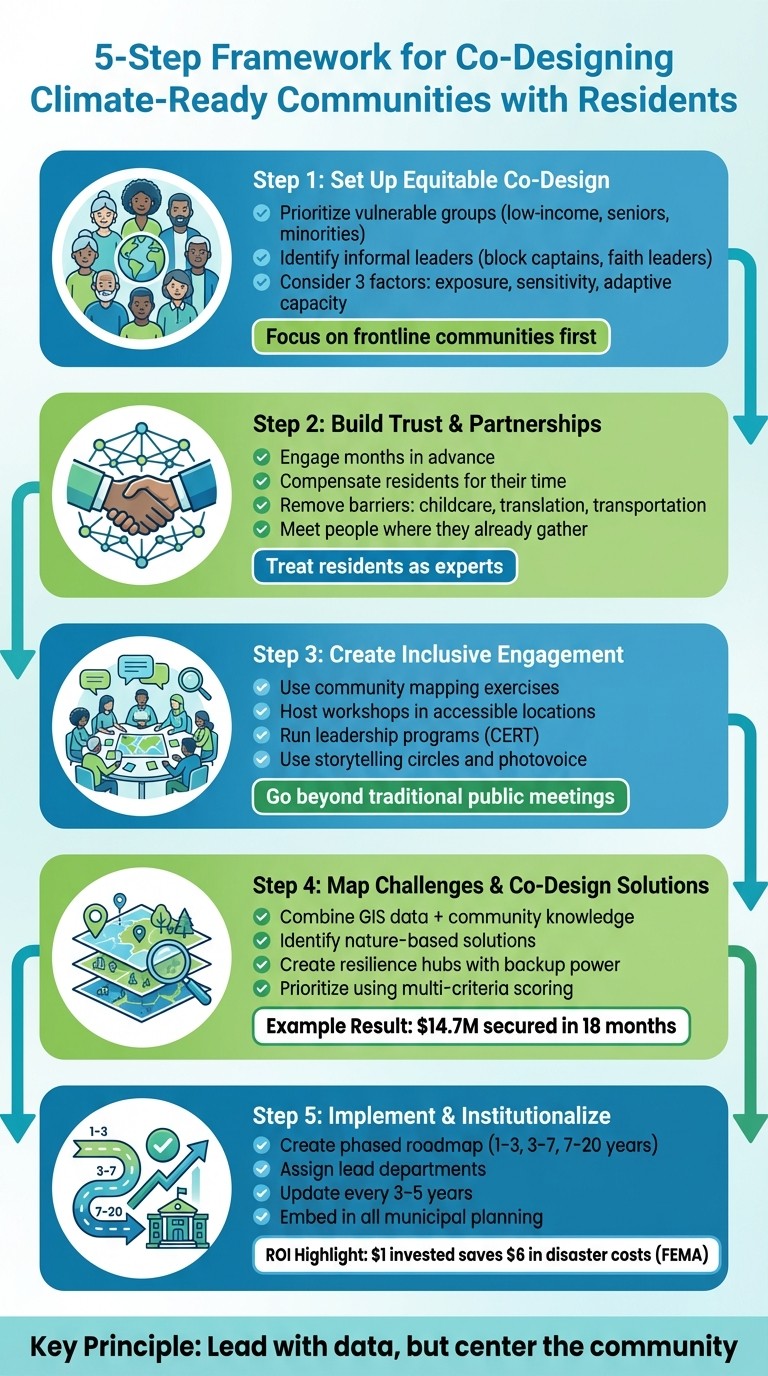
5-Step Framework for Co-Designing Climate-Ready Communities with Residents
Setting Up an Equitable Co-Design Process
Core Principles of Co-Design
Equitable co-design puts residents at the heart of climate planning from the very beginning, rather than treating them as an afterthought. This method prioritizes those most vulnerable to climate impacts - such as low-income neighborhoods, communities of color, older adults, and immigrant groups - over a narrow focus on infrastructure upgrades.
To identify vulnerability, consider three key factors: exposure to hazards, the sensitivity of local infrastructure and populations, and the adaptive capacity provided by resources and networks. For example, a neighborhood prone to moderate flooding but with limited adaptive capacity - due to barriers like language isolation or insufficient transportation options - might be overlooked in traditional technical assessments [1].
"Building resilience requires more than infrastructure upgrades. It demands social cohesion, equitable resource distribution, and governance structures that center the people most vulnerable to climate impacts."
This type of analysis helps direct investments where they are needed most, often pairing resilience projects with affordable housing initiatives to counteract climate gentrification [1]. Using vulnerability mapping as a guide ensures that resilience planning is equitable, with a focus on including those most at risk.
Prioritizing Underserved Communities
To uphold these principles, municipalities must focus on the needs of underserved groups. Frontline communities are often hit the hardest and earliest by climate change. According to the EPA, key vulnerable groups include households earning less than 200% of the poverty level, minority populations, individuals without a high school diploma, and adults aged 65 or older [5]. Despite their high stakes, these groups often lack political influence.
To address this, representatives from these communities should be involved from the very start of the planning process - not brought in after decisions are already underway. Building trust early is essential, which means engaging months in advance and working with informal leaders like block captains or faith leaders who are already trusted within the community.
"Frontline communities should be afforded the highest priority in a community's climate resilience planning efforts, and bona fide leaders and representatives of these groups must be included at the start of the decision-making process – not invited after the process is in motion."
In cases where direct representation is difficult, such as with residents experiencing homelessness, collaboration with community-based organizations like food banks, shelters, or senior centers can provide valuable insights. Acknowledging historical injustices during the planning process is another critical step toward rebuilding trust and avoiding the reinforcement of systemic inequities [5].
Building Trust and Real Partnerships with Communities
Finding and Engaging Key Stakeholders
To create meaningful partnerships with communities, municipalities need to focus on connecting with the people residents already rely on and trust. These aren’t always the individuals with official titles. Often, informal leaders - like block captains, faith leaders, or neighborhood advocates - hold deeper connections within the community. These individuals act as bridges between residents and government, fostering trust and communication [5][6].
For groups that are harder to reach, such as individuals experiencing homelessness or isolated seniors, it’s crucial to collaborate with community-based organizations that already have established relationships. Organizations like food banks, shelters, and senior centers can offer valuable perspectives on the needs of these populations. Additionally, municipal departments such as social services, parks and recreation, and economic development often have existing ties to these communities that can be leveraged for engagement [5].
Instead of creating new meetings and expecting residents to attend, it’s more effective to meet people where they already gather. Neighborhood association meetings, church events, and local NGO activities provide opportunities to build relationships in spaces where trust already exists. Employing local residents as block captains or community health workers can further ensure consistent, two-way communication [5][1]. This approach not only respects residents’ time but also shows a genuine commitment to working within their established community structures.
Another key step is to compensate residents for their contributions. By offering stipends for their time in workshops or task forces, municipalities demonstrate that they value community members as experts. Removing barriers to participation - such as providing childcare, food, transportation, and translation services - can also encourage broader involvement [5][1].
With these trusted connections in place, the next step is to establish clear and transparent communication channels.
Setting Up Clear Communication Channels
Sustained collaboration depends on maintaining open and transparent communication. This means ensuring residents understand how their input is collected, applied, and reflected in decisions. A continuous engagement cycle - spanning education, policy formation, implementation, and evaluation - helps avoid the perception of public input as a one-time formality [7].
"Engagement should be transparent (clear about purpose and use), authentic (using the input requested), and appropriate (engage in a way that gets to results)."
Clear communication also requires measurable milestones with specific targets. For example, setting a goal like "Install 50 bioswales by 2027" provides clarity and accountability. Assigning lead departments for each project ensures residents know who to contact for updates. Sharing both process metrics (e.g., the number of residents engaged, funds allocated by area) and outcome metrics (e.g., reductions in flood damage or heat-related illnesses) demonstrates progress and highlights how resources are being allocated to address high-need areas [1].
It’s equally important to acknowledge past shortcomings. Building trust involves recognizing and addressing instances where communities were previously overlooked or harmed by government actions. By explicitly explaining how the current approach differs, municipalities can show their commitment to doing better [5].
To reach diverse groups, use a variety of communication channels, including virtual and in-person meetings, social media, and community mapping initiatives. Inclusivity should be a priority, and dialogue should continue throughout the entire planning and implementation process - not just during the initial design phase [7][6]. This ongoing engagement ensures that partnerships remain strong and responsive over time [1].
Creating Engagement Processes That Include Everyone
Using Community-Centered Engagement Methods
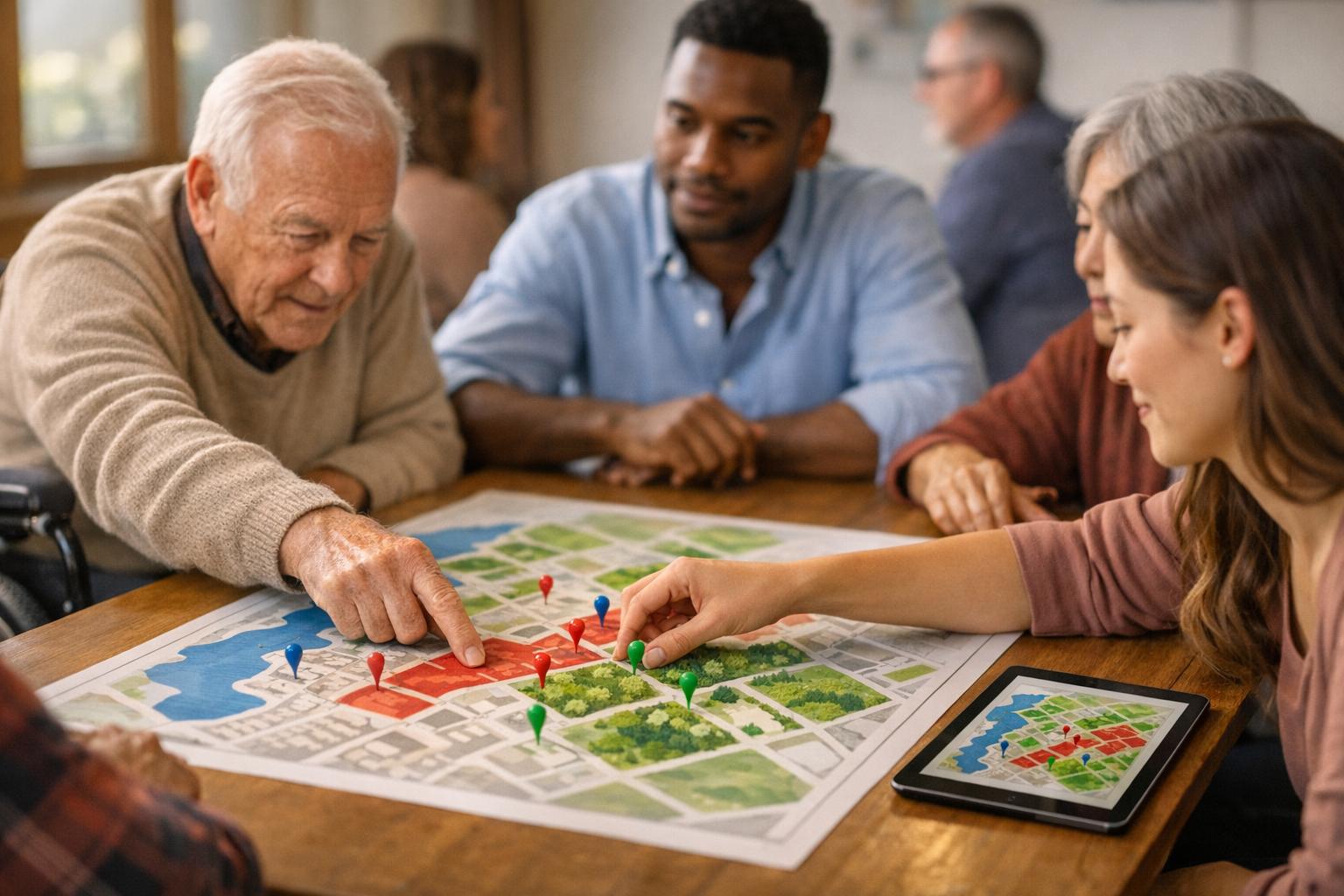
Traditional public meetings often fall short in capturing the voices of those most affected by climate change. Instead of relying solely on formal presentations at city hall, municipalities can adopt participatory techniques that meet residents in their own communities. For example, community mapping exercises - where residents pinpoint flood zones or heat islands on local maps - can uncover vulnerabilities that technical assessments might overlook. Similarly, storytelling circles and photovoice projects, where participants share their experiences through photography, provide a richer understanding of lived realities that raw data alone cannot convey [1].
In Long Beach, California, the Aquarium of the Pacific worked with local partners to transform dense technical reports into more accessible formats, enabling broader participation [4].
"We felt the original report was too long and too dense, and a lot of people we would like to read it just don't have time to do it." - Dr. Jerry Schubel, President and CEO, Aquarium of the Pacific [4]
This approach, which begins with training local leaders and empowers them to facilitate neighborhood discussions, strengthens community capacity at the grassroots level. The Aquarium's outreach to over 200,000 students and community members annually demonstrates how partnerships with local institutions can bridge gaps between governments and residents [4].
These participatory approaches set the stage for workshops that further empower community leadership.
Running Workshops and Leadership Programs
Workshops are most effective when they remove barriers and build residents' capacity to contribute meaningfully. Hosting these sessions in familiar, community-centric spaces - while offering necessary supports like childcare or translation services - can enhance participation. It's equally important to compensate residents for their time and expertise, treating them as valued consultants rather than passive participants [1].
Leadership programs can further amplify local voices by equipping residents with the tools to lead climate conversations and initiatives. Programs like Community Emergency Response Teams (CERT) help create networks of informed residents who can mobilize during emergencies and advocate for long-term adaptation efforts. Hiring trusted individuals - such as community health workers, block captains, and faith leaders - as paid connectors ensures ongoing communication with groups that might otherwise be excluded, including those facing language barriers or systemic marginalization [1].
Long Beach provides a strong example of this model in action. Through partnerships with local universities and cultural institutions, the city created multiple pathways for engagement. This collaborative approach enabled its diverse population of 500,000 residents to shape a climate action plan rooted in community knowledge, rather than dictated by external authorities [4].
Turning Community Feedback into Projects
Once municipalities gather robust feedback through participatory methods, the next step is turning these insights into actionable projects. Feedback from mapping exercises and workshops should be organized into strategic categories like infrastructure protection, emergency preparedness, social adaptation, and economic resilience [3].
A Mid-Atlantic coastal city with 28,000 residents offers a compelling example. After a 14-month planning effort completed in February 2026, the city used a multi-criteria scoring system to prioritize projects based on factors such as hazard reduction, equity impact, cost-effectiveness, and additional benefits. This structured approach helped the city secure $14.7 million in federal and state funding within 18 months. Key outcomes included a 1.2-mile living shoreline that reduced wave energy by 40–60%, stormwater upgrades that boosted capacity by 35%, and the development of two community resilience hubs equipped with backup power [3].
Assigning lead departments to each project ensures that community priorities are translated into actionable, grant-ready initiatives. According to FEMA, every $1 spent on hazard mitigation saves $6 in avoided disaster costs, making these community-driven efforts not only impactful but also economically sound [1].
Turning Community Priorities into Climate Adaptation Plans
Mapping Local Challenges and Opportunities
Transforming community feedback into actionable climate adaptation plans requires blending local knowledge with advanced tools like GIS data, climate models, and the CDC's Social Vulnerability Index. This combination highlights areas where climate risks overlap with socioeconomic vulnerabilities, uncovering challenges that technical studies alone might overlook [3].
Take, for instance, a Mid-Atlantic city that employed NOAA sea-level rise scenarios and EPA modeling to identify $4.2 billion worth of property at risk. This analysis helped prioritize efforts in the city’s most vulnerable neighborhoods. But it wasn’t just about maps and numbers - residents brought to light a critical hazard: flooding combined with contamination from a nearby legacy Superfund site [3].
By pairing technical assessments with community input, cities not only gain the data necessary for grant applications but also ensure that projects reflect local needs. Tools like NOAA's Climate Explorer and Sea Level Rise Viewer can create visual aids, which residents can refine during workshops to ensure alignment with their lived experiences [8].
Once vulnerabilities are mapped out, the next challenge is turning this data into solutions that communities endorse and support.
Co-Designing Nature-Based and Infrastructure Solutions
Working alongside residents to create solutions ensures that projects are both technically sound and aligned with community priorities. Nature-based approaches often rise to the top because they address multiple issues simultaneously - offering flood protection, restoring habitats, creating recreational spaces, and improving air quality.
One example is a 1.2-mile living shoreline project in a Mid-Atlantic coastal city. By incorporating oyster reefs and marsh creation, the project reduced wave energy by 40–60% while enhancing water quality and habitats. Alongside this, stormwater upgrades featuring bioswales and rain gardens increased system capacity by 35% for 25-year storm events. These efforts were shaped through a three-tier engagement process involving surveys, workshops, and an advisory committee [3].
In another instance, Long Beach, California, saw collaboration between the Aquarium of the Pacific and MBA students from California State University, Long Beach. Together, they developed outreach programs for neighborhoods vulnerable to coastal flooding. This partnership translated technical climate data into actionable, community-supported projects addressing both infrastructure and social needs [4].
"If we are not planning based on likely future conditions, we are by default planning for historical conditions, which sets us up for failure." - Climate Ready Communities Guidebook [2]
Beyond physical infrastructure, social infrastructure plays an essential role. In the Mid-Atlantic city, resilience hubs were established at a church and a community center. These hubs were equipped with backup power, cooling systems, and communication tools to support residents during climate events [3].
These community-driven solutions build the foundation for the next phase: structured execution through implementation roadmaps.
Creating Implementation Roadmaps
Turning priorities into action requires an implementation roadmap that organizes projects into phased, accountable initiatives. Breaking projects into near-term (1–3 years), medium-term (3–7 years), and long-term (7–20 years) phases helps align with local budget cycles and ensures steady progress [3]. Early wins in the near term can generate momentum for longer-term resilience efforts.
To maximize funding opportunities, structure project descriptions to be grant-ready from the start. This approach has helped municipalities secure millions in federal and state grants, which often cover 75–90% of project costs [1]. For example, updating building codes to increase freeboard requirements or mandating green infrastructure in new developments can make projects more competitive for funding [3].
Clear roles and responsibilities are essential. Assign lead departments for each project and integrate climate considerations into broader municipal planning efforts, such as capital improvement plans, zoning regulations, and departmental budgets. This avoids isolating resilience efforts as standalone initiatives [2].
Patrick Hubbard, Development Coordinator for the City of Corinth, Texas, emphasized the value of structured guidance in moving from plans to action:
"The backing of the Geos Institute provides credibility and helps to build momentum for our resilience planning." - Patrick Hubbard, Development Coordinator, City of Corinth, TX [2]
Regular monitoring is key to tracking progress and adapting the roadmap as conditions evolve. Climate adaptation is a continuous process, requiring updates as new data emerges or community priorities shift. This iterative approach ensures that plans remain relevant and effective over time.
Building Long-Term Capacity and Institutional Strength
Developing Community Leadership
Creating lasting climate resilience depends as much on empowering people as it does on building infrastructure. Municipalities should focus on identifying and supporting local leaders - whether they are block captains, community health workers, or faith leaders - who can foster strong partnerships and drive sustained efforts. These leaders often emerge from the neighborhoods most vulnerable to climate risks, such as low-income areas, high-pollution zones, and communities that have historically been left out of planning discussions.
Programs like Community Emergency Response Teams (CERT) are a great example of how residents can be equipped with technical skills for emergency preparedness, helping to strengthen neighborhood-level social resilience [1].
Structured training is another key to keeping communities engaged over the long term. For instance, the Steps to Resilience program offers six eLearning modules, each lasting 90 minutes, to help community members and staff feel confident discussing climate issues. Additionally, the program encourages planning team members to commit to at least one year of service, ensuring consistent involvement in project development [9].
Physical spaces also play an essential role in fostering resilience. A coastal city in the Mid-Atlantic region, for example, created resilience hubs at trusted community centers. These hubs, equipped with backup power, cooling systems, and communication tools, have not only supported emergency response efforts but also helped secure substantial federal and state funding [3]. By acting as permanent community anchors, these hubs strengthen local leadership and enhance emergency preparedness.
With empowered local leaders and dedicated community spaces in place, municipalities can more effectively integrate resilience into their broader planning strategies.
Making Resilience Part of Municipal Planning
Strong community leadership provides the groundwork for weaving resilience into every aspect of municipal planning. To achieve this, municipalities must move beyond treating climate resilience as a separate project and instead embed it into all planning processes. This means incorporating climate considerations into departmental budgets, capital improvement plans, and other key frameworks, while planning for future scenarios instead of relying on outdated baselines [2].
"A resilience strategy without a clear implementation governance structure - who leads, who decides, how progress is tracked, how the plan adapts - will lose momentum after the initial political enthusiasm fades." - Council Fire [3]
Establishing formal governance structures is critical for maintaining momentum. These structures clarify leadership roles, decision-making processes, and methods for tracking progress. For instance, the City of Warren, Minnesota, used the Climate Ready Communities program to initiate meaningful conversations that led to community-driven actions. These efforts were organized through steering committees and implemented with the support of local and county governments [2].
Updating regulations is another way to institutionalize resilience. In one example, a Mid-Atlantic coastal city revised its floodplain regulations, increasing the required freeboard from one foot to three feet. This adjustment ensures that new developments are better prepared for future flood risks [3]. Additionally, integrating resilience projects into existing budgets and capital improvement plans helps secure ongoing funding and attention, rather than treating these projects as one-off expenses [1].
Resilience plans must remain dynamic, evolving every 3–5 years to reflect new climate data, lessons learned from past experiences, and community input [1][2]. This iterative approach, combined with strong governance and active community leadership, strengthens the institutions needed to protect residents as climate challenges grow. According to FEMA, every $1 invested in hazard mitigation saves $6 in disaster-related costs, making these efforts both economically and socially essential [1].
Community Engagement for Climate Resilience: What is it and how do you do it well?
Conclusion: Key Takeaways for Co-Designing Climate-Ready Communities
Collaborating with residents to design climate-ready communities is a crucial step toward creating resilience plans that genuinely address local needs. By moving beyond occasional public meetings and fostering ongoing partnerships, municipalities can tap into invaluable local insights that technical data might overlook. Take, for instance, a Mid-Atlantic coastal city where community engagement revealed a critical flooding and contamination risk near a legacy Superfund site - something technical modeling had missed. This discovery led to a unanimously approved plan, showcasing the power of prioritizing input from frontline communities. These groups - such as low-income neighborhoods, communities of color, elderly residents, and immigrant populations - often face the highest climate risks but have the least political sway.
To make engagement more inclusive, municipalities should meet residents where they are - literally and figuratively. Hosting meetings in familiar, trusted spaces, providing childcare and translation services, and compensating participants can help eliminate barriers to participation. According to FEMA, every $1 invested in hazard mitigation saves $6 in disaster-related costs [1].
"Lead with data, but center the community. The technical vulnerability assessment was essential for grant competitiveness... but the community engagement process determined which projects actually moved forward." - Council Fire Resources [3]
True community involvement must weave through all aspects of municipal planning. This requires embedding resilience into citywide strategies, establishing clear governance structures to define leadership, decision-making, and accountability, and revisiting plans every 3–5 years. These updates, driven by evolving climate data and resident feedback, ensure that plans remain dynamic and actionable rather than gathering dust on a shelf.
The municipalities that will endure and adapt to climate challenges are those that treat residents as full partners, not just stakeholders. Building these partnerships today lays the foundation for communities that are prepared, equitable, and resilient in the face of tomorrow's uncertainties.
FAQs
How do we recruit residents who don’t usually participate?
To reach residents who often remain on the sidelines, it’s essential to prioritize equity-deserving groups by tackling the obstacles that hinder their involvement. Collaborating with trusted community organizations can be a powerful way to connect with socially vulnerable populations and establish trust. Focus on structured decision-making processes that actively address systemic inequities, while also promoting community leadership. These efforts not only amplify diverse voices but also create a sense of shared ownership in climate-related initiatives.
How do we turn community input into grant-ready projects fast?
To efficiently transform community feedback into projects ready for grant applications, it’s crucial to involve residents from the start. Early engagement helps ensure project designs reflect their needs and priorities. Conducting vulnerability assessments can pinpoint specific climate risks, while participatory tools allow for collaborative proposal development. Using existing resilience planning resources can also help simplify and speed up the process. By focusing on meaningful community involvement and thorough assessments, projects become more inclusive, practical, and prepared to secure funding.
How do we prevent climate gentrification from resilience investments?
While the provided resources don’t directly tackle strategies to prevent climate gentrification resulting from resilience investments, they emphasize essential aspects like strengthening community climate resilience, identifying vulnerabilities, and crafting inclusive resilience plans. By focusing on these areas, such efforts can help ensure that investments account for community needs, reducing the risk of displacement and inequities.
Related Blog Posts
How to Build a Climate Resilience Plan for Municipalities & Government Agencies
How to Build a Climate Resilience Plan for Universities & Research Institutions
How to Integrate Climate Risk into Infrastructure Planning for Municipalities & Government Agencies
How to Integrate Climate Risk into Infrastructure Planning for NGOs & Nonprofits
Latest Articles
©2025



FAQ
01
What does it really mean to “redefine profit”?
02
What makes Council Fire different?
03
Who does Council Fire you work with?
04
What does working with Council Fire actually look like?
05
How does Council Fire help organizations turn big goals into action?
06
How does Council Fire define and measure success?
Mar 31, 2026
How to Co-Design Climate-Ready Communities with Residents for Municipalities & Government Agencies
Capacity Building
In This Article
Co-design equitable climate plans with residents: map vulnerability, prioritize frontline needs, and create grant-ready municipal projects.
How to Co-Design Climate-Ready Communities with Residents for Municipalities & Government Agencies
Building climate-ready communities requires municipalities to work directly with residents. This approach ensures that climate plans address real, local challenges while avoiding ineffective or inequitable solutions. By involving residents from the start, cities can uncover overlooked risks, such as contamination near flood zones, and secure funding for impactful projects like living shorelines or resilience hubs. Here’s how municipalities can create effective and fair climate plans:
Engage Residents Early: Host workshops in accessible locations, provide childcare and translation, and compensate participants for their time.
Focus on Vulnerable Groups: Prioritize low-income neighborhoods, older adults, and communities with limited resources.
Use Local Knowledge: Residents’ firsthand experiences highlight risks that technical models might miss, ensuring better-targeted solutions.
Combine Data with Community Insights: Blend GIS tools, climate models, and resident feedback to map risks and opportunities.
Turn Ideas into Action: Develop clear roadmaps with measurable goals, assigned responsibilities, and grant-ready projects.
5-Step Framework for Co-Designing Climate-Ready Communities with Residents
Setting Up an Equitable Co-Design Process
Core Principles of Co-Design
Equitable co-design puts residents at the heart of climate planning from the very beginning, rather than treating them as an afterthought. This method prioritizes those most vulnerable to climate impacts - such as low-income neighborhoods, communities of color, older adults, and immigrant groups - over a narrow focus on infrastructure upgrades.
To identify vulnerability, consider three key factors: exposure to hazards, the sensitivity of local infrastructure and populations, and the adaptive capacity provided by resources and networks. For example, a neighborhood prone to moderate flooding but with limited adaptive capacity - due to barriers like language isolation or insufficient transportation options - might be overlooked in traditional technical assessments [1].
"Building resilience requires more than infrastructure upgrades. It demands social cohesion, equitable resource distribution, and governance structures that center the people most vulnerable to climate impacts."
This type of analysis helps direct investments where they are needed most, often pairing resilience projects with affordable housing initiatives to counteract climate gentrification [1]. Using vulnerability mapping as a guide ensures that resilience planning is equitable, with a focus on including those most at risk.
Prioritizing Underserved Communities
To uphold these principles, municipalities must focus on the needs of underserved groups. Frontline communities are often hit the hardest and earliest by climate change. According to the EPA, key vulnerable groups include households earning less than 200% of the poverty level, minority populations, individuals without a high school diploma, and adults aged 65 or older [5]. Despite their high stakes, these groups often lack political influence.
To address this, representatives from these communities should be involved from the very start of the planning process - not brought in after decisions are already underway. Building trust early is essential, which means engaging months in advance and working with informal leaders like block captains or faith leaders who are already trusted within the community.
"Frontline communities should be afforded the highest priority in a community's climate resilience planning efforts, and bona fide leaders and representatives of these groups must be included at the start of the decision-making process – not invited after the process is in motion."
In cases where direct representation is difficult, such as with residents experiencing homelessness, collaboration with community-based organizations like food banks, shelters, or senior centers can provide valuable insights. Acknowledging historical injustices during the planning process is another critical step toward rebuilding trust and avoiding the reinforcement of systemic inequities [5].
Building Trust and Real Partnerships with Communities
Finding and Engaging Key Stakeholders
To create meaningful partnerships with communities, municipalities need to focus on connecting with the people residents already rely on and trust. These aren’t always the individuals with official titles. Often, informal leaders - like block captains, faith leaders, or neighborhood advocates - hold deeper connections within the community. These individuals act as bridges between residents and government, fostering trust and communication [5][6].
For groups that are harder to reach, such as individuals experiencing homelessness or isolated seniors, it’s crucial to collaborate with community-based organizations that already have established relationships. Organizations like food banks, shelters, and senior centers can offer valuable perspectives on the needs of these populations. Additionally, municipal departments such as social services, parks and recreation, and economic development often have existing ties to these communities that can be leveraged for engagement [5].
Instead of creating new meetings and expecting residents to attend, it’s more effective to meet people where they already gather. Neighborhood association meetings, church events, and local NGO activities provide opportunities to build relationships in spaces where trust already exists. Employing local residents as block captains or community health workers can further ensure consistent, two-way communication [5][1]. This approach not only respects residents’ time but also shows a genuine commitment to working within their established community structures.
Another key step is to compensate residents for their contributions. By offering stipends for their time in workshops or task forces, municipalities demonstrate that they value community members as experts. Removing barriers to participation - such as providing childcare, food, transportation, and translation services - can also encourage broader involvement [5][1].
With these trusted connections in place, the next step is to establish clear and transparent communication channels.
Setting Up Clear Communication Channels
Sustained collaboration depends on maintaining open and transparent communication. This means ensuring residents understand how their input is collected, applied, and reflected in decisions. A continuous engagement cycle - spanning education, policy formation, implementation, and evaluation - helps avoid the perception of public input as a one-time formality [7].
"Engagement should be transparent (clear about purpose and use), authentic (using the input requested), and appropriate (engage in a way that gets to results)."
Clear communication also requires measurable milestones with specific targets. For example, setting a goal like "Install 50 bioswales by 2027" provides clarity and accountability. Assigning lead departments for each project ensures residents know who to contact for updates. Sharing both process metrics (e.g., the number of residents engaged, funds allocated by area) and outcome metrics (e.g., reductions in flood damage or heat-related illnesses) demonstrates progress and highlights how resources are being allocated to address high-need areas [1].
It’s equally important to acknowledge past shortcomings. Building trust involves recognizing and addressing instances where communities were previously overlooked or harmed by government actions. By explicitly explaining how the current approach differs, municipalities can show their commitment to doing better [5].
To reach diverse groups, use a variety of communication channels, including virtual and in-person meetings, social media, and community mapping initiatives. Inclusivity should be a priority, and dialogue should continue throughout the entire planning and implementation process - not just during the initial design phase [7][6]. This ongoing engagement ensures that partnerships remain strong and responsive over time [1].
Creating Engagement Processes That Include Everyone
Using Community-Centered Engagement Methods
Traditional public meetings often fall short in capturing the voices of those most affected by climate change. Instead of relying solely on formal presentations at city hall, municipalities can adopt participatory techniques that meet residents in their own communities. For example, community mapping exercises - where residents pinpoint flood zones or heat islands on local maps - can uncover vulnerabilities that technical assessments might overlook. Similarly, storytelling circles and photovoice projects, where participants share their experiences through photography, provide a richer understanding of lived realities that raw data alone cannot convey [1].
In Long Beach, California, the Aquarium of the Pacific worked with local partners to transform dense technical reports into more accessible formats, enabling broader participation [4].
"We felt the original report was too long and too dense, and a lot of people we would like to read it just don't have time to do it." - Dr. Jerry Schubel, President and CEO, Aquarium of the Pacific [4]
This approach, which begins with training local leaders and empowers them to facilitate neighborhood discussions, strengthens community capacity at the grassroots level. The Aquarium's outreach to over 200,000 students and community members annually demonstrates how partnerships with local institutions can bridge gaps between governments and residents [4].
These participatory approaches set the stage for workshops that further empower community leadership.
Running Workshops and Leadership Programs
Workshops are most effective when they remove barriers and build residents' capacity to contribute meaningfully. Hosting these sessions in familiar, community-centric spaces - while offering necessary supports like childcare or translation services - can enhance participation. It's equally important to compensate residents for their time and expertise, treating them as valued consultants rather than passive participants [1].
Leadership programs can further amplify local voices by equipping residents with the tools to lead climate conversations and initiatives. Programs like Community Emergency Response Teams (CERT) help create networks of informed residents who can mobilize during emergencies and advocate for long-term adaptation efforts. Hiring trusted individuals - such as community health workers, block captains, and faith leaders - as paid connectors ensures ongoing communication with groups that might otherwise be excluded, including those facing language barriers or systemic marginalization [1].
Long Beach provides a strong example of this model in action. Through partnerships with local universities and cultural institutions, the city created multiple pathways for engagement. This collaborative approach enabled its diverse population of 500,000 residents to shape a climate action plan rooted in community knowledge, rather than dictated by external authorities [4].
Turning Community Feedback into Projects
Once municipalities gather robust feedback through participatory methods, the next step is turning these insights into actionable projects. Feedback from mapping exercises and workshops should be organized into strategic categories like infrastructure protection, emergency preparedness, social adaptation, and economic resilience [3].
A Mid-Atlantic coastal city with 28,000 residents offers a compelling example. After a 14-month planning effort completed in February 2026, the city used a multi-criteria scoring system to prioritize projects based on factors such as hazard reduction, equity impact, cost-effectiveness, and additional benefits. This structured approach helped the city secure $14.7 million in federal and state funding within 18 months. Key outcomes included a 1.2-mile living shoreline that reduced wave energy by 40–60%, stormwater upgrades that boosted capacity by 35%, and the development of two community resilience hubs equipped with backup power [3].
Assigning lead departments to each project ensures that community priorities are translated into actionable, grant-ready initiatives. According to FEMA, every $1 spent on hazard mitigation saves $6 in avoided disaster costs, making these community-driven efforts not only impactful but also economically sound [1].
Turning Community Priorities into Climate Adaptation Plans
Mapping Local Challenges and Opportunities
Transforming community feedback into actionable climate adaptation plans requires blending local knowledge with advanced tools like GIS data, climate models, and the CDC's Social Vulnerability Index. This combination highlights areas where climate risks overlap with socioeconomic vulnerabilities, uncovering challenges that technical studies alone might overlook [3].
Take, for instance, a Mid-Atlantic city that employed NOAA sea-level rise scenarios and EPA modeling to identify $4.2 billion worth of property at risk. This analysis helped prioritize efforts in the city’s most vulnerable neighborhoods. But it wasn’t just about maps and numbers - residents brought to light a critical hazard: flooding combined with contamination from a nearby legacy Superfund site [3].
By pairing technical assessments with community input, cities not only gain the data necessary for grant applications but also ensure that projects reflect local needs. Tools like NOAA's Climate Explorer and Sea Level Rise Viewer can create visual aids, which residents can refine during workshops to ensure alignment with their lived experiences [8].
Once vulnerabilities are mapped out, the next challenge is turning this data into solutions that communities endorse and support.
Co-Designing Nature-Based and Infrastructure Solutions
Working alongside residents to create solutions ensures that projects are both technically sound and aligned with community priorities. Nature-based approaches often rise to the top because they address multiple issues simultaneously - offering flood protection, restoring habitats, creating recreational spaces, and improving air quality.
One example is a 1.2-mile living shoreline project in a Mid-Atlantic coastal city. By incorporating oyster reefs and marsh creation, the project reduced wave energy by 40–60% while enhancing water quality and habitats. Alongside this, stormwater upgrades featuring bioswales and rain gardens increased system capacity by 35% for 25-year storm events. These efforts were shaped through a three-tier engagement process involving surveys, workshops, and an advisory committee [3].
In another instance, Long Beach, California, saw collaboration between the Aquarium of the Pacific and MBA students from California State University, Long Beach. Together, they developed outreach programs for neighborhoods vulnerable to coastal flooding. This partnership translated technical climate data into actionable, community-supported projects addressing both infrastructure and social needs [4].
"If we are not planning based on likely future conditions, we are by default planning for historical conditions, which sets us up for failure." - Climate Ready Communities Guidebook [2]
Beyond physical infrastructure, social infrastructure plays an essential role. In the Mid-Atlantic city, resilience hubs were established at a church and a community center. These hubs were equipped with backup power, cooling systems, and communication tools to support residents during climate events [3].
These community-driven solutions build the foundation for the next phase: structured execution through implementation roadmaps.
Creating Implementation Roadmaps
Turning priorities into action requires an implementation roadmap that organizes projects into phased, accountable initiatives. Breaking projects into near-term (1–3 years), medium-term (3–7 years), and long-term (7–20 years) phases helps align with local budget cycles and ensures steady progress [3]. Early wins in the near term can generate momentum for longer-term resilience efforts.
To maximize funding opportunities, structure project descriptions to be grant-ready from the start. This approach has helped municipalities secure millions in federal and state grants, which often cover 75–90% of project costs [1]. For example, updating building codes to increase freeboard requirements or mandating green infrastructure in new developments can make projects more competitive for funding [3].
Clear roles and responsibilities are essential. Assign lead departments for each project and integrate climate considerations into broader municipal planning efforts, such as capital improvement plans, zoning regulations, and departmental budgets. This avoids isolating resilience efforts as standalone initiatives [2].
Patrick Hubbard, Development Coordinator for the City of Corinth, Texas, emphasized the value of structured guidance in moving from plans to action:
"The backing of the Geos Institute provides credibility and helps to build momentum for our resilience planning." - Patrick Hubbard, Development Coordinator, City of Corinth, TX [2]
Regular monitoring is key to tracking progress and adapting the roadmap as conditions evolve. Climate adaptation is a continuous process, requiring updates as new data emerges or community priorities shift. This iterative approach ensures that plans remain relevant and effective over time.
Building Long-Term Capacity and Institutional Strength
Developing Community Leadership
Creating lasting climate resilience depends as much on empowering people as it does on building infrastructure. Municipalities should focus on identifying and supporting local leaders - whether they are block captains, community health workers, or faith leaders - who can foster strong partnerships and drive sustained efforts. These leaders often emerge from the neighborhoods most vulnerable to climate risks, such as low-income areas, high-pollution zones, and communities that have historically been left out of planning discussions.
Programs like Community Emergency Response Teams (CERT) are a great example of how residents can be equipped with technical skills for emergency preparedness, helping to strengthen neighborhood-level social resilience [1].
Structured training is another key to keeping communities engaged over the long term. For instance, the Steps to Resilience program offers six eLearning modules, each lasting 90 minutes, to help community members and staff feel confident discussing climate issues. Additionally, the program encourages planning team members to commit to at least one year of service, ensuring consistent involvement in project development [9].
Physical spaces also play an essential role in fostering resilience. A coastal city in the Mid-Atlantic region, for example, created resilience hubs at trusted community centers. These hubs, equipped with backup power, cooling systems, and communication tools, have not only supported emergency response efforts but also helped secure substantial federal and state funding [3]. By acting as permanent community anchors, these hubs strengthen local leadership and enhance emergency preparedness.
With empowered local leaders and dedicated community spaces in place, municipalities can more effectively integrate resilience into their broader planning strategies.
Making Resilience Part of Municipal Planning
Strong community leadership provides the groundwork for weaving resilience into every aspect of municipal planning. To achieve this, municipalities must move beyond treating climate resilience as a separate project and instead embed it into all planning processes. This means incorporating climate considerations into departmental budgets, capital improvement plans, and other key frameworks, while planning for future scenarios instead of relying on outdated baselines [2].
"A resilience strategy without a clear implementation governance structure - who leads, who decides, how progress is tracked, how the plan adapts - will lose momentum after the initial political enthusiasm fades." - Council Fire [3]
Establishing formal governance structures is critical for maintaining momentum. These structures clarify leadership roles, decision-making processes, and methods for tracking progress. For instance, the City of Warren, Minnesota, used the Climate Ready Communities program to initiate meaningful conversations that led to community-driven actions. These efforts were organized through steering committees and implemented with the support of local and county governments [2].
Updating regulations is another way to institutionalize resilience. In one example, a Mid-Atlantic coastal city revised its floodplain regulations, increasing the required freeboard from one foot to three feet. This adjustment ensures that new developments are better prepared for future flood risks [3]. Additionally, integrating resilience projects into existing budgets and capital improvement plans helps secure ongoing funding and attention, rather than treating these projects as one-off expenses [1].
Resilience plans must remain dynamic, evolving every 3–5 years to reflect new climate data, lessons learned from past experiences, and community input [1][2]. This iterative approach, combined with strong governance and active community leadership, strengthens the institutions needed to protect residents as climate challenges grow. According to FEMA, every $1 invested in hazard mitigation saves $6 in disaster-related costs, making these efforts both economically and socially essential [1].
Community Engagement for Climate Resilience: What is it and how do you do it well?
Conclusion: Key Takeaways for Co-Designing Climate-Ready Communities
Collaborating with residents to design climate-ready communities is a crucial step toward creating resilience plans that genuinely address local needs. By moving beyond occasional public meetings and fostering ongoing partnerships, municipalities can tap into invaluable local insights that technical data might overlook. Take, for instance, a Mid-Atlantic coastal city where community engagement revealed a critical flooding and contamination risk near a legacy Superfund site - something technical modeling had missed. This discovery led to a unanimously approved plan, showcasing the power of prioritizing input from frontline communities. These groups - such as low-income neighborhoods, communities of color, elderly residents, and immigrant populations - often face the highest climate risks but have the least political sway.
To make engagement more inclusive, municipalities should meet residents where they are - literally and figuratively. Hosting meetings in familiar, trusted spaces, providing childcare and translation services, and compensating participants can help eliminate barriers to participation. According to FEMA, every $1 invested in hazard mitigation saves $6 in disaster-related costs [1].
"Lead with data, but center the community. The technical vulnerability assessment was essential for grant competitiveness... but the community engagement process determined which projects actually moved forward." - Council Fire Resources [3]
True community involvement must weave through all aspects of municipal planning. This requires embedding resilience into citywide strategies, establishing clear governance structures to define leadership, decision-making, and accountability, and revisiting plans every 3–5 years. These updates, driven by evolving climate data and resident feedback, ensure that plans remain dynamic and actionable rather than gathering dust on a shelf.
The municipalities that will endure and adapt to climate challenges are those that treat residents as full partners, not just stakeholders. Building these partnerships today lays the foundation for communities that are prepared, equitable, and resilient in the face of tomorrow's uncertainties.
FAQs
How do we recruit residents who don’t usually participate?
To reach residents who often remain on the sidelines, it’s essential to prioritize equity-deserving groups by tackling the obstacles that hinder their involvement. Collaborating with trusted community organizations can be a powerful way to connect with socially vulnerable populations and establish trust. Focus on structured decision-making processes that actively address systemic inequities, while also promoting community leadership. These efforts not only amplify diverse voices but also create a sense of shared ownership in climate-related initiatives.
How do we turn community input into grant-ready projects fast?
To efficiently transform community feedback into projects ready for grant applications, it’s crucial to involve residents from the start. Early engagement helps ensure project designs reflect their needs and priorities. Conducting vulnerability assessments can pinpoint specific climate risks, while participatory tools allow for collaborative proposal development. Using existing resilience planning resources can also help simplify and speed up the process. By focusing on meaningful community involvement and thorough assessments, projects become more inclusive, practical, and prepared to secure funding.
How do we prevent climate gentrification from resilience investments?
While the provided resources don’t directly tackle strategies to prevent climate gentrification resulting from resilience investments, they emphasize essential aspects like strengthening community climate resilience, identifying vulnerabilities, and crafting inclusive resilience plans. By focusing on these areas, such efforts can help ensure that investments account for community needs, reducing the risk of displacement and inequities.
Related Blog Posts
How to Build a Climate Resilience Plan for Municipalities & Government Agencies
How to Build a Climate Resilience Plan for Universities & Research Institutions
How to Integrate Climate Risk into Infrastructure Planning for Municipalities & Government Agencies
How to Integrate Climate Risk into Infrastructure Planning for NGOs & Nonprofits
FAQ
01
What does it really mean to “redefine profit”?
02
What makes Council Fire different?
03
Who does Council Fire you work with?
04
What does working with Council Fire actually look like?
05
How does Council Fire help organizations turn big goals into action?
06
How does Council Fire define and measure success?
Mar 31, 2026
How to Co-Design Climate-Ready Communities with Residents for Municipalities & Government Agencies
Capacity Building
In This Article
Co-design equitable climate plans with residents: map vulnerability, prioritize frontline needs, and create grant-ready municipal projects.
How to Co-Design Climate-Ready Communities with Residents for Municipalities & Government Agencies
Building climate-ready communities requires municipalities to work directly with residents. This approach ensures that climate plans address real, local challenges while avoiding ineffective or inequitable solutions. By involving residents from the start, cities can uncover overlooked risks, such as contamination near flood zones, and secure funding for impactful projects like living shorelines or resilience hubs. Here’s how municipalities can create effective and fair climate plans:
Engage Residents Early: Host workshops in accessible locations, provide childcare and translation, and compensate participants for their time.
Focus on Vulnerable Groups: Prioritize low-income neighborhoods, older adults, and communities with limited resources.
Use Local Knowledge: Residents’ firsthand experiences highlight risks that technical models might miss, ensuring better-targeted solutions.
Combine Data with Community Insights: Blend GIS tools, climate models, and resident feedback to map risks and opportunities.
Turn Ideas into Action: Develop clear roadmaps with measurable goals, assigned responsibilities, and grant-ready projects.
5-Step Framework for Co-Designing Climate-Ready Communities with Residents
Setting Up an Equitable Co-Design Process
Core Principles of Co-Design
Equitable co-design puts residents at the heart of climate planning from the very beginning, rather than treating them as an afterthought. This method prioritizes those most vulnerable to climate impacts - such as low-income neighborhoods, communities of color, older adults, and immigrant groups - over a narrow focus on infrastructure upgrades.
To identify vulnerability, consider three key factors: exposure to hazards, the sensitivity of local infrastructure and populations, and the adaptive capacity provided by resources and networks. For example, a neighborhood prone to moderate flooding but with limited adaptive capacity - due to barriers like language isolation or insufficient transportation options - might be overlooked in traditional technical assessments [1].
"Building resilience requires more than infrastructure upgrades. It demands social cohesion, equitable resource distribution, and governance structures that center the people most vulnerable to climate impacts."
This type of analysis helps direct investments where they are needed most, often pairing resilience projects with affordable housing initiatives to counteract climate gentrification [1]. Using vulnerability mapping as a guide ensures that resilience planning is equitable, with a focus on including those most at risk.
Prioritizing Underserved Communities
To uphold these principles, municipalities must focus on the needs of underserved groups. Frontline communities are often hit the hardest and earliest by climate change. According to the EPA, key vulnerable groups include households earning less than 200% of the poverty level, minority populations, individuals without a high school diploma, and adults aged 65 or older [5]. Despite their high stakes, these groups often lack political influence.
To address this, representatives from these communities should be involved from the very start of the planning process - not brought in after decisions are already underway. Building trust early is essential, which means engaging months in advance and working with informal leaders like block captains or faith leaders who are already trusted within the community.
"Frontline communities should be afforded the highest priority in a community's climate resilience planning efforts, and bona fide leaders and representatives of these groups must be included at the start of the decision-making process – not invited after the process is in motion."
In cases where direct representation is difficult, such as with residents experiencing homelessness, collaboration with community-based organizations like food banks, shelters, or senior centers can provide valuable insights. Acknowledging historical injustices during the planning process is another critical step toward rebuilding trust and avoiding the reinforcement of systemic inequities [5].
Building Trust and Real Partnerships with Communities
Finding and Engaging Key Stakeholders
To create meaningful partnerships with communities, municipalities need to focus on connecting with the people residents already rely on and trust. These aren’t always the individuals with official titles. Often, informal leaders - like block captains, faith leaders, or neighborhood advocates - hold deeper connections within the community. These individuals act as bridges between residents and government, fostering trust and communication [5][6].
For groups that are harder to reach, such as individuals experiencing homelessness or isolated seniors, it’s crucial to collaborate with community-based organizations that already have established relationships. Organizations like food banks, shelters, and senior centers can offer valuable perspectives on the needs of these populations. Additionally, municipal departments such as social services, parks and recreation, and economic development often have existing ties to these communities that can be leveraged for engagement [5].
Instead of creating new meetings and expecting residents to attend, it’s more effective to meet people where they already gather. Neighborhood association meetings, church events, and local NGO activities provide opportunities to build relationships in spaces where trust already exists. Employing local residents as block captains or community health workers can further ensure consistent, two-way communication [5][1]. This approach not only respects residents’ time but also shows a genuine commitment to working within their established community structures.
Another key step is to compensate residents for their contributions. By offering stipends for their time in workshops or task forces, municipalities demonstrate that they value community members as experts. Removing barriers to participation - such as providing childcare, food, transportation, and translation services - can also encourage broader involvement [5][1].
With these trusted connections in place, the next step is to establish clear and transparent communication channels.
Setting Up Clear Communication Channels
Sustained collaboration depends on maintaining open and transparent communication. This means ensuring residents understand how their input is collected, applied, and reflected in decisions. A continuous engagement cycle - spanning education, policy formation, implementation, and evaluation - helps avoid the perception of public input as a one-time formality [7].
"Engagement should be transparent (clear about purpose and use), authentic (using the input requested), and appropriate (engage in a way that gets to results)."
Clear communication also requires measurable milestones with specific targets. For example, setting a goal like "Install 50 bioswales by 2027" provides clarity and accountability. Assigning lead departments for each project ensures residents know who to contact for updates. Sharing both process metrics (e.g., the number of residents engaged, funds allocated by area) and outcome metrics (e.g., reductions in flood damage or heat-related illnesses) demonstrates progress and highlights how resources are being allocated to address high-need areas [1].
It’s equally important to acknowledge past shortcomings. Building trust involves recognizing and addressing instances where communities were previously overlooked or harmed by government actions. By explicitly explaining how the current approach differs, municipalities can show their commitment to doing better [5].
To reach diverse groups, use a variety of communication channels, including virtual and in-person meetings, social media, and community mapping initiatives. Inclusivity should be a priority, and dialogue should continue throughout the entire planning and implementation process - not just during the initial design phase [7][6]. This ongoing engagement ensures that partnerships remain strong and responsive over time [1].
Creating Engagement Processes That Include Everyone
Using Community-Centered Engagement Methods
Traditional public meetings often fall short in capturing the voices of those most affected by climate change. Instead of relying solely on formal presentations at city hall, municipalities can adopt participatory techniques that meet residents in their own communities. For example, community mapping exercises - where residents pinpoint flood zones or heat islands on local maps - can uncover vulnerabilities that technical assessments might overlook. Similarly, storytelling circles and photovoice projects, where participants share their experiences through photography, provide a richer understanding of lived realities that raw data alone cannot convey [1].
In Long Beach, California, the Aquarium of the Pacific worked with local partners to transform dense technical reports into more accessible formats, enabling broader participation [4].
"We felt the original report was too long and too dense, and a lot of people we would like to read it just don't have time to do it." - Dr. Jerry Schubel, President and CEO, Aquarium of the Pacific [4]
This approach, which begins with training local leaders and empowers them to facilitate neighborhood discussions, strengthens community capacity at the grassroots level. The Aquarium's outreach to over 200,000 students and community members annually demonstrates how partnerships with local institutions can bridge gaps between governments and residents [4].
These participatory approaches set the stage for workshops that further empower community leadership.
Running Workshops and Leadership Programs
Workshops are most effective when they remove barriers and build residents' capacity to contribute meaningfully. Hosting these sessions in familiar, community-centric spaces - while offering necessary supports like childcare or translation services - can enhance participation. It's equally important to compensate residents for their time and expertise, treating them as valued consultants rather than passive participants [1].
Leadership programs can further amplify local voices by equipping residents with the tools to lead climate conversations and initiatives. Programs like Community Emergency Response Teams (CERT) help create networks of informed residents who can mobilize during emergencies and advocate for long-term adaptation efforts. Hiring trusted individuals - such as community health workers, block captains, and faith leaders - as paid connectors ensures ongoing communication with groups that might otherwise be excluded, including those facing language barriers or systemic marginalization [1].
Long Beach provides a strong example of this model in action. Through partnerships with local universities and cultural institutions, the city created multiple pathways for engagement. This collaborative approach enabled its diverse population of 500,000 residents to shape a climate action plan rooted in community knowledge, rather than dictated by external authorities [4].
Turning Community Feedback into Projects
Once municipalities gather robust feedback through participatory methods, the next step is turning these insights into actionable projects. Feedback from mapping exercises and workshops should be organized into strategic categories like infrastructure protection, emergency preparedness, social adaptation, and economic resilience [3].
A Mid-Atlantic coastal city with 28,000 residents offers a compelling example. After a 14-month planning effort completed in February 2026, the city used a multi-criteria scoring system to prioritize projects based on factors such as hazard reduction, equity impact, cost-effectiveness, and additional benefits. This structured approach helped the city secure $14.7 million in federal and state funding within 18 months. Key outcomes included a 1.2-mile living shoreline that reduced wave energy by 40–60%, stormwater upgrades that boosted capacity by 35%, and the development of two community resilience hubs equipped with backup power [3].
Assigning lead departments to each project ensures that community priorities are translated into actionable, grant-ready initiatives. According to FEMA, every $1 spent on hazard mitigation saves $6 in avoided disaster costs, making these community-driven efforts not only impactful but also economically sound [1].
Turning Community Priorities into Climate Adaptation Plans
Mapping Local Challenges and Opportunities
Transforming community feedback into actionable climate adaptation plans requires blending local knowledge with advanced tools like GIS data, climate models, and the CDC's Social Vulnerability Index. This combination highlights areas where climate risks overlap with socioeconomic vulnerabilities, uncovering challenges that technical studies alone might overlook [3].
Take, for instance, a Mid-Atlantic city that employed NOAA sea-level rise scenarios and EPA modeling to identify $4.2 billion worth of property at risk. This analysis helped prioritize efforts in the city’s most vulnerable neighborhoods. But it wasn’t just about maps and numbers - residents brought to light a critical hazard: flooding combined with contamination from a nearby legacy Superfund site [3].
By pairing technical assessments with community input, cities not only gain the data necessary for grant applications but also ensure that projects reflect local needs. Tools like NOAA's Climate Explorer and Sea Level Rise Viewer can create visual aids, which residents can refine during workshops to ensure alignment with their lived experiences [8].
Once vulnerabilities are mapped out, the next challenge is turning this data into solutions that communities endorse and support.
Co-Designing Nature-Based and Infrastructure Solutions
Working alongside residents to create solutions ensures that projects are both technically sound and aligned with community priorities. Nature-based approaches often rise to the top because they address multiple issues simultaneously - offering flood protection, restoring habitats, creating recreational spaces, and improving air quality.
One example is a 1.2-mile living shoreline project in a Mid-Atlantic coastal city. By incorporating oyster reefs and marsh creation, the project reduced wave energy by 40–60% while enhancing water quality and habitats. Alongside this, stormwater upgrades featuring bioswales and rain gardens increased system capacity by 35% for 25-year storm events. These efforts were shaped through a three-tier engagement process involving surveys, workshops, and an advisory committee [3].
In another instance, Long Beach, California, saw collaboration between the Aquarium of the Pacific and MBA students from California State University, Long Beach. Together, they developed outreach programs for neighborhoods vulnerable to coastal flooding. This partnership translated technical climate data into actionable, community-supported projects addressing both infrastructure and social needs [4].
"If we are not planning based on likely future conditions, we are by default planning for historical conditions, which sets us up for failure." - Climate Ready Communities Guidebook [2]
Beyond physical infrastructure, social infrastructure plays an essential role. In the Mid-Atlantic city, resilience hubs were established at a church and a community center. These hubs were equipped with backup power, cooling systems, and communication tools to support residents during climate events [3].
These community-driven solutions build the foundation for the next phase: structured execution through implementation roadmaps.
Creating Implementation Roadmaps
Turning priorities into action requires an implementation roadmap that organizes projects into phased, accountable initiatives. Breaking projects into near-term (1–3 years), medium-term (3–7 years), and long-term (7–20 years) phases helps align with local budget cycles and ensures steady progress [3]. Early wins in the near term can generate momentum for longer-term resilience efforts.
To maximize funding opportunities, structure project descriptions to be grant-ready from the start. This approach has helped municipalities secure millions in federal and state grants, which often cover 75–90% of project costs [1]. For example, updating building codes to increase freeboard requirements or mandating green infrastructure in new developments can make projects more competitive for funding [3].
Clear roles and responsibilities are essential. Assign lead departments for each project and integrate climate considerations into broader municipal planning efforts, such as capital improvement plans, zoning regulations, and departmental budgets. This avoids isolating resilience efforts as standalone initiatives [2].
Patrick Hubbard, Development Coordinator for the City of Corinth, Texas, emphasized the value of structured guidance in moving from plans to action:
"The backing of the Geos Institute provides credibility and helps to build momentum for our resilience planning." - Patrick Hubbard, Development Coordinator, City of Corinth, TX [2]
Regular monitoring is key to tracking progress and adapting the roadmap as conditions evolve. Climate adaptation is a continuous process, requiring updates as new data emerges or community priorities shift. This iterative approach ensures that plans remain relevant and effective over time.
Building Long-Term Capacity and Institutional Strength
Developing Community Leadership
Creating lasting climate resilience depends as much on empowering people as it does on building infrastructure. Municipalities should focus on identifying and supporting local leaders - whether they are block captains, community health workers, or faith leaders - who can foster strong partnerships and drive sustained efforts. These leaders often emerge from the neighborhoods most vulnerable to climate risks, such as low-income areas, high-pollution zones, and communities that have historically been left out of planning discussions.
Programs like Community Emergency Response Teams (CERT) are a great example of how residents can be equipped with technical skills for emergency preparedness, helping to strengthen neighborhood-level social resilience [1].
Structured training is another key to keeping communities engaged over the long term. For instance, the Steps to Resilience program offers six eLearning modules, each lasting 90 minutes, to help community members and staff feel confident discussing climate issues. Additionally, the program encourages planning team members to commit to at least one year of service, ensuring consistent involvement in project development [9].
Physical spaces also play an essential role in fostering resilience. A coastal city in the Mid-Atlantic region, for example, created resilience hubs at trusted community centers. These hubs, equipped with backup power, cooling systems, and communication tools, have not only supported emergency response efforts but also helped secure substantial federal and state funding [3]. By acting as permanent community anchors, these hubs strengthen local leadership and enhance emergency preparedness.
With empowered local leaders and dedicated community spaces in place, municipalities can more effectively integrate resilience into their broader planning strategies.
Making Resilience Part of Municipal Planning
Strong community leadership provides the groundwork for weaving resilience into every aspect of municipal planning. To achieve this, municipalities must move beyond treating climate resilience as a separate project and instead embed it into all planning processes. This means incorporating climate considerations into departmental budgets, capital improvement plans, and other key frameworks, while planning for future scenarios instead of relying on outdated baselines [2].
"A resilience strategy without a clear implementation governance structure - who leads, who decides, how progress is tracked, how the plan adapts - will lose momentum after the initial political enthusiasm fades." - Council Fire [3]
Establishing formal governance structures is critical for maintaining momentum. These structures clarify leadership roles, decision-making processes, and methods for tracking progress. For instance, the City of Warren, Minnesota, used the Climate Ready Communities program to initiate meaningful conversations that led to community-driven actions. These efforts were organized through steering committees and implemented with the support of local and county governments [2].
Updating regulations is another way to institutionalize resilience. In one example, a Mid-Atlantic coastal city revised its floodplain regulations, increasing the required freeboard from one foot to three feet. This adjustment ensures that new developments are better prepared for future flood risks [3]. Additionally, integrating resilience projects into existing budgets and capital improvement plans helps secure ongoing funding and attention, rather than treating these projects as one-off expenses [1].
Resilience plans must remain dynamic, evolving every 3–5 years to reflect new climate data, lessons learned from past experiences, and community input [1][2]. This iterative approach, combined with strong governance and active community leadership, strengthens the institutions needed to protect residents as climate challenges grow. According to FEMA, every $1 invested in hazard mitigation saves $6 in disaster-related costs, making these efforts both economically and socially essential [1].
Community Engagement for Climate Resilience: What is it and how do you do it well?
Conclusion: Key Takeaways for Co-Designing Climate-Ready Communities
Collaborating with residents to design climate-ready communities is a crucial step toward creating resilience plans that genuinely address local needs. By moving beyond occasional public meetings and fostering ongoing partnerships, municipalities can tap into invaluable local insights that technical data might overlook. Take, for instance, a Mid-Atlantic coastal city where community engagement revealed a critical flooding and contamination risk near a legacy Superfund site - something technical modeling had missed. This discovery led to a unanimously approved plan, showcasing the power of prioritizing input from frontline communities. These groups - such as low-income neighborhoods, communities of color, elderly residents, and immigrant populations - often face the highest climate risks but have the least political sway.
To make engagement more inclusive, municipalities should meet residents where they are - literally and figuratively. Hosting meetings in familiar, trusted spaces, providing childcare and translation services, and compensating participants can help eliminate barriers to participation. According to FEMA, every $1 invested in hazard mitigation saves $6 in disaster-related costs [1].
"Lead with data, but center the community. The technical vulnerability assessment was essential for grant competitiveness... but the community engagement process determined which projects actually moved forward." - Council Fire Resources [3]
True community involvement must weave through all aspects of municipal planning. This requires embedding resilience into citywide strategies, establishing clear governance structures to define leadership, decision-making, and accountability, and revisiting plans every 3–5 years. These updates, driven by evolving climate data and resident feedback, ensure that plans remain dynamic and actionable rather than gathering dust on a shelf.
The municipalities that will endure and adapt to climate challenges are those that treat residents as full partners, not just stakeholders. Building these partnerships today lays the foundation for communities that are prepared, equitable, and resilient in the face of tomorrow's uncertainties.
FAQs
How do we recruit residents who don’t usually participate?
To reach residents who often remain on the sidelines, it’s essential to prioritize equity-deserving groups by tackling the obstacles that hinder their involvement. Collaborating with trusted community organizations can be a powerful way to connect with socially vulnerable populations and establish trust. Focus on structured decision-making processes that actively address systemic inequities, while also promoting community leadership. These efforts not only amplify diverse voices but also create a sense of shared ownership in climate-related initiatives.
How do we turn community input into grant-ready projects fast?
To efficiently transform community feedback into projects ready for grant applications, it’s crucial to involve residents from the start. Early engagement helps ensure project designs reflect their needs and priorities. Conducting vulnerability assessments can pinpoint specific climate risks, while participatory tools allow for collaborative proposal development. Using existing resilience planning resources can also help simplify and speed up the process. By focusing on meaningful community involvement and thorough assessments, projects become more inclusive, practical, and prepared to secure funding.
How do we prevent climate gentrification from resilience investments?
While the provided resources don’t directly tackle strategies to prevent climate gentrification resulting from resilience investments, they emphasize essential aspects like strengthening community climate resilience, identifying vulnerabilities, and crafting inclusive resilience plans. By focusing on these areas, such efforts can help ensure that investments account for community needs, reducing the risk of displacement and inequities.
Related Blog Posts
How to Build a Climate Resilience Plan for Municipalities & Government Agencies
How to Build a Climate Resilience Plan for Universities & Research Institutions
How to Integrate Climate Risk into Infrastructure Planning for Municipalities & Government Agencies
How to Integrate Climate Risk into Infrastructure Planning for NGOs & Nonprofits
FAQ
What does it really mean to “redefine profit”?
What makes Council Fire different?
Who does Council Fire you work with?
What does working with Council Fire actually look like?
How does Council Fire help organizations turn big goals into action?
How does Council Fire define and measure success?