
Apr 2, 2026
How to Co-Design Climate-Ready Communities with Residents for Foundations & Philanthropic Organizations
Sustainability Strategy
In This Article
Guide for foundations to co-design resident-led climate resilience plans, from risk assessment to funding and monitoring.
How to Co-Design Climate-Ready Communities with Residents for Foundations & Philanthropic Organizations
Climate change demands a new approach to community planning - one that actively involves residents in shaping solutions. Co-design empowers communities by integrating local knowledge with technical data to address climate risks effectively. This method prioritizes social connections, equitable resource distribution, and governance systems tailored to those most vulnerable.
Key Takeaways:
Resident-Centric Planning: Engage communities through tools like mapping, storytelling, and workshops to reflect lived experiences.
Economic Impact: Every $1 spent on mitigation saves $6 in disaster costs. Example: California's $8M program reached nearly 19,000 residents and compensated 396 local experts.
Data-Driven Decisions: Use localized projections (e.g., NOAA, Cal-Adapt) to assess exposure, sensitivity, and adaptive capacity.
Equity in Action: Include marginalized groups from the start, provide childcare, meals, and translation, and compensate participants.
Actionable Strategies: Combine mitigation (e.g., emission reduction) with adaptation (e.g., green infrastructure) for dual benefits.
Funding and Partnerships: Blend federal, state, and philanthropic funding with cross-sector collaboration to scale efforts.
This approach builds trust, secures funding, and ensures plans are practical and community-driven.
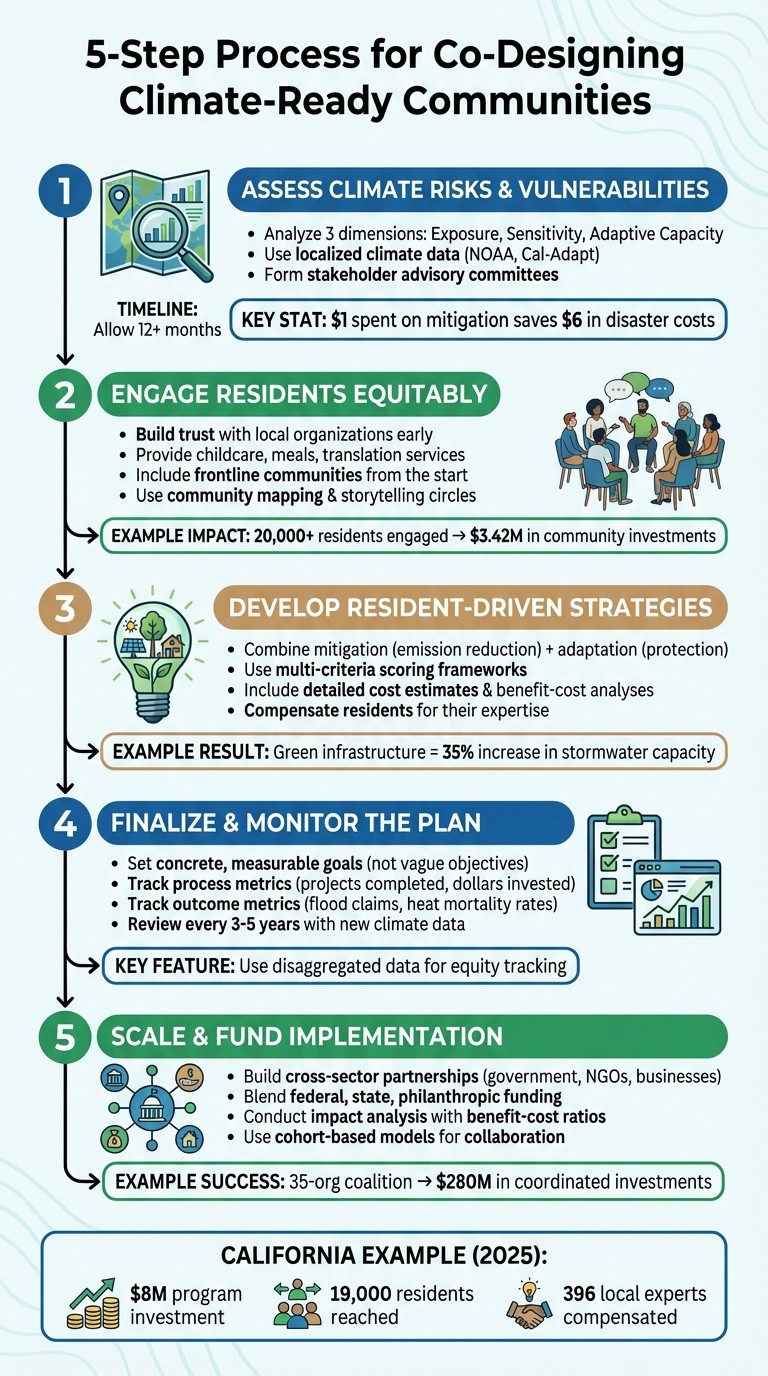
5-Step Process for Co-Designing Climate-Ready Communities with Residents
Co-Design for Resilience & Climate Justice: Nature-Based Solutions | Apr 2022
Step 1: Assess Community Climate Risks and Vulnerabilities
Start by focusing on projections that look ahead. Planning based on future climate data ensures risks aren't underestimated [6]. It's important for foundations to require consultants to employ tools like scenario planning, bracketing, or ensembles [5]. For resilience planning, prioritize RCP 8.5 - a higher emissions pathway that reflects current global trends - to better anticipate potential impacts [5].
The assessment should explore three key dimensions of vulnerability:
Exposure: Identify hazards such as floods, extreme heat, and wildfires using detailed, downscaled models.
Sensitivity: Evaluate how susceptible infrastructure and populations are to these hazards.
Adaptive Capacity: Assess available resources, including emergency plans and green infrastructure [1].
While technical analyses can highlight potential risks, involving local stakeholders is essential to fully understand how these risks affect community well-being. Cross-sector collaboration plays a crucial role here. For example, between February 2025 and February 2026, a Mid-Atlantic coastal city with 28,000 residents formed an 18-member stakeholder advisory committee. This group included representatives from the local NAACP chapter and a fishing cooperative. While technical modeling identified infrastructure vulnerabilities, the committee revealed a pressing issue that might have been overlooked: the combination of tidal flooding and contamination risks from a legacy Superfund-adjacent site in a historically Black neighborhood. This finding underscored the importance of integrating technical data with insights from community members [7].
Use Local Climate Data
Leverage localized climate projections from tools like NOAA Climate Explorer, Cal-Adapt, or state-specific assessments [1]. For instance, the Mid-Atlantic city used NOAA sea-level rise scenarios and LOCA2 precipitation data to model three scenarios (0.5m, 1.0m, and 1.5m sea-level rise by 2050). By overlaying these projections with GIS-based infrastructure data, they identified $4.2 billion worth of waterfront property at risk. This analysis helped secure $14.7 million in federal and state grants, achieving a benefit-cost ratio of 4.2:1 [7]. When preparing RFPs, ensure consultants present climate projections in formats that are accessible to both local leaders and residents, such as interactive online tools [5]. These insights, grounded in data, must then be combined with resident knowledge to define clear community priorities.
Identify Community Priorities
Once exposures, sensitivities, and adaptive capacities are identified, engaging residents ensures that mitigation strategies address real local needs. Host discussions in accessible spaces like community centers, churches, and schools to gather input [1]. In the Mid-Atlantic city example, a community survey with a 22% response rate, six neighborhood workshops (with childcare and Spanish translation), and a stakeholder advisory committee were key elements of their outreach efforts [7]. To encourage participation, compensate residents and provide support like childcare, meals, and translation services [8]. Use participatory methods such as community mapping, where residents mark hazards on maps, to uncover priorities that might not emerge from data alone. Allow at least 12 months for this assessment process to ensure thorough analysis and to build strong relationships with the community [5].
Step 2: Engage Residents Through Equitable Participation
After assessing risks, the next essential step is to ensure that residents - particularly those from frontline communities - have a meaningful role in decision-making. It’s crucial to amplify the voices of low-income households, minority groups, individuals who didn’t complete high school, and older adults [8]. Move away from expert-dominated discussions and foster peer-to-peer conversations that value lived experiences. By combining these insights with technical data, communities can co-design solutions that genuinely address local needs. This process builds the foundation for resilient communities shaped by those who live in them.
Build Trust with Residents
Trust isn’t built overnight. Form relationships with local organizations early in the planning process and hold workshops in spaces where residents feel comfortable. In Providence, Rhode Island, planners facilitated the creation of the Racial and Environmental Justice Committee. This independent group of community members ensures equity remains a priority throughout resilience planning, showing how structured engagement can drive long-term results [8].
To deepen connections, hire local organizers and neighborhood leaders. Break down barriers to participation by providing childcare, food, translation services, and travel support. For instance, Climate Resilient Communities (CRC) in the South Bay Area engaged over 20,000 residents through its "Climate Change Community Teams." These efforts led to $3.42 million in direct community investments as of early 2026 - proof of the impact of sustained and inclusive engagement [2].
Rebuilding trust also means addressing past neglect. Go beyond formal elected officials to involve informal community leaders. When direct representation isn’t feasible, such as with individuals experiencing homelessness, collaborate with trusted organizations to represent their interests [8].
Once trust is established, formal frameworks can guide inclusive and effective engagement.
Adopt Equitable Engagement Frameworks
Using frameworks like the Community-Driven Climate Resilience Planning Framework can help redirect resources to support marginalized groups [9]. This approach emphasizes including frontline communities - those most affected by climate change - right from the start, rather than bringing them in after decisions are already underway [8].
"Bona fide leaders and representatives of these groups must be included at the start of the decision-making process – not invited after the process is in motion."
– Climate Ready Communities [8]
Engagement methods like community mapping and storytelling circles can foster participation. Ensure ongoing dialogue rather than relying on one-time meetings, and provide follow-up reports to show how residents’ feedback has influenced decisions. A practical example comes from March 2018, when tribal planner Dena Winslow of the Aroostook Band of MicMacs in Maine used the Geos Institute's 7-step framework to form a task force. This group ensured continuous engagement around tribal priorities [8].
Step 3: Develop Resident-Driven Climate Resilience Strategies
Once residents are actively engaged, the next step is translating their input into practical, community-focused strategies. These plans should tackle genuine local concerns, such as improving air quality, creating job opportunities, enhancing neighborhood safety, and expanding access to green spaces. By building on the trust and collaboration already established, these strategies can turn community insights into tangible, measurable results.
Combine Mitigation and Adaptation
A well-rounded climate strategy tackles the problem from two angles. Mitigation slows the progression of climate change by cutting emissions, while adaptation minimizes the impact of changes already underway, protecting both people and infrastructure.
"Mitigation is the brakes – it will slow climate change and reduce the overall magnitude. Adaptation is the airbags – it will protect and cushion people and nature as climate change progresses. We need both."
– Climate Ready Communities [6]
Urban tree planting is a great example of this dual approach. Trees help absorb carbon dioxide (mitigation) while also cooling urban areas and managing stormwater runoff (adaptation). Similarly, green infrastructure solutions like bioswales and rain gardens can increase stormwater management capacity by 35% for 25-year storm events, while improving water quality and reducing the urban heat island effect [7]. These strategies offer immediate, visible benefits, making them easier for residents to support and fund.
Once effective mitigation and adaptation methods are identified, they should be tailored to align with the community's specific priorities.
Align Strategies with Community Needs
Climate resilience strategies should balance multiple factors, including hazard reduction, equity, cost-effectiveness, and added benefits like improved public health and restored ecosystems [7]. A multi-criteria scoring framework can help weigh these elements, ensuring they reflect the priorities identified during community engagement.
Take the example of a Mid-Atlantic coastal city with 28,000 residents. In February 2026, the city collaborated with Council Fire to create a resilience strategy aimed at protecting $4.2 billion in property value. The process involved three levels of community engagement: surveys, neighborhood workshops with childcare and translation services, and an 18-member stakeholder advisory committee. Residents in historically Black neighborhoods highlighted the intersection of flooding and legacy industrial contamination as a top concern. This led to a plan addressing these risks directly, which secured $14.7 million in grants. The city implemented a 1.2-mile living shoreline that reduced wave energy by 40–60% during storms, restored 8 acres of tidal wetland habitat, and established two community resilience hubs with backup power at a local church and community center [7].
To ensure strategies are ready for immediate funding opportunities, include detailed cost estimates and benefit-cost analyses that align with federal funding requirements. In the Mid-Atlantic city example, their FEMA BRIC application ranked in the top 15% nationally, with a benefit-cost ratio of 4.2:1 [7]. Recognizing and compensating local expertise is equally important - paying residents for their contributions and hiring local talent helps ensure these strategies remain rooted in real community experiences [1]. This approach transforms plans from static documents into actionable blueprints that residents can see through to completion.
Step 4: Finalize and Monitor the Co-Design Plan
Once resident-driven strategies are in place, the next step is to transform these ideas into a formal plan with clear accountability mechanisms. Without well-defined leadership roles, decision-making frameworks, and monitoring systems, even the most thoughtfully designed resilience plans can falter [7]. The aim is to create a dynamic, adaptable document that evolves over time, incorporating new climate data, insights from past experiences, and ongoing community input. Regular reviews every 3–5 years help keep the plan relevant and effective [1].
Set Clear Goals and Metrics
To ensure accountability, it’s crucial to formalize measurable objectives based on the strategies developed with residents. Concrete, actionable targets make a difference. For instance, instead of a vague goal like "improve stormwater management", a more precise objective could be: "Install 50 bioswales in flood-prone neighborhoods by 2027" [1]. Breaking the plan into immediate, near-term, medium-term, and long-term actions provides clarity and structure.
When setting goals, consider federal and state funding requirements from the start. A practical example comes from a Mid-Atlantic coastal city whose resilience plan secured substantial funding and delivered impressive results. Their projects included a 1.2-mile living shoreline that reduced wave energy by 40–60%, a 35% increase in stormwater capacity, the establishment of two community resilience hubs, and updated floodplain regulations requiring three feet of freeboard above the base flood elevation [7].
Integrating resilience goals into existing capital improvement plans and departmental budgets ensures they are treated as core priorities rather than standalone efforts [1][6]. Track progress using both process metrics (e.g., number of projects completed, dollars invested by area, and community engagement levels) and outcome metrics (e.g., reductions in flood insurance claims, heat-related mortality rates, and power outage durations). Disaggregated data is key to ensuring that benefits are distributed equitably, particularly for low-income and frontline communities.
Track Progress with Monitoring Tools
Setting goals is only the beginning - ongoing monitoring is critical to maintain momentum and measure success. The focus should remain on outcomes that matter to residents, rather than metrics designed solely for donors [11]. Regular progress reports should be accessible and easy for residents to understand. Community resilience hubs, such as local churches or community centers, can serve as central points for gathering data and providing feedback, especially during and after climate events [7].
Adaptive management cycles are essential. Revisit climate models and projections every 3–5 years to adjust goals based on the latest environmental data [1][10]. Include qualitative feedback methods like the "Most Significant Change" technique to capture personal stories and residents’ perceptions of safety, which may not be reflected in quantitative data [11]. This approach ensures that both technical performance and community feedback shape the plan, reinforcing the collaborative process.
It’s worth noting the financial benefits of proactive planning: FEMA estimates that every US$1 invested in hazard mitigation saves US$6 in disaster-related costs [1][6].
Step 5: Scale and Fund Implementation with Philanthropic Support
Once a plan is finalized and its progress is monitored, the next step is to expand its reach and secure the necessary funding. This phase involves leveraging resident-driven resilience plans and scaling them through strategic funding and partnerships that surpass the capacity of any single organization. Foundations and philanthropic organizations play a pivotal role in bringing these strategies to life. The most effective efforts combine multiple funding sources - federal grants, state resilience funds, municipal bonds, and private investments - while fostering partnerships that pool resources and prevent redundancy across sectors.
Build Cross-Sector Partnerships
Scaling climate resilience efforts requires coordination across sectors. When philanthropic organizations work alongside local governments, community groups, and technical experts, they create networks that share resources, identify overlapping benefits, and mitigate the risk of shifting burdens from one area to another [13][14][16]. A cohort-based model is particularly effective, allowing multiple communities to collaborate, prioritize strategies, and develop actionable plans with expert guidance. For instance, the Geos Institute’s Climate Ready Communities program exemplifies this approach. Since 2019, their free guidebook has been downloaded over 2,000 times, helping small to mid-sized communities craft resilience plans [13].
To maximize impact, foundations should invest in coalition-building and professional facilitation. One notable example occurred in February 2026, when a community foundation supported a coalition of 35 organizations - including municipalities, businesses, and NGOs - serving a population of 1.8 million. This regional climate compact secured $280 million in coordinated investments, including $48 million in FEMA and DOE grants. The coalition also launched a workforce program with an 85% job placement rate and introduced a community solar initiative that guarantees 15% savings for 2,400 low-income households [12].
A good starting point is conducting one-on-one interviews with leaders from various sectors to understand their priorities and gauge their interest in participating. Successful coalitions often revolve around "pragmatic leaders" who balance ambition with a focus on implementation, bridging the gap between cautious participants and more assertive advocates. Early successes, like pooled energy procurement that achieved renewable energy rates 18% below retail prices - saving $12 million annually - can build momentum and trust among partners [12].
These partnerships not only drive immediate results but also set the stage for thorough impact analysis, which is critical for attracting additional funding.
Use Impact Analysis to Attract Funding
Conducting an impact analysis highlights the environmental, social, and economic benefits of co-created climate solutions, making it easier to secure support from a variety of funders. To meet federal funding requirements, structure the analysis to include engineering-level cost estimates and benefit-cost analyses. FEMA, for example, has reported substantial savings from hazard mitigation, and many federal climate resilience grants cover 75% to 90% of total project costs [1].
A Mid-Atlantic coastal city demonstrated how a well-executed impact analysis can unlock multi-million-dollar funding by showcasing strong benefit-cost ratios [7].
To ensure equitable outcomes, use disaggregated data to track how investments benefit different groups, particularly frontline and low-income communities. Many modern grants require this level of transparency. Publishing annual progress reports with clear accountability measures can maintain funder interest and encourage peer accountability. Additionally, quantifying co-benefits - such as job creation, reduced insurance losses, and improved public health - further strengthens the case for funding and demonstrates the broader value of these initiatives.
Tools and Frameworks for Co-Design
When it comes to creating resident-led climate resilience plans, choosing the right co-design framework can make all the difference. A well-chosen framework not only ensures a plan is practical and fundable but also strikes a balance between equity and technical precision. Each framework brings unique strengths - some highlight community participation, while others focus on meeting grant criteria. The most effective strategies often combine elements from multiple approaches to meet both community needs and organizational goals. Below, we explore three prominent frameworks, each offering distinct benefits and applications.
Compare Co-Design Frameworks
Three frameworks stand out for their effectiveness in climate resilience co-design:
Whole Community Planning: Originating from Geos Institute's Climate Ready Communities program, this framework follows five steps: assess local conditions and climate trends, identify vulnerabilities across sectors, develop strategies with co-benefits, finalize the plan through community involvement, and implement it with cross-sector coordination to avoid shifting risks. This method integrates climate data across municipal departments, making it adaptable for communities of various sizes [16].
Equitable, Community-Driven Climate Preparedness Planning Framework: Developed by the Urban Sustainability Directors Network (USDN), this seven-step framework emphasizes partnerships with community members. It prioritizes addressing unequal impacts by focusing on frontline communities, such as lower-income residents and communities of color, through inclusive collaboration and targeted solutions [15]. This approach is particularly appealing to organizations focused on environmental justice.
Council Fire's Stakeholder Engagement: Combining technical rigor with community-focused planning, this three-tiered approach includes broad surveys, neighborhood workshops (with childcare and translation services), and advisory committees. It uses NOAA’s downscaled climate models alongside CDC Social Vulnerability Index data to identify where climate risks overlap with socioeconomic vulnerabilities. A key feature of this framework is its ability to produce "grant-ready" plans by aligning assessments and projects with federal funding requirements like FEMA BRIC [7].
Framework | Key Steps | Equity Focus | Scalability Advantages |
|---|---|---|---|
Whole Community Planning [16] | Assess vulnerabilities; engage community; prioritize co-benefits; finalize and monitor plans | Prevents risk-shifting through cross-sector collaboration; addresses community-wide needs | Integrates climate data into municipal planning; works well for mitigation efforts |
Equitable Preparedness (USDN) [15] | Build partnerships; assess risks; develop equity-centered solutions | Focuses on frontline communities, addressing disproportionate impacts | Scalable strategies for equitable and sustainable outcomes |
Council Fire Stakeholder Engagement [7] | Surveys, workshops, and advisory committees; integrates GIS and modeling; implementation roadmap | Maps climate risks with socioeconomic vulnerabilities; emphasizes inclusive engagement | Produces "grant-ready" plans aligned with federal funding and creates actionable project pipelines |
Practical Application: Council Fire in Action
A Mid-Atlantic coastal city with 28,000 residents demonstrated the effectiveness of Council Fire’s approach in February 2026. Over 14 months, the city combined EPA SWMM modeling with Council Fire’s three-tier engagement strategy, achieving a 22% survey response rate - well above the norm for municipal planning. This process led to a plan that secured $14.7 million in grants within 18 months, with the FEMA BRIC application ranking in the top 15% nationally. Tangible results included 1.2 miles of living shoreline, the restoration of 8 acres of tidal wetlands, and the establishment of community resilience hubs at a local center and church [7].
Choosing the Right Framework
Your framework choice should align with your organization’s goals. If securing federal funding is the priority, Council Fire’s structured, grant-focused approach is ideal. For those aiming to build trust and address historical inequities, USDN’s equity-driven methodology is a better fit. Smaller communities seeking a straightforward and effective starting point may find Whole Community Planning most accessible. Each framework offers a path to actionable, community-centered resilience planning tailored to different needs and priorities.
Conclusion
Creating communities that can withstand climate challenges requires more than just technical know-how - it calls for genuine collaboration among foundations, residents, and local organizations. The most effective initiatives focus on historically underserved populations, fairly compensate residents for their contributions, and use frameworks that balance equity with practical funding needs. Abby Edwards, Senior Deputy Director of the Governor's Office of Land Use and Climate Innovation, highlighted the impact of such an approach after the state's $8 million Adaptation Planning Grant Program:
"APGP showed us what is possible when communities are resourced to lead climate resilience planning. The result wasn't just plans but it was stronger partnerships, deeper community engagement, and strategies rooted in the realities people face every day" [4].
To move forward, it’s essential to build on existing community frameworks while bringing together diverse expertise to create plans that are both fair and actionable. A three-partner model - uniting technical experts, community-based organizations, and local governments - has proven effective in producing equitable strategies [17]. Philanthropic organizations play a key role by funding early-stage ideas and supporting approaches that traditional funding sources might avoid [18]. For example, the Climate Smart Communities Initiative’s $2.2 million investment in 21 communities in August 2025 highlighted how well-targeted grants can spark larger investments and accelerate local progress [3].
The benefits of proactive resilience planning are clear, especially when strategies tackle multiple risks at once and deliver additional advantages like better public health, job creation, and stronger community ties. Ensuring success also means pairing green infrastructure projects with protections for affordable housing to avoid displacing vulnerable residents [1]. Setting measurable goals - such as reducing heat-related illnesses - and regularly updating plans based on the latest climate data and community feedback every 3–5 years ensures continuous improvement [1].
Together, these strategies provide a powerful guide for action. The way forward is evident: prioritize frontline communities, integrate varied funding sources, and build lasting local capacity. When foundations commit to supporting resident-led efforts with the right tools and long-term backing, they don’t just create climate-ready infrastructure - they help build communities equipped for resilience, strengthened by social bonds and governance structures that endure [1][17].
FAQs
How do we pay residents fairly for co-design work?
Fair compensation for residents means valuing their time, skills, and contributions. Start by estimating the time commitment and use comparable roles as benchmarks to determine appropriate payment. Be prepared to adjust compensation as necessary to reflect the scope of their involvement.
Provide straightforward and flexible payment options, such as cash or gift cards, and clearly communicate when payments will be made. Avoid linking payments to specific milestones, as this can create unnecessary stress. Instead, ensure payments are made promptly and consistently. Actively seek feedback from residents to maintain trust and refine the process, ensuring fairness for everyone involved.
What climate data should we use for local planning?
For local planning efforts, leverage climate data sources such as Local Climatological Data (LCD) from NOAA, which provide detailed summaries of temperature, precipitation, and weather patterns. To explore both historical and recent climate records, NOAA's Climate Data Online is an invaluable resource. For insights into future conditions, consider using downscaled climate models available through tools like NOAA Climate Explorer. These resources are essential for identifying potential vulnerabilities and crafting strategies to build resilience effectively.
How do we make a plan “grant-ready” for funding?
To ensure your plan is "grant-ready", focus on fostering genuine community involvement and conducting detailed preparation. Engage residents and partners early in the process, allowing their feedback to guide the project's direction. Work on building trust by addressing obstacles to participation and ensuring the goals reflect the community’s priorities. Collaborate with residents to carry out vulnerability assessments and pinpoint potential climate hazards. These efforts showcase a commitment to inclusion and align with funding requirements that emphasize community engagement and measurable impact.
Related Blog Posts
How to Build a Climate Resilience Plan for Foundations & Philanthropic Organizations
How to Design Coastal Resilience & Flood Mitigation for Foundations & Philanthropic Organizations
How to Co-Design Climate-Ready Communities with Residents for Municipalities & Government Agencies
How to Co-Design Climate-Ready Communities with Residents for NGOs & Nonprofits
Latest Articles
©2025

Narrative Change and Power Building: The Missing Half of Advocacy
Narrative change is the process of disrupting dominant narratives that normalize inequity and advancing new narratives from historically marginalized communities.

Funding Resilience Without Federal Grants
BRIC is unreliable and FEMA is shrinking. Here's how cities fund climate resilience with dedicated revenue, blended finance, and a coordinating authority.

The ESG Blind Spot: How AI Is Finding Risks in Companies Nobody Else Is Watching
Norway's sovereign wealth fund uses AI to screen 7,200 portfolio companies for forced labor and corruption within 24 hours. The real story is the emerging-market coverage gap that traditional ESG data vendors miss — and what it means for any company with a global supply chain.
Narrative Change and Power Building: The Missing Half of Advocacy
Narrative change is the process of disrupting dominant narratives that normalize inequity and advancing new narratives from historically marginalized communities.
Funding Resilience Without Federal Grants
BRIC is unreliable and FEMA is shrinking. Here's how cities fund climate resilience with dedicated revenue, blended finance, and a coordinating authority.
The ESG Blind Spot: How AI Is Finding Risks in Companies Nobody Else Is Watching
Norway's sovereign wealth fund uses AI to screen 7,200 portfolio companies for forced labor and corruption within 24 hours. The real story is the emerging-market coverage gap that traditional ESG data vendors miss — and what it means for any company with a global supply chain.
FAQ
01
What does it really mean to “redefine profit”?
02
What makes Council Fire different?
03
Who does Council Fire work with?
04
What does working with Council Fire actually look like?
05
How does Council Fire help organizations turn big goals into action?
06
How does Council Fire define and measure success?
Apr 2, 2026
How to Co-Design Climate-Ready Communities with Residents for Foundations & Philanthropic Organizations
Sustainability Strategy
In This Article
Guide for foundations to co-design resident-led climate resilience plans, from risk assessment to funding and monitoring.
How to Co-Design Climate-Ready Communities with Residents for Foundations & Philanthropic Organizations
Climate change demands a new approach to community planning - one that actively involves residents in shaping solutions. Co-design empowers communities by integrating local knowledge with technical data to address climate risks effectively. This method prioritizes social connections, equitable resource distribution, and governance systems tailored to those most vulnerable.
Key Takeaways:
Resident-Centric Planning: Engage communities through tools like mapping, storytelling, and workshops to reflect lived experiences.
Economic Impact: Every $1 spent on mitigation saves $6 in disaster costs. Example: California's $8M program reached nearly 19,000 residents and compensated 396 local experts.
Data-Driven Decisions: Use localized projections (e.g., NOAA, Cal-Adapt) to assess exposure, sensitivity, and adaptive capacity.
Equity in Action: Include marginalized groups from the start, provide childcare, meals, and translation, and compensate participants.
Actionable Strategies: Combine mitigation (e.g., emission reduction) with adaptation (e.g., green infrastructure) for dual benefits.
Funding and Partnerships: Blend federal, state, and philanthropic funding with cross-sector collaboration to scale efforts.
This approach builds trust, secures funding, and ensures plans are practical and community-driven.
5-Step Process for Co-Designing Climate-Ready Communities with Residents
Co-Design for Resilience & Climate Justice: Nature-Based Solutions | Apr 2022
Step 1: Assess Community Climate Risks and Vulnerabilities
Start by focusing on projections that look ahead. Planning based on future climate data ensures risks aren't underestimated [6]. It's important for foundations to require consultants to employ tools like scenario planning, bracketing, or ensembles [5]. For resilience planning, prioritize RCP 8.5 - a higher emissions pathway that reflects current global trends - to better anticipate potential impacts [5].
The assessment should explore three key dimensions of vulnerability:
Exposure: Identify hazards such as floods, extreme heat, and wildfires using detailed, downscaled models.
Sensitivity: Evaluate how susceptible infrastructure and populations are to these hazards.
Adaptive Capacity: Assess available resources, including emergency plans and green infrastructure [1].
While technical analyses can highlight potential risks, involving local stakeholders is essential to fully understand how these risks affect community well-being. Cross-sector collaboration plays a crucial role here. For example, between February 2025 and February 2026, a Mid-Atlantic coastal city with 28,000 residents formed an 18-member stakeholder advisory committee. This group included representatives from the local NAACP chapter and a fishing cooperative. While technical modeling identified infrastructure vulnerabilities, the committee revealed a pressing issue that might have been overlooked: the combination of tidal flooding and contamination risks from a legacy Superfund-adjacent site in a historically Black neighborhood. This finding underscored the importance of integrating technical data with insights from community members [7].
Use Local Climate Data
Leverage localized climate projections from tools like NOAA Climate Explorer, Cal-Adapt, or state-specific assessments [1]. For instance, the Mid-Atlantic city used NOAA sea-level rise scenarios and LOCA2 precipitation data to model three scenarios (0.5m, 1.0m, and 1.5m sea-level rise by 2050). By overlaying these projections with GIS-based infrastructure data, they identified $4.2 billion worth of waterfront property at risk. This analysis helped secure $14.7 million in federal and state grants, achieving a benefit-cost ratio of 4.2:1 [7]. When preparing RFPs, ensure consultants present climate projections in formats that are accessible to both local leaders and residents, such as interactive online tools [5]. These insights, grounded in data, must then be combined with resident knowledge to define clear community priorities.
Identify Community Priorities
Once exposures, sensitivities, and adaptive capacities are identified, engaging residents ensures that mitigation strategies address real local needs. Host discussions in accessible spaces like community centers, churches, and schools to gather input [1]. In the Mid-Atlantic city example, a community survey with a 22% response rate, six neighborhood workshops (with childcare and Spanish translation), and a stakeholder advisory committee were key elements of their outreach efforts [7]. To encourage participation, compensate residents and provide support like childcare, meals, and translation services [8]. Use participatory methods such as community mapping, where residents mark hazards on maps, to uncover priorities that might not emerge from data alone. Allow at least 12 months for this assessment process to ensure thorough analysis and to build strong relationships with the community [5].
Step 2: Engage Residents Through Equitable Participation
After assessing risks, the next essential step is to ensure that residents - particularly those from frontline communities - have a meaningful role in decision-making. It’s crucial to amplify the voices of low-income households, minority groups, individuals who didn’t complete high school, and older adults [8]. Move away from expert-dominated discussions and foster peer-to-peer conversations that value lived experiences. By combining these insights with technical data, communities can co-design solutions that genuinely address local needs. This process builds the foundation for resilient communities shaped by those who live in them.
Build Trust with Residents
Trust isn’t built overnight. Form relationships with local organizations early in the planning process and hold workshops in spaces where residents feel comfortable. In Providence, Rhode Island, planners facilitated the creation of the Racial and Environmental Justice Committee. This independent group of community members ensures equity remains a priority throughout resilience planning, showing how structured engagement can drive long-term results [8].
To deepen connections, hire local organizers and neighborhood leaders. Break down barriers to participation by providing childcare, food, translation services, and travel support. For instance, Climate Resilient Communities (CRC) in the South Bay Area engaged over 20,000 residents through its "Climate Change Community Teams." These efforts led to $3.42 million in direct community investments as of early 2026 - proof of the impact of sustained and inclusive engagement [2].
Rebuilding trust also means addressing past neglect. Go beyond formal elected officials to involve informal community leaders. When direct representation isn’t feasible, such as with individuals experiencing homelessness, collaborate with trusted organizations to represent their interests [8].
Once trust is established, formal frameworks can guide inclusive and effective engagement.
Adopt Equitable Engagement Frameworks
Using frameworks like the Community-Driven Climate Resilience Planning Framework can help redirect resources to support marginalized groups [9]. This approach emphasizes including frontline communities - those most affected by climate change - right from the start, rather than bringing them in after decisions are already underway [8].
"Bona fide leaders and representatives of these groups must be included at the start of the decision-making process – not invited after the process is in motion."
– Climate Ready Communities [8]
Engagement methods like community mapping and storytelling circles can foster participation. Ensure ongoing dialogue rather than relying on one-time meetings, and provide follow-up reports to show how residents’ feedback has influenced decisions. A practical example comes from March 2018, when tribal planner Dena Winslow of the Aroostook Band of MicMacs in Maine used the Geos Institute's 7-step framework to form a task force. This group ensured continuous engagement around tribal priorities [8].
Step 3: Develop Resident-Driven Climate Resilience Strategies
Once residents are actively engaged, the next step is translating their input into practical, community-focused strategies. These plans should tackle genuine local concerns, such as improving air quality, creating job opportunities, enhancing neighborhood safety, and expanding access to green spaces. By building on the trust and collaboration already established, these strategies can turn community insights into tangible, measurable results.
Combine Mitigation and Adaptation
A well-rounded climate strategy tackles the problem from two angles. Mitigation slows the progression of climate change by cutting emissions, while adaptation minimizes the impact of changes already underway, protecting both people and infrastructure.
"Mitigation is the brakes – it will slow climate change and reduce the overall magnitude. Adaptation is the airbags – it will protect and cushion people and nature as climate change progresses. We need both."
– Climate Ready Communities [6]
Urban tree planting is a great example of this dual approach. Trees help absorb carbon dioxide (mitigation) while also cooling urban areas and managing stormwater runoff (adaptation). Similarly, green infrastructure solutions like bioswales and rain gardens can increase stormwater management capacity by 35% for 25-year storm events, while improving water quality and reducing the urban heat island effect [7]. These strategies offer immediate, visible benefits, making them easier for residents to support and fund.
Once effective mitigation and adaptation methods are identified, they should be tailored to align with the community's specific priorities.
Align Strategies with Community Needs
Climate resilience strategies should balance multiple factors, including hazard reduction, equity, cost-effectiveness, and added benefits like improved public health and restored ecosystems [7]. A multi-criteria scoring framework can help weigh these elements, ensuring they reflect the priorities identified during community engagement.
Take the example of a Mid-Atlantic coastal city with 28,000 residents. In February 2026, the city collaborated with Council Fire to create a resilience strategy aimed at protecting $4.2 billion in property value. The process involved three levels of community engagement: surveys, neighborhood workshops with childcare and translation services, and an 18-member stakeholder advisory committee. Residents in historically Black neighborhoods highlighted the intersection of flooding and legacy industrial contamination as a top concern. This led to a plan addressing these risks directly, which secured $14.7 million in grants. The city implemented a 1.2-mile living shoreline that reduced wave energy by 40–60% during storms, restored 8 acres of tidal wetland habitat, and established two community resilience hubs with backup power at a local church and community center [7].
To ensure strategies are ready for immediate funding opportunities, include detailed cost estimates and benefit-cost analyses that align with federal funding requirements. In the Mid-Atlantic city example, their FEMA BRIC application ranked in the top 15% nationally, with a benefit-cost ratio of 4.2:1 [7]. Recognizing and compensating local expertise is equally important - paying residents for their contributions and hiring local talent helps ensure these strategies remain rooted in real community experiences [1]. This approach transforms plans from static documents into actionable blueprints that residents can see through to completion.
Step 4: Finalize and Monitor the Co-Design Plan
Once resident-driven strategies are in place, the next step is to transform these ideas into a formal plan with clear accountability mechanisms. Without well-defined leadership roles, decision-making frameworks, and monitoring systems, even the most thoughtfully designed resilience plans can falter [7]. The aim is to create a dynamic, adaptable document that evolves over time, incorporating new climate data, insights from past experiences, and ongoing community input. Regular reviews every 3–5 years help keep the plan relevant and effective [1].
Set Clear Goals and Metrics
To ensure accountability, it’s crucial to formalize measurable objectives based on the strategies developed with residents. Concrete, actionable targets make a difference. For instance, instead of a vague goal like "improve stormwater management", a more precise objective could be: "Install 50 bioswales in flood-prone neighborhoods by 2027" [1]. Breaking the plan into immediate, near-term, medium-term, and long-term actions provides clarity and structure.
When setting goals, consider federal and state funding requirements from the start. A practical example comes from a Mid-Atlantic coastal city whose resilience plan secured substantial funding and delivered impressive results. Their projects included a 1.2-mile living shoreline that reduced wave energy by 40–60%, a 35% increase in stormwater capacity, the establishment of two community resilience hubs, and updated floodplain regulations requiring three feet of freeboard above the base flood elevation [7].
Integrating resilience goals into existing capital improvement plans and departmental budgets ensures they are treated as core priorities rather than standalone efforts [1][6]. Track progress using both process metrics (e.g., number of projects completed, dollars invested by area, and community engagement levels) and outcome metrics (e.g., reductions in flood insurance claims, heat-related mortality rates, and power outage durations). Disaggregated data is key to ensuring that benefits are distributed equitably, particularly for low-income and frontline communities.
Track Progress with Monitoring Tools
Setting goals is only the beginning - ongoing monitoring is critical to maintain momentum and measure success. The focus should remain on outcomes that matter to residents, rather than metrics designed solely for donors [11]. Regular progress reports should be accessible and easy for residents to understand. Community resilience hubs, such as local churches or community centers, can serve as central points for gathering data and providing feedback, especially during and after climate events [7].
Adaptive management cycles are essential. Revisit climate models and projections every 3–5 years to adjust goals based on the latest environmental data [1][10]. Include qualitative feedback methods like the "Most Significant Change" technique to capture personal stories and residents’ perceptions of safety, which may not be reflected in quantitative data [11]. This approach ensures that both technical performance and community feedback shape the plan, reinforcing the collaborative process.
It’s worth noting the financial benefits of proactive planning: FEMA estimates that every US$1 invested in hazard mitigation saves US$6 in disaster-related costs [1][6].
Step 5: Scale and Fund Implementation with Philanthropic Support
Once a plan is finalized and its progress is monitored, the next step is to expand its reach and secure the necessary funding. This phase involves leveraging resident-driven resilience plans and scaling them through strategic funding and partnerships that surpass the capacity of any single organization. Foundations and philanthropic organizations play a pivotal role in bringing these strategies to life. The most effective efforts combine multiple funding sources - federal grants, state resilience funds, municipal bonds, and private investments - while fostering partnerships that pool resources and prevent redundancy across sectors.
Build Cross-Sector Partnerships
Scaling climate resilience efforts requires coordination across sectors. When philanthropic organizations work alongside local governments, community groups, and technical experts, they create networks that share resources, identify overlapping benefits, and mitigate the risk of shifting burdens from one area to another [13][14][16]. A cohort-based model is particularly effective, allowing multiple communities to collaborate, prioritize strategies, and develop actionable plans with expert guidance. For instance, the Geos Institute’s Climate Ready Communities program exemplifies this approach. Since 2019, their free guidebook has been downloaded over 2,000 times, helping small to mid-sized communities craft resilience plans [13].
To maximize impact, foundations should invest in coalition-building and professional facilitation. One notable example occurred in February 2026, when a community foundation supported a coalition of 35 organizations - including municipalities, businesses, and NGOs - serving a population of 1.8 million. This regional climate compact secured $280 million in coordinated investments, including $48 million in FEMA and DOE grants. The coalition also launched a workforce program with an 85% job placement rate and introduced a community solar initiative that guarantees 15% savings for 2,400 low-income households [12].
A good starting point is conducting one-on-one interviews with leaders from various sectors to understand their priorities and gauge their interest in participating. Successful coalitions often revolve around "pragmatic leaders" who balance ambition with a focus on implementation, bridging the gap between cautious participants and more assertive advocates. Early successes, like pooled energy procurement that achieved renewable energy rates 18% below retail prices - saving $12 million annually - can build momentum and trust among partners [12].
These partnerships not only drive immediate results but also set the stage for thorough impact analysis, which is critical for attracting additional funding.
Use Impact Analysis to Attract Funding
Conducting an impact analysis highlights the environmental, social, and economic benefits of co-created climate solutions, making it easier to secure support from a variety of funders. To meet federal funding requirements, structure the analysis to include engineering-level cost estimates and benefit-cost analyses. FEMA, for example, has reported substantial savings from hazard mitigation, and many federal climate resilience grants cover 75% to 90% of total project costs [1].
A Mid-Atlantic coastal city demonstrated how a well-executed impact analysis can unlock multi-million-dollar funding by showcasing strong benefit-cost ratios [7].
To ensure equitable outcomes, use disaggregated data to track how investments benefit different groups, particularly frontline and low-income communities. Many modern grants require this level of transparency. Publishing annual progress reports with clear accountability measures can maintain funder interest and encourage peer accountability. Additionally, quantifying co-benefits - such as job creation, reduced insurance losses, and improved public health - further strengthens the case for funding and demonstrates the broader value of these initiatives.
Tools and Frameworks for Co-Design
When it comes to creating resident-led climate resilience plans, choosing the right co-design framework can make all the difference. A well-chosen framework not only ensures a plan is practical and fundable but also strikes a balance between equity and technical precision. Each framework brings unique strengths - some highlight community participation, while others focus on meeting grant criteria. The most effective strategies often combine elements from multiple approaches to meet both community needs and organizational goals. Below, we explore three prominent frameworks, each offering distinct benefits and applications.
Compare Co-Design Frameworks
Three frameworks stand out for their effectiveness in climate resilience co-design:
Whole Community Planning: Originating from Geos Institute's Climate Ready Communities program, this framework follows five steps: assess local conditions and climate trends, identify vulnerabilities across sectors, develop strategies with co-benefits, finalize the plan through community involvement, and implement it with cross-sector coordination to avoid shifting risks. This method integrates climate data across municipal departments, making it adaptable for communities of various sizes [16].
Equitable, Community-Driven Climate Preparedness Planning Framework: Developed by the Urban Sustainability Directors Network (USDN), this seven-step framework emphasizes partnerships with community members. It prioritizes addressing unequal impacts by focusing on frontline communities, such as lower-income residents and communities of color, through inclusive collaboration and targeted solutions [15]. This approach is particularly appealing to organizations focused on environmental justice.
Council Fire's Stakeholder Engagement: Combining technical rigor with community-focused planning, this three-tiered approach includes broad surveys, neighborhood workshops (with childcare and translation services), and advisory committees. It uses NOAA’s downscaled climate models alongside CDC Social Vulnerability Index data to identify where climate risks overlap with socioeconomic vulnerabilities. A key feature of this framework is its ability to produce "grant-ready" plans by aligning assessments and projects with federal funding requirements like FEMA BRIC [7].
Framework | Key Steps | Equity Focus | Scalability Advantages |
|---|---|---|---|
Whole Community Planning [16] | Assess vulnerabilities; engage community; prioritize co-benefits; finalize and monitor plans | Prevents risk-shifting through cross-sector collaboration; addresses community-wide needs | Integrates climate data into municipal planning; works well for mitigation efforts |
Equitable Preparedness (USDN) [15] | Build partnerships; assess risks; develop equity-centered solutions | Focuses on frontline communities, addressing disproportionate impacts | Scalable strategies for equitable and sustainable outcomes |
Council Fire Stakeholder Engagement [7] | Surveys, workshops, and advisory committees; integrates GIS and modeling; implementation roadmap | Maps climate risks with socioeconomic vulnerabilities; emphasizes inclusive engagement | Produces "grant-ready" plans aligned with federal funding and creates actionable project pipelines |
Practical Application: Council Fire in Action
A Mid-Atlantic coastal city with 28,000 residents demonstrated the effectiveness of Council Fire’s approach in February 2026. Over 14 months, the city combined EPA SWMM modeling with Council Fire’s three-tier engagement strategy, achieving a 22% survey response rate - well above the norm for municipal planning. This process led to a plan that secured $14.7 million in grants within 18 months, with the FEMA BRIC application ranking in the top 15% nationally. Tangible results included 1.2 miles of living shoreline, the restoration of 8 acres of tidal wetlands, and the establishment of community resilience hubs at a local center and church [7].
Choosing the Right Framework
Your framework choice should align with your organization’s goals. If securing federal funding is the priority, Council Fire’s structured, grant-focused approach is ideal. For those aiming to build trust and address historical inequities, USDN’s equity-driven methodology is a better fit. Smaller communities seeking a straightforward and effective starting point may find Whole Community Planning most accessible. Each framework offers a path to actionable, community-centered resilience planning tailored to different needs and priorities.
Conclusion
Creating communities that can withstand climate challenges requires more than just technical know-how - it calls for genuine collaboration among foundations, residents, and local organizations. The most effective initiatives focus on historically underserved populations, fairly compensate residents for their contributions, and use frameworks that balance equity with practical funding needs. Abby Edwards, Senior Deputy Director of the Governor's Office of Land Use and Climate Innovation, highlighted the impact of such an approach after the state's $8 million Adaptation Planning Grant Program:
"APGP showed us what is possible when communities are resourced to lead climate resilience planning. The result wasn't just plans but it was stronger partnerships, deeper community engagement, and strategies rooted in the realities people face every day" [4].
To move forward, it’s essential to build on existing community frameworks while bringing together diverse expertise to create plans that are both fair and actionable. A three-partner model - uniting technical experts, community-based organizations, and local governments - has proven effective in producing equitable strategies [17]. Philanthropic organizations play a key role by funding early-stage ideas and supporting approaches that traditional funding sources might avoid [18]. For example, the Climate Smart Communities Initiative’s $2.2 million investment in 21 communities in August 2025 highlighted how well-targeted grants can spark larger investments and accelerate local progress [3].
The benefits of proactive resilience planning are clear, especially when strategies tackle multiple risks at once and deliver additional advantages like better public health, job creation, and stronger community ties. Ensuring success also means pairing green infrastructure projects with protections for affordable housing to avoid displacing vulnerable residents [1]. Setting measurable goals - such as reducing heat-related illnesses - and regularly updating plans based on the latest climate data and community feedback every 3–5 years ensures continuous improvement [1].
Together, these strategies provide a powerful guide for action. The way forward is evident: prioritize frontline communities, integrate varied funding sources, and build lasting local capacity. When foundations commit to supporting resident-led efforts with the right tools and long-term backing, they don’t just create climate-ready infrastructure - they help build communities equipped for resilience, strengthened by social bonds and governance structures that endure [1][17].
FAQs
How do we pay residents fairly for co-design work?
Fair compensation for residents means valuing their time, skills, and contributions. Start by estimating the time commitment and use comparable roles as benchmarks to determine appropriate payment. Be prepared to adjust compensation as necessary to reflect the scope of their involvement.
Provide straightforward and flexible payment options, such as cash or gift cards, and clearly communicate when payments will be made. Avoid linking payments to specific milestones, as this can create unnecessary stress. Instead, ensure payments are made promptly and consistently. Actively seek feedback from residents to maintain trust and refine the process, ensuring fairness for everyone involved.
What climate data should we use for local planning?
For local planning efforts, leverage climate data sources such as Local Climatological Data (LCD) from NOAA, which provide detailed summaries of temperature, precipitation, and weather patterns. To explore both historical and recent climate records, NOAA's Climate Data Online is an invaluable resource. For insights into future conditions, consider using downscaled climate models available through tools like NOAA Climate Explorer. These resources are essential for identifying potential vulnerabilities and crafting strategies to build resilience effectively.
How do we make a plan “grant-ready” for funding?
To ensure your plan is "grant-ready", focus on fostering genuine community involvement and conducting detailed preparation. Engage residents and partners early in the process, allowing their feedback to guide the project's direction. Work on building trust by addressing obstacles to participation and ensuring the goals reflect the community’s priorities. Collaborate with residents to carry out vulnerability assessments and pinpoint potential climate hazards. These efforts showcase a commitment to inclusion and align with funding requirements that emphasize community engagement and measurable impact.
Related Blog Posts
How to Build a Climate Resilience Plan for Foundations & Philanthropic Organizations
How to Design Coastal Resilience & Flood Mitigation for Foundations & Philanthropic Organizations
How to Co-Design Climate-Ready Communities with Residents for Municipalities & Government Agencies
How to Co-Design Climate-Ready Communities with Residents for NGOs & Nonprofits
Latest Articles
©2025
Narrative Change and Power Building: The Missing Half of Advocacy
Narrative change is the process of disrupting dominant narratives that normalize inequity and advancing new narratives from historically marginalized communities.
Funding Resilience Without Federal Grants
BRIC is unreliable and FEMA is shrinking. Here's how cities fund climate resilience with dedicated revenue, blended finance, and a coordinating authority.
The ESG Blind Spot: How AI Is Finding Risks in Companies Nobody Else Is Watching
Norway's sovereign wealth fund uses AI to screen 7,200 portfolio companies for forced labor and corruption within 24 hours. The real story is the emerging-market coverage gap that traditional ESG data vendors miss — and what it means for any company with a global supply chain.
FAQ
01
What does it really mean to “redefine profit”?
02
What makes Council Fire different?
03
Who does Council Fire work with?
04
What does working with Council Fire actually look like?
05
How does Council Fire help organizations turn big goals into action?
06
How does Council Fire define and measure success?
Apr 2, 2026
How to Co-Design Climate-Ready Communities with Residents for Foundations & Philanthropic Organizations
Sustainability Strategy
In This Article
Guide for foundations to co-design resident-led climate resilience plans, from risk assessment to funding and monitoring.
How to Co-Design Climate-Ready Communities with Residents for Foundations & Philanthropic Organizations
Climate change demands a new approach to community planning - one that actively involves residents in shaping solutions. Co-design empowers communities by integrating local knowledge with technical data to address climate risks effectively. This method prioritizes social connections, equitable resource distribution, and governance systems tailored to those most vulnerable.
Key Takeaways:
Resident-Centric Planning: Engage communities through tools like mapping, storytelling, and workshops to reflect lived experiences.
Economic Impact: Every $1 spent on mitigation saves $6 in disaster costs. Example: California's $8M program reached nearly 19,000 residents and compensated 396 local experts.
Data-Driven Decisions: Use localized projections (e.g., NOAA, Cal-Adapt) to assess exposure, sensitivity, and adaptive capacity.
Equity in Action: Include marginalized groups from the start, provide childcare, meals, and translation, and compensate participants.
Actionable Strategies: Combine mitigation (e.g., emission reduction) with adaptation (e.g., green infrastructure) for dual benefits.
Funding and Partnerships: Blend federal, state, and philanthropic funding with cross-sector collaboration to scale efforts.
This approach builds trust, secures funding, and ensures plans are practical and community-driven.
5-Step Process for Co-Designing Climate-Ready Communities with Residents
Co-Design for Resilience & Climate Justice: Nature-Based Solutions | Apr 2022
Step 1: Assess Community Climate Risks and Vulnerabilities
Start by focusing on projections that look ahead. Planning based on future climate data ensures risks aren't underestimated [6]. It's important for foundations to require consultants to employ tools like scenario planning, bracketing, or ensembles [5]. For resilience planning, prioritize RCP 8.5 - a higher emissions pathway that reflects current global trends - to better anticipate potential impacts [5].
The assessment should explore three key dimensions of vulnerability:
Exposure: Identify hazards such as floods, extreme heat, and wildfires using detailed, downscaled models.
Sensitivity: Evaluate how susceptible infrastructure and populations are to these hazards.
Adaptive Capacity: Assess available resources, including emergency plans and green infrastructure [1].
While technical analyses can highlight potential risks, involving local stakeholders is essential to fully understand how these risks affect community well-being. Cross-sector collaboration plays a crucial role here. For example, between February 2025 and February 2026, a Mid-Atlantic coastal city with 28,000 residents formed an 18-member stakeholder advisory committee. This group included representatives from the local NAACP chapter and a fishing cooperative. While technical modeling identified infrastructure vulnerabilities, the committee revealed a pressing issue that might have been overlooked: the combination of tidal flooding and contamination risks from a legacy Superfund-adjacent site in a historically Black neighborhood. This finding underscored the importance of integrating technical data with insights from community members [7].
Use Local Climate Data
Leverage localized climate projections from tools like NOAA Climate Explorer, Cal-Adapt, or state-specific assessments [1]. For instance, the Mid-Atlantic city used NOAA sea-level rise scenarios and LOCA2 precipitation data to model three scenarios (0.5m, 1.0m, and 1.5m sea-level rise by 2050). By overlaying these projections with GIS-based infrastructure data, they identified $4.2 billion worth of waterfront property at risk. This analysis helped secure $14.7 million in federal and state grants, achieving a benefit-cost ratio of 4.2:1 [7]. When preparing RFPs, ensure consultants present climate projections in formats that are accessible to both local leaders and residents, such as interactive online tools [5]. These insights, grounded in data, must then be combined with resident knowledge to define clear community priorities.
Identify Community Priorities
Once exposures, sensitivities, and adaptive capacities are identified, engaging residents ensures that mitigation strategies address real local needs. Host discussions in accessible spaces like community centers, churches, and schools to gather input [1]. In the Mid-Atlantic city example, a community survey with a 22% response rate, six neighborhood workshops (with childcare and Spanish translation), and a stakeholder advisory committee were key elements of their outreach efforts [7]. To encourage participation, compensate residents and provide support like childcare, meals, and translation services [8]. Use participatory methods such as community mapping, where residents mark hazards on maps, to uncover priorities that might not emerge from data alone. Allow at least 12 months for this assessment process to ensure thorough analysis and to build strong relationships with the community [5].
Step 2: Engage Residents Through Equitable Participation
After assessing risks, the next essential step is to ensure that residents - particularly those from frontline communities - have a meaningful role in decision-making. It’s crucial to amplify the voices of low-income households, minority groups, individuals who didn’t complete high school, and older adults [8]. Move away from expert-dominated discussions and foster peer-to-peer conversations that value lived experiences. By combining these insights with technical data, communities can co-design solutions that genuinely address local needs. This process builds the foundation for resilient communities shaped by those who live in them.
Build Trust with Residents
Trust isn’t built overnight. Form relationships with local organizations early in the planning process and hold workshops in spaces where residents feel comfortable. In Providence, Rhode Island, planners facilitated the creation of the Racial and Environmental Justice Committee. This independent group of community members ensures equity remains a priority throughout resilience planning, showing how structured engagement can drive long-term results [8].
To deepen connections, hire local organizers and neighborhood leaders. Break down barriers to participation by providing childcare, food, translation services, and travel support. For instance, Climate Resilient Communities (CRC) in the South Bay Area engaged over 20,000 residents through its "Climate Change Community Teams." These efforts led to $3.42 million in direct community investments as of early 2026 - proof of the impact of sustained and inclusive engagement [2].
Rebuilding trust also means addressing past neglect. Go beyond formal elected officials to involve informal community leaders. When direct representation isn’t feasible, such as with individuals experiencing homelessness, collaborate with trusted organizations to represent their interests [8].
Once trust is established, formal frameworks can guide inclusive and effective engagement.
Adopt Equitable Engagement Frameworks
Using frameworks like the Community-Driven Climate Resilience Planning Framework can help redirect resources to support marginalized groups [9]. This approach emphasizes including frontline communities - those most affected by climate change - right from the start, rather than bringing them in after decisions are already underway [8].
"Bona fide leaders and representatives of these groups must be included at the start of the decision-making process – not invited after the process is in motion."
– Climate Ready Communities [8]
Engagement methods like community mapping and storytelling circles can foster participation. Ensure ongoing dialogue rather than relying on one-time meetings, and provide follow-up reports to show how residents’ feedback has influenced decisions. A practical example comes from March 2018, when tribal planner Dena Winslow of the Aroostook Band of MicMacs in Maine used the Geos Institute's 7-step framework to form a task force. This group ensured continuous engagement around tribal priorities [8].
Step 3: Develop Resident-Driven Climate Resilience Strategies
Once residents are actively engaged, the next step is translating their input into practical, community-focused strategies. These plans should tackle genuine local concerns, such as improving air quality, creating job opportunities, enhancing neighborhood safety, and expanding access to green spaces. By building on the trust and collaboration already established, these strategies can turn community insights into tangible, measurable results.
Combine Mitigation and Adaptation
A well-rounded climate strategy tackles the problem from two angles. Mitigation slows the progression of climate change by cutting emissions, while adaptation minimizes the impact of changes already underway, protecting both people and infrastructure.
"Mitigation is the brakes – it will slow climate change and reduce the overall magnitude. Adaptation is the airbags – it will protect and cushion people and nature as climate change progresses. We need both."
– Climate Ready Communities [6]
Urban tree planting is a great example of this dual approach. Trees help absorb carbon dioxide (mitigation) while also cooling urban areas and managing stormwater runoff (adaptation). Similarly, green infrastructure solutions like bioswales and rain gardens can increase stormwater management capacity by 35% for 25-year storm events, while improving water quality and reducing the urban heat island effect [7]. These strategies offer immediate, visible benefits, making them easier for residents to support and fund.
Once effective mitigation and adaptation methods are identified, they should be tailored to align with the community's specific priorities.
Align Strategies with Community Needs
Climate resilience strategies should balance multiple factors, including hazard reduction, equity, cost-effectiveness, and added benefits like improved public health and restored ecosystems [7]. A multi-criteria scoring framework can help weigh these elements, ensuring they reflect the priorities identified during community engagement.
Take the example of a Mid-Atlantic coastal city with 28,000 residents. In February 2026, the city collaborated with Council Fire to create a resilience strategy aimed at protecting $4.2 billion in property value. The process involved three levels of community engagement: surveys, neighborhood workshops with childcare and translation services, and an 18-member stakeholder advisory committee. Residents in historically Black neighborhoods highlighted the intersection of flooding and legacy industrial contamination as a top concern. This led to a plan addressing these risks directly, which secured $14.7 million in grants. The city implemented a 1.2-mile living shoreline that reduced wave energy by 40–60% during storms, restored 8 acres of tidal wetland habitat, and established two community resilience hubs with backup power at a local church and community center [7].
To ensure strategies are ready for immediate funding opportunities, include detailed cost estimates and benefit-cost analyses that align with federal funding requirements. In the Mid-Atlantic city example, their FEMA BRIC application ranked in the top 15% nationally, with a benefit-cost ratio of 4.2:1 [7]. Recognizing and compensating local expertise is equally important - paying residents for their contributions and hiring local talent helps ensure these strategies remain rooted in real community experiences [1]. This approach transforms plans from static documents into actionable blueprints that residents can see through to completion.
Step 4: Finalize and Monitor the Co-Design Plan
Once resident-driven strategies are in place, the next step is to transform these ideas into a formal plan with clear accountability mechanisms. Without well-defined leadership roles, decision-making frameworks, and monitoring systems, even the most thoughtfully designed resilience plans can falter [7]. The aim is to create a dynamic, adaptable document that evolves over time, incorporating new climate data, insights from past experiences, and ongoing community input. Regular reviews every 3–5 years help keep the plan relevant and effective [1].
Set Clear Goals and Metrics
To ensure accountability, it’s crucial to formalize measurable objectives based on the strategies developed with residents. Concrete, actionable targets make a difference. For instance, instead of a vague goal like "improve stormwater management", a more precise objective could be: "Install 50 bioswales in flood-prone neighborhoods by 2027" [1]. Breaking the plan into immediate, near-term, medium-term, and long-term actions provides clarity and structure.
When setting goals, consider federal and state funding requirements from the start. A practical example comes from a Mid-Atlantic coastal city whose resilience plan secured substantial funding and delivered impressive results. Their projects included a 1.2-mile living shoreline that reduced wave energy by 40–60%, a 35% increase in stormwater capacity, the establishment of two community resilience hubs, and updated floodplain regulations requiring three feet of freeboard above the base flood elevation [7].
Integrating resilience goals into existing capital improvement plans and departmental budgets ensures they are treated as core priorities rather than standalone efforts [1][6]. Track progress using both process metrics (e.g., number of projects completed, dollars invested by area, and community engagement levels) and outcome metrics (e.g., reductions in flood insurance claims, heat-related mortality rates, and power outage durations). Disaggregated data is key to ensuring that benefits are distributed equitably, particularly for low-income and frontline communities.
Track Progress with Monitoring Tools
Setting goals is only the beginning - ongoing monitoring is critical to maintain momentum and measure success. The focus should remain on outcomes that matter to residents, rather than metrics designed solely for donors [11]. Regular progress reports should be accessible and easy for residents to understand. Community resilience hubs, such as local churches or community centers, can serve as central points for gathering data and providing feedback, especially during and after climate events [7].
Adaptive management cycles are essential. Revisit climate models and projections every 3–5 years to adjust goals based on the latest environmental data [1][10]. Include qualitative feedback methods like the "Most Significant Change" technique to capture personal stories and residents’ perceptions of safety, which may not be reflected in quantitative data [11]. This approach ensures that both technical performance and community feedback shape the plan, reinforcing the collaborative process.
It’s worth noting the financial benefits of proactive planning: FEMA estimates that every US$1 invested in hazard mitigation saves US$6 in disaster-related costs [1][6].
Step 5: Scale and Fund Implementation with Philanthropic Support
Once a plan is finalized and its progress is monitored, the next step is to expand its reach and secure the necessary funding. This phase involves leveraging resident-driven resilience plans and scaling them through strategic funding and partnerships that surpass the capacity of any single organization. Foundations and philanthropic organizations play a pivotal role in bringing these strategies to life. The most effective efforts combine multiple funding sources - federal grants, state resilience funds, municipal bonds, and private investments - while fostering partnerships that pool resources and prevent redundancy across sectors.
Build Cross-Sector Partnerships
Scaling climate resilience efforts requires coordination across sectors. When philanthropic organizations work alongside local governments, community groups, and technical experts, they create networks that share resources, identify overlapping benefits, and mitigate the risk of shifting burdens from one area to another [13][14][16]. A cohort-based model is particularly effective, allowing multiple communities to collaborate, prioritize strategies, and develop actionable plans with expert guidance. For instance, the Geos Institute’s Climate Ready Communities program exemplifies this approach. Since 2019, their free guidebook has been downloaded over 2,000 times, helping small to mid-sized communities craft resilience plans [13].
To maximize impact, foundations should invest in coalition-building and professional facilitation. One notable example occurred in February 2026, when a community foundation supported a coalition of 35 organizations - including municipalities, businesses, and NGOs - serving a population of 1.8 million. This regional climate compact secured $280 million in coordinated investments, including $48 million in FEMA and DOE grants. The coalition also launched a workforce program with an 85% job placement rate and introduced a community solar initiative that guarantees 15% savings for 2,400 low-income households [12].
A good starting point is conducting one-on-one interviews with leaders from various sectors to understand their priorities and gauge their interest in participating. Successful coalitions often revolve around "pragmatic leaders" who balance ambition with a focus on implementation, bridging the gap between cautious participants and more assertive advocates. Early successes, like pooled energy procurement that achieved renewable energy rates 18% below retail prices - saving $12 million annually - can build momentum and trust among partners [12].
These partnerships not only drive immediate results but also set the stage for thorough impact analysis, which is critical for attracting additional funding.
Use Impact Analysis to Attract Funding
Conducting an impact analysis highlights the environmental, social, and economic benefits of co-created climate solutions, making it easier to secure support from a variety of funders. To meet federal funding requirements, structure the analysis to include engineering-level cost estimates and benefit-cost analyses. FEMA, for example, has reported substantial savings from hazard mitigation, and many federal climate resilience grants cover 75% to 90% of total project costs [1].
A Mid-Atlantic coastal city demonstrated how a well-executed impact analysis can unlock multi-million-dollar funding by showcasing strong benefit-cost ratios [7].
To ensure equitable outcomes, use disaggregated data to track how investments benefit different groups, particularly frontline and low-income communities. Many modern grants require this level of transparency. Publishing annual progress reports with clear accountability measures can maintain funder interest and encourage peer accountability. Additionally, quantifying co-benefits - such as job creation, reduced insurance losses, and improved public health - further strengthens the case for funding and demonstrates the broader value of these initiatives.
Tools and Frameworks for Co-Design
When it comes to creating resident-led climate resilience plans, choosing the right co-design framework can make all the difference. A well-chosen framework not only ensures a plan is practical and fundable but also strikes a balance between equity and technical precision. Each framework brings unique strengths - some highlight community participation, while others focus on meeting grant criteria. The most effective strategies often combine elements from multiple approaches to meet both community needs and organizational goals. Below, we explore three prominent frameworks, each offering distinct benefits and applications.
Compare Co-Design Frameworks
Three frameworks stand out for their effectiveness in climate resilience co-design:
Whole Community Planning: Originating from Geos Institute's Climate Ready Communities program, this framework follows five steps: assess local conditions and climate trends, identify vulnerabilities across sectors, develop strategies with co-benefits, finalize the plan through community involvement, and implement it with cross-sector coordination to avoid shifting risks. This method integrates climate data across municipal departments, making it adaptable for communities of various sizes [16].
Equitable, Community-Driven Climate Preparedness Planning Framework: Developed by the Urban Sustainability Directors Network (USDN), this seven-step framework emphasizes partnerships with community members. It prioritizes addressing unequal impacts by focusing on frontline communities, such as lower-income residents and communities of color, through inclusive collaboration and targeted solutions [15]. This approach is particularly appealing to organizations focused on environmental justice.
Council Fire's Stakeholder Engagement: Combining technical rigor with community-focused planning, this three-tiered approach includes broad surveys, neighborhood workshops (with childcare and translation services), and advisory committees. It uses NOAA’s downscaled climate models alongside CDC Social Vulnerability Index data to identify where climate risks overlap with socioeconomic vulnerabilities. A key feature of this framework is its ability to produce "grant-ready" plans by aligning assessments and projects with federal funding requirements like FEMA BRIC [7].
Framework | Key Steps | Equity Focus | Scalability Advantages |
|---|---|---|---|
Whole Community Planning [16] | Assess vulnerabilities; engage community; prioritize co-benefits; finalize and monitor plans | Prevents risk-shifting through cross-sector collaboration; addresses community-wide needs | Integrates climate data into municipal planning; works well for mitigation efforts |
Equitable Preparedness (USDN) [15] | Build partnerships; assess risks; develop equity-centered solutions | Focuses on frontline communities, addressing disproportionate impacts | Scalable strategies for equitable and sustainable outcomes |
Council Fire Stakeholder Engagement [7] | Surveys, workshops, and advisory committees; integrates GIS and modeling; implementation roadmap | Maps climate risks with socioeconomic vulnerabilities; emphasizes inclusive engagement | Produces "grant-ready" plans aligned with federal funding and creates actionable project pipelines |
Practical Application: Council Fire in Action
A Mid-Atlantic coastal city with 28,000 residents demonstrated the effectiveness of Council Fire’s approach in February 2026. Over 14 months, the city combined EPA SWMM modeling with Council Fire’s three-tier engagement strategy, achieving a 22% survey response rate - well above the norm for municipal planning. This process led to a plan that secured $14.7 million in grants within 18 months, with the FEMA BRIC application ranking in the top 15% nationally. Tangible results included 1.2 miles of living shoreline, the restoration of 8 acres of tidal wetlands, and the establishment of community resilience hubs at a local center and church [7].
Choosing the Right Framework
Your framework choice should align with your organization’s goals. If securing federal funding is the priority, Council Fire’s structured, grant-focused approach is ideal. For those aiming to build trust and address historical inequities, USDN’s equity-driven methodology is a better fit. Smaller communities seeking a straightforward and effective starting point may find Whole Community Planning most accessible. Each framework offers a path to actionable, community-centered resilience planning tailored to different needs and priorities.
Conclusion
Creating communities that can withstand climate challenges requires more than just technical know-how - it calls for genuine collaboration among foundations, residents, and local organizations. The most effective initiatives focus on historically underserved populations, fairly compensate residents for their contributions, and use frameworks that balance equity with practical funding needs. Abby Edwards, Senior Deputy Director of the Governor's Office of Land Use and Climate Innovation, highlighted the impact of such an approach after the state's $8 million Adaptation Planning Grant Program:
"APGP showed us what is possible when communities are resourced to lead climate resilience planning. The result wasn't just plans but it was stronger partnerships, deeper community engagement, and strategies rooted in the realities people face every day" [4].
To move forward, it’s essential to build on existing community frameworks while bringing together diverse expertise to create plans that are both fair and actionable. A three-partner model - uniting technical experts, community-based organizations, and local governments - has proven effective in producing equitable strategies [17]. Philanthropic organizations play a key role by funding early-stage ideas and supporting approaches that traditional funding sources might avoid [18]. For example, the Climate Smart Communities Initiative’s $2.2 million investment in 21 communities in August 2025 highlighted how well-targeted grants can spark larger investments and accelerate local progress [3].
The benefits of proactive resilience planning are clear, especially when strategies tackle multiple risks at once and deliver additional advantages like better public health, job creation, and stronger community ties. Ensuring success also means pairing green infrastructure projects with protections for affordable housing to avoid displacing vulnerable residents [1]. Setting measurable goals - such as reducing heat-related illnesses - and regularly updating plans based on the latest climate data and community feedback every 3–5 years ensures continuous improvement [1].
Together, these strategies provide a powerful guide for action. The way forward is evident: prioritize frontline communities, integrate varied funding sources, and build lasting local capacity. When foundations commit to supporting resident-led efforts with the right tools and long-term backing, they don’t just create climate-ready infrastructure - they help build communities equipped for resilience, strengthened by social bonds and governance structures that endure [1][17].
FAQs
How do we pay residents fairly for co-design work?
Fair compensation for residents means valuing their time, skills, and contributions. Start by estimating the time commitment and use comparable roles as benchmarks to determine appropriate payment. Be prepared to adjust compensation as necessary to reflect the scope of their involvement.
Provide straightforward and flexible payment options, such as cash or gift cards, and clearly communicate when payments will be made. Avoid linking payments to specific milestones, as this can create unnecessary stress. Instead, ensure payments are made promptly and consistently. Actively seek feedback from residents to maintain trust and refine the process, ensuring fairness for everyone involved.
What climate data should we use for local planning?
For local planning efforts, leverage climate data sources such as Local Climatological Data (LCD) from NOAA, which provide detailed summaries of temperature, precipitation, and weather patterns. To explore both historical and recent climate records, NOAA's Climate Data Online is an invaluable resource. For insights into future conditions, consider using downscaled climate models available through tools like NOAA Climate Explorer. These resources are essential for identifying potential vulnerabilities and crafting strategies to build resilience effectively.
How do we make a plan “grant-ready” for funding?
To ensure your plan is "grant-ready", focus on fostering genuine community involvement and conducting detailed preparation. Engage residents and partners early in the process, allowing their feedback to guide the project's direction. Work on building trust by addressing obstacles to participation and ensuring the goals reflect the community’s priorities. Collaborate with residents to carry out vulnerability assessments and pinpoint potential climate hazards. These efforts showcase a commitment to inclusion and align with funding requirements that emphasize community engagement and measurable impact.
Related Blog Posts
How to Build a Climate Resilience Plan for Foundations & Philanthropic Organizations
How to Design Coastal Resilience & Flood Mitigation for Foundations & Philanthropic Organizations
How to Co-Design Climate-Ready Communities with Residents for Municipalities & Government Agencies
How to Co-Design Climate-Ready Communities with Residents for NGOs & Nonprofits
Latest Articles
©2025
Narrative Change and Power Building: The Missing Half of Advocacy
Narrative change is the process of disrupting dominant narratives that normalize inequity and advancing new narratives from historically marginalized communities.
Funding Resilience Without Federal Grants
BRIC is unreliable and FEMA is shrinking. Here's how cities fund climate resilience with dedicated revenue, blended finance, and a coordinating authority.
The ESG Blind Spot: How AI Is Finding Risks in Companies Nobody Else Is Watching
Norway's sovereign wealth fund uses AI to screen 7,200 portfolio companies for forced labor and corruption within 24 hours. The real story is the emerging-market coverage gap that traditional ESG data vendors miss — and what it means for any company with a global supply chain.
FAQ
What does it really mean to “redefine profit”?
What makes Council Fire different?
Who does Council Fire work with?
What does working with Council Fire actually look like?
How does Council Fire help organizations turn big goals into action?
How does Council Fire define and measure success?