
Feb 18, 2026
How to Build a Corporate Sustainability Strategy Aligned to ROI for NGOs & Nonprofits
Sustainability Strategy
In This Article
Use SROI, SMART targets, and outcome metrics to translate social impact into measurable ROI, prioritize programs, and strengthen funding and financial health.
How to Build a Corporate Sustainability Strategy Aligned to ROI for NGOs & Nonprofits
Nonprofits face growing challenges: rising demand for services, tight budgets, and increasing pressure from funders to deliver measurable results. Balancing social impact with financial health is critical to ensuring long-term success. This article explores how nonprofits can align their sustainability strategies with ROI by using measurable frameworks like Social Return on Investment (SROI). Key takeaways include:
SROI Framework: Converts social and environmental outcomes into monetary terms to demonstrate value.
Data-Driven Metrics: Focus on outcomes like improved health, reduced costs, or increased revenue.
ROI Calculation: Use formulas to evaluate program efficiency and prioritize high-performing initiatives.
Effective Communication: Present results in actionable, transparent ways to build trust with funders.
The Nonprofit CFO Playbook: Strategy, Stewardship, and Scale Tinashe Chigede
How ROI Works for Nonprofits
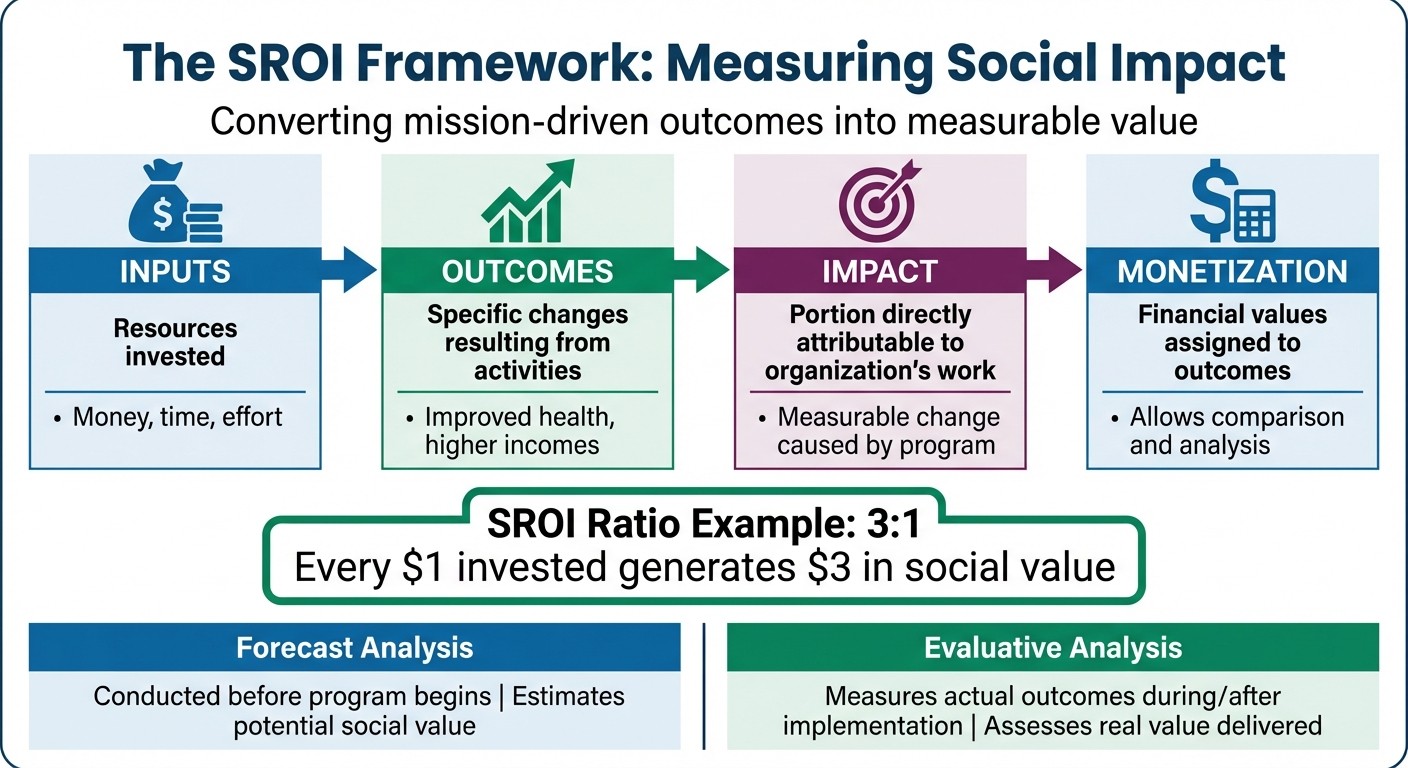
SROI Framework: 4 Key Elements for Measuring Nonprofit Impact
For nonprofits, ROI isn't just about dollars and cents - it’s about demonstrating both social impact and financial health. These organizations must show measurable results to justify their work to funders, communities, and boards.
This is where Social Return on Investment (SROI) becomes essential. By converting outcomes like improved well-being or environmental restoration into monetary terms, SROI translates mission-driven efforts into a language that resonates with donors and financial stakeholders.
What is Social Return on Investment (SROI)?
SROI is a framework designed to measure and communicate the value nonprofits create across social, environmental, and economic dimensions. By assigning monetary values to outcomes, SROI provides a clear picture of the impact an organization delivers[2][3]. Originally developed in the United States to evaluate housing programs in Silicon Valley, this framework has since gained global traction, with some UK government contracts even requiring SROI projections during the bidding process[2].
The framework revolves around four key elements:
Inputs: Resources like money, time, and effort that are invested.
Outcomes: Specific changes resulting from the organization’s activities, such as improved health or higher incomes.
Impact: The portion of these outcomes directly attributable to the organization’s work.
Monetization: Assigning financial values to outcomes, allowing for easy comparison and analysis[2][3].
For example, an SROI ratio of 3:1 means that every $1 invested generates $3 in social value[3].
"The most valuable part of SROI is the fact that organizations are hearing directly from their stakeholders. It is not theoretical. It is not anecdotal. It measures the change that is actually reported in the lives of the people it tries to benefit."
– Dr. Allison Ricket, Director of Analytics, Voinovich School of Leadership and Public Service[2]
SROI can be analyzed in two ways. Forecast Analysis is conducted before a program begins to estimate the potential social value it might create, helping organizations allocate resources wisely[3]. Evaluative Analysis, on the other hand, measures actual outcomes during or after program implementation to assess the real value delivered[3]. Both approaches prioritize direct engagement with stakeholders to ensure their perspectives are captured[2].
By understanding SROI, nonprofits can better balance their mission-driven goals with financial sustainability. Let’s explore how this balance can be achieved.
Balancing Mission Impact and Financial Health
Building on the SROI framework, nonprofits can align their mission with financial stability. For example, reducing energy consumption not only cuts costs but also benefits the environment. SROI serves as both a reporting tool and a strategic framework, helping organizations identify which programs generate the most social value per dollar invested. This allows nonprofits to allocate resources effectively and reconsider initiatives with lower returns. Moreover, it enables them to communicate their impact in monetary terms, appealing to impact investors and younger donors who value ventures that deliver both financial and social benefits[2].
"SROI, and social impact measurement generally, help the school to tell the story of the good work that is being done all around us, and to do so in a way that reaches new audiences in the financial sector."
– Kelli Coughlin Schoen, Director of Operations and Management, Impact Measurement Group[2]
To sustain this balance, nonprofits can explore cross-subsidization - using revenue from profitable, market-driven activities to fund and scale social programs[4]. Diversifying revenue streams by combining earned income, grants, and impact investments also reduces dependence on a single funding source. This approach helps prevent mission drift, ensuring that revenue-generating efforts support, rather than overshadow, the organization’s core mission[4].
Building a Measurable Sustainability Framework
Creating a framework that tracks both sustainability goals and organizational performance is essential for ensuring progress and accountability. Without clear metrics and reliable data, it becomes difficult to demonstrate impact to funders or make informed decisions about where to allocate resources.
Start by identifying the most pressing sustainability challenges through a materiality assessment. For example, an environmental nonprofit might prioritize reducing carbon emissions and minimizing waste, while a workforce development organization could focus on improving employee retention and advancing diversity. Use this assessment to document your current ESG (Environmental, Social, and Governance) performance, setting a baseline for future ROI evaluations.
Establish SMART targets - Specific, Measurable, Achievable, Relevant, and Time-bound - across different time horizons: long-term (10+ years), mid-term (5–10 years), and annual goals. Classify your initiatives as either "offensive" (creating new opportunities for impact) or "defensive" (addressing potential risks). For instance, a nonprofit using a program strategy map might choose to scale up successful initiatives while phasing out less effective ones. With your baseline data in place, you can set precise, time-bound objectives to guide your efforts.
Selecting Key Metrics and Indicators
Once your framework and goals are defined, focus on identifying the metrics that best reflect your progress. Prioritize measuring outcomes - the tangible changes achieved - over outputs, which simply track activities. For example, instead of counting the number of workshops held, measure the improvement in participant skills or health outcomes.
Metrics can be grouped into four main categories:
Environmental: Carbon emissions, water usage, waste diversion.
Social: Employee retention rates, volunteer hours, diversity scores.
Financial: Cash runway, revenue diversification, cost-per-outcome.
Governance: Board diversity, ethics compliance, transparency.
For instance, a food bank might monitor the amount of rescued food, the number of families served per dollar, and volunteer retention rates. Calculating cost-per-outcome - such as the cost per student mentored - can help demonstrate operational efficiency to funders.
Disaggregate data by factors like race, gender, and geography to ensure your programs are reaching the intended populations. This approach not only highlights equity gaps but also enhances accountability and fine-tunes ROI analysis. Instead of drowning in excessive data, focus on a concise set of high-quality metrics that align with your organization’s Theory of Change.
"Impact measurement is most valuable when it helps answer the question: 'Are we making the difference we set out to make, and how can we do it better?'" – The Bridgespan Group [6]
Using Tools and Technology for Measurement
Leverage cloud-based platforms to automate impact tracking and reporting. This eliminates the need for time-consuming manual processes, such as compiling spreadsheets for grant reports, and frees up valuable time for mission-focused activities. Automation is especially critical given that 41% of nonprofits cite a lack of process automation as a significant barrier to operational efficiency [5].
Real-time dashboards can help you spot trends, adjust strategies quickly, and streamline communications with donors and grantors. This is particularly important as funding challenges threaten up to 20% of American nonprofits with potential closure by 2028 [5]. Keep a close eye on your cash runway - the number of months your organization can operate with current reserves - as a key indicator of financial sustainability.
Calculating ROI for Programs and Initiatives
Determining which programs deliver the best returns is essential for making informed decisions on where to allocate limited resources. This ensures maximum impact and financial stability. By leveraging your measurable framework, you can pinpoint initiatives that excel in both effectiveness and efficiency.
ROI Calculation Formula for Programs and Events
To calculate ROI, use the formula: (Net Benefit - Total Cost) / Total Cost × 100. Here, "net benefit" includes direct savings along with quantifiable social or environmental outcomes. For financial approvals, integrate this with standard capital expenditure methods like Internal Rate of Return (IRR) and Payback Period calculations [8].
For mission-driven organizations, an "advantage per dollar" metric can be particularly helpful. This ratio compares the strategic value delivered for every dollar invested, allowing you to evaluate projects with varying types of returns. For example, in November 2024, chocolate manufacturer Natra collaborated with the NYU Stern Center for Sustainable Business to assess the value of achieving full traceability in their cocoa supply chain. By elevating their cocoa from a standard commodity to a specialty product, they projected a present value of €2.4 million over a 1–4 year timeline [7]. This method combines non-monetary benefits, such as supply chain resilience and brand reputation, with tangible costs to identify which investments provide the greatest strategic value per dollar spent [9].
Similarly, in 2024, REI revealed that its mission-aligned employee sustainability program yielded a net benefit of $24 million - approximately 5% of its total payroll. This was achieved by reducing turnover and hiring costs while increasing productivity [7]. Such examples highlight how initiatives focused on social impact can also deliver measurable financial gains.
Quantifying these outcomes helps organizations better evaluate and prioritize long-term investments.
Assessing Long-Term Sustainability Investments
To gauge the long-term value of sustainability initiatives, consider the total cost of ownership. While upfront costs may be higher, they can lead to significant savings in operating expenses over time. Gundersen Health System, for instance, partnered with NYU Stern CSB to evaluate energy retrofits at an existing facility. They found these retrofits generated $1 per square foot in annual benefits, while designing a net-zero building for a new facility offered the potential for $2 per square foot in annual benefits [7].
For nonprofits, traditional Net Present Value (NPV) calculations can be augmented with factors like resilience, adaptability, and social impact to create a more comprehensive ROI assessment [9]. Proxy metrics can also help measure qualitative benefits - for instance, tracking Net Promoter Score (NPS) or shifts in donor behavior to gauge brand loyalty and community trust [9]. High-cost sustainability technologies can be implemented in phases to minimize risk, maintain operational continuity, and build organizational support over time [9].
Communicating Impact to Funders and Stakeholders
Once you have measurable ROI, the next challenge is presenting these results in a way that captures the attention of funders, donors, and stakeholders. Trust is a key factor here - nearly 70% of donors say it influences their decision to support a nonprofit [10]. However, only 30% of executives feel their organizations effectively communicate sustainability results and ROI to stakeholders [1]. Clearly, there’s a gap to address.
Funders are less interested in how many workshops you hosted or reports you published - they want to see tangible changes in people’s lives [12]. This means shifting the focus from outputs, like "trained 500 community members", to outcomes, such as improved employment rates among participants. Pairing quantitative metrics with personal stories from participants can create a powerful narrative. When done right, effective communication transforms raw data into a strategic tool for securing ongoing support.
Converting Social Impact into Measurable Outcomes
Quantifying your social impact in monetary terms can further strengthen your case to funders. Using established Social Return on Investment (SROI) metrics, you can illustrate the value your organization creates. For example, if an $80,000 investment in member benefits results in $235,000 in social value, that’s an SROI of 2.75 [3].
"SROI goes beyond traditional financial metrics, aiming to capture your nonprofit's impact on its community and beneficiaries." - Cait Abernethy, Director of Marketing, UpMetrics [3]
Link these metrics to your Theory of Change to show how resources (inputs) are used in programs (activities) to produce immediate actions (outputs) and, ultimately, long-term outcomes [10]. This approach highlights your organization’s contribution to broader community impact, even if full attribution isn’t possible.
Creating Clear Reports and Dashboards
To make your outcomes actionable, focus on creating concise, accessible reports. Many organizations spend 80% of their reporting time on manual data preparation, leaving only 20% for meaningful analysis [12]. Streamlining your data architecture - using unique stakeholder IDs to track data across the lifecycle - can help eliminate this inefficiency [12].
Real-time dashboards are becoming the new standard, replacing static annual reports. Funders increasingly expect continuous updates through digital platforms [10][3]. AI-powered reporting tools can cut the time needed to produce a report from weeks to just days, while also analyzing qualitative data for themes and sentiment [12]. Tailor these reports to your audience: donors might value outcome evidence and personal stories, while board members often need high-level summaries for decision-making [12].
Transparency is also key. Sharing both successes and challenges builds trust, especially with experienced funders who value a commitment to learning and improvement [11][12]. By providing honest and clear communication, you lay the groundwork for stronger partnerships and long-term support.
Conclusion
Crafting a sustainability strategy that strengthens both your mission's impact and your financial stability is key to long-term success. Leading nonprofits view sustainability as more than just an operational necessity - it’s a strategic investment. By effectively measuring, calculating, and communicating your impact, you can secure your organization’s future while making a deeper difference in the communities you serve.
Tools like the Matrix Map can help you align your initiatives with both mission impact and financial viability, ensuring that every dollar spent contributes meaningfully to your goals [13]. This balance of data-driven analysis and mission focus creates a powerful framework for decision-making.
It’s important to recognize that the return on investment (ROI) for nonprofits differs from that of corporations. While businesses prioritize profit margins, nonprofits aim to balance economic, social, and environmental outcomes. A great example is One Acre Fund, which in 2024 aimed to deliver $4 in incremental profit to farmers for every $1 spent on its core program. This approach reframed impact as a measurable financial return for the people they serve, reshaping how funders value their work [14].
Start small - choose one program, establish clear metrics, calculate its social return on investment (SROI), and share the results. Over time, as your confidence and systems improve, expand these efforts to other areas. By taking deliberate, data-driven steps, you can ensure that every initiative not only advances your mission but also strengthens your financial foundation, paving the way for a sustainable and impactful future.
FAQs
How do I choose the right outcomes to monetize for SROI?
To determine outcomes for Social Return on Investment (SROI), concentrate on impacts that can be quantified and align with your mission and the priorities of your stakeholders. This includes social, environmental, and economic effects that are meaningful and measurable. Focus on outcomes such as cost savings, emissions reductions, or improved health, which can be assigned value using trusted proxies like avoided costs. Ensure these outcomes can be monitored effectively over time. Select those that provide the greatest impact compared to the resources invested, considering both direct and indirect benefits.
What data do I need to calculate ROI if we don’t have strong systems?
To determine ROI without advanced systems, start by collecting basic data: input costs, output results (such as services provided or the number of beneficiaries impacted), and the timeframe over which these effects occur. Additionally, include estimates for the monetary value of any social or environmental outcomes. Even with limited tools, this method allows you to translate impacts into measurable returns.
How can we report ROI without oversimplifying our mission impact?
To effectively report ROI while capturing the full scope of mission impact, it's essential to use metrics that go beyond financial outcomes. Frameworks like ESG (Environmental, Social, and Governance) or Triple Bottom Line can help measure financial, environmental, and social results comprehensively. Highlight both direct benefits, such as cost savings or revenue growth, and indirect ones, like improved brand reputation, stronger stakeholder relationships, and enhanced community well-being. This balanced approach ensures a more complete picture of your sustainability efforts.
Related Blog Posts
Latest Articles
©2025



FAQ
01
What does it really mean to “redefine profit”?
02
What makes Council Fire different?
03
Who does Council Fire you work with?
04
What does working with Council Fire actually look like?
05
How does Council Fire help organizations turn big goals into action?
06
How does Council Fire define and measure success?
Feb 18, 2026
How to Build a Corporate Sustainability Strategy Aligned to ROI for NGOs & Nonprofits
Sustainability Strategy
In This Article
Use SROI, SMART targets, and outcome metrics to translate social impact into measurable ROI, prioritize programs, and strengthen funding and financial health.
How to Build a Corporate Sustainability Strategy Aligned to ROI for NGOs & Nonprofits
Nonprofits face growing challenges: rising demand for services, tight budgets, and increasing pressure from funders to deliver measurable results. Balancing social impact with financial health is critical to ensuring long-term success. This article explores how nonprofits can align their sustainability strategies with ROI by using measurable frameworks like Social Return on Investment (SROI). Key takeaways include:
SROI Framework: Converts social and environmental outcomes into monetary terms to demonstrate value.
Data-Driven Metrics: Focus on outcomes like improved health, reduced costs, or increased revenue.
ROI Calculation: Use formulas to evaluate program efficiency and prioritize high-performing initiatives.
Effective Communication: Present results in actionable, transparent ways to build trust with funders.
The Nonprofit CFO Playbook: Strategy, Stewardship, and Scale Tinashe Chigede
How ROI Works for Nonprofits
SROI Framework: 4 Key Elements for Measuring Nonprofit Impact
For nonprofits, ROI isn't just about dollars and cents - it’s about demonstrating both social impact and financial health. These organizations must show measurable results to justify their work to funders, communities, and boards.
This is where Social Return on Investment (SROI) becomes essential. By converting outcomes like improved well-being or environmental restoration into monetary terms, SROI translates mission-driven efforts into a language that resonates with donors and financial stakeholders.
What is Social Return on Investment (SROI)?
SROI is a framework designed to measure and communicate the value nonprofits create across social, environmental, and economic dimensions. By assigning monetary values to outcomes, SROI provides a clear picture of the impact an organization delivers[2][3]. Originally developed in the United States to evaluate housing programs in Silicon Valley, this framework has since gained global traction, with some UK government contracts even requiring SROI projections during the bidding process[2].
The framework revolves around four key elements:
Inputs: Resources like money, time, and effort that are invested.
Outcomes: Specific changes resulting from the organization’s activities, such as improved health or higher incomes.
Impact: The portion of these outcomes directly attributable to the organization’s work.
Monetization: Assigning financial values to outcomes, allowing for easy comparison and analysis[2][3].
For example, an SROI ratio of 3:1 means that every $1 invested generates $3 in social value[3].
"The most valuable part of SROI is the fact that organizations are hearing directly from their stakeholders. It is not theoretical. It is not anecdotal. It measures the change that is actually reported in the lives of the people it tries to benefit."
– Dr. Allison Ricket, Director of Analytics, Voinovich School of Leadership and Public Service[2]
SROI can be analyzed in two ways. Forecast Analysis is conducted before a program begins to estimate the potential social value it might create, helping organizations allocate resources wisely[3]. Evaluative Analysis, on the other hand, measures actual outcomes during or after program implementation to assess the real value delivered[3]. Both approaches prioritize direct engagement with stakeholders to ensure their perspectives are captured[2].
By understanding SROI, nonprofits can better balance their mission-driven goals with financial sustainability. Let’s explore how this balance can be achieved.
Balancing Mission Impact and Financial Health
Building on the SROI framework, nonprofits can align their mission with financial stability. For example, reducing energy consumption not only cuts costs but also benefits the environment. SROI serves as both a reporting tool and a strategic framework, helping organizations identify which programs generate the most social value per dollar invested. This allows nonprofits to allocate resources effectively and reconsider initiatives with lower returns. Moreover, it enables them to communicate their impact in monetary terms, appealing to impact investors and younger donors who value ventures that deliver both financial and social benefits[2].
"SROI, and social impact measurement generally, help the school to tell the story of the good work that is being done all around us, and to do so in a way that reaches new audiences in the financial sector."
– Kelli Coughlin Schoen, Director of Operations and Management, Impact Measurement Group[2]
To sustain this balance, nonprofits can explore cross-subsidization - using revenue from profitable, market-driven activities to fund and scale social programs[4]. Diversifying revenue streams by combining earned income, grants, and impact investments also reduces dependence on a single funding source. This approach helps prevent mission drift, ensuring that revenue-generating efforts support, rather than overshadow, the organization’s core mission[4].
Building a Measurable Sustainability Framework
Creating a framework that tracks both sustainability goals and organizational performance is essential for ensuring progress and accountability. Without clear metrics and reliable data, it becomes difficult to demonstrate impact to funders or make informed decisions about where to allocate resources.
Start by identifying the most pressing sustainability challenges through a materiality assessment. For example, an environmental nonprofit might prioritize reducing carbon emissions and minimizing waste, while a workforce development organization could focus on improving employee retention and advancing diversity. Use this assessment to document your current ESG (Environmental, Social, and Governance) performance, setting a baseline for future ROI evaluations.
Establish SMART targets - Specific, Measurable, Achievable, Relevant, and Time-bound - across different time horizons: long-term (10+ years), mid-term (5–10 years), and annual goals. Classify your initiatives as either "offensive" (creating new opportunities for impact) or "defensive" (addressing potential risks). For instance, a nonprofit using a program strategy map might choose to scale up successful initiatives while phasing out less effective ones. With your baseline data in place, you can set precise, time-bound objectives to guide your efforts.
Selecting Key Metrics and Indicators
Once your framework and goals are defined, focus on identifying the metrics that best reflect your progress. Prioritize measuring outcomes - the tangible changes achieved - over outputs, which simply track activities. For example, instead of counting the number of workshops held, measure the improvement in participant skills or health outcomes.
Metrics can be grouped into four main categories:
Environmental: Carbon emissions, water usage, waste diversion.
Social: Employee retention rates, volunteer hours, diversity scores.
Financial: Cash runway, revenue diversification, cost-per-outcome.
Governance: Board diversity, ethics compliance, transparency.
For instance, a food bank might monitor the amount of rescued food, the number of families served per dollar, and volunteer retention rates. Calculating cost-per-outcome - such as the cost per student mentored - can help demonstrate operational efficiency to funders.
Disaggregate data by factors like race, gender, and geography to ensure your programs are reaching the intended populations. This approach not only highlights equity gaps but also enhances accountability and fine-tunes ROI analysis. Instead of drowning in excessive data, focus on a concise set of high-quality metrics that align with your organization’s Theory of Change.
"Impact measurement is most valuable when it helps answer the question: 'Are we making the difference we set out to make, and how can we do it better?'" – The Bridgespan Group [6]
Using Tools and Technology for Measurement
Leverage cloud-based platforms to automate impact tracking and reporting. This eliminates the need for time-consuming manual processes, such as compiling spreadsheets for grant reports, and frees up valuable time for mission-focused activities. Automation is especially critical given that 41% of nonprofits cite a lack of process automation as a significant barrier to operational efficiency [5].
Real-time dashboards can help you spot trends, adjust strategies quickly, and streamline communications with donors and grantors. This is particularly important as funding challenges threaten up to 20% of American nonprofits with potential closure by 2028 [5]. Keep a close eye on your cash runway - the number of months your organization can operate with current reserves - as a key indicator of financial sustainability.
Calculating ROI for Programs and Initiatives
Determining which programs deliver the best returns is essential for making informed decisions on where to allocate limited resources. This ensures maximum impact and financial stability. By leveraging your measurable framework, you can pinpoint initiatives that excel in both effectiveness and efficiency.
ROI Calculation Formula for Programs and Events
To calculate ROI, use the formula: (Net Benefit - Total Cost) / Total Cost × 100. Here, "net benefit" includes direct savings along with quantifiable social or environmental outcomes. For financial approvals, integrate this with standard capital expenditure methods like Internal Rate of Return (IRR) and Payback Period calculations [8].
For mission-driven organizations, an "advantage per dollar" metric can be particularly helpful. This ratio compares the strategic value delivered for every dollar invested, allowing you to evaluate projects with varying types of returns. For example, in November 2024, chocolate manufacturer Natra collaborated with the NYU Stern Center for Sustainable Business to assess the value of achieving full traceability in their cocoa supply chain. By elevating their cocoa from a standard commodity to a specialty product, they projected a present value of €2.4 million over a 1–4 year timeline [7]. This method combines non-monetary benefits, such as supply chain resilience and brand reputation, with tangible costs to identify which investments provide the greatest strategic value per dollar spent [9].
Similarly, in 2024, REI revealed that its mission-aligned employee sustainability program yielded a net benefit of $24 million - approximately 5% of its total payroll. This was achieved by reducing turnover and hiring costs while increasing productivity [7]. Such examples highlight how initiatives focused on social impact can also deliver measurable financial gains.
Quantifying these outcomes helps organizations better evaluate and prioritize long-term investments.
Assessing Long-Term Sustainability Investments
To gauge the long-term value of sustainability initiatives, consider the total cost of ownership. While upfront costs may be higher, they can lead to significant savings in operating expenses over time. Gundersen Health System, for instance, partnered with NYU Stern CSB to evaluate energy retrofits at an existing facility. They found these retrofits generated $1 per square foot in annual benefits, while designing a net-zero building for a new facility offered the potential for $2 per square foot in annual benefits [7].
For nonprofits, traditional Net Present Value (NPV) calculations can be augmented with factors like resilience, adaptability, and social impact to create a more comprehensive ROI assessment [9]. Proxy metrics can also help measure qualitative benefits - for instance, tracking Net Promoter Score (NPS) or shifts in donor behavior to gauge brand loyalty and community trust [9]. High-cost sustainability technologies can be implemented in phases to minimize risk, maintain operational continuity, and build organizational support over time [9].
Communicating Impact to Funders and Stakeholders
Once you have measurable ROI, the next challenge is presenting these results in a way that captures the attention of funders, donors, and stakeholders. Trust is a key factor here - nearly 70% of donors say it influences their decision to support a nonprofit [10]. However, only 30% of executives feel their organizations effectively communicate sustainability results and ROI to stakeholders [1]. Clearly, there’s a gap to address.
Funders are less interested in how many workshops you hosted or reports you published - they want to see tangible changes in people’s lives [12]. This means shifting the focus from outputs, like "trained 500 community members", to outcomes, such as improved employment rates among participants. Pairing quantitative metrics with personal stories from participants can create a powerful narrative. When done right, effective communication transforms raw data into a strategic tool for securing ongoing support.
Converting Social Impact into Measurable Outcomes
Quantifying your social impact in monetary terms can further strengthen your case to funders. Using established Social Return on Investment (SROI) metrics, you can illustrate the value your organization creates. For example, if an $80,000 investment in member benefits results in $235,000 in social value, that’s an SROI of 2.75 [3].
"SROI goes beyond traditional financial metrics, aiming to capture your nonprofit's impact on its community and beneficiaries." - Cait Abernethy, Director of Marketing, UpMetrics [3]
Link these metrics to your Theory of Change to show how resources (inputs) are used in programs (activities) to produce immediate actions (outputs) and, ultimately, long-term outcomes [10]. This approach highlights your organization’s contribution to broader community impact, even if full attribution isn’t possible.
Creating Clear Reports and Dashboards
To make your outcomes actionable, focus on creating concise, accessible reports. Many organizations spend 80% of their reporting time on manual data preparation, leaving only 20% for meaningful analysis [12]. Streamlining your data architecture - using unique stakeholder IDs to track data across the lifecycle - can help eliminate this inefficiency [12].
Real-time dashboards are becoming the new standard, replacing static annual reports. Funders increasingly expect continuous updates through digital platforms [10][3]. AI-powered reporting tools can cut the time needed to produce a report from weeks to just days, while also analyzing qualitative data for themes and sentiment [12]. Tailor these reports to your audience: donors might value outcome evidence and personal stories, while board members often need high-level summaries for decision-making [12].
Transparency is also key. Sharing both successes and challenges builds trust, especially with experienced funders who value a commitment to learning and improvement [11][12]. By providing honest and clear communication, you lay the groundwork for stronger partnerships and long-term support.
Conclusion
Crafting a sustainability strategy that strengthens both your mission's impact and your financial stability is key to long-term success. Leading nonprofits view sustainability as more than just an operational necessity - it’s a strategic investment. By effectively measuring, calculating, and communicating your impact, you can secure your organization’s future while making a deeper difference in the communities you serve.
Tools like the Matrix Map can help you align your initiatives with both mission impact and financial viability, ensuring that every dollar spent contributes meaningfully to your goals [13]. This balance of data-driven analysis and mission focus creates a powerful framework for decision-making.
It’s important to recognize that the return on investment (ROI) for nonprofits differs from that of corporations. While businesses prioritize profit margins, nonprofits aim to balance economic, social, and environmental outcomes. A great example is One Acre Fund, which in 2024 aimed to deliver $4 in incremental profit to farmers for every $1 spent on its core program. This approach reframed impact as a measurable financial return for the people they serve, reshaping how funders value their work [14].
Start small - choose one program, establish clear metrics, calculate its social return on investment (SROI), and share the results. Over time, as your confidence and systems improve, expand these efforts to other areas. By taking deliberate, data-driven steps, you can ensure that every initiative not only advances your mission but also strengthens your financial foundation, paving the way for a sustainable and impactful future.
FAQs
How do I choose the right outcomes to monetize for SROI?
To determine outcomes for Social Return on Investment (SROI), concentrate on impacts that can be quantified and align with your mission and the priorities of your stakeholders. This includes social, environmental, and economic effects that are meaningful and measurable. Focus on outcomes such as cost savings, emissions reductions, or improved health, which can be assigned value using trusted proxies like avoided costs. Ensure these outcomes can be monitored effectively over time. Select those that provide the greatest impact compared to the resources invested, considering both direct and indirect benefits.
What data do I need to calculate ROI if we don’t have strong systems?
To determine ROI without advanced systems, start by collecting basic data: input costs, output results (such as services provided or the number of beneficiaries impacted), and the timeframe over which these effects occur. Additionally, include estimates for the monetary value of any social or environmental outcomes. Even with limited tools, this method allows you to translate impacts into measurable returns.
How can we report ROI without oversimplifying our mission impact?
To effectively report ROI while capturing the full scope of mission impact, it's essential to use metrics that go beyond financial outcomes. Frameworks like ESG (Environmental, Social, and Governance) or Triple Bottom Line can help measure financial, environmental, and social results comprehensively. Highlight both direct benefits, such as cost savings or revenue growth, and indirect ones, like improved brand reputation, stronger stakeholder relationships, and enhanced community well-being. This balanced approach ensures a more complete picture of your sustainability efforts.
Related Blog Posts
FAQ
01
What does it really mean to “redefine profit”?
02
What makes Council Fire different?
03
Who does Council Fire you work with?
04
What does working with Council Fire actually look like?
05
How does Council Fire help organizations turn big goals into action?
06
How does Council Fire define and measure success?
Feb 18, 2026
How to Build a Corporate Sustainability Strategy Aligned to ROI for NGOs & Nonprofits
Sustainability Strategy
In This Article
Use SROI, SMART targets, and outcome metrics to translate social impact into measurable ROI, prioritize programs, and strengthen funding and financial health.
How to Build a Corporate Sustainability Strategy Aligned to ROI for NGOs & Nonprofits
Nonprofits face growing challenges: rising demand for services, tight budgets, and increasing pressure from funders to deliver measurable results. Balancing social impact with financial health is critical to ensuring long-term success. This article explores how nonprofits can align their sustainability strategies with ROI by using measurable frameworks like Social Return on Investment (SROI). Key takeaways include:
SROI Framework: Converts social and environmental outcomes into monetary terms to demonstrate value.
Data-Driven Metrics: Focus on outcomes like improved health, reduced costs, or increased revenue.
ROI Calculation: Use formulas to evaluate program efficiency and prioritize high-performing initiatives.
Effective Communication: Present results in actionable, transparent ways to build trust with funders.
The Nonprofit CFO Playbook: Strategy, Stewardship, and Scale Tinashe Chigede
How ROI Works for Nonprofits
SROI Framework: 4 Key Elements for Measuring Nonprofit Impact
For nonprofits, ROI isn't just about dollars and cents - it’s about demonstrating both social impact and financial health. These organizations must show measurable results to justify their work to funders, communities, and boards.
This is where Social Return on Investment (SROI) becomes essential. By converting outcomes like improved well-being or environmental restoration into monetary terms, SROI translates mission-driven efforts into a language that resonates with donors and financial stakeholders.
What is Social Return on Investment (SROI)?
SROI is a framework designed to measure and communicate the value nonprofits create across social, environmental, and economic dimensions. By assigning monetary values to outcomes, SROI provides a clear picture of the impact an organization delivers[2][3]. Originally developed in the United States to evaluate housing programs in Silicon Valley, this framework has since gained global traction, with some UK government contracts even requiring SROI projections during the bidding process[2].
The framework revolves around four key elements:
Inputs: Resources like money, time, and effort that are invested.
Outcomes: Specific changes resulting from the organization’s activities, such as improved health or higher incomes.
Impact: The portion of these outcomes directly attributable to the organization’s work.
Monetization: Assigning financial values to outcomes, allowing for easy comparison and analysis[2][3].
For example, an SROI ratio of 3:1 means that every $1 invested generates $3 in social value[3].
"The most valuable part of SROI is the fact that organizations are hearing directly from their stakeholders. It is not theoretical. It is not anecdotal. It measures the change that is actually reported in the lives of the people it tries to benefit."
– Dr. Allison Ricket, Director of Analytics, Voinovich School of Leadership and Public Service[2]
SROI can be analyzed in two ways. Forecast Analysis is conducted before a program begins to estimate the potential social value it might create, helping organizations allocate resources wisely[3]. Evaluative Analysis, on the other hand, measures actual outcomes during or after program implementation to assess the real value delivered[3]. Both approaches prioritize direct engagement with stakeholders to ensure their perspectives are captured[2].
By understanding SROI, nonprofits can better balance their mission-driven goals with financial sustainability. Let’s explore how this balance can be achieved.
Balancing Mission Impact and Financial Health
Building on the SROI framework, nonprofits can align their mission with financial stability. For example, reducing energy consumption not only cuts costs but also benefits the environment. SROI serves as both a reporting tool and a strategic framework, helping organizations identify which programs generate the most social value per dollar invested. This allows nonprofits to allocate resources effectively and reconsider initiatives with lower returns. Moreover, it enables them to communicate their impact in monetary terms, appealing to impact investors and younger donors who value ventures that deliver both financial and social benefits[2].
"SROI, and social impact measurement generally, help the school to tell the story of the good work that is being done all around us, and to do so in a way that reaches new audiences in the financial sector."
– Kelli Coughlin Schoen, Director of Operations and Management, Impact Measurement Group[2]
To sustain this balance, nonprofits can explore cross-subsidization - using revenue from profitable, market-driven activities to fund and scale social programs[4]. Diversifying revenue streams by combining earned income, grants, and impact investments also reduces dependence on a single funding source. This approach helps prevent mission drift, ensuring that revenue-generating efforts support, rather than overshadow, the organization’s core mission[4].
Building a Measurable Sustainability Framework
Creating a framework that tracks both sustainability goals and organizational performance is essential for ensuring progress and accountability. Without clear metrics and reliable data, it becomes difficult to demonstrate impact to funders or make informed decisions about where to allocate resources.
Start by identifying the most pressing sustainability challenges through a materiality assessment. For example, an environmental nonprofit might prioritize reducing carbon emissions and minimizing waste, while a workforce development organization could focus on improving employee retention and advancing diversity. Use this assessment to document your current ESG (Environmental, Social, and Governance) performance, setting a baseline for future ROI evaluations.
Establish SMART targets - Specific, Measurable, Achievable, Relevant, and Time-bound - across different time horizons: long-term (10+ years), mid-term (5–10 years), and annual goals. Classify your initiatives as either "offensive" (creating new opportunities for impact) or "defensive" (addressing potential risks). For instance, a nonprofit using a program strategy map might choose to scale up successful initiatives while phasing out less effective ones. With your baseline data in place, you can set precise, time-bound objectives to guide your efforts.
Selecting Key Metrics and Indicators
Once your framework and goals are defined, focus on identifying the metrics that best reflect your progress. Prioritize measuring outcomes - the tangible changes achieved - over outputs, which simply track activities. For example, instead of counting the number of workshops held, measure the improvement in participant skills or health outcomes.
Metrics can be grouped into four main categories:
Environmental: Carbon emissions, water usage, waste diversion.
Social: Employee retention rates, volunteer hours, diversity scores.
Financial: Cash runway, revenue diversification, cost-per-outcome.
Governance: Board diversity, ethics compliance, transparency.
For instance, a food bank might monitor the amount of rescued food, the number of families served per dollar, and volunteer retention rates. Calculating cost-per-outcome - such as the cost per student mentored - can help demonstrate operational efficiency to funders.
Disaggregate data by factors like race, gender, and geography to ensure your programs are reaching the intended populations. This approach not only highlights equity gaps but also enhances accountability and fine-tunes ROI analysis. Instead of drowning in excessive data, focus on a concise set of high-quality metrics that align with your organization’s Theory of Change.
"Impact measurement is most valuable when it helps answer the question: 'Are we making the difference we set out to make, and how can we do it better?'" – The Bridgespan Group [6]
Using Tools and Technology for Measurement
Leverage cloud-based platforms to automate impact tracking and reporting. This eliminates the need for time-consuming manual processes, such as compiling spreadsheets for grant reports, and frees up valuable time for mission-focused activities. Automation is especially critical given that 41% of nonprofits cite a lack of process automation as a significant barrier to operational efficiency [5].
Real-time dashboards can help you spot trends, adjust strategies quickly, and streamline communications with donors and grantors. This is particularly important as funding challenges threaten up to 20% of American nonprofits with potential closure by 2028 [5]. Keep a close eye on your cash runway - the number of months your organization can operate with current reserves - as a key indicator of financial sustainability.
Calculating ROI for Programs and Initiatives
Determining which programs deliver the best returns is essential for making informed decisions on where to allocate limited resources. This ensures maximum impact and financial stability. By leveraging your measurable framework, you can pinpoint initiatives that excel in both effectiveness and efficiency.
ROI Calculation Formula for Programs and Events
To calculate ROI, use the formula: (Net Benefit - Total Cost) / Total Cost × 100. Here, "net benefit" includes direct savings along with quantifiable social or environmental outcomes. For financial approvals, integrate this with standard capital expenditure methods like Internal Rate of Return (IRR) and Payback Period calculations [8].
For mission-driven organizations, an "advantage per dollar" metric can be particularly helpful. This ratio compares the strategic value delivered for every dollar invested, allowing you to evaluate projects with varying types of returns. For example, in November 2024, chocolate manufacturer Natra collaborated with the NYU Stern Center for Sustainable Business to assess the value of achieving full traceability in their cocoa supply chain. By elevating their cocoa from a standard commodity to a specialty product, they projected a present value of €2.4 million over a 1–4 year timeline [7]. This method combines non-monetary benefits, such as supply chain resilience and brand reputation, with tangible costs to identify which investments provide the greatest strategic value per dollar spent [9].
Similarly, in 2024, REI revealed that its mission-aligned employee sustainability program yielded a net benefit of $24 million - approximately 5% of its total payroll. This was achieved by reducing turnover and hiring costs while increasing productivity [7]. Such examples highlight how initiatives focused on social impact can also deliver measurable financial gains.
Quantifying these outcomes helps organizations better evaluate and prioritize long-term investments.
Assessing Long-Term Sustainability Investments
To gauge the long-term value of sustainability initiatives, consider the total cost of ownership. While upfront costs may be higher, they can lead to significant savings in operating expenses over time. Gundersen Health System, for instance, partnered with NYU Stern CSB to evaluate energy retrofits at an existing facility. They found these retrofits generated $1 per square foot in annual benefits, while designing a net-zero building for a new facility offered the potential for $2 per square foot in annual benefits [7].
For nonprofits, traditional Net Present Value (NPV) calculations can be augmented with factors like resilience, adaptability, and social impact to create a more comprehensive ROI assessment [9]. Proxy metrics can also help measure qualitative benefits - for instance, tracking Net Promoter Score (NPS) or shifts in donor behavior to gauge brand loyalty and community trust [9]. High-cost sustainability technologies can be implemented in phases to minimize risk, maintain operational continuity, and build organizational support over time [9].
Communicating Impact to Funders and Stakeholders
Once you have measurable ROI, the next challenge is presenting these results in a way that captures the attention of funders, donors, and stakeholders. Trust is a key factor here - nearly 70% of donors say it influences their decision to support a nonprofit [10]. However, only 30% of executives feel their organizations effectively communicate sustainability results and ROI to stakeholders [1]. Clearly, there’s a gap to address.
Funders are less interested in how many workshops you hosted or reports you published - they want to see tangible changes in people’s lives [12]. This means shifting the focus from outputs, like "trained 500 community members", to outcomes, such as improved employment rates among participants. Pairing quantitative metrics with personal stories from participants can create a powerful narrative. When done right, effective communication transforms raw data into a strategic tool for securing ongoing support.
Converting Social Impact into Measurable Outcomes
Quantifying your social impact in monetary terms can further strengthen your case to funders. Using established Social Return on Investment (SROI) metrics, you can illustrate the value your organization creates. For example, if an $80,000 investment in member benefits results in $235,000 in social value, that’s an SROI of 2.75 [3].
"SROI goes beyond traditional financial metrics, aiming to capture your nonprofit's impact on its community and beneficiaries." - Cait Abernethy, Director of Marketing, UpMetrics [3]
Link these metrics to your Theory of Change to show how resources (inputs) are used in programs (activities) to produce immediate actions (outputs) and, ultimately, long-term outcomes [10]. This approach highlights your organization’s contribution to broader community impact, even if full attribution isn’t possible.
Creating Clear Reports and Dashboards
To make your outcomes actionable, focus on creating concise, accessible reports. Many organizations spend 80% of their reporting time on manual data preparation, leaving only 20% for meaningful analysis [12]. Streamlining your data architecture - using unique stakeholder IDs to track data across the lifecycle - can help eliminate this inefficiency [12].
Real-time dashboards are becoming the new standard, replacing static annual reports. Funders increasingly expect continuous updates through digital platforms [10][3]. AI-powered reporting tools can cut the time needed to produce a report from weeks to just days, while also analyzing qualitative data for themes and sentiment [12]. Tailor these reports to your audience: donors might value outcome evidence and personal stories, while board members often need high-level summaries for decision-making [12].
Transparency is also key. Sharing both successes and challenges builds trust, especially with experienced funders who value a commitment to learning and improvement [11][12]. By providing honest and clear communication, you lay the groundwork for stronger partnerships and long-term support.
Conclusion
Crafting a sustainability strategy that strengthens both your mission's impact and your financial stability is key to long-term success. Leading nonprofits view sustainability as more than just an operational necessity - it’s a strategic investment. By effectively measuring, calculating, and communicating your impact, you can secure your organization’s future while making a deeper difference in the communities you serve.
Tools like the Matrix Map can help you align your initiatives with both mission impact and financial viability, ensuring that every dollar spent contributes meaningfully to your goals [13]. This balance of data-driven analysis and mission focus creates a powerful framework for decision-making.
It’s important to recognize that the return on investment (ROI) for nonprofits differs from that of corporations. While businesses prioritize profit margins, nonprofits aim to balance economic, social, and environmental outcomes. A great example is One Acre Fund, which in 2024 aimed to deliver $4 in incremental profit to farmers for every $1 spent on its core program. This approach reframed impact as a measurable financial return for the people they serve, reshaping how funders value their work [14].
Start small - choose one program, establish clear metrics, calculate its social return on investment (SROI), and share the results. Over time, as your confidence and systems improve, expand these efforts to other areas. By taking deliberate, data-driven steps, you can ensure that every initiative not only advances your mission but also strengthens your financial foundation, paving the way for a sustainable and impactful future.
FAQs
How do I choose the right outcomes to monetize for SROI?
To determine outcomes for Social Return on Investment (SROI), concentrate on impacts that can be quantified and align with your mission and the priorities of your stakeholders. This includes social, environmental, and economic effects that are meaningful and measurable. Focus on outcomes such as cost savings, emissions reductions, or improved health, which can be assigned value using trusted proxies like avoided costs. Ensure these outcomes can be monitored effectively over time. Select those that provide the greatest impact compared to the resources invested, considering both direct and indirect benefits.
What data do I need to calculate ROI if we don’t have strong systems?
To determine ROI without advanced systems, start by collecting basic data: input costs, output results (such as services provided or the number of beneficiaries impacted), and the timeframe over which these effects occur. Additionally, include estimates for the monetary value of any social or environmental outcomes. Even with limited tools, this method allows you to translate impacts into measurable returns.
How can we report ROI without oversimplifying our mission impact?
To effectively report ROI while capturing the full scope of mission impact, it's essential to use metrics that go beyond financial outcomes. Frameworks like ESG (Environmental, Social, and Governance) or Triple Bottom Line can help measure financial, environmental, and social results comprehensively. Highlight both direct benefits, such as cost savings or revenue growth, and indirect ones, like improved brand reputation, stronger stakeholder relationships, and enhanced community well-being. This balanced approach ensures a more complete picture of your sustainability efforts.
Related Blog Posts
FAQ
What does it really mean to “redefine profit”?
What makes Council Fire different?
Who does Council Fire you work with?
What does working with Council Fire actually look like?
How does Council Fire help organizations turn big goals into action?
How does Council Fire define and measure success?