Mar 22, 2026
How to Develop a Blue Economy Strategy for Foundations & Philanthropic Organizations
Sustainability Strategy
In This Article
Step-by-step guide for foundations to design, fund, and scale equitable Blue Economy initiatives using targeted investments, partnerships, and measurable impact.
How to Develop a Blue Economy Strategy for Foundations & Philanthropic Organizations
Oceans cover 70% of the Earth and are vital to life, yet over 90% of marine habitats lack proper protection. The Blue Economy offers a way to balance ocean health, economic growth, and community well-being by focusing on sustainable ocean-based activities. Philanthropic organizations play a key role in driving these efforts by funding projects, forming partnerships, and supporting innovative solutions.
To create an effective Blue Economy strategy, follow these six steps:
Evaluate readiness: Assess your organization’s mission, expertise, and capacity for ocean-related initiatives.
Set clear goals: Define measurable objectives, such as habitat restoration or community empowerment, aligned with your values and timeline.
Target investments: Focus on high-impact sectors like mangrove conservation, sustainable proteins, or renewable energy.
Build partnerships: Collaborate with governments, private investors, local communities, and scientists to amplify impact.
Measure results: Use science-based tools to evaluate environmental, social, and economic outcomes.
Scale initiatives: Expand successful pilot projects with flexible management and community involvement.
Philanthropy can bridge funding gaps and de-risk ventures, enabling private investment in ocean resilience. By prioritizing measurable outcomes and community leadership, foundations can drive long-term progress for both people and the planet.
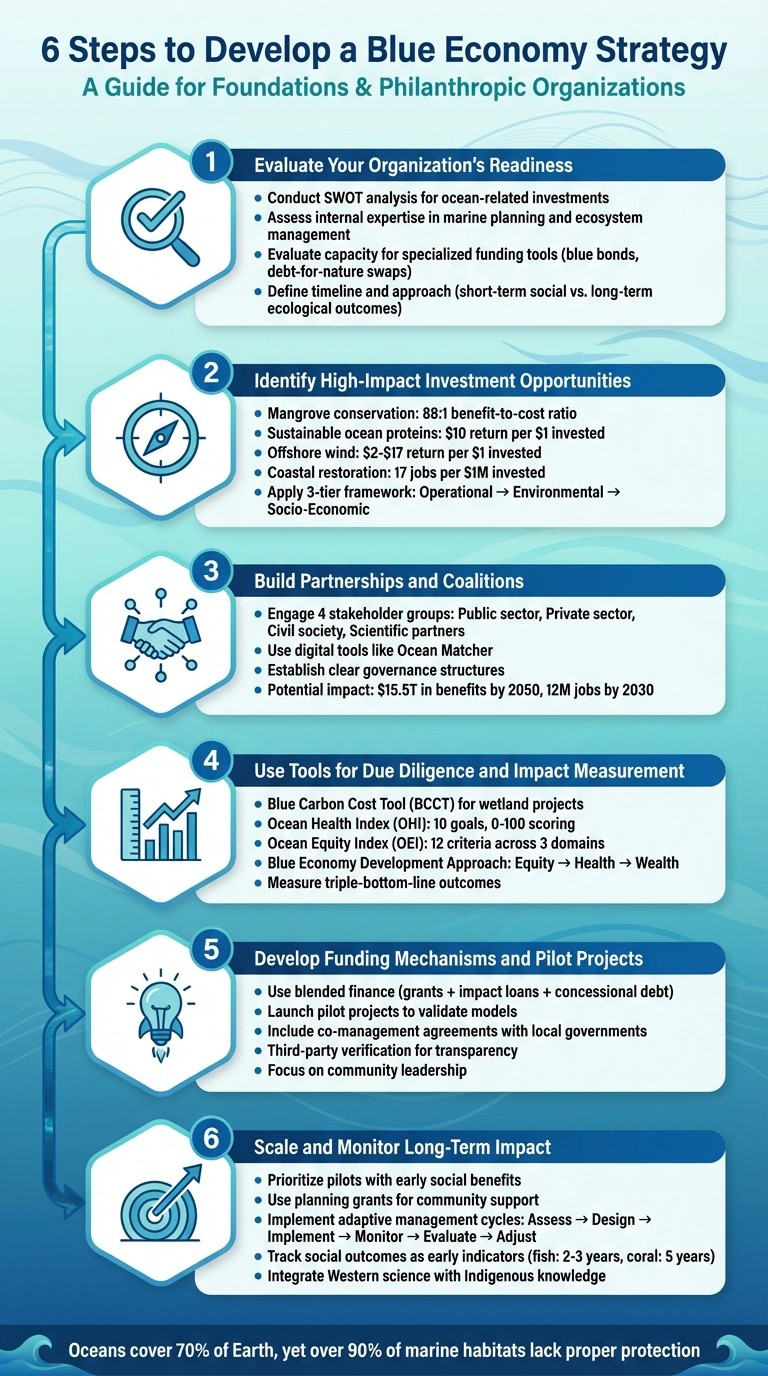
6 Steps to Develop a Blue Economy Strategy for Philanthropic Organizations
Rethinking Ocean Finance: Innovative Strategies for a Sustainable Blue Economy
Step 1: Evaluate Your Organization's Readiness
Before committing resources, it's essential to ensure that Blue Economy initiatives align with your organization's mission, values, and core strengths. This goes beyond simply having the funds - it’s about assessing whether your organization is equipped to create a lasting and meaningful impact on ocean health and coastal communities.
Conduct a Self-Assessment
Start by analyzing your foundation’s strengths, weaknesses, opportunities, and threats (SWOT) when it comes to ocean-related investments. Determine whether you have internal expertise in areas such as marine spatial planning, ecosystem management, or blue technology. If gaps exist, consider whether partnerships can bridge them. For instance, the Harold K.L. Castle Foundation updated its Marine Theory of Change in October 2016, under the leadership of Vice President of Resiliency Eric Co. They refined their focus from seven areas to five specific tactics, prioritizing two main goals: increasing effectively managed nearshore acres in the Main Hawaiian Islands and enhancing Hawaii's overall ocean management capacity [6].
Evaluate your ability to manage specialized funding tools like blue bonds, debt-for-nature swaps, and blended finance [1][7]. Additionally, assess whether your team has the capacity to quantify "non-market values" such as carbon sequestration, storm resilience, and cultural identity. For example, Hawaii’s coral reefs provide annual benefits worth at least $385 million, with their total estimated value reaching $10 billion. However, reef fish populations are currently just 20–25% of what they were a century ago [6]. Having a clear understanding of such data allows organizations to make informed, impactful investment decisions.
Leverage tools like a Sustainability Management System (SMS) to monitor environmental, social, and economic outcomes [2]. The UNEP FI Sustainable Blue Economy Finance Principles also offer 14 guidelines to help ensure that investments are transparent, science-based, and mindful of risks [3]. Once you’ve assessed your internal capabilities, use this knowledge to set defined objectives for your Blue Economy strategy.
Define Your Objectives
Establish specific, measurable goals for your Blue Economy initiatives. Are you prioritizing environmental restoration, community empowerment, economic development, or a combination of these? For example, the David and Lucile Packard Foundation focuses its "ocean habitat and communities" efforts in Chile, Indonesia, and the United States. Meanwhile, its sustainable fisheries work targets East and Southeast Asia to address the global seafood trade [4]. By concentrating on specific regions, they are able to develop deep expertise and foster meaningful relationships.
Your objectives should also account for your foundation's timeline and approach. Keep in mind that biological changes often take time - fish populations typically respond to management within 2–3 years, while coral growth may take approximately 5 years. As a result, short-term outcomes are more likely to be social rather than ecological [6]. Heather Ludemann and Sarah Hogan from the David and Lucile Packard Foundation emphasize:
"Solutions are the most durable for the environment and human well-being when the communities that rely on the ocean lead in the design and implementation of those solutions" [4].
Decide whether your organization’s values align more closely with community-driven, bottom-up solutions or with global policy initiatives and supply chain governance through a top-down approach [4][6]. This decision will shape the direction and implementation of your Blue Economy strategy.
Step 2: Identify High-Impact Investment Opportunities
After assessing your organization's readiness and outlining clear goals, the next step involves determining where to allocate resources. Not all sectors within the Blue Economy yield the same benefits, so pinpointing opportunities that provide the strongest environmental, social, and economic outcomes is crucial for maximizing your foundation's influence.
Key Sectors to Consider
Investing in sustainable ocean solutions can yield impressive returns - every $1 spent generates at least $5 in benefits [9]. However, the outcomes differ significantly between sectors. For instance, mangrove conservation boasts an astounding 88:1 benefit-to-cost ratio, compared to 2:1 for restoration efforts [9]. This highlights a vital insight: preserving existing ecosystems is far more efficient and cost-effective than restoring damaged ones.
Another promising area is sustainable ocean-based proteins, which deliver $10 in benefits for every $1 invested [9]. This sector addresses food security while significantly reducing greenhouse gas emissions compared to traditional meat production. Offshore wind energy is another standout, offering returns ranging from $2 to $17 per dollar spent, depending on the energy source being replaced [9]. Beyond its climate advantages, offshore wind projects also drive job creation - coastal habitat restoration projects, for example, generate 17 jobs per $1 million invested, a rate over three times higher than industries like coal or gas [9].
Decarbonizing international shipping is another impactful investment, yielding $2 to $5 in returns per dollar. The benefits are particularly evident in improved air quality, which reduces asthma cases and mortality rates [9]. Initiatives such as the "Getting to Zero Coalition" and national strategies in countries like Norway are accelerating progress toward net-zero shipping by 2050 [9]. Emerging sectors, such as seaweed farming and marine biotechnology, are also gaining momentum. In Mauritius, for instance, many fishers have turned to seaweed cultivation, creating a sustainable food and fertilizer source while alleviating pressure on wild fish stocks [11].
To navigate these opportunities effectively, a structured evaluation process is essential.
Applying a Three-Tier Evaluation Framework
A systematic approach to assessing investment opportunities involves using a three-tier evaluation framework [3]:
Tier 1 (Operational): Does the investment enhance sustainability through improved products, practices, or services?
Tier 2 (Environmental): Does the project result in measurable environmental benefits, such as carbon sequestration, increased biomass, or reduced pollution?
Tier 3 (Socio-Economic): Does the investment yield positive economic returns while improving social resilience, food security, and equitable opportunities for local communities?
Additionally, it's important to consider non-market values that are often overlooked, such as storm surge protection, oxygen production, and preserving cultural identity [2][3]. Mark J. Spalding, President of The Ocean Foundation, underscores this point:
"The blue economy is not just about driving superior risk-adjusted returns; it also provides for the protection and restoration of more intangible blue resources such as traditional ways of life, carbon sequestation, and coastal resilience" [3].
This framework ensures investments contribute to long-term ocean and coastal resilience. Philanthropy can play a key role in overcoming the "Transition Wall", where short-term return expectations often clash with long-term value creation [10]. By deploying catalytic capital, foundations can de-risk these ventures, paving the way for private investment. Peter Bryant, Senior Program Officer at the Walton Family Foundation, highlights:
"Investing in ocean resilience is a forward hedge, not a sunk cost. Those who move early will shape the instruments, define the standards, and reap the upside" [10].
Given that only 1% of the ocean economy's total value has been directed toward sustainable projects through philanthropy and official development assistance over the past decade [8], there is a significant opportunity for foundations to address funding gaps and drive transformative change. A strategic, criteria-driven approach will guide your foundation toward investments that deliver measurable and enduring results.
Step 3: Build Partnerships and Coalitions
Once you've identified high-impact investments, the next step is to expand your reach through strategic partnerships. Addressing the challenges of the Blue Economy - like overfishing and coastal degradation - requires collaboration across sectors. Governments, private investors, scientists, and coastal communities must join forces. The most effective Blue Economy initiatives arise when stakeholders combine their expertise, funding, and networks under a shared vision.
Identify Key Stakeholders
Four primary stakeholder groups play critical roles in advancing Blue Economy efforts.
Public sector partners: This includes Ministers of Finance, regulatory agencies, and UN bodies, who create the stable policy environments essential for long-term investment [13].
Private sector actors: Blue tech clusters, institutional investors, and development finance institutions contribute the capital and innovation necessary to scale solutions [13].
Civil society organizations: Indigenous communities and women's associations bring vital local knowledge and ensure equitable approaches. Women, for instance, make up 85% of the global fisheries workforce yet are often excluded from leadership roles [5].
Scientific and academic partners: These groups provide the data frameworks needed for rigorous impact measurement [13].
Digital tools like Ocean Matcher, launched in June 2025, can help connect philanthropic resources with endorsed high-priority actions [12]. Another resource, the Ocean Decade Foundations Dialogue, brings together over 25 philanthropic organizations to identify peer partners and co-design impactful initiatives [12]. Once stakeholders are identified, the focus shifts to creating collaborative models that amplify collective impact.
Engage in Collaborative Models
Beyond targeted investments, coalitions can significantly enhance both funding and expertise. Effective coalitions require clear governance from the start. Oceans 5, a network of aligned philanthropists, exemplifies this with its structured approach: "Partners" contribute $1 million annually for board seats, while "Members" provide at least $100,000 annually to support projects [14]. After five years, a board review led to a refined communications strategy and a focus on underserved areas [14]. Chuck Fox, Program Director at Oceans 5, highlights:
"Oceans 5 captures the shared intelligence of marine funders to identify high-quality projects. We've supported some remarkable organizations that have delivered impressive results" [14].
Trust is built when decision-making is shared [14]. The most effective collaborations move from "needs-based" to "asset-based" models, leveraging community strengths and Indigenous knowledge instead of imposing external solutions [15]. If partnerships prioritize equity alongside environmental and economic goals, transitioning to a sustainable Blue Economy could generate up to $15.5 trillion in benefits by 2050 and create 12 million new jobs by 2030 [13].
Step 4: Use Tools for Due Diligence and Impact Measurement
Once partnerships are in place, thorough due diligence becomes essential to ensure investments align with your Blue Economy objectives. Without a solid framework, investments risk falling short on environmental, social, or economic goals. The right tools are key to turning broad aspirations into measurable, actionable outcomes.
Evaluate Projects with Science-Based Tools
Before committing funds, it's crucial to assess both opportunities and risks using science-backed frameworks. One such tool is the Blue Carbon Cost Tool (BCCT), which evaluates coastal wetland projects like mangroves, tidal marshes, and seagrasses. It calculates their carbon credit potential while factoring in capital and operational costs. Using data from nine countries that collectively account for 61% of global blue carbon mitigation potential, the BCCT determines the OPEX breakeven price - essentially, the carbon credit price needed to cover ongoing monitoring and maintenance costs. For context, blue carbon trades in 2024 averaged $32 per tCO2e, far exceeding the $9.91 per tCO2e for standard forestry credits [16].
For a broader view of ecosystem health, the Ocean Health Index (OHI) provides a scoring system across 10 goals, including carbon storage, biodiversity, and coastal livelihoods. Projects are rated on a scale of 0 to 100, considering factors like current conditions, trends, pressures, and resilience [18]. On the social side, the Ocean Equity Index (OEI) evaluates equity across 12 criteria, with case studies revealing an average score of 68%. Notably, transparency often scores the lowest, averaging just 1.5 out of 3 [20]. As highlighted in Frontiers in Marine Science:
"Equity-blind ocean policies can back-fire even when they are environmentally ambitious" [17].
The Blue Economy Development Approach (BEDA) further emphasizes the importance of equity by following a strict sequence: Equity → Health → Wealth. This means projects must first meet social equity requirements - such as securing Free, Prior, and Informed Consent from Indigenous communities - before proceeding to environmental or economic evaluations [17]. Once risks and opportunities are quantified, outcomes across environmental, social, and economic dimensions should be measured.
Measure Triple-Bottom-Line Outcomes
After assessing risks, it's time to track the actual performance of investments using a triple-bottom-line framework. This approach extends earlier risk assessments to measure environmental, social, and economic returns in a structured way.
For example, in September 2020, The Ocean Foundation partnered with Credit Suisse and Rockefeller Asset Management to launch the Rockefeller Credit Suisse Ocean Engagement Fund. This fund, which amassed $780 million in assets under management, applies a triple-screened process to ensure all investments align with ocean-climate solutions. Mark J. Spalding, President of The Ocean Foundation, underscores the importance of measurable impact:
"Meaningful blue economy investing must have real, measurable positive outcomes" [3].
The Meloy Fund offers another example, projecting that, over its ten-year lifespan, it will benefit 100,000 fisher household members and improve management across 1.2 million hectares of coastal habitats [19].
To deepen these assessments, consider blending scientific indicators with local and Indigenous knowledge through the "Two-Eyed Seeing" approach. This method incorporates traditional insights, such as seasonal species behaviors and habitat use, which purely quantitative models might overlook. By allowing local stakeholders to assign weight to evaluation criteria, assessments can better reflect regional priorities - both ecological and cultural [17][18]. Combining rigorous data with community wisdom creates a more holistic understanding of whether investments are truly advancing the Blue Economy.
Step 5: Develop Funding Mechanisms and Pilot Projects
After completing thorough due diligence and establishing clear impact measurement, the next step is to create financial tools and launch pilot projects. This phase transitions your Blue Economy strategy from planning to action by leveraging blended finance to lower risks and validate ideas.
Blended Finance and Catalytic Philanthropy
Relying solely on traditional grants often falls short in achieving enduring progress in marine conservation. Blended finance - combining grants with tools like impact loans, concessional debt, and recoverable grants - opens the door for private capital by offsetting risks for investors. Grants play a key role in covering early-stage expenses such as legal structuring, business planning, and operational groundwork - areas that typically deter commercial investors. Once these basics are in place, impact-linked loans can provide working capital for enterprises like sustainable fisheries or ecotourism ventures [21]. This approach lays the groundwork for innovative funding strategies and pilot project validation.
A prime example is the Blue Alliance Marine Protected Areas (MPAs) initiative. Between 2022 and 2024, the Global Fund for Coral Reefs awarded a $5.2 million grant to support the design and legal structuring of three MPAs in the Philippines, Tanzania, and Indonesia. Following this, BNP Paribas provided impact-linked loans, where interest rates decrease as ecological outcomes improve. Now managing 1.5 million hectares, the initiative has also nurtured seven enterprises and positively impacted over 16,000 community members [22].
Laurence Pessez, Global Head of CSR at BNP Paribas Group, highlighted the model's ability to attract additional investors and support innovative conservation strategies [21].
Catalytic philanthropy focuses on funding projects that are too risky for commercial investors but too advanced for traditional grants. By pooling smaller projects into a single investment vehicle, organizations can achieve economies of scale and spread risks. Tools like parametric insurance further safeguard these efforts by protecting against climate-related disruptions, such as hurricanes, which could otherwise undo years of progress [22].
Insights from Pilot Projects
Once financial tools are in place, pilot projects serve as a testing ground to confirm the effectiveness of funding mechanisms and business models. These pilots aim to generate revenue while delivering measurable conservation outcomes.
In September 2025, during New York Climate Week, the Minderoo Foundation's Strategic Impact Fund - valued at approximately $163 million - allocated $5.9 million to the ReOcean Fund. This pilot focuses on scaling solutions in areas like plastic pollution reduction, sustainable seafood, marine restoration, and ocean data transparency.
Dr. Andrew Forrest AO, co-founder of the Minderoo Foundation, emphasized:
"By backing the ReOcean Fund, we are showing how private capital can deliver impact to scale solutions that protect our environment and people. This is about turning innovation into impact where it matters most" [23].
Effective pilot projects include formal co-management agreements with local governments and third-party verification to ensure transparency and accountability. For example, partnerships with organizations like the French National Centre for Scientific Research help verify outcomes such as fish biomass and fishery productivity on an annual basis [21]. These projects also emphasize local leadership, ensuring that initiatives align with community priorities. This approach builds trust and lays the foundation for financial sustainability as philanthropic support decreases over time.
Step 6: Scale and Monitor Long-Term Impact
After pilot projects demonstrate their value, the next step is to expand these initiatives while preserving their core principles. This stage calls for a thoughtful approach to growth, ensuring that progress aligns with the original goals and adapts to evolving conditions. By building on successful models, foundations can shift focus to long-term scaling and adaptive monitoring.
Scale Successful Pilots
Scaling initiatives should prioritize pilot projects that have shown early social benefits, such as increased community involvement and leadership development. For example, while biological recovery - like fish population growth or coral regrowth - can take years (2–3 years for fish, 5 years for coral), short-term social markers can offer a quicker indication of progress. These might include the emergence of strong local leadership and the establishment of a "culture of compliance", where community members enforce regulations through mutual trust and peer accountability [6].
"While proof of conservation success is ultimately biological, conservation itself is a social and political process, not a biological process. Consequently, biological ends via social means manifest themselves as short-term social outcomes, and long-term biological outcomes." - Alcorn, as cited by the Harold K.L. Castle Foundation [6]
The Harold K.L. Castle Foundation revised its Marine Theory of Change in 2016 to emphasize meaningful outcomes, such as managed nearshore acres and enhanced state capacity for ocean governance, rather than focusing solely on outputs [6].
Planning grants play a critical role in ensuring that projects have community support and a solid research base before moving to full-scale implementation. Initiatives that involve local communities - through participatory co-design with researchers, managers, and Indigenous knowledge holders - tend to achieve greater success when scaled [4][24]. These efforts highlight the importance of community leadership in sustainable growth, reinforcing earlier discussions on collaborative models.
Transitioning from pilot projects to broader implementation requires clear social benchmarks and structured systems to support the scaling process.
Implement Adaptive Management
Scaling efforts should be paired with a continuous feedback process to ensure projects remain effective. Adaptive management operates in cycles: assess, design, implement, monitor, evaluate, and adjust. This iterative method acknowledges the interconnected nature of marine ecosystems. For example, addressing overfishing often requires tackling related issues like land-based pollution or habitat loss simultaneously [6][25]. This cyclical approach ensures alignment with long-term Blue Economy objectives.
The California Ocean Protection Council (OPC) adopted an adaptive management framework in July 2025 for its Strategic Plan. This framework treats each action as part of a "learning by doing" process, allowing mid-course adjustments to funding guidelines and policy frameworks based on data and feedback from coastal communities [25].
The Ocean Equity Index (OEI) is an essential tool for effective monitoring, offering a standardized framework with 12 criteria across three domains - recognitional, procedural, and distributional equity. In 2025, the OEI was applied to the "rāhui" governance system in French Polynesia, earning a high equity score of 78% due to its strong emphasis on Indigenous rights and local marine management [20]. Similarly, a Sustainability Management System (SMS) can track environmental, social, and economic performance, enabling systematic improvements through annual reviews [2].
Before scaling initiatives, it’s crucial to collect baseline environmental and socio-economic data. Programs should include specific "decision points" to allow for strategy adjustments based on new scientific insights or stakeholder input. For instance, the World Bank's PROBLUE program reported in November 2024 on a Moroccan project that improved climate resilience by monitoring 182 beaches, assessing 14 fish stocks, and restoring 1,113 hectares of coastal forests [26].
Focusing on social outcomes as early indicators of success is key, as biological recovery takes time and cannot be rushed. Integrating Western science-based management practices with traditional or Indigenous approaches - such as spatial closures or gear restrictions - can create hybrid systems that combine objective scientific methods with the deep, long-term knowledge of local communities [6].
How Council Fire Can Support Your Blue Economy Strategy
Council Fire offers specialized support to turn sustainability strategies into actionable, measurable outcomes, particularly for ocean and coastal projects. Their systems-level approach emphasizes practical frameworks that align with philanthropic goals while addressing the complex dynamics of ecosystems and stakeholders.
One of their key strengths lies in identifying leverage points through regional ecosystem mapping. For instance, during a collaboration with the Walton Family Foundation in South America, Council Fire developed detailed stakeholder maps and facilitated alignment sessions across multiple countries. This effort brought competing NGOs together under a shared vision, ultimately securing an additional $8 million in USAID funding - doubling the initial investment [27].
"Council Fire recognizes that transforming South America's fisheries required more than isolated technical solutions - it demanded a holistic systems approach that connected policy, markets, communities, and finance." – Council Fire [27]
Council Fire’s integrated partnership model not only fosters collaboration but also establishes a foundation for rigorous impact measurement and accountability. By utilizing tools like the TNFD's LEAP methodology (Locate, Evaluate, Assess, Prepare) and the Science Based Targets Network (SBTN) roadmap, they help organizations evaluate their nature-related dependencies and set science-backed targets for ocean ecosystems. This ensures that sustainability goals are both scientifically grounded and practically achievable.
Beyond technical expertise, Council Fire excels in trust-building and facilitation, bridging the gap between international funders, local communities, and government agencies. They create partnerships that align conservation priorities with economic incentives, ensuring that strategies are both effective and locally relevant. This catalytic approach often turns initial grants into larger-scale funding opportunities, amplifying the impact on ocean health and coastal resilience while adhering to the Blue Economy's triple-bottom-line principles [27].
Conclusion
Developing a Blue Economy strategy calls for philanthropic organizations and foundations to move away from traditional funding approaches toward regenerative models. The six steps outlined earlier - from evaluating organizational readiness to scaling successful initiatives - serve as a guide for creating investments that support marine ecosystems while delivering environmental, social, and economic benefits.
The most impactful strategies understand that sustainability and equity go hand in hand. As Micheline Khan and Eliza Northrop from the World Resources Institute explain:
"Equity is a prerequisite for a sustainable ocean economy, where humanity safeguards marine and coastal ecosystems, sustainably uses ocean resources, and ensures equitable distribution of benefits" [5].
This means solutions must involve and reflect the needs of diverse communities at every stage of planning and execution [5].
Measuring progress is key to accountability. A strong measurement framework ensures that investments yield tangible, ocean-positive outcomes, not just financial gains. For example, The Ocean Foundation's Rockefeller Credit Suisse Ocean Engagement Fund, launched in September 2020, directed significant resources toward initiatives with measurable positive impacts on marine ecosystems [3].
Partnerships also play a critical role in amplifying impact. By fostering collaboration among governments, local communities, and global funders, organizations can address the true costs of ocean degradation while ensuring that those safeguarding marine environments also benefit. The principle of adaptive management - staying flexible and continuously learning as conditions evolve - remains central to this work.
A successful Blue Economy strategy should focus on community-led solutions, rigorous measurement, and strategic funding that tackle the interconnected challenges our oceans face. By embracing strong frameworks and collaborative partnerships, philanthropic organizations can transition from extractive practices to regenerative systems that benefit marine ecosystems and the billions of people who rely on them [5]. This approach offers a clear path to creating meaningful, lasting impact.
FAQs
Where should our foundation start with a Blue Economy strategy?
To tackle the pressing challenges facing our oceans, it's crucial to first identify the primary threats: biodiversity loss, pollution, and overfishing. These issues not only endanger marine ecosystems but also disrupt livelihoods, food supplies, and climate stability. Addressing these problems requires solutions that strike a balance between environmental preservation, community well-being, and economic viability.
Efforts should align with established frameworks like ecosystem restoration and support for coastal communities. Restoring marine habitats can help revive biodiversity, while empowering coastal populations ensures sustainable practices and economic resilience. Collaboration is key - building partnerships across sectors and supporting innovative projects can amplify impact. Strategic allocation of funding is equally important to scale initiatives that promote sustainable ocean management.
Healthy ocean ecosystems provide immense value, playing a critical role in climate regulation, food security, and sustaining livelihoods. By prioritizing ocean health, we not only protect the environment but also secure a better future for communities and economies that depend on it.
How do we pick Blue Economy projects with the highest impact?
To identify impactful Blue Economy projects, concentrate on initiatives that drive meaningful change and deliver measurable results. Prioritize efforts that restore ecosystems, safeguard biodiversity, and support coastal communities. Seek projects that are rooted in scientific research, involve local communities, and have the potential to grow or replicate. Focus on addressing pressing challenges such as overfishing and pollution, and choose solutions that offer lasting benefits for ocean health, climate resilience, and social well-being.
How can we measure equity and long-term results in ocean grants?
To gauge equity and long-term outcomes in ocean-related grants, it’s essential to look at how the benefits of ocean resources are shared - especially among marginalized communities. Ensuring that local communities have a voice in decision-making processes is equally important. Focus should also be placed on tracking broader changes, such as healthier ecosystems, stronger community resilience, and fairer access to resources. Establishing clear, measurable goals tied to social equity and sustainability is key. Additionally, grant criteria should emphasize the importance of equity and systemic transformation.
Related Blog Posts
Latest Articles
©2025



FAQ
01
What does it really mean to “redefine profit”?
02
What makes Council Fire different?
03
Who does Council Fire you work with?
04
What does working with Council Fire actually look like?
05
How does Council Fire help organizations turn big goals into action?
06
How does Council Fire define and measure success?
Mar 22, 2026
How to Develop a Blue Economy Strategy for Foundations & Philanthropic Organizations
Sustainability Strategy
In This Article
Step-by-step guide for foundations to design, fund, and scale equitable Blue Economy initiatives using targeted investments, partnerships, and measurable impact.
How to Develop a Blue Economy Strategy for Foundations & Philanthropic Organizations
Oceans cover 70% of the Earth and are vital to life, yet over 90% of marine habitats lack proper protection. The Blue Economy offers a way to balance ocean health, economic growth, and community well-being by focusing on sustainable ocean-based activities. Philanthropic organizations play a key role in driving these efforts by funding projects, forming partnerships, and supporting innovative solutions.
To create an effective Blue Economy strategy, follow these six steps:
Evaluate readiness: Assess your organization’s mission, expertise, and capacity for ocean-related initiatives.
Set clear goals: Define measurable objectives, such as habitat restoration or community empowerment, aligned with your values and timeline.
Target investments: Focus on high-impact sectors like mangrove conservation, sustainable proteins, or renewable energy.
Build partnerships: Collaborate with governments, private investors, local communities, and scientists to amplify impact.
Measure results: Use science-based tools to evaluate environmental, social, and economic outcomes.
Scale initiatives: Expand successful pilot projects with flexible management and community involvement.
Philanthropy can bridge funding gaps and de-risk ventures, enabling private investment in ocean resilience. By prioritizing measurable outcomes and community leadership, foundations can drive long-term progress for both people and the planet.
6 Steps to Develop a Blue Economy Strategy for Philanthropic Organizations
Rethinking Ocean Finance: Innovative Strategies for a Sustainable Blue Economy
Step 1: Evaluate Your Organization's Readiness
Before committing resources, it's essential to ensure that Blue Economy initiatives align with your organization's mission, values, and core strengths. This goes beyond simply having the funds - it’s about assessing whether your organization is equipped to create a lasting and meaningful impact on ocean health and coastal communities.
Conduct a Self-Assessment
Start by analyzing your foundation’s strengths, weaknesses, opportunities, and threats (SWOT) when it comes to ocean-related investments. Determine whether you have internal expertise in areas such as marine spatial planning, ecosystem management, or blue technology. If gaps exist, consider whether partnerships can bridge them. For instance, the Harold K.L. Castle Foundation updated its Marine Theory of Change in October 2016, under the leadership of Vice President of Resiliency Eric Co. They refined their focus from seven areas to five specific tactics, prioritizing two main goals: increasing effectively managed nearshore acres in the Main Hawaiian Islands and enhancing Hawaii's overall ocean management capacity [6].
Evaluate your ability to manage specialized funding tools like blue bonds, debt-for-nature swaps, and blended finance [1][7]. Additionally, assess whether your team has the capacity to quantify "non-market values" such as carbon sequestration, storm resilience, and cultural identity. For example, Hawaii’s coral reefs provide annual benefits worth at least $385 million, with their total estimated value reaching $10 billion. However, reef fish populations are currently just 20–25% of what they were a century ago [6]. Having a clear understanding of such data allows organizations to make informed, impactful investment decisions.
Leverage tools like a Sustainability Management System (SMS) to monitor environmental, social, and economic outcomes [2]. The UNEP FI Sustainable Blue Economy Finance Principles also offer 14 guidelines to help ensure that investments are transparent, science-based, and mindful of risks [3]. Once you’ve assessed your internal capabilities, use this knowledge to set defined objectives for your Blue Economy strategy.
Define Your Objectives
Establish specific, measurable goals for your Blue Economy initiatives. Are you prioritizing environmental restoration, community empowerment, economic development, or a combination of these? For example, the David and Lucile Packard Foundation focuses its "ocean habitat and communities" efforts in Chile, Indonesia, and the United States. Meanwhile, its sustainable fisheries work targets East and Southeast Asia to address the global seafood trade [4]. By concentrating on specific regions, they are able to develop deep expertise and foster meaningful relationships.
Your objectives should also account for your foundation's timeline and approach. Keep in mind that biological changes often take time - fish populations typically respond to management within 2–3 years, while coral growth may take approximately 5 years. As a result, short-term outcomes are more likely to be social rather than ecological [6]. Heather Ludemann and Sarah Hogan from the David and Lucile Packard Foundation emphasize:
"Solutions are the most durable for the environment and human well-being when the communities that rely on the ocean lead in the design and implementation of those solutions" [4].
Decide whether your organization’s values align more closely with community-driven, bottom-up solutions or with global policy initiatives and supply chain governance through a top-down approach [4][6]. This decision will shape the direction and implementation of your Blue Economy strategy.
Step 2: Identify High-Impact Investment Opportunities
After assessing your organization's readiness and outlining clear goals, the next step involves determining where to allocate resources. Not all sectors within the Blue Economy yield the same benefits, so pinpointing opportunities that provide the strongest environmental, social, and economic outcomes is crucial for maximizing your foundation's influence.
Key Sectors to Consider
Investing in sustainable ocean solutions can yield impressive returns - every $1 spent generates at least $5 in benefits [9]. However, the outcomes differ significantly between sectors. For instance, mangrove conservation boasts an astounding 88:1 benefit-to-cost ratio, compared to 2:1 for restoration efforts [9]. This highlights a vital insight: preserving existing ecosystems is far more efficient and cost-effective than restoring damaged ones.
Another promising area is sustainable ocean-based proteins, which deliver $10 in benefits for every $1 invested [9]. This sector addresses food security while significantly reducing greenhouse gas emissions compared to traditional meat production. Offshore wind energy is another standout, offering returns ranging from $2 to $17 per dollar spent, depending on the energy source being replaced [9]. Beyond its climate advantages, offshore wind projects also drive job creation - coastal habitat restoration projects, for example, generate 17 jobs per $1 million invested, a rate over three times higher than industries like coal or gas [9].
Decarbonizing international shipping is another impactful investment, yielding $2 to $5 in returns per dollar. The benefits are particularly evident in improved air quality, which reduces asthma cases and mortality rates [9]. Initiatives such as the "Getting to Zero Coalition" and national strategies in countries like Norway are accelerating progress toward net-zero shipping by 2050 [9]. Emerging sectors, such as seaweed farming and marine biotechnology, are also gaining momentum. In Mauritius, for instance, many fishers have turned to seaweed cultivation, creating a sustainable food and fertilizer source while alleviating pressure on wild fish stocks [11].
To navigate these opportunities effectively, a structured evaluation process is essential.
Applying a Three-Tier Evaluation Framework
A systematic approach to assessing investment opportunities involves using a three-tier evaluation framework [3]:
Tier 1 (Operational): Does the investment enhance sustainability through improved products, practices, or services?
Tier 2 (Environmental): Does the project result in measurable environmental benefits, such as carbon sequestration, increased biomass, or reduced pollution?
Tier 3 (Socio-Economic): Does the investment yield positive economic returns while improving social resilience, food security, and equitable opportunities for local communities?
Additionally, it's important to consider non-market values that are often overlooked, such as storm surge protection, oxygen production, and preserving cultural identity [2][3]. Mark J. Spalding, President of The Ocean Foundation, underscores this point:
"The blue economy is not just about driving superior risk-adjusted returns; it also provides for the protection and restoration of more intangible blue resources such as traditional ways of life, carbon sequestation, and coastal resilience" [3].
This framework ensures investments contribute to long-term ocean and coastal resilience. Philanthropy can play a key role in overcoming the "Transition Wall", where short-term return expectations often clash with long-term value creation [10]. By deploying catalytic capital, foundations can de-risk these ventures, paving the way for private investment. Peter Bryant, Senior Program Officer at the Walton Family Foundation, highlights:
"Investing in ocean resilience is a forward hedge, not a sunk cost. Those who move early will shape the instruments, define the standards, and reap the upside" [10].
Given that only 1% of the ocean economy's total value has been directed toward sustainable projects through philanthropy and official development assistance over the past decade [8], there is a significant opportunity for foundations to address funding gaps and drive transformative change. A strategic, criteria-driven approach will guide your foundation toward investments that deliver measurable and enduring results.
Step 3: Build Partnerships and Coalitions
Once you've identified high-impact investments, the next step is to expand your reach through strategic partnerships. Addressing the challenges of the Blue Economy - like overfishing and coastal degradation - requires collaboration across sectors. Governments, private investors, scientists, and coastal communities must join forces. The most effective Blue Economy initiatives arise when stakeholders combine their expertise, funding, and networks under a shared vision.
Identify Key Stakeholders
Four primary stakeholder groups play critical roles in advancing Blue Economy efforts.
Public sector partners: This includes Ministers of Finance, regulatory agencies, and UN bodies, who create the stable policy environments essential for long-term investment [13].
Private sector actors: Blue tech clusters, institutional investors, and development finance institutions contribute the capital and innovation necessary to scale solutions [13].
Civil society organizations: Indigenous communities and women's associations bring vital local knowledge and ensure equitable approaches. Women, for instance, make up 85% of the global fisheries workforce yet are often excluded from leadership roles [5].
Scientific and academic partners: These groups provide the data frameworks needed for rigorous impact measurement [13].
Digital tools like Ocean Matcher, launched in June 2025, can help connect philanthropic resources with endorsed high-priority actions [12]. Another resource, the Ocean Decade Foundations Dialogue, brings together over 25 philanthropic organizations to identify peer partners and co-design impactful initiatives [12]. Once stakeholders are identified, the focus shifts to creating collaborative models that amplify collective impact.
Engage in Collaborative Models
Beyond targeted investments, coalitions can significantly enhance both funding and expertise. Effective coalitions require clear governance from the start. Oceans 5, a network of aligned philanthropists, exemplifies this with its structured approach: "Partners" contribute $1 million annually for board seats, while "Members" provide at least $100,000 annually to support projects [14]. After five years, a board review led to a refined communications strategy and a focus on underserved areas [14]. Chuck Fox, Program Director at Oceans 5, highlights:
"Oceans 5 captures the shared intelligence of marine funders to identify high-quality projects. We've supported some remarkable organizations that have delivered impressive results" [14].
Trust is built when decision-making is shared [14]. The most effective collaborations move from "needs-based" to "asset-based" models, leveraging community strengths and Indigenous knowledge instead of imposing external solutions [15]. If partnerships prioritize equity alongside environmental and economic goals, transitioning to a sustainable Blue Economy could generate up to $15.5 trillion in benefits by 2050 and create 12 million new jobs by 2030 [13].
Step 4: Use Tools for Due Diligence and Impact Measurement
Once partnerships are in place, thorough due diligence becomes essential to ensure investments align with your Blue Economy objectives. Without a solid framework, investments risk falling short on environmental, social, or economic goals. The right tools are key to turning broad aspirations into measurable, actionable outcomes.
Evaluate Projects with Science-Based Tools
Before committing funds, it's crucial to assess both opportunities and risks using science-backed frameworks. One such tool is the Blue Carbon Cost Tool (BCCT), which evaluates coastal wetland projects like mangroves, tidal marshes, and seagrasses. It calculates their carbon credit potential while factoring in capital and operational costs. Using data from nine countries that collectively account for 61% of global blue carbon mitigation potential, the BCCT determines the OPEX breakeven price - essentially, the carbon credit price needed to cover ongoing monitoring and maintenance costs. For context, blue carbon trades in 2024 averaged $32 per tCO2e, far exceeding the $9.91 per tCO2e for standard forestry credits [16].
For a broader view of ecosystem health, the Ocean Health Index (OHI) provides a scoring system across 10 goals, including carbon storage, biodiversity, and coastal livelihoods. Projects are rated on a scale of 0 to 100, considering factors like current conditions, trends, pressures, and resilience [18]. On the social side, the Ocean Equity Index (OEI) evaluates equity across 12 criteria, with case studies revealing an average score of 68%. Notably, transparency often scores the lowest, averaging just 1.5 out of 3 [20]. As highlighted in Frontiers in Marine Science:
"Equity-blind ocean policies can back-fire even when they are environmentally ambitious" [17].
The Blue Economy Development Approach (BEDA) further emphasizes the importance of equity by following a strict sequence: Equity → Health → Wealth. This means projects must first meet social equity requirements - such as securing Free, Prior, and Informed Consent from Indigenous communities - before proceeding to environmental or economic evaluations [17]. Once risks and opportunities are quantified, outcomes across environmental, social, and economic dimensions should be measured.
Measure Triple-Bottom-Line Outcomes
After assessing risks, it's time to track the actual performance of investments using a triple-bottom-line framework. This approach extends earlier risk assessments to measure environmental, social, and economic returns in a structured way.
For example, in September 2020, The Ocean Foundation partnered with Credit Suisse and Rockefeller Asset Management to launch the Rockefeller Credit Suisse Ocean Engagement Fund. This fund, which amassed $780 million in assets under management, applies a triple-screened process to ensure all investments align with ocean-climate solutions. Mark J. Spalding, President of The Ocean Foundation, underscores the importance of measurable impact:
"Meaningful blue economy investing must have real, measurable positive outcomes" [3].
The Meloy Fund offers another example, projecting that, over its ten-year lifespan, it will benefit 100,000 fisher household members and improve management across 1.2 million hectares of coastal habitats [19].
To deepen these assessments, consider blending scientific indicators with local and Indigenous knowledge through the "Two-Eyed Seeing" approach. This method incorporates traditional insights, such as seasonal species behaviors and habitat use, which purely quantitative models might overlook. By allowing local stakeholders to assign weight to evaluation criteria, assessments can better reflect regional priorities - both ecological and cultural [17][18]. Combining rigorous data with community wisdom creates a more holistic understanding of whether investments are truly advancing the Blue Economy.
Step 5: Develop Funding Mechanisms and Pilot Projects
After completing thorough due diligence and establishing clear impact measurement, the next step is to create financial tools and launch pilot projects. This phase transitions your Blue Economy strategy from planning to action by leveraging blended finance to lower risks and validate ideas.
Blended Finance and Catalytic Philanthropy
Relying solely on traditional grants often falls short in achieving enduring progress in marine conservation. Blended finance - combining grants with tools like impact loans, concessional debt, and recoverable grants - opens the door for private capital by offsetting risks for investors. Grants play a key role in covering early-stage expenses such as legal structuring, business planning, and operational groundwork - areas that typically deter commercial investors. Once these basics are in place, impact-linked loans can provide working capital for enterprises like sustainable fisheries or ecotourism ventures [21]. This approach lays the groundwork for innovative funding strategies and pilot project validation.
A prime example is the Blue Alliance Marine Protected Areas (MPAs) initiative. Between 2022 and 2024, the Global Fund for Coral Reefs awarded a $5.2 million grant to support the design and legal structuring of three MPAs in the Philippines, Tanzania, and Indonesia. Following this, BNP Paribas provided impact-linked loans, where interest rates decrease as ecological outcomes improve. Now managing 1.5 million hectares, the initiative has also nurtured seven enterprises and positively impacted over 16,000 community members [22].
Laurence Pessez, Global Head of CSR at BNP Paribas Group, highlighted the model's ability to attract additional investors and support innovative conservation strategies [21].
Catalytic philanthropy focuses on funding projects that are too risky for commercial investors but too advanced for traditional grants. By pooling smaller projects into a single investment vehicle, organizations can achieve economies of scale and spread risks. Tools like parametric insurance further safeguard these efforts by protecting against climate-related disruptions, such as hurricanes, which could otherwise undo years of progress [22].
Insights from Pilot Projects
Once financial tools are in place, pilot projects serve as a testing ground to confirm the effectiveness of funding mechanisms and business models. These pilots aim to generate revenue while delivering measurable conservation outcomes.
In September 2025, during New York Climate Week, the Minderoo Foundation's Strategic Impact Fund - valued at approximately $163 million - allocated $5.9 million to the ReOcean Fund. This pilot focuses on scaling solutions in areas like plastic pollution reduction, sustainable seafood, marine restoration, and ocean data transparency.
Dr. Andrew Forrest AO, co-founder of the Minderoo Foundation, emphasized:
"By backing the ReOcean Fund, we are showing how private capital can deliver impact to scale solutions that protect our environment and people. This is about turning innovation into impact where it matters most" [23].
Effective pilot projects include formal co-management agreements with local governments and third-party verification to ensure transparency and accountability. For example, partnerships with organizations like the French National Centre for Scientific Research help verify outcomes such as fish biomass and fishery productivity on an annual basis [21]. These projects also emphasize local leadership, ensuring that initiatives align with community priorities. This approach builds trust and lays the foundation for financial sustainability as philanthropic support decreases over time.
Step 6: Scale and Monitor Long-Term Impact
After pilot projects demonstrate their value, the next step is to expand these initiatives while preserving their core principles. This stage calls for a thoughtful approach to growth, ensuring that progress aligns with the original goals and adapts to evolving conditions. By building on successful models, foundations can shift focus to long-term scaling and adaptive monitoring.
Scale Successful Pilots
Scaling initiatives should prioritize pilot projects that have shown early social benefits, such as increased community involvement and leadership development. For example, while biological recovery - like fish population growth or coral regrowth - can take years (2–3 years for fish, 5 years for coral), short-term social markers can offer a quicker indication of progress. These might include the emergence of strong local leadership and the establishment of a "culture of compliance", where community members enforce regulations through mutual trust and peer accountability [6].
"While proof of conservation success is ultimately biological, conservation itself is a social and political process, not a biological process. Consequently, biological ends via social means manifest themselves as short-term social outcomes, and long-term biological outcomes." - Alcorn, as cited by the Harold K.L. Castle Foundation [6]
The Harold K.L. Castle Foundation revised its Marine Theory of Change in 2016 to emphasize meaningful outcomes, such as managed nearshore acres and enhanced state capacity for ocean governance, rather than focusing solely on outputs [6].
Planning grants play a critical role in ensuring that projects have community support and a solid research base before moving to full-scale implementation. Initiatives that involve local communities - through participatory co-design with researchers, managers, and Indigenous knowledge holders - tend to achieve greater success when scaled [4][24]. These efforts highlight the importance of community leadership in sustainable growth, reinforcing earlier discussions on collaborative models.
Transitioning from pilot projects to broader implementation requires clear social benchmarks and structured systems to support the scaling process.
Implement Adaptive Management
Scaling efforts should be paired with a continuous feedback process to ensure projects remain effective. Adaptive management operates in cycles: assess, design, implement, monitor, evaluate, and adjust. This iterative method acknowledges the interconnected nature of marine ecosystems. For example, addressing overfishing often requires tackling related issues like land-based pollution or habitat loss simultaneously [6][25]. This cyclical approach ensures alignment with long-term Blue Economy objectives.
The California Ocean Protection Council (OPC) adopted an adaptive management framework in July 2025 for its Strategic Plan. This framework treats each action as part of a "learning by doing" process, allowing mid-course adjustments to funding guidelines and policy frameworks based on data and feedback from coastal communities [25].
The Ocean Equity Index (OEI) is an essential tool for effective monitoring, offering a standardized framework with 12 criteria across three domains - recognitional, procedural, and distributional equity. In 2025, the OEI was applied to the "rāhui" governance system in French Polynesia, earning a high equity score of 78% due to its strong emphasis on Indigenous rights and local marine management [20]. Similarly, a Sustainability Management System (SMS) can track environmental, social, and economic performance, enabling systematic improvements through annual reviews [2].
Before scaling initiatives, it’s crucial to collect baseline environmental and socio-economic data. Programs should include specific "decision points" to allow for strategy adjustments based on new scientific insights or stakeholder input. For instance, the World Bank's PROBLUE program reported in November 2024 on a Moroccan project that improved climate resilience by monitoring 182 beaches, assessing 14 fish stocks, and restoring 1,113 hectares of coastal forests [26].
Focusing on social outcomes as early indicators of success is key, as biological recovery takes time and cannot be rushed. Integrating Western science-based management practices with traditional or Indigenous approaches - such as spatial closures or gear restrictions - can create hybrid systems that combine objective scientific methods with the deep, long-term knowledge of local communities [6].
How Council Fire Can Support Your Blue Economy Strategy
Council Fire offers specialized support to turn sustainability strategies into actionable, measurable outcomes, particularly for ocean and coastal projects. Their systems-level approach emphasizes practical frameworks that align with philanthropic goals while addressing the complex dynamics of ecosystems and stakeholders.
One of their key strengths lies in identifying leverage points through regional ecosystem mapping. For instance, during a collaboration with the Walton Family Foundation in South America, Council Fire developed detailed stakeholder maps and facilitated alignment sessions across multiple countries. This effort brought competing NGOs together under a shared vision, ultimately securing an additional $8 million in USAID funding - doubling the initial investment [27].
"Council Fire recognizes that transforming South America's fisheries required more than isolated technical solutions - it demanded a holistic systems approach that connected policy, markets, communities, and finance." – Council Fire [27]
Council Fire’s integrated partnership model not only fosters collaboration but also establishes a foundation for rigorous impact measurement and accountability. By utilizing tools like the TNFD's LEAP methodology (Locate, Evaluate, Assess, Prepare) and the Science Based Targets Network (SBTN) roadmap, they help organizations evaluate their nature-related dependencies and set science-backed targets for ocean ecosystems. This ensures that sustainability goals are both scientifically grounded and practically achievable.
Beyond technical expertise, Council Fire excels in trust-building and facilitation, bridging the gap between international funders, local communities, and government agencies. They create partnerships that align conservation priorities with economic incentives, ensuring that strategies are both effective and locally relevant. This catalytic approach often turns initial grants into larger-scale funding opportunities, amplifying the impact on ocean health and coastal resilience while adhering to the Blue Economy's triple-bottom-line principles [27].
Conclusion
Developing a Blue Economy strategy calls for philanthropic organizations and foundations to move away from traditional funding approaches toward regenerative models. The six steps outlined earlier - from evaluating organizational readiness to scaling successful initiatives - serve as a guide for creating investments that support marine ecosystems while delivering environmental, social, and economic benefits.
The most impactful strategies understand that sustainability and equity go hand in hand. As Micheline Khan and Eliza Northrop from the World Resources Institute explain:
"Equity is a prerequisite for a sustainable ocean economy, where humanity safeguards marine and coastal ecosystems, sustainably uses ocean resources, and ensures equitable distribution of benefits" [5].
This means solutions must involve and reflect the needs of diverse communities at every stage of planning and execution [5].
Measuring progress is key to accountability. A strong measurement framework ensures that investments yield tangible, ocean-positive outcomes, not just financial gains. For example, The Ocean Foundation's Rockefeller Credit Suisse Ocean Engagement Fund, launched in September 2020, directed significant resources toward initiatives with measurable positive impacts on marine ecosystems [3].
Partnerships also play a critical role in amplifying impact. By fostering collaboration among governments, local communities, and global funders, organizations can address the true costs of ocean degradation while ensuring that those safeguarding marine environments also benefit. The principle of adaptive management - staying flexible and continuously learning as conditions evolve - remains central to this work.
A successful Blue Economy strategy should focus on community-led solutions, rigorous measurement, and strategic funding that tackle the interconnected challenges our oceans face. By embracing strong frameworks and collaborative partnerships, philanthropic organizations can transition from extractive practices to regenerative systems that benefit marine ecosystems and the billions of people who rely on them [5]. This approach offers a clear path to creating meaningful, lasting impact.
FAQs
Where should our foundation start with a Blue Economy strategy?
To tackle the pressing challenges facing our oceans, it's crucial to first identify the primary threats: biodiversity loss, pollution, and overfishing. These issues not only endanger marine ecosystems but also disrupt livelihoods, food supplies, and climate stability. Addressing these problems requires solutions that strike a balance between environmental preservation, community well-being, and economic viability.
Efforts should align with established frameworks like ecosystem restoration and support for coastal communities. Restoring marine habitats can help revive biodiversity, while empowering coastal populations ensures sustainable practices and economic resilience. Collaboration is key - building partnerships across sectors and supporting innovative projects can amplify impact. Strategic allocation of funding is equally important to scale initiatives that promote sustainable ocean management.
Healthy ocean ecosystems provide immense value, playing a critical role in climate regulation, food security, and sustaining livelihoods. By prioritizing ocean health, we not only protect the environment but also secure a better future for communities and economies that depend on it.
How do we pick Blue Economy projects with the highest impact?
To identify impactful Blue Economy projects, concentrate on initiatives that drive meaningful change and deliver measurable results. Prioritize efforts that restore ecosystems, safeguard biodiversity, and support coastal communities. Seek projects that are rooted in scientific research, involve local communities, and have the potential to grow or replicate. Focus on addressing pressing challenges such as overfishing and pollution, and choose solutions that offer lasting benefits for ocean health, climate resilience, and social well-being.
How can we measure equity and long-term results in ocean grants?
To gauge equity and long-term outcomes in ocean-related grants, it’s essential to look at how the benefits of ocean resources are shared - especially among marginalized communities. Ensuring that local communities have a voice in decision-making processes is equally important. Focus should also be placed on tracking broader changes, such as healthier ecosystems, stronger community resilience, and fairer access to resources. Establishing clear, measurable goals tied to social equity and sustainability is key. Additionally, grant criteria should emphasize the importance of equity and systemic transformation.
Related Blog Posts
FAQ
01
What does it really mean to “redefine profit”?
02
What makes Council Fire different?
03
Who does Council Fire you work with?
04
What does working with Council Fire actually look like?
05
How does Council Fire help organizations turn big goals into action?
06
How does Council Fire define and measure success?
Mar 22, 2026
How to Develop a Blue Economy Strategy for Foundations & Philanthropic Organizations
Sustainability Strategy
In This Article
Step-by-step guide for foundations to design, fund, and scale equitable Blue Economy initiatives using targeted investments, partnerships, and measurable impact.
How to Develop a Blue Economy Strategy for Foundations & Philanthropic Organizations
Oceans cover 70% of the Earth and are vital to life, yet over 90% of marine habitats lack proper protection. The Blue Economy offers a way to balance ocean health, economic growth, and community well-being by focusing on sustainable ocean-based activities. Philanthropic organizations play a key role in driving these efforts by funding projects, forming partnerships, and supporting innovative solutions.
To create an effective Blue Economy strategy, follow these six steps:
Evaluate readiness: Assess your organization’s mission, expertise, and capacity for ocean-related initiatives.
Set clear goals: Define measurable objectives, such as habitat restoration or community empowerment, aligned with your values and timeline.
Target investments: Focus on high-impact sectors like mangrove conservation, sustainable proteins, or renewable energy.
Build partnerships: Collaborate with governments, private investors, local communities, and scientists to amplify impact.
Measure results: Use science-based tools to evaluate environmental, social, and economic outcomes.
Scale initiatives: Expand successful pilot projects with flexible management and community involvement.
Philanthropy can bridge funding gaps and de-risk ventures, enabling private investment in ocean resilience. By prioritizing measurable outcomes and community leadership, foundations can drive long-term progress for both people and the planet.
6 Steps to Develop a Blue Economy Strategy for Philanthropic Organizations
Rethinking Ocean Finance: Innovative Strategies for a Sustainable Blue Economy
Step 1: Evaluate Your Organization's Readiness
Before committing resources, it's essential to ensure that Blue Economy initiatives align with your organization's mission, values, and core strengths. This goes beyond simply having the funds - it’s about assessing whether your organization is equipped to create a lasting and meaningful impact on ocean health and coastal communities.
Conduct a Self-Assessment
Start by analyzing your foundation’s strengths, weaknesses, opportunities, and threats (SWOT) when it comes to ocean-related investments. Determine whether you have internal expertise in areas such as marine spatial planning, ecosystem management, or blue technology. If gaps exist, consider whether partnerships can bridge them. For instance, the Harold K.L. Castle Foundation updated its Marine Theory of Change in October 2016, under the leadership of Vice President of Resiliency Eric Co. They refined their focus from seven areas to five specific tactics, prioritizing two main goals: increasing effectively managed nearshore acres in the Main Hawaiian Islands and enhancing Hawaii's overall ocean management capacity [6].
Evaluate your ability to manage specialized funding tools like blue bonds, debt-for-nature swaps, and blended finance [1][7]. Additionally, assess whether your team has the capacity to quantify "non-market values" such as carbon sequestration, storm resilience, and cultural identity. For example, Hawaii’s coral reefs provide annual benefits worth at least $385 million, with their total estimated value reaching $10 billion. However, reef fish populations are currently just 20–25% of what they were a century ago [6]. Having a clear understanding of such data allows organizations to make informed, impactful investment decisions.
Leverage tools like a Sustainability Management System (SMS) to monitor environmental, social, and economic outcomes [2]. The UNEP FI Sustainable Blue Economy Finance Principles also offer 14 guidelines to help ensure that investments are transparent, science-based, and mindful of risks [3]. Once you’ve assessed your internal capabilities, use this knowledge to set defined objectives for your Blue Economy strategy.
Define Your Objectives
Establish specific, measurable goals for your Blue Economy initiatives. Are you prioritizing environmental restoration, community empowerment, economic development, or a combination of these? For example, the David and Lucile Packard Foundation focuses its "ocean habitat and communities" efforts in Chile, Indonesia, and the United States. Meanwhile, its sustainable fisheries work targets East and Southeast Asia to address the global seafood trade [4]. By concentrating on specific regions, they are able to develop deep expertise and foster meaningful relationships.
Your objectives should also account for your foundation's timeline and approach. Keep in mind that biological changes often take time - fish populations typically respond to management within 2–3 years, while coral growth may take approximately 5 years. As a result, short-term outcomes are more likely to be social rather than ecological [6]. Heather Ludemann and Sarah Hogan from the David and Lucile Packard Foundation emphasize:
"Solutions are the most durable for the environment and human well-being when the communities that rely on the ocean lead in the design and implementation of those solutions" [4].
Decide whether your organization’s values align more closely with community-driven, bottom-up solutions or with global policy initiatives and supply chain governance through a top-down approach [4][6]. This decision will shape the direction and implementation of your Blue Economy strategy.
Step 2: Identify High-Impact Investment Opportunities
After assessing your organization's readiness and outlining clear goals, the next step involves determining where to allocate resources. Not all sectors within the Blue Economy yield the same benefits, so pinpointing opportunities that provide the strongest environmental, social, and economic outcomes is crucial for maximizing your foundation's influence.
Key Sectors to Consider
Investing in sustainable ocean solutions can yield impressive returns - every $1 spent generates at least $5 in benefits [9]. However, the outcomes differ significantly between sectors. For instance, mangrove conservation boasts an astounding 88:1 benefit-to-cost ratio, compared to 2:1 for restoration efforts [9]. This highlights a vital insight: preserving existing ecosystems is far more efficient and cost-effective than restoring damaged ones.
Another promising area is sustainable ocean-based proteins, which deliver $10 in benefits for every $1 invested [9]. This sector addresses food security while significantly reducing greenhouse gas emissions compared to traditional meat production. Offshore wind energy is another standout, offering returns ranging from $2 to $17 per dollar spent, depending on the energy source being replaced [9]. Beyond its climate advantages, offshore wind projects also drive job creation - coastal habitat restoration projects, for example, generate 17 jobs per $1 million invested, a rate over three times higher than industries like coal or gas [9].
Decarbonizing international shipping is another impactful investment, yielding $2 to $5 in returns per dollar. The benefits are particularly evident in improved air quality, which reduces asthma cases and mortality rates [9]. Initiatives such as the "Getting to Zero Coalition" and national strategies in countries like Norway are accelerating progress toward net-zero shipping by 2050 [9]. Emerging sectors, such as seaweed farming and marine biotechnology, are also gaining momentum. In Mauritius, for instance, many fishers have turned to seaweed cultivation, creating a sustainable food and fertilizer source while alleviating pressure on wild fish stocks [11].
To navigate these opportunities effectively, a structured evaluation process is essential.
Applying a Three-Tier Evaluation Framework
A systematic approach to assessing investment opportunities involves using a three-tier evaluation framework [3]:
Tier 1 (Operational): Does the investment enhance sustainability through improved products, practices, or services?
Tier 2 (Environmental): Does the project result in measurable environmental benefits, such as carbon sequestration, increased biomass, or reduced pollution?
Tier 3 (Socio-Economic): Does the investment yield positive economic returns while improving social resilience, food security, and equitable opportunities for local communities?
Additionally, it's important to consider non-market values that are often overlooked, such as storm surge protection, oxygen production, and preserving cultural identity [2][3]. Mark J. Spalding, President of The Ocean Foundation, underscores this point:
"The blue economy is not just about driving superior risk-adjusted returns; it also provides for the protection and restoration of more intangible blue resources such as traditional ways of life, carbon sequestation, and coastal resilience" [3].
This framework ensures investments contribute to long-term ocean and coastal resilience. Philanthropy can play a key role in overcoming the "Transition Wall", where short-term return expectations often clash with long-term value creation [10]. By deploying catalytic capital, foundations can de-risk these ventures, paving the way for private investment. Peter Bryant, Senior Program Officer at the Walton Family Foundation, highlights:
"Investing in ocean resilience is a forward hedge, not a sunk cost. Those who move early will shape the instruments, define the standards, and reap the upside" [10].
Given that only 1% of the ocean economy's total value has been directed toward sustainable projects through philanthropy and official development assistance over the past decade [8], there is a significant opportunity for foundations to address funding gaps and drive transformative change. A strategic, criteria-driven approach will guide your foundation toward investments that deliver measurable and enduring results.
Step 3: Build Partnerships and Coalitions
Once you've identified high-impact investments, the next step is to expand your reach through strategic partnerships. Addressing the challenges of the Blue Economy - like overfishing and coastal degradation - requires collaboration across sectors. Governments, private investors, scientists, and coastal communities must join forces. The most effective Blue Economy initiatives arise when stakeholders combine their expertise, funding, and networks under a shared vision.
Identify Key Stakeholders
Four primary stakeholder groups play critical roles in advancing Blue Economy efforts.
Public sector partners: This includes Ministers of Finance, regulatory agencies, and UN bodies, who create the stable policy environments essential for long-term investment [13].
Private sector actors: Blue tech clusters, institutional investors, and development finance institutions contribute the capital and innovation necessary to scale solutions [13].
Civil society organizations: Indigenous communities and women's associations bring vital local knowledge and ensure equitable approaches. Women, for instance, make up 85% of the global fisheries workforce yet are often excluded from leadership roles [5].
Scientific and academic partners: These groups provide the data frameworks needed for rigorous impact measurement [13].
Digital tools like Ocean Matcher, launched in June 2025, can help connect philanthropic resources with endorsed high-priority actions [12]. Another resource, the Ocean Decade Foundations Dialogue, brings together over 25 philanthropic organizations to identify peer partners and co-design impactful initiatives [12]. Once stakeholders are identified, the focus shifts to creating collaborative models that amplify collective impact.
Engage in Collaborative Models
Beyond targeted investments, coalitions can significantly enhance both funding and expertise. Effective coalitions require clear governance from the start. Oceans 5, a network of aligned philanthropists, exemplifies this with its structured approach: "Partners" contribute $1 million annually for board seats, while "Members" provide at least $100,000 annually to support projects [14]. After five years, a board review led to a refined communications strategy and a focus on underserved areas [14]. Chuck Fox, Program Director at Oceans 5, highlights:
"Oceans 5 captures the shared intelligence of marine funders to identify high-quality projects. We've supported some remarkable organizations that have delivered impressive results" [14].
Trust is built when decision-making is shared [14]. The most effective collaborations move from "needs-based" to "asset-based" models, leveraging community strengths and Indigenous knowledge instead of imposing external solutions [15]. If partnerships prioritize equity alongside environmental and economic goals, transitioning to a sustainable Blue Economy could generate up to $15.5 trillion in benefits by 2050 and create 12 million new jobs by 2030 [13].
Step 4: Use Tools for Due Diligence and Impact Measurement
Once partnerships are in place, thorough due diligence becomes essential to ensure investments align with your Blue Economy objectives. Without a solid framework, investments risk falling short on environmental, social, or economic goals. The right tools are key to turning broad aspirations into measurable, actionable outcomes.
Evaluate Projects with Science-Based Tools
Before committing funds, it's crucial to assess both opportunities and risks using science-backed frameworks. One such tool is the Blue Carbon Cost Tool (BCCT), which evaluates coastal wetland projects like mangroves, tidal marshes, and seagrasses. It calculates their carbon credit potential while factoring in capital and operational costs. Using data from nine countries that collectively account for 61% of global blue carbon mitigation potential, the BCCT determines the OPEX breakeven price - essentially, the carbon credit price needed to cover ongoing monitoring and maintenance costs. For context, blue carbon trades in 2024 averaged $32 per tCO2e, far exceeding the $9.91 per tCO2e for standard forestry credits [16].
For a broader view of ecosystem health, the Ocean Health Index (OHI) provides a scoring system across 10 goals, including carbon storage, biodiversity, and coastal livelihoods. Projects are rated on a scale of 0 to 100, considering factors like current conditions, trends, pressures, and resilience [18]. On the social side, the Ocean Equity Index (OEI) evaluates equity across 12 criteria, with case studies revealing an average score of 68%. Notably, transparency often scores the lowest, averaging just 1.5 out of 3 [20]. As highlighted in Frontiers in Marine Science:
"Equity-blind ocean policies can back-fire even when they are environmentally ambitious" [17].
The Blue Economy Development Approach (BEDA) further emphasizes the importance of equity by following a strict sequence: Equity → Health → Wealth. This means projects must first meet social equity requirements - such as securing Free, Prior, and Informed Consent from Indigenous communities - before proceeding to environmental or economic evaluations [17]. Once risks and opportunities are quantified, outcomes across environmental, social, and economic dimensions should be measured.
Measure Triple-Bottom-Line Outcomes
After assessing risks, it's time to track the actual performance of investments using a triple-bottom-line framework. This approach extends earlier risk assessments to measure environmental, social, and economic returns in a structured way.
For example, in September 2020, The Ocean Foundation partnered with Credit Suisse and Rockefeller Asset Management to launch the Rockefeller Credit Suisse Ocean Engagement Fund. This fund, which amassed $780 million in assets under management, applies a triple-screened process to ensure all investments align with ocean-climate solutions. Mark J. Spalding, President of The Ocean Foundation, underscores the importance of measurable impact:
"Meaningful blue economy investing must have real, measurable positive outcomes" [3].
The Meloy Fund offers another example, projecting that, over its ten-year lifespan, it will benefit 100,000 fisher household members and improve management across 1.2 million hectares of coastal habitats [19].
To deepen these assessments, consider blending scientific indicators with local and Indigenous knowledge through the "Two-Eyed Seeing" approach. This method incorporates traditional insights, such as seasonal species behaviors and habitat use, which purely quantitative models might overlook. By allowing local stakeholders to assign weight to evaluation criteria, assessments can better reflect regional priorities - both ecological and cultural [17][18]. Combining rigorous data with community wisdom creates a more holistic understanding of whether investments are truly advancing the Blue Economy.
Step 5: Develop Funding Mechanisms and Pilot Projects
After completing thorough due diligence and establishing clear impact measurement, the next step is to create financial tools and launch pilot projects. This phase transitions your Blue Economy strategy from planning to action by leveraging blended finance to lower risks and validate ideas.
Blended Finance and Catalytic Philanthropy
Relying solely on traditional grants often falls short in achieving enduring progress in marine conservation. Blended finance - combining grants with tools like impact loans, concessional debt, and recoverable grants - opens the door for private capital by offsetting risks for investors. Grants play a key role in covering early-stage expenses such as legal structuring, business planning, and operational groundwork - areas that typically deter commercial investors. Once these basics are in place, impact-linked loans can provide working capital for enterprises like sustainable fisheries or ecotourism ventures [21]. This approach lays the groundwork for innovative funding strategies and pilot project validation.
A prime example is the Blue Alliance Marine Protected Areas (MPAs) initiative. Between 2022 and 2024, the Global Fund for Coral Reefs awarded a $5.2 million grant to support the design and legal structuring of three MPAs in the Philippines, Tanzania, and Indonesia. Following this, BNP Paribas provided impact-linked loans, where interest rates decrease as ecological outcomes improve. Now managing 1.5 million hectares, the initiative has also nurtured seven enterprises and positively impacted over 16,000 community members [22].
Laurence Pessez, Global Head of CSR at BNP Paribas Group, highlighted the model's ability to attract additional investors and support innovative conservation strategies [21].
Catalytic philanthropy focuses on funding projects that are too risky for commercial investors but too advanced for traditional grants. By pooling smaller projects into a single investment vehicle, organizations can achieve economies of scale and spread risks. Tools like parametric insurance further safeguard these efforts by protecting against climate-related disruptions, such as hurricanes, which could otherwise undo years of progress [22].
Insights from Pilot Projects
Once financial tools are in place, pilot projects serve as a testing ground to confirm the effectiveness of funding mechanisms and business models. These pilots aim to generate revenue while delivering measurable conservation outcomes.
In September 2025, during New York Climate Week, the Minderoo Foundation's Strategic Impact Fund - valued at approximately $163 million - allocated $5.9 million to the ReOcean Fund. This pilot focuses on scaling solutions in areas like plastic pollution reduction, sustainable seafood, marine restoration, and ocean data transparency.
Dr. Andrew Forrest AO, co-founder of the Minderoo Foundation, emphasized:
"By backing the ReOcean Fund, we are showing how private capital can deliver impact to scale solutions that protect our environment and people. This is about turning innovation into impact where it matters most" [23].
Effective pilot projects include formal co-management agreements with local governments and third-party verification to ensure transparency and accountability. For example, partnerships with organizations like the French National Centre for Scientific Research help verify outcomes such as fish biomass and fishery productivity on an annual basis [21]. These projects also emphasize local leadership, ensuring that initiatives align with community priorities. This approach builds trust and lays the foundation for financial sustainability as philanthropic support decreases over time.
Step 6: Scale and Monitor Long-Term Impact
After pilot projects demonstrate their value, the next step is to expand these initiatives while preserving their core principles. This stage calls for a thoughtful approach to growth, ensuring that progress aligns with the original goals and adapts to evolving conditions. By building on successful models, foundations can shift focus to long-term scaling and adaptive monitoring.
Scale Successful Pilots
Scaling initiatives should prioritize pilot projects that have shown early social benefits, such as increased community involvement and leadership development. For example, while biological recovery - like fish population growth or coral regrowth - can take years (2–3 years for fish, 5 years for coral), short-term social markers can offer a quicker indication of progress. These might include the emergence of strong local leadership and the establishment of a "culture of compliance", where community members enforce regulations through mutual trust and peer accountability [6].
"While proof of conservation success is ultimately biological, conservation itself is a social and political process, not a biological process. Consequently, biological ends via social means manifest themselves as short-term social outcomes, and long-term biological outcomes." - Alcorn, as cited by the Harold K.L. Castle Foundation [6]
The Harold K.L. Castle Foundation revised its Marine Theory of Change in 2016 to emphasize meaningful outcomes, such as managed nearshore acres and enhanced state capacity for ocean governance, rather than focusing solely on outputs [6].
Planning grants play a critical role in ensuring that projects have community support and a solid research base before moving to full-scale implementation. Initiatives that involve local communities - through participatory co-design with researchers, managers, and Indigenous knowledge holders - tend to achieve greater success when scaled [4][24]. These efforts highlight the importance of community leadership in sustainable growth, reinforcing earlier discussions on collaborative models.
Transitioning from pilot projects to broader implementation requires clear social benchmarks and structured systems to support the scaling process.
Implement Adaptive Management
Scaling efforts should be paired with a continuous feedback process to ensure projects remain effective. Adaptive management operates in cycles: assess, design, implement, monitor, evaluate, and adjust. This iterative method acknowledges the interconnected nature of marine ecosystems. For example, addressing overfishing often requires tackling related issues like land-based pollution or habitat loss simultaneously [6][25]. This cyclical approach ensures alignment with long-term Blue Economy objectives.
The California Ocean Protection Council (OPC) adopted an adaptive management framework in July 2025 for its Strategic Plan. This framework treats each action as part of a "learning by doing" process, allowing mid-course adjustments to funding guidelines and policy frameworks based on data and feedback from coastal communities [25].
The Ocean Equity Index (OEI) is an essential tool for effective monitoring, offering a standardized framework with 12 criteria across three domains - recognitional, procedural, and distributional equity. In 2025, the OEI was applied to the "rāhui" governance system in French Polynesia, earning a high equity score of 78% due to its strong emphasis on Indigenous rights and local marine management [20]. Similarly, a Sustainability Management System (SMS) can track environmental, social, and economic performance, enabling systematic improvements through annual reviews [2].
Before scaling initiatives, it’s crucial to collect baseline environmental and socio-economic data. Programs should include specific "decision points" to allow for strategy adjustments based on new scientific insights or stakeholder input. For instance, the World Bank's PROBLUE program reported in November 2024 on a Moroccan project that improved climate resilience by monitoring 182 beaches, assessing 14 fish stocks, and restoring 1,113 hectares of coastal forests [26].
Focusing on social outcomes as early indicators of success is key, as biological recovery takes time and cannot be rushed. Integrating Western science-based management practices with traditional or Indigenous approaches - such as spatial closures or gear restrictions - can create hybrid systems that combine objective scientific methods with the deep, long-term knowledge of local communities [6].
How Council Fire Can Support Your Blue Economy Strategy
Council Fire offers specialized support to turn sustainability strategies into actionable, measurable outcomes, particularly for ocean and coastal projects. Their systems-level approach emphasizes practical frameworks that align with philanthropic goals while addressing the complex dynamics of ecosystems and stakeholders.
One of their key strengths lies in identifying leverage points through regional ecosystem mapping. For instance, during a collaboration with the Walton Family Foundation in South America, Council Fire developed detailed stakeholder maps and facilitated alignment sessions across multiple countries. This effort brought competing NGOs together under a shared vision, ultimately securing an additional $8 million in USAID funding - doubling the initial investment [27].
"Council Fire recognizes that transforming South America's fisheries required more than isolated technical solutions - it demanded a holistic systems approach that connected policy, markets, communities, and finance." – Council Fire [27]
Council Fire’s integrated partnership model not only fosters collaboration but also establishes a foundation for rigorous impact measurement and accountability. By utilizing tools like the TNFD's LEAP methodology (Locate, Evaluate, Assess, Prepare) and the Science Based Targets Network (SBTN) roadmap, they help organizations evaluate their nature-related dependencies and set science-backed targets for ocean ecosystems. This ensures that sustainability goals are both scientifically grounded and practically achievable.
Beyond technical expertise, Council Fire excels in trust-building and facilitation, bridging the gap between international funders, local communities, and government agencies. They create partnerships that align conservation priorities with economic incentives, ensuring that strategies are both effective and locally relevant. This catalytic approach often turns initial grants into larger-scale funding opportunities, amplifying the impact on ocean health and coastal resilience while adhering to the Blue Economy's triple-bottom-line principles [27].
Conclusion
Developing a Blue Economy strategy calls for philanthropic organizations and foundations to move away from traditional funding approaches toward regenerative models. The six steps outlined earlier - from evaluating organizational readiness to scaling successful initiatives - serve as a guide for creating investments that support marine ecosystems while delivering environmental, social, and economic benefits.
The most impactful strategies understand that sustainability and equity go hand in hand. As Micheline Khan and Eliza Northrop from the World Resources Institute explain:
"Equity is a prerequisite for a sustainable ocean economy, where humanity safeguards marine and coastal ecosystems, sustainably uses ocean resources, and ensures equitable distribution of benefits" [5].
This means solutions must involve and reflect the needs of diverse communities at every stage of planning and execution [5].
Measuring progress is key to accountability. A strong measurement framework ensures that investments yield tangible, ocean-positive outcomes, not just financial gains. For example, The Ocean Foundation's Rockefeller Credit Suisse Ocean Engagement Fund, launched in September 2020, directed significant resources toward initiatives with measurable positive impacts on marine ecosystems [3].
Partnerships also play a critical role in amplifying impact. By fostering collaboration among governments, local communities, and global funders, organizations can address the true costs of ocean degradation while ensuring that those safeguarding marine environments also benefit. The principle of adaptive management - staying flexible and continuously learning as conditions evolve - remains central to this work.
A successful Blue Economy strategy should focus on community-led solutions, rigorous measurement, and strategic funding that tackle the interconnected challenges our oceans face. By embracing strong frameworks and collaborative partnerships, philanthropic organizations can transition from extractive practices to regenerative systems that benefit marine ecosystems and the billions of people who rely on them [5]. This approach offers a clear path to creating meaningful, lasting impact.
FAQs
Where should our foundation start with a Blue Economy strategy?
To tackle the pressing challenges facing our oceans, it's crucial to first identify the primary threats: biodiversity loss, pollution, and overfishing. These issues not only endanger marine ecosystems but also disrupt livelihoods, food supplies, and climate stability. Addressing these problems requires solutions that strike a balance between environmental preservation, community well-being, and economic viability.
Efforts should align with established frameworks like ecosystem restoration and support for coastal communities. Restoring marine habitats can help revive biodiversity, while empowering coastal populations ensures sustainable practices and economic resilience. Collaboration is key - building partnerships across sectors and supporting innovative projects can amplify impact. Strategic allocation of funding is equally important to scale initiatives that promote sustainable ocean management.
Healthy ocean ecosystems provide immense value, playing a critical role in climate regulation, food security, and sustaining livelihoods. By prioritizing ocean health, we not only protect the environment but also secure a better future for communities and economies that depend on it.
How do we pick Blue Economy projects with the highest impact?
To identify impactful Blue Economy projects, concentrate on initiatives that drive meaningful change and deliver measurable results. Prioritize efforts that restore ecosystems, safeguard biodiversity, and support coastal communities. Seek projects that are rooted in scientific research, involve local communities, and have the potential to grow or replicate. Focus on addressing pressing challenges such as overfishing and pollution, and choose solutions that offer lasting benefits for ocean health, climate resilience, and social well-being.
How can we measure equity and long-term results in ocean grants?
To gauge equity and long-term outcomes in ocean-related grants, it’s essential to look at how the benefits of ocean resources are shared - especially among marginalized communities. Ensuring that local communities have a voice in decision-making processes is equally important. Focus should also be placed on tracking broader changes, such as healthier ecosystems, stronger community resilience, and fairer access to resources. Establishing clear, measurable goals tied to social equity and sustainability is key. Additionally, grant criteria should emphasize the importance of equity and systemic transformation.
Related Blog Posts
FAQ
What does it really mean to “redefine profit”?
What makes Council Fire different?
Who does Council Fire you work with?
What does working with Council Fire actually look like?
How does Council Fire help organizations turn big goals into action?
How does Council Fire define and measure success?