Dec 18, 2025
Amplifying voices: empowering communities to tell their own stories
Capacity Building
In This Article
Ethical community-led storytelling: consent, data ownership, accessible formats, training, and participatory metrics to amplify voices and shape policy.
Amplifying voices: empowering communities to tell their own stories
Community-led storytelling puts the power of narratives into the hands of those directly impacted by social challenges, offering a shift from outsider-driven accounts to first-hand perspectives. This approach ensures that stories are not only shared but also shaped by the community itself, avoiding harmful stereotypes and prioritizing informed consent. By doing so, it strengthens empathy, boosts leadership roles - particularly among women - and influences policy changes.
Key takeaways:
Empowering Local Voices: Initiatives like Fairtrade Germany's "Impact Diaries" train individuals to share their experiences, such as how climate change affects their livelihoods.
Driving Change Through Stories: Personal accounts have been used to advocate for reforms, such as juvenile justice changes in California.
Ethical Practices: Focus on informed consent, data ownership, fair compensation, and accessibility.
Practical Tools: Workshops, peer networks, and technology make storytelling accessible and impactful.
Measurable Impact: Community-defined metrics and participatory evaluations ensure stories lead to actionable outcomes.
This guide provides actionable steps for organizations to collaborate with communities, ensuring their stories drive awareness and meaningful change.
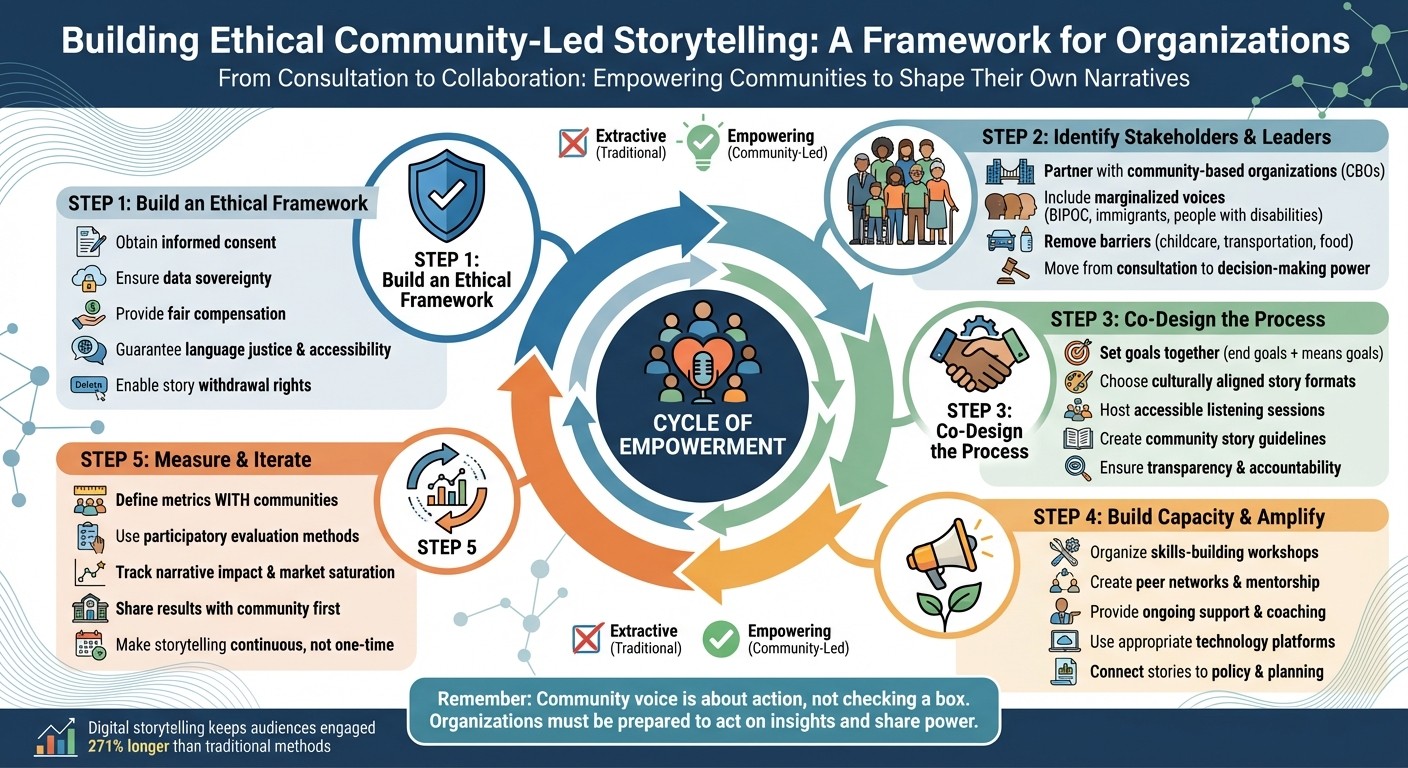
5-Step Framework for Ethical Community-Led Storytelling
Building an Ethical Framework for Community Storytelling
Core Principles of Ethical Storytelling
At the heart of ethical storytelling is the commitment to amplifying authentic community voices. This process begins with obtaining informed consent and ensuring that the stories shared do no harm. Stories can become harmful when they reduce individuals to their challenges, perpetuate divisive stereotypes, or prioritize an organization’s perspective over the lived experiences of the people involved [1]. Kate Marple, a documentary playwright and communications consultant, highlights this concern:
"Storytelling can become a tool for harm when people aren't part of shaping their own personal and community narratives or the broader frame of the issue at hand, or when the organization - and not the person - benefits from the story being told" [1].
A key aspect of ethical storytelling is data sovereignty - communities must have control over how their narratives are collected, owned, and used [6]. This means participants should have the ability to decide how their stories are shared, who can access them, and the freedom to withdraw or revise their contributions at any point. Additionally, reciprocity is essential. Offering fair compensation for participants’ time and expertise ensures their contributions are valued [3].
Accessibility and language justice are equally important. Organizations should create inclusive spaces by providing materials in multiple languages, offering disability accommodations, and addressing caregiving needs during storytelling sessions [3][6]. The Build Healthy Places Network underscores this idea:
"Communication is an essential ingredient for equity" [6].
Identifying Stakeholders and Community Leaders
Identifying the right stakeholders starts with understanding the community’s power dynamics, resources, and networks of trust. Collaborating with local community-based organizations (CBOs) that already have strong relationships with residents is an effective way to ensure diverse voices are included. These groups can help identify key contributors, such as Black, Indigenous, and people of color, immigrants, individuals with disabilities, and low-income residents [2].
A noteworthy example of community leadership is the Tides Foundation's Advancing Girls Fund, which launched a Youth Advisory Council in 2024. This council, made up of young women and gender-expansive youth aged 18–24, meets monthly to learn about grantmaking and provide input on the fund’s strategy. The ultimate goal is to shift decision-making power to these emerging leaders [3]. This model highlights the importance of moving beyond consultation to giving communities real authority over storytelling processes.
Breaking down barriers is another crucial step. Hosting accessible workshops and providing childcare, food, and transportation can make participation easier for everyone [2]. Sephora’s 2024 Community Impact Program demonstrates this approach. By partnering with Tides and 12 nonprofit organizations, Sephora employees nominated over 500 local groups for funding. This initiative resulted in $630,000 in donations, including $10,000 grants to selected nonprofits, empowering communities to shape their own narratives [3].
Setting Storytelling Goals Together
Collaborative goal-setting ensures that storytelling aligns with community priorities. Organizations should work with community groups to define both "end goals" (such as policy advocacy or cultural preservation) and "means goals" (like leadership development) [2].
Cortico’s 2025 partnership with NYC City Planning exemplifies this approach. Through 20 recorded conversations with over 60 Bronx residents, the project explored the Cross Bronx Expressway’s history and its future impact. Using "sensemaking" - a blend of human analysis and AI support - the initiative uncovered patterns and insights to guide urban planning decisions [5]. Vania Andre, editor in chief of The Haitian Times, described a similar effort:
"Listening became our strategy. The project validated what our community has long felt but rarely sees reflected. It gave us a blueprint grounded in lived experience" [5].
Transparency and accountability are essential throughout this process. Clearly communicating how the community’s input will be used and setting realistic expectations upfront helps build trust. Sharing results or completed stories with the community first ensures they benefit directly from their contributions [3].
Designing Community-Led Storytelling Processes
Running Listening Sessions and Story Circles
The most impactful listening sessions are those shaped by the community, not just with them. This approach prioritizes local leadership and ensures that these gatherings occur in spaces where participants feel comfortable and at ease - places that feel like home instead of formal or clinical environments. To truly make participants feel heard, ask them directly how the sessions can be structured to provide value and create a sense of belonging.
Accessibility must be a priority from the very beginning. Think about accommodations for disabilities, caregiving responsibilities, and dietary needs well before the session starts. For instance, the Robert Wood Johnson Foundation’s five-year "Policy Connect" program demonstrated this approach by involving grantees in the design of their peer learning community, guided by an advisory group made up of those same grantees.
Before diving into the main agenda, allow time for participants to connect and build rapport. Use language that is easy to understand and culturally aligned with the community, steering clear of technical or professional jargon. The Tides Strategic Initiatives Team emphasizes, “Community voice is about action, not about checking a box. Is your team prepared to act on insights gained from your community?” Additionally, set clear expectations at the outset by explaining what kind of feedback is being sought, how it will be used, and any limitations. This transparency helps build trust and aligns everyone on the session’s purpose.
Finally, select formats that resonate with the community’s cultural identity and preferred ways of expression.
Selecting Story Formats That Fit Local Culture
The formats you choose for storytelling should reflect how the community naturally shares and consumes information. Start by researching local media habits to determine whether newsletters, digital platforms, radio, or in-person events are more effective. Tools like a "Form Worksheet" can help brainstorm creative options, including art installations, street performances, video storytelling, or murals.
Cultural alignment is crucial. Incorporate storytelling methods rooted in local traditions, whether through oral histories, protest music, or visual arts. Visual elements and consistent branding can enhance the message’s impact. Frameworks like the "Story of Self, Us, and Now" are particularly useful for linking individual experiences to larger community goals and collective calls to action.
Once the formats are in place, it’s essential to establish clear guidelines to protect and respect the narratives being shared.
Creating Community Story Guidelines
Collaboratively define the storytelling project’s scope, goals, and priorities. Develop clear protocols for informed consent, ensuring participants have the freedom to contribute and withdraw their stories whenever they choose.
Ownership and attribution should be addressed early in the process. Decide who will retain rights to the stories and how contributors will be credited. The Sierra Club reminds us, “Inclusion is not about representation for the sake of representation - that’s tokenism! Instead, inclusion means creating opportunities for diverse voices to shape media stories and influence campaign outcomes.” Reciprocity is also key: offer fair compensation for participants’ time and insights, and ensure the community benefits from the knowledge and outcomes generated by the project.
Training Communities to Tell Their Own Stories
Organizing Skills-Building Workshops
Workshops that follow the "Hero's Journey" framework - Call, Threshold, Transformation, and Return - offer a structured way for participants to see themselves as central figures in their own learning process. This approach makes the experience more personal and meaningful.
Focusing on relational storytelling skills is key. This includes teaching practical techniques like narrative structure, ethical interviewing, and how to use accessible, low-cost tools. By keeping the language simple and culturally relevant, workshops remove barriers to participation, laying the groundwork for stronger community connections in the future.
Creating Peer Networks and Mentorship Programs
Workshops are just the beginning - building peer networks takes community storytelling to the next level. Learning Circles provide spaces where storytellers from different backgrounds can connect and collaborate. A notable example is the Policy Advocacy on Tobacco and Health (PATH) initiative, a collaboration between The Praxis Project and the Robert Wood Johnson Foundation. Starting in the early 2000s, PATH brought together tobacco-control advocates and health-justice workers, engaging thousands of participants over time to create a lasting narrative infrastructure for their movement [8].
From 2020 to 2023, the H.O.L.L.A.! program adopted a more intensive model through a 13-month "critical PAR camp" (Participatory Action Research). This initiative combined co-training, strategy development, and relationship-building to foster trust and collective analysis among organizers [7]. Regular, safe exchanges are essential to building trust and maintaining momentum. As BNP emphasizes:
"A well-developed infrastructure fosters a network of organizers, advocates, researchers, and media makers by convening them to stimulate creative thinking, learn from one another, and cement relationships and commitments to creating our healthy future" [8].
Providing Ongoing Support and Coaching
For community storytelling to thrive, ongoing support is essential. This requires a system of continuous assistance that adapts to evolving needs. Support can include guidance on using updated equipment and software, help with planning distribution through public screenings and media forums, and assistance with fundraising and proposal writing. A historical example of this approach is the tobacco control movement, which began in the 1960s. Advocates built a strong infrastructure that shifted the narrative from "personal choice" to "public health hazard", leading to widespread social norm changes and clean indoor air regulations [8].
An excellent example of sustained support is StoryCenter's long-term partnership with the Sonke Gender Justice Network in South Africa. By offering ongoing digital storytelling workshops and media-making training, the partnership has focused on education and community mobilization [9]. This consistent collaboration shows that building narrative power requires reinforcing progressive ideas until they become widely accepted [8].
How Storytelling Can Give a Community Back it's Voice | Eric Thomas | TEDxDetroit
Using Technology to Amplify Community Voices
Technology has become a powerful tool to amplify authentic community voices, building on ethical storytelling and community-driven approaches. These voices can influence and shape sustainability planning when paired with the right tools and platforms.
Choosing the Right Platforms for Your Community
The first step in integrating technology is understanding where your community gets its information. Conduct media mapping to identify trusted sources - whether it’s local newspapers, radio stations, digital forums, or cable news outlets [4]. The goal is to meet people in the spaces they already frequent.
A mix of online and offline strategies often works best. Social media, blogs, and email campaigns can complement traditional methods like community newsletters, local events, and even postcards [4]. In areas with limited internet access or low digital literacy, building trust through personal interactions is essential before introducing technological solutions [10].
Take the example of Frontier of Change in Anchorage, Alaska. Producers Isaac Kestenbaum and Josie Holtzman created a 30-minute "soundwalk" outside the Anchorage Museum, allowing listeners to experience life in Shaktoolik - a remote village threatened by climate change. This creative approach bridged physical distance and overcame internet access challenges [10]. Similarly, The Rise of Charm City in Baltimore, Maryland, engaged the community by hosting a skate party at the Shake and Bake Family Fun Center, using a familiar venue to reach groups less likely to engage with digital platforms [10].
This mix of personal connection and tailored media ensures that every story resonates and reaches its audience effectively.
Making Stories Accessible to Everyone
When crafting stories, it’s crucial to think about those who are often overlooked. Mary Ayers from New Tech Network highlights this idea:
"When you design for the people in the middle, you are leaving out a whole group of people who might be very uncomfortable in the environment you've created... by thinking about people on the edges, you are guaranteed to include everybody" [12].
Start by asking participants about their needs - whether related to disabilities, caregiving responsibilities, or digital access [3]. Use principles of language justice by providing materials in multiple languages or formats [3][6]. For those with limited literacy, methods like Photovoice (storytelling through photography) can be transformative. Platforms should also function well on older devices and in low-bandwidth settings [6][13].
For remote or hard-to-reach areas, consider creating "soundwalks." These audio-based stories allow listeners to immerse themselves in the narrative while on the move, making distant places feel closer and more tangible [10]. Research shows that digital storytelling keeps audiences engaged 271% longer than traditional methods [11].
Connecting Stories to Sustainability Planning
Accessible storytelling platforms and engaging formats enable community voices to play a central role in shaping sustainability strategies. Community narratives should be at the heart of planning efforts, using frameworks like the "Story of Self, Us, and Now" to tie personal experiences (Self) to collective identity (Us) and immediate needs (Now) [4]. This approach transforms individual stories into collective action on issues like climate resilience and sustainable economies.
For example, in October 2025, the Climate Justice League in Boise, Idaho, created a banner of postcards from community members demanding a 100% clean energy commitment from local leaders. This initiative showed how personal stories can drive collective action [4]. Similarly, the Portland Clean Energy Coalition used organizer stories to advocate for the Portland Clean Energy Fund, promoting a community-led vision for an equitable energy transition [4].
Participatory tools such as "Data Chats" and "Data Walks" help communities interpret sustainability data through small group discussions [6]. Stories from residents also inform Health Impact Assessments (HIA) and Community Health Needs Assessments (CHNA), guiding policymakers in creating strategies that maximize both health and environmental benefits [6]. Success can often be measured by "market saturation", where community-focused narratives - like framing clean energy as a fundamental right - become a regular part of broader media coverage [4].
Measuring Impact and Improving Over Time
Defining Impact Metrics with Communities
Success is best defined by the communities themselves, using metrics that reflect their priorities. Start by engaging stakeholders through participatory activities like cognitive mapping and card sorting, which help visualize ideas and collaboratively establish an evaluation framework [14].
Communities should distinguish between measurable metrics, such as media mentions and policy changes, and qualitative goals, like reframing issues [4]. This method prioritizes equity by ensuring the process is reciprocal, amplifies marginalized voices, and creates a safe space for participation [3]. Regular feedback sessions can then be used to refine these metrics over time.
Gathering Feedback Through Participatory Evaluation
Evaluation should be integrated from the beginning, not treated as an afterthought. The SHOWeD Method offers a structured way to facilitate visual storytelling discussions by asking: What do you See? What is Happening? How does it relate to Our lives? Why does this matter? What can we Do about it? [15]
For example, in 2024, the Tides Foundation's Advancing Girls Fund launched a Youth Advisory Council, composed of young women and gender-expansive individuals aged 18–24. This council meets monthly to incorporate youth perspectives into grantmaking strategies. The ultimate goal is to shift decision-making power to the council, transforming engagement from transactional listening to meaningful collaboration [3].
Making Storytelling a Continuous Practice
Storytelling should adapt to changing circumstances, ensuring it remains relevant. Regular debriefs and updates help initiatives stay aligned with community needs [4]. Over five years, the Robert Wood Johnson Foundation collaborated with Tides to create "Policy Connect", a peer learning community for grantees. An advisory group of participants shaped the program’s design and implementation, enabling the foundation to respond to ongoing feedback [3].
"Community voice is about action, not about checking a box. Is your team prepared to act on insights gained from your community?" – Tides [3]
Reciprocity is crucial in building trust. Sharing insights with the community and providing platforms to highlight their work strengthens relationships. Tracking "market saturation", or how often the community’s framing appears in media, offers a way to measure narrative traction [4]. By embedding storytelling into long-term planning, it becomes an ongoing, impactful practice rather than a one-time effort.
Conclusion
Community-led storytelling represents a powerful shift in how social change is approached. When communities take charge of their narratives, they evolve from being passive subjects to active authors, directors, and decision-makers. This shift calls for organizations to step away from the traditional role of "reporter" and instead embrace the role of facilitator - sharing creative power and relinquishing control.
The journey begins by identifying and collaborating with community leaders who are already deeply engaged in their environments. Together, organizations and communities can co-design every element of the storytelling process, from setting goals and defining success to choosing formats and distribution channels. Building trust is key, and this trust grows through meaningful compensation and shared platforms that foster mutual respect and reciprocity. As documentary playwright and communications strategist Kate Marple cautions:
"Storytelling can become a tool for harm when people aren't part of shaping their own personal and community narratives or the broader frame of the issue at hand, or when the organization - and not the person - benefits from the story being told" [1].
Examples from 2024 highlight the potential of this approach. The Advancing Girls Fund's Youth Advisory Council, for instance, empowered young women and gender-expansive youth aged 18–24 by giving them monthly decision-making roles to shape grantmaking strategies [3].
The principles in this guide - ethical frameworks, community-driven processes, skills development, accessible technology, and participatory evaluation - are designed to create lasting, inclusive storytelling practices. The focus must remain on avoiding tokenism and ensuring that inclusion leads to meaningful opportunities for communities to shape outcomes, rather than merely offering symbolic representation [4].
When communities are empowered to tell their own stories, they reframe issues, shift public narratives, and influence policy. By prioritizing equity, respecting story sovereignty, and fostering independent leadership, organizations can help communities create real, lasting impact that extends far beyond any single initiative. The goal is to amplify community voices and ensure their stories drive meaningful change.
FAQs
How can organizations uphold ethical standards in community-led storytelling?
To uphold ethical practices in community-driven storytelling, organizations must start with informed consent. This means clearly communicating how stories will be used, giving participants the opportunity to review their contributions, and respecting their right to withdraw at any point. Instead of speaking for community members, it’s important to co-create narratives with them, ensuring their voices are heard and respected.
Ethics also call for fair and equitable practices. This includes providing fair compensation, protecting individuals' privacy, and using inclusive language that aligns with how communities define themselves. By prioritizing collaboration, transparency, and trust, organizations can responsibly amplify voices while empowering communities to share their stories in ways that reflect their own experiences and perspectives.
How can we help communities share their own stories effectively?
Creating a space where individuals feel safe, respected, and heard is the first step in supporting communities to share their stories. Building trust is key - listen attentively, show genuine respect, and encourage open dialogue. This approach helps ensure that everyone feels included and valued throughout the storytelling process.
Equipping communities with practical tools and training can make a significant difference. Offering workshops on storytelling techniques, video production, or audio recording not only boosts confidence but also provides the skills needed to bring their stories to life. Collaborating with community members during the planning stages further ensures their voices remain central to the initiative.
Regularly seeking feedback is equally important. By listening to input and adapting your approach, you can keep the stories relevant and aligned with the community's vision. This ongoing collaboration helps amplify their voices and supports efforts to create meaningful, lasting change.
How does storytelling by communities drive policy changes and create social impact?
Community-driven storytelling bridges the gap between raw data and the lived experiences it represents, turning numbers into compelling, human-centered narratives. These stories bring urgent issues to light, helping decision-makers allocate resources more thoughtfully and craft policies that address real needs.
When individuals share their personal journeys, they challenge misconceptions, reveal systemic challenges, and evoke empathy. This collaborative method builds trust, enhances understanding, and empowers communities to push for transformative changes in critical areas like housing, food security, and environmental justice. By amplifying these voices, storytelling becomes a catalyst for meaningful social progress and legislative advancements.
Related Blog Posts
Latest Articles
©2025



FAQ
01
What does it really mean to “redefine profit”?
02
What makes Council Fire different?
03
Who does Council Fire you work with?
04
What does working with Council Fire actually look like?
05
How does Council Fire help organizations turn big goals into action?
06
How does Council Fire define and measure success?
Dec 18, 2025
Amplifying voices: empowering communities to tell their own stories
Capacity Building
In This Article
Ethical community-led storytelling: consent, data ownership, accessible formats, training, and participatory metrics to amplify voices and shape policy.
Amplifying voices: empowering communities to tell their own stories
Community-led storytelling puts the power of narratives into the hands of those directly impacted by social challenges, offering a shift from outsider-driven accounts to first-hand perspectives. This approach ensures that stories are not only shared but also shaped by the community itself, avoiding harmful stereotypes and prioritizing informed consent. By doing so, it strengthens empathy, boosts leadership roles - particularly among women - and influences policy changes.
Key takeaways:
Empowering Local Voices: Initiatives like Fairtrade Germany's "Impact Diaries" train individuals to share their experiences, such as how climate change affects their livelihoods.
Driving Change Through Stories: Personal accounts have been used to advocate for reforms, such as juvenile justice changes in California.
Ethical Practices: Focus on informed consent, data ownership, fair compensation, and accessibility.
Practical Tools: Workshops, peer networks, and technology make storytelling accessible and impactful.
Measurable Impact: Community-defined metrics and participatory evaluations ensure stories lead to actionable outcomes.
This guide provides actionable steps for organizations to collaborate with communities, ensuring their stories drive awareness and meaningful change.
5-Step Framework for Ethical Community-Led Storytelling
Building an Ethical Framework for Community Storytelling
Core Principles of Ethical Storytelling
At the heart of ethical storytelling is the commitment to amplifying authentic community voices. This process begins with obtaining informed consent and ensuring that the stories shared do no harm. Stories can become harmful when they reduce individuals to their challenges, perpetuate divisive stereotypes, or prioritize an organization’s perspective over the lived experiences of the people involved [1]. Kate Marple, a documentary playwright and communications consultant, highlights this concern:
"Storytelling can become a tool for harm when people aren't part of shaping their own personal and community narratives or the broader frame of the issue at hand, or when the organization - and not the person - benefits from the story being told" [1].
A key aspect of ethical storytelling is data sovereignty - communities must have control over how their narratives are collected, owned, and used [6]. This means participants should have the ability to decide how their stories are shared, who can access them, and the freedom to withdraw or revise their contributions at any point. Additionally, reciprocity is essential. Offering fair compensation for participants’ time and expertise ensures their contributions are valued [3].
Accessibility and language justice are equally important. Organizations should create inclusive spaces by providing materials in multiple languages, offering disability accommodations, and addressing caregiving needs during storytelling sessions [3][6]. The Build Healthy Places Network underscores this idea:
"Communication is an essential ingredient for equity" [6].
Identifying Stakeholders and Community Leaders
Identifying the right stakeholders starts with understanding the community’s power dynamics, resources, and networks of trust. Collaborating with local community-based organizations (CBOs) that already have strong relationships with residents is an effective way to ensure diverse voices are included. These groups can help identify key contributors, such as Black, Indigenous, and people of color, immigrants, individuals with disabilities, and low-income residents [2].
A noteworthy example of community leadership is the Tides Foundation's Advancing Girls Fund, which launched a Youth Advisory Council in 2024. This council, made up of young women and gender-expansive youth aged 18–24, meets monthly to learn about grantmaking and provide input on the fund’s strategy. The ultimate goal is to shift decision-making power to these emerging leaders [3]. This model highlights the importance of moving beyond consultation to giving communities real authority over storytelling processes.
Breaking down barriers is another crucial step. Hosting accessible workshops and providing childcare, food, and transportation can make participation easier for everyone [2]. Sephora’s 2024 Community Impact Program demonstrates this approach. By partnering with Tides and 12 nonprofit organizations, Sephora employees nominated over 500 local groups for funding. This initiative resulted in $630,000 in donations, including $10,000 grants to selected nonprofits, empowering communities to shape their own narratives [3].
Setting Storytelling Goals Together
Collaborative goal-setting ensures that storytelling aligns with community priorities. Organizations should work with community groups to define both "end goals" (such as policy advocacy or cultural preservation) and "means goals" (like leadership development) [2].
Cortico’s 2025 partnership with NYC City Planning exemplifies this approach. Through 20 recorded conversations with over 60 Bronx residents, the project explored the Cross Bronx Expressway’s history and its future impact. Using "sensemaking" - a blend of human analysis and AI support - the initiative uncovered patterns and insights to guide urban planning decisions [5]. Vania Andre, editor in chief of The Haitian Times, described a similar effort:
"Listening became our strategy. The project validated what our community has long felt but rarely sees reflected. It gave us a blueprint grounded in lived experience" [5].
Transparency and accountability are essential throughout this process. Clearly communicating how the community’s input will be used and setting realistic expectations upfront helps build trust. Sharing results or completed stories with the community first ensures they benefit directly from their contributions [3].
Designing Community-Led Storytelling Processes
Running Listening Sessions and Story Circles
The most impactful listening sessions are those shaped by the community, not just with them. This approach prioritizes local leadership and ensures that these gatherings occur in spaces where participants feel comfortable and at ease - places that feel like home instead of formal or clinical environments. To truly make participants feel heard, ask them directly how the sessions can be structured to provide value and create a sense of belonging.
Accessibility must be a priority from the very beginning. Think about accommodations for disabilities, caregiving responsibilities, and dietary needs well before the session starts. For instance, the Robert Wood Johnson Foundation’s five-year "Policy Connect" program demonstrated this approach by involving grantees in the design of their peer learning community, guided by an advisory group made up of those same grantees.
Before diving into the main agenda, allow time for participants to connect and build rapport. Use language that is easy to understand and culturally aligned with the community, steering clear of technical or professional jargon. The Tides Strategic Initiatives Team emphasizes, “Community voice is about action, not about checking a box. Is your team prepared to act on insights gained from your community?” Additionally, set clear expectations at the outset by explaining what kind of feedback is being sought, how it will be used, and any limitations. This transparency helps build trust and aligns everyone on the session’s purpose.
Finally, select formats that resonate with the community’s cultural identity and preferred ways of expression.
Selecting Story Formats That Fit Local Culture
The formats you choose for storytelling should reflect how the community naturally shares and consumes information. Start by researching local media habits to determine whether newsletters, digital platforms, radio, or in-person events are more effective. Tools like a "Form Worksheet" can help brainstorm creative options, including art installations, street performances, video storytelling, or murals.
Cultural alignment is crucial. Incorporate storytelling methods rooted in local traditions, whether through oral histories, protest music, or visual arts. Visual elements and consistent branding can enhance the message’s impact. Frameworks like the "Story of Self, Us, and Now" are particularly useful for linking individual experiences to larger community goals and collective calls to action.
Once the formats are in place, it’s essential to establish clear guidelines to protect and respect the narratives being shared.
Creating Community Story Guidelines
Collaboratively define the storytelling project’s scope, goals, and priorities. Develop clear protocols for informed consent, ensuring participants have the freedom to contribute and withdraw their stories whenever they choose.
Ownership and attribution should be addressed early in the process. Decide who will retain rights to the stories and how contributors will be credited. The Sierra Club reminds us, “Inclusion is not about representation for the sake of representation - that’s tokenism! Instead, inclusion means creating opportunities for diverse voices to shape media stories and influence campaign outcomes.” Reciprocity is also key: offer fair compensation for participants’ time and insights, and ensure the community benefits from the knowledge and outcomes generated by the project.
Training Communities to Tell Their Own Stories
Organizing Skills-Building Workshops
Workshops that follow the "Hero's Journey" framework - Call, Threshold, Transformation, and Return - offer a structured way for participants to see themselves as central figures in their own learning process. This approach makes the experience more personal and meaningful.
Focusing on relational storytelling skills is key. This includes teaching practical techniques like narrative structure, ethical interviewing, and how to use accessible, low-cost tools. By keeping the language simple and culturally relevant, workshops remove barriers to participation, laying the groundwork for stronger community connections in the future.
Creating Peer Networks and Mentorship Programs
Workshops are just the beginning - building peer networks takes community storytelling to the next level. Learning Circles provide spaces where storytellers from different backgrounds can connect and collaborate. A notable example is the Policy Advocacy on Tobacco and Health (PATH) initiative, a collaboration between The Praxis Project and the Robert Wood Johnson Foundation. Starting in the early 2000s, PATH brought together tobacco-control advocates and health-justice workers, engaging thousands of participants over time to create a lasting narrative infrastructure for their movement [8].
From 2020 to 2023, the H.O.L.L.A.! program adopted a more intensive model through a 13-month "critical PAR camp" (Participatory Action Research). This initiative combined co-training, strategy development, and relationship-building to foster trust and collective analysis among organizers [7]. Regular, safe exchanges are essential to building trust and maintaining momentum. As BNP emphasizes:
"A well-developed infrastructure fosters a network of organizers, advocates, researchers, and media makers by convening them to stimulate creative thinking, learn from one another, and cement relationships and commitments to creating our healthy future" [8].
Providing Ongoing Support and Coaching
For community storytelling to thrive, ongoing support is essential. This requires a system of continuous assistance that adapts to evolving needs. Support can include guidance on using updated equipment and software, help with planning distribution through public screenings and media forums, and assistance with fundraising and proposal writing. A historical example of this approach is the tobacco control movement, which began in the 1960s. Advocates built a strong infrastructure that shifted the narrative from "personal choice" to "public health hazard", leading to widespread social norm changes and clean indoor air regulations [8].
An excellent example of sustained support is StoryCenter's long-term partnership with the Sonke Gender Justice Network in South Africa. By offering ongoing digital storytelling workshops and media-making training, the partnership has focused on education and community mobilization [9]. This consistent collaboration shows that building narrative power requires reinforcing progressive ideas until they become widely accepted [8].
How Storytelling Can Give a Community Back it's Voice | Eric Thomas | TEDxDetroit
Using Technology to Amplify Community Voices
Technology has become a powerful tool to amplify authentic community voices, building on ethical storytelling and community-driven approaches. These voices can influence and shape sustainability planning when paired with the right tools and platforms.
Choosing the Right Platforms for Your Community
The first step in integrating technology is understanding where your community gets its information. Conduct media mapping to identify trusted sources - whether it’s local newspapers, radio stations, digital forums, or cable news outlets [4]. The goal is to meet people in the spaces they already frequent.
A mix of online and offline strategies often works best. Social media, blogs, and email campaigns can complement traditional methods like community newsletters, local events, and even postcards [4]. In areas with limited internet access or low digital literacy, building trust through personal interactions is essential before introducing technological solutions [10].
Take the example of Frontier of Change in Anchorage, Alaska. Producers Isaac Kestenbaum and Josie Holtzman created a 30-minute "soundwalk" outside the Anchorage Museum, allowing listeners to experience life in Shaktoolik - a remote village threatened by climate change. This creative approach bridged physical distance and overcame internet access challenges [10]. Similarly, The Rise of Charm City in Baltimore, Maryland, engaged the community by hosting a skate party at the Shake and Bake Family Fun Center, using a familiar venue to reach groups less likely to engage with digital platforms [10].
This mix of personal connection and tailored media ensures that every story resonates and reaches its audience effectively.
Making Stories Accessible to Everyone
When crafting stories, it’s crucial to think about those who are often overlooked. Mary Ayers from New Tech Network highlights this idea:
"When you design for the people in the middle, you are leaving out a whole group of people who might be very uncomfortable in the environment you've created... by thinking about people on the edges, you are guaranteed to include everybody" [12].
Start by asking participants about their needs - whether related to disabilities, caregiving responsibilities, or digital access [3]. Use principles of language justice by providing materials in multiple languages or formats [3][6]. For those with limited literacy, methods like Photovoice (storytelling through photography) can be transformative. Platforms should also function well on older devices and in low-bandwidth settings [6][13].
For remote or hard-to-reach areas, consider creating "soundwalks." These audio-based stories allow listeners to immerse themselves in the narrative while on the move, making distant places feel closer and more tangible [10]. Research shows that digital storytelling keeps audiences engaged 271% longer than traditional methods [11].
Connecting Stories to Sustainability Planning
Accessible storytelling platforms and engaging formats enable community voices to play a central role in shaping sustainability strategies. Community narratives should be at the heart of planning efforts, using frameworks like the "Story of Self, Us, and Now" to tie personal experiences (Self) to collective identity (Us) and immediate needs (Now) [4]. This approach transforms individual stories into collective action on issues like climate resilience and sustainable economies.
For example, in October 2025, the Climate Justice League in Boise, Idaho, created a banner of postcards from community members demanding a 100% clean energy commitment from local leaders. This initiative showed how personal stories can drive collective action [4]. Similarly, the Portland Clean Energy Coalition used organizer stories to advocate for the Portland Clean Energy Fund, promoting a community-led vision for an equitable energy transition [4].
Participatory tools such as "Data Chats" and "Data Walks" help communities interpret sustainability data through small group discussions [6]. Stories from residents also inform Health Impact Assessments (HIA) and Community Health Needs Assessments (CHNA), guiding policymakers in creating strategies that maximize both health and environmental benefits [6]. Success can often be measured by "market saturation", where community-focused narratives - like framing clean energy as a fundamental right - become a regular part of broader media coverage [4].
Measuring Impact and Improving Over Time
Defining Impact Metrics with Communities
Success is best defined by the communities themselves, using metrics that reflect their priorities. Start by engaging stakeholders through participatory activities like cognitive mapping and card sorting, which help visualize ideas and collaboratively establish an evaluation framework [14].
Communities should distinguish between measurable metrics, such as media mentions and policy changes, and qualitative goals, like reframing issues [4]. This method prioritizes equity by ensuring the process is reciprocal, amplifies marginalized voices, and creates a safe space for participation [3]. Regular feedback sessions can then be used to refine these metrics over time.
Gathering Feedback Through Participatory Evaluation
Evaluation should be integrated from the beginning, not treated as an afterthought. The SHOWeD Method offers a structured way to facilitate visual storytelling discussions by asking: What do you See? What is Happening? How does it relate to Our lives? Why does this matter? What can we Do about it? [15]
For example, in 2024, the Tides Foundation's Advancing Girls Fund launched a Youth Advisory Council, composed of young women and gender-expansive individuals aged 18–24. This council meets monthly to incorporate youth perspectives into grantmaking strategies. The ultimate goal is to shift decision-making power to the council, transforming engagement from transactional listening to meaningful collaboration [3].
Making Storytelling a Continuous Practice
Storytelling should adapt to changing circumstances, ensuring it remains relevant. Regular debriefs and updates help initiatives stay aligned with community needs [4]. Over five years, the Robert Wood Johnson Foundation collaborated with Tides to create "Policy Connect", a peer learning community for grantees. An advisory group of participants shaped the program’s design and implementation, enabling the foundation to respond to ongoing feedback [3].
"Community voice is about action, not about checking a box. Is your team prepared to act on insights gained from your community?" – Tides [3]
Reciprocity is crucial in building trust. Sharing insights with the community and providing platforms to highlight their work strengthens relationships. Tracking "market saturation", or how often the community’s framing appears in media, offers a way to measure narrative traction [4]. By embedding storytelling into long-term planning, it becomes an ongoing, impactful practice rather than a one-time effort.
Conclusion
Community-led storytelling represents a powerful shift in how social change is approached. When communities take charge of their narratives, they evolve from being passive subjects to active authors, directors, and decision-makers. This shift calls for organizations to step away from the traditional role of "reporter" and instead embrace the role of facilitator - sharing creative power and relinquishing control.
The journey begins by identifying and collaborating with community leaders who are already deeply engaged in their environments. Together, organizations and communities can co-design every element of the storytelling process, from setting goals and defining success to choosing formats and distribution channels. Building trust is key, and this trust grows through meaningful compensation and shared platforms that foster mutual respect and reciprocity. As documentary playwright and communications strategist Kate Marple cautions:
"Storytelling can become a tool for harm when people aren't part of shaping their own personal and community narratives or the broader frame of the issue at hand, or when the organization - and not the person - benefits from the story being told" [1].
Examples from 2024 highlight the potential of this approach. The Advancing Girls Fund's Youth Advisory Council, for instance, empowered young women and gender-expansive youth aged 18–24 by giving them monthly decision-making roles to shape grantmaking strategies [3].
The principles in this guide - ethical frameworks, community-driven processes, skills development, accessible technology, and participatory evaluation - are designed to create lasting, inclusive storytelling practices. The focus must remain on avoiding tokenism and ensuring that inclusion leads to meaningful opportunities for communities to shape outcomes, rather than merely offering symbolic representation [4].
When communities are empowered to tell their own stories, they reframe issues, shift public narratives, and influence policy. By prioritizing equity, respecting story sovereignty, and fostering independent leadership, organizations can help communities create real, lasting impact that extends far beyond any single initiative. The goal is to amplify community voices and ensure their stories drive meaningful change.
FAQs
How can organizations uphold ethical standards in community-led storytelling?
To uphold ethical practices in community-driven storytelling, organizations must start with informed consent. This means clearly communicating how stories will be used, giving participants the opportunity to review their contributions, and respecting their right to withdraw at any point. Instead of speaking for community members, it’s important to co-create narratives with them, ensuring their voices are heard and respected.
Ethics also call for fair and equitable practices. This includes providing fair compensation, protecting individuals' privacy, and using inclusive language that aligns with how communities define themselves. By prioritizing collaboration, transparency, and trust, organizations can responsibly amplify voices while empowering communities to share their stories in ways that reflect their own experiences and perspectives.
How can we help communities share their own stories effectively?
Creating a space where individuals feel safe, respected, and heard is the first step in supporting communities to share their stories. Building trust is key - listen attentively, show genuine respect, and encourage open dialogue. This approach helps ensure that everyone feels included and valued throughout the storytelling process.
Equipping communities with practical tools and training can make a significant difference. Offering workshops on storytelling techniques, video production, or audio recording not only boosts confidence but also provides the skills needed to bring their stories to life. Collaborating with community members during the planning stages further ensures their voices remain central to the initiative.
Regularly seeking feedback is equally important. By listening to input and adapting your approach, you can keep the stories relevant and aligned with the community's vision. This ongoing collaboration helps amplify their voices and supports efforts to create meaningful, lasting change.
How does storytelling by communities drive policy changes and create social impact?
Community-driven storytelling bridges the gap between raw data and the lived experiences it represents, turning numbers into compelling, human-centered narratives. These stories bring urgent issues to light, helping decision-makers allocate resources more thoughtfully and craft policies that address real needs.
When individuals share their personal journeys, they challenge misconceptions, reveal systemic challenges, and evoke empathy. This collaborative method builds trust, enhances understanding, and empowers communities to push for transformative changes in critical areas like housing, food security, and environmental justice. By amplifying these voices, storytelling becomes a catalyst for meaningful social progress and legislative advancements.
Related Blog Posts
FAQ
01
What does it really mean to “redefine profit”?
02
What makes Council Fire different?
03
Who does Council Fire you work with?
04
What does working with Council Fire actually look like?
05
How does Council Fire help organizations turn big goals into action?
06
How does Council Fire define and measure success?
Dec 18, 2025
Amplifying voices: empowering communities to tell their own stories
Capacity Building
In This Article
Ethical community-led storytelling: consent, data ownership, accessible formats, training, and participatory metrics to amplify voices and shape policy.
Amplifying voices: empowering communities to tell their own stories
Community-led storytelling puts the power of narratives into the hands of those directly impacted by social challenges, offering a shift from outsider-driven accounts to first-hand perspectives. This approach ensures that stories are not only shared but also shaped by the community itself, avoiding harmful stereotypes and prioritizing informed consent. By doing so, it strengthens empathy, boosts leadership roles - particularly among women - and influences policy changes.
Key takeaways:
Empowering Local Voices: Initiatives like Fairtrade Germany's "Impact Diaries" train individuals to share their experiences, such as how climate change affects their livelihoods.
Driving Change Through Stories: Personal accounts have been used to advocate for reforms, such as juvenile justice changes in California.
Ethical Practices: Focus on informed consent, data ownership, fair compensation, and accessibility.
Practical Tools: Workshops, peer networks, and technology make storytelling accessible and impactful.
Measurable Impact: Community-defined metrics and participatory evaluations ensure stories lead to actionable outcomes.
This guide provides actionable steps for organizations to collaborate with communities, ensuring their stories drive awareness and meaningful change.
5-Step Framework for Ethical Community-Led Storytelling
Building an Ethical Framework for Community Storytelling
Core Principles of Ethical Storytelling
At the heart of ethical storytelling is the commitment to amplifying authentic community voices. This process begins with obtaining informed consent and ensuring that the stories shared do no harm. Stories can become harmful when they reduce individuals to their challenges, perpetuate divisive stereotypes, or prioritize an organization’s perspective over the lived experiences of the people involved [1]. Kate Marple, a documentary playwright and communications consultant, highlights this concern:
"Storytelling can become a tool for harm when people aren't part of shaping their own personal and community narratives or the broader frame of the issue at hand, or when the organization - and not the person - benefits from the story being told" [1].
A key aspect of ethical storytelling is data sovereignty - communities must have control over how their narratives are collected, owned, and used [6]. This means participants should have the ability to decide how their stories are shared, who can access them, and the freedom to withdraw or revise their contributions at any point. Additionally, reciprocity is essential. Offering fair compensation for participants’ time and expertise ensures their contributions are valued [3].
Accessibility and language justice are equally important. Organizations should create inclusive spaces by providing materials in multiple languages, offering disability accommodations, and addressing caregiving needs during storytelling sessions [3][6]. The Build Healthy Places Network underscores this idea:
"Communication is an essential ingredient for equity" [6].
Identifying Stakeholders and Community Leaders
Identifying the right stakeholders starts with understanding the community’s power dynamics, resources, and networks of trust. Collaborating with local community-based organizations (CBOs) that already have strong relationships with residents is an effective way to ensure diverse voices are included. These groups can help identify key contributors, such as Black, Indigenous, and people of color, immigrants, individuals with disabilities, and low-income residents [2].
A noteworthy example of community leadership is the Tides Foundation's Advancing Girls Fund, which launched a Youth Advisory Council in 2024. This council, made up of young women and gender-expansive youth aged 18–24, meets monthly to learn about grantmaking and provide input on the fund’s strategy. The ultimate goal is to shift decision-making power to these emerging leaders [3]. This model highlights the importance of moving beyond consultation to giving communities real authority over storytelling processes.
Breaking down barriers is another crucial step. Hosting accessible workshops and providing childcare, food, and transportation can make participation easier for everyone [2]. Sephora’s 2024 Community Impact Program demonstrates this approach. By partnering with Tides and 12 nonprofit organizations, Sephora employees nominated over 500 local groups for funding. This initiative resulted in $630,000 in donations, including $10,000 grants to selected nonprofits, empowering communities to shape their own narratives [3].
Setting Storytelling Goals Together
Collaborative goal-setting ensures that storytelling aligns with community priorities. Organizations should work with community groups to define both "end goals" (such as policy advocacy or cultural preservation) and "means goals" (like leadership development) [2].
Cortico’s 2025 partnership with NYC City Planning exemplifies this approach. Through 20 recorded conversations with over 60 Bronx residents, the project explored the Cross Bronx Expressway’s history and its future impact. Using "sensemaking" - a blend of human analysis and AI support - the initiative uncovered patterns and insights to guide urban planning decisions [5]. Vania Andre, editor in chief of The Haitian Times, described a similar effort:
"Listening became our strategy. The project validated what our community has long felt but rarely sees reflected. It gave us a blueprint grounded in lived experience" [5].
Transparency and accountability are essential throughout this process. Clearly communicating how the community’s input will be used and setting realistic expectations upfront helps build trust. Sharing results or completed stories with the community first ensures they benefit directly from their contributions [3].
Designing Community-Led Storytelling Processes
Running Listening Sessions and Story Circles
The most impactful listening sessions are those shaped by the community, not just with them. This approach prioritizes local leadership and ensures that these gatherings occur in spaces where participants feel comfortable and at ease - places that feel like home instead of formal or clinical environments. To truly make participants feel heard, ask them directly how the sessions can be structured to provide value and create a sense of belonging.
Accessibility must be a priority from the very beginning. Think about accommodations for disabilities, caregiving responsibilities, and dietary needs well before the session starts. For instance, the Robert Wood Johnson Foundation’s five-year "Policy Connect" program demonstrated this approach by involving grantees in the design of their peer learning community, guided by an advisory group made up of those same grantees.
Before diving into the main agenda, allow time for participants to connect and build rapport. Use language that is easy to understand and culturally aligned with the community, steering clear of technical or professional jargon. The Tides Strategic Initiatives Team emphasizes, “Community voice is about action, not about checking a box. Is your team prepared to act on insights gained from your community?” Additionally, set clear expectations at the outset by explaining what kind of feedback is being sought, how it will be used, and any limitations. This transparency helps build trust and aligns everyone on the session’s purpose.
Finally, select formats that resonate with the community’s cultural identity and preferred ways of expression.
Selecting Story Formats That Fit Local Culture
The formats you choose for storytelling should reflect how the community naturally shares and consumes information. Start by researching local media habits to determine whether newsletters, digital platforms, radio, or in-person events are more effective. Tools like a "Form Worksheet" can help brainstorm creative options, including art installations, street performances, video storytelling, or murals.
Cultural alignment is crucial. Incorporate storytelling methods rooted in local traditions, whether through oral histories, protest music, or visual arts. Visual elements and consistent branding can enhance the message’s impact. Frameworks like the "Story of Self, Us, and Now" are particularly useful for linking individual experiences to larger community goals and collective calls to action.
Once the formats are in place, it’s essential to establish clear guidelines to protect and respect the narratives being shared.
Creating Community Story Guidelines
Collaboratively define the storytelling project’s scope, goals, and priorities. Develop clear protocols for informed consent, ensuring participants have the freedom to contribute and withdraw their stories whenever they choose.
Ownership and attribution should be addressed early in the process. Decide who will retain rights to the stories and how contributors will be credited. The Sierra Club reminds us, “Inclusion is not about representation for the sake of representation - that’s tokenism! Instead, inclusion means creating opportunities for diverse voices to shape media stories and influence campaign outcomes.” Reciprocity is also key: offer fair compensation for participants’ time and insights, and ensure the community benefits from the knowledge and outcomes generated by the project.
Training Communities to Tell Their Own Stories
Organizing Skills-Building Workshops
Workshops that follow the "Hero's Journey" framework - Call, Threshold, Transformation, and Return - offer a structured way for participants to see themselves as central figures in their own learning process. This approach makes the experience more personal and meaningful.
Focusing on relational storytelling skills is key. This includes teaching practical techniques like narrative structure, ethical interviewing, and how to use accessible, low-cost tools. By keeping the language simple and culturally relevant, workshops remove barriers to participation, laying the groundwork for stronger community connections in the future.
Creating Peer Networks and Mentorship Programs
Workshops are just the beginning - building peer networks takes community storytelling to the next level. Learning Circles provide spaces where storytellers from different backgrounds can connect and collaborate. A notable example is the Policy Advocacy on Tobacco and Health (PATH) initiative, a collaboration between The Praxis Project and the Robert Wood Johnson Foundation. Starting in the early 2000s, PATH brought together tobacco-control advocates and health-justice workers, engaging thousands of participants over time to create a lasting narrative infrastructure for their movement [8].
From 2020 to 2023, the H.O.L.L.A.! program adopted a more intensive model through a 13-month "critical PAR camp" (Participatory Action Research). This initiative combined co-training, strategy development, and relationship-building to foster trust and collective analysis among organizers [7]. Regular, safe exchanges are essential to building trust and maintaining momentum. As BNP emphasizes:
"A well-developed infrastructure fosters a network of organizers, advocates, researchers, and media makers by convening them to stimulate creative thinking, learn from one another, and cement relationships and commitments to creating our healthy future" [8].
Providing Ongoing Support and Coaching
For community storytelling to thrive, ongoing support is essential. This requires a system of continuous assistance that adapts to evolving needs. Support can include guidance on using updated equipment and software, help with planning distribution through public screenings and media forums, and assistance with fundraising and proposal writing. A historical example of this approach is the tobacco control movement, which began in the 1960s. Advocates built a strong infrastructure that shifted the narrative from "personal choice" to "public health hazard", leading to widespread social norm changes and clean indoor air regulations [8].
An excellent example of sustained support is StoryCenter's long-term partnership with the Sonke Gender Justice Network in South Africa. By offering ongoing digital storytelling workshops and media-making training, the partnership has focused on education and community mobilization [9]. This consistent collaboration shows that building narrative power requires reinforcing progressive ideas until they become widely accepted [8].
How Storytelling Can Give a Community Back it's Voice | Eric Thomas | TEDxDetroit
Using Technology to Amplify Community Voices
Technology has become a powerful tool to amplify authentic community voices, building on ethical storytelling and community-driven approaches. These voices can influence and shape sustainability planning when paired with the right tools and platforms.
Choosing the Right Platforms for Your Community
The first step in integrating technology is understanding where your community gets its information. Conduct media mapping to identify trusted sources - whether it’s local newspapers, radio stations, digital forums, or cable news outlets [4]. The goal is to meet people in the spaces they already frequent.
A mix of online and offline strategies often works best. Social media, blogs, and email campaigns can complement traditional methods like community newsletters, local events, and even postcards [4]. In areas with limited internet access or low digital literacy, building trust through personal interactions is essential before introducing technological solutions [10].
Take the example of Frontier of Change in Anchorage, Alaska. Producers Isaac Kestenbaum and Josie Holtzman created a 30-minute "soundwalk" outside the Anchorage Museum, allowing listeners to experience life in Shaktoolik - a remote village threatened by climate change. This creative approach bridged physical distance and overcame internet access challenges [10]. Similarly, The Rise of Charm City in Baltimore, Maryland, engaged the community by hosting a skate party at the Shake and Bake Family Fun Center, using a familiar venue to reach groups less likely to engage with digital platforms [10].
This mix of personal connection and tailored media ensures that every story resonates and reaches its audience effectively.
Making Stories Accessible to Everyone
When crafting stories, it’s crucial to think about those who are often overlooked. Mary Ayers from New Tech Network highlights this idea:
"When you design for the people in the middle, you are leaving out a whole group of people who might be very uncomfortable in the environment you've created... by thinking about people on the edges, you are guaranteed to include everybody" [12].
Start by asking participants about their needs - whether related to disabilities, caregiving responsibilities, or digital access [3]. Use principles of language justice by providing materials in multiple languages or formats [3][6]. For those with limited literacy, methods like Photovoice (storytelling through photography) can be transformative. Platforms should also function well on older devices and in low-bandwidth settings [6][13].
For remote or hard-to-reach areas, consider creating "soundwalks." These audio-based stories allow listeners to immerse themselves in the narrative while on the move, making distant places feel closer and more tangible [10]. Research shows that digital storytelling keeps audiences engaged 271% longer than traditional methods [11].
Connecting Stories to Sustainability Planning
Accessible storytelling platforms and engaging formats enable community voices to play a central role in shaping sustainability strategies. Community narratives should be at the heart of planning efforts, using frameworks like the "Story of Self, Us, and Now" to tie personal experiences (Self) to collective identity (Us) and immediate needs (Now) [4]. This approach transforms individual stories into collective action on issues like climate resilience and sustainable economies.
For example, in October 2025, the Climate Justice League in Boise, Idaho, created a banner of postcards from community members demanding a 100% clean energy commitment from local leaders. This initiative showed how personal stories can drive collective action [4]. Similarly, the Portland Clean Energy Coalition used organizer stories to advocate for the Portland Clean Energy Fund, promoting a community-led vision for an equitable energy transition [4].
Participatory tools such as "Data Chats" and "Data Walks" help communities interpret sustainability data through small group discussions [6]. Stories from residents also inform Health Impact Assessments (HIA) and Community Health Needs Assessments (CHNA), guiding policymakers in creating strategies that maximize both health and environmental benefits [6]. Success can often be measured by "market saturation", where community-focused narratives - like framing clean energy as a fundamental right - become a regular part of broader media coverage [4].
Measuring Impact and Improving Over Time
Defining Impact Metrics with Communities
Success is best defined by the communities themselves, using metrics that reflect their priorities. Start by engaging stakeholders through participatory activities like cognitive mapping and card sorting, which help visualize ideas and collaboratively establish an evaluation framework [14].
Communities should distinguish between measurable metrics, such as media mentions and policy changes, and qualitative goals, like reframing issues [4]. This method prioritizes equity by ensuring the process is reciprocal, amplifies marginalized voices, and creates a safe space for participation [3]. Regular feedback sessions can then be used to refine these metrics over time.
Gathering Feedback Through Participatory Evaluation
Evaluation should be integrated from the beginning, not treated as an afterthought. The SHOWeD Method offers a structured way to facilitate visual storytelling discussions by asking: What do you See? What is Happening? How does it relate to Our lives? Why does this matter? What can we Do about it? [15]
For example, in 2024, the Tides Foundation's Advancing Girls Fund launched a Youth Advisory Council, composed of young women and gender-expansive individuals aged 18–24. This council meets monthly to incorporate youth perspectives into grantmaking strategies. The ultimate goal is to shift decision-making power to the council, transforming engagement from transactional listening to meaningful collaboration [3].
Making Storytelling a Continuous Practice
Storytelling should adapt to changing circumstances, ensuring it remains relevant. Regular debriefs and updates help initiatives stay aligned with community needs [4]. Over five years, the Robert Wood Johnson Foundation collaborated with Tides to create "Policy Connect", a peer learning community for grantees. An advisory group of participants shaped the program’s design and implementation, enabling the foundation to respond to ongoing feedback [3].
"Community voice is about action, not about checking a box. Is your team prepared to act on insights gained from your community?" – Tides [3]
Reciprocity is crucial in building trust. Sharing insights with the community and providing platforms to highlight their work strengthens relationships. Tracking "market saturation", or how often the community’s framing appears in media, offers a way to measure narrative traction [4]. By embedding storytelling into long-term planning, it becomes an ongoing, impactful practice rather than a one-time effort.
Conclusion
Community-led storytelling represents a powerful shift in how social change is approached. When communities take charge of their narratives, they evolve from being passive subjects to active authors, directors, and decision-makers. This shift calls for organizations to step away from the traditional role of "reporter" and instead embrace the role of facilitator - sharing creative power and relinquishing control.
The journey begins by identifying and collaborating with community leaders who are already deeply engaged in their environments. Together, organizations and communities can co-design every element of the storytelling process, from setting goals and defining success to choosing formats and distribution channels. Building trust is key, and this trust grows through meaningful compensation and shared platforms that foster mutual respect and reciprocity. As documentary playwright and communications strategist Kate Marple cautions:
"Storytelling can become a tool for harm when people aren't part of shaping their own personal and community narratives or the broader frame of the issue at hand, or when the organization - and not the person - benefits from the story being told" [1].
Examples from 2024 highlight the potential of this approach. The Advancing Girls Fund's Youth Advisory Council, for instance, empowered young women and gender-expansive youth aged 18–24 by giving them monthly decision-making roles to shape grantmaking strategies [3].
The principles in this guide - ethical frameworks, community-driven processes, skills development, accessible technology, and participatory evaluation - are designed to create lasting, inclusive storytelling practices. The focus must remain on avoiding tokenism and ensuring that inclusion leads to meaningful opportunities for communities to shape outcomes, rather than merely offering symbolic representation [4].
When communities are empowered to tell their own stories, they reframe issues, shift public narratives, and influence policy. By prioritizing equity, respecting story sovereignty, and fostering independent leadership, organizations can help communities create real, lasting impact that extends far beyond any single initiative. The goal is to amplify community voices and ensure their stories drive meaningful change.
FAQs
How can organizations uphold ethical standards in community-led storytelling?
To uphold ethical practices in community-driven storytelling, organizations must start with informed consent. This means clearly communicating how stories will be used, giving participants the opportunity to review their contributions, and respecting their right to withdraw at any point. Instead of speaking for community members, it’s important to co-create narratives with them, ensuring their voices are heard and respected.
Ethics also call for fair and equitable practices. This includes providing fair compensation, protecting individuals' privacy, and using inclusive language that aligns with how communities define themselves. By prioritizing collaboration, transparency, and trust, organizations can responsibly amplify voices while empowering communities to share their stories in ways that reflect their own experiences and perspectives.
How can we help communities share their own stories effectively?
Creating a space where individuals feel safe, respected, and heard is the first step in supporting communities to share their stories. Building trust is key - listen attentively, show genuine respect, and encourage open dialogue. This approach helps ensure that everyone feels included and valued throughout the storytelling process.
Equipping communities with practical tools and training can make a significant difference. Offering workshops on storytelling techniques, video production, or audio recording not only boosts confidence but also provides the skills needed to bring their stories to life. Collaborating with community members during the planning stages further ensures their voices remain central to the initiative.
Regularly seeking feedback is equally important. By listening to input and adapting your approach, you can keep the stories relevant and aligned with the community's vision. This ongoing collaboration helps amplify their voices and supports efforts to create meaningful, lasting change.
How does storytelling by communities drive policy changes and create social impact?
Community-driven storytelling bridges the gap between raw data and the lived experiences it represents, turning numbers into compelling, human-centered narratives. These stories bring urgent issues to light, helping decision-makers allocate resources more thoughtfully and craft policies that address real needs.
When individuals share their personal journeys, they challenge misconceptions, reveal systemic challenges, and evoke empathy. This collaborative method builds trust, enhances understanding, and empowers communities to push for transformative changes in critical areas like housing, food security, and environmental justice. By amplifying these voices, storytelling becomes a catalyst for meaningful social progress and legislative advancements.
Related Blog Posts
FAQ
What does it really mean to “redefine profit”?
What makes Council Fire different?
Who does Council Fire you work with?
What does working with Council Fire actually look like?
How does Council Fire help organizations turn big goals into action?
How does Council Fire define and measure success?