

Mar 1, 2026
How to Align Stakeholders Around a Shared ESG Vision for Municipalities & Government Agencies
ESG Strategy
In This Article
Steps for municipalities to align stakeholders on ESG: map stakeholders, set SMART goals, build trust, and track progress with governance and dashboards.
How to Align Stakeholders Around a Shared ESG Vision for Municipalities & Government Agencies
Aligning stakeholders for ESG success requires clear goals, transparent communication, and accountability. Municipalities and government agencies face challenges like budget constraints, siloed departments, and insufficient data when implementing ESG (Environmental, Social, and Governance) initiatives. By engaging diverse stakeholders, reviewing current efforts, and setting measurable objectives, leaders can overcome these barriers and drive meaningful results.
Key Takeaways:
Identify Stakeholders: Include municipal leaders, department heads, community groups, businesses, and residents.
Review Existing ESG Efforts: Conduct a gap analysis to assess progress and areas for improvement.
Set Clear Goals: Use SMART objectives (Specific, Measurable, Achievable, Relevant, Time-bound) to ensure accountability.
Build Trust: Communicate transparently through newsletters, dashboards, and public forums.
Governance and Tracking: Establish strong leadership roles and track progress using integrated systems.
Examples like Fort Lauderdale’s 2035 Vision Plan and Portland’s Climate Emergency Workplan show how collaboration and clear communication can turn ESG goals into actionable outcomes. Success depends on aligning stakeholder priorities, maintaining transparency, and ensuring accountability at every stage.
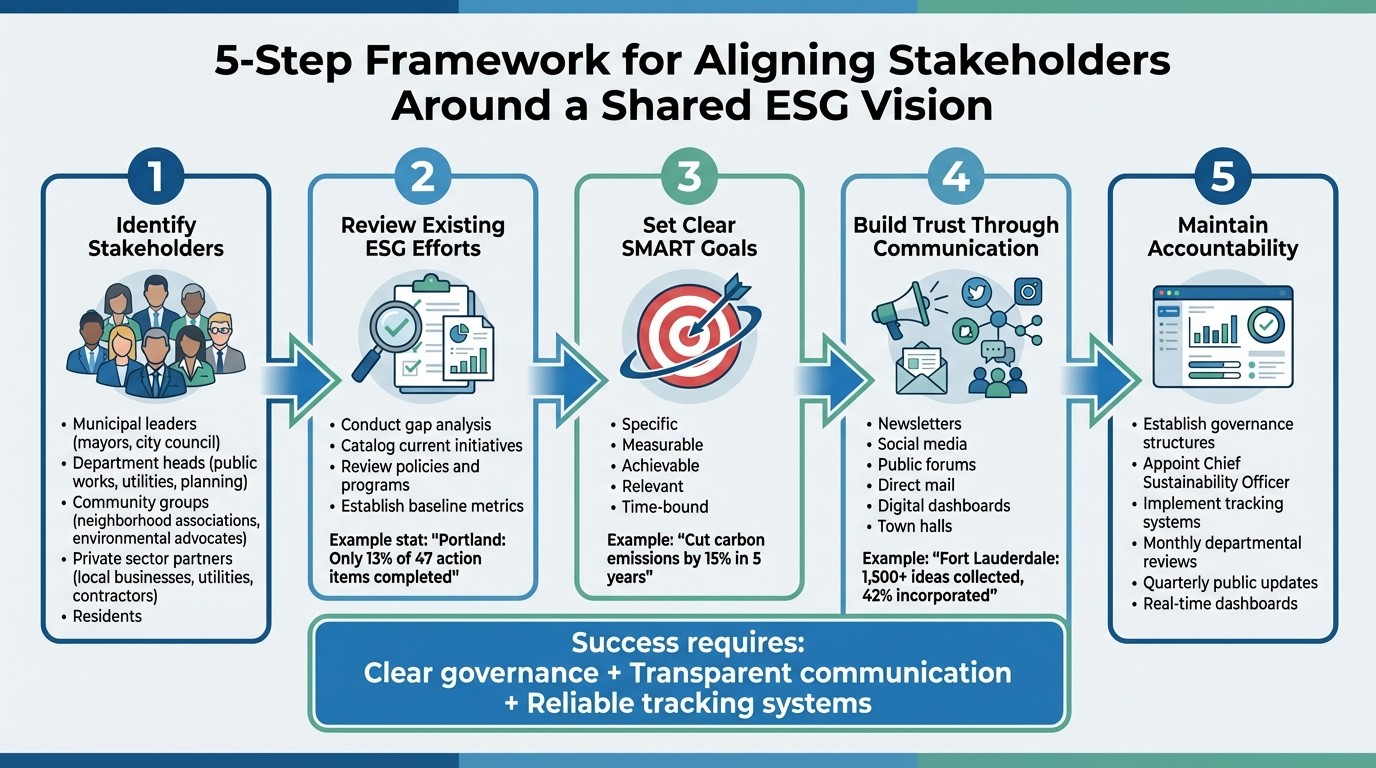
5-Step Framework for Aligning Stakeholders Around Municipal ESG Vision
Identifying Stakeholders and Reviewing Current ESG Efforts
Who Are Your Key Stakeholders?
To address the communication challenges and budget limitations previously mentioned, begin by categorizing your stakeholders based on their type, interests, and geographic location [3]. This process should encompass a broad range of individuals and groups, including municipal leaders such as mayors and city council members, department heads overseeing public works, utilities, and planning, community groups like neighborhood associations and environmental advocates, private sector partners such as local businesses, utilities, and contractors, and, importantly, residents - who often have the deepest investment in their neighborhoods and can provide valuable insights into local priorities.
For example, in February 2026, Portland's City Auditor Simone Rede identified a lack of coordination between the Chief Sustainability Officer (CSO) and city bureaus. She recommended elevating the CSO's role to ensure accountability for climate initiatives [4]. This audit spotlighted the need for internal stakeholders across city departments to have clear authority and collaboration structures. Portland’s Chief Sustainability Officer, Vivian Satterfield, responded positively to the recommendation, stating:
"Clarifying the authority of my position, in relation to other climate practitioners embedded in the bureaus, is a strong recommendation I'm looking forward to acting on" [4].
Once stakeholders are mapped and understood, the next step is to assess the current state of your ESG initiatives.
Reviewing What's Already in Place
After identifying key stakeholders, the focus should shift to cataloging existing ESG initiatives within your organization. This involves reviewing policies and programs related to energy management, employee well-being, procurement practices, and community engagement [5]. Centralized document management systems can be invaluable here, allowing you to track policy versions and ensure all departments are working with updated, accurate information [5]. This initial review establishes a baseline for aligning efforts with the broader ESG vision and sets the stage for informed discussions with stakeholders.
A gap analysis is a critical tool in this process, helping to identify both successes and areas that require improvement. For instance, Portland’s Climate Emergency Workplan audit in February 2026 revealed that only 13% of the 47 action items had been completed, with 79% ongoing and 9% delayed. While the city has reduced carbon emissions by 26% since 1990, it needs to double its annual reduction rate to meet its 2030 targets [4]. These specific figures offer a clear benchmark for identifying what’s working and where adjustments are needed. Comparing performance metrics against similar communities can also help set realistic goals and identify effective strategies [5].
Engaging stakeholders during this review phase is essential. Early conversations can uncover existing perspectives and priorities, ensuring that no voices are overlooked. Tools like surveys, focus groups, and data analysis provide a well-rounded approach to gathering input, helping to identify overlooked programs or opportunities that can support broader ESG alignment [3].
ESG webinar: Materiality assessments and stakeholder engagement
Creating a Shared ESG Vision with Clear Goals
Building on your stakeholder map and assessment of current efforts, the next step is crafting a shared ESG vision that aligns diverse interests.
Developing a Vision That Aligns Priorities
Once you've mapped stakeholders and reviewed existing initiatives, it's time to create a unified ESG vision. This involves weaving together social, environmental, and economic priorities into a statement that resonates with your community. The vision should reflect the concerns of municipal leaders, department heads, community advocates, and residents, ensuring everyone sees their priorities represented.
Fort Lauderdale's 2035 Vision Plan is a great example of how diverse input can shape a meaningful ESG vision. Experts often suggest using the "Seven Times, Seven Ways" approach to communicate this vision effectively. By leveraging newsletters, social media, public forums, and direct mail, you can ensure the message reaches every stakeholder group [2].
Once the vision is in place, the focus shifts to defining measurable goals that bring the strategy to life.
Setting Goals That Drive Results
A vision without measurable targets remains just an idea. This is where SMART objectives - Specific, Measurable, Achievable, Relevant, and Time-bound - play a critical role [5]. Replace broad aspirations with concrete goals, such as cutting carbon emissions by 15% within five years.
Establishing a baseline is equally important. Converting challenges into measurable metrics not only helps in securing grants but also provides clear benchmarks to track progress [1]. Fort Lauderdale's FL2STAT dashboard is a prime example, offering public updates on ESG progress while tying its budget process to strategic execution [2]. Assigning ownership for each goal ensures these objectives are seamlessly integrated into core functions like zoning, transportation, procurement, and budgeting [5].
Portland offers another compelling case study. The city's Clean Energy Fund (PCEF) is projected to generate $1.7 billion by mid-2029 to support community-led climate initiatives [4]. Chief Sustainability Officer Vivian Satterfield highlighted the importance of clear metrics and accountability:
"If you're going to ground it at all in the findings of this climate justice audit... this upcoming budget conversation is going to be extremely critical" [4].
Without well-defined metrics and structures for accountability, even generously funded initiatives can struggle to deliver results and sustain stakeholder trust.
Building Consensus Through Collaboration and Communication
Once clear goals are in place, the challenge becomes turning those aspirations into action. Achieving consensus requires deliberate teamwork and open communication that ensures stakeholders feel acknowledged and valued.
Getting Everyone Involved
With measurable goals providing direction, broad participation becomes essential to move initiatives forward. Fort Lauderdale offers a compelling example of how to turn public input into actionable plans. The city gathered over 1,500 ideas from residents, ultimately incorporating 42% of that feedback into its final strategy [2].
Breaking down departmental silos was key to their success. Fort Lauderdale established Strategic Initiative Teams, bringing together members from various government departments. This approach ensured ESG efforts weren’t confined to a single office but became part of the city’s broader operations [2]. By fostering collaboration across departments, they avoided conflicting priorities and created unified momentum toward shared objectives. Such coordinated efforts are critical for achieving the collective ESG vision.
Building Trust with Open Communication
Trust grows when stakeholders see their input influencing real decisions and can follow progress transparently. Effective communication across multiple channels is vital - whether through newsletters, social media, public forums, direct mail, community meetings, digital dashboards, or town halls. This multi-faceted approach ensures that all stakeholders, regardless of how they consume information, stay informed.
Fort Lauderdale took it a step further with a real-time public dashboard, offering updates on ESG progress, budget details, and project milestones [2]. This level of transparency turns accountability into something tangible, giving residents a clear view of the city’s efforts. Portland’s City Auditor, Simone Rede, highlighted the importance of this approach when assessing the city’s climate initiatives:
"Strong coordination and clear communication are essential for turning the City's climate plans into real health and resilience benefits to Portlanders, especially those most at risk" [4].
When stakeholders see how their feedback has shaped decisions and can monitor whether promises are being fulfilled, trust deepens. This transparent flow of information fosters long-term alignment and keeps stakeholders engaged throughout the implementation process.
Turning Your ESG Vision into Action with Council Fire
Once stakeholders are aligned and communication channels are in place, the real challenge begins: transforming a shared ESG vision into actionable steps. This is often a sticking point for municipalities, but with clear strategies, it's possible to bridge the gap between vision and measurable outcomes. Below are some effective ways to move from strategy to coordinated action.
Using Systems Thinking to Align Stakeholders
A unified ESG vision is only as effective as its implementation. Council Fire employs systems thinking to connect ESG initiatives across all municipal operations, ensuring they work together rather than in isolation. This approach highlights how decisions in one area ripple through the entire system. For instance, a decarbonization plan doesn't just reduce emissions - it can also impact transportation planning, infrastructure budgets, workforce training, and even community health.
By focusing on the bigger picture, systems thinking avoids the pitfalls of siloed programs competing for resources. Council Fire helps map stakeholder interests against system-wide effects, creating actionable pathways that balance diverse priorities. From the start, maintaining open dialogue, providing transparent progress updates, and utilizing tools like an ESG matrix can keep everyone on the same page.
Tailored Support for Public-Sector ESG Programs
Municipal ESG programs face unique hurdles, including tight budgets, shifting political landscapes, regulatory pressures, and the need to address varied community concerns. Council Fire offers tailored solutions to navigate these complexities. Their expertise spans areas like carbon footprint analysis, circular supply chains, natural resource management, and infrastructure planning for energy, water, and transportation systems.
Whether a municipality is developing decarbonization strategies, planning for climate resilience, or focusing on stakeholder-driven initiatives, Council Fire emphasizes turning sustainability goals into tangible results. They prioritize clear governance, strategic communication, and technical know-how to ensure every ESG effort delivers meaningful and lasting progress.
Maintaining Accountability Through Governance and Tracking
Setting Up Clear Governance Structures
Accountability begins with strong leadership and well-defined roles. Appointing a Chief Sustainability Officer or Head of Environmental Affairs who reports directly to top municipal leaders - whether it's the Mayor's office or the Comptroller - ensures that environmental, social, and governance (ESG) priorities are embedded into high-level decision-making. This position should also collaborate closely with finance teams to align ESG goals with broader government strategies, particularly during budget planning.
Avoid isolating ESG efforts within specific departments. Instead, integrate these initiatives across the entire organization. Climate action plans must adapt as risks evolve and stakeholder priorities shift. For example, in February 2026, an audit in Portland highlighted a significant gap in governance: the absence of mechanisms for cross-departmental accountability. Auditor Simone Rede emphasized the need for stronger authority for the Chief Sustainability Officer, noting:
"Holding people accountable laterally has been a long-standing issue." [4]
Publicly documented climate action plans are now expected from medium-to-large government entities. These plans not only build public trust but also play a critical role in securing funding, such as green bonds. To meet investor expectations, ensure these bonds are tied to transparent budgets and supported by dedicated ESG offices [6].
Once governance structures are in place, the next step is establishing effective tracking systems to maintain accountability.
Tracking Progress Over Time
Strong governance relies on accurate tracking systems to measure progress. Transition from outdated manual spreadsheets to integrated data platforms that consolidate information from utility bills, meters, HR, procurement, and finance systems. Automated systems reduce errors and provide real-time updates, creating a reliable foundation for decision-making [7][8]. These platforms should include transparent audit trails - from the initial data source, like a utility bill, to final reports - complete with evidence logs and version histories to meet the demands of auditors and regulators [7][9].
Adopt a tiered reporting schedule to keep all stakeholders informed. Monthly departmental reviews help staff stay on track, while monthly manager reports keep leadership updated on progress and challenges. Quarterly updates for elected officials ensure alignment with strategic priorities [10]. Public-facing dashboards have become a key tool for building community trust, offering transparency in local government operations [10]. A notable example is the City of Virginia Beach, which formed a Joint Energy Committee chaired by the deputy city manager between 2008 and 2013. This committee, involving city departments, public schools, and Dominion Virginia Power, achieved a 15% reduction in electricity use and saved $1 million in utility costs over five years [12].
To provide meaningful insights, track intensity metrics like energy use per square foot. These metrics offer valuable context for diverse municipal building portfolios [7][11]. Utilize software to assign accountability and send automated reminders ahead of reporting deadlines, ensuring that all responsibilities are met on time [10][11].
Conclusion
Bringing stakeholders together to turn ambitious ESG goals into measurable results requires a focused approach. Success hinges on three key elements: establishing governance structures that clearly define accountability, ensuring communication is transparent and reaches all parts of the community, and implementing reliable tracking systems to guide decision-making. These components create a framework that unites diverse groups and drives meaningful progress.
Fort Lauderdale and Portland provide strong examples of these principles in action. Fort Lauderdale's emphasis on gathering extensive community input demonstrates the value of engagement [2]. Meanwhile, Portland's audit highlights the importance of cohesive accountability. As City Auditor Simone Rede observed:
"Strong coordination and clear communication are essential for turning the City's climate plans into real health and resilience benefits to Portlanders, especially those most at risk." [4]
This unified approach enables municipal leaders, agencies, and communities to work together effectively on ESG goals. Elevating the role of the Chief Sustainability Officer allows for better oversight of initiatives across departments. To ensure stakeholders understand their roles, communicate your ESG message consistently across multiple channels - newsletters, social media, public forums, and direct mail - repeating it in varied formats to maximize reach [2]. Real-time dashboard updates can further enhance trust by showing tangible progress.
Securing dedicated funding is also critical. As Portland's Chief Sustainability Officer Vivian Satterfield cautioned:
"Without additional resources, this work does risk being largely symbolic" [4].
Strong governance, transparent communication, and precise tracking systems are the foundation of a successful ESG strategy. With the right resources in place, these efforts can go beyond meeting compliance standards, delivering measurable health, resilience, and economic benefits to the communities they serve. This integrated approach ensures that ESG initiatives create lasting value.
FAQs
How do we choose ESG priorities when stakeholders disagree?
When stakeholders hold differing views on ESG priorities, the best approach is to prioritize open dialogue and use structured methods to find common ground. Begin by digging into the underlying reasons for disagreements and involve stakeholders early in the process. Using frameworks like multi-stakeholder platforms can help create a sense of shared responsibility. Building trust, finding shared values, and addressing conflicts directly are essential steps to harmonizing perspectives and fostering lasting commitment to mutual ESG objectives.
What data should we track first to prove ESG progress?
To effectively align with environmental, social, and governance (ESG) objectives, begin by identifying and tracking key performance indicators (KPIs) that can be quantified. For environmental goals, focus on metrics such as carbon emissions, energy consumption, water usage, and waste reduction to clearly demonstrate progress. On the social and governance fronts, monitor areas like stakeholder engagement, community impact, and adherence to policies.
Collecting and analyzing these data points not only creates a solid baseline for evaluation but also promotes transparency. This approach builds trust and ensures accountability, reinforcing the credibility of ESG efforts.
How can we fund ESG initiatives without raising taxes?
Municipalities have options to support ESG initiatives without increasing taxes by utilizing financial tools like taxable municipal bonds. These bonds are specifically designed to fund projects that deliver environmental and social benefits. Instruments such as green bonds and ESG-linked financing can also play a key role, enabling investments in areas like sustainable infrastructure and climate resilience efforts. Furthermore, federal and state programs aligned with ESG objectives offer additional funding avenues, helping to lessen reliance on tax hikes.
Related Blog Posts
Latest Articles
©2025



FAQ
01
What does it really mean to “redefine profit”?
02
What makes Council Fire different?
03
Who does Council Fire you work with?
04
What does working with Council Fire actually look like?
05
How does Council Fire help organizations turn big goals into action?
06
How does Council Fire define and measure success?
Mar 1, 2026
How to Align Stakeholders Around a Shared ESG Vision for Municipalities & Government Agencies
ESG Strategy
In This Article
Steps for municipalities to align stakeholders on ESG: map stakeholders, set SMART goals, build trust, and track progress with governance and dashboards.
How to Align Stakeholders Around a Shared ESG Vision for Municipalities & Government Agencies
Aligning stakeholders for ESG success requires clear goals, transparent communication, and accountability. Municipalities and government agencies face challenges like budget constraints, siloed departments, and insufficient data when implementing ESG (Environmental, Social, and Governance) initiatives. By engaging diverse stakeholders, reviewing current efforts, and setting measurable objectives, leaders can overcome these barriers and drive meaningful results.
Key Takeaways:
Identify Stakeholders: Include municipal leaders, department heads, community groups, businesses, and residents.
Review Existing ESG Efforts: Conduct a gap analysis to assess progress and areas for improvement.
Set Clear Goals: Use SMART objectives (Specific, Measurable, Achievable, Relevant, Time-bound) to ensure accountability.
Build Trust: Communicate transparently through newsletters, dashboards, and public forums.
Governance and Tracking: Establish strong leadership roles and track progress using integrated systems.
Examples like Fort Lauderdale’s 2035 Vision Plan and Portland’s Climate Emergency Workplan show how collaboration and clear communication can turn ESG goals into actionable outcomes. Success depends on aligning stakeholder priorities, maintaining transparency, and ensuring accountability at every stage.
5-Step Framework for Aligning Stakeholders Around Municipal ESG Vision
Identifying Stakeholders and Reviewing Current ESG Efforts
Who Are Your Key Stakeholders?
To address the communication challenges and budget limitations previously mentioned, begin by categorizing your stakeholders based on their type, interests, and geographic location [3]. This process should encompass a broad range of individuals and groups, including municipal leaders such as mayors and city council members, department heads overseeing public works, utilities, and planning, community groups like neighborhood associations and environmental advocates, private sector partners such as local businesses, utilities, and contractors, and, importantly, residents - who often have the deepest investment in their neighborhoods and can provide valuable insights into local priorities.
For example, in February 2026, Portland's City Auditor Simone Rede identified a lack of coordination between the Chief Sustainability Officer (CSO) and city bureaus. She recommended elevating the CSO's role to ensure accountability for climate initiatives [4]. This audit spotlighted the need for internal stakeholders across city departments to have clear authority and collaboration structures. Portland’s Chief Sustainability Officer, Vivian Satterfield, responded positively to the recommendation, stating:
"Clarifying the authority of my position, in relation to other climate practitioners embedded in the bureaus, is a strong recommendation I'm looking forward to acting on" [4].
Once stakeholders are mapped and understood, the next step is to assess the current state of your ESG initiatives.
Reviewing What's Already in Place
After identifying key stakeholders, the focus should shift to cataloging existing ESG initiatives within your organization. This involves reviewing policies and programs related to energy management, employee well-being, procurement practices, and community engagement [5]. Centralized document management systems can be invaluable here, allowing you to track policy versions and ensure all departments are working with updated, accurate information [5]. This initial review establishes a baseline for aligning efforts with the broader ESG vision and sets the stage for informed discussions with stakeholders.
A gap analysis is a critical tool in this process, helping to identify both successes and areas that require improvement. For instance, Portland’s Climate Emergency Workplan audit in February 2026 revealed that only 13% of the 47 action items had been completed, with 79% ongoing and 9% delayed. While the city has reduced carbon emissions by 26% since 1990, it needs to double its annual reduction rate to meet its 2030 targets [4]. These specific figures offer a clear benchmark for identifying what’s working and where adjustments are needed. Comparing performance metrics against similar communities can also help set realistic goals and identify effective strategies [5].
Engaging stakeholders during this review phase is essential. Early conversations can uncover existing perspectives and priorities, ensuring that no voices are overlooked. Tools like surveys, focus groups, and data analysis provide a well-rounded approach to gathering input, helping to identify overlooked programs or opportunities that can support broader ESG alignment [3].
ESG webinar: Materiality assessments and stakeholder engagement
Creating a Shared ESG Vision with Clear Goals
Building on your stakeholder map and assessment of current efforts, the next step is crafting a shared ESG vision that aligns diverse interests.
Developing a Vision That Aligns Priorities
Once you've mapped stakeholders and reviewed existing initiatives, it's time to create a unified ESG vision. This involves weaving together social, environmental, and economic priorities into a statement that resonates with your community. The vision should reflect the concerns of municipal leaders, department heads, community advocates, and residents, ensuring everyone sees their priorities represented.
Fort Lauderdale's 2035 Vision Plan is a great example of how diverse input can shape a meaningful ESG vision. Experts often suggest using the "Seven Times, Seven Ways" approach to communicate this vision effectively. By leveraging newsletters, social media, public forums, and direct mail, you can ensure the message reaches every stakeholder group [2].
Once the vision is in place, the focus shifts to defining measurable goals that bring the strategy to life.
Setting Goals That Drive Results
A vision without measurable targets remains just an idea. This is where SMART objectives - Specific, Measurable, Achievable, Relevant, and Time-bound - play a critical role [5]. Replace broad aspirations with concrete goals, such as cutting carbon emissions by 15% within five years.
Establishing a baseline is equally important. Converting challenges into measurable metrics not only helps in securing grants but also provides clear benchmarks to track progress [1]. Fort Lauderdale's FL2STAT dashboard is a prime example, offering public updates on ESG progress while tying its budget process to strategic execution [2]. Assigning ownership for each goal ensures these objectives are seamlessly integrated into core functions like zoning, transportation, procurement, and budgeting [5].
Portland offers another compelling case study. The city's Clean Energy Fund (PCEF) is projected to generate $1.7 billion by mid-2029 to support community-led climate initiatives [4]. Chief Sustainability Officer Vivian Satterfield highlighted the importance of clear metrics and accountability:
"If you're going to ground it at all in the findings of this climate justice audit... this upcoming budget conversation is going to be extremely critical" [4].
Without well-defined metrics and structures for accountability, even generously funded initiatives can struggle to deliver results and sustain stakeholder trust.
Building Consensus Through Collaboration and Communication
Once clear goals are in place, the challenge becomes turning those aspirations into action. Achieving consensus requires deliberate teamwork and open communication that ensures stakeholders feel acknowledged and valued.
Getting Everyone Involved
With measurable goals providing direction, broad participation becomes essential to move initiatives forward. Fort Lauderdale offers a compelling example of how to turn public input into actionable plans. The city gathered over 1,500 ideas from residents, ultimately incorporating 42% of that feedback into its final strategy [2].
Breaking down departmental silos was key to their success. Fort Lauderdale established Strategic Initiative Teams, bringing together members from various government departments. This approach ensured ESG efforts weren’t confined to a single office but became part of the city’s broader operations [2]. By fostering collaboration across departments, they avoided conflicting priorities and created unified momentum toward shared objectives. Such coordinated efforts are critical for achieving the collective ESG vision.
Building Trust with Open Communication
Trust grows when stakeholders see their input influencing real decisions and can follow progress transparently. Effective communication across multiple channels is vital - whether through newsletters, social media, public forums, direct mail, community meetings, digital dashboards, or town halls. This multi-faceted approach ensures that all stakeholders, regardless of how they consume information, stay informed.
Fort Lauderdale took it a step further with a real-time public dashboard, offering updates on ESG progress, budget details, and project milestones [2]. This level of transparency turns accountability into something tangible, giving residents a clear view of the city’s efforts. Portland’s City Auditor, Simone Rede, highlighted the importance of this approach when assessing the city’s climate initiatives:
"Strong coordination and clear communication are essential for turning the City's climate plans into real health and resilience benefits to Portlanders, especially those most at risk" [4].
When stakeholders see how their feedback has shaped decisions and can monitor whether promises are being fulfilled, trust deepens. This transparent flow of information fosters long-term alignment and keeps stakeholders engaged throughout the implementation process.
Turning Your ESG Vision into Action with Council Fire
Once stakeholders are aligned and communication channels are in place, the real challenge begins: transforming a shared ESG vision into actionable steps. This is often a sticking point for municipalities, but with clear strategies, it's possible to bridge the gap between vision and measurable outcomes. Below are some effective ways to move from strategy to coordinated action.
Using Systems Thinking to Align Stakeholders
A unified ESG vision is only as effective as its implementation. Council Fire employs systems thinking to connect ESG initiatives across all municipal operations, ensuring they work together rather than in isolation. This approach highlights how decisions in one area ripple through the entire system. For instance, a decarbonization plan doesn't just reduce emissions - it can also impact transportation planning, infrastructure budgets, workforce training, and even community health.
By focusing on the bigger picture, systems thinking avoids the pitfalls of siloed programs competing for resources. Council Fire helps map stakeholder interests against system-wide effects, creating actionable pathways that balance diverse priorities. From the start, maintaining open dialogue, providing transparent progress updates, and utilizing tools like an ESG matrix can keep everyone on the same page.
Tailored Support for Public-Sector ESG Programs
Municipal ESG programs face unique hurdles, including tight budgets, shifting political landscapes, regulatory pressures, and the need to address varied community concerns. Council Fire offers tailored solutions to navigate these complexities. Their expertise spans areas like carbon footprint analysis, circular supply chains, natural resource management, and infrastructure planning for energy, water, and transportation systems.
Whether a municipality is developing decarbonization strategies, planning for climate resilience, or focusing on stakeholder-driven initiatives, Council Fire emphasizes turning sustainability goals into tangible results. They prioritize clear governance, strategic communication, and technical know-how to ensure every ESG effort delivers meaningful and lasting progress.
Maintaining Accountability Through Governance and Tracking
Setting Up Clear Governance Structures
Accountability begins with strong leadership and well-defined roles. Appointing a Chief Sustainability Officer or Head of Environmental Affairs who reports directly to top municipal leaders - whether it's the Mayor's office or the Comptroller - ensures that environmental, social, and governance (ESG) priorities are embedded into high-level decision-making. This position should also collaborate closely with finance teams to align ESG goals with broader government strategies, particularly during budget planning.
Avoid isolating ESG efforts within specific departments. Instead, integrate these initiatives across the entire organization. Climate action plans must adapt as risks evolve and stakeholder priorities shift. For example, in February 2026, an audit in Portland highlighted a significant gap in governance: the absence of mechanisms for cross-departmental accountability. Auditor Simone Rede emphasized the need for stronger authority for the Chief Sustainability Officer, noting:
"Holding people accountable laterally has been a long-standing issue." [4]
Publicly documented climate action plans are now expected from medium-to-large government entities. These plans not only build public trust but also play a critical role in securing funding, such as green bonds. To meet investor expectations, ensure these bonds are tied to transparent budgets and supported by dedicated ESG offices [6].
Once governance structures are in place, the next step is establishing effective tracking systems to maintain accountability.
Tracking Progress Over Time
Strong governance relies on accurate tracking systems to measure progress. Transition from outdated manual spreadsheets to integrated data platforms that consolidate information from utility bills, meters, HR, procurement, and finance systems. Automated systems reduce errors and provide real-time updates, creating a reliable foundation for decision-making [7][8]. These platforms should include transparent audit trails - from the initial data source, like a utility bill, to final reports - complete with evidence logs and version histories to meet the demands of auditors and regulators [7][9].
Adopt a tiered reporting schedule to keep all stakeholders informed. Monthly departmental reviews help staff stay on track, while monthly manager reports keep leadership updated on progress and challenges. Quarterly updates for elected officials ensure alignment with strategic priorities [10]. Public-facing dashboards have become a key tool for building community trust, offering transparency in local government operations [10]. A notable example is the City of Virginia Beach, which formed a Joint Energy Committee chaired by the deputy city manager between 2008 and 2013. This committee, involving city departments, public schools, and Dominion Virginia Power, achieved a 15% reduction in electricity use and saved $1 million in utility costs over five years [12].
To provide meaningful insights, track intensity metrics like energy use per square foot. These metrics offer valuable context for diverse municipal building portfolios [7][11]. Utilize software to assign accountability and send automated reminders ahead of reporting deadlines, ensuring that all responsibilities are met on time [10][11].
Conclusion
Bringing stakeholders together to turn ambitious ESG goals into measurable results requires a focused approach. Success hinges on three key elements: establishing governance structures that clearly define accountability, ensuring communication is transparent and reaches all parts of the community, and implementing reliable tracking systems to guide decision-making. These components create a framework that unites diverse groups and drives meaningful progress.
Fort Lauderdale and Portland provide strong examples of these principles in action. Fort Lauderdale's emphasis on gathering extensive community input demonstrates the value of engagement [2]. Meanwhile, Portland's audit highlights the importance of cohesive accountability. As City Auditor Simone Rede observed:
"Strong coordination and clear communication are essential for turning the City's climate plans into real health and resilience benefits to Portlanders, especially those most at risk." [4]
This unified approach enables municipal leaders, agencies, and communities to work together effectively on ESG goals. Elevating the role of the Chief Sustainability Officer allows for better oversight of initiatives across departments. To ensure stakeholders understand their roles, communicate your ESG message consistently across multiple channels - newsletters, social media, public forums, and direct mail - repeating it in varied formats to maximize reach [2]. Real-time dashboard updates can further enhance trust by showing tangible progress.
Securing dedicated funding is also critical. As Portland's Chief Sustainability Officer Vivian Satterfield cautioned:
"Without additional resources, this work does risk being largely symbolic" [4].
Strong governance, transparent communication, and precise tracking systems are the foundation of a successful ESG strategy. With the right resources in place, these efforts can go beyond meeting compliance standards, delivering measurable health, resilience, and economic benefits to the communities they serve. This integrated approach ensures that ESG initiatives create lasting value.
FAQs
How do we choose ESG priorities when stakeholders disagree?
When stakeholders hold differing views on ESG priorities, the best approach is to prioritize open dialogue and use structured methods to find common ground. Begin by digging into the underlying reasons for disagreements and involve stakeholders early in the process. Using frameworks like multi-stakeholder platforms can help create a sense of shared responsibility. Building trust, finding shared values, and addressing conflicts directly are essential steps to harmonizing perspectives and fostering lasting commitment to mutual ESG objectives.
What data should we track first to prove ESG progress?
To effectively align with environmental, social, and governance (ESG) objectives, begin by identifying and tracking key performance indicators (KPIs) that can be quantified. For environmental goals, focus on metrics such as carbon emissions, energy consumption, water usage, and waste reduction to clearly demonstrate progress. On the social and governance fronts, monitor areas like stakeholder engagement, community impact, and adherence to policies.
Collecting and analyzing these data points not only creates a solid baseline for evaluation but also promotes transparency. This approach builds trust and ensures accountability, reinforcing the credibility of ESG efforts.
How can we fund ESG initiatives without raising taxes?
Municipalities have options to support ESG initiatives without increasing taxes by utilizing financial tools like taxable municipal bonds. These bonds are specifically designed to fund projects that deliver environmental and social benefits. Instruments such as green bonds and ESG-linked financing can also play a key role, enabling investments in areas like sustainable infrastructure and climate resilience efforts. Furthermore, federal and state programs aligned with ESG objectives offer additional funding avenues, helping to lessen reliance on tax hikes.
Related Blog Posts
FAQ
01
What does it really mean to “redefine profit”?
02
What makes Council Fire different?
03
Who does Council Fire you work with?
04
What does working with Council Fire actually look like?
05
How does Council Fire help organizations turn big goals into action?
06
How does Council Fire define and measure success?
Mar 1, 2026
How to Align Stakeholders Around a Shared ESG Vision for Municipalities & Government Agencies
ESG Strategy
In This Article
Steps for municipalities to align stakeholders on ESG: map stakeholders, set SMART goals, build trust, and track progress with governance and dashboards.
How to Align Stakeholders Around a Shared ESG Vision for Municipalities & Government Agencies
Aligning stakeholders for ESG success requires clear goals, transparent communication, and accountability. Municipalities and government agencies face challenges like budget constraints, siloed departments, and insufficient data when implementing ESG (Environmental, Social, and Governance) initiatives. By engaging diverse stakeholders, reviewing current efforts, and setting measurable objectives, leaders can overcome these barriers and drive meaningful results.
Key Takeaways:
Identify Stakeholders: Include municipal leaders, department heads, community groups, businesses, and residents.
Review Existing ESG Efforts: Conduct a gap analysis to assess progress and areas for improvement.
Set Clear Goals: Use SMART objectives (Specific, Measurable, Achievable, Relevant, Time-bound) to ensure accountability.
Build Trust: Communicate transparently through newsletters, dashboards, and public forums.
Governance and Tracking: Establish strong leadership roles and track progress using integrated systems.
Examples like Fort Lauderdale’s 2035 Vision Plan and Portland’s Climate Emergency Workplan show how collaboration and clear communication can turn ESG goals into actionable outcomes. Success depends on aligning stakeholder priorities, maintaining transparency, and ensuring accountability at every stage.
5-Step Framework for Aligning Stakeholders Around Municipal ESG Vision
Identifying Stakeholders and Reviewing Current ESG Efforts
Who Are Your Key Stakeholders?
To address the communication challenges and budget limitations previously mentioned, begin by categorizing your stakeholders based on their type, interests, and geographic location [3]. This process should encompass a broad range of individuals and groups, including municipal leaders such as mayors and city council members, department heads overseeing public works, utilities, and planning, community groups like neighborhood associations and environmental advocates, private sector partners such as local businesses, utilities, and contractors, and, importantly, residents - who often have the deepest investment in their neighborhoods and can provide valuable insights into local priorities.
For example, in February 2026, Portland's City Auditor Simone Rede identified a lack of coordination between the Chief Sustainability Officer (CSO) and city bureaus. She recommended elevating the CSO's role to ensure accountability for climate initiatives [4]. This audit spotlighted the need for internal stakeholders across city departments to have clear authority and collaboration structures. Portland’s Chief Sustainability Officer, Vivian Satterfield, responded positively to the recommendation, stating:
"Clarifying the authority of my position, in relation to other climate practitioners embedded in the bureaus, is a strong recommendation I'm looking forward to acting on" [4].
Once stakeholders are mapped and understood, the next step is to assess the current state of your ESG initiatives.
Reviewing What's Already in Place
After identifying key stakeholders, the focus should shift to cataloging existing ESG initiatives within your organization. This involves reviewing policies and programs related to energy management, employee well-being, procurement practices, and community engagement [5]. Centralized document management systems can be invaluable here, allowing you to track policy versions and ensure all departments are working with updated, accurate information [5]. This initial review establishes a baseline for aligning efforts with the broader ESG vision and sets the stage for informed discussions with stakeholders.
A gap analysis is a critical tool in this process, helping to identify both successes and areas that require improvement. For instance, Portland’s Climate Emergency Workplan audit in February 2026 revealed that only 13% of the 47 action items had been completed, with 79% ongoing and 9% delayed. While the city has reduced carbon emissions by 26% since 1990, it needs to double its annual reduction rate to meet its 2030 targets [4]. These specific figures offer a clear benchmark for identifying what’s working and where adjustments are needed. Comparing performance metrics against similar communities can also help set realistic goals and identify effective strategies [5].
Engaging stakeholders during this review phase is essential. Early conversations can uncover existing perspectives and priorities, ensuring that no voices are overlooked. Tools like surveys, focus groups, and data analysis provide a well-rounded approach to gathering input, helping to identify overlooked programs or opportunities that can support broader ESG alignment [3].
ESG webinar: Materiality assessments and stakeholder engagement
Creating a Shared ESG Vision with Clear Goals
Building on your stakeholder map and assessment of current efforts, the next step is crafting a shared ESG vision that aligns diverse interests.
Developing a Vision That Aligns Priorities
Once you've mapped stakeholders and reviewed existing initiatives, it's time to create a unified ESG vision. This involves weaving together social, environmental, and economic priorities into a statement that resonates with your community. The vision should reflect the concerns of municipal leaders, department heads, community advocates, and residents, ensuring everyone sees their priorities represented.
Fort Lauderdale's 2035 Vision Plan is a great example of how diverse input can shape a meaningful ESG vision. Experts often suggest using the "Seven Times, Seven Ways" approach to communicate this vision effectively. By leveraging newsletters, social media, public forums, and direct mail, you can ensure the message reaches every stakeholder group [2].
Once the vision is in place, the focus shifts to defining measurable goals that bring the strategy to life.
Setting Goals That Drive Results
A vision without measurable targets remains just an idea. This is where SMART objectives - Specific, Measurable, Achievable, Relevant, and Time-bound - play a critical role [5]. Replace broad aspirations with concrete goals, such as cutting carbon emissions by 15% within five years.
Establishing a baseline is equally important. Converting challenges into measurable metrics not only helps in securing grants but also provides clear benchmarks to track progress [1]. Fort Lauderdale's FL2STAT dashboard is a prime example, offering public updates on ESG progress while tying its budget process to strategic execution [2]. Assigning ownership for each goal ensures these objectives are seamlessly integrated into core functions like zoning, transportation, procurement, and budgeting [5].
Portland offers another compelling case study. The city's Clean Energy Fund (PCEF) is projected to generate $1.7 billion by mid-2029 to support community-led climate initiatives [4]. Chief Sustainability Officer Vivian Satterfield highlighted the importance of clear metrics and accountability:
"If you're going to ground it at all in the findings of this climate justice audit... this upcoming budget conversation is going to be extremely critical" [4].
Without well-defined metrics and structures for accountability, even generously funded initiatives can struggle to deliver results and sustain stakeholder trust.
Building Consensus Through Collaboration and Communication
Once clear goals are in place, the challenge becomes turning those aspirations into action. Achieving consensus requires deliberate teamwork and open communication that ensures stakeholders feel acknowledged and valued.
Getting Everyone Involved
With measurable goals providing direction, broad participation becomes essential to move initiatives forward. Fort Lauderdale offers a compelling example of how to turn public input into actionable plans. The city gathered over 1,500 ideas from residents, ultimately incorporating 42% of that feedback into its final strategy [2].
Breaking down departmental silos was key to their success. Fort Lauderdale established Strategic Initiative Teams, bringing together members from various government departments. This approach ensured ESG efforts weren’t confined to a single office but became part of the city’s broader operations [2]. By fostering collaboration across departments, they avoided conflicting priorities and created unified momentum toward shared objectives. Such coordinated efforts are critical for achieving the collective ESG vision.
Building Trust with Open Communication
Trust grows when stakeholders see their input influencing real decisions and can follow progress transparently. Effective communication across multiple channels is vital - whether through newsletters, social media, public forums, direct mail, community meetings, digital dashboards, or town halls. This multi-faceted approach ensures that all stakeholders, regardless of how they consume information, stay informed.
Fort Lauderdale took it a step further with a real-time public dashboard, offering updates on ESG progress, budget details, and project milestones [2]. This level of transparency turns accountability into something tangible, giving residents a clear view of the city’s efforts. Portland’s City Auditor, Simone Rede, highlighted the importance of this approach when assessing the city’s climate initiatives:
"Strong coordination and clear communication are essential for turning the City's climate plans into real health and resilience benefits to Portlanders, especially those most at risk" [4].
When stakeholders see how their feedback has shaped decisions and can monitor whether promises are being fulfilled, trust deepens. This transparent flow of information fosters long-term alignment and keeps stakeholders engaged throughout the implementation process.
Turning Your ESG Vision into Action with Council Fire
Once stakeholders are aligned and communication channels are in place, the real challenge begins: transforming a shared ESG vision into actionable steps. This is often a sticking point for municipalities, but with clear strategies, it's possible to bridge the gap between vision and measurable outcomes. Below are some effective ways to move from strategy to coordinated action.
Using Systems Thinking to Align Stakeholders
A unified ESG vision is only as effective as its implementation. Council Fire employs systems thinking to connect ESG initiatives across all municipal operations, ensuring they work together rather than in isolation. This approach highlights how decisions in one area ripple through the entire system. For instance, a decarbonization plan doesn't just reduce emissions - it can also impact transportation planning, infrastructure budgets, workforce training, and even community health.
By focusing on the bigger picture, systems thinking avoids the pitfalls of siloed programs competing for resources. Council Fire helps map stakeholder interests against system-wide effects, creating actionable pathways that balance diverse priorities. From the start, maintaining open dialogue, providing transparent progress updates, and utilizing tools like an ESG matrix can keep everyone on the same page.
Tailored Support for Public-Sector ESG Programs
Municipal ESG programs face unique hurdles, including tight budgets, shifting political landscapes, regulatory pressures, and the need to address varied community concerns. Council Fire offers tailored solutions to navigate these complexities. Their expertise spans areas like carbon footprint analysis, circular supply chains, natural resource management, and infrastructure planning for energy, water, and transportation systems.
Whether a municipality is developing decarbonization strategies, planning for climate resilience, or focusing on stakeholder-driven initiatives, Council Fire emphasizes turning sustainability goals into tangible results. They prioritize clear governance, strategic communication, and technical know-how to ensure every ESG effort delivers meaningful and lasting progress.
Maintaining Accountability Through Governance and Tracking
Setting Up Clear Governance Structures
Accountability begins with strong leadership and well-defined roles. Appointing a Chief Sustainability Officer or Head of Environmental Affairs who reports directly to top municipal leaders - whether it's the Mayor's office or the Comptroller - ensures that environmental, social, and governance (ESG) priorities are embedded into high-level decision-making. This position should also collaborate closely with finance teams to align ESG goals with broader government strategies, particularly during budget planning.
Avoid isolating ESG efforts within specific departments. Instead, integrate these initiatives across the entire organization. Climate action plans must adapt as risks evolve and stakeholder priorities shift. For example, in February 2026, an audit in Portland highlighted a significant gap in governance: the absence of mechanisms for cross-departmental accountability. Auditor Simone Rede emphasized the need for stronger authority for the Chief Sustainability Officer, noting:
"Holding people accountable laterally has been a long-standing issue." [4]
Publicly documented climate action plans are now expected from medium-to-large government entities. These plans not only build public trust but also play a critical role in securing funding, such as green bonds. To meet investor expectations, ensure these bonds are tied to transparent budgets and supported by dedicated ESG offices [6].
Once governance structures are in place, the next step is establishing effective tracking systems to maintain accountability.
Tracking Progress Over Time
Strong governance relies on accurate tracking systems to measure progress. Transition from outdated manual spreadsheets to integrated data platforms that consolidate information from utility bills, meters, HR, procurement, and finance systems. Automated systems reduce errors and provide real-time updates, creating a reliable foundation for decision-making [7][8]. These platforms should include transparent audit trails - from the initial data source, like a utility bill, to final reports - complete with evidence logs and version histories to meet the demands of auditors and regulators [7][9].
Adopt a tiered reporting schedule to keep all stakeholders informed. Monthly departmental reviews help staff stay on track, while monthly manager reports keep leadership updated on progress and challenges. Quarterly updates for elected officials ensure alignment with strategic priorities [10]. Public-facing dashboards have become a key tool for building community trust, offering transparency in local government operations [10]. A notable example is the City of Virginia Beach, which formed a Joint Energy Committee chaired by the deputy city manager between 2008 and 2013. This committee, involving city departments, public schools, and Dominion Virginia Power, achieved a 15% reduction in electricity use and saved $1 million in utility costs over five years [12].
To provide meaningful insights, track intensity metrics like energy use per square foot. These metrics offer valuable context for diverse municipal building portfolios [7][11]. Utilize software to assign accountability and send automated reminders ahead of reporting deadlines, ensuring that all responsibilities are met on time [10][11].
Conclusion
Bringing stakeholders together to turn ambitious ESG goals into measurable results requires a focused approach. Success hinges on three key elements: establishing governance structures that clearly define accountability, ensuring communication is transparent and reaches all parts of the community, and implementing reliable tracking systems to guide decision-making. These components create a framework that unites diverse groups and drives meaningful progress.
Fort Lauderdale and Portland provide strong examples of these principles in action. Fort Lauderdale's emphasis on gathering extensive community input demonstrates the value of engagement [2]. Meanwhile, Portland's audit highlights the importance of cohesive accountability. As City Auditor Simone Rede observed:
"Strong coordination and clear communication are essential for turning the City's climate plans into real health and resilience benefits to Portlanders, especially those most at risk." [4]
This unified approach enables municipal leaders, agencies, and communities to work together effectively on ESG goals. Elevating the role of the Chief Sustainability Officer allows for better oversight of initiatives across departments. To ensure stakeholders understand their roles, communicate your ESG message consistently across multiple channels - newsletters, social media, public forums, and direct mail - repeating it in varied formats to maximize reach [2]. Real-time dashboard updates can further enhance trust by showing tangible progress.
Securing dedicated funding is also critical. As Portland's Chief Sustainability Officer Vivian Satterfield cautioned:
"Without additional resources, this work does risk being largely symbolic" [4].
Strong governance, transparent communication, and precise tracking systems are the foundation of a successful ESG strategy. With the right resources in place, these efforts can go beyond meeting compliance standards, delivering measurable health, resilience, and economic benefits to the communities they serve. This integrated approach ensures that ESG initiatives create lasting value.
FAQs
How do we choose ESG priorities when stakeholders disagree?
When stakeholders hold differing views on ESG priorities, the best approach is to prioritize open dialogue and use structured methods to find common ground. Begin by digging into the underlying reasons for disagreements and involve stakeholders early in the process. Using frameworks like multi-stakeholder platforms can help create a sense of shared responsibility. Building trust, finding shared values, and addressing conflicts directly are essential steps to harmonizing perspectives and fostering lasting commitment to mutual ESG objectives.
What data should we track first to prove ESG progress?
To effectively align with environmental, social, and governance (ESG) objectives, begin by identifying and tracking key performance indicators (KPIs) that can be quantified. For environmental goals, focus on metrics such as carbon emissions, energy consumption, water usage, and waste reduction to clearly demonstrate progress. On the social and governance fronts, monitor areas like stakeholder engagement, community impact, and adherence to policies.
Collecting and analyzing these data points not only creates a solid baseline for evaluation but also promotes transparency. This approach builds trust and ensures accountability, reinforcing the credibility of ESG efforts.
How can we fund ESG initiatives without raising taxes?
Municipalities have options to support ESG initiatives without increasing taxes by utilizing financial tools like taxable municipal bonds. These bonds are specifically designed to fund projects that deliver environmental and social benefits. Instruments such as green bonds and ESG-linked financing can also play a key role, enabling investments in areas like sustainable infrastructure and climate resilience efforts. Furthermore, federal and state programs aligned with ESG objectives offer additional funding avenues, helping to lessen reliance on tax hikes.
Related Blog Posts
FAQ
What does it really mean to “redefine profit”?
What makes Council Fire different?
Who does Council Fire you work with?
What does working with Council Fire actually look like?
How does Council Fire help organizations turn big goals into action?
How does Council Fire define and measure success?