Mar 10, 2026
We're Building Batteries Faster Than the Grid Can Absorb Them. That's a Problem.
Energy & Water Infrastructure
George Chmael II
Founder & CEO
In This Article
U.S. battery storage hit 57 GWh in 2025, but the interconnection queue — where 80% of projects die — is the real bottleneck. Here's what energy planners need to know.
We're Building Batteries Faster Than the Grid Can Absorb Them. That's a Problem.
We're Building Batteries Faster Than the Grid Can Absorb Them. That's a Problem.
Executive Summary: U.S. battery storage installations jumped 29% in 2025, hitting 57 GWh. That number will keep climbing. But the grid interconnection process, the bureaucratic bottleneck between "battery is built" and "battery is connected," hasn't kept pace. Over 2.6 terawatts of clean energy projects are stuck in interconnection queues, with 80% eventually withdrawing. FERC Order 2023 was supposed to fix this. Two years in, progress is uneven. Here's what energy professionals, utility planners, and local governments need to know about the real constraint on America's energy storage boom.
The numbers look great on paper
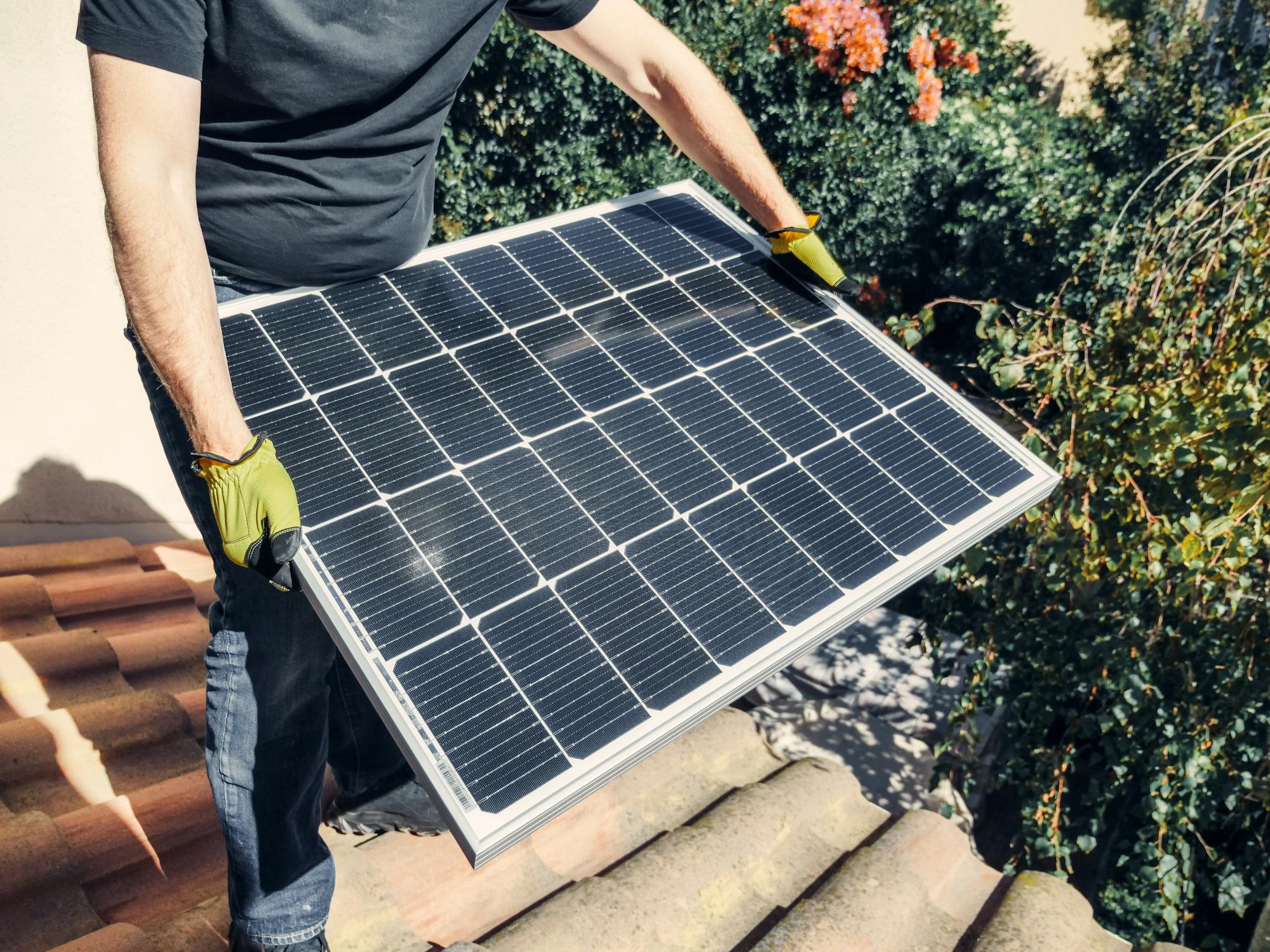
Battery energy storage had a record year in 2025. According to the Solar Energy Industries Association and Benchmark Mineral Intelligence, U.S. installations hit 57 GWh (a 29% jump over 2024). Utility-scale projects accounted for most of that, with nearly 50 GWh and 16 GW installed. California, Texas, and Arizona made up 74% of the total.
Behind-the-meter installations (residential, commercial, industrial) added another 12 GW and 8 GWh. Ford announced it's pivoting into stationary energy storage, targeting grid and data center demand from its Michigan battery plants. Google and Xcel Energy signed a deal for what may become the world's largest grid battery, using Form Energy's iron-air technology for long-duration storage.
So far, so good. Costs are dropping, technology is diversifying, demand is clear. The problem is everything that happens after you decide to build.
The interconnection queue is where projects go to die
Before a battery storage system can deliver power to the grid, it needs to go through an interconnection study process. The developer submits an application to the regional transmission operator, which then conducts engineering studies to determine what grid upgrades are needed to connect the project safely. This takes time. A lot of time.
Lawrence Berkeley National Laboratory has been tracking this problem for years. Their data shows that by the end of 2023, more than 2.6 terawatts of capacity, including over 1 TW of solar and 1 TW of battery storage, were sitting in interconnection queues. To put that in context, 2.6 TW is more than twice the entire existing U.S. power generation fleet.
And 80% of those projects eventually withdraw from the queue without ever getting built. The reasons vary (study delays, unexpected upgrade costs, shifting economics) but the pattern is consistent. The queue has become a graveyard.
Why is this happening?
The short answer: the interconnection process was designed for a world where a few dozen large power plants connected to the grid each year. It was not designed for a world where thousands of solar, wind, and battery projects are lining up simultaneously.
The old system was "first come, first served." Projects entered the queue individually, and each one triggered a separate engineering study. When the queue had a few hundred projects, this worked fine. When it ballooned to thousands, the whole process seized up. A single project's withdrawal could force restudies of every project behind it in line, creating cascading delays.
There's also a cost problem. Interconnection studies increasingly reveal that connecting a new project requires expensive transmission upgrades, sometimes tens of millions of dollars for a single project. Developers don't always know about these costs until they're deep into the process, which leads to more withdrawals, which leads to more restudies.
FERC tried to fix it. The results are mixed.
In July 2023, the Federal Energy Regulatory Commission issued Order 2023, the most significant overhaul of interconnection rules in two decades. The big changes: shifting from "first come, first served" to a "cluster study" approach (studying groups of projects together), imposing stricter financial commitments to weed out speculative applications, and setting firmer timelines with penalties for delays.
FERC followed up with Order 2023-A in March 2024, which tweaked some details but kept the overall framework intact. Transmission providers had until mid-2024 to file compliance plans.
Two years later, the picture is mixed. Some regions are making real progress. ISO New England, for example, paused new interconnection requests entirely during its transition period and won't accept new ones until October 2026. That's painful for developers but may clear the backlog. Other regions are still wrestling with implementation details.
The cluster study model makes sense in theory. Studying 50 projects at once is more efficient than studying them one at a time. But clustering also introduces new complications: how do you allocate shared upgrade costs? What happens when some projects in a cluster drop out? These are real operational questions that don't have clean answers yet.
The revenue question nobody wants to talk about
Even if you get through the interconnection queue, battery storage has a business model problem. As analysts at the 2026 Energy Storage Summit pointed out, batteries make money primarily from price volatility: buying cheap power when supply exceeds demand and selling it back when prices spike. But as more batteries enter the market, they flatten those price spikes. The more successful storage is, the less profitable each individual unit becomes.
This is the "cannibalization" problem, and it's already showing up in Texas and California, the two biggest storage markets. Revenue per megawatt-hour from arbitrage is declining in both states as storage capacity grows. Longer-duration storage technologies like Form Energy's iron-air batteries (which can discharge for 100 hours, not just 4) may open new revenue streams by providing multi-day reliability services. But those markets are still being defined by regulators.
For municipalities and utilities thinking about storage investments, this means due diligence matters more than it did two years ago. The question is no longer "can we build it?" but "what's the revenue model, and is it durable?"

What this means for energy planners and local governments
If you're a utility, a local government, or a corporate energy buyer, here's what matters:
Lead times are longer than you think. Even with FERC reforms, expect 3-5 years from interconnection application to commercial operation for utility-scale storage. Plan accordingly.
Co-location with solar is the path of least resistance. Hybrid solar-plus-storage projects can sometimes use existing interconnection agreements, avoiding a separate queue. Most of the storage capacity in interconnection queues is already paired with solar.
Behind-the-meter storage sidesteps the queue entirely. If your primary goal is resilience (keeping critical facilities running during outages), behind-the-meter batteries don't require interconnection studies at the same scale. They're smaller, simpler, and faster to deploy.
Watch the revenue model. Don't assume today's arbitrage margins will hold as more storage comes online. Look for contracted revenue streams (capacity payments, demand response programs, utility procurement agreements) that provide more predictable returns.
State policy still matters. Despite federal uncertainty, states like California, New York, and Massachusetts have their own storage mandates and incentive structures. These can make or break project economics.
The bottleneck is the grid itself
Here's the uncomfortable truth: America's energy transition is being constrained less by technology or financing than by the physical and regulatory infrastructure that connects new resources to the people who need them. We can manufacture batteries faster than ever. We can't plug them in faster than ever.
The interconnection queue is an institutional problem, not a technical one. The rules, processes, and organizations that manage grid access were built for a different era. FERC Order 2023 is a step in the right direction, but institutional change takes time, probably more time than the climate math gives us.
For energy professionals, the takeaway is practical: plan for the bottleneck. Build your timelines around interconnection reality, not technology optimism. And for policymakers: the next round of clean energy legislation needs to address transmission and interconnection with the same urgency that the Inflation Reduction Act addressed deployment incentives.
The batteries are ready. The grid isn't. That gap is where the real work is.
Related resources
The Hamburg Declaration: What Europe's Offshore Wind Financing Model Means for the U.S. — How European offshore wind procurement models compare to U.S. approaches, and what American policymakers can learn from them.
When Big Tech Moves In: What Communities Can Do About Data Center Water and Energy Demands — Data centers are driving massive new electricity demand, creating pressure on the same grid infrastructure discussed here.
The SEC Backed Down on Climate Disclosure. States Didn't. — State-level policy action is filling federal gaps in clean energy, too.
Water Accounting Is Where Carbon Accounting Was 10 Years Ago — Another infrastructure resource (water) where measurement and disclosure lag behind the actual risk.
Frequently asked questions
How long does it take to connect a battery storage project to the grid?
Typical timelines range from 3 to 5 years from interconnection application to commercial operation, depending on the region and the size of the project. Some projects have waited longer. FERC Order 2023 aims to reduce these timelines, but the reforms are still being implemented.
Why do so many storage projects drop out of the interconnection queue?
The 80% withdrawal rate reflects several factors: unexpected grid upgrade costs that make projects uneconomic, study delays that push timelines beyond financing windows, and speculative applications from developers testing multiple sites. FERC's new financial commitment requirements are designed to reduce speculative filings.
Is behind-the-meter battery storage a good alternative for municipalities?
For resilience purposes (keeping critical facilities like fire stations, water treatment plants, and emergency shelters running during outages), behind-the-meter storage can be deployed faster and with fewer regulatory hurdles than utility-scale projects. It won't replace the need for grid-scale storage, but it can address immediate reliability needs.
How does battery storage make money?
Most grid-scale batteries earn revenue through energy arbitrage (buying low, selling high), capacity payments (being available when the grid needs them), and ancillary services (helping stabilize grid frequency). As more storage enters the market, arbitrage margins are compressing, making contracted revenue streams more important for project viability.
What is FERC Order 2023?
Issued in July 2023, FERC Order 2023 reformed the generator interconnection process by shifting from a "first come, first served" model to cluster-based studies, imposing stricter financial commitments to deter speculative applications, and setting firmer study timelines with penalties for delays. It's the most significant overhaul of interconnection rules in two decades.
Latest Articles
©2025

Narrative Change and Power Building: The Missing Half of Advocacy
Narrative change is the process of disrupting dominant narratives that normalize inequity and advancing new narratives from historically marginalized communities.

Funding Resilience Without Federal Grants
BRIC is unreliable and FEMA is shrinking. Here's how cities fund climate resilience with dedicated revenue, blended finance, and a coordinating authority.

The ESG Blind Spot: How AI Is Finding Risks in Companies Nobody Else Is Watching
Norway's sovereign wealth fund uses AI to screen 7,200 portfolio companies for forced labor and corruption within 24 hours. The real story is the emerging-market coverage gap that traditional ESG data vendors miss — and what it means for any company with a global supply chain.
Narrative Change and Power Building: The Missing Half of Advocacy
Narrative change is the process of disrupting dominant narratives that normalize inequity and advancing new narratives from historically marginalized communities.
Funding Resilience Without Federal Grants
BRIC is unreliable and FEMA is shrinking. Here's how cities fund climate resilience with dedicated revenue, blended finance, and a coordinating authority.
The ESG Blind Spot: How AI Is Finding Risks in Companies Nobody Else Is Watching
Norway's sovereign wealth fund uses AI to screen 7,200 portfolio companies for forced labor and corruption within 24 hours. The real story is the emerging-market coverage gap that traditional ESG data vendors miss — and what it means for any company with a global supply chain.
FAQ
01
What does it really mean to “redefine profit”?
02
What makes Council Fire different?
03
Who does Council Fire work with?
04
What does working with Council Fire actually look like?
05
How does Council Fire help organizations turn big goals into action?
06
How does Council Fire define and measure success?
Mar 10, 2026
We're Building Batteries Faster Than the Grid Can Absorb Them. That's a Problem.
Energy & Water Infrastructure
George Chmael II
Founder & CEO
In This Article
U.S. battery storage hit 57 GWh in 2025, but the interconnection queue — where 80% of projects die — is the real bottleneck. Here's what energy planners need to know.
We're Building Batteries Faster Than the Grid Can Absorb Them. That's a Problem.
We're Building Batteries Faster Than the Grid Can Absorb Them. That's a Problem.
Executive Summary: U.S. battery storage installations jumped 29% in 2025, hitting 57 GWh. That number will keep climbing. But the grid interconnection process, the bureaucratic bottleneck between "battery is built" and "battery is connected," hasn't kept pace. Over 2.6 terawatts of clean energy projects are stuck in interconnection queues, with 80% eventually withdrawing. FERC Order 2023 was supposed to fix this. Two years in, progress is uneven. Here's what energy professionals, utility planners, and local governments need to know about the real constraint on America's energy storage boom.
The numbers look great on paper
Battery energy storage had a record year in 2025. According to the Solar Energy Industries Association and Benchmark Mineral Intelligence, U.S. installations hit 57 GWh (a 29% jump over 2024). Utility-scale projects accounted for most of that, with nearly 50 GWh and 16 GW installed. California, Texas, and Arizona made up 74% of the total.
Behind-the-meter installations (residential, commercial, industrial) added another 12 GW and 8 GWh. Ford announced it's pivoting into stationary energy storage, targeting grid and data center demand from its Michigan battery plants. Google and Xcel Energy signed a deal for what may become the world's largest grid battery, using Form Energy's iron-air technology for long-duration storage.
So far, so good. Costs are dropping, technology is diversifying, demand is clear. The problem is everything that happens after you decide to build.
The interconnection queue is where projects go to die
Before a battery storage system can deliver power to the grid, it needs to go through an interconnection study process. The developer submits an application to the regional transmission operator, which then conducts engineering studies to determine what grid upgrades are needed to connect the project safely. This takes time. A lot of time.
Lawrence Berkeley National Laboratory has been tracking this problem for years. Their data shows that by the end of 2023, more than 2.6 terawatts of capacity, including over 1 TW of solar and 1 TW of battery storage, were sitting in interconnection queues. To put that in context, 2.6 TW is more than twice the entire existing U.S. power generation fleet.
And 80% of those projects eventually withdraw from the queue without ever getting built. The reasons vary (study delays, unexpected upgrade costs, shifting economics) but the pattern is consistent. The queue has become a graveyard.
Why is this happening?
The short answer: the interconnection process was designed for a world where a few dozen large power plants connected to the grid each year. It was not designed for a world where thousands of solar, wind, and battery projects are lining up simultaneously.
The old system was "first come, first served." Projects entered the queue individually, and each one triggered a separate engineering study. When the queue had a few hundred projects, this worked fine. When it ballooned to thousands, the whole process seized up. A single project's withdrawal could force restudies of every project behind it in line, creating cascading delays.
There's also a cost problem. Interconnection studies increasingly reveal that connecting a new project requires expensive transmission upgrades, sometimes tens of millions of dollars for a single project. Developers don't always know about these costs until they're deep into the process, which leads to more withdrawals, which leads to more restudies.
FERC tried to fix it. The results are mixed.
In July 2023, the Federal Energy Regulatory Commission issued Order 2023, the most significant overhaul of interconnection rules in two decades. The big changes: shifting from "first come, first served" to a "cluster study" approach (studying groups of projects together), imposing stricter financial commitments to weed out speculative applications, and setting firmer timelines with penalties for delays.
FERC followed up with Order 2023-A in March 2024, which tweaked some details but kept the overall framework intact. Transmission providers had until mid-2024 to file compliance plans.
Two years later, the picture is mixed. Some regions are making real progress. ISO New England, for example, paused new interconnection requests entirely during its transition period and won't accept new ones until October 2026. That's painful for developers but may clear the backlog. Other regions are still wrestling with implementation details.
The cluster study model makes sense in theory. Studying 50 projects at once is more efficient than studying them one at a time. But clustering also introduces new complications: how do you allocate shared upgrade costs? What happens when some projects in a cluster drop out? These are real operational questions that don't have clean answers yet.
The revenue question nobody wants to talk about
Even if you get through the interconnection queue, battery storage has a business model problem. As analysts at the 2026 Energy Storage Summit pointed out, batteries make money primarily from price volatility: buying cheap power when supply exceeds demand and selling it back when prices spike. But as more batteries enter the market, they flatten those price spikes. The more successful storage is, the less profitable each individual unit becomes.
This is the "cannibalization" problem, and it's already showing up in Texas and California, the two biggest storage markets. Revenue per megawatt-hour from arbitrage is declining in both states as storage capacity grows. Longer-duration storage technologies like Form Energy's iron-air batteries (which can discharge for 100 hours, not just 4) may open new revenue streams by providing multi-day reliability services. But those markets are still being defined by regulators.
For municipalities and utilities thinking about storage investments, this means due diligence matters more than it did two years ago. The question is no longer "can we build it?" but "what's the revenue model, and is it durable?"
What this means for energy planners and local governments
If you're a utility, a local government, or a corporate energy buyer, here's what matters:
Lead times are longer than you think. Even with FERC reforms, expect 3-5 years from interconnection application to commercial operation for utility-scale storage. Plan accordingly.
Co-location with solar is the path of least resistance. Hybrid solar-plus-storage projects can sometimes use existing interconnection agreements, avoiding a separate queue. Most of the storage capacity in interconnection queues is already paired with solar.
Behind-the-meter storage sidesteps the queue entirely. If your primary goal is resilience (keeping critical facilities running during outages), behind-the-meter batteries don't require interconnection studies at the same scale. They're smaller, simpler, and faster to deploy.
Watch the revenue model. Don't assume today's arbitrage margins will hold as more storage comes online. Look for contracted revenue streams (capacity payments, demand response programs, utility procurement agreements) that provide more predictable returns.
State policy still matters. Despite federal uncertainty, states like California, New York, and Massachusetts have their own storage mandates and incentive structures. These can make or break project economics.
The bottleneck is the grid itself
Here's the uncomfortable truth: America's energy transition is being constrained less by technology or financing than by the physical and regulatory infrastructure that connects new resources to the people who need them. We can manufacture batteries faster than ever. We can't plug them in faster than ever.
The interconnection queue is an institutional problem, not a technical one. The rules, processes, and organizations that manage grid access were built for a different era. FERC Order 2023 is a step in the right direction, but institutional change takes time, probably more time than the climate math gives us.
For energy professionals, the takeaway is practical: plan for the bottleneck. Build your timelines around interconnection reality, not technology optimism. And for policymakers: the next round of clean energy legislation needs to address transmission and interconnection with the same urgency that the Inflation Reduction Act addressed deployment incentives.
The batteries are ready. The grid isn't. That gap is where the real work is.
Related resources
The Hamburg Declaration: What Europe's Offshore Wind Financing Model Means for the U.S. — How European offshore wind procurement models compare to U.S. approaches, and what American policymakers can learn from them.
When Big Tech Moves In: What Communities Can Do About Data Center Water and Energy Demands — Data centers are driving massive new electricity demand, creating pressure on the same grid infrastructure discussed here.
The SEC Backed Down on Climate Disclosure. States Didn't. — State-level policy action is filling federal gaps in clean energy, too.
Water Accounting Is Where Carbon Accounting Was 10 Years Ago — Another infrastructure resource (water) where measurement and disclosure lag behind the actual risk.
Frequently asked questions
How long does it take to connect a battery storage project to the grid?
Typical timelines range from 3 to 5 years from interconnection application to commercial operation, depending on the region and the size of the project. Some projects have waited longer. FERC Order 2023 aims to reduce these timelines, but the reforms are still being implemented.
Why do so many storage projects drop out of the interconnection queue?
The 80% withdrawal rate reflects several factors: unexpected grid upgrade costs that make projects uneconomic, study delays that push timelines beyond financing windows, and speculative applications from developers testing multiple sites. FERC's new financial commitment requirements are designed to reduce speculative filings.
Is behind-the-meter battery storage a good alternative for municipalities?
For resilience purposes (keeping critical facilities like fire stations, water treatment plants, and emergency shelters running during outages), behind-the-meter storage can be deployed faster and with fewer regulatory hurdles than utility-scale projects. It won't replace the need for grid-scale storage, but it can address immediate reliability needs.
How does battery storage make money?
Most grid-scale batteries earn revenue through energy arbitrage (buying low, selling high), capacity payments (being available when the grid needs them), and ancillary services (helping stabilize grid frequency). As more storage enters the market, arbitrage margins are compressing, making contracted revenue streams more important for project viability.
What is FERC Order 2023?
Issued in July 2023, FERC Order 2023 reformed the generator interconnection process by shifting from a "first come, first served" model to cluster-based studies, imposing stricter financial commitments to deter speculative applications, and setting firmer study timelines with penalties for delays. It's the most significant overhaul of interconnection rules in two decades.
Latest Articles
©2025
Narrative Change and Power Building: The Missing Half of Advocacy
Narrative change is the process of disrupting dominant narratives that normalize inequity and advancing new narratives from historically marginalized communities.
Funding Resilience Without Federal Grants
BRIC is unreliable and FEMA is shrinking. Here's how cities fund climate resilience with dedicated revenue, blended finance, and a coordinating authority.
The ESG Blind Spot: How AI Is Finding Risks in Companies Nobody Else Is Watching
Norway's sovereign wealth fund uses AI to screen 7,200 portfolio companies for forced labor and corruption within 24 hours. The real story is the emerging-market coverage gap that traditional ESG data vendors miss — and what it means for any company with a global supply chain.
FAQ
01
What does it really mean to “redefine profit”?
02
What makes Council Fire different?
03
Who does Council Fire work with?
04
What does working with Council Fire actually look like?
05
How does Council Fire help organizations turn big goals into action?
06
How does Council Fire define and measure success?
Mar 10, 2026
We're Building Batteries Faster Than the Grid Can Absorb Them. That's a Problem.
Energy & Water Infrastructure
George Chmael II
Founder & CEO
In This Article
U.S. battery storage hit 57 GWh in 2025, but the interconnection queue — where 80% of projects die — is the real bottleneck. Here's what energy planners need to know.
We're Building Batteries Faster Than the Grid Can Absorb Them. That's a Problem.
We're Building Batteries Faster Than the Grid Can Absorb Them. That's a Problem.
Executive Summary: U.S. battery storage installations jumped 29% in 2025, hitting 57 GWh. That number will keep climbing. But the grid interconnection process, the bureaucratic bottleneck between "battery is built" and "battery is connected," hasn't kept pace. Over 2.6 terawatts of clean energy projects are stuck in interconnection queues, with 80% eventually withdrawing. FERC Order 2023 was supposed to fix this. Two years in, progress is uneven. Here's what energy professionals, utility planners, and local governments need to know about the real constraint on America's energy storage boom.
The numbers look great on paper
Battery energy storage had a record year in 2025. According to the Solar Energy Industries Association and Benchmark Mineral Intelligence, U.S. installations hit 57 GWh (a 29% jump over 2024). Utility-scale projects accounted for most of that, with nearly 50 GWh and 16 GW installed. California, Texas, and Arizona made up 74% of the total.
Behind-the-meter installations (residential, commercial, industrial) added another 12 GW and 8 GWh. Ford announced it's pivoting into stationary energy storage, targeting grid and data center demand from its Michigan battery plants. Google and Xcel Energy signed a deal for what may become the world's largest grid battery, using Form Energy's iron-air technology for long-duration storage.
So far, so good. Costs are dropping, technology is diversifying, demand is clear. The problem is everything that happens after you decide to build.
The interconnection queue is where projects go to die
Before a battery storage system can deliver power to the grid, it needs to go through an interconnection study process. The developer submits an application to the regional transmission operator, which then conducts engineering studies to determine what grid upgrades are needed to connect the project safely. This takes time. A lot of time.
Lawrence Berkeley National Laboratory has been tracking this problem for years. Their data shows that by the end of 2023, more than 2.6 terawatts of capacity, including over 1 TW of solar and 1 TW of battery storage, were sitting in interconnection queues. To put that in context, 2.6 TW is more than twice the entire existing U.S. power generation fleet.
And 80% of those projects eventually withdraw from the queue without ever getting built. The reasons vary (study delays, unexpected upgrade costs, shifting economics) but the pattern is consistent. The queue has become a graveyard.
Why is this happening?
The short answer: the interconnection process was designed for a world where a few dozen large power plants connected to the grid each year. It was not designed for a world where thousands of solar, wind, and battery projects are lining up simultaneously.
The old system was "first come, first served." Projects entered the queue individually, and each one triggered a separate engineering study. When the queue had a few hundred projects, this worked fine. When it ballooned to thousands, the whole process seized up. A single project's withdrawal could force restudies of every project behind it in line, creating cascading delays.
There's also a cost problem. Interconnection studies increasingly reveal that connecting a new project requires expensive transmission upgrades, sometimes tens of millions of dollars for a single project. Developers don't always know about these costs until they're deep into the process, which leads to more withdrawals, which leads to more restudies.
FERC tried to fix it. The results are mixed.
In July 2023, the Federal Energy Regulatory Commission issued Order 2023, the most significant overhaul of interconnection rules in two decades. The big changes: shifting from "first come, first served" to a "cluster study" approach (studying groups of projects together), imposing stricter financial commitments to weed out speculative applications, and setting firmer timelines with penalties for delays.
FERC followed up with Order 2023-A in March 2024, which tweaked some details but kept the overall framework intact. Transmission providers had until mid-2024 to file compliance plans.
Two years later, the picture is mixed. Some regions are making real progress. ISO New England, for example, paused new interconnection requests entirely during its transition period and won't accept new ones until October 2026. That's painful for developers but may clear the backlog. Other regions are still wrestling with implementation details.
The cluster study model makes sense in theory. Studying 50 projects at once is more efficient than studying them one at a time. But clustering also introduces new complications: how do you allocate shared upgrade costs? What happens when some projects in a cluster drop out? These are real operational questions that don't have clean answers yet.
The revenue question nobody wants to talk about
Even if you get through the interconnection queue, battery storage has a business model problem. As analysts at the 2026 Energy Storage Summit pointed out, batteries make money primarily from price volatility: buying cheap power when supply exceeds demand and selling it back when prices spike. But as more batteries enter the market, they flatten those price spikes. The more successful storage is, the less profitable each individual unit becomes.
This is the "cannibalization" problem, and it's already showing up in Texas and California, the two biggest storage markets. Revenue per megawatt-hour from arbitrage is declining in both states as storage capacity grows. Longer-duration storage technologies like Form Energy's iron-air batteries (which can discharge for 100 hours, not just 4) may open new revenue streams by providing multi-day reliability services. But those markets are still being defined by regulators.
For municipalities and utilities thinking about storage investments, this means due diligence matters more than it did two years ago. The question is no longer "can we build it?" but "what's the revenue model, and is it durable?"
What this means for energy planners and local governments
If you're a utility, a local government, or a corporate energy buyer, here's what matters:
Lead times are longer than you think. Even with FERC reforms, expect 3-5 years from interconnection application to commercial operation for utility-scale storage. Plan accordingly.
Co-location with solar is the path of least resistance. Hybrid solar-plus-storage projects can sometimes use existing interconnection agreements, avoiding a separate queue. Most of the storage capacity in interconnection queues is already paired with solar.
Behind-the-meter storage sidesteps the queue entirely. If your primary goal is resilience (keeping critical facilities running during outages), behind-the-meter batteries don't require interconnection studies at the same scale. They're smaller, simpler, and faster to deploy.
Watch the revenue model. Don't assume today's arbitrage margins will hold as more storage comes online. Look for contracted revenue streams (capacity payments, demand response programs, utility procurement agreements) that provide more predictable returns.
State policy still matters. Despite federal uncertainty, states like California, New York, and Massachusetts have their own storage mandates and incentive structures. These can make or break project economics.
The bottleneck is the grid itself
Here's the uncomfortable truth: America's energy transition is being constrained less by technology or financing than by the physical and regulatory infrastructure that connects new resources to the people who need them. We can manufacture batteries faster than ever. We can't plug them in faster than ever.
The interconnection queue is an institutional problem, not a technical one. The rules, processes, and organizations that manage grid access were built for a different era. FERC Order 2023 is a step in the right direction, but institutional change takes time, probably more time than the climate math gives us.
For energy professionals, the takeaway is practical: plan for the bottleneck. Build your timelines around interconnection reality, not technology optimism. And for policymakers: the next round of clean energy legislation needs to address transmission and interconnection with the same urgency that the Inflation Reduction Act addressed deployment incentives.
The batteries are ready. The grid isn't. That gap is where the real work is.
Related resources
The Hamburg Declaration: What Europe's Offshore Wind Financing Model Means for the U.S. — How European offshore wind procurement models compare to U.S. approaches, and what American policymakers can learn from them.
When Big Tech Moves In: What Communities Can Do About Data Center Water and Energy Demands — Data centers are driving massive new electricity demand, creating pressure on the same grid infrastructure discussed here.
The SEC Backed Down on Climate Disclosure. States Didn't. — State-level policy action is filling federal gaps in clean energy, too.
Water Accounting Is Where Carbon Accounting Was 10 Years Ago — Another infrastructure resource (water) where measurement and disclosure lag behind the actual risk.
Frequently asked questions
How long does it take to connect a battery storage project to the grid?
Typical timelines range from 3 to 5 years from interconnection application to commercial operation, depending on the region and the size of the project. Some projects have waited longer. FERC Order 2023 aims to reduce these timelines, but the reforms are still being implemented.
Why do so many storage projects drop out of the interconnection queue?
The 80% withdrawal rate reflects several factors: unexpected grid upgrade costs that make projects uneconomic, study delays that push timelines beyond financing windows, and speculative applications from developers testing multiple sites. FERC's new financial commitment requirements are designed to reduce speculative filings.
Is behind-the-meter battery storage a good alternative for municipalities?
For resilience purposes (keeping critical facilities like fire stations, water treatment plants, and emergency shelters running during outages), behind-the-meter storage can be deployed faster and with fewer regulatory hurdles than utility-scale projects. It won't replace the need for grid-scale storage, but it can address immediate reliability needs.
How does battery storage make money?
Most grid-scale batteries earn revenue through energy arbitrage (buying low, selling high), capacity payments (being available when the grid needs them), and ancillary services (helping stabilize grid frequency). As more storage enters the market, arbitrage margins are compressing, making contracted revenue streams more important for project viability.
What is FERC Order 2023?
Issued in July 2023, FERC Order 2023 reformed the generator interconnection process by shifting from a "first come, first served" model to cluster-based studies, imposing stricter financial commitments to deter speculative applications, and setting firmer study timelines with penalties for delays. It's the most significant overhaul of interconnection rules in two decades.
Latest Articles
©2025
Narrative Change and Power Building: The Missing Half of Advocacy
Narrative change is the process of disrupting dominant narratives that normalize inequity and advancing new narratives from historically marginalized communities.
Funding Resilience Without Federal Grants
BRIC is unreliable and FEMA is shrinking. Here's how cities fund climate resilience with dedicated revenue, blended finance, and a coordinating authority.
The ESG Blind Spot: How AI Is Finding Risks in Companies Nobody Else Is Watching
Norway's sovereign wealth fund uses AI to screen 7,200 portfolio companies for forced labor and corruption within 24 hours. The real story is the emerging-market coverage gap that traditional ESG data vendors miss — and what it means for any company with a global supply chain.
FAQ
What does it really mean to “redefine profit”?
What makes Council Fire different?
Who does Council Fire work with?
What does working with Council Fire actually look like?
How does Council Fire help organizations turn big goals into action?
How does Council Fire define and measure success?