
Mar 26, 2026
How to Design Marine Protected Area Governance for Corporations
ESG Strategy
In This Article
Corporate guide to shared MPA governance: funding, tech, compliance, and KPIs to boost fish biomass and community resilience.
How to Design Marine Protected Area Governance for Corporations
Marine Protected Areas (MPAs) are critical for protecting ocean ecosystems, improving biodiversity, and supporting sustainable human activities like fishing and tourism. However, governance challenges - such as limited funding, weak enforcement, and lack of collaboration - often hinder their effectiveness. Corporations have a unique opportunity to address these issues by participating in shared governance models, which include governments, local communities, and other stakeholders. Research shows MPAs with shared governance are 98% more likely to improve fish biomass than those managed solely by state agencies.
Key Takeaways:
Why Corporations Should Engage: Aligns with ESG goals, supports the global 30x30 initiative, and provides economic benefits like improved fish stocks and ecotourism opportunities.
Shared Governance Benefits: Collaborative models outperform national governance, increasing fish biomass by 49% on average.
Technology and Compliance: Tools like vessel tracking and AI-powered monitoring improve enforcement and transparency.
Funding Solutions: Blue bonds, revenue-sharing models, and corporate partnerships close funding gaps while promoting long-term conservation.
Measuring Impact: Metrics like fish biomass, compliance rates, and stakeholder participation ensure accountability and effective governance.
Corporations can play a pivotal role in strengthening MPA governance by contributing resources, expertise, and innovative solutions while fostering trust with local communities. By doing so, they not only help protect marine ecosystems but also advance their sustainability objectives.
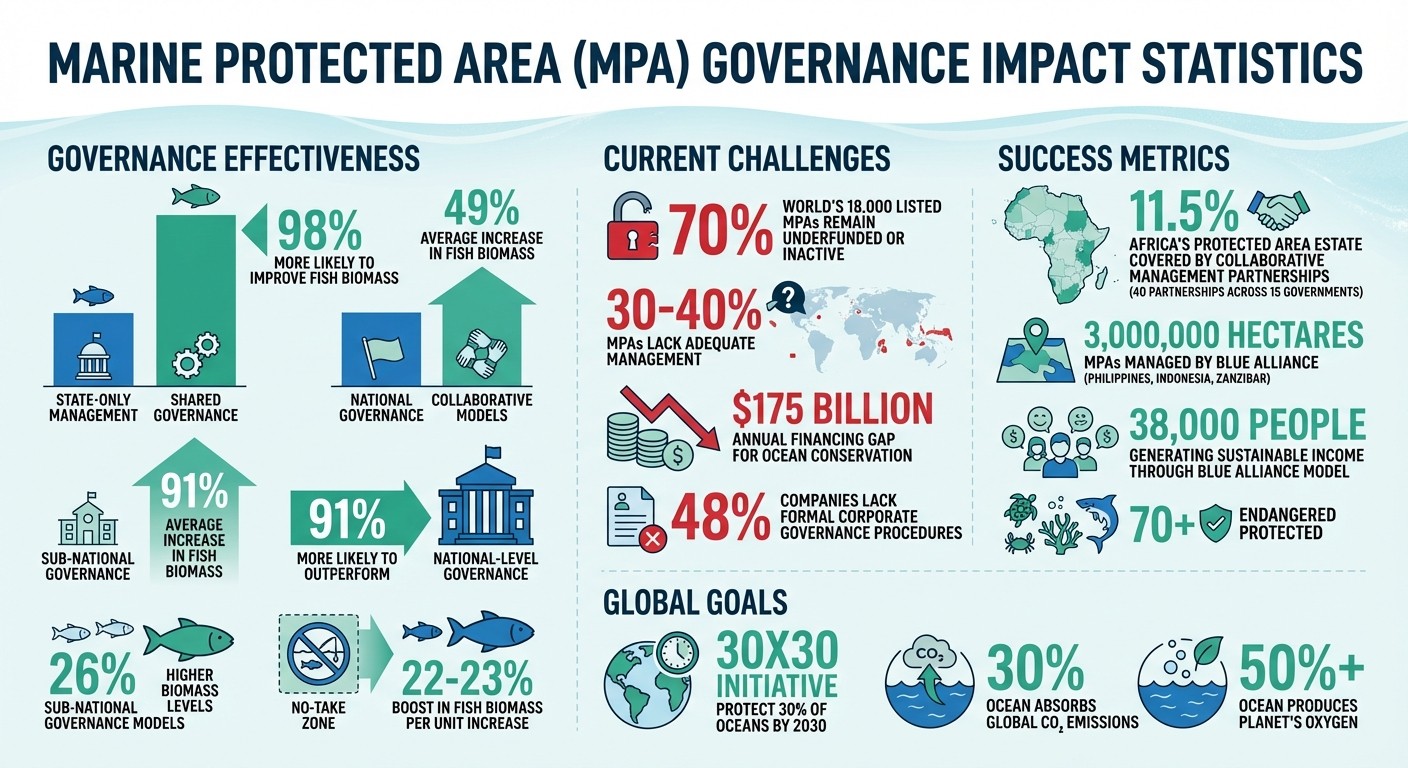
Marine Protected Area Governance Impact: Key Statistics and Benefits
Understanding Stakeholders and Local Context
Identifying Key Stakeholders in MPA Governance
In marine conservation, it’s crucial to identify all relevant stakeholders. These include national and local governments, Indigenous Peoples, community members, NGOs, private sector players, fishermen, SCUBA divers, scientists, and local managers [1][3]. Each group contributes unique perspectives, resources, and authority, making collaboration essential.
Corporations must take a comprehensive view of this stakeholder network. For example, when fishermen comply with no-take zones, it helps scientists and managers achieve conservation targets, creating a win-win scenario.
When forming corporate partnerships, established NGOs often serve as effective entry points. Organizations like Birdlife International, Conservation International, The Nature Conservancy (TNC), and the World Wide Fund for Nature (WWF) bring a wealth of experience in managing Marine Protected Areas (MPAs) [2]. Additionally, Locally Managed Marine Areas (LMMAs) provide opportunities for corporations to engage directly with communities leading conservation efforts.
Analyzing Social and Economic Context
Before crafting governance strategies, it’s vital to understand the local economic and cultural environment. Corporations should evaluate how livelihoods depend on marine resources, whether through fishing, tourism, or other activities. This involves examining local markets, national economic factors, and traditional practices that influence resource use.
One example is the Gulf of California project, where formalizing fishing permits for traditional fishers strengthened local communities, improved enforcement, and reduced illegal fishing. This approach aligned economic incentives with local priorities, fostering cooperation [5].
"The rules governing the operation of the trust fund must have sufficient flexibility to adapt to changing conditions, for example changing levels of public funding for protected areas." - Cecilia Blasco, Executive Director, FMCN Mexico [5]
This example highlights how linking economic realities to conservation goals can create effective partnerships while building trust with local communities.
Building Trust with Local Communities
Understanding stakeholder dynamics is only the first step - building trust is what transforms collaboration into success. Trust grows through transparent processes, consistent communication, and a focus on community welfare. One effective model is Collaborative Management Partnerships (CMPs), where corporations enter contractual agreements with governments or communities to manage marine areas. Across Africa, 15 governments have established 40 such partnerships, covering approximately 11.5% of the continent’s protected area estate [6].
Key drivers of success include open communication, shared objectives, and mutual respect, all of which enhance stakeholder satisfaction and improve management outcomes [4].
"Sharing objectives with fishermen through timely communication is the primary mechanism to improve fishermen's satisfaction and ameliorate perceptions towards MPA." - Ambio / Springer Nature [4]
During the COVID-19 pandemic, CMPs demonstrated resilience by maintaining operations without cutting staff or salaries. In many cases, they even provided additional support to communities [6]. This reliability during challenging times strengthens trust and highlights the importance of local employment and keeping revenue within the community. By aligning corporate interests with local economic growth, businesses can create long-term, mutually beneficial relationships.
Creating Shared Governance Models for MPAs
Understanding Shared Governance Models
Shared governance models build on stakeholder insights to bring together a mix of expertise, aiming for more effective management of Marine Protected Areas (MPAs). For companies pursuing strong ESG strategies, this approach can create opportunities for both ecological and business advancements.
At its core, shared governance shifts decision-making from a single authority to a collective of stakeholders. This collaborative structure has been shown to yield stronger conservation results, such as increased fish biomass. By involving state agencies, private entities, and local communities, these models promote cooperative management of MPAs.
"Shared governance arrangements that include diverse groups throughout the design and implementation process... may foster collaboration, support community interests, instill responsibility across multiple groups, and increase management capacity by leveraging shared resources." - Mast et al., PLOS One [1]
How Corporations Fit into Governance Frameworks
Corporations can play a pivotal role in shared governance through Collaborative Management Partnerships (CMPs). These formal partnerships allow businesses to take on management responsibilities for MPAs, helping to close funding gaps and bring technical know-how to conservation efforts [6].
Corporate contributions often include advanced monitoring technologies, sustainable revenue generation through reef-friendly ventures like ecotourism, and the creation of local jobs. When companies focus their efforts on sub-national collaboration - partnering with local or provincial governments instead of national agencies - they tend to see better ecological outcomes. Research shows that sub-national governance is 91% more likely to outperform national-level governance in terms of fish biomass [1].
These roles pave the way for practical applications, as shown in real-world case studies.
Case Study: Corporate Participation in MPA Management
Reef Guardian in Malaysia is a prime example of corporate involvement in MPA management. This private organization works in partnership with the Malaysian government to manage the Sugud Islands Marine Conservation Area. By leveraging private sector resources, they have improved both biodiversity and management efficiency [6].
Similarly, the Blue Alliance operates across the Philippines, Indonesia, and Zanzibar, managing 3,000,000 hectares of MPAs as of August 2025. Their Blue Economy approach supports reef-positive businesses like ecotourism, plastic recycling, and community-based aquaculture. This model has enabled MPAs to become financially self-reliant, reducing dependence on external donors. By collaborating closely with local communities, the Blue Alliance has strengthened food security and empowered coastal populations [7].
These examples highlight an essential ingredient for success: clear contractual agreements that outline roles, responsibilities, and resource contributions from the start. Prioritizing local involvement ensures that communities have a voice in governance decisions, which enhances compliance with conservation rules and strengthens the legitimacy of management efforts [1].
Setting Up Compliance and Enforcement Systems
Creating Clear Compliance Guidelines
Strong compliance and enforcement systems are essential for achieving conservation goals while complementing shared governance efforts. By incorporating corporate expertise into Marine Protected Area (MPA) management, clear compliance guidelines help distribute authority among government agencies, corporations, and local stakeholders. This not only strengthens accountability but also ensures the rules align with the needs of all parties involved.
A solid compliance framework should include a comprehensive code of ethics that emphasizes honest conduct, adherence to environmental regulations, and accessible internal reporting channels [8]. To ensure inclusivity, write these guidelines at an eighth- or ninth-grade reading level and provide translations in multiple languages to serve global operations and local communities alike [8]. Assign a Chief Compliance Officer who reports directly to the board, ensuring enforcement remains independent and effective [8].
"Companies with well-functioning compliance programs 'have a unique role to play' in detecting and preventing misconduct and will be held accountable if they fail to do so." - US Department of Justice's (DOJ's) Criminal Division [8]
Clearly define the roles and responsibilities of board members, management teams, and stakeholders to avoid confusion and duplication of efforts. Address any waiver instances promptly - delays in dealing with known violations can compromise the integrity of your compliance system [8]. Align your internal codes with established standards, such as SEC Requirements (Item 406 of Regulation S-K) and NYSE/Nasdaq listing rules, to stay in line with regulatory expectations [8]. These measures not only strengthen corporate ESG commitments but also support broader conservation efforts.
Once robust guidelines are in place, the next priority is integrating technology to enhance monitoring and enforcement.
Using Technology for Monitoring and Enforcement
Technology is revolutionizing how corporations ensure compliance in MPAs. For example, in December 2022, the Ascension Island Government adopted the Global Fishing Watch Marine Manager portal to oversee 170,000 square miles of its MPA. Using this tool, Director of Conservation and Fisheries Diane Baum analyzed vessel tracking data, oceanographic trends, and biological changes, creating clear visualizations to inform decisions and engage with the community [9].
"Data has the potential to revolutionize our ability to protect marine environments, and with Global Fishing Watch's support, we now have the capability to capture and analyze such large amounts of information." - Diane Baum, Director of Conservation and Fisheries, Ascension Island Government [9]
Effective monitoring combines vessel tracking systems with oceanographic sensors that measure variables like sea surface temperature and salinity. Machine learning processes these datasets to detect patterns in fishing activities and track how vessels respond to new management measures [9]. The Marine Manager portal offers near real-time data (typically with a 72-hour delay), enabling oversight of commercial fishing, oil drilling, seabed mining, and cargo vessel activities [9].
To maximize the benefits of these tools, train local managers to interpret data effectively. Technology is only as useful as the people using it. Additionally, promote transparency by publicly sharing vessel data, which helps improve oversight and builds trust among stakeholders [9].
While technology enhances monitoring, consistent reporting is key to maintaining accountability.
Maintaining Accountability Through Reporting and Auditing
Accountability hinges on continuous monitoring and regular reporting, with updates provided whenever governance structures or regulations change [10]. Replace fragmented systems like spreadsheets and emails with a centralized platform that acts as a "single source of truth" for governance data. This minimizes reporting gaps that often only surface during audits [10].
"Board members frequently receive surface-level data, such as the number of whistleblowing reports, with little context. Always dig deeper." - Pav Gill, CEO, Confide [10]
Assign specific individuals or departments to oversee each category of governance data, ensuring clear accountability. Board members must fulfill their "duty of care" by asking detailed questions and evaluating the qualifications of those presenting the data. This proactive approach helps avoid rubber-stamping flawed information [11]. For high-stakes decisions, consider forming independent committees or seeking advice from third-party experts, reducing fiduciary risks [11].
Governance technology can significantly streamline processes, cutting reporting time by 70% while improving accuracy [10]. AI-powered tools can automate document summaries, translate governance materials for local stakeholders, and create real-time compliance visualizations. Analyzing whistleblowing reports for recurring issues can also help identify systemic problems [10].
Social Aspects of MPA Management – Building Effective and Equitable Ocean Conservation
Financing Options for MPA Governance
A well-rounded governance strategy for Marine Protected Areas (MPAs) relies on innovative financing options to close funding gaps and align with corporate sustainability efforts. Moving beyond public and philanthropic grants, alternative funding mechanisms like impact debt facilities provide long-term capital to local businesses. These businesses - such as ecotourism operators, sustainable aquaculture ventures, and responsible fishing cooperatives - contribute to MPA operations through revenue-sharing agreements, creating a sustainable funding loop [12].
Blue Bonds and Investment Strategies
In October 2024, BNP Paribas and Blue Alliance introduced the Blue Finance Facility, starting with an investment of $2.4 million and aiming for $10 million. This initiative funds community businesses that support MPA operations through revenue-sharing models. Spearheaded by Blue Alliance co-founders Nicolas Pascal and Angelique Brathwaite, the project focuses on regenerating 1.7 million hectares of MPAs and improving food security for 110,000 people in local communities [12].
"This 'Blue Finance Facility'... provides long-term financing to local community businesses that help to preserve coral reefs, improve the incomes of vulnerable communities and contribute to financing the operation of MPAs, by paying them dividends or through a revenue-sharing mechanism."
Nicolas Pascal, Co-founder, Blue Alliance [12]
Sustainability-linked interest rates further align financing with marine conservation goals by indexing costs to specific environmental and community impact metrics. This approach is especially critical, as nearly 70% of the world’s 18,000 listed MPAs remain underfunded or inactive. With the United Nations’ "30x30" agreement aiming to protect 30% of the oceans by 2030, such financing models address an urgent need [12].
These strategies also set the stage for revenue diversification through corporate partnerships.
Corporate Sponsorships and Partnerships
Corporate sponsorships and partnerships with NGOs or governments play a key role in diversifying revenue streams and strengthening MPA governance. Blended finance models, which combine private capital with public or philanthropic grants, help reduce risks for early-stage investments in MPA-related businesses [13]. For instance, organizations like Blue Alliance use grant funding to scale enterprises to a point where they can attract traditional private sector investment [13].
Risk management is also essential to secure private debt for ocean-based projects. Guarantee-backed mechanisms, such as those offered by the Nautilus Blue Guarantee Company, mitigate financial risks and protect small and medium-sized enterprises from economic shocks. These efforts are vital, especially given the ocean’s role in absorbing 30% of global carbon dioxide emissions and producing over half the planet's oxygen. However, there remains a $175 billion annual financing gap for ocean conservation [13].
Corporate investments should target diverse sectors like responsible ecotourism, community-driven aquaculture, sustainable fishing, and mangrove restoration for carbon capture. The Blue Alliance model exemplifies this approach, protecting over 70 endangered species while generating sustainable income for 38,000 people across Zanzibar, Indonesia, and the Philippines [12].
Diversifying sponsorships naturally leads to performance-based financing models.
Payment for Ecosystem Services (PES) Programs
PES programs link corporate funding directly to measurable conservation outcomes. Tools like sustainability-linked bonds and results-based grants ensure accountability while tying financial support to specific environmental and community milestones [13].
"Tools like sustainability-linked bonds and results-based grants provide accountability while linking finance to tangible community and environmental outcomes."
Stacy Jupiter, Markus Knigge, and Loreley Picourt [13]
For PES programs to succeed, inclusive governance is essential. Empowering local communities and Indigenous Peoples to lead in governance, design, and implementation ensures equitable outcomes. The Women Ocean Guardians Initiative, launched in June 2025 during the 3rd UN Ocean Conference, embodies this principle by involving women in frontline decision-making roles for ocean stewardship and resource management [13].
Corporations can also leverage AI platforms to connect investors with sustainable ocean projects and adopt standardized protocols, like those from the Oceans Breakthroughs' Dashboard, to measure performance. Furthermore, regional trust funds such as the Caribbean Biodiversity Fund and Micronesia Conservation Trust provide long-term, locally rooted investment solutions to support MPA governance [13].
These robust funding mechanisms lay the groundwork for precise impact measurement, strengthening the overall effectiveness of MPA governance.
Measuring Impact and Results
Tracking meaningful metrics is essential to prove that corporate engagement in Marine Protected Areas (MPAs) leads to real conservation benefits. Without proper measurement, investments risk creating "paper parks" - protected areas that exist only in name, offering little ecological value. A key metric for assessing MPA effectiveness is fish biomass, calculated as the net difference between protected sites and similar unprotected areas [1].
Setting Key Performance Indicators (KPIs) for MPAs
To evaluate their contributions, corporations should monitor both ecological and governance metrics. For instance, the percentage of no-take zones within an MPA is directly linked to conservation success. Research shows that each unit increase in no-take zones results in a 22% to 23% boost in fish biomass [1]. Similarly, collaborative governance - where a lead organization partners with diverse stakeholders - supports fish biomass levels that are 49% higher compared to governance solely at the national level [1].
In addition to ecological metrics, corporations should assess management capacity by tracking resources like funding, staff support, and technical expertise brought in through corporate involvement. Social metrics are equally important; for example, monitoring stakeholder participation and user compliance rates can provide insights into the perceived legitimacy of MPAs, which often correlates with better conservation outcomes [1]. Finally, the age of the MPA or the duration of corporate involvement should be measured, as older MPAs typically allow more time for species recovery and adaptive governance [1].
Council Fire’s data-driven dashboards simplify the process, turning metrics into actionable insights.
Using Council Fire's Impact Analysis Services

Council Fire specializes in converting narrative reporting into clear, data-driven dashboards that link corporate actions to measurable marine outcomes. Their portfolio analysis categorizes conservation investments by goals, geography, and intervention type, helping corporations identify gaps between spending and actual results [14]. By facilitating Theory of Change (ToC) development, Council Fire creates a logical framework that ties corporate activities to specific results, such as improved MPA management, reformed fisheries governance, or expanded blue carbon protection [14].
For example, in February 2026, Council Fire completed a year-long restructuring for a private environmental foundation managing a $200 million ocean conservation portfolio. The team analyzed over 60 grants and developed a new Theory of Change targeting three major goals: managing 10 million hectares of MPAs, reforming fisheries in eight priority regions, and sequestering 5 million tons of CO₂ through blue carbon initiatives. Within 18 months, management effectiveness scores improved at 8 out of 12 priority MPA sites (as measured by METT assessments), and the foundation secured an additional $45 million in co-funding [14].
"Foundations that track reports published, convenings held, and campaigns launched without connecting these to measurable conservation outcomes will struggle to demonstrate impact regardless of spending levels." - Council Fire Resources [14]
Council Fire’s frameworks also distinguish outputs (e.g., reports or campaigns) from outcomes (e.g., ecosystem health improvements or enhanced community livelihoods). They align corporate MPA reporting with global standards like the Taskforce on Nature-related Financial Disclosures (TNFD) LEAP framework and the Science Based Targets Network (SBTN) [15].
Improving Governance Through Adaptive Management
Consistent measurement of KPIs is the foundation for refining governance strategies. Effective MPA governance relies on iterative processes and feedback loops, which adapt strategies based on measurable outcomes. Designing a measurement framework alongside governance plans ensures that initiatives generate actionable data from the start, avoiding the need for retroactive evaluations [14]. Tools like the Management Effectiveness Tracking Tool (METT) or the MPA Guide provide standardized data for these adaptive cycles [14].
A balanced approach is key, combining leading indicators (e.g., grantee capacity or policy progress) with lagging indicators (e.g., fish stock recovery or blue carbon sequestration). This dual focus allows for day-to-day management while evaluating long-term success [14]. Annual portfolio reviews can test the assumptions behind governance strategies, reallocating resources to interventions with greater impact. Sub-national governance models often outperform national ones, delivering biomass levels 26% higher, making them a priority for corporations aiming to maximize ecological benefits [1].
Research reveals that 30% to 40% of MPAs lack adequate management [14]. To address this, corporations must emphasize management effectiveness over simply increasing the size of protected areas. Adaptive management, informed by evidence and stakeholder input, is essential for improving governance and achieving meaningful conservation outcomes.
Conclusion: Taking Action on MPA Governance
Businesses have a real chance to make a difference in marine conservation by taking part in shared governance models. Research shows that MPAs using shared governance are 98% more likely to see increased fish biomass compared to those managed only by state agencies [1]. This kind of progress can mean the difference between vibrant marine ecosystems and ineffective protections that exist only on paper.
The journey begins with clear and actionable steps. Start by defining your purpose for engaging with MPAs - whether it's to meet regulatory requirements, reduce risks, or commit to safeguarding ocean health [16]. It's important to ensure that everyone involved - board members, executives, and local community representatives - understands their roles in creating and maintaining the governance framework [16]. Establish transparent decision-making processes, fair principles, and measurable KPIs, such as fish biomass goals and compliance rates, to support adaptive governance through regular feedback and audits [16][1].
"As a board member, it's crucial to get familiar with the operational heartbeat of the business. Step down from the boardroom and immerse yourself in the company's day-to-day workings." - Pav Gill, CEO, Confide [16]
Once a framework is in place, taking immediate action becomes critical. Time is of the essence, especially when nearly half (48%) of companies currently lack formal corporate governance procedures [16]. Legal and compliance leaders have rated business risk at 7.9 out of 10, underscoring the urgency [16]. On the conservation side, 30% to 40% of MPAs are struggling with inadequate management [14]. Companies that step up now can help address these gaps while strengthening their own sustainability efforts.
Council Fire provides data-driven frameworks that help businesses turn their sustainability goals into measurable outcomes for marine conservation. Whether you're crafting your first Theory of Change for ocean health or fine-tuning an existing strategy, Council Fire offers the expertise to ensure your efforts lead to real ecological and social improvements - not just a box checked for compliance.
FAQs
What’s the best first step for a company to join MPA governance?
To get started, it's crucial to work alongside stakeholders and familiarize yourself with the management framework of the Marine Protected Area (MPA). Take time to understand its objectives, governance structure, and specific requirements. Businesses can also consider forming public-private partnerships or entering into collaborative agreements as practical ways to contribute. Begin by reaching out to the governing bodies of the MPA to discover potential areas for collaboration and ensure alignment with their management goals.
How can corporations share MPA decision-making without overriding local rights?
Corporations can engage in Marine Protected Area (MPA) decision-making through shared governance arrangements, which distribute management authority between government entities and non-government participants. These structures promote collaboration by involving local communities directly in the process, ensuring their rights are acknowledged and their expertise valued. This method aims to align conservation objectives with the needs and priorities of local stakeholders, creating a more balanced and participatory approach to decision-making.
Which MPA metrics should companies track to prove real impact?
Tracking specific metrics is essential for companies to showcase the impact of Marine Protected Areas (MPAs). These key indicators include:
Fish biomass levels: A critical measure of ecosystem health and recovery.
Extent of no-take zones: Areas where fishing and extraction are prohibited, often linked to improved ecological outcomes.
Legal and regulatory compliance: Demonstrates adherence to rules that support effective MPA management.
MPA coverage area: Striving to protect at least 30% of oceanic regions, aligning with global conservation goals.
Management effectiveness: Evaluates governance, stakeholder participation, and enforcement efforts.
By focusing on these metrics, organizations can showcase measurable ecological improvements and contribute to sustainable marine stewardship.
Related Blog Posts
Latest Articles
©2025



FAQ
01
What does it really mean to “redefine profit”?
02
What makes Council Fire different?
03
Who does Council Fire you work with?
04
What does working with Council Fire actually look like?
05
How does Council Fire help organizations turn big goals into action?
06
How does Council Fire define and measure success?
Mar 26, 2026
How to Design Marine Protected Area Governance for Corporations
ESG Strategy
In This Article
Corporate guide to shared MPA governance: funding, tech, compliance, and KPIs to boost fish biomass and community resilience.
How to Design Marine Protected Area Governance for Corporations
Marine Protected Areas (MPAs) are critical for protecting ocean ecosystems, improving biodiversity, and supporting sustainable human activities like fishing and tourism. However, governance challenges - such as limited funding, weak enforcement, and lack of collaboration - often hinder their effectiveness. Corporations have a unique opportunity to address these issues by participating in shared governance models, which include governments, local communities, and other stakeholders. Research shows MPAs with shared governance are 98% more likely to improve fish biomass than those managed solely by state agencies.
Key Takeaways:
Why Corporations Should Engage: Aligns with ESG goals, supports the global 30x30 initiative, and provides economic benefits like improved fish stocks and ecotourism opportunities.
Shared Governance Benefits: Collaborative models outperform national governance, increasing fish biomass by 49% on average.
Technology and Compliance: Tools like vessel tracking and AI-powered monitoring improve enforcement and transparency.
Funding Solutions: Blue bonds, revenue-sharing models, and corporate partnerships close funding gaps while promoting long-term conservation.
Measuring Impact: Metrics like fish biomass, compliance rates, and stakeholder participation ensure accountability and effective governance.
Corporations can play a pivotal role in strengthening MPA governance by contributing resources, expertise, and innovative solutions while fostering trust with local communities. By doing so, they not only help protect marine ecosystems but also advance their sustainability objectives.
Marine Protected Area Governance Impact: Key Statistics and Benefits
Understanding Stakeholders and Local Context
Identifying Key Stakeholders in MPA Governance
In marine conservation, it’s crucial to identify all relevant stakeholders. These include national and local governments, Indigenous Peoples, community members, NGOs, private sector players, fishermen, SCUBA divers, scientists, and local managers [1][3]. Each group contributes unique perspectives, resources, and authority, making collaboration essential.
Corporations must take a comprehensive view of this stakeholder network. For example, when fishermen comply with no-take zones, it helps scientists and managers achieve conservation targets, creating a win-win scenario.
When forming corporate partnerships, established NGOs often serve as effective entry points. Organizations like Birdlife International, Conservation International, The Nature Conservancy (TNC), and the World Wide Fund for Nature (WWF) bring a wealth of experience in managing Marine Protected Areas (MPAs) [2]. Additionally, Locally Managed Marine Areas (LMMAs) provide opportunities for corporations to engage directly with communities leading conservation efforts.
Analyzing Social and Economic Context
Before crafting governance strategies, it’s vital to understand the local economic and cultural environment. Corporations should evaluate how livelihoods depend on marine resources, whether through fishing, tourism, or other activities. This involves examining local markets, national economic factors, and traditional practices that influence resource use.
One example is the Gulf of California project, where formalizing fishing permits for traditional fishers strengthened local communities, improved enforcement, and reduced illegal fishing. This approach aligned economic incentives with local priorities, fostering cooperation [5].
"The rules governing the operation of the trust fund must have sufficient flexibility to adapt to changing conditions, for example changing levels of public funding for protected areas." - Cecilia Blasco, Executive Director, FMCN Mexico [5]
This example highlights how linking economic realities to conservation goals can create effective partnerships while building trust with local communities.
Building Trust with Local Communities
Understanding stakeholder dynamics is only the first step - building trust is what transforms collaboration into success. Trust grows through transparent processes, consistent communication, and a focus on community welfare. One effective model is Collaborative Management Partnerships (CMPs), where corporations enter contractual agreements with governments or communities to manage marine areas. Across Africa, 15 governments have established 40 such partnerships, covering approximately 11.5% of the continent’s protected area estate [6].
Key drivers of success include open communication, shared objectives, and mutual respect, all of which enhance stakeholder satisfaction and improve management outcomes [4].
"Sharing objectives with fishermen through timely communication is the primary mechanism to improve fishermen's satisfaction and ameliorate perceptions towards MPA." - Ambio / Springer Nature [4]
During the COVID-19 pandemic, CMPs demonstrated resilience by maintaining operations without cutting staff or salaries. In many cases, they even provided additional support to communities [6]. This reliability during challenging times strengthens trust and highlights the importance of local employment and keeping revenue within the community. By aligning corporate interests with local economic growth, businesses can create long-term, mutually beneficial relationships.
Creating Shared Governance Models for MPAs
Understanding Shared Governance Models
Shared governance models build on stakeholder insights to bring together a mix of expertise, aiming for more effective management of Marine Protected Areas (MPAs). For companies pursuing strong ESG strategies, this approach can create opportunities for both ecological and business advancements.
At its core, shared governance shifts decision-making from a single authority to a collective of stakeholders. This collaborative structure has been shown to yield stronger conservation results, such as increased fish biomass. By involving state agencies, private entities, and local communities, these models promote cooperative management of MPAs.
"Shared governance arrangements that include diverse groups throughout the design and implementation process... may foster collaboration, support community interests, instill responsibility across multiple groups, and increase management capacity by leveraging shared resources." - Mast et al., PLOS One [1]
How Corporations Fit into Governance Frameworks
Corporations can play a pivotal role in shared governance through Collaborative Management Partnerships (CMPs). These formal partnerships allow businesses to take on management responsibilities for MPAs, helping to close funding gaps and bring technical know-how to conservation efforts [6].
Corporate contributions often include advanced monitoring technologies, sustainable revenue generation through reef-friendly ventures like ecotourism, and the creation of local jobs. When companies focus their efforts on sub-national collaboration - partnering with local or provincial governments instead of national agencies - they tend to see better ecological outcomes. Research shows that sub-national governance is 91% more likely to outperform national-level governance in terms of fish biomass [1].
These roles pave the way for practical applications, as shown in real-world case studies.
Case Study: Corporate Participation in MPA Management
Reef Guardian in Malaysia is a prime example of corporate involvement in MPA management. This private organization works in partnership with the Malaysian government to manage the Sugud Islands Marine Conservation Area. By leveraging private sector resources, they have improved both biodiversity and management efficiency [6].
Similarly, the Blue Alliance operates across the Philippines, Indonesia, and Zanzibar, managing 3,000,000 hectares of MPAs as of August 2025. Their Blue Economy approach supports reef-positive businesses like ecotourism, plastic recycling, and community-based aquaculture. This model has enabled MPAs to become financially self-reliant, reducing dependence on external donors. By collaborating closely with local communities, the Blue Alliance has strengthened food security and empowered coastal populations [7].
These examples highlight an essential ingredient for success: clear contractual agreements that outline roles, responsibilities, and resource contributions from the start. Prioritizing local involvement ensures that communities have a voice in governance decisions, which enhances compliance with conservation rules and strengthens the legitimacy of management efforts [1].
Setting Up Compliance and Enforcement Systems
Creating Clear Compliance Guidelines
Strong compliance and enforcement systems are essential for achieving conservation goals while complementing shared governance efforts. By incorporating corporate expertise into Marine Protected Area (MPA) management, clear compliance guidelines help distribute authority among government agencies, corporations, and local stakeholders. This not only strengthens accountability but also ensures the rules align with the needs of all parties involved.
A solid compliance framework should include a comprehensive code of ethics that emphasizes honest conduct, adherence to environmental regulations, and accessible internal reporting channels [8]. To ensure inclusivity, write these guidelines at an eighth- or ninth-grade reading level and provide translations in multiple languages to serve global operations and local communities alike [8]. Assign a Chief Compliance Officer who reports directly to the board, ensuring enforcement remains independent and effective [8].
"Companies with well-functioning compliance programs 'have a unique role to play' in detecting and preventing misconduct and will be held accountable if they fail to do so." - US Department of Justice's (DOJ's) Criminal Division [8]
Clearly define the roles and responsibilities of board members, management teams, and stakeholders to avoid confusion and duplication of efforts. Address any waiver instances promptly - delays in dealing with known violations can compromise the integrity of your compliance system [8]. Align your internal codes with established standards, such as SEC Requirements (Item 406 of Regulation S-K) and NYSE/Nasdaq listing rules, to stay in line with regulatory expectations [8]. These measures not only strengthen corporate ESG commitments but also support broader conservation efforts.
Once robust guidelines are in place, the next priority is integrating technology to enhance monitoring and enforcement.
Using Technology for Monitoring and Enforcement
Technology is revolutionizing how corporations ensure compliance in MPAs. For example, in December 2022, the Ascension Island Government adopted the Global Fishing Watch Marine Manager portal to oversee 170,000 square miles of its MPA. Using this tool, Director of Conservation and Fisheries Diane Baum analyzed vessel tracking data, oceanographic trends, and biological changes, creating clear visualizations to inform decisions and engage with the community [9].
"Data has the potential to revolutionize our ability to protect marine environments, and with Global Fishing Watch's support, we now have the capability to capture and analyze such large amounts of information." - Diane Baum, Director of Conservation and Fisheries, Ascension Island Government [9]
Effective monitoring combines vessel tracking systems with oceanographic sensors that measure variables like sea surface temperature and salinity. Machine learning processes these datasets to detect patterns in fishing activities and track how vessels respond to new management measures [9]. The Marine Manager portal offers near real-time data (typically with a 72-hour delay), enabling oversight of commercial fishing, oil drilling, seabed mining, and cargo vessel activities [9].
To maximize the benefits of these tools, train local managers to interpret data effectively. Technology is only as useful as the people using it. Additionally, promote transparency by publicly sharing vessel data, which helps improve oversight and builds trust among stakeholders [9].
While technology enhances monitoring, consistent reporting is key to maintaining accountability.
Maintaining Accountability Through Reporting and Auditing
Accountability hinges on continuous monitoring and regular reporting, with updates provided whenever governance structures or regulations change [10]. Replace fragmented systems like spreadsheets and emails with a centralized platform that acts as a "single source of truth" for governance data. This minimizes reporting gaps that often only surface during audits [10].
"Board members frequently receive surface-level data, such as the number of whistleblowing reports, with little context. Always dig deeper." - Pav Gill, CEO, Confide [10]
Assign specific individuals or departments to oversee each category of governance data, ensuring clear accountability. Board members must fulfill their "duty of care" by asking detailed questions and evaluating the qualifications of those presenting the data. This proactive approach helps avoid rubber-stamping flawed information [11]. For high-stakes decisions, consider forming independent committees or seeking advice from third-party experts, reducing fiduciary risks [11].
Governance technology can significantly streamline processes, cutting reporting time by 70% while improving accuracy [10]. AI-powered tools can automate document summaries, translate governance materials for local stakeholders, and create real-time compliance visualizations. Analyzing whistleblowing reports for recurring issues can also help identify systemic problems [10].
Social Aspects of MPA Management – Building Effective and Equitable Ocean Conservation
Financing Options for MPA Governance
A well-rounded governance strategy for Marine Protected Areas (MPAs) relies on innovative financing options to close funding gaps and align with corporate sustainability efforts. Moving beyond public and philanthropic grants, alternative funding mechanisms like impact debt facilities provide long-term capital to local businesses. These businesses - such as ecotourism operators, sustainable aquaculture ventures, and responsible fishing cooperatives - contribute to MPA operations through revenue-sharing agreements, creating a sustainable funding loop [12].
Blue Bonds and Investment Strategies
In October 2024, BNP Paribas and Blue Alliance introduced the Blue Finance Facility, starting with an investment of $2.4 million and aiming for $10 million. This initiative funds community businesses that support MPA operations through revenue-sharing models. Spearheaded by Blue Alliance co-founders Nicolas Pascal and Angelique Brathwaite, the project focuses on regenerating 1.7 million hectares of MPAs and improving food security for 110,000 people in local communities [12].
"This 'Blue Finance Facility'... provides long-term financing to local community businesses that help to preserve coral reefs, improve the incomes of vulnerable communities and contribute to financing the operation of MPAs, by paying them dividends or through a revenue-sharing mechanism."
Nicolas Pascal, Co-founder, Blue Alliance [12]
Sustainability-linked interest rates further align financing with marine conservation goals by indexing costs to specific environmental and community impact metrics. This approach is especially critical, as nearly 70% of the world’s 18,000 listed MPAs remain underfunded or inactive. With the United Nations’ "30x30" agreement aiming to protect 30% of the oceans by 2030, such financing models address an urgent need [12].
These strategies also set the stage for revenue diversification through corporate partnerships.
Corporate Sponsorships and Partnerships
Corporate sponsorships and partnerships with NGOs or governments play a key role in diversifying revenue streams and strengthening MPA governance. Blended finance models, which combine private capital with public or philanthropic grants, help reduce risks for early-stage investments in MPA-related businesses [13]. For instance, organizations like Blue Alliance use grant funding to scale enterprises to a point where they can attract traditional private sector investment [13].
Risk management is also essential to secure private debt for ocean-based projects. Guarantee-backed mechanisms, such as those offered by the Nautilus Blue Guarantee Company, mitigate financial risks and protect small and medium-sized enterprises from economic shocks. These efforts are vital, especially given the ocean’s role in absorbing 30% of global carbon dioxide emissions and producing over half the planet's oxygen. However, there remains a $175 billion annual financing gap for ocean conservation [13].
Corporate investments should target diverse sectors like responsible ecotourism, community-driven aquaculture, sustainable fishing, and mangrove restoration for carbon capture. The Blue Alliance model exemplifies this approach, protecting over 70 endangered species while generating sustainable income for 38,000 people across Zanzibar, Indonesia, and the Philippines [12].
Diversifying sponsorships naturally leads to performance-based financing models.
Payment for Ecosystem Services (PES) Programs
PES programs link corporate funding directly to measurable conservation outcomes. Tools like sustainability-linked bonds and results-based grants ensure accountability while tying financial support to specific environmental and community milestones [13].
"Tools like sustainability-linked bonds and results-based grants provide accountability while linking finance to tangible community and environmental outcomes."
Stacy Jupiter, Markus Knigge, and Loreley Picourt [13]
For PES programs to succeed, inclusive governance is essential. Empowering local communities and Indigenous Peoples to lead in governance, design, and implementation ensures equitable outcomes. The Women Ocean Guardians Initiative, launched in June 2025 during the 3rd UN Ocean Conference, embodies this principle by involving women in frontline decision-making roles for ocean stewardship and resource management [13].
Corporations can also leverage AI platforms to connect investors with sustainable ocean projects and adopt standardized protocols, like those from the Oceans Breakthroughs' Dashboard, to measure performance. Furthermore, regional trust funds such as the Caribbean Biodiversity Fund and Micronesia Conservation Trust provide long-term, locally rooted investment solutions to support MPA governance [13].
These robust funding mechanisms lay the groundwork for precise impact measurement, strengthening the overall effectiveness of MPA governance.
Measuring Impact and Results
Tracking meaningful metrics is essential to prove that corporate engagement in Marine Protected Areas (MPAs) leads to real conservation benefits. Without proper measurement, investments risk creating "paper parks" - protected areas that exist only in name, offering little ecological value. A key metric for assessing MPA effectiveness is fish biomass, calculated as the net difference between protected sites and similar unprotected areas [1].
Setting Key Performance Indicators (KPIs) for MPAs
To evaluate their contributions, corporations should monitor both ecological and governance metrics. For instance, the percentage of no-take zones within an MPA is directly linked to conservation success. Research shows that each unit increase in no-take zones results in a 22% to 23% boost in fish biomass [1]. Similarly, collaborative governance - where a lead organization partners with diverse stakeholders - supports fish biomass levels that are 49% higher compared to governance solely at the national level [1].
In addition to ecological metrics, corporations should assess management capacity by tracking resources like funding, staff support, and technical expertise brought in through corporate involvement. Social metrics are equally important; for example, monitoring stakeholder participation and user compliance rates can provide insights into the perceived legitimacy of MPAs, which often correlates with better conservation outcomes [1]. Finally, the age of the MPA or the duration of corporate involvement should be measured, as older MPAs typically allow more time for species recovery and adaptive governance [1].
Council Fire’s data-driven dashboards simplify the process, turning metrics into actionable insights.
Using Council Fire's Impact Analysis Services
Council Fire specializes in converting narrative reporting into clear, data-driven dashboards that link corporate actions to measurable marine outcomes. Their portfolio analysis categorizes conservation investments by goals, geography, and intervention type, helping corporations identify gaps between spending and actual results [14]. By facilitating Theory of Change (ToC) development, Council Fire creates a logical framework that ties corporate activities to specific results, such as improved MPA management, reformed fisheries governance, or expanded blue carbon protection [14].
For example, in February 2026, Council Fire completed a year-long restructuring for a private environmental foundation managing a $200 million ocean conservation portfolio. The team analyzed over 60 grants and developed a new Theory of Change targeting three major goals: managing 10 million hectares of MPAs, reforming fisheries in eight priority regions, and sequestering 5 million tons of CO₂ through blue carbon initiatives. Within 18 months, management effectiveness scores improved at 8 out of 12 priority MPA sites (as measured by METT assessments), and the foundation secured an additional $45 million in co-funding [14].
"Foundations that track reports published, convenings held, and campaigns launched without connecting these to measurable conservation outcomes will struggle to demonstrate impact regardless of spending levels." - Council Fire Resources [14]
Council Fire’s frameworks also distinguish outputs (e.g., reports or campaigns) from outcomes (e.g., ecosystem health improvements or enhanced community livelihoods). They align corporate MPA reporting with global standards like the Taskforce on Nature-related Financial Disclosures (TNFD) LEAP framework and the Science Based Targets Network (SBTN) [15].
Improving Governance Through Adaptive Management
Consistent measurement of KPIs is the foundation for refining governance strategies. Effective MPA governance relies on iterative processes and feedback loops, which adapt strategies based on measurable outcomes. Designing a measurement framework alongside governance plans ensures that initiatives generate actionable data from the start, avoiding the need for retroactive evaluations [14]. Tools like the Management Effectiveness Tracking Tool (METT) or the MPA Guide provide standardized data for these adaptive cycles [14].
A balanced approach is key, combining leading indicators (e.g., grantee capacity or policy progress) with lagging indicators (e.g., fish stock recovery or blue carbon sequestration). This dual focus allows for day-to-day management while evaluating long-term success [14]. Annual portfolio reviews can test the assumptions behind governance strategies, reallocating resources to interventions with greater impact. Sub-national governance models often outperform national ones, delivering biomass levels 26% higher, making them a priority for corporations aiming to maximize ecological benefits [1].
Research reveals that 30% to 40% of MPAs lack adequate management [14]. To address this, corporations must emphasize management effectiveness over simply increasing the size of protected areas. Adaptive management, informed by evidence and stakeholder input, is essential for improving governance and achieving meaningful conservation outcomes.
Conclusion: Taking Action on MPA Governance
Businesses have a real chance to make a difference in marine conservation by taking part in shared governance models. Research shows that MPAs using shared governance are 98% more likely to see increased fish biomass compared to those managed only by state agencies [1]. This kind of progress can mean the difference between vibrant marine ecosystems and ineffective protections that exist only on paper.
The journey begins with clear and actionable steps. Start by defining your purpose for engaging with MPAs - whether it's to meet regulatory requirements, reduce risks, or commit to safeguarding ocean health [16]. It's important to ensure that everyone involved - board members, executives, and local community representatives - understands their roles in creating and maintaining the governance framework [16]. Establish transparent decision-making processes, fair principles, and measurable KPIs, such as fish biomass goals and compliance rates, to support adaptive governance through regular feedback and audits [16][1].
"As a board member, it's crucial to get familiar with the operational heartbeat of the business. Step down from the boardroom and immerse yourself in the company's day-to-day workings." - Pav Gill, CEO, Confide [16]
Once a framework is in place, taking immediate action becomes critical. Time is of the essence, especially when nearly half (48%) of companies currently lack formal corporate governance procedures [16]. Legal and compliance leaders have rated business risk at 7.9 out of 10, underscoring the urgency [16]. On the conservation side, 30% to 40% of MPAs are struggling with inadequate management [14]. Companies that step up now can help address these gaps while strengthening their own sustainability efforts.
Council Fire provides data-driven frameworks that help businesses turn their sustainability goals into measurable outcomes for marine conservation. Whether you're crafting your first Theory of Change for ocean health or fine-tuning an existing strategy, Council Fire offers the expertise to ensure your efforts lead to real ecological and social improvements - not just a box checked for compliance.
FAQs
What’s the best first step for a company to join MPA governance?
To get started, it's crucial to work alongside stakeholders and familiarize yourself with the management framework of the Marine Protected Area (MPA). Take time to understand its objectives, governance structure, and specific requirements. Businesses can also consider forming public-private partnerships or entering into collaborative agreements as practical ways to contribute. Begin by reaching out to the governing bodies of the MPA to discover potential areas for collaboration and ensure alignment with their management goals.
How can corporations share MPA decision-making without overriding local rights?
Corporations can engage in Marine Protected Area (MPA) decision-making through shared governance arrangements, which distribute management authority between government entities and non-government participants. These structures promote collaboration by involving local communities directly in the process, ensuring their rights are acknowledged and their expertise valued. This method aims to align conservation objectives with the needs and priorities of local stakeholders, creating a more balanced and participatory approach to decision-making.
Which MPA metrics should companies track to prove real impact?
Tracking specific metrics is essential for companies to showcase the impact of Marine Protected Areas (MPAs). These key indicators include:
Fish biomass levels: A critical measure of ecosystem health and recovery.
Extent of no-take zones: Areas where fishing and extraction are prohibited, often linked to improved ecological outcomes.
Legal and regulatory compliance: Demonstrates adherence to rules that support effective MPA management.
MPA coverage area: Striving to protect at least 30% of oceanic regions, aligning with global conservation goals.
Management effectiveness: Evaluates governance, stakeholder participation, and enforcement efforts.
By focusing on these metrics, organizations can showcase measurable ecological improvements and contribute to sustainable marine stewardship.
Related Blog Posts
FAQ
01
What does it really mean to “redefine profit”?
02
What makes Council Fire different?
03
Who does Council Fire you work with?
04
What does working with Council Fire actually look like?
05
How does Council Fire help organizations turn big goals into action?
06
How does Council Fire define and measure success?
Mar 26, 2026
How to Design Marine Protected Area Governance for Corporations
ESG Strategy
In This Article
Corporate guide to shared MPA governance: funding, tech, compliance, and KPIs to boost fish biomass and community resilience.
How to Design Marine Protected Area Governance for Corporations
Marine Protected Areas (MPAs) are critical for protecting ocean ecosystems, improving biodiversity, and supporting sustainable human activities like fishing and tourism. However, governance challenges - such as limited funding, weak enforcement, and lack of collaboration - often hinder their effectiveness. Corporations have a unique opportunity to address these issues by participating in shared governance models, which include governments, local communities, and other stakeholders. Research shows MPAs with shared governance are 98% more likely to improve fish biomass than those managed solely by state agencies.
Key Takeaways:
Why Corporations Should Engage: Aligns with ESG goals, supports the global 30x30 initiative, and provides economic benefits like improved fish stocks and ecotourism opportunities.
Shared Governance Benefits: Collaborative models outperform national governance, increasing fish biomass by 49% on average.
Technology and Compliance: Tools like vessel tracking and AI-powered monitoring improve enforcement and transparency.
Funding Solutions: Blue bonds, revenue-sharing models, and corporate partnerships close funding gaps while promoting long-term conservation.
Measuring Impact: Metrics like fish biomass, compliance rates, and stakeholder participation ensure accountability and effective governance.
Corporations can play a pivotal role in strengthening MPA governance by contributing resources, expertise, and innovative solutions while fostering trust with local communities. By doing so, they not only help protect marine ecosystems but also advance their sustainability objectives.
Marine Protected Area Governance Impact: Key Statistics and Benefits
Understanding Stakeholders and Local Context
Identifying Key Stakeholders in MPA Governance
In marine conservation, it’s crucial to identify all relevant stakeholders. These include national and local governments, Indigenous Peoples, community members, NGOs, private sector players, fishermen, SCUBA divers, scientists, and local managers [1][3]. Each group contributes unique perspectives, resources, and authority, making collaboration essential.
Corporations must take a comprehensive view of this stakeholder network. For example, when fishermen comply with no-take zones, it helps scientists and managers achieve conservation targets, creating a win-win scenario.
When forming corporate partnerships, established NGOs often serve as effective entry points. Organizations like Birdlife International, Conservation International, The Nature Conservancy (TNC), and the World Wide Fund for Nature (WWF) bring a wealth of experience in managing Marine Protected Areas (MPAs) [2]. Additionally, Locally Managed Marine Areas (LMMAs) provide opportunities for corporations to engage directly with communities leading conservation efforts.
Analyzing Social and Economic Context
Before crafting governance strategies, it’s vital to understand the local economic and cultural environment. Corporations should evaluate how livelihoods depend on marine resources, whether through fishing, tourism, or other activities. This involves examining local markets, national economic factors, and traditional practices that influence resource use.
One example is the Gulf of California project, where formalizing fishing permits for traditional fishers strengthened local communities, improved enforcement, and reduced illegal fishing. This approach aligned economic incentives with local priorities, fostering cooperation [5].
"The rules governing the operation of the trust fund must have sufficient flexibility to adapt to changing conditions, for example changing levels of public funding for protected areas." - Cecilia Blasco, Executive Director, FMCN Mexico [5]
This example highlights how linking economic realities to conservation goals can create effective partnerships while building trust with local communities.
Building Trust with Local Communities
Understanding stakeholder dynamics is only the first step - building trust is what transforms collaboration into success. Trust grows through transparent processes, consistent communication, and a focus on community welfare. One effective model is Collaborative Management Partnerships (CMPs), where corporations enter contractual agreements with governments or communities to manage marine areas. Across Africa, 15 governments have established 40 such partnerships, covering approximately 11.5% of the continent’s protected area estate [6].
Key drivers of success include open communication, shared objectives, and mutual respect, all of which enhance stakeholder satisfaction and improve management outcomes [4].
"Sharing objectives with fishermen through timely communication is the primary mechanism to improve fishermen's satisfaction and ameliorate perceptions towards MPA." - Ambio / Springer Nature [4]
During the COVID-19 pandemic, CMPs demonstrated resilience by maintaining operations without cutting staff or salaries. In many cases, they even provided additional support to communities [6]. This reliability during challenging times strengthens trust and highlights the importance of local employment and keeping revenue within the community. By aligning corporate interests with local economic growth, businesses can create long-term, mutually beneficial relationships.
Creating Shared Governance Models for MPAs
Understanding Shared Governance Models
Shared governance models build on stakeholder insights to bring together a mix of expertise, aiming for more effective management of Marine Protected Areas (MPAs). For companies pursuing strong ESG strategies, this approach can create opportunities for both ecological and business advancements.
At its core, shared governance shifts decision-making from a single authority to a collective of stakeholders. This collaborative structure has been shown to yield stronger conservation results, such as increased fish biomass. By involving state agencies, private entities, and local communities, these models promote cooperative management of MPAs.
"Shared governance arrangements that include diverse groups throughout the design and implementation process... may foster collaboration, support community interests, instill responsibility across multiple groups, and increase management capacity by leveraging shared resources." - Mast et al., PLOS One [1]
How Corporations Fit into Governance Frameworks
Corporations can play a pivotal role in shared governance through Collaborative Management Partnerships (CMPs). These formal partnerships allow businesses to take on management responsibilities for MPAs, helping to close funding gaps and bring technical know-how to conservation efforts [6].
Corporate contributions often include advanced monitoring technologies, sustainable revenue generation through reef-friendly ventures like ecotourism, and the creation of local jobs. When companies focus their efforts on sub-national collaboration - partnering with local or provincial governments instead of national agencies - they tend to see better ecological outcomes. Research shows that sub-national governance is 91% more likely to outperform national-level governance in terms of fish biomass [1].
These roles pave the way for practical applications, as shown in real-world case studies.
Case Study: Corporate Participation in MPA Management
Reef Guardian in Malaysia is a prime example of corporate involvement in MPA management. This private organization works in partnership with the Malaysian government to manage the Sugud Islands Marine Conservation Area. By leveraging private sector resources, they have improved both biodiversity and management efficiency [6].
Similarly, the Blue Alliance operates across the Philippines, Indonesia, and Zanzibar, managing 3,000,000 hectares of MPAs as of August 2025. Their Blue Economy approach supports reef-positive businesses like ecotourism, plastic recycling, and community-based aquaculture. This model has enabled MPAs to become financially self-reliant, reducing dependence on external donors. By collaborating closely with local communities, the Blue Alliance has strengthened food security and empowered coastal populations [7].
These examples highlight an essential ingredient for success: clear contractual agreements that outline roles, responsibilities, and resource contributions from the start. Prioritizing local involvement ensures that communities have a voice in governance decisions, which enhances compliance with conservation rules and strengthens the legitimacy of management efforts [1].
Setting Up Compliance and Enforcement Systems
Creating Clear Compliance Guidelines
Strong compliance and enforcement systems are essential for achieving conservation goals while complementing shared governance efforts. By incorporating corporate expertise into Marine Protected Area (MPA) management, clear compliance guidelines help distribute authority among government agencies, corporations, and local stakeholders. This not only strengthens accountability but also ensures the rules align with the needs of all parties involved.
A solid compliance framework should include a comprehensive code of ethics that emphasizes honest conduct, adherence to environmental regulations, and accessible internal reporting channels [8]. To ensure inclusivity, write these guidelines at an eighth- or ninth-grade reading level and provide translations in multiple languages to serve global operations and local communities alike [8]. Assign a Chief Compliance Officer who reports directly to the board, ensuring enforcement remains independent and effective [8].
"Companies with well-functioning compliance programs 'have a unique role to play' in detecting and preventing misconduct and will be held accountable if they fail to do so." - US Department of Justice's (DOJ's) Criminal Division [8]
Clearly define the roles and responsibilities of board members, management teams, and stakeholders to avoid confusion and duplication of efforts. Address any waiver instances promptly - delays in dealing with known violations can compromise the integrity of your compliance system [8]. Align your internal codes with established standards, such as SEC Requirements (Item 406 of Regulation S-K) and NYSE/Nasdaq listing rules, to stay in line with regulatory expectations [8]. These measures not only strengthen corporate ESG commitments but also support broader conservation efforts.
Once robust guidelines are in place, the next priority is integrating technology to enhance monitoring and enforcement.
Using Technology for Monitoring and Enforcement
Technology is revolutionizing how corporations ensure compliance in MPAs. For example, in December 2022, the Ascension Island Government adopted the Global Fishing Watch Marine Manager portal to oversee 170,000 square miles of its MPA. Using this tool, Director of Conservation and Fisheries Diane Baum analyzed vessel tracking data, oceanographic trends, and biological changes, creating clear visualizations to inform decisions and engage with the community [9].
"Data has the potential to revolutionize our ability to protect marine environments, and with Global Fishing Watch's support, we now have the capability to capture and analyze such large amounts of information." - Diane Baum, Director of Conservation and Fisheries, Ascension Island Government [9]
Effective monitoring combines vessel tracking systems with oceanographic sensors that measure variables like sea surface temperature and salinity. Machine learning processes these datasets to detect patterns in fishing activities and track how vessels respond to new management measures [9]. The Marine Manager portal offers near real-time data (typically with a 72-hour delay), enabling oversight of commercial fishing, oil drilling, seabed mining, and cargo vessel activities [9].
To maximize the benefits of these tools, train local managers to interpret data effectively. Technology is only as useful as the people using it. Additionally, promote transparency by publicly sharing vessel data, which helps improve oversight and builds trust among stakeholders [9].
While technology enhances monitoring, consistent reporting is key to maintaining accountability.
Maintaining Accountability Through Reporting and Auditing
Accountability hinges on continuous monitoring and regular reporting, with updates provided whenever governance structures or regulations change [10]. Replace fragmented systems like spreadsheets and emails with a centralized platform that acts as a "single source of truth" for governance data. This minimizes reporting gaps that often only surface during audits [10].
"Board members frequently receive surface-level data, such as the number of whistleblowing reports, with little context. Always dig deeper." - Pav Gill, CEO, Confide [10]
Assign specific individuals or departments to oversee each category of governance data, ensuring clear accountability. Board members must fulfill their "duty of care" by asking detailed questions and evaluating the qualifications of those presenting the data. This proactive approach helps avoid rubber-stamping flawed information [11]. For high-stakes decisions, consider forming independent committees or seeking advice from third-party experts, reducing fiduciary risks [11].
Governance technology can significantly streamline processes, cutting reporting time by 70% while improving accuracy [10]. AI-powered tools can automate document summaries, translate governance materials for local stakeholders, and create real-time compliance visualizations. Analyzing whistleblowing reports for recurring issues can also help identify systemic problems [10].
Social Aspects of MPA Management – Building Effective and Equitable Ocean Conservation
Financing Options for MPA Governance
A well-rounded governance strategy for Marine Protected Areas (MPAs) relies on innovative financing options to close funding gaps and align with corporate sustainability efforts. Moving beyond public and philanthropic grants, alternative funding mechanisms like impact debt facilities provide long-term capital to local businesses. These businesses - such as ecotourism operators, sustainable aquaculture ventures, and responsible fishing cooperatives - contribute to MPA operations through revenue-sharing agreements, creating a sustainable funding loop [12].
Blue Bonds and Investment Strategies
In October 2024, BNP Paribas and Blue Alliance introduced the Blue Finance Facility, starting with an investment of $2.4 million and aiming for $10 million. This initiative funds community businesses that support MPA operations through revenue-sharing models. Spearheaded by Blue Alliance co-founders Nicolas Pascal and Angelique Brathwaite, the project focuses on regenerating 1.7 million hectares of MPAs and improving food security for 110,000 people in local communities [12].
"This 'Blue Finance Facility'... provides long-term financing to local community businesses that help to preserve coral reefs, improve the incomes of vulnerable communities and contribute to financing the operation of MPAs, by paying them dividends or through a revenue-sharing mechanism."
Nicolas Pascal, Co-founder, Blue Alliance [12]
Sustainability-linked interest rates further align financing with marine conservation goals by indexing costs to specific environmental and community impact metrics. This approach is especially critical, as nearly 70% of the world’s 18,000 listed MPAs remain underfunded or inactive. With the United Nations’ "30x30" agreement aiming to protect 30% of the oceans by 2030, such financing models address an urgent need [12].
These strategies also set the stage for revenue diversification through corporate partnerships.
Corporate Sponsorships and Partnerships
Corporate sponsorships and partnerships with NGOs or governments play a key role in diversifying revenue streams and strengthening MPA governance. Blended finance models, which combine private capital with public or philanthropic grants, help reduce risks for early-stage investments in MPA-related businesses [13]. For instance, organizations like Blue Alliance use grant funding to scale enterprises to a point where they can attract traditional private sector investment [13].
Risk management is also essential to secure private debt for ocean-based projects. Guarantee-backed mechanisms, such as those offered by the Nautilus Blue Guarantee Company, mitigate financial risks and protect small and medium-sized enterprises from economic shocks. These efforts are vital, especially given the ocean’s role in absorbing 30% of global carbon dioxide emissions and producing over half the planet's oxygen. However, there remains a $175 billion annual financing gap for ocean conservation [13].
Corporate investments should target diverse sectors like responsible ecotourism, community-driven aquaculture, sustainable fishing, and mangrove restoration for carbon capture. The Blue Alliance model exemplifies this approach, protecting over 70 endangered species while generating sustainable income for 38,000 people across Zanzibar, Indonesia, and the Philippines [12].
Diversifying sponsorships naturally leads to performance-based financing models.
Payment for Ecosystem Services (PES) Programs
PES programs link corporate funding directly to measurable conservation outcomes. Tools like sustainability-linked bonds and results-based grants ensure accountability while tying financial support to specific environmental and community milestones [13].
"Tools like sustainability-linked bonds and results-based grants provide accountability while linking finance to tangible community and environmental outcomes."
Stacy Jupiter, Markus Knigge, and Loreley Picourt [13]
For PES programs to succeed, inclusive governance is essential. Empowering local communities and Indigenous Peoples to lead in governance, design, and implementation ensures equitable outcomes. The Women Ocean Guardians Initiative, launched in June 2025 during the 3rd UN Ocean Conference, embodies this principle by involving women in frontline decision-making roles for ocean stewardship and resource management [13].
Corporations can also leverage AI platforms to connect investors with sustainable ocean projects and adopt standardized protocols, like those from the Oceans Breakthroughs' Dashboard, to measure performance. Furthermore, regional trust funds such as the Caribbean Biodiversity Fund and Micronesia Conservation Trust provide long-term, locally rooted investment solutions to support MPA governance [13].
These robust funding mechanisms lay the groundwork for precise impact measurement, strengthening the overall effectiveness of MPA governance.
Measuring Impact and Results
Tracking meaningful metrics is essential to prove that corporate engagement in Marine Protected Areas (MPAs) leads to real conservation benefits. Without proper measurement, investments risk creating "paper parks" - protected areas that exist only in name, offering little ecological value. A key metric for assessing MPA effectiveness is fish biomass, calculated as the net difference between protected sites and similar unprotected areas [1].
Setting Key Performance Indicators (KPIs) for MPAs
To evaluate their contributions, corporations should monitor both ecological and governance metrics. For instance, the percentage of no-take zones within an MPA is directly linked to conservation success. Research shows that each unit increase in no-take zones results in a 22% to 23% boost in fish biomass [1]. Similarly, collaborative governance - where a lead organization partners with diverse stakeholders - supports fish biomass levels that are 49% higher compared to governance solely at the national level [1].
In addition to ecological metrics, corporations should assess management capacity by tracking resources like funding, staff support, and technical expertise brought in through corporate involvement. Social metrics are equally important; for example, monitoring stakeholder participation and user compliance rates can provide insights into the perceived legitimacy of MPAs, which often correlates with better conservation outcomes [1]. Finally, the age of the MPA or the duration of corporate involvement should be measured, as older MPAs typically allow more time for species recovery and adaptive governance [1].
Council Fire’s data-driven dashboards simplify the process, turning metrics into actionable insights.
Using Council Fire's Impact Analysis Services
Council Fire specializes in converting narrative reporting into clear, data-driven dashboards that link corporate actions to measurable marine outcomes. Their portfolio analysis categorizes conservation investments by goals, geography, and intervention type, helping corporations identify gaps between spending and actual results [14]. By facilitating Theory of Change (ToC) development, Council Fire creates a logical framework that ties corporate activities to specific results, such as improved MPA management, reformed fisheries governance, or expanded blue carbon protection [14].
For example, in February 2026, Council Fire completed a year-long restructuring for a private environmental foundation managing a $200 million ocean conservation portfolio. The team analyzed over 60 grants and developed a new Theory of Change targeting three major goals: managing 10 million hectares of MPAs, reforming fisheries in eight priority regions, and sequestering 5 million tons of CO₂ through blue carbon initiatives. Within 18 months, management effectiveness scores improved at 8 out of 12 priority MPA sites (as measured by METT assessments), and the foundation secured an additional $45 million in co-funding [14].
"Foundations that track reports published, convenings held, and campaigns launched without connecting these to measurable conservation outcomes will struggle to demonstrate impact regardless of spending levels." - Council Fire Resources [14]
Council Fire’s frameworks also distinguish outputs (e.g., reports or campaigns) from outcomes (e.g., ecosystem health improvements or enhanced community livelihoods). They align corporate MPA reporting with global standards like the Taskforce on Nature-related Financial Disclosures (TNFD) LEAP framework and the Science Based Targets Network (SBTN) [15].
Improving Governance Through Adaptive Management
Consistent measurement of KPIs is the foundation for refining governance strategies. Effective MPA governance relies on iterative processes and feedback loops, which adapt strategies based on measurable outcomes. Designing a measurement framework alongside governance plans ensures that initiatives generate actionable data from the start, avoiding the need for retroactive evaluations [14]. Tools like the Management Effectiveness Tracking Tool (METT) or the MPA Guide provide standardized data for these adaptive cycles [14].
A balanced approach is key, combining leading indicators (e.g., grantee capacity or policy progress) with lagging indicators (e.g., fish stock recovery or blue carbon sequestration). This dual focus allows for day-to-day management while evaluating long-term success [14]. Annual portfolio reviews can test the assumptions behind governance strategies, reallocating resources to interventions with greater impact. Sub-national governance models often outperform national ones, delivering biomass levels 26% higher, making them a priority for corporations aiming to maximize ecological benefits [1].
Research reveals that 30% to 40% of MPAs lack adequate management [14]. To address this, corporations must emphasize management effectiveness over simply increasing the size of protected areas. Adaptive management, informed by evidence and stakeholder input, is essential for improving governance and achieving meaningful conservation outcomes.
Conclusion: Taking Action on MPA Governance
Businesses have a real chance to make a difference in marine conservation by taking part in shared governance models. Research shows that MPAs using shared governance are 98% more likely to see increased fish biomass compared to those managed only by state agencies [1]. This kind of progress can mean the difference between vibrant marine ecosystems and ineffective protections that exist only on paper.
The journey begins with clear and actionable steps. Start by defining your purpose for engaging with MPAs - whether it's to meet regulatory requirements, reduce risks, or commit to safeguarding ocean health [16]. It's important to ensure that everyone involved - board members, executives, and local community representatives - understands their roles in creating and maintaining the governance framework [16]. Establish transparent decision-making processes, fair principles, and measurable KPIs, such as fish biomass goals and compliance rates, to support adaptive governance through regular feedback and audits [16][1].
"As a board member, it's crucial to get familiar with the operational heartbeat of the business. Step down from the boardroom and immerse yourself in the company's day-to-day workings." - Pav Gill, CEO, Confide [16]
Once a framework is in place, taking immediate action becomes critical. Time is of the essence, especially when nearly half (48%) of companies currently lack formal corporate governance procedures [16]. Legal and compliance leaders have rated business risk at 7.9 out of 10, underscoring the urgency [16]. On the conservation side, 30% to 40% of MPAs are struggling with inadequate management [14]. Companies that step up now can help address these gaps while strengthening their own sustainability efforts.
Council Fire provides data-driven frameworks that help businesses turn their sustainability goals into measurable outcomes for marine conservation. Whether you're crafting your first Theory of Change for ocean health or fine-tuning an existing strategy, Council Fire offers the expertise to ensure your efforts lead to real ecological and social improvements - not just a box checked for compliance.
FAQs
What’s the best first step for a company to join MPA governance?
To get started, it's crucial to work alongside stakeholders and familiarize yourself with the management framework of the Marine Protected Area (MPA). Take time to understand its objectives, governance structure, and specific requirements. Businesses can also consider forming public-private partnerships or entering into collaborative agreements as practical ways to contribute. Begin by reaching out to the governing bodies of the MPA to discover potential areas for collaboration and ensure alignment with their management goals.
How can corporations share MPA decision-making without overriding local rights?
Corporations can engage in Marine Protected Area (MPA) decision-making through shared governance arrangements, which distribute management authority between government entities and non-government participants. These structures promote collaboration by involving local communities directly in the process, ensuring their rights are acknowledged and their expertise valued. This method aims to align conservation objectives with the needs and priorities of local stakeholders, creating a more balanced and participatory approach to decision-making.
Which MPA metrics should companies track to prove real impact?
Tracking specific metrics is essential for companies to showcase the impact of Marine Protected Areas (MPAs). These key indicators include:
Fish biomass levels: A critical measure of ecosystem health and recovery.
Extent of no-take zones: Areas where fishing and extraction are prohibited, often linked to improved ecological outcomes.
Legal and regulatory compliance: Demonstrates adherence to rules that support effective MPA management.
MPA coverage area: Striving to protect at least 30% of oceanic regions, aligning with global conservation goals.
Management effectiveness: Evaluates governance, stakeholder participation, and enforcement efforts.
By focusing on these metrics, organizations can showcase measurable ecological improvements and contribute to sustainable marine stewardship.
Related Blog Posts
FAQ
What does it really mean to “redefine profit”?
What makes Council Fire different?
Who does Council Fire you work with?
What does working with Council Fire actually look like?
How does Council Fire help organizations turn big goals into action?
How does Council Fire define and measure success?