
Jan 22, 2026
How to Integrate Climate Risk into Infrastructure Planning for NGOs & Nonprofits
Sustainability Strategy
In This Article
Practical steps for NGOs to assess climate vulnerabilities, prioritize resilient infrastructure, use risk-assessment tools, and monitor adaptive outcomes.
How to Integrate Climate Risk into Infrastructure Planning for NGOs & Nonprofits
The growing challenges of climate change demand a shift in how NGOs and nonprofits approach infrastructure planning. Here's how to effectively integrate climate risk into your projects:
Assess Vulnerabilities: Start with a detailed inventory of key assets and use tools like risk matrices to identify high-risk areas.
Use Data-Driven Tools: Leverage platforms like FEMA’s National Risk Index and CMRA to project future hazards and analyze risks.
Engage Communities: Combine technical data with local knowledge to prioritize what matters most to the community.
Develop Resilient Designs: Focus on high-risk assets and apply standards like the 72-Hour Resilience Standard or enhanced freeboard regulations.
Implement Mitigation Strategies: Combine nature-based solutions, upgraded materials, and disaster preparedness plans for better outcomes.
Monitor and Adapt: Use measurable performance indicators and continuously update strategies based on new data.
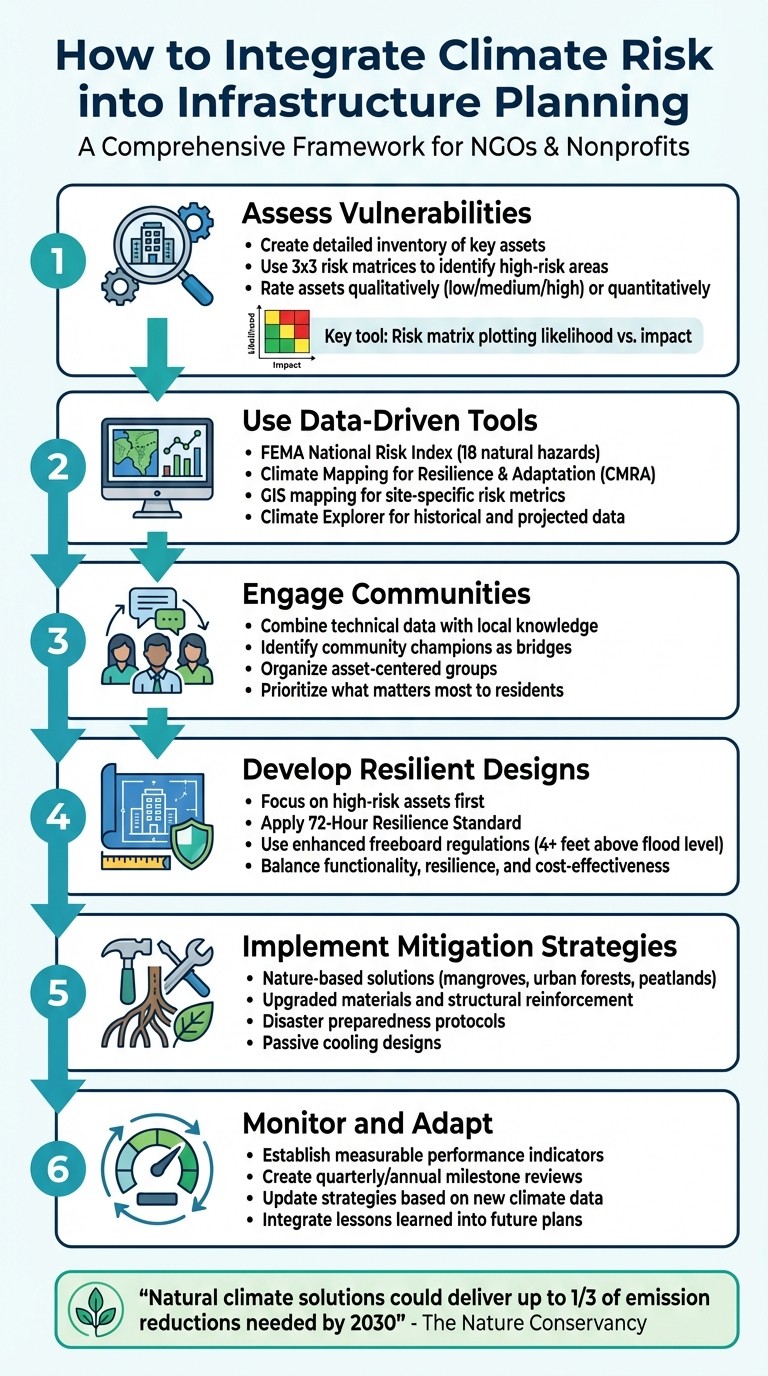
6-Step Framework for Integrating Climate Risk into Infrastructure Planning
Top Climate Resilient Infrastructure Solutions for Civil Engineers
Identifying Climate Risks and Vulnerabilities
The first step in planning for climate resilience is creating a detailed inventory of key community assets [8]. This inventory serves as the foundation for identifying which elements are most at risk from climate-related hazards.
Once the assets are cataloged, the next step involves analyzing exposure patterns by reviewing historical impacts and projecting future hazards [7]. Evaluate each asset's sensitivity to these risks and its ability to adapt [1][4]. This process builds on the earlier-discussed principle of aligning risk probability with potential impact.
A simple 3x3 risk matrix can help visualize these relationships. This matrix allows you to prioritize asset-hazard combinations that fall into the highest-risk categories [1]. For initial screenings, qualitative ratings can be used as a starting point [1][4]. For more detailed assessments, incorporating quantitative data - such as geospatial information and property values - can help reduce uncertainty and improve accuracy [1][4].
By establishing this baseline, you can move forward with targeted assessments using specialized tools.
Using Climate Risk Assessment Tools
Several tools are available to simplify the process of identifying climate risks. For example:
The Climate Mapping for Resilience & Adaptation (CMRA) portal provides projections of how climate hazards may evolve over the coming decades [7].
The FEMA National Risk Index offers an interactive mapping application that compares data for 18 natural hazards across the U.S. [1].
GIS mapping allows you to calculate and display risk metrics specific to your project site through web-accessible layers [1].
The Climate Explorer delivers graphs and maps of historical and projected climate variables [9].
These tools are most effective when used within a structured framework. For instance, you can create a vulnerability spreadsheet with columns for Asset, Potential Impact, Sensitivity, Adaptive Capacity, and Vulnerability. By rating each asset-hazard pair, you can identify the most vulnerable components [1]. For more complex assessments, you might consider hiring adaptation practitioners or Architecture and Engineering (A&E) firms, but ensure your local team remains actively involved throughout the process [1].
While these tools provide valuable insights, they should be paired with local knowledge to capture the full scope of risks.
Engaging Local Communities in Risk Identification
Quantitative data alone doesn’t paint the whole picture. As the U.S. Climate Resilience Toolkit explains:
To work in a real community, this quantitative information about physical assets needs to be complemented by social awareness and a commitment to serve the entire community [4].
Local leaders, or community champions, can bridge the gap between technical data and the lived experiences of residents [1][8]. These individuals help ensure that climate planning reflects local values and priorities [1].
Organize engagement efforts around asset-centered groups that focus on what the community values most. For example, Downtown Associations might address risks to business districts, while groups like "Friends of the River" could focus on recreational areas [6]. You can also integrate climate-specific concerns into existing planning sessions, such as those for Hazard Mitigation Plans, to align them with future infrastructure needs [6][8].
Begin by asking the community to identify the people, places, and services they care about most [6]. Incorporate their experiences alongside technical data to create a more comprehensive understanding of the risks your projects may face. This blend of analytical tools and community input ensures a more balanced and effective approach to climate resilience.
Developing Climate-Resilient Infrastructure Plans
Once you've completed a thorough risk assessment, the next step is to translate those insights into infrastructure designs that can withstand climate challenges. This stage is about balancing functionality, resilience, and cost-effectiveness.
Risk arises from the combination of how likely a hazard is to occur and the damage it could cause [1][4]. Effective infrastructure plans should tackle both aspects - reducing the chances of failure and limiting the damage when hazards do happen. Every action should genuinely contribute to lowering risks [5].
When evaluating project value, consider not just tangible returns but also benefits to ecosystems [5]. Focus on actions where the combined advantages outweigh the costs. This ensures that sustainability is woven into the planning process. Additionally, prioritize assets that face the greatest risks to maximize the impact of limited resources.
Prioritizing High-Risk Areas
Not all infrastructure assets are equally critical. Some are essential for community functioning, while others carry higher risks of catastrophic failure. Allocating resources wisely means understanding these differences.
Start by identifying assets that are critical to daily life or whose failure could have widespread consequences. For instance, bridges and telecommunications networks are vital; their failure could disrupt multiple sectors and lead to significant economic and social costs [1].
A 3x3 risk matrix can help you prioritize by plotting the likelihood of hazards against their potential impact [1]. Focus your resources on combinations that fall into the "High-High" or "High-Medium" categories. For initial screenings, qualitative ratings like low, medium, and high work well. For more complex systems, quantitative methods using spatial data or property values can refine your analysis [1].
When budgets are tight, consider phasing your implementation. Break the project into manageable steps with clear milestones [5]. Start with simpler, cost-effective measures to demonstrate early success, which can help secure additional funding. If a preferred solution is too expensive, explore breaking it into smaller actions or revisit earlier planning stages to find alternatives [5].
Incorporating Standards and Protocols
After identifying priorities, use established industry standards to guide your designs. These protocols help ensure compliance with regulations and provide a structured approach to avoid common mistakes.
The Steps to Resilience Framework offers a five-step process: Understand Exposure, Assess Vulnerability & Risk, Investigate Options, Prioritize & Plan, and Take Action [1][7]. This framework provides a clear path from identifying climate risks to implementing solutions.
For transportation systems, the Federal Highway Administration's Vulnerability Assessment and Adaptation Framework addresses the effects of climate change on roads, bridges, and transit [3]. If you're managing critical facilities, consider the 72-Hour Resilience Standard, which focuses on maintaining operations for three days after a disaster through backup systems and emergency planning [2].
Flood-prone areas demand special attention. Many local regulations now require enhanced freeboard standards, which mandate that buildings and public facilities be constructed or renovated at least four feet above the base flood level [2].
Document the challenges you've identified and the actions you've chosen [5]. Sharing this information can foster community support and demonstrate transparency. Before starting construction, conduct a walkthrough to anticipate potential disruptions, such as road closures or altered stormwater flows. Careful planning of construction phases can minimize these impacts and maintain public trust throughout the project [5].
Implementing Risk Mitigation Strategies
Addressing climate risks effectively requires a mix of nature-based solutions, upgraded materials, and disaster preparedness plans. These strategies aim to reduce both the likelihood of hazards and the extent of potential damage [5].
Nature-Based Solutions
Natural systems offer practical and efficient ways to protect infrastructure while delivering long-term benefits. By working with ecosystems, these solutions enhance resilience over time.
Restoring peatlands, for instance, not only reduces flooding but also captures carbon. Rewetting just 10 acres of pocosin peatlands offsets emissions equivalent to those produced by 5.3 passenger vehicles annually [10].
Mangrove and seagrass restoration provides a natural defense against rising sea levels and storm surges. Since 2008, The Nature Conservancy and its partners in Virginia have broadcast over 72 million seeds to bolster eelgrass growth. By 2026, this initiative expanded to cover more than 9,500 acres, significantly improving coastal carbon storage and ecosystem resilience [10].
Urban forests and green infrastructure help manage stormwater and mitigate extreme heat. Planting trees in urban areas reduces heat-island effects while improving water quality by filtering pollutants [10]. Similarly, agroforestry, which integrates native trees into farmland, enhances soil stability and supports local food security [10].
"Globally, natural solutions for climate change could deliver up to a third of the emission reductions the world needs by 2030." - The Nature Conservancy [10]
For organizations working with tight budgets, these natural approaches often outperform traditional infrastructure in cost-effectiveness. However, combining these efforts with upgraded materials and designs can further strengthen resilience.
Upgrading Materials and Designs
Building on the strength of natural systems, physical infrastructure can be fortified with advanced materials and thoughtful designs. Structural elevation and reinforcement are key for assets in high-risk areas. For example, updating building codes to mandate construction at least four feet above base flood levels can significantly reduce damage [2]. Similarly, utility upgrades, such as reinforced poles and Gas Insulated Switchgear (GIS) substations, help maintain functionality during extreme weather [11].
After Cyclone Fani, Odisha, India, upgraded its power grid by installing GIS substations and reinforced poles, achieving returns of $7–$12 for every $1 invested [11]. Such investments serve as valuable examples for NGOs operating with limited resources.
Local materials and techniques provide another cost-effective option. Incorporating indigenous knowledge and materials in post-disaster housing reconstruction not only reduces costs but also supports local economies [11]. In high-risk areas, advanced materials like wildfire-resistant bio-composites can protect infrastructure while requiring minimal maintenance [11].
Passive cooling designs are another innovative solution, reducing reliance on energy during heatwaves. Traditional methods like Barjeel towers or modern passive cooling measures keep buildings habitable even during power outages [11]. In 2025, a joint initiative by CDRI and WHO assessed vulnerabilities in 178 health facilities in Sikkim, India, implementing structural upgrades and creating disaster resilience plans tailored to the region’s specific risks [11].
Establishing Disaster Preparedness Protocols
Even the most resilient infrastructure needs robust emergency protocols to handle extreme events effectively. Facilities should aim to meet the 72-hour resilience standard, ensuring they can operate independently for three days with backup generators, emergency supplies, and clear relocation plans [2].
Defined response protocols are essential for staff, as recovery, response, and rebuilding often overlap during disasters [12].
Transparency is critical. Document your plans thoroughly, detailing hazards, chosen actions, estimated costs, and a timeline with clear milestones [5]. Before finalizing, walk through each implementation step to identify and address potential unintended consequences [5].
Collaboration is equally important. Partner with governments, nonprofits, and businesses to align regional preparedness efforts [12]. Tools like FEMA’s National Risk Index can help compare data on 18 natural hazards, providing a clearer picture of your community’s specific vulnerabilities [1]. These measures not only enhance readiness but also foster stronger partnerships and adaptive management practices.
Engaging Stakeholders for Long-Term Success
After addressing risk assessments and mitigation strategies, the next step toward ensuring infrastructure resilience lies in engaging stakeholders effectively. Building climate-resilient infrastructure requires more than just technical know-how - it thrives on ongoing collaboration among government agencies, technical experts, and the communities involved. These partnerships, established early on, foster shared accountability and ensure that projects remain functional and aligned with long-term goals.
Collaborating with Government Agencies and Experts
Aligning infrastructure initiatives with public policy not only enhances their relevance but also increases the likelihood of securing funding and technical support. Resilience Design Partnerships (RDPs) bring together a variety of stakeholders - architecture and engineering experts, risk data analysts, and investors - to create projects that are financially viable by quantifying benefits like disaster loss prevention and insurance savings [13].
"Infrastructure projects become bankable when investors can accurately assess risk, return, and resilience." – SmithGroup [13]
For instance, the University of Texas at Arlington collaborated with SmithGroup to develop an Energy & Emissions Plan that provided clear investment strategies, complete with cost estimates and measurable performance metrics. Similarly, Indiana University Bloomington crafted a Climate Action Plan that modeled various implementation scenarios, offering transparency to potential investors. Utilizing precise risk metrics from sources like Swiss Re's Risk Data & Services can further highlight specific vulnerabilities - such as flood, heat, and storm risks - tailored to local conditions. Moreover, the OECD's call for developed nations to double adaptation financing by 2025 opens doors for nonprofits that can present measurable risk reduction outcomes [13].
While these high-level collaborations are vital, empowering local communities through training ensures that resilience efforts are sustained and impactful.
Community Training and Capacity Building
Infrastructure projects lose their effectiveness if communities lack the skills to maintain them. Capacity-building initiatives equip local stakeholders with the tools and knowledge needed to manage and sustain resilient systems over time. Often, frontline workers and community members bring valuable insights into practical challenges and service gaps that higher-level leadership might miss, making their involvement indispensable.
In 2019, OpenTEAM spearheaded a $35 million investment through the USDA's Partnerships for Climate-Smart Commodities program. This initiative used collaborative "Collabathons" and a detailed learning series to train farmers and scientists in open-source technologies, ensuring that data management remained under local control while enhancing climate resilience. Another example is Green Our Planet, recognized by STEMworks for its innovative approach to education. By training teachers to use hydroponic labs for STEM and conservation lessons, the program reached over 3,000 students in 181 schools across 44 states.
To maximize community engagement, consider holding early focus groups to identify service barriers and prioritize emergency resource needs. Establishing a quarterly steering committee can help oversee progress, refine strategies, and adapt based on feedback and lessons learned.
Monitoring, Evaluation, and Adaptive Management
Building climate-resilient infrastructure demands constant vigilance. Since conditions can shift quickly, monitoring and reporting procedures must be outlined in the initial infrastructure plan to ensure progress and results are tracked consistently over time [5]. Without these documented steps, ineffective solutions might remain unnoticed until a crisis emerges. This proactive approach sets the stage for adapting strategies as your project evolves.
Developing a Monitoring Framework
The first step in effective monitoring is to establish clear, measurable performance indicators. For instance, if your project includes drought-mitigation infrastructure, you might track water usage trends at the building level to see if consumption is improving [2]. Tools like visual dashboards can simplify raw data, turning it into actionable insights that are accessible to everyone, from facility managers to board members [2].
Adopt a phased approach with defined milestones - quarterly or annual - to monitor progress and document successes along the way [5]. This method also requires contingency plans to address and correct underperforming strategies [5]. If monitoring reveals issues, adjustments should be made without delay [5][6].
Early assessments might rely on qualitative categories such as "low", "medium", or "high" risk. Over time, shift toward quantitative methods, such as geospatial data and property value analysis, to reduce uncertainty [1]. A straightforward rule can guide this process: define "high probability" as an event likely within 5 years, "medium probability" within 5 to 20 years, and "low probability" as occurring less than once in 20 years [1]. This consistent categorization enables comparisons over the long term.
Integrating Lessons Learned into Future Plans
A robust monitoring system is only part of the equation. To ensure ongoing resilience, lessons learned must be incorporated into future planning. Building resilience is an iterative process. As the U.S. Climate Resilience Toolkit explains:
Effective resilience-building will require you to evaluate exposure, vulnerability, and risk from climate-related impacts, and integrate the results with other considerations before setting priorities, developing plans, and implementing projects [6].
This underscores the need to reassess assumptions as conditions evolve and new climate data becomes available [8].
Utilize existing community engagement processes and planning update cycles to integrate insights without duplicating efforts [8]. For example, when updating your municipality’s Hazard Mitigation Plan, incorporate your monitoring data to refine strategies [6]. This approach not only streamlines planning but also ensures eligibility for federal and state resilience programs [8]. Tools like the Climate Explorer can help visualize updated climate projections, aiding stakeholder discussions with clear graphs and maps [8][9].
Additionally, update asset ratings regularly to pinpoint emerging vulnerabilities. Pay special attention to critical infrastructure - like telecommunications hubs or key bridges - that could cause cascading failures across sectors. Their performance carries significant weight in maintaining long-term resilience [1].
Conclusion
Building infrastructure that can withstand climate challenges isn't just important - it’s the backbone of ensuring long-term community stability and well-being. The U.S. Climate Resilience Toolkit underscores this point:
Effective resilience-building will require you to evaluate exposure, vulnerability, and risk from climate-related impacts, and integrate the results with other considerations before setting priorities, developing plans, and implementing projects [6].
This step-by-step approach allows organizations to adjust as conditions evolve and new information emerges. It provides a framework for identifying and addressing the most critical vulnerabilities, ensuring that weaknesses in one area don’t compromise entire systems.
By carefully analyzing risks and focusing on the most vulnerable assets, NGOs and nonprofits can avoid widespread failures and allocate resources where they will have the greatest impact. The principles of risk assessment, strategic planning, and collaboration with stakeholders discussed earlier are key to preparing for an unpredictable future. Taking action now lays the groundwork for ongoing adaptability and resilience.
Three core strategies form the foundation of success: forward-thinking quantitative planning, collaboration across diverse stakeholders, and adaptive management driven by continuous monitoring. Using tools like risk matrices can help prioritize threats, achieve early successes, and maintain flexibility to ensure vital services stay operational during disruptions.
As climate change reshapes the frequency and intensity of extreme events, relying solely on historical data is no longer enough [1]. Decisions made today about infrastructure will determine whether essential services - such as clean water, reliable energy, and emergency response systems - can endure and recover from future challenges [2]. Incorporating climate risks into current planning ensures that long-term efforts to support communities remain effective and protective in the years ahead.
FAQs
What steps can NGOs take to assess and prioritize climate risks in their infrastructure planning?
NGOs can strengthen their infrastructure planning against climate risks by following a focused, three-step approach: pinpoint hazards, assess vulnerabilities, and prioritize risks. Begin by identifying the climate hazards most likely to affect your organization - flooding, extreme heat, and erosion are common examples. These risks will depend heavily on your location and operational scope.
Next, conduct a vulnerability assessment to gauge how susceptible your assets are to these hazards. Consider how well your infrastructure can adapt to changing conditions and where weaknesses might lie.
Once you've mapped out the risks, prioritize them by weighing their likelihood against their potential impact. This allows you to allocate resources where they're needed most, addressing the most pressing threats first. Integrating climate risk data into your long-term planning not only bolsters the resilience of your infrastructure but also aligns with broader sustainability efforts. Partnering with experts and tapping into federal or state resources can provide additional insights and improve decision-making along the way.
What are some nature-based solutions to make infrastructure more climate-resilient?
Nature-based solutions leverage the power of natural systems to enhance climate resilience while delivering benefits to both the environment and society. For instance, restoring wetlands can mitigate flooding risks and improve water quality, while stabilizing shorelines with dunes offers protection against storm surges. Urban greenery, such as trees and parks, plays a vital role in cooling cities, reducing heat islands, and offering spaces for recreation. These solutions often prove to be more economical compared to conventional methods, all while promoting longevity by supporting ecosystems and the communities that rely on them.
How does involving the community help address climate risks in infrastructure planning?
Incorporating community input into climate risk planning for infrastructure brings a wealth of perspectives, local expertise, and insights that purely technical evaluations might miss. This approach tailors strategies to address specific vulnerabilities while tapping into local strengths, ensuring plans are both practical and well-suited to the area's unique context.
Engaging the community also helps build trust and strengthen social bonds, creating a shared sense of responsibility for resilience initiatives. When stakeholders are involved from the start and throughout the process, it becomes easier to prioritize actions that align with local needs and resources. This ensures projects are fair, enduring, and have the backing needed for long-term success.
Related Blog Posts
How to Build a Climate Resilience Plan for NGOs & Nonprofits
How to Build a Climate Resilience Plan for Foundations & Philanthropic Organizations
How to Integrate Climate Risk into Infrastructure Planning for Corporations
How to Integrate Climate Risk into Infrastructure Planning for Municipalities & Government Agencies
Latest Articles
©2025



FAQ
01
What does it really mean to “redefine profit”?
02
What makes Council Fire different?
03
Who does Council Fire you work with?
04
What does working with Council Fire actually look like?
05
How does Council Fire help organizations turn big goals into action?
06
How does Council Fire define and measure success?
Jan 22, 2026
How to Integrate Climate Risk into Infrastructure Planning for NGOs & Nonprofits
Sustainability Strategy
In This Article
Practical steps for NGOs to assess climate vulnerabilities, prioritize resilient infrastructure, use risk-assessment tools, and monitor adaptive outcomes.
How to Integrate Climate Risk into Infrastructure Planning for NGOs & Nonprofits
The growing challenges of climate change demand a shift in how NGOs and nonprofits approach infrastructure planning. Here's how to effectively integrate climate risk into your projects:
Assess Vulnerabilities: Start with a detailed inventory of key assets and use tools like risk matrices to identify high-risk areas.
Use Data-Driven Tools: Leverage platforms like FEMA’s National Risk Index and CMRA to project future hazards and analyze risks.
Engage Communities: Combine technical data with local knowledge to prioritize what matters most to the community.
Develop Resilient Designs: Focus on high-risk assets and apply standards like the 72-Hour Resilience Standard or enhanced freeboard regulations.
Implement Mitigation Strategies: Combine nature-based solutions, upgraded materials, and disaster preparedness plans for better outcomes.
Monitor and Adapt: Use measurable performance indicators and continuously update strategies based on new data.
6-Step Framework for Integrating Climate Risk into Infrastructure Planning
Top Climate Resilient Infrastructure Solutions for Civil Engineers
Identifying Climate Risks and Vulnerabilities
The first step in planning for climate resilience is creating a detailed inventory of key community assets [8]. This inventory serves as the foundation for identifying which elements are most at risk from climate-related hazards.
Once the assets are cataloged, the next step involves analyzing exposure patterns by reviewing historical impacts and projecting future hazards [7]. Evaluate each asset's sensitivity to these risks and its ability to adapt [1][4]. This process builds on the earlier-discussed principle of aligning risk probability with potential impact.
A simple 3x3 risk matrix can help visualize these relationships. This matrix allows you to prioritize asset-hazard combinations that fall into the highest-risk categories [1]. For initial screenings, qualitative ratings can be used as a starting point [1][4]. For more detailed assessments, incorporating quantitative data - such as geospatial information and property values - can help reduce uncertainty and improve accuracy [1][4].
By establishing this baseline, you can move forward with targeted assessments using specialized tools.
Using Climate Risk Assessment Tools
Several tools are available to simplify the process of identifying climate risks. For example:
The Climate Mapping for Resilience & Adaptation (CMRA) portal provides projections of how climate hazards may evolve over the coming decades [7].
The FEMA National Risk Index offers an interactive mapping application that compares data for 18 natural hazards across the U.S. [1].
GIS mapping allows you to calculate and display risk metrics specific to your project site through web-accessible layers [1].
The Climate Explorer delivers graphs and maps of historical and projected climate variables [9].
These tools are most effective when used within a structured framework. For instance, you can create a vulnerability spreadsheet with columns for Asset, Potential Impact, Sensitivity, Adaptive Capacity, and Vulnerability. By rating each asset-hazard pair, you can identify the most vulnerable components [1]. For more complex assessments, you might consider hiring adaptation practitioners or Architecture and Engineering (A&E) firms, but ensure your local team remains actively involved throughout the process [1].
While these tools provide valuable insights, they should be paired with local knowledge to capture the full scope of risks.
Engaging Local Communities in Risk Identification
Quantitative data alone doesn’t paint the whole picture. As the U.S. Climate Resilience Toolkit explains:
To work in a real community, this quantitative information about physical assets needs to be complemented by social awareness and a commitment to serve the entire community [4].
Local leaders, or community champions, can bridge the gap between technical data and the lived experiences of residents [1][8]. These individuals help ensure that climate planning reflects local values and priorities [1].
Organize engagement efforts around asset-centered groups that focus on what the community values most. For example, Downtown Associations might address risks to business districts, while groups like "Friends of the River" could focus on recreational areas [6]. You can also integrate climate-specific concerns into existing planning sessions, such as those for Hazard Mitigation Plans, to align them with future infrastructure needs [6][8].
Begin by asking the community to identify the people, places, and services they care about most [6]. Incorporate their experiences alongside technical data to create a more comprehensive understanding of the risks your projects may face. This blend of analytical tools and community input ensures a more balanced and effective approach to climate resilience.
Developing Climate-Resilient Infrastructure Plans
Once you've completed a thorough risk assessment, the next step is to translate those insights into infrastructure designs that can withstand climate challenges. This stage is about balancing functionality, resilience, and cost-effectiveness.
Risk arises from the combination of how likely a hazard is to occur and the damage it could cause [1][4]. Effective infrastructure plans should tackle both aspects - reducing the chances of failure and limiting the damage when hazards do happen. Every action should genuinely contribute to lowering risks [5].
When evaluating project value, consider not just tangible returns but also benefits to ecosystems [5]. Focus on actions where the combined advantages outweigh the costs. This ensures that sustainability is woven into the planning process. Additionally, prioritize assets that face the greatest risks to maximize the impact of limited resources.
Prioritizing High-Risk Areas
Not all infrastructure assets are equally critical. Some are essential for community functioning, while others carry higher risks of catastrophic failure. Allocating resources wisely means understanding these differences.
Start by identifying assets that are critical to daily life or whose failure could have widespread consequences. For instance, bridges and telecommunications networks are vital; their failure could disrupt multiple sectors and lead to significant economic and social costs [1].
A 3x3 risk matrix can help you prioritize by plotting the likelihood of hazards against their potential impact [1]. Focus your resources on combinations that fall into the "High-High" or "High-Medium" categories. For initial screenings, qualitative ratings like low, medium, and high work well. For more complex systems, quantitative methods using spatial data or property values can refine your analysis [1].
When budgets are tight, consider phasing your implementation. Break the project into manageable steps with clear milestones [5]. Start with simpler, cost-effective measures to demonstrate early success, which can help secure additional funding. If a preferred solution is too expensive, explore breaking it into smaller actions or revisit earlier planning stages to find alternatives [5].
Incorporating Standards and Protocols
After identifying priorities, use established industry standards to guide your designs. These protocols help ensure compliance with regulations and provide a structured approach to avoid common mistakes.
The Steps to Resilience Framework offers a five-step process: Understand Exposure, Assess Vulnerability & Risk, Investigate Options, Prioritize & Plan, and Take Action [1][7]. This framework provides a clear path from identifying climate risks to implementing solutions.
For transportation systems, the Federal Highway Administration's Vulnerability Assessment and Adaptation Framework addresses the effects of climate change on roads, bridges, and transit [3]. If you're managing critical facilities, consider the 72-Hour Resilience Standard, which focuses on maintaining operations for three days after a disaster through backup systems and emergency planning [2].
Flood-prone areas demand special attention. Many local regulations now require enhanced freeboard standards, which mandate that buildings and public facilities be constructed or renovated at least four feet above the base flood level [2].
Document the challenges you've identified and the actions you've chosen [5]. Sharing this information can foster community support and demonstrate transparency. Before starting construction, conduct a walkthrough to anticipate potential disruptions, such as road closures or altered stormwater flows. Careful planning of construction phases can minimize these impacts and maintain public trust throughout the project [5].
Implementing Risk Mitigation Strategies
Addressing climate risks effectively requires a mix of nature-based solutions, upgraded materials, and disaster preparedness plans. These strategies aim to reduce both the likelihood of hazards and the extent of potential damage [5].
Nature-Based Solutions
Natural systems offer practical and efficient ways to protect infrastructure while delivering long-term benefits. By working with ecosystems, these solutions enhance resilience over time.
Restoring peatlands, for instance, not only reduces flooding but also captures carbon. Rewetting just 10 acres of pocosin peatlands offsets emissions equivalent to those produced by 5.3 passenger vehicles annually [10].
Mangrove and seagrass restoration provides a natural defense against rising sea levels and storm surges. Since 2008, The Nature Conservancy and its partners in Virginia have broadcast over 72 million seeds to bolster eelgrass growth. By 2026, this initiative expanded to cover more than 9,500 acres, significantly improving coastal carbon storage and ecosystem resilience [10].
Urban forests and green infrastructure help manage stormwater and mitigate extreme heat. Planting trees in urban areas reduces heat-island effects while improving water quality by filtering pollutants [10]. Similarly, agroforestry, which integrates native trees into farmland, enhances soil stability and supports local food security [10].
"Globally, natural solutions for climate change could deliver up to a third of the emission reductions the world needs by 2030." - The Nature Conservancy [10]
For organizations working with tight budgets, these natural approaches often outperform traditional infrastructure in cost-effectiveness. However, combining these efforts with upgraded materials and designs can further strengthen resilience.
Upgrading Materials and Designs
Building on the strength of natural systems, physical infrastructure can be fortified with advanced materials and thoughtful designs. Structural elevation and reinforcement are key for assets in high-risk areas. For example, updating building codes to mandate construction at least four feet above base flood levels can significantly reduce damage [2]. Similarly, utility upgrades, such as reinforced poles and Gas Insulated Switchgear (GIS) substations, help maintain functionality during extreme weather [11].
After Cyclone Fani, Odisha, India, upgraded its power grid by installing GIS substations and reinforced poles, achieving returns of $7–$12 for every $1 invested [11]. Such investments serve as valuable examples for NGOs operating with limited resources.
Local materials and techniques provide another cost-effective option. Incorporating indigenous knowledge and materials in post-disaster housing reconstruction not only reduces costs but also supports local economies [11]. In high-risk areas, advanced materials like wildfire-resistant bio-composites can protect infrastructure while requiring minimal maintenance [11].
Passive cooling designs are another innovative solution, reducing reliance on energy during heatwaves. Traditional methods like Barjeel towers or modern passive cooling measures keep buildings habitable even during power outages [11]. In 2025, a joint initiative by CDRI and WHO assessed vulnerabilities in 178 health facilities in Sikkim, India, implementing structural upgrades and creating disaster resilience plans tailored to the region’s specific risks [11].
Establishing Disaster Preparedness Protocols
Even the most resilient infrastructure needs robust emergency protocols to handle extreme events effectively. Facilities should aim to meet the 72-hour resilience standard, ensuring they can operate independently for three days with backup generators, emergency supplies, and clear relocation plans [2].
Defined response protocols are essential for staff, as recovery, response, and rebuilding often overlap during disasters [12].
Transparency is critical. Document your plans thoroughly, detailing hazards, chosen actions, estimated costs, and a timeline with clear milestones [5]. Before finalizing, walk through each implementation step to identify and address potential unintended consequences [5].
Collaboration is equally important. Partner with governments, nonprofits, and businesses to align regional preparedness efforts [12]. Tools like FEMA’s National Risk Index can help compare data on 18 natural hazards, providing a clearer picture of your community’s specific vulnerabilities [1]. These measures not only enhance readiness but also foster stronger partnerships and adaptive management practices.
Engaging Stakeholders for Long-Term Success
After addressing risk assessments and mitigation strategies, the next step toward ensuring infrastructure resilience lies in engaging stakeholders effectively. Building climate-resilient infrastructure requires more than just technical know-how - it thrives on ongoing collaboration among government agencies, technical experts, and the communities involved. These partnerships, established early on, foster shared accountability and ensure that projects remain functional and aligned with long-term goals.
Collaborating with Government Agencies and Experts
Aligning infrastructure initiatives with public policy not only enhances their relevance but also increases the likelihood of securing funding and technical support. Resilience Design Partnerships (RDPs) bring together a variety of stakeholders - architecture and engineering experts, risk data analysts, and investors - to create projects that are financially viable by quantifying benefits like disaster loss prevention and insurance savings [13].
"Infrastructure projects become bankable when investors can accurately assess risk, return, and resilience." – SmithGroup [13]
For instance, the University of Texas at Arlington collaborated with SmithGroup to develop an Energy & Emissions Plan that provided clear investment strategies, complete with cost estimates and measurable performance metrics. Similarly, Indiana University Bloomington crafted a Climate Action Plan that modeled various implementation scenarios, offering transparency to potential investors. Utilizing precise risk metrics from sources like Swiss Re's Risk Data & Services can further highlight specific vulnerabilities - such as flood, heat, and storm risks - tailored to local conditions. Moreover, the OECD's call for developed nations to double adaptation financing by 2025 opens doors for nonprofits that can present measurable risk reduction outcomes [13].
While these high-level collaborations are vital, empowering local communities through training ensures that resilience efforts are sustained and impactful.
Community Training and Capacity Building
Infrastructure projects lose their effectiveness if communities lack the skills to maintain them. Capacity-building initiatives equip local stakeholders with the tools and knowledge needed to manage and sustain resilient systems over time. Often, frontline workers and community members bring valuable insights into practical challenges and service gaps that higher-level leadership might miss, making their involvement indispensable.
In 2019, OpenTEAM spearheaded a $35 million investment through the USDA's Partnerships for Climate-Smart Commodities program. This initiative used collaborative "Collabathons" and a detailed learning series to train farmers and scientists in open-source technologies, ensuring that data management remained under local control while enhancing climate resilience. Another example is Green Our Planet, recognized by STEMworks for its innovative approach to education. By training teachers to use hydroponic labs for STEM and conservation lessons, the program reached over 3,000 students in 181 schools across 44 states.
To maximize community engagement, consider holding early focus groups to identify service barriers and prioritize emergency resource needs. Establishing a quarterly steering committee can help oversee progress, refine strategies, and adapt based on feedback and lessons learned.
Monitoring, Evaluation, and Adaptive Management
Building climate-resilient infrastructure demands constant vigilance. Since conditions can shift quickly, monitoring and reporting procedures must be outlined in the initial infrastructure plan to ensure progress and results are tracked consistently over time [5]. Without these documented steps, ineffective solutions might remain unnoticed until a crisis emerges. This proactive approach sets the stage for adapting strategies as your project evolves.
Developing a Monitoring Framework
The first step in effective monitoring is to establish clear, measurable performance indicators. For instance, if your project includes drought-mitigation infrastructure, you might track water usage trends at the building level to see if consumption is improving [2]. Tools like visual dashboards can simplify raw data, turning it into actionable insights that are accessible to everyone, from facility managers to board members [2].
Adopt a phased approach with defined milestones - quarterly or annual - to monitor progress and document successes along the way [5]. This method also requires contingency plans to address and correct underperforming strategies [5]. If monitoring reveals issues, adjustments should be made without delay [5][6].
Early assessments might rely on qualitative categories such as "low", "medium", or "high" risk. Over time, shift toward quantitative methods, such as geospatial data and property value analysis, to reduce uncertainty [1]. A straightforward rule can guide this process: define "high probability" as an event likely within 5 years, "medium probability" within 5 to 20 years, and "low probability" as occurring less than once in 20 years [1]. This consistent categorization enables comparisons over the long term.
Integrating Lessons Learned into Future Plans
A robust monitoring system is only part of the equation. To ensure ongoing resilience, lessons learned must be incorporated into future planning. Building resilience is an iterative process. As the U.S. Climate Resilience Toolkit explains:
Effective resilience-building will require you to evaluate exposure, vulnerability, and risk from climate-related impacts, and integrate the results with other considerations before setting priorities, developing plans, and implementing projects [6].
This underscores the need to reassess assumptions as conditions evolve and new climate data becomes available [8].
Utilize existing community engagement processes and planning update cycles to integrate insights without duplicating efforts [8]. For example, when updating your municipality’s Hazard Mitigation Plan, incorporate your monitoring data to refine strategies [6]. This approach not only streamlines planning but also ensures eligibility for federal and state resilience programs [8]. Tools like the Climate Explorer can help visualize updated climate projections, aiding stakeholder discussions with clear graphs and maps [8][9].
Additionally, update asset ratings regularly to pinpoint emerging vulnerabilities. Pay special attention to critical infrastructure - like telecommunications hubs or key bridges - that could cause cascading failures across sectors. Their performance carries significant weight in maintaining long-term resilience [1].
Conclusion
Building infrastructure that can withstand climate challenges isn't just important - it’s the backbone of ensuring long-term community stability and well-being. The U.S. Climate Resilience Toolkit underscores this point:
Effective resilience-building will require you to evaluate exposure, vulnerability, and risk from climate-related impacts, and integrate the results with other considerations before setting priorities, developing plans, and implementing projects [6].
This step-by-step approach allows organizations to adjust as conditions evolve and new information emerges. It provides a framework for identifying and addressing the most critical vulnerabilities, ensuring that weaknesses in one area don’t compromise entire systems.
By carefully analyzing risks and focusing on the most vulnerable assets, NGOs and nonprofits can avoid widespread failures and allocate resources where they will have the greatest impact. The principles of risk assessment, strategic planning, and collaboration with stakeholders discussed earlier are key to preparing for an unpredictable future. Taking action now lays the groundwork for ongoing adaptability and resilience.
Three core strategies form the foundation of success: forward-thinking quantitative planning, collaboration across diverse stakeholders, and adaptive management driven by continuous monitoring. Using tools like risk matrices can help prioritize threats, achieve early successes, and maintain flexibility to ensure vital services stay operational during disruptions.
As climate change reshapes the frequency and intensity of extreme events, relying solely on historical data is no longer enough [1]. Decisions made today about infrastructure will determine whether essential services - such as clean water, reliable energy, and emergency response systems - can endure and recover from future challenges [2]. Incorporating climate risks into current planning ensures that long-term efforts to support communities remain effective and protective in the years ahead.
FAQs
What steps can NGOs take to assess and prioritize climate risks in their infrastructure planning?
NGOs can strengthen their infrastructure planning against climate risks by following a focused, three-step approach: pinpoint hazards, assess vulnerabilities, and prioritize risks. Begin by identifying the climate hazards most likely to affect your organization - flooding, extreme heat, and erosion are common examples. These risks will depend heavily on your location and operational scope.
Next, conduct a vulnerability assessment to gauge how susceptible your assets are to these hazards. Consider how well your infrastructure can adapt to changing conditions and where weaknesses might lie.
Once you've mapped out the risks, prioritize them by weighing their likelihood against their potential impact. This allows you to allocate resources where they're needed most, addressing the most pressing threats first. Integrating climate risk data into your long-term planning not only bolsters the resilience of your infrastructure but also aligns with broader sustainability efforts. Partnering with experts and tapping into federal or state resources can provide additional insights and improve decision-making along the way.
What are some nature-based solutions to make infrastructure more climate-resilient?
Nature-based solutions leverage the power of natural systems to enhance climate resilience while delivering benefits to both the environment and society. For instance, restoring wetlands can mitigate flooding risks and improve water quality, while stabilizing shorelines with dunes offers protection against storm surges. Urban greenery, such as trees and parks, plays a vital role in cooling cities, reducing heat islands, and offering spaces for recreation. These solutions often prove to be more economical compared to conventional methods, all while promoting longevity by supporting ecosystems and the communities that rely on them.
How does involving the community help address climate risks in infrastructure planning?
Incorporating community input into climate risk planning for infrastructure brings a wealth of perspectives, local expertise, and insights that purely technical evaluations might miss. This approach tailors strategies to address specific vulnerabilities while tapping into local strengths, ensuring plans are both practical and well-suited to the area's unique context.
Engaging the community also helps build trust and strengthen social bonds, creating a shared sense of responsibility for resilience initiatives. When stakeholders are involved from the start and throughout the process, it becomes easier to prioritize actions that align with local needs and resources. This ensures projects are fair, enduring, and have the backing needed for long-term success.
Related Blog Posts
How to Build a Climate Resilience Plan for NGOs & Nonprofits
How to Build a Climate Resilience Plan for Foundations & Philanthropic Organizations
How to Integrate Climate Risk into Infrastructure Planning for Corporations
How to Integrate Climate Risk into Infrastructure Planning for Municipalities & Government Agencies
FAQ
01
What does it really mean to “redefine profit”?
02
What makes Council Fire different?
03
Who does Council Fire you work with?
04
What does working with Council Fire actually look like?
05
How does Council Fire help organizations turn big goals into action?
06
How does Council Fire define and measure success?
Jan 22, 2026
How to Integrate Climate Risk into Infrastructure Planning for NGOs & Nonprofits
Sustainability Strategy
In This Article
Practical steps for NGOs to assess climate vulnerabilities, prioritize resilient infrastructure, use risk-assessment tools, and monitor adaptive outcomes.
How to Integrate Climate Risk into Infrastructure Planning for NGOs & Nonprofits
The growing challenges of climate change demand a shift in how NGOs and nonprofits approach infrastructure planning. Here's how to effectively integrate climate risk into your projects:
Assess Vulnerabilities: Start with a detailed inventory of key assets and use tools like risk matrices to identify high-risk areas.
Use Data-Driven Tools: Leverage platforms like FEMA’s National Risk Index and CMRA to project future hazards and analyze risks.
Engage Communities: Combine technical data with local knowledge to prioritize what matters most to the community.
Develop Resilient Designs: Focus on high-risk assets and apply standards like the 72-Hour Resilience Standard or enhanced freeboard regulations.
Implement Mitigation Strategies: Combine nature-based solutions, upgraded materials, and disaster preparedness plans for better outcomes.
Monitor and Adapt: Use measurable performance indicators and continuously update strategies based on new data.
6-Step Framework for Integrating Climate Risk into Infrastructure Planning
Top Climate Resilient Infrastructure Solutions for Civil Engineers
Identifying Climate Risks and Vulnerabilities
The first step in planning for climate resilience is creating a detailed inventory of key community assets [8]. This inventory serves as the foundation for identifying which elements are most at risk from climate-related hazards.
Once the assets are cataloged, the next step involves analyzing exposure patterns by reviewing historical impacts and projecting future hazards [7]. Evaluate each asset's sensitivity to these risks and its ability to adapt [1][4]. This process builds on the earlier-discussed principle of aligning risk probability with potential impact.
A simple 3x3 risk matrix can help visualize these relationships. This matrix allows you to prioritize asset-hazard combinations that fall into the highest-risk categories [1]. For initial screenings, qualitative ratings can be used as a starting point [1][4]. For more detailed assessments, incorporating quantitative data - such as geospatial information and property values - can help reduce uncertainty and improve accuracy [1][4].
By establishing this baseline, you can move forward with targeted assessments using specialized tools.
Using Climate Risk Assessment Tools
Several tools are available to simplify the process of identifying climate risks. For example:
The Climate Mapping for Resilience & Adaptation (CMRA) portal provides projections of how climate hazards may evolve over the coming decades [7].
The FEMA National Risk Index offers an interactive mapping application that compares data for 18 natural hazards across the U.S. [1].
GIS mapping allows you to calculate and display risk metrics specific to your project site through web-accessible layers [1].
The Climate Explorer delivers graphs and maps of historical and projected climate variables [9].
These tools are most effective when used within a structured framework. For instance, you can create a vulnerability spreadsheet with columns for Asset, Potential Impact, Sensitivity, Adaptive Capacity, and Vulnerability. By rating each asset-hazard pair, you can identify the most vulnerable components [1]. For more complex assessments, you might consider hiring adaptation practitioners or Architecture and Engineering (A&E) firms, but ensure your local team remains actively involved throughout the process [1].
While these tools provide valuable insights, they should be paired with local knowledge to capture the full scope of risks.
Engaging Local Communities in Risk Identification
Quantitative data alone doesn’t paint the whole picture. As the U.S. Climate Resilience Toolkit explains:
To work in a real community, this quantitative information about physical assets needs to be complemented by social awareness and a commitment to serve the entire community [4].
Local leaders, or community champions, can bridge the gap between technical data and the lived experiences of residents [1][8]. These individuals help ensure that climate planning reflects local values and priorities [1].
Organize engagement efforts around asset-centered groups that focus on what the community values most. For example, Downtown Associations might address risks to business districts, while groups like "Friends of the River" could focus on recreational areas [6]. You can also integrate climate-specific concerns into existing planning sessions, such as those for Hazard Mitigation Plans, to align them with future infrastructure needs [6][8].
Begin by asking the community to identify the people, places, and services they care about most [6]. Incorporate their experiences alongside technical data to create a more comprehensive understanding of the risks your projects may face. This blend of analytical tools and community input ensures a more balanced and effective approach to climate resilience.
Developing Climate-Resilient Infrastructure Plans
Once you've completed a thorough risk assessment, the next step is to translate those insights into infrastructure designs that can withstand climate challenges. This stage is about balancing functionality, resilience, and cost-effectiveness.
Risk arises from the combination of how likely a hazard is to occur and the damage it could cause [1][4]. Effective infrastructure plans should tackle both aspects - reducing the chances of failure and limiting the damage when hazards do happen. Every action should genuinely contribute to lowering risks [5].
When evaluating project value, consider not just tangible returns but also benefits to ecosystems [5]. Focus on actions where the combined advantages outweigh the costs. This ensures that sustainability is woven into the planning process. Additionally, prioritize assets that face the greatest risks to maximize the impact of limited resources.
Prioritizing High-Risk Areas
Not all infrastructure assets are equally critical. Some are essential for community functioning, while others carry higher risks of catastrophic failure. Allocating resources wisely means understanding these differences.
Start by identifying assets that are critical to daily life or whose failure could have widespread consequences. For instance, bridges and telecommunications networks are vital; their failure could disrupt multiple sectors and lead to significant economic and social costs [1].
A 3x3 risk matrix can help you prioritize by plotting the likelihood of hazards against their potential impact [1]. Focus your resources on combinations that fall into the "High-High" or "High-Medium" categories. For initial screenings, qualitative ratings like low, medium, and high work well. For more complex systems, quantitative methods using spatial data or property values can refine your analysis [1].
When budgets are tight, consider phasing your implementation. Break the project into manageable steps with clear milestones [5]. Start with simpler, cost-effective measures to demonstrate early success, which can help secure additional funding. If a preferred solution is too expensive, explore breaking it into smaller actions or revisit earlier planning stages to find alternatives [5].
Incorporating Standards and Protocols
After identifying priorities, use established industry standards to guide your designs. These protocols help ensure compliance with regulations and provide a structured approach to avoid common mistakes.
The Steps to Resilience Framework offers a five-step process: Understand Exposure, Assess Vulnerability & Risk, Investigate Options, Prioritize & Plan, and Take Action [1][7]. This framework provides a clear path from identifying climate risks to implementing solutions.
For transportation systems, the Federal Highway Administration's Vulnerability Assessment and Adaptation Framework addresses the effects of climate change on roads, bridges, and transit [3]. If you're managing critical facilities, consider the 72-Hour Resilience Standard, which focuses on maintaining operations for three days after a disaster through backup systems and emergency planning [2].
Flood-prone areas demand special attention. Many local regulations now require enhanced freeboard standards, which mandate that buildings and public facilities be constructed or renovated at least four feet above the base flood level [2].
Document the challenges you've identified and the actions you've chosen [5]. Sharing this information can foster community support and demonstrate transparency. Before starting construction, conduct a walkthrough to anticipate potential disruptions, such as road closures or altered stormwater flows. Careful planning of construction phases can minimize these impacts and maintain public trust throughout the project [5].
Implementing Risk Mitigation Strategies
Addressing climate risks effectively requires a mix of nature-based solutions, upgraded materials, and disaster preparedness plans. These strategies aim to reduce both the likelihood of hazards and the extent of potential damage [5].
Nature-Based Solutions
Natural systems offer practical and efficient ways to protect infrastructure while delivering long-term benefits. By working with ecosystems, these solutions enhance resilience over time.
Restoring peatlands, for instance, not only reduces flooding but also captures carbon. Rewetting just 10 acres of pocosin peatlands offsets emissions equivalent to those produced by 5.3 passenger vehicles annually [10].
Mangrove and seagrass restoration provides a natural defense against rising sea levels and storm surges. Since 2008, The Nature Conservancy and its partners in Virginia have broadcast over 72 million seeds to bolster eelgrass growth. By 2026, this initiative expanded to cover more than 9,500 acres, significantly improving coastal carbon storage and ecosystem resilience [10].
Urban forests and green infrastructure help manage stormwater and mitigate extreme heat. Planting trees in urban areas reduces heat-island effects while improving water quality by filtering pollutants [10]. Similarly, agroforestry, which integrates native trees into farmland, enhances soil stability and supports local food security [10].
"Globally, natural solutions for climate change could deliver up to a third of the emission reductions the world needs by 2030." - The Nature Conservancy [10]
For organizations working with tight budgets, these natural approaches often outperform traditional infrastructure in cost-effectiveness. However, combining these efforts with upgraded materials and designs can further strengthen resilience.
Upgrading Materials and Designs
Building on the strength of natural systems, physical infrastructure can be fortified with advanced materials and thoughtful designs. Structural elevation and reinforcement are key for assets in high-risk areas. For example, updating building codes to mandate construction at least four feet above base flood levels can significantly reduce damage [2]. Similarly, utility upgrades, such as reinforced poles and Gas Insulated Switchgear (GIS) substations, help maintain functionality during extreme weather [11].
After Cyclone Fani, Odisha, India, upgraded its power grid by installing GIS substations and reinforced poles, achieving returns of $7–$12 for every $1 invested [11]. Such investments serve as valuable examples for NGOs operating with limited resources.
Local materials and techniques provide another cost-effective option. Incorporating indigenous knowledge and materials in post-disaster housing reconstruction not only reduces costs but also supports local economies [11]. In high-risk areas, advanced materials like wildfire-resistant bio-composites can protect infrastructure while requiring minimal maintenance [11].
Passive cooling designs are another innovative solution, reducing reliance on energy during heatwaves. Traditional methods like Barjeel towers or modern passive cooling measures keep buildings habitable even during power outages [11]. In 2025, a joint initiative by CDRI and WHO assessed vulnerabilities in 178 health facilities in Sikkim, India, implementing structural upgrades and creating disaster resilience plans tailored to the region’s specific risks [11].
Establishing Disaster Preparedness Protocols
Even the most resilient infrastructure needs robust emergency protocols to handle extreme events effectively. Facilities should aim to meet the 72-hour resilience standard, ensuring they can operate independently for three days with backup generators, emergency supplies, and clear relocation plans [2].
Defined response protocols are essential for staff, as recovery, response, and rebuilding often overlap during disasters [12].
Transparency is critical. Document your plans thoroughly, detailing hazards, chosen actions, estimated costs, and a timeline with clear milestones [5]. Before finalizing, walk through each implementation step to identify and address potential unintended consequences [5].
Collaboration is equally important. Partner with governments, nonprofits, and businesses to align regional preparedness efforts [12]. Tools like FEMA’s National Risk Index can help compare data on 18 natural hazards, providing a clearer picture of your community’s specific vulnerabilities [1]. These measures not only enhance readiness but also foster stronger partnerships and adaptive management practices.
Engaging Stakeholders for Long-Term Success
After addressing risk assessments and mitigation strategies, the next step toward ensuring infrastructure resilience lies in engaging stakeholders effectively. Building climate-resilient infrastructure requires more than just technical know-how - it thrives on ongoing collaboration among government agencies, technical experts, and the communities involved. These partnerships, established early on, foster shared accountability and ensure that projects remain functional and aligned with long-term goals.
Collaborating with Government Agencies and Experts
Aligning infrastructure initiatives with public policy not only enhances their relevance but also increases the likelihood of securing funding and technical support. Resilience Design Partnerships (RDPs) bring together a variety of stakeholders - architecture and engineering experts, risk data analysts, and investors - to create projects that are financially viable by quantifying benefits like disaster loss prevention and insurance savings [13].
"Infrastructure projects become bankable when investors can accurately assess risk, return, and resilience." – SmithGroup [13]
For instance, the University of Texas at Arlington collaborated with SmithGroup to develop an Energy & Emissions Plan that provided clear investment strategies, complete with cost estimates and measurable performance metrics. Similarly, Indiana University Bloomington crafted a Climate Action Plan that modeled various implementation scenarios, offering transparency to potential investors. Utilizing precise risk metrics from sources like Swiss Re's Risk Data & Services can further highlight specific vulnerabilities - such as flood, heat, and storm risks - tailored to local conditions. Moreover, the OECD's call for developed nations to double adaptation financing by 2025 opens doors for nonprofits that can present measurable risk reduction outcomes [13].
While these high-level collaborations are vital, empowering local communities through training ensures that resilience efforts are sustained and impactful.
Community Training and Capacity Building
Infrastructure projects lose their effectiveness if communities lack the skills to maintain them. Capacity-building initiatives equip local stakeholders with the tools and knowledge needed to manage and sustain resilient systems over time. Often, frontline workers and community members bring valuable insights into practical challenges and service gaps that higher-level leadership might miss, making their involvement indispensable.
In 2019, OpenTEAM spearheaded a $35 million investment through the USDA's Partnerships for Climate-Smart Commodities program. This initiative used collaborative "Collabathons" and a detailed learning series to train farmers and scientists in open-source technologies, ensuring that data management remained under local control while enhancing climate resilience. Another example is Green Our Planet, recognized by STEMworks for its innovative approach to education. By training teachers to use hydroponic labs for STEM and conservation lessons, the program reached over 3,000 students in 181 schools across 44 states.
To maximize community engagement, consider holding early focus groups to identify service barriers and prioritize emergency resource needs. Establishing a quarterly steering committee can help oversee progress, refine strategies, and adapt based on feedback and lessons learned.
Monitoring, Evaluation, and Adaptive Management
Building climate-resilient infrastructure demands constant vigilance. Since conditions can shift quickly, monitoring and reporting procedures must be outlined in the initial infrastructure plan to ensure progress and results are tracked consistently over time [5]. Without these documented steps, ineffective solutions might remain unnoticed until a crisis emerges. This proactive approach sets the stage for adapting strategies as your project evolves.
Developing a Monitoring Framework
The first step in effective monitoring is to establish clear, measurable performance indicators. For instance, if your project includes drought-mitigation infrastructure, you might track water usage trends at the building level to see if consumption is improving [2]. Tools like visual dashboards can simplify raw data, turning it into actionable insights that are accessible to everyone, from facility managers to board members [2].
Adopt a phased approach with defined milestones - quarterly or annual - to monitor progress and document successes along the way [5]. This method also requires contingency plans to address and correct underperforming strategies [5]. If monitoring reveals issues, adjustments should be made without delay [5][6].
Early assessments might rely on qualitative categories such as "low", "medium", or "high" risk. Over time, shift toward quantitative methods, such as geospatial data and property value analysis, to reduce uncertainty [1]. A straightforward rule can guide this process: define "high probability" as an event likely within 5 years, "medium probability" within 5 to 20 years, and "low probability" as occurring less than once in 20 years [1]. This consistent categorization enables comparisons over the long term.
Integrating Lessons Learned into Future Plans
A robust monitoring system is only part of the equation. To ensure ongoing resilience, lessons learned must be incorporated into future planning. Building resilience is an iterative process. As the U.S. Climate Resilience Toolkit explains:
Effective resilience-building will require you to evaluate exposure, vulnerability, and risk from climate-related impacts, and integrate the results with other considerations before setting priorities, developing plans, and implementing projects [6].
This underscores the need to reassess assumptions as conditions evolve and new climate data becomes available [8].
Utilize existing community engagement processes and planning update cycles to integrate insights without duplicating efforts [8]. For example, when updating your municipality’s Hazard Mitigation Plan, incorporate your monitoring data to refine strategies [6]. This approach not only streamlines planning but also ensures eligibility for federal and state resilience programs [8]. Tools like the Climate Explorer can help visualize updated climate projections, aiding stakeholder discussions with clear graphs and maps [8][9].
Additionally, update asset ratings regularly to pinpoint emerging vulnerabilities. Pay special attention to critical infrastructure - like telecommunications hubs or key bridges - that could cause cascading failures across sectors. Their performance carries significant weight in maintaining long-term resilience [1].
Conclusion
Building infrastructure that can withstand climate challenges isn't just important - it’s the backbone of ensuring long-term community stability and well-being. The U.S. Climate Resilience Toolkit underscores this point:
Effective resilience-building will require you to evaluate exposure, vulnerability, and risk from climate-related impacts, and integrate the results with other considerations before setting priorities, developing plans, and implementing projects [6].
This step-by-step approach allows organizations to adjust as conditions evolve and new information emerges. It provides a framework for identifying and addressing the most critical vulnerabilities, ensuring that weaknesses in one area don’t compromise entire systems.
By carefully analyzing risks and focusing on the most vulnerable assets, NGOs and nonprofits can avoid widespread failures and allocate resources where they will have the greatest impact. The principles of risk assessment, strategic planning, and collaboration with stakeholders discussed earlier are key to preparing for an unpredictable future. Taking action now lays the groundwork for ongoing adaptability and resilience.
Three core strategies form the foundation of success: forward-thinking quantitative planning, collaboration across diverse stakeholders, and adaptive management driven by continuous monitoring. Using tools like risk matrices can help prioritize threats, achieve early successes, and maintain flexibility to ensure vital services stay operational during disruptions.
As climate change reshapes the frequency and intensity of extreme events, relying solely on historical data is no longer enough [1]. Decisions made today about infrastructure will determine whether essential services - such as clean water, reliable energy, and emergency response systems - can endure and recover from future challenges [2]. Incorporating climate risks into current planning ensures that long-term efforts to support communities remain effective and protective in the years ahead.
FAQs
What steps can NGOs take to assess and prioritize climate risks in their infrastructure planning?
NGOs can strengthen their infrastructure planning against climate risks by following a focused, three-step approach: pinpoint hazards, assess vulnerabilities, and prioritize risks. Begin by identifying the climate hazards most likely to affect your organization - flooding, extreme heat, and erosion are common examples. These risks will depend heavily on your location and operational scope.
Next, conduct a vulnerability assessment to gauge how susceptible your assets are to these hazards. Consider how well your infrastructure can adapt to changing conditions and where weaknesses might lie.
Once you've mapped out the risks, prioritize them by weighing their likelihood against their potential impact. This allows you to allocate resources where they're needed most, addressing the most pressing threats first. Integrating climate risk data into your long-term planning not only bolsters the resilience of your infrastructure but also aligns with broader sustainability efforts. Partnering with experts and tapping into federal or state resources can provide additional insights and improve decision-making along the way.
What are some nature-based solutions to make infrastructure more climate-resilient?
Nature-based solutions leverage the power of natural systems to enhance climate resilience while delivering benefits to both the environment and society. For instance, restoring wetlands can mitigate flooding risks and improve water quality, while stabilizing shorelines with dunes offers protection against storm surges. Urban greenery, such as trees and parks, plays a vital role in cooling cities, reducing heat islands, and offering spaces for recreation. These solutions often prove to be more economical compared to conventional methods, all while promoting longevity by supporting ecosystems and the communities that rely on them.
How does involving the community help address climate risks in infrastructure planning?
Incorporating community input into climate risk planning for infrastructure brings a wealth of perspectives, local expertise, and insights that purely technical evaluations might miss. This approach tailors strategies to address specific vulnerabilities while tapping into local strengths, ensuring plans are both practical and well-suited to the area's unique context.
Engaging the community also helps build trust and strengthen social bonds, creating a shared sense of responsibility for resilience initiatives. When stakeholders are involved from the start and throughout the process, it becomes easier to prioritize actions that align with local needs and resources. This ensures projects are fair, enduring, and have the backing needed for long-term success.
Related Blog Posts
How to Build a Climate Resilience Plan for NGOs & Nonprofits
How to Build a Climate Resilience Plan for Foundations & Philanthropic Organizations
How to Integrate Climate Risk into Infrastructure Planning for Corporations
How to Integrate Climate Risk into Infrastructure Planning for Municipalities & Government Agencies
FAQ
What does it really mean to “redefine profit”?
What makes Council Fire different?
Who does Council Fire you work with?
What does working with Council Fire actually look like?
How does Council Fire help organizations turn big goals into action?
How does Council Fire define and measure success?