Jan 22, 2026
How to Integrate Climate Risk into Infrastructure Planning for Municipalities & Government Agencies
Sustainability Strategy
In This Article
Practical guide for municipalities to assess climate hazards, update asset plans, adopt adaptive and nature-based designs, and secure funding for resilient infrastructure.
How to Integrate Climate Risk into Infrastructure Planning for Municipalities & Government Agencies
The rising impacts of climate change are forcing municipalities and government agencies to rethink infrastructure planning. Here's how to address this challenge effectively:
Understand the Risks: Climate hazards like extreme heat, flooding, and drought are intensifying. Aging infrastructure wasn't built to handle these conditions, making risk assessments essential.
Conduct Risk Assessments: Identify vulnerabilities in critical infrastructure (e.g., roads, water systems) using tools like FEMA's National Risk Index or the Climate Mapping for Resilience and Adaptation (CMRA) tool.
Update Asset Management Plans: Incorporate climate data into long-term infrastructure planning and prioritize high-risk assets in budgets and policies.
Design for Resilience: Use flexible designs and nature-based solutions, such as green infrastructure, to improve system durability and reduce costs.
Secure Funding and Engage Stakeholders: Leverage federal programs like FEMA's BRIC and engage communities to align funding with local priorities.
Key Insight: Proactively addressing climate risks ensures safer communities, reduces long-term costs, and protects critical infrastructure investments. Start with data-driven assessments and integrate findings into planning and design processes.
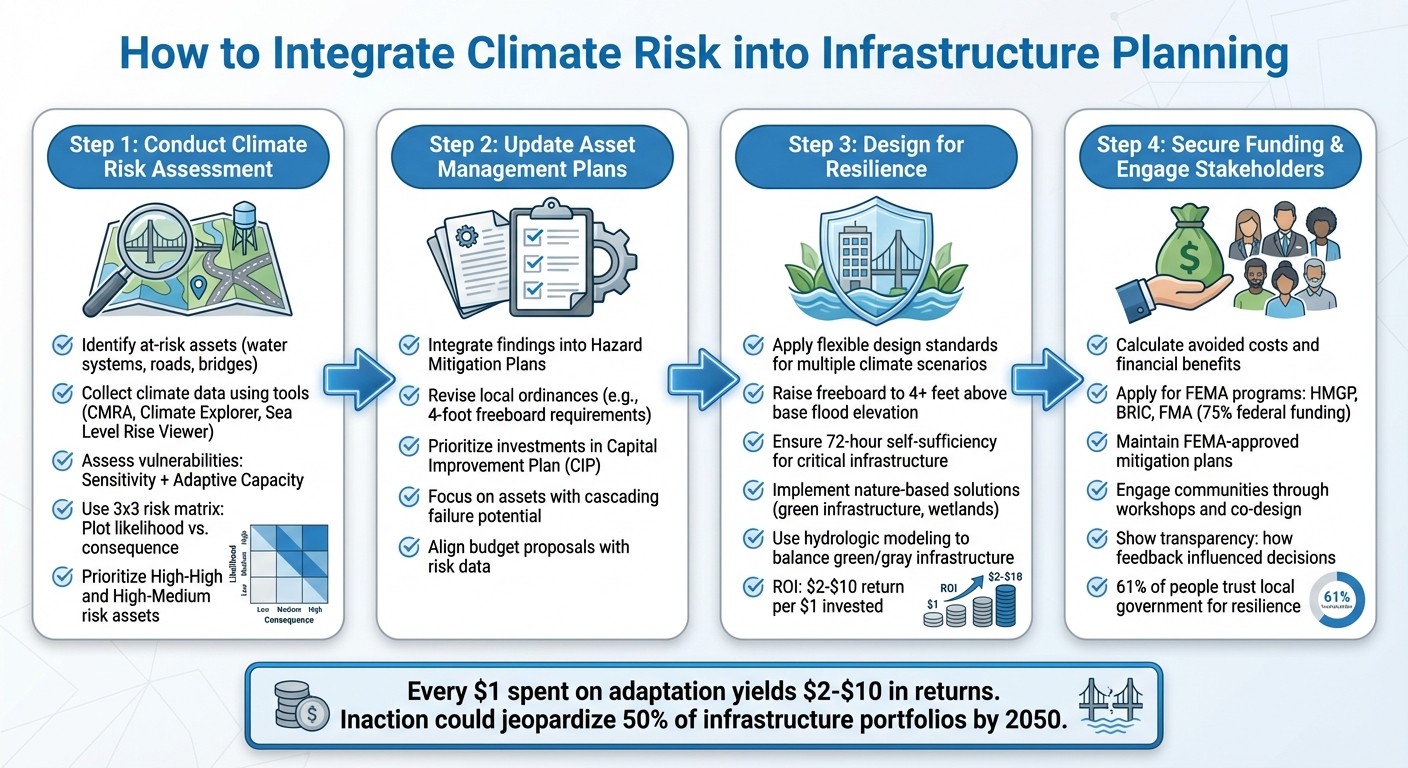
4-Step Framework for Integrating Climate Risk into Infrastructure Planning
Top Climate Resilient Infrastructure Solutions for Civil Engineers
Step 1: Conduct a Climate Risk Assessment
To effectively safeguard infrastructure against climate challenges, start with a climate risk assessment. This involves identifying the infrastructure assets at risk - such as water systems, roads, bridges, and critical facilities - and evaluating them against potential climate hazards like flooding, extreme heat, wildfires, or drought [1]. This step forms the groundwork for the targeted measures outlined later.
Collect Climate Data and Identify Hazards
The first step is to gather historical and projected climate data to understand the hazards affecting your area. For instance, flash floods can occur within six hours of heavy rainfall [2], while heat waves involve prolonged periods of unusually high temperatures lasting two or more days [2]. Tools like the Climate Mapping for Resilience and Adaptation (CMRA) Assessment Tool provide insights into how climate conditions may evolve over the coming decades [3]. Additional federal resources include the Climate Explorer for local projections, the Sea Level Rise Viewer for coastal planning, and the Wildfire Risk to Communities tool for fire-specific risks [2][4].
Once hazards are identified, evaluate how each one could impact your infrastructure.
Assess Infrastructure Vulnerabilities
Next, determine how climate hazards might affect specific assets. Vulnerability depends on two key factors: Sensitivity (how significantly the hazard affects the asset) and Adaptive Capacity (the asset's ability to adapt or recover) [5]. Create a table listing each asset alongside its potential impact, sensitivity, adaptive capacity, and overall vulnerability. Rate each asset-hazard pair as high, medium, or low [5]. For example, a water treatment plant in a flood-prone area might have high sensitivity but also high adaptive capacity if it includes elevated equipment and backup power systems.
Pay special attention to assets that could cause cascading failures. For example, damage to a bridge or telecommunications hub could disrupt multiple sectors. These assets should be prioritized even if their individual risk scores are moderate [5].
Apply Standardized Risk Assessment Frameworks
To assess risk, combine the likelihood of a hazard occurring with the severity of its consequences [5]. Categorize risks as "High" if likely within five years, "Medium" for five to twenty years, and "Low" beyond that [5]. Use a 3x3 matrix to plot medium-to-high vulnerability assets, with probability on one axis and consequence magnitude on the other. Focus resources on assets that fall into the "High-High" or "High-Medium" categories [5].
For a broader perspective, the FEMA National Risk Index offers comparative data on 18 natural hazards, helping communities benchmark their vulnerabilities against national trends [5]. For more complex systems or when navigating advanced climate modeling, consider enlisting Architecture and Engineering (A&E) firms or climate adaptation specialists [5].
Step 2: Add Climate Risks to Asset Management Plans
Incorporate climate risk findings into your asset management framework to ensure climate considerations are seamlessly integrated into routine infrastructure decision-making. This approach moves beyond treating climate risks as isolated concerns and embeds them into the core of long-term planning.
Connect Risk Assessments with Current Policies
Once you've completed a climate risk assessment, the next step is to align these insights with your asset management strategies. Strengthening infrastructure resilience requires connecting risk findings to updated policies and investment priorities.
One effective way to achieve this is by incorporating climate risk data into documents that are already subject to regular updates. For instance, Hazard Mitigation Plans - often a requirement for federal and state program eligibility - offer a structured opportunity to weave new climate data into official policies [1]. By taking advantage of these mandated update cycles, you can ensure that climate resilience becomes a natural part of ongoing planning efforts.
According to the U.S. Climate Resilience Toolkit, "Leveraging community engagements required for these updates to add climate considerations to planning documents is an efficient way to move plans forward and integrate climate resilience into future plans." [1]
Additionally, revising local ordinances based on risk findings can help translate climate data into actionable standards. For example, raising freeboard requirements to at least four feet above the base flood level for public facilities is a practical step toward mitigating flood risks [2].
Prioritize Infrastructure Investments Using Risk Data
Your risk assessment provides a roadmap for identifying which assets face the most significant threats. Use tools like the 3x3 risk matrix to guide investment decisions, prioritizing "High-High" and "High-Medium" risk assets in your Capital Improvement Plan (CIP) [5].
Certain assets, particularly those that could cause cascading failures, demand immediate attention. For example, a compromised water treatment plant doesn't just disrupt water supply - it also jeopardizes critical services such as hospitals, schools, and businesses [5]. Even if the risk score for such assets appears moderate, their interconnected impact makes them high-priority candidates for investment.
Collaborate with your finance team to develop budget proposals that reflect these climate priorities [6]. By aligning funding strategies with risk data, you can transform assessments into actionable infrastructure improvements.
Step 3: Use Adaptive Design and Nature-Based Solutions
When planning infrastructure, it’s critical to design systems that can adjust to changing climate conditions. Relying solely on historical data for future planning is no longer enough. Projects must anticipate a range of unprecedented scenarios, ensuring that earlier risk assessments lead to designs that are both flexible and resilient.
Apply Flexible Design Standards
Adaptive design relies on a continuous process: identifying hazards, evaluating vulnerabilities, exploring options, and taking action. Instead of depending on static future projections, infrastructure should be tested against a variety of climate scenarios to ensure durability under different conditions [1].
Building codes should also go beyond historical standards. For instance, raising freeboard for homes and public facilities to at least four feet above base flood elevation can help mitigate risks associated with rising sea levels and increased precipitation [2].
Additionally, critical infrastructure should be equipped for 72-hour self-sufficiency. This includes backup generators, emergency supplies, and clear relocation plans. To maintain essential services during extreme weather or grid failures, distributed renewable energy systems and microgrids should be integrated. Sewer systems can also benefit from advanced separation units to handle debris during heavy rainfall [2].
Use Nature-Based Solutions for Resilience
Incorporating nature-based strategies alongside engineered systems creates a more comprehensive approach to climate adaptation. Green infrastructure, for example, provides an effective and economical complement to traditional systems. A notable example is Minnesota’s Arlington Pascal Stormwater Project (2007–2010), which combined rain gardens, infiltration trenches, and a pond. This $2 million initiative cut runoff by 77–88% and saved $500,000 in costs [9].
Natural features like wetlands, urban forests, and living shorelines serve as natural barriers against flooding, erosion, and rising sea levels [7]. Beyond protection, these systems improve air and water quality while storing carbon. Milwaukee’s Greenseams program illustrates the potential of such measures - it has preserved nearly 5,000 acres of flood-prone land by targeting areas with water-absorbing soils in high-growth regions, reducing reliance on engineered drainage systems [9]. Updating land use codes to prioritize natural infrastructure can significantly ease the strain on traditional drainage systems [2].
"Nature and people can better withstand impacts from a changing climate if there is a greater emphasis on considering future conditions when communities and governments are making decisions about managing the built and natural environments."
Jennifer Browning, Senior Director of U.S. Conservation, The Pew Charitable Trusts[7]
For new projects, hydrologic modeling can help balance green and gray infrastructure solutions. Tools like CLASIC evaluate lifecycle costs and benefits, often showing a return of $2–$10 for every $1 invested [9][8].
Step 4: Secure Funding and Engage Stakeholders
Once municipalities have completed thorough risk assessments and crafted adaptive designs, the next step is ensuring the financial and community support needed to bring these plans to life. Without adequate funding and stakeholder engagement, even the most well-thought-out climate adaptation strategies can stall.
Calculate the Financial Benefits of Resilience
To make a strong case for funding, municipalities should emphasize the financial advantages of resilience investments. Highlighting avoided repair and replacement costs can be persuasive. For instance, understanding how a single infrastructure failure - like a bridge collapse - can lead to cascading economic impacts is critical. Research shows that every $1 spent on adaptation can yield returns ranging from $2 to $10, while inaction could jeopardize up to half of infrastructure portfolios by 2050 [8].
Using the risk matrix developed earlier, identify high-probability events that demand immediate attention. Tackling these issues first not only reduces risks but also builds a track record of success, which can attract further funding and community trust [10]. A notable example is Mongolia’s 2016 $462 million water infrastructure compact, which improved national water supply by 80%. This initiative also established a financial framework for resilience, including regulations promoting recycled water use [8].
Find Funding Programs
Federal funding is a cornerstone of resilience projects in the United States. FEMA’s Hazard Mitigation Assistance (HMA) programs offer several options for municipalities:
Hazard Mitigation Grant Program (HMGP): Available after a Presidentially declared disaster.
Building Resilient Infrastructure and Communities (BRIC): An annual program focused on pre-disaster mitigation.
Flood Mitigation Assistance (FMA): Specifically targets flood-related resilience efforts [11][12].
These programs typically cover 75% of project costs, requiring municipalities to provide a 25% non-federal match [12]. To qualify, municipalities must maintain a FEMA-approved Local Natural Hazard Mitigation Plan and regularly update it [11][12]. For guidance on navigating the application process, municipalities can consult their state, tribal, or territorial Hazard Mitigation Office. Incorporating climate considerations into official planning documents, such as Hazard Mitigation Plans, can also streamline eligibility [1].
Work with Municipal Councils and Communities
Securing funding is only part of the equation; aligning these resources with community needs and expectations is equally vital. Trust plays a pivotal role in resilience planning. In the U.S., 61% of people express a favorable view of local governments, compared to just 22% for the federal government [15]. This trust advantage underscores the importance of engaging communities early and consistently.
"Resilience isn't just about roads and levees - it's about people." – Zencity [13]
Cities like Cambridge and Minneapolis have demonstrated the power of community engagement by hosting workshops and multilingual sessions to co-design resilience measures. By incorporating local insights, these cities have ensured their plans resonate with residents’ priorities [13]. In Houston, the "Resilient Houston" strategy includes 62 community-driven actions addressing both immediate threats, like hurricanes, and longer-term challenges, such as inequality and aging infrastructure [13].
Transparency is key - show stakeholders how their feedback influenced final decisions. For municipal councils, framing resilience as a safeguard for fiscal health can be particularly compelling. Sharing vulnerability assessments and risk-reduction strategies with credit rating agencies might help prevent downgrades and lower debt costs [15]. Additionally, collaborating with state regulators to mandate insurance premium discounts for property owners who adopt certified risk-reduction measures can create direct, tangible benefits for residents [15].
Conclusion: Building Resilient Infrastructure
Incorporating climate risk into infrastructure planning isn't just a precaution - it's a necessity for safeguarding communities and maintaining fiscal health. Shifting from reactive disaster spending to strategic, forward-thinking investments ensures a more secure future.
The foundation of effective resilience planning lies in data. Cities and municipalities that move beyond basic "low/medium/high" risk assessments to detailed quantitative analyses - leveraging geospatial data, property valuations, and climate projections - can pinpoint vulnerabilities with precision. This method not only identifies risks but also highlights assets that could impact multiple sectors if compromised, helping prioritize investments. As Katrina Kelly-Pitou, Director of Climate Change Adaptation and Economics at SmithGroup, aptly puts it:
"Adaptation is no longer an optional or a sunk cost; it's infrastructure that can be funded, scaled and designed to last" [16].
This level of precision delivers benefits far beyond cost savings. Climate-resilient infrastructure ensures continuity during extreme events, enhances public health through better water and energy systems, and keeps municipalities eligible for critical federal and state funding programs.
The urgency for such measures is clear. Between 2000 and 2023, extreme weather events caused the majority of major power outages across nearly every U.S. state. Meanwhile, projections suggest that by 2050, over 25 million Americans in disadvantaged communities could face at least 48 days of dangerous heat annually [14]. These figures underscore the growing need for proactive solutions.
Financial alignment plays a key role in resilience success. The Design–Data–Finance Triad [16] offers a framework to make resilience projects financially viable. By quantifying avoided losses and reduced insurance costs, municipalities can transform adaptation efforts into valuable, fundable assets. Codifying these efforts in official planning documents and allocating budgets for predevelopment modeling further strengthens their position to access emerging funding opportunities.
Governments are already moving in this direction, with climate-related impact assessments increasingly required for project approval [17]. By treating climate adaptation as a scalable, fundable priority and involving communities throughout the process, municipalities can create infrastructure that protects both lives and assets for generations to come.
FAQs
How can municipalities plan infrastructure investments to address climate risks effectively?
Municipalities can make smarter infrastructure investments by weaving climate risk assessments into their planning processes. The first step is to identify local climate threats, such as flooding, extreme heat, or coastal erosion, and analyze how these risks might escalate under future climate conditions. This approach highlights vulnerable infrastructure and helps determine which areas need immediate action.
By leveraging risk assessment tools, cities can predict potential impacts and strategically allocate resources to projects that strengthen resilience. These might include upgrading essential infrastructure or adopting nature-based solutions like green roofs or wetlands to manage stormwater. A phased strategy - beginning with understanding risks, evaluating vulnerabilities, and setting priorities - ensures that investments address the most pressing concerns while paving the way for long-term durability. This method promotes infrastructure that’s built not just for today, but for the challenges of tomorrow.
What are some practical nature-based solutions to make infrastructure more resilient to climate risks?
Nature-based solutions tap into the power of natural ecosystems to tackle climate challenges while strengthening community resilience. For instance, revitalizing urban green spaces - like parks, tree canopies, and wetlands - can help combat rising temperatures, manage stormwater, and mitigate flooding risks. Incorporating green infrastructure, such as rain gardens, permeable pavements, and vegetated swales, boosts water absorption and reduces runoff during intense rainfall.
In coastal regions, restoring wetlands and natural shorelines offers a buffer against storm surges and flooding, all while nurturing biodiversity. These approaches combine practicality with environmental benefits, making them invaluable tools for creating infrastructure that can withstand evolving climate conditions.
What funding options are available for government agencies to support climate adaptation projects?
Government agencies have various avenues to secure funding for climate adaptation initiatives, primarily through federal grant programs and strategic planning resources. One notable example is the Hazard Mitigation Grant Program (HMGP), which provides financial backing for efforts aimed at reducing risks from disasters like flooding or severe weather events. Additionally, tools such as the Ready-to-Fund Resilience Toolkit offer practical guidance for identifying and applying to funding opportunities specifically designed for resilience-focused projects.
To enhance their chances of obtaining funding, agencies should align their proposals with federal priorities by integrating climate risk assessments into their infrastructure planning. Resources like the U.S. Climate Resilience Toolkit and federal guidance documents can be instrumental in highlighting the long-term advantages of resilience-driven projects, ultimately making applications more compelling and competitive.
Related Blog Posts
The Resilience Funding Gap: How Cities Can Build Long-Term Climate Finance Strategies
How to Build a Climate Resilience Plan for Municipalities & Government Agencies
Resilient infrastructure: safeguarding transport networks against climate impacts
How to Integrate Climate Risk into Infrastructure Planning for Corporations
Latest Articles
©2025



FAQ
01
What does it really mean to “redefine profit”?
02
What makes Council Fire different?
03
Who does Council Fire you work with?
04
What does working with Council Fire actually look like?
05
How does Council Fire help organizations turn big goals into action?
06
How does Council Fire define and measure success?
Jan 22, 2026
How to Integrate Climate Risk into Infrastructure Planning for Municipalities & Government Agencies
Sustainability Strategy
In This Article
Practical guide for municipalities to assess climate hazards, update asset plans, adopt adaptive and nature-based designs, and secure funding for resilient infrastructure.
How to Integrate Climate Risk into Infrastructure Planning for Municipalities & Government Agencies
The rising impacts of climate change are forcing municipalities and government agencies to rethink infrastructure planning. Here's how to address this challenge effectively:
Understand the Risks: Climate hazards like extreme heat, flooding, and drought are intensifying. Aging infrastructure wasn't built to handle these conditions, making risk assessments essential.
Conduct Risk Assessments: Identify vulnerabilities in critical infrastructure (e.g., roads, water systems) using tools like FEMA's National Risk Index or the Climate Mapping for Resilience and Adaptation (CMRA) tool.
Update Asset Management Plans: Incorporate climate data into long-term infrastructure planning and prioritize high-risk assets in budgets and policies.
Design for Resilience: Use flexible designs and nature-based solutions, such as green infrastructure, to improve system durability and reduce costs.
Secure Funding and Engage Stakeholders: Leverage federal programs like FEMA's BRIC and engage communities to align funding with local priorities.
Key Insight: Proactively addressing climate risks ensures safer communities, reduces long-term costs, and protects critical infrastructure investments. Start with data-driven assessments and integrate findings into planning and design processes.
4-Step Framework for Integrating Climate Risk into Infrastructure Planning
Top Climate Resilient Infrastructure Solutions for Civil Engineers
Step 1: Conduct a Climate Risk Assessment
To effectively safeguard infrastructure against climate challenges, start with a climate risk assessment. This involves identifying the infrastructure assets at risk - such as water systems, roads, bridges, and critical facilities - and evaluating them against potential climate hazards like flooding, extreme heat, wildfires, or drought [1]. This step forms the groundwork for the targeted measures outlined later.
Collect Climate Data and Identify Hazards
The first step is to gather historical and projected climate data to understand the hazards affecting your area. For instance, flash floods can occur within six hours of heavy rainfall [2], while heat waves involve prolonged periods of unusually high temperatures lasting two or more days [2]. Tools like the Climate Mapping for Resilience and Adaptation (CMRA) Assessment Tool provide insights into how climate conditions may evolve over the coming decades [3]. Additional federal resources include the Climate Explorer for local projections, the Sea Level Rise Viewer for coastal planning, and the Wildfire Risk to Communities tool for fire-specific risks [2][4].
Once hazards are identified, evaluate how each one could impact your infrastructure.
Assess Infrastructure Vulnerabilities
Next, determine how climate hazards might affect specific assets. Vulnerability depends on two key factors: Sensitivity (how significantly the hazard affects the asset) and Adaptive Capacity (the asset's ability to adapt or recover) [5]. Create a table listing each asset alongside its potential impact, sensitivity, adaptive capacity, and overall vulnerability. Rate each asset-hazard pair as high, medium, or low [5]. For example, a water treatment plant in a flood-prone area might have high sensitivity but also high adaptive capacity if it includes elevated equipment and backup power systems.
Pay special attention to assets that could cause cascading failures. For example, damage to a bridge or telecommunications hub could disrupt multiple sectors. These assets should be prioritized even if their individual risk scores are moderate [5].
Apply Standardized Risk Assessment Frameworks
To assess risk, combine the likelihood of a hazard occurring with the severity of its consequences [5]. Categorize risks as "High" if likely within five years, "Medium" for five to twenty years, and "Low" beyond that [5]. Use a 3x3 matrix to plot medium-to-high vulnerability assets, with probability on one axis and consequence magnitude on the other. Focus resources on assets that fall into the "High-High" or "High-Medium" categories [5].
For a broader perspective, the FEMA National Risk Index offers comparative data on 18 natural hazards, helping communities benchmark their vulnerabilities against national trends [5]. For more complex systems or when navigating advanced climate modeling, consider enlisting Architecture and Engineering (A&E) firms or climate adaptation specialists [5].
Step 2: Add Climate Risks to Asset Management Plans
Incorporate climate risk findings into your asset management framework to ensure climate considerations are seamlessly integrated into routine infrastructure decision-making. This approach moves beyond treating climate risks as isolated concerns and embeds them into the core of long-term planning.
Connect Risk Assessments with Current Policies
Once you've completed a climate risk assessment, the next step is to align these insights with your asset management strategies. Strengthening infrastructure resilience requires connecting risk findings to updated policies and investment priorities.
One effective way to achieve this is by incorporating climate risk data into documents that are already subject to regular updates. For instance, Hazard Mitigation Plans - often a requirement for federal and state program eligibility - offer a structured opportunity to weave new climate data into official policies [1]. By taking advantage of these mandated update cycles, you can ensure that climate resilience becomes a natural part of ongoing planning efforts.
According to the U.S. Climate Resilience Toolkit, "Leveraging community engagements required for these updates to add climate considerations to planning documents is an efficient way to move plans forward and integrate climate resilience into future plans." [1]
Additionally, revising local ordinances based on risk findings can help translate climate data into actionable standards. For example, raising freeboard requirements to at least four feet above the base flood level for public facilities is a practical step toward mitigating flood risks [2].
Prioritize Infrastructure Investments Using Risk Data
Your risk assessment provides a roadmap for identifying which assets face the most significant threats. Use tools like the 3x3 risk matrix to guide investment decisions, prioritizing "High-High" and "High-Medium" risk assets in your Capital Improvement Plan (CIP) [5].
Certain assets, particularly those that could cause cascading failures, demand immediate attention. For example, a compromised water treatment plant doesn't just disrupt water supply - it also jeopardizes critical services such as hospitals, schools, and businesses [5]. Even if the risk score for such assets appears moderate, their interconnected impact makes them high-priority candidates for investment.
Collaborate with your finance team to develop budget proposals that reflect these climate priorities [6]. By aligning funding strategies with risk data, you can transform assessments into actionable infrastructure improvements.
Step 3: Use Adaptive Design and Nature-Based Solutions
When planning infrastructure, it’s critical to design systems that can adjust to changing climate conditions. Relying solely on historical data for future planning is no longer enough. Projects must anticipate a range of unprecedented scenarios, ensuring that earlier risk assessments lead to designs that are both flexible and resilient.
Apply Flexible Design Standards
Adaptive design relies on a continuous process: identifying hazards, evaluating vulnerabilities, exploring options, and taking action. Instead of depending on static future projections, infrastructure should be tested against a variety of climate scenarios to ensure durability under different conditions [1].
Building codes should also go beyond historical standards. For instance, raising freeboard for homes and public facilities to at least four feet above base flood elevation can help mitigate risks associated with rising sea levels and increased precipitation [2].
Additionally, critical infrastructure should be equipped for 72-hour self-sufficiency. This includes backup generators, emergency supplies, and clear relocation plans. To maintain essential services during extreme weather or grid failures, distributed renewable energy systems and microgrids should be integrated. Sewer systems can also benefit from advanced separation units to handle debris during heavy rainfall [2].
Use Nature-Based Solutions for Resilience
Incorporating nature-based strategies alongside engineered systems creates a more comprehensive approach to climate adaptation. Green infrastructure, for example, provides an effective and economical complement to traditional systems. A notable example is Minnesota’s Arlington Pascal Stormwater Project (2007–2010), which combined rain gardens, infiltration trenches, and a pond. This $2 million initiative cut runoff by 77–88% and saved $500,000 in costs [9].
Natural features like wetlands, urban forests, and living shorelines serve as natural barriers against flooding, erosion, and rising sea levels [7]. Beyond protection, these systems improve air and water quality while storing carbon. Milwaukee’s Greenseams program illustrates the potential of such measures - it has preserved nearly 5,000 acres of flood-prone land by targeting areas with water-absorbing soils in high-growth regions, reducing reliance on engineered drainage systems [9]. Updating land use codes to prioritize natural infrastructure can significantly ease the strain on traditional drainage systems [2].
"Nature and people can better withstand impacts from a changing climate if there is a greater emphasis on considering future conditions when communities and governments are making decisions about managing the built and natural environments."
Jennifer Browning, Senior Director of U.S. Conservation, The Pew Charitable Trusts[7]
For new projects, hydrologic modeling can help balance green and gray infrastructure solutions. Tools like CLASIC evaluate lifecycle costs and benefits, often showing a return of $2–$10 for every $1 invested [9][8].
Step 4: Secure Funding and Engage Stakeholders
Once municipalities have completed thorough risk assessments and crafted adaptive designs, the next step is ensuring the financial and community support needed to bring these plans to life. Without adequate funding and stakeholder engagement, even the most well-thought-out climate adaptation strategies can stall.
Calculate the Financial Benefits of Resilience
To make a strong case for funding, municipalities should emphasize the financial advantages of resilience investments. Highlighting avoided repair and replacement costs can be persuasive. For instance, understanding how a single infrastructure failure - like a bridge collapse - can lead to cascading economic impacts is critical. Research shows that every $1 spent on adaptation can yield returns ranging from $2 to $10, while inaction could jeopardize up to half of infrastructure portfolios by 2050 [8].
Using the risk matrix developed earlier, identify high-probability events that demand immediate attention. Tackling these issues first not only reduces risks but also builds a track record of success, which can attract further funding and community trust [10]. A notable example is Mongolia’s 2016 $462 million water infrastructure compact, which improved national water supply by 80%. This initiative also established a financial framework for resilience, including regulations promoting recycled water use [8].
Find Funding Programs
Federal funding is a cornerstone of resilience projects in the United States. FEMA’s Hazard Mitigation Assistance (HMA) programs offer several options for municipalities:
Hazard Mitigation Grant Program (HMGP): Available after a Presidentially declared disaster.
Building Resilient Infrastructure and Communities (BRIC): An annual program focused on pre-disaster mitigation.
Flood Mitigation Assistance (FMA): Specifically targets flood-related resilience efforts [11][12].
These programs typically cover 75% of project costs, requiring municipalities to provide a 25% non-federal match [12]. To qualify, municipalities must maintain a FEMA-approved Local Natural Hazard Mitigation Plan and regularly update it [11][12]. For guidance on navigating the application process, municipalities can consult their state, tribal, or territorial Hazard Mitigation Office. Incorporating climate considerations into official planning documents, such as Hazard Mitigation Plans, can also streamline eligibility [1].
Work with Municipal Councils and Communities
Securing funding is only part of the equation; aligning these resources with community needs and expectations is equally vital. Trust plays a pivotal role in resilience planning. In the U.S., 61% of people express a favorable view of local governments, compared to just 22% for the federal government [15]. This trust advantage underscores the importance of engaging communities early and consistently.
"Resilience isn't just about roads and levees - it's about people." – Zencity [13]
Cities like Cambridge and Minneapolis have demonstrated the power of community engagement by hosting workshops and multilingual sessions to co-design resilience measures. By incorporating local insights, these cities have ensured their plans resonate with residents’ priorities [13]. In Houston, the "Resilient Houston" strategy includes 62 community-driven actions addressing both immediate threats, like hurricanes, and longer-term challenges, such as inequality and aging infrastructure [13].
Transparency is key - show stakeholders how their feedback influenced final decisions. For municipal councils, framing resilience as a safeguard for fiscal health can be particularly compelling. Sharing vulnerability assessments and risk-reduction strategies with credit rating agencies might help prevent downgrades and lower debt costs [15]. Additionally, collaborating with state regulators to mandate insurance premium discounts for property owners who adopt certified risk-reduction measures can create direct, tangible benefits for residents [15].
Conclusion: Building Resilient Infrastructure
Incorporating climate risk into infrastructure planning isn't just a precaution - it's a necessity for safeguarding communities and maintaining fiscal health. Shifting from reactive disaster spending to strategic, forward-thinking investments ensures a more secure future.
The foundation of effective resilience planning lies in data. Cities and municipalities that move beyond basic "low/medium/high" risk assessments to detailed quantitative analyses - leveraging geospatial data, property valuations, and climate projections - can pinpoint vulnerabilities with precision. This method not only identifies risks but also highlights assets that could impact multiple sectors if compromised, helping prioritize investments. As Katrina Kelly-Pitou, Director of Climate Change Adaptation and Economics at SmithGroup, aptly puts it:
"Adaptation is no longer an optional or a sunk cost; it's infrastructure that can be funded, scaled and designed to last" [16].
This level of precision delivers benefits far beyond cost savings. Climate-resilient infrastructure ensures continuity during extreme events, enhances public health through better water and energy systems, and keeps municipalities eligible for critical federal and state funding programs.
The urgency for such measures is clear. Between 2000 and 2023, extreme weather events caused the majority of major power outages across nearly every U.S. state. Meanwhile, projections suggest that by 2050, over 25 million Americans in disadvantaged communities could face at least 48 days of dangerous heat annually [14]. These figures underscore the growing need for proactive solutions.
Financial alignment plays a key role in resilience success. The Design–Data–Finance Triad [16] offers a framework to make resilience projects financially viable. By quantifying avoided losses and reduced insurance costs, municipalities can transform adaptation efforts into valuable, fundable assets. Codifying these efforts in official planning documents and allocating budgets for predevelopment modeling further strengthens their position to access emerging funding opportunities.
Governments are already moving in this direction, with climate-related impact assessments increasingly required for project approval [17]. By treating climate adaptation as a scalable, fundable priority and involving communities throughout the process, municipalities can create infrastructure that protects both lives and assets for generations to come.
FAQs
How can municipalities plan infrastructure investments to address climate risks effectively?
Municipalities can make smarter infrastructure investments by weaving climate risk assessments into their planning processes. The first step is to identify local climate threats, such as flooding, extreme heat, or coastal erosion, and analyze how these risks might escalate under future climate conditions. This approach highlights vulnerable infrastructure and helps determine which areas need immediate action.
By leveraging risk assessment tools, cities can predict potential impacts and strategically allocate resources to projects that strengthen resilience. These might include upgrading essential infrastructure or adopting nature-based solutions like green roofs or wetlands to manage stormwater. A phased strategy - beginning with understanding risks, evaluating vulnerabilities, and setting priorities - ensures that investments address the most pressing concerns while paving the way for long-term durability. This method promotes infrastructure that’s built not just for today, but for the challenges of tomorrow.
What are some practical nature-based solutions to make infrastructure more resilient to climate risks?
Nature-based solutions tap into the power of natural ecosystems to tackle climate challenges while strengthening community resilience. For instance, revitalizing urban green spaces - like parks, tree canopies, and wetlands - can help combat rising temperatures, manage stormwater, and mitigate flooding risks. Incorporating green infrastructure, such as rain gardens, permeable pavements, and vegetated swales, boosts water absorption and reduces runoff during intense rainfall.
In coastal regions, restoring wetlands and natural shorelines offers a buffer against storm surges and flooding, all while nurturing biodiversity. These approaches combine practicality with environmental benefits, making them invaluable tools for creating infrastructure that can withstand evolving climate conditions.
What funding options are available for government agencies to support climate adaptation projects?
Government agencies have various avenues to secure funding for climate adaptation initiatives, primarily through federal grant programs and strategic planning resources. One notable example is the Hazard Mitigation Grant Program (HMGP), which provides financial backing for efforts aimed at reducing risks from disasters like flooding or severe weather events. Additionally, tools such as the Ready-to-Fund Resilience Toolkit offer practical guidance for identifying and applying to funding opportunities specifically designed for resilience-focused projects.
To enhance their chances of obtaining funding, agencies should align their proposals with federal priorities by integrating climate risk assessments into their infrastructure planning. Resources like the U.S. Climate Resilience Toolkit and federal guidance documents can be instrumental in highlighting the long-term advantages of resilience-driven projects, ultimately making applications more compelling and competitive.
Related Blog Posts
The Resilience Funding Gap: How Cities Can Build Long-Term Climate Finance Strategies
How to Build a Climate Resilience Plan for Municipalities & Government Agencies
Resilient infrastructure: safeguarding transport networks against climate impacts
How to Integrate Climate Risk into Infrastructure Planning for Corporations
FAQ
01
What does it really mean to “redefine profit”?
02
What makes Council Fire different?
03
Who does Council Fire you work with?
04
What does working with Council Fire actually look like?
05
How does Council Fire help organizations turn big goals into action?
06
How does Council Fire define and measure success?
Jan 22, 2026
How to Integrate Climate Risk into Infrastructure Planning for Municipalities & Government Agencies
Sustainability Strategy
In This Article
Practical guide for municipalities to assess climate hazards, update asset plans, adopt adaptive and nature-based designs, and secure funding for resilient infrastructure.
How to Integrate Climate Risk into Infrastructure Planning for Municipalities & Government Agencies
The rising impacts of climate change are forcing municipalities and government agencies to rethink infrastructure planning. Here's how to address this challenge effectively:
Understand the Risks: Climate hazards like extreme heat, flooding, and drought are intensifying. Aging infrastructure wasn't built to handle these conditions, making risk assessments essential.
Conduct Risk Assessments: Identify vulnerabilities in critical infrastructure (e.g., roads, water systems) using tools like FEMA's National Risk Index or the Climate Mapping for Resilience and Adaptation (CMRA) tool.
Update Asset Management Plans: Incorporate climate data into long-term infrastructure planning and prioritize high-risk assets in budgets and policies.
Design for Resilience: Use flexible designs and nature-based solutions, such as green infrastructure, to improve system durability and reduce costs.
Secure Funding and Engage Stakeholders: Leverage federal programs like FEMA's BRIC and engage communities to align funding with local priorities.
Key Insight: Proactively addressing climate risks ensures safer communities, reduces long-term costs, and protects critical infrastructure investments. Start with data-driven assessments and integrate findings into planning and design processes.
4-Step Framework for Integrating Climate Risk into Infrastructure Planning
Top Climate Resilient Infrastructure Solutions for Civil Engineers
Step 1: Conduct a Climate Risk Assessment
To effectively safeguard infrastructure against climate challenges, start with a climate risk assessment. This involves identifying the infrastructure assets at risk - such as water systems, roads, bridges, and critical facilities - and evaluating them against potential climate hazards like flooding, extreme heat, wildfires, or drought [1]. This step forms the groundwork for the targeted measures outlined later.
Collect Climate Data and Identify Hazards
The first step is to gather historical and projected climate data to understand the hazards affecting your area. For instance, flash floods can occur within six hours of heavy rainfall [2], while heat waves involve prolonged periods of unusually high temperatures lasting two or more days [2]. Tools like the Climate Mapping for Resilience and Adaptation (CMRA) Assessment Tool provide insights into how climate conditions may evolve over the coming decades [3]. Additional federal resources include the Climate Explorer for local projections, the Sea Level Rise Viewer for coastal planning, and the Wildfire Risk to Communities tool for fire-specific risks [2][4].
Once hazards are identified, evaluate how each one could impact your infrastructure.
Assess Infrastructure Vulnerabilities
Next, determine how climate hazards might affect specific assets. Vulnerability depends on two key factors: Sensitivity (how significantly the hazard affects the asset) and Adaptive Capacity (the asset's ability to adapt or recover) [5]. Create a table listing each asset alongside its potential impact, sensitivity, adaptive capacity, and overall vulnerability. Rate each asset-hazard pair as high, medium, or low [5]. For example, a water treatment plant in a flood-prone area might have high sensitivity but also high adaptive capacity if it includes elevated equipment and backup power systems.
Pay special attention to assets that could cause cascading failures. For example, damage to a bridge or telecommunications hub could disrupt multiple sectors. These assets should be prioritized even if their individual risk scores are moderate [5].
Apply Standardized Risk Assessment Frameworks
To assess risk, combine the likelihood of a hazard occurring with the severity of its consequences [5]. Categorize risks as "High" if likely within five years, "Medium" for five to twenty years, and "Low" beyond that [5]. Use a 3x3 matrix to plot medium-to-high vulnerability assets, with probability on one axis and consequence magnitude on the other. Focus resources on assets that fall into the "High-High" or "High-Medium" categories [5].
For a broader perspective, the FEMA National Risk Index offers comparative data on 18 natural hazards, helping communities benchmark their vulnerabilities against national trends [5]. For more complex systems or when navigating advanced climate modeling, consider enlisting Architecture and Engineering (A&E) firms or climate adaptation specialists [5].
Step 2: Add Climate Risks to Asset Management Plans
Incorporate climate risk findings into your asset management framework to ensure climate considerations are seamlessly integrated into routine infrastructure decision-making. This approach moves beyond treating climate risks as isolated concerns and embeds them into the core of long-term planning.
Connect Risk Assessments with Current Policies
Once you've completed a climate risk assessment, the next step is to align these insights with your asset management strategies. Strengthening infrastructure resilience requires connecting risk findings to updated policies and investment priorities.
One effective way to achieve this is by incorporating climate risk data into documents that are already subject to regular updates. For instance, Hazard Mitigation Plans - often a requirement for federal and state program eligibility - offer a structured opportunity to weave new climate data into official policies [1]. By taking advantage of these mandated update cycles, you can ensure that climate resilience becomes a natural part of ongoing planning efforts.
According to the U.S. Climate Resilience Toolkit, "Leveraging community engagements required for these updates to add climate considerations to planning documents is an efficient way to move plans forward and integrate climate resilience into future plans." [1]
Additionally, revising local ordinances based on risk findings can help translate climate data into actionable standards. For example, raising freeboard requirements to at least four feet above the base flood level for public facilities is a practical step toward mitigating flood risks [2].
Prioritize Infrastructure Investments Using Risk Data
Your risk assessment provides a roadmap for identifying which assets face the most significant threats. Use tools like the 3x3 risk matrix to guide investment decisions, prioritizing "High-High" and "High-Medium" risk assets in your Capital Improvement Plan (CIP) [5].
Certain assets, particularly those that could cause cascading failures, demand immediate attention. For example, a compromised water treatment plant doesn't just disrupt water supply - it also jeopardizes critical services such as hospitals, schools, and businesses [5]. Even if the risk score for such assets appears moderate, their interconnected impact makes them high-priority candidates for investment.
Collaborate with your finance team to develop budget proposals that reflect these climate priorities [6]. By aligning funding strategies with risk data, you can transform assessments into actionable infrastructure improvements.
Step 3: Use Adaptive Design and Nature-Based Solutions
When planning infrastructure, it’s critical to design systems that can adjust to changing climate conditions. Relying solely on historical data for future planning is no longer enough. Projects must anticipate a range of unprecedented scenarios, ensuring that earlier risk assessments lead to designs that are both flexible and resilient.
Apply Flexible Design Standards
Adaptive design relies on a continuous process: identifying hazards, evaluating vulnerabilities, exploring options, and taking action. Instead of depending on static future projections, infrastructure should be tested against a variety of climate scenarios to ensure durability under different conditions [1].
Building codes should also go beyond historical standards. For instance, raising freeboard for homes and public facilities to at least four feet above base flood elevation can help mitigate risks associated with rising sea levels and increased precipitation [2].
Additionally, critical infrastructure should be equipped for 72-hour self-sufficiency. This includes backup generators, emergency supplies, and clear relocation plans. To maintain essential services during extreme weather or grid failures, distributed renewable energy systems and microgrids should be integrated. Sewer systems can also benefit from advanced separation units to handle debris during heavy rainfall [2].
Use Nature-Based Solutions for Resilience
Incorporating nature-based strategies alongside engineered systems creates a more comprehensive approach to climate adaptation. Green infrastructure, for example, provides an effective and economical complement to traditional systems. A notable example is Minnesota’s Arlington Pascal Stormwater Project (2007–2010), which combined rain gardens, infiltration trenches, and a pond. This $2 million initiative cut runoff by 77–88% and saved $500,000 in costs [9].
Natural features like wetlands, urban forests, and living shorelines serve as natural barriers against flooding, erosion, and rising sea levels [7]. Beyond protection, these systems improve air and water quality while storing carbon. Milwaukee’s Greenseams program illustrates the potential of such measures - it has preserved nearly 5,000 acres of flood-prone land by targeting areas with water-absorbing soils in high-growth regions, reducing reliance on engineered drainage systems [9]. Updating land use codes to prioritize natural infrastructure can significantly ease the strain on traditional drainage systems [2].
"Nature and people can better withstand impacts from a changing climate if there is a greater emphasis on considering future conditions when communities and governments are making decisions about managing the built and natural environments."
Jennifer Browning, Senior Director of U.S. Conservation, The Pew Charitable Trusts[7]
For new projects, hydrologic modeling can help balance green and gray infrastructure solutions. Tools like CLASIC evaluate lifecycle costs and benefits, often showing a return of $2–$10 for every $1 invested [9][8].
Step 4: Secure Funding and Engage Stakeholders
Once municipalities have completed thorough risk assessments and crafted adaptive designs, the next step is ensuring the financial and community support needed to bring these plans to life. Without adequate funding and stakeholder engagement, even the most well-thought-out climate adaptation strategies can stall.
Calculate the Financial Benefits of Resilience
To make a strong case for funding, municipalities should emphasize the financial advantages of resilience investments. Highlighting avoided repair and replacement costs can be persuasive. For instance, understanding how a single infrastructure failure - like a bridge collapse - can lead to cascading economic impacts is critical. Research shows that every $1 spent on adaptation can yield returns ranging from $2 to $10, while inaction could jeopardize up to half of infrastructure portfolios by 2050 [8].
Using the risk matrix developed earlier, identify high-probability events that demand immediate attention. Tackling these issues first not only reduces risks but also builds a track record of success, which can attract further funding and community trust [10]. A notable example is Mongolia’s 2016 $462 million water infrastructure compact, which improved national water supply by 80%. This initiative also established a financial framework for resilience, including regulations promoting recycled water use [8].
Find Funding Programs
Federal funding is a cornerstone of resilience projects in the United States. FEMA’s Hazard Mitigation Assistance (HMA) programs offer several options for municipalities:
Hazard Mitigation Grant Program (HMGP): Available after a Presidentially declared disaster.
Building Resilient Infrastructure and Communities (BRIC): An annual program focused on pre-disaster mitigation.
Flood Mitigation Assistance (FMA): Specifically targets flood-related resilience efforts [11][12].
These programs typically cover 75% of project costs, requiring municipalities to provide a 25% non-federal match [12]. To qualify, municipalities must maintain a FEMA-approved Local Natural Hazard Mitigation Plan and regularly update it [11][12]. For guidance on navigating the application process, municipalities can consult their state, tribal, or territorial Hazard Mitigation Office. Incorporating climate considerations into official planning documents, such as Hazard Mitigation Plans, can also streamline eligibility [1].
Work with Municipal Councils and Communities
Securing funding is only part of the equation; aligning these resources with community needs and expectations is equally vital. Trust plays a pivotal role in resilience planning. In the U.S., 61% of people express a favorable view of local governments, compared to just 22% for the federal government [15]. This trust advantage underscores the importance of engaging communities early and consistently.
"Resilience isn't just about roads and levees - it's about people." – Zencity [13]
Cities like Cambridge and Minneapolis have demonstrated the power of community engagement by hosting workshops and multilingual sessions to co-design resilience measures. By incorporating local insights, these cities have ensured their plans resonate with residents’ priorities [13]. In Houston, the "Resilient Houston" strategy includes 62 community-driven actions addressing both immediate threats, like hurricanes, and longer-term challenges, such as inequality and aging infrastructure [13].
Transparency is key - show stakeholders how their feedback influenced final decisions. For municipal councils, framing resilience as a safeguard for fiscal health can be particularly compelling. Sharing vulnerability assessments and risk-reduction strategies with credit rating agencies might help prevent downgrades and lower debt costs [15]. Additionally, collaborating with state regulators to mandate insurance premium discounts for property owners who adopt certified risk-reduction measures can create direct, tangible benefits for residents [15].
Conclusion: Building Resilient Infrastructure
Incorporating climate risk into infrastructure planning isn't just a precaution - it's a necessity for safeguarding communities and maintaining fiscal health. Shifting from reactive disaster spending to strategic, forward-thinking investments ensures a more secure future.
The foundation of effective resilience planning lies in data. Cities and municipalities that move beyond basic "low/medium/high" risk assessments to detailed quantitative analyses - leveraging geospatial data, property valuations, and climate projections - can pinpoint vulnerabilities with precision. This method not only identifies risks but also highlights assets that could impact multiple sectors if compromised, helping prioritize investments. As Katrina Kelly-Pitou, Director of Climate Change Adaptation and Economics at SmithGroup, aptly puts it:
"Adaptation is no longer an optional or a sunk cost; it's infrastructure that can be funded, scaled and designed to last" [16].
This level of precision delivers benefits far beyond cost savings. Climate-resilient infrastructure ensures continuity during extreme events, enhances public health through better water and energy systems, and keeps municipalities eligible for critical federal and state funding programs.
The urgency for such measures is clear. Between 2000 and 2023, extreme weather events caused the majority of major power outages across nearly every U.S. state. Meanwhile, projections suggest that by 2050, over 25 million Americans in disadvantaged communities could face at least 48 days of dangerous heat annually [14]. These figures underscore the growing need for proactive solutions.
Financial alignment plays a key role in resilience success. The Design–Data–Finance Triad [16] offers a framework to make resilience projects financially viable. By quantifying avoided losses and reduced insurance costs, municipalities can transform adaptation efforts into valuable, fundable assets. Codifying these efforts in official planning documents and allocating budgets for predevelopment modeling further strengthens their position to access emerging funding opportunities.
Governments are already moving in this direction, with climate-related impact assessments increasingly required for project approval [17]. By treating climate adaptation as a scalable, fundable priority and involving communities throughout the process, municipalities can create infrastructure that protects both lives and assets for generations to come.
FAQs
How can municipalities plan infrastructure investments to address climate risks effectively?
Municipalities can make smarter infrastructure investments by weaving climate risk assessments into their planning processes. The first step is to identify local climate threats, such as flooding, extreme heat, or coastal erosion, and analyze how these risks might escalate under future climate conditions. This approach highlights vulnerable infrastructure and helps determine which areas need immediate action.
By leveraging risk assessment tools, cities can predict potential impacts and strategically allocate resources to projects that strengthen resilience. These might include upgrading essential infrastructure or adopting nature-based solutions like green roofs or wetlands to manage stormwater. A phased strategy - beginning with understanding risks, evaluating vulnerabilities, and setting priorities - ensures that investments address the most pressing concerns while paving the way for long-term durability. This method promotes infrastructure that’s built not just for today, but for the challenges of tomorrow.
What are some practical nature-based solutions to make infrastructure more resilient to climate risks?
Nature-based solutions tap into the power of natural ecosystems to tackle climate challenges while strengthening community resilience. For instance, revitalizing urban green spaces - like parks, tree canopies, and wetlands - can help combat rising temperatures, manage stormwater, and mitigate flooding risks. Incorporating green infrastructure, such as rain gardens, permeable pavements, and vegetated swales, boosts water absorption and reduces runoff during intense rainfall.
In coastal regions, restoring wetlands and natural shorelines offers a buffer against storm surges and flooding, all while nurturing biodiversity. These approaches combine practicality with environmental benefits, making them invaluable tools for creating infrastructure that can withstand evolving climate conditions.
What funding options are available for government agencies to support climate adaptation projects?
Government agencies have various avenues to secure funding for climate adaptation initiatives, primarily through federal grant programs and strategic planning resources. One notable example is the Hazard Mitigation Grant Program (HMGP), which provides financial backing for efforts aimed at reducing risks from disasters like flooding or severe weather events. Additionally, tools such as the Ready-to-Fund Resilience Toolkit offer practical guidance for identifying and applying to funding opportunities specifically designed for resilience-focused projects.
To enhance their chances of obtaining funding, agencies should align their proposals with federal priorities by integrating climate risk assessments into their infrastructure planning. Resources like the U.S. Climate Resilience Toolkit and federal guidance documents can be instrumental in highlighting the long-term advantages of resilience-driven projects, ultimately making applications more compelling and competitive.
Related Blog Posts
The Resilience Funding Gap: How Cities Can Build Long-Term Climate Finance Strategies
How to Build a Climate Resilience Plan for Municipalities & Government Agencies
Resilient infrastructure: safeguarding transport networks against climate impacts
How to Integrate Climate Risk into Infrastructure Planning for Corporations
FAQ
What does it really mean to “redefine profit”?
What makes Council Fire different?
Who does Council Fire you work with?
What does working with Council Fire actually look like?
How does Council Fire help organizations turn big goals into action?
How does Council Fire define and measure success?