Mar 18, 2026
How to Finance Ocean Conservation with Impact Investing for NGOs & Nonprofits
Sustainability Strategy
In This Article
Impact investing can close the ocean funding gap by pairing measurable ecological outcomes with viable revenue models to attract private capital.
How to Finance Ocean Conservation with Impact Investing for NGOs & Nonprofits
Ocean conservation faces a massive funding gap, with $149 billion needed annually to meet global goals. Traditional donations alone can't close this gap, as the ocean receives less than 1% of global philanthropic funding. Impact investing presents a viable solution, offering financial returns alongside measurable ecological outcomes. Here's how NGOs and nonprofits can leverage it:
Impact Investing Potential: The $1.571 trillion impact investing market can help fund scalable conservation projects.
Successful Examples: Coral Vita raised $8 million in 2025 for coral restoration, while Rare launched a $6 million fisheries impact bond in Indonesia.
Funding Models: Blended finance, revenue-generating conservation projects, and venture capital are driving change.
Economic Opportunity: The ocean economy generates $5.2 trillion annually, with coral reefs alone contributing $2.7 trillion.
Measurable Metrics: Tools like the Ocean Impact Navigator and IRIS+ help track financial and ecological outcomes.
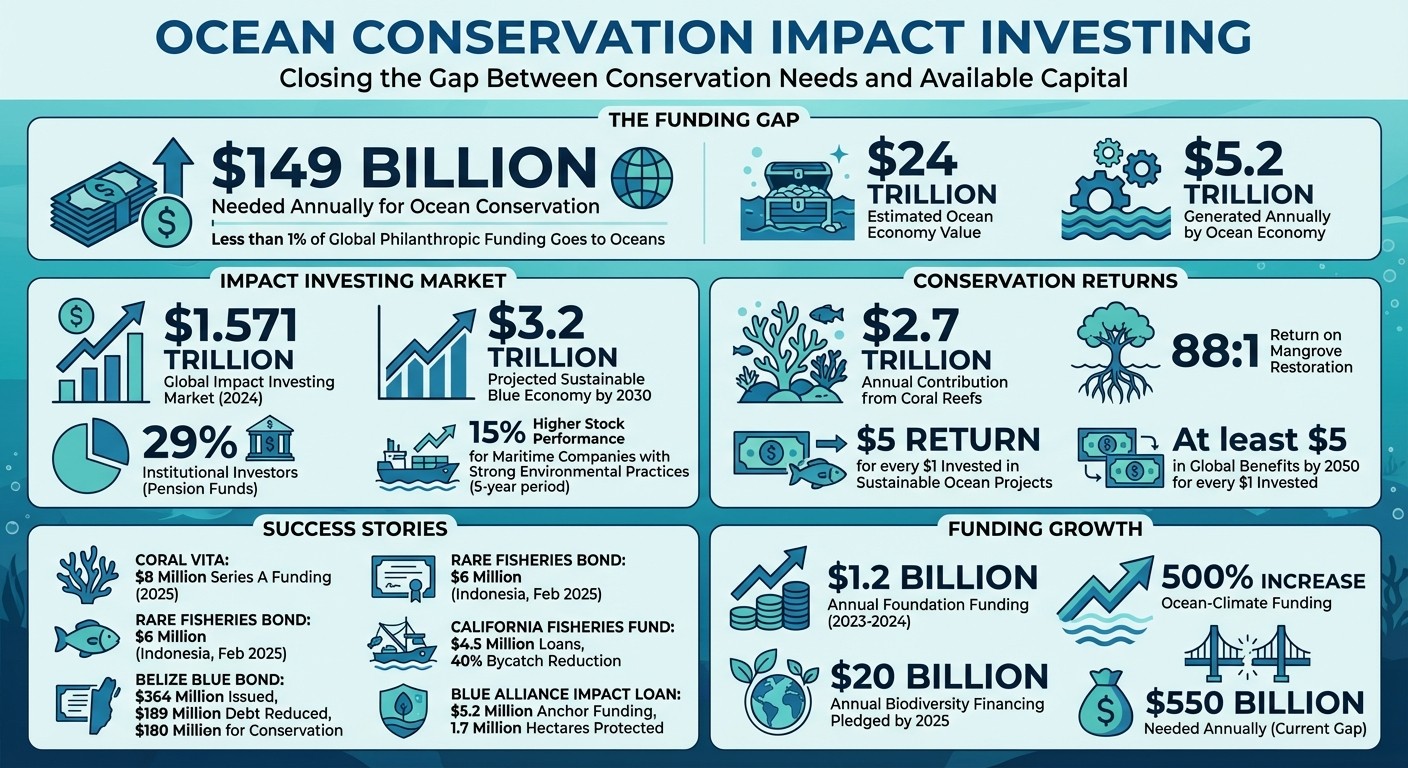
Ocean Conservation Impact Investing: Key Statistics and Funding Models
Impact Investing Basics for Ocean Conservation
What is Impact Investing?
Impact investing channels funds to achieve measurable social, environmental, and financial benefits [1]. Unlike traditional philanthropy, where funding is given without expectation of return, impact investing allows NGOs and nonprofits to tap into larger financial resources by demonstrating both ecological results and financial sustainability.
For ocean conservation groups, this means moving away from solely relying on grants and adopting blended finance models. These models use philanthropic grants or concessionary capital to absorb initial risks, making projects more attractive to private investors seeking steady returns [7][6]. Another option is outcome-based financing, where upfront funding is repaid once specific environmental goals are verified [5].
A notable example is the Small-Scale Fisheries Impact Bond, launched by Rare in February 2025. This initiative secured $6 million in upfront funding from the Pershing Square Foundation and Minderoo Foundation. Focused on three sites in Southeast Sulawesi, Indonesia, the project aims to create protected areas. Investors will be repaid based on verified outcomes like increased fish biomass and improved benthic cover. Outcome funders include UK DEFRA and Builders Vision [5].
"The Small Scale Fisheries Impact Bond exemplifies the kind of solution we need for scalable, community-driven conservation. By focusing on outcomes, we can drive real impact that benefit both people and the planet." - Karen Sack, Executive Director, ORRAA [5]
This innovative approach, which combines ecological and financial returns, highlights why investors are increasingly drawn to ocean conservation.
Why Investors Care About Ocean Conservation
Healthy oceans are critical for economic stability and corporate success [8]. The sustainable blue economy is projected to grow to $3.2 trillion by 2030 [8], and maritime companies with strong environmental practices have shown 15% higher stock performance over five years [8]. Ocean conservation also mitigates financial risks, such as stricter shipping regulations, supply chain disruptions from overfished stocks, and declining coastal property values due to rising sea levels.
Beyond risk management, ocean conservation offers impressive economic returns. Coral reefs support one billion people and contribute $2.7 trillion annually to the global economy. Mangrove restoration and sustainable ocean projects deliver returns of 88:1 and at least $5 for every $1 invested, respectively [1][9]. These figures prove that conservation is not only environmentally crucial but also a smart financial choice.
One successful example is the California Fisheries Fund, which provided $4.5 million in loans to help West Coast fishermen adopt sustainable practices. This investment led to a 40% reduction in bycatch, thanks to the use of selective fishing gear and real-time monitoring systems [2]. The initiative supported the economic stability of fishing communities while achieving measurable environmental improvements. This balance of ecological and financial results illustrates the potential of impact investing in ocean conservation.
Financing Mechanisms for Ocean Conservation Projects
Blended Finance Models
Blended finance merges philanthropic grants with private capital to mitigate risks and attract investors. Typically, grants cover early uncertainties, while loans fund activities that generate revenue [11][12].
In October 2024, Blue Alliance and BNP Paribas introduced the first impact loan facility dedicated to coral reef conservation. This initiative supports Marine Protected Areas (MPAs) in the Philippines, Indonesia, and Tanzania, covering 1.7 million hectares (around 4.2 million acres) of ocean. The Global Fund for Coral Reefs (GFCR) provided $5.2 million in anchor funding, which reduced risks for private investors. The loan’s interest rates are tied to ecological outcomes, such as fish biomass recovery and sustainable revenue, ensuring that better environmental results lead to lower costs [11][12].
"This first BNP Paribas marine-focused impact performance loan reflects the bank's global commitment to protecting the ocean and support a Just Transition."
Laurence Pessez, Global Head of CSR for the BNP Paribas Group [11]
Debt-for-nature swaps are another tool for conservation funding. In November 2021, Belize collaborated with The Nature Conservancy (TNC) and Credit Suisse to issue a $364 million blue bond. This initiative reduced Belize's debt by $189 million while generating $180 million for marine conservation over two decades, enabling the country to protect 30% of its ocean [4].
By combining different funding sources, blended finance models lay the groundwork for sustainable conservation efforts.
Revenue-Generating Conservation Models
Conservation projects that generate income are becoming more attractive to investors. Initiatives like ecotourism, sustainable fisheries, and blue carbon credits create financial returns while helping to protect marine ecosystems [11].
Between 2023 and 2024, the Ocean Risk and Resilience Action Alliance (ORRAA) joined forces with Blue Alliance to develop reef-positive businesses in MPAs. This effort secured $3.5 million in investments to manage 1.5 million hectares (approximately 3.7 million acres) of MPAs in the Global South. The revenue came from community-based aquaculture and sustainable fisheries, offering alternative livelihoods, reducing overfishing, and funding MPA operations [10].
Parametric insurance is another innovative tool. In 2017, Quintana Roo, Mexico, purchased a $3.8 million parametric insurance policy to protect 160 kilometers (about 100 miles) of coastline. When Hurricane Delta hit in December 2020, the policy triggered an $800,000 payout, which was used for coral reef restoration. This approach highlights how insurance can safeguard conservation efforts from climate-related risks [4].
Market-based credit systems are also gaining momentum. In October 2020, Australia's Reef Credits Scheme issued its first credits, purchased by HSBC and the Queensland government. Over 3,000 credits were issued to incentivize farmers to reduce nitrogen runoff, improving water quality while providing financial rewards [13].
These revenue models create funding streams that can sustain conservation efforts over the long term.
Venture Capital and Impact Loan Facilities
Venture capital and impact loan facilities are helping scale marine restoration initiatives alongside blended finance and revenue-generating models.
Venture capital is increasingly supporting the restoration economy. In October 2025, Coral Vita raised $8 million in a Series A funding round led by Builders Vision. Using land-based farming technology, Coral Vita grows resilient corals 50 times faster than natural processes, selling restoration services to entities like hotels and governments. This funding demonstrated the potential for restoration-based businesses to attract serious investment [1].
Impact loan facilities, on the other hand, reduce investment risk by pooling multiple projects into a diversified portfolio. For instance, the Blue Alliance facility groups reef-positive businesses across three countries, creating economies of scale and simplifying due diligence for investors. These loans are tied to ecological performance, offering better interest rates as environmental outcomes improve [11][12].
"A viable business model is necessary for financial returns; a multi-stakeholder approach is central to successful project development and management."
Nicolas Pascal, Executive Director of Blue Alliance Marine Protected Areas [11]
Such facilities are especially beneficial for nonprofits transitioning from grant reliance. They provide the capital needed to launch revenue-generating projects that support marine ecosystems while benefiting local communities [10][11].
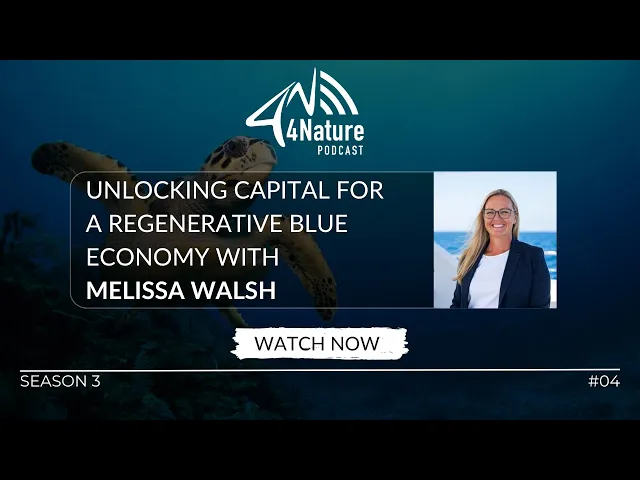
Unlocking Capital for a Regenerative Blue Economy with Melissa Walsh
Aligning Conservation Goals with Investor Priorities
Securing funding from impact investors demands more than highlighting environmental concerns. Nonprofits must demonstrate "convergent returns", where economic and environmental benefits stem from the same activities. For instance, sustainable fisheries can increase the value of catches while replenishing fish populations, or coral restoration projects can enhance coastal protection while boosting tourism revenue [14].
Despite the ocean's estimated worth of $24 trillion, it receives less than 1% of global capital flows [6]. A major hurdle for many nonprofits is translating conservation achievements into financial terms that resonate with investors. The solution lies in pinpointing specific operational strategies where protecting marine ecosystems directly drives measurable economic outcomes. This alignment not only bridges the gap between ecological and financial goals but also enables nonprofits to define clear, quantifiable results that appeal to investors.
Developing Measurable Impact Metrics
Investors rely on standardized, project-specific metrics to assess performance. By adopting frameworks tailored to ocean conservation, such as the Ocean Impact Navigator (OIN), IRIS+ from the Global Impact Investing Network, or aligning with UN Sustainable Development Goal 14 (Life Below Water), nonprofits can provide the transparency investors seek [14][15].
"To get the right metrics you've got to go deep into the company's specific operational pathways. You need to identify the things that generate convergent returns – economic and environmental. It doesn't work from the top down – it has to be inside out."
George Duffield, Founding Partner, Ocean 14 Capital[14]
Focusing on 1–5 key performance indicators (KPIs) tied to specific project activities ensures clarity. For example, coral restoration projects might track live coral cover percentages and water quality improvements, while sustainable fisheries could measure productivity gains and reductions in bycatch.
Additionally, the Global Impact Investing Network's COMPASS methodology suggests evaluating impact across three dimensions: scale (the magnitude of change), pace (the speed of progress), and efficiency (impact achieved relative to investment) [17].
Communicating Financial and Environmental Value
Once KPIs are established, effectively conveying both financial and environmental benefits becomes essential. Investors are drawn to projects with clear revenue streams and scalable operations. A compelling example is Blue finance, a social enterprise that secured a $2.5 million bond in 2018 for the Arrecifes del Sureste Marine Protected Area in the Dominican Republic. This project generates around $1.5 million annually by charging 260,000 visitors a nature fee of $3–$10 each. These funds cover operating costs, repay the bond, and support the management of 8,000 square kilometers of coastal ecosystems [16].
Leveraging Special Purpose Vehicles (SPVs) can further enhance investor confidence. SPVs are standalone legal entities created for specific projects, designed to isolate financial risks, navigate regulatory hurdles, and offer a familiar structure for investors [16]. They also enable the blending of philanthropic grants with commercial capital, where concessionary funding absorbs early-stage risks [6].
The global impact investing market reached $1.571 trillion in assets under management in 2024, with institutional investors like pension funds accounting for 29% of these assets [1]. As impact investing shifts from niche philanthropy to mainstream finance, nonprofits must effectively articulate both financial returns and ecological outcomes to attract and sustain investment.
Funding Sources for Ocean Conservation
Nonprofits working in ocean conservation can tap into three primary funding streams: philanthropic support, development finance, and specialized impact investment vehicles. In 2023–2024, global foundation funding for ocean initiatives reached about $1.2 billion annually, with funding for ocean-climate solutions rising by over 500% between the first and second halves of the previous decade [19]. However, less than 1% of official development assistance and philanthropic funding is currently directed toward ocean sustainability. This is despite research suggesting that every $1 invested in ocean solutions could generate at least $5 in global benefits by 2050 [20]. By leveraging these funding options, nonprofits can diversify their financial support while meeting growing expectations for measurable impact.
Philanthropic and Foundation Support
Philanthropic organizations provide nonprofits with grants and endowments, often through Conservation Trust Funds (CTFs). These funds operate under three models:
Endowment funds, which spend only the interest generated by their capital.
Sinking funds, which distribute their capital over a set period.
Revolving funds, which replenish themselves through fees or taxes [4].
Between 2009 and 2018, CTFs contributed over $2 billion to global conservation efforts [4]. Additionally, Donor-Advised Funds (DAFs) like ImpactAssets, which manages over $3 billion in assets, pool resources from a network of donors. These platforms simplify access for smaller organizations by sharing due diligence and decision-making processes [18].
Foundation funding has seen rapid growth in regions like Central America (260%), the High Seas (190%), and Africa (110%) over the past decade. This trend aligns with global conservation goals, such as protecting 30% of the ocean by 2030 [19]. Beyond philanthropy, significant capital is also available through development finance institutions and multilateral banks.
Development Finance and Multilateral Banks
Development banks and multilateral organizations play a critical role in providing large-scale funding through innovative mechanisms like debt restructuring and blended finance. For instance, the Seychelles executed a debt-for-nature swap that raised $21 million in impact capital and grants, enabling the protection of 32% of its waters - approximately 154,000 square miles - by March 2020 [4].
Looking ahead, developed nations have pledged at least $20 billion annually in biodiversity financing to developing countries by 2025. Additional funding is being generated through tools like carbon auction proceeds and parametric insurance policies. A notable example is Quintana Roo, Mexico's $3.8 million reef insurance policy, which paid out $800,000 for coral reef restoration after Hurricane Delta in 2020 [7, 31].
While these mechanisms provide large-scale support, specialized funds are emerging to address specific aspects of ocean health.
Dedicated Impact Investment Vehicles
Specialized funds, such as the Sea Forward Ocean Health Fund, focus exclusively on ocean health and sustainable aquaculture. These initiatives combine grants and impact investments, emphasizing projects that demonstrate clear paths to long-term financial sustainability [27, 28].
Organizations like the Ocean Risk and Resilience Action Alliance (ORRAA) help bridge the gap between grant-based funding and private investment. ORRAA's Sea Change Impact Financing Facility (SCIFF) supports innovative projects by connecting them with mainstream capital markets [6].
"We need to work together, to be patient with capital and impatient with action." - Karen Sack, Executive Director, ORRAA [6]
Impact Measurement and Accountability
Securing funding is just the start - proving measurable and reliable outcomes is the next crucial step. Transparent reporting and independent verification are essential to gain investor trust and open doors to larger funding opportunities. Without solid data, even the most promising projects struggle to secure follow-up investments or scale their reach.
The stakes are high: while the ocean economy's value is estimated at $24 trillion, it receives less than 1% of global capital flows [6]. Investors need evidence that their contributions deliver measurable environmental and social benefits. For nonprofits, this means establishing robust monitoring systems and presenting results in ways that appeal both to financial backers and conservation advocates.
Setting Up Monitoring Frameworks
To effectively track and report impact, nonprofits should use standardized tools that provide a unified approach to measurement. The Ocean Impact Navigator (OIN), developed by 1000 Ocean Startups, offers science-based metrics tailored for ocean-related projects. For example, SWEN Blue Ocean, an Article 9 fund under European SFDR regulations, employs the OIN to streamline collective impact reporting. Christian Lim, Co-Managing Director of SWEN Blue Ocean, highlighted its value, stating the framework "offers a common language for organized impact reporting" [14].
Other widely used frameworks include:
UNEP FI for sustainable blue finance.
IRIS+ for tracking and managing impact.
SDG Compass for aligning with UN Sustainable Development Goal 14 (Life Below Water).
Successful nonprofits focus on operational strategies that yield both economic and environmental benefits, selecting metrics that directly relate to their project goals. Collaboration with partners is key - working together to identify Key Performance Indicators (KPIs) ensures alignment between project activities and investor expectations. Joanna Cohen, Head of Impact Measurement & Management at Builders Vision, emphasizes this collaborative approach:
"By asking partners to select impact indicators that will bring the most value to them, we aim to reinforce the link between impact measurement and management and strategy, wherein data is used as an input to critical business decisions" [14].
Third-party verification further strengthens credibility. Organizations like The Nature Conservancy or the Aquaculture Stewardship Council provide independent assessments to confirm that reported outcomes meet professional standards. For instance, Circulate Capital partnered with The Circulate Initiative's Impact Metrics Working Group to test its methodologies. Ellen Martin, Chief Impact Officer at Circulate Capital, remarked that the group’s expertise "has given us the confidence that we're on the right track" [14].
Using these frameworks as a foundation, nonprofits must also focus on documenting tangible environmental and social outcomes.
Documenting Environmental and Social Impact
Measuring progress in areas like biodiversity recovery, pollution reduction, and community benefits requires clear, quantitative metrics that are practical to gather. These metrics help bridge the gap between what investors need to see and what can be collected on the ground.
In a survey of major ocean-focused funds, 13 out of 14 identified Pollution & Waste Management as a primary area of focus [14]. For such initiatives, impact can be quantified in ways like calculating the cost of preventing a kilogram of plastic from entering the ocean or measuring the tons of waste removed from marine environments. Biodiversity projects, on the other hand, might track square miles of protected habitat, increases in species populations, or coral reef restoration progress.
The Ocean Risk and Resilience Action Alliance (ORRAA) provides a large-scale example. Between 2020 and 2026, ORRAA has supported 50 projects across 30 countries, with a goal of mobilizing $500 million by 2030 to improve resilience for 250 million coastal residents vulnerable to climate change [6][21]. Their reporting framework integrates environmental results with social impact data, demonstrating how restoring coastal ecosystems can also create economic opportunities for local communities.
While carbon reduction metrics are well-established, tools to measure biodiversity are still evolving. Amy Novogratz, Co-Founder & Managing Partner of Aqua-Spark, summed up this ongoing challenge:
"Now we just need more tools to measure biodiversity" [14].
Nonprofits should view each project as a chance to refine their methods, improving their frameworks as new technologies and data collection tools emerge. This iterative approach ensures that impact measurement keeps pace with the growing demands of investors and environmental stakeholders alike.
Conclusion
Impact investing is reshaping how we finance ocean conservation, shifting away from traditional grant-based models to tap into the $1.571 trillion global impact investing market [1]. For nonprofits and NGOs, this means building business models that deliver measurable environmental results alongside financial returns. Whether it's sustainable fisheries, seaweed aquaculture, or innovative debt-for-nature swaps, these approaches demonstrate the potential for dual-impact solutions.
This shift also underscores the urgent funding gap in ocean conservation. Despite the ocean generating $5.2 trillion annually and holding a total value of $24 trillion [3][6], it attracts less than 1% of global capital. Current investments fall far short of the $550 billion needed each year [20]. However, the potential return is undeniable - every $1 invested in ocean solutions is projected to generate at least $5 in global benefits by 2050 [20].
To succeed, three key changes are essential. First, conservation efforts must focus on viable business models that offer clear pathways to both impact and financial returns - investors need more than just compelling stories [7]. Second, adopting standardized measurement frameworks, such as the Ocean Impact Navigator and IRIS+, is vital to ensure transparency and build investor trust. Finally, blended finance approaches, which combine philanthropic and private capital, can help mitigate early-stage risks and attract broader investment.
These strategies - blended finance, revenue-generating models, and reliable impact metrics - open doors to new funding opportunities. For instance, Coral Vita secured $8 million in Series A funding in 2025 [1], while Rare launched a $6 million Small-Scale Fisheries Impact Bond in February 2025 [5]. By embracing these approaches, nonprofits can access sustainable capital to drive long-term change.
"Finance is the oxygen, not the destination" - Prime Minister Mia Mottley of Barbados [6]
The ultimate goal is to create lasting environmental and social benefits while proving that ocean conservation is not only essential for the planet's future but also a financially sound investment.
FAQs
How can my nonprofit attract impact investors without a long revenue track record?
To appeal to impact investors, it's essential to highlight clear and measurable environmental and social results. Start by creating a robust framework to track and showcase conservation achievements. Consider leveraging tools like impact bonds, which tie funding to specific outcomes, to attract investors looking for accountability and results.
Forming partnerships with organizations or stakeholders that share similar values can also strengthen your position. These alliances can enhance credibility and open doors to resources and expertise. Transparent reporting is another key element - investors value honesty and clear communication about progress and challenges.
Lastly, align your goals with the priorities of potential investors. Even if your organization lacks a long revenue history, demonstrating a commitment to measurable impact and shared values can build trust and attract the right partners.
What ocean projects can realistically generate revenue to repay investors?
Projects connected to the ocean that can generate income and repay investors often include initiatives such as community-based aquaculture, ecotourism ventures, and sustainable fisheries. These efforts not only provide ongoing revenue streams but also contribute to conservation efforts, making them appealing to those focused on impact-driven investments.
Which 1–5 impact metrics should we report first to build investor trust?
To establish trust with investors, focus on sharing impact metrics that highlight efforts in pollution reduction, marine biodiversity, and ocean health. Examples of such metrics include reductions in pollution levels, increases in marine species populations, and advancements toward Sustainable Development Goal (SDG) 14. These figures offer clear evidence of environmental progress while aligning with both conservation goals and investor interests.
Related Blog Posts
Latest Articles
©2025



FAQ
01
What does it really mean to “redefine profit”?
02
What makes Council Fire different?
03
Who does Council Fire you work with?
04
What does working with Council Fire actually look like?
05
How does Council Fire help organizations turn big goals into action?
06
How does Council Fire define and measure success?
Mar 18, 2026
How to Finance Ocean Conservation with Impact Investing for NGOs & Nonprofits
Sustainability Strategy
In This Article
Impact investing can close the ocean funding gap by pairing measurable ecological outcomes with viable revenue models to attract private capital.
How to Finance Ocean Conservation with Impact Investing for NGOs & Nonprofits
Ocean conservation faces a massive funding gap, with $149 billion needed annually to meet global goals. Traditional donations alone can't close this gap, as the ocean receives less than 1% of global philanthropic funding. Impact investing presents a viable solution, offering financial returns alongside measurable ecological outcomes. Here's how NGOs and nonprofits can leverage it:
Impact Investing Potential: The $1.571 trillion impact investing market can help fund scalable conservation projects.
Successful Examples: Coral Vita raised $8 million in 2025 for coral restoration, while Rare launched a $6 million fisheries impact bond in Indonesia.
Funding Models: Blended finance, revenue-generating conservation projects, and venture capital are driving change.
Economic Opportunity: The ocean economy generates $5.2 trillion annually, with coral reefs alone contributing $2.7 trillion.
Measurable Metrics: Tools like the Ocean Impact Navigator and IRIS+ help track financial and ecological outcomes.
Ocean Conservation Impact Investing: Key Statistics and Funding Models
Impact Investing Basics for Ocean Conservation
What is Impact Investing?
Impact investing channels funds to achieve measurable social, environmental, and financial benefits [1]. Unlike traditional philanthropy, where funding is given without expectation of return, impact investing allows NGOs and nonprofits to tap into larger financial resources by demonstrating both ecological results and financial sustainability.
For ocean conservation groups, this means moving away from solely relying on grants and adopting blended finance models. These models use philanthropic grants or concessionary capital to absorb initial risks, making projects more attractive to private investors seeking steady returns [7][6]. Another option is outcome-based financing, where upfront funding is repaid once specific environmental goals are verified [5].
A notable example is the Small-Scale Fisheries Impact Bond, launched by Rare in February 2025. This initiative secured $6 million in upfront funding from the Pershing Square Foundation and Minderoo Foundation. Focused on three sites in Southeast Sulawesi, Indonesia, the project aims to create protected areas. Investors will be repaid based on verified outcomes like increased fish biomass and improved benthic cover. Outcome funders include UK DEFRA and Builders Vision [5].
"The Small Scale Fisheries Impact Bond exemplifies the kind of solution we need for scalable, community-driven conservation. By focusing on outcomes, we can drive real impact that benefit both people and the planet." - Karen Sack, Executive Director, ORRAA [5]
This innovative approach, which combines ecological and financial returns, highlights why investors are increasingly drawn to ocean conservation.
Why Investors Care About Ocean Conservation
Healthy oceans are critical for economic stability and corporate success [8]. The sustainable blue economy is projected to grow to $3.2 trillion by 2030 [8], and maritime companies with strong environmental practices have shown 15% higher stock performance over five years [8]. Ocean conservation also mitigates financial risks, such as stricter shipping regulations, supply chain disruptions from overfished stocks, and declining coastal property values due to rising sea levels.
Beyond risk management, ocean conservation offers impressive economic returns. Coral reefs support one billion people and contribute $2.7 trillion annually to the global economy. Mangrove restoration and sustainable ocean projects deliver returns of 88:1 and at least $5 for every $1 invested, respectively [1][9]. These figures prove that conservation is not only environmentally crucial but also a smart financial choice.
One successful example is the California Fisheries Fund, which provided $4.5 million in loans to help West Coast fishermen adopt sustainable practices. This investment led to a 40% reduction in bycatch, thanks to the use of selective fishing gear and real-time monitoring systems [2]. The initiative supported the economic stability of fishing communities while achieving measurable environmental improvements. This balance of ecological and financial results illustrates the potential of impact investing in ocean conservation.
Financing Mechanisms for Ocean Conservation Projects
Blended Finance Models
Blended finance merges philanthropic grants with private capital to mitigate risks and attract investors. Typically, grants cover early uncertainties, while loans fund activities that generate revenue [11][12].
In October 2024, Blue Alliance and BNP Paribas introduced the first impact loan facility dedicated to coral reef conservation. This initiative supports Marine Protected Areas (MPAs) in the Philippines, Indonesia, and Tanzania, covering 1.7 million hectares (around 4.2 million acres) of ocean. The Global Fund for Coral Reefs (GFCR) provided $5.2 million in anchor funding, which reduced risks for private investors. The loan’s interest rates are tied to ecological outcomes, such as fish biomass recovery and sustainable revenue, ensuring that better environmental results lead to lower costs [11][12].
"This first BNP Paribas marine-focused impact performance loan reflects the bank's global commitment to protecting the ocean and support a Just Transition."
Laurence Pessez, Global Head of CSR for the BNP Paribas Group [11]
Debt-for-nature swaps are another tool for conservation funding. In November 2021, Belize collaborated with The Nature Conservancy (TNC) and Credit Suisse to issue a $364 million blue bond. This initiative reduced Belize's debt by $189 million while generating $180 million for marine conservation over two decades, enabling the country to protect 30% of its ocean [4].
By combining different funding sources, blended finance models lay the groundwork for sustainable conservation efforts.
Revenue-Generating Conservation Models
Conservation projects that generate income are becoming more attractive to investors. Initiatives like ecotourism, sustainable fisheries, and blue carbon credits create financial returns while helping to protect marine ecosystems [11].
Between 2023 and 2024, the Ocean Risk and Resilience Action Alliance (ORRAA) joined forces with Blue Alliance to develop reef-positive businesses in MPAs. This effort secured $3.5 million in investments to manage 1.5 million hectares (approximately 3.7 million acres) of MPAs in the Global South. The revenue came from community-based aquaculture and sustainable fisheries, offering alternative livelihoods, reducing overfishing, and funding MPA operations [10].
Parametric insurance is another innovative tool. In 2017, Quintana Roo, Mexico, purchased a $3.8 million parametric insurance policy to protect 160 kilometers (about 100 miles) of coastline. When Hurricane Delta hit in December 2020, the policy triggered an $800,000 payout, which was used for coral reef restoration. This approach highlights how insurance can safeguard conservation efforts from climate-related risks [4].
Market-based credit systems are also gaining momentum. In October 2020, Australia's Reef Credits Scheme issued its first credits, purchased by HSBC and the Queensland government. Over 3,000 credits were issued to incentivize farmers to reduce nitrogen runoff, improving water quality while providing financial rewards [13].
These revenue models create funding streams that can sustain conservation efforts over the long term.
Venture Capital and Impact Loan Facilities
Venture capital and impact loan facilities are helping scale marine restoration initiatives alongside blended finance and revenue-generating models.
Venture capital is increasingly supporting the restoration economy. In October 2025, Coral Vita raised $8 million in a Series A funding round led by Builders Vision. Using land-based farming technology, Coral Vita grows resilient corals 50 times faster than natural processes, selling restoration services to entities like hotels and governments. This funding demonstrated the potential for restoration-based businesses to attract serious investment [1].
Impact loan facilities, on the other hand, reduce investment risk by pooling multiple projects into a diversified portfolio. For instance, the Blue Alliance facility groups reef-positive businesses across three countries, creating economies of scale and simplifying due diligence for investors. These loans are tied to ecological performance, offering better interest rates as environmental outcomes improve [11][12].
"A viable business model is necessary for financial returns; a multi-stakeholder approach is central to successful project development and management."
Nicolas Pascal, Executive Director of Blue Alliance Marine Protected Areas [11]
Such facilities are especially beneficial for nonprofits transitioning from grant reliance. They provide the capital needed to launch revenue-generating projects that support marine ecosystems while benefiting local communities [10][11].
Unlocking Capital for a Regenerative Blue Economy with Melissa Walsh
Aligning Conservation Goals with Investor Priorities
Securing funding from impact investors demands more than highlighting environmental concerns. Nonprofits must demonstrate "convergent returns", where economic and environmental benefits stem from the same activities. For instance, sustainable fisheries can increase the value of catches while replenishing fish populations, or coral restoration projects can enhance coastal protection while boosting tourism revenue [14].
Despite the ocean's estimated worth of $24 trillion, it receives less than 1% of global capital flows [6]. A major hurdle for many nonprofits is translating conservation achievements into financial terms that resonate with investors. The solution lies in pinpointing specific operational strategies where protecting marine ecosystems directly drives measurable economic outcomes. This alignment not only bridges the gap between ecological and financial goals but also enables nonprofits to define clear, quantifiable results that appeal to investors.
Developing Measurable Impact Metrics
Investors rely on standardized, project-specific metrics to assess performance. By adopting frameworks tailored to ocean conservation, such as the Ocean Impact Navigator (OIN), IRIS+ from the Global Impact Investing Network, or aligning with UN Sustainable Development Goal 14 (Life Below Water), nonprofits can provide the transparency investors seek [14][15].
"To get the right metrics you've got to go deep into the company's specific operational pathways. You need to identify the things that generate convergent returns – economic and environmental. It doesn't work from the top down – it has to be inside out."
George Duffield, Founding Partner, Ocean 14 Capital[14]
Focusing on 1–5 key performance indicators (KPIs) tied to specific project activities ensures clarity. For example, coral restoration projects might track live coral cover percentages and water quality improvements, while sustainable fisheries could measure productivity gains and reductions in bycatch.
Additionally, the Global Impact Investing Network's COMPASS methodology suggests evaluating impact across three dimensions: scale (the magnitude of change), pace (the speed of progress), and efficiency (impact achieved relative to investment) [17].
Communicating Financial and Environmental Value
Once KPIs are established, effectively conveying both financial and environmental benefits becomes essential. Investors are drawn to projects with clear revenue streams and scalable operations. A compelling example is Blue finance, a social enterprise that secured a $2.5 million bond in 2018 for the Arrecifes del Sureste Marine Protected Area in the Dominican Republic. This project generates around $1.5 million annually by charging 260,000 visitors a nature fee of $3–$10 each. These funds cover operating costs, repay the bond, and support the management of 8,000 square kilometers of coastal ecosystems [16].
Leveraging Special Purpose Vehicles (SPVs) can further enhance investor confidence. SPVs are standalone legal entities created for specific projects, designed to isolate financial risks, navigate regulatory hurdles, and offer a familiar structure for investors [16]. They also enable the blending of philanthropic grants with commercial capital, where concessionary funding absorbs early-stage risks [6].
The global impact investing market reached $1.571 trillion in assets under management in 2024, with institutional investors like pension funds accounting for 29% of these assets [1]. As impact investing shifts from niche philanthropy to mainstream finance, nonprofits must effectively articulate both financial returns and ecological outcomes to attract and sustain investment.
Funding Sources for Ocean Conservation
Nonprofits working in ocean conservation can tap into three primary funding streams: philanthropic support, development finance, and specialized impact investment vehicles. In 2023–2024, global foundation funding for ocean initiatives reached about $1.2 billion annually, with funding for ocean-climate solutions rising by over 500% between the first and second halves of the previous decade [19]. However, less than 1% of official development assistance and philanthropic funding is currently directed toward ocean sustainability. This is despite research suggesting that every $1 invested in ocean solutions could generate at least $5 in global benefits by 2050 [20]. By leveraging these funding options, nonprofits can diversify their financial support while meeting growing expectations for measurable impact.
Philanthropic and Foundation Support
Philanthropic organizations provide nonprofits with grants and endowments, often through Conservation Trust Funds (CTFs). These funds operate under three models:
Endowment funds, which spend only the interest generated by their capital.
Sinking funds, which distribute their capital over a set period.
Revolving funds, which replenish themselves through fees or taxes [4].
Between 2009 and 2018, CTFs contributed over $2 billion to global conservation efforts [4]. Additionally, Donor-Advised Funds (DAFs) like ImpactAssets, which manages over $3 billion in assets, pool resources from a network of donors. These platforms simplify access for smaller organizations by sharing due diligence and decision-making processes [18].
Foundation funding has seen rapid growth in regions like Central America (260%), the High Seas (190%), and Africa (110%) over the past decade. This trend aligns with global conservation goals, such as protecting 30% of the ocean by 2030 [19]. Beyond philanthropy, significant capital is also available through development finance institutions and multilateral banks.
Development Finance and Multilateral Banks
Development banks and multilateral organizations play a critical role in providing large-scale funding through innovative mechanisms like debt restructuring and blended finance. For instance, the Seychelles executed a debt-for-nature swap that raised $21 million in impact capital and grants, enabling the protection of 32% of its waters - approximately 154,000 square miles - by March 2020 [4].
Looking ahead, developed nations have pledged at least $20 billion annually in biodiversity financing to developing countries by 2025. Additional funding is being generated through tools like carbon auction proceeds and parametric insurance policies. A notable example is Quintana Roo, Mexico's $3.8 million reef insurance policy, which paid out $800,000 for coral reef restoration after Hurricane Delta in 2020 [7, 31].
While these mechanisms provide large-scale support, specialized funds are emerging to address specific aspects of ocean health.
Dedicated Impact Investment Vehicles
Specialized funds, such as the Sea Forward Ocean Health Fund, focus exclusively on ocean health and sustainable aquaculture. These initiatives combine grants and impact investments, emphasizing projects that demonstrate clear paths to long-term financial sustainability [27, 28].
Organizations like the Ocean Risk and Resilience Action Alliance (ORRAA) help bridge the gap between grant-based funding and private investment. ORRAA's Sea Change Impact Financing Facility (SCIFF) supports innovative projects by connecting them with mainstream capital markets [6].
"We need to work together, to be patient with capital and impatient with action." - Karen Sack, Executive Director, ORRAA [6]
Impact Measurement and Accountability
Securing funding is just the start - proving measurable and reliable outcomes is the next crucial step. Transparent reporting and independent verification are essential to gain investor trust and open doors to larger funding opportunities. Without solid data, even the most promising projects struggle to secure follow-up investments or scale their reach.
The stakes are high: while the ocean economy's value is estimated at $24 trillion, it receives less than 1% of global capital flows [6]. Investors need evidence that their contributions deliver measurable environmental and social benefits. For nonprofits, this means establishing robust monitoring systems and presenting results in ways that appeal both to financial backers and conservation advocates.
Setting Up Monitoring Frameworks
To effectively track and report impact, nonprofits should use standardized tools that provide a unified approach to measurement. The Ocean Impact Navigator (OIN), developed by 1000 Ocean Startups, offers science-based metrics tailored for ocean-related projects. For example, SWEN Blue Ocean, an Article 9 fund under European SFDR regulations, employs the OIN to streamline collective impact reporting. Christian Lim, Co-Managing Director of SWEN Blue Ocean, highlighted its value, stating the framework "offers a common language for organized impact reporting" [14].
Other widely used frameworks include:
UNEP FI for sustainable blue finance.
IRIS+ for tracking and managing impact.
SDG Compass for aligning with UN Sustainable Development Goal 14 (Life Below Water).
Successful nonprofits focus on operational strategies that yield both economic and environmental benefits, selecting metrics that directly relate to their project goals. Collaboration with partners is key - working together to identify Key Performance Indicators (KPIs) ensures alignment between project activities and investor expectations. Joanna Cohen, Head of Impact Measurement & Management at Builders Vision, emphasizes this collaborative approach:
"By asking partners to select impact indicators that will bring the most value to them, we aim to reinforce the link between impact measurement and management and strategy, wherein data is used as an input to critical business decisions" [14].
Third-party verification further strengthens credibility. Organizations like The Nature Conservancy or the Aquaculture Stewardship Council provide independent assessments to confirm that reported outcomes meet professional standards. For instance, Circulate Capital partnered with The Circulate Initiative's Impact Metrics Working Group to test its methodologies. Ellen Martin, Chief Impact Officer at Circulate Capital, remarked that the group’s expertise "has given us the confidence that we're on the right track" [14].
Using these frameworks as a foundation, nonprofits must also focus on documenting tangible environmental and social outcomes.
Documenting Environmental and Social Impact
Measuring progress in areas like biodiversity recovery, pollution reduction, and community benefits requires clear, quantitative metrics that are practical to gather. These metrics help bridge the gap between what investors need to see and what can be collected on the ground.
In a survey of major ocean-focused funds, 13 out of 14 identified Pollution & Waste Management as a primary area of focus [14]. For such initiatives, impact can be quantified in ways like calculating the cost of preventing a kilogram of plastic from entering the ocean or measuring the tons of waste removed from marine environments. Biodiversity projects, on the other hand, might track square miles of protected habitat, increases in species populations, or coral reef restoration progress.
The Ocean Risk and Resilience Action Alliance (ORRAA) provides a large-scale example. Between 2020 and 2026, ORRAA has supported 50 projects across 30 countries, with a goal of mobilizing $500 million by 2030 to improve resilience for 250 million coastal residents vulnerable to climate change [6][21]. Their reporting framework integrates environmental results with social impact data, demonstrating how restoring coastal ecosystems can also create economic opportunities for local communities.
While carbon reduction metrics are well-established, tools to measure biodiversity are still evolving. Amy Novogratz, Co-Founder & Managing Partner of Aqua-Spark, summed up this ongoing challenge:
"Now we just need more tools to measure biodiversity" [14].
Nonprofits should view each project as a chance to refine their methods, improving their frameworks as new technologies and data collection tools emerge. This iterative approach ensures that impact measurement keeps pace with the growing demands of investors and environmental stakeholders alike.
Conclusion
Impact investing is reshaping how we finance ocean conservation, shifting away from traditional grant-based models to tap into the $1.571 trillion global impact investing market [1]. For nonprofits and NGOs, this means building business models that deliver measurable environmental results alongside financial returns. Whether it's sustainable fisheries, seaweed aquaculture, or innovative debt-for-nature swaps, these approaches demonstrate the potential for dual-impact solutions.
This shift also underscores the urgent funding gap in ocean conservation. Despite the ocean generating $5.2 trillion annually and holding a total value of $24 trillion [3][6], it attracts less than 1% of global capital. Current investments fall far short of the $550 billion needed each year [20]. However, the potential return is undeniable - every $1 invested in ocean solutions is projected to generate at least $5 in global benefits by 2050 [20].
To succeed, three key changes are essential. First, conservation efforts must focus on viable business models that offer clear pathways to both impact and financial returns - investors need more than just compelling stories [7]. Second, adopting standardized measurement frameworks, such as the Ocean Impact Navigator and IRIS+, is vital to ensure transparency and build investor trust. Finally, blended finance approaches, which combine philanthropic and private capital, can help mitigate early-stage risks and attract broader investment.
These strategies - blended finance, revenue-generating models, and reliable impact metrics - open doors to new funding opportunities. For instance, Coral Vita secured $8 million in Series A funding in 2025 [1], while Rare launched a $6 million Small-Scale Fisheries Impact Bond in February 2025 [5]. By embracing these approaches, nonprofits can access sustainable capital to drive long-term change.
"Finance is the oxygen, not the destination" - Prime Minister Mia Mottley of Barbados [6]
The ultimate goal is to create lasting environmental and social benefits while proving that ocean conservation is not only essential for the planet's future but also a financially sound investment.
FAQs
How can my nonprofit attract impact investors without a long revenue track record?
To appeal to impact investors, it's essential to highlight clear and measurable environmental and social results. Start by creating a robust framework to track and showcase conservation achievements. Consider leveraging tools like impact bonds, which tie funding to specific outcomes, to attract investors looking for accountability and results.
Forming partnerships with organizations or stakeholders that share similar values can also strengthen your position. These alliances can enhance credibility and open doors to resources and expertise. Transparent reporting is another key element - investors value honesty and clear communication about progress and challenges.
Lastly, align your goals with the priorities of potential investors. Even if your organization lacks a long revenue history, demonstrating a commitment to measurable impact and shared values can build trust and attract the right partners.
What ocean projects can realistically generate revenue to repay investors?
Projects connected to the ocean that can generate income and repay investors often include initiatives such as community-based aquaculture, ecotourism ventures, and sustainable fisheries. These efforts not only provide ongoing revenue streams but also contribute to conservation efforts, making them appealing to those focused on impact-driven investments.
Which 1–5 impact metrics should we report first to build investor trust?
To establish trust with investors, focus on sharing impact metrics that highlight efforts in pollution reduction, marine biodiversity, and ocean health. Examples of such metrics include reductions in pollution levels, increases in marine species populations, and advancements toward Sustainable Development Goal (SDG) 14. These figures offer clear evidence of environmental progress while aligning with both conservation goals and investor interests.
Related Blog Posts
FAQ
01
What does it really mean to “redefine profit”?
02
What makes Council Fire different?
03
Who does Council Fire you work with?
04
What does working with Council Fire actually look like?
05
How does Council Fire help organizations turn big goals into action?
06
How does Council Fire define and measure success?
Mar 18, 2026
How to Finance Ocean Conservation with Impact Investing for NGOs & Nonprofits
Sustainability Strategy
In This Article
Impact investing can close the ocean funding gap by pairing measurable ecological outcomes with viable revenue models to attract private capital.
How to Finance Ocean Conservation with Impact Investing for NGOs & Nonprofits
Ocean conservation faces a massive funding gap, with $149 billion needed annually to meet global goals. Traditional donations alone can't close this gap, as the ocean receives less than 1% of global philanthropic funding. Impact investing presents a viable solution, offering financial returns alongside measurable ecological outcomes. Here's how NGOs and nonprofits can leverage it:
Impact Investing Potential: The $1.571 trillion impact investing market can help fund scalable conservation projects.
Successful Examples: Coral Vita raised $8 million in 2025 for coral restoration, while Rare launched a $6 million fisheries impact bond in Indonesia.
Funding Models: Blended finance, revenue-generating conservation projects, and venture capital are driving change.
Economic Opportunity: The ocean economy generates $5.2 trillion annually, with coral reefs alone contributing $2.7 trillion.
Measurable Metrics: Tools like the Ocean Impact Navigator and IRIS+ help track financial and ecological outcomes.
Ocean Conservation Impact Investing: Key Statistics and Funding Models
Impact Investing Basics for Ocean Conservation
What is Impact Investing?
Impact investing channels funds to achieve measurable social, environmental, and financial benefits [1]. Unlike traditional philanthropy, where funding is given without expectation of return, impact investing allows NGOs and nonprofits to tap into larger financial resources by demonstrating both ecological results and financial sustainability.
For ocean conservation groups, this means moving away from solely relying on grants and adopting blended finance models. These models use philanthropic grants or concessionary capital to absorb initial risks, making projects more attractive to private investors seeking steady returns [7][6]. Another option is outcome-based financing, where upfront funding is repaid once specific environmental goals are verified [5].
A notable example is the Small-Scale Fisheries Impact Bond, launched by Rare in February 2025. This initiative secured $6 million in upfront funding from the Pershing Square Foundation and Minderoo Foundation. Focused on three sites in Southeast Sulawesi, Indonesia, the project aims to create protected areas. Investors will be repaid based on verified outcomes like increased fish biomass and improved benthic cover. Outcome funders include UK DEFRA and Builders Vision [5].
"The Small Scale Fisheries Impact Bond exemplifies the kind of solution we need for scalable, community-driven conservation. By focusing on outcomes, we can drive real impact that benefit both people and the planet." - Karen Sack, Executive Director, ORRAA [5]
This innovative approach, which combines ecological and financial returns, highlights why investors are increasingly drawn to ocean conservation.
Why Investors Care About Ocean Conservation
Healthy oceans are critical for economic stability and corporate success [8]. The sustainable blue economy is projected to grow to $3.2 trillion by 2030 [8], and maritime companies with strong environmental practices have shown 15% higher stock performance over five years [8]. Ocean conservation also mitigates financial risks, such as stricter shipping regulations, supply chain disruptions from overfished stocks, and declining coastal property values due to rising sea levels.
Beyond risk management, ocean conservation offers impressive economic returns. Coral reefs support one billion people and contribute $2.7 trillion annually to the global economy. Mangrove restoration and sustainable ocean projects deliver returns of 88:1 and at least $5 for every $1 invested, respectively [1][9]. These figures prove that conservation is not only environmentally crucial but also a smart financial choice.
One successful example is the California Fisheries Fund, which provided $4.5 million in loans to help West Coast fishermen adopt sustainable practices. This investment led to a 40% reduction in bycatch, thanks to the use of selective fishing gear and real-time monitoring systems [2]. The initiative supported the economic stability of fishing communities while achieving measurable environmental improvements. This balance of ecological and financial results illustrates the potential of impact investing in ocean conservation.
Financing Mechanisms for Ocean Conservation Projects
Blended Finance Models
Blended finance merges philanthropic grants with private capital to mitigate risks and attract investors. Typically, grants cover early uncertainties, while loans fund activities that generate revenue [11][12].
In October 2024, Blue Alliance and BNP Paribas introduced the first impact loan facility dedicated to coral reef conservation. This initiative supports Marine Protected Areas (MPAs) in the Philippines, Indonesia, and Tanzania, covering 1.7 million hectares (around 4.2 million acres) of ocean. The Global Fund for Coral Reefs (GFCR) provided $5.2 million in anchor funding, which reduced risks for private investors. The loan’s interest rates are tied to ecological outcomes, such as fish biomass recovery and sustainable revenue, ensuring that better environmental results lead to lower costs [11][12].
"This first BNP Paribas marine-focused impact performance loan reflects the bank's global commitment to protecting the ocean and support a Just Transition."
Laurence Pessez, Global Head of CSR for the BNP Paribas Group [11]
Debt-for-nature swaps are another tool for conservation funding. In November 2021, Belize collaborated with The Nature Conservancy (TNC) and Credit Suisse to issue a $364 million blue bond. This initiative reduced Belize's debt by $189 million while generating $180 million for marine conservation over two decades, enabling the country to protect 30% of its ocean [4].
By combining different funding sources, blended finance models lay the groundwork for sustainable conservation efforts.
Revenue-Generating Conservation Models
Conservation projects that generate income are becoming more attractive to investors. Initiatives like ecotourism, sustainable fisheries, and blue carbon credits create financial returns while helping to protect marine ecosystems [11].
Between 2023 and 2024, the Ocean Risk and Resilience Action Alliance (ORRAA) joined forces with Blue Alliance to develop reef-positive businesses in MPAs. This effort secured $3.5 million in investments to manage 1.5 million hectares (approximately 3.7 million acres) of MPAs in the Global South. The revenue came from community-based aquaculture and sustainable fisheries, offering alternative livelihoods, reducing overfishing, and funding MPA operations [10].
Parametric insurance is another innovative tool. In 2017, Quintana Roo, Mexico, purchased a $3.8 million parametric insurance policy to protect 160 kilometers (about 100 miles) of coastline. When Hurricane Delta hit in December 2020, the policy triggered an $800,000 payout, which was used for coral reef restoration. This approach highlights how insurance can safeguard conservation efforts from climate-related risks [4].
Market-based credit systems are also gaining momentum. In October 2020, Australia's Reef Credits Scheme issued its first credits, purchased by HSBC and the Queensland government. Over 3,000 credits were issued to incentivize farmers to reduce nitrogen runoff, improving water quality while providing financial rewards [13].
These revenue models create funding streams that can sustain conservation efforts over the long term.
Venture Capital and Impact Loan Facilities
Venture capital and impact loan facilities are helping scale marine restoration initiatives alongside blended finance and revenue-generating models.
Venture capital is increasingly supporting the restoration economy. In October 2025, Coral Vita raised $8 million in a Series A funding round led by Builders Vision. Using land-based farming technology, Coral Vita grows resilient corals 50 times faster than natural processes, selling restoration services to entities like hotels and governments. This funding demonstrated the potential for restoration-based businesses to attract serious investment [1].
Impact loan facilities, on the other hand, reduce investment risk by pooling multiple projects into a diversified portfolio. For instance, the Blue Alliance facility groups reef-positive businesses across three countries, creating economies of scale and simplifying due diligence for investors. These loans are tied to ecological performance, offering better interest rates as environmental outcomes improve [11][12].
"A viable business model is necessary for financial returns; a multi-stakeholder approach is central to successful project development and management."
Nicolas Pascal, Executive Director of Blue Alliance Marine Protected Areas [11]
Such facilities are especially beneficial for nonprofits transitioning from grant reliance. They provide the capital needed to launch revenue-generating projects that support marine ecosystems while benefiting local communities [10][11].
Unlocking Capital for a Regenerative Blue Economy with Melissa Walsh
Aligning Conservation Goals with Investor Priorities
Securing funding from impact investors demands more than highlighting environmental concerns. Nonprofits must demonstrate "convergent returns", where economic and environmental benefits stem from the same activities. For instance, sustainable fisheries can increase the value of catches while replenishing fish populations, or coral restoration projects can enhance coastal protection while boosting tourism revenue [14].
Despite the ocean's estimated worth of $24 trillion, it receives less than 1% of global capital flows [6]. A major hurdle for many nonprofits is translating conservation achievements into financial terms that resonate with investors. The solution lies in pinpointing specific operational strategies where protecting marine ecosystems directly drives measurable economic outcomes. This alignment not only bridges the gap between ecological and financial goals but also enables nonprofits to define clear, quantifiable results that appeal to investors.
Developing Measurable Impact Metrics
Investors rely on standardized, project-specific metrics to assess performance. By adopting frameworks tailored to ocean conservation, such as the Ocean Impact Navigator (OIN), IRIS+ from the Global Impact Investing Network, or aligning with UN Sustainable Development Goal 14 (Life Below Water), nonprofits can provide the transparency investors seek [14][15].
"To get the right metrics you've got to go deep into the company's specific operational pathways. You need to identify the things that generate convergent returns – economic and environmental. It doesn't work from the top down – it has to be inside out."
George Duffield, Founding Partner, Ocean 14 Capital[14]
Focusing on 1–5 key performance indicators (KPIs) tied to specific project activities ensures clarity. For example, coral restoration projects might track live coral cover percentages and water quality improvements, while sustainable fisheries could measure productivity gains and reductions in bycatch.
Additionally, the Global Impact Investing Network's COMPASS methodology suggests evaluating impact across three dimensions: scale (the magnitude of change), pace (the speed of progress), and efficiency (impact achieved relative to investment) [17].
Communicating Financial and Environmental Value
Once KPIs are established, effectively conveying both financial and environmental benefits becomes essential. Investors are drawn to projects with clear revenue streams and scalable operations. A compelling example is Blue finance, a social enterprise that secured a $2.5 million bond in 2018 for the Arrecifes del Sureste Marine Protected Area in the Dominican Republic. This project generates around $1.5 million annually by charging 260,000 visitors a nature fee of $3–$10 each. These funds cover operating costs, repay the bond, and support the management of 8,000 square kilometers of coastal ecosystems [16].
Leveraging Special Purpose Vehicles (SPVs) can further enhance investor confidence. SPVs are standalone legal entities created for specific projects, designed to isolate financial risks, navigate regulatory hurdles, and offer a familiar structure for investors [16]. They also enable the blending of philanthropic grants with commercial capital, where concessionary funding absorbs early-stage risks [6].
The global impact investing market reached $1.571 trillion in assets under management in 2024, with institutional investors like pension funds accounting for 29% of these assets [1]. As impact investing shifts from niche philanthropy to mainstream finance, nonprofits must effectively articulate both financial returns and ecological outcomes to attract and sustain investment.
Funding Sources for Ocean Conservation
Nonprofits working in ocean conservation can tap into three primary funding streams: philanthropic support, development finance, and specialized impact investment vehicles. In 2023–2024, global foundation funding for ocean initiatives reached about $1.2 billion annually, with funding for ocean-climate solutions rising by over 500% between the first and second halves of the previous decade [19]. However, less than 1% of official development assistance and philanthropic funding is currently directed toward ocean sustainability. This is despite research suggesting that every $1 invested in ocean solutions could generate at least $5 in global benefits by 2050 [20]. By leveraging these funding options, nonprofits can diversify their financial support while meeting growing expectations for measurable impact.
Philanthropic and Foundation Support
Philanthropic organizations provide nonprofits with grants and endowments, often through Conservation Trust Funds (CTFs). These funds operate under three models:
Endowment funds, which spend only the interest generated by their capital.
Sinking funds, which distribute their capital over a set period.
Revolving funds, which replenish themselves through fees or taxes [4].
Between 2009 and 2018, CTFs contributed over $2 billion to global conservation efforts [4]. Additionally, Donor-Advised Funds (DAFs) like ImpactAssets, which manages over $3 billion in assets, pool resources from a network of donors. These platforms simplify access for smaller organizations by sharing due diligence and decision-making processes [18].
Foundation funding has seen rapid growth in regions like Central America (260%), the High Seas (190%), and Africa (110%) over the past decade. This trend aligns with global conservation goals, such as protecting 30% of the ocean by 2030 [19]. Beyond philanthropy, significant capital is also available through development finance institutions and multilateral banks.
Development Finance and Multilateral Banks
Development banks and multilateral organizations play a critical role in providing large-scale funding through innovative mechanisms like debt restructuring and blended finance. For instance, the Seychelles executed a debt-for-nature swap that raised $21 million in impact capital and grants, enabling the protection of 32% of its waters - approximately 154,000 square miles - by March 2020 [4].
Looking ahead, developed nations have pledged at least $20 billion annually in biodiversity financing to developing countries by 2025. Additional funding is being generated through tools like carbon auction proceeds and parametric insurance policies. A notable example is Quintana Roo, Mexico's $3.8 million reef insurance policy, which paid out $800,000 for coral reef restoration after Hurricane Delta in 2020 [7, 31].
While these mechanisms provide large-scale support, specialized funds are emerging to address specific aspects of ocean health.
Dedicated Impact Investment Vehicles
Specialized funds, such as the Sea Forward Ocean Health Fund, focus exclusively on ocean health and sustainable aquaculture. These initiatives combine grants and impact investments, emphasizing projects that demonstrate clear paths to long-term financial sustainability [27, 28].
Organizations like the Ocean Risk and Resilience Action Alliance (ORRAA) help bridge the gap between grant-based funding and private investment. ORRAA's Sea Change Impact Financing Facility (SCIFF) supports innovative projects by connecting them with mainstream capital markets [6].
"We need to work together, to be patient with capital and impatient with action." - Karen Sack, Executive Director, ORRAA [6]
Impact Measurement and Accountability
Securing funding is just the start - proving measurable and reliable outcomes is the next crucial step. Transparent reporting and independent verification are essential to gain investor trust and open doors to larger funding opportunities. Without solid data, even the most promising projects struggle to secure follow-up investments or scale their reach.
The stakes are high: while the ocean economy's value is estimated at $24 trillion, it receives less than 1% of global capital flows [6]. Investors need evidence that their contributions deliver measurable environmental and social benefits. For nonprofits, this means establishing robust monitoring systems and presenting results in ways that appeal both to financial backers and conservation advocates.
Setting Up Monitoring Frameworks
To effectively track and report impact, nonprofits should use standardized tools that provide a unified approach to measurement. The Ocean Impact Navigator (OIN), developed by 1000 Ocean Startups, offers science-based metrics tailored for ocean-related projects. For example, SWEN Blue Ocean, an Article 9 fund under European SFDR regulations, employs the OIN to streamline collective impact reporting. Christian Lim, Co-Managing Director of SWEN Blue Ocean, highlighted its value, stating the framework "offers a common language for organized impact reporting" [14].
Other widely used frameworks include:
UNEP FI for sustainable blue finance.
IRIS+ for tracking and managing impact.
SDG Compass for aligning with UN Sustainable Development Goal 14 (Life Below Water).
Successful nonprofits focus on operational strategies that yield both economic and environmental benefits, selecting metrics that directly relate to their project goals. Collaboration with partners is key - working together to identify Key Performance Indicators (KPIs) ensures alignment between project activities and investor expectations. Joanna Cohen, Head of Impact Measurement & Management at Builders Vision, emphasizes this collaborative approach:
"By asking partners to select impact indicators that will bring the most value to them, we aim to reinforce the link between impact measurement and management and strategy, wherein data is used as an input to critical business decisions" [14].
Third-party verification further strengthens credibility. Organizations like The Nature Conservancy or the Aquaculture Stewardship Council provide independent assessments to confirm that reported outcomes meet professional standards. For instance, Circulate Capital partnered with The Circulate Initiative's Impact Metrics Working Group to test its methodologies. Ellen Martin, Chief Impact Officer at Circulate Capital, remarked that the group’s expertise "has given us the confidence that we're on the right track" [14].
Using these frameworks as a foundation, nonprofits must also focus on documenting tangible environmental and social outcomes.
Documenting Environmental and Social Impact
Measuring progress in areas like biodiversity recovery, pollution reduction, and community benefits requires clear, quantitative metrics that are practical to gather. These metrics help bridge the gap between what investors need to see and what can be collected on the ground.
In a survey of major ocean-focused funds, 13 out of 14 identified Pollution & Waste Management as a primary area of focus [14]. For such initiatives, impact can be quantified in ways like calculating the cost of preventing a kilogram of plastic from entering the ocean or measuring the tons of waste removed from marine environments. Biodiversity projects, on the other hand, might track square miles of protected habitat, increases in species populations, or coral reef restoration progress.
The Ocean Risk and Resilience Action Alliance (ORRAA) provides a large-scale example. Between 2020 and 2026, ORRAA has supported 50 projects across 30 countries, with a goal of mobilizing $500 million by 2030 to improve resilience for 250 million coastal residents vulnerable to climate change [6][21]. Their reporting framework integrates environmental results with social impact data, demonstrating how restoring coastal ecosystems can also create economic opportunities for local communities.
While carbon reduction metrics are well-established, tools to measure biodiversity are still evolving. Amy Novogratz, Co-Founder & Managing Partner of Aqua-Spark, summed up this ongoing challenge:
"Now we just need more tools to measure biodiversity" [14].
Nonprofits should view each project as a chance to refine their methods, improving their frameworks as new technologies and data collection tools emerge. This iterative approach ensures that impact measurement keeps pace with the growing demands of investors and environmental stakeholders alike.
Conclusion
Impact investing is reshaping how we finance ocean conservation, shifting away from traditional grant-based models to tap into the $1.571 trillion global impact investing market [1]. For nonprofits and NGOs, this means building business models that deliver measurable environmental results alongside financial returns. Whether it's sustainable fisheries, seaweed aquaculture, or innovative debt-for-nature swaps, these approaches demonstrate the potential for dual-impact solutions.
This shift also underscores the urgent funding gap in ocean conservation. Despite the ocean generating $5.2 trillion annually and holding a total value of $24 trillion [3][6], it attracts less than 1% of global capital. Current investments fall far short of the $550 billion needed each year [20]. However, the potential return is undeniable - every $1 invested in ocean solutions is projected to generate at least $5 in global benefits by 2050 [20].
To succeed, three key changes are essential. First, conservation efforts must focus on viable business models that offer clear pathways to both impact and financial returns - investors need more than just compelling stories [7]. Second, adopting standardized measurement frameworks, such as the Ocean Impact Navigator and IRIS+, is vital to ensure transparency and build investor trust. Finally, blended finance approaches, which combine philanthropic and private capital, can help mitigate early-stage risks and attract broader investment.
These strategies - blended finance, revenue-generating models, and reliable impact metrics - open doors to new funding opportunities. For instance, Coral Vita secured $8 million in Series A funding in 2025 [1], while Rare launched a $6 million Small-Scale Fisheries Impact Bond in February 2025 [5]. By embracing these approaches, nonprofits can access sustainable capital to drive long-term change.
"Finance is the oxygen, not the destination" - Prime Minister Mia Mottley of Barbados [6]
The ultimate goal is to create lasting environmental and social benefits while proving that ocean conservation is not only essential for the planet's future but also a financially sound investment.
FAQs
How can my nonprofit attract impact investors without a long revenue track record?
To appeal to impact investors, it's essential to highlight clear and measurable environmental and social results. Start by creating a robust framework to track and showcase conservation achievements. Consider leveraging tools like impact bonds, which tie funding to specific outcomes, to attract investors looking for accountability and results.
Forming partnerships with organizations or stakeholders that share similar values can also strengthen your position. These alliances can enhance credibility and open doors to resources and expertise. Transparent reporting is another key element - investors value honesty and clear communication about progress and challenges.
Lastly, align your goals with the priorities of potential investors. Even if your organization lacks a long revenue history, demonstrating a commitment to measurable impact and shared values can build trust and attract the right partners.
What ocean projects can realistically generate revenue to repay investors?
Projects connected to the ocean that can generate income and repay investors often include initiatives such as community-based aquaculture, ecotourism ventures, and sustainable fisheries. These efforts not only provide ongoing revenue streams but also contribute to conservation efforts, making them appealing to those focused on impact-driven investments.
Which 1–5 impact metrics should we report first to build investor trust?
To establish trust with investors, focus on sharing impact metrics that highlight efforts in pollution reduction, marine biodiversity, and ocean health. Examples of such metrics include reductions in pollution levels, increases in marine species populations, and advancements toward Sustainable Development Goal (SDG) 14. These figures offer clear evidence of environmental progress while aligning with both conservation goals and investor interests.
Related Blog Posts
FAQ
What does it really mean to “redefine profit”?
What makes Council Fire different?
Who does Council Fire you work with?
What does working with Council Fire actually look like?
How does Council Fire help organizations turn big goals into action?
How does Council Fire define and measure success?