Mar 20, 2026
How to Develop a Blue Economy Strategy for Municipalities & Government Agencies
Sustainability Strategy
In This Article
Guide for municipalities to assess water assets, build governance, plan ports, aquaculture, and tourism, and implement phased blue economy actions.
How to Develop a Blue Economy Strategy for Municipalities & Government Agencies
The blue economy is about using ocean, freshwater, and Great Lakes resources to boost economic growth, create jobs, and protect ecosystems. In 2022, it added $476.2 billion to the U.S. GDP and supported 2.4 million jobs. For municipalities, this means focusing on sustainable development in areas like tourism, aquaculture, and port infrastructure while addressing climate challenges and creating local jobs. Here's how to get started:
Assess Local Resources: Use tools like NOAA's ENOW data and GIS mapping to understand your area's water-based assets and risks.
Build Governance Structures: Coordinate across departments and agencies to streamline planning and decision-making.
Plan for Key Sectors: Improve port infrastructure, expand eco-tourism, support fisheries and aquaculture, and redevelop waterfronts.
Train Staff and Partner with Experts: Equip local teams with the skills needed to manage blue economy initiatives and work with specialists for better outcomes.
Implement Phased Plans: Break down goals into manageable steps, ensuring progress is measurable.
The blue economy presents a $2.5 trillion global market opportunity. Municipalities can lead by aligning local strategies with these principles to secure funding, drive growth, and protect vital water resources.
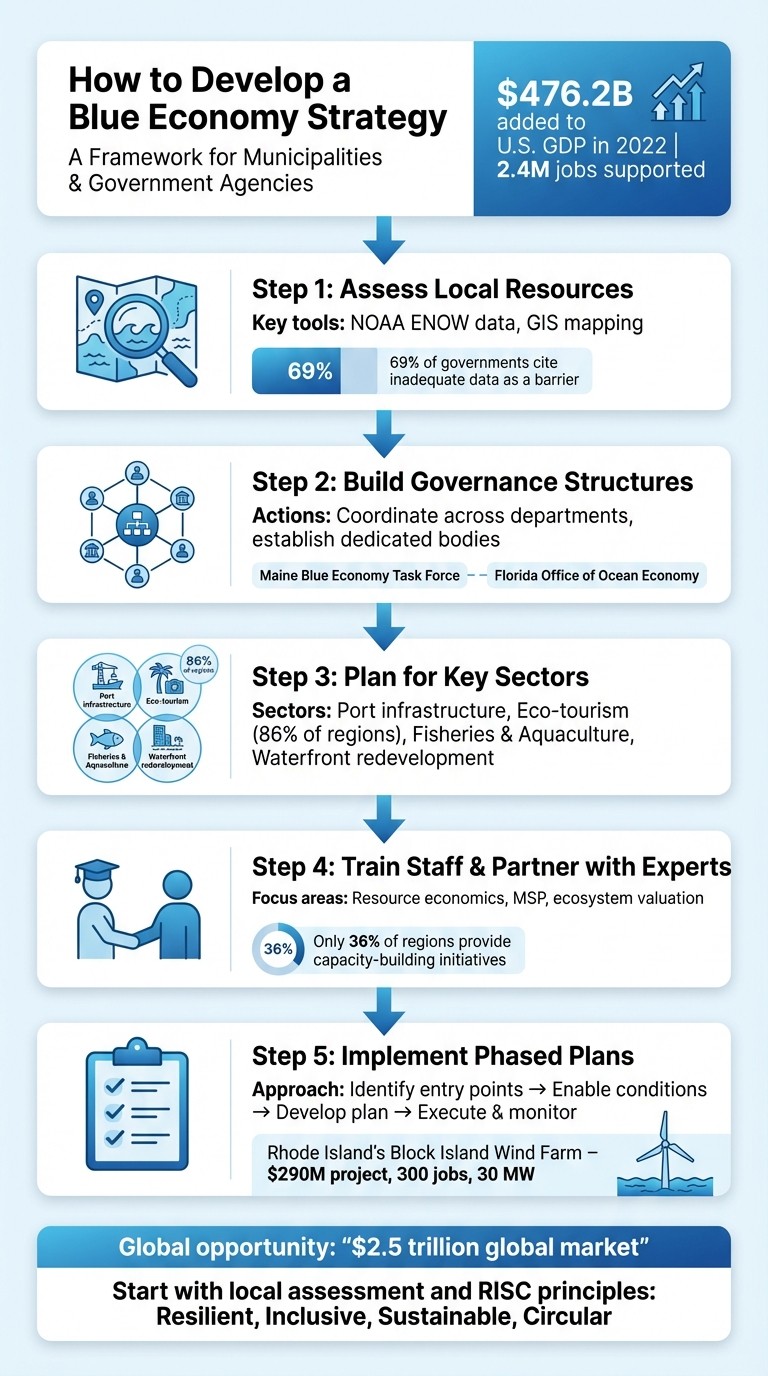
5-Step Blue Economy Strategy Framework for Municipalities
Evaluating Your Local Water Resources and Assets
Take a closer look at your water resources, economic activities, and infrastructure to establish a solid foundation for development. A detailed assessment helps set baseline data, uncover opportunities, and avoid costly errors. Here's how to approach it.
Conducting Baseline Assessments
Start by using federal data to create an economic baseline. For example, NOAA's Economics: National Ocean Watch (ENOW) tracks six key sectors: living resources, marine construction, marine transportation, offshore mineral extraction, ship and boat building, and recreation and tourism [8][9]. However, these datasets may miss industries that are locally significant, such as defense operations or specific aquaculture activities, so it's essential to incorporate local data as well [8].
A great example of this process comes from Rhode Island. In 2020, the Coastal Resources Center and Sea Grant team at the University of Rhode Island conducted a comprehensive assessment. They combined ENOW data with insights from over 60 interviews with industry leaders, residents, and researchers. Their findings revealed that Rhode Island's blue economy contributed $5.2 billion to the state (8.8% of its GDP) and supported 36,534 jobs, accounting for 5.7% of total state employment [5][8]. The study also highlighted specific sectors, such as the $3.16 billion defense industry, which supported 16,011 jobs, and the $6.95 million aquaculture sector, which provided 222 jobs [5].
Geographic Information System (GIS) mapping is another powerful tool. It helps pinpoint resource locations, areas of concentration, and climate risks like sea level rise or coastal erosion. This spatial analysis allows for better modeling to identify favorable development conditions while minimizing conflicts with existing activities [3][7]. Additionally, the OECD's RISC Framework offers a self-evaluation tool to assess whether your blue economy aligns with principles of resilience, inclusiveness, sustainability, and circularity [2].
Engaging local stakeholders is equally important. Interviews and surveys can define your area's unique "maritime character" and capture non-market benefits that raw economic data might overlook [8]. When conducting surveys, ensure data is broken down to include representation from women and marginalized groups [7]. Notably, 69% of subnational governments cite inadequate data collection and sharing as significant barriers to blue economy development [2].
Finding Opportunities for Development
Once you’ve established baseline data, use it to identify strategic opportunities for growth. For instance, an assessment in Flanders, Belgium, highlighted blue economy expansion, with its contribution to GDP growing from 4.5% to 5.2% between 2018 and 2021. Port activities in the region created a ripple effect, supporting 103,000 direct jobs and 230,000 related jobs [2].
"Marine spatial planning (MSP) provides a comprehensive and integrated investment framework and financial and social rational for the Blue Economy." – World Bank [7]
Tools like NOAA's Ocean Reports analysis can guide decisions in areas like ocean commerce, energy development, and conservation [3]. Another strategy involves repurposing resources, such as using sediments from dredging to restore coastal marshes or barrier islands, which can enhance climate resilience [3].
Beyond direct economic gains, consider multiplier effects. Activities like port operations, marine trades, and tourism often support secondary industries, amplifying their economic contributions [2]. Adopting a "whole of water" approach - where marine and freshwater industries are interconnected - can uncover even more opportunities. For example, seafood and water-related tourism are prominent sectors in 90% and 86% of cities and regions, respectively, making them prime candidates for sustainable growth [2].
Assessment Tool | Primary Use | Key Benefits |
|---|---|---|
NOAA ENOW Data | Economic baseline across 6 ocean sectors | Provides standardized national data on GDP, employment, and wages [8][9] |
GIS Mapping | Spatial resource planning | Identifies resource distribution, infrastructure, and environmental conditions [7] |
RISC Framework | Governance evaluation | Evaluates resilience, inclusiveness, sustainability, and circularity [2] |
Stakeholder Surveys | Captures community priorities | Highlights local maritime character and non-market values [8] |
These tools and insights pave the way for effective planning and governance, which will be explored further in the next section.
Setting Up Governance and Planning Structures
Turning blue economy plans into action requires effective governance. Ocean and coastal resources often cross departmental and jurisdictional lines, making collaboration across agencies, governments, and stakeholders essential. Clear authority and interagency coordination are the cornerstones of turning ambitious goals into tangible results.
Coordinating Across Government Departments
Establishing a dedicated body with formal authority is a key step in driving a blue economy strategy. States like Maine and Florida have taken this approach, creating organizations such as Maine's Blue Economy Task Force and Florida's Office of Ocean Economy. These bodies are tasked with shaping strategy, coordinating research efforts, and implementing specific actions tailored to the needs of the blue economy [4].
Regional collaborations also play a critical role. Groups like the Northeast Regional Ocean Council (NROC) and the Gulf of Mexico Alliance foster partnerships that enable data sharing, streamline permitting processes, and support joint infrastructure projects [4].
At the federal level, working with organizations like NOAA, BOEM, and the DOE ensures local projects align with national standards. This alignment minimizes redundancies and streamlines permitting processes, particularly when guided by comprehensive spatial plans [10].
Once interagency collaboration is established, tools like Marine Spatial Planning (MSP) can be applied to effectively balance the many competing demands on coastal resources.
Establishing Marine Spatial Planning (MSP) Authority
MSP frameworks help manage competing coastal uses by integrating priorities such as conservation, fisheries, energy development, and recreation [7].
"Marine spatial planning (MSP) provides a comprehensive and integrated investment framework and financial and social rational for the Blue Economy. It does this by reducing investment risk and improving investors' certainty to access marine resources" [7].
For example, in 2018, Washington State implemented a Marine Spatial Plan for its Pacific Coast. This plan, grounded in the state's Ocean Resources Management Act, created a framework for evaluating new ocean uses, such as offshore aquaculture and seabed mining. It also safeguarded ecologically sensitive areas and protected fisheries from long-term harm [12]. Similarly, Rhode Island's Coastal Resources Management Council developed the Ocean Special Area Management Plan (Ocean SAMP), which established zones and regulations specifically for renewable energy projects. This initiative stands out, earning the highest score on the Marine Spatial Planning Index with 84 out of 108 points [11].
Rather than replacing existing regulations, MSP integrates them, bringing together various processes and agencies to achieve shared objectives [10]. The MSP process involves several steps: planning, building partnerships, gathering data, envisioning scenarios, formulating plans, and implementing them. Success depends on dedicated funding, staffing for monitoring, and centralized spatial data to ensure plans remain adaptable as conditions evolve. Engaging stakeholders early is also crucial to establish environmental and social limits that cannot be compromised [10].
Developing Sector‐Specific Plans
Once governance structures and spatial planning frameworks are solidified, municipalities can pivot to crafting strategies for specific industries that fuel blue economy growth. Each sector demands a tailored approach that balances economic potential with environmental care. The strategies outlined below build upon the groundwork of governance and spatial planning.
Improving Ports and Maritime Trade
Ports are vital economic hubs, fostering innovation within industry clusters and generating significant per-employee value [1]. Sustainable port development must address climate challenges, such as sea level rise, coastal erosion, and flooding, while minimizing environmental impacts like waste, plastic, and water pollution [2]. Upgrading port infrastructure to withstand these challenges not only protects economic assets but also safeguards marine ecosystems.
Growing Eco‐Tourism
Water-based tourism is a key economic driver in 86% of surveyed cities and regions worldwide [2]. Virginia’s investment of $2.8 million in roughly 100 ecotourism projects between 1988 and 2023 resulted in a $33.1 million economic impact and created 442 jobs - highlighting the sector's potential [13].
A prime example is Oceanside, California, which approved a Sustainable Tourism Master Plan in March 2024. Developed in partnership with Visit Oceanside, this 10-year roadmap focuses on environmental quality, resident well-being, economic health, and visitor experience. The plan was shaped through sustainability assessments and extensive community input via town halls and surveys [14].
Municipalities can adopt strategies such as creating specialized trails that showcase local industries, culture, and nature; establishing ecotour guide certification programs to maintain professional standards; and installing interpretive signage to educate visitors while enhancing their experience [13]. These efforts not only diversify revenue streams but also protect natural resources, contributing to a resilient blue economy.
Supporting Local Fisheries and Aquaculture
Fisheries and aquaculture offer significant economic opportunities but require careful environmental oversight to ensure sustainability. For instance, Rhode Island’s fisheries generate $151.5 million annually and support nearly 3,000 jobs, while aquaculture adds $6.95 million and employs 222 people [5]. Municipalities should focus on "extractive" aquaculture, such as cultivating shellfish and sea vegetables like seaweed, which naturally improve water quality, combat ocean acidification, and provide habitats without needing external feed [15].
Streamlining permitting processes can encourage local investment by reducing bureaucratic delays [15]. A notable example is Alaska’s Mariculture Cluster, which received a $49 million grant in September 2022 to expand shellfish and seaweed production while creating a Revolving Loan Fund for mariculture businesses [6]. Similarly, Rhode Island used an Economic Development Administration grant to upgrade the Port of Galilee, strengthening its regional fishing industry and generating jobs [6].
Market initiatives are equally important. In 2021, North Carolina Sea Grant launched the "NC Oyster Trail", connecting consumers with oyster growers and seafood markets. This initiative supports aquaculture by blending tourism with sustainable seafood consumption [16]. Municipalities can replicate such programs by promoting "sea-to-table" marketing, educating consumers, and publishing seafood availability guides to boost demand for local products. These strategies enhance economic stability while fostering environmentally responsible consumption [16].
Redeveloping Waterfronts
Waterfront redevelopment often requires significant investment, making public–private partnerships essential. These collaborations allow municipalities to tap into private sector resources while retaining public oversight to ensure community benefits. Early assessments of climate vulnerability are crucial to ensure long-term resilience in such projects [13].
Redeveloped waterfronts should serve multiple purposes, from supporting commercial fishing operations to offering public access, recreational spaces, and environmental protections. These enhancements not only strengthen existing industries but also attract new businesses and create jobs. By treating waterfront redevelopment as a phased, long-term endeavor, municipalities can boost economic vitality while improving community quality of life.
Building Capacity and Putting Your Strategy into Action
A well-crafted strategy for the blue economy is only as effective as the capacity and implementation mechanisms behind it. While strategic planning and governance structures lay the groundwork, success hinges on internal expertise and actionable pathways. Yet, only 36% of surveyed cities and regions currently provide capacity-building initiatives for civil servants focused on the blue economy [2]. This gap underscores the need for targeted efforts to translate plans into tangible outcomes. Below, we explore practical steps to build capacity, create phased plans, and collaborate with experts.
Training Local Staff and Building Expertise
To effectively manage blue economy initiatives, municipal staff must acquire specialized knowledge. Training should encompass areas like micro and macroeconomics, natural resource economics, fisheries bioeconomics, ecosystem service valuation, and cost-benefit analysis [17]. Programs such as the Middlebury Institute’s "Introduction to the Blue Economy" course, available online for $99, offer a solid starting point by covering ocean accounting and finance basics [18]. For more advanced guidance, municipalities can adopt tools like the World Bank’s Marine Spatial Planning (MSP) Toolkit, which assists staff in identifying data, conducting economic analyses, and integrating climate considerations into planning [7].
Establishing dedicated governance bodies is another key step. These entities can consolidate expertise and streamline the execution of strategies. For instance, Maine created a Blue Economy Task Force through S.P. 523 in 2023 to identify growth opportunities and recommend state-level strategies [4]. Similarly, New Orleans collaborated with the University of New Orleans to customize its Naval Architecture and Marine Engineering program to meet local workforce needs [2]. Regional partnerships, such as joining the Northeast Regional Ocean Council, allow municipalities to share resources, align policies, and pool data effectively [4].
Once staff are trained and governance structures are in place, the focus shifts to structured implementation.
Creating a Phased Implementation Plan
A phased approach to implementation ensures clarity and progress. The process typically involves identifying entry points, establishing enabling conditions, developing the plan, and executing it with ongoing monitoring [7]. Rhode Island’s ocean planning process is a prime example of this method in action. Between 2015 and 2016, the state’s spatial planning and stakeholder engagement efforts enabled the $290 million Block Island Wind Farm project. This initiative created 300 jobs, generated 30 MW of clean energy, and gained support from both the community and the fishing industry [19].
"At the end of the day, we end up with a more robust project from our perspective because it has more community acceptance." - Jeff Grybowski, CEO, Deepwater Wind LLC [19]
Massachusetts also demonstrated the benefits of phased planning through its Ocean Management Plan. By addressing environmental constraints upfront, a telecommunications and electric power cable-laying project between Cape Cod and Martha’s Vineyard saw expedited permitting and reduced construction time by 18 months [19]. These examples highlight how structured planning can minimize risks and speed up project timelines.
Working with Expert Consultants
Partnering with expert consultants can provide critical insights and enhance stakeholder engagement. Specialists can help inventory existing marine spatial data, identify gaps, and ensure strategies align with Resilient, Inclusive, Sustainable, and Circular (RISC) principles [2]. Organizations like Council Fire excel at turning sustainability visions into actionable plans. Their expertise spans areas such as carbon footprint analysis, stakeholder-driven planning, and operational strategies that go beyond compliance. By leveraging such partnerships, municipalities can achieve measurable progress in natural resource management, water infrastructure, and community development.
Conclusion: Next Steps for Your Blue Economy Strategy
The blue economy offers a $2.5 trillion global market [5], and for U.S. municipalities and government agencies, the time to act is now. Start by evaluating your local water resources and assets to establish a solid baseline. Develop governance structures that align departments and jurisdictions - this is critical, as less than half of national strategies currently assign clear responsibilities to local authorities [2]. Stepping up at the municipal level can set your community apart as a leader, turning assessments into tangible steps toward blue economy growth.
Once you've laid the groundwork with local assessments and governance, tailor your strategy to fit your area's specific needs. Whether you're working with freshwater systems, rivers, or coastal zones, ensure your strategy is designed to be RISC-proof: resilient to climate challenges, inclusive of local communities, sustainable in protecting biodiversity, and circular by reducing waste [2]. This approach lays the foundation for long-term success, balancing economic, environmental, and social gains.
Securing funding is another essential step. Explore programs like the EDA's Public Works and Economic Adjustment Assistance, which now explicitly support blue economy initiatives [6]. These funding opportunities can help municipalities invest in critical areas like ports, aquaculture, marine technology, and waterfront infrastructure.
Finally, collaborate regionally to maximize your efforts. Blue Economy Compacts enable neighboring jurisdictions to work together on permitting, share emergency resources, and co-invest in large-scale projects such as offshore wind farms [4]. These partnerships provide a powerful platform for immediate and meaningful progress.
FAQs
What should we measure first to build a local blue economy baseline?
To lay the groundwork for a local blue economy, begin by examining marine and coastal economic activities and their contributions to employment, GDP, and resource consumption. Focus on key sectors such as tourism, fishing, shipping, and research. It's equally important to assess water quality and the health of ecosystems, as these factors are essential for ensuring long-term growth. These measurements serve as a vital starting point for crafting informed strategies and implementing effective policies.
How do we set up governance so departments and agencies actually coordinate?
To make a blue economy strategy work seamlessly, it’s crucial to set up clear frameworks that encourage teamwork, shared objectives, and active involvement from all stakeholders. Consider forming advisory councils or inter-agency working groups that bring together representatives from key areas - such as government departments, port authorities, research institutions, and community organizations. These groups can align policies, pool resources, and establish common milestones, ensuring collaboration remains strong and the vision of a resilient and sustainable blue economy stays on track.
What blue economy projects can we start in the first year with limited staff and budget?
In the first year, concentrate on manageable yet meaningful projects such as boosting coastal tourism, conducting community-driven research, and restoring ecosystems. Host workshops to educate people and establish collaborations with local businesses and conservation organizations. These efforts demand modest resources, encourage community participation, and align with sustainability objectives, making them feasible even with a small team and budget.
Related Blog Posts
Ocean and natural‑resource stewardship: balancing conservation and sustainable use
How to Develop a Nature-Based Solutions Strategy for Municipalities & Government Agencies
How to Integrate Climate Risk into Infrastructure Planning for Municipalities & Government Agencies
How to Design Coastal Resilience & Flood Mitigation for Municipalities & Government Agencies
Latest Articles
©2025


FAQ
01
What does it really mean to “redefine profit”?
02
What makes Council Fire different?
03
Who does Council Fire you work with?
04
What does working with Council Fire actually look like?
05
How does Council Fire help organizations turn big goals into action?
06
How does Council Fire define and measure success?
Mar 20, 2026
How to Develop a Blue Economy Strategy for Municipalities & Government Agencies
Sustainability Strategy
In This Article
Guide for municipalities to assess water assets, build governance, plan ports, aquaculture, and tourism, and implement phased blue economy actions.
How to Develop a Blue Economy Strategy for Municipalities & Government Agencies
The blue economy is about using ocean, freshwater, and Great Lakes resources to boost economic growth, create jobs, and protect ecosystems. In 2022, it added $476.2 billion to the U.S. GDP and supported 2.4 million jobs. For municipalities, this means focusing on sustainable development in areas like tourism, aquaculture, and port infrastructure while addressing climate challenges and creating local jobs. Here's how to get started:
Assess Local Resources: Use tools like NOAA's ENOW data and GIS mapping to understand your area's water-based assets and risks.
Build Governance Structures: Coordinate across departments and agencies to streamline planning and decision-making.
Plan for Key Sectors: Improve port infrastructure, expand eco-tourism, support fisheries and aquaculture, and redevelop waterfronts.
Train Staff and Partner with Experts: Equip local teams with the skills needed to manage blue economy initiatives and work with specialists for better outcomes.
Implement Phased Plans: Break down goals into manageable steps, ensuring progress is measurable.
The blue economy presents a $2.5 trillion global market opportunity. Municipalities can lead by aligning local strategies with these principles to secure funding, drive growth, and protect vital water resources.
5-Step Blue Economy Strategy Framework for Municipalities
Evaluating Your Local Water Resources and Assets
Take a closer look at your water resources, economic activities, and infrastructure to establish a solid foundation for development. A detailed assessment helps set baseline data, uncover opportunities, and avoid costly errors. Here's how to approach it.
Conducting Baseline Assessments
Start by using federal data to create an economic baseline. For example, NOAA's Economics: National Ocean Watch (ENOW) tracks six key sectors: living resources, marine construction, marine transportation, offshore mineral extraction, ship and boat building, and recreation and tourism [8][9]. However, these datasets may miss industries that are locally significant, such as defense operations or specific aquaculture activities, so it's essential to incorporate local data as well [8].
A great example of this process comes from Rhode Island. In 2020, the Coastal Resources Center and Sea Grant team at the University of Rhode Island conducted a comprehensive assessment. They combined ENOW data with insights from over 60 interviews with industry leaders, residents, and researchers. Their findings revealed that Rhode Island's blue economy contributed $5.2 billion to the state (8.8% of its GDP) and supported 36,534 jobs, accounting for 5.7% of total state employment [5][8]. The study also highlighted specific sectors, such as the $3.16 billion defense industry, which supported 16,011 jobs, and the $6.95 million aquaculture sector, which provided 222 jobs [5].
Geographic Information System (GIS) mapping is another powerful tool. It helps pinpoint resource locations, areas of concentration, and climate risks like sea level rise or coastal erosion. This spatial analysis allows for better modeling to identify favorable development conditions while minimizing conflicts with existing activities [3][7]. Additionally, the OECD's RISC Framework offers a self-evaluation tool to assess whether your blue economy aligns with principles of resilience, inclusiveness, sustainability, and circularity [2].
Engaging local stakeholders is equally important. Interviews and surveys can define your area's unique "maritime character" and capture non-market benefits that raw economic data might overlook [8]. When conducting surveys, ensure data is broken down to include representation from women and marginalized groups [7]. Notably, 69% of subnational governments cite inadequate data collection and sharing as significant barriers to blue economy development [2].
Finding Opportunities for Development
Once you’ve established baseline data, use it to identify strategic opportunities for growth. For instance, an assessment in Flanders, Belgium, highlighted blue economy expansion, with its contribution to GDP growing from 4.5% to 5.2% between 2018 and 2021. Port activities in the region created a ripple effect, supporting 103,000 direct jobs and 230,000 related jobs [2].
"Marine spatial planning (MSP) provides a comprehensive and integrated investment framework and financial and social rational for the Blue Economy." – World Bank [7]
Tools like NOAA's Ocean Reports analysis can guide decisions in areas like ocean commerce, energy development, and conservation [3]. Another strategy involves repurposing resources, such as using sediments from dredging to restore coastal marshes or barrier islands, which can enhance climate resilience [3].
Beyond direct economic gains, consider multiplier effects. Activities like port operations, marine trades, and tourism often support secondary industries, amplifying their economic contributions [2]. Adopting a "whole of water" approach - where marine and freshwater industries are interconnected - can uncover even more opportunities. For example, seafood and water-related tourism are prominent sectors in 90% and 86% of cities and regions, respectively, making them prime candidates for sustainable growth [2].
Assessment Tool | Primary Use | Key Benefits |
|---|---|---|
NOAA ENOW Data | Economic baseline across 6 ocean sectors | Provides standardized national data on GDP, employment, and wages [8][9] |
GIS Mapping | Spatial resource planning | Identifies resource distribution, infrastructure, and environmental conditions [7] |
RISC Framework | Governance evaluation | Evaluates resilience, inclusiveness, sustainability, and circularity [2] |
Stakeholder Surveys | Captures community priorities | Highlights local maritime character and non-market values [8] |
These tools and insights pave the way for effective planning and governance, which will be explored further in the next section.
Setting Up Governance and Planning Structures
Turning blue economy plans into action requires effective governance. Ocean and coastal resources often cross departmental and jurisdictional lines, making collaboration across agencies, governments, and stakeholders essential. Clear authority and interagency coordination are the cornerstones of turning ambitious goals into tangible results.
Coordinating Across Government Departments
Establishing a dedicated body with formal authority is a key step in driving a blue economy strategy. States like Maine and Florida have taken this approach, creating organizations such as Maine's Blue Economy Task Force and Florida's Office of Ocean Economy. These bodies are tasked with shaping strategy, coordinating research efforts, and implementing specific actions tailored to the needs of the blue economy [4].
Regional collaborations also play a critical role. Groups like the Northeast Regional Ocean Council (NROC) and the Gulf of Mexico Alliance foster partnerships that enable data sharing, streamline permitting processes, and support joint infrastructure projects [4].
At the federal level, working with organizations like NOAA, BOEM, and the DOE ensures local projects align with national standards. This alignment minimizes redundancies and streamlines permitting processes, particularly when guided by comprehensive spatial plans [10].
Once interagency collaboration is established, tools like Marine Spatial Planning (MSP) can be applied to effectively balance the many competing demands on coastal resources.
Establishing Marine Spatial Planning (MSP) Authority
MSP frameworks help manage competing coastal uses by integrating priorities such as conservation, fisheries, energy development, and recreation [7].
"Marine spatial planning (MSP) provides a comprehensive and integrated investment framework and financial and social rational for the Blue Economy. It does this by reducing investment risk and improving investors' certainty to access marine resources" [7].
For example, in 2018, Washington State implemented a Marine Spatial Plan for its Pacific Coast. This plan, grounded in the state's Ocean Resources Management Act, created a framework for evaluating new ocean uses, such as offshore aquaculture and seabed mining. It also safeguarded ecologically sensitive areas and protected fisheries from long-term harm [12]. Similarly, Rhode Island's Coastal Resources Management Council developed the Ocean Special Area Management Plan (Ocean SAMP), which established zones and regulations specifically for renewable energy projects. This initiative stands out, earning the highest score on the Marine Spatial Planning Index with 84 out of 108 points [11].
Rather than replacing existing regulations, MSP integrates them, bringing together various processes and agencies to achieve shared objectives [10]. The MSP process involves several steps: planning, building partnerships, gathering data, envisioning scenarios, formulating plans, and implementing them. Success depends on dedicated funding, staffing for monitoring, and centralized spatial data to ensure plans remain adaptable as conditions evolve. Engaging stakeholders early is also crucial to establish environmental and social limits that cannot be compromised [10].
Developing Sector‐Specific Plans
Once governance structures and spatial planning frameworks are solidified, municipalities can pivot to crafting strategies for specific industries that fuel blue economy growth. Each sector demands a tailored approach that balances economic potential with environmental care. The strategies outlined below build upon the groundwork of governance and spatial planning.
Improving Ports and Maritime Trade
Ports are vital economic hubs, fostering innovation within industry clusters and generating significant per-employee value [1]. Sustainable port development must address climate challenges, such as sea level rise, coastal erosion, and flooding, while minimizing environmental impacts like waste, plastic, and water pollution [2]. Upgrading port infrastructure to withstand these challenges not only protects economic assets but also safeguards marine ecosystems.
Growing Eco‐Tourism
Water-based tourism is a key economic driver in 86% of surveyed cities and regions worldwide [2]. Virginia’s investment of $2.8 million in roughly 100 ecotourism projects between 1988 and 2023 resulted in a $33.1 million economic impact and created 442 jobs - highlighting the sector's potential [13].
A prime example is Oceanside, California, which approved a Sustainable Tourism Master Plan in March 2024. Developed in partnership with Visit Oceanside, this 10-year roadmap focuses on environmental quality, resident well-being, economic health, and visitor experience. The plan was shaped through sustainability assessments and extensive community input via town halls and surveys [14].
Municipalities can adopt strategies such as creating specialized trails that showcase local industries, culture, and nature; establishing ecotour guide certification programs to maintain professional standards; and installing interpretive signage to educate visitors while enhancing their experience [13]. These efforts not only diversify revenue streams but also protect natural resources, contributing to a resilient blue economy.
Supporting Local Fisheries and Aquaculture
Fisheries and aquaculture offer significant economic opportunities but require careful environmental oversight to ensure sustainability. For instance, Rhode Island’s fisheries generate $151.5 million annually and support nearly 3,000 jobs, while aquaculture adds $6.95 million and employs 222 people [5]. Municipalities should focus on "extractive" aquaculture, such as cultivating shellfish and sea vegetables like seaweed, which naturally improve water quality, combat ocean acidification, and provide habitats without needing external feed [15].
Streamlining permitting processes can encourage local investment by reducing bureaucratic delays [15]. A notable example is Alaska’s Mariculture Cluster, which received a $49 million grant in September 2022 to expand shellfish and seaweed production while creating a Revolving Loan Fund for mariculture businesses [6]. Similarly, Rhode Island used an Economic Development Administration grant to upgrade the Port of Galilee, strengthening its regional fishing industry and generating jobs [6].
Market initiatives are equally important. In 2021, North Carolina Sea Grant launched the "NC Oyster Trail", connecting consumers with oyster growers and seafood markets. This initiative supports aquaculture by blending tourism with sustainable seafood consumption [16]. Municipalities can replicate such programs by promoting "sea-to-table" marketing, educating consumers, and publishing seafood availability guides to boost demand for local products. These strategies enhance economic stability while fostering environmentally responsible consumption [16].
Redeveloping Waterfronts
Waterfront redevelopment often requires significant investment, making public–private partnerships essential. These collaborations allow municipalities to tap into private sector resources while retaining public oversight to ensure community benefits. Early assessments of climate vulnerability are crucial to ensure long-term resilience in such projects [13].
Redeveloped waterfronts should serve multiple purposes, from supporting commercial fishing operations to offering public access, recreational spaces, and environmental protections. These enhancements not only strengthen existing industries but also attract new businesses and create jobs. By treating waterfront redevelopment as a phased, long-term endeavor, municipalities can boost economic vitality while improving community quality of life.
Building Capacity and Putting Your Strategy into Action
A well-crafted strategy for the blue economy is only as effective as the capacity and implementation mechanisms behind it. While strategic planning and governance structures lay the groundwork, success hinges on internal expertise and actionable pathways. Yet, only 36% of surveyed cities and regions currently provide capacity-building initiatives for civil servants focused on the blue economy [2]. This gap underscores the need for targeted efforts to translate plans into tangible outcomes. Below, we explore practical steps to build capacity, create phased plans, and collaborate with experts.
Training Local Staff and Building Expertise
To effectively manage blue economy initiatives, municipal staff must acquire specialized knowledge. Training should encompass areas like micro and macroeconomics, natural resource economics, fisheries bioeconomics, ecosystem service valuation, and cost-benefit analysis [17]. Programs such as the Middlebury Institute’s "Introduction to the Blue Economy" course, available online for $99, offer a solid starting point by covering ocean accounting and finance basics [18]. For more advanced guidance, municipalities can adopt tools like the World Bank’s Marine Spatial Planning (MSP) Toolkit, which assists staff in identifying data, conducting economic analyses, and integrating climate considerations into planning [7].
Establishing dedicated governance bodies is another key step. These entities can consolidate expertise and streamline the execution of strategies. For instance, Maine created a Blue Economy Task Force through S.P. 523 in 2023 to identify growth opportunities and recommend state-level strategies [4]. Similarly, New Orleans collaborated with the University of New Orleans to customize its Naval Architecture and Marine Engineering program to meet local workforce needs [2]. Regional partnerships, such as joining the Northeast Regional Ocean Council, allow municipalities to share resources, align policies, and pool data effectively [4].
Once staff are trained and governance structures are in place, the focus shifts to structured implementation.
Creating a Phased Implementation Plan
A phased approach to implementation ensures clarity and progress. The process typically involves identifying entry points, establishing enabling conditions, developing the plan, and executing it with ongoing monitoring [7]. Rhode Island’s ocean planning process is a prime example of this method in action. Between 2015 and 2016, the state’s spatial planning and stakeholder engagement efforts enabled the $290 million Block Island Wind Farm project. This initiative created 300 jobs, generated 30 MW of clean energy, and gained support from both the community and the fishing industry [19].
"At the end of the day, we end up with a more robust project from our perspective because it has more community acceptance." - Jeff Grybowski, CEO, Deepwater Wind LLC [19]
Massachusetts also demonstrated the benefits of phased planning through its Ocean Management Plan. By addressing environmental constraints upfront, a telecommunications and electric power cable-laying project between Cape Cod and Martha’s Vineyard saw expedited permitting and reduced construction time by 18 months [19]. These examples highlight how structured planning can minimize risks and speed up project timelines.
Working with Expert Consultants
Partnering with expert consultants can provide critical insights and enhance stakeholder engagement. Specialists can help inventory existing marine spatial data, identify gaps, and ensure strategies align with Resilient, Inclusive, Sustainable, and Circular (RISC) principles [2]. Organizations like Council Fire excel at turning sustainability visions into actionable plans. Their expertise spans areas such as carbon footprint analysis, stakeholder-driven planning, and operational strategies that go beyond compliance. By leveraging such partnerships, municipalities can achieve measurable progress in natural resource management, water infrastructure, and community development.
Conclusion: Next Steps for Your Blue Economy Strategy
The blue economy offers a $2.5 trillion global market [5], and for U.S. municipalities and government agencies, the time to act is now. Start by evaluating your local water resources and assets to establish a solid baseline. Develop governance structures that align departments and jurisdictions - this is critical, as less than half of national strategies currently assign clear responsibilities to local authorities [2]. Stepping up at the municipal level can set your community apart as a leader, turning assessments into tangible steps toward blue economy growth.
Once you've laid the groundwork with local assessments and governance, tailor your strategy to fit your area's specific needs. Whether you're working with freshwater systems, rivers, or coastal zones, ensure your strategy is designed to be RISC-proof: resilient to climate challenges, inclusive of local communities, sustainable in protecting biodiversity, and circular by reducing waste [2]. This approach lays the foundation for long-term success, balancing economic, environmental, and social gains.
Securing funding is another essential step. Explore programs like the EDA's Public Works and Economic Adjustment Assistance, which now explicitly support blue economy initiatives [6]. These funding opportunities can help municipalities invest in critical areas like ports, aquaculture, marine technology, and waterfront infrastructure.
Finally, collaborate regionally to maximize your efforts. Blue Economy Compacts enable neighboring jurisdictions to work together on permitting, share emergency resources, and co-invest in large-scale projects such as offshore wind farms [4]. These partnerships provide a powerful platform for immediate and meaningful progress.
FAQs
What should we measure first to build a local blue economy baseline?
To lay the groundwork for a local blue economy, begin by examining marine and coastal economic activities and their contributions to employment, GDP, and resource consumption. Focus on key sectors such as tourism, fishing, shipping, and research. It's equally important to assess water quality and the health of ecosystems, as these factors are essential for ensuring long-term growth. These measurements serve as a vital starting point for crafting informed strategies and implementing effective policies.
How do we set up governance so departments and agencies actually coordinate?
To make a blue economy strategy work seamlessly, it’s crucial to set up clear frameworks that encourage teamwork, shared objectives, and active involvement from all stakeholders. Consider forming advisory councils or inter-agency working groups that bring together representatives from key areas - such as government departments, port authorities, research institutions, and community organizations. These groups can align policies, pool resources, and establish common milestones, ensuring collaboration remains strong and the vision of a resilient and sustainable blue economy stays on track.
What blue economy projects can we start in the first year with limited staff and budget?
In the first year, concentrate on manageable yet meaningful projects such as boosting coastal tourism, conducting community-driven research, and restoring ecosystems. Host workshops to educate people and establish collaborations with local businesses and conservation organizations. These efforts demand modest resources, encourage community participation, and align with sustainability objectives, making them feasible even with a small team and budget.
Related Blog Posts
Ocean and natural‑resource stewardship: balancing conservation and sustainable use
How to Develop a Nature-Based Solutions Strategy for Municipalities & Government Agencies
How to Integrate Climate Risk into Infrastructure Planning for Municipalities & Government Agencies
How to Design Coastal Resilience & Flood Mitigation for Municipalities & Government Agencies
FAQ
01
What does it really mean to “redefine profit”?
02
What makes Council Fire different?
03
Who does Council Fire you work with?
04
What does working with Council Fire actually look like?
05
How does Council Fire help organizations turn big goals into action?
06
How does Council Fire define and measure success?
Mar 20, 2026
How to Develop a Blue Economy Strategy for Municipalities & Government Agencies
Sustainability Strategy
In This Article
Guide for municipalities to assess water assets, build governance, plan ports, aquaculture, and tourism, and implement phased blue economy actions.
How to Develop a Blue Economy Strategy for Municipalities & Government Agencies
The blue economy is about using ocean, freshwater, and Great Lakes resources to boost economic growth, create jobs, and protect ecosystems. In 2022, it added $476.2 billion to the U.S. GDP and supported 2.4 million jobs. For municipalities, this means focusing on sustainable development in areas like tourism, aquaculture, and port infrastructure while addressing climate challenges and creating local jobs. Here's how to get started:
Assess Local Resources: Use tools like NOAA's ENOW data and GIS mapping to understand your area's water-based assets and risks.
Build Governance Structures: Coordinate across departments and agencies to streamline planning and decision-making.
Plan for Key Sectors: Improve port infrastructure, expand eco-tourism, support fisheries and aquaculture, and redevelop waterfronts.
Train Staff and Partner with Experts: Equip local teams with the skills needed to manage blue economy initiatives and work with specialists for better outcomes.
Implement Phased Plans: Break down goals into manageable steps, ensuring progress is measurable.
The blue economy presents a $2.5 trillion global market opportunity. Municipalities can lead by aligning local strategies with these principles to secure funding, drive growth, and protect vital water resources.
5-Step Blue Economy Strategy Framework for Municipalities
Evaluating Your Local Water Resources and Assets
Take a closer look at your water resources, economic activities, and infrastructure to establish a solid foundation for development. A detailed assessment helps set baseline data, uncover opportunities, and avoid costly errors. Here's how to approach it.
Conducting Baseline Assessments
Start by using federal data to create an economic baseline. For example, NOAA's Economics: National Ocean Watch (ENOW) tracks six key sectors: living resources, marine construction, marine transportation, offshore mineral extraction, ship and boat building, and recreation and tourism [8][9]. However, these datasets may miss industries that are locally significant, such as defense operations or specific aquaculture activities, so it's essential to incorporate local data as well [8].
A great example of this process comes from Rhode Island. In 2020, the Coastal Resources Center and Sea Grant team at the University of Rhode Island conducted a comprehensive assessment. They combined ENOW data with insights from over 60 interviews with industry leaders, residents, and researchers. Their findings revealed that Rhode Island's blue economy contributed $5.2 billion to the state (8.8% of its GDP) and supported 36,534 jobs, accounting for 5.7% of total state employment [5][8]. The study also highlighted specific sectors, such as the $3.16 billion defense industry, which supported 16,011 jobs, and the $6.95 million aquaculture sector, which provided 222 jobs [5].
Geographic Information System (GIS) mapping is another powerful tool. It helps pinpoint resource locations, areas of concentration, and climate risks like sea level rise or coastal erosion. This spatial analysis allows for better modeling to identify favorable development conditions while minimizing conflicts with existing activities [3][7]. Additionally, the OECD's RISC Framework offers a self-evaluation tool to assess whether your blue economy aligns with principles of resilience, inclusiveness, sustainability, and circularity [2].
Engaging local stakeholders is equally important. Interviews and surveys can define your area's unique "maritime character" and capture non-market benefits that raw economic data might overlook [8]. When conducting surveys, ensure data is broken down to include representation from women and marginalized groups [7]. Notably, 69% of subnational governments cite inadequate data collection and sharing as significant barriers to blue economy development [2].
Finding Opportunities for Development
Once you’ve established baseline data, use it to identify strategic opportunities for growth. For instance, an assessment in Flanders, Belgium, highlighted blue economy expansion, with its contribution to GDP growing from 4.5% to 5.2% between 2018 and 2021. Port activities in the region created a ripple effect, supporting 103,000 direct jobs and 230,000 related jobs [2].
"Marine spatial planning (MSP) provides a comprehensive and integrated investment framework and financial and social rational for the Blue Economy." – World Bank [7]
Tools like NOAA's Ocean Reports analysis can guide decisions in areas like ocean commerce, energy development, and conservation [3]. Another strategy involves repurposing resources, such as using sediments from dredging to restore coastal marshes or barrier islands, which can enhance climate resilience [3].
Beyond direct economic gains, consider multiplier effects. Activities like port operations, marine trades, and tourism often support secondary industries, amplifying their economic contributions [2]. Adopting a "whole of water" approach - where marine and freshwater industries are interconnected - can uncover even more opportunities. For example, seafood and water-related tourism are prominent sectors in 90% and 86% of cities and regions, respectively, making them prime candidates for sustainable growth [2].
Assessment Tool | Primary Use | Key Benefits |
|---|---|---|
NOAA ENOW Data | Economic baseline across 6 ocean sectors | Provides standardized national data on GDP, employment, and wages [8][9] |
GIS Mapping | Spatial resource planning | Identifies resource distribution, infrastructure, and environmental conditions [7] |
RISC Framework | Governance evaluation | Evaluates resilience, inclusiveness, sustainability, and circularity [2] |
Stakeholder Surveys | Captures community priorities | Highlights local maritime character and non-market values [8] |
These tools and insights pave the way for effective planning and governance, which will be explored further in the next section.
Setting Up Governance and Planning Structures
Turning blue economy plans into action requires effective governance. Ocean and coastal resources often cross departmental and jurisdictional lines, making collaboration across agencies, governments, and stakeholders essential. Clear authority and interagency coordination are the cornerstones of turning ambitious goals into tangible results.
Coordinating Across Government Departments
Establishing a dedicated body with formal authority is a key step in driving a blue economy strategy. States like Maine and Florida have taken this approach, creating organizations such as Maine's Blue Economy Task Force and Florida's Office of Ocean Economy. These bodies are tasked with shaping strategy, coordinating research efforts, and implementing specific actions tailored to the needs of the blue economy [4].
Regional collaborations also play a critical role. Groups like the Northeast Regional Ocean Council (NROC) and the Gulf of Mexico Alliance foster partnerships that enable data sharing, streamline permitting processes, and support joint infrastructure projects [4].
At the federal level, working with organizations like NOAA, BOEM, and the DOE ensures local projects align with national standards. This alignment minimizes redundancies and streamlines permitting processes, particularly when guided by comprehensive spatial plans [10].
Once interagency collaboration is established, tools like Marine Spatial Planning (MSP) can be applied to effectively balance the many competing demands on coastal resources.
Establishing Marine Spatial Planning (MSP) Authority
MSP frameworks help manage competing coastal uses by integrating priorities such as conservation, fisheries, energy development, and recreation [7].
"Marine spatial planning (MSP) provides a comprehensive and integrated investment framework and financial and social rational for the Blue Economy. It does this by reducing investment risk and improving investors' certainty to access marine resources" [7].
For example, in 2018, Washington State implemented a Marine Spatial Plan for its Pacific Coast. This plan, grounded in the state's Ocean Resources Management Act, created a framework for evaluating new ocean uses, such as offshore aquaculture and seabed mining. It also safeguarded ecologically sensitive areas and protected fisheries from long-term harm [12]. Similarly, Rhode Island's Coastal Resources Management Council developed the Ocean Special Area Management Plan (Ocean SAMP), which established zones and regulations specifically for renewable energy projects. This initiative stands out, earning the highest score on the Marine Spatial Planning Index with 84 out of 108 points [11].
Rather than replacing existing regulations, MSP integrates them, bringing together various processes and agencies to achieve shared objectives [10]. The MSP process involves several steps: planning, building partnerships, gathering data, envisioning scenarios, formulating plans, and implementing them. Success depends on dedicated funding, staffing for monitoring, and centralized spatial data to ensure plans remain adaptable as conditions evolve. Engaging stakeholders early is also crucial to establish environmental and social limits that cannot be compromised [10].
Developing Sector‐Specific Plans
Once governance structures and spatial planning frameworks are solidified, municipalities can pivot to crafting strategies for specific industries that fuel blue economy growth. Each sector demands a tailored approach that balances economic potential with environmental care. The strategies outlined below build upon the groundwork of governance and spatial planning.
Improving Ports and Maritime Trade
Ports are vital economic hubs, fostering innovation within industry clusters and generating significant per-employee value [1]. Sustainable port development must address climate challenges, such as sea level rise, coastal erosion, and flooding, while minimizing environmental impacts like waste, plastic, and water pollution [2]. Upgrading port infrastructure to withstand these challenges not only protects economic assets but also safeguards marine ecosystems.
Growing Eco‐Tourism
Water-based tourism is a key economic driver in 86% of surveyed cities and regions worldwide [2]. Virginia’s investment of $2.8 million in roughly 100 ecotourism projects between 1988 and 2023 resulted in a $33.1 million economic impact and created 442 jobs - highlighting the sector's potential [13].
A prime example is Oceanside, California, which approved a Sustainable Tourism Master Plan in March 2024. Developed in partnership with Visit Oceanside, this 10-year roadmap focuses on environmental quality, resident well-being, economic health, and visitor experience. The plan was shaped through sustainability assessments and extensive community input via town halls and surveys [14].
Municipalities can adopt strategies such as creating specialized trails that showcase local industries, culture, and nature; establishing ecotour guide certification programs to maintain professional standards; and installing interpretive signage to educate visitors while enhancing their experience [13]. These efforts not only diversify revenue streams but also protect natural resources, contributing to a resilient blue economy.
Supporting Local Fisheries and Aquaculture
Fisheries and aquaculture offer significant economic opportunities but require careful environmental oversight to ensure sustainability. For instance, Rhode Island’s fisheries generate $151.5 million annually and support nearly 3,000 jobs, while aquaculture adds $6.95 million and employs 222 people [5]. Municipalities should focus on "extractive" aquaculture, such as cultivating shellfish and sea vegetables like seaweed, which naturally improve water quality, combat ocean acidification, and provide habitats without needing external feed [15].
Streamlining permitting processes can encourage local investment by reducing bureaucratic delays [15]. A notable example is Alaska’s Mariculture Cluster, which received a $49 million grant in September 2022 to expand shellfish and seaweed production while creating a Revolving Loan Fund for mariculture businesses [6]. Similarly, Rhode Island used an Economic Development Administration grant to upgrade the Port of Galilee, strengthening its regional fishing industry and generating jobs [6].
Market initiatives are equally important. In 2021, North Carolina Sea Grant launched the "NC Oyster Trail", connecting consumers with oyster growers and seafood markets. This initiative supports aquaculture by blending tourism with sustainable seafood consumption [16]. Municipalities can replicate such programs by promoting "sea-to-table" marketing, educating consumers, and publishing seafood availability guides to boost demand for local products. These strategies enhance economic stability while fostering environmentally responsible consumption [16].
Redeveloping Waterfronts
Waterfront redevelopment often requires significant investment, making public–private partnerships essential. These collaborations allow municipalities to tap into private sector resources while retaining public oversight to ensure community benefits. Early assessments of climate vulnerability are crucial to ensure long-term resilience in such projects [13].
Redeveloped waterfronts should serve multiple purposes, from supporting commercial fishing operations to offering public access, recreational spaces, and environmental protections. These enhancements not only strengthen existing industries but also attract new businesses and create jobs. By treating waterfront redevelopment as a phased, long-term endeavor, municipalities can boost economic vitality while improving community quality of life.
Building Capacity and Putting Your Strategy into Action
A well-crafted strategy for the blue economy is only as effective as the capacity and implementation mechanisms behind it. While strategic planning and governance structures lay the groundwork, success hinges on internal expertise and actionable pathways. Yet, only 36% of surveyed cities and regions currently provide capacity-building initiatives for civil servants focused on the blue economy [2]. This gap underscores the need for targeted efforts to translate plans into tangible outcomes. Below, we explore practical steps to build capacity, create phased plans, and collaborate with experts.
Training Local Staff and Building Expertise
To effectively manage blue economy initiatives, municipal staff must acquire specialized knowledge. Training should encompass areas like micro and macroeconomics, natural resource economics, fisheries bioeconomics, ecosystem service valuation, and cost-benefit analysis [17]. Programs such as the Middlebury Institute’s "Introduction to the Blue Economy" course, available online for $99, offer a solid starting point by covering ocean accounting and finance basics [18]. For more advanced guidance, municipalities can adopt tools like the World Bank’s Marine Spatial Planning (MSP) Toolkit, which assists staff in identifying data, conducting economic analyses, and integrating climate considerations into planning [7].
Establishing dedicated governance bodies is another key step. These entities can consolidate expertise and streamline the execution of strategies. For instance, Maine created a Blue Economy Task Force through S.P. 523 in 2023 to identify growth opportunities and recommend state-level strategies [4]. Similarly, New Orleans collaborated with the University of New Orleans to customize its Naval Architecture and Marine Engineering program to meet local workforce needs [2]. Regional partnerships, such as joining the Northeast Regional Ocean Council, allow municipalities to share resources, align policies, and pool data effectively [4].
Once staff are trained and governance structures are in place, the focus shifts to structured implementation.
Creating a Phased Implementation Plan
A phased approach to implementation ensures clarity and progress. The process typically involves identifying entry points, establishing enabling conditions, developing the plan, and executing it with ongoing monitoring [7]. Rhode Island’s ocean planning process is a prime example of this method in action. Between 2015 and 2016, the state’s spatial planning and stakeholder engagement efforts enabled the $290 million Block Island Wind Farm project. This initiative created 300 jobs, generated 30 MW of clean energy, and gained support from both the community and the fishing industry [19].
"At the end of the day, we end up with a more robust project from our perspective because it has more community acceptance." - Jeff Grybowski, CEO, Deepwater Wind LLC [19]
Massachusetts also demonstrated the benefits of phased planning through its Ocean Management Plan. By addressing environmental constraints upfront, a telecommunications and electric power cable-laying project between Cape Cod and Martha’s Vineyard saw expedited permitting and reduced construction time by 18 months [19]. These examples highlight how structured planning can minimize risks and speed up project timelines.
Working with Expert Consultants
Partnering with expert consultants can provide critical insights and enhance stakeholder engagement. Specialists can help inventory existing marine spatial data, identify gaps, and ensure strategies align with Resilient, Inclusive, Sustainable, and Circular (RISC) principles [2]. Organizations like Council Fire excel at turning sustainability visions into actionable plans. Their expertise spans areas such as carbon footprint analysis, stakeholder-driven planning, and operational strategies that go beyond compliance. By leveraging such partnerships, municipalities can achieve measurable progress in natural resource management, water infrastructure, and community development.
Conclusion: Next Steps for Your Blue Economy Strategy
The blue economy offers a $2.5 trillion global market [5], and for U.S. municipalities and government agencies, the time to act is now. Start by evaluating your local water resources and assets to establish a solid baseline. Develop governance structures that align departments and jurisdictions - this is critical, as less than half of national strategies currently assign clear responsibilities to local authorities [2]. Stepping up at the municipal level can set your community apart as a leader, turning assessments into tangible steps toward blue economy growth.
Once you've laid the groundwork with local assessments and governance, tailor your strategy to fit your area's specific needs. Whether you're working with freshwater systems, rivers, or coastal zones, ensure your strategy is designed to be RISC-proof: resilient to climate challenges, inclusive of local communities, sustainable in protecting biodiversity, and circular by reducing waste [2]. This approach lays the foundation for long-term success, balancing economic, environmental, and social gains.
Securing funding is another essential step. Explore programs like the EDA's Public Works and Economic Adjustment Assistance, which now explicitly support blue economy initiatives [6]. These funding opportunities can help municipalities invest in critical areas like ports, aquaculture, marine technology, and waterfront infrastructure.
Finally, collaborate regionally to maximize your efforts. Blue Economy Compacts enable neighboring jurisdictions to work together on permitting, share emergency resources, and co-invest in large-scale projects such as offshore wind farms [4]. These partnerships provide a powerful platform for immediate and meaningful progress.
FAQs
What should we measure first to build a local blue economy baseline?
To lay the groundwork for a local blue economy, begin by examining marine and coastal economic activities and their contributions to employment, GDP, and resource consumption. Focus on key sectors such as tourism, fishing, shipping, and research. It's equally important to assess water quality and the health of ecosystems, as these factors are essential for ensuring long-term growth. These measurements serve as a vital starting point for crafting informed strategies and implementing effective policies.
How do we set up governance so departments and agencies actually coordinate?
To make a blue economy strategy work seamlessly, it’s crucial to set up clear frameworks that encourage teamwork, shared objectives, and active involvement from all stakeholders. Consider forming advisory councils or inter-agency working groups that bring together representatives from key areas - such as government departments, port authorities, research institutions, and community organizations. These groups can align policies, pool resources, and establish common milestones, ensuring collaboration remains strong and the vision of a resilient and sustainable blue economy stays on track.
What blue economy projects can we start in the first year with limited staff and budget?
In the first year, concentrate on manageable yet meaningful projects such as boosting coastal tourism, conducting community-driven research, and restoring ecosystems. Host workshops to educate people and establish collaborations with local businesses and conservation organizations. These efforts demand modest resources, encourage community participation, and align with sustainability objectives, making them feasible even with a small team and budget.
Related Blog Posts
Ocean and natural‑resource stewardship: balancing conservation and sustainable use
How to Develop a Nature-Based Solutions Strategy for Municipalities & Government Agencies
How to Integrate Climate Risk into Infrastructure Planning for Municipalities & Government Agencies
How to Design Coastal Resilience & Flood Mitigation for Municipalities & Government Agencies
FAQ
What does it really mean to “redefine profit”?
What makes Council Fire different?
Who does Council Fire you work with?
What does working with Council Fire actually look like?
How does Council Fire help organizations turn big goals into action?
How does Council Fire define and measure success?