
Mar 19, 2026
How to Communicate ESG Progress Credibly for Maritime & Logistics Companies
ESG Strategy
In This Article
Practical steps for maritime and logistics firms to centralize ESG data, meet IMO/EU rules, run materiality assessments, set targets, and verify results.
How to Communicate ESG Progress Credibly for Maritime & Logistics Companies
Maritime and logistics companies face growing pressure to communicate their ESG (Environmental, Social, and Governance) efforts with accuracy and transparency. With the sector contributing 2–3% of global greenhouse gas emissions, stakeholders like cargo owners, financial institutions, and regulators demand reliable data to ensure compliance, mitigate risks, and build trust.
Key Takeaways:
Data Accuracy Matters: Manual processes, like spreadsheets or handwritten reports, lead to errors. Transitioning to real-time digital systems ensures precise emissions tracking.
Regulations Are Tightening: Compliance with IMO’s EEXI and CII, EU ETS, and CSRD is now a requirement, not an option.
Materiality Assessments Are Essential: Prioritize ESG issues that matter most to stakeholders, such as emissions, fuel efficiency, and crew welfare.
Set Measurable Goals: Vague claims like "eco-friendly" are insufficient. Companies must set clear targets and back them with verified data.
Independent Verification Builds Trust: Third-party validation of ESG metrics is becoming a standard expectation.
By aligning ESG communication with data-driven practices, regulatory requirements, and stakeholder expectations, maritime companies can avoid greenwashing claims and strengthen their position in a competitive market.
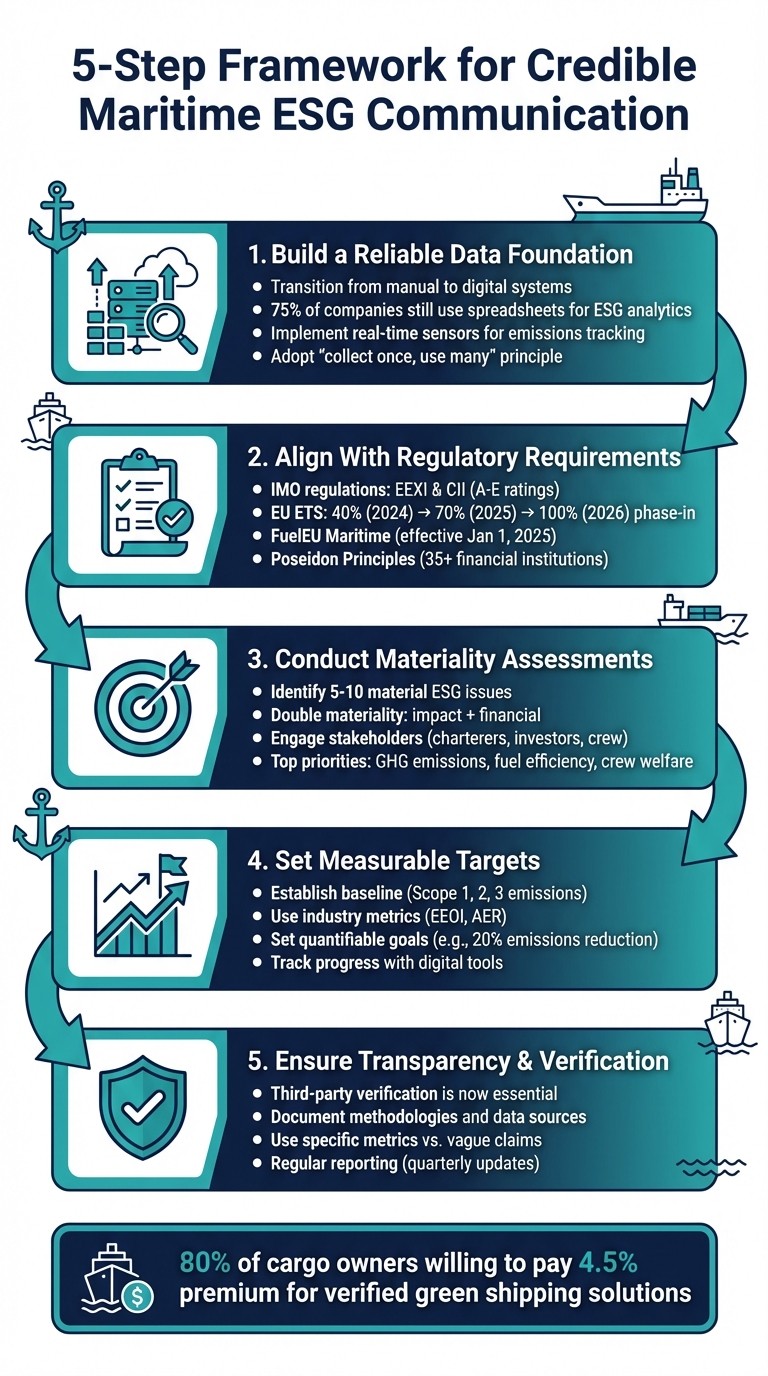
5-Step Framework for Credible Maritime ESG Communication
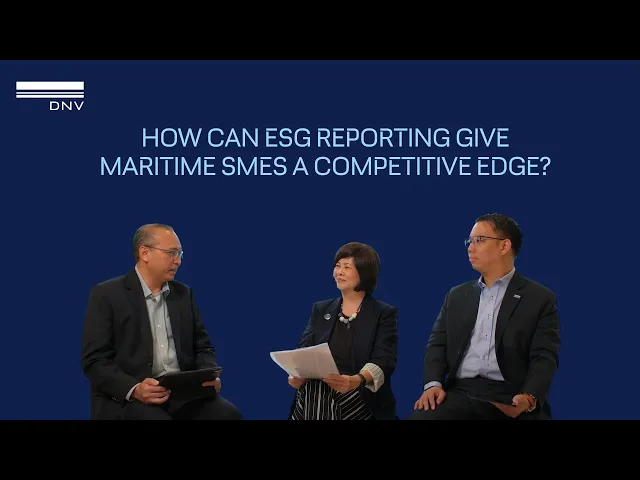
How can ESG reporting give maritime SMEs a competitive edge?
Building a Reliable ESG Data Foundation
Strong ESG communication begins with dependable and verifiable data. This foundation ensures consistency across regulatory requirements and stakeholder expectations. Carl Erik Høy-Petersen, Business Development Leader at DNV Maritime, highlights a common issue: "Data is often collected manually, which increases error risk" [2]. Such errors can lead to tangible consequences, as he notes, "Errors in the reported data can have negative financial and commercial implications" [2].
The maritime industry still relies heavily on outdated and fragmented data systems. About 75% of public companies continue to use spreadsheets for ESG analytics - a practice comparable to the state of financial accounting four decades ago [8]. Only a quarter of these companies have adopted ESG-specific software [8]. This fragmentation makes it difficult to fully track environmental impacts and verify claims [9]. With major cargo owners like Amazon, IKEA, and Unilever demanding emissions transparency from their suppliers, self-reported spreadsheet data often falls short [8].
Centralizing ESG Data Across Operations
To address these challenges, maritime companies must integrate data across all operational areas. This involves creating a unified system that connects data from vessels, port operations, and supply chain partners [9]. A key step is transitioning from manual "Noon Reports", where crew members record fuel consumption by hand, to digital systems equipped with sensors that capture real-time data on emissions, energy use, and fuel consumption [7][8]. Port-related emissions, such as those generated during berthing and cargo handling, often represent a significant portion of total emissions, yet many companies still track them separately from vessel operations [7].
Digital noon reports not only streamline data collection but also reduce the likelihood of human error, leveraging the crew's existing routines [8]. Additionally, port call optimization systems help align vessel arrival times with berth readiness, minimizing waiting periods at anchor and cutting unnecessary fuel use [7]. These advancements not only enhance sustainability metrics but also uncover inefficiencies that directly impact operational costs [6][7]. By integrating these digital tools, companies can establish a robust framework for verified ESG reporting across all aspects of their operations.
Avoiding Common Data Management Pitfalls
While centralizing data is crucial, companies must also be cautious of common pitfalls in data management. Manual processes undermine credibility, and investors often view opaque ESG data as a red flag for hidden financial risks. Despite 69% of industry respondents believing the maritime sector excels in risk management, many investors are reconsidering their support due to concerns over ESG-related risks [10]. This disconnect is often rooted in inconsistent, self-reported data that lacks independent verification [9][10].
Dean Domazet from BD&A underscores the need for collaboration: "Alignment among owners, charterers, ports, regulators, and technical experts is essential for progress" [9]. Similarly, Fiona Macdonald of Thetius stresses: "Visibility and verification are the lifeblood of maritime ESG progress" [9]. A practical approach to address these issues is the "collect once, use many" principle. By gathering and verifying vessel emissions data a single time, companies can apply it across various reporting frameworks, such as IMO DCS, EU MRV, and Poseidon Principles compliance [2]. This method not only reduces the workload for crews but also ensures consistent reporting across diverse stakeholder requirements.
Adopting ESG-specific software platforms is another critical step, with implementation timelines ranging from 3 to 12 months depending on fleet size and existing infrastructure [6]. These platforms integrate seamlessly with fleet management systems, automate carbon accounting, and provide benchmarking tools to compare performance against industry peers [6]. Such investments are particularly important as cargo owners increasingly demand third-party verification for Scope 3 emissions reporting - something manual systems cannot achieve at scale [2].
Aligning ESG Communication With Regulatory Requirements
Maritime companies are navigating a rapidly changing regulatory environment that significantly influences how they report on ESG initiatives. As disclosure requirements transition from voluntary to mandatory, treating these regulations as mere compliance tasks can mean missing a chance to build trust through transparent and standardized reporting.
Understanding Key Regulatory Drivers
The International Maritime Organization (IMO) has introduced two key regulations that shape carbon performance reporting. The Energy Efficiency Existing Ship Index (EEXI) applies to vessels over 400 gross tons and serves as a one-time certification of energy-efficient design [12][15]. Meanwhile, the Carbon Intensity Indicator (CII) applies to ships over 5,000 gross tons, requiring annual operational carbon intensity ratings on a scale from A (best) to E (worst) [12][15]. Ships receiving three consecutive D ratings or a single E rating must submit a corrective action plan [12][15].
In addition to IMO regulations, the EU Emissions Trading System (EU ETS) now includes shipping, starting in 2024. Companies must account for 100% of emissions on intra-EU voyages and 50% on voyages between EU and non-EU ports [13][16]. The phase-in schedule begins with 40% of verified emissions in 2024, increasing to 70% in 2025 and 100% by 2026 [13][16]. Given the fluctuating carbon allowance prices - ranging between €60 and €100 per ton of CO₂ - the financial stakes are considerable [16]. Additionally, FuelEU Maritime, effective January 1, 2025, requires ships to gradually reduce the greenhouse gas intensity of onboard energy use on a well-to-wake basis [13].
Pressure from the financial sector is also mounting through the Poseidon Principles, which have been adopted by over 35 leading financial institutions representing more than 80% of the global shipping finance market [13]. These principles mandate the disclosure of climate-alignment scores, making compliance data essential for securing financing. Fleets aligning with IMO's 2026 CII review targets could see operational cost reductions of 10–15% [12]. Meeting these standards does more than satisfy regulations - it enhances credibility among stakeholders.
Using International Reporting Standards
While regulatory frameworks establish baseline requirements, international reporting standards provide a structured way to communicate ESG performance in a manner that is both transparent and comparable. The Global Reporting Initiative (GRI) addresses a wide range of economic, environmental, and social impacts, helping companies identify which issues are most relevant to sustainable development. The Sustainability Accounting Standards Board (SASB) focuses on industry-specific metrics, particularly those with financial significance, such as cash flow impacts or changes in capital costs.
The Task Force on Climate-related Financial Disclosures (TCFD) highlights the financial risks of climate change and has been incorporated into mandatory standards. The International Sustainability Standards Board (ISSB) has introduced IFRS S1 and S2, which integrate SASB principles and extend TCFD recommendations, ensuring global reporting consistency alongside regional mandates like the EU’s Corporate Sustainability Reporting Directive (CSRD). Large public-interest entities will need to comply with CSRD reporting requirements starting in 2025 for their 2024 financial data [13].
"ESG reporting is no longer a mere compliance exercise but a critical driver of sustainability, innovation, and competitive advantage in the shipping and logistics sector." – CSE [3]
To meet investor expectations, maritime companies should leverage SASB’s transportation-specific indicators, such as those for fuel efficiency, emissions, and supply chain resilience. Conducting double materiality assessments - evaluating both how climate change affects the company and how the company impacts the environment - fulfills CSRD requirements while reinforcing the credibility of ESG communications [14]. Moreover, third-party verification from organizations like DNV or ABS is increasingly necessary for sustainability-linked loans, where interest rates depend on achieving specific CII targets [13].
Conducting Materiality Assessments to Prioritize ESG Issues
Not all ESG issues carry the same importance for your business or its stakeholders. A materiality assessment helps zero in on the topics that deserve the most attention and resources, ensuring efforts are focused rather than diluted across numerous initiatives.
Identifying Material ESG Topics
Maritime companies need to evaluate ESG issues through two perspectives: impact materiality - the effects of their operations on the environment and society, and financial materiality - how ESG issues influence risks or opportunities for the company’s financial health [17][18]. This dual approach, known as double materiality, has transitioned from being voluntary to a regulatory requirement under frameworks like the EU Corporate Sustainability Reporting Directive (CSRD) [17][18].
Engaging key stakeholders is a crucial step in identifying critical ESG issues. Stakeholders such as charterers, cargo owners, investors, regulators, crew members, maritime unions, and port authorities provide valuable insight into what they view as most pressing [17][6]. For instance, in 2022, A.P. Moller - Maersk conducted a double materiality assessment that involved four main steps: gathering input (via stakeholder engagement and regulatory tracking), conducting an assessment (evaluating social, environmental, and financial impacts), validating findings (with executive sponsor approval), and producing an output. This process pinpointed 13 material ESG topics, with human capital, climate change, and business ethics ranking among the top 10 risks in the company’s Enterprise Risk Management (ERM) framework for the year [17].
Existing data sources can help maritime companies establish an environmental baseline. Data collected through regulatory requirements like the IMO Data Collection System (DCS), Monitoring, Reporting, and Verification (MRV), and Ship Energy Efficiency Management Plans (SEEMP) offers a solid starting point for identifying significant environmental impacts [2]. For social issues, employee engagement surveys can provide insights into crew concerns, such as safety and labor rights [17].
"What is important for your company and why? Once you know this, you can identify what is already managed in your existing processes... and what adjustments or additional measures you need to establish." – Carl Erik Høy-Petersen, Business Development Leader, DNV Maritime [2]
Common material topics for maritime companies include greenhouse gas emissions (shipping accounts for 2–3% of global GHG emissions [6]), fuel efficiency, crew welfare and safety, maritime pollution prevention, and ethical governance [6]. Materiality assessments should also extend to the supply chain, including supplier due diligence and Scope 3 emissions. Freight transport contributes between 8% and 11% of energy-related greenhouse gas emissions globally, making supply chain visibility increasingly important [4].
In 2025, Maersk’s Audit Committee oversaw a materiality assessment that highlighted climate change, ship recycling, critical talent, and the ethical use of data/AI as priority areas. These findings informed the company’s ESG initiatives and were integrated into its Annual Report [19].
The next step involves clearly communicating your methodology and decisions to stakeholders, building trust and transparency.
Explaining Materiality Decisions to Stakeholders
Once critical topics are identified, it’s essential to explain the reasoning behind these decisions. Transparency about why certain topics were prioritized helps build trust with stakeholders such as cargo owners, charterers, banks, and insurers, who need assurance that the company understands its ESG risk landscape [2]. This clarity also demonstrates that decisions are based on operational realities, not just following industry trends [5].
Documenting the criteria used - such as impact severity, relevance to the sector, stakeholder expectations, and financial implications - adds credibility to the process [17]. For example, in 2024, Elanco refreshed its ESG materiality assessment using a three-phase process (identification, assessment, and validation) in collaboration with an external advisory firm. They aligned their definitions of Impacts, Risks, and Opportunities (IROs) with GRI, IFRS, and ESRS standards. The results were reviewed by an internal ESG Steering Committee to incorporate senior leadership feedback on key topics like antimicrobial stewardship and animal welfare [18].
Connecting material topics to existing maritime processes is another way to show integration. For instance, decarbonization efforts can be linked to SEEMP III or IMO DCS/MRV requirements [2]. This approach emphasizes that ESG initiatives are part of daily operations rather than standalone projects. Materiality should also be treated as an ongoing process, with regular updates provided to executive committees and stakeholders as priorities evolve due to new regulations or business developments [5][19].
"ESG is not only about compliance. It is very much about creating trust in your stakeholders." – Carl Erik Høy-Petersen, Business Development Leader, DNV Maritime [2]
Placing materiality assessments under the oversight of an Audit Committee ensures data quality and robust internal controls [19]. This governance structure signals to stakeholders that ESG risks are being addressed with the same rigor as operational or financial risks [17][18]. Such transparent processes strengthen the overall ESG reporting strategy and build long-term stakeholder confidence.
Setting and Reporting Measurable Sustainability Targets
To demonstrate genuine progress, maritime and logistics companies must move beyond vague promises and establish measurable, actionable goals. Concrete targets tied to clear outcomes not only build trust but also drive meaningful change.
Defining Clear, Quantifiable Goals
The starting point is gathering Scope 1, 2, and 3 emissions data to establish a reliable baseline [3]. By aligning these targets with previously identified material issues, companies ensure their goals remain strategically relevant. For instance, a company might aim to cut greenhouse gas emissions by 20% within five years or achieve zero waste at specific port terminals [3].
Industry-specific metrics like the Energy Efficiency Operational Indicator (EEOI) and Annual Efficiency Ratio (AER) are particularly valuable. These tools measure carbon intensity per unit of work, such as grams of CO2 per ton-mile, providing benchmarks that reflect operational realities. For example, X-Press Feeders reported an EEOI of 20.430 gCO2e/MT-Nm in 2024 - an improvement of 20.4% compared to the previous year. Similarly, their AER for owned vessels improved by 20.0%, reaching 10.358 gCO2/DWT-Nm. Both figures were independently verified by ClassNK, a classification society [6].
Fleet modernization offers another clear path toward decarbonization. A.P. Moller – Maersk, for instance, introduced seven dual-fuel vessels in 2024, including the Maersk Halifax, the first retrofitted dual-fuel methanol container ship in the industry. These steps align with the company’s commitment to achieving net-zero greenhouse gas emissions by 2040 [6].
Given that Scope 3 emissions often dominate a company’s carbon footprint, setting targets for suppliers who account for 75%–80% of total spending is essential [6]. Operational upgrades can also yield measurable results. One container shipping company, for example, implemented over 400 hardware improvements - such as optimized propellers and bulbous bows - across 150 vessels, reducing total fuel consumption by 8% [6].
Once these targets are in place, the next challenge lies in effectively communicating progress and holding all parties accountable.
Communicating Progress and Accountability
Regular updates, such as quarterly reports, allow for timely executive oversight [19]. Leveraging standardized frameworks like GRI, SASB, and TCFD ensures that data is both comparable and compliant with regulatory requirements, including the EU CSRD [3][2]. Digital tools further enhance this process by enabling near–real-time data collection.
Verified ESG KPIs are becoming critical as stakeholders - cargo owners, charterers, and financial institutions - demand validated emissions data for their own Scope 3 reporting [2]. Carl Erik Høy-Petersen, Business Development Leader at DNV Maritime, emphasizes the importance of this:
"Data trust is important and verification of the most important ESG KPIs is becoming increasingly important" [2].
Advanced technologies, such as sensors and cloud-based platforms, provide real-time data on emissions, fuel consumption, and waste, reducing the risk of manual errors. Automated systems aligned with ISO 19847/48 standards ensure the accuracy of this data while freeing up crew members to focus on analysis instead of tedious data entry [2][3][4].
Transparency is key to building credibility. Companies should not only share their successes but also openly discuss challenges and the steps taken to address them. This balanced approach strengthens trust and underscores a commitment to continuous improvement.
Integrating ESG Data Into Decision-Making
ESG data proves its worth when it actively informs business decisions. In the maritime and logistics sectors, incorporating sustainability metrics into daily operations not only drives efficiency but also reduces costs.
Using ESG Data for Operational Improvements
Sustainability strategies that cut operating costs often have the greatest impact. For example, optimizing shipping routes, managing vessel speeds, and consolidating loads can significantly reduce fuel consumption and emissions [23]. Coordinating vessel arrival times with berth readiness further eliminates unnecessary waiting at anchor, which helps avoid excess fuel use and port-related emissions [7].
Real-time monitoring systems are at the heart of these advances. Advanced sensors track fuel usage, emissions, and vessel performance, enabling immediate adjustments as needed [3]. Regular hull inspections also play a role, preventing fouling that increases fuel consumption [11]. Many vessels are now adopting innovative solutions like low-friction anti-fouling coatings and advanced mooring systems, converting ESG data into tangible efficiency improvements [21].
Digital systems that integrate port and vessel operations take these efforts even further. By reducing idle times and streamlining port activities, emissions are lowered across the board [7]. This shift from isolated ship-level initiatives to a more interconnected approach - including ports, vessels, and inland logistics - signals a broader industry move toward seamless sustainability [7]. By effectively linking data collection with strategic action, companies can achieve meaningful operational improvements that directly enhance business outcomes.
Showing Business Value Through ESG Integration
ESG performance is becoming a critical factor for financial institutions. Frameworks like the Poseidon Principles align ship financing with International Maritime Organization (IMO) climate goals, making strong ESG data essential for securing favorable lending terms [6][2]. Companies that can provide verified ESG metrics often gain access to better capital conditions while reducing perceived investment risks [20].
The financial upside is clear. Industry research indicates that 80% of cargo owners are willing to pay more for green shipping solutions, with premiums averaging 4.5% [22]. However, carriers that fail to embrace this opportunity risk leaving as much as $10 billion on the table [22].
Beyond financial incentives, integrating ESG data helps mitigate operational risks. Companies that go beyond basic compliance in areas like safety, sustainability, and crew welfare not only enhance resilience but also build trust with stakeholders [21]. Despite this, only 27% of charterers currently offer better terms to shipowners who exceed baseline sustainability standards, highlighting a gap in communication that credible ESG reporting can address [21]. By embedding ESG insights into everyday decision-making, businesses can close this gap and complete the cycle of transparent, data-driven sustainability practices.
Ensuring Transparency Through Reporting Processes
Transparent reporting turns ESG data into a compelling narrative that stakeholders can rely on. In the maritime and logistics industries, the demand for verifiable proof has grown, with cargo owners, lenders, and regulators requiring more than just vague sustainability promises.
Generic statements like "eco-friendly" or "green tech" no longer satisfy investors and customers who expect measurable, verifiable evidence [1].
Documenting Data Collection and Methodologies
It's essential to map out every step of your data collection process. Pinpoint areas where manual entry occurs and set up controls to minimize errors [2]. By aligning with international standards like ISO 19847/48 for operational vessel data, you can maintain consistency throughout your data chain [2].
Adopting a "collect once, use many" strategy helps streamline operations and reduce errors. A centralized data system allows verified vessel emission data to serve multiple stakeholders - whether it's cargo owners adhering to the Sea Cargo Charter, banks following the Poseidon Principles, or regulators enforcing EU ETS requirements [2]. This approach integrates data already collected for mandatory regulations, such as the IMO Data Collection System (DCS), EU Monitoring, Reporting and Verification (MRV), and SEEMP III, into a unified ESG framework [2].
Using advanced tools like onboard sensors, real-time monitoring systems, and cloud platforms to track emissions, fuel use, and waste further reduces manual errors [3][2]. It's equally important to document your data sources, assumptions, and any limitations. If there are gaps, acknowledge them and present a clear plan for improvement - stakeholders value transparency and a roadmap over incomplete or ignored issues [2][1].
This thorough internal documentation lays the groundwork for external validation.
Using Third-Party Verification
Third-party validation has shifted from being optional to a necessity. Carl Erik Høy-Petersen, Business Development Leader at DNV Maritime, highlights:
Data trust is important, and verification of key ESG KPIs is now essential. We see that more cargo owners and charterers require third-party verification [2].
This growing demand is driven by cargo owners needing reliable voyage emission data for their Scope 3 greenhouse gas reporting [2]. Independent verification enhances the credibility of your data, aligning internal processes with market expectations.
Third-party assurance not only helps guard against accusations of greenwashing and climate-related litigation but also signals strong control over ESG risks [2][1]. The choice of verification partners is critical - select organizations with deep expertise in maritime practices, such as classification societies or certification bodies familiar with IMO DCS, MRV, and SEEMP III regulations [2]. These experts can effectively connect maritime processes like fuel monitoring and safety management with ESG requirements [2].
Prioritize verifying your most material KPIs, especially voyage emissions and decarbonization progress [2]. Clare Ryan, Senior Marketing Manager at MTM Agency, emphasizes the value of specificity:
Statements like 'our solution reduces GHG emissions by 24% over 10 years, and has been verified by DNV' work much harder to build trust and credibility, and it's what the market now expects [1].
Conclusion
Clear and effective ESG communication has become a necessity in the maritime and logistics sectors. The industry is moving beyond broad statements and toward delivering measurable results. As Carl Erik Høy-Petersen from DNV Maritime explains:
ESG is not only about compliance. It is very much about creating trust in your stakeholders. [2]
This trust hinges on reliable data management. A "collect once, use many times" strategy ensures that data serves multiple purposes, from satisfying cargo owners adhering to the Sea Cargo Charter to meeting the EU ETS requirements. Aligning with major regulatory frameworks not only ensures compliance but also strengthens your company's competitive position. Prioritizing the most relevant ESG issues and setting clear, measurable goals further builds stakeholder confidence.
Materiality assessments are key to identifying the 5–10 ESG issues that matter most to your business and its stakeholders, avoiding the inefficiency of tracking irrelevant metrics. Transparent reporting on progress - alongside acknowledgment of challenges - creates more trust than vague or overly ambitious goals. Stakeholders value honesty and a clear plan over the illusion of perfection.
Independent verification plays a critical role in reinforcing these efforts. As ESG data becomes intertwined with financial and business operations, third-party validation has become indispensable. For example, while 77% of shipowners view achieving net-zero as a top strategic priority, only 60% have formal targets in place [1]. Verified data helps distinguish genuine commitments from superficial claims, and using specific metrics enhances credibility.
The maritime and logistics industry faces unique hurdles, such as tracking Scope 3 emissions and navigating intricate regulations. By adopting these practices, companies can not only meet compliance requirements but also gain a strategic advantage grounded in stakeholder trust.
FAQs
What’s the fastest way to replace manual ESG spreadsheets with trustworthy digital data?
The fastest path to transitioning from manual ESG spreadsheets to dependable digital data lies in adopting data lake solutions. These platforms simplify data collection, boost analysis accuracy, and enhance reporting, ensuring alignment with ESG standards. By consolidating information from multiple sources, they deliver consistent, real-time insights, cutting down on errors and fostering trust among stakeholders. This efficient system not only supports compliance but also promotes greater clarity in ESG reporting.
Which shipping ESG rules matter most for my fleet this year?
The maritime industry faces several key ESG regulations this year, designed to address emissions and promote cleaner operations. Compliance with the IMO's global emissions reduction measures remains critical, alongside adherence to EU regulations like FuelEU Maritime. Additionally, upcoming standards will focus on reducing greenhouse gas emissions, implementing stricter carbon intensity controls, and mandating the use of renewable and low-carbon fuels by 2026. These initiatives are part of broader efforts to minimize the environmental footprint of shipping and align the sector with evolving global sustainability goals.
How do I prove our ESG claims without getting accused of greenwashing?
To steer clear of greenwashing claims, focus on clear, data-backed evidence and maintain transparency in your reporting. Use measurable metrics, such as emissions across Scope 1–3, and align your efforts with established frameworks like the IMO's net-zero targets. Be specific about both achievements and obstacles, steering away from ambiguous language like "sustainable." Support your claims with verifiable data, and consider leveraging third-party audits, certifications, and detailed case studies to validate your initiatives and foster trust.
Related Blog Posts
How to Build a Corporate Sustainability Strategy Aligned to ROI for Maritime & Logistics Companies
How to Integrate ESG into Core Business Operations for Maritime & Logistics Companies
How to Measure and Report ESG Impact Effectively for Maritime & Logistics Companies
How to Align Stakeholders Around a Shared ESG Vision for Maritime & Logistics Companies
Latest Articles
©2025



FAQ
01
What does it really mean to “redefine profit”?
02
What makes Council Fire different?
03
Who does Council Fire you work with?
04
What does working with Council Fire actually look like?
05
How does Council Fire help organizations turn big goals into action?
06
How does Council Fire define and measure success?
Mar 19, 2026
How to Communicate ESG Progress Credibly for Maritime & Logistics Companies
ESG Strategy
In This Article
Practical steps for maritime and logistics firms to centralize ESG data, meet IMO/EU rules, run materiality assessments, set targets, and verify results.
How to Communicate ESG Progress Credibly for Maritime & Logistics Companies
Maritime and logistics companies face growing pressure to communicate their ESG (Environmental, Social, and Governance) efforts with accuracy and transparency. With the sector contributing 2–3% of global greenhouse gas emissions, stakeholders like cargo owners, financial institutions, and regulators demand reliable data to ensure compliance, mitigate risks, and build trust.
Key Takeaways:
Data Accuracy Matters: Manual processes, like spreadsheets or handwritten reports, lead to errors. Transitioning to real-time digital systems ensures precise emissions tracking.
Regulations Are Tightening: Compliance with IMO’s EEXI and CII, EU ETS, and CSRD is now a requirement, not an option.
Materiality Assessments Are Essential: Prioritize ESG issues that matter most to stakeholders, such as emissions, fuel efficiency, and crew welfare.
Set Measurable Goals: Vague claims like "eco-friendly" are insufficient. Companies must set clear targets and back them with verified data.
Independent Verification Builds Trust: Third-party validation of ESG metrics is becoming a standard expectation.
By aligning ESG communication with data-driven practices, regulatory requirements, and stakeholder expectations, maritime companies can avoid greenwashing claims and strengthen their position in a competitive market.
5-Step Framework for Credible Maritime ESG Communication
How can ESG reporting give maritime SMEs a competitive edge?
Building a Reliable ESG Data Foundation
Strong ESG communication begins with dependable and verifiable data. This foundation ensures consistency across regulatory requirements and stakeholder expectations. Carl Erik Høy-Petersen, Business Development Leader at DNV Maritime, highlights a common issue: "Data is often collected manually, which increases error risk" [2]. Such errors can lead to tangible consequences, as he notes, "Errors in the reported data can have negative financial and commercial implications" [2].
The maritime industry still relies heavily on outdated and fragmented data systems. About 75% of public companies continue to use spreadsheets for ESG analytics - a practice comparable to the state of financial accounting four decades ago [8]. Only a quarter of these companies have adopted ESG-specific software [8]. This fragmentation makes it difficult to fully track environmental impacts and verify claims [9]. With major cargo owners like Amazon, IKEA, and Unilever demanding emissions transparency from their suppliers, self-reported spreadsheet data often falls short [8].
Centralizing ESG Data Across Operations
To address these challenges, maritime companies must integrate data across all operational areas. This involves creating a unified system that connects data from vessels, port operations, and supply chain partners [9]. A key step is transitioning from manual "Noon Reports", where crew members record fuel consumption by hand, to digital systems equipped with sensors that capture real-time data on emissions, energy use, and fuel consumption [7][8]. Port-related emissions, such as those generated during berthing and cargo handling, often represent a significant portion of total emissions, yet many companies still track them separately from vessel operations [7].
Digital noon reports not only streamline data collection but also reduce the likelihood of human error, leveraging the crew's existing routines [8]. Additionally, port call optimization systems help align vessel arrival times with berth readiness, minimizing waiting periods at anchor and cutting unnecessary fuel use [7]. These advancements not only enhance sustainability metrics but also uncover inefficiencies that directly impact operational costs [6][7]. By integrating these digital tools, companies can establish a robust framework for verified ESG reporting across all aspects of their operations.
Avoiding Common Data Management Pitfalls
While centralizing data is crucial, companies must also be cautious of common pitfalls in data management. Manual processes undermine credibility, and investors often view opaque ESG data as a red flag for hidden financial risks. Despite 69% of industry respondents believing the maritime sector excels in risk management, many investors are reconsidering their support due to concerns over ESG-related risks [10]. This disconnect is often rooted in inconsistent, self-reported data that lacks independent verification [9][10].
Dean Domazet from BD&A underscores the need for collaboration: "Alignment among owners, charterers, ports, regulators, and technical experts is essential for progress" [9]. Similarly, Fiona Macdonald of Thetius stresses: "Visibility and verification are the lifeblood of maritime ESG progress" [9]. A practical approach to address these issues is the "collect once, use many" principle. By gathering and verifying vessel emissions data a single time, companies can apply it across various reporting frameworks, such as IMO DCS, EU MRV, and Poseidon Principles compliance [2]. This method not only reduces the workload for crews but also ensures consistent reporting across diverse stakeholder requirements.
Adopting ESG-specific software platforms is another critical step, with implementation timelines ranging from 3 to 12 months depending on fleet size and existing infrastructure [6]. These platforms integrate seamlessly with fleet management systems, automate carbon accounting, and provide benchmarking tools to compare performance against industry peers [6]. Such investments are particularly important as cargo owners increasingly demand third-party verification for Scope 3 emissions reporting - something manual systems cannot achieve at scale [2].
Aligning ESG Communication With Regulatory Requirements
Maritime companies are navigating a rapidly changing regulatory environment that significantly influences how they report on ESG initiatives. As disclosure requirements transition from voluntary to mandatory, treating these regulations as mere compliance tasks can mean missing a chance to build trust through transparent and standardized reporting.
Understanding Key Regulatory Drivers
The International Maritime Organization (IMO) has introduced two key regulations that shape carbon performance reporting. The Energy Efficiency Existing Ship Index (EEXI) applies to vessels over 400 gross tons and serves as a one-time certification of energy-efficient design [12][15]. Meanwhile, the Carbon Intensity Indicator (CII) applies to ships over 5,000 gross tons, requiring annual operational carbon intensity ratings on a scale from A (best) to E (worst) [12][15]. Ships receiving three consecutive D ratings or a single E rating must submit a corrective action plan [12][15].
In addition to IMO regulations, the EU Emissions Trading System (EU ETS) now includes shipping, starting in 2024. Companies must account for 100% of emissions on intra-EU voyages and 50% on voyages between EU and non-EU ports [13][16]. The phase-in schedule begins with 40% of verified emissions in 2024, increasing to 70% in 2025 and 100% by 2026 [13][16]. Given the fluctuating carbon allowance prices - ranging between €60 and €100 per ton of CO₂ - the financial stakes are considerable [16]. Additionally, FuelEU Maritime, effective January 1, 2025, requires ships to gradually reduce the greenhouse gas intensity of onboard energy use on a well-to-wake basis [13].
Pressure from the financial sector is also mounting through the Poseidon Principles, which have been adopted by over 35 leading financial institutions representing more than 80% of the global shipping finance market [13]. These principles mandate the disclosure of climate-alignment scores, making compliance data essential for securing financing. Fleets aligning with IMO's 2026 CII review targets could see operational cost reductions of 10–15% [12]. Meeting these standards does more than satisfy regulations - it enhances credibility among stakeholders.
Using International Reporting Standards
While regulatory frameworks establish baseline requirements, international reporting standards provide a structured way to communicate ESG performance in a manner that is both transparent and comparable. The Global Reporting Initiative (GRI) addresses a wide range of economic, environmental, and social impacts, helping companies identify which issues are most relevant to sustainable development. The Sustainability Accounting Standards Board (SASB) focuses on industry-specific metrics, particularly those with financial significance, such as cash flow impacts or changes in capital costs.
The Task Force on Climate-related Financial Disclosures (TCFD) highlights the financial risks of climate change and has been incorporated into mandatory standards. The International Sustainability Standards Board (ISSB) has introduced IFRS S1 and S2, which integrate SASB principles and extend TCFD recommendations, ensuring global reporting consistency alongside regional mandates like the EU’s Corporate Sustainability Reporting Directive (CSRD). Large public-interest entities will need to comply with CSRD reporting requirements starting in 2025 for their 2024 financial data [13].
"ESG reporting is no longer a mere compliance exercise but a critical driver of sustainability, innovation, and competitive advantage in the shipping and logistics sector." – CSE [3]
To meet investor expectations, maritime companies should leverage SASB’s transportation-specific indicators, such as those for fuel efficiency, emissions, and supply chain resilience. Conducting double materiality assessments - evaluating both how climate change affects the company and how the company impacts the environment - fulfills CSRD requirements while reinforcing the credibility of ESG communications [14]. Moreover, third-party verification from organizations like DNV or ABS is increasingly necessary for sustainability-linked loans, where interest rates depend on achieving specific CII targets [13].
Conducting Materiality Assessments to Prioritize ESG Issues
Not all ESG issues carry the same importance for your business or its stakeholders. A materiality assessment helps zero in on the topics that deserve the most attention and resources, ensuring efforts are focused rather than diluted across numerous initiatives.
Identifying Material ESG Topics
Maritime companies need to evaluate ESG issues through two perspectives: impact materiality - the effects of their operations on the environment and society, and financial materiality - how ESG issues influence risks or opportunities for the company’s financial health [17][18]. This dual approach, known as double materiality, has transitioned from being voluntary to a regulatory requirement under frameworks like the EU Corporate Sustainability Reporting Directive (CSRD) [17][18].
Engaging key stakeholders is a crucial step in identifying critical ESG issues. Stakeholders such as charterers, cargo owners, investors, regulators, crew members, maritime unions, and port authorities provide valuable insight into what they view as most pressing [17][6]. For instance, in 2022, A.P. Moller - Maersk conducted a double materiality assessment that involved four main steps: gathering input (via stakeholder engagement and regulatory tracking), conducting an assessment (evaluating social, environmental, and financial impacts), validating findings (with executive sponsor approval), and producing an output. This process pinpointed 13 material ESG topics, with human capital, climate change, and business ethics ranking among the top 10 risks in the company’s Enterprise Risk Management (ERM) framework for the year [17].
Existing data sources can help maritime companies establish an environmental baseline. Data collected through regulatory requirements like the IMO Data Collection System (DCS), Monitoring, Reporting, and Verification (MRV), and Ship Energy Efficiency Management Plans (SEEMP) offers a solid starting point for identifying significant environmental impacts [2]. For social issues, employee engagement surveys can provide insights into crew concerns, such as safety and labor rights [17].
"What is important for your company and why? Once you know this, you can identify what is already managed in your existing processes... and what adjustments or additional measures you need to establish." – Carl Erik Høy-Petersen, Business Development Leader, DNV Maritime [2]
Common material topics for maritime companies include greenhouse gas emissions (shipping accounts for 2–3% of global GHG emissions [6]), fuel efficiency, crew welfare and safety, maritime pollution prevention, and ethical governance [6]. Materiality assessments should also extend to the supply chain, including supplier due diligence and Scope 3 emissions. Freight transport contributes between 8% and 11% of energy-related greenhouse gas emissions globally, making supply chain visibility increasingly important [4].
In 2025, Maersk’s Audit Committee oversaw a materiality assessment that highlighted climate change, ship recycling, critical talent, and the ethical use of data/AI as priority areas. These findings informed the company’s ESG initiatives and were integrated into its Annual Report [19].
The next step involves clearly communicating your methodology and decisions to stakeholders, building trust and transparency.
Explaining Materiality Decisions to Stakeholders
Once critical topics are identified, it’s essential to explain the reasoning behind these decisions. Transparency about why certain topics were prioritized helps build trust with stakeholders such as cargo owners, charterers, banks, and insurers, who need assurance that the company understands its ESG risk landscape [2]. This clarity also demonstrates that decisions are based on operational realities, not just following industry trends [5].
Documenting the criteria used - such as impact severity, relevance to the sector, stakeholder expectations, and financial implications - adds credibility to the process [17]. For example, in 2024, Elanco refreshed its ESG materiality assessment using a three-phase process (identification, assessment, and validation) in collaboration with an external advisory firm. They aligned their definitions of Impacts, Risks, and Opportunities (IROs) with GRI, IFRS, and ESRS standards. The results were reviewed by an internal ESG Steering Committee to incorporate senior leadership feedback on key topics like antimicrobial stewardship and animal welfare [18].
Connecting material topics to existing maritime processes is another way to show integration. For instance, decarbonization efforts can be linked to SEEMP III or IMO DCS/MRV requirements [2]. This approach emphasizes that ESG initiatives are part of daily operations rather than standalone projects. Materiality should also be treated as an ongoing process, with regular updates provided to executive committees and stakeholders as priorities evolve due to new regulations or business developments [5][19].
"ESG is not only about compliance. It is very much about creating trust in your stakeholders." – Carl Erik Høy-Petersen, Business Development Leader, DNV Maritime [2]
Placing materiality assessments under the oversight of an Audit Committee ensures data quality and robust internal controls [19]. This governance structure signals to stakeholders that ESG risks are being addressed with the same rigor as operational or financial risks [17][18]. Such transparent processes strengthen the overall ESG reporting strategy and build long-term stakeholder confidence.
Setting and Reporting Measurable Sustainability Targets
To demonstrate genuine progress, maritime and logistics companies must move beyond vague promises and establish measurable, actionable goals. Concrete targets tied to clear outcomes not only build trust but also drive meaningful change.
Defining Clear, Quantifiable Goals
The starting point is gathering Scope 1, 2, and 3 emissions data to establish a reliable baseline [3]. By aligning these targets with previously identified material issues, companies ensure their goals remain strategically relevant. For instance, a company might aim to cut greenhouse gas emissions by 20% within five years or achieve zero waste at specific port terminals [3].
Industry-specific metrics like the Energy Efficiency Operational Indicator (EEOI) and Annual Efficiency Ratio (AER) are particularly valuable. These tools measure carbon intensity per unit of work, such as grams of CO2 per ton-mile, providing benchmarks that reflect operational realities. For example, X-Press Feeders reported an EEOI of 20.430 gCO2e/MT-Nm in 2024 - an improvement of 20.4% compared to the previous year. Similarly, their AER for owned vessels improved by 20.0%, reaching 10.358 gCO2/DWT-Nm. Both figures were independently verified by ClassNK, a classification society [6].
Fleet modernization offers another clear path toward decarbonization. A.P. Moller – Maersk, for instance, introduced seven dual-fuel vessels in 2024, including the Maersk Halifax, the first retrofitted dual-fuel methanol container ship in the industry. These steps align with the company’s commitment to achieving net-zero greenhouse gas emissions by 2040 [6].
Given that Scope 3 emissions often dominate a company’s carbon footprint, setting targets for suppliers who account for 75%–80% of total spending is essential [6]. Operational upgrades can also yield measurable results. One container shipping company, for example, implemented over 400 hardware improvements - such as optimized propellers and bulbous bows - across 150 vessels, reducing total fuel consumption by 8% [6].
Once these targets are in place, the next challenge lies in effectively communicating progress and holding all parties accountable.
Communicating Progress and Accountability
Regular updates, such as quarterly reports, allow for timely executive oversight [19]. Leveraging standardized frameworks like GRI, SASB, and TCFD ensures that data is both comparable and compliant with regulatory requirements, including the EU CSRD [3][2]. Digital tools further enhance this process by enabling near–real-time data collection.
Verified ESG KPIs are becoming critical as stakeholders - cargo owners, charterers, and financial institutions - demand validated emissions data for their own Scope 3 reporting [2]. Carl Erik Høy-Petersen, Business Development Leader at DNV Maritime, emphasizes the importance of this:
"Data trust is important and verification of the most important ESG KPIs is becoming increasingly important" [2].
Advanced technologies, such as sensors and cloud-based platforms, provide real-time data on emissions, fuel consumption, and waste, reducing the risk of manual errors. Automated systems aligned with ISO 19847/48 standards ensure the accuracy of this data while freeing up crew members to focus on analysis instead of tedious data entry [2][3][4].
Transparency is key to building credibility. Companies should not only share their successes but also openly discuss challenges and the steps taken to address them. This balanced approach strengthens trust and underscores a commitment to continuous improvement.
Integrating ESG Data Into Decision-Making
ESG data proves its worth when it actively informs business decisions. In the maritime and logistics sectors, incorporating sustainability metrics into daily operations not only drives efficiency but also reduces costs.
Using ESG Data for Operational Improvements
Sustainability strategies that cut operating costs often have the greatest impact. For example, optimizing shipping routes, managing vessel speeds, and consolidating loads can significantly reduce fuel consumption and emissions [23]. Coordinating vessel arrival times with berth readiness further eliminates unnecessary waiting at anchor, which helps avoid excess fuel use and port-related emissions [7].
Real-time monitoring systems are at the heart of these advances. Advanced sensors track fuel usage, emissions, and vessel performance, enabling immediate adjustments as needed [3]. Regular hull inspections also play a role, preventing fouling that increases fuel consumption [11]. Many vessels are now adopting innovative solutions like low-friction anti-fouling coatings and advanced mooring systems, converting ESG data into tangible efficiency improvements [21].
Digital systems that integrate port and vessel operations take these efforts even further. By reducing idle times and streamlining port activities, emissions are lowered across the board [7]. This shift from isolated ship-level initiatives to a more interconnected approach - including ports, vessels, and inland logistics - signals a broader industry move toward seamless sustainability [7]. By effectively linking data collection with strategic action, companies can achieve meaningful operational improvements that directly enhance business outcomes.
Showing Business Value Through ESG Integration
ESG performance is becoming a critical factor for financial institutions. Frameworks like the Poseidon Principles align ship financing with International Maritime Organization (IMO) climate goals, making strong ESG data essential for securing favorable lending terms [6][2]. Companies that can provide verified ESG metrics often gain access to better capital conditions while reducing perceived investment risks [20].
The financial upside is clear. Industry research indicates that 80% of cargo owners are willing to pay more for green shipping solutions, with premiums averaging 4.5% [22]. However, carriers that fail to embrace this opportunity risk leaving as much as $10 billion on the table [22].
Beyond financial incentives, integrating ESG data helps mitigate operational risks. Companies that go beyond basic compliance in areas like safety, sustainability, and crew welfare not only enhance resilience but also build trust with stakeholders [21]. Despite this, only 27% of charterers currently offer better terms to shipowners who exceed baseline sustainability standards, highlighting a gap in communication that credible ESG reporting can address [21]. By embedding ESG insights into everyday decision-making, businesses can close this gap and complete the cycle of transparent, data-driven sustainability practices.
Ensuring Transparency Through Reporting Processes
Transparent reporting turns ESG data into a compelling narrative that stakeholders can rely on. In the maritime and logistics industries, the demand for verifiable proof has grown, with cargo owners, lenders, and regulators requiring more than just vague sustainability promises.
Generic statements like "eco-friendly" or "green tech" no longer satisfy investors and customers who expect measurable, verifiable evidence [1].
Documenting Data Collection and Methodologies
It's essential to map out every step of your data collection process. Pinpoint areas where manual entry occurs and set up controls to minimize errors [2]. By aligning with international standards like ISO 19847/48 for operational vessel data, you can maintain consistency throughout your data chain [2].
Adopting a "collect once, use many" strategy helps streamline operations and reduce errors. A centralized data system allows verified vessel emission data to serve multiple stakeholders - whether it's cargo owners adhering to the Sea Cargo Charter, banks following the Poseidon Principles, or regulators enforcing EU ETS requirements [2]. This approach integrates data already collected for mandatory regulations, such as the IMO Data Collection System (DCS), EU Monitoring, Reporting and Verification (MRV), and SEEMP III, into a unified ESG framework [2].
Using advanced tools like onboard sensors, real-time monitoring systems, and cloud platforms to track emissions, fuel use, and waste further reduces manual errors [3][2]. It's equally important to document your data sources, assumptions, and any limitations. If there are gaps, acknowledge them and present a clear plan for improvement - stakeholders value transparency and a roadmap over incomplete or ignored issues [2][1].
This thorough internal documentation lays the groundwork for external validation.
Using Third-Party Verification
Third-party validation has shifted from being optional to a necessity. Carl Erik Høy-Petersen, Business Development Leader at DNV Maritime, highlights:
Data trust is important, and verification of key ESG KPIs is now essential. We see that more cargo owners and charterers require third-party verification [2].
This growing demand is driven by cargo owners needing reliable voyage emission data for their Scope 3 greenhouse gas reporting [2]. Independent verification enhances the credibility of your data, aligning internal processes with market expectations.
Third-party assurance not only helps guard against accusations of greenwashing and climate-related litigation but also signals strong control over ESG risks [2][1]. The choice of verification partners is critical - select organizations with deep expertise in maritime practices, such as classification societies or certification bodies familiar with IMO DCS, MRV, and SEEMP III regulations [2]. These experts can effectively connect maritime processes like fuel monitoring and safety management with ESG requirements [2].
Prioritize verifying your most material KPIs, especially voyage emissions and decarbonization progress [2]. Clare Ryan, Senior Marketing Manager at MTM Agency, emphasizes the value of specificity:
Statements like 'our solution reduces GHG emissions by 24% over 10 years, and has been verified by DNV' work much harder to build trust and credibility, and it's what the market now expects [1].
Conclusion
Clear and effective ESG communication has become a necessity in the maritime and logistics sectors. The industry is moving beyond broad statements and toward delivering measurable results. As Carl Erik Høy-Petersen from DNV Maritime explains:
ESG is not only about compliance. It is very much about creating trust in your stakeholders. [2]
This trust hinges on reliable data management. A "collect once, use many times" strategy ensures that data serves multiple purposes, from satisfying cargo owners adhering to the Sea Cargo Charter to meeting the EU ETS requirements. Aligning with major regulatory frameworks not only ensures compliance but also strengthens your company's competitive position. Prioritizing the most relevant ESG issues and setting clear, measurable goals further builds stakeholder confidence.
Materiality assessments are key to identifying the 5–10 ESG issues that matter most to your business and its stakeholders, avoiding the inefficiency of tracking irrelevant metrics. Transparent reporting on progress - alongside acknowledgment of challenges - creates more trust than vague or overly ambitious goals. Stakeholders value honesty and a clear plan over the illusion of perfection.
Independent verification plays a critical role in reinforcing these efforts. As ESG data becomes intertwined with financial and business operations, third-party validation has become indispensable. For example, while 77% of shipowners view achieving net-zero as a top strategic priority, only 60% have formal targets in place [1]. Verified data helps distinguish genuine commitments from superficial claims, and using specific metrics enhances credibility.
The maritime and logistics industry faces unique hurdles, such as tracking Scope 3 emissions and navigating intricate regulations. By adopting these practices, companies can not only meet compliance requirements but also gain a strategic advantage grounded in stakeholder trust.
FAQs
What’s the fastest way to replace manual ESG spreadsheets with trustworthy digital data?
The fastest path to transitioning from manual ESG spreadsheets to dependable digital data lies in adopting data lake solutions. These platforms simplify data collection, boost analysis accuracy, and enhance reporting, ensuring alignment with ESG standards. By consolidating information from multiple sources, they deliver consistent, real-time insights, cutting down on errors and fostering trust among stakeholders. This efficient system not only supports compliance but also promotes greater clarity in ESG reporting.
Which shipping ESG rules matter most for my fleet this year?
The maritime industry faces several key ESG regulations this year, designed to address emissions and promote cleaner operations. Compliance with the IMO's global emissions reduction measures remains critical, alongside adherence to EU regulations like FuelEU Maritime. Additionally, upcoming standards will focus on reducing greenhouse gas emissions, implementing stricter carbon intensity controls, and mandating the use of renewable and low-carbon fuels by 2026. These initiatives are part of broader efforts to minimize the environmental footprint of shipping and align the sector with evolving global sustainability goals.
How do I prove our ESG claims without getting accused of greenwashing?
To steer clear of greenwashing claims, focus on clear, data-backed evidence and maintain transparency in your reporting. Use measurable metrics, such as emissions across Scope 1–3, and align your efforts with established frameworks like the IMO's net-zero targets. Be specific about both achievements and obstacles, steering away from ambiguous language like "sustainable." Support your claims with verifiable data, and consider leveraging third-party audits, certifications, and detailed case studies to validate your initiatives and foster trust.
Related Blog Posts
How to Build a Corporate Sustainability Strategy Aligned to ROI for Maritime & Logistics Companies
How to Integrate ESG into Core Business Operations for Maritime & Logistics Companies
How to Measure and Report ESG Impact Effectively for Maritime & Logistics Companies
How to Align Stakeholders Around a Shared ESG Vision for Maritime & Logistics Companies
FAQ
01
What does it really mean to “redefine profit”?
02
What makes Council Fire different?
03
Who does Council Fire you work with?
04
What does working with Council Fire actually look like?
05
How does Council Fire help organizations turn big goals into action?
06
How does Council Fire define and measure success?
Mar 19, 2026
How to Communicate ESG Progress Credibly for Maritime & Logistics Companies
ESG Strategy
In This Article
Practical steps for maritime and logistics firms to centralize ESG data, meet IMO/EU rules, run materiality assessments, set targets, and verify results.
How to Communicate ESG Progress Credibly for Maritime & Logistics Companies
Maritime and logistics companies face growing pressure to communicate their ESG (Environmental, Social, and Governance) efforts with accuracy and transparency. With the sector contributing 2–3% of global greenhouse gas emissions, stakeholders like cargo owners, financial institutions, and regulators demand reliable data to ensure compliance, mitigate risks, and build trust.
Key Takeaways:
Data Accuracy Matters: Manual processes, like spreadsheets or handwritten reports, lead to errors. Transitioning to real-time digital systems ensures precise emissions tracking.
Regulations Are Tightening: Compliance with IMO’s EEXI and CII, EU ETS, and CSRD is now a requirement, not an option.
Materiality Assessments Are Essential: Prioritize ESG issues that matter most to stakeholders, such as emissions, fuel efficiency, and crew welfare.
Set Measurable Goals: Vague claims like "eco-friendly" are insufficient. Companies must set clear targets and back them with verified data.
Independent Verification Builds Trust: Third-party validation of ESG metrics is becoming a standard expectation.
By aligning ESG communication with data-driven practices, regulatory requirements, and stakeholder expectations, maritime companies can avoid greenwashing claims and strengthen their position in a competitive market.
5-Step Framework for Credible Maritime ESG Communication
How can ESG reporting give maritime SMEs a competitive edge?
Building a Reliable ESG Data Foundation
Strong ESG communication begins with dependable and verifiable data. This foundation ensures consistency across regulatory requirements and stakeholder expectations. Carl Erik Høy-Petersen, Business Development Leader at DNV Maritime, highlights a common issue: "Data is often collected manually, which increases error risk" [2]. Such errors can lead to tangible consequences, as he notes, "Errors in the reported data can have negative financial and commercial implications" [2].
The maritime industry still relies heavily on outdated and fragmented data systems. About 75% of public companies continue to use spreadsheets for ESG analytics - a practice comparable to the state of financial accounting four decades ago [8]. Only a quarter of these companies have adopted ESG-specific software [8]. This fragmentation makes it difficult to fully track environmental impacts and verify claims [9]. With major cargo owners like Amazon, IKEA, and Unilever demanding emissions transparency from their suppliers, self-reported spreadsheet data often falls short [8].
Centralizing ESG Data Across Operations
To address these challenges, maritime companies must integrate data across all operational areas. This involves creating a unified system that connects data from vessels, port operations, and supply chain partners [9]. A key step is transitioning from manual "Noon Reports", where crew members record fuel consumption by hand, to digital systems equipped with sensors that capture real-time data on emissions, energy use, and fuel consumption [7][8]. Port-related emissions, such as those generated during berthing and cargo handling, often represent a significant portion of total emissions, yet many companies still track them separately from vessel operations [7].
Digital noon reports not only streamline data collection but also reduce the likelihood of human error, leveraging the crew's existing routines [8]. Additionally, port call optimization systems help align vessel arrival times with berth readiness, minimizing waiting periods at anchor and cutting unnecessary fuel use [7]. These advancements not only enhance sustainability metrics but also uncover inefficiencies that directly impact operational costs [6][7]. By integrating these digital tools, companies can establish a robust framework for verified ESG reporting across all aspects of their operations.
Avoiding Common Data Management Pitfalls
While centralizing data is crucial, companies must also be cautious of common pitfalls in data management. Manual processes undermine credibility, and investors often view opaque ESG data as a red flag for hidden financial risks. Despite 69% of industry respondents believing the maritime sector excels in risk management, many investors are reconsidering their support due to concerns over ESG-related risks [10]. This disconnect is often rooted in inconsistent, self-reported data that lacks independent verification [9][10].
Dean Domazet from BD&A underscores the need for collaboration: "Alignment among owners, charterers, ports, regulators, and technical experts is essential for progress" [9]. Similarly, Fiona Macdonald of Thetius stresses: "Visibility and verification are the lifeblood of maritime ESG progress" [9]. A practical approach to address these issues is the "collect once, use many" principle. By gathering and verifying vessel emissions data a single time, companies can apply it across various reporting frameworks, such as IMO DCS, EU MRV, and Poseidon Principles compliance [2]. This method not only reduces the workload for crews but also ensures consistent reporting across diverse stakeholder requirements.
Adopting ESG-specific software platforms is another critical step, with implementation timelines ranging from 3 to 12 months depending on fleet size and existing infrastructure [6]. These platforms integrate seamlessly with fleet management systems, automate carbon accounting, and provide benchmarking tools to compare performance against industry peers [6]. Such investments are particularly important as cargo owners increasingly demand third-party verification for Scope 3 emissions reporting - something manual systems cannot achieve at scale [2].
Aligning ESG Communication With Regulatory Requirements
Maritime companies are navigating a rapidly changing regulatory environment that significantly influences how they report on ESG initiatives. As disclosure requirements transition from voluntary to mandatory, treating these regulations as mere compliance tasks can mean missing a chance to build trust through transparent and standardized reporting.
Understanding Key Regulatory Drivers
The International Maritime Organization (IMO) has introduced two key regulations that shape carbon performance reporting. The Energy Efficiency Existing Ship Index (EEXI) applies to vessels over 400 gross tons and serves as a one-time certification of energy-efficient design [12][15]. Meanwhile, the Carbon Intensity Indicator (CII) applies to ships over 5,000 gross tons, requiring annual operational carbon intensity ratings on a scale from A (best) to E (worst) [12][15]. Ships receiving three consecutive D ratings or a single E rating must submit a corrective action plan [12][15].
In addition to IMO regulations, the EU Emissions Trading System (EU ETS) now includes shipping, starting in 2024. Companies must account for 100% of emissions on intra-EU voyages and 50% on voyages between EU and non-EU ports [13][16]. The phase-in schedule begins with 40% of verified emissions in 2024, increasing to 70% in 2025 and 100% by 2026 [13][16]. Given the fluctuating carbon allowance prices - ranging between €60 and €100 per ton of CO₂ - the financial stakes are considerable [16]. Additionally, FuelEU Maritime, effective January 1, 2025, requires ships to gradually reduce the greenhouse gas intensity of onboard energy use on a well-to-wake basis [13].
Pressure from the financial sector is also mounting through the Poseidon Principles, which have been adopted by over 35 leading financial institutions representing more than 80% of the global shipping finance market [13]. These principles mandate the disclosure of climate-alignment scores, making compliance data essential for securing financing. Fleets aligning with IMO's 2026 CII review targets could see operational cost reductions of 10–15% [12]. Meeting these standards does more than satisfy regulations - it enhances credibility among stakeholders.
Using International Reporting Standards
While regulatory frameworks establish baseline requirements, international reporting standards provide a structured way to communicate ESG performance in a manner that is both transparent and comparable. The Global Reporting Initiative (GRI) addresses a wide range of economic, environmental, and social impacts, helping companies identify which issues are most relevant to sustainable development. The Sustainability Accounting Standards Board (SASB) focuses on industry-specific metrics, particularly those with financial significance, such as cash flow impacts or changes in capital costs.
The Task Force on Climate-related Financial Disclosures (TCFD) highlights the financial risks of climate change and has been incorporated into mandatory standards. The International Sustainability Standards Board (ISSB) has introduced IFRS S1 and S2, which integrate SASB principles and extend TCFD recommendations, ensuring global reporting consistency alongside regional mandates like the EU’s Corporate Sustainability Reporting Directive (CSRD). Large public-interest entities will need to comply with CSRD reporting requirements starting in 2025 for their 2024 financial data [13].
"ESG reporting is no longer a mere compliance exercise but a critical driver of sustainability, innovation, and competitive advantage in the shipping and logistics sector." – CSE [3]
To meet investor expectations, maritime companies should leverage SASB’s transportation-specific indicators, such as those for fuel efficiency, emissions, and supply chain resilience. Conducting double materiality assessments - evaluating both how climate change affects the company and how the company impacts the environment - fulfills CSRD requirements while reinforcing the credibility of ESG communications [14]. Moreover, third-party verification from organizations like DNV or ABS is increasingly necessary for sustainability-linked loans, where interest rates depend on achieving specific CII targets [13].
Conducting Materiality Assessments to Prioritize ESG Issues
Not all ESG issues carry the same importance for your business or its stakeholders. A materiality assessment helps zero in on the topics that deserve the most attention and resources, ensuring efforts are focused rather than diluted across numerous initiatives.
Identifying Material ESG Topics
Maritime companies need to evaluate ESG issues through two perspectives: impact materiality - the effects of their operations on the environment and society, and financial materiality - how ESG issues influence risks or opportunities for the company’s financial health [17][18]. This dual approach, known as double materiality, has transitioned from being voluntary to a regulatory requirement under frameworks like the EU Corporate Sustainability Reporting Directive (CSRD) [17][18].
Engaging key stakeholders is a crucial step in identifying critical ESG issues. Stakeholders such as charterers, cargo owners, investors, regulators, crew members, maritime unions, and port authorities provide valuable insight into what they view as most pressing [17][6]. For instance, in 2022, A.P. Moller - Maersk conducted a double materiality assessment that involved four main steps: gathering input (via stakeholder engagement and regulatory tracking), conducting an assessment (evaluating social, environmental, and financial impacts), validating findings (with executive sponsor approval), and producing an output. This process pinpointed 13 material ESG topics, with human capital, climate change, and business ethics ranking among the top 10 risks in the company’s Enterprise Risk Management (ERM) framework for the year [17].
Existing data sources can help maritime companies establish an environmental baseline. Data collected through regulatory requirements like the IMO Data Collection System (DCS), Monitoring, Reporting, and Verification (MRV), and Ship Energy Efficiency Management Plans (SEEMP) offers a solid starting point for identifying significant environmental impacts [2]. For social issues, employee engagement surveys can provide insights into crew concerns, such as safety and labor rights [17].
"What is important for your company and why? Once you know this, you can identify what is already managed in your existing processes... and what adjustments or additional measures you need to establish." – Carl Erik Høy-Petersen, Business Development Leader, DNV Maritime [2]
Common material topics for maritime companies include greenhouse gas emissions (shipping accounts for 2–3% of global GHG emissions [6]), fuel efficiency, crew welfare and safety, maritime pollution prevention, and ethical governance [6]. Materiality assessments should also extend to the supply chain, including supplier due diligence and Scope 3 emissions. Freight transport contributes between 8% and 11% of energy-related greenhouse gas emissions globally, making supply chain visibility increasingly important [4].
In 2025, Maersk’s Audit Committee oversaw a materiality assessment that highlighted climate change, ship recycling, critical talent, and the ethical use of data/AI as priority areas. These findings informed the company’s ESG initiatives and were integrated into its Annual Report [19].
The next step involves clearly communicating your methodology and decisions to stakeholders, building trust and transparency.
Explaining Materiality Decisions to Stakeholders
Once critical topics are identified, it’s essential to explain the reasoning behind these decisions. Transparency about why certain topics were prioritized helps build trust with stakeholders such as cargo owners, charterers, banks, and insurers, who need assurance that the company understands its ESG risk landscape [2]. This clarity also demonstrates that decisions are based on operational realities, not just following industry trends [5].
Documenting the criteria used - such as impact severity, relevance to the sector, stakeholder expectations, and financial implications - adds credibility to the process [17]. For example, in 2024, Elanco refreshed its ESG materiality assessment using a three-phase process (identification, assessment, and validation) in collaboration with an external advisory firm. They aligned their definitions of Impacts, Risks, and Opportunities (IROs) with GRI, IFRS, and ESRS standards. The results were reviewed by an internal ESG Steering Committee to incorporate senior leadership feedback on key topics like antimicrobial stewardship and animal welfare [18].
Connecting material topics to existing maritime processes is another way to show integration. For instance, decarbonization efforts can be linked to SEEMP III or IMO DCS/MRV requirements [2]. This approach emphasizes that ESG initiatives are part of daily operations rather than standalone projects. Materiality should also be treated as an ongoing process, with regular updates provided to executive committees and stakeholders as priorities evolve due to new regulations or business developments [5][19].
"ESG is not only about compliance. It is very much about creating trust in your stakeholders." – Carl Erik Høy-Petersen, Business Development Leader, DNV Maritime [2]
Placing materiality assessments under the oversight of an Audit Committee ensures data quality and robust internal controls [19]. This governance structure signals to stakeholders that ESG risks are being addressed with the same rigor as operational or financial risks [17][18]. Such transparent processes strengthen the overall ESG reporting strategy and build long-term stakeholder confidence.
Setting and Reporting Measurable Sustainability Targets
To demonstrate genuine progress, maritime and logistics companies must move beyond vague promises and establish measurable, actionable goals. Concrete targets tied to clear outcomes not only build trust but also drive meaningful change.
Defining Clear, Quantifiable Goals
The starting point is gathering Scope 1, 2, and 3 emissions data to establish a reliable baseline [3]. By aligning these targets with previously identified material issues, companies ensure their goals remain strategically relevant. For instance, a company might aim to cut greenhouse gas emissions by 20% within five years or achieve zero waste at specific port terminals [3].
Industry-specific metrics like the Energy Efficiency Operational Indicator (EEOI) and Annual Efficiency Ratio (AER) are particularly valuable. These tools measure carbon intensity per unit of work, such as grams of CO2 per ton-mile, providing benchmarks that reflect operational realities. For example, X-Press Feeders reported an EEOI of 20.430 gCO2e/MT-Nm in 2024 - an improvement of 20.4% compared to the previous year. Similarly, their AER for owned vessels improved by 20.0%, reaching 10.358 gCO2/DWT-Nm. Both figures were independently verified by ClassNK, a classification society [6].
Fleet modernization offers another clear path toward decarbonization. A.P. Moller – Maersk, for instance, introduced seven dual-fuel vessels in 2024, including the Maersk Halifax, the first retrofitted dual-fuel methanol container ship in the industry. These steps align with the company’s commitment to achieving net-zero greenhouse gas emissions by 2040 [6].
Given that Scope 3 emissions often dominate a company’s carbon footprint, setting targets for suppliers who account for 75%–80% of total spending is essential [6]. Operational upgrades can also yield measurable results. One container shipping company, for example, implemented over 400 hardware improvements - such as optimized propellers and bulbous bows - across 150 vessels, reducing total fuel consumption by 8% [6].
Once these targets are in place, the next challenge lies in effectively communicating progress and holding all parties accountable.
Communicating Progress and Accountability
Regular updates, such as quarterly reports, allow for timely executive oversight [19]. Leveraging standardized frameworks like GRI, SASB, and TCFD ensures that data is both comparable and compliant with regulatory requirements, including the EU CSRD [3][2]. Digital tools further enhance this process by enabling near–real-time data collection.
Verified ESG KPIs are becoming critical as stakeholders - cargo owners, charterers, and financial institutions - demand validated emissions data for their own Scope 3 reporting [2]. Carl Erik Høy-Petersen, Business Development Leader at DNV Maritime, emphasizes the importance of this:
"Data trust is important and verification of the most important ESG KPIs is becoming increasingly important" [2].
Advanced technologies, such as sensors and cloud-based platforms, provide real-time data on emissions, fuel consumption, and waste, reducing the risk of manual errors. Automated systems aligned with ISO 19847/48 standards ensure the accuracy of this data while freeing up crew members to focus on analysis instead of tedious data entry [2][3][4].
Transparency is key to building credibility. Companies should not only share their successes but also openly discuss challenges and the steps taken to address them. This balanced approach strengthens trust and underscores a commitment to continuous improvement.
Integrating ESG Data Into Decision-Making
ESG data proves its worth when it actively informs business decisions. In the maritime and logistics sectors, incorporating sustainability metrics into daily operations not only drives efficiency but also reduces costs.
Using ESG Data for Operational Improvements
Sustainability strategies that cut operating costs often have the greatest impact. For example, optimizing shipping routes, managing vessel speeds, and consolidating loads can significantly reduce fuel consumption and emissions [23]. Coordinating vessel arrival times with berth readiness further eliminates unnecessary waiting at anchor, which helps avoid excess fuel use and port-related emissions [7].
Real-time monitoring systems are at the heart of these advances. Advanced sensors track fuel usage, emissions, and vessel performance, enabling immediate adjustments as needed [3]. Regular hull inspections also play a role, preventing fouling that increases fuel consumption [11]. Many vessels are now adopting innovative solutions like low-friction anti-fouling coatings and advanced mooring systems, converting ESG data into tangible efficiency improvements [21].
Digital systems that integrate port and vessel operations take these efforts even further. By reducing idle times and streamlining port activities, emissions are lowered across the board [7]. This shift from isolated ship-level initiatives to a more interconnected approach - including ports, vessels, and inland logistics - signals a broader industry move toward seamless sustainability [7]. By effectively linking data collection with strategic action, companies can achieve meaningful operational improvements that directly enhance business outcomes.
Showing Business Value Through ESG Integration
ESG performance is becoming a critical factor for financial institutions. Frameworks like the Poseidon Principles align ship financing with International Maritime Organization (IMO) climate goals, making strong ESG data essential for securing favorable lending terms [6][2]. Companies that can provide verified ESG metrics often gain access to better capital conditions while reducing perceived investment risks [20].
The financial upside is clear. Industry research indicates that 80% of cargo owners are willing to pay more for green shipping solutions, with premiums averaging 4.5% [22]. However, carriers that fail to embrace this opportunity risk leaving as much as $10 billion on the table [22].
Beyond financial incentives, integrating ESG data helps mitigate operational risks. Companies that go beyond basic compliance in areas like safety, sustainability, and crew welfare not only enhance resilience but also build trust with stakeholders [21]. Despite this, only 27% of charterers currently offer better terms to shipowners who exceed baseline sustainability standards, highlighting a gap in communication that credible ESG reporting can address [21]. By embedding ESG insights into everyday decision-making, businesses can close this gap and complete the cycle of transparent, data-driven sustainability practices.
Ensuring Transparency Through Reporting Processes
Transparent reporting turns ESG data into a compelling narrative that stakeholders can rely on. In the maritime and logistics industries, the demand for verifiable proof has grown, with cargo owners, lenders, and regulators requiring more than just vague sustainability promises.
Generic statements like "eco-friendly" or "green tech" no longer satisfy investors and customers who expect measurable, verifiable evidence [1].
Documenting Data Collection and Methodologies
It's essential to map out every step of your data collection process. Pinpoint areas where manual entry occurs and set up controls to minimize errors [2]. By aligning with international standards like ISO 19847/48 for operational vessel data, you can maintain consistency throughout your data chain [2].
Adopting a "collect once, use many" strategy helps streamline operations and reduce errors. A centralized data system allows verified vessel emission data to serve multiple stakeholders - whether it's cargo owners adhering to the Sea Cargo Charter, banks following the Poseidon Principles, or regulators enforcing EU ETS requirements [2]. This approach integrates data already collected for mandatory regulations, such as the IMO Data Collection System (DCS), EU Monitoring, Reporting and Verification (MRV), and SEEMP III, into a unified ESG framework [2].
Using advanced tools like onboard sensors, real-time monitoring systems, and cloud platforms to track emissions, fuel use, and waste further reduces manual errors [3][2]. It's equally important to document your data sources, assumptions, and any limitations. If there are gaps, acknowledge them and present a clear plan for improvement - stakeholders value transparency and a roadmap over incomplete or ignored issues [2][1].
This thorough internal documentation lays the groundwork for external validation.
Using Third-Party Verification
Third-party validation has shifted from being optional to a necessity. Carl Erik Høy-Petersen, Business Development Leader at DNV Maritime, highlights:
Data trust is important, and verification of key ESG KPIs is now essential. We see that more cargo owners and charterers require third-party verification [2].
This growing demand is driven by cargo owners needing reliable voyage emission data for their Scope 3 greenhouse gas reporting [2]. Independent verification enhances the credibility of your data, aligning internal processes with market expectations.
Third-party assurance not only helps guard against accusations of greenwashing and climate-related litigation but also signals strong control over ESG risks [2][1]. The choice of verification partners is critical - select organizations with deep expertise in maritime practices, such as classification societies or certification bodies familiar with IMO DCS, MRV, and SEEMP III regulations [2]. These experts can effectively connect maritime processes like fuel monitoring and safety management with ESG requirements [2].
Prioritize verifying your most material KPIs, especially voyage emissions and decarbonization progress [2]. Clare Ryan, Senior Marketing Manager at MTM Agency, emphasizes the value of specificity:
Statements like 'our solution reduces GHG emissions by 24% over 10 years, and has been verified by DNV' work much harder to build trust and credibility, and it's what the market now expects [1].
Conclusion
Clear and effective ESG communication has become a necessity in the maritime and logistics sectors. The industry is moving beyond broad statements and toward delivering measurable results. As Carl Erik Høy-Petersen from DNV Maritime explains:
ESG is not only about compliance. It is very much about creating trust in your stakeholders. [2]
This trust hinges on reliable data management. A "collect once, use many times" strategy ensures that data serves multiple purposes, from satisfying cargo owners adhering to the Sea Cargo Charter to meeting the EU ETS requirements. Aligning with major regulatory frameworks not only ensures compliance but also strengthens your company's competitive position. Prioritizing the most relevant ESG issues and setting clear, measurable goals further builds stakeholder confidence.
Materiality assessments are key to identifying the 5–10 ESG issues that matter most to your business and its stakeholders, avoiding the inefficiency of tracking irrelevant metrics. Transparent reporting on progress - alongside acknowledgment of challenges - creates more trust than vague or overly ambitious goals. Stakeholders value honesty and a clear plan over the illusion of perfection.
Independent verification plays a critical role in reinforcing these efforts. As ESG data becomes intertwined with financial and business operations, third-party validation has become indispensable. For example, while 77% of shipowners view achieving net-zero as a top strategic priority, only 60% have formal targets in place [1]. Verified data helps distinguish genuine commitments from superficial claims, and using specific metrics enhances credibility.
The maritime and logistics industry faces unique hurdles, such as tracking Scope 3 emissions and navigating intricate regulations. By adopting these practices, companies can not only meet compliance requirements but also gain a strategic advantage grounded in stakeholder trust.
FAQs
What’s the fastest way to replace manual ESG spreadsheets with trustworthy digital data?
The fastest path to transitioning from manual ESG spreadsheets to dependable digital data lies in adopting data lake solutions. These platforms simplify data collection, boost analysis accuracy, and enhance reporting, ensuring alignment with ESG standards. By consolidating information from multiple sources, they deliver consistent, real-time insights, cutting down on errors and fostering trust among stakeholders. This efficient system not only supports compliance but also promotes greater clarity in ESG reporting.
Which shipping ESG rules matter most for my fleet this year?
The maritime industry faces several key ESG regulations this year, designed to address emissions and promote cleaner operations. Compliance with the IMO's global emissions reduction measures remains critical, alongside adherence to EU regulations like FuelEU Maritime. Additionally, upcoming standards will focus on reducing greenhouse gas emissions, implementing stricter carbon intensity controls, and mandating the use of renewable and low-carbon fuels by 2026. These initiatives are part of broader efforts to minimize the environmental footprint of shipping and align the sector with evolving global sustainability goals.
How do I prove our ESG claims without getting accused of greenwashing?
To steer clear of greenwashing claims, focus on clear, data-backed evidence and maintain transparency in your reporting. Use measurable metrics, such as emissions across Scope 1–3, and align your efforts with established frameworks like the IMO's net-zero targets. Be specific about both achievements and obstacles, steering away from ambiguous language like "sustainable." Support your claims with verifiable data, and consider leveraging third-party audits, certifications, and detailed case studies to validate your initiatives and foster trust.
Related Blog Posts
How to Build a Corporate Sustainability Strategy Aligned to ROI for Maritime & Logistics Companies
How to Integrate ESG into Core Business Operations for Maritime & Logistics Companies
How to Measure and Report ESG Impact Effectively for Maritime & Logistics Companies
How to Align Stakeholders Around a Shared ESG Vision for Maritime & Logistics Companies
FAQ
What does it really mean to “redefine profit”?
What makes Council Fire different?
Who does Council Fire you work with?
What does working with Council Fire actually look like?
How does Council Fire help organizations turn big goals into action?
How does Council Fire define and measure success?