
Mar 7, 2026
How to Communicate ESG Progress Credibly for Corporations
ESG Strategy
In This Article
Practical guidance for corporations to report ESG progress with SMART goals, trusted frameworks, data-backed claims, and regular multi-channel updates.
How to Communicate ESG Progress Credibly for Corporations
Transparency in ESG reporting is no longer optional - it’s a necessity. With 88% of institutional investors treating ESG metrics as seriously as financial data, corporations face growing demands for clarity, honesty, and measurable results. However, many companies struggle with balancing openness and the fear of backlash, leading to practices like "greenhushing", where progress is underreported. This silence can harm trust and credibility.
To communicate ESG progress effectively, companies should focus on these key steps:
Align ESG with company values: Ensure initiatives reflect core business strategies and stakeholder priorities.
Set measurable goals: Use SMART objectives (Specific, Measurable, Achievable, Relevant, Time-bound) to track and share progress transparently.
Use established frameworks: Adopt globally recognized standards like GRI, SASB, or ISSB to present reliable and comparable data.
Avoid greenwashing: Back claims with data, address challenges openly, and consider third-party verification to build trust.
Leverage multiple channels: Share updates consistently across websites, reports, social media, and investor events to reach diverse audiences.
ESG Reporting and Communications: Beyond the Report
Align ESG Communications with Company Values and Strategy
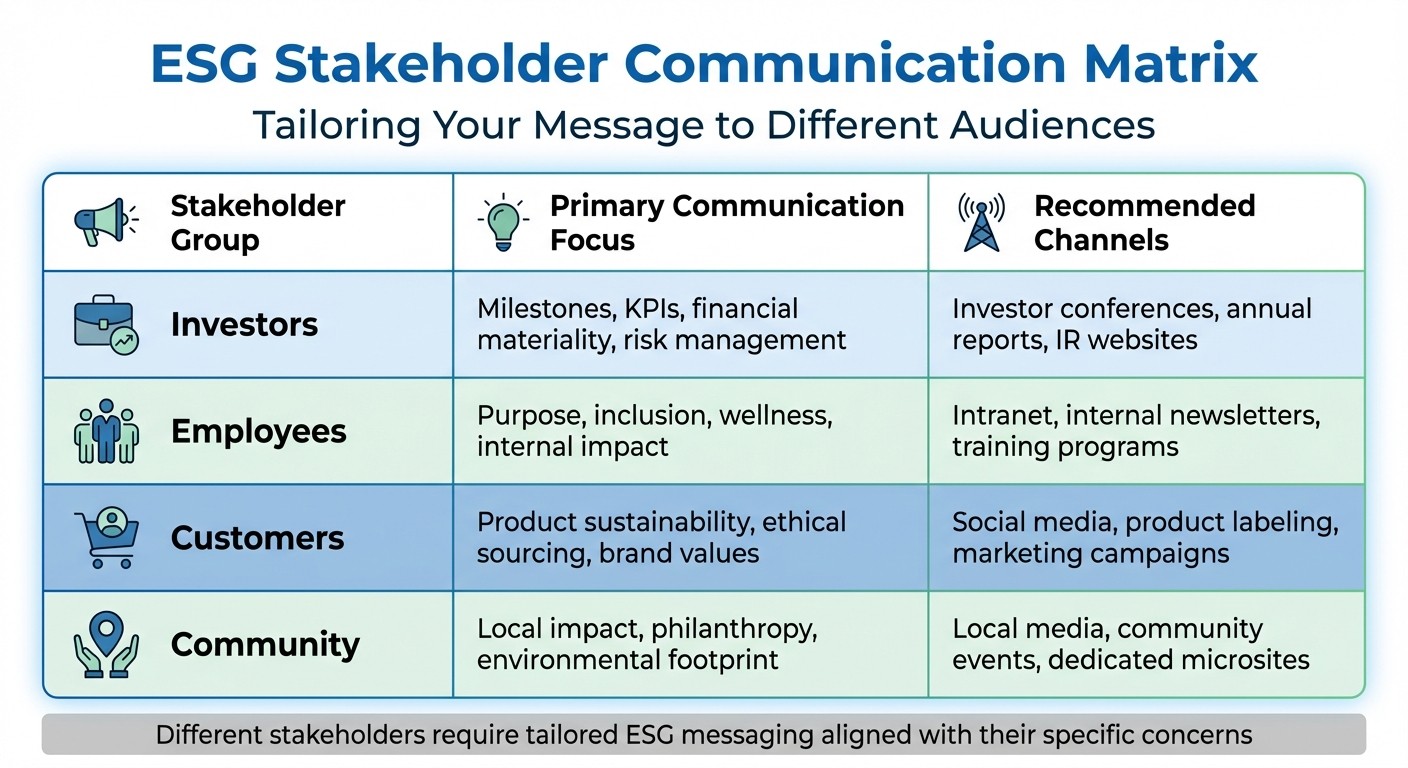
ESG Stakeholder Communication Matrix: Audience-Specific Focus and Channels
For ESG communication to resonate, it must be deeply connected to your company’s strategy. Businesses that treat ESG as a core element of their operations - not just a marketing tool - stand out as credible. When ESG initiatives align naturally with your brand identity, such as a tech company focusing on carbon reduction solutions, stakeholders notice the sincerity right away.
A good starting point is conducting a double materiality assessment. This approach identifies issues that are important both to your business success and to the broader world. By applying this dual perspective, you can ensure that your ESG efforts reflect your company’s core values rather than chasing fleeting trends. Notably, nearly 50% of CEOs report feeling the need to articulate their ESG practices in a way that builds a compelling narrative [5][7].
Define ESG Goals and Target Audiences
Different stakeholders care about different aspects of ESG. Investors focus on risk management and long-term returns, employees want to see how they contribute to sustainability goals, and customers look for evidence of ethical practices and product impact. While the overarching message should remain consistent, tailoring it to address each group’s specific concerns is key.
Set SMART goals - Specific, Measurable, Achievable, Relevant, and Time-bound - to ensure your ESG objectives are both actionable and aligned with your mission [8]. For instance, instead of a vague promise to "reduce emissions", commit to a measurable target like cutting Scope 1 and 2 emissions by a set percentage within five years. This level of detail not only makes progress easier to track but also strengthens the credibility of your communication.
Stakeholder Group | Primary Communication Focus | Recommended Channels |
|---|---|---|
Investors | Milestones, KPIs, financial materiality, risk management | Investor conferences, annual reports, IR websites |
Employees | Purpose, inclusion, wellness, internal impact | Intranet, internal newsletters, training programs |
Customers | Product sustainability, ethical sourcing, brand values | Social media, product labeling, marketing campaigns |
Community | Local impact, philanthropy, environmental footprint | Local media, community events, dedicated microsites |
By setting clear objectives and crafting audience-specific messages, you can weave ESG priorities into every facet of your operations.
Integrate ESG Into Business Operations
To make ESG a meaningful part of your company, it must be embedded into everyday processes, risk assessments, and decision-making. A great example comes from January 2025, when E.SUN Financial Holding Co., Ltd. in Taiwan introduced "sustainability as a service" and provided regular updates through its website and intranet [2].
Real-world stories highlight the power of operationalizing ESG. For example:
"We were born with ESG in our DNA, and it is reflected in our commercial reports, corporate reports, internal communications, and financial reports, ensuring that our potential and existing stakeholders understand our approach."
– Carlota Pi, Co-founder and Executive President, Holaluz Clidom SA [2]
Involving your finance team from the outset can help balance short-term financial planning with long-term sustainability goals. This ensures ESG initiatives are not just aspirational but also financially viable [7]. When ESG becomes part of daily operations, employees naturally become advocates for these efforts. In fact, nearly 9 in 10 employees prefer working for companies that align with their personal values [6]. This internal enthusiasm often builds trust with external stakeholders more effectively than any formal announcement.
Another example comes from June 2025, when ASR Nederland N.V. in the Netherlands used its top Sustainalytics ESG ranking as both a tool for investor engagement and an internal benchmark to attract talent [2]. This external recognition not only validated the company’s sustainable strategy but also boosted employee confidence, showing how operational integration can yield both internal and external benefits.
Use Established ESG Reporting Frameworks
Standardized frameworks provide a structured way to present your ESG disclosures, using language that resonates with investors, regulators, and other stakeholders. By adopting recognized frameworks, you signal your alignment with globally respected practices.
Consider this: 96% of the world's largest 250 companies report on sustainability performance, with 73% of those using GRI Standards [10]. This widespread adoption isn’t coincidental. Frameworks help eliminate ambiguity and focus on measurable outcomes, which is critical for earning stakeholder trust. Eric Hespenheide, Chairman of the GRI Board of Directors, emphasizes this point:
"Transparency is the best currency for creating trust among organizations and their stakeholders, including investors." [10]
Overview of Key ESG Reporting Frameworks
Each framework serves a distinct purpose, so choosing the right one depends on your priorities. For instance, GRI (Global Reporting Initiative) emphasizes impact materiality, focusing on how your operations affect the world. Its broad scope appeals to diverse audiences such as NGOs, communities, and employees. Meanwhile, SASB (Sustainability Accounting Standards Board) concentrates on financial materiality, highlighting how ESG factors influence your company’s financial performance. SASB offers 77 industry-specific standards tailored to investors’ priorities.
The ISSB (International Sustainability Standards Board) has emerged as a global baseline, integrating elements from SASB and TCFD frameworks to standardize disclosures for capital markets. Similarly, TCFD (Task Force on Climate-related Financial Disclosures) focuses on climate-related financial risks, analyzing them through governance, strategy, and risk management perspectives. A helpful way to differentiate GRI and SASB is summarized in this quote:
"GRI tells you what a company does to the world. SASB tells you what the world does to a company's balance sheet." [9]
Many companies opt for a blended approach, using multiple frameworks to cater to different stakeholder groups. For example, Unilever employs GRI to showcase its impact on communities and employees, uses SASB for investor-focused, sector-specific reporting, and aligns with ISSB for comprehensive global disclosures [9]. Similarly, Diageo has relied on GRI since 2011 and added SASB in 2018, leveraging existing data to meet investor needs [10].
Use Frameworks to Show Measurable Progress
Frameworks are invaluable for tracking and demonstrating progress. Take City Developments Limited (CDL), a Singapore-based real estate company. In 2020, CDL became one of the first in its region to report simultaneously under both GRI and SASB Real Estate Standards. This approach not only satisfied local regulatory requirements but also met international investor expectations [10].
Selecting frameworks that align with your industry and stakeholder priorities is essential. For investors focused on financial risks, SASB or ISSB might be the best fit. For broader audiences concerned with social and environmental impacts, GRI offers a more comprehensive view. Combining frameworks often provides the balance needed to satisfy all stakeholders. As Janine Guillot, CEO of SASB, points out:
"Reporting based on the GRI and SASB Standards can provide the depth and breadth of disclosure that all of an organization's stakeholders require." [10]
There's also a growing trend toward external assurance, where independent auditors verify ESG data much like financial audits. This third-party validation enhances credibility and reduces the risk of greenwashing [4]. As sustainability reporting becomes a more structured, cross-functional effort involving finance, legal, and operations teams, the quality and rigor of your disclosures are as critical as the data itself.
Next, explore how transparent communication can help avoid greenwashing and foster lasting stakeholder trust.
Avoid Greenwashing Through Transparent Communication
Greenwashing doesn’t just harm a company’s reputation - it undermines trust entirely. According to a 2022 European Commission report, over 42% of green claims made by companies in the EU were found to be exaggerated or misleading [11]. With 88% of institutional investors now evaluating ESG (Environmental, Social, and Governance) performance as closely as financial metrics [2], businesses can’t afford to make unsupported claims. The solution lies in transparent, data-driven communication that highlights achievements while openly addressing challenges.
Provide Data-Driven Evidence
Vague labels and general statements won’t cut it. ESG claims must be supported by measurable data and independently verified evidence. A great example of this is Microsoft’s response to a 23% surge in emissions tied to AI-related energy demands in July 2025. Rather than hiding the issue, the company disclosed the data and introduced a revised decarbonization strategy, reinforcing its credibility over the long term [1]. Similarly, Ecolab’s 2024 Growth & Impact Report demonstrated its water stewardship initiatives, linking them to $9.1 billion in customer value, 226 billion gallons of water saved, and 4.6 million metric tons of CO2 avoided [1].
Third-party verification further strengthens credibility. Independent assessments from organizations like the Carbon Trust or TÜV Rheinland ensure claims are trustworthy and less likely to be questioned [12]. For instance, Illumina’s efforts to cut packaging by 80% and transition to 100% renewable electricity at its core facilities since 2019 have earned the company recognition on the Dow Jones World Index and TIME’s World's Most Sustainable Companies list [1]. As sustainability consultant Jasper Steinhausen emphasizes:
"To communicate authentically about sustainability initiatives, organizations should describe their efforts in concrete terms, back up their statements with data, and report transparently on both successes and failures." [11]
While robust data supports credibility, addressing setbacks openly can foster even greater trust.
Address Challenges Openly
Acknowledging challenges and setbacks builds trust far more effectively than glossing over them. For instance, when Ryanair branded itself as "Europe's most environmentally friendly airline" in 2020, the UK Advertising Standards Authority banned the ads due to a lack of substantiation, resulting in a significant PR backlash [11]. Ignoring or hiding issues often invites skepticism, while transparency fosters confidence.
Treat ESG initiatives as an ongoing journey with clear milestones, rather than presenting them as finished achievements [12]. If a target is missed or an obstacle arises, address it transparently and outline how you plan to move forward. Companies that conduct annual sustainability reviews are 30% more likely to meet their goals [11]. ESG consultant Johannes Fiegenbaum captures this approach well:
"A credible ESG approach does not require a perfect record - but does require openness, verifiable actions, and a willingness to continuously improve." [11]
Consistency is also critical. Whether communicating with investors, employees, or customers, ensure the message remains the same across all channels [3]. Mixed messages can raise doubts and damage the trust you’ve worked to establish. This commitment to transparency lays a strong foundation for the multi-channel ESG communication strategies discussed in the next section.
Implement Multi-Channel ESG Communication
Once you've established measurable progress using recognized frameworks, the next step is to share your efforts across various communication platforms. Different stakeholders have unique preferences - investors often look for detailed governance updates, employees value information about workplace culture, and customers increasingly demand transparency around ethical sourcing. Relying solely on annual reports is no longer enough; consistent and diverse ESG updates are essential [2].
Use Multiple Communication Channels
E.SUN Financial Holding Co., Ltd. provides a clear example of effective multi-channel communication. Chairman Joseph N.C. Huang highlights their approach:
"We disclose all news on our official website, our intranet and some social media channels, so the general public – all of our shareholders actually – can continually get updates on our ESG initiatives." [2]
The company also conducts quarterly investor conferences, where it connects its financial expertise with ESG-focused products under the concept of "sustainability as a service", showcasing long-term value. Similarly, ASR Nederland N.V. uses its top Sustainalytics rating as a talking point in investor meetings and recruitment efforts, leveraging external recognition to foster meaningful stakeholder conversations.
This strategic use of multiple platforms ensures that ESG themes are not only communicated effectively but also embedded into the broader corporate narrative.
Integrate ESG Themes Into Brand Storytelling
Expanding on multi-channel engagement, weaving ESG themes into your brand story strengthens stakeholder trust. ESG should be integrated seamlessly into your brand identity rather than treated as a separate initiative. When sustainability is consistently reflected in marketing campaigns, employee programs, and investor presentations, it signals that ESG principles are central to your company’s values. This alignment resonates with stakeholders, who increasingly make decisions based on corporate beliefs and commitments [2].
Establish a Consistent Reporting Schedule
Sharing ESG progress through various channels only works when paired with a consistent reporting schedule. A regular cadence for updates strengthens transparency and builds trust with stakeholders. The days of relying solely on an annual sustainability report are over. With 88% of institutional investors now analyzing ESG issues as rigorously as financial and operational data, they expect frequent and reliable updates [2].
Set a Regular Reporting Schedule
Many top companies are moving away from annual, standalone reports in favor of an "always-on" communication strategy. This approach treats ESG metrics with the same priority as financial performance, offering updates quarterly and ensuring they are regularly validated. E.SUN Financial Holding Co., Ltd. exemplifies this shift. Chairman Joseph N.C. Huang highlights their quarterly reporting approach:
"Every quarter, we hold an investor conference. Besides our financial performance, we report how we offer 'sustainability as a service'... In addition, we showcase the recognition [we have] received." [2]
This frequent reporting keeps stakeholders informed without long gaps, ensuring timely updates. When designing your reporting calendar, it’s crucial to align internal milestones with regulatory deadlines. For instance, California's SB 253 requires annual reporting of Scope 1 and 2 emissions starting in 2026, while EU-based firms under CSRD must adhere to mandatory annual reporting beginning with fiscal year 2024. Structuring internal processes - like data collection, validation, and board review - around these external requirements helps streamline workflows, reduce last-minute stress, and improve the accuracy of your ESG data. A well-structured schedule also allows for integrating stakeholder feedback, enhancing the overall quality and relevance of your ESG narrative.
Incorporate Stakeholder Feedback
Consistency in reporting goes beyond meeting deadlines - it’s about engaging with and responding to stakeholders. Tools like surveys, webinars, and direct engagement sessions can help you understand what stakeholders genuinely care about. For example, E.SUN Financial Holding organizes "ESG exchanges" to meet directly with corporate customers, gaining insights into their sustainability challenges and tailoring solutions accordingly [2].
Incorporating feedback ensures your reports address meaningful concerns rather than simply fulfilling requirements. Conducting double-materiality assessments every two years is another way to identify topics that matter most to both your business and stakeholders. This process helps you refine your focus on high-priority data. As Carlota Pi, Co-founder and Executive President of Holaluz Clidom SA, emphasizes:
"We strongly believe that over-communicating what we are doing is key to maximizing our impact for our stakeholders" [2].
Conclusion
Effective ESG communication isn’t about claiming perfection - it’s about showing meaningful progress and outlining actionable plans. As Jason Wakeford from Clarity emphasizes:
"Silence is no longer neutral. Investors, employees, and regulators aren't seeking perfection from corporations. They want proof of progress and a credible plan" [1].
With 88% of institutional investors now evaluating ESG issues with the same rigor as financial performance, transparency is no longer optional - it's essential [2].
The way forward lies in combining accountability with open communication. Companies that acknowledge challenges, such as emissions increases or missed sustainability targets, alongside their achievements, show a commitment to progress over perfection. Honest storytelling, backed by reliable data, fosters trust and demonstrates genuine accountability.
Transitioning from annual reports to a year-round communication model keeps stakeholders consistently informed. Leveraging platforms like websites, social media, and investor events ensures your ESG narrative remains accessible and timely. When paired with established frameworks like GRI or SASB, this approach creates a structured and reliable communication strategy. As Curtis File from Sustainalytics highlights:
"There is no trust without transparency, so it's important to keep honest, clear communication at the center of your ESG communication strategy" [2].
The stakes are undeniable: 64% of investors consider a company’s values when making decisions, and 60% of individuals factor corporate values into their employment choices [2]. However, 31% of U.S. executives admit to concerns about "greenhushing", where progress on ESG goals is intentionally downplayed [1]. The solution lies in embracing authentic, consistent, and verifiable reporting that underscores a genuine commitment to long-term value.
FAQs
How do we choose the right ESG reporting framework?
Choosing the right ESG reporting framework requires understanding your organization’s specific needs, industry requirements, and the expectations of your stakeholders. Frameworks like GRI, SASB, and TCFD each cater to different aspects of reporting, so it’s essential to assess their relevance based on your industry, geographic location, and the type of data your stakeholders prioritize. Additionally, consider how well these frameworks work together to ensure your reporting approach is both thorough and cohesive. By aligning your framework selection with regulatory requirements and stakeholder interests, you can transform compliance efforts into an opportunity to stand out in your market.
What proof do stakeholders expect for ESG claims?
Stakeholders today demand clear and trustworthy evidence to back up ESG (Environmental, Social, and Governance) claims. To meet these expectations, organizations need to ensure their disclosures are both transparent and verifiable. Aligning with established reporting frameworks, such as the Global Reporting Initiative (GRI) or the Sustainability Accounting Standards Board (SASB), plays a critical role in achieving this. These frameworks help structure ESG reporting in a way that is measurable and reliable, reducing the risk of greenwashing accusations. Regular, detailed updates not only highlight measurable progress but also reinforce accountability, helping to build and maintain stakeholder trust over time.
How often should we report ESG progress?
ESG progress benefits from consistent and regular reporting to maintain transparency and trust. While there’s no strict rule on timing, adopting an “always-on” approach - where updates are shared frequently in addition to annual reports - can be highly effective. This approach signals dedication, fosters trust, and ensures communication isn't confined to yearly updates. Leveraging multiple platforms to share measurable achievements helps sustain stakeholder confidence and engagement.
Related Blog Posts
Latest Articles
©2025



FAQ
01
What does it really mean to “redefine profit”?
02
What makes Council Fire different?
03
Who does Council Fire you work with?
04
What does working with Council Fire actually look like?
05
How does Council Fire help organizations turn big goals into action?
06
How does Council Fire define and measure success?
Mar 7, 2026
How to Communicate ESG Progress Credibly for Corporations
ESG Strategy
In This Article
Practical guidance for corporations to report ESG progress with SMART goals, trusted frameworks, data-backed claims, and regular multi-channel updates.
How to Communicate ESG Progress Credibly for Corporations
Transparency in ESG reporting is no longer optional - it’s a necessity. With 88% of institutional investors treating ESG metrics as seriously as financial data, corporations face growing demands for clarity, honesty, and measurable results. However, many companies struggle with balancing openness and the fear of backlash, leading to practices like "greenhushing", where progress is underreported. This silence can harm trust and credibility.
To communicate ESG progress effectively, companies should focus on these key steps:
Align ESG with company values: Ensure initiatives reflect core business strategies and stakeholder priorities.
Set measurable goals: Use SMART objectives (Specific, Measurable, Achievable, Relevant, Time-bound) to track and share progress transparently.
Use established frameworks: Adopt globally recognized standards like GRI, SASB, or ISSB to present reliable and comparable data.
Avoid greenwashing: Back claims with data, address challenges openly, and consider third-party verification to build trust.
Leverage multiple channels: Share updates consistently across websites, reports, social media, and investor events to reach diverse audiences.
ESG Reporting and Communications: Beyond the Report
Align ESG Communications with Company Values and Strategy
ESG Stakeholder Communication Matrix: Audience-Specific Focus and Channels
For ESG communication to resonate, it must be deeply connected to your company’s strategy. Businesses that treat ESG as a core element of their operations - not just a marketing tool - stand out as credible. When ESG initiatives align naturally with your brand identity, such as a tech company focusing on carbon reduction solutions, stakeholders notice the sincerity right away.
A good starting point is conducting a double materiality assessment. This approach identifies issues that are important both to your business success and to the broader world. By applying this dual perspective, you can ensure that your ESG efforts reflect your company’s core values rather than chasing fleeting trends. Notably, nearly 50% of CEOs report feeling the need to articulate their ESG practices in a way that builds a compelling narrative [5][7].
Define ESG Goals and Target Audiences
Different stakeholders care about different aspects of ESG. Investors focus on risk management and long-term returns, employees want to see how they contribute to sustainability goals, and customers look for evidence of ethical practices and product impact. While the overarching message should remain consistent, tailoring it to address each group’s specific concerns is key.
Set SMART goals - Specific, Measurable, Achievable, Relevant, and Time-bound - to ensure your ESG objectives are both actionable and aligned with your mission [8]. For instance, instead of a vague promise to "reduce emissions", commit to a measurable target like cutting Scope 1 and 2 emissions by a set percentage within five years. This level of detail not only makes progress easier to track but also strengthens the credibility of your communication.
Stakeholder Group | Primary Communication Focus | Recommended Channels |
|---|---|---|
Investors | Milestones, KPIs, financial materiality, risk management | Investor conferences, annual reports, IR websites |
Employees | Purpose, inclusion, wellness, internal impact | Intranet, internal newsletters, training programs |
Customers | Product sustainability, ethical sourcing, brand values | Social media, product labeling, marketing campaigns |
Community | Local impact, philanthropy, environmental footprint | Local media, community events, dedicated microsites |
By setting clear objectives and crafting audience-specific messages, you can weave ESG priorities into every facet of your operations.
Integrate ESG Into Business Operations
To make ESG a meaningful part of your company, it must be embedded into everyday processes, risk assessments, and decision-making. A great example comes from January 2025, when E.SUN Financial Holding Co., Ltd. in Taiwan introduced "sustainability as a service" and provided regular updates through its website and intranet [2].
Real-world stories highlight the power of operationalizing ESG. For example:
"We were born with ESG in our DNA, and it is reflected in our commercial reports, corporate reports, internal communications, and financial reports, ensuring that our potential and existing stakeholders understand our approach."
– Carlota Pi, Co-founder and Executive President, Holaluz Clidom SA [2]
Involving your finance team from the outset can help balance short-term financial planning with long-term sustainability goals. This ensures ESG initiatives are not just aspirational but also financially viable [7]. When ESG becomes part of daily operations, employees naturally become advocates for these efforts. In fact, nearly 9 in 10 employees prefer working for companies that align with their personal values [6]. This internal enthusiasm often builds trust with external stakeholders more effectively than any formal announcement.
Another example comes from June 2025, when ASR Nederland N.V. in the Netherlands used its top Sustainalytics ESG ranking as both a tool for investor engagement and an internal benchmark to attract talent [2]. This external recognition not only validated the company’s sustainable strategy but also boosted employee confidence, showing how operational integration can yield both internal and external benefits.
Use Established ESG Reporting Frameworks
Standardized frameworks provide a structured way to present your ESG disclosures, using language that resonates with investors, regulators, and other stakeholders. By adopting recognized frameworks, you signal your alignment with globally respected practices.
Consider this: 96% of the world's largest 250 companies report on sustainability performance, with 73% of those using GRI Standards [10]. This widespread adoption isn’t coincidental. Frameworks help eliminate ambiguity and focus on measurable outcomes, which is critical for earning stakeholder trust. Eric Hespenheide, Chairman of the GRI Board of Directors, emphasizes this point:
"Transparency is the best currency for creating trust among organizations and their stakeholders, including investors." [10]
Overview of Key ESG Reporting Frameworks
Each framework serves a distinct purpose, so choosing the right one depends on your priorities. For instance, GRI (Global Reporting Initiative) emphasizes impact materiality, focusing on how your operations affect the world. Its broad scope appeals to diverse audiences such as NGOs, communities, and employees. Meanwhile, SASB (Sustainability Accounting Standards Board) concentrates on financial materiality, highlighting how ESG factors influence your company’s financial performance. SASB offers 77 industry-specific standards tailored to investors’ priorities.
The ISSB (International Sustainability Standards Board) has emerged as a global baseline, integrating elements from SASB and TCFD frameworks to standardize disclosures for capital markets. Similarly, TCFD (Task Force on Climate-related Financial Disclosures) focuses on climate-related financial risks, analyzing them through governance, strategy, and risk management perspectives. A helpful way to differentiate GRI and SASB is summarized in this quote:
"GRI tells you what a company does to the world. SASB tells you what the world does to a company's balance sheet." [9]
Many companies opt for a blended approach, using multiple frameworks to cater to different stakeholder groups. For example, Unilever employs GRI to showcase its impact on communities and employees, uses SASB for investor-focused, sector-specific reporting, and aligns with ISSB for comprehensive global disclosures [9]. Similarly, Diageo has relied on GRI since 2011 and added SASB in 2018, leveraging existing data to meet investor needs [10].
Use Frameworks to Show Measurable Progress
Frameworks are invaluable for tracking and demonstrating progress. Take City Developments Limited (CDL), a Singapore-based real estate company. In 2020, CDL became one of the first in its region to report simultaneously under both GRI and SASB Real Estate Standards. This approach not only satisfied local regulatory requirements but also met international investor expectations [10].
Selecting frameworks that align with your industry and stakeholder priorities is essential. For investors focused on financial risks, SASB or ISSB might be the best fit. For broader audiences concerned with social and environmental impacts, GRI offers a more comprehensive view. Combining frameworks often provides the balance needed to satisfy all stakeholders. As Janine Guillot, CEO of SASB, points out:
"Reporting based on the GRI and SASB Standards can provide the depth and breadth of disclosure that all of an organization's stakeholders require." [10]
There's also a growing trend toward external assurance, where independent auditors verify ESG data much like financial audits. This third-party validation enhances credibility and reduces the risk of greenwashing [4]. As sustainability reporting becomes a more structured, cross-functional effort involving finance, legal, and operations teams, the quality and rigor of your disclosures are as critical as the data itself.
Next, explore how transparent communication can help avoid greenwashing and foster lasting stakeholder trust.
Avoid Greenwashing Through Transparent Communication
Greenwashing doesn’t just harm a company’s reputation - it undermines trust entirely. According to a 2022 European Commission report, over 42% of green claims made by companies in the EU were found to be exaggerated or misleading [11]. With 88% of institutional investors now evaluating ESG (Environmental, Social, and Governance) performance as closely as financial metrics [2], businesses can’t afford to make unsupported claims. The solution lies in transparent, data-driven communication that highlights achievements while openly addressing challenges.
Provide Data-Driven Evidence
Vague labels and general statements won’t cut it. ESG claims must be supported by measurable data and independently verified evidence. A great example of this is Microsoft’s response to a 23% surge in emissions tied to AI-related energy demands in July 2025. Rather than hiding the issue, the company disclosed the data and introduced a revised decarbonization strategy, reinforcing its credibility over the long term [1]. Similarly, Ecolab’s 2024 Growth & Impact Report demonstrated its water stewardship initiatives, linking them to $9.1 billion in customer value, 226 billion gallons of water saved, and 4.6 million metric tons of CO2 avoided [1].
Third-party verification further strengthens credibility. Independent assessments from organizations like the Carbon Trust or TÜV Rheinland ensure claims are trustworthy and less likely to be questioned [12]. For instance, Illumina’s efforts to cut packaging by 80% and transition to 100% renewable electricity at its core facilities since 2019 have earned the company recognition on the Dow Jones World Index and TIME’s World's Most Sustainable Companies list [1]. As sustainability consultant Jasper Steinhausen emphasizes:
"To communicate authentically about sustainability initiatives, organizations should describe their efforts in concrete terms, back up their statements with data, and report transparently on both successes and failures." [11]
While robust data supports credibility, addressing setbacks openly can foster even greater trust.
Address Challenges Openly
Acknowledging challenges and setbacks builds trust far more effectively than glossing over them. For instance, when Ryanair branded itself as "Europe's most environmentally friendly airline" in 2020, the UK Advertising Standards Authority banned the ads due to a lack of substantiation, resulting in a significant PR backlash [11]. Ignoring or hiding issues often invites skepticism, while transparency fosters confidence.
Treat ESG initiatives as an ongoing journey with clear milestones, rather than presenting them as finished achievements [12]. If a target is missed or an obstacle arises, address it transparently and outline how you plan to move forward. Companies that conduct annual sustainability reviews are 30% more likely to meet their goals [11]. ESG consultant Johannes Fiegenbaum captures this approach well:
"A credible ESG approach does not require a perfect record - but does require openness, verifiable actions, and a willingness to continuously improve." [11]
Consistency is also critical. Whether communicating with investors, employees, or customers, ensure the message remains the same across all channels [3]. Mixed messages can raise doubts and damage the trust you’ve worked to establish. This commitment to transparency lays a strong foundation for the multi-channel ESG communication strategies discussed in the next section.
Implement Multi-Channel ESG Communication
Once you've established measurable progress using recognized frameworks, the next step is to share your efforts across various communication platforms. Different stakeholders have unique preferences - investors often look for detailed governance updates, employees value information about workplace culture, and customers increasingly demand transparency around ethical sourcing. Relying solely on annual reports is no longer enough; consistent and diverse ESG updates are essential [2].
Use Multiple Communication Channels
E.SUN Financial Holding Co., Ltd. provides a clear example of effective multi-channel communication. Chairman Joseph N.C. Huang highlights their approach:
"We disclose all news on our official website, our intranet and some social media channels, so the general public – all of our shareholders actually – can continually get updates on our ESG initiatives." [2]
The company also conducts quarterly investor conferences, where it connects its financial expertise with ESG-focused products under the concept of "sustainability as a service", showcasing long-term value. Similarly, ASR Nederland N.V. uses its top Sustainalytics rating as a talking point in investor meetings and recruitment efforts, leveraging external recognition to foster meaningful stakeholder conversations.
This strategic use of multiple platforms ensures that ESG themes are not only communicated effectively but also embedded into the broader corporate narrative.
Integrate ESG Themes Into Brand Storytelling
Expanding on multi-channel engagement, weaving ESG themes into your brand story strengthens stakeholder trust. ESG should be integrated seamlessly into your brand identity rather than treated as a separate initiative. When sustainability is consistently reflected in marketing campaigns, employee programs, and investor presentations, it signals that ESG principles are central to your company’s values. This alignment resonates with stakeholders, who increasingly make decisions based on corporate beliefs and commitments [2].
Establish a Consistent Reporting Schedule
Sharing ESG progress through various channels only works when paired with a consistent reporting schedule. A regular cadence for updates strengthens transparency and builds trust with stakeholders. The days of relying solely on an annual sustainability report are over. With 88% of institutional investors now analyzing ESG issues as rigorously as financial and operational data, they expect frequent and reliable updates [2].
Set a Regular Reporting Schedule
Many top companies are moving away from annual, standalone reports in favor of an "always-on" communication strategy. This approach treats ESG metrics with the same priority as financial performance, offering updates quarterly and ensuring they are regularly validated. E.SUN Financial Holding Co., Ltd. exemplifies this shift. Chairman Joseph N.C. Huang highlights their quarterly reporting approach:
"Every quarter, we hold an investor conference. Besides our financial performance, we report how we offer 'sustainability as a service'... In addition, we showcase the recognition [we have] received." [2]
This frequent reporting keeps stakeholders informed without long gaps, ensuring timely updates. When designing your reporting calendar, it’s crucial to align internal milestones with regulatory deadlines. For instance, California's SB 253 requires annual reporting of Scope 1 and 2 emissions starting in 2026, while EU-based firms under CSRD must adhere to mandatory annual reporting beginning with fiscal year 2024. Structuring internal processes - like data collection, validation, and board review - around these external requirements helps streamline workflows, reduce last-minute stress, and improve the accuracy of your ESG data. A well-structured schedule also allows for integrating stakeholder feedback, enhancing the overall quality and relevance of your ESG narrative.
Incorporate Stakeholder Feedback
Consistency in reporting goes beyond meeting deadlines - it’s about engaging with and responding to stakeholders. Tools like surveys, webinars, and direct engagement sessions can help you understand what stakeholders genuinely care about. For example, E.SUN Financial Holding organizes "ESG exchanges" to meet directly with corporate customers, gaining insights into their sustainability challenges and tailoring solutions accordingly [2].
Incorporating feedback ensures your reports address meaningful concerns rather than simply fulfilling requirements. Conducting double-materiality assessments every two years is another way to identify topics that matter most to both your business and stakeholders. This process helps you refine your focus on high-priority data. As Carlota Pi, Co-founder and Executive President of Holaluz Clidom SA, emphasizes:
"We strongly believe that over-communicating what we are doing is key to maximizing our impact for our stakeholders" [2].
Conclusion
Effective ESG communication isn’t about claiming perfection - it’s about showing meaningful progress and outlining actionable plans. As Jason Wakeford from Clarity emphasizes:
"Silence is no longer neutral. Investors, employees, and regulators aren't seeking perfection from corporations. They want proof of progress and a credible plan" [1].
With 88% of institutional investors now evaluating ESG issues with the same rigor as financial performance, transparency is no longer optional - it's essential [2].
The way forward lies in combining accountability with open communication. Companies that acknowledge challenges, such as emissions increases or missed sustainability targets, alongside their achievements, show a commitment to progress over perfection. Honest storytelling, backed by reliable data, fosters trust and demonstrates genuine accountability.
Transitioning from annual reports to a year-round communication model keeps stakeholders consistently informed. Leveraging platforms like websites, social media, and investor events ensures your ESG narrative remains accessible and timely. When paired with established frameworks like GRI or SASB, this approach creates a structured and reliable communication strategy. As Curtis File from Sustainalytics highlights:
"There is no trust without transparency, so it's important to keep honest, clear communication at the center of your ESG communication strategy" [2].
The stakes are undeniable: 64% of investors consider a company’s values when making decisions, and 60% of individuals factor corporate values into their employment choices [2]. However, 31% of U.S. executives admit to concerns about "greenhushing", where progress on ESG goals is intentionally downplayed [1]. The solution lies in embracing authentic, consistent, and verifiable reporting that underscores a genuine commitment to long-term value.
FAQs
How do we choose the right ESG reporting framework?
Choosing the right ESG reporting framework requires understanding your organization’s specific needs, industry requirements, and the expectations of your stakeholders. Frameworks like GRI, SASB, and TCFD each cater to different aspects of reporting, so it’s essential to assess their relevance based on your industry, geographic location, and the type of data your stakeholders prioritize. Additionally, consider how well these frameworks work together to ensure your reporting approach is both thorough and cohesive. By aligning your framework selection with regulatory requirements and stakeholder interests, you can transform compliance efforts into an opportunity to stand out in your market.
What proof do stakeholders expect for ESG claims?
Stakeholders today demand clear and trustworthy evidence to back up ESG (Environmental, Social, and Governance) claims. To meet these expectations, organizations need to ensure their disclosures are both transparent and verifiable. Aligning with established reporting frameworks, such as the Global Reporting Initiative (GRI) or the Sustainability Accounting Standards Board (SASB), plays a critical role in achieving this. These frameworks help structure ESG reporting in a way that is measurable and reliable, reducing the risk of greenwashing accusations. Regular, detailed updates not only highlight measurable progress but also reinforce accountability, helping to build and maintain stakeholder trust over time.
How often should we report ESG progress?
ESG progress benefits from consistent and regular reporting to maintain transparency and trust. While there’s no strict rule on timing, adopting an “always-on” approach - where updates are shared frequently in addition to annual reports - can be highly effective. This approach signals dedication, fosters trust, and ensures communication isn't confined to yearly updates. Leveraging multiple platforms to share measurable achievements helps sustain stakeholder confidence and engagement.
Related Blog Posts
FAQ
01
What does it really mean to “redefine profit”?
02
What makes Council Fire different?
03
Who does Council Fire you work with?
04
What does working with Council Fire actually look like?
05
How does Council Fire help organizations turn big goals into action?
06
How does Council Fire define and measure success?
Mar 7, 2026
How to Communicate ESG Progress Credibly for Corporations
ESG Strategy
In This Article
Practical guidance for corporations to report ESG progress with SMART goals, trusted frameworks, data-backed claims, and regular multi-channel updates.
How to Communicate ESG Progress Credibly for Corporations
Transparency in ESG reporting is no longer optional - it’s a necessity. With 88% of institutional investors treating ESG metrics as seriously as financial data, corporations face growing demands for clarity, honesty, and measurable results. However, many companies struggle with balancing openness and the fear of backlash, leading to practices like "greenhushing", where progress is underreported. This silence can harm trust and credibility.
To communicate ESG progress effectively, companies should focus on these key steps:
Align ESG with company values: Ensure initiatives reflect core business strategies and stakeholder priorities.
Set measurable goals: Use SMART objectives (Specific, Measurable, Achievable, Relevant, Time-bound) to track and share progress transparently.
Use established frameworks: Adopt globally recognized standards like GRI, SASB, or ISSB to present reliable and comparable data.
Avoid greenwashing: Back claims with data, address challenges openly, and consider third-party verification to build trust.
Leverage multiple channels: Share updates consistently across websites, reports, social media, and investor events to reach diverse audiences.
ESG Reporting and Communications: Beyond the Report
Align ESG Communications with Company Values and Strategy
ESG Stakeholder Communication Matrix: Audience-Specific Focus and Channels
For ESG communication to resonate, it must be deeply connected to your company’s strategy. Businesses that treat ESG as a core element of their operations - not just a marketing tool - stand out as credible. When ESG initiatives align naturally with your brand identity, such as a tech company focusing on carbon reduction solutions, stakeholders notice the sincerity right away.
A good starting point is conducting a double materiality assessment. This approach identifies issues that are important both to your business success and to the broader world. By applying this dual perspective, you can ensure that your ESG efforts reflect your company’s core values rather than chasing fleeting trends. Notably, nearly 50% of CEOs report feeling the need to articulate their ESG practices in a way that builds a compelling narrative [5][7].
Define ESG Goals and Target Audiences
Different stakeholders care about different aspects of ESG. Investors focus on risk management and long-term returns, employees want to see how they contribute to sustainability goals, and customers look for evidence of ethical practices and product impact. While the overarching message should remain consistent, tailoring it to address each group’s specific concerns is key.
Set SMART goals - Specific, Measurable, Achievable, Relevant, and Time-bound - to ensure your ESG objectives are both actionable and aligned with your mission [8]. For instance, instead of a vague promise to "reduce emissions", commit to a measurable target like cutting Scope 1 and 2 emissions by a set percentage within five years. This level of detail not only makes progress easier to track but also strengthens the credibility of your communication.
Stakeholder Group | Primary Communication Focus | Recommended Channels |
|---|---|---|
Investors | Milestones, KPIs, financial materiality, risk management | Investor conferences, annual reports, IR websites |
Employees | Purpose, inclusion, wellness, internal impact | Intranet, internal newsletters, training programs |
Customers | Product sustainability, ethical sourcing, brand values | Social media, product labeling, marketing campaigns |
Community | Local impact, philanthropy, environmental footprint | Local media, community events, dedicated microsites |
By setting clear objectives and crafting audience-specific messages, you can weave ESG priorities into every facet of your operations.
Integrate ESG Into Business Operations
To make ESG a meaningful part of your company, it must be embedded into everyday processes, risk assessments, and decision-making. A great example comes from January 2025, when E.SUN Financial Holding Co., Ltd. in Taiwan introduced "sustainability as a service" and provided regular updates through its website and intranet [2].
Real-world stories highlight the power of operationalizing ESG. For example:
"We were born with ESG in our DNA, and it is reflected in our commercial reports, corporate reports, internal communications, and financial reports, ensuring that our potential and existing stakeholders understand our approach."
– Carlota Pi, Co-founder and Executive President, Holaluz Clidom SA [2]
Involving your finance team from the outset can help balance short-term financial planning with long-term sustainability goals. This ensures ESG initiatives are not just aspirational but also financially viable [7]. When ESG becomes part of daily operations, employees naturally become advocates for these efforts. In fact, nearly 9 in 10 employees prefer working for companies that align with their personal values [6]. This internal enthusiasm often builds trust with external stakeholders more effectively than any formal announcement.
Another example comes from June 2025, when ASR Nederland N.V. in the Netherlands used its top Sustainalytics ESG ranking as both a tool for investor engagement and an internal benchmark to attract talent [2]. This external recognition not only validated the company’s sustainable strategy but also boosted employee confidence, showing how operational integration can yield both internal and external benefits.
Use Established ESG Reporting Frameworks
Standardized frameworks provide a structured way to present your ESG disclosures, using language that resonates with investors, regulators, and other stakeholders. By adopting recognized frameworks, you signal your alignment with globally respected practices.
Consider this: 96% of the world's largest 250 companies report on sustainability performance, with 73% of those using GRI Standards [10]. This widespread adoption isn’t coincidental. Frameworks help eliminate ambiguity and focus on measurable outcomes, which is critical for earning stakeholder trust. Eric Hespenheide, Chairman of the GRI Board of Directors, emphasizes this point:
"Transparency is the best currency for creating trust among organizations and their stakeholders, including investors." [10]
Overview of Key ESG Reporting Frameworks
Each framework serves a distinct purpose, so choosing the right one depends on your priorities. For instance, GRI (Global Reporting Initiative) emphasizes impact materiality, focusing on how your operations affect the world. Its broad scope appeals to diverse audiences such as NGOs, communities, and employees. Meanwhile, SASB (Sustainability Accounting Standards Board) concentrates on financial materiality, highlighting how ESG factors influence your company’s financial performance. SASB offers 77 industry-specific standards tailored to investors’ priorities.
The ISSB (International Sustainability Standards Board) has emerged as a global baseline, integrating elements from SASB and TCFD frameworks to standardize disclosures for capital markets. Similarly, TCFD (Task Force on Climate-related Financial Disclosures) focuses on climate-related financial risks, analyzing them through governance, strategy, and risk management perspectives. A helpful way to differentiate GRI and SASB is summarized in this quote:
"GRI tells you what a company does to the world. SASB tells you what the world does to a company's balance sheet." [9]
Many companies opt for a blended approach, using multiple frameworks to cater to different stakeholder groups. For example, Unilever employs GRI to showcase its impact on communities and employees, uses SASB for investor-focused, sector-specific reporting, and aligns with ISSB for comprehensive global disclosures [9]. Similarly, Diageo has relied on GRI since 2011 and added SASB in 2018, leveraging existing data to meet investor needs [10].
Use Frameworks to Show Measurable Progress
Frameworks are invaluable for tracking and demonstrating progress. Take City Developments Limited (CDL), a Singapore-based real estate company. In 2020, CDL became one of the first in its region to report simultaneously under both GRI and SASB Real Estate Standards. This approach not only satisfied local regulatory requirements but also met international investor expectations [10].
Selecting frameworks that align with your industry and stakeholder priorities is essential. For investors focused on financial risks, SASB or ISSB might be the best fit. For broader audiences concerned with social and environmental impacts, GRI offers a more comprehensive view. Combining frameworks often provides the balance needed to satisfy all stakeholders. As Janine Guillot, CEO of SASB, points out:
"Reporting based on the GRI and SASB Standards can provide the depth and breadth of disclosure that all of an organization's stakeholders require." [10]
There's also a growing trend toward external assurance, where independent auditors verify ESG data much like financial audits. This third-party validation enhances credibility and reduces the risk of greenwashing [4]. As sustainability reporting becomes a more structured, cross-functional effort involving finance, legal, and operations teams, the quality and rigor of your disclosures are as critical as the data itself.
Next, explore how transparent communication can help avoid greenwashing and foster lasting stakeholder trust.
Avoid Greenwashing Through Transparent Communication
Greenwashing doesn’t just harm a company’s reputation - it undermines trust entirely. According to a 2022 European Commission report, over 42% of green claims made by companies in the EU were found to be exaggerated or misleading [11]. With 88% of institutional investors now evaluating ESG (Environmental, Social, and Governance) performance as closely as financial metrics [2], businesses can’t afford to make unsupported claims. The solution lies in transparent, data-driven communication that highlights achievements while openly addressing challenges.
Provide Data-Driven Evidence
Vague labels and general statements won’t cut it. ESG claims must be supported by measurable data and independently verified evidence. A great example of this is Microsoft’s response to a 23% surge in emissions tied to AI-related energy demands in July 2025. Rather than hiding the issue, the company disclosed the data and introduced a revised decarbonization strategy, reinforcing its credibility over the long term [1]. Similarly, Ecolab’s 2024 Growth & Impact Report demonstrated its water stewardship initiatives, linking them to $9.1 billion in customer value, 226 billion gallons of water saved, and 4.6 million metric tons of CO2 avoided [1].
Third-party verification further strengthens credibility. Independent assessments from organizations like the Carbon Trust or TÜV Rheinland ensure claims are trustworthy and less likely to be questioned [12]. For instance, Illumina’s efforts to cut packaging by 80% and transition to 100% renewable electricity at its core facilities since 2019 have earned the company recognition on the Dow Jones World Index and TIME’s World's Most Sustainable Companies list [1]. As sustainability consultant Jasper Steinhausen emphasizes:
"To communicate authentically about sustainability initiatives, organizations should describe their efforts in concrete terms, back up their statements with data, and report transparently on both successes and failures." [11]
While robust data supports credibility, addressing setbacks openly can foster even greater trust.
Address Challenges Openly
Acknowledging challenges and setbacks builds trust far more effectively than glossing over them. For instance, when Ryanair branded itself as "Europe's most environmentally friendly airline" in 2020, the UK Advertising Standards Authority banned the ads due to a lack of substantiation, resulting in a significant PR backlash [11]. Ignoring or hiding issues often invites skepticism, while transparency fosters confidence.
Treat ESG initiatives as an ongoing journey with clear milestones, rather than presenting them as finished achievements [12]. If a target is missed or an obstacle arises, address it transparently and outline how you plan to move forward. Companies that conduct annual sustainability reviews are 30% more likely to meet their goals [11]. ESG consultant Johannes Fiegenbaum captures this approach well:
"A credible ESG approach does not require a perfect record - but does require openness, verifiable actions, and a willingness to continuously improve." [11]
Consistency is also critical. Whether communicating with investors, employees, or customers, ensure the message remains the same across all channels [3]. Mixed messages can raise doubts and damage the trust you’ve worked to establish. This commitment to transparency lays a strong foundation for the multi-channel ESG communication strategies discussed in the next section.
Implement Multi-Channel ESG Communication
Once you've established measurable progress using recognized frameworks, the next step is to share your efforts across various communication platforms. Different stakeholders have unique preferences - investors often look for detailed governance updates, employees value information about workplace culture, and customers increasingly demand transparency around ethical sourcing. Relying solely on annual reports is no longer enough; consistent and diverse ESG updates are essential [2].
Use Multiple Communication Channels
E.SUN Financial Holding Co., Ltd. provides a clear example of effective multi-channel communication. Chairman Joseph N.C. Huang highlights their approach:
"We disclose all news on our official website, our intranet and some social media channels, so the general public – all of our shareholders actually – can continually get updates on our ESG initiatives." [2]
The company also conducts quarterly investor conferences, where it connects its financial expertise with ESG-focused products under the concept of "sustainability as a service", showcasing long-term value. Similarly, ASR Nederland N.V. uses its top Sustainalytics rating as a talking point in investor meetings and recruitment efforts, leveraging external recognition to foster meaningful stakeholder conversations.
This strategic use of multiple platforms ensures that ESG themes are not only communicated effectively but also embedded into the broader corporate narrative.
Integrate ESG Themes Into Brand Storytelling
Expanding on multi-channel engagement, weaving ESG themes into your brand story strengthens stakeholder trust. ESG should be integrated seamlessly into your brand identity rather than treated as a separate initiative. When sustainability is consistently reflected in marketing campaigns, employee programs, and investor presentations, it signals that ESG principles are central to your company’s values. This alignment resonates with stakeholders, who increasingly make decisions based on corporate beliefs and commitments [2].
Establish a Consistent Reporting Schedule
Sharing ESG progress through various channels only works when paired with a consistent reporting schedule. A regular cadence for updates strengthens transparency and builds trust with stakeholders. The days of relying solely on an annual sustainability report are over. With 88% of institutional investors now analyzing ESG issues as rigorously as financial and operational data, they expect frequent and reliable updates [2].
Set a Regular Reporting Schedule
Many top companies are moving away from annual, standalone reports in favor of an "always-on" communication strategy. This approach treats ESG metrics with the same priority as financial performance, offering updates quarterly and ensuring they are regularly validated. E.SUN Financial Holding Co., Ltd. exemplifies this shift. Chairman Joseph N.C. Huang highlights their quarterly reporting approach:
"Every quarter, we hold an investor conference. Besides our financial performance, we report how we offer 'sustainability as a service'... In addition, we showcase the recognition [we have] received." [2]
This frequent reporting keeps stakeholders informed without long gaps, ensuring timely updates. When designing your reporting calendar, it’s crucial to align internal milestones with regulatory deadlines. For instance, California's SB 253 requires annual reporting of Scope 1 and 2 emissions starting in 2026, while EU-based firms under CSRD must adhere to mandatory annual reporting beginning with fiscal year 2024. Structuring internal processes - like data collection, validation, and board review - around these external requirements helps streamline workflows, reduce last-minute stress, and improve the accuracy of your ESG data. A well-structured schedule also allows for integrating stakeholder feedback, enhancing the overall quality and relevance of your ESG narrative.
Incorporate Stakeholder Feedback
Consistency in reporting goes beyond meeting deadlines - it’s about engaging with and responding to stakeholders. Tools like surveys, webinars, and direct engagement sessions can help you understand what stakeholders genuinely care about. For example, E.SUN Financial Holding organizes "ESG exchanges" to meet directly with corporate customers, gaining insights into their sustainability challenges and tailoring solutions accordingly [2].
Incorporating feedback ensures your reports address meaningful concerns rather than simply fulfilling requirements. Conducting double-materiality assessments every two years is another way to identify topics that matter most to both your business and stakeholders. This process helps you refine your focus on high-priority data. As Carlota Pi, Co-founder and Executive President of Holaluz Clidom SA, emphasizes:
"We strongly believe that over-communicating what we are doing is key to maximizing our impact for our stakeholders" [2].
Conclusion
Effective ESG communication isn’t about claiming perfection - it’s about showing meaningful progress and outlining actionable plans. As Jason Wakeford from Clarity emphasizes:
"Silence is no longer neutral. Investors, employees, and regulators aren't seeking perfection from corporations. They want proof of progress and a credible plan" [1].
With 88% of institutional investors now evaluating ESG issues with the same rigor as financial performance, transparency is no longer optional - it's essential [2].
The way forward lies in combining accountability with open communication. Companies that acknowledge challenges, such as emissions increases or missed sustainability targets, alongside their achievements, show a commitment to progress over perfection. Honest storytelling, backed by reliable data, fosters trust and demonstrates genuine accountability.
Transitioning from annual reports to a year-round communication model keeps stakeholders consistently informed. Leveraging platforms like websites, social media, and investor events ensures your ESG narrative remains accessible and timely. When paired with established frameworks like GRI or SASB, this approach creates a structured and reliable communication strategy. As Curtis File from Sustainalytics highlights:
"There is no trust without transparency, so it's important to keep honest, clear communication at the center of your ESG communication strategy" [2].
The stakes are undeniable: 64% of investors consider a company’s values when making decisions, and 60% of individuals factor corporate values into their employment choices [2]. However, 31% of U.S. executives admit to concerns about "greenhushing", where progress on ESG goals is intentionally downplayed [1]. The solution lies in embracing authentic, consistent, and verifiable reporting that underscores a genuine commitment to long-term value.
FAQs
How do we choose the right ESG reporting framework?
Choosing the right ESG reporting framework requires understanding your organization’s specific needs, industry requirements, and the expectations of your stakeholders. Frameworks like GRI, SASB, and TCFD each cater to different aspects of reporting, so it’s essential to assess their relevance based on your industry, geographic location, and the type of data your stakeholders prioritize. Additionally, consider how well these frameworks work together to ensure your reporting approach is both thorough and cohesive. By aligning your framework selection with regulatory requirements and stakeholder interests, you can transform compliance efforts into an opportunity to stand out in your market.
What proof do stakeholders expect for ESG claims?
Stakeholders today demand clear and trustworthy evidence to back up ESG (Environmental, Social, and Governance) claims. To meet these expectations, organizations need to ensure their disclosures are both transparent and verifiable. Aligning with established reporting frameworks, such as the Global Reporting Initiative (GRI) or the Sustainability Accounting Standards Board (SASB), plays a critical role in achieving this. These frameworks help structure ESG reporting in a way that is measurable and reliable, reducing the risk of greenwashing accusations. Regular, detailed updates not only highlight measurable progress but also reinforce accountability, helping to build and maintain stakeholder trust over time.
How often should we report ESG progress?
ESG progress benefits from consistent and regular reporting to maintain transparency and trust. While there’s no strict rule on timing, adopting an “always-on” approach - where updates are shared frequently in addition to annual reports - can be highly effective. This approach signals dedication, fosters trust, and ensures communication isn't confined to yearly updates. Leveraging multiple platforms to share measurable achievements helps sustain stakeholder confidence and engagement.
Related Blog Posts
FAQ
What does it really mean to “redefine profit”?
What makes Council Fire different?
Who does Council Fire you work with?
What does working with Council Fire actually look like?
How does Council Fire help organizations turn big goals into action?
How does Council Fire define and measure success?