Apr 1, 2026
How to Co-Design Climate-Ready Communities with Residents for NGOs & Nonprofits
Capacity Building
In This Article
Practical steps for NGOs to co-design climate-resilient communities with residents using participatory tools, Indigenous knowledge, and clear metrics.
How to Co-Design Climate-Ready Communities with Residents for NGOs & Nonprofits
Building climate-resilient communities starts with collaboration. The most vulnerable populations - low-income groups, communities of color, older adults, and immigrants - often face the harshest impacts of climate change. Yet, their voices are frequently overlooked in resilience planning. By actively involving residents in co-creating solutions, NGOs and nonprofits can develop plans that address real needs, prevent displacement, and strengthen community ties.
Key takeaways for co-designing climate-ready communities:
Engage residents early: Build trust, offer childcare, meals, and translation services, and compensate participants for their time.
Use participatory methods: Small-group discussions, storytelling, and community mapping uncover local insights that broader models miss.
Leverage tools and data: Combine scientific data with local knowledge through workshops, GIS mapping, and visual tools.
Integrate Indigenous practices: Respect and incorporate traditional ecological knowledge for more effective solutions.
Monitor and improve: Treat plans as living documents, adapt based on feedback, and measure success with clear metrics.
Every $1 spent on hazard mitigation saves $6 in disaster costs, making this approach both practical and impactful. NGOs and nonprofits play a critical role in bridging gaps between scientific research and local expertise, ensuring resilience plans truly serve the communities most at risk.
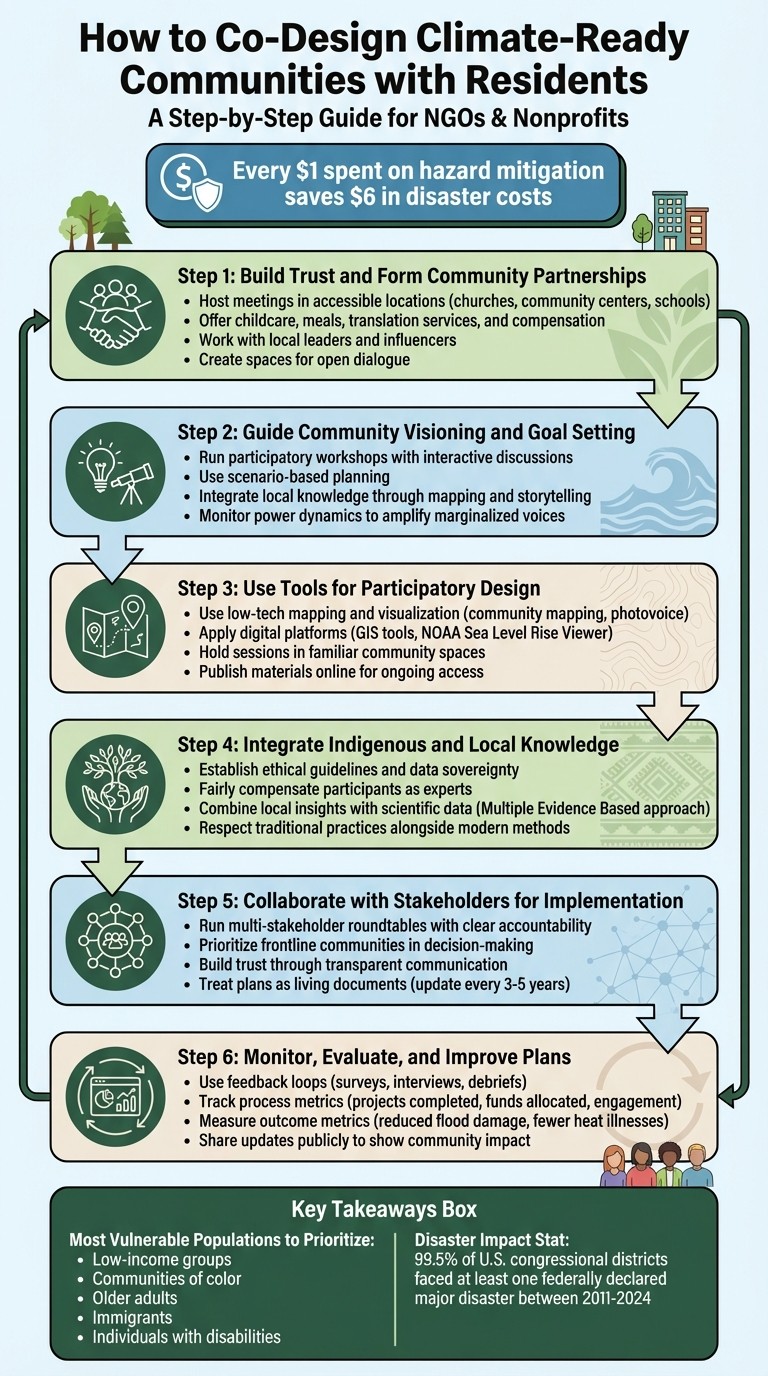
6-Step Process for Co-Designing Climate-Ready Communities with Residents
Step 1: Build Trust and Form Community Partnerships
Before diving into planning, NGOs must first earn the trust of local residents. Acknowledging past mistakes and committing to a more inclusive process is critical, especially when communities may feel disillusioned by previous unmet promises. Trust serves as the foundation needed to establish strong partnerships and foster meaningful, open dialogue.
To encourage participation, host meetings in familiar, accessible locations such as churches, community centers, schools, or housing complexes. Remove obstacles by offering childcare, meals, translation services, and even compensation for participants' time. Recognize that residents are experts in their own lived experiences, and their contributions deserve acknowledgment and respect.
Work with Local Leaders and Influencers
Start by identifying trusted figures within the community. These might include informal leaders like block captains, faith leaders, or community health workers. Attend neighborhood meetings already in place to build credibility and demonstrate genuine interest in the community’s concerns. For groups that are harder to reach - such as individuals experiencing homelessness - connect with leaders from organizations that support these populations, like food banks, shelters, or senior centers.
Collaboration with cross-sector agencies, such as social services or parks departments, can also help tap into established networks. Whenever possible, hire locally to strengthen credibility and ensure that the approach aligns with the community's cultural and social context.
Create Spaces for Open Dialogue
Engage directly with residents in settings where they feel comfortable. Move away from traditional "expert-led" formats and instead foster peer-to-peer conversations that blend local knowledge with scientific insights. Use participatory methods like storytelling circles, photovoice projects, or small-group discussions to create an environment where everyone feels empowered to share their perspectives. Avoid intimidating formats like large town halls, which can stifle participation.
Pay close attention to who dominates discussions and actively ensure that marginalized voices are heard. Establish ongoing small-group dialogues to keep the conversation flowing and provide multiple opportunities for input. These touchpoints allow residents to ask questions, share feedback, and see how their contributions influence decisions. This process not only strengthens community ties but also ensures that plans reflect the priorities and needs of those most affected.
"A planning process that is informed by frontline representatives in the beginning will help avoid approaches that reinforce the very systemic issues that make a population vulnerable." - Climate Ready Communities [5]
Step 2: Guide Community Visioning and Goal Setting
Once trust is established, the next step is to help residents imagine a future that is prepared for climate challenges. Rather than focusing solely on reacting to disasters, frame discussions around building a resilient and thriving future. This process should gather input from a wide range of voices and align them around shared priorities. Scenario-based workshops can be particularly effective, allowing participants to explore potential solutions, weigh trade-offs, and identify strategies that address multiple community needs. For example, urban tree planting can simultaneously reduce heat island effects, improve air quality, and create welcoming public spaces. These activities lay the groundwork for dynamic workshops that draw on residents' experiences and insights [7][9].
Run Participatory Workshops
Workshops should be designed to highlight residents' lived experiences alongside scientific data, creating an environment where everyone’s input matters. Replace traditional lectures with interactive, peer-based discussions. Providing background materials ahead of time ensures participants can engage fully, while practical supports - like childcare or transportation - help eliminate barriers to participation. Hosting these sessions in familiar, accessible locations, such as community centers or libraries, fosters a sense of comfort and trust. Tools like bilingual maps and dot voting can further encourage inclusive engagement. For instance, in Ossining, New York, bilingual maps were displayed at a public library, allowing residents to use dot voting to highlight their resilience priorities, ensuring language barriers didn’t prevent participation [8].
Pay close attention to power dynamics during these workshops. Actively monitor who is contributing and create space for voices that are often overlooked, such as those of elderly residents, youth, immigrants, and individuals with disabilities. Bringing in local facilitators - like community organizers, block captains, or faith leaders - can bridge the gap between technical planning and local expertise, as these individuals already hold trust within the neighborhood [1][8].
"Approach climate adaptation planning from a perspective of building a better future, rather than simply responding to risks." - CALS Cornell [8]
Integrate Local Knowledge
The insights gathered during workshops are invaluable for shaping effective plans. Residents possess a deep understanding of their community’s history, challenges, and strengths. Participatory methods such as community mapping, storytelling circles, or photovoice projects can capture these perspectives, complementing technical data with real-world experiences [1]. These approaches not only provide critical information but also strengthen social bonds and empower residents to take an active role in crafting local solutions.
For example, The Nature Conservancy's Community Resilience Building Workshop process uses a risk matrix and community survey questions to help stakeholders prioritize actions for various hazards, including extreme heat, flooding, and wildfire [10]. Following up with progress reports after workshops shows residents that their input is directly influencing the final goals, ensuring that the visioning process remains a continuous conversation throughout implementation [8].
This collaborative visioning process creates a strong foundation for using participatory design tools in the next stages of planning.
Step 3: Use Tools for Participatory Design
After establishing a collaborative vision, it's time to focus on tools that help communities turn their shared goals into actionable plans. These tools bridge the gap between abstract ideas and detailed strategies, ensuring everyone - regardless of technical expertise - can play a role in shaping solutions. In many cases, the process of creating these plans together fosters just as much agreement and momentum as the final outcomes themselves [11]. Beyond planning, these tools also highlight potential risks and strengthen the integration of local knowledge into the design process.
Use Low-Tech Mapping and Visualization
Simple, physical tools like community mapping make co-design accessible and inclusive. By marking hazards, resources, and vulnerable areas on large printed maps during workshops, residents can directly contribute insights that technical data might overlook. For instance, they might identify specific streets prone to flooding or neighborhoods lacking shade during heat waves [1]. This hands-on approach ensures hyper-local vulnerabilities are accounted for in the planning process.
To enrich these efforts, consider adding photovoice projects or storytelling circles. These methods allow participants to document and share their experiences with climate challenges, providing a richer understanding of vulnerabilities and helping to co-develop solutions [1]. Physical models and other visualization tools can also make complex resilience concepts easier to understand, ensuring everyone can engage meaningfully in the discussion [12].
Hold these sessions in familiar, easily accessible community spaces like schools, churches, or local centers to encourage participation [1]. The financial argument for this approach is clear: FEMA estimates that every $1 spent on hazard mitigation saves $6 in avoided disaster costs, making these upfront investments a smart choice [1].
Apply Digital Platforms for Co-Design
Digital tools can enhance traditional methods by providing a clearer picture of long-term climate risks and data-heavy scenarios. Platforms like GIS hazard mapping tools or NOAA's Sea Level Rise Viewer allow residents to explore how future conditions might impact their neighborhoods [12]. These tools can combine hazard maps with social vulnerability data - such as poverty levels or age demographics - helping communities prioritize efforts where they’re needed most [12].
A notable example comes from the San Francisco Bay Conservation and Development Commission (BCDC). Through its Adapting to Rising Tides (ART) project, the BCDC used tools like the Sea Level Rise Viewer alongside detailed topographic and socioeconomic data to help communities along Alameda County’s eastern shore visualize vulnerabilities. This approach encouraged collaboration across sectors, eventually expanding the project to cover the broader San Francisco Bay area, strengthening regional climate resilience [12].
To keep engagement active, publish project materials online and use platforms like NOAA's Digital Coast to provide training resources. These materials help community leaders better understand risks and explore adaptation strategies [12]. For inclusivity, develop multilingual alerts and communication tools to reach diverse groups [1]. By creating multiple opportunities for participation - rather than relying on single meetings - you can maintain ongoing dialogue throughout the design and implementation process [1]. This integration of digital tools also lays the groundwork for blending scientific data with indigenous and local knowledge.
Step 4: Integrate Indigenous and Local Knowledge into Solutions
Digital tools and scientific models, while powerful, often overlook the rich ecological insights held by Indigenous communities - insights refined through generations of close interaction with the environment. This knowledge frequently identifies risks and solutions that high-tech approaches may miss. The key challenge lies in blending these two knowledge systems in a way that honors their unique strengths, rather than forcing one to conform to the other. When done thoughtfully, this integration can create practical, community-driven strategies for resilience.
Identify and Respect Local Practices
Before gathering any data, it’s essential to establish clear ethical guidelines. For example, in January 2020, the Organized Village of Kake in Alaska collaborated with the University of Alaska Fairbanks to study food security and climate impacts. Together, they created a Declaration that emphasized shared values and upheld the principle of data sovereignty, ensuring the tribe maintained control over their information and that the research was conducted respectfully and ethically [13].
"Local communities are experts on their environments. Indigenous communities in particular possess profound expertise given meaningful, long standing connections to their homelands."
The Kake initiative didn’t stop at ethical research practices. It prioritized local involvement by hiring community members - nine out of ten field positions in 2020 were filled by Kake residents, who gathered ocean water and shellfish samples. Additionally, five high school students were trained in data collection, ensuring skills and knowledge stayed within the community. This data is now archived and actively informs the tribe’s climate adaptation strategies, all while building local workforce capacity and safeguarding cultural knowledge [13].
To further support such collaborations, it’s crucial to fairly compensate participants and recognize their expertise as professional contributions, not voluntary input. Holding meetings in accessible locations like community centers or churches and offering services such as childcare and translation can also ensure broad community participation [1].
Combine Local Knowledge with Scientific Data
Once respectful practices are in place, the next step is to merge local insights with scientific data. This requires an approach known as Multiple Evidence Based (MEB), which values Indigenous knowledge and Western science equally, recognizing the strengths of both [14].
In Oregon, researchers conducted 25 interviews with 31 farmers, using participatory mapping on iPads to overlay local observations of soil moisture with CESM2-LE data. Similarly, in Colorado, 36 interviews combined with 3D visualizations from the WRF-FIRE model validated residents’ observations of shifting wind patterns and fire behavior [14].
The benefits of this integration can be striking. In a 24-month project across three coastal villages in Indonesia, researchers combined traditional practices like the pranata mangsa (traditional calendar) and wana tirta (mangrove philosophy) with modern scientific methods. The result? Restoration of 50 hectares of mangroves, a 50% increase in the Community Resilience Index, a 59.1% rise in economic capital, and a 51.7% improvement in adaptive capacity [15]. These outcomes demonstrate that respecting and incorporating local knowledge isn’t just the right thing to do - it leads to more effective and durable climate solutions.
Step 5: Collaborate with Stakeholders for Implementation
Once participatory design is complete, the focus shifts to turning these collaborative plans into real-world projects. Climate solutions only succeed when they transition from ideas to action. Achieving this requires assembling a broad coalition of stakeholders - local government leaders, state agencies, private companies, community organizations, and, most importantly, the residents who will live with the outcomes. Resident input must remain central throughout the process, from planning to execution. The challenge lies not just in gathering people but in creating systems where every voice is heard, roles are clearly defined, and progress is transparent to everyone involved.
Run Multi-Stakeholder Roundtables
The first step in effective implementation is identifying the right participants. Prioritize frontline communities - those most vulnerable to climate impacts, such as low-income neighborhoods, communities of color, older adults, immigrants, and individuals with disabilities [1][6]. Then, engage trusted community connectors - people like health workers, block captains, and faith leaders who already have strong relationships within these communities. Recognize and compensate these individuals for their expertise and efforts [1].
"Forming a community of diverse stakeholders, bound by a common purpose can significantly enhance resolve and amplify effort."
U.S. Climate Resilience Toolkit [12]
For successful roundtables, assign clear accountability from the outset. Designate specific departments or organizations to lead each project, set measurable goals (e.g., "Install 50 bioswales in flood-prone neighborhoods by 2027"), and track both process and outcome metrics to ensure visible progress [1]. Make meetings accessible by offering childcare, meals, translation services, and hosting them in familiar spaces like community centers or churches instead of formal government offices [1][6]. Visualization tools, such as the Sea Level Rise Viewer, can help participants understand vulnerabilities and build consensus on solutions [12]. These steps lay the groundwork for the transparency and trust needed for long-term success.
Build Trust Through Clear Communication
Trust doesn’t develop from a single meeting - it’s fostered through consistent transparency during implementation. After each stakeholder session, share progress reports that connect community input to tangible outcomes and invite ongoing feedback [6]. Make final project materials, data, and maps available to the public so everyone can track progress collectively [12].
Establish regular progress reviews, such as quarterly check-ins for active projects, to maintain momentum and accountability [1]. Use a combination of process metrics (e.g., number of projects completed, funds invested by location, community engagement levels) and outcome metrics (e.g., reduced flood claims, lower heat-related illnesses, shorter power outages) to demonstrate both activity and impact [1]. This dual focus shows that real progress is happening and that it’s making a measurable difference.
Framing resilience as a financial investment rather than a cost can also build trust with elected officials and budget-conscious stakeholders. For instance, every $1 spent on hazard mitigation saves about $6 in avoided disaster costs [1]. Additionally, federal grants often cover 75% to 90% of the total costs for resilience projects [1]. Highlighting these financial benefits can win over stakeholders facing budget constraints. One coastal county in the Mid-Atlantic, for example, secured $340 million in infrastructure funding through coordinated stakeholder efforts [1].
Finally, treat your resilience plan as a living document. Update it every 3–5 years to reflect new climate data, lessons from recent events, and changing community priorities [1]. This ongoing transparency ensures that the plan evolves alongside the community’s needs, keeping it relevant and effective over time.
Step 6: Monitor, Evaluate, and Improve Plans
The work of climate adaptation doesn’t end once a project is launched. Building on the foundation of collaborative design and stakeholder engagement, this step emphasizes tracking progress and refining strategies to meet new challenges. True resilience comes from treating your plan as a dynamic document - one that adapts with fresh data, insights from recent events, and ongoing feedback from the community [1]. With co-created strategies in place, consistent monitoring and evaluation ensure long-term effectiveness.
Use Feedback Loops to Improve Plans
Feedback is essential for keeping plans grounded in reality. Set up multiple channels for collecting input, such as surveys, interviews, or debriefs, and ensure accessibility through language services and inclusive venues. Publicly sharing updates shows how community feedback shapes timely adjustments [19][17][16]. For example, in 2022, Caltrans collaborated with the California Transportation Commission to host Statewide Equity Listening Sessions. These meetings were held both virtually and in-person, with some conducted entirely in Spanish and translated into English upon request. This approach ensured historically underrepresented communities could participate meaningfully [17].
By identifying issues early, you can make necessary adjustments before advancing to the next project phase. Documenting workshops and sharing concise summaries or FAQs can also help reach residents unable to attend in person [17].
Measure Success with Key Metrics
Tracking success requires a mix of metrics. Process metrics, like the number of projects completed, funds allocated, or community engagement levels, provide insight into execution. Outcome metrics, such as reduced flood damage, fewer heat-related illnesses, or improved stormwater capacity, highlight the tangible benefits [1][19]. For instance, a Mid-Atlantic coastal city secured $14.7 million in grants to create a 1.2-mile living shoreline. This project restored 8 acres of tidal wetlands and increased stormwater capacity by 35% for 25-year storm events [18]. Metrics like these not only guide adjustments but also help secure ongoing funding.
Additionally, using disaggregated demographic data ensures that benefits reach frontline communities and helps prevent climate-driven displacement. Simple tools like shared spreadsheets, checklists, or visual dashboards can effectively track progress against initial goals. Assign specific staff or departments to regularly collect, analyze, and share this information to keep everyone informed [19].
Conclusion
Collaborating with residents to build climate-ready communities isn’t just a thoughtful approach - it’s essential for creating solutions that last and truly address local challenges. Nonprofits and NGOs achieve the best results when they recognize residents as key experts, with firsthand knowledge of local vulnerabilities, social connections, and community needs [20]. Between 2011 and 2024, 99.5% of U.S. congressional districts faced at least one federally declared major disaster [20]. This stark reality highlights the urgency of working together.
True resilience goes beyond physical infrastructure like seawalls or stormwater upgrades. It involves fostering stronger social ties, ensuring fair access to resources, and designing governance systems that prioritize those most at risk from climate impacts [1]. The financial case for this approach is clear: every $1 spent on hazard mitigation saves roughly $6 in disaster costs [1].
"Empowering frontline communities and securing their rights is central to achieving durable and long-lasting climate and justice solutions." – Athena Ronquillo-Ballesteros, Independent Climate Advisor [3]
This perspective underscores the importance of engaging residents to achieve equitable and sustainable outcomes. Nonprofits and NGOs play a critical role in connecting under-resourced communities with the expertise, funding, and policy support they need [2][4]. For instance, Climate Resilient Communities has involved over 20,000 residents and secured $3.42 million in direct community investments for the South Bay Area [2]. Systemic progress happens when organizations commit to meeting communities where they are - whether in schools, churches, or homes - rather than expecting them to navigate formal, often inaccessible municipal processes [1].
Resilience planning should always be a dynamic process, shaped by ongoing community input. Treat these plans as living documents that adapt to new data, lessons learned, and continuous feedback. Compensate residents for their expertise, provide supports like childcare and translation, and use both digital and low-tech methods to gather insights that traditional data might overlook [1]. Community-led design ensures that solutions align with local priorities, prevent displacement, and strengthen the social fabric that holds communities together.
FAQs
How do we find and recruit trusted local leaders?
To bring trusted local leaders into the process of co-designing climate-ready communities, focus on individuals who are already active and respected within frontline communities. Start by connecting with community organizations, faith-based groups, and local institutions to identify people with deep local ties and knowledge. Prioritize early outreach, maintain open and honest communication, and demonstrate a sincere dedication to addressing community needs - these steps are essential for building trust and ensuring inclusive participation.
What participatory tools work without GIS or big budgets?
Community-based methods like local meetings, workshops, and collaborative discussions offer effective participatory tools that don't rely on GIS or hefty budgets. Resources such as the Our City Plans toolbox by UN-Habitat and the U.S. Climate Resilience Toolkit showcase approaches that are both affordable and inclusive. These methods prioritize social connections, leverage local knowledge, and encourage open dialogue, ensuring meaningful participation without requiring extensive financial or technological investments.
How can we prevent climate projects from causing displacement?
To minimize the risk of displacement, it’s crucial to actively involve residents - especially those most at risk - in collaborative planning efforts. By doing so, their needs and concerns can be properly addressed, which helps mitigate potential social or economic harm. Start with community vulnerability assessments and ensure diverse stakeholders, particularly those from marginalized groups, are part of the conversation to identify risks early on. Focus on inclusive strategies that promote social cohesion, fair resource distribution, and community-led solutions. This approach not only strengthens climate resilience but also avoids unintended negative impacts on the community.
Related Blog Posts
How to Build a Climate Resilience Plan for NGOs & Nonprofits
How to Integrate Climate Risk into Infrastructure Planning for NGOs & Nonprofits
How to Co-Design Climate-Ready Communities with Residents for Municipalities & Government Agencies
How to Co-Design Climate-Ready Communities with Residents for Corporations
Latest Articles
©2025


FAQ
01
What does it really mean to “redefine profit”?
02
What makes Council Fire different?
03
Who does Council Fire you work with?
04
What does working with Council Fire actually look like?
05
How does Council Fire help organizations turn big goals into action?
06
How does Council Fire define and measure success?
Apr 1, 2026
How to Co-Design Climate-Ready Communities with Residents for NGOs & Nonprofits
Capacity Building
In This Article
Practical steps for NGOs to co-design climate-resilient communities with residents using participatory tools, Indigenous knowledge, and clear metrics.
How to Co-Design Climate-Ready Communities with Residents for NGOs & Nonprofits
Building climate-resilient communities starts with collaboration. The most vulnerable populations - low-income groups, communities of color, older adults, and immigrants - often face the harshest impacts of climate change. Yet, their voices are frequently overlooked in resilience planning. By actively involving residents in co-creating solutions, NGOs and nonprofits can develop plans that address real needs, prevent displacement, and strengthen community ties.
Key takeaways for co-designing climate-ready communities:
Engage residents early: Build trust, offer childcare, meals, and translation services, and compensate participants for their time.
Use participatory methods: Small-group discussions, storytelling, and community mapping uncover local insights that broader models miss.
Leverage tools and data: Combine scientific data with local knowledge through workshops, GIS mapping, and visual tools.
Integrate Indigenous practices: Respect and incorporate traditional ecological knowledge for more effective solutions.
Monitor and improve: Treat plans as living documents, adapt based on feedback, and measure success with clear metrics.
Every $1 spent on hazard mitigation saves $6 in disaster costs, making this approach both practical and impactful. NGOs and nonprofits play a critical role in bridging gaps between scientific research and local expertise, ensuring resilience plans truly serve the communities most at risk.
6-Step Process for Co-Designing Climate-Ready Communities with Residents
Step 1: Build Trust and Form Community Partnerships
Before diving into planning, NGOs must first earn the trust of local residents. Acknowledging past mistakes and committing to a more inclusive process is critical, especially when communities may feel disillusioned by previous unmet promises. Trust serves as the foundation needed to establish strong partnerships and foster meaningful, open dialogue.
To encourage participation, host meetings in familiar, accessible locations such as churches, community centers, schools, or housing complexes. Remove obstacles by offering childcare, meals, translation services, and even compensation for participants' time. Recognize that residents are experts in their own lived experiences, and their contributions deserve acknowledgment and respect.
Work with Local Leaders and Influencers
Start by identifying trusted figures within the community. These might include informal leaders like block captains, faith leaders, or community health workers. Attend neighborhood meetings already in place to build credibility and demonstrate genuine interest in the community’s concerns. For groups that are harder to reach - such as individuals experiencing homelessness - connect with leaders from organizations that support these populations, like food banks, shelters, or senior centers.
Collaboration with cross-sector agencies, such as social services or parks departments, can also help tap into established networks. Whenever possible, hire locally to strengthen credibility and ensure that the approach aligns with the community's cultural and social context.
Create Spaces for Open Dialogue
Engage directly with residents in settings where they feel comfortable. Move away from traditional "expert-led" formats and instead foster peer-to-peer conversations that blend local knowledge with scientific insights. Use participatory methods like storytelling circles, photovoice projects, or small-group discussions to create an environment where everyone feels empowered to share their perspectives. Avoid intimidating formats like large town halls, which can stifle participation.
Pay close attention to who dominates discussions and actively ensure that marginalized voices are heard. Establish ongoing small-group dialogues to keep the conversation flowing and provide multiple opportunities for input. These touchpoints allow residents to ask questions, share feedback, and see how their contributions influence decisions. This process not only strengthens community ties but also ensures that plans reflect the priorities and needs of those most affected.
"A planning process that is informed by frontline representatives in the beginning will help avoid approaches that reinforce the very systemic issues that make a population vulnerable." - Climate Ready Communities [5]
Step 2: Guide Community Visioning and Goal Setting
Once trust is established, the next step is to help residents imagine a future that is prepared for climate challenges. Rather than focusing solely on reacting to disasters, frame discussions around building a resilient and thriving future. This process should gather input from a wide range of voices and align them around shared priorities. Scenario-based workshops can be particularly effective, allowing participants to explore potential solutions, weigh trade-offs, and identify strategies that address multiple community needs. For example, urban tree planting can simultaneously reduce heat island effects, improve air quality, and create welcoming public spaces. These activities lay the groundwork for dynamic workshops that draw on residents' experiences and insights [7][9].
Run Participatory Workshops
Workshops should be designed to highlight residents' lived experiences alongside scientific data, creating an environment where everyone’s input matters. Replace traditional lectures with interactive, peer-based discussions. Providing background materials ahead of time ensures participants can engage fully, while practical supports - like childcare or transportation - help eliminate barriers to participation. Hosting these sessions in familiar, accessible locations, such as community centers or libraries, fosters a sense of comfort and trust. Tools like bilingual maps and dot voting can further encourage inclusive engagement. For instance, in Ossining, New York, bilingual maps were displayed at a public library, allowing residents to use dot voting to highlight their resilience priorities, ensuring language barriers didn’t prevent participation [8].
Pay close attention to power dynamics during these workshops. Actively monitor who is contributing and create space for voices that are often overlooked, such as those of elderly residents, youth, immigrants, and individuals with disabilities. Bringing in local facilitators - like community organizers, block captains, or faith leaders - can bridge the gap between technical planning and local expertise, as these individuals already hold trust within the neighborhood [1][8].
"Approach climate adaptation planning from a perspective of building a better future, rather than simply responding to risks." - CALS Cornell [8]
Integrate Local Knowledge
The insights gathered during workshops are invaluable for shaping effective plans. Residents possess a deep understanding of their community’s history, challenges, and strengths. Participatory methods such as community mapping, storytelling circles, or photovoice projects can capture these perspectives, complementing technical data with real-world experiences [1]. These approaches not only provide critical information but also strengthen social bonds and empower residents to take an active role in crafting local solutions.
For example, The Nature Conservancy's Community Resilience Building Workshop process uses a risk matrix and community survey questions to help stakeholders prioritize actions for various hazards, including extreme heat, flooding, and wildfire [10]. Following up with progress reports after workshops shows residents that their input is directly influencing the final goals, ensuring that the visioning process remains a continuous conversation throughout implementation [8].
This collaborative visioning process creates a strong foundation for using participatory design tools in the next stages of planning.
Step 3: Use Tools for Participatory Design
After establishing a collaborative vision, it's time to focus on tools that help communities turn their shared goals into actionable plans. These tools bridge the gap between abstract ideas and detailed strategies, ensuring everyone - regardless of technical expertise - can play a role in shaping solutions. In many cases, the process of creating these plans together fosters just as much agreement and momentum as the final outcomes themselves [11]. Beyond planning, these tools also highlight potential risks and strengthen the integration of local knowledge into the design process.
Use Low-Tech Mapping and Visualization
Simple, physical tools like community mapping make co-design accessible and inclusive. By marking hazards, resources, and vulnerable areas on large printed maps during workshops, residents can directly contribute insights that technical data might overlook. For instance, they might identify specific streets prone to flooding or neighborhoods lacking shade during heat waves [1]. This hands-on approach ensures hyper-local vulnerabilities are accounted for in the planning process.
To enrich these efforts, consider adding photovoice projects or storytelling circles. These methods allow participants to document and share their experiences with climate challenges, providing a richer understanding of vulnerabilities and helping to co-develop solutions [1]. Physical models and other visualization tools can also make complex resilience concepts easier to understand, ensuring everyone can engage meaningfully in the discussion [12].
Hold these sessions in familiar, easily accessible community spaces like schools, churches, or local centers to encourage participation [1]. The financial argument for this approach is clear: FEMA estimates that every $1 spent on hazard mitigation saves $6 in avoided disaster costs, making these upfront investments a smart choice [1].
Apply Digital Platforms for Co-Design
Digital tools can enhance traditional methods by providing a clearer picture of long-term climate risks and data-heavy scenarios. Platforms like GIS hazard mapping tools or NOAA's Sea Level Rise Viewer allow residents to explore how future conditions might impact their neighborhoods [12]. These tools can combine hazard maps with social vulnerability data - such as poverty levels or age demographics - helping communities prioritize efforts where they’re needed most [12].
A notable example comes from the San Francisco Bay Conservation and Development Commission (BCDC). Through its Adapting to Rising Tides (ART) project, the BCDC used tools like the Sea Level Rise Viewer alongside detailed topographic and socioeconomic data to help communities along Alameda County’s eastern shore visualize vulnerabilities. This approach encouraged collaboration across sectors, eventually expanding the project to cover the broader San Francisco Bay area, strengthening regional climate resilience [12].
To keep engagement active, publish project materials online and use platforms like NOAA's Digital Coast to provide training resources. These materials help community leaders better understand risks and explore adaptation strategies [12]. For inclusivity, develop multilingual alerts and communication tools to reach diverse groups [1]. By creating multiple opportunities for participation - rather than relying on single meetings - you can maintain ongoing dialogue throughout the design and implementation process [1]. This integration of digital tools also lays the groundwork for blending scientific data with indigenous and local knowledge.
Step 4: Integrate Indigenous and Local Knowledge into Solutions
Digital tools and scientific models, while powerful, often overlook the rich ecological insights held by Indigenous communities - insights refined through generations of close interaction with the environment. This knowledge frequently identifies risks and solutions that high-tech approaches may miss. The key challenge lies in blending these two knowledge systems in a way that honors their unique strengths, rather than forcing one to conform to the other. When done thoughtfully, this integration can create practical, community-driven strategies for resilience.
Identify and Respect Local Practices
Before gathering any data, it’s essential to establish clear ethical guidelines. For example, in January 2020, the Organized Village of Kake in Alaska collaborated with the University of Alaska Fairbanks to study food security and climate impacts. Together, they created a Declaration that emphasized shared values and upheld the principle of data sovereignty, ensuring the tribe maintained control over their information and that the research was conducted respectfully and ethically [13].
"Local communities are experts on their environments. Indigenous communities in particular possess profound expertise given meaningful, long standing connections to their homelands."
The Kake initiative didn’t stop at ethical research practices. It prioritized local involvement by hiring community members - nine out of ten field positions in 2020 were filled by Kake residents, who gathered ocean water and shellfish samples. Additionally, five high school students were trained in data collection, ensuring skills and knowledge stayed within the community. This data is now archived and actively informs the tribe’s climate adaptation strategies, all while building local workforce capacity and safeguarding cultural knowledge [13].
To further support such collaborations, it’s crucial to fairly compensate participants and recognize their expertise as professional contributions, not voluntary input. Holding meetings in accessible locations like community centers or churches and offering services such as childcare and translation can also ensure broad community participation [1].
Combine Local Knowledge with Scientific Data
Once respectful practices are in place, the next step is to merge local insights with scientific data. This requires an approach known as Multiple Evidence Based (MEB), which values Indigenous knowledge and Western science equally, recognizing the strengths of both [14].
In Oregon, researchers conducted 25 interviews with 31 farmers, using participatory mapping on iPads to overlay local observations of soil moisture with CESM2-LE data. Similarly, in Colorado, 36 interviews combined with 3D visualizations from the WRF-FIRE model validated residents’ observations of shifting wind patterns and fire behavior [14].
The benefits of this integration can be striking. In a 24-month project across three coastal villages in Indonesia, researchers combined traditional practices like the pranata mangsa (traditional calendar) and wana tirta (mangrove philosophy) with modern scientific methods. The result? Restoration of 50 hectares of mangroves, a 50% increase in the Community Resilience Index, a 59.1% rise in economic capital, and a 51.7% improvement in adaptive capacity [15]. These outcomes demonstrate that respecting and incorporating local knowledge isn’t just the right thing to do - it leads to more effective and durable climate solutions.
Step 5: Collaborate with Stakeholders for Implementation
Once participatory design is complete, the focus shifts to turning these collaborative plans into real-world projects. Climate solutions only succeed when they transition from ideas to action. Achieving this requires assembling a broad coalition of stakeholders - local government leaders, state agencies, private companies, community organizations, and, most importantly, the residents who will live with the outcomes. Resident input must remain central throughout the process, from planning to execution. The challenge lies not just in gathering people but in creating systems where every voice is heard, roles are clearly defined, and progress is transparent to everyone involved.
Run Multi-Stakeholder Roundtables
The first step in effective implementation is identifying the right participants. Prioritize frontline communities - those most vulnerable to climate impacts, such as low-income neighborhoods, communities of color, older adults, immigrants, and individuals with disabilities [1][6]. Then, engage trusted community connectors - people like health workers, block captains, and faith leaders who already have strong relationships within these communities. Recognize and compensate these individuals for their expertise and efforts [1].
"Forming a community of diverse stakeholders, bound by a common purpose can significantly enhance resolve and amplify effort."
U.S. Climate Resilience Toolkit [12]
For successful roundtables, assign clear accountability from the outset. Designate specific departments or organizations to lead each project, set measurable goals (e.g., "Install 50 bioswales in flood-prone neighborhoods by 2027"), and track both process and outcome metrics to ensure visible progress [1]. Make meetings accessible by offering childcare, meals, translation services, and hosting them in familiar spaces like community centers or churches instead of formal government offices [1][6]. Visualization tools, such as the Sea Level Rise Viewer, can help participants understand vulnerabilities and build consensus on solutions [12]. These steps lay the groundwork for the transparency and trust needed for long-term success.
Build Trust Through Clear Communication
Trust doesn’t develop from a single meeting - it’s fostered through consistent transparency during implementation. After each stakeholder session, share progress reports that connect community input to tangible outcomes and invite ongoing feedback [6]. Make final project materials, data, and maps available to the public so everyone can track progress collectively [12].
Establish regular progress reviews, such as quarterly check-ins for active projects, to maintain momentum and accountability [1]. Use a combination of process metrics (e.g., number of projects completed, funds invested by location, community engagement levels) and outcome metrics (e.g., reduced flood claims, lower heat-related illnesses, shorter power outages) to demonstrate both activity and impact [1]. This dual focus shows that real progress is happening and that it’s making a measurable difference.
Framing resilience as a financial investment rather than a cost can also build trust with elected officials and budget-conscious stakeholders. For instance, every $1 spent on hazard mitigation saves about $6 in avoided disaster costs [1]. Additionally, federal grants often cover 75% to 90% of the total costs for resilience projects [1]. Highlighting these financial benefits can win over stakeholders facing budget constraints. One coastal county in the Mid-Atlantic, for example, secured $340 million in infrastructure funding through coordinated stakeholder efforts [1].
Finally, treat your resilience plan as a living document. Update it every 3–5 years to reflect new climate data, lessons from recent events, and changing community priorities [1]. This ongoing transparency ensures that the plan evolves alongside the community’s needs, keeping it relevant and effective over time.
Step 6: Monitor, Evaluate, and Improve Plans
The work of climate adaptation doesn’t end once a project is launched. Building on the foundation of collaborative design and stakeholder engagement, this step emphasizes tracking progress and refining strategies to meet new challenges. True resilience comes from treating your plan as a dynamic document - one that adapts with fresh data, insights from recent events, and ongoing feedback from the community [1]. With co-created strategies in place, consistent monitoring and evaluation ensure long-term effectiveness.
Use Feedback Loops to Improve Plans
Feedback is essential for keeping plans grounded in reality. Set up multiple channels for collecting input, such as surveys, interviews, or debriefs, and ensure accessibility through language services and inclusive venues. Publicly sharing updates shows how community feedback shapes timely adjustments [19][17][16]. For example, in 2022, Caltrans collaborated with the California Transportation Commission to host Statewide Equity Listening Sessions. These meetings were held both virtually and in-person, with some conducted entirely in Spanish and translated into English upon request. This approach ensured historically underrepresented communities could participate meaningfully [17].
By identifying issues early, you can make necessary adjustments before advancing to the next project phase. Documenting workshops and sharing concise summaries or FAQs can also help reach residents unable to attend in person [17].
Measure Success with Key Metrics
Tracking success requires a mix of metrics. Process metrics, like the number of projects completed, funds allocated, or community engagement levels, provide insight into execution. Outcome metrics, such as reduced flood damage, fewer heat-related illnesses, or improved stormwater capacity, highlight the tangible benefits [1][19]. For instance, a Mid-Atlantic coastal city secured $14.7 million in grants to create a 1.2-mile living shoreline. This project restored 8 acres of tidal wetlands and increased stormwater capacity by 35% for 25-year storm events [18]. Metrics like these not only guide adjustments but also help secure ongoing funding.
Additionally, using disaggregated demographic data ensures that benefits reach frontline communities and helps prevent climate-driven displacement. Simple tools like shared spreadsheets, checklists, or visual dashboards can effectively track progress against initial goals. Assign specific staff or departments to regularly collect, analyze, and share this information to keep everyone informed [19].
Conclusion
Collaborating with residents to build climate-ready communities isn’t just a thoughtful approach - it’s essential for creating solutions that last and truly address local challenges. Nonprofits and NGOs achieve the best results when they recognize residents as key experts, with firsthand knowledge of local vulnerabilities, social connections, and community needs [20]. Between 2011 and 2024, 99.5% of U.S. congressional districts faced at least one federally declared major disaster [20]. This stark reality highlights the urgency of working together.
True resilience goes beyond physical infrastructure like seawalls or stormwater upgrades. It involves fostering stronger social ties, ensuring fair access to resources, and designing governance systems that prioritize those most at risk from climate impacts [1]. The financial case for this approach is clear: every $1 spent on hazard mitigation saves roughly $6 in disaster costs [1].
"Empowering frontline communities and securing their rights is central to achieving durable and long-lasting climate and justice solutions." – Athena Ronquillo-Ballesteros, Independent Climate Advisor [3]
This perspective underscores the importance of engaging residents to achieve equitable and sustainable outcomes. Nonprofits and NGOs play a critical role in connecting under-resourced communities with the expertise, funding, and policy support they need [2][4]. For instance, Climate Resilient Communities has involved over 20,000 residents and secured $3.42 million in direct community investments for the South Bay Area [2]. Systemic progress happens when organizations commit to meeting communities where they are - whether in schools, churches, or homes - rather than expecting them to navigate formal, often inaccessible municipal processes [1].
Resilience planning should always be a dynamic process, shaped by ongoing community input. Treat these plans as living documents that adapt to new data, lessons learned, and continuous feedback. Compensate residents for their expertise, provide supports like childcare and translation, and use both digital and low-tech methods to gather insights that traditional data might overlook [1]. Community-led design ensures that solutions align with local priorities, prevent displacement, and strengthen the social fabric that holds communities together.
FAQs
How do we find and recruit trusted local leaders?
To bring trusted local leaders into the process of co-designing climate-ready communities, focus on individuals who are already active and respected within frontline communities. Start by connecting with community organizations, faith-based groups, and local institutions to identify people with deep local ties and knowledge. Prioritize early outreach, maintain open and honest communication, and demonstrate a sincere dedication to addressing community needs - these steps are essential for building trust and ensuring inclusive participation.
What participatory tools work without GIS or big budgets?
Community-based methods like local meetings, workshops, and collaborative discussions offer effective participatory tools that don't rely on GIS or hefty budgets. Resources such as the Our City Plans toolbox by UN-Habitat and the U.S. Climate Resilience Toolkit showcase approaches that are both affordable and inclusive. These methods prioritize social connections, leverage local knowledge, and encourage open dialogue, ensuring meaningful participation without requiring extensive financial or technological investments.
How can we prevent climate projects from causing displacement?
To minimize the risk of displacement, it’s crucial to actively involve residents - especially those most at risk - in collaborative planning efforts. By doing so, their needs and concerns can be properly addressed, which helps mitigate potential social or economic harm. Start with community vulnerability assessments and ensure diverse stakeholders, particularly those from marginalized groups, are part of the conversation to identify risks early on. Focus on inclusive strategies that promote social cohesion, fair resource distribution, and community-led solutions. This approach not only strengthens climate resilience but also avoids unintended negative impacts on the community.
Related Blog Posts
How to Build a Climate Resilience Plan for NGOs & Nonprofits
How to Integrate Climate Risk into Infrastructure Planning for NGOs & Nonprofits
How to Co-Design Climate-Ready Communities with Residents for Municipalities & Government Agencies
How to Co-Design Climate-Ready Communities with Residents for Corporations
FAQ
01
What does it really mean to “redefine profit”?
02
What makes Council Fire different?
03
Who does Council Fire you work with?
04
What does working with Council Fire actually look like?
05
How does Council Fire help organizations turn big goals into action?
06
How does Council Fire define and measure success?
Apr 1, 2026
How to Co-Design Climate-Ready Communities with Residents for NGOs & Nonprofits
Capacity Building
In This Article
Practical steps for NGOs to co-design climate-resilient communities with residents using participatory tools, Indigenous knowledge, and clear metrics.
How to Co-Design Climate-Ready Communities with Residents for NGOs & Nonprofits
Building climate-resilient communities starts with collaboration. The most vulnerable populations - low-income groups, communities of color, older adults, and immigrants - often face the harshest impacts of climate change. Yet, their voices are frequently overlooked in resilience planning. By actively involving residents in co-creating solutions, NGOs and nonprofits can develop plans that address real needs, prevent displacement, and strengthen community ties.
Key takeaways for co-designing climate-ready communities:
Engage residents early: Build trust, offer childcare, meals, and translation services, and compensate participants for their time.
Use participatory methods: Small-group discussions, storytelling, and community mapping uncover local insights that broader models miss.
Leverage tools and data: Combine scientific data with local knowledge through workshops, GIS mapping, and visual tools.
Integrate Indigenous practices: Respect and incorporate traditional ecological knowledge for more effective solutions.
Monitor and improve: Treat plans as living documents, adapt based on feedback, and measure success with clear metrics.
Every $1 spent on hazard mitigation saves $6 in disaster costs, making this approach both practical and impactful. NGOs and nonprofits play a critical role in bridging gaps between scientific research and local expertise, ensuring resilience plans truly serve the communities most at risk.
6-Step Process for Co-Designing Climate-Ready Communities with Residents
Step 1: Build Trust and Form Community Partnerships
Before diving into planning, NGOs must first earn the trust of local residents. Acknowledging past mistakes and committing to a more inclusive process is critical, especially when communities may feel disillusioned by previous unmet promises. Trust serves as the foundation needed to establish strong partnerships and foster meaningful, open dialogue.
To encourage participation, host meetings in familiar, accessible locations such as churches, community centers, schools, or housing complexes. Remove obstacles by offering childcare, meals, translation services, and even compensation for participants' time. Recognize that residents are experts in their own lived experiences, and their contributions deserve acknowledgment and respect.
Work with Local Leaders and Influencers
Start by identifying trusted figures within the community. These might include informal leaders like block captains, faith leaders, or community health workers. Attend neighborhood meetings already in place to build credibility and demonstrate genuine interest in the community’s concerns. For groups that are harder to reach - such as individuals experiencing homelessness - connect with leaders from organizations that support these populations, like food banks, shelters, or senior centers.
Collaboration with cross-sector agencies, such as social services or parks departments, can also help tap into established networks. Whenever possible, hire locally to strengthen credibility and ensure that the approach aligns with the community's cultural and social context.
Create Spaces for Open Dialogue
Engage directly with residents in settings where they feel comfortable. Move away from traditional "expert-led" formats and instead foster peer-to-peer conversations that blend local knowledge with scientific insights. Use participatory methods like storytelling circles, photovoice projects, or small-group discussions to create an environment where everyone feels empowered to share their perspectives. Avoid intimidating formats like large town halls, which can stifle participation.
Pay close attention to who dominates discussions and actively ensure that marginalized voices are heard. Establish ongoing small-group dialogues to keep the conversation flowing and provide multiple opportunities for input. These touchpoints allow residents to ask questions, share feedback, and see how their contributions influence decisions. This process not only strengthens community ties but also ensures that plans reflect the priorities and needs of those most affected.
"A planning process that is informed by frontline representatives in the beginning will help avoid approaches that reinforce the very systemic issues that make a population vulnerable." - Climate Ready Communities [5]
Step 2: Guide Community Visioning and Goal Setting
Once trust is established, the next step is to help residents imagine a future that is prepared for climate challenges. Rather than focusing solely on reacting to disasters, frame discussions around building a resilient and thriving future. This process should gather input from a wide range of voices and align them around shared priorities. Scenario-based workshops can be particularly effective, allowing participants to explore potential solutions, weigh trade-offs, and identify strategies that address multiple community needs. For example, urban tree planting can simultaneously reduce heat island effects, improve air quality, and create welcoming public spaces. These activities lay the groundwork for dynamic workshops that draw on residents' experiences and insights [7][9].
Run Participatory Workshops
Workshops should be designed to highlight residents' lived experiences alongside scientific data, creating an environment where everyone’s input matters. Replace traditional lectures with interactive, peer-based discussions. Providing background materials ahead of time ensures participants can engage fully, while practical supports - like childcare or transportation - help eliminate barriers to participation. Hosting these sessions in familiar, accessible locations, such as community centers or libraries, fosters a sense of comfort and trust. Tools like bilingual maps and dot voting can further encourage inclusive engagement. For instance, in Ossining, New York, bilingual maps were displayed at a public library, allowing residents to use dot voting to highlight their resilience priorities, ensuring language barriers didn’t prevent participation [8].
Pay close attention to power dynamics during these workshops. Actively monitor who is contributing and create space for voices that are often overlooked, such as those of elderly residents, youth, immigrants, and individuals with disabilities. Bringing in local facilitators - like community organizers, block captains, or faith leaders - can bridge the gap between technical planning and local expertise, as these individuals already hold trust within the neighborhood [1][8].
"Approach climate adaptation planning from a perspective of building a better future, rather than simply responding to risks." - CALS Cornell [8]
Integrate Local Knowledge
The insights gathered during workshops are invaluable for shaping effective plans. Residents possess a deep understanding of their community’s history, challenges, and strengths. Participatory methods such as community mapping, storytelling circles, or photovoice projects can capture these perspectives, complementing technical data with real-world experiences [1]. These approaches not only provide critical information but also strengthen social bonds and empower residents to take an active role in crafting local solutions.
For example, The Nature Conservancy's Community Resilience Building Workshop process uses a risk matrix and community survey questions to help stakeholders prioritize actions for various hazards, including extreme heat, flooding, and wildfire [10]. Following up with progress reports after workshops shows residents that their input is directly influencing the final goals, ensuring that the visioning process remains a continuous conversation throughout implementation [8].
This collaborative visioning process creates a strong foundation for using participatory design tools in the next stages of planning.
Step 3: Use Tools for Participatory Design
After establishing a collaborative vision, it's time to focus on tools that help communities turn their shared goals into actionable plans. These tools bridge the gap between abstract ideas and detailed strategies, ensuring everyone - regardless of technical expertise - can play a role in shaping solutions. In many cases, the process of creating these plans together fosters just as much agreement and momentum as the final outcomes themselves [11]. Beyond planning, these tools also highlight potential risks and strengthen the integration of local knowledge into the design process.
Use Low-Tech Mapping and Visualization
Simple, physical tools like community mapping make co-design accessible and inclusive. By marking hazards, resources, and vulnerable areas on large printed maps during workshops, residents can directly contribute insights that technical data might overlook. For instance, they might identify specific streets prone to flooding or neighborhoods lacking shade during heat waves [1]. This hands-on approach ensures hyper-local vulnerabilities are accounted for in the planning process.
To enrich these efforts, consider adding photovoice projects or storytelling circles. These methods allow participants to document and share their experiences with climate challenges, providing a richer understanding of vulnerabilities and helping to co-develop solutions [1]. Physical models and other visualization tools can also make complex resilience concepts easier to understand, ensuring everyone can engage meaningfully in the discussion [12].
Hold these sessions in familiar, easily accessible community spaces like schools, churches, or local centers to encourage participation [1]. The financial argument for this approach is clear: FEMA estimates that every $1 spent on hazard mitigation saves $6 in avoided disaster costs, making these upfront investments a smart choice [1].
Apply Digital Platforms for Co-Design
Digital tools can enhance traditional methods by providing a clearer picture of long-term climate risks and data-heavy scenarios. Platforms like GIS hazard mapping tools or NOAA's Sea Level Rise Viewer allow residents to explore how future conditions might impact their neighborhoods [12]. These tools can combine hazard maps with social vulnerability data - such as poverty levels or age demographics - helping communities prioritize efforts where they’re needed most [12].
A notable example comes from the San Francisco Bay Conservation and Development Commission (BCDC). Through its Adapting to Rising Tides (ART) project, the BCDC used tools like the Sea Level Rise Viewer alongside detailed topographic and socioeconomic data to help communities along Alameda County’s eastern shore visualize vulnerabilities. This approach encouraged collaboration across sectors, eventually expanding the project to cover the broader San Francisco Bay area, strengthening regional climate resilience [12].
To keep engagement active, publish project materials online and use platforms like NOAA's Digital Coast to provide training resources. These materials help community leaders better understand risks and explore adaptation strategies [12]. For inclusivity, develop multilingual alerts and communication tools to reach diverse groups [1]. By creating multiple opportunities for participation - rather than relying on single meetings - you can maintain ongoing dialogue throughout the design and implementation process [1]. This integration of digital tools also lays the groundwork for blending scientific data with indigenous and local knowledge.
Step 4: Integrate Indigenous and Local Knowledge into Solutions
Digital tools and scientific models, while powerful, often overlook the rich ecological insights held by Indigenous communities - insights refined through generations of close interaction with the environment. This knowledge frequently identifies risks and solutions that high-tech approaches may miss. The key challenge lies in blending these two knowledge systems in a way that honors their unique strengths, rather than forcing one to conform to the other. When done thoughtfully, this integration can create practical, community-driven strategies for resilience.
Identify and Respect Local Practices
Before gathering any data, it’s essential to establish clear ethical guidelines. For example, in January 2020, the Organized Village of Kake in Alaska collaborated with the University of Alaska Fairbanks to study food security and climate impacts. Together, they created a Declaration that emphasized shared values and upheld the principle of data sovereignty, ensuring the tribe maintained control over their information and that the research was conducted respectfully and ethically [13].
"Local communities are experts on their environments. Indigenous communities in particular possess profound expertise given meaningful, long standing connections to their homelands."
The Kake initiative didn’t stop at ethical research practices. It prioritized local involvement by hiring community members - nine out of ten field positions in 2020 were filled by Kake residents, who gathered ocean water and shellfish samples. Additionally, five high school students were trained in data collection, ensuring skills and knowledge stayed within the community. This data is now archived and actively informs the tribe’s climate adaptation strategies, all while building local workforce capacity and safeguarding cultural knowledge [13].
To further support such collaborations, it’s crucial to fairly compensate participants and recognize their expertise as professional contributions, not voluntary input. Holding meetings in accessible locations like community centers or churches and offering services such as childcare and translation can also ensure broad community participation [1].
Combine Local Knowledge with Scientific Data
Once respectful practices are in place, the next step is to merge local insights with scientific data. This requires an approach known as Multiple Evidence Based (MEB), which values Indigenous knowledge and Western science equally, recognizing the strengths of both [14].
In Oregon, researchers conducted 25 interviews with 31 farmers, using participatory mapping on iPads to overlay local observations of soil moisture with CESM2-LE data. Similarly, in Colorado, 36 interviews combined with 3D visualizations from the WRF-FIRE model validated residents’ observations of shifting wind patterns and fire behavior [14].
The benefits of this integration can be striking. In a 24-month project across three coastal villages in Indonesia, researchers combined traditional practices like the pranata mangsa (traditional calendar) and wana tirta (mangrove philosophy) with modern scientific methods. The result? Restoration of 50 hectares of mangroves, a 50% increase in the Community Resilience Index, a 59.1% rise in economic capital, and a 51.7% improvement in adaptive capacity [15]. These outcomes demonstrate that respecting and incorporating local knowledge isn’t just the right thing to do - it leads to more effective and durable climate solutions.
Step 5: Collaborate with Stakeholders for Implementation
Once participatory design is complete, the focus shifts to turning these collaborative plans into real-world projects. Climate solutions only succeed when they transition from ideas to action. Achieving this requires assembling a broad coalition of stakeholders - local government leaders, state agencies, private companies, community organizations, and, most importantly, the residents who will live with the outcomes. Resident input must remain central throughout the process, from planning to execution. The challenge lies not just in gathering people but in creating systems where every voice is heard, roles are clearly defined, and progress is transparent to everyone involved.
Run Multi-Stakeholder Roundtables
The first step in effective implementation is identifying the right participants. Prioritize frontline communities - those most vulnerable to climate impacts, such as low-income neighborhoods, communities of color, older adults, immigrants, and individuals with disabilities [1][6]. Then, engage trusted community connectors - people like health workers, block captains, and faith leaders who already have strong relationships within these communities. Recognize and compensate these individuals for their expertise and efforts [1].
"Forming a community of diverse stakeholders, bound by a common purpose can significantly enhance resolve and amplify effort."
U.S. Climate Resilience Toolkit [12]
For successful roundtables, assign clear accountability from the outset. Designate specific departments or organizations to lead each project, set measurable goals (e.g., "Install 50 bioswales in flood-prone neighborhoods by 2027"), and track both process and outcome metrics to ensure visible progress [1]. Make meetings accessible by offering childcare, meals, translation services, and hosting them in familiar spaces like community centers or churches instead of formal government offices [1][6]. Visualization tools, such as the Sea Level Rise Viewer, can help participants understand vulnerabilities and build consensus on solutions [12]. These steps lay the groundwork for the transparency and trust needed for long-term success.
Build Trust Through Clear Communication
Trust doesn’t develop from a single meeting - it’s fostered through consistent transparency during implementation. After each stakeholder session, share progress reports that connect community input to tangible outcomes and invite ongoing feedback [6]. Make final project materials, data, and maps available to the public so everyone can track progress collectively [12].
Establish regular progress reviews, such as quarterly check-ins for active projects, to maintain momentum and accountability [1]. Use a combination of process metrics (e.g., number of projects completed, funds invested by location, community engagement levels) and outcome metrics (e.g., reduced flood claims, lower heat-related illnesses, shorter power outages) to demonstrate both activity and impact [1]. This dual focus shows that real progress is happening and that it’s making a measurable difference.
Framing resilience as a financial investment rather than a cost can also build trust with elected officials and budget-conscious stakeholders. For instance, every $1 spent on hazard mitigation saves about $6 in avoided disaster costs [1]. Additionally, federal grants often cover 75% to 90% of the total costs for resilience projects [1]. Highlighting these financial benefits can win over stakeholders facing budget constraints. One coastal county in the Mid-Atlantic, for example, secured $340 million in infrastructure funding through coordinated stakeholder efforts [1].
Finally, treat your resilience plan as a living document. Update it every 3–5 years to reflect new climate data, lessons from recent events, and changing community priorities [1]. This ongoing transparency ensures that the plan evolves alongside the community’s needs, keeping it relevant and effective over time.
Step 6: Monitor, Evaluate, and Improve Plans
The work of climate adaptation doesn’t end once a project is launched. Building on the foundation of collaborative design and stakeholder engagement, this step emphasizes tracking progress and refining strategies to meet new challenges. True resilience comes from treating your plan as a dynamic document - one that adapts with fresh data, insights from recent events, and ongoing feedback from the community [1]. With co-created strategies in place, consistent monitoring and evaluation ensure long-term effectiveness.
Use Feedback Loops to Improve Plans
Feedback is essential for keeping plans grounded in reality. Set up multiple channels for collecting input, such as surveys, interviews, or debriefs, and ensure accessibility through language services and inclusive venues. Publicly sharing updates shows how community feedback shapes timely adjustments [19][17][16]. For example, in 2022, Caltrans collaborated with the California Transportation Commission to host Statewide Equity Listening Sessions. These meetings were held both virtually and in-person, with some conducted entirely in Spanish and translated into English upon request. This approach ensured historically underrepresented communities could participate meaningfully [17].
By identifying issues early, you can make necessary adjustments before advancing to the next project phase. Documenting workshops and sharing concise summaries or FAQs can also help reach residents unable to attend in person [17].
Measure Success with Key Metrics
Tracking success requires a mix of metrics. Process metrics, like the number of projects completed, funds allocated, or community engagement levels, provide insight into execution. Outcome metrics, such as reduced flood damage, fewer heat-related illnesses, or improved stormwater capacity, highlight the tangible benefits [1][19]. For instance, a Mid-Atlantic coastal city secured $14.7 million in grants to create a 1.2-mile living shoreline. This project restored 8 acres of tidal wetlands and increased stormwater capacity by 35% for 25-year storm events [18]. Metrics like these not only guide adjustments but also help secure ongoing funding.
Additionally, using disaggregated demographic data ensures that benefits reach frontline communities and helps prevent climate-driven displacement. Simple tools like shared spreadsheets, checklists, or visual dashboards can effectively track progress against initial goals. Assign specific staff or departments to regularly collect, analyze, and share this information to keep everyone informed [19].
Conclusion
Collaborating with residents to build climate-ready communities isn’t just a thoughtful approach - it’s essential for creating solutions that last and truly address local challenges. Nonprofits and NGOs achieve the best results when they recognize residents as key experts, with firsthand knowledge of local vulnerabilities, social connections, and community needs [20]. Between 2011 and 2024, 99.5% of U.S. congressional districts faced at least one federally declared major disaster [20]. This stark reality highlights the urgency of working together.
True resilience goes beyond physical infrastructure like seawalls or stormwater upgrades. It involves fostering stronger social ties, ensuring fair access to resources, and designing governance systems that prioritize those most at risk from climate impacts [1]. The financial case for this approach is clear: every $1 spent on hazard mitigation saves roughly $6 in disaster costs [1].
"Empowering frontline communities and securing their rights is central to achieving durable and long-lasting climate and justice solutions." – Athena Ronquillo-Ballesteros, Independent Climate Advisor [3]
This perspective underscores the importance of engaging residents to achieve equitable and sustainable outcomes. Nonprofits and NGOs play a critical role in connecting under-resourced communities with the expertise, funding, and policy support they need [2][4]. For instance, Climate Resilient Communities has involved over 20,000 residents and secured $3.42 million in direct community investments for the South Bay Area [2]. Systemic progress happens when organizations commit to meeting communities where they are - whether in schools, churches, or homes - rather than expecting them to navigate formal, often inaccessible municipal processes [1].
Resilience planning should always be a dynamic process, shaped by ongoing community input. Treat these plans as living documents that adapt to new data, lessons learned, and continuous feedback. Compensate residents for their expertise, provide supports like childcare and translation, and use both digital and low-tech methods to gather insights that traditional data might overlook [1]. Community-led design ensures that solutions align with local priorities, prevent displacement, and strengthen the social fabric that holds communities together.
FAQs
How do we find and recruit trusted local leaders?
To bring trusted local leaders into the process of co-designing climate-ready communities, focus on individuals who are already active and respected within frontline communities. Start by connecting with community organizations, faith-based groups, and local institutions to identify people with deep local ties and knowledge. Prioritize early outreach, maintain open and honest communication, and demonstrate a sincere dedication to addressing community needs - these steps are essential for building trust and ensuring inclusive participation.
What participatory tools work without GIS or big budgets?
Community-based methods like local meetings, workshops, and collaborative discussions offer effective participatory tools that don't rely on GIS or hefty budgets. Resources such as the Our City Plans toolbox by UN-Habitat and the U.S. Climate Resilience Toolkit showcase approaches that are both affordable and inclusive. These methods prioritize social connections, leverage local knowledge, and encourage open dialogue, ensuring meaningful participation without requiring extensive financial or technological investments.
How can we prevent climate projects from causing displacement?
To minimize the risk of displacement, it’s crucial to actively involve residents - especially those most at risk - in collaborative planning efforts. By doing so, their needs and concerns can be properly addressed, which helps mitigate potential social or economic harm. Start with community vulnerability assessments and ensure diverse stakeholders, particularly those from marginalized groups, are part of the conversation to identify risks early on. Focus on inclusive strategies that promote social cohesion, fair resource distribution, and community-led solutions. This approach not only strengthens climate resilience but also avoids unintended negative impacts on the community.
Related Blog Posts
How to Build a Climate Resilience Plan for NGOs & Nonprofits
How to Integrate Climate Risk into Infrastructure Planning for NGOs & Nonprofits
How to Co-Design Climate-Ready Communities with Residents for Municipalities & Government Agencies
How to Co-Design Climate-Ready Communities with Residents for Corporations
FAQ
What does it really mean to “redefine profit”?
What makes Council Fire different?
Who does Council Fire you work with?
What does working with Council Fire actually look like?
How does Council Fire help organizations turn big goals into action?
How does Council Fire define and measure success?