Mar 31, 2026
How to Co-Design Climate-Ready Communities with Residents for Corporations
Sustainability Strategy
In This Article
Corporations must co-design climate-resilient communities with residents using data, governance, nature-based solutions, and measurable metrics.
How to Co-Design Climate-Ready Communities with Residents for Corporations
Building climate-resilient communities requires corporations to collaborate directly with residents. This approach prioritizes local knowledge and ensures solutions address real-world challenges like flooding, extreme heat, and contamination. Co-designing with communities not only protects neighborhoods but also strengthens corporate assets and minimizes disruptions. Here's how corporations can effectively engage with residents:
Blend Data with Local Insights: Use technical tools alongside participatory mapping to identify risks.
Create Resident Participation Structures: Form diverse teams and empower residents with co-leadership roles.
Implement Nature-Based Solutions: Focus on green infrastructure like living shorelines and urban forests.
Measure and Scale Impact: Track success with clear metrics and expand successful models.
This collaborative model delivers financial returns, builds trust, and aligns corporate goals with community needs.
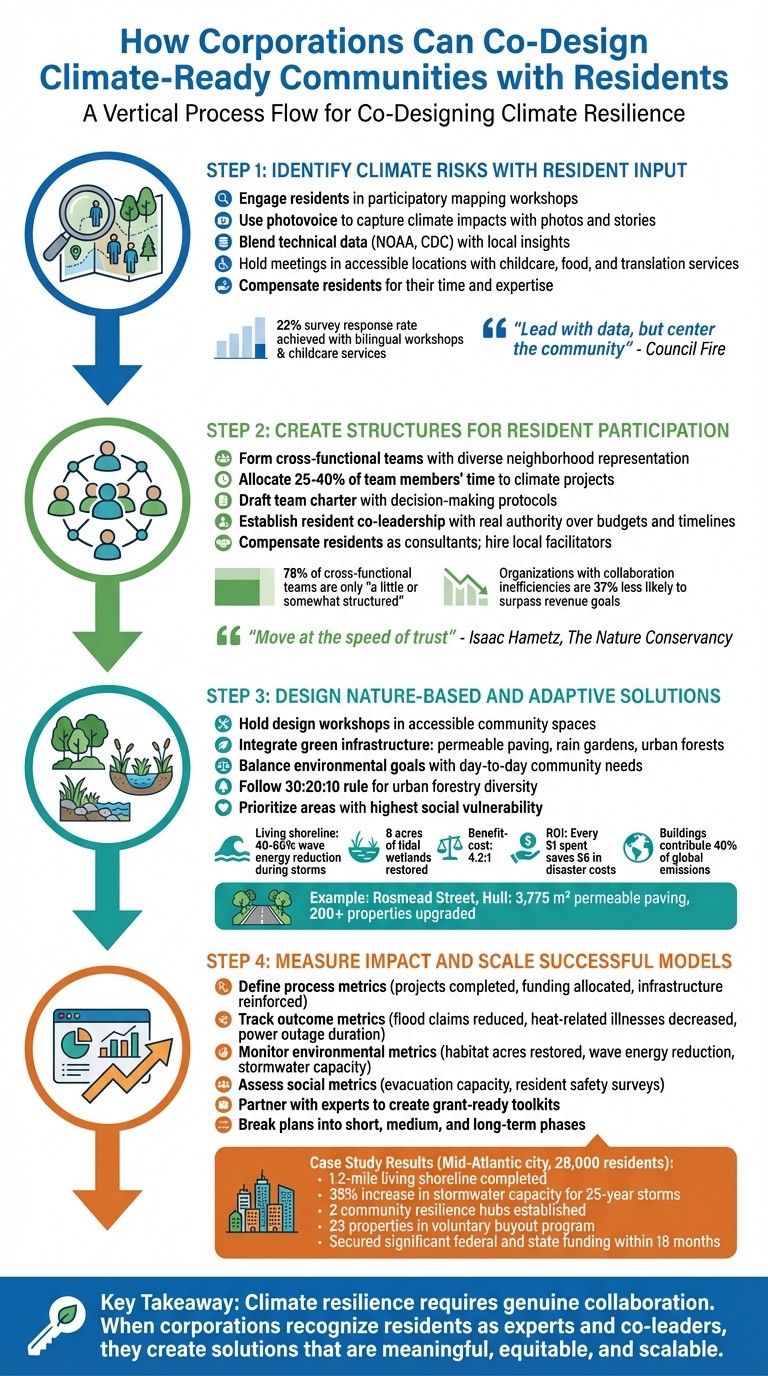
4-Step Process for Co-Designing Climate-Ready Communities with Residents
Community Engagement for Climate Resilience: What is it and how do you do it well?
Step 1: Identify Climate Risks with Resident Input
Effective climate risk assessments rely on blending technical data with the lived experience of residents who know their neighborhoods best. These assessments should evaluate three key dimensions: Exposure (hazards like flooding or extreme heat), Sensitivity (how vulnerable infrastructure and populations are), and Adaptive Capacity (the resources and networks available to respond) [1]. While technical tools excel at mapping exposure, residents can provide essential context for sensitivity and adaptive capacity. By combining these perspectives, assessments become more precise and actionable. Below, we explore how participatory mapping and technical tools together create a comprehensive framework for identifying risks.
Engage Residents in Risk Mapping
Participatory mapping empowers residents to highlight vulnerable areas, resources, and hazards by marking them on physical or digital maps during workshops. A notable example comes from a July 2020 collaboration between the University of Miami, The CLEO Institute, and Catalyst Miami. Using the Hyperlocalism (HyLo) method, residents in Little River and Homestead, Florida, documented risks through photovoice - capturing climate impacts with photos and personal stories. This approach uncovered issues that traditional geospatial data often misses [4]. Interestingly, the study revealed that residents' concerns sometimes differed from the priorities identified by technical analyses.
Another example comes from a Mid-Atlantic coastal city, where a 22% survey response rate and bilingual workshops with childcare services significantly boosted community participation [2]. Through these efforts, a stakeholder advisory committee identified a previously overlooked compound hazard: flooding combined with contamination from a nearby Superfund site. This insight played a critical role in securing federal and state grants [2].
To encourage participation, meetings should be held in accessible locations like community centers, churches, or housing complexes instead of corporate offices [1]. Offering childcare, food, and translation services can also help break down barriers. Additionally, compensating residents for their time and expertise - such as hiring block captains or faith leaders to co-lead discussions - demonstrates respect for their contributions [1]. As Council Fire emphasizes:
Lead with data, but center the community [2].
While resident input identifies localized vulnerabilities, technical data strengthens and expands these findings.
Use Data Tools for Risk Analysis
Once community priorities are identified, technical tools provide the data-driven backbone for creating grant-worthy assessments. For instance, the Mid-Atlantic city used NOAA sea-level rise scenarios and LOCA2 precipitation data, combined with the CDC Social Vulnerability Index (SVI), to pinpoint high-risk neighborhoods [2]. EPA SWMM modeling was also employed to evaluate the capacity of stormwater systems under future rainfall projections [2]. These tools map large-scale physical threats, but resident insights add critical details - like pinpointing specific intersections prone to flooding or identifying homes without sufficient cooling systems.
In another example, the Adapting to Rising Tides (ART) Program in San Francisco Bay used "total water level" mapping to account for lunar tides, storm surges, and projected sea-level rise. Program Manager Lindy Lowe facilitated field trips to coastal assets and vulnerable infrastructure, sparking dialogue between residents and planners [5]. During these discussions, the working group suggested expanding the project to include seismic hazards alongside sea-level rise. Lowe reflected on this shift, calling it:
an ah-ha moment that happened early in the project [5].
These examples illustrate how technical tools lay the groundwork, but it’s the collaboration with residents that determines which projects gain traction and move forward.
Step 2: Create Structures for Resident Participation
Identifying climate risks is just the first step. The next challenge lies in creating formal systems that allow residents to actively participate in decision-making. Without a clear structure, cross-functional teams often struggle to work effectively. Consider this: 78% of employees report that their cross-functional teams are only "a little or somewhat structured", and organizations facing collaboration inefficiencies are 37% less likely to surpass their revenue and profit goals [6][9]. For companies partnering with communities on climate solutions, establishing robust governance frameworks from the outset is essential. These frameworks ensure that identified risks translate into actionable, community-driven solutions.
Form Cross-Functional Teams
Strong teams combine corporate expertise with local knowledge by intentionally including members from various backgrounds and neighborhoods. This approach builds on insights gathered during earlier risk assessments and ensures that diverse perspectives shape the solutions. Pay particular attention to including residents from areas most affected by climate challenges - such as low-income neighborhoods, communities of color, and elderly populations - so that those directly impacted by flooding, heatwaves, or contamination have a say in the process [1]. However, simply having diverse representation isn’t enough. Teams need leaders who can bridge the gap between technical expertise and local concerns, manage conflicting priorities, and navigate political complexities [6][9].
To ensure meaningful contributions and prevent burnout, allocate 25% to 40% of team members’ time to climate-related projects [6]. Before tackling the first major milestone, draft a team charter that outlines decision-making protocols, conflict resolution strategies, and communication guidelines [7]. This groundwork fosters psychological safety - a space where residents feel comfortable sharing their concerns, admitting mistakes, and proposing unconventional ideas without fear of judgment [8][9].
Establish Resident Co-Leadership
Building on the foundation of cross-functional teams, shared governance models take resident participation to the next level by granting them co-leadership roles. This goes beyond mere consultation, giving residents real authority over budgets, timelines, and project designs. As Isaac Hametz from The Nature Conservancy puts it, success requires moving "at the speed of trust" [10]. Instead of rushing to meet deadlines, corporations must invest time in building relationships. Hametz describes Baltimore as:
a city that is resource rich and outcome poor – where great visions often aren't realized to their fullest potential because of silos and structural issues [10].
To avoid similar pitfalls, compensate residents for their time and expertise as consultants. Additionally, hire trusted local figures - such as faith leaders, block captains, or community health workers - to facilitate discussions [1]. Replace "one-off" public meetings with multiple engagement opportunities throughout the project’s lifecycle to maintain accountability and interest [1]. This method, often referred to as Radical Collaboration, involves forging partnerships with local non-profits to create shared purpose networks and deepen the understanding of community priorities [10]. When executed effectively, co-leadership structures help prevent unintended consequences like "climate gentrification", where infrastructure improvements displace the very residents they aim to protect [1].
Step 3: Design Nature-Based and Adaptive Solutions
Once strong resident co-leadership is in place, the next step is to turn shared priorities into real-world infrastructure. Nature-based solutions (NbS) stand out here, offering environmental improvements alongside practical ways to involve the community. Unlike traditional gray infrastructure, which often relies on specialized engineering firms and city departments, green infrastructure projects actively engage residents in activities like planting, maintenance, and decision-making. This approach ensures that community input directly shapes the design, often through workshops where locals can identify hazards, natural resources, and vulnerable areas needing attention [1][11].
Integrate Green Infrastructure
The design process should begin with workshops held in accessible community spaces rather than corporate settings. These sessions allow residents to compare different infrastructure options and build on earlier community discussions. A great example comes from Doha, where participatory events in April 2022, including community meals and composting activities, led to the co-design of an edible campus and an indigenous tree planting strategy [11]. This approach not only finalized technical plans but also strengthened social connections.
Another success story is the Living With Water partnership in Hull, England. In 2023, they transformed Rosmead Street by installing 3,775 m² (about 40,600 ft²) of permeable paving and upgrading over 200 properties to better manage roof water. General Manager Lee Pitcher explained:
We've engaged with the local community to understand what's important to them and how we can work together to implement these measures in a way that works for them day-to-day. [12]
This project highlights the importance of balancing environmental goals with day-to-day community needs. For instance, when residents expressed concerns about losing street parking to rain gardens, the team offered alternative solutions such as swift and bat boxes to support biodiversity without sacrificing parking spaces [12]. Listening to local concerns and being flexible in design choices ensures projects meet both sustainability targets and community priorities.
Compensating residents for their contributions during design sessions is essential, as is providing support to help vulnerable populations participate [1][2]. Visual tools, such as mobile displays, can make it easier for residents to understand various resilience options [12]. For urban forestry projects, following the "30:20:10" rule - limiting any single tree species to 10%, genus to 20%, and family to 30% - helps create a more resilient and diverse ecosystem [13].
Compare Nature-Based and Conventional Approaches
Once design options are outlined, it’s important to weigh the benefits of nature-based solutions against conventional methods. For example, a Mid-Atlantic coastal city implemented a 1.2-mile living shoreline project between 2024 and 2026 that combined oyster reef restoration with marsh creation. This initiative reduced wave energy by 40–60% during storms, restored 8 acres of tidal wetlands, and achieved a benefit-cost ratio of 4.2:1 [2]. Such data demonstrates the long-term value of nature-based approaches.
| Feature | Nature-Based Solutions (NbS) | Conventional (Gray) Infrastructure |
| --- | --- | --- |
| <strong>Biodiversity</strong> | Enhances ecosystems and restores habitats (e.g., oyster reefs, wetlands) <a href="https://resources.councilfire.org/case-studies/coastal-city-climate-resilience-plan" style="text-decoration: none;" data-framer-link="Link:{"url":"https://resources.councilfire.org/case-studies/coastal-city-climate-resilience-plan","type":"url"}"><sup>[2]</sup></a> | Often disrupts or replaces natural habitats with impermeable surfaces <a href="https://resources.councilfire.org/how-to/how-to-build-community-climate-resilience" style="text-decoration: none;" data-framer-link="Link:{"url":"https://resources.councilfire.org/how-to/how-to-build-community-climate-resilience","type":"url"}"><sup>[1]</sup></a> |
| <strong>Cost-Effectiveness</strong> | High ROI ($1:$6); reduces disaster-related costs over time <a href="https://resources.councilfire.org/how-to/how-to-build-community-climate-resilience" style="text-decoration: none;" data-framer-link="Link:{"url":"https://resources.councilfire.org/how-to/how-to-build-community-climate-resilience","type":"url"}"><sup>[1]</sup></a> | High initial costs with ongoing maintenance for aging systems <a href="https://resources.councilfire.org/case-studies/coastal-city-climate-resilience-plan" style="text-decoration: none;" data-framer-link="Link:{"url":"https://resources.councilfire.org/case-studies/coastal-city-climate-resilience-plan","type":"url"}"><sup>[2]</sup></a> |
| <strong>Scalability</strong> | Flexible; integrates into parks, streets, and buildings (e.g., bioswales) <a href="https://resources.councilfire.org/how-to/how-to-build-community-climate-resilience" style="text-decoration: none;" data-framer-link="Link:{"url":"https://resources.councilfire.org/how-to/how-to-build-community-climate-resilience","type":"url"}"><sup>[1]</sup></a> | Often limited to large-scale, site-specific engineering (e.g., seawalls) <a href="https://resources.councilfire.org/how-to/how-to-build-community-climate-resilience" style="text-decoration: none;" data-framer-link="Link:{"url":"https://resources.councilfire.org/how-to/how-to-build-community-climate-resilience","type":"url"}"><sup>[1]</sup></a> |
| <strong>Co-Benefits</strong> | Improves air and water quality, reduces heat islands, and adds recreational spaces <a href="https://resources.councilfire.org/how-to/how-to-build-community-climate-resilience" style="text-decoration: none;" data-framer-link="Link:{"url":"https://resources.councilfire.org/how-to/how-to-build-community-climate-resilience","type":"url"}"><sup>[1]</sup></a><a href="https://resources.councilfire.org/case-studies/coastal-city-climate-resilience-plan" style="text-decoration: none;" data-framer-link="Link:{"url":"https://resources.councilfire.org/case-studies/coastal-city-climate-resilience-plan","type":"url"}"><sup>[2]</sup></a> | Focused on single-hazard mitigation (e.g., drainage only) <a href="https://resources.councilfire.org/case-studies/coastal-city-climate-resilience-plan" style="text-decoration: none;" data-framer-link="Link:{"url":"https://resources.councilfire.org/case-studies/coastal-city-climate-resilience-plan","type":"url"}"><sup>[2]</sup></a> |
| <strong>Resident Engagement</strong> | High; involves participatory planting and upkeep <a href="https://medium.com/design-council/design-for-a-just-transition-co-design-community-care-ccbe1136ee05" target="_blank" style="text-decoration: none;" rel="nofollow noopener noreferrer" data-framer-link="Link:{"url":"https://medium.com/design-council/design-for-a-just-transition-co-design-community-care-ccbe1136ee05","type":"url"}" data-framer-open-in-new-tab=""><sup>[11]</sup></a> | Low; typically managed by technical experts and city departments <a href="https://resources.councilfire.org/how-to/how-to-build-community-climate-resilience" style="text-decoration: none;" data-framer-link="Link:{"url":"https://resources.councilfire.org/how-to/how-to-build-community-climate-resilience","type":"url"}"><sup>[1]</sup></a> |
| Feature | Nature-Based Solutions (NbS) | Conventional (Gray) Infrastructure |
| --- | --- | --- |
| <strong>Biodiversity</strong> | Enhances ecosystems and restores habitats (e.g., oyster reefs, wetlands) <a href="https://resources.councilfire.org/case-studies/coastal-city-climate-resilience-plan" style="text-decoration: none;" data-framer-link="Link:{"url":"https://resources.councilfire.org/case-studies/coastal-city-climate-resilience-plan","type":"url"}"><sup>[2]</sup></a> | Often disrupts or replaces natural habitats with impermeable surfaces <a href="https://resources.councilfire.org/how-to/how-to-build-community-climate-resilience" style="text-decoration: none;" data-framer-link="Link:{"url":"https://resources.councilfire.org/how-to/how-to-build-community-climate-resilience","type":"url"}"><sup>[1]</sup></a> |
| <strong>Cost-Effectiveness</strong> | High ROI ($1:$6); reduces disaster-related costs over time <a href="https://resources.councilfire.org/how-to/how-to-build-community-climate-resilience" style="text-decoration: none;" data-framer-link="Link:{"url":"https://resources.councilfire.org/how-to/how-to-build-community-climate-resilience","type":"url"}"><sup>[1]</sup></a> | High initial costs with ongoing maintenance for aging systems <a href="https://resources.councilfire.org/case-studies/coastal-city-climate-resilience-plan" style="text-decoration: none;" data-framer-link="Link:{"url":"https://resources.councilfire.org/case-studies/coastal-city-climate-resilience-plan","type":"url"}"><sup>[2]</sup></a> |
| <strong>Scalability</strong> | Flexible; integrates into parks, streets, and buildings (e.g., bioswales) <a href="https://resources.councilfire.org/how-to/how-to-build-community-climate-resilience" style="text-decoration: none;" data-framer-link="Link:{"url":"https://resources.councilfire.org/how-to/how-to-build-community-climate-resilience","type":"url"}"><sup>[1]</sup></a> | Often limited to large-scale, site-specific engineering (e.g., seawalls) <a href="https://resources.councilfire.org/how-to/how-to-build-community-climate-resilience" style="text-decoration: none;" data-framer-link="Link:{"url":"https://resources.councilfire.org/how-to/how-to-build-community-climate-resilience","type":"url"}"><sup>[1]</sup></a> |
| <strong>Co-Benefits</strong> | Improves air and water quality, reduces heat islands, and adds recreational spaces <a href="https://resources.councilfire.org/how-to/how-to-build-community-climate-resilience" style="text-decoration: none;" data-framer-link="Link:{"url":"https://resources.councilfire.org/how-to/how-to-build-community-climate-resilience","type":"url"}"><sup>[1]</sup></a><a href="https://resources.councilfire.org/case-studies/coastal-city-climate-resilience-plan" style="text-decoration: none;" data-framer-link="Link:{"url":"https://resources.councilfire.org/case-studies/coastal-city-climate-resilience-plan","type":"url"}"><sup>[2]</sup></a> | Focused on single-hazard mitigation (e.g., drainage only) <a href="https://resources.councilfire.org/case-studies/coastal-city-climate-resilience-plan" style="text-decoration: none;" data-framer-link="Link:{"url":"https://resources.councilfire.org/case-studies/coastal-city-climate-resilience-plan","type":"url"}"><sup>[2]</sup></a> |
| <strong>Resident Engagement</strong> | High; involves participatory planting and upkeep <a href="https://medium.com/design-council/design-for-a-just-transition-co-design-community-care-ccbe1136ee05" target="_blank" style="text-decoration: none;" rel="nofollow noopener noreferrer" data-framer-link="Link:{"url":"https://medium.com/design-council/design-for-a-just-transition-co-design-community-care-ccbe1136ee05","type":"url"}" data-framer-open-in-new-tab=""><sup>[11]</sup></a> | Low; typically managed by technical experts and city departments <a href="https://resources.councilfire.org/how-to/how-to-build-community-climate-resilience" style="text-decoration: none;" data-framer-link="Link:{"url":"https://resources.councilfire.org/how-to/how-to-build-community-climate-resilience","type":"url"}"><sup>[1]</sup></a> |Investing in hazard mitigation, such as nature-based projects, offers a strong return - every $1 spent saves an estimated $6 in disaster-related costs [1]. With buildings contributing nearly 40% of global emissions, incorporating green infrastructure into their design and operations is a critical step toward achieving sustainability goals [3]. To ensure fairness, prioritize placing these solutions in areas with the highest social vulnerability, providing equitable climate protection [2].
Step 4: Measure Impact and Scale Successful Models
Once nature-based solutions and adaptive infrastructure are in place, the real challenge begins: demonstrating measurable success and expanding these initiatives to other communities. Without clear metrics and strategies for replication, even the most effective co-design projects risk remaining isolated success stories rather than models for broader implementation.
Define Metrics for Resilience Outcomes
To measure impact, it's important to focus on two types of metrics: process metrics and outcome metrics. Process metrics include factors like the number of projects completed, the amount of funding allocated by region, and the percentage of critical infrastructure reinforced. Outcome metrics, on the other hand, assess tangible results such as reductions in flood insurance claims, decreases in heat-related illnesses or fatalities, shorter power outages, and improved insurance loss ratios [1].
A great example of this approach comes from a Mid-Atlantic coastal city with 28,000 residents. In February 2026, the city partnered with Council Fire to tackle sea-level rise and tidal flooding. Within 18 months, they secured significant federal and state funding. The results were impressive: a 1.2-mile living shoreline that reduced wave energy by 40–60% during storms, restoration of 8 acres of tidal wetlands, and a benefit–cost ratio of 4.2:1 that validated their metrics framework. Additionally, the city established two community resilience hubs - one at a local church and another at a community center - both equipped with backup power and cooling systems. They also launched a voluntary buyout program for 23 properties repeatedly damaged by flooding [2].
Environmental metrics for this project included the number of habitat acres restored, the percentage reduction in wave energy, and increased stormwater system capacity. For instance, stormwater capacity was boosted by 35% for 25-year storm events in priority watersheds [2]. Social metrics focused on equity, measuring evacuation and shelter capacity for at-risk populations and surveying residents to assess changes in their sense of safety and preparedness. Disaggregated demographic data was crucial to ensure that investments reached the most vulnerable groups without inadvertently causing "climate gentrification" [1].
With a strong metrics framework in place, the next step is scaling these successes to maximize their impact.
Partner with Experts to Scale Solutions
Expanding successful projects requires collaboration with experts and structured planning. This involves creating grant-ready toolkits that meet federal and state funding requirements and breaking down resilience plans into manageable phases - short-term, medium-term, and long-term [2].
"A resilience strategy without a clear implementation governance structure - who leads, who decides, how progress is tracked, how the plan adapts - will lose momentum after the initial political enthusiasm fades."
– Council Fire [2]
Corporations can play a key role in scaling these efforts by working with specialized consultants. These experts provide technical assessments of vulnerabilities, detailed cost estimates, and pipelines of grant-ready projects. For example, Council Fire supports organizations by streamlining these processes, leveraging their extensive experience in municipal and corporate resilience to deliver results faster than internal teams typically can [1].
Conclusion
Creating climate-resilient communities is not a task corporations can tackle on their own. It calls for genuine collaboration with residents who possess a deep understanding of their neighborhoods. When companies build trust and recognize community members as experts, they gain access to localized insights that technical models might miss. This collaborative effort not only strengthens resilience plans but also nurtures the social bonds necessary for communities to recover from climate-related disruptions [1]. These insights lay the groundwork for thoughtful, long-term strategies.
Such investments also safeguard business operations and stabilize supply chains [1]. While the financial benefits may be immediate, the broader impact is even more critical. Corporations that prioritize community resilience enhance their long-term stability, ensuring fewer disruptions in a world increasingly shaped by climate challenges.
"The magnitude and complexity of systemic challenges... far exceed the capacity for action and impact of individual leaderships and organizations." – Center for Leadership and Sustainability, Esade [14]
This perspective underscores the importance of adopting a comprehensive approach. Climate risks cross organizational boundaries, making it essential for corporations to embrace a long-term, integrated view of their surroundings [14]. Co-designing solutions with residents ensures they are meaningful, fair, and embraced by the communities they aim to support [1][10].
As highlighted earlier, involving residents as co-leaders turns isolated efforts into scalable, impactful models. By compensating local expertise, setting up transparent governance, and aligning projects with both corporate goals and community needs, this approach protects communities while preserving critical property value [1][2].
FAQs
How do we recruit residents without losing trust?
Recruiting residents effectively while preserving trust hinges on open and inclusive communication. It's essential to clearly explain the purpose of their involvement, the benefits it brings, and the impact their participation will have. Focus on engaging vulnerable groups by starting outreach early and tailoring efforts to be culturally sensitive. This might include hosting community meetings or collaborating with trusted local organizations to build connections. Keep communication lines open, demonstrate how residents' feedback influences decisions, and provide regular, concrete updates. These steps help establish credibility and nurture lasting trust.
What should we pay residents for co-design work?
There’s currently no clear standard for how much residents should be compensated for their involvement in co-designing climate-resilient community projects. While many resources emphasize methods for engagement and participatory design, they often overlook the specifics of payment. To promote fairness and encourage meaningful participation, it’s advisable to adopt fair payment practices that align with local wage standards and reflect the expectations of the community involved.
How do we prove ROI from nature-based solutions?
Proving the return on investment (ROI) for nature-based solutions (NbS) requires demonstrating how they address climate risks while delivering a range of benefits across economic, social, and environmental dimensions. This involves evaluating how effectively NbS mitigate threats like flooding or extreme heat, comparing their implementation costs against the damages they help avoid, and quantifying additional advantages such as cleaner air, enhanced biodiversity, and stronger community ties. By blending economic modeling with metrics that measure hazard reduction, their role in resilience strategies becomes clearer and more compelling.
Related Blog Posts
Latest Articles
©2025



FAQ
01
What does it really mean to “redefine profit”?
02
What makes Council Fire different?
03
Who does Council Fire you work with?
04
What does working with Council Fire actually look like?
05
How does Council Fire help organizations turn big goals into action?
06
How does Council Fire define and measure success?
Mar 31, 2026
How to Co-Design Climate-Ready Communities with Residents for Corporations
Sustainability Strategy
In This Article
Corporations must co-design climate-resilient communities with residents using data, governance, nature-based solutions, and measurable metrics.
How to Co-Design Climate-Ready Communities with Residents for Corporations
Building climate-resilient communities requires corporations to collaborate directly with residents. This approach prioritizes local knowledge and ensures solutions address real-world challenges like flooding, extreme heat, and contamination. Co-designing with communities not only protects neighborhoods but also strengthens corporate assets and minimizes disruptions. Here's how corporations can effectively engage with residents:
Blend Data with Local Insights: Use technical tools alongside participatory mapping to identify risks.
Create Resident Participation Structures: Form diverse teams and empower residents with co-leadership roles.
Implement Nature-Based Solutions: Focus on green infrastructure like living shorelines and urban forests.
Measure and Scale Impact: Track success with clear metrics and expand successful models.
This collaborative model delivers financial returns, builds trust, and aligns corporate goals with community needs.
4-Step Process for Co-Designing Climate-Ready Communities with Residents
Community Engagement for Climate Resilience: What is it and how do you do it well?
Step 1: Identify Climate Risks with Resident Input
Effective climate risk assessments rely on blending technical data with the lived experience of residents who know their neighborhoods best. These assessments should evaluate three key dimensions: Exposure (hazards like flooding or extreme heat), Sensitivity (how vulnerable infrastructure and populations are), and Adaptive Capacity (the resources and networks available to respond) [1]. While technical tools excel at mapping exposure, residents can provide essential context for sensitivity and adaptive capacity. By combining these perspectives, assessments become more precise and actionable. Below, we explore how participatory mapping and technical tools together create a comprehensive framework for identifying risks.
Engage Residents in Risk Mapping
Participatory mapping empowers residents to highlight vulnerable areas, resources, and hazards by marking them on physical or digital maps during workshops. A notable example comes from a July 2020 collaboration between the University of Miami, The CLEO Institute, and Catalyst Miami. Using the Hyperlocalism (HyLo) method, residents in Little River and Homestead, Florida, documented risks through photovoice - capturing climate impacts with photos and personal stories. This approach uncovered issues that traditional geospatial data often misses [4]. Interestingly, the study revealed that residents' concerns sometimes differed from the priorities identified by technical analyses.
Another example comes from a Mid-Atlantic coastal city, where a 22% survey response rate and bilingual workshops with childcare services significantly boosted community participation [2]. Through these efforts, a stakeholder advisory committee identified a previously overlooked compound hazard: flooding combined with contamination from a nearby Superfund site. This insight played a critical role in securing federal and state grants [2].
To encourage participation, meetings should be held in accessible locations like community centers, churches, or housing complexes instead of corporate offices [1]. Offering childcare, food, and translation services can also help break down barriers. Additionally, compensating residents for their time and expertise - such as hiring block captains or faith leaders to co-lead discussions - demonstrates respect for their contributions [1]. As Council Fire emphasizes:
Lead with data, but center the community [2].
While resident input identifies localized vulnerabilities, technical data strengthens and expands these findings.
Use Data Tools for Risk Analysis
Once community priorities are identified, technical tools provide the data-driven backbone for creating grant-worthy assessments. For instance, the Mid-Atlantic city used NOAA sea-level rise scenarios and LOCA2 precipitation data, combined with the CDC Social Vulnerability Index (SVI), to pinpoint high-risk neighborhoods [2]. EPA SWMM modeling was also employed to evaluate the capacity of stormwater systems under future rainfall projections [2]. These tools map large-scale physical threats, but resident insights add critical details - like pinpointing specific intersections prone to flooding or identifying homes without sufficient cooling systems.
In another example, the Adapting to Rising Tides (ART) Program in San Francisco Bay used "total water level" mapping to account for lunar tides, storm surges, and projected sea-level rise. Program Manager Lindy Lowe facilitated field trips to coastal assets and vulnerable infrastructure, sparking dialogue between residents and planners [5]. During these discussions, the working group suggested expanding the project to include seismic hazards alongside sea-level rise. Lowe reflected on this shift, calling it:
an ah-ha moment that happened early in the project [5].
These examples illustrate how technical tools lay the groundwork, but it’s the collaboration with residents that determines which projects gain traction and move forward.
Step 2: Create Structures for Resident Participation
Identifying climate risks is just the first step. The next challenge lies in creating formal systems that allow residents to actively participate in decision-making. Without a clear structure, cross-functional teams often struggle to work effectively. Consider this: 78% of employees report that their cross-functional teams are only "a little or somewhat structured", and organizations facing collaboration inefficiencies are 37% less likely to surpass their revenue and profit goals [6][9]. For companies partnering with communities on climate solutions, establishing robust governance frameworks from the outset is essential. These frameworks ensure that identified risks translate into actionable, community-driven solutions.
Form Cross-Functional Teams
Strong teams combine corporate expertise with local knowledge by intentionally including members from various backgrounds and neighborhoods. This approach builds on insights gathered during earlier risk assessments and ensures that diverse perspectives shape the solutions. Pay particular attention to including residents from areas most affected by climate challenges - such as low-income neighborhoods, communities of color, and elderly populations - so that those directly impacted by flooding, heatwaves, or contamination have a say in the process [1]. However, simply having diverse representation isn’t enough. Teams need leaders who can bridge the gap between technical expertise and local concerns, manage conflicting priorities, and navigate political complexities [6][9].
To ensure meaningful contributions and prevent burnout, allocate 25% to 40% of team members’ time to climate-related projects [6]. Before tackling the first major milestone, draft a team charter that outlines decision-making protocols, conflict resolution strategies, and communication guidelines [7]. This groundwork fosters psychological safety - a space where residents feel comfortable sharing their concerns, admitting mistakes, and proposing unconventional ideas without fear of judgment [8][9].
Establish Resident Co-Leadership
Building on the foundation of cross-functional teams, shared governance models take resident participation to the next level by granting them co-leadership roles. This goes beyond mere consultation, giving residents real authority over budgets, timelines, and project designs. As Isaac Hametz from The Nature Conservancy puts it, success requires moving "at the speed of trust" [10]. Instead of rushing to meet deadlines, corporations must invest time in building relationships. Hametz describes Baltimore as:
a city that is resource rich and outcome poor – where great visions often aren't realized to their fullest potential because of silos and structural issues [10].
To avoid similar pitfalls, compensate residents for their time and expertise as consultants. Additionally, hire trusted local figures - such as faith leaders, block captains, or community health workers - to facilitate discussions [1]. Replace "one-off" public meetings with multiple engagement opportunities throughout the project’s lifecycle to maintain accountability and interest [1]. This method, often referred to as Radical Collaboration, involves forging partnerships with local non-profits to create shared purpose networks and deepen the understanding of community priorities [10]. When executed effectively, co-leadership structures help prevent unintended consequences like "climate gentrification", where infrastructure improvements displace the very residents they aim to protect [1].
Step 3: Design Nature-Based and Adaptive Solutions
Once strong resident co-leadership is in place, the next step is to turn shared priorities into real-world infrastructure. Nature-based solutions (NbS) stand out here, offering environmental improvements alongside practical ways to involve the community. Unlike traditional gray infrastructure, which often relies on specialized engineering firms and city departments, green infrastructure projects actively engage residents in activities like planting, maintenance, and decision-making. This approach ensures that community input directly shapes the design, often through workshops where locals can identify hazards, natural resources, and vulnerable areas needing attention [1][11].
Integrate Green Infrastructure
The design process should begin with workshops held in accessible community spaces rather than corporate settings. These sessions allow residents to compare different infrastructure options and build on earlier community discussions. A great example comes from Doha, where participatory events in April 2022, including community meals and composting activities, led to the co-design of an edible campus and an indigenous tree planting strategy [11]. This approach not only finalized technical plans but also strengthened social connections.
Another success story is the Living With Water partnership in Hull, England. In 2023, they transformed Rosmead Street by installing 3,775 m² (about 40,600 ft²) of permeable paving and upgrading over 200 properties to better manage roof water. General Manager Lee Pitcher explained:
We've engaged with the local community to understand what's important to them and how we can work together to implement these measures in a way that works for them day-to-day. [12]
This project highlights the importance of balancing environmental goals with day-to-day community needs. For instance, when residents expressed concerns about losing street parking to rain gardens, the team offered alternative solutions such as swift and bat boxes to support biodiversity without sacrificing parking spaces [12]. Listening to local concerns and being flexible in design choices ensures projects meet both sustainability targets and community priorities.
Compensating residents for their contributions during design sessions is essential, as is providing support to help vulnerable populations participate [1][2]. Visual tools, such as mobile displays, can make it easier for residents to understand various resilience options [12]. For urban forestry projects, following the "30:20:10" rule - limiting any single tree species to 10%, genus to 20%, and family to 30% - helps create a more resilient and diverse ecosystem [13].
Compare Nature-Based and Conventional Approaches
Once design options are outlined, it’s important to weigh the benefits of nature-based solutions against conventional methods. For example, a Mid-Atlantic coastal city implemented a 1.2-mile living shoreline project between 2024 and 2026 that combined oyster reef restoration with marsh creation. This initiative reduced wave energy by 40–60% during storms, restored 8 acres of tidal wetlands, and achieved a benefit-cost ratio of 4.2:1 [2]. Such data demonstrates the long-term value of nature-based approaches.
| Feature | Nature-Based Solutions (NbS) | Conventional (Gray) Infrastructure |
| --- | --- | --- |
| <strong>Biodiversity</strong> | Enhances ecosystems and restores habitats (e.g., oyster reefs, wetlands) <a href="https://resources.councilfire.org/case-studies/coastal-city-climate-resilience-plan" style="text-decoration: none;" data-framer-link="Link:{"url":"https://resources.councilfire.org/case-studies/coastal-city-climate-resilience-plan","type":"url"}"><sup>[2]</sup></a> | Often disrupts or replaces natural habitats with impermeable surfaces <a href="https://resources.councilfire.org/how-to/how-to-build-community-climate-resilience" style="text-decoration: none;" data-framer-link="Link:{"url":"https://resources.councilfire.org/how-to/how-to-build-community-climate-resilience","type":"url"}"><sup>[1]</sup></a> |
| <strong>Cost-Effectiveness</strong> | High ROI ($1:$6); reduces disaster-related costs over time <a href="https://resources.councilfire.org/how-to/how-to-build-community-climate-resilience" style="text-decoration: none;" data-framer-link="Link:{"url":"https://resources.councilfire.org/how-to/how-to-build-community-climate-resilience","type":"url"}"><sup>[1]</sup></a> | High initial costs with ongoing maintenance for aging systems <a href="https://resources.councilfire.org/case-studies/coastal-city-climate-resilience-plan" style="text-decoration: none;" data-framer-link="Link:{"url":"https://resources.councilfire.org/case-studies/coastal-city-climate-resilience-plan","type":"url"}"><sup>[2]</sup></a> |
| <strong>Scalability</strong> | Flexible; integrates into parks, streets, and buildings (e.g., bioswales) <a href="https://resources.councilfire.org/how-to/how-to-build-community-climate-resilience" style="text-decoration: none;" data-framer-link="Link:{"url":"https://resources.councilfire.org/how-to/how-to-build-community-climate-resilience","type":"url"}"><sup>[1]</sup></a> | Often limited to large-scale, site-specific engineering (e.g., seawalls) <a href="https://resources.councilfire.org/how-to/how-to-build-community-climate-resilience" style="text-decoration: none;" data-framer-link="Link:{"url":"https://resources.councilfire.org/how-to/how-to-build-community-climate-resilience","type":"url"}"><sup>[1]</sup></a> |
| <strong>Co-Benefits</strong> | Improves air and water quality, reduces heat islands, and adds recreational spaces <a href="https://resources.councilfire.org/how-to/how-to-build-community-climate-resilience" style="text-decoration: none;" data-framer-link="Link:{"url":"https://resources.councilfire.org/how-to/how-to-build-community-climate-resilience","type":"url"}"><sup>[1]</sup></a><a href="https://resources.councilfire.org/case-studies/coastal-city-climate-resilience-plan" style="text-decoration: none;" data-framer-link="Link:{"url":"https://resources.councilfire.org/case-studies/coastal-city-climate-resilience-plan","type":"url"}"><sup>[2]</sup></a> | Focused on single-hazard mitigation (e.g., drainage only) <a href="https://resources.councilfire.org/case-studies/coastal-city-climate-resilience-plan" style="text-decoration: none;" data-framer-link="Link:{"url":"https://resources.councilfire.org/case-studies/coastal-city-climate-resilience-plan","type":"url"}"><sup>[2]</sup></a> |
| <strong>Resident Engagement</strong> | High; involves participatory planting and upkeep <a href="https://medium.com/design-council/design-for-a-just-transition-co-design-community-care-ccbe1136ee05" target="_blank" style="text-decoration: none;" rel="nofollow noopener noreferrer" data-framer-link="Link:{"url":"https://medium.com/design-council/design-for-a-just-transition-co-design-community-care-ccbe1136ee05","type":"url"}" data-framer-open-in-new-tab=""><sup>[11]</sup></a> | Low; typically managed by technical experts and city departments <a href="https://resources.councilfire.org/how-to/how-to-build-community-climate-resilience" style="text-decoration: none;" data-framer-link="Link:{"url":"https://resources.councilfire.org/how-to/how-to-build-community-climate-resilience","type":"url"}"><sup>[1]</sup></a> |
Investing in hazard mitigation, such as nature-based projects, offers a strong return - every $1 spent saves an estimated $6 in disaster-related costs [1]. With buildings contributing nearly 40% of global emissions, incorporating green infrastructure into their design and operations is a critical step toward achieving sustainability goals [3]. To ensure fairness, prioritize placing these solutions in areas with the highest social vulnerability, providing equitable climate protection [2].
Step 4: Measure Impact and Scale Successful Models
Once nature-based solutions and adaptive infrastructure are in place, the real challenge begins: demonstrating measurable success and expanding these initiatives to other communities. Without clear metrics and strategies for replication, even the most effective co-design projects risk remaining isolated success stories rather than models for broader implementation.
Define Metrics for Resilience Outcomes
To measure impact, it's important to focus on two types of metrics: process metrics and outcome metrics. Process metrics include factors like the number of projects completed, the amount of funding allocated by region, and the percentage of critical infrastructure reinforced. Outcome metrics, on the other hand, assess tangible results such as reductions in flood insurance claims, decreases in heat-related illnesses or fatalities, shorter power outages, and improved insurance loss ratios [1].
A great example of this approach comes from a Mid-Atlantic coastal city with 28,000 residents. In February 2026, the city partnered with Council Fire to tackle sea-level rise and tidal flooding. Within 18 months, they secured significant federal and state funding. The results were impressive: a 1.2-mile living shoreline that reduced wave energy by 40–60% during storms, restoration of 8 acres of tidal wetlands, and a benefit–cost ratio of 4.2:1 that validated their metrics framework. Additionally, the city established two community resilience hubs - one at a local church and another at a community center - both equipped with backup power and cooling systems. They also launched a voluntary buyout program for 23 properties repeatedly damaged by flooding [2].
Environmental metrics for this project included the number of habitat acres restored, the percentage reduction in wave energy, and increased stormwater system capacity. For instance, stormwater capacity was boosted by 35% for 25-year storm events in priority watersheds [2]. Social metrics focused on equity, measuring evacuation and shelter capacity for at-risk populations and surveying residents to assess changes in their sense of safety and preparedness. Disaggregated demographic data was crucial to ensure that investments reached the most vulnerable groups without inadvertently causing "climate gentrification" [1].
With a strong metrics framework in place, the next step is scaling these successes to maximize their impact.
Partner with Experts to Scale Solutions
Expanding successful projects requires collaboration with experts and structured planning. This involves creating grant-ready toolkits that meet federal and state funding requirements and breaking down resilience plans into manageable phases - short-term, medium-term, and long-term [2].
"A resilience strategy without a clear implementation governance structure - who leads, who decides, how progress is tracked, how the plan adapts - will lose momentum after the initial political enthusiasm fades."
– Council Fire [2]
Corporations can play a key role in scaling these efforts by working with specialized consultants. These experts provide technical assessments of vulnerabilities, detailed cost estimates, and pipelines of grant-ready projects. For example, Council Fire supports organizations by streamlining these processes, leveraging their extensive experience in municipal and corporate resilience to deliver results faster than internal teams typically can [1].
Conclusion
Creating climate-resilient communities is not a task corporations can tackle on their own. It calls for genuine collaboration with residents who possess a deep understanding of their neighborhoods. When companies build trust and recognize community members as experts, they gain access to localized insights that technical models might miss. This collaborative effort not only strengthens resilience plans but also nurtures the social bonds necessary for communities to recover from climate-related disruptions [1]. These insights lay the groundwork for thoughtful, long-term strategies.
Such investments also safeguard business operations and stabilize supply chains [1]. While the financial benefits may be immediate, the broader impact is even more critical. Corporations that prioritize community resilience enhance their long-term stability, ensuring fewer disruptions in a world increasingly shaped by climate challenges.
"The magnitude and complexity of systemic challenges... far exceed the capacity for action and impact of individual leaderships and organizations." – Center for Leadership and Sustainability, Esade [14]
This perspective underscores the importance of adopting a comprehensive approach. Climate risks cross organizational boundaries, making it essential for corporations to embrace a long-term, integrated view of their surroundings [14]. Co-designing solutions with residents ensures they are meaningful, fair, and embraced by the communities they aim to support [1][10].
As highlighted earlier, involving residents as co-leaders turns isolated efforts into scalable, impactful models. By compensating local expertise, setting up transparent governance, and aligning projects with both corporate goals and community needs, this approach protects communities while preserving critical property value [1][2].
FAQs
How do we recruit residents without losing trust?
Recruiting residents effectively while preserving trust hinges on open and inclusive communication. It's essential to clearly explain the purpose of their involvement, the benefits it brings, and the impact their participation will have. Focus on engaging vulnerable groups by starting outreach early and tailoring efforts to be culturally sensitive. This might include hosting community meetings or collaborating with trusted local organizations to build connections. Keep communication lines open, demonstrate how residents' feedback influences decisions, and provide regular, concrete updates. These steps help establish credibility and nurture lasting trust.
What should we pay residents for co-design work?
There’s currently no clear standard for how much residents should be compensated for their involvement in co-designing climate-resilient community projects. While many resources emphasize methods for engagement and participatory design, they often overlook the specifics of payment. To promote fairness and encourage meaningful participation, it’s advisable to adopt fair payment practices that align with local wage standards and reflect the expectations of the community involved.
How do we prove ROI from nature-based solutions?
Proving the return on investment (ROI) for nature-based solutions (NbS) requires demonstrating how they address climate risks while delivering a range of benefits across economic, social, and environmental dimensions. This involves evaluating how effectively NbS mitigate threats like flooding or extreme heat, comparing their implementation costs against the damages they help avoid, and quantifying additional advantages such as cleaner air, enhanced biodiversity, and stronger community ties. By blending economic modeling with metrics that measure hazard reduction, their role in resilience strategies becomes clearer and more compelling.
Related Blog Posts
FAQ
01
What does it really mean to “redefine profit”?
02
What makes Council Fire different?
03
Who does Council Fire you work with?
04
What does working with Council Fire actually look like?
05
How does Council Fire help organizations turn big goals into action?
06
How does Council Fire define and measure success?
Mar 31, 2026
How to Co-Design Climate-Ready Communities with Residents for Corporations
Sustainability Strategy
In This Article
Corporations must co-design climate-resilient communities with residents using data, governance, nature-based solutions, and measurable metrics.
How to Co-Design Climate-Ready Communities with Residents for Corporations
Building climate-resilient communities requires corporations to collaborate directly with residents. This approach prioritizes local knowledge and ensures solutions address real-world challenges like flooding, extreme heat, and contamination. Co-designing with communities not only protects neighborhoods but also strengthens corporate assets and minimizes disruptions. Here's how corporations can effectively engage with residents:
Blend Data with Local Insights: Use technical tools alongside participatory mapping to identify risks.
Create Resident Participation Structures: Form diverse teams and empower residents with co-leadership roles.
Implement Nature-Based Solutions: Focus on green infrastructure like living shorelines and urban forests.
Measure and Scale Impact: Track success with clear metrics and expand successful models.
This collaborative model delivers financial returns, builds trust, and aligns corporate goals with community needs.
4-Step Process for Co-Designing Climate-Ready Communities with Residents
Community Engagement for Climate Resilience: What is it and how do you do it well?
Step 1: Identify Climate Risks with Resident Input
Effective climate risk assessments rely on blending technical data with the lived experience of residents who know their neighborhoods best. These assessments should evaluate three key dimensions: Exposure (hazards like flooding or extreme heat), Sensitivity (how vulnerable infrastructure and populations are), and Adaptive Capacity (the resources and networks available to respond) [1]. While technical tools excel at mapping exposure, residents can provide essential context for sensitivity and adaptive capacity. By combining these perspectives, assessments become more precise and actionable. Below, we explore how participatory mapping and technical tools together create a comprehensive framework for identifying risks.
Engage Residents in Risk Mapping
Participatory mapping empowers residents to highlight vulnerable areas, resources, and hazards by marking them on physical or digital maps during workshops. A notable example comes from a July 2020 collaboration between the University of Miami, The CLEO Institute, and Catalyst Miami. Using the Hyperlocalism (HyLo) method, residents in Little River and Homestead, Florida, documented risks through photovoice - capturing climate impacts with photos and personal stories. This approach uncovered issues that traditional geospatial data often misses [4]. Interestingly, the study revealed that residents' concerns sometimes differed from the priorities identified by technical analyses.
Another example comes from a Mid-Atlantic coastal city, where a 22% survey response rate and bilingual workshops with childcare services significantly boosted community participation [2]. Through these efforts, a stakeholder advisory committee identified a previously overlooked compound hazard: flooding combined with contamination from a nearby Superfund site. This insight played a critical role in securing federal and state grants [2].
To encourage participation, meetings should be held in accessible locations like community centers, churches, or housing complexes instead of corporate offices [1]. Offering childcare, food, and translation services can also help break down barriers. Additionally, compensating residents for their time and expertise - such as hiring block captains or faith leaders to co-lead discussions - demonstrates respect for their contributions [1]. As Council Fire emphasizes:
Lead with data, but center the community [2].
While resident input identifies localized vulnerabilities, technical data strengthens and expands these findings.
Use Data Tools for Risk Analysis
Once community priorities are identified, technical tools provide the data-driven backbone for creating grant-worthy assessments. For instance, the Mid-Atlantic city used NOAA sea-level rise scenarios and LOCA2 precipitation data, combined with the CDC Social Vulnerability Index (SVI), to pinpoint high-risk neighborhoods [2]. EPA SWMM modeling was also employed to evaluate the capacity of stormwater systems under future rainfall projections [2]. These tools map large-scale physical threats, but resident insights add critical details - like pinpointing specific intersections prone to flooding or identifying homes without sufficient cooling systems.
In another example, the Adapting to Rising Tides (ART) Program in San Francisco Bay used "total water level" mapping to account for lunar tides, storm surges, and projected sea-level rise. Program Manager Lindy Lowe facilitated field trips to coastal assets and vulnerable infrastructure, sparking dialogue between residents and planners [5]. During these discussions, the working group suggested expanding the project to include seismic hazards alongside sea-level rise. Lowe reflected on this shift, calling it:
an ah-ha moment that happened early in the project [5].
These examples illustrate how technical tools lay the groundwork, but it’s the collaboration with residents that determines which projects gain traction and move forward.
Step 2: Create Structures for Resident Participation
Identifying climate risks is just the first step. The next challenge lies in creating formal systems that allow residents to actively participate in decision-making. Without a clear structure, cross-functional teams often struggle to work effectively. Consider this: 78% of employees report that their cross-functional teams are only "a little or somewhat structured", and organizations facing collaboration inefficiencies are 37% less likely to surpass their revenue and profit goals [6][9]. For companies partnering with communities on climate solutions, establishing robust governance frameworks from the outset is essential. These frameworks ensure that identified risks translate into actionable, community-driven solutions.
Form Cross-Functional Teams
Strong teams combine corporate expertise with local knowledge by intentionally including members from various backgrounds and neighborhoods. This approach builds on insights gathered during earlier risk assessments and ensures that diverse perspectives shape the solutions. Pay particular attention to including residents from areas most affected by climate challenges - such as low-income neighborhoods, communities of color, and elderly populations - so that those directly impacted by flooding, heatwaves, or contamination have a say in the process [1]. However, simply having diverse representation isn’t enough. Teams need leaders who can bridge the gap between technical expertise and local concerns, manage conflicting priorities, and navigate political complexities [6][9].
To ensure meaningful contributions and prevent burnout, allocate 25% to 40% of team members’ time to climate-related projects [6]. Before tackling the first major milestone, draft a team charter that outlines decision-making protocols, conflict resolution strategies, and communication guidelines [7]. This groundwork fosters psychological safety - a space where residents feel comfortable sharing their concerns, admitting mistakes, and proposing unconventional ideas without fear of judgment [8][9].
Establish Resident Co-Leadership
Building on the foundation of cross-functional teams, shared governance models take resident participation to the next level by granting them co-leadership roles. This goes beyond mere consultation, giving residents real authority over budgets, timelines, and project designs. As Isaac Hametz from The Nature Conservancy puts it, success requires moving "at the speed of trust" [10]. Instead of rushing to meet deadlines, corporations must invest time in building relationships. Hametz describes Baltimore as:
a city that is resource rich and outcome poor – where great visions often aren't realized to their fullest potential because of silos and structural issues [10].
To avoid similar pitfalls, compensate residents for their time and expertise as consultants. Additionally, hire trusted local figures - such as faith leaders, block captains, or community health workers - to facilitate discussions [1]. Replace "one-off" public meetings with multiple engagement opportunities throughout the project’s lifecycle to maintain accountability and interest [1]. This method, often referred to as Radical Collaboration, involves forging partnerships with local non-profits to create shared purpose networks and deepen the understanding of community priorities [10]. When executed effectively, co-leadership structures help prevent unintended consequences like "climate gentrification", where infrastructure improvements displace the very residents they aim to protect [1].
Step 3: Design Nature-Based and Adaptive Solutions
Once strong resident co-leadership is in place, the next step is to turn shared priorities into real-world infrastructure. Nature-based solutions (NbS) stand out here, offering environmental improvements alongside practical ways to involve the community. Unlike traditional gray infrastructure, which often relies on specialized engineering firms and city departments, green infrastructure projects actively engage residents in activities like planting, maintenance, and decision-making. This approach ensures that community input directly shapes the design, often through workshops where locals can identify hazards, natural resources, and vulnerable areas needing attention [1][11].
Integrate Green Infrastructure
The design process should begin with workshops held in accessible community spaces rather than corporate settings. These sessions allow residents to compare different infrastructure options and build on earlier community discussions. A great example comes from Doha, where participatory events in April 2022, including community meals and composting activities, led to the co-design of an edible campus and an indigenous tree planting strategy [11]. This approach not only finalized technical plans but also strengthened social connections.
Another success story is the Living With Water partnership in Hull, England. In 2023, they transformed Rosmead Street by installing 3,775 m² (about 40,600 ft²) of permeable paving and upgrading over 200 properties to better manage roof water. General Manager Lee Pitcher explained:
We've engaged with the local community to understand what's important to them and how we can work together to implement these measures in a way that works for them day-to-day. [12]
This project highlights the importance of balancing environmental goals with day-to-day community needs. For instance, when residents expressed concerns about losing street parking to rain gardens, the team offered alternative solutions such as swift and bat boxes to support biodiversity without sacrificing parking spaces [12]. Listening to local concerns and being flexible in design choices ensures projects meet both sustainability targets and community priorities.
Compensating residents for their contributions during design sessions is essential, as is providing support to help vulnerable populations participate [1][2]. Visual tools, such as mobile displays, can make it easier for residents to understand various resilience options [12]. For urban forestry projects, following the "30:20:10" rule - limiting any single tree species to 10%, genus to 20%, and family to 30% - helps create a more resilient and diverse ecosystem [13].
Compare Nature-Based and Conventional Approaches
Once design options are outlined, it’s important to weigh the benefits of nature-based solutions against conventional methods. For example, a Mid-Atlantic coastal city implemented a 1.2-mile living shoreline project between 2024 and 2026 that combined oyster reef restoration with marsh creation. This initiative reduced wave energy by 40–60% during storms, restored 8 acres of tidal wetlands, and achieved a benefit-cost ratio of 4.2:1 [2]. Such data demonstrates the long-term value of nature-based approaches.
| Feature | Nature-Based Solutions (NbS) | Conventional (Gray) Infrastructure |
| --- | --- | --- |
| <strong>Biodiversity</strong> | Enhances ecosystems and restores habitats (e.g., oyster reefs, wetlands) <a href="https://resources.councilfire.org/case-studies/coastal-city-climate-resilience-plan" style="text-decoration: none;" data-framer-link="Link:{"url":"https://resources.councilfire.org/case-studies/coastal-city-climate-resilience-plan","type":"url"}"><sup>[2]</sup></a> | Often disrupts or replaces natural habitats with impermeable surfaces <a href="https://resources.councilfire.org/how-to/how-to-build-community-climate-resilience" style="text-decoration: none;" data-framer-link="Link:{"url":"https://resources.councilfire.org/how-to/how-to-build-community-climate-resilience","type":"url"}"><sup>[1]</sup></a> |
| <strong>Cost-Effectiveness</strong> | High ROI ($1:$6); reduces disaster-related costs over time <a href="https://resources.councilfire.org/how-to/how-to-build-community-climate-resilience" style="text-decoration: none;" data-framer-link="Link:{"url":"https://resources.councilfire.org/how-to/how-to-build-community-climate-resilience","type":"url"}"><sup>[1]</sup></a> | High initial costs with ongoing maintenance for aging systems <a href="https://resources.councilfire.org/case-studies/coastal-city-climate-resilience-plan" style="text-decoration: none;" data-framer-link="Link:{"url":"https://resources.councilfire.org/case-studies/coastal-city-climate-resilience-plan","type":"url"}"><sup>[2]</sup></a> |
| <strong>Scalability</strong> | Flexible; integrates into parks, streets, and buildings (e.g., bioswales) <a href="https://resources.councilfire.org/how-to/how-to-build-community-climate-resilience" style="text-decoration: none;" data-framer-link="Link:{"url":"https://resources.councilfire.org/how-to/how-to-build-community-climate-resilience","type":"url"}"><sup>[1]</sup></a> | Often limited to large-scale, site-specific engineering (e.g., seawalls) <a href="https://resources.councilfire.org/how-to/how-to-build-community-climate-resilience" style="text-decoration: none;" data-framer-link="Link:{"url":"https://resources.councilfire.org/how-to/how-to-build-community-climate-resilience","type":"url"}"><sup>[1]</sup></a> |
| <strong>Co-Benefits</strong> | Improves air and water quality, reduces heat islands, and adds recreational spaces <a href="https://resources.councilfire.org/how-to/how-to-build-community-climate-resilience" style="text-decoration: none;" data-framer-link="Link:{"url":"https://resources.councilfire.org/how-to/how-to-build-community-climate-resilience","type":"url"}"><sup>[1]</sup></a><a href="https://resources.councilfire.org/case-studies/coastal-city-climate-resilience-plan" style="text-decoration: none;" data-framer-link="Link:{"url":"https://resources.councilfire.org/case-studies/coastal-city-climate-resilience-plan","type":"url"}"><sup>[2]</sup></a> | Focused on single-hazard mitigation (e.g., drainage only) <a href="https://resources.councilfire.org/case-studies/coastal-city-climate-resilience-plan" style="text-decoration: none;" data-framer-link="Link:{"url":"https://resources.councilfire.org/case-studies/coastal-city-climate-resilience-plan","type":"url"}"><sup>[2]</sup></a> |
| <strong>Resident Engagement</strong> | High; involves participatory planting and upkeep <a href="https://medium.com/design-council/design-for-a-just-transition-co-design-community-care-ccbe1136ee05" target="_blank" style="text-decoration: none;" rel="nofollow noopener noreferrer" data-framer-link="Link:{"url":"https://medium.com/design-council/design-for-a-just-transition-co-design-community-care-ccbe1136ee05","type":"url"}" data-framer-open-in-new-tab=""><sup>[11]</sup></a> | Low; typically managed by technical experts and city departments <a href="https://resources.councilfire.org/how-to/how-to-build-community-climate-resilience" style="text-decoration: none;" data-framer-link="Link:{"url":"https://resources.councilfire.org/how-to/how-to-build-community-climate-resilience","type":"url"}"><sup>[1]</sup></a> |
Investing in hazard mitigation, such as nature-based projects, offers a strong return - every $1 spent saves an estimated $6 in disaster-related costs [1]. With buildings contributing nearly 40% of global emissions, incorporating green infrastructure into their design and operations is a critical step toward achieving sustainability goals [3]. To ensure fairness, prioritize placing these solutions in areas with the highest social vulnerability, providing equitable climate protection [2].
Step 4: Measure Impact and Scale Successful Models
Once nature-based solutions and adaptive infrastructure are in place, the real challenge begins: demonstrating measurable success and expanding these initiatives to other communities. Without clear metrics and strategies for replication, even the most effective co-design projects risk remaining isolated success stories rather than models for broader implementation.
Define Metrics for Resilience Outcomes
To measure impact, it's important to focus on two types of metrics: process metrics and outcome metrics. Process metrics include factors like the number of projects completed, the amount of funding allocated by region, and the percentage of critical infrastructure reinforced. Outcome metrics, on the other hand, assess tangible results such as reductions in flood insurance claims, decreases in heat-related illnesses or fatalities, shorter power outages, and improved insurance loss ratios [1].
A great example of this approach comes from a Mid-Atlantic coastal city with 28,000 residents. In February 2026, the city partnered with Council Fire to tackle sea-level rise and tidal flooding. Within 18 months, they secured significant federal and state funding. The results were impressive: a 1.2-mile living shoreline that reduced wave energy by 40–60% during storms, restoration of 8 acres of tidal wetlands, and a benefit–cost ratio of 4.2:1 that validated their metrics framework. Additionally, the city established two community resilience hubs - one at a local church and another at a community center - both equipped with backup power and cooling systems. They also launched a voluntary buyout program for 23 properties repeatedly damaged by flooding [2].
Environmental metrics for this project included the number of habitat acres restored, the percentage reduction in wave energy, and increased stormwater system capacity. For instance, stormwater capacity was boosted by 35% for 25-year storm events in priority watersheds [2]. Social metrics focused on equity, measuring evacuation and shelter capacity for at-risk populations and surveying residents to assess changes in their sense of safety and preparedness. Disaggregated demographic data was crucial to ensure that investments reached the most vulnerable groups without inadvertently causing "climate gentrification" [1].
With a strong metrics framework in place, the next step is scaling these successes to maximize their impact.
Partner with Experts to Scale Solutions
Expanding successful projects requires collaboration with experts and structured planning. This involves creating grant-ready toolkits that meet federal and state funding requirements and breaking down resilience plans into manageable phases - short-term, medium-term, and long-term [2].
"A resilience strategy without a clear implementation governance structure - who leads, who decides, how progress is tracked, how the plan adapts - will lose momentum after the initial political enthusiasm fades."
– Council Fire [2]
Corporations can play a key role in scaling these efforts by working with specialized consultants. These experts provide technical assessments of vulnerabilities, detailed cost estimates, and pipelines of grant-ready projects. For example, Council Fire supports organizations by streamlining these processes, leveraging their extensive experience in municipal and corporate resilience to deliver results faster than internal teams typically can [1].
Conclusion
Creating climate-resilient communities is not a task corporations can tackle on their own. It calls for genuine collaboration with residents who possess a deep understanding of their neighborhoods. When companies build trust and recognize community members as experts, they gain access to localized insights that technical models might miss. This collaborative effort not only strengthens resilience plans but also nurtures the social bonds necessary for communities to recover from climate-related disruptions [1]. These insights lay the groundwork for thoughtful, long-term strategies.
Such investments also safeguard business operations and stabilize supply chains [1]. While the financial benefits may be immediate, the broader impact is even more critical. Corporations that prioritize community resilience enhance their long-term stability, ensuring fewer disruptions in a world increasingly shaped by climate challenges.
"The magnitude and complexity of systemic challenges... far exceed the capacity for action and impact of individual leaderships and organizations." – Center for Leadership and Sustainability, Esade [14]
This perspective underscores the importance of adopting a comprehensive approach. Climate risks cross organizational boundaries, making it essential for corporations to embrace a long-term, integrated view of their surroundings [14]. Co-designing solutions with residents ensures they are meaningful, fair, and embraced by the communities they aim to support [1][10].
As highlighted earlier, involving residents as co-leaders turns isolated efforts into scalable, impactful models. By compensating local expertise, setting up transparent governance, and aligning projects with both corporate goals and community needs, this approach protects communities while preserving critical property value [1][2].
FAQs
How do we recruit residents without losing trust?
Recruiting residents effectively while preserving trust hinges on open and inclusive communication. It's essential to clearly explain the purpose of their involvement, the benefits it brings, and the impact their participation will have. Focus on engaging vulnerable groups by starting outreach early and tailoring efforts to be culturally sensitive. This might include hosting community meetings or collaborating with trusted local organizations to build connections. Keep communication lines open, demonstrate how residents' feedback influences decisions, and provide regular, concrete updates. These steps help establish credibility and nurture lasting trust.
What should we pay residents for co-design work?
There’s currently no clear standard for how much residents should be compensated for their involvement in co-designing climate-resilient community projects. While many resources emphasize methods for engagement and participatory design, they often overlook the specifics of payment. To promote fairness and encourage meaningful participation, it’s advisable to adopt fair payment practices that align with local wage standards and reflect the expectations of the community involved.
How do we prove ROI from nature-based solutions?
Proving the return on investment (ROI) for nature-based solutions (NbS) requires demonstrating how they address climate risks while delivering a range of benefits across economic, social, and environmental dimensions. This involves evaluating how effectively NbS mitigate threats like flooding or extreme heat, comparing their implementation costs against the damages they help avoid, and quantifying additional advantages such as cleaner air, enhanced biodiversity, and stronger community ties. By blending economic modeling with metrics that measure hazard reduction, their role in resilience strategies becomes clearer and more compelling.
Related Blog Posts
FAQ
What does it really mean to “redefine profit”?
What makes Council Fire different?
Who does Council Fire you work with?
What does working with Council Fire actually look like?
How does Council Fire help organizations turn big goals into action?
How does Council Fire define and measure success?