
Mar 23, 2026
How to Develop a Blue Economy Strategy for Maritime & Logistics Companies
Sustainability Strategy
In This Article
Guide for maritime and logistics firms to build a Blue Economy strategy: audits, cleaner tech, waste reduction, partnerships, and access to green finance.
How to Develop a Blue Economy Strategy for Maritime & Logistics Companies
The Blue Economy focuses on using ocean resources responsibly to balance economic growth with the preservation of marine ecosystems. Maritime and logistics companies play a critical role in this effort, as their operations impact both the global economy and the environment. This guide outlines practical steps to integrate Blue Economy principles into your business strategy:
Assess Operations: Conduct a sustainability audit to measure your environmental impact, including carbon emissions, fuel usage, and waste generation.
Adopt Cleaner Technologies: Invest in energy-saving devices, alternative fuels like methanol, and electrification of port operations to reduce emissions and improve efficiency.
Reduce Waste: Implement waste audits, onboard recycling systems, and circular supply chains to minimize and repurpose waste materials.
Form Partnerships: Collaborate with stakeholders, industry groups, and local communities to drive collective progress toward ocean health and economic goals.
Meet Regulations: Stay compliant with emerging laws like the EU's maritime emissions rules or the U.S. Maritime Action Plan, which also opens doors to green financing opportunities.
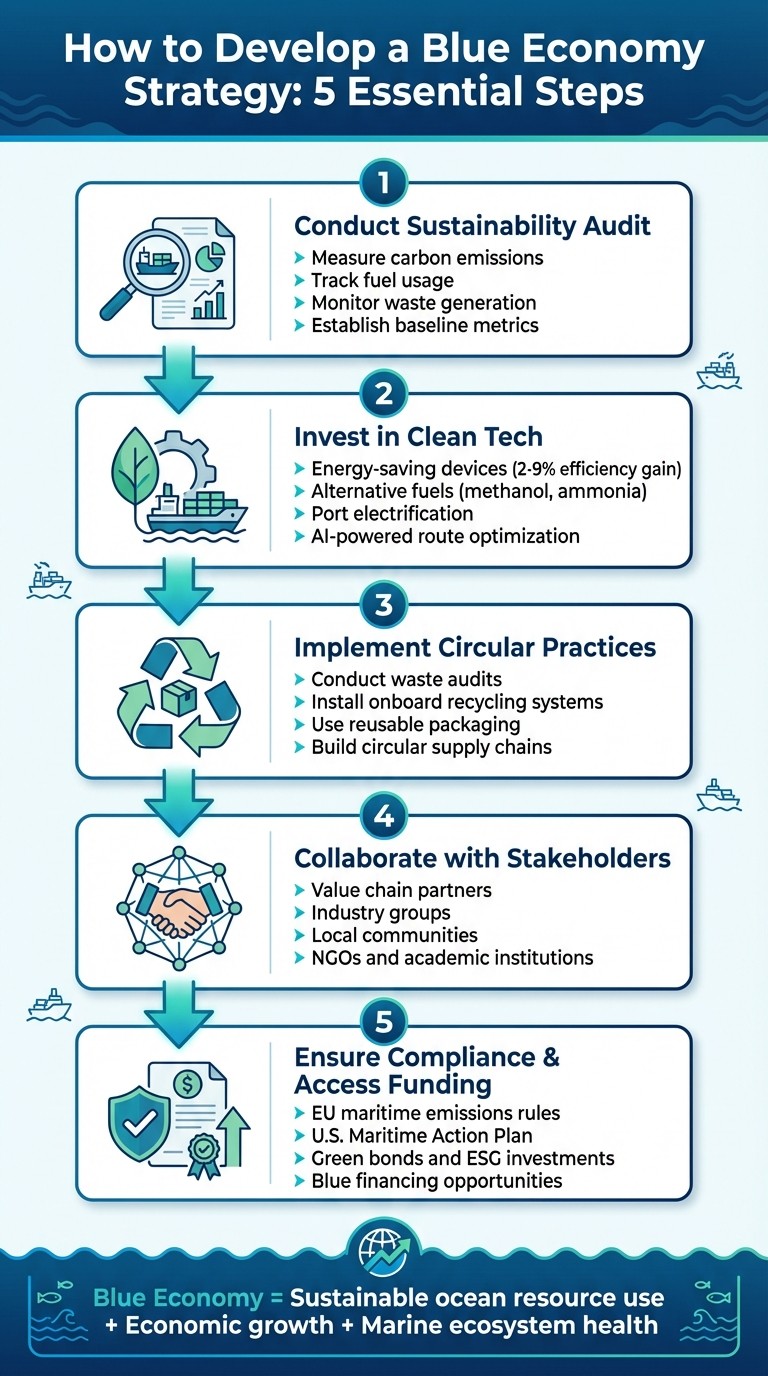
5-Step Blue Economy Strategy Implementation for Maritime Companies
Blue Economy Basics for Maritime and Logistics Companies
What the Blue Economy Means for Maritime Operations
The Blue Economy is redefining how maritime and logistics companies interact with ocean resources. It moves beyond traditional uses like cargo transit or resource extraction, emphasizing a balance between economic activity and the health of marine ecosystems [3].
This concept is grounded in three key pillars: sustainability, data-driven decisions, and equitable resource sharing. By leveraging ocean data - such as hydrography, currents, and water temperatures - companies can streamline operations while minimizing environmental impact [1]. Equity ensures that benefits from these practices extend from local communities to global supply chains [1][3].
Maritime operations can implement these principles in various ways. For instance, real-time NOAA data can help optimize shipping routes, fleets can transition to zero-emission fuels, and ports can incorporate ecological features into their infrastructure. The precautionary principle also plays a vital role, advising companies to delay potentially harmful developments until their impacts are fully understood [1][2][4].
The World Bank succinctly defines the Blue Economy as "the sustainable use of ocean resources for economic growth, improved livelihoods and jobs, and ocean ecosystem health" [3]. This definition highlights the importance of integrating economic, social, and environmental goals into a cohesive strategy, rather than viewing them as opposing forces [4].
By adopting these practices, maritime operators can foster innovation that supports both business growth and the preservation of ocean health.
Business Benefits of a Blue Economy Strategy
For maritime companies, embracing Blue Economy principles offers clear advantages that go beyond environmental compliance. Using open-source ocean data to optimize shipping routes, for example, can reduce transit times and improve efficiency [1]. Between 2014 and 2018, economic activity tied to U.S. seaports grew by 17%, reaching $5.4 trillion - a testament to the sector's growth potential [1].
Early adoption of sustainable practices can also provide a competitive edge in an era of tightening international regulations. Companies that adapt quickly can avoid costly retrofits and position themselves as leaders in emerging markets like offshore renewable energy [2][4].
Access to funding is another major benefit. As investors and development banks increasingly prioritize "nature-positive" outcomes, sustainable maritime projects become more appealing for financing. For instance, Costa Rica’s National Decarbonization Plan, launched in 2019, secured over $3 billion in funding for renewable infrastructure and sustainable ocean industries by 2025 [2]. However, global investments in ocean sustainability totaled only $13 billion between 2012 and 2022, revealing a significant funding gap - and a prime opportunity for forward-thinking companies [2].
Long-term resilience is equally important. The Port of Antwerp-Bruges demonstrated this in June 2025 by integrating ecological infrastructure projects that enhanced biodiversity while maintaining operational efficiency. This example shows how sustainability and economic growth can coexist in major maritime hubs [2]. Alfredo Giron, Head of Ocean at the World Economic Forum, captures this vision:
"By aligning capital flows with ocean regeneration, we can bring about the systemic change needed to build a resilient blue economy that protects marine ecosystems, empowers communities, and provides broad-based prosperity for future generations" [2].
Assessing Current Operations and Finding Improvement Areas
How to Conduct a Sustainability Audit
A detailed sustainability audit helps pinpoint where your maritime operations currently stand and highlights areas with the most potential for improvement. To achieve this, rely on activity-based calculations that use actual operational data. Many companies are moving away from spend-based emissions estimates, instead opting for precise tracking methods that incorporate real fuel consumption and Automatic Identification System (AIS) data [5][6].
Begin by analyzing your entire carbon footprint, which includes both Well-to-Tank (WTT) emissions - those generated during fuel production and distribution - and Tank-to-Wake (TTW) emissions from operational fuel combustion [5]. This broad approach is critical because Scope 3 emissions, which stem from supply chain and value chain activities, often account for more than 70% of total greenhouse gas emissions in ocean shipping [5]. Ignoring these emissions can lead to a significant underestimation of your environmental impact.
Your audit should address multiple operational areas simultaneously. For example, track fuel usage across the fleet, measure waste streams at both ports and onboard vessels, and analyze resource consumption patterns. Advanced tools, such as AI-powered platforms, now use AIS data to track vessel emissions in real time, offering the level of precision needed to establish meaningful baselines [5]. Include input from various teams - such as financial planning, marketing, and regulatory affairs - to ensure your sustainability data aligns with both budgetary goals and compliance requirements [7]. The insights gained from this audit will provide the foundation for setting accurate baseline metrics and guiding future improvements.
Establishing Baseline Metrics
Accurate baseline metrics serve as a benchmark to track progress and highlight improvements over time. Key metrics to document include fuel consumption per nautical mile, the amount of waste generated per voyage, and energy usage (in kilowatt-hours) at port facilities.
Upcoming regulations make these baselines increasingly essential. The EU Corporate Sustainability Reporting Directive (CSRD) and California's SB 253 will require large companies to disclose Scope 3 emissions starting in 2025-2026 [5][6]. Establishing baselines now not only prepares your operations for compliance but also uncovers potential cost savings through efficiency enhancements. Begin by documenting your current emissions, energy usage, and resource efficiency across all operational areas. Update these metrics quarterly to track trends and assess the impact of any changes you implement. This proactive approach positions your business for long-term success while meeting evolving regulatory demands.
Adopting Cleaner Practices and Technologies
Cleaner Shipping Technologies
Embracing cleaner technologies not only enhances operational efficiency but also aligns with the principles of the Blue Economy by reducing environmental impact. A good starting point is assessing current operations and introducing technologies that lower fuel consumption and emissions. Among these, energy-saving devices (ESDs) stand out for their immediate benefits with minimal operational disruption. For instance, installing propeller ducts on a standard dry bulk Capesize vessel costs around $500,000, delivering efficiency improvements of 2%–9% over the vessel's lifetime. With a payback period of just three to four years, the investment quickly proves its worth [8]. Similarly, advanced hull coatings and optimized propeller designs can be added during scheduled dry-docking, ensuring no additional downtime.
Technologies like air lubrication systems and waste heat recovery systems offer even greater benefits, reducing fuel consumption by up to 10%. Air lubrication minimizes friction by releasing air bubbles beneath the hull, while waste heat recovery captures engine heat to produce onboard electricity. Though these systems require a higher initial investment, they yield substantial long-term savings. Leading shipping companies have reported fleet efficiency gains of up to 10% and an 8% reduction in operating costs by adopting these innovations [8][9].
For long-term decarbonization, alternative fuels are a promising solution. As of early 2025, 46% of ship owners surveyed had adopted bioblended fuels, and 6% had transitioned to methanol [10]. A.P. Moller-Maersk made headlines in 2023 by launching the first container ship powered by green methanol. Dual-fuel methanol engines are now fully mature, with a technology readiness level of 9, while dual-fuel ammonia engines are expected to debut by early 2026 [10][11]. Although green ammonia is projected to cost $46 to $72 per gigajoule by 2030 - significantly more than the $13 per gigajoule for conventional low-sulfur fuel oil - these fuels prepare fleets for stricter emissions standards [10].
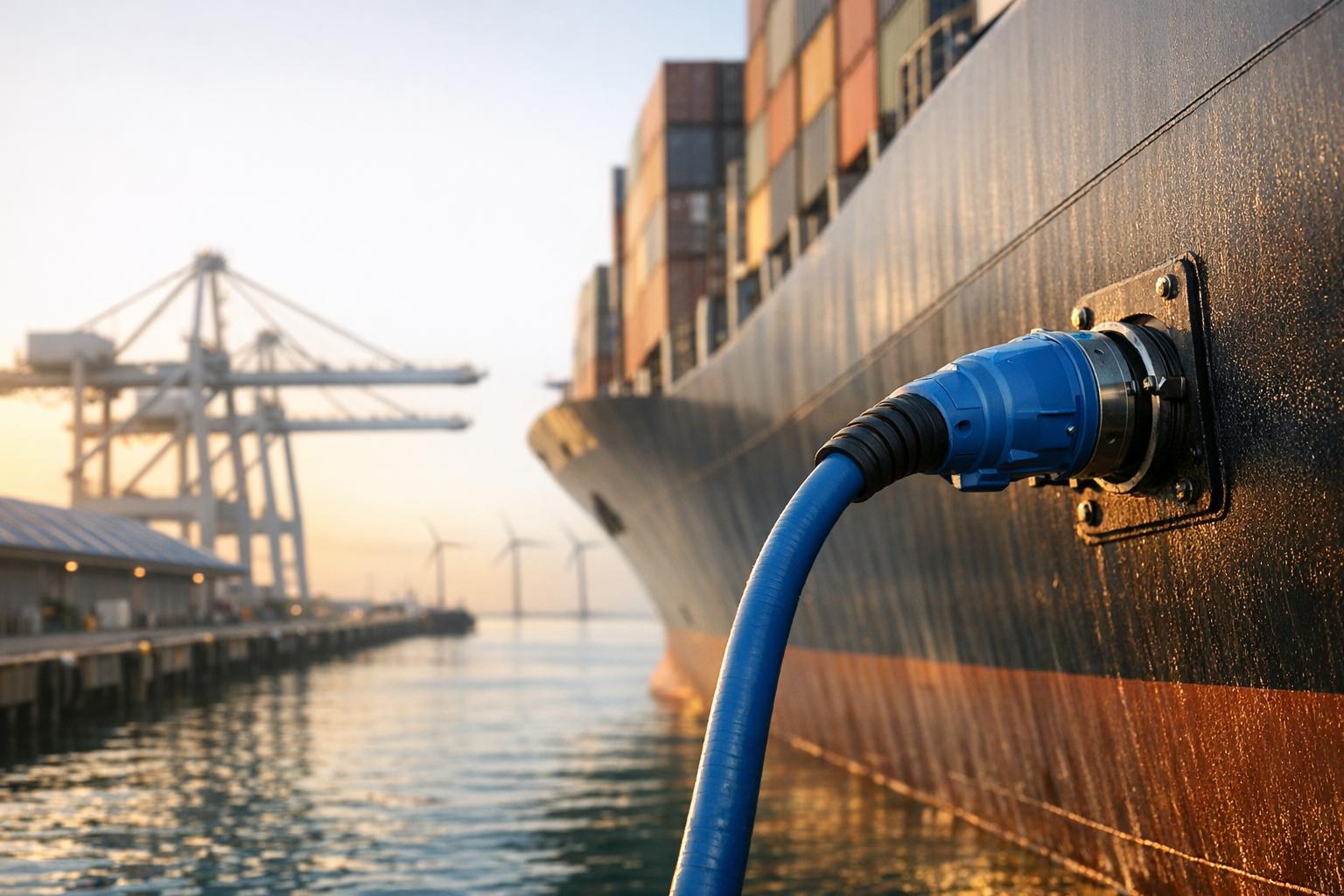
Electrifying landside operations is another key strategy to reduce emissions at ports and in inland logistics. Transitioning to electric cranes, hybrid cargo equipment, and electric vehicle fleets can significantly cut emissions where ships interact with shore. Major ports like Singapore, Rotterdam, and Antwerp-Bruges are actively supporting this transition with green incentives and dedicated roadmaps for shore-side electricity infrastructure. These initiatives allow vessels to connect to local grids while docked, eliminating emissions during port stays [10][12].
These onboard advancements should be paired with efforts to streamline external supply chains.
Improving Supply Chain Efficiency
Efficiency improvements go beyond the ship itself, with digital tools playing a critical role in optimizing broader operations. AI-powered route optimization evaluates weather conditions, ocean currents, and port congestion to determine the most fuel-efficient routes. Paired with slow steaming - operating vessels at reduced speeds - fuel consumption can drop by as much as 30% [9]. For example, the MV Afros, a bulk carrier, combined wind-assisted propulsion with optimized routing, resulting in a 20% reduction in both fuel use and emissions [12].
Blockchain technology is another tool transforming supply chain management by creating tamper-proof records for cargo, fuel, and emissions data. This transparency highlights inefficiencies and supports sustainability claims for customers and regulators. Real-time performance dashboards further enhance operations by enabling predictive maintenance, which reduces idle times and prevents fuel-wasting equipment failures. Building a robust data infrastructure and establishing clear performance indicators ensures you can track the outcomes of efficiency projects and refine strategies as needed [8].
"The business case for installing energy-saving devices on vessels will only get stronger as the deadline for new emissions regulations nears." - Ulrik Sanders, Managing Director & Senior Partner, BCG [8]
Reducing Waste and Adopting Circular Economy Practices
Cutting Waste Across Operations
Reducing waste starts with pinpointing its main sources within your operations. In the maritime and logistics sectors, waste often comes from packaging materials, single-use plastics, operational consumables, and outdated equipment. Conducting a waste audit across vessels, ports, and warehouses helps quantify discarded materials and identify areas for improvement. By categorizing waste - such as plastics, metals, paper, food waste, and hazardous materials - you can focus efforts where they’ll have the greatest impact.
Switching to reusable packaging and biodegradable alternatives is another straightforward way to cut waste. This not only reduces landfill contributions but also promotes sustainable practices across operations. Digitizing documentation can further reduce paper waste while streamlining workflows.
Onboard waste management systems are essential in tackling waste at the source. Installing compactors and segregation systems on vessels ensures recyclable materials are sorted immediately. This makes offloading at ports with recycling facilities more efficient, ultimately lowering disposal costs and bolstering circular practices. These steps not only save money but also align with the sustainable goals of the Blue Economy.
Once waste reduction strategies are in place, the next step is turning waste into resources.
Setting Up Recycling and Circular Supply Chains
After minimizing waste, the focus shifts to converting leftover materials into valuable resources through recycling and circular supply chains. For instance, recycled marine plastic can fetch a price nearly four times higher than standard recycled plastic [13]. Partnering with local recycling facilities can transform sorted waste into economic opportunities.
To measure and enhance circularity, standardized frameworks like the ISO 59000 series - especially ISO 59020 - offer a clear roadmap for implementing circular economy principles [14]. For maritime stakeholders, a set of 57 specific circularity metrics has been developed, covering ship owners, shipyards, OEMs, and recycling facilities [14]. Digital tools, such as RFID tags and IoT sensors, can track reusable packaging and equipment in real time, ensuring materials are effectively reused.
Building circular supply chains also means prioritizing durable, reusable designs from the start. When sourcing equipment or materials, choose suppliers offering take-back programs or products made with recycled content. This approach helps close the loop, ensuring materials are reintegrated into the supply chain instead of ending up as waste.
Can the Blue Economy Save Our Planet? Rethinking Oceans for People, Planet, and Prosperity
Building Partnerships for Blue Economy Goals
Once operational efficiency and sustainability practices are improved, the next step is forging strong partnerships to amplify these benefits across the Blue Economy.
Working with Stakeholders and Industry Partners
Collaboration is key to tackling the challenges of the Blue Economy. With shipping responsible for nearly 80% of global trade and contributing 2–3% of global greenhouse gas emissions [16], collective action is essential for impactful change. Identifying the right partners and fostering productive relationships can make all the difference.
Stakeholders can be divided into three main categories:
Value chain partners: These include entities like fuel producers, shipbuilders, and port operators.
Industry influencers: Examples include shipowners, charterers, and energy companies.
Neutral facilitators: Organizations like NGOs, intergovernmental bodies, and academic institutions play a critical role [15].
Effective partnerships can be structured using three models:
Vertical partnerships, such as Maersk's collaboration with Ørsted on green fuel production, connect suppliers and customers.
Horizontal partnerships, like the Digital Container Shipping Association, align industry peers to work toward shared goals.
Diagonal partnerships, such as the Getting to Zero Coalition, bring together stakeholders across industries to address broader issues like cutting shipping emissions by 50% by 2050 [15][16].
Joint Planning for Long-Term Results
Beyond operational improvements, long-term strategic planning with partners ensures that progress is sustainable. Strong partnerships thrive on structured collaboration, shared investment, and clear governance. With 90% of institutional investors now prioritizing ESG criteria [16], formal collaboration frameworks are increasingly vital for securing funding.
A great example is the renewed Memorandum of Understanding (MOU) between the Port of Seattle and Washington Maritime Blue in December 2024. This partnership has driven initiatives like the Maritime Innovation Center (MInC) at Fishermen's Terminal, which supports startups, and the "Quiet Sound" program, which uses hydrophones to monitor underwater noise and protect endangered whales [17]. Joshua Berger, CEO of Maritime Blue, highlighted the potential of such collaborations:
"By combining our strengths, we can drive innovation that fuels economic growth, safeguards the health of our marine ecosystems, and empowers communities" [17].
To ensure success, governance frameworks should be established early, with clear roles, responsibilities, and mechanisms for resolving disputes [16]. Organizations must also decide whether to lead as "first movers" in innovation or follow proven standards [16]. Financial pooling through shared investment vehicles, such as Blue Economy Banks or Working Waterfront Resilience Funds, can help spread risk and speed up the adoption of new technologies [18]. This coordinated approach ties together cleaner technologies and waste reduction efforts, creating a comprehensive strategy for the Blue Economy.
Meeting Regulations and Accessing Green Financing
A strong Blue Economy strategy requires not only operational efficiency but also adherence to evolving regulations. Staying compliant ensures resilience and opens up pathways to secure funding for sustainable maritime ventures.
Understanding Regulatory Requirements
The regulatory landscape for U.S. maritime operations changed significantly in February 2026 with the introduction of the Maritime Action Plan (MAP). This plan brought new compliance measures that businesses must address without delay [20][21].
One of the most impactful updates is the proposed universal fee on foreign-built vessels. This fee applies to all foreign-built commercial ships docking at U.S. ports, calculated based on imported tonnage. Rates range from $0.01 to $0.25 per kilogram of waterborne cargo, with projections estimating revenue of nearly $1.5 trillion over a decade [21]. Additionally, the United States Maritime Preference Requirement (USMPR) will gradually require a larger share of U.S.-bound containerized cargo to be transported on eligible U.S. vessels [21].
For businesses operating internationally, the European Union has introduced stringent measures. Companies must now surrender EU Allowances (EUAs) for 100% of emissions between EU ports and 50% for voyages between EU and non-EU ports. Furthermore, the FuelEU Maritime regulation demands a 2% reduction in onboard greenhouse gas intensity by 2025, escalating to an 80% reduction by 2050 [24][28]. EUA prices fluctuate between €60 and €100 per metric ton of CO₂.
To meet these requirements, companies can explore compliance strategies such as banking, borrowing (with a 10% penalty), or pooling. The European Commission highlights the benefits of pooling:
"A voluntary pooling mechanism gives the possibility to operators to pool their compliance balance with one or more other ships allowing to reward 'first-movers' while making it possible for ships with less compliance options to continue operating" [26].
These regulatory frameworks not only enforce compliance but also pave the way for businesses to access sustainable financing options.
Accessing Green Bonds and ESG Investments
Adhering to these regulations does more than ensure legal compliance - it positions companies to tap into sustainable financing opportunities. By aligning projects with guidelines like the Green Bond Principles and the IFC's Guidelines for Blue Finance, businesses can attract investors focused on environmental, social, and governance (ESG) goals [22][23]. Crafting a "blue framework" with clear sustainability targets, key performance indicators, and a roadmap aligned with SDG 14 can further enhance appeal [23].
Financial institutions are increasingly adopting frameworks like the Poseidon Principles, which align maritime lending portfolios with International Maritime Organization (IMO) decarbonization goals. Over 35 institutions, representing more than 80% of global shipping finance, have signed on [27]. Additionally, the MAP offers financial support through expanded Title XI loan guarantees, Capital Construction Funds for tax-deferred reinvestment, and Small Shipyard Grants aimed at modernization [20].
The success of blue bonds demonstrates their potential as a financing tool. For example, the Republic of Seychelles launched the first sovereign blue bond in 2018, raising $15 million. A second issuance in 2020 secured another $15 million for marine conservation and climate adaptation projects [25]. As Sanda Ojiambo, CEO and Executive Director of the UN Global Compact, explains:
"A healthy ocean is not only a vital carbon sink and home to 80% of all life on earth; it can also be a source of innovation to improve climate, nature, and livelihoods. Blue bonds are a crucial instrument to deliver financing for marine-based solutions such as clean energy, transport, and food systems" [25].
Businesses should also consider Maritime Prosperity Zones, which provide tax incentives and regulatory relief similar to Opportunity Zones, offering additional financial benefits for domestic maritime investments [19][21].
Conclusion
Creating a Blue Economy strategy offers a pathway for maritime and logistics companies to achieve long-term growth while safeguarding the health of our oceans. By embracing audits, adopting cutting-edge technologies, and implementing circular practices, businesses can craft a balanced approach that supports both economic advancement and environmental care.
Success in the Blue Economy hinges on data-driven decision-making. Start by establishing clear baseline metrics to measure your progress against well-defined sustainability goals. Engaging stakeholders across your value chain further amplifies the reach and effectiveness of these efforts, embedding environmental responsibility into the core of your business model. This approach ensures tangible, measurable outcomes.
From sustainability audits to cleaner technologies, waste reduction, and forming strategic alliances, these steps align with industry standards and evolving regulations. The maritime and logistics industries are at a pivotal moment - there’s no better time to act. Whether it’s conducting an audit, adopting cleaner solutions, or building impactful partnerships, choose a step and take decisive action today.
FAQs
How do I start a Blue Economy strategy on a limited budget?
To make meaningful progress in sustainability, start by focusing on actions that deliver the most impact for the least cost. For example, improving fuel efficiency and streamlining supply chains can significantly reduce waste and emissions. Tools like Life Cycle Analysis (LCA) are invaluable for identifying inefficiencies and determining where to concentrate your efforts.
Engaging with stakeholders is another important step. By fostering collaboration, you can align interests and pool resources effectively. Additionally, take advantage of government programs, such as NOAA’s Blue Economy initiatives, which provide valuable support for sustainable strategies.
Begin with small, measurable goals. These allow you to track progress, build momentum, and showcase tangible results, laying the groundwork for more ambitious sustainability efforts in the future.
Which emissions data should I track first for compliance and reporting?
To begin, it’s crucial to monitor Scope 1, 2, and 3 emissions, placing particular emphasis on Scope 3. These emissions encompass both upstream and downstream supply chain activities and often represent the largest portion of emissions in industries like maritime and logistics. Implementing real-time tracking plays a vital role in ensuring transparency, meeting regulatory requirements, and advancing decarbonization initiatives. By focusing on these aspects, organizations can enhance the accuracy of their ESG reporting and make meaningful progress toward their environmental goals.
How can I fund upgrades like alternative fuels and port electrification?
Federal initiatives, such as the Infrastructure Investment and Jobs Act, offer significant funding opportunities for modernizing ports, including upgrades like alternative fuels and port electrification. This act alone designates $17 billion specifically for port modernization efforts. To access these funds, it’s essential to align proposed projects with federal priorities, actively pursue grant opportunities, and maintain engagement with relevant agencies.
Additionally, the U.S. National Strategy for the Marine Transportation System underscores the importance of investing in sustainable infrastructure. This includes prioritizing clean energy solutions that can drive long-term environmental and operational benefits for the maritime industry. By leveraging these resources, stakeholders can advance projects that meet both economic and environmental goals.
Related Blog Posts
How to Build a Corporate Sustainability Strategy Aligned to ROI for Maritime & Logistics Companies
How to Design a Circular Supply Chain Roadmap for Maritime & Logistics Companies
How to Align Stakeholders Around a Shared ESG Vision for Maritime & Logistics Companies
How to Develop a Blue Economy Strategy for Municipalities & Government Agencies
Latest Articles
©2025



FAQ
01
What does it really mean to “redefine profit”?
02
What makes Council Fire different?
03
Who does Council Fire you work with?
04
What does working with Council Fire actually look like?
05
How does Council Fire help organizations turn big goals into action?
06
How does Council Fire define and measure success?
Mar 23, 2026
How to Develop a Blue Economy Strategy for Maritime & Logistics Companies
Sustainability Strategy
In This Article
Guide for maritime and logistics firms to build a Blue Economy strategy: audits, cleaner tech, waste reduction, partnerships, and access to green finance.
How to Develop a Blue Economy Strategy for Maritime & Logistics Companies
The Blue Economy focuses on using ocean resources responsibly to balance economic growth with the preservation of marine ecosystems. Maritime and logistics companies play a critical role in this effort, as their operations impact both the global economy and the environment. This guide outlines practical steps to integrate Blue Economy principles into your business strategy:
Assess Operations: Conduct a sustainability audit to measure your environmental impact, including carbon emissions, fuel usage, and waste generation.
Adopt Cleaner Technologies: Invest in energy-saving devices, alternative fuels like methanol, and electrification of port operations to reduce emissions and improve efficiency.
Reduce Waste: Implement waste audits, onboard recycling systems, and circular supply chains to minimize and repurpose waste materials.
Form Partnerships: Collaborate with stakeholders, industry groups, and local communities to drive collective progress toward ocean health and economic goals.
Meet Regulations: Stay compliant with emerging laws like the EU's maritime emissions rules or the U.S. Maritime Action Plan, which also opens doors to green financing opportunities.
5-Step Blue Economy Strategy Implementation for Maritime Companies
Blue Economy Basics for Maritime and Logistics Companies
What the Blue Economy Means for Maritime Operations
The Blue Economy is redefining how maritime and logistics companies interact with ocean resources. It moves beyond traditional uses like cargo transit or resource extraction, emphasizing a balance between economic activity and the health of marine ecosystems [3].
This concept is grounded in three key pillars: sustainability, data-driven decisions, and equitable resource sharing. By leveraging ocean data - such as hydrography, currents, and water temperatures - companies can streamline operations while minimizing environmental impact [1]. Equity ensures that benefits from these practices extend from local communities to global supply chains [1][3].
Maritime operations can implement these principles in various ways. For instance, real-time NOAA data can help optimize shipping routes, fleets can transition to zero-emission fuels, and ports can incorporate ecological features into their infrastructure. The precautionary principle also plays a vital role, advising companies to delay potentially harmful developments until their impacts are fully understood [1][2][4].
The World Bank succinctly defines the Blue Economy as "the sustainable use of ocean resources for economic growth, improved livelihoods and jobs, and ocean ecosystem health" [3]. This definition highlights the importance of integrating economic, social, and environmental goals into a cohesive strategy, rather than viewing them as opposing forces [4].
By adopting these practices, maritime operators can foster innovation that supports both business growth and the preservation of ocean health.
Business Benefits of a Blue Economy Strategy
For maritime companies, embracing Blue Economy principles offers clear advantages that go beyond environmental compliance. Using open-source ocean data to optimize shipping routes, for example, can reduce transit times and improve efficiency [1]. Between 2014 and 2018, economic activity tied to U.S. seaports grew by 17%, reaching $5.4 trillion - a testament to the sector's growth potential [1].
Early adoption of sustainable practices can also provide a competitive edge in an era of tightening international regulations. Companies that adapt quickly can avoid costly retrofits and position themselves as leaders in emerging markets like offshore renewable energy [2][4].
Access to funding is another major benefit. As investors and development banks increasingly prioritize "nature-positive" outcomes, sustainable maritime projects become more appealing for financing. For instance, Costa Rica’s National Decarbonization Plan, launched in 2019, secured over $3 billion in funding for renewable infrastructure and sustainable ocean industries by 2025 [2]. However, global investments in ocean sustainability totaled only $13 billion between 2012 and 2022, revealing a significant funding gap - and a prime opportunity for forward-thinking companies [2].
Long-term resilience is equally important. The Port of Antwerp-Bruges demonstrated this in June 2025 by integrating ecological infrastructure projects that enhanced biodiversity while maintaining operational efficiency. This example shows how sustainability and economic growth can coexist in major maritime hubs [2]. Alfredo Giron, Head of Ocean at the World Economic Forum, captures this vision:
"By aligning capital flows with ocean regeneration, we can bring about the systemic change needed to build a resilient blue economy that protects marine ecosystems, empowers communities, and provides broad-based prosperity for future generations" [2].
Assessing Current Operations and Finding Improvement Areas
How to Conduct a Sustainability Audit
A detailed sustainability audit helps pinpoint where your maritime operations currently stand and highlights areas with the most potential for improvement. To achieve this, rely on activity-based calculations that use actual operational data. Many companies are moving away from spend-based emissions estimates, instead opting for precise tracking methods that incorporate real fuel consumption and Automatic Identification System (AIS) data [5][6].
Begin by analyzing your entire carbon footprint, which includes both Well-to-Tank (WTT) emissions - those generated during fuel production and distribution - and Tank-to-Wake (TTW) emissions from operational fuel combustion [5]. This broad approach is critical because Scope 3 emissions, which stem from supply chain and value chain activities, often account for more than 70% of total greenhouse gas emissions in ocean shipping [5]. Ignoring these emissions can lead to a significant underestimation of your environmental impact.
Your audit should address multiple operational areas simultaneously. For example, track fuel usage across the fleet, measure waste streams at both ports and onboard vessels, and analyze resource consumption patterns. Advanced tools, such as AI-powered platforms, now use AIS data to track vessel emissions in real time, offering the level of precision needed to establish meaningful baselines [5]. Include input from various teams - such as financial planning, marketing, and regulatory affairs - to ensure your sustainability data aligns with both budgetary goals and compliance requirements [7]. The insights gained from this audit will provide the foundation for setting accurate baseline metrics and guiding future improvements.
Establishing Baseline Metrics
Accurate baseline metrics serve as a benchmark to track progress and highlight improvements over time. Key metrics to document include fuel consumption per nautical mile, the amount of waste generated per voyage, and energy usage (in kilowatt-hours) at port facilities.
Upcoming regulations make these baselines increasingly essential. The EU Corporate Sustainability Reporting Directive (CSRD) and California's SB 253 will require large companies to disclose Scope 3 emissions starting in 2025-2026 [5][6]. Establishing baselines now not only prepares your operations for compliance but also uncovers potential cost savings through efficiency enhancements. Begin by documenting your current emissions, energy usage, and resource efficiency across all operational areas. Update these metrics quarterly to track trends and assess the impact of any changes you implement. This proactive approach positions your business for long-term success while meeting evolving regulatory demands.
Adopting Cleaner Practices and Technologies
Cleaner Shipping Technologies
Embracing cleaner technologies not only enhances operational efficiency but also aligns with the principles of the Blue Economy by reducing environmental impact. A good starting point is assessing current operations and introducing technologies that lower fuel consumption and emissions. Among these, energy-saving devices (ESDs) stand out for their immediate benefits with minimal operational disruption. For instance, installing propeller ducts on a standard dry bulk Capesize vessel costs around $500,000, delivering efficiency improvements of 2%–9% over the vessel's lifetime. With a payback period of just three to four years, the investment quickly proves its worth [8]. Similarly, advanced hull coatings and optimized propeller designs can be added during scheduled dry-docking, ensuring no additional downtime.
Technologies like air lubrication systems and waste heat recovery systems offer even greater benefits, reducing fuel consumption by up to 10%. Air lubrication minimizes friction by releasing air bubbles beneath the hull, while waste heat recovery captures engine heat to produce onboard electricity. Though these systems require a higher initial investment, they yield substantial long-term savings. Leading shipping companies have reported fleet efficiency gains of up to 10% and an 8% reduction in operating costs by adopting these innovations [8][9].
For long-term decarbonization, alternative fuels are a promising solution. As of early 2025, 46% of ship owners surveyed had adopted bioblended fuels, and 6% had transitioned to methanol [10]. A.P. Moller-Maersk made headlines in 2023 by launching the first container ship powered by green methanol. Dual-fuel methanol engines are now fully mature, with a technology readiness level of 9, while dual-fuel ammonia engines are expected to debut by early 2026 [10][11]. Although green ammonia is projected to cost $46 to $72 per gigajoule by 2030 - significantly more than the $13 per gigajoule for conventional low-sulfur fuel oil - these fuels prepare fleets for stricter emissions standards [10].
Electrifying landside operations is another key strategy to reduce emissions at ports and in inland logistics. Transitioning to electric cranes, hybrid cargo equipment, and electric vehicle fleets can significantly cut emissions where ships interact with shore. Major ports like Singapore, Rotterdam, and Antwerp-Bruges are actively supporting this transition with green incentives and dedicated roadmaps for shore-side electricity infrastructure. These initiatives allow vessels to connect to local grids while docked, eliminating emissions during port stays [10][12].
These onboard advancements should be paired with efforts to streamline external supply chains.
Improving Supply Chain Efficiency
Efficiency improvements go beyond the ship itself, with digital tools playing a critical role in optimizing broader operations. AI-powered route optimization evaluates weather conditions, ocean currents, and port congestion to determine the most fuel-efficient routes. Paired with slow steaming - operating vessels at reduced speeds - fuel consumption can drop by as much as 30% [9]. For example, the MV Afros, a bulk carrier, combined wind-assisted propulsion with optimized routing, resulting in a 20% reduction in both fuel use and emissions [12].
Blockchain technology is another tool transforming supply chain management by creating tamper-proof records for cargo, fuel, and emissions data. This transparency highlights inefficiencies and supports sustainability claims for customers and regulators. Real-time performance dashboards further enhance operations by enabling predictive maintenance, which reduces idle times and prevents fuel-wasting equipment failures. Building a robust data infrastructure and establishing clear performance indicators ensures you can track the outcomes of efficiency projects and refine strategies as needed [8].
"The business case for installing energy-saving devices on vessels will only get stronger as the deadline for new emissions regulations nears." - Ulrik Sanders, Managing Director & Senior Partner, BCG [8]
Reducing Waste and Adopting Circular Economy Practices
Cutting Waste Across Operations
Reducing waste starts with pinpointing its main sources within your operations. In the maritime and logistics sectors, waste often comes from packaging materials, single-use plastics, operational consumables, and outdated equipment. Conducting a waste audit across vessels, ports, and warehouses helps quantify discarded materials and identify areas for improvement. By categorizing waste - such as plastics, metals, paper, food waste, and hazardous materials - you can focus efforts where they’ll have the greatest impact.
Switching to reusable packaging and biodegradable alternatives is another straightforward way to cut waste. This not only reduces landfill contributions but also promotes sustainable practices across operations. Digitizing documentation can further reduce paper waste while streamlining workflows.
Onboard waste management systems are essential in tackling waste at the source. Installing compactors and segregation systems on vessels ensures recyclable materials are sorted immediately. This makes offloading at ports with recycling facilities more efficient, ultimately lowering disposal costs and bolstering circular practices. These steps not only save money but also align with the sustainable goals of the Blue Economy.
Once waste reduction strategies are in place, the next step is turning waste into resources.
Setting Up Recycling and Circular Supply Chains
After minimizing waste, the focus shifts to converting leftover materials into valuable resources through recycling and circular supply chains. For instance, recycled marine plastic can fetch a price nearly four times higher than standard recycled plastic [13]. Partnering with local recycling facilities can transform sorted waste into economic opportunities.
To measure and enhance circularity, standardized frameworks like the ISO 59000 series - especially ISO 59020 - offer a clear roadmap for implementing circular economy principles [14]. For maritime stakeholders, a set of 57 specific circularity metrics has been developed, covering ship owners, shipyards, OEMs, and recycling facilities [14]. Digital tools, such as RFID tags and IoT sensors, can track reusable packaging and equipment in real time, ensuring materials are effectively reused.
Building circular supply chains also means prioritizing durable, reusable designs from the start. When sourcing equipment or materials, choose suppliers offering take-back programs or products made with recycled content. This approach helps close the loop, ensuring materials are reintegrated into the supply chain instead of ending up as waste.
Can the Blue Economy Save Our Planet? Rethinking Oceans for People, Planet, and Prosperity
Building Partnerships for Blue Economy Goals
Once operational efficiency and sustainability practices are improved, the next step is forging strong partnerships to amplify these benefits across the Blue Economy.
Working with Stakeholders and Industry Partners
Collaboration is key to tackling the challenges of the Blue Economy. With shipping responsible for nearly 80% of global trade and contributing 2–3% of global greenhouse gas emissions [16], collective action is essential for impactful change. Identifying the right partners and fostering productive relationships can make all the difference.
Stakeholders can be divided into three main categories:
Value chain partners: These include entities like fuel producers, shipbuilders, and port operators.
Industry influencers: Examples include shipowners, charterers, and energy companies.
Neutral facilitators: Organizations like NGOs, intergovernmental bodies, and academic institutions play a critical role [15].
Effective partnerships can be structured using three models:
Vertical partnerships, such as Maersk's collaboration with Ørsted on green fuel production, connect suppliers and customers.
Horizontal partnerships, like the Digital Container Shipping Association, align industry peers to work toward shared goals.
Diagonal partnerships, such as the Getting to Zero Coalition, bring together stakeholders across industries to address broader issues like cutting shipping emissions by 50% by 2050 [15][16].
Joint Planning for Long-Term Results
Beyond operational improvements, long-term strategic planning with partners ensures that progress is sustainable. Strong partnerships thrive on structured collaboration, shared investment, and clear governance. With 90% of institutional investors now prioritizing ESG criteria [16], formal collaboration frameworks are increasingly vital for securing funding.
A great example is the renewed Memorandum of Understanding (MOU) between the Port of Seattle and Washington Maritime Blue in December 2024. This partnership has driven initiatives like the Maritime Innovation Center (MInC) at Fishermen's Terminal, which supports startups, and the "Quiet Sound" program, which uses hydrophones to monitor underwater noise and protect endangered whales [17]. Joshua Berger, CEO of Maritime Blue, highlighted the potential of such collaborations:
"By combining our strengths, we can drive innovation that fuels economic growth, safeguards the health of our marine ecosystems, and empowers communities" [17].
To ensure success, governance frameworks should be established early, with clear roles, responsibilities, and mechanisms for resolving disputes [16]. Organizations must also decide whether to lead as "first movers" in innovation or follow proven standards [16]. Financial pooling through shared investment vehicles, such as Blue Economy Banks or Working Waterfront Resilience Funds, can help spread risk and speed up the adoption of new technologies [18]. This coordinated approach ties together cleaner technologies and waste reduction efforts, creating a comprehensive strategy for the Blue Economy.
Meeting Regulations and Accessing Green Financing
A strong Blue Economy strategy requires not only operational efficiency but also adherence to evolving regulations. Staying compliant ensures resilience and opens up pathways to secure funding for sustainable maritime ventures.
Understanding Regulatory Requirements
The regulatory landscape for U.S. maritime operations changed significantly in February 2026 with the introduction of the Maritime Action Plan (MAP). This plan brought new compliance measures that businesses must address without delay [20][21].
One of the most impactful updates is the proposed universal fee on foreign-built vessels. This fee applies to all foreign-built commercial ships docking at U.S. ports, calculated based on imported tonnage. Rates range from $0.01 to $0.25 per kilogram of waterborne cargo, with projections estimating revenue of nearly $1.5 trillion over a decade [21]. Additionally, the United States Maritime Preference Requirement (USMPR) will gradually require a larger share of U.S.-bound containerized cargo to be transported on eligible U.S. vessels [21].
For businesses operating internationally, the European Union has introduced stringent measures. Companies must now surrender EU Allowances (EUAs) for 100% of emissions between EU ports and 50% for voyages between EU and non-EU ports. Furthermore, the FuelEU Maritime regulation demands a 2% reduction in onboard greenhouse gas intensity by 2025, escalating to an 80% reduction by 2050 [24][28]. EUA prices fluctuate between €60 and €100 per metric ton of CO₂.
To meet these requirements, companies can explore compliance strategies such as banking, borrowing (with a 10% penalty), or pooling. The European Commission highlights the benefits of pooling:
"A voluntary pooling mechanism gives the possibility to operators to pool their compliance balance with one or more other ships allowing to reward 'first-movers' while making it possible for ships with less compliance options to continue operating" [26].
These regulatory frameworks not only enforce compliance but also pave the way for businesses to access sustainable financing options.
Accessing Green Bonds and ESG Investments
Adhering to these regulations does more than ensure legal compliance - it positions companies to tap into sustainable financing opportunities. By aligning projects with guidelines like the Green Bond Principles and the IFC's Guidelines for Blue Finance, businesses can attract investors focused on environmental, social, and governance (ESG) goals [22][23]. Crafting a "blue framework" with clear sustainability targets, key performance indicators, and a roadmap aligned with SDG 14 can further enhance appeal [23].
Financial institutions are increasingly adopting frameworks like the Poseidon Principles, which align maritime lending portfolios with International Maritime Organization (IMO) decarbonization goals. Over 35 institutions, representing more than 80% of global shipping finance, have signed on [27]. Additionally, the MAP offers financial support through expanded Title XI loan guarantees, Capital Construction Funds for tax-deferred reinvestment, and Small Shipyard Grants aimed at modernization [20].
The success of blue bonds demonstrates their potential as a financing tool. For example, the Republic of Seychelles launched the first sovereign blue bond in 2018, raising $15 million. A second issuance in 2020 secured another $15 million for marine conservation and climate adaptation projects [25]. As Sanda Ojiambo, CEO and Executive Director of the UN Global Compact, explains:
"A healthy ocean is not only a vital carbon sink and home to 80% of all life on earth; it can also be a source of innovation to improve climate, nature, and livelihoods. Blue bonds are a crucial instrument to deliver financing for marine-based solutions such as clean energy, transport, and food systems" [25].
Businesses should also consider Maritime Prosperity Zones, which provide tax incentives and regulatory relief similar to Opportunity Zones, offering additional financial benefits for domestic maritime investments [19][21].
Conclusion
Creating a Blue Economy strategy offers a pathway for maritime and logistics companies to achieve long-term growth while safeguarding the health of our oceans. By embracing audits, adopting cutting-edge technologies, and implementing circular practices, businesses can craft a balanced approach that supports both economic advancement and environmental care.
Success in the Blue Economy hinges on data-driven decision-making. Start by establishing clear baseline metrics to measure your progress against well-defined sustainability goals. Engaging stakeholders across your value chain further amplifies the reach and effectiveness of these efforts, embedding environmental responsibility into the core of your business model. This approach ensures tangible, measurable outcomes.
From sustainability audits to cleaner technologies, waste reduction, and forming strategic alliances, these steps align with industry standards and evolving regulations. The maritime and logistics industries are at a pivotal moment - there’s no better time to act. Whether it’s conducting an audit, adopting cleaner solutions, or building impactful partnerships, choose a step and take decisive action today.
FAQs
How do I start a Blue Economy strategy on a limited budget?
To make meaningful progress in sustainability, start by focusing on actions that deliver the most impact for the least cost. For example, improving fuel efficiency and streamlining supply chains can significantly reduce waste and emissions. Tools like Life Cycle Analysis (LCA) are invaluable for identifying inefficiencies and determining where to concentrate your efforts.
Engaging with stakeholders is another important step. By fostering collaboration, you can align interests and pool resources effectively. Additionally, take advantage of government programs, such as NOAA’s Blue Economy initiatives, which provide valuable support for sustainable strategies.
Begin with small, measurable goals. These allow you to track progress, build momentum, and showcase tangible results, laying the groundwork for more ambitious sustainability efforts in the future.
Which emissions data should I track first for compliance and reporting?
To begin, it’s crucial to monitor Scope 1, 2, and 3 emissions, placing particular emphasis on Scope 3. These emissions encompass both upstream and downstream supply chain activities and often represent the largest portion of emissions in industries like maritime and logistics. Implementing real-time tracking plays a vital role in ensuring transparency, meeting regulatory requirements, and advancing decarbonization initiatives. By focusing on these aspects, organizations can enhance the accuracy of their ESG reporting and make meaningful progress toward their environmental goals.
How can I fund upgrades like alternative fuels and port electrification?
Federal initiatives, such as the Infrastructure Investment and Jobs Act, offer significant funding opportunities for modernizing ports, including upgrades like alternative fuels and port electrification. This act alone designates $17 billion specifically for port modernization efforts. To access these funds, it’s essential to align proposed projects with federal priorities, actively pursue grant opportunities, and maintain engagement with relevant agencies.
Additionally, the U.S. National Strategy for the Marine Transportation System underscores the importance of investing in sustainable infrastructure. This includes prioritizing clean energy solutions that can drive long-term environmental and operational benefits for the maritime industry. By leveraging these resources, stakeholders can advance projects that meet both economic and environmental goals.
Related Blog Posts
How to Build a Corporate Sustainability Strategy Aligned to ROI for Maritime & Logistics Companies
How to Design a Circular Supply Chain Roadmap for Maritime & Logistics Companies
How to Align Stakeholders Around a Shared ESG Vision for Maritime & Logistics Companies
How to Develop a Blue Economy Strategy for Municipalities & Government Agencies
FAQ
01
What does it really mean to “redefine profit”?
02
What makes Council Fire different?
03
Who does Council Fire you work with?
04
What does working with Council Fire actually look like?
05
How does Council Fire help organizations turn big goals into action?
06
How does Council Fire define and measure success?
Mar 23, 2026
How to Develop a Blue Economy Strategy for Maritime & Logistics Companies
Sustainability Strategy
In This Article
Guide for maritime and logistics firms to build a Blue Economy strategy: audits, cleaner tech, waste reduction, partnerships, and access to green finance.
How to Develop a Blue Economy Strategy for Maritime & Logistics Companies
The Blue Economy focuses on using ocean resources responsibly to balance economic growth with the preservation of marine ecosystems. Maritime and logistics companies play a critical role in this effort, as their operations impact both the global economy and the environment. This guide outlines practical steps to integrate Blue Economy principles into your business strategy:
Assess Operations: Conduct a sustainability audit to measure your environmental impact, including carbon emissions, fuel usage, and waste generation.
Adopt Cleaner Technologies: Invest in energy-saving devices, alternative fuels like methanol, and electrification of port operations to reduce emissions and improve efficiency.
Reduce Waste: Implement waste audits, onboard recycling systems, and circular supply chains to minimize and repurpose waste materials.
Form Partnerships: Collaborate with stakeholders, industry groups, and local communities to drive collective progress toward ocean health and economic goals.
Meet Regulations: Stay compliant with emerging laws like the EU's maritime emissions rules or the U.S. Maritime Action Plan, which also opens doors to green financing opportunities.
5-Step Blue Economy Strategy Implementation for Maritime Companies
Blue Economy Basics for Maritime and Logistics Companies
What the Blue Economy Means for Maritime Operations
The Blue Economy is redefining how maritime and logistics companies interact with ocean resources. It moves beyond traditional uses like cargo transit or resource extraction, emphasizing a balance between economic activity and the health of marine ecosystems [3].
This concept is grounded in three key pillars: sustainability, data-driven decisions, and equitable resource sharing. By leveraging ocean data - such as hydrography, currents, and water temperatures - companies can streamline operations while minimizing environmental impact [1]. Equity ensures that benefits from these practices extend from local communities to global supply chains [1][3].
Maritime operations can implement these principles in various ways. For instance, real-time NOAA data can help optimize shipping routes, fleets can transition to zero-emission fuels, and ports can incorporate ecological features into their infrastructure. The precautionary principle also plays a vital role, advising companies to delay potentially harmful developments until their impacts are fully understood [1][2][4].
The World Bank succinctly defines the Blue Economy as "the sustainable use of ocean resources for economic growth, improved livelihoods and jobs, and ocean ecosystem health" [3]. This definition highlights the importance of integrating economic, social, and environmental goals into a cohesive strategy, rather than viewing them as opposing forces [4].
By adopting these practices, maritime operators can foster innovation that supports both business growth and the preservation of ocean health.
Business Benefits of a Blue Economy Strategy
For maritime companies, embracing Blue Economy principles offers clear advantages that go beyond environmental compliance. Using open-source ocean data to optimize shipping routes, for example, can reduce transit times and improve efficiency [1]. Between 2014 and 2018, economic activity tied to U.S. seaports grew by 17%, reaching $5.4 trillion - a testament to the sector's growth potential [1].
Early adoption of sustainable practices can also provide a competitive edge in an era of tightening international regulations. Companies that adapt quickly can avoid costly retrofits and position themselves as leaders in emerging markets like offshore renewable energy [2][4].
Access to funding is another major benefit. As investors and development banks increasingly prioritize "nature-positive" outcomes, sustainable maritime projects become more appealing for financing. For instance, Costa Rica’s National Decarbonization Plan, launched in 2019, secured over $3 billion in funding for renewable infrastructure and sustainable ocean industries by 2025 [2]. However, global investments in ocean sustainability totaled only $13 billion between 2012 and 2022, revealing a significant funding gap - and a prime opportunity for forward-thinking companies [2].
Long-term resilience is equally important. The Port of Antwerp-Bruges demonstrated this in June 2025 by integrating ecological infrastructure projects that enhanced biodiversity while maintaining operational efficiency. This example shows how sustainability and economic growth can coexist in major maritime hubs [2]. Alfredo Giron, Head of Ocean at the World Economic Forum, captures this vision:
"By aligning capital flows with ocean regeneration, we can bring about the systemic change needed to build a resilient blue economy that protects marine ecosystems, empowers communities, and provides broad-based prosperity for future generations" [2].
Assessing Current Operations and Finding Improvement Areas
How to Conduct a Sustainability Audit
A detailed sustainability audit helps pinpoint where your maritime operations currently stand and highlights areas with the most potential for improvement. To achieve this, rely on activity-based calculations that use actual operational data. Many companies are moving away from spend-based emissions estimates, instead opting for precise tracking methods that incorporate real fuel consumption and Automatic Identification System (AIS) data [5][6].
Begin by analyzing your entire carbon footprint, which includes both Well-to-Tank (WTT) emissions - those generated during fuel production and distribution - and Tank-to-Wake (TTW) emissions from operational fuel combustion [5]. This broad approach is critical because Scope 3 emissions, which stem from supply chain and value chain activities, often account for more than 70% of total greenhouse gas emissions in ocean shipping [5]. Ignoring these emissions can lead to a significant underestimation of your environmental impact.
Your audit should address multiple operational areas simultaneously. For example, track fuel usage across the fleet, measure waste streams at both ports and onboard vessels, and analyze resource consumption patterns. Advanced tools, such as AI-powered platforms, now use AIS data to track vessel emissions in real time, offering the level of precision needed to establish meaningful baselines [5]. Include input from various teams - such as financial planning, marketing, and regulatory affairs - to ensure your sustainability data aligns with both budgetary goals and compliance requirements [7]. The insights gained from this audit will provide the foundation for setting accurate baseline metrics and guiding future improvements.
Establishing Baseline Metrics
Accurate baseline metrics serve as a benchmark to track progress and highlight improvements over time. Key metrics to document include fuel consumption per nautical mile, the amount of waste generated per voyage, and energy usage (in kilowatt-hours) at port facilities.
Upcoming regulations make these baselines increasingly essential. The EU Corporate Sustainability Reporting Directive (CSRD) and California's SB 253 will require large companies to disclose Scope 3 emissions starting in 2025-2026 [5][6]. Establishing baselines now not only prepares your operations for compliance but also uncovers potential cost savings through efficiency enhancements. Begin by documenting your current emissions, energy usage, and resource efficiency across all operational areas. Update these metrics quarterly to track trends and assess the impact of any changes you implement. This proactive approach positions your business for long-term success while meeting evolving regulatory demands.
Adopting Cleaner Practices and Technologies
Cleaner Shipping Technologies
Embracing cleaner technologies not only enhances operational efficiency but also aligns with the principles of the Blue Economy by reducing environmental impact. A good starting point is assessing current operations and introducing technologies that lower fuel consumption and emissions. Among these, energy-saving devices (ESDs) stand out for their immediate benefits with minimal operational disruption. For instance, installing propeller ducts on a standard dry bulk Capesize vessel costs around $500,000, delivering efficiency improvements of 2%–9% over the vessel's lifetime. With a payback period of just three to four years, the investment quickly proves its worth [8]. Similarly, advanced hull coatings and optimized propeller designs can be added during scheduled dry-docking, ensuring no additional downtime.
Technologies like air lubrication systems and waste heat recovery systems offer even greater benefits, reducing fuel consumption by up to 10%. Air lubrication minimizes friction by releasing air bubbles beneath the hull, while waste heat recovery captures engine heat to produce onboard electricity. Though these systems require a higher initial investment, they yield substantial long-term savings. Leading shipping companies have reported fleet efficiency gains of up to 10% and an 8% reduction in operating costs by adopting these innovations [8][9].
For long-term decarbonization, alternative fuels are a promising solution. As of early 2025, 46% of ship owners surveyed had adopted bioblended fuels, and 6% had transitioned to methanol [10]. A.P. Moller-Maersk made headlines in 2023 by launching the first container ship powered by green methanol. Dual-fuel methanol engines are now fully mature, with a technology readiness level of 9, while dual-fuel ammonia engines are expected to debut by early 2026 [10][11]. Although green ammonia is projected to cost $46 to $72 per gigajoule by 2030 - significantly more than the $13 per gigajoule for conventional low-sulfur fuel oil - these fuels prepare fleets for stricter emissions standards [10].
Electrifying landside operations is another key strategy to reduce emissions at ports and in inland logistics. Transitioning to electric cranes, hybrid cargo equipment, and electric vehicle fleets can significantly cut emissions where ships interact with shore. Major ports like Singapore, Rotterdam, and Antwerp-Bruges are actively supporting this transition with green incentives and dedicated roadmaps for shore-side electricity infrastructure. These initiatives allow vessels to connect to local grids while docked, eliminating emissions during port stays [10][12].
These onboard advancements should be paired with efforts to streamline external supply chains.
Improving Supply Chain Efficiency
Efficiency improvements go beyond the ship itself, with digital tools playing a critical role in optimizing broader operations. AI-powered route optimization evaluates weather conditions, ocean currents, and port congestion to determine the most fuel-efficient routes. Paired with slow steaming - operating vessels at reduced speeds - fuel consumption can drop by as much as 30% [9]. For example, the MV Afros, a bulk carrier, combined wind-assisted propulsion with optimized routing, resulting in a 20% reduction in both fuel use and emissions [12].
Blockchain technology is another tool transforming supply chain management by creating tamper-proof records for cargo, fuel, and emissions data. This transparency highlights inefficiencies and supports sustainability claims for customers and regulators. Real-time performance dashboards further enhance operations by enabling predictive maintenance, which reduces idle times and prevents fuel-wasting equipment failures. Building a robust data infrastructure and establishing clear performance indicators ensures you can track the outcomes of efficiency projects and refine strategies as needed [8].
"The business case for installing energy-saving devices on vessels will only get stronger as the deadline for new emissions regulations nears." - Ulrik Sanders, Managing Director & Senior Partner, BCG [8]
Reducing Waste and Adopting Circular Economy Practices
Cutting Waste Across Operations
Reducing waste starts with pinpointing its main sources within your operations. In the maritime and logistics sectors, waste often comes from packaging materials, single-use plastics, operational consumables, and outdated equipment. Conducting a waste audit across vessels, ports, and warehouses helps quantify discarded materials and identify areas for improvement. By categorizing waste - such as plastics, metals, paper, food waste, and hazardous materials - you can focus efforts where they’ll have the greatest impact.
Switching to reusable packaging and biodegradable alternatives is another straightforward way to cut waste. This not only reduces landfill contributions but also promotes sustainable practices across operations. Digitizing documentation can further reduce paper waste while streamlining workflows.
Onboard waste management systems are essential in tackling waste at the source. Installing compactors and segregation systems on vessels ensures recyclable materials are sorted immediately. This makes offloading at ports with recycling facilities more efficient, ultimately lowering disposal costs and bolstering circular practices. These steps not only save money but also align with the sustainable goals of the Blue Economy.
Once waste reduction strategies are in place, the next step is turning waste into resources.
Setting Up Recycling and Circular Supply Chains
After minimizing waste, the focus shifts to converting leftover materials into valuable resources through recycling and circular supply chains. For instance, recycled marine plastic can fetch a price nearly four times higher than standard recycled plastic [13]. Partnering with local recycling facilities can transform sorted waste into economic opportunities.
To measure and enhance circularity, standardized frameworks like the ISO 59000 series - especially ISO 59020 - offer a clear roadmap for implementing circular economy principles [14]. For maritime stakeholders, a set of 57 specific circularity metrics has been developed, covering ship owners, shipyards, OEMs, and recycling facilities [14]. Digital tools, such as RFID tags and IoT sensors, can track reusable packaging and equipment in real time, ensuring materials are effectively reused.
Building circular supply chains also means prioritizing durable, reusable designs from the start. When sourcing equipment or materials, choose suppliers offering take-back programs or products made with recycled content. This approach helps close the loop, ensuring materials are reintegrated into the supply chain instead of ending up as waste.
Can the Blue Economy Save Our Planet? Rethinking Oceans for People, Planet, and Prosperity
Building Partnerships for Blue Economy Goals
Once operational efficiency and sustainability practices are improved, the next step is forging strong partnerships to amplify these benefits across the Blue Economy.
Working with Stakeholders and Industry Partners
Collaboration is key to tackling the challenges of the Blue Economy. With shipping responsible for nearly 80% of global trade and contributing 2–3% of global greenhouse gas emissions [16], collective action is essential for impactful change. Identifying the right partners and fostering productive relationships can make all the difference.
Stakeholders can be divided into three main categories:
Value chain partners: These include entities like fuel producers, shipbuilders, and port operators.
Industry influencers: Examples include shipowners, charterers, and energy companies.
Neutral facilitators: Organizations like NGOs, intergovernmental bodies, and academic institutions play a critical role [15].
Effective partnerships can be structured using three models:
Vertical partnerships, such as Maersk's collaboration with Ørsted on green fuel production, connect suppliers and customers.
Horizontal partnerships, like the Digital Container Shipping Association, align industry peers to work toward shared goals.
Diagonal partnerships, such as the Getting to Zero Coalition, bring together stakeholders across industries to address broader issues like cutting shipping emissions by 50% by 2050 [15][16].
Joint Planning for Long-Term Results
Beyond operational improvements, long-term strategic planning with partners ensures that progress is sustainable. Strong partnerships thrive on structured collaboration, shared investment, and clear governance. With 90% of institutional investors now prioritizing ESG criteria [16], formal collaboration frameworks are increasingly vital for securing funding.
A great example is the renewed Memorandum of Understanding (MOU) between the Port of Seattle and Washington Maritime Blue in December 2024. This partnership has driven initiatives like the Maritime Innovation Center (MInC) at Fishermen's Terminal, which supports startups, and the "Quiet Sound" program, which uses hydrophones to monitor underwater noise and protect endangered whales [17]. Joshua Berger, CEO of Maritime Blue, highlighted the potential of such collaborations:
"By combining our strengths, we can drive innovation that fuels economic growth, safeguards the health of our marine ecosystems, and empowers communities" [17].
To ensure success, governance frameworks should be established early, with clear roles, responsibilities, and mechanisms for resolving disputes [16]. Organizations must also decide whether to lead as "first movers" in innovation or follow proven standards [16]. Financial pooling through shared investment vehicles, such as Blue Economy Banks or Working Waterfront Resilience Funds, can help spread risk and speed up the adoption of new technologies [18]. This coordinated approach ties together cleaner technologies and waste reduction efforts, creating a comprehensive strategy for the Blue Economy.
Meeting Regulations and Accessing Green Financing
A strong Blue Economy strategy requires not only operational efficiency but also adherence to evolving regulations. Staying compliant ensures resilience and opens up pathways to secure funding for sustainable maritime ventures.
Understanding Regulatory Requirements
The regulatory landscape for U.S. maritime operations changed significantly in February 2026 with the introduction of the Maritime Action Plan (MAP). This plan brought new compliance measures that businesses must address without delay [20][21].
One of the most impactful updates is the proposed universal fee on foreign-built vessels. This fee applies to all foreign-built commercial ships docking at U.S. ports, calculated based on imported tonnage. Rates range from $0.01 to $0.25 per kilogram of waterborne cargo, with projections estimating revenue of nearly $1.5 trillion over a decade [21]. Additionally, the United States Maritime Preference Requirement (USMPR) will gradually require a larger share of U.S.-bound containerized cargo to be transported on eligible U.S. vessels [21].
For businesses operating internationally, the European Union has introduced stringent measures. Companies must now surrender EU Allowances (EUAs) for 100% of emissions between EU ports and 50% for voyages between EU and non-EU ports. Furthermore, the FuelEU Maritime regulation demands a 2% reduction in onboard greenhouse gas intensity by 2025, escalating to an 80% reduction by 2050 [24][28]. EUA prices fluctuate between €60 and €100 per metric ton of CO₂.
To meet these requirements, companies can explore compliance strategies such as banking, borrowing (with a 10% penalty), or pooling. The European Commission highlights the benefits of pooling:
"A voluntary pooling mechanism gives the possibility to operators to pool their compliance balance with one or more other ships allowing to reward 'first-movers' while making it possible for ships with less compliance options to continue operating" [26].
These regulatory frameworks not only enforce compliance but also pave the way for businesses to access sustainable financing options.
Accessing Green Bonds and ESG Investments
Adhering to these regulations does more than ensure legal compliance - it positions companies to tap into sustainable financing opportunities. By aligning projects with guidelines like the Green Bond Principles and the IFC's Guidelines for Blue Finance, businesses can attract investors focused on environmental, social, and governance (ESG) goals [22][23]. Crafting a "blue framework" with clear sustainability targets, key performance indicators, and a roadmap aligned with SDG 14 can further enhance appeal [23].
Financial institutions are increasingly adopting frameworks like the Poseidon Principles, which align maritime lending portfolios with International Maritime Organization (IMO) decarbonization goals. Over 35 institutions, representing more than 80% of global shipping finance, have signed on [27]. Additionally, the MAP offers financial support through expanded Title XI loan guarantees, Capital Construction Funds for tax-deferred reinvestment, and Small Shipyard Grants aimed at modernization [20].
The success of blue bonds demonstrates their potential as a financing tool. For example, the Republic of Seychelles launched the first sovereign blue bond in 2018, raising $15 million. A second issuance in 2020 secured another $15 million for marine conservation and climate adaptation projects [25]. As Sanda Ojiambo, CEO and Executive Director of the UN Global Compact, explains:
"A healthy ocean is not only a vital carbon sink and home to 80% of all life on earth; it can also be a source of innovation to improve climate, nature, and livelihoods. Blue bonds are a crucial instrument to deliver financing for marine-based solutions such as clean energy, transport, and food systems" [25].
Businesses should also consider Maritime Prosperity Zones, which provide tax incentives and regulatory relief similar to Opportunity Zones, offering additional financial benefits for domestic maritime investments [19][21].
Conclusion
Creating a Blue Economy strategy offers a pathway for maritime and logistics companies to achieve long-term growth while safeguarding the health of our oceans. By embracing audits, adopting cutting-edge technologies, and implementing circular practices, businesses can craft a balanced approach that supports both economic advancement and environmental care.
Success in the Blue Economy hinges on data-driven decision-making. Start by establishing clear baseline metrics to measure your progress against well-defined sustainability goals. Engaging stakeholders across your value chain further amplifies the reach and effectiveness of these efforts, embedding environmental responsibility into the core of your business model. This approach ensures tangible, measurable outcomes.
From sustainability audits to cleaner technologies, waste reduction, and forming strategic alliances, these steps align with industry standards and evolving regulations. The maritime and logistics industries are at a pivotal moment - there’s no better time to act. Whether it’s conducting an audit, adopting cleaner solutions, or building impactful partnerships, choose a step and take decisive action today.
FAQs
How do I start a Blue Economy strategy on a limited budget?
To make meaningful progress in sustainability, start by focusing on actions that deliver the most impact for the least cost. For example, improving fuel efficiency and streamlining supply chains can significantly reduce waste and emissions. Tools like Life Cycle Analysis (LCA) are invaluable for identifying inefficiencies and determining where to concentrate your efforts.
Engaging with stakeholders is another important step. By fostering collaboration, you can align interests and pool resources effectively. Additionally, take advantage of government programs, such as NOAA’s Blue Economy initiatives, which provide valuable support for sustainable strategies.
Begin with small, measurable goals. These allow you to track progress, build momentum, and showcase tangible results, laying the groundwork for more ambitious sustainability efforts in the future.
Which emissions data should I track first for compliance and reporting?
To begin, it’s crucial to monitor Scope 1, 2, and 3 emissions, placing particular emphasis on Scope 3. These emissions encompass both upstream and downstream supply chain activities and often represent the largest portion of emissions in industries like maritime and logistics. Implementing real-time tracking plays a vital role in ensuring transparency, meeting regulatory requirements, and advancing decarbonization initiatives. By focusing on these aspects, organizations can enhance the accuracy of their ESG reporting and make meaningful progress toward their environmental goals.
How can I fund upgrades like alternative fuels and port electrification?
Federal initiatives, such as the Infrastructure Investment and Jobs Act, offer significant funding opportunities for modernizing ports, including upgrades like alternative fuels and port electrification. This act alone designates $17 billion specifically for port modernization efforts. To access these funds, it’s essential to align proposed projects with federal priorities, actively pursue grant opportunities, and maintain engagement with relevant agencies.
Additionally, the U.S. National Strategy for the Marine Transportation System underscores the importance of investing in sustainable infrastructure. This includes prioritizing clean energy solutions that can drive long-term environmental and operational benefits for the maritime industry. By leveraging these resources, stakeholders can advance projects that meet both economic and environmental goals.
Related Blog Posts
How to Build a Corporate Sustainability Strategy Aligned to ROI for Maritime & Logistics Companies
How to Design a Circular Supply Chain Roadmap for Maritime & Logistics Companies
How to Align Stakeholders Around a Shared ESG Vision for Maritime & Logistics Companies
How to Develop a Blue Economy Strategy for Municipalities & Government Agencies
FAQ
What does it really mean to “redefine profit”?
What makes Council Fire different?
Who does Council Fire you work with?
What does working with Council Fire actually look like?
How does Council Fire help organizations turn big goals into action?
How does Council Fire define and measure success?